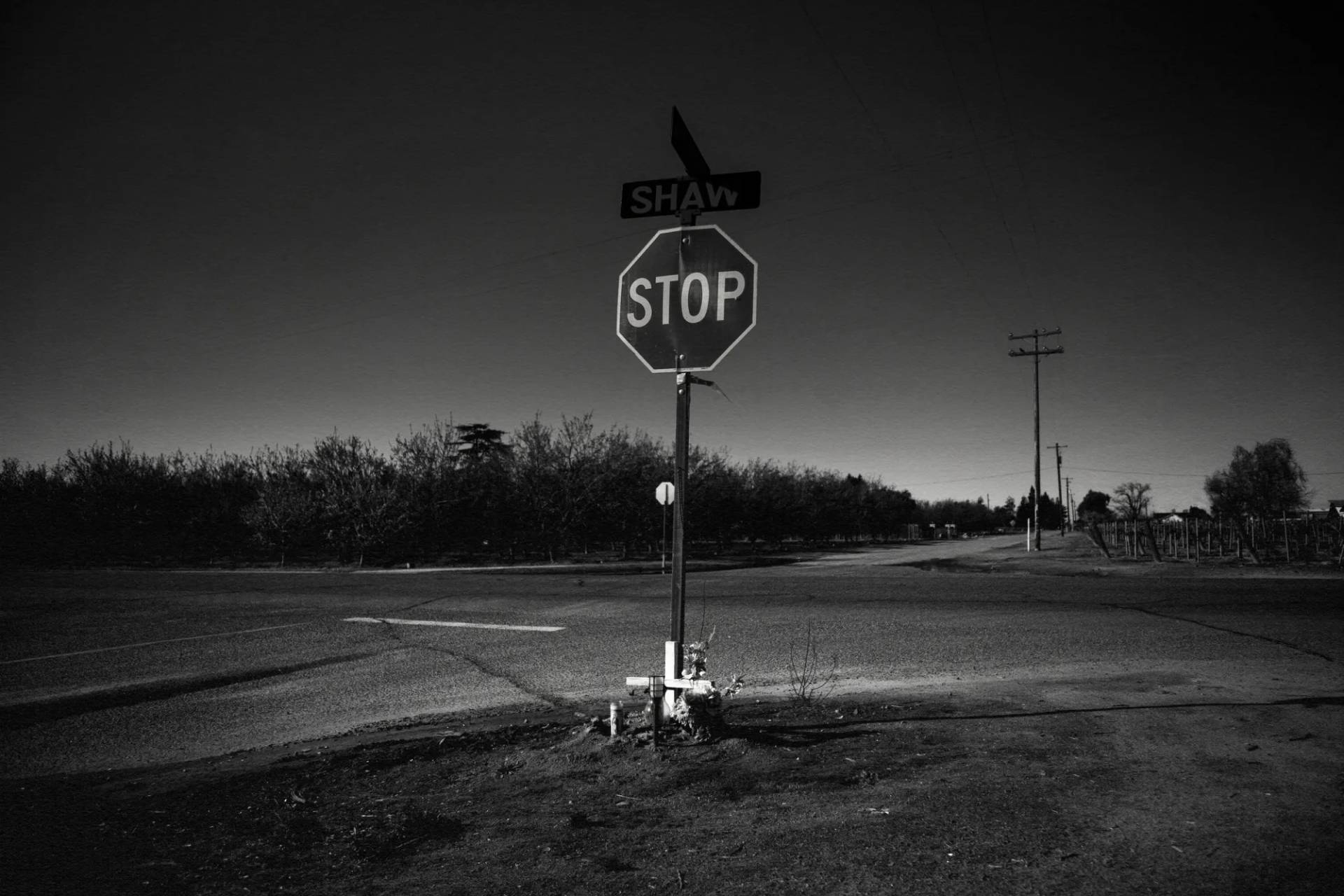
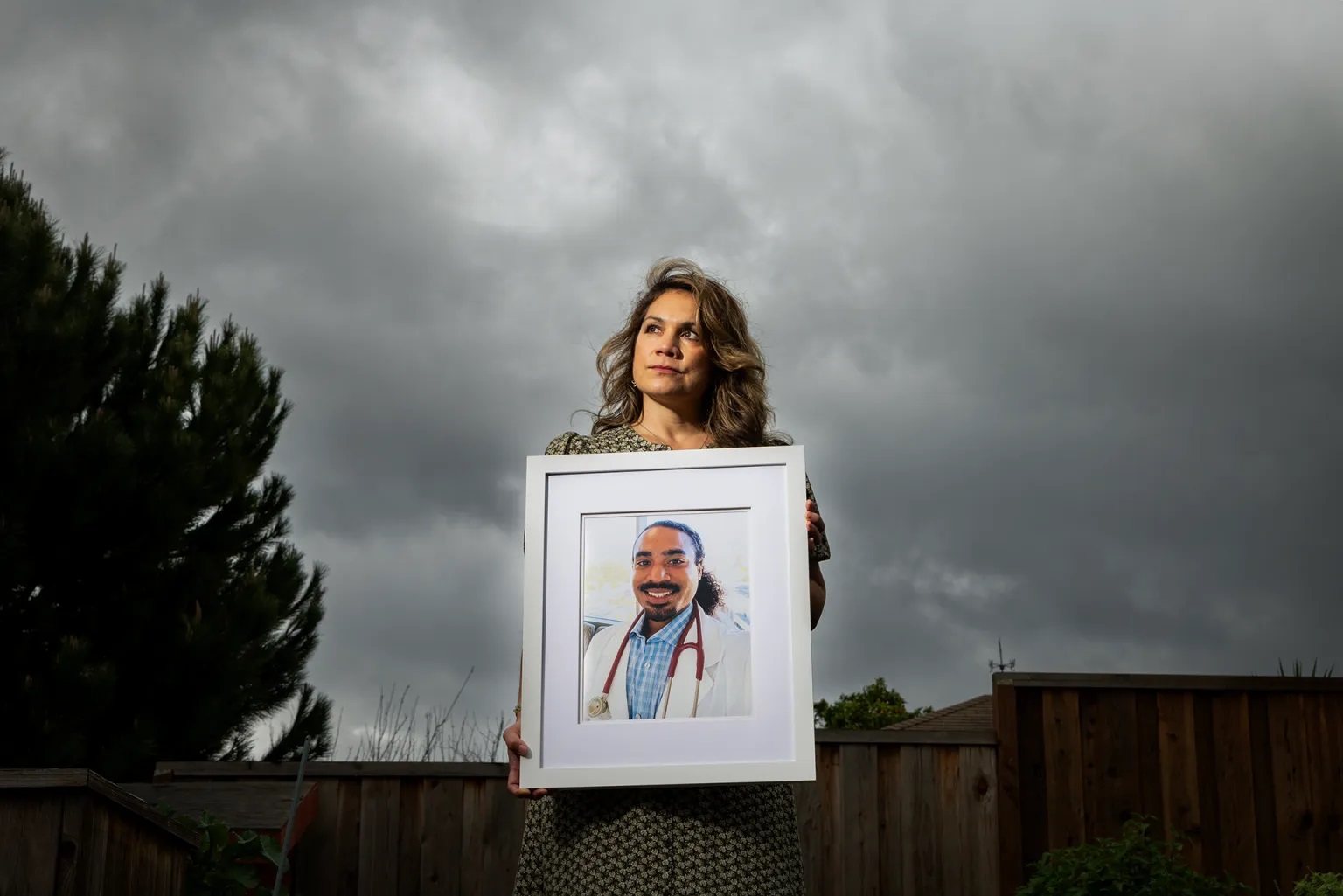
The California DMV routinely allows dangerous drivers with horrifying histories to continue to operate on our roadways. Too often they go on to kill. Many keep driving even after they kill. Some go on to kill again. (Photo Illustration by Gabe Hongsdusit, CalMatters; Larry Valenzuela CalMatters/CatchLight Local)
License to Kill: Why California's Dangerous Drivers Get to Keep Their Licenses
The California DMV routinely allows dangerous drivers with horrifying histories to continue to operate on our roadways. Too often they go on to kill. Many keep driving even after they kill. Some go on to kill again.
This story was originally published by CalMatters. Sign up for their newsletters.
I
van Dimov was convicted of reckless driving in 2013, after fleeing police in Washington state while his passenger allegedly dumped heroin out the window. Before that, he got six DUIs in California over a six-year period. None of that would keep him off the road.
The California Department of Motor Vehicles reissued him a driver’s license in 2017. The next year, on Christmas Eve, he drove drunk again, running stop signs and a traffic light in midtown Sacramento, going more than 80 mph, court records show. He T-boned another car, killing a 28-year-old man who was going home to feed the cat before heading to his mom’s for the holiday.
Kostas Linardos had 17 tickets — including for speeding, reckless driving and street racing — and had been in four collisions. Then, in November 2022, he gunned his Ram 2500 truck as he entered a Placer County highway and slammed into the back of a disabled sedan, killing a toddler, court records show. He’s now facing felony manslaughter charges.
In December of last year, while that case was open, the DMV renewed his driver’s license.
Ervin Wyatt’s history behind the wheel spreads across two pages of a recent court filing: Fleeing police. Fleeing police again. Running a red light. Causing a traffic collision. Driving without a license, four times. A dozen speeding tickets.
Yet the DMV issued him a license in 2019. Wyatt promptly got three more speeding tickets, court records show. Prosecutors say he was speeding again in 2023 when he lost control and crashed into oncoming traffic, killing three women. He’s now facing murder charges in Stanislaus County.
The California Department of Motor Vehicles routinely allows drivers like these — with horrifying histories of dangerous driving, including DUIs, crashes and numerous tickets — to continue to operate on our roadways, a CalMatters investigation has found. Too often they go on to kill. Many keep driving even after they kill. Some go on to kill again.
With state lawmakers grapplingwith how to address the death toll on our roads, CalMatters wanted to understand how California handles dangerous drivers. We first asked the district attorneys for all 58 counties to provide us with a list of their vehicular manslaughter cases from 2019 through early last year. Every county but Santa Cruz provided the information.
Related Article
Because California has no centralized court system and records aren’t online, we then traveled to courthouses up and down the state to read through tens of thousands of pages of files. Once we had defendants’ names and other information, we were able to get DMV driver reports for more than 2,600 of the defendants, providing details on their recent collisions, citations and license status.
The court records and driving histories reveal a state so concerned with people having access to motor vehicles for work and life that it allows deadly drivers to share our roads despite the cost. Officials may call driving a privilege, but they treat it as a right — often failing to take drivers’ licenses even after they kill someone on the road.
We found nearly 40% of the drivers charged with vehicular manslaughter since 2019 have a valid license.
That includes a driver with two separate convictions for vehicular manslaughter, for crashes that killed a 16-year-old girl in 2009 and a 25-year-old woman in 2020. In July of last year, the DMV issued him a driver’s license.
The agency gave licenses to nearly 150 people less than a year after they allegedly killed someone on the road, we found. And while the agency has since suspended some of those, often after a conviction, the majority remain valid. In Santa Clara County, a man prosecutors charged with manslaughter got his current license just a month and a half after the collision that killed a mother of three young children.
And many drivers accused of causing roadway deaths don’t appear to have stopped driving recklessly. Records show that nearly 400 got a ticket or were in another crash — or both — after their deadly collisions.
A commercial driver drove his semi truck on the wrong side of the road into oncoming traffic, killing a motorcyclist in Kern County in 2021. Less than a year later, he still had a valid license when he barreled his semi into slow-moving traffic, hitting four vehicles and killing a woman in Fresno County, records show. Another man, sentenced to nine years in prison for killing two women while driving drunk, got his privileges restored by the DMV after being paroled, only to drive high on meth in Riverside and weave head-on into another car, killing a woman.
“It is somewhat shocking to see how much you can get away with and still be a licensed driver in the state of California,” Placer County District Attorney Morgan Gire said. “I don’t think anyone fully understands what you need to do behind the wheel to lose your driving privilege.”
Almost as interesting as the information in the drivers’ DMV records is what’s not there.
Related Article
Hundreds of drivers’ DMV records simply don’t list convictions for manslaughter or another crime related to a fatal crash, we found. The apparent error means some drivers who should have their driving privileges suspended instead show up in DMV records as having a valid license.
The cases we reviewed cut across demographics and geography. Defendants include farmworkers and a farm owner. They include off-duty police officers and people with lengthy rap sheets, drivers who killed in a fit of rage and others whose recklessness took the lives of those they loved most — high school sweethearts, siblings, children. The tragedies span this vast state. From twisty two-lane mountain roads near the Oregon border to the dusty scrubland touching Mexico. From the crowded streets of San Francisco to the highways of the Inland Empire. From Gold Country, to timber country, to Silicon Valley, to the almond capital of the world. So much death. More people than are killed by guns.
Dangerous drivers are able to stay on the roads for many reasons. The state system that targets motorists who rack up tickets is designed to catch clusters of reckless behavior, not long-term patterns. And while there are laws requiring the DMV to suspend a driver’s license for certain crimes, like DUIs, there is no such requirement for many vehicular manslaughter convictions.
It’s often up to the DMV whether to act. Routinely it doesn’t.
The DMV declined to make its director, Steve Gordon — who has been in charge since Gov. Gavin Newsom appointed him in 2019 — available for an interview to discuss our findings.
Chris Orrock, a DMV spokesperson, said the agency follows the law when issuing licenses. “We use our authority as mandated and as necessary,” he said.
Even when the DMV does take away motorists’ driving privileges, state officials, law enforcement and the courts are often unable or unwilling to keep them off the road. We found cases where drivers racked up numerous tickets while driving on a suspended license and faced little more than fines before eventually causing a fatal crash, even though authorities could have sent them to jail.
Taking away someone’s driving privilege is no small decision. It can consign a family to poverty, affecting job prospects, child care and medical decisions.
Still, the stakes couldn’t be higher. More than 20,000 people died on the roads of California from 2019 to early 2024.
Kowana Strong thinks part of the problem is that lawmakers and regulators are too quick to treat fatal crashes as an unfortunate fact of life, as opposed to something they can address.
Her son Melvin Strong III — who went by his middle name, Kwaun — was finishing college and planning to start a master’s program in kinesiology when he was killed by Dimov, the driver with six prior DUI convictions. Kwaun was a bright and innocent young man, she said, just starting his life.
“It’s just another accident as far as they’re concerned,” Kowana Strong said.
Holes in the DMV’s point system
Young people think they’re invincible. It’s the old who know how unfair life is, Jerrod Tejeda said.
She had a girlfriend who was visiting. Courtney Kendall was 24 and a student at Louisiana State University.
On a Sunday afternoon in January 2022, a Volvo SUV topping speeds of 75 mph ran a red light and smashed into their Jeep, court records show. The collision killed them both.
“The most difficult part besides the incident is every day that goes by you’re always wondering what if. What would they be doing today?” Jerrod Tejeda said. “Would they be married? Would they have developed into the career that they chose? Where would she be living?”
Tanya Kendall lamented not being there to protect her daughter, hold her hand or say goodbye.
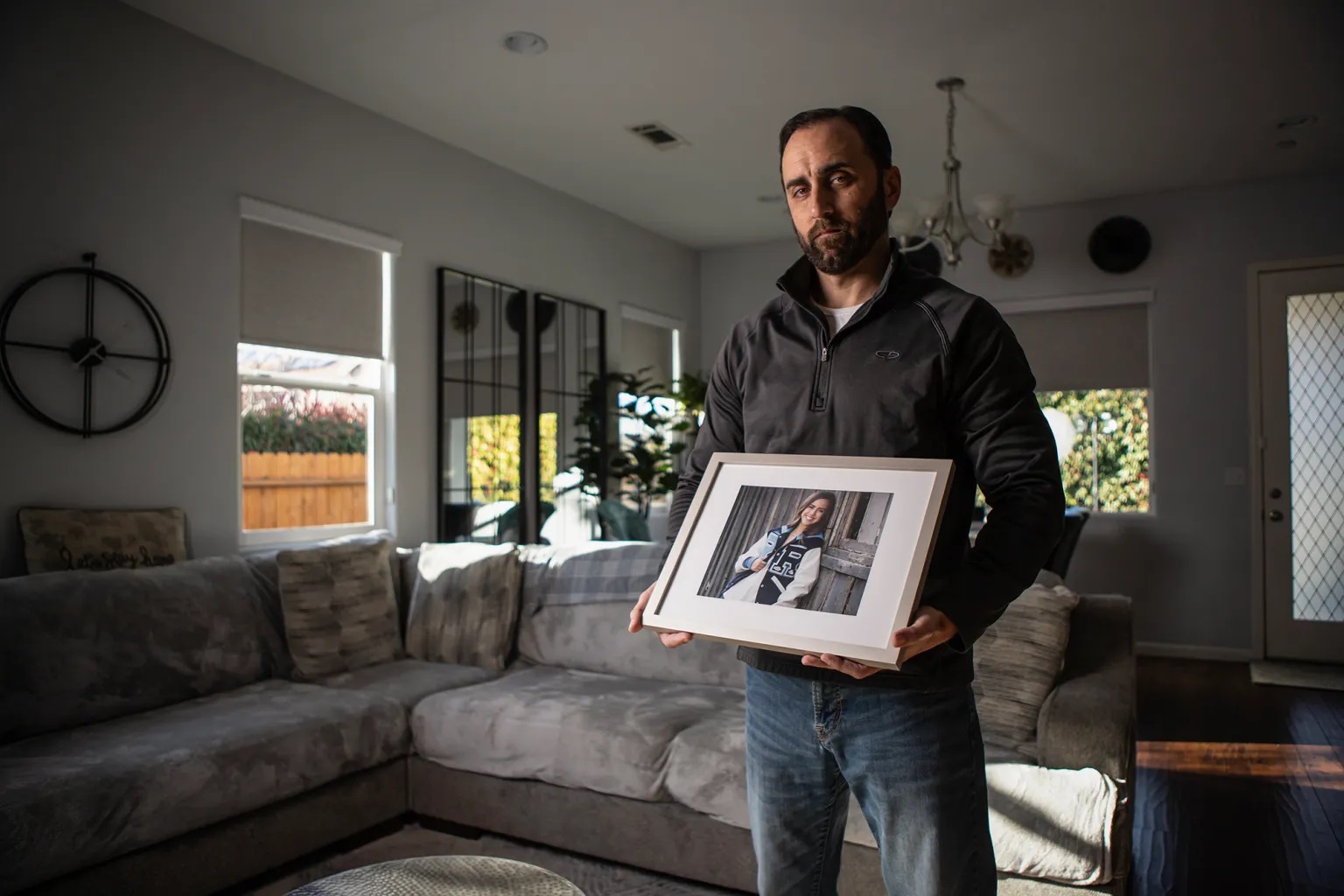
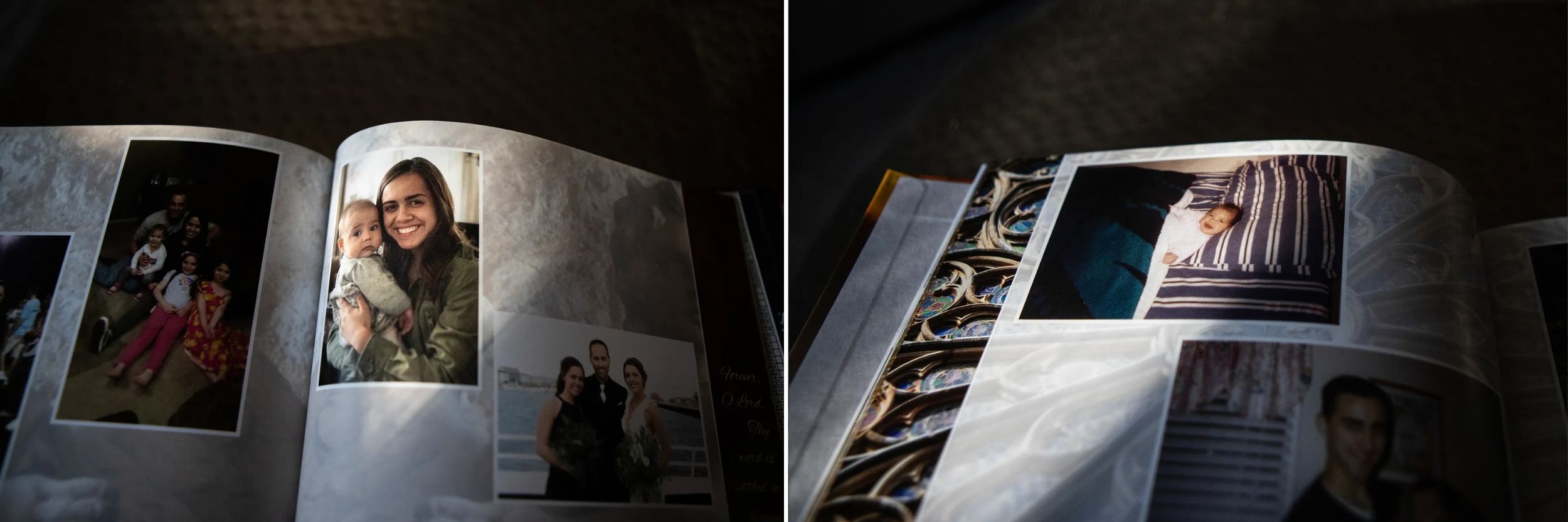
Jerrod Tejeda holds a framed photo of his daughter Cassi Tejeda, at his home in Visalia on March 6, 2025. (Photo by Larry Valenzuela, CalMatters/CatchLight Local)A scrapbook of photographs of Cassi Tejeda on the table of Jerrod Tejeda’s home in Visalia on March 6, 2025. (Larry Valenzuela/CalMatters/CatchLight Local )
“Instead, I was left with the unbearable task of choosing what outfit she would be buried in. Buried, Your Honor. Not the gown she would wear to her graduation from LSU — the one she will never attend,” the mother wrote in a letter to a Butte County judge, adding that she and her husband stood in their daughter’s place, accepting her diploma.
Such pain was preventable.
The driver of the Volvo, Matthew Moen, had a blood alcohol level more than three times the legal limit, according to court filings. And it wasn’t his first time drinking and driving. Moen was caught driving drunk in Oregon in 2016. He never completed the requirements of a diversion program and had an outstanding warrant at the time of the fatal crash, the Butte County district attorney’s office said. In January 2020, he was convicted of DUI in Nevada County for driving with a blood alcohol level more than twice the legal limit, given a couple weeks in jail and put on probation for three years.
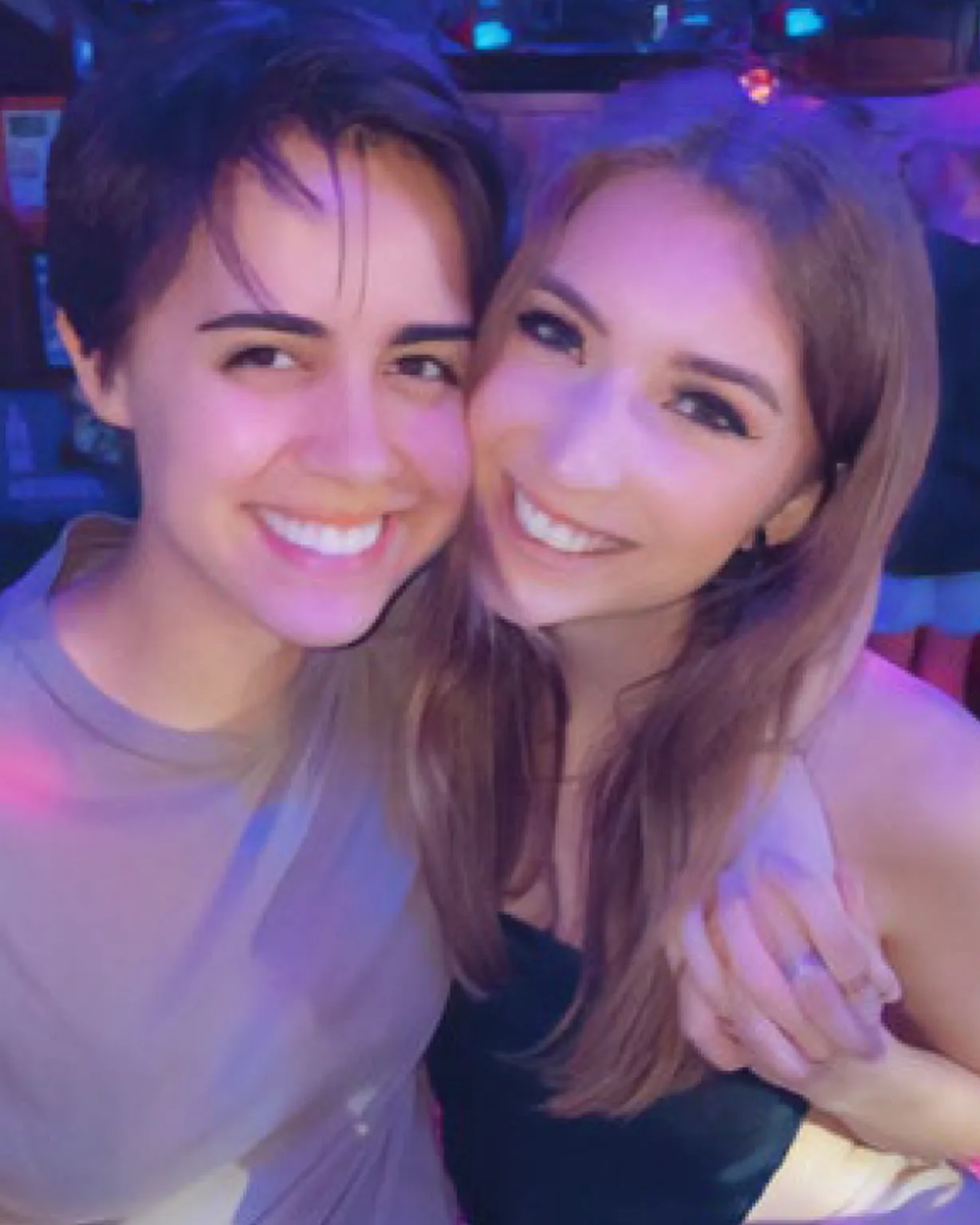
Cassi Tejeda and Courtney Kendall. (Photo via Butte County District Attorney)
His license was valid at the time of the fatal 2022 crash, records show.
Across the country, states grapple with how to effectively spot and punish drivers who could be a danger on the road. Often they rely on a basic point system, with drivers accruing points for various types of traffic violations and thresholds for when the state will take away a motorist’s driving privileges. But like many, California has such high limits that drivers with a pattern of reckless behavior can avoid punishment.
The state suspends a driver’s license for accumulating four points in a year, six points in two years or eight points in three years. What does it take to get that many points? Using a cellphone while driving is zero points. A speeding ticket is a point. Vehicular manslaughter is two points.
Between March 2017 and March 2022, Trevor Cook received two citations for running red lights, got two speeding tickets and was deemed responsible for two collisions, including one in which someone was injured, court records show. (A third red-light ticket was dismissed.) At-fault collisions add a point to a driver’s license, according to the DMV. But the incidents were spaced out enough that none resulted in a suspension.
So Cook had a valid license on April 14, 2022, just a month after his last speeding ticket, when he blew through a Yolo County stop sign at more than 100 mph.
At that exact moment, Prajal Bista passed through the intersection, on his way to work after dinner and a movie with his wife, according to details of the crash that prosecutors included in court filings. Bista was driving the speed limit and on track to make it to work 30 minutes early.
Related Article
The force of the collision nearly split Bista’s Honda Civic in half. Investigators determined Bista had been wearing his seat belt, but the crash tore it apart. They found his body 75 feet from the intersection.
On March 28, 2024, Cook pleaded no contest to felony vehicular manslaughter.
Just a month later, on April 30, the DMV issued Cook his current driver’s license, agency records show. Less than two weeks after that, he got a ticket for disobeying a traffic signal.
Melinda Aiello, chief deputy district attorney in Yolo County, said her office didn’t know anything about the new license or the red-light ticket until contacted by CalMatters. What’s more, the manslaughter conviction — like hundreds of others we found — isn’t listed on Cook’s driving record.
Cook’s license was still listed as valid in California DMV records as of early 2025. But for now, he’s off the roadways: Last summer, Cook started serving time in state prison.
“It’s stunning to me that eight months later his license is still showing as valid and the conviction for killing someone while driving is not reflected in his driving record,” Aiello said. “You killed somebody. I’d think there might be some license implications.”
Orrock, the DMV spokesperson, said he couldn’t speak directly to why so many convictions are missing. But, he said, “we acknowledge that the process and coordination between the judicial system and the DMV must continually evolve to address any gaps that have been identified. And we’re looking into that.”
Kill someone, get your license back
There are laws requiring the DMV to suspend a driver’s license for various convictions. A first DUI conviction, for example, is a 6-to-10-month suspension. Felony vehicular manslaughter is a three-year loss of driving privileges. The agency isn’t necessarily required to give a license back if its driver safety branch deems a motorist too dangerous to drive, agency officials said.
But CalMatters found the agency regularly gives drivers their licenses back as soon as the legally required period ends. And once crashes, tickets and suspensions fall off a driver’s record after a few years, it’s often as if the motorist’s record is wiped clean. So even if the driver gets in trouble again, the agency often treats any future crashes and traffic violations as isolated incidents, not as part of a longer pattern of reckless driving.
Perhaps that’s why Joshua Daugherty is licensed to drive in California.
In July 2020, Daugherty drifted onto the highway shoulder while driving near Mammoth Lakes, overcorrected to the left and lost control, court filings show. His Toyota Tacoma cut across the lane into oncoming traffic, where an SUV broadsided it. Daugherty’s girlfriend, 25-year-old Krystal Kazmark, died. Police noted that Daugherty’s eyes were red and watery and his speech was slurred when they arrived. He told officers that he’d smoked “a couple of bowls” of marijuana earlier in the day, according to records filed in court.
Joshua Daugherty and Krystal Kazmark. (Photo courtesy of Mary Kazmark)
Kazmark’s mother was devastated. Like other victim relatives we spoke to for this story, Mary Kazmark tried as best she could to summarize a life into a few words — an impossible task. Her daughter liked to sing, travel, cook, draw, snow-ski, water-ski, wakeboard, hike, read, entertain friends and plan parties. She was a responsible kid, her mother said, always the designated driver with her friends. She oversaw guest reservations at one of the Mammoth Lakes lodges.
Mary Kazmark said she tracked down Daugherty on the phone a few days after the crash.
“He just said, ‘I can’t believe this happened again.’ And I was like, ‘What do you mean?’”
She eventually learned it wasn’t the first time Daugherty’s driving had killed.
In August 2009, in a strikingly similar incident, Daugherty was speeding along a Riverside County highway when his Ford Expedition drifted onto the shoulder. Witnesses told police he veered back to the left, lost control, hit a dirt embankment and went airborne, the SUV flipping onto its roof. A 16-year-old girl riding in the back died. Daugherty was convicted of misdemeanor vehicular manslaughter. He was sentenced to 180 days in custody and three years’ probation, according to a summary of the case filed in court.
Because of the earlier manslaughter conviction, police recommended he be charged with murder for the death of Krystal Kazmark. But the Mono County district attorney’s office charged him with a mere misdemeanor.
Felony charges typically require a prosecutor to prove “gross negligence.” A prosecutor in another county described the difference between a felony and a misdemeanor this way: A felony is one in which you tell the average person the facts and they say, “Wow, that’s really dangerous.” A misdemeanor is one which they say, “That’s dumb but I’ve probably done it.”
The Mono County district attorney’s office refused to comment on the case, because the prosecutor and the elected DA at the time have both since retired. The office did provide a prepared statement explaining the charging decision. “It was determined that there was not a substantial likelihood of conviction at trial,” it said.
Related Article
Daugherty pleaded guilty and was convicted in January 2023. He was sentenced to a year in jail. The DMV suspended his driving privileges after the fatal 2020 crash, a DMV report shows. But losing his license wasn’t enough to keep Daugherty off the road, records show.
Two months after his conviction for killing Kazmark, before he reported to jail, police caught him driving on a suspended license.
Still, the DMV reissued Daugherty a license in July 2024.
To recap: That’s two convictions for two dead young women, plus a conviction for driving on a suspended license, and the California DMV says Daugherty can still share the road with you.
“It’s so sad. You make a mistake and then you don’t learn from it and then you cause another person to lose their life,” Mary Kazmark said. “It’s unbelievable that he can continue to drive.”
Orrock said the DMV couldn’t comment on individual drivers.
When law enforcement reports a fatal crash, the agency’s driver safety branch flags all drivers who might be at fault. It then looks into the collision and decides whether the agency should suspend those motorists’ driving privileges. If the driver contests the action, there’s a hearing that could include witness testimony. Suspensions are open-ended. Drivers need to ask for their license back, and agency personnel decide whether the suspension should end or continue. These discretionary suspensions typically last for about a year.
And while officials said the DMV can continue a suspension if they think a driver poses a danger, Orrock said they need to give drivers an opportunity to get their license back. He said there’s no process in the state “to permanently revoke a license.”
Get your license back, get in trouble again
Roughly 400 drivers accused of causing a fatal crash since 2019 received a ticket, got in another collision or did both after the date they allegedly killed someone on the road. (The reports don’t show whether the drivers were found at fault, only that they were involved in an accident.) That’s about 15% of the drivers for whom we could get DMV reports.
Drivers like William Beasley.
From 2011 to 2016, Beasley collected five speeding tickets and a citation for running a red light in Sacramento County, court records show. Then around 9 a.m. on a sunny Tuesday in October 2019, he killed a man.
William and Deborah Hester were crossing the street to go to a dentist appointment at a veterans facility when Beasley’s silver pickup sped toward them. They thought they would make it across. But the truck didn’t stop. At the last minute, William Hester shoved his wife out of the way. She heard the truck smash into her husband’s body and screamed, according to court records.
Beasley still didn’t stop. He fled the area and tried to hide his truck. Investigators used nearby cameras and license plate readers to track him down days later. Beasley admitted to being in a collision.
From left, William Hester and Loriann Hester Page. (Photo courtesy of Loriann Hester Page)
He later pleaded no contest in Sacramento to hit-and-run and misdemeanor vehicular manslaughter. A probation report in the case revealed Beasley was nearly blind in his left eye.
“Mr. Hester is with me every moment of my life,” Beasley said in an interview. “I took away a father, a grandfather, a husband, and they consider me a murderer. That’s not who I am.”
“My accident with Mr. Hester was just that, an accident. Nothing more,” he said, adding that he worked as a courier for years and sometimes got speeding tickets because he was rushing.
In May 2020, the DMV took away his driving privileges.
In November 2022, Beasley got his license back — “because I could and I needed to,” he said, adding that people deserve second chances, particularly for accidents.
Almost immediately — less than three weeks after getting his license — he was in another collision, his DMV report shows. In early 2024, he got in yet another. His license was suspended when his car insurance was canceled, records show.
“It makes no sense to me that they would give him a license and give him the opportunity to hurt someone else,” said Loriann Hester Page, William Hester’s daughter.
Her father’s death broke the family, she said. He drove a tank in the Army, played guitar in a band, liked to ride horses.
“My dad was such a wonderful, kind man,” she said. “He would always walk in a room and wanted to make everyone smile.”
Beasley said he doesn’t plan to drive again.
“I am 75 years old,” he said. “I am blind in one eye. I have had a situation where a man was killed, he lost his life. I am not going to repeat that situation at all.”
Still on the road, license not suspended
The DMV does have the ability to act quickly. In some cases, it suspended a driver’s license shortly after a fatal crash. However, we found numerous cases in which the DMV did nothing for months or years, often not until a criminal conviction.
In July 2021, truck driver Baljit Singh drove his semi on the wrong side of the road into oncoming traffic, killing a motorcyclist in Kern County, court records show. There are no suspensions listed on his DMV record during that time, even though the agency has the discretion to suspend someone’s license without a conviction.
Related Article
Less than a year later, as his case wound its way through the slow-moving court system, Singh plowed his semi into the back of a car in Fresno County, killing a woman, records show. He ultimately pleaded no contest to felony vehicular manslaughter in Kern County. He pleaded no contest to misdemeanor vehicular manslaughter in Fresno for the second fatal crash. The DMV finally took away his driving privileges in February of last year.
Prosecutors say Jadon Mendez was speeding in December 2021 in Santa Clara County when he lost control and caused a crash that killed a mother of three young children. A few weeks later he got a speeding ticket. And yet, the DMV issued him his current driver’s license on Jan. 27, 2022 — 49 days after the fatal crash.
There were no suspensions listed on his DMV record as of early this year, even though Mendez was charged with manslaughter in May 2022. The judge in his case ordered him not to drive, as a condition of his release. But such court orders don’t necessarily show up on a driver’s DMV record.
That might be why he didn’t get in more trouble in December 2022 when he got a speeding ticket in Alameda County. Prosecutors didn’t know about that ticket until CalMatters asked about it, said Angela Bernhard, assistant DA in the Santa Clara County district attorney’s office.
Mendez’s manslaughter case is still open, and his license is still listed as valid.
When asked about the Mendez case and others, Orrock acknowledged that while there’s a DMV process for deciding when to revoke or suspend a license, “sometimes the process takes a while to happen.”
When the DMV doesn’t act at all
In many cases, the DMV doesn’t take action even after a conviction.
In May 2022, a semi driver named Ramon Pacheco made a U-turn in front of an oncoming motorcycle, killing 29-year-old Dominic Lopez-Toney, who was finishing his rotations to be a doctor.
Court records show Pacheco had gotten in trouble behind the wheel before. He had been arrested for DUI in 2009, caused a collision in 2013 and got a ticket in 2016 for making an unsafe turn. It wasn’t enough to keep him off the road.
Neither was killing a man.
Months after San Joaquin prosecutors charged Pacheco with vehicular manslaughter, he got into another collision for which he was also deemed most at fault.
As the case dragged on, Lopez-Toney’s large but tight-knit family wrote dozens of letters to the court, pleading for justice. Dorothy Toney wrote that, more than a year since her grandson’s death, she was still haunted by images of his “mangled and broken body” and the gruesome details in the police report. “Somedays,” she wrote, “I wish I had been there to gently hold his hands” and “tell him how much I loved him.”
The letters are full of shock and outrage that the driver had faced so few consequences. “Allowing this truck driver to continue driving and engaging in civilian activities with only a mere consequence of probation is appalling,” wrote Lynelle Sigona, the victim’s aunt.
Pacheco ultimately pleaded no contest to misdemeanor manslaughter and received probation. His DMV record as of Feb. 11 indicates his driving privileges were never suspended; his commercial driver’s license is valid.
Pacheco’s defense attorney, Gil Somera, said his client isn’t a reckless driver. His prior incidents are relatively minimal, he said, given the fact that “truck drivers drive thousands and thousands of miles a year.” Pacheco needed to turn around and didn’t think there was another place he could do so, since he was approaching a residential area, Somera added.
Pacheco wasn’t being “inattentive or reckless,” Somera said. “And it’s unfortunate and sad and tragic this young man died because of this decision he made to make a U-turn.”
In the wake of the tragedy, Lopez-Toney’s mother has become an advocate for truck safety.
Nora Lopez holds a framed photo of her son at her home in Castro Valley on March 12, 2025. Her 29-year-old son, Dominic Lopez-Toney, was struck and killed by a semi-truck days before starting his surgical rotation at a San Joaquin hospital. (Photo by Christie Hemm Klok for CalMatters)
“Road safety and truck safety is not a priority right now with our legislators, with our government,” Nora Lopez said. “Changing our mindset, our attitudes, our culture on the roads is not impossible.”
In an interview at her Castro Valley home, she talked about her only child. He was smart and caring, liked snowboarding and animals, loved food. On vacations they would take cooking classes together, Lopez said. He studied molecular and cell biology at UC Berkeley and was almost done with medical school.
She still has the dry-erase whiteboards in his old room. One is filled with his small and neat study notes; another has what appears to be a to-do list. There’s a note that says “Surgery: 600.” Lopez said that’s when he was due to start his surgical rotation in a San Joaquin hospital, just a couple of days after he died.
She said he just wanted to help people and serve the Native American community as a doctor, a future that a driver snatched away.
“It’s because of a man’s recklessness and carelessness — no regard for humanity,” she said.
While felony manslaughter is an automatic three-year loss of driving privileges, a misdemeanor typically carries no such penalty. It’s discretionary — it’s up to the DMV to decide whether to do anything. And the man who killed Lopez-Toney is far from alone in facing no apparent punishment from the DMV.
We found nearly 200 drivers with a valid license whose DMV record shows a conviction for misdemeanor vehicular manslaughter but for whom there is no suspension listed.
When shown a copy of Pacheco’s current driving report, Lopez sat in silence for several seconds.
“Does this make sense to you? It makes no sense to me,” she said. “With his record, how does he still have a license?”
‘Are we going to put that loaded gun back in their hands?’
Research on dangerous drivers appears to be thin and largely outdated.
Liza Lutzker, a researcher at UC Berkeley’s Safe Transportation Research and Education Center, said much of the focus in the traffic safety world is on creating better design and infrastructure, so people who make honest mistakes don’t end up killing someone.
“I think that the issues of these reckless drivers are a separate and complex problem,” Lutzker said. “The system we have clearly is not working. And people are paying with their lives for it.”
Jeffrey Michael, who researches roadway safety issues at Johns Hopkins University and spent three decades working at the National Highway Traffic Safety Administration, said he understands officials might be hesitant to impose harsher penalties more broadly, “for fear of the unintended consequences.”
“We live in a society where driving is really essential,” he said. But he said the findings show the agency needs more scrutiny and analysis of who is on the roads.
“These are not unresolvable problems,” he said.
Leah Shahum, executive director of the Vision Zero Network, a nonprofit promoting safe streets, said sometimes officials prioritize preserving people’s ability to drive rather than ensuring safety.
“We don’t all have the right to drive,” Shahum said. “We have the responsibility to drive safely and ensure we don’t hurt others.” She added that many people need to drive in this car-centric state. “That does not mean there can be a license to kill.”
“If we know somebody has a history of dangerous behavior,” she said, “are we going to put that loaded gun back in their hands?”
A memorial for car accident victims on a roadside outside Fresno on March 20, 2025. (Larry Valenzuela/CalMatters/CatchLight Local)
The gun metaphor was common in the thousands of vehicular manslaughter cases we looked at across California. One prosecutor described dangerous behavior behind the wheel as akin to firing a gun into a crowd.
In letters to the court, surviving relatives and friends described the hole left behind, writing about an empty seat at a high school graduation, a photo cutout taken without fail to home baseball games.
It’s a void one young man tried to explain to authorities — the sudden, violent, blink-of-an-eye moment where life forever changes. For him, it was at 6:45 p.m. on Feb. 27, 2020, on Lone Tree Way in the Bay Area city of Antioch.
Two brothers, ages 11 and 15, were going to meet their dad at a Burger King. They crossed to the median and then waited for a break in the traffic before continuing to the other side. The older one made it across, according to court documents. His younger brother stepped into the street just as a driver gunned his car to 75 miles an hour — 30 over the speed limit.
The older boy watched as his younger brother “just disappeared.”
This is the first piece in a series about how California lets dangerous drivers stay on the road. Sign up for our License to Kill newsletter to be notified when the next story comes out, and to get more behind-the-scenes information from our reporting.
Court research by Robert Lewis, Lauren Hepler, Anat Rubin, Sergio Olmos, Cayla Mihalovich, Ese Olumhense, Ko Bragg, Andrew Donohue and Jenna Peterson
lower waypointnext waypoint
Player sponsored by
window.__IS_SSR__=true
window.__INITIAL_STATE__={
"attachmentsReducer": {
"audio_0": {
"type": "attachments",
"id": "audio_0",
"imgSizes": {
"kqedFullSize": {
"file": "https://ww2.kqed.org/news/wp-content/themes/KQED-unified/img/audio_bgs/background0.jpg"
}
}
},
"audio_1": {
"type": "attachments",
"id": "audio_1",
"imgSizes": {
"kqedFullSize": {
"file": "https://ww2.kqed.org/news/wp-content/themes/KQED-unified/img/audio_bgs/background1.jpg"
}
}
},
"audio_2": {
"type": "attachments",
"id": "audio_2",
"imgSizes": {
"kqedFullSize": {
"file": "https://ww2.kqed.org/news/wp-content/themes/KQED-unified/img/audio_bgs/background2.jpg"
}
}
},
"audio_3": {
"type": "attachments",
"id": "audio_3",
"imgSizes": {
"kqedFullSize": {
"file": "https://ww2.kqed.org/news/wp-content/themes/KQED-unified/img/audio_bgs/background3.jpg"
}
}
},
"audio_4": {
"type": "attachments",
"id": "audio_4",
"imgSizes": {
"kqedFullSize": {
"file": "https://ww2.kqed.org/news/wp-content/themes/KQED-unified/img/audio_bgs/background4.jpg"
}
}
},
"placeholder": {
"type": "attachments",
"id": "placeholder",
"imgSizes": {
"thumbnail": {
"file": "https://cdn.kqed.org/wp-content/uploads/2024/12/KQED-Default-Image-816638274-2000x1333-1-160x107.jpg",
"width": 160,
"height": 107,
"mimeType": "image/jpeg"
},
"medium": {
"file": "https://cdn.kqed.org/wp-content/uploads/2024/12/KQED-Default-Image-816638274-2000x1333-1-800x533.jpg",
"width": 800,
"height": 533,
"mimeType": "image/jpeg"
},
"medium_large": {
"file": "https://cdn.kqed.org/wp-content/uploads/2024/12/KQED-Default-Image-816638274-2000x1333-1-768x512.jpg",
"width": 768,
"height": 512,
"mimeType": "image/jpeg"
},
"large": {
"file": "https://cdn.kqed.org/wp-content/uploads/2024/12/KQED-Default-Image-816638274-2000x1333-1-1020x680.jpg",
"width": 1020,
"height": 680,
"mimeType": "image/jpeg"
},
"1536x1536": {
"file": "https://cdn.kqed.org/wp-content/uploads/2024/12/KQED-Default-Image-816638274-2000x1333-1-1536x1024.jpg",
"width": 1536,
"height": 1024,
"mimeType": "image/jpeg"
},
"fd-lrg": {
"file": "https://cdn.kqed.org/wp-content/uploads/2024/12/KQED-Default-Image-816638274-2000x1333-1-1536x1024.jpg",
"width": 1536,
"height": 1024,
"mimeType": "image/jpeg"
},
"fd-med": {
"file": "https://cdn.kqed.org/wp-content/uploads/2024/12/KQED-Default-Image-816638274-2000x1333-1-1020x680.jpg",
"width": 1020,
"height": 680,
"mimeType": "image/jpeg"
},
"fd-sm": {
"file": "https://cdn.kqed.org/wp-content/uploads/2024/12/KQED-Default-Image-816638274-2000x1333-1-800x533.jpg",
"width": 800,
"height": 533,
"mimeType": "image/jpeg"
},
"post-thumbnail": {
"file": "https://cdn.kqed.org/wp-content/uploads/2024/12/KQED-Default-Image-816638274-2000x1333-1-672x372.jpg",
"width": 672,
"height": 372,
"mimeType": "image/jpeg"
},
"twentyfourteen-full-width": {
"file": "https://cdn.kqed.org/wp-content/uploads/2024/12/KQED-Default-Image-816638274-2000x1333-1-1038x576.jpg",
"width": 1038,
"height": 576,
"mimeType": "image/jpeg"
},
"xxsmall": {
"file": "https://cdn.kqed.org/wp-content/uploads/2024/12/KQED-Default-Image-816638274-2000x1333-1-160x107.jpg",
"width": 160,
"height": 107,
"mimeType": "image/jpeg"
},
"xsmall": {
"file": "https://cdn.kqed.org/wp-content/uploads/2024/12/KQED-Default-Image-816638274-2000x1333-1-672x372.jpg",
"width": 672,
"height": 372,
"mimeType": "image/jpeg"
},
"small": {
"file": "https://cdn.kqed.org/wp-content/uploads/2024/12/KQED-Default-Image-816638274-2000x1333-1-672x372.jpg",
"width": 672,
"height": 372,
"mimeType": "image/jpeg"
},
"xlarge": {
"file": "https://cdn.kqed.org/wp-content/uploads/2024/12/KQED-Default-Image-816638274-2000x1333-1-1020x680.jpg",
"width": 1020,
"height": 680,
"mimeType": "image/jpeg"
},
"full-width": {
"file": "https://cdn.kqed.org/wp-content/uploads/2024/12/KQED-Default-Image-816638274-2000x1333-1-1920x1280.jpg",
"width": 1920,
"height": 1280,
"mimeType": "image/jpeg"
},
"guest-author-32": {
"file": "https://cdn.kqed.org/wp-content/uploads/2025/01/KQED-Default-Image-816638274-1333x1333-1-160x160.jpg",
"width": 32,
"height": 32,
"mimeType": "image/jpeg"
},
"guest-author-50": {
"file": "https://cdn.kqed.org/wp-content/uploads/2025/01/KQED-Default-Image-816638274-1333x1333-1-160x160.jpg",
"width": 50,
"height": 50,
"mimeType": "image/jpeg"
},
"guest-author-64": {
"file": "https://cdn.kqed.org/wp-content/uploads/2025/01/KQED-Default-Image-816638274-1333x1333-1-160x160.jpg",
"width": 64,
"height": 64,
"mimeType": "image/jpeg"
},
"guest-author-96": {
"file": "https://cdn.kqed.org/wp-content/uploads/2025/01/KQED-Default-Image-816638274-1333x1333-1-160x160.jpg",
"width": 96,
"height": 96,
"mimeType": "image/jpeg"
},
"guest-author-128": {
"file": "https://cdn.kqed.org/wp-content/uploads/2025/01/KQED-Default-Image-816638274-1333x1333-1-160x160.jpg",
"width": 128,
"height": 128,
"mimeType": "image/jpeg"
},
"detail": {
"file": "https://cdn.kqed.org/wp-content/uploads/2025/01/KQED-Default-Image-816638274-1333x1333-1-160x160.jpg",
"width": 160,
"height": 160,
"mimeType": "image/jpeg"
},
"kqedFullSize": {
"file": "https://cdn.kqed.org/wp-content/uploads/2024/12/KQED-Default-Image-816638274-2000x1333-1.jpg",
"width": 2000,
"height": 1333
}
}
},
"news_12035926": {
"type": "attachments",
"id": "news_12035926",
"meta": {
"index": "attachments_1716263798",
"site": "news",
"id": "12035926",
"found": true
},
"title": "040925-LICENSE-TO-KILL-LV",
"publishDate": 1744664112,
"status": "inherit",
"parent": 12035925,
"modified": 1744664348,
"caption": "The California DMV routinely allows dangerous drivers with horrifying histories to continue to operate on our roadways. Too often they go on to kill. Many keep driving even after they kill. Some go on to kill again.",
"credit": "Photo Illustration by Gabe Hongsdusit, CalMatters; Larry Valenzuela CalMatters/CatchLight Local",
"altTag": null,
"description": null,
"imgSizes": {
"medium": {
"file": "https://cdn.kqed.org/wp-content/uploads/sites/10/2025/04/040925-LICENSE-TO-KILL-LV-800x533.jpg",
"width": 800,
"height": 533,
"mimeType": "image/jpeg"
},
"large": {
"file": "https://cdn.kqed.org/wp-content/uploads/sites/10/2025/04/040925-LICENSE-TO-KILL-LV-1020x680.jpg",
"width": 1020,
"height": 680,
"mimeType": "image/jpeg"
},
"thumbnail": {
"file": "https://cdn.kqed.org/wp-content/uploads/sites/10/2025/04/040925-LICENSE-TO-KILL-LV-160x107.jpg",
"width": 160,
"height": 107,
"mimeType": "image/jpeg"
},
"1536x1536": {
"file": "https://cdn.kqed.org/wp-content/uploads/sites/10/2025/04/040925-LICENSE-TO-KILL-LV-1536x1024.jpg",
"width": 1536,
"height": 1024,
"mimeType": "image/jpeg"
},
"post-thumbnail": {
"file": "https://cdn.kqed.org/wp-content/uploads/sites/10/2025/04/040925-LICENSE-TO-KILL-LV-672x372.jpg",
"width": 672,
"height": 372,
"mimeType": "image/jpeg"
},
"twentyfourteen-full-width": {
"file": "https://cdn.kqed.org/wp-content/uploads/sites/10/2025/04/040925-LICENSE-TO-KILL-LV-1038x576.jpg",
"width": 1038,
"height": 576,
"mimeType": "image/jpeg"
},
"full-width": {
"file": "https://cdn.kqed.org/wp-content/uploads/sites/10/2025/04/040925-LICENSE-TO-KILL-LV-1920x1280.jpg",
"width": 1920,
"height": 1280,
"mimeType": "image/jpeg"
},
"kqedFullSize": {
"file": "https://cdn.kqed.org/wp-content/uploads/sites/10/2025/04/040925-LICENSE-TO-KILL-LV.jpg",
"width": 2000,
"height": 1333
}
},
"isLoading": false,
"fetchFailed": false
}
},
"audioPlayerReducer": {
"postId": "stream_live",
"isPaused": true,
"isPlaying": false,
"pfsActive": false,
"pledgeModalIsOpen": true,
"playerDrawerIsOpen": false,
"liveAudioPlayStartedAt": 0,
"liveAudioPlayContext": ""
},
"authorsReducer": {
"byline_news_12035925": {
"type": "authors",
"id": "byline_news_12035925",
"meta": {
"override": true
},
"slug": "byline_news_12035925",
"name": "\u003ca href=\"https://calmatters.org/author/robert-lewis/\">Robert Lewis\u003c/a>, CalMatters",
"isLoading": false
}
},
"pagesReducer": {},
"pfsSessionReducer": {},
"postsReducer": {
"stream_live": {
"type": "live",
"id": "stream_live",
"audioUrl": "https://streams.kqed.org/kqedradio",
"title": "Live Stream",
"excerpt": "Live Stream information currently unavailable.",
"link": "/radio",
"featImg": "",
"label": {
"name": "KQED Live",
"link": "/"
}
},
"stream_kqedNewscast": {
"type": "posts",
"id": "stream_kqedNewscast",
"audioUrl": "https://www.kqed.org/.stream/anon/radio/RDnews/newscast.mp3?_=1",
"title": "KQED Newscast",
"featImg": "",
"label": {
"name": "88.5 FM",
"link": "/"
}
},
"news_12035925": {
"type": "posts",
"id": "news_12035925",
"meta": {
"index": "posts_1716263798",
"site": "news",
"id": "12035925",
"found": true
},
"articlePosition": 0,
"guestAuthors": [],
"slug": "license-to-kill",
"title": "License to Kill: Why California's Dangerous Drivers Get to Keep Their Licenses",
"publishDate": 1745071233,
"format": "image",
"headTitle": "License to Kill: Why California’s Dangerous Drivers Get to Keep Their Licenses | KQED",
"labelTerm": {
"term": 18481,
"site": "news"
},
"content": "\u003cp>\u003cem>This story was originally published by \u003ca href=\"https://calmatters.org/\">CalMatters\u003c/a>. \u003ca href=\"https://calmatters.org/subscribe-to-calmatters/\">Sign up\u003c/a> for their newsletters.\u003c/em>\u003c/p>\n\u003cp>[dropcap]I[/dropcap]van Dimov was convicted of reckless driving in 2013, after fleeing police in Washington state while his passenger allegedly dumped heroin out the window. Before that, he got six DUIs in California over a six-year period. None of that would keep him off the road.\u003c/p>\n\u003cp>The California Department of Motor Vehicles reissued him a driver’s license in 2017. The next year, on Christmas Eve, he drove drunk again, running stop signs and a traffic light in midtown Sacramento, going more than 80 mph, court records show. He T-boned another car, killing a 28-year-old man who was going home to feed the cat before heading to his mom’s for the holiday.\u003c/p>\n\u003cp>[ad fullwidth]\u003c/p>\n\u003cp>Kostas Linardos had 17 tickets — including for speeding, reckless driving and street racing — and had been in four collisions. Then, in November 2022, he gunned his Ram 2500 truck as he entered a Placer County highway and slammed into the back of a disabled sedan, killing a toddler, court records show. He’s now facing felony manslaughter charges.\u003c/p>\n\u003cp>In December of last year, while that case was open, the DMV renewed his driver’s license.\u003c/p>\n\u003cp>Ervin Wyatt’s history behind the wheel spreads across two pages of a recent court filing: Fleeing police. Fleeing police again. Running a red light. Causing a traffic collision. Driving without a license, four times. A dozen speeding tickets.\u003c/p>\n\u003cp>Yet the DMV issued him a license in 2019. Wyatt promptly got three more speeding tickets, court records show. Prosecutors say he was speeding again in 2023 when he lost control and crashed into oncoming traffic, killing three women. He’s now facing murder charges in Stanislaus County.\u003c/p>\n\u003cp>The California Department of Motor Vehicles routinely allows drivers like these — with horrifying histories of dangerous driving, including DUIs, crashes and numerous tickets — to continue to operate on our roadways, a CalMatters investigation has found. Too often they go on to kill. Many keep driving even after they kill. Some go on to kill again.\u003c/p>\n\u003cp>With state lawmakers \u003ca href=\"https://apnews.com/article/california-speed-alert-cars-bill-veto-588605f3980c952c894756da6579bf3d\">grappling\u003c/a> \u003ca href=\"https://calmatters.digitaldemocracy.org/bills/ca_202320240ab2210\">with\u003c/a> how to address \u003ca href=\"https://www.latimes.com/california/story/2024-01-25/traffic-deaths-surpass-homicides-in-los-angeles\">the death toll\u003c/a> on our roads, CalMatters wanted to understand how California handles dangerous drivers. We first asked the district attorneys for all 58 counties to provide us with a list of their vehicular manslaughter cases from 2019 through early last year. Every county but Santa Cruz provided the information.\u003c/p>\n\u003cp>[aside postID=news_12020559 hero='https://cdn.kqed.org/wp-content/uploads/sites/10/2025/01/250107-PedestrianDeathStepback-26-1020x680.jpg']\u003c/p>\n\u003cp>Because California has no centralized court system and records aren’t online, we then traveled to courthouses up and down the state to read through tens of thousands of pages of files. Once we had defendants’ names and other information, we were able to get DMV driver reports for more than 2,600 of the defendants, providing details on their recent collisions, citations and license status.\u003c/p>\n\u003cp>The court records and driving histories reveal a state so concerned with people having access to motor vehicles for work and life that it allows deadly drivers to share our roads despite the cost. Officials may call driving a privilege, but they treat it as a right — often failing to take drivers’ licenses even after they kill someone on the road.\u003c/p>\n\u003cp>We found nearly 40% of the drivers charged with vehicular manslaughter since 2019 have a valid license.\u003c/p>\n\u003cp>That includes a driver with two separate convictions for vehicular manslaughter, for crashes that killed a 16-year-old girl in 2009 and a 25-year-old woman in 2020. In July of last year, the DMV issued him a driver’s license.\u003c/p>\n\u003cp>The agency gave licenses to nearly 150 people less than a year after they allegedly killed someone on the road, we found. And while the agency has since suspended some of those, often after a conviction, the majority remain valid. In Santa Clara County, a man prosecutors charged with manslaughter got his current license just a month and a half after the collision that killed a mother of three young children.\u003c/p>\n\u003cp>And many drivers accused of causing roadway deaths don’t appear to have stopped driving recklessly. Records show that nearly 400 got a ticket or were in another crash — or both — after their deadly collisions.\u003c/p>\n\u003cp>A commercial driver drove his semi truck on the wrong side of the road into oncoming traffic, killing a motorcyclist in Kern County in 2021. Less than a year later, he still had a valid license when he barreled his semi into slow-moving traffic, hitting four vehicles and killing a woman in Fresno County, records show. Another man, sentenced to nine years in prison for killing two women while driving drunk, got his privileges restored by the DMV after being paroled, only to drive high on meth in Riverside and weave head-on into another car, killing a woman.\u003c/p>\n\u003cp>“It is somewhat shocking to see how much you can get away with and still be a licensed driver in the state of California,” Placer County District Attorney Morgan Gire said. “I don’t think anyone fully understands what you need to do behind the wheel to lose your driving privilege.”\u003c/p>\n\u003cp>Almost as interesting as the information in the drivers’ DMV records is what’s not there.[aside postID=news_12010882 hero='https://cdn.kqed.org/wp-content/uploads/sites/10/2024/10/241025-FATAL-UCSF-DUMP-TRUCK-CRASH-MD-02-KQED-1020x680.jpg']Hundreds of drivers’ DMV records simply don’t list convictions for manslaughter or another crime related to a fatal crash, we found. The apparent error means some drivers who should have their driving privileges suspended instead show up in DMV records as having a valid license.\u003c/p>\n\u003cp>The cases we reviewed cut across demographics and geography. Defendants include farmworkers and a farm owner. They include off-duty police officers and people with lengthy rap sheets, drivers who killed in a fit of rage and others whose recklessness took the lives of those they loved most — high school sweethearts, siblings, children. The tragedies span this vast state. From twisty two-lane mountain roads near the Oregon border to the dusty scrubland touching Mexico. From the crowded streets of San Francisco to the highways of the Inland Empire. From Gold Country, to timber country, to Silicon Valley, to the almond capital of the world. So much death. More people than are killed by guns.\u003c/p>\n\u003cp>Dangerous drivers are able to stay on the roads for many reasons. The state system that targets motorists who rack up tickets is designed to catch clusters of reckless behavior, not long-term patterns. And while there are laws requiring the DMV to suspend a driver’s license for certain crimes, like DUIs, there is no such requirement for many vehicular manslaughter convictions.\u003c/p>\n\u003cp>It’s often up to the DMV whether to act. Routinely it doesn’t.\u003c/p>\n\u003cp>The DMV declined to make its director, Steve Gordon — who has been in charge since Gov. Gavin Newsom appointed him in 2019 — available for an interview to discuss our findings.\u003c/p>\n\u003cp>Chris Orrock, a DMV spokesperson, said the agency follows the law when issuing licenses. “We use our authority as mandated and as necessary,” he said.\u003c/p>\n\u003cp>Even when the DMV does take away motorists’ driving privileges, state officials, law enforcement and the courts are often unable or unwilling to keep them off the road. We found cases where drivers racked up numerous tickets while driving on a suspended license and faced little more than fines before eventually causing a fatal crash, even though authorities could have sent them to jail.\u003c/p>\n\u003cp>Taking away someone’s driving privilege is no small decision. It can consign a family to poverty, affecting job prospects, child care and medical decisions.\u003c/p>\n\u003cp>Still, the stakes couldn’t be higher. More than 20,000 people died on the roads of California from 2019 to early 2024.\u003c/p>\n\u003cp>Kowana Strong thinks part of the problem is that lawmakers and regulators are too quick to treat fatal crashes as an unfortunate fact of life, as opposed to something they can address.\u003c/p>\n\u003cp>Her son Melvin Strong III — who went by his middle name, Kwaun — was finishing college and planning to start a master’s program in kinesiology when he was killed by Dimov, the driver with six prior DUI convictions. Kwaun was a bright and innocent young man, she said, just starting his life.\u003c/p>\n\u003cp>“It’s just another accident as far as they’re concerned,” Kowana Strong said.\u003c/p>\n\u003ch2>\u003cstrong>Holes in the DMV’s point system\u003c/strong>\u003c/h2>\n\u003cp>Young people think they’re invincible. It’s the old who know how unfair life is, Jerrod Tejeda said.\u003c/p>\n\u003cp>She had a girlfriend who was visiting. Courtney Kendall was 24 and a student at Louisiana State University.\u003c/p>\n\u003cp>On a Sunday afternoon in January 2022, a Volvo SUV topping speeds of 75 mph ran a red light and smashed into their Jeep, court records show. The collision killed them both.\u003c/p>\n\u003cp>“The most difficult part besides the incident is every day that goes by you’re always wondering what if. What would they be doing today?” Jerrod Tejeda said. “Would they be married? Would they have developed into the career that they chose? Where would she be living?”\u003c/p>\n\u003cp>Tanya Kendall lamented not being there to protect her daughter, hold her hand or say goodbye.\u003c/p>\n\u003cfigure id=\"attachment_12035929\" class=\"wp-caption aligncenter\" style=\"max-width: 1536px\">\u003ca href=\"https://cdn.kqed.org/wp-content/uploads/sites/10/2025/04/030625-License-Visalia-LV_CM_05.jpg\">\u003cimg loading=\"lazy\" decoding=\"async\" class=\"size-full wp-image-12035929\" src=\"https://cdn.kqed.org/wp-content/uploads/sites/10/2025/04/030625-License-Visalia-LV_CM_05.jpg\" alt=\"\" width=\"1536\" height=\"1024\" srcset=\"https://cdn.kqed.org/wp-content/uploads/sites/10/2025/04/030625-License-Visalia-LV_CM_05.jpg 1536w, https://cdn.kqed.org/wp-content/uploads/sites/10/2025/04/030625-License-Visalia-LV_CM_05-800x533.jpg 800w, https://cdn.kqed.org/wp-content/uploads/sites/10/2025/04/030625-License-Visalia-LV_CM_05-1020x680.jpg 1020w, https://cdn.kqed.org/wp-content/uploads/sites/10/2025/04/030625-License-Visalia-LV_CM_05-160x107.jpg 160w\" sizes=\"auto, (max-width: 1536px) 100vw, 1536px\">\u003c/a>\u003cfigcaption class=\"wp-caption-text\">Jerrod Tejeda holds a framed photo of his daughter Cassi Tejeda, at his home in Visalia on March 6, 2025. \u003ccite>(Photo by Larry Valenzuela, CalMatters/CatchLight Local)\u003c/cite>\u003c/figcaption>\u003c/figure>\n\u003cfigure id=\"attachment_12036829\" class=\"wp-caption aligncenter\" style=\"max-width: 2500px\">\u003cimg loading=\"lazy\" decoding=\"async\" class=\"size-full wp-image-12036829\" src=\"https://cdn.kqed.org/wp-content/uploads/sites/10/2025/04/Copy-of-KQED-side-by-side-downpage-image-15.jpg\" alt=\"\" width=\"2500\" height=\"833\" srcset=\"https://cdn.kqed.org/wp-content/uploads/sites/10/2025/04/Copy-of-KQED-side-by-side-downpage-image-15.jpg 2500w, https://cdn.kqed.org/wp-content/uploads/sites/10/2025/04/Copy-of-KQED-side-by-side-downpage-image-15-800x267.jpg 800w, https://cdn.kqed.org/wp-content/uploads/sites/10/2025/04/Copy-of-KQED-side-by-side-downpage-image-15-1020x340.jpg 1020w, https://cdn.kqed.org/wp-content/uploads/sites/10/2025/04/Copy-of-KQED-side-by-side-downpage-image-15-160x53.jpg 160w, https://cdn.kqed.org/wp-content/uploads/sites/10/2025/04/Copy-of-KQED-side-by-side-downpage-image-15-1536x512.jpg 1536w, https://cdn.kqed.org/wp-content/uploads/sites/10/2025/04/Copy-of-KQED-side-by-side-downpage-image-15-2048x682.jpg 2048w, https://cdn.kqed.org/wp-content/uploads/sites/10/2025/04/Copy-of-KQED-side-by-side-downpage-image-15-1920x640.jpg 1920w\" sizes=\"auto, (max-width: 2500px) 100vw, 2500px\">\u003cfigcaption class=\"wp-caption-text\">A scrapbook of photographs of Cassi Tejeda on the table of Jerrod Tejeda’s home in Visalia on March 6, 2025. \u003ccite>(Larry Valenzuela/CalMatters/CatchLight Local )\u003c/cite>\u003c/figcaption>\u003c/figure>\n\u003cp>“Instead, I was left with the unbearable task of choosing what outfit she would be buried in. Buried, Your Honor. Not the gown she would wear to her graduation from LSU — the one she will never attend,” the mother wrote in a letter to a Butte County judge, adding that she and her husband stood in their daughter’s place, accepting her diploma.\u003c/p>\n\u003cp>Such pain was preventable.\u003c/p>\n\u003cp>The driver of the Volvo, Matthew Moen, had a blood alcohol level more than three times the legal limit, according to court filings. And it wasn’t his first time drinking and driving. Moen was caught driving drunk in Oregon in 2016. He never completed the requirements of a diversion program and had an outstanding warrant at the time of the fatal crash, the Butte County district attorney’s office said. In January 2020, he was convicted of DUI in Nevada County for driving with a blood alcohol level more than twice the legal limit, given a couple weeks in jail and put on probation for three years.\u003c/p>\n\u003cfigure id=\"attachment_12035930\" class=\"wp-caption alignright\" style=\"max-width: 1229px\">\u003ca href=\"https://cdn.kqed.org/wp-content/uploads/sites/10/2025/04/Cassi-Tejeda-Courtney-Kendall_CM_01.jpg\">\u003cimg loading=\"lazy\" decoding=\"async\" class=\"size-full wp-image-12035930\" src=\"https://cdn.kqed.org/wp-content/uploads/sites/10/2025/04/Cassi-Tejeda-Courtney-Kendall_CM_01.jpg\" alt=\"\" width=\"1229\" height=\"1536\" srcset=\"https://cdn.kqed.org/wp-content/uploads/sites/10/2025/04/Cassi-Tejeda-Courtney-Kendall_CM_01.jpg 1229w, https://cdn.kqed.org/wp-content/uploads/sites/10/2025/04/Cassi-Tejeda-Courtney-Kendall_CM_01-800x1000.jpg 800w, https://cdn.kqed.org/wp-content/uploads/sites/10/2025/04/Cassi-Tejeda-Courtney-Kendall_CM_01-1020x1275.jpg 1020w, https://cdn.kqed.org/wp-content/uploads/sites/10/2025/04/Cassi-Tejeda-Courtney-Kendall_CM_01-160x200.jpg 160w\" sizes=\"auto, (max-width: 1229px) 100vw, 1229px\">\u003c/a>\u003cfigcaption class=\"wp-caption-text\">Cassi Tejeda and Courtney Kendall. \u003ccite>(Photo via Butte County District Attorney)\u003c/cite>\u003c/figcaption>\u003c/figure>\n\u003cp>His license was valid at the time of the fatal 2022 crash, records show.\u003c/p>\n\u003cp>Across the country, states grapple with how to effectively spot and punish drivers who could be a danger on the road. Often they rely on a basic point system, with drivers accruing points for various types of traffic violations and thresholds for when the state will take away a motorist’s driving privileges. But like many, California has such high limits that drivers with a pattern of reckless behavior can avoid punishment.\u003c/p>\n\u003cp>The state suspends a driver’s license for accumulating four points in a year, six points in two years or eight points in three years. What does it take to get that many points? Using a cellphone while driving is zero points. A speeding ticket is a point. Vehicular manslaughter is two points.\u003c/p>\n\u003cp>Between March 2017 and March 2022, Trevor Cook received two citations for running red lights, got two speeding tickets and was deemed responsible for two collisions, including one in which someone was injured, court records show. (A third red-light ticket was dismissed.) At-fault collisions add a point to a driver’s license, according to the DMV. But the incidents were spaced out enough that none resulted in a suspension.\u003c/p>\n\u003cp>So Cook had a valid license on April 14, 2022, just a month after his last speeding ticket, when he blew through a Yolo County stop sign at more than 100 mph.\u003c/p>\n\u003cp>At that exact moment, Prajal Bista passed through the intersection, on his way to work after dinner and a movie with his wife, according to details of the crash that prosecutors included in court filings. Bista was driving the speed limit and on track to make it to work 30 minutes early.[aside postID=news_12033438 hero='https://cdn.kqed.org/wp-content/uploads/sites/10/2025/03/250319-SF-SPEED-CAMERAS-MD-03-KQED-1020x680.jpg']The force of the collision nearly split Bista’s Honda Civic in half. Investigators determined Bista had been wearing his seat belt, but the crash tore it apart. They found his body 75 feet from the intersection.\u003c/p>\n\u003cp>On March 28, 2024, Cook pleaded no contest to felony vehicular manslaughter.\u003c/p>\n\u003cp>Just a month later, on April 30, the DMV issued Cook his current driver’s license, agency records show. Less than two weeks after that, he got a ticket for disobeying a traffic signal.\u003c/p>\n\u003cp>Melinda Aiello, chief deputy district attorney in Yolo County, said her office didn’t know anything about the new license or the red-light ticket until contacted by CalMatters. What’s more, the manslaughter conviction — like hundreds of others we found — isn’t listed on Cook’s driving record.\u003c/p>\n\u003cp>Cook’s license was still listed as valid in California DMV records as of early 2025. But for now, he’s off the roadways: Last summer, Cook started serving time in state prison.\u003c/p>\n\u003cp>“It’s stunning to me that eight months later his license is still showing as valid and the conviction for killing someone while driving is not reflected in his driving record,” Aiello said. “You killed somebody. I’d think there might be some license implications.”\u003c/p>\n\u003cp>Orrock, the DMV spokesperson, said he couldn’t speak directly to why so many convictions are missing. But, he said, “we acknowledge that the process and coordination between the judicial system and the DMV must continually evolve to address any gaps that have been identified. And we’re looking into that.”\u003c/p>\n\u003ch2>\u003cstrong>Kill someone, get your license back\u003c/strong>\u003c/h2>\n\u003cp>There are laws requiring the DMV to suspend a driver’s license for various convictions. A first DUI conviction, for example, is a 6-to-10-month suspension. Felony vehicular manslaughter is a three-year loss of driving privileges. The agency isn’t necessarily required to give a license back if its driver safety branch deems a motorist too dangerous to drive, agency officials said.\u003c/p>\n\u003cp>But CalMatters found the agency regularly gives drivers their licenses back as soon as the legally required period ends. And once crashes, tickets and suspensions fall off a driver’s record after a few years, it’s often as if the motorist’s record is wiped clean. So even if the driver gets in trouble again, the agency often treats any future crashes and traffic violations as isolated incidents, not as part of a longer pattern of reckless driving.\u003c/p>\n\u003cp>Perhaps that’s why Joshua Daugherty is licensed to drive in California.\u003c/p>\n\u003cp>In July 2020, Daugherty drifted onto the highway shoulder while driving near Mammoth Lakes, overcorrected to the left and lost control, court filings show. His Toyota Tacoma cut across the lane into oncoming traffic, where an SUV broadsided it. Daugherty’s girlfriend, 25-year-old Krystal Kazmark, died. Police noted that Daugherty’s eyes were red and watery and his speech was slurred when they arrived. He told officers that he’d smoked “a couple of bowls” of marijuana earlier in the day, according to records filed in court.\u003c/p>\n\u003cfigure id=\"attachment_12035934\" class=\"wp-caption alignright\" style=\"max-width: 1229px\">\u003ca href=\"https://cdn.kqed.org/wp-content/uploads/sites/10/2025/04/Josh-Daugherty-Krystal-Kazmark_CM_01.jpg\">\u003cimg loading=\"lazy\" decoding=\"async\" class=\"size-full wp-image-12035934\" src=\"https://cdn.kqed.org/wp-content/uploads/sites/10/2025/04/Josh-Daugherty-Krystal-Kazmark_CM_01.jpg\" alt=\"\" width=\"1229\" height=\"1536\" srcset=\"https://cdn.kqed.org/wp-content/uploads/sites/10/2025/04/Josh-Daugherty-Krystal-Kazmark_CM_01.jpg 1229w, https://cdn.kqed.org/wp-content/uploads/sites/10/2025/04/Josh-Daugherty-Krystal-Kazmark_CM_01-800x1000.jpg 800w, https://cdn.kqed.org/wp-content/uploads/sites/10/2025/04/Josh-Daugherty-Krystal-Kazmark_CM_01-1020x1275.jpg 1020w, https://cdn.kqed.org/wp-content/uploads/sites/10/2025/04/Josh-Daugherty-Krystal-Kazmark_CM_01-160x200.jpg 160w\" sizes=\"auto, (max-width: 1229px) 100vw, 1229px\">\u003c/a>\u003cfigcaption class=\"wp-caption-text\">Joshua Daugherty and Krystal Kazmark. \u003ccite>(Photo courtesy of Mary Kazmark)\u003c/cite>\u003c/figcaption>\u003c/figure>\n\u003cp>Kazmark’s mother was devastated. Like other victim relatives we spoke to for this story, Mary Kazmark tried as best she could to summarize a life into a few words — an impossible task. Her daughter liked to sing, travel, cook, draw, snow-ski, water-ski, wakeboard, hike, read, entertain friends and plan parties. She was a responsible kid, her mother said, always the designated driver with her friends. She oversaw guest reservations at one of the Mammoth Lakes lodges.\u003c/p>\n\u003cp>Mary Kazmark said she tracked down Daugherty on the phone a few days after the crash.\u003c/p>\n\u003cp>“He just said, ‘I can’t believe this happened again.’ And I was like, ‘What do you mean?’”\u003c/p>\n\u003cp>She eventually learned it wasn’t the first time Daugherty’s driving had killed.\u003c/p>\n\u003cp>In August 2009, in a strikingly similar incident, Daugherty was speeding along a Riverside County highway when his Ford Expedition drifted onto the shoulder. Witnesses told police he veered back to the left, lost control, hit a dirt embankment and went airborne, the SUV flipping onto its roof. A 16-year-old girl riding in the back died. Daugherty was convicted of misdemeanor vehicular manslaughter. He was sentenced to 180 days in custody and three years’ probation, according to a summary of the case filed in court.\u003c/p>\n\u003cp>Because of the earlier manslaughter conviction, police recommended he be charged with murder for the death of Krystal Kazmark. But the Mono County district attorney’s office charged him with a mere misdemeanor.\u003c/p>\n\u003cp>Felony charges typically require a prosecutor to prove “gross negligence.” A prosecutor in another county described the difference between a felony and a misdemeanor this way: A felony is one in which you tell the average person the facts and they say, “Wow, that’s really dangerous.” A misdemeanor is one which they say, “That’s dumb but I’ve probably done it.”\u003c/p>\n\u003cp>The Mono County district attorney’s office refused to comment on the case, because the prosecutor and the elected DA at the time have both since retired. The office did provide a prepared statement explaining the charging decision. “It was determined that there was not a substantial likelihood of conviction at trial,” it said.[aside postID=news_12026453 hero='https://cdn.kqed.org/wp-content/uploads/sites/10/2025/02/250210_SF-Parklet-Crash_MD_04_qed-1020x680.jpg']Daugherty pleaded guilty and was convicted in January 2023. He was sentenced to a year in jail. The DMV suspended his driving privileges after the fatal 2020 crash, a DMV report shows. But losing his license wasn’t enough to keep Daugherty off the road, records show.\u003c/p>\n\u003cp>Two months after his conviction for killing Kazmark, before he reported to jail, police caught him driving on a suspended license.\u003c/p>\n\u003cp>Still, the DMV reissued Daugherty a license in July 2024.\u003c/p>\n\u003cp>To recap: That’s two convictions for two dead young women, plus a conviction for driving on a suspended license, and the California DMV says Daugherty can still share the road with you.\u003c/p>\n\u003cp>“It’s so sad. You make a mistake and then you don’t learn from it and then you cause another person to lose their life,” Mary Kazmark said. “It’s unbelievable that he can continue to drive.”\u003c/p>\n\u003cp>Orrock said the DMV couldn’t comment on individual drivers.\u003c/p>\n\u003cp>When law enforcement reports a fatal crash, the agency’s driver safety branch flags all drivers who might be at fault. It then looks into the collision and decides whether the agency should suspend those motorists’ driving privileges. If the driver contests the action, there’s a hearing that could include witness testimony. Suspensions are open-ended. Drivers need to ask for their license back, and agency personnel decide whether the suspension should end or continue. These discretionary suspensions typically last for about a year.\u003c/p>\n\u003cp>And while officials said the DMV can continue a suspension if they think a driver poses a danger, Orrock said they need to give drivers an opportunity to get their license back. He said there’s no process in the state “to permanently revoke a license.”\u003c/p>\n\u003ch2>\u003cstrong>Get your license back, get in trouble again\u003c/strong>\u003c/h2>\n\u003cp>Roughly 400 drivers accused of causing a fatal crash since 2019 received a ticket, got in another collision or did both after the date they allegedly killed someone on the road. (The reports don’t show whether the drivers were found at fault, only that they were involved in an accident.) That’s about 15% of the drivers for whom we could get DMV reports.\u003c/p>\n\u003cp>Drivers like William Beasley.\u003c/p>\n\u003cp>From 2011 to 2016, Beasley collected five speeding tickets and a citation for running a red light in Sacramento County, court records show. Then around 9 a.m. on a sunny Tuesday in October 2019, he killed a man.\u003c/p>\n\u003cp>William and Deborah Hester were crossing the street to go to a dentist appointment at a veterans facility when Beasley’s silver pickup sped toward them. They thought they would make it across. But the truck didn’t stop. At the last minute, William Hester shoved his wife out of the way. She heard the truck smash into her husband’s body and screamed, according to court records.\u003c/p>\n\u003cp>Beasley still didn’t stop. He fled the area and tried to hide his truck. Investigators used nearby cameras and license plate readers to track him down days later. Beasley admitted to being in a collision.\u003c/p>\n\u003cfigure id=\"attachment_12035935\" class=\"wp-caption alignright\" style=\"max-width: 1000px\">\u003ca href=\"https://cdn.kqed.org/wp-content/uploads/sites/10/2025/04/040825-William-Hester-L2K-CM-01.jpg\">\u003cimg loading=\"lazy\" decoding=\"async\" class=\"size-full wp-image-12035935\" src=\"https://cdn.kqed.org/wp-content/uploads/sites/10/2025/04/040825-William-Hester-L2K-CM-01.jpg\" alt=\"\" width=\"1000\" height=\"1000\" srcset=\"https://cdn.kqed.org/wp-content/uploads/sites/10/2025/04/040825-William-Hester-L2K-CM-01.jpg 1000w, https://cdn.kqed.org/wp-content/uploads/sites/10/2025/04/040825-William-Hester-L2K-CM-01-800x800.jpg 800w, https://cdn.kqed.org/wp-content/uploads/sites/10/2025/04/040825-William-Hester-L2K-CM-01-160x160.jpg 160w\" sizes=\"auto, (max-width: 1000px) 100vw, 1000px\">\u003c/a>\u003cfigcaption class=\"wp-caption-text\">From left, William Hester and Loriann Hester Page. \u003ccite>(Photo courtesy of Loriann Hester Page)\u003c/cite>\u003c/figcaption>\u003c/figure>\n\u003cp>He later pleaded no contest in Sacramento to hit-and-run and misdemeanor vehicular manslaughter. A probation report in the case revealed Beasley was nearly blind in his left eye.\u003c/p>\n\u003cp>“Mr. Hester is with me every moment of my life,” Beasley said in an interview. “I took away a father, a grandfather, a husband, and they consider me a murderer. That’s not who I am.”\u003c/p>\n\u003cp>“My accident with Mr. Hester was just that, an accident. Nothing more,” he said, adding that he worked as a courier for years and sometimes got speeding tickets because he was rushing.\u003c/p>\n\u003cp>In May 2020, the DMV took away his driving privileges.\u003c/p>\n\u003cp>In November 2022, Beasley got his license back — “because I could and I needed to,” he said, adding that people deserve second chances, particularly for accidents.\u003c/p>\n\u003cp>Almost immediately — less than three weeks after getting his license — he was in another collision, his DMV report shows. In early 2024, he got in yet another. His license was suspended when his car insurance was canceled, records show.\u003c/p>\n\u003cp>“It makes no sense to me that they would give him a license and give him the opportunity to hurt someone else,” said Loriann Hester Page, William Hester’s daughter.\u003c/p>\n\u003cp>Her father’s death broke the family, she said. He drove a tank in the Army, played guitar in a band, liked to ride horses.\u003c/p>\n\u003cp>“My dad was such a wonderful, kind man,” she said. “He would always walk in a room and wanted to make everyone smile.”\u003c/p>\n\u003cp>Beasley said he doesn’t plan to drive again.\u003c/p>\n\u003cp>“I am 75 years old,” he said. “I am blind in one eye. I have had a situation where a man was killed, he lost his life. I am not going to repeat that situation at all.”\u003c/p>\n\u003ch2>\u003cstrong>Still on the road, license not suspended\u003c/strong>\u003c/h2>\n\u003cp>The DMV does have the ability to act quickly. In some cases, it suspended a driver’s license shortly after a fatal crash. However, we found numerous cases in which the DMV did nothing for months or years, often not until a criminal conviction.\u003c/p>\n\u003cp>In July 2021, truck driver Baljit Singh drove his semi on the wrong side of the road into oncoming traffic, killing a motorcyclist in Kern County, court records show. There are no suspensions listed on his DMV record during that time, even though the agency has the discretion to suspend someone’s license without a conviction.[aside postID=news_12018833 hero='https://cdn.kqed.org/wp-content/uploads/sites/10/2024/07/SFPD-1020x765.jpg']Less than a year later, as his case wound its way through the slow-moving court system, Singh plowed his semi into the back of a car in Fresno County, killing a woman, records show. He ultimately pleaded no contest to felony vehicular manslaughter in Kern County. He pleaded no contest to misdemeanor vehicular manslaughter in Fresno for the second fatal crash. The DMV finally took away his driving privileges in February of last year.\u003c/p>\n\u003cp>Prosecutors say Jadon Mendez was speeding in December 2021 in Santa Clara County when he lost control and caused a crash that killed a mother of three young children. A few weeks later he got a speeding ticket. And yet, the DMV issued him his current driver’s license on Jan. 27, 2022 — 49 days after the fatal crash.\u003c/p>\n\u003cp>There were no suspensions listed on his DMV record as of early this year, even though Mendez was charged with manslaughter in May 2022. The judge in his case ordered him not to drive, as a condition of his release. But such court orders don’t necessarily show up on a driver’s DMV record.\u003c/p>\n\u003cp>That might be why he didn’t get in more trouble in December 2022 when he got a speeding ticket in Alameda County. Prosecutors didn’t know about that ticket until CalMatters asked about it, said Angela Bernhard, assistant DA in the Santa Clara County district attorney’s office.\u003c/p>\n\u003cp>Mendez’s manslaughter case is still open, and his license is still listed as valid.\u003c/p>\n\u003cp>When asked about the Mendez case and others, Orrock acknowledged that while there’s a DMV process for deciding when to revoke or suspend a license, “sometimes the process takes a while to happen.”\u003c/p>\n\u003ch2>\u003cstrong>When the DMV doesn’t act at all\u003c/strong>\u003c/h2>\n\u003cp>In many cases, the DMV doesn’t take action even after a conviction.\u003c/p>\n\u003cp>In May 2022, a semi driver named Ramon Pacheco made a U-turn in front of an oncoming motorcycle, killing 29-year-old Dominic Lopez-Toney, who was finishing his rotations to be a doctor.\u003c/p>\n\u003cp>Court records show Pacheco had gotten in trouble behind the wheel before. He had been arrested for DUI in 2009, caused a collision in 2013 and got a ticket in 2016 for making an unsafe turn. It wasn’t enough to keep him off the road.\u003c/p>\n\u003cp>Neither was killing a man.\u003c/p>\n\u003cp>Months after San Joaquin prosecutors charged Pacheco with vehicular manslaughter, he got into another collision for which he was also deemed most at fault.\u003c/p>\n\u003cp>As the case dragged on, Lopez-Toney’s large but tight-knit family wrote dozens of letters to the court, pleading for justice. Dorothy Toney wrote that, more than a year since her grandson’s death, she was still haunted by images of his “mangled and broken body” and the gruesome details in the police report. “Somedays,” she wrote, “I wish I had been there to gently hold his hands” and “tell him how much I loved him.”\u003c/p>\n\u003cp>The letters are full of shock and outrage that the driver had faced so few consequences. “Allowing this truck driver to continue driving and engaging in civilian activities with only a mere consequence of probation is appalling,” wrote Lynelle Sigona, the victim’s aunt.\u003c/p>\n\u003cp>Pacheco ultimately pleaded no contest to misdemeanor manslaughter and received probation. His DMV record as of Feb. 11 indicates his driving privileges were never suspended; his commercial driver’s license is valid.\u003c/p>\n\u003cp>Pacheco’s defense attorney, Gil Somera, said his client isn’t a reckless driver. His prior incidents are relatively minimal, he said, given the fact that “truck drivers drive thousands and thousands of miles a year.” Pacheco needed to turn around and didn’t think there was another place he could do so, since he was approaching a residential area, Somera added.\u003c/p>\n\u003cp>Pacheco wasn’t being “inattentive or reckless,” Somera said. “And it’s unfortunate and sad and tragic this young man died because of this decision he made to make a U-turn.”\u003c/p>\n\u003cp>In the wake of the tragedy, Lopez-Toney’s mother has become an advocate for truck safety.\u003c/p>\n\u003cfigure id=\"attachment_12035936\" class=\"wp-caption aligncenter\" style=\"max-width: 1536px\">\u003ca href=\"https://cdn.kqed.org/wp-content/uploads/sites/10/2025/04/031225_Nora-Lopez_CHK_CM_26.jpg\">\u003cimg loading=\"lazy\" decoding=\"async\" class=\"size-full wp-image-12035936\" src=\"https://cdn.kqed.org/wp-content/uploads/sites/10/2025/04/031225_Nora-Lopez_CHK_CM_26.jpg\" alt=\"\" width=\"1536\" height=\"1025\" srcset=\"https://cdn.kqed.org/wp-content/uploads/sites/10/2025/04/031225_Nora-Lopez_CHK_CM_26.jpg 1536w, https://cdn.kqed.org/wp-content/uploads/sites/10/2025/04/031225_Nora-Lopez_CHK_CM_26-800x534.jpg 800w, https://cdn.kqed.org/wp-content/uploads/sites/10/2025/04/031225_Nora-Lopez_CHK_CM_26-1020x681.jpg 1020w, https://cdn.kqed.org/wp-content/uploads/sites/10/2025/04/031225_Nora-Lopez_CHK_CM_26-160x107.jpg 160w\" sizes=\"auto, (max-width: 1536px) 100vw, 1536px\">\u003c/a>\u003cfigcaption class=\"wp-caption-text\">Nora Lopez holds a framed photo of her son at her home in Castro Valley on March 12, 2025. Her 29-year-old son, Dominic Lopez-Toney, was struck and killed by a semi-truck days before starting his surgical rotation at a San Joaquin hospital. \u003ccite>(Photo by Christie Hemm Klok for CalMatters)\u003c/cite>\u003c/figcaption>\u003c/figure>\n\u003cp>“Road safety and truck safety is not a priority right now with our legislators, with our government,” Nora Lopez said. “Changing our mindset, our attitudes, our culture on the roads is not impossible.”\u003c/p>\n\u003cp>In an interview at her Castro Valley home, she talked about her only child. He was smart and caring, liked snowboarding and animals, loved food. On vacations they would take cooking classes together, Lopez said. He studied molecular and cell biology at UC Berkeley and was almost done with medical school.\u003c/p>\n\u003cp>She still has the dry-erase whiteboards in his old room. One is filled with his small and neat study notes; another has what appears to be a to-do list. There’s a note that says “Surgery: 600.” Lopez said that’s when he was due to start his surgical rotation in a San Joaquin hospital, just a couple of days after he died.\u003c/p>\n\u003cp>She said he just wanted to help people and serve the Native American community as a doctor, a future that a driver snatched away.\u003c/p>\n\u003cp>“It’s because of a man’s recklessness and carelessness — no regard for humanity,” she said.\u003c/p>\n\u003cp>While felony manslaughter is an automatic three-year loss of driving privileges, a misdemeanor typically carries no such penalty. It’s discretionary — it’s up to the DMV to decide whether to do anything. And the man who killed Lopez-Toney is far from alone in facing no apparent punishment from the DMV.\u003c/p>\n\u003cp>We found nearly 200 drivers with a valid license whose DMV record shows a conviction for misdemeanor vehicular manslaughter but for whom there is no suspension listed.\u003c/p>\n\u003cp>When shown a copy of Pacheco’s current driving report, Lopez sat in silence for several seconds.\u003c/p>\n\u003cp>“Does this make sense to you? It makes no sense to me,” she said. “With his record, how does he still have a license?”\u003c/p>\n\u003ch2>\u003cstrong>‘Are we going to put that loaded gun back in their hands?’\u003c/strong>\u003c/h2>\n\u003cp>Research on dangerous drivers appears to be thin and largely outdated.\u003c/p>\n\u003cp>Liza Lutzker, a researcher at UC Berkeley’s Safe Transportation Research and Education Center, said much of the focus in the traffic safety world is on creating better design and infrastructure, so people who make honest mistakes don’t end up killing someone.\u003c/p>\n\u003cp>“I think that the issues of these reckless drivers are a separate and complex problem,” Lutzker said. “The system we have clearly is not working. And people are paying with their lives for it.”\u003c/p>\n\u003cp>Jeffrey Michael, who researches roadway safety issues at Johns Hopkins University and spent three decades working at the National Highway Traffic Safety Administration, said he understands officials might be hesitant to impose harsher penalties more broadly, “for fear of the unintended consequences.”\u003c/p>\n\u003cp>“We live in a society where driving is really essential,” he said. But he said the findings show the agency needs more scrutiny and analysis of who is on the roads.\u003c/p>\n\u003cp>“These are not unresolvable problems,” he said.\u003c/p>\n\u003cp>Leah Shahum, executive director of the Vision Zero Network, a nonprofit promoting safe streets, said sometimes officials prioritize preserving people’s ability to drive rather than ensuring safety.\u003c/p>\n\u003cp>“We don’t all have the right to drive,” Shahum said. “We have the responsibility to drive safely and ensure we don’t hurt others.” She added that many people need to drive in this car-centric state. “That does not mean there can be a license to kill.”\u003c/p>\n\u003cp>“If we know somebody has a history of dangerous behavior,” she said, “are we going to put that loaded gun back in their hands?”\u003c/p>\n\u003cfigure>\u003cimg decoding=\"async\" src=\"https://calmatters.org/wp-content/uploads/2025/03/032025-Roadside-Memorials-Fresno2-LV_CM_11.jpg\" alt=\"A roadside memorial at the base of a palm tree along a rural highway. A white wooden cross with handwritten messages is placed against the tree, surrounded by candles, flowers, photos, and other personal items. A car drives past in the background, showing how traffic continues near the site of the crash. The image documents a space where people are remembering someone who died.\">\u003cfigcaption>A memorial for car accident victims on a roadside outside Fresno on March 20, 2025. (\u003cem>Larry Valenzuela/CalMatters/CatchLight Local\u003c/em>)\u003c/figcaption>\u003c/figure>\n\u003cp>The gun metaphor was common in the thousands of vehicular manslaughter cases we looked at across California. One prosecutor described dangerous behavior behind the wheel as akin to firing a gun into a crowd.\u003c/p>\n\u003cp>In letters to the court, surviving relatives and friends described the hole left behind, writing about an empty seat at a high school graduation, a photo cutout taken without fail to home baseball games.\u003c/p>\n\u003cp>It’s a void one young man tried to explain to authorities — the sudden, violent, blink-of-an-eye moment where life forever changes. For him, it was at 6:45 p.m. on Feb. 27, 2020, on Lone Tree Way in the Bay Area city of Antioch.\u003c/p>\n\u003cp>Two brothers, ages 11 and 15, were going to meet their dad at a Burger King. They crossed to the median and then waited for a break in the traffic before continuing to the other side. The older one made it across, according to court documents. His younger brother stepped into the street just as a driver gunned his car to 75 miles an hour — 30 over the speed limit.\u003c/p>\n\u003cp>The older boy watched as his younger brother “just disappeared.”\u003c/p>\n\u003cp>\u003cem>This is the first piece in a series about how California lets dangerous drivers stay on the road. \u003c/em>\u003ca href=\"https://calmatters.org/subscribe-to-calmatters/license-to-kill/\">\u003cem>Sign up for our License to Kill newsletter\u003c/em>\u003c/a>\u003cem> to be notified when the next story comes out, and to get more behind-the-scenes information from our reporting. \u003c/em>\u003c/p>\n\u003cp>\u003cem>Court research by Robert Lewis, Lauren Hepler, Anat Rubin, Sergio Olmos, Cayla Mihalovich, Ese Olumhense, Ko Bragg, Andrew Donohue and Jenna Peterson\u003c/em>\u003c/p>\n\u003cp>[ad floatright]\u003c/p>\n",
"blocks": [],
"excerpt": "The California DMV routinely allows dangerous drivers with horrifying histories to continue to operate on our roadways. Too often they go on to kill. Many keep driving even after they kill. Some go on to kill again.",
"status": "publish",
"parent": 0,
"modified": 1745094877,
"stats": {
"hasAudio": false,
"hasVideo": false,
"hasChartOrMap": false,
"iframeSrcs": [],
"hasGoogleForm": false,
"hasGallery": false,
"hasHearkenModule": false,
"hasPolis": false,
"paragraphCount": 130,
"wordCount": 5841
},
"headData": {
"title": "License to Kill: Why California's Dangerous Drivers Get to Keep Their Licenses | KQED",
"description": "The California DMV routinely allows dangerous drivers with horrifying histories to continue to operate on our roadways. Too often they go on to kill. Many keep driving even after they kill. Some go on to kill again.",
"ogTitle": "",
"ogDescription": "",
"ogImgId": "",
"twTitle": "",
"twDescription": "",
"twImgId": "",
"schema": {
"@context": "https://schema.org",
"@type": "NewsArticle",
"headline": "License to Kill: Why California's Dangerous Drivers Get to Keep Their Licenses",
"datePublished": "2025-04-19T07:00:33-07:00",
"dateModified": "2025-04-19T13:34:37-07:00",
"image": "https://cdn.kqed.org/wp-content/uploads/sites/10/2025/04/040925-LICENSE-TO-KILL-LV-1020x680.jpg",
"isAccessibleForFree": "True",
"publisher": {
"@type": "NewsMediaOrganization",
"@id": "https://www.kqed.org/#organization",
"name": "KQED",
"logo": "https://cdn.kqed.org/wp-content/uploads/2020/02/KQED-OG-Image@1x.png",
"url": "https://www.kqed.org",
"sameAs": [
"https://www.facebook.com/KQED",
"https://twitter.com/KQED",
"https://www.instagram.com/kqed/",
"https://www.tiktok.com/@kqedofficial",
"https://www.linkedin.com/company/kqed",
"https://www.youtube.com/channel/UCeC0IOo7i1P_61zVUWbJ4nw"
]
}
},
"authorsData": [],
"tagData": []
},
"sticky": false,
"nprByline": "\u003ca href=\"https://calmatters.org/author/robert-lewis/\">Robert Lewis\u003c/a>, CalMatters",
"nprStoryId": "kqed-12035925",
"templateType": "standard",
"featuredImageType": "standard",
"excludeFromSiteSearch": "Include",
"showOnAuthorArchivePages": "No",
"articleAge": "0",
"path": "/news/12035925/license-to-kill",
"audioTrackLength": null,
"parsedContent": [
{
"type": "contentString",
"content": "\u003cdiv class=\"post-body\">\u003cp>\u003cp>\u003cem>This story was originally published by \u003ca href=\"https://calmatters.org/\">CalMatters\u003c/a>. \u003ca href=\"https://calmatters.org/subscribe-to-calmatters/\">Sign up\u003c/a> for their newsletters.\u003c/em>\u003c/p>\n\u003cp>\u003c/p>\u003cp>\u003cspan class=\"utils-parseShortcode-shortcodes-__dropcapShortcode__dropcap\">I\u003c/span>\u003c/p>\u003cp>van Dimov was convicted of reckless driving in 2013, after fleeing police in Washington state while his passenger allegedly dumped heroin out the window. Before that, he got six DUIs in California over a six-year period. None of that would keep him off the road.\u003c/p>\n\u003cp>The California Department of Motor Vehicles reissued him a driver’s license in 2017. The next year, on Christmas Eve, he drove drunk again, running stop signs and a traffic light in midtown Sacramento, going more than 80 mph, court records show. He T-boned another car, killing a 28-year-old man who was going home to feed the cat before heading to his mom’s for the holiday.\u003c/p>\n\u003cp>\u003c/p>\u003c/div>",
"attributes": {
"named": {},
"numeric": []
}
},
{
"type": "component",
"content": "",
"name": "ad",
"attributes": {
"named": {
"label": "fullwidth"
},
"numeric": [
"fullwidth"
]
}
},
{
"type": "contentString",
"content": "\u003cdiv class=\"post-body\">\u003cp>\u003c/p>\n\u003cp>Kostas Linardos had 17 tickets — including for speeding, reckless driving and street racing — and had been in four collisions. Then, in November 2022, he gunned his Ram 2500 truck as he entered a Placer County highway and slammed into the back of a disabled sedan, killing a toddler, court records show. He’s now facing felony manslaughter charges.\u003c/p>\n\u003cp>In December of last year, while that case was open, the DMV renewed his driver’s license.\u003c/p>\n\u003cp>Ervin Wyatt’s history behind the wheel spreads across two pages of a recent court filing: Fleeing police. Fleeing police again. Running a red light. Causing a traffic collision. Driving without a license, four times. A dozen speeding tickets.\u003c/p>\n\u003cp>Yet the DMV issued him a license in 2019. Wyatt promptly got three more speeding tickets, court records show. Prosecutors say he was speeding again in 2023 when he lost control and crashed into oncoming traffic, killing three women. He’s now facing murder charges in Stanislaus County.\u003c/p>\n\u003cp>The California Department of Motor Vehicles routinely allows drivers like these — with horrifying histories of dangerous driving, including DUIs, crashes and numerous tickets — to continue to operate on our roadways, a CalMatters investigation has found. Too often they go on to kill. Many keep driving even after they kill. Some go on to kill again.\u003c/p>\n\u003cp>With state lawmakers \u003ca href=\"https://apnews.com/article/california-speed-alert-cars-bill-veto-588605f3980c952c894756da6579bf3d\">grappling\u003c/a> \u003ca href=\"https://calmatters.digitaldemocracy.org/bills/ca_202320240ab2210\">with\u003c/a> how to address \u003ca href=\"https://www.latimes.com/california/story/2024-01-25/traffic-deaths-surpass-homicides-in-los-angeles\">the death toll\u003c/a> on our roads, CalMatters wanted to understand how California handles dangerous drivers. We first asked the district attorneys for all 58 counties to provide us with a list of their vehicular manslaughter cases from 2019 through early last year. Every county but Santa Cruz provided the information.\u003c/p>\n\u003cp>\u003c/p>\u003c/div>",
"attributes": {
"named": {},
"numeric": []
}
},
{
"type": "component",
"content": "",
"name": "aside",
"attributes": {
"named": {
"postid": "news_12020559",
"hero": "https://cdn.kqed.org/wp-content/uploads/sites/10/2025/01/250107-PedestrianDeathStepback-26-1020x680.jpg",
"label": ""
},
"numeric": []
}
},
{
"type": "contentString",
"content": "\u003cdiv class=\"post-body\">\u003cp>\u003c/p>\n\u003cp>Because California has no centralized court system and records aren’t online, we then traveled to courthouses up and down the state to read through tens of thousands of pages of files. Once we had defendants’ names and other information, we were able to get DMV driver reports for more than 2,600 of the defendants, providing details on their recent collisions, citations and license status.\u003c/p>\n\u003cp>The court records and driving histories reveal a state so concerned with people having access to motor vehicles for work and life that it allows deadly drivers to share our roads despite the cost. Officials may call driving a privilege, but they treat it as a right — often failing to take drivers’ licenses even after they kill someone on the road.\u003c/p>\n\u003cp>We found nearly 40% of the drivers charged with vehicular manslaughter since 2019 have a valid license.\u003c/p>\n\u003cp>That includes a driver with two separate convictions for vehicular manslaughter, for crashes that killed a 16-year-old girl in 2009 and a 25-year-old woman in 2020. In July of last year, the DMV issued him a driver’s license.\u003c/p>\n\u003cp>The agency gave licenses to nearly 150 people less than a year after they allegedly killed someone on the road, we found. And while the agency has since suspended some of those, often after a conviction, the majority remain valid. In Santa Clara County, a man prosecutors charged with manslaughter got his current license just a month and a half after the collision that killed a mother of three young children.\u003c/p>\n\u003cp>And many drivers accused of causing roadway deaths don’t appear to have stopped driving recklessly. Records show that nearly 400 got a ticket or were in another crash — or both — after their deadly collisions.\u003c/p>\n\u003cp>A commercial driver drove his semi truck on the wrong side of the road into oncoming traffic, killing a motorcyclist in Kern County in 2021. Less than a year later, he still had a valid license when he barreled his semi into slow-moving traffic, hitting four vehicles and killing a woman in Fresno County, records show. Another man, sentenced to nine years in prison for killing two women while driving drunk, got his privileges restored by the DMV after being paroled, only to drive high on meth in Riverside and weave head-on into another car, killing a woman.\u003c/p>\n\u003cp>“It is somewhat shocking to see how much you can get away with and still be a licensed driver in the state of California,” Placer County District Attorney Morgan Gire said. “I don’t think anyone fully understands what you need to do behind the wheel to lose your driving privilege.”\u003c/p>\n\u003cp>Almost as interesting as the information in the drivers’ DMV records is what’s not there.\u003c/p>\u003c/div>",
"attributes": {
"named": {},
"numeric": []
}
},
{
"type": "component",
"content": "",
"name": "aside",
"attributes": {
"named": {
"postid": "news_12010882",
"hero": "https://cdn.kqed.org/wp-content/uploads/sites/10/2024/10/241025-FATAL-UCSF-DUMP-TRUCK-CRASH-MD-02-KQED-1020x680.jpg",
"label": ""
},
"numeric": []
}
},
{
"type": "contentString",
"content": "\u003cdiv class=\"post-body\">\u003cp>Hundreds of drivers’ DMV records simply don’t list convictions for manslaughter or another crime related to a fatal crash, we found. The apparent error means some drivers who should have their driving privileges suspended instead show up in DMV records as having a valid license.\u003c/p>\n\u003cp>The cases we reviewed cut across demographics and geography. Defendants include farmworkers and a farm owner. They include off-duty police officers and people with lengthy rap sheets, drivers who killed in a fit of rage and others whose recklessness took the lives of those they loved most — high school sweethearts, siblings, children. The tragedies span this vast state. From twisty two-lane mountain roads near the Oregon border to the dusty scrubland touching Mexico. From the crowded streets of San Francisco to the highways of the Inland Empire. From Gold Country, to timber country, to Silicon Valley, to the almond capital of the world. So much death. More people than are killed by guns.\u003c/p>\n\u003cp>Dangerous drivers are able to stay on the roads for many reasons. The state system that targets motorists who rack up tickets is designed to catch clusters of reckless behavior, not long-term patterns. And while there are laws requiring the DMV to suspend a driver’s license for certain crimes, like DUIs, there is no such requirement for many vehicular manslaughter convictions.\u003c/p>\n\u003cp>It’s often up to the DMV whether to act. Routinely it doesn’t.\u003c/p>\n\u003cp>The DMV declined to make its director, Steve Gordon — who has been in charge since Gov. Gavin Newsom appointed him in 2019 — available for an interview to discuss our findings.\u003c/p>\n\u003cp>Chris Orrock, a DMV spokesperson, said the agency follows the law when issuing licenses. “We use our authority as mandated and as necessary,” he said.\u003c/p>\n\u003cp>Even when the DMV does take away motorists’ driving privileges, state officials, law enforcement and the courts are often unable or unwilling to keep them off the road. We found cases where drivers racked up numerous tickets while driving on a suspended license and faced little more than fines before eventually causing a fatal crash, even though authorities could have sent them to jail.\u003c/p>\n\u003cp>Taking away someone’s driving privilege is no small decision. It can consign a family to poverty, affecting job prospects, child care and medical decisions.\u003c/p>\n\u003cp>Still, the stakes couldn’t be higher. More than 20,000 people died on the roads of California from 2019 to early 2024.\u003c/p>\n\u003cp>Kowana Strong thinks part of the problem is that lawmakers and regulators are too quick to treat fatal crashes as an unfortunate fact of life, as opposed to something they can address.\u003c/p>\n\u003cp>Her son Melvin Strong III — who went by his middle name, Kwaun — was finishing college and planning to start a master’s program in kinesiology when he was killed by Dimov, the driver with six prior DUI convictions. Kwaun was a bright and innocent young man, she said, just starting his life.\u003c/p>\n\u003cp>“It’s just another accident as far as they’re concerned,” Kowana Strong said.\u003c/p>\n\u003ch2>\u003cstrong>Holes in the DMV’s point system\u003c/strong>\u003c/h2>\n\u003cp>Young people think they’re invincible. It’s the old who know how unfair life is, Jerrod Tejeda said.\u003c/p>\n\u003cp>She had a girlfriend who was visiting. Courtney Kendall was 24 and a student at Louisiana State University.\u003c/p>\n\u003cp>On a Sunday afternoon in January 2022, a Volvo SUV topping speeds of 75 mph ran a red light and smashed into their Jeep, court records show. The collision killed them both.\u003c/p>\n\u003cp>“The most difficult part besides the incident is every day that goes by you’re always wondering what if. What would they be doing today?” Jerrod Tejeda said. “Would they be married? Would they have developed into the career that they chose? Where would she be living?”\u003c/p>\n\u003cp>Tanya Kendall lamented not being there to protect her daughter, hold her hand or say goodbye.\u003c/p>\n\u003cfigure id=\"attachment_12035929\" class=\"wp-caption aligncenter\" style=\"max-width: 1536px\">\u003ca href=\"https://cdn.kqed.org/wp-content/uploads/sites/10/2025/04/030625-License-Visalia-LV_CM_05.jpg\">\u003cimg loading=\"lazy\" decoding=\"async\" class=\"size-full wp-image-12035929\" src=\"https://cdn.kqed.org/wp-content/uploads/sites/10/2025/04/030625-License-Visalia-LV_CM_05.jpg\" alt=\"\" width=\"1536\" height=\"1024\" srcset=\"https://cdn.kqed.org/wp-content/uploads/sites/10/2025/04/030625-License-Visalia-LV_CM_05.jpg 1536w, https://cdn.kqed.org/wp-content/uploads/sites/10/2025/04/030625-License-Visalia-LV_CM_05-800x533.jpg 800w, https://cdn.kqed.org/wp-content/uploads/sites/10/2025/04/030625-License-Visalia-LV_CM_05-1020x680.jpg 1020w, https://cdn.kqed.org/wp-content/uploads/sites/10/2025/04/030625-License-Visalia-LV_CM_05-160x107.jpg 160w\" sizes=\"auto, (max-width: 1536px) 100vw, 1536px\">\u003c/a>\u003cfigcaption class=\"wp-caption-text\">Jerrod Tejeda holds a framed photo of his daughter Cassi Tejeda, at his home in Visalia on March 6, 2025. \u003ccite>(Photo by Larry Valenzuela, CalMatters/CatchLight Local)\u003c/cite>\u003c/figcaption>\u003c/figure>\n\u003cfigure id=\"attachment_12036829\" class=\"wp-caption aligncenter\" style=\"max-width: 2500px\">\u003cimg loading=\"lazy\" decoding=\"async\" class=\"size-full wp-image-12036829\" src=\"https://cdn.kqed.org/wp-content/uploads/sites/10/2025/04/Copy-of-KQED-side-by-side-downpage-image-15.jpg\" alt=\"\" width=\"2500\" height=\"833\" srcset=\"https://cdn.kqed.org/wp-content/uploads/sites/10/2025/04/Copy-of-KQED-side-by-side-downpage-image-15.jpg 2500w, https://cdn.kqed.org/wp-content/uploads/sites/10/2025/04/Copy-of-KQED-side-by-side-downpage-image-15-800x267.jpg 800w, https://cdn.kqed.org/wp-content/uploads/sites/10/2025/04/Copy-of-KQED-side-by-side-downpage-image-15-1020x340.jpg 1020w, https://cdn.kqed.org/wp-content/uploads/sites/10/2025/04/Copy-of-KQED-side-by-side-downpage-image-15-160x53.jpg 160w, https://cdn.kqed.org/wp-content/uploads/sites/10/2025/04/Copy-of-KQED-side-by-side-downpage-image-15-1536x512.jpg 1536w, https://cdn.kqed.org/wp-content/uploads/sites/10/2025/04/Copy-of-KQED-side-by-side-downpage-image-15-2048x682.jpg 2048w, https://cdn.kqed.org/wp-content/uploads/sites/10/2025/04/Copy-of-KQED-side-by-side-downpage-image-15-1920x640.jpg 1920w\" sizes=\"auto, (max-width: 2500px) 100vw, 2500px\">\u003cfigcaption class=\"wp-caption-text\">A scrapbook of photographs of Cassi Tejeda on the table of Jerrod Tejeda’s home in Visalia on March 6, 2025. \u003ccite>(Larry Valenzuela/CalMatters/CatchLight Local )\u003c/cite>\u003c/figcaption>\u003c/figure>\n\u003cp>“Instead, I was left with the unbearable task of choosing what outfit she would be buried in. Buried, Your Honor. Not the gown she would wear to her graduation from LSU — the one she will never attend,” the mother wrote in a letter to a Butte County judge, adding that she and her husband stood in their daughter’s place, accepting her diploma.\u003c/p>\n\u003cp>Such pain was preventable.\u003c/p>\n\u003cp>The driver of the Volvo, Matthew Moen, had a blood alcohol level more than three times the legal limit, according to court filings. And it wasn’t his first time drinking and driving. Moen was caught driving drunk in Oregon in 2016. He never completed the requirements of a diversion program and had an outstanding warrant at the time of the fatal crash, the Butte County district attorney’s office said. In January 2020, he was convicted of DUI in Nevada County for driving with a blood alcohol level more than twice the legal limit, given a couple weeks in jail and put on probation for three years.\u003c/p>\n\u003cfigure id=\"attachment_12035930\" class=\"wp-caption alignright\" style=\"max-width: 1229px\">\u003ca href=\"https://cdn.kqed.org/wp-content/uploads/sites/10/2025/04/Cassi-Tejeda-Courtney-Kendall_CM_01.jpg\">\u003cimg loading=\"lazy\" decoding=\"async\" class=\"size-full wp-image-12035930\" src=\"https://cdn.kqed.org/wp-content/uploads/sites/10/2025/04/Cassi-Tejeda-Courtney-Kendall_CM_01.jpg\" alt=\"\" width=\"1229\" height=\"1536\" srcset=\"https://cdn.kqed.org/wp-content/uploads/sites/10/2025/04/Cassi-Tejeda-Courtney-Kendall_CM_01.jpg 1229w, https://cdn.kqed.org/wp-content/uploads/sites/10/2025/04/Cassi-Tejeda-Courtney-Kendall_CM_01-800x1000.jpg 800w, https://cdn.kqed.org/wp-content/uploads/sites/10/2025/04/Cassi-Tejeda-Courtney-Kendall_CM_01-1020x1275.jpg 1020w, https://cdn.kqed.org/wp-content/uploads/sites/10/2025/04/Cassi-Tejeda-Courtney-Kendall_CM_01-160x200.jpg 160w\" sizes=\"auto, (max-width: 1229px) 100vw, 1229px\">\u003c/a>\u003cfigcaption class=\"wp-caption-text\">Cassi Tejeda and Courtney Kendall. \u003ccite>(Photo via Butte County District Attorney)\u003c/cite>\u003c/figcaption>\u003c/figure>\n\u003cp>His license was valid at the time of the fatal 2022 crash, records show.\u003c/p>\n\u003cp>Across the country, states grapple with how to effectively spot and punish drivers who could be a danger on the road. Often they rely on a basic point system, with drivers accruing points for various types of traffic violations and thresholds for when the state will take away a motorist’s driving privileges. But like many, California has such high limits that drivers with a pattern of reckless behavior can avoid punishment.\u003c/p>\n\u003cp>The state suspends a driver’s license for accumulating four points in a year, six points in two years or eight points in three years. What does it take to get that many points? Using a cellphone while driving is zero points. A speeding ticket is a point. Vehicular manslaughter is two points.\u003c/p>\n\u003cp>Between March 2017 and March 2022, Trevor Cook received two citations for running red lights, got two speeding tickets and was deemed responsible for two collisions, including one in which someone was injured, court records show. (A third red-light ticket was dismissed.) At-fault collisions add a point to a driver’s license, according to the DMV. But the incidents were spaced out enough that none resulted in a suspension.\u003c/p>\n\u003cp>So Cook had a valid license on April 14, 2022, just a month after his last speeding ticket, when he blew through a Yolo County stop sign at more than 100 mph.\u003c/p>\n\u003cp>At that exact moment, Prajal Bista passed through the intersection, on his way to work after dinner and a movie with his wife, according to details of the crash that prosecutors included in court filings. Bista was driving the speed limit and on track to make it to work 30 minutes early.\u003c/p>\u003c/div>",
"attributes": {
"named": {},
"numeric": []
}
},
{
"type": "component",
"content": "",
"name": "aside",
"attributes": {
"named": {
"postid": "news_12033438",
"hero": "https://cdn.kqed.org/wp-content/uploads/sites/10/2025/03/250319-SF-SPEED-CAMERAS-MD-03-KQED-1020x680.jpg",
"label": ""
},
"numeric": []
}
},
{
"type": "contentString",
"content": "\u003cdiv class=\"post-body\">\u003cp>The force of the collision nearly split Bista’s Honda Civic in half. Investigators determined Bista had been wearing his seat belt, but the crash tore it apart. They found his body 75 feet from the intersection.\u003c/p>\n\u003cp>On March 28, 2024, Cook pleaded no contest to felony vehicular manslaughter.\u003c/p>\n\u003cp>Just a month later, on April 30, the DMV issued Cook his current driver’s license, agency records show. Less than two weeks after that, he got a ticket for disobeying a traffic signal.\u003c/p>\n\u003cp>Melinda Aiello, chief deputy district attorney in Yolo County, said her office didn’t know anything about the new license or the red-light ticket until contacted by CalMatters. What’s more, the manslaughter conviction — like hundreds of others we found — isn’t listed on Cook’s driving record.\u003c/p>\n\u003cp>Cook’s license was still listed as valid in California DMV records as of early 2025. But for now, he’s off the roadways: Last summer, Cook started serving time in state prison.\u003c/p>\n\u003cp>“It’s stunning to me that eight months later his license is still showing as valid and the conviction for killing someone while driving is not reflected in his driving record,” Aiello said. “You killed somebody. I’d think there might be some license implications.”\u003c/p>\n\u003cp>Orrock, the DMV spokesperson, said he couldn’t speak directly to why so many convictions are missing. But, he said, “we acknowledge that the process and coordination between the judicial system and the DMV must continually evolve to address any gaps that have been identified. And we’re looking into that.”\u003c/p>\n\u003ch2>\u003cstrong>Kill someone, get your license back\u003c/strong>\u003c/h2>\n\u003cp>There are laws requiring the DMV to suspend a driver’s license for various convictions. A first DUI conviction, for example, is a 6-to-10-month suspension. Felony vehicular manslaughter is a three-year loss of driving privileges. The agency isn’t necessarily required to give a license back if its driver safety branch deems a motorist too dangerous to drive, agency officials said.\u003c/p>\n\u003cp>But CalMatters found the agency regularly gives drivers their licenses back as soon as the legally required period ends. And once crashes, tickets and suspensions fall off a driver’s record after a few years, it’s often as if the motorist’s record is wiped clean. So even if the driver gets in trouble again, the agency often treats any future crashes and traffic violations as isolated incidents, not as part of a longer pattern of reckless driving.\u003c/p>\n\u003cp>Perhaps that’s why Joshua Daugherty is licensed to drive in California.\u003c/p>\n\u003cp>In July 2020, Daugherty drifted onto the highway shoulder while driving near Mammoth Lakes, overcorrected to the left and lost control, court filings show. His Toyota Tacoma cut across the lane into oncoming traffic, where an SUV broadsided it. Daugherty’s girlfriend, 25-year-old Krystal Kazmark, died. Police noted that Daugherty’s eyes were red and watery and his speech was slurred when they arrived. He told officers that he’d smoked “a couple of bowls” of marijuana earlier in the day, according to records filed in court.\u003c/p>\n\u003cfigure id=\"attachment_12035934\" class=\"wp-caption alignright\" style=\"max-width: 1229px\">\u003ca href=\"https://cdn.kqed.org/wp-content/uploads/sites/10/2025/04/Josh-Daugherty-Krystal-Kazmark_CM_01.jpg\">\u003cimg loading=\"lazy\" decoding=\"async\" class=\"size-full wp-image-12035934\" src=\"https://cdn.kqed.org/wp-content/uploads/sites/10/2025/04/Josh-Daugherty-Krystal-Kazmark_CM_01.jpg\" alt=\"\" width=\"1229\" height=\"1536\" srcset=\"https://cdn.kqed.org/wp-content/uploads/sites/10/2025/04/Josh-Daugherty-Krystal-Kazmark_CM_01.jpg 1229w, https://cdn.kqed.org/wp-content/uploads/sites/10/2025/04/Josh-Daugherty-Krystal-Kazmark_CM_01-800x1000.jpg 800w, https://cdn.kqed.org/wp-content/uploads/sites/10/2025/04/Josh-Daugherty-Krystal-Kazmark_CM_01-1020x1275.jpg 1020w, https://cdn.kqed.org/wp-content/uploads/sites/10/2025/04/Josh-Daugherty-Krystal-Kazmark_CM_01-160x200.jpg 160w\" sizes=\"auto, (max-width: 1229px) 100vw, 1229px\">\u003c/a>\u003cfigcaption class=\"wp-caption-text\">Joshua Daugherty and Krystal Kazmark. \u003ccite>(Photo courtesy of Mary Kazmark)\u003c/cite>\u003c/figcaption>\u003c/figure>\n\u003cp>Kazmark’s mother was devastated. Like other victim relatives we spoke to for this story, Mary Kazmark tried as best she could to summarize a life into a few words — an impossible task. Her daughter liked to sing, travel, cook, draw, snow-ski, water-ski, wakeboard, hike, read, entertain friends and plan parties. She was a responsible kid, her mother said, always the designated driver with her friends. She oversaw guest reservations at one of the Mammoth Lakes lodges.\u003c/p>\n\u003cp>Mary Kazmark said she tracked down Daugherty on the phone a few days after the crash.\u003c/p>\n\u003cp>“He just said, ‘I can’t believe this happened again.’ And I was like, ‘What do you mean?’”\u003c/p>\n\u003cp>She eventually learned it wasn’t the first time Daugherty’s driving had killed.\u003c/p>\n\u003cp>In August 2009, in a strikingly similar incident, Daugherty was speeding along a Riverside County highway when his Ford Expedition drifted onto the shoulder. Witnesses told police he veered back to the left, lost control, hit a dirt embankment and went airborne, the SUV flipping onto its roof. A 16-year-old girl riding in the back died. Daugherty was convicted of misdemeanor vehicular manslaughter. He was sentenced to 180 days in custody and three years’ probation, according to a summary of the case filed in court.\u003c/p>\n\u003cp>Because of the earlier manslaughter conviction, police recommended he be charged with murder for the death of Krystal Kazmark. But the Mono County district attorney’s office charged him with a mere misdemeanor.\u003c/p>\n\u003cp>Felony charges typically require a prosecutor to prove “gross negligence.” A prosecutor in another county described the difference between a felony and a misdemeanor this way: A felony is one in which you tell the average person the facts and they say, “Wow, that’s really dangerous.” A misdemeanor is one which they say, “That’s dumb but I’ve probably done it.”\u003c/p>\n\u003cp>The Mono County district attorney’s office refused to comment on the case, because the prosecutor and the elected DA at the time have both since retired. The office did provide a prepared statement explaining the charging decision. “It was determined that there was not a substantial likelihood of conviction at trial,” it said.\u003c/p>\u003c/div>",
"attributes": {
"named": {},
"numeric": []
}
},
{
"type": "component",
"content": "",
"name": "aside",
"attributes": {
"named": {
"postid": "news_12026453",
"hero": "https://cdn.kqed.org/wp-content/uploads/sites/10/2025/02/250210_SF-Parklet-Crash_MD_04_qed-1020x680.jpg",
"label": ""
},
"numeric": []
}
},
{
"type": "contentString",
"content": "\u003cdiv class=\"post-body\">\u003cp>Daugherty pleaded guilty and was convicted in January 2023. He was sentenced to a year in jail. The DMV suspended his driving privileges after the fatal 2020 crash, a DMV report shows. But losing his license wasn’t enough to keep Daugherty off the road, records show.\u003c/p>\n\u003cp>Two months after his conviction for killing Kazmark, before he reported to jail, police caught him driving on a suspended license.\u003c/p>\n\u003cp>Still, the DMV reissued Daugherty a license in July 2024.\u003c/p>\n\u003cp>To recap: That’s two convictions for two dead young women, plus a conviction for driving on a suspended license, and the California DMV says Daugherty can still share the road with you.\u003c/p>\n\u003cp>“It’s so sad. You make a mistake and then you don’t learn from it and then you cause another person to lose their life,” Mary Kazmark said. “It’s unbelievable that he can continue to drive.”\u003c/p>\n\u003cp>Orrock said the DMV couldn’t comment on individual drivers.\u003c/p>\n\u003cp>When law enforcement reports a fatal crash, the agency’s driver safety branch flags all drivers who might be at fault. It then looks into the collision and decides whether the agency should suspend those motorists’ driving privileges. If the driver contests the action, there’s a hearing that could include witness testimony. Suspensions are open-ended. Drivers need to ask for their license back, and agency personnel decide whether the suspension should end or continue. These discretionary suspensions typically last for about a year.\u003c/p>\n\u003cp>And while officials said the DMV can continue a suspension if they think a driver poses a danger, Orrock said they need to give drivers an opportunity to get their license back. He said there’s no process in the state “to permanently revoke a license.”\u003c/p>\n\u003ch2>\u003cstrong>Get your license back, get in trouble again\u003c/strong>\u003c/h2>\n\u003cp>Roughly 400 drivers accused of causing a fatal crash since 2019 received a ticket, got in another collision or did both after the date they allegedly killed someone on the road. (The reports don’t show whether the drivers were found at fault, only that they were involved in an accident.) That’s about 15% of the drivers for whom we could get DMV reports.\u003c/p>\n\u003cp>Drivers like William Beasley.\u003c/p>\n\u003cp>From 2011 to 2016, Beasley collected five speeding tickets and a citation for running a red light in Sacramento County, court records show. Then around 9 a.m. on a sunny Tuesday in October 2019, he killed a man.\u003c/p>\n\u003cp>William and Deborah Hester were crossing the street to go to a dentist appointment at a veterans facility when Beasley’s silver pickup sped toward them. They thought they would make it across. But the truck didn’t stop. At the last minute, William Hester shoved his wife out of the way. She heard the truck smash into her husband’s body and screamed, according to court records.\u003c/p>\n\u003cp>Beasley still didn’t stop. He fled the area and tried to hide his truck. Investigators used nearby cameras and license plate readers to track him down days later. Beasley admitted to being in a collision.\u003c/p>\n\u003cfigure id=\"attachment_12035935\" class=\"wp-caption alignright\" style=\"max-width: 1000px\">\u003ca href=\"https://cdn.kqed.org/wp-content/uploads/sites/10/2025/04/040825-William-Hester-L2K-CM-01.jpg\">\u003cimg loading=\"lazy\" decoding=\"async\" class=\"size-full wp-image-12035935\" src=\"https://cdn.kqed.org/wp-content/uploads/sites/10/2025/04/040825-William-Hester-L2K-CM-01.jpg\" alt=\"\" width=\"1000\" height=\"1000\" srcset=\"https://cdn.kqed.org/wp-content/uploads/sites/10/2025/04/040825-William-Hester-L2K-CM-01.jpg 1000w, https://cdn.kqed.org/wp-content/uploads/sites/10/2025/04/040825-William-Hester-L2K-CM-01-800x800.jpg 800w, https://cdn.kqed.org/wp-content/uploads/sites/10/2025/04/040825-William-Hester-L2K-CM-01-160x160.jpg 160w\" sizes=\"auto, (max-width: 1000px) 100vw, 1000px\">\u003c/a>\u003cfigcaption class=\"wp-caption-text\">From left, William Hester and Loriann Hester Page. \u003ccite>(Photo courtesy of Loriann Hester Page)\u003c/cite>\u003c/figcaption>\u003c/figure>\n\u003cp>He later pleaded no contest in Sacramento to hit-and-run and misdemeanor vehicular manslaughter. A probation report in the case revealed Beasley was nearly blind in his left eye.\u003c/p>\n\u003cp>“Mr. Hester is with me every moment of my life,” Beasley said in an interview. “I took away a father, a grandfather, a husband, and they consider me a murderer. That’s not who I am.”\u003c/p>\n\u003cp>“My accident with Mr. Hester was just that, an accident. Nothing more,” he said, adding that he worked as a courier for years and sometimes got speeding tickets because he was rushing.\u003c/p>\n\u003cp>In May 2020, the DMV took away his driving privileges.\u003c/p>\n\u003cp>In November 2022, Beasley got his license back — “because I could and I needed to,” he said, adding that people deserve second chances, particularly for accidents.\u003c/p>\n\u003cp>Almost immediately — less than three weeks after getting his license — he was in another collision, his DMV report shows. In early 2024, he got in yet another. His license was suspended when his car insurance was canceled, records show.\u003c/p>\n\u003cp>“It makes no sense to me that they would give him a license and give him the opportunity to hurt someone else,” said Loriann Hester Page, William Hester’s daughter.\u003c/p>\n\u003cp>Her father’s death broke the family, she said. He drove a tank in the Army, played guitar in a band, liked to ride horses.\u003c/p>\n\u003cp>“My dad was such a wonderful, kind man,” she said. “He would always walk in a room and wanted to make everyone smile.”\u003c/p>\n\u003cp>Beasley said he doesn’t plan to drive again.\u003c/p>\n\u003cp>“I am 75 years old,” he said. “I am blind in one eye. I have had a situation where a man was killed, he lost his life. I am not going to repeat that situation at all.”\u003c/p>\n\u003ch2>\u003cstrong>Still on the road, license not suspended\u003c/strong>\u003c/h2>\n\u003cp>The DMV does have the ability to act quickly. In some cases, it suspended a driver’s license shortly after a fatal crash. However, we found numerous cases in which the DMV did nothing for months or years, often not until a criminal conviction.\u003c/p>\n\u003cp>In July 2021, truck driver Baljit Singh drove his semi on the wrong side of the road into oncoming traffic, killing a motorcyclist in Kern County, court records show. There are no suspensions listed on his DMV record during that time, even though the agency has the discretion to suspend someone’s license without a conviction.\u003c/p>\u003c/div>",
"attributes": {
"named": {},
"numeric": []
}
},
{
"type": "component",
"content": "",
"name": "aside",
"attributes": {
"named": {
"postid": "news_12018833",
"hero": "https://cdn.kqed.org/wp-content/uploads/sites/10/2024/07/SFPD-1020x765.jpg",
"label": ""
},
"numeric": []
}
},
{
"type": "contentString",
"content": "\u003cdiv class=\"post-body\">\u003cp>Less than a year later, as his case wound its way through the slow-moving court system, Singh plowed his semi into the back of a car in Fresno County, killing a woman, records show. He ultimately pleaded no contest to felony vehicular manslaughter in Kern County. He pleaded no contest to misdemeanor vehicular manslaughter in Fresno for the second fatal crash. The DMV finally took away his driving privileges in February of last year.\u003c/p>\n\u003cp>Prosecutors say Jadon Mendez was speeding in December 2021 in Santa Clara County when he lost control and caused a crash that killed a mother of three young children. A few weeks later he got a speeding ticket. And yet, the DMV issued him his current driver’s license on Jan. 27, 2022 — 49 days after the fatal crash.\u003c/p>\n\u003cp>There were no suspensions listed on his DMV record as of early this year, even though Mendez was charged with manslaughter in May 2022. The judge in his case ordered him not to drive, as a condition of his release. But such court orders don’t necessarily show up on a driver’s DMV record.\u003c/p>\n\u003cp>That might be why he didn’t get in more trouble in December 2022 when he got a speeding ticket in Alameda County. Prosecutors didn’t know about that ticket until CalMatters asked about it, said Angela Bernhard, assistant DA in the Santa Clara County district attorney’s office.\u003c/p>\n\u003cp>Mendez’s manslaughter case is still open, and his license is still listed as valid.\u003c/p>\n\u003cp>When asked about the Mendez case and others, Orrock acknowledged that while there’s a DMV process for deciding when to revoke or suspend a license, “sometimes the process takes a while to happen.”\u003c/p>\n\u003ch2>\u003cstrong>When the DMV doesn’t act at all\u003c/strong>\u003c/h2>\n\u003cp>In many cases, the DMV doesn’t take action even after a conviction.\u003c/p>\n\u003cp>In May 2022, a semi driver named Ramon Pacheco made a U-turn in front of an oncoming motorcycle, killing 29-year-old Dominic Lopez-Toney, who was finishing his rotations to be a doctor.\u003c/p>\n\u003cp>Court records show Pacheco had gotten in trouble behind the wheel before. He had been arrested for DUI in 2009, caused a collision in 2013 and got a ticket in 2016 for making an unsafe turn. It wasn’t enough to keep him off the road.\u003c/p>\n\u003cp>Neither was killing a man.\u003c/p>\n\u003cp>Months after San Joaquin prosecutors charged Pacheco with vehicular manslaughter, he got into another collision for which he was also deemed most at fault.\u003c/p>\n\u003cp>As the case dragged on, Lopez-Toney’s large but tight-knit family wrote dozens of letters to the court, pleading for justice. Dorothy Toney wrote that, more than a year since her grandson’s death, she was still haunted by images of his “mangled and broken body” and the gruesome details in the police report. “Somedays,” she wrote, “I wish I had been there to gently hold his hands” and “tell him how much I loved him.”\u003c/p>\n\u003cp>The letters are full of shock and outrage that the driver had faced so few consequences. “Allowing this truck driver to continue driving and engaging in civilian activities with only a mere consequence of probation is appalling,” wrote Lynelle Sigona, the victim’s aunt.\u003c/p>\n\u003cp>Pacheco ultimately pleaded no contest to misdemeanor manslaughter and received probation. His DMV record as of Feb. 11 indicates his driving privileges were never suspended; his commercial driver’s license is valid.\u003c/p>\n\u003cp>Pacheco’s defense attorney, Gil Somera, said his client isn’t a reckless driver. His prior incidents are relatively minimal, he said, given the fact that “truck drivers drive thousands and thousands of miles a year.” Pacheco needed to turn around and didn’t think there was another place he could do so, since he was approaching a residential area, Somera added.\u003c/p>\n\u003cp>Pacheco wasn’t being “inattentive or reckless,” Somera said. “And it’s unfortunate and sad and tragic this young man died because of this decision he made to make a U-turn.”\u003c/p>\n\u003cp>In the wake of the tragedy, Lopez-Toney’s mother has become an advocate for truck safety.\u003c/p>\n\u003cfigure id=\"attachment_12035936\" class=\"wp-caption aligncenter\" style=\"max-width: 1536px\">\u003ca href=\"https://cdn.kqed.org/wp-content/uploads/sites/10/2025/04/031225_Nora-Lopez_CHK_CM_26.jpg\">\u003cimg loading=\"lazy\" decoding=\"async\" class=\"size-full wp-image-12035936\" src=\"https://cdn.kqed.org/wp-content/uploads/sites/10/2025/04/031225_Nora-Lopez_CHK_CM_26.jpg\" alt=\"\" width=\"1536\" height=\"1025\" srcset=\"https://cdn.kqed.org/wp-content/uploads/sites/10/2025/04/031225_Nora-Lopez_CHK_CM_26.jpg 1536w, https://cdn.kqed.org/wp-content/uploads/sites/10/2025/04/031225_Nora-Lopez_CHK_CM_26-800x534.jpg 800w, https://cdn.kqed.org/wp-content/uploads/sites/10/2025/04/031225_Nora-Lopez_CHK_CM_26-1020x681.jpg 1020w, https://cdn.kqed.org/wp-content/uploads/sites/10/2025/04/031225_Nora-Lopez_CHK_CM_26-160x107.jpg 160w\" sizes=\"auto, (max-width: 1536px) 100vw, 1536px\">\u003c/a>\u003cfigcaption class=\"wp-caption-text\">Nora Lopez holds a framed photo of her son at her home in Castro Valley on March 12, 2025. Her 29-year-old son, Dominic Lopez-Toney, was struck and killed by a semi-truck days before starting his surgical rotation at a San Joaquin hospital. \u003ccite>(Photo by Christie Hemm Klok for CalMatters)\u003c/cite>\u003c/figcaption>\u003c/figure>\n\u003cp>“Road safety and truck safety is not a priority right now with our legislators, with our government,” Nora Lopez said. “Changing our mindset, our attitudes, our culture on the roads is not impossible.”\u003c/p>\n\u003cp>In an interview at her Castro Valley home, she talked about her only child. He was smart and caring, liked snowboarding and animals, loved food. On vacations they would take cooking classes together, Lopez said. He studied molecular and cell biology at UC Berkeley and was almost done with medical school.\u003c/p>\n\u003cp>She still has the dry-erase whiteboards in his old room. One is filled with his small and neat study notes; another has what appears to be a to-do list. There’s a note that says “Surgery: 600.” Lopez said that’s when he was due to start his surgical rotation in a San Joaquin hospital, just a couple of days after he died.\u003c/p>\n\u003cp>She said he just wanted to help people and serve the Native American community as a doctor, a future that a driver snatched away.\u003c/p>\n\u003cp>“It’s because of a man’s recklessness and carelessness — no regard for humanity,” she said.\u003c/p>\n\u003cp>While felony manslaughter is an automatic three-year loss of driving privileges, a misdemeanor typically carries no such penalty. It’s discretionary — it’s up to the DMV to decide whether to do anything. And the man who killed Lopez-Toney is far from alone in facing no apparent punishment from the DMV.\u003c/p>\n\u003cp>We found nearly 200 drivers with a valid license whose DMV record shows a conviction for misdemeanor vehicular manslaughter but for whom there is no suspension listed.\u003c/p>\n\u003cp>When shown a copy of Pacheco’s current driving report, Lopez sat in silence for several seconds.\u003c/p>\n\u003cp>“Does this make sense to you? It makes no sense to me,” she said. “With his record, how does he still have a license?”\u003c/p>\n\u003ch2>\u003cstrong>‘Are we going to put that loaded gun back in their hands?’\u003c/strong>\u003c/h2>\n\u003cp>Research on dangerous drivers appears to be thin and largely outdated.\u003c/p>\n\u003cp>Liza Lutzker, a researcher at UC Berkeley’s Safe Transportation Research and Education Center, said much of the focus in the traffic safety world is on creating better design and infrastructure, so people who make honest mistakes don’t end up killing someone.\u003c/p>\n\u003cp>“I think that the issues of these reckless drivers are a separate and complex problem,” Lutzker said. “The system we have clearly is not working. And people are paying with their lives for it.”\u003c/p>\n\u003cp>Jeffrey Michael, who researches roadway safety issues at Johns Hopkins University and spent three decades working at the National Highway Traffic Safety Administration, said he understands officials might be hesitant to impose harsher penalties more broadly, “for fear of the unintended consequences.”\u003c/p>\n\u003cp>“We live in a society where driving is really essential,” he said. But he said the findings show the agency needs more scrutiny and analysis of who is on the roads.\u003c/p>\n\u003cp>“These are not unresolvable problems,” he said.\u003c/p>\n\u003cp>Leah Shahum, executive director of the Vision Zero Network, a nonprofit promoting safe streets, said sometimes officials prioritize preserving people’s ability to drive rather than ensuring safety.\u003c/p>\n\u003cp>“We don’t all have the right to drive,” Shahum said. “We have the responsibility to drive safely and ensure we don’t hurt others.” She added that many people need to drive in this car-centric state. “That does not mean there can be a license to kill.”\u003c/p>\n\u003cp>“If we know somebody has a history of dangerous behavior,” she said, “are we going to put that loaded gun back in their hands?”\u003c/p>\n\u003cfigure>\u003cimg decoding=\"async\" src=\"https://calmatters.org/wp-content/uploads/2025/03/032025-Roadside-Memorials-Fresno2-LV_CM_11.jpg\" alt=\"A roadside memorial at the base of a palm tree along a rural highway. A white wooden cross with handwritten messages is placed against the tree, surrounded by candles, flowers, photos, and other personal items. A car drives past in the background, showing how traffic continues near the site of the crash. The image documents a space where people are remembering someone who died.\">\u003cfigcaption>A memorial for car accident victims on a roadside outside Fresno on March 20, 2025. (\u003cem>Larry Valenzuela/CalMatters/CatchLight Local\u003c/em>)\u003c/figcaption>\u003c/figure>\n\u003cp>The gun metaphor was common in the thousands of vehicular manslaughter cases we looked at across California. One prosecutor described dangerous behavior behind the wheel as akin to firing a gun into a crowd.\u003c/p>\n\u003cp>In letters to the court, surviving relatives and friends described the hole left behind, writing about an empty seat at a high school graduation, a photo cutout taken without fail to home baseball games.\u003c/p>\n\u003cp>It’s a void one young man tried to explain to authorities — the sudden, violent, blink-of-an-eye moment where life forever changes. For him, it was at 6:45 p.m. on Feb. 27, 2020, on Lone Tree Way in the Bay Area city of Antioch.\u003c/p>\n\u003cp>Two brothers, ages 11 and 15, were going to meet their dad at a Burger King. They crossed to the median and then waited for a break in the traffic before continuing to the other side. The older one made it across, according to court documents. His younger brother stepped into the street just as a driver gunned his car to 75 miles an hour — 30 over the speed limit.\u003c/p>\n\u003cp>The older boy watched as his younger brother “just disappeared.”\u003c/p>\n\u003cp>\u003cem>This is the first piece in a series about how California lets dangerous drivers stay on the road. \u003c/em>\u003ca href=\"https://calmatters.org/subscribe-to-calmatters/license-to-kill/\">\u003cem>Sign up for our License to Kill newsletter\u003c/em>\u003c/a>\u003cem> to be notified when the next story comes out, and to get more behind-the-scenes information from our reporting. \u003c/em>\u003c/p>\n\u003cp>\u003cem>Court research by Robert Lewis, Lauren Hepler, Anat Rubin, Sergio Olmos, Cayla Mihalovich, Ese Olumhense, Ko Bragg, Andrew Donohue and Jenna Peterson\u003c/em>\u003c/p>\n\u003cp>\u003c/p>\u003c/div>",
"attributes": {
"named": {},
"numeric": []
}
},
{
"type": "component",
"content": "",
"name": "ad",
"attributes": {
"named": {
"label": "floatright"
},
"numeric": [
"floatright"
]
}
},
{
"type": "contentString",
"content": "\u003cdiv class=\"post-body\">\u003cp>\u003c/p>\n\u003c/div>\u003c/p>",
"attributes": {
"named": {},
"numeric": []
}
}
],
"link": "/news/12035925/license-to-kill",
"authors": [
"byline_news_12035925"
],
"categories": [
"news_8"
],
"tags": [
"news_1386",
"news_18538",
"news_22456",
"news_18188"
],
"affiliates": [
"news_18481"
],
"featImg": "news_12035926",
"label": "news_18481",
"isLoading": false,
"hasAllInfo": true
}
},
"podcastsReducer": {
"isFetching": false,
"fetchFailed": false,
"hasFetched": false,
"podcasts": {}
},
"radioProgramsReducer": {
"isFetching": false,
"fetchFailed": false,
"hasFetched": false,
"radioPrograms": {}
},
"radioSearchSegmentsReducer": {},
"programsReducer": {
"all-things-considered": {
"id": "all-things-considered",
"title": "All Things Considered",
"info": "Every weekday, \u003cem>All Things Considered\u003c/em> hosts Robert Siegel, Audie Cornish, Ari Shapiro, and Kelly McEvers present the program's trademark mix of news, interviews, commentaries, reviews, and offbeat features. Michel Martin hosts on the weekends.",
"airtime": "MON-FRI 1pm-2pm, 4:30pm-6:30pm\u003cbr />SAT-SUN 5pm-6pm",
"imageSrc": "https://cdn.kqed.org/wp-content/uploads/2024/04/All-Things-Considered-Podcast-Tile-360x360-1.jpg",
"officialWebsiteLink": "https://www.npr.org/programs/all-things-considered/",
"meta": {
"site": "news",
"source": "npr"
},
"link": "/radio/program/all-things-considered"
},
"american-suburb-podcast": {
"id": "american-suburb-podcast",
"title": "American Suburb: The Podcast",
"tagline": "The flip side of gentrification, told through one town",
"info": "Gentrification is changing cities across America, forcing people from neighborhoods they have long called home. Call them the displaced. Now those priced out of the Bay Area are looking for a better life in an unlikely place. American Suburb follows this migration to one California town along the Delta, 45 miles from San Francisco. But is this once sleepy suburb ready for them?",
"imageSrc": "https://cdn.kqed.org/wp-content/uploads/2024/04/American-Suburb-Podcast-Tile-703x703-1.jpg",
"officialWebsiteLink": "/news/series/american-suburb-podcast",
"meta": {
"site": "news",
"source": "kqed",
"order": 19
},
"link": "/news/series/american-suburb-podcast/",
"subscribe": {
"npr": "https://rpb3r.app.goo.gl/RBrW",
"apple": "https://itunes.apple.com/WebObjects/MZStore.woa/wa/viewPodcast?mt=2&id=1287748328",
"tuneIn": "https://tunein.com/radio/American-Suburb-p1086805/",
"rss": "https://ww2.kqed.org/news/series/american-suburb-podcast/feed/podcast",
"google": "https://podcasts.google.com/feed/aHR0cHM6Ly9mZWVkcy5tZWdhcGhvbmUuZm0vS1FJTkMzMDExODgxNjA5"
}
},
"baycurious": {
"id": "baycurious",
"title": "Bay Curious",
"tagline": "Exploring the Bay Area, one question at a time",
"info": "KQED’s new podcast, Bay Curious, gets to the bottom of the mysteries — both profound and peculiar — that give the Bay Area its unique identity. And we’ll do it with your help! You ask the questions. You decide what Bay Curious investigates. And you join us on the journey to find the answers.",
"imageSrc": "https://cdn.kqed.org/wp-content/uploads/2024/04/Bay-Curious-Podcast-Tile-703x703-1.jpg",
"imageAlt": "KQED Bay Curious",
"officialWebsiteLink": "/news/series/baycurious",
"meta": {
"site": "news",
"source": "kqed",
"order": 3
},
"link": "/podcasts/baycurious",
"subscribe": {
"apple": "https://podcasts.apple.com/us/podcast/bay-curious/id1172473406",
"npr": "https://www.npr.org/podcasts/500557090/bay-curious",
"rss": "https://ww2.kqed.org/news/category/bay-curious-podcast/feed/podcast",
"amazon": "https://music.amazon.com/podcasts/9a90d476-aa04-455d-9a4c-0871ed6216d4/bay-curious",
"stitcher": "https://www.stitcher.com/podcast/kqed/bay-curious",
"spotify": "https://open.spotify.com/show/6O76IdmhixfijmhTZLIJ8k"
}
},
"bbc-world-service": {
"id": "bbc-world-service",
"title": "BBC World Service",
"info": "The day's top stories from BBC News compiled twice daily in the week, once at weekends.",
"airtime": "MON-FRI 9pm-10pm, TUE-FRI 1am-2am",
"imageSrc": "https://cdn.kqed.org/wp-content/uploads/2024/04/BBC-World-Service-Podcast-Tile-360x360-1.jpg",
"officialWebsiteLink": "https://www.bbc.co.uk/sounds/play/live:bbc_world_service",
"meta": {
"site": "news",
"source": "BBC World Service"
},
"link": "/radio/program/bbc-world-service",
"subscribe": {
"apple": "https://itunes.apple.com/us/podcast/global-news-podcast/id135067274?mt=2",
"tuneIn": "https://tunein.com/radio/BBC-World-Service-p455581/",
"rss": "https://podcasts.files.bbci.co.uk/p02nq0gn.rss"
}
},
"californiareport": {
"id": "californiareport",
"title": "The California Report",
"tagline": "California, day by day",
"info": "KQED’s statewide radio news program providing daily coverage of issues, trends and public policy decisions.",
"imageSrc": "https://cdn.kqed.org/wp-content/uploads/2024/04/The-California-Report-Podcast-Tile-703x703-1.jpg",
"imageAlt": "KQED The California Report",
"officialWebsiteLink": "/californiareport",
"meta": {
"site": "news",
"source": "kqed",
"order": 8
},
"link": "/californiareport",
"subscribe": {
"apple": "https://podcasts.apple.com/us/podcast/kqeds-the-california-report/id79681292",
"amazon": "https://music.amazon.com/podcasts/26099305-72af-4542-9dde-ac1807fe36d5/kqed-s-the-california-report",
"npr": "https://www.npr.org/podcasts/432285393/the-california-report",
"stitcher": "https://www.stitcher.com/podcast/kqedfm-kqeds-the-california-report-podcast-8838",
"rss": "https://ww2.kqed.org/news/tag/tcram/feed/podcast"
}
},
"californiareportmagazine": {
"id": "californiareportmagazine",
"title": "The California Report Magazine",
"tagline": "Your state, your stories",
"info": "Every week, The California Report Magazine takes you on a road trip for the ears: to visit the places and meet the people who make California unique. The in-depth storytelling podcast from the California Report.",
"airtime": "FRI 4:30pm-5pm, 6:30pm-7pm, 11pm-11:30pm",
"imageSrc": "https://cdn.kqed.org/wp-content/uploads/2024/04/The-California-Report-Magazine-Podcast-Tile-703x703-1.jpg",
"imageAlt": "KQED The California Report Magazine",
"officialWebsiteLink": "/californiareportmagazine",
"meta": {
"site": "news",
"source": "kqed",
"order": 10
},
"link": "/californiareportmagazine",
"subscribe": {
"apple": "https://podcasts.apple.com/us/podcast/the-california-report-magazine/id1314750545",
"google": "https://podcasts.google.com/feed/aHR0cHM6Ly9mZWVkcy5tZWdhcGhvbmUuZm0vS1FJTkM3NjkwNjk1OTAz",
"npr": "https://www.npr.org/podcasts/564733126/the-california-report-magazine",
"stitcher": "https://www.stitcher.com/podcast/kqed/the-california-report-magazine",
"rss": "https://ww2.kqed.org/news/tag/tcrmag/feed/podcast"
}
},
"city-arts": {
"id": "city-arts",
"title": "City Arts & Lectures",
"info": "A one-hour radio program to hear celebrated writers, artists and thinkers address contemporary ideas and values, often discussing the creative process. Please note: tapes or transcripts are not available",
"imageSrc": "https://ww2.kqed.org/radio/wp-content/uploads/sites/50/2018/05/cityartsandlecture-300x300.jpg",
"officialWebsiteLink": "https://www.cityarts.net/",
"airtime": "SUN 1pm-2pm, TUE 10pm, WED 1am",
"meta": {
"site": "news",
"source": "City Arts & Lectures"
},
"link": "https://www.cityarts.net",
"subscribe": {
"tuneIn": "https://tunein.com/radio/City-Arts-and-Lectures-p692/",
"rss": "https://www.cityarts.net/feed/"
}
},
"closealltabs": {
"id": "closealltabs",
"title": "Close All Tabs",
"tagline": "Your irreverent guide to the trends redefining our world",
"info": "Close All Tabs breaks down how digital culture shapes our world through thoughtful insights and irreverent humor.",
"imageSrc": "https://cdn.kqed.org/wp-content/uploads/2025/02/CAT_2_Tile-scaled.jpg",
"imageAlt": "KQED Close All Tabs",
"officialWebsiteLink": "/podcasts/closealltabs",
"meta": {
"site": "news",
"source": "kqed",
"order": 1
},
"link": "/podcasts/closealltabs",
"subscribe": {
"apple": "https://podcasts.apple.com/us/podcast/close-all-tabs/id214663465",
"rss": "https://feeds.megaphone.fm/KQINC6993880386",
"amazon": "https://music.amazon.com/podcasts/92d9d4ac-67a3-4eed-b10a-fb45d45b1ef2/close-all-tabs",
"spotify": "https://open.spotify.com/show/6LAJFHnGK1pYXYzv6SIol6?si=deb0cae19813417c"
}
},
"code-switch-life-kit": {
"id": "code-switch-life-kit",
"title": "Code Switch / Life Kit",
"info": "\u003cem>Code Switch\u003c/em>, which listeners will hear in the first part of the hour, has fearless and much-needed conversations about race. Hosted by journalists of color, the show tackles the subject of race head-on, exploring how it impacts every part of society — from politics and pop culture to history, sports and more.\u003cbr />\u003cbr />\u003cem>Life Kit\u003c/em>, which will be in the second part of the hour, guides you through spaces and feelings no one prepares you for — from finances to mental health, from workplace microaggressions to imposter syndrome, from relationships to parenting. The show features experts with real world experience and shares their knowledge. Because everyone needs a little help being human.\u003cbr />\u003cbr />\u003ca href=\"https://www.npr.org/podcasts/510312/codeswitch\">\u003cem>Code Switch\u003c/em> offical site and podcast\u003c/a>\u003cbr />\u003ca href=\"https://www.npr.org/lifekit\">\u003cem>Life Kit\u003c/em> offical site and podcast\u003c/a>\u003cbr />",
"airtime": "SUN 9pm-10pm",
"imageSrc": "https://cdn.kqed.org/wp-content/uploads/2024/04/Code-Switch-Life-Kit-Podcast-Tile-360x360-1.jpg",
"meta": {
"site": "radio",
"source": "npr"
},
"link": "/radio/program/code-switch-life-kit",
"subscribe": {
"apple": "https://podcasts.apple.com/podcast/1112190608?mt=2&at=11l79Y&ct=nprdirectory",
"google": "https://podcasts.google.com/feed/aHR0cHM6Ly93d3cubnByLm9yZy9yc3MvcG9kY2FzdC5waHA_aWQ9NTEwMzEy",
"spotify": "https://open.spotify.com/show/3bExJ9JQpkwNhoHvaIIuyV",
"rss": "https://feeds.npr.org/510312/podcast.xml"
}
},
"commonwealth-club": {
"id": "commonwealth-club",
"title": "Commonwealth Club of California Podcast",
"info": "The Commonwealth Club of California is the nation's oldest and largest public affairs forum. As a non-partisan forum, The Club brings to the public airwaves diverse viewpoints on important topics. The Club's weekly radio broadcast - the oldest in the U.S., dating back to 1924 - is carried across the nation on public radio stations and is now podcasting. Our website archive features audio of our recent programs, as well as selected speeches from our long and distinguished history. This podcast feed is usually updated twice a week and is always un-edited.",
"airtime": "THU 10pm, FRI 1am",
"imageSrc": "https://cdn.kqed.org/wp-content/uploads/2024/04/Commonwealth-Club-Podcast-Tile-360x360-1.jpg",
"officialWebsiteLink": "https://www.commonwealthclub.org/podcasts",
"meta": {
"site": "news",
"source": "Commonwealth Club of California"
},
"link": "/radio/program/commonwealth-club",
"subscribe": {
"apple": "https://itunes.apple.com/us/podcast/commonwealth-club-of-california-podcast/id976334034?mt=2",
"google": "https://podcasts.google.com/feed/aHR0cDovL3d3dy5jb21tb253ZWFsdGhjbHViLm9yZy9hdWRpby9wb2RjYXN0L3dlZWtseS54bWw",
"tuneIn": "https://tunein.com/radio/Commonwealth-Club-of-California-p1060/"
}
},
"forum": {
"id": "forum",
"title": "Forum",
"tagline": "The conversation starts here",
"info": "KQED’s live call-in program discussing local, state, national and international issues, as well as in-depth interviews.",
"airtime": "MON-FRI 9am-11am, 10pm-11pm",
"imageSrc": "https://cdn.kqed.org/wp-content/uploads/2024/04/Forum-Podcast-Tile-703x703-1.jpg",
"imageAlt": "KQED Forum with Mina Kim and Alexis Madrigal",
"officialWebsiteLink": "/forum",
"meta": {
"site": "news",
"source": "kqed",
"order": 9
},
"link": "/forum",
"subscribe": {
"apple": "https://podcasts.apple.com/us/podcast/kqeds-forum/id73329719",
"google": "https://podcasts.google.com/feed/aHR0cHM6Ly9mZWVkcy5tZWdhcGhvbmUuZm0vS1FJTkM5NTU3MzgxNjMz",
"npr": "https://www.npr.org/podcasts/432307980/forum",
"stitcher": "https://www.stitcher.com/podcast/kqedfm-kqeds-forum-podcast",
"rss": "https://feeds.megaphone.fm/KQINC9557381633"
}
},
"freakonomics-radio": {
"id": "freakonomics-radio",
"title": "Freakonomics Radio",
"info": "Freakonomics Radio is a one-hour award-winning podcast and public-radio project hosted by Stephen Dubner, with co-author Steve Levitt as a regular guest. It is produced in partnership with WNYC.",
"imageSrc": "https://ww2.kqed.org/news/wp-content/uploads/sites/10/2018/05/freakonomicsRadio.png",
"officialWebsiteLink": "http://freakonomics.com/",
"airtime": "SUN 1am-2am, SAT 3pm-4pm",
"meta": {
"site": "radio",
"source": "WNYC"
},
"link": "/radio/program/freakonomics-radio",
"subscribe": {
"npr": "https://rpb3r.app.goo.gl/4s8b",
"apple": "https://itunes.apple.com/us/podcast/freakonomics-radio/id354668519",
"tuneIn": "https://tunein.com/podcasts/WNYC-Podcasts/Freakonomics-Radio-p272293/",
"rss": "https://feeds.feedburner.com/freakonomicsradio"
}
},
"fresh-air": {
"id": "fresh-air",
"title": "Fresh Air",
"info": "Hosted by Terry Gross, \u003cem>Fresh Air from WHYY\u003c/em> is the Peabody Award-winning weekday magazine of contemporary arts and issues. One of public radio's most popular programs, Fresh Air features intimate conversations with today's biggest luminaries.",
"airtime": "MON-FRI 7pm-8pm",
"imageSrc": "https://cdn.kqed.org/wp-content/uploads/2024/04/Fresh-Air-Podcast-Tile-360x360-1.jpg",
"officialWebsiteLink": "https://www.npr.org/programs/fresh-air/",
"meta": {
"site": "radio",
"source": "npr"
},
"link": "/radio/program/fresh-air",
"subscribe": {
"npr": "https://rpb3r.app.goo.gl/4s8b",
"apple": "https://itunes.apple.com/WebObjects/MZStore.woa/wa/viewPodcast?s=143441&mt=2&id=214089682&at=11l79Y&ct=nprdirectory",
"tuneIn": "https://tunein.com/radio/Fresh-Air-p17/",
"rss": "https://feeds.npr.org/381444908/podcast.xml"
}
},
"here-and-now": {
"id": "here-and-now",
"title": "Here & Now",
"info": "A live production of NPR and WBUR Boston, in collaboration with stations across the country, Here & Now reflects the fluid world of news as it's happening in the middle of the day, with timely, in-depth news, interviews and conversation. Hosted by Robin Young, Jeremy Hobson and Tonya Mosley.",
"airtime": "MON-THU 11am-12pm",
"imageSrc": "https://cdn.kqed.org/wp-content/uploads/2024/04/Here-And-Now-Podcast-Tile-360x360-1.jpg",
"officialWebsiteLink": "http://www.wbur.org/hereandnow",
"meta": {
"site": "news",
"source": "npr"
},
"link": "/radio/program/here-and-now",
"subsdcribe": {
"apple": "https://itunes.apple.com/WebObjects/MZStore.woa/wa/viewPodcast?mt=2&id=426698661",
"tuneIn": "https://tunein.com/radio/Here--Now-p211/",
"rss": "https://feeds.npr.org/510051/podcast.xml"
}
},
"hidden-brain": {
"id": "hidden-brain",
"title": "Hidden Brain",
"info": "Shankar Vedantam uses science and storytelling to reveal the unconscious patterns that drive human behavior, shape our choices and direct our relationships.",
"imageSrc": "https://ww2.kqed.org/radio/wp-content/uploads/sites/50/2018/05/hiddenbrain.jpg",
"officialWebsiteLink": "https://www.npr.org/series/423302056/hidden-brain",
"airtime": "SUN 7pm-8pm",
"meta": {
"site": "news",
"source": "NPR"
},
"link": "/radio/program/hidden-brain",
"subscribe": {
"apple": "https://itunes.apple.com/us/podcast/hidden-brain/id1028908750?mt=2",
"tuneIn": "https://tunein.com/podcasts/Science-Podcasts/Hidden-Brain-p787503/",
"rss": "https://feeds.npr.org/510308/podcast.xml"
}
},
"how-i-built-this": {
"id": "how-i-built-this",
"title": "How I Built This with Guy Raz",
"info": "Guy Raz dives into the stories behind some of the world's best known companies. How I Built This weaves a narrative journey about innovators, entrepreneurs and idealists—and the movements they built.",
"imageSrc": "https://ww2.kqed.org/news/wp-content/uploads/sites/10/2018/05/howIBuiltThis.png",
"officialWebsiteLink": "https://www.npr.org/podcasts/510313/how-i-built-this",
"airtime": "SUN 7:30pm-8pm",
"meta": {
"site": "news",
"source": "npr"
},
"link": "/radio/program/how-i-built-this",
"subscribe": {
"npr": "https://rpb3r.app.goo.gl/3zxy",
"apple": "https://itunes.apple.com/us/podcast/how-i-built-this-with-guy-raz/id1150510297?mt=2",
"tuneIn": "https://tunein.com/podcasts/Arts--Culture-Podcasts/How-I-Built-This-p910896/",
"rss": "https://feeds.npr.org/510313/podcast.xml"
}
},
"hyphenacion": {
"id": "hyphenacion",
"title": "Hyphenación",
"tagline": "Where conversation and cultura meet",
"info": "What kind of no sabo word is Hyphenación? For us, it’s about living within a hyphenation. Like being a third-gen Mexican-American from the Texas border now living that Bay Area Chicano life. Like Xorje! Each week we bring together a couple of hyphenated Latinos to talk all about personal life choices: family, careers, relationships, belonging … everything is on the table. ",
"imageSrc": "https://cdn.kqed.org/wp-content/uploads/2025/03/Hyphenacion_FinalAssets_PodcastTile.png",
"imageAlt": "KQED Hyphenación",
"officialWebsiteLink": "/podcasts/hyphenacion",
"meta": {
"site": "news",
"source": "kqed",
"order": 15
},
"link": "/podcasts/hyphenacion",
"subscribe": {
"apple": "https://podcasts.apple.com/us/podcast/hyphenaci%C3%B3n/id1191591838",
"spotify": "https://open.spotify.com/show/2p3Fifq96nw9BPcmFdIq0o?si=39209f7b25774f38",
"youtube": "https://www.youtube.com/c/kqedarts",
"amazon": "https://music.amazon.com/podcasts/6c3dd23c-93fb-4aab-97ba-1725fa6315f1/hyphenaci%C3%B3n",
"rss": "https://feeds.megaphone.fm/KQINC2275451163"
}
},
"jerrybrown": {
"id": "jerrybrown",
"title": "The Political Mind of Jerry Brown",
"tagline": "Lessons from a lifetime in politics",
"info": "The Political Mind of Jerry Brown brings listeners the wisdom of the former Governor, Mayor, and presidential candidate. Scott Shafer interviewed Brown for more than 40 hours, covering the former governor's life and half-century in the political game – and Brown has some lessons he'd like to share. ",
"imageSrc": "https://cdn.kqed.org/wp-content/uploads/2024/04/The-Political-Mind-of-Jerry-Brown-Podcast-Tile-703x703-1.jpg",
"imageAlt": "KQED The Political Mind of Jerry Brown",
"officialWebsiteLink": "/podcasts/jerrybrown",
"meta": {
"site": "news",
"source": "kqed",
"order": 18
},
"link": "/podcasts/jerrybrown",
"subscribe": {
"npr": "https://www.npr.org/podcasts/790253322/the-political-mind-of-jerry-brown",
"apple": "https://itunes.apple.com/us/podcast/id1492194549",
"rss": "https://ww2.kqed.org/news/series/jerrybrown/feed/podcast/",
"tuneIn": "http://tun.in/pjGcK",
"stitcher": "https://www.stitcher.com/podcast/kqed/the-political-mind-of-jerry-brown",
"spotify": "https://open.spotify.com/show/54C1dmuyFyKMFttY6X2j6r?si=K8SgRCoISNK6ZbjpXrX5-w",
"amazon": "https://music.amazon.com/podcasts/44420f75-3b0e-4301-ab3b-16da6b09e543/the-political-mind-of-jerry-brown"
}
},
"latino-usa": {
"id": "latino-usa",
"title": "Latino USA",
"airtime": "MON 1am-2am, SUN 6pm-7pm",
"info": "Latino USA, the radio journal of news and culture, is the only national, English-language radio program produced from a Latino perspective.",
"imageSrc": "https://ww2.kqed.org/radio/wp-content/uploads/sites/50/2018/04/latinoUsa.jpg",
"officialWebsiteLink": "http://latinousa.org/",
"meta": {
"site": "news",
"source": "npr"
},
"link": "/radio/program/latino-usa",
"subscribe": {
"npr": "https://rpb3r.app.goo.gl/xtTd",
"apple": "https://itunes.apple.com/WebObjects/MZStore.woa/wa/viewPodcast?s=143441&mt=2&id=79681317&at=11l79Y&ct=nprdirectory",
"tuneIn": "https://tunein.com/radio/Latino-USA-p621/",
"rss": "https://feeds.npr.org/510016/podcast.xml"
}
},
"marketplace": {
"id": "marketplace",
"title": "Marketplace",
"info": "Our flagship program, helmed by Kai Ryssdal, examines what the day in money delivered, through stories, conversations, newsworthy numbers and more. Updated Monday through Friday at about 3:30 p.m. PT.",
"airtime": "MON-FRI 4pm-4:30pm, MON-WED 6:30pm-7pm",
"imageSrc": "https://cdn.kqed.org/wp-content/uploads/2024/04/Marketplace-Podcast-Tile-360x360-1.jpg",
"officialWebsiteLink": "https://www.marketplace.org/",
"meta": {
"site": "news",
"source": "American Public Media"
},
"link": "/radio/program/marketplace",
"subscribe": {
"apple": "https://itunes.apple.com/WebObjects/MZStore.woa/wa/viewPodcast?s=143441&mt=2&id=201853034&at=11l79Y&ct=nprdirectory",
"tuneIn": "https://tunein.com/radio/APM-Marketplace-p88/",
"rss": "https://feeds.publicradio.org/public_feeds/marketplace-pm/rss/rss"
}
},
"masters-of-scale": {
"id": "masters-of-scale",
"title": "Masters of Scale",
"info": "Masters of Scale is an original podcast in which LinkedIn co-founder and Greylock Partner Reid Hoffman sets out to describe and prove theories that explain how great entrepreneurs take their companies from zero to a gazillion in ingenious fashion.",
"airtime": "Every other Wednesday June 12 through October 16 at 8pm (repeats Thursdays at 2am)",
"imageSrc": "https://cdn.kqed.org/wp-content/uploads/2024/04/Masters-of-Scale-Podcast-Tile-360x360-1.jpg",
"officialWebsiteLink": "https://mastersofscale.com/",
"meta": {
"site": "radio",
"source": "WaitWhat"
},
"link": "/radio/program/masters-of-scale",
"subscribe": {
"apple": "http://mastersofscale.app.link/",
"rss": "https://rss.art19.com/masters-of-scale"
}
},
"mindshift": {
"id": "mindshift",
"title": "MindShift",
"tagline": "A podcast about the future of learning and how we raise our kids",
"info": "The MindShift podcast explores the innovations in education that are shaping how kids learn. Hosts Ki Sung and Katrina Schwartz introduce listeners to educators, researchers, parents and students who are developing effective ways to improve how kids learn. We cover topics like how fed-up administrators are developing surprising tactics to deal with classroom disruptions; how listening to podcasts are helping kids develop reading skills; the consequences of overparenting; and why interdisciplinary learning can engage students on all ends of the traditional achievement spectrum. This podcast is part of the MindShift education site, a division of KQED News. KQED is an NPR/PBS member station based in San Francisco. You can also visit the MindShift website for episodes and supplemental blog posts or tweet us \u003ca href=\"https://twitter.com/MindShiftKQED\">@MindShiftKQED\u003c/a> or visit us at \u003ca href=\"/mindshift\">MindShift.KQED.org\u003c/a>",
"imageSrc": "https://cdn.kqed.org/wp-content/uploads/2024/04/Mindshift-Podcast-Tile-703x703-1.jpg",
"imageAlt": "KQED MindShift: How We Will Learn",
"officialWebsiteLink": "/mindshift/",
"meta": {
"site": "news",
"source": "kqed",
"order": 12
},
"link": "/podcasts/mindshift",
"subscribe": {
"apple": "https://podcasts.apple.com/us/podcast/mindshift-podcast/id1078765985",
"google": "https://podcasts.google.com/feed/aHR0cHM6Ly9mZWVkcy5tZWdhcGhvbmUuZm0vS1FJTkM1NzY0NjAwNDI5",
"npr": "https://www.npr.org/podcasts/464615685/mind-shift-podcast",
"stitcher": "https://www.stitcher.com/podcast/kqed/stories-teachers-share",
"spotify": "https://open.spotify.com/show/0MxSpNYZKNprFLCl7eEtyx"
}
},
"morning-edition": {
"id": "morning-edition",
"title": "Morning Edition",
"info": "\u003cem>Morning Edition\u003c/em> takes listeners around the country and the world with multi-faceted stories and commentaries every weekday. Hosts Steve Inskeep, David Greene and Rachel Martin bring you the latest breaking news and features to prepare you for the day.",
"airtime": "MON-FRI 3am-9am",
"imageSrc": "https://cdn.kqed.org/wp-content/uploads/2024/04/Morning-Edition-Podcast-Tile-360x360-1.jpg",
"officialWebsiteLink": "https://www.npr.org/programs/morning-edition/",
"meta": {
"site": "news",
"source": "npr"
},
"link": "/radio/program/morning-edition"
},
"onourwatch": {
"id": "onourwatch",
"title": "On Our Watch",
"tagline": "Deeply-reported investigative journalism",
"info": "For decades, the process for how police police themselves has been inconsistent – if not opaque. In some states, like California, these proceedings were completely hidden. After a new police transparency law unsealed scores of internal affairs files, our reporters set out to examine these cases and the shadow world of police discipline. On Our Watch brings listeners into the rooms where officers are questioned and witnesses are interrogated to find out who this system is really protecting. Is it the officers, or the public they've sworn to serve?",
"imageSrc": "https://cdn.kqed.org/wp-content/uploads/2024/04/On-Our-Watch-Podcast-Tile-703x703-1.jpg",
"imageAlt": "On Our Watch from NPR and KQED",
"officialWebsiteLink": "/podcasts/onourwatch",
"meta": {
"site": "news",
"source": "kqed",
"order": 11
},
"link": "/podcasts/onourwatch",
"subscribe": {
"apple": "https://podcasts.apple.com/podcast/id1567098962",
"google": "https://podcasts.google.com/feed/aHR0cHM6Ly9mZWVkcy5ucHIub3JnLzUxMDM2MC9wb2RjYXN0LnhtbD9zYz1nb29nbGVwb2RjYXN0cw",
"npr": "https://rpb3r.app.goo.gl/onourwatch",
"spotify": "https://open.spotify.com/show/0OLWoyizopu6tY1XiuX70x",
"tuneIn": "https://tunein.com/radio/On-Our-Watch-p1436229/",
"stitcher": "https://www.stitcher.com/show/on-our-watch",
"rss": "https://feeds.npr.org/510360/podcast.xml"
}
},
"on-the-media": {
"id": "on-the-media",
"title": "On The Media",
"info": "Our weekly podcast explores how the media 'sausage' is made, casts an incisive eye on fluctuations in the marketplace of ideas, and examines threats to the freedom of information and expression in America and abroad. For one hour a week, the show tries to lift the veil from the process of \"making media,\" especially news media, because it's through that lens that we see the world and the world sees us",
"airtime": "SUN 2pm-3pm, MON 12am-1am",
"imageSrc": "https://ww2.kqed.org/radio/wp-content/uploads/sites/50/2018/04/onTheMedia.png",
"officialWebsiteLink": "https://www.wnycstudios.org/shows/otm",
"meta": {
"site": "news",
"source": "wnyc"
},
"link": "/radio/program/on-the-media",
"subscribe": {
"apple": "https://itunes.apple.com/us/podcast/on-the-media/id73330715?mt=2",
"tuneIn": "https://tunein.com/radio/On-the-Media-p69/",
"rss": "http://feeds.wnyc.org/onthemedia"
}
},
"pbs-newshour": {
"id": "pbs-newshour",
"title": "PBS NewsHour",
"info": "Analysis, background reports and updates from the PBS NewsHour putting today's news in context.",
"airtime": "MON-FRI 3pm-4pm",
"imageSrc": "https://cdn.kqed.org/wp-content/uploads/2024/04/PBS-News-Hour-Podcast-Tile-360x360-1.jpg",
"officialWebsiteLink": "https://www.pbs.org/newshour/",
"meta": {
"site": "news",
"source": "pbs"
},
"link": "/radio/program/pbs-newshour",
"subscribe": {
"apple": "https://itunes.apple.com/us/podcast/pbs-newshour-full-show/id394432287?mt=2",
"tuneIn": "https://tunein.com/radio/PBS-NewsHour---Full-Show-p425698/",
"rss": "https://www.pbs.org/newshour/feeds/rss/podcasts/show"
}
},
"perspectives": {
"id": "perspectives",
"title": "Perspectives",
"tagline": "KQED's series of daily listener commentaries since 1991",
"info": "KQED's series of daily listener commentaries since 1991.",
"imageSrc": "https://cdn.kqed.org/wp-content/uploads/2025/01/Perspectives_Tile_Final.jpg",
"imageAlt": "KQED Perspectives",
"officialWebsiteLink": "/perspectives/",
"meta": {
"site": "radio",
"source": "kqed",
"order": 14
},
"link": "/perspectives",
"subscribe": {
"apple": "https://podcasts.apple.com/us/podcast/id73801135",
"npr": "https://www.npr.org/podcasts/432309616/perspectives",
"rss": "https://ww2.kqed.org/perspectives/category/perspectives/feed/",
"google": "https://podcasts.google.com/feed/aHR0cHM6Ly93dzIua3FlZC5vcmcvcGVyc3BlY3RpdmVzL2NhdGVnb3J5L3BlcnNwZWN0aXZlcy9mZWVkLw"
}
},
"planet-money": {
"id": "planet-money",
"title": "Planet Money",
"info": "The economy explained. Imagine you could call up a friend and say, Meet me at the bar and tell me what's going on with the economy. Now imagine that's actually a fun evening.",
"airtime": "SUN 3pm-4pm",
"imageSrc": "https://ww2.kqed.org/radio/wp-content/uploads/sites/50/2018/04/planetmoney.jpg",
"officialWebsiteLink": "https://www.npr.org/sections/money/",
"meta": {
"site": "news",
"source": "npr"
},
"link": "/radio/program/planet-money",
"subscribe": {
"npr": "https://rpb3r.app.goo.gl/M4f5",
"apple": "https://itunes.apple.com/us/podcast/planet-money/id290783428?mt=2",
"tuneIn": "https://tunein.com/podcasts/Business--Economics-Podcasts/Planet-Money-p164680/",
"rss": "https://feeds.npr.org/510289/podcast.xml"
}
},
"politicalbreakdown": {
"id": "politicalbreakdown",
"title": "Political Breakdown",
"tagline": "Politics from a personal perspective",
"info": "Political Breakdown is a new series that explores the political intersection of California and the nation. Each week hosts Scott Shafer and Marisa Lagos are joined with a new special guest to unpack politics -- with personality — and offer an insider’s glimpse at how politics happens.",
"airtime": "THU 6:30pm-7pm",
"imageSrc": "https://cdn.kqed.org/wp-content/uploads/2024/04/Political-Breakdown-2024-Podcast-Tile-703x703-1.jpg",
"imageAlt": "KQED Political Breakdown",
"officialWebsiteLink": "/podcasts/politicalbreakdown",
"meta": {
"site": "radio",
"source": "kqed",
"order": 5
},
"link": "/podcasts/politicalbreakdown",
"subscribe": {
"apple": "https://podcasts.apple.com/us/podcast/political-breakdown/id1327641087",
"amazon": "https://music.amazon.com/podcasts/e0c2d153-ad36-4c8d-901d-f1da6a724824/political-breakdown",
"npr": "https://www.npr.org/podcasts/572155894/political-breakdown",
"stitcher": "https://www.stitcher.com/podcast/kqed/political-breakdown",
"spotify": "https://open.spotify.com/show/07RVyIjIdk2WDuVehvBMoN",
"rss": "https://ww2.kqed.org/news/tag/political-breakdown/feed/podcast"
}
},
"possible": {
"id": "possible",
"title": "Possible",
"info": "Possible is hosted by entrepreneur Reid Hoffman and writer Aria Finger. Together in Possible, Hoffman and Finger lead enlightening discussions about building a brighter collective future. The show features interviews with visionary guests like Trevor Noah, Sam Altman and Janette Sadik-Khan. Possible paints an optimistic portrait of the world we can create through science, policy, business, art and our shared humanity. It asks: What if everything goes right for once? How can we get there? Each episode also includes a short fiction story generated by advanced AI GPT-4, serving as a thought-provoking springboard to speculate how humanity could leverage technology for good.",
"airtime": "SUN 2pm",
"imageSrc": "https://cdn.kqed.org/wp-content/uploads/2024/04/Possible-Podcast-Tile-360x360-1.jpg",
"officialWebsiteLink": "https://www.possible.fm/",
"meta": {
"site": "news",
"source": "Possible"
},
"link": "/radio/program/possible",
"subscribe": {
"apple": "https://podcasts.apple.com/us/podcast/possible/id1677184070",
"spotify": "https://open.spotify.com/show/730YpdUSNlMyPQwNnyjp4k"
}
},
"pri-the-world": {
"id": "pri-the-world",
"title": "PRI's The World: Latest Edition",
"info": "Each weekday, host Marco Werman and his team of producers bring you the world's most interesting stories in an hour of radio that reminds us just how small our planet really is.",
"airtime": "MON-FRI 2pm-3pm",
"imageSrc": "https://cdn.kqed.org/wp-content/uploads/2024/04/The-World-Podcast-Tile-360x360-1.jpg",
"officialWebsiteLink": "https://www.pri.org/programs/the-world",
"meta": {
"site": "news",
"source": "PRI"
},
"link": "/radio/program/pri-the-world",
"subscribe": {
"apple": "https://itunes.apple.com/us/podcast/pris-the-world-latest-edition/id278196007?mt=2",
"tuneIn": "https://tunein.com/podcasts/News--Politics-Podcasts/PRIs-The-World-p24/",
"rss": "http://feeds.feedburner.com/pri/theworld"
}
},
"radiolab": {
"id": "radiolab",
"title": "Radiolab",
"info": "A two-time Peabody Award-winner, Radiolab is an investigation told through sounds and stories, and centered around one big idea. In the Radiolab world, information sounds like music and science and culture collide. Hosted by Jad Abumrad and Robert Krulwich, the show is designed for listeners who demand skepticism, but appreciate wonder. WNYC Studios is the producer of other leading podcasts including Freakonomics Radio, Death, Sex & Money, On the Media and many more.",
"airtime": "SUN 12am-1am, SAT 2pm-3pm",
"imageSrc": "https://ww2.kqed.org/radio/wp-content/uploads/sites/50/2018/04/radiolab1400.png",
"officialWebsiteLink": "https://www.wnycstudios.org/shows/radiolab/",
"meta": {
"site": "science",
"source": "WNYC"
},
"link": "/radio/program/radiolab",
"subscribe": {
"apple": "https://itunes.apple.com/us/podcast/radiolab/id152249110?mt=2",
"tuneIn": "https://tunein.com/radio/RadioLab-p68032/",
"rss": "https://feeds.wnyc.org/radiolab"
}
},
"reveal": {
"id": "reveal",
"title": "Reveal",
"info": "Created by The Center for Investigative Reporting and PRX, Reveal is public radios first one-hour weekly radio show and podcast dedicated to investigative reporting. Credible, fact based and without a partisan agenda, Reveal combines the power and artistry of driveway moment storytelling with data-rich reporting on critically important issues. The result is stories that inform and inspire, arming our listeners with information to right injustices, hold the powerful accountable and improve lives.Reveal is hosted by Al Letson and showcases the award-winning work of CIR and newsrooms large and small across the nation. In a radio and podcast market crowded with choices, Reveal focuses on important and often surprising stories that illuminate the world for our listeners.",
"airtime": "SAT 4pm-5pm",
"imageSrc": "https://ww2.kqed.org/radio/wp-content/uploads/sites/50/2018/04/reveal300px.png",
"officialWebsiteLink": "https://www.revealnews.org/episodes/",
"meta": {
"site": "news",
"source": "npr"
},
"link": "/radio/program/reveal",
"subscribe": {
"apple": "https://itunes.apple.com/us/podcast/reveal/id886009669",
"tuneIn": "https://tunein.com/radio/Reveal-p679597/",
"rss": "http://feeds.revealradio.org/revealpodcast"
}
},
"rightnowish": {
"id": "rightnowish",
"title": "Rightnowish",
"tagline": "Art is where you find it",
"info": "Rightnowish digs into life in the Bay Area right now… ish. Journalist Pendarvis Harshaw takes us to galleries painted on the sides of liquor stores in West Oakland. We'll dance in warehouses in the Bayview, make smoothies with kids in South Berkeley, and listen to classical music in a 1984 Cutlass Supreme in Richmond. Every week, Pen talks to movers and shakers about how the Bay Area shapes what they create, and how they shape the place we call home.",
"imageSrc": "https://cdn.kqed.org/wp-content/uploads/2024/04/Rightnowish-Podcast-Tile-500x500-1.jpg",
"imageAlt": "KQED Rightnowish with Pendarvis Harshaw",
"officialWebsiteLink": "/podcasts/rightnowish",
"meta": {
"site": "arts",
"source": "kqed",
"order": 16
},
"link": "/podcasts/rightnowish",
"subscribe": {
"npr": "https://www.npr.org/podcasts/721590300/rightnowish",
"rss": "https://ww2.kqed.org/arts/programs/rightnowish/feed/podcast",
"apple": "https://podcasts.apple.com/us/podcast/rightnowish/id1482187648",
"stitcher": "https://www.stitcher.com/podcast/kqed/rightnowish",
"google": "https://podcasts.google.com/feed/aHR0cHM6Ly9mZWVkcy5tZWdhcGhvbmUuZm0vS1FJTkMxMjU5MTY3NDc4",
"spotify": "https://open.spotify.com/show/7kEJuafTzTVan7B78ttz1I"
}
},
"science-friday": {
"id": "science-friday",
"title": "Science Friday",
"info": "Science Friday is a weekly science talk show, broadcast live over public radio stations nationwide. Each week, the show focuses on science topics that are in the news and tries to bring an educated, balanced discussion to bear on the scientific issues at hand. Panels of expert guests join host Ira Flatow, a veteran science journalist, to discuss science and to take questions from listeners during the call-in portion of the program.",
"airtime": "FRI 11am-1pm",
"imageSrc": "https://cdn.kqed.org/wp-content/uploads/2024/04/Science-Friday-Podcast-Tile-360x360-1.jpg",
"officialWebsiteLink": "https://www.wnycstudios.org/shows/science-friday",
"meta": {
"site": "news",
"source": "npr"
},
"link": "/radio/program/science-friday",
"subscribe": {
"apple": "https://itunes.apple.com/WebObjects/MZStore.woa/wa/viewPodcast?s=143441&mt=2&id=73329284&at=11l79Y&ct=nprdirectory",
"tuneIn": "https://tunein.com/radio/Science-Friday-p394/",
"rss": "http://feeds.wnyc.org/science-friday"
}
},
"snap-judgment": {
"id": "snap-judgment",
"title": "Snap Judgment",
"tagline": "Real stories with killer beats",
"info": "The Snap Judgment radio show and podcast mixes real stories with killer beats to produce cinematic, dramatic radio. Snap's musical brand of storytelling dares listeners to see the world through the eyes of another. This is storytelling... with a BEAT!! Snap first aired on public radio stations nationwide in July 2010. Today, Snap Judgment airs on over 450 public radio stations and is brought to the airwaves by KQED & PRX.",
"airtime": "SAT 1pm-2pm, 9pm-10pm",
"imageSrc": "https://cdn.kqed.org/wp-content/uploads/2024/05/Snap-Judgment-Podcast-Tile-703x703-1.jpg",
"imageAlt": "KQED Snap Judgment",
"officialWebsiteLink": "https://snapjudgment.org",
"meta": {
"site": "arts",
"source": "kqed",
"order": 4
},
"link": "https://snapjudgment.org",
"subscribe": {
"apple": "https://podcasts.apple.com/us/podcast/snap-judgment/id283657561",
"npr": "https://www.npr.org/podcasts/449018144/snap-judgment",
"stitcher": "https://www.pandora.com/podcast/snap-judgment/PC:241?source=stitcher-sunset",
"spotify": "https://open.spotify.com/show/3Cct7ZWmxHNAtLgBTqjC5v",
"rss": "https://snap.feed.snapjudgment.org/"
}
},
"soldout": {
"id": "soldout",
"title": "SOLD OUT: Rethinking Housing in America",
"tagline": "A new future for housing",
"info": "Sold Out: Rethinking Housing in America",
"imageSrc": "https://cdn.kqed.org/wp-content/uploads/2024/04/Sold-Out-Podcast-Tile-703x703-1.jpg",
"imageAlt": "KQED Sold Out: Rethinking Housing in America",
"officialWebsiteLink": "/podcasts/soldout",
"meta": {
"site": "news",
"source": "kqed",
"order": 13
},
"link": "/podcasts/soldout",
"subscribe": {
"npr": "https://www.npr.org/podcasts/911586047/s-o-l-d-o-u-t-a-new-future-for-housing",
"apple": "https://podcasts.apple.com/us/podcast/introducing-sold-out-rethinking-housing-in-america/id1531354937",
"rss": "https://feeds.megaphone.fm/soldout",
"spotify": "https://open.spotify.com/show/38dTBSk2ISFoPiyYNoKn1X",
"stitcher": "https://www.stitcher.com/podcast/kqed/sold-out-rethinking-housing-in-america",
"tunein": "https://tunein.com/radio/SOLD-OUT-Rethinking-Housing-in-America-p1365871/"
}
},
"spooked": {
"id": "spooked",
"title": "Spooked",
"tagline": "True-life supernatural stories",
"info": "",
"imageSrc": "https://cdn.kqed.org/wp-content/uploads/2024/10/Spooked-Podcast-Tile-703x703-1.jpg",
"imageAlt": "KQED Spooked",
"officialWebsiteLink": "https://spookedpodcast.org/",
"meta": {
"site": "news",
"source": "kqed",
"order": 7
},
"link": "https://spookedpodcast.org/",
"subscribe": {
"apple": "https://podcasts.apple.com/us/podcast/spooked/id1279361017",
"npr": "https://www.npr.org/podcasts/549547848/snap-judgment-presents-spooked",
"spotify": "https://open.spotify.com/show/76571Rfl3m7PLJQZKQIGCT",
"rss": "https://feeds.simplecast.com/TBotaapn"
}
},
"tech-nation": {
"id": "tech-nation",
"title": "Tech Nation Radio Podcast",
"info": "Tech Nation is a weekly public radio program, hosted by Dr. Moira Gunn. Founded in 1993, it has grown from a simple interview show to a multi-faceted production, featuring conversations with noted technology and science leaders, and a weekly science and technology-related commentary.",
"airtime": "FRI 10pm",
"imageSrc": "https://cdn.kqed.org/wp-content/uploads/2024/04/Tech-Nation-Radio-Podcast-Tile-360x360-1.jpg",
"officialWebsiteLink": "http://technation.podomatic.com/",
"meta": {
"site": "science",
"source": "Tech Nation Media"
},
"link": "/radio/program/tech-nation",
"subscribe": {
"rss": "https://technation.podomatic.com/rss2.xml"
}
},
"ted-radio-hour": {
"id": "ted-radio-hour",
"title": "TED Radio Hour",
"info": "The TED Radio Hour is a journey through fascinating ideas, astonishing inventions, fresh approaches to old problems, and new ways to think and create.",
"airtime": "SUN 3pm-4pm, SAT 10pm-11pm",
"imageSrc": "https://ww2.kqed.org/radio/wp-content/uploads/sites/50/2018/04/tedRadioHour.jpg",
"officialWebsiteLink": "https://www.npr.org/programs/ted-radio-hour/?showDate=2018-06-22",
"meta": {
"site": "news",
"source": "npr"
},
"link": "/radio/program/ted-radio-hour",
"subscribe": {
"npr": "https://rpb3r.app.goo.gl/8vsS",
"apple": "https://itunes.apple.com/WebObjects/MZStore.woa/wa/viewPodcast?s=143441&mt=2&id=523121474&at=11l79Y&ct=nprdirectory",
"tuneIn": "https://tunein.com/radio/TED-Radio-Hour-p418021/",
"rss": "https://feeds.npr.org/510298/podcast.xml"
}
},
"thebay": {
"id": "thebay",
"title": "The Bay",
"tagline": "Local news to keep you rooted",
"info": "Host Devin Katayama walks you through the biggest story of the day with reporters and newsmakers.",
"imageSrc": "https://cdn.kqed.org/wp-content/uploads/2024/04/The-Bay-Podcast-Tile-703x703-1.jpg",
"imageAlt": "KQED The Bay",
"officialWebsiteLink": "/podcasts/thebay",
"meta": {
"site": "radio",
"source": "kqed",
"order": 2
},
"link": "/podcasts/thebay",
"subscribe": {
"apple": "https://podcasts.apple.com/us/podcast/the-bay/id1350043452",
"amazon": "https://music.amazon.com/podcasts/d800ea4c-7a2c-42f2-b861-edaf78a5db0b/the-bay",
"npr": "https://www.npr.org/podcasts/586725995/the-bay",
"stitcher": "https://www.stitcher.com/podcast/kqed/the-bay",
"spotify": "https://open.spotify.com/show/4BIKBKIujizLHlIlBNaAqQ",
"rss": "https://feeds.megaphone.fm/KQINC8259786327"
}
},
"thelatest": {
"id": "thelatest",
"title": "The Latest",
"tagline": "Trusted local news in real time",
"info": "",
"imageSrc": "https://cdn.kqed.org/wp-content/uploads/2025/05/The-Latest-2025-Podcast-Tile-703x703-1.jpg",
"imageAlt": "KQED The Latest",
"officialWebsiteLink": "/thelatest",
"meta": {
"site": "news",
"source": "kqed",
"order": 6
},
"link": "/thelatest",
"subscribe": {
"apple": "https://podcasts.apple.com/us/podcast/the-latest-from-kqed/id1197721799",
"npr": "https://www.npr.org/podcasts/1257949365/the-latest-from-k-q-e-d",
"spotify": "https://open.spotify.com/show/5KIIXMgM9GTi5AepwOYvIZ?si=bd3053fec7244dba",
"rss": "https://feeds.megaphone.fm/KQINC9137121918"
}
},
"theleap": {
"id": "theleap",
"title": "The Leap",
"tagline": "What if you closed your eyes, and jumped?",
"info": "Stories about people making dramatic, risky changes, told by award-winning public radio reporter Judy Campbell.",
"imageSrc": "https://cdn.kqed.org/wp-content/uploads/2024/04/The-Leap-Podcast-Tile-703x703-1.jpg",
"imageAlt": "KQED The Leap",
"officialWebsiteLink": "/podcasts/theleap",
"meta": {
"site": "news",
"source": "kqed",
"order": 17
},
"link": "/podcasts/theleap",
"subscribe": {
"apple": "https://podcasts.apple.com/us/podcast/the-leap/id1046668171",
"npr": "https://www.npr.org/podcasts/447248267/the-leap",
"stitcher": "https://www.stitcher.com/podcast/kqed/the-leap",
"spotify": "https://open.spotify.com/show/3sSlVHHzU0ytLwuGs1SD1U",
"rss": "https://ww2.kqed.org/news/programs/the-leap/feed/podcast"
}
},
"the-moth-radio-hour": {
"id": "the-moth-radio-hour",
"title": "The Moth Radio Hour",
"info": "Since its launch in 1997, The Moth has presented thousands of true stories, told live and without notes, to standing-room-only crowds worldwide. Moth storytellers stand alone, under a spotlight, with only a microphone and a roomful of strangers. The storyteller and the audience embark on a high-wire act of shared experience which is both terrifying and exhilarating. Since 2008, The Moth podcast has featured many of our favorite stories told live on Moth stages around the country. For information on all of our programs and live events, visit themoth.org.",
"airtime": "SAT 8pm-9pm and SUN 11am-12pm",
"imageSrc": "https://ww2.kqed.org/radio/wp-content/uploads/sites/50/2018/04/theMoth.jpg",
"officialWebsiteLink": "https://themoth.org/",
"meta": {
"site": "arts",
"source": "prx"
},
"link": "/radio/program/the-moth-radio-hour",
"subscribe": {
"apple": "https://itunes.apple.com/us/podcast/the-moth-podcast/id275699983?mt=2",
"tuneIn": "https://tunein.com/radio/The-Moth-p273888/",
"rss": "http://feeds.themoth.org/themothpodcast"
}
},
"the-new-yorker-radio-hour": {
"id": "the-new-yorker-radio-hour",
"title": "The New Yorker Radio Hour",
"info": "The New Yorker Radio Hour is a weekly program presented by the magazine's editor, David Remnick, and produced by WNYC Studios and The New Yorker. Each episode features a diverse mix of interviews, profiles, storytelling, and an occasional burst of humor inspired by the magazine, and shaped by its writers, artists, and editors. This isn't a radio version of a magazine, but something all its own, reflecting the rich possibilities of audio storytelling and conversation. Theme music for the show was composed and performed by Merrill Garbus of tUnE-YArDs.",
"airtime": "SAT 10am-11am",
"imageSrc": "https://cdn.kqed.org/wp-content/uploads/2024/04/The-New-Yorker-Podcast-Tile-360x360-1.jpg",
"officialWebsiteLink": "https://www.wnycstudios.org/shows/tnyradiohour",
"meta": {
"site": "arts",
"source": "WNYC"
},
"link": "/radio/program/the-new-yorker-radio-hour",
"subscribe": {
"apple": "https://itunes.apple.com/us/podcast/id1050430296",
"tuneIn": "https://tunein.com/podcasts/WNYC-Podcasts/New-Yorker-Radio-Hour-p803804/",
"rss": "https://feeds.feedburner.com/newyorkerradiohour"
}
},
"the-sam-sanders-show": {
"id": "the-sam-sanders-show",
"title": "The Sam Sanders Show",
"info": "One of public radio's most dynamic voices, Sam Sanders helped launch The NPR Politics Podcast and hosted NPR's hit show It's Been A Minute. Now, the award-winning host returns with something brand new, The Sam Sanders Show. Every week, Sam Sanders and friends dig into the culture that shapes our lives: what's driving the biggest trends, how artists really think, and even the memes you can't stop scrolling past. Sam is beloved for his way of unpacking the world and bringing you up close to fresh currents and engaging conversations. The Sam Sanders Show is smart, funny and always a good time.",
"airtime": "FRI 12-1pm AND SAT 11am-12pm",
"imageSrc": "https://cdn.kqed.org/wp-content/uploads/2025/11/The-Sam-Sanders-Show-Podcast-Tile-400x400-1.jpg",
"officialWebsiteLink": "https://www.kcrw.com/shows/the-sam-sanders-show/latest",
"meta": {
"site": "arts",
"source": "KCRW"
},
"link": "https://www.kcrw.com/shows/the-sam-sanders-show/latest",
"subscribe": {
"rss": "https://feed.cdnstream1.com/zjb/feed/download/ac/28/59/ac28594c-e1d0-4231-8728-61865cdc80e8.xml"
}
},
"the-splendid-table": {
"id": "the-splendid-table",
"title": "The Splendid Table",
"info": "\u003cem>The Splendid Table\u003c/em> hosts our nation's conversations about cooking, sustainability and food culture.",
"imageSrc": "https://cdn.kqed.org/wp-content/uploads/2024/04/The-Splendid-Table-Podcast-Tile-360x360-1.jpg",
"officialWebsiteLink": "https://www.splendidtable.org/",
"airtime": "SUN 10-11 pm",
"meta": {
"site": "radio",
"source": "npr"
},
"link": "/radio/program/the-splendid-table"
},
"this-american-life": {
"id": "this-american-life",
"title": "This American Life",
"info": "This American Life is a weekly public radio show, heard by 2.2 million people on more than 500 stations. Another 2.5 million people download the weekly podcast. It is hosted by Ira Glass, produced in collaboration with Chicago Public Media, delivered to stations by PRX The Public Radio Exchange, and has won all of the major broadcasting awards.",
"airtime": "SAT 12pm-1pm, 7pm-8pm",
"imageSrc": "https://ww2.kqed.org/radio/wp-content/uploads/sites/50/2018/04/thisAmericanLife.png",
"officialWebsiteLink": "https://www.thisamericanlife.org/",
"meta": {
"site": "news",
"source": "wbez"
},
"link": "/radio/program/this-american-life",
"subscribe": {
"apple": "https://itunes.apple.com/WebObjects/MZStore.woa/wa/viewPodcast?s=143441&mt=2&id=201671138&at=11l79Y&ct=nprdirectory",
"rss": "https://www.thisamericanlife.org/podcast/rss.xml"
}
},
"tinydeskradio": {
"id": "tinydeskradio",
"title": "Tiny Desk Radio",
"info": "We're bringing the best of Tiny Desk to the airwaves, only on public radio.",
"airtime": "SUN 8pm and SAT 9pm",
"imageSrc": "https://cdn.kqed.org/wp-content/uploads/2025/04/300x300-For-Member-Station-Logo-Tiny-Desk-Radio-@2x.png",
"officialWebsiteLink": "https://www.npr.org/series/g-s1-52030/tiny-desk-radio",
"meta": {
"site": "news",
"source": "npr"
},
"link": "/radio/program/tinydeskradio",
"subscribe": {
"rss": "https://feeds.npr.org/g-s1-52030/rss.xml"
}
},
"wait-wait-dont-tell-me": {
"id": "wait-wait-dont-tell-me",
"title": "Wait Wait... Don't Tell Me!",
"info": "Peter Sagal and Bill Kurtis host the weekly NPR News quiz show alongside some of the best and brightest news and entertainment personalities.",
"airtime": "SUN 10am-11am, SAT 11am-12pm, SAT 6pm-7pm",
"imageSrc": "https://cdn.kqed.org/wp-content/uploads/2024/04/Wait-Wait-Podcast-Tile-300x300-1.jpg",
"officialWebsiteLink": "https://www.npr.org/programs/wait-wait-dont-tell-me/",
"meta": {
"site": "news",
"source": "npr"
},
"link": "/radio/program/wait-wait-dont-tell-me",
"subscribe": {
"npr": "https://rpb3r.app.goo.gl/Xogv",
"apple": "https://itunes.apple.com/WebObjects/MZStore.woa/wa/viewPodcast?s=143441&mt=2&id=121493804&at=11l79Y&ct=nprdirectory",
"tuneIn": "https://tunein.com/radio/Wait-Wait-Dont-Tell-Me-p46/",
"rss": "https://feeds.npr.org/344098539/podcast.xml"
}
},
"weekend-edition-saturday": {
"id": "weekend-edition-saturday",
"title": "Weekend Edition Saturday",
"info": "Weekend Edition Saturday wraps up the week's news and offers a mix of analysis and features on a wide range of topics, including arts, sports, entertainment, and human interest stories. The two-hour program is hosted by NPR's Peabody Award-winning Scott Simon.",
"airtime": "SAT 5am-10am",
"imageSrc": "https://cdn.kqed.org/wp-content/uploads/2024/04/Weekend-Edition-Podcast-Tile-360x360-1.jpg",
"officialWebsiteLink": "https://www.npr.org/programs/weekend-edition-saturday/",
"meta": {
"site": "news",
"source": "npr"
},
"link": "/radio/program/weekend-edition-saturday"
},
"weekend-edition-sunday": {
"id": "weekend-edition-sunday",
"title": "Weekend Edition Sunday",
"info": "Weekend Edition Sunday features interviews with newsmakers, artists, scientists, politicians, musicians, writers, theologians and historians. The program has covered news events from Nelson Mandela's 1990 release from a South African prison to the capture of Saddam Hussein.",
"airtime": "SUN 5am-10am",
"imageSrc": "https://cdn.kqed.org/wp-content/uploads/2024/04/Weekend-Edition-Podcast-Tile-360x360-1.jpg",
"officialWebsiteLink": "https://www.npr.org/programs/weekend-edition-sunday/",
"meta": {
"site": "news",
"source": "npr"
},
"link": "/radio/program/weekend-edition-sunday"
}
},
"racesReducer": {},
"racesGenElectionReducer": {},
"racesGenElection2026Reducer": {},
"racesGenElection2026PresidentialReducer": {},
"radioSchedulesReducer": {},
"listsReducer": {},
"recallGuideReducer": {
"intros": {},
"policy": {},
"candidates": {}
},
"savedArticleReducer": {
"articles": [],
"status": {}
},
"newslettersReducer": {
"isFetching": false,
"fetchFailed": false,
"hasFetched": false,
"newsletters": {},
"isSubscribing": false,
"isUnsubscribing": false,
"subscribedNewsletters": {}
},
"termsReducer": {
"about": {
"name": "About",
"type": "terms",
"id": "about",
"slug": "about",
"link": "/about",
"taxonomy": "site"
},
"arts": {
"name": "Arts & Culture",
"grouping": [
"arts",
"pop",
"trulyca"
],
"description": "KQED Arts provides daily in-depth coverage of the Bay Area's music, art, film, performing arts, literature and arts news, as well as cultural commentary and criticism.",
"type": "terms",
"id": "arts",
"slug": "arts",
"link": "/arts",
"taxonomy": "site"
},
"artschool": {
"name": "Art School",
"parent": "arts",
"type": "terms",
"id": "artschool",
"slug": "artschool",
"link": "/artschool",
"taxonomy": "site"
},
"bayareabites": {
"name": "KQED food",
"grouping": [
"food",
"bayareabites",
"checkplease"
],
"parent": "food",
"type": "terms",
"id": "bayareabites",
"slug": "bayareabites",
"link": "/food",
"taxonomy": "site"
},
"bayareahiphop": {
"name": "Bay Area Hiphop",
"type": "terms",
"id": "bayareahiphop",
"slug": "bayareahiphop",
"link": "/bayareahiphop",
"taxonomy": "site"
},
"campaign21": {
"name": "Campaign 21",
"type": "terms",
"id": "campaign21",
"slug": "campaign21",
"link": "/campaign21",
"taxonomy": "site"
},
"careers": {
"name": "Careers",
"type": "terms",
"id": "careers",
"slug": "careers",
"link": "/careers",
"taxonomy": "site"
},
"checkplease": {
"name": "KQED food",
"grouping": [
"food",
"bayareabites",
"checkplease"
],
"parent": "food",
"type": "terms",
"id": "checkplease",
"slug": "checkplease",
"link": "/food",
"taxonomy": "site"
},
"education": {
"name": "Education",
"grouping": [
"education"
],
"type": "terms",
"id": "education",
"slug": "education",
"link": "/education",
"taxonomy": "site"
},
"elections": {
"name": "Elections",
"type": "terms",
"id": "elections",
"slug": "elections",
"link": "/elections",
"taxonomy": "site"
},
"events": {
"name": "Events",
"type": "terms",
"id": "events",
"slug": "events",
"link": "/events",
"taxonomy": "site"
},
"event": {
"name": "Event",
"alias": "events",
"type": "terms",
"id": "event",
"slug": "event",
"link": "/event",
"taxonomy": "site"
},
"filmschoolshorts": {
"name": "Film School Shorts",
"type": "terms",
"id": "filmschoolshorts",
"slug": "filmschoolshorts",
"link": "/filmschoolshorts",
"taxonomy": "site"
},
"food": {
"name": "KQED food",
"grouping": [
"food",
"bayareabites",
"checkplease"
],
"type": "terms",
"id": "food",
"slug": "food",
"link": "/food",
"taxonomy": "site"
},
"forum": {
"name": "Forum",
"relatedContentQuery": "posts/forum?",
"parent": "news",
"type": "terms",
"id": "forum",
"slug": "forum",
"link": "/forum",
"taxonomy": "site"
},
"futureofyou": {
"name": "Future of You",
"grouping": [
"science",
"futureofyou"
],
"parent": "science",
"type": "terms",
"id": "futureofyou",
"slug": "futureofyou",
"link": "/futureofyou",
"taxonomy": "site"
},
"jpepinheart": {
"name": "KQED food",
"relatedContentQuery": "posts/food,bayareabites,checkplease",
"parent": "food",
"type": "terms",
"id": "jpepinheart",
"slug": "jpepinheart",
"link": "/food",
"taxonomy": "site"
},
"liveblog": {
"name": "Live Blog",
"type": "terms",
"id": "liveblog",
"slug": "liveblog",
"link": "/liveblog",
"taxonomy": "site"
},
"livetv": {
"name": "Live TV",
"parent": "tv",
"type": "terms",
"id": "livetv",
"slug": "livetv",
"link": "/livetv",
"taxonomy": "site"
},
"lowdown": {
"name": "The Lowdown",
"relatedContentQuery": "posts/lowdown?",
"parent": "news",
"type": "terms",
"id": "lowdown",
"slug": "lowdown",
"link": "/lowdown",
"taxonomy": "site"
},
"mindshift": {
"name": "Mindshift",
"parent": "news",
"description": "MindShift explores the future of education by highlighting the innovative – and sometimes counterintuitive – ways educators and parents are helping all children succeed.",
"type": "terms",
"id": "mindshift",
"slug": "mindshift",
"link": "/mindshift",
"taxonomy": "site"
},
"news": {
"name": "News",
"grouping": [
"news",
"forum"
],
"type": "terms",
"id": "news",
"slug": "news",
"link": "/news",
"taxonomy": "site"
},
"newsletters": {
"name": "newsletters",
"type": "terms",
"id": "newsletters",
"slug": "newsletters",
"link": "/newsletters",
"taxonomy": "site"
},
"perspectives": {
"name": "Perspectives",
"parent": "radio",
"type": "terms",
"id": "perspectives",
"slug": "perspectives",
"link": "/perspectives",
"taxonomy": "site"
},
"podcasts": {
"name": "Podcasts",
"type": "terms",
"id": "podcasts",
"slug": "podcasts",
"link": "/podcasts",
"taxonomy": "site"
},
"pop": {
"name": "Pop",
"parent": "arts",
"type": "terms",
"id": "pop",
"slug": "pop",
"link": "/pop",
"taxonomy": "site"
},
"pressroom": {
"name": "Pressroom",
"type": "terms",
"id": "pressroom",
"slug": "pressroom",
"link": "/pressroom",
"taxonomy": "site"
},
"quest": {
"name": "Quest",
"parent": "science",
"type": "terms",
"id": "quest",
"slug": "quest",
"link": "/quest",
"taxonomy": "site"
},
"radio": {
"name": "Radio",
"grouping": [
"forum",
"perspectives"
],
"description": "Listen to KQED Public Radio – home of Forum and The California Report – on 88.5 FM in San Francisco, 89.3 FM in Sacramento, 88.3 FM in Santa Rosa and 88.1 FM in Martinez.",
"type": "terms",
"id": "radio",
"slug": "radio",
"link": "/radio",
"taxonomy": "site"
},
"root": {
"name": "KQED",
"image": "https://ww2.kqed.org/app/uploads/2020/02/KQED-OG-Image@1x.png",
"imageWidth": 1200,
"imageHeight": 630,
"headData": {
"title": "KQED | News, Radio, Podcasts, TV | Public Media for Northern California",
"description": "KQED provides public radio, television, and independent reporting on issues that matter to the Bay Area. We’re the NPR and PBS member station for Northern California."
},
"type": "terms",
"id": "root",
"slug": "root",
"link": "/root",
"taxonomy": "site"
},
"science": {
"name": "Science",
"grouping": [
"science",
"futureofyou"
],
"description": "KQED Science brings you award-winning science and environment coverage from the Bay Area and beyond.",
"type": "terms",
"id": "science",
"slug": "science",
"link": "/science",
"taxonomy": "site"
},
"stateofhealth": {
"name": "State of Health",
"parent": "science",
"type": "terms",
"id": "stateofhealth",
"slug": "stateofhealth",
"link": "/stateofhealth",
"taxonomy": "site"
},
"support": {
"name": "Support",
"type": "terms",
"id": "support",
"slug": "support",
"link": "/support",
"taxonomy": "site"
},
"thedolist": {
"name": "The Do List",
"parent": "arts",
"type": "terms",
"id": "thedolist",
"slug": "thedolist",
"link": "/thedolist",
"taxonomy": "site"
},
"trulyca": {
"name": "Truly CA",
"grouping": [
"arts",
"pop",
"trulyca"
],
"parent": "arts",
"type": "terms",
"id": "trulyca",
"slug": "trulyca",
"link": "/trulyca",
"taxonomy": "site"
},
"tv": {
"name": "TV",
"type": "terms",
"id": "tv",
"slug": "tv",
"link": "/tv",
"taxonomy": "site"
},
"voterguide": {
"name": "Voter Guide",
"parent": "elections",
"alias": "elections",
"type": "terms",
"id": "voterguide",
"slug": "voterguide",
"link": "/voterguide",
"taxonomy": "site"
},
"guiaelectoral": {
"name": "Guia Electoral",
"parent": "elections",
"alias": "elections",
"type": "terms",
"id": "guiaelectoral",
"slug": "guiaelectoral",
"link": "/guiaelectoral",
"taxonomy": "site"
},
"news_8": {
"type": "terms",
"id": "news_8",
"meta": {
"index": "terms_1716263798",
"site": "news",
"id": "8",
"found": true
},
"relationships": {},
"featImg": null,
"name": "News",
"description": null,
"taxonomy": "category",
"headData": {
"twImgId": null,
"twTitle": null,
"ogTitle": null,
"ogImgId": null,
"twDescription": null,
"description": null,
"title": "News Archives | KQED News",
"ogDescription": null
},
"ttid": 8,
"slug": "news",
"isLoading": false,
"link": "/news/category/news"
},
"news_1386": {
"type": "terms",
"id": "news_1386",
"meta": {
"index": "terms_1716263798",
"site": "news",
"id": "1386",
"found": true
},
"relationships": {},
"featImg": null,
"name": "Bay Area",
"description": null,
"taxonomy": "tag",
"headData": {
"twImgId": null,
"twTitle": null,
"ogTitle": null,
"ogImgId": null,
"twDescription": null,
"description": null,
"title": "Bay Area Archives | KQED News",
"ogDescription": null
},
"ttid": 1398,
"slug": "bay-area",
"isLoading": false,
"link": "/news/tag/bay-area"
},
"news_18538": {
"type": "terms",
"id": "news_18538",
"meta": {
"index": "terms_1716263798",
"site": "news",
"id": "18538",
"found": true
},
"relationships": {},
"featImg": null,
"name": "California",
"description": null,
"taxonomy": "tag",
"headData": {
"twImgId": null,
"twTitle": null,
"ogTitle": null,
"ogImgId": null,
"twDescription": null,
"description": null,
"title": "California Archives | KQED News",
"ogDescription": null
},
"ttid": 31,
"slug": "california",
"isLoading": false,
"link": "/news/tag/california"
},
"news_22456": {
"type": "terms",
"id": "news_22456",
"meta": {
"index": "terms_1716263798",
"site": "news",
"id": "22456",
"found": true
},
"relationships": {},
"featImg": null,
"name": "public safety",
"description": null,
"taxonomy": "tag",
"headData": {
"twImgId": null,
"twTitle": null,
"ogTitle": null,
"ogImgId": null,
"twDescription": null,
"description": null,
"title": "public safety Archives | KQED News",
"ogDescription": null
},
"ttid": 22473,
"slug": "public-safety",
"isLoading": false,
"link": "/news/tag/public-safety"
},
"news_18188": {
"type": "terms",
"id": "news_18188",
"meta": {
"index": "terms_1716263798",
"site": "news",
"id": "18188",
"found": true
},
"relationships": {},
"featImg": null,
"name": "Santa Clara County",
"description": null,
"taxonomy": "tag",
"headData": {
"twImgId": null,
"twTitle": null,
"ogTitle": null,
"ogImgId": null,
"twDescription": null,
"description": null,
"title": "Santa Clara County Archives | KQED News",
"ogDescription": null
},
"ttid": 18222,
"slug": "santa-clara-county",
"isLoading": false,
"link": "/news/tag/santa-clara-county"
},
"news_18481": {
"type": "terms",
"id": "news_18481",
"meta": {
"index": "terms_1716263798",
"site": "news",
"id": "18481",
"found": true
},
"relationships": {},
"featImg": null,
"name": "CALmatters",
"description": null,
"taxonomy": "affiliate",
"headData": {
"twImgId": null,
"twTitle": null,
"ogTitle": null,
"ogImgId": null,
"twDescription": null,
"description": null,
"title": "CALmatters Archives | KQED Arts",
"ogDescription": null
},
"ttid": 18515,
"slug": "calmatters",
"isLoading": false,
"link": "/news/affiliate/calmatters"
}
},
"userPermissionsReducer": {
"wpLoggedIn": false
},
"eventsReducer": {},
"fssReducer": {},
"tvDailyScheduleReducer": {},
"tvWeeklyScheduleReducer": {},
"tvPrimetimeScheduleReducer": {},
"tvMonthlyScheduleReducer": {},
"userAccountReducer": {
"user": {
"email": null,
"emailStatus": "EMAIL_UNVALIDATED",
"loggedStatus": "LOGGED_OUT",
"loggingChecked": false,
"articles": [],
"firstName": null,
"lastName": null,
"phoneNumber": null,
"fetchingMembership": false,
"membershipError": false,
"memberships": [
{
"id": null,
"startDate": null,
"firstName": null,
"lastName": null,
"familyNumber": null,
"memberNumber": null,
"memberSince": null,
"expirationDate": null,
"pfsEligible": false,
"isSustaining": false,
"membershipLevel": "Prospect",
"membershipStatus": "Non Member",
"lastGiftDate": null,
"renewalDate": null,
"lastDonationAmount": null
}
]
},
"authModal": {
"isOpen": false,
"view": "LANDING_VIEW"
},
"error": null
},
"youthMediaReducer": {},
"checkPleaseReducer": {
"filterData": {
"region": {
"key": "Restaurant Region",
"filters": [
"Any Region"
]
},
"cuisine": {
"key": "Restaurant Cuisine",
"filters": [
"Any Cuisine"
]
}
},
"restaurantDataById": {},
"restaurantIdsSorted": [],
"error": null
},
"userAgentReducer": {
"userAgent": "Mozilla/5.0 AppleWebKit/537.36 (KHTML, like Gecko; compatible; ClaudeBot/1.0; +claudebot@anthropic.com)",
"isBot": true
},
"requestOutcomesReducer": {
"notFound": []
},
"navPromosReducer": {
"isFetching": false,
"fetchFailed": false,
"hasFetched": true,
"promos": {
"news": {},
"podcasts-radio": {},
"video-tv": {},
"events": {},
"support": {}
}
}
}