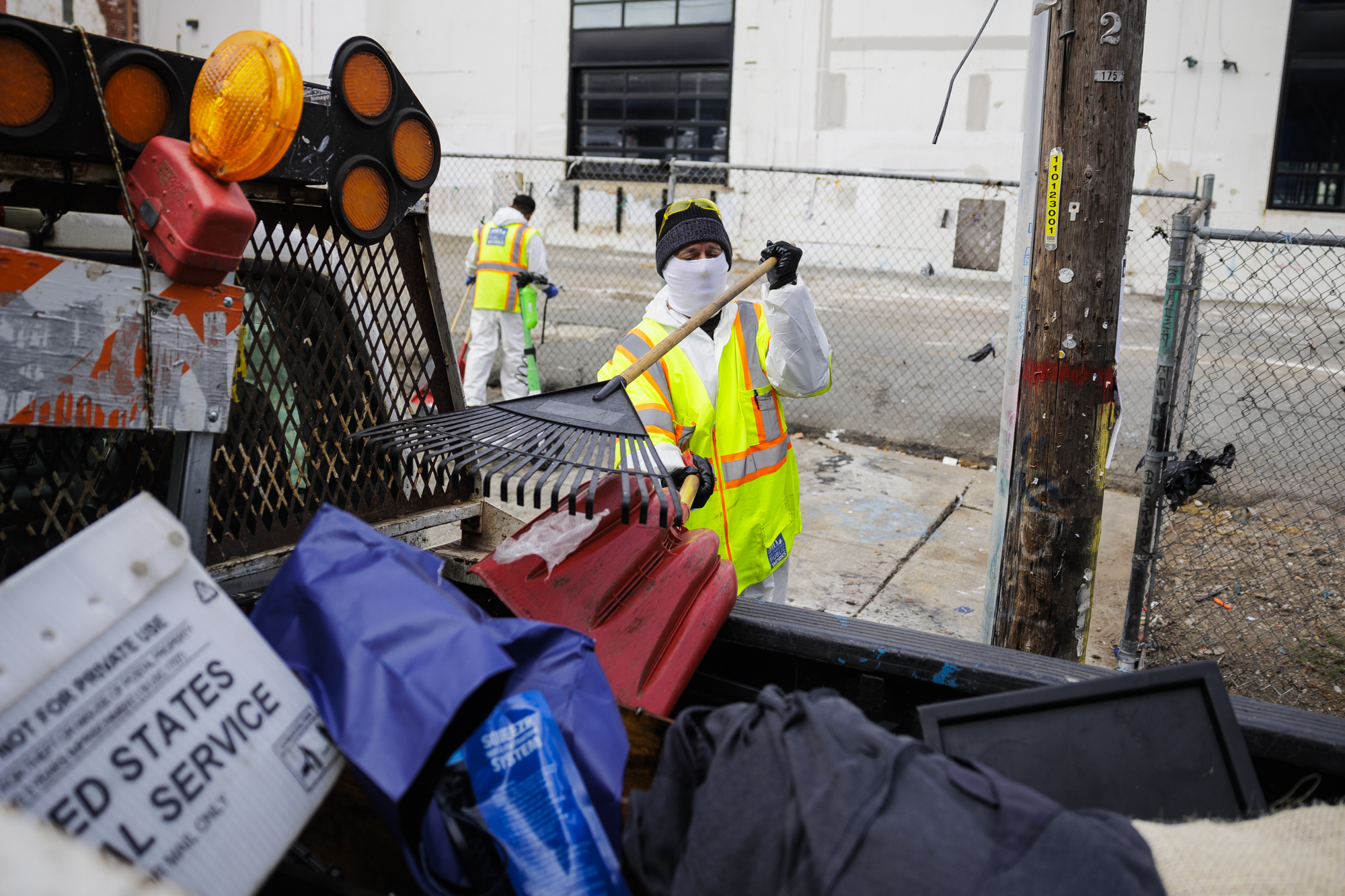
As San Francisco officials vow to ramp up sweeps of homeless encampments, a federal judge is requiring the city to better train its workers on what to do with people’s belongings.
The case filed by a group of unhoused residents in 2022 centered on arguments that the city routinely disregarded its own policy by destroying property during sweeps and that workers were violating residents’ Fourth Amendment rights, protecting them from unreasonable seizures by the government.
U.S. Chief Magistrate Judge Donna Ryu ruled Monday that the city must work with the plaintiffs on a new policy training city staff on how to properly handle and store property, but Ryu denied the plaintiffs’ request to have someone oversee the city’s implementation of the policy.
The ruling comes as Mayor London Breed has promised, beginning this month, a “very aggressive” crackdown on encampments. According to the mayor’s office, the city last week engaged with 235 people. Of those, 24 accepted offers of shelter, seven received shelter, and one person was placed on a mental health hold. The vast majority — 195 people — declined offers or provided no information to city workers.
Nisha Kashyap, an attorney for the plaintiffs with Lawyers’ Committee for Civil Rights of the San Francisco Bay Area, called the ruling “incredibly important.”
“We have said for a very long time — plaintiffs have said, our clients have said — that they have real concerns about the city’s compliance with its ‘bag and tag’ policy, and that was the impetus of bringing this claim in the first place,” she said.
That policy prohibits workers from throwing away people’s belongings, with the exception of hazardous or perishable materials. It also requires them to distinguish between abandoned property and property that has been left unattended temporarily.
“They’re not allowed to throw away people’s property, and they’re doing that,” said Jennifer Friedenbach, the executive director of the Coalition on Homelessness, which brought the suit. “If it’s unattended property, they’re supposed to bag and tag it.”
In her ruling, Ryu agreed with the unhoused residents that there was sufficient evidence the city was not consistently following its own policy and said its training program “raises more questions than answers.” However, Ryu also decided that it would be unnecessary to require the city to provide regular and detailed reports regarding the property it collects.