This report contains a clarification.
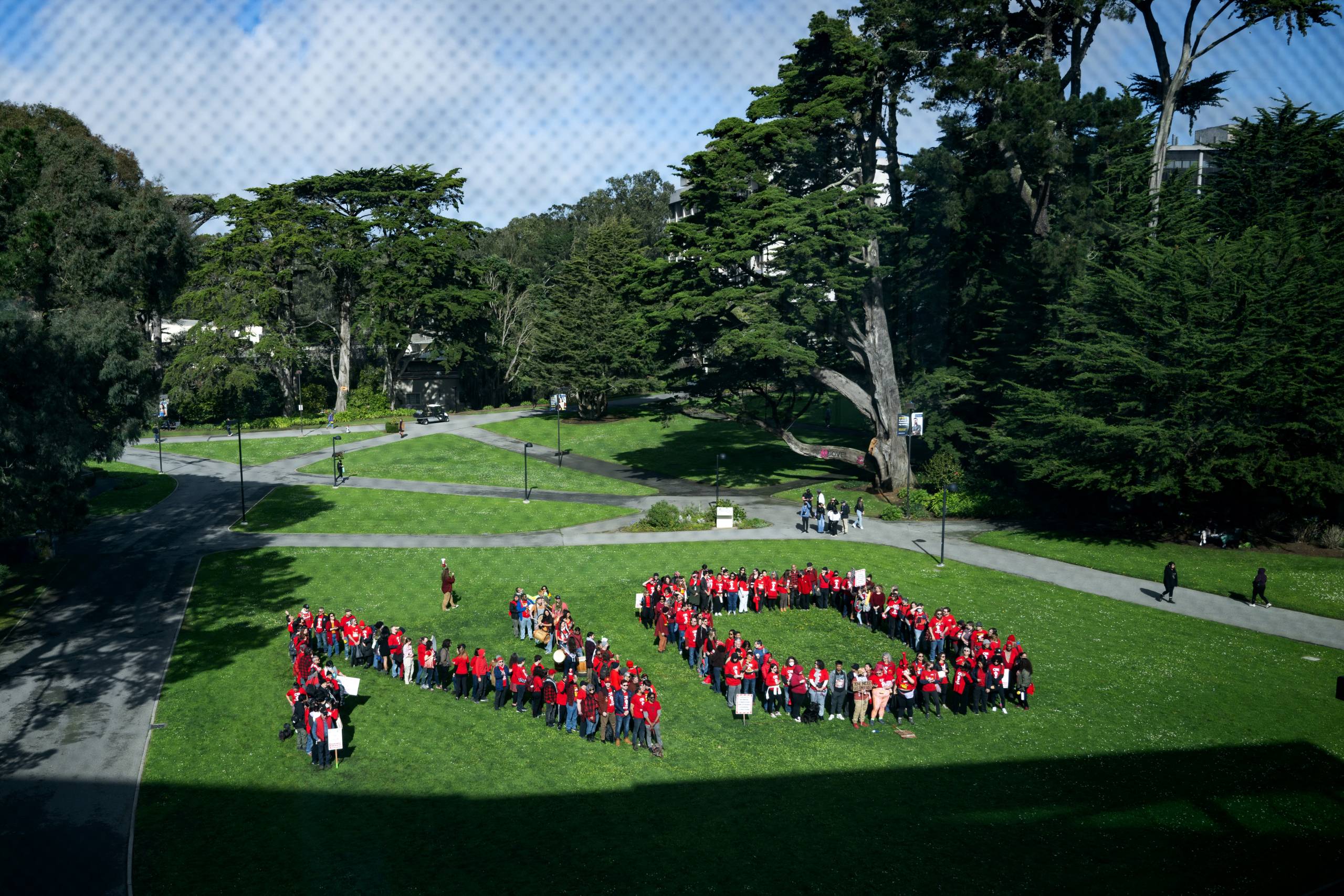
Faculty members at San Francisco State University gathered on campus on Thursday to oppose the tentative agreement reached by their union’s leadership with California State University. Faculty from other CSU campuses, including CSU East Bay and San José State, also joined the rally in support.
A rally was planned for Thursday, which was meant to be the fourth day of a systemwide strike across all of the CSU’s 23 campuses.
But late Monday night, the California Faculty Association announced that it had reached a deal with the university and that the strike was over. Rather than cancel their planned rally, San Francisco faculty chose to use the opportunity to speak out against the deal’s terms, which many have called unsatisfactory.
“Whatever the specifics, we were not informed, and we were not in the room, and this was a breach of trust,” said Brad Erickson, SF State’s union chapter president. “Extending the contract another year without your input means waiting even longer to bargain for a better deal.”
As recently as last Friday, union leaders were still insisting on pushing for a 12% salary increase. Their most recent official proposal demanded that increase be retroactive to last October. The union had also previously rejected an offer of a three-year deal with annual 5% raises. The first would have been retroactive to last July, and the next two would be contingent on California not reducing its base funding to the CSU below 2023 levels over the next two years.
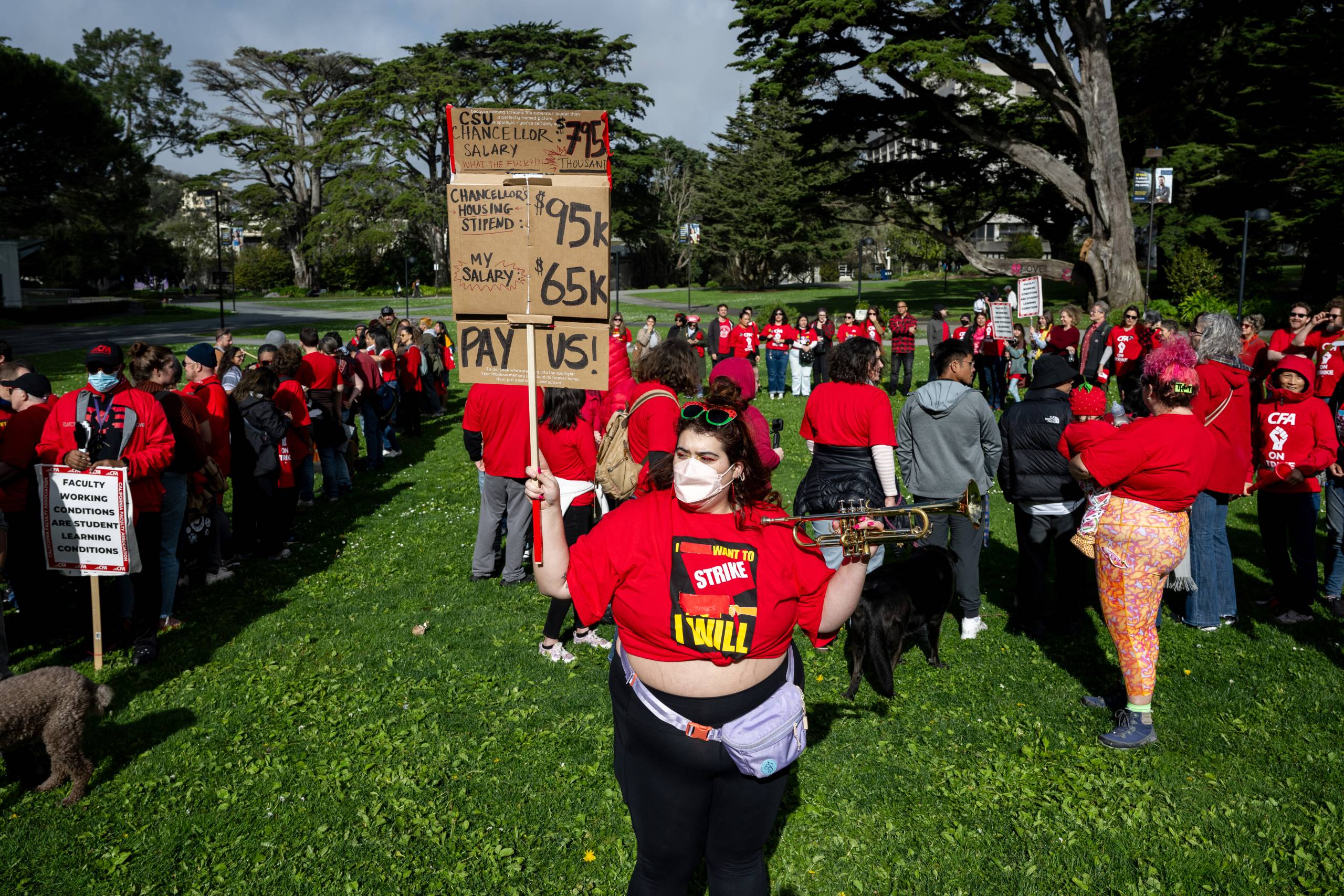
So some faculty members were disappointed when they learned that the union had accepted a deal for a 5% retroactive raise and 5% for the coming year, with the future raise including the same contingency language.
“A handful of leaders demonstrated a lack of faith in our ability to organize, and this is actually what really hurt a lot of us,” Erickson said. “They say that this is the best deal we could have gotten, but we’ll never know because we didn’t have the option to follow through.”
Mark Allan Davis, an associate professor of Africana Studies and member of the contract development and bargaining strategies committee, expressed a similar sentiment.
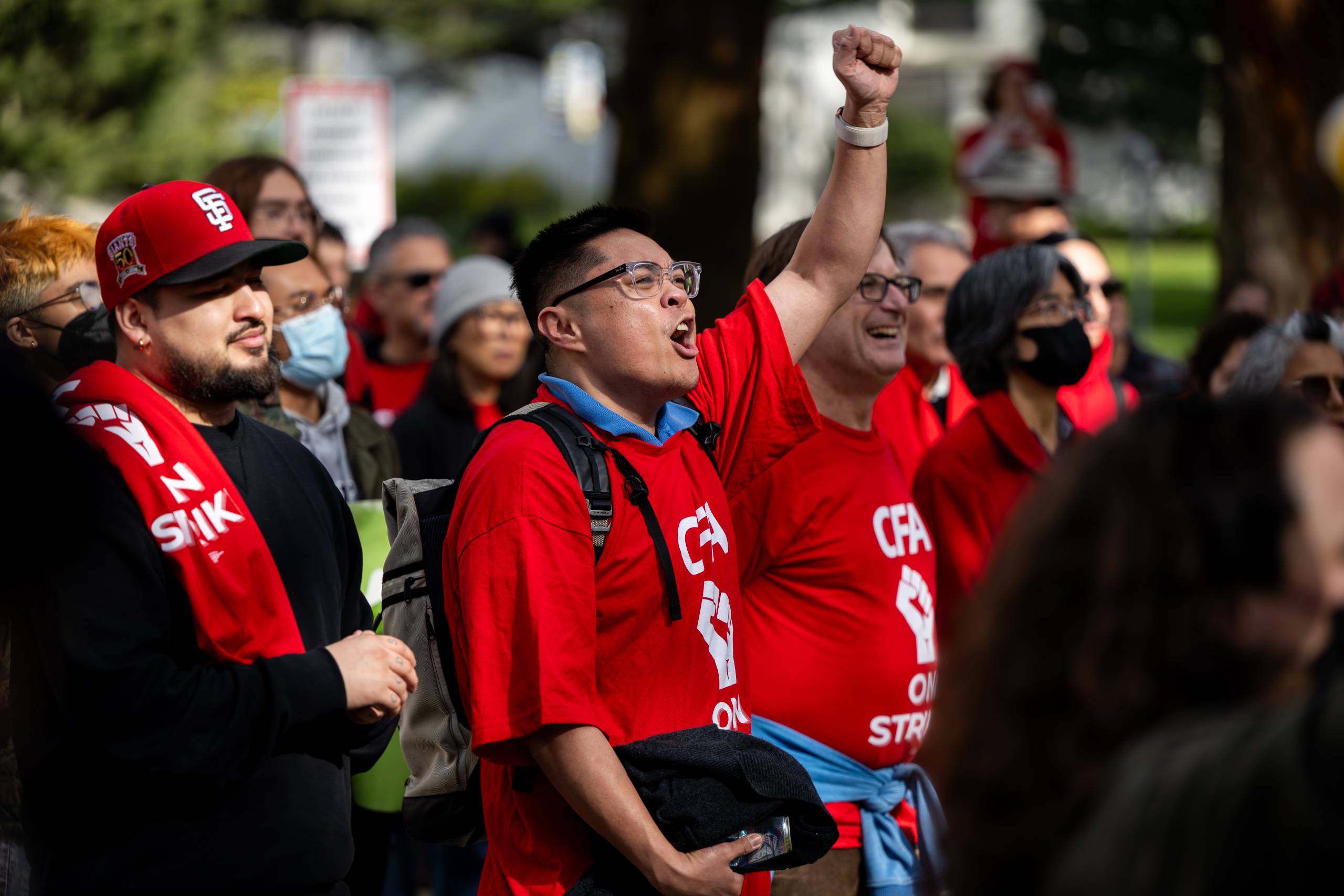
“The biggest disappointment in all of this is that … a few people did not believe that all the work that we were doing, and power that we were generating, and camaraderie and solidarity that was building, it wasn’t believed that it could be successful that whole week,” Davis said.
In a written statement, CFA statewide officials said, “Bargaining is an iterative process, and we did not secure everything that we wanted. This has led to disappointment among some of us but also excitement among many. We hope everyone understands that this deal is far beyond what CSU management initially proposed and what they imposed on us earlier this month.”
In order for the deal to be ratified, a majority of voting faculty members will need to vote for it. But some faculty are already indicating they plan to vote “no.”
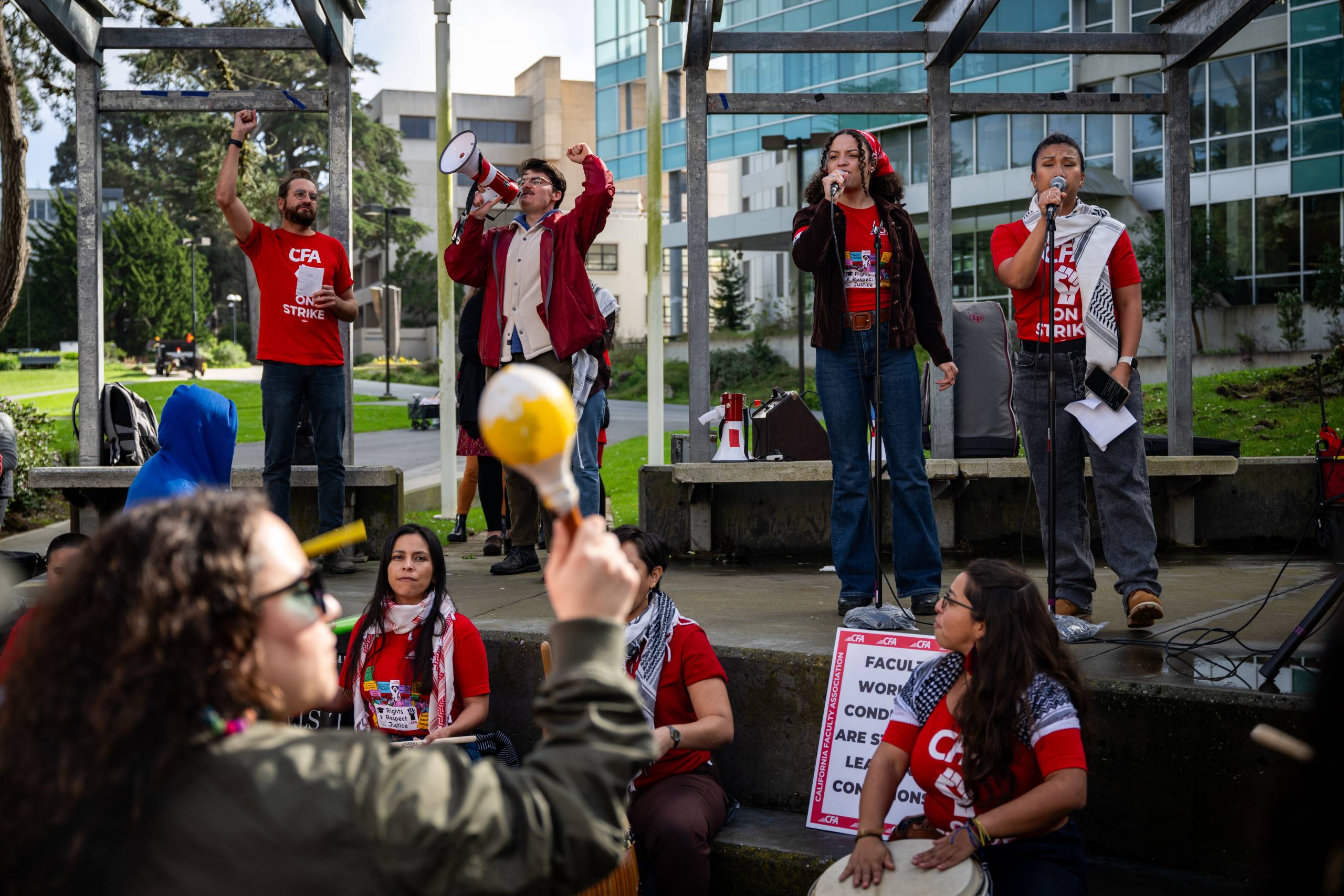
The San Francisco State union chapter polled 360 of its members and 70% said they plan to vote “no,” while only 3% said they plan to vote “yes.”
“If you’re not satisfied with the tentative agreement, help organize the ‘no’ vote. And we’re starting that today,” Erickson said.
Online, responses to the news of the deal seemed to be mostly negative as well.