Updated 4:30 p.m. Tuesday
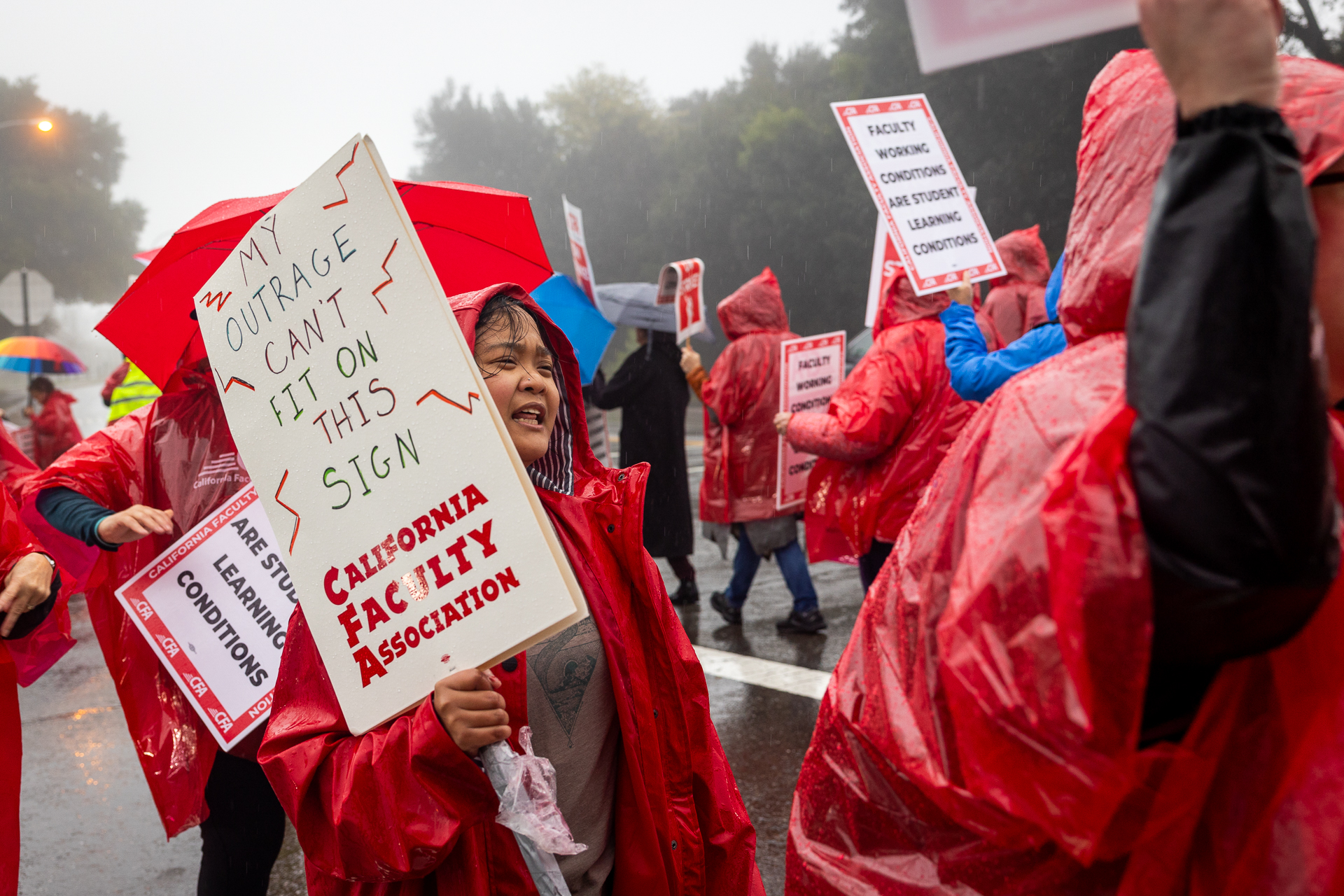
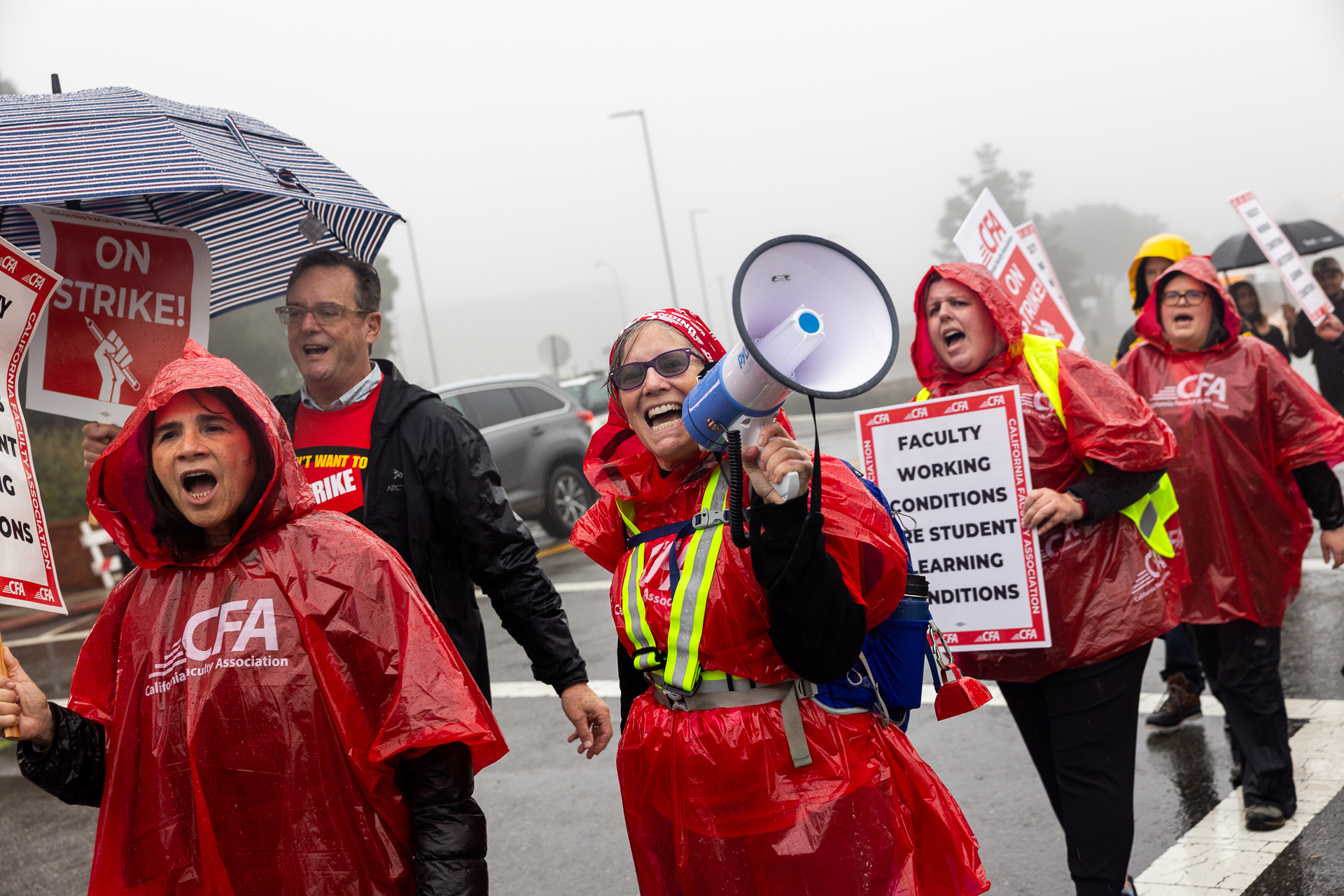
California State University faculty reached a tentative contract agreement with the university system late Monday, after just one day of a planned five-day strike for higher wages.
The roughly 29,000 professors, librarians, coaches and other workers across the nation’s largest university system who walked off the job Monday returned to work Tuesday morning.
The deal, which still needs to be ratified by the union members, “reflects the solidarity displayed by faculty, staff, and students across all 23 campuses,” the association statement said. “To all the hard-working faculty who have been organizing on the street and on campus, your efforts have earned this victory.”
“It caught everyone by surprise that a deal was made so soon,” said Kevin Pina, a lecturer for the Department of Communication at CSU East Bay and the California Faculty Association East Bay Lecturer Council Representative.
Pina said the deal includes the following:
- A 5% general salary increase for all faculty, retroactive to July 1st, 2023.
- A 5% general salary increase for all faculty on July 1st of this year, contingent on the state not reducing the base funding to the CSU.
- A salary step increase of 2.65% (from 2024 through 2025).
- Increase in paid parental leave from 6 to 10 weeks.
It also increases the minimum wage for the lowest-paid faculty, according to the union statement. CSU Chancellor Mildred García praised the agreement.
“I am extremely pleased and deeply appreciative that we have reached common ground with CFA that will end the strike immediately,” García said in a statement. “The agreement enables the CSU to fairly compensate its valued, world-class faculty while protecting the university system’s long-term financial sustainability.”
Kevin Wehr, a professor of sociology at CSU Sacramento and chair of the bargaining team for the CFA called it “an extraordinary and historic contract, settlement after a historic, system-wide 23-campus strike.”
He also emphasized the importance of raising the salary floor for some of the lowest-paid colleagues. If someone is working full time in the lowest range, they’re paid $55,000 a year, he said. But, most people working in this category are part-time employees. For those people, average pay is around $35,000 a year. “It’s a matter of economic justice. It’s a matter of equity. And it’s also a matter of getting the best faculty for the students of California,” Wehr said. “I’m incredibly proud that we were able to win this victory for our most precarious colleagues.”
Not everyone is content. “I would say that our campus is trending against,” said Brad Erickson, chapter president of the CFA at San Francisco State. Of the 254 people at today’s Zoom meeting, he said more than three-quarters were against it, about 20% were undecided, and just a couple of people were planning to vote yes.
“A raise of less than 10% is effectively a pay cut because of how much we’ve lost relative to rising cost of living,” Erickson said. “It feels like we hadn’t reached our power yet.” He heard from several members that they gave in too easily.
Many CSU faculty also took quickly to X (formerly Twitter) to lambast the deal, arguing it fell woefully short of what the union had been pushing for, and urging members to vote it down.
“5% is a paycut. This is a terrible ‘deal,’” Josh Davis, an SF State journalism professor, said in response to the union’s post announcing the agreement. “CSU faculty deserves stronger leadership.”
For Pina, the CFA East Bay Lecturer Council Representative, it was “more a question of the recognition of the strength that we had, the numbers that we had, and the large number of faculty who respected the strike and did not teach.” After the pandemic “derailed a lot of what we considered normal,” he sees this as “a glimmer of hope.”
“Do I feel as if my union betrayed me? No. Could we have gotten a better deal? Who knows? We didn’t go there,” Pina said.
Pina also added that there are larger structural problems the union can’t solve, “The biggest problem is that the board of trustees that oversee the policymaking for the 23 campus system are political appointees,” he said. “You’ve got people who are business managers running a public institution.”
Monday’s massive walkout came two weeks after CSU officials ended contract negotiations with a unilateral offer starting with a 5% pay raise this year, effective Jan. 31, far below the 12% hike that the union was seeking.
Victoria Wilson, a part-time political science lecturer who picketed in the rain at Cal State Northridge in Los Angeles, said her salary fluctuates from semester to semester, which impedes her long-term financial goals.
“We’re just hoping for a better contract to ensure better pay and also the working conditions here on campus,” Wilson said.
Another 1,100 CSU plumbers, electricians and other skilled trades workers represented by the Teamsters Local 2010 had planned to join the striking faculty but reached their own agreement with the university late Friday.
Some students joined the picket lines on Monday to show their support.
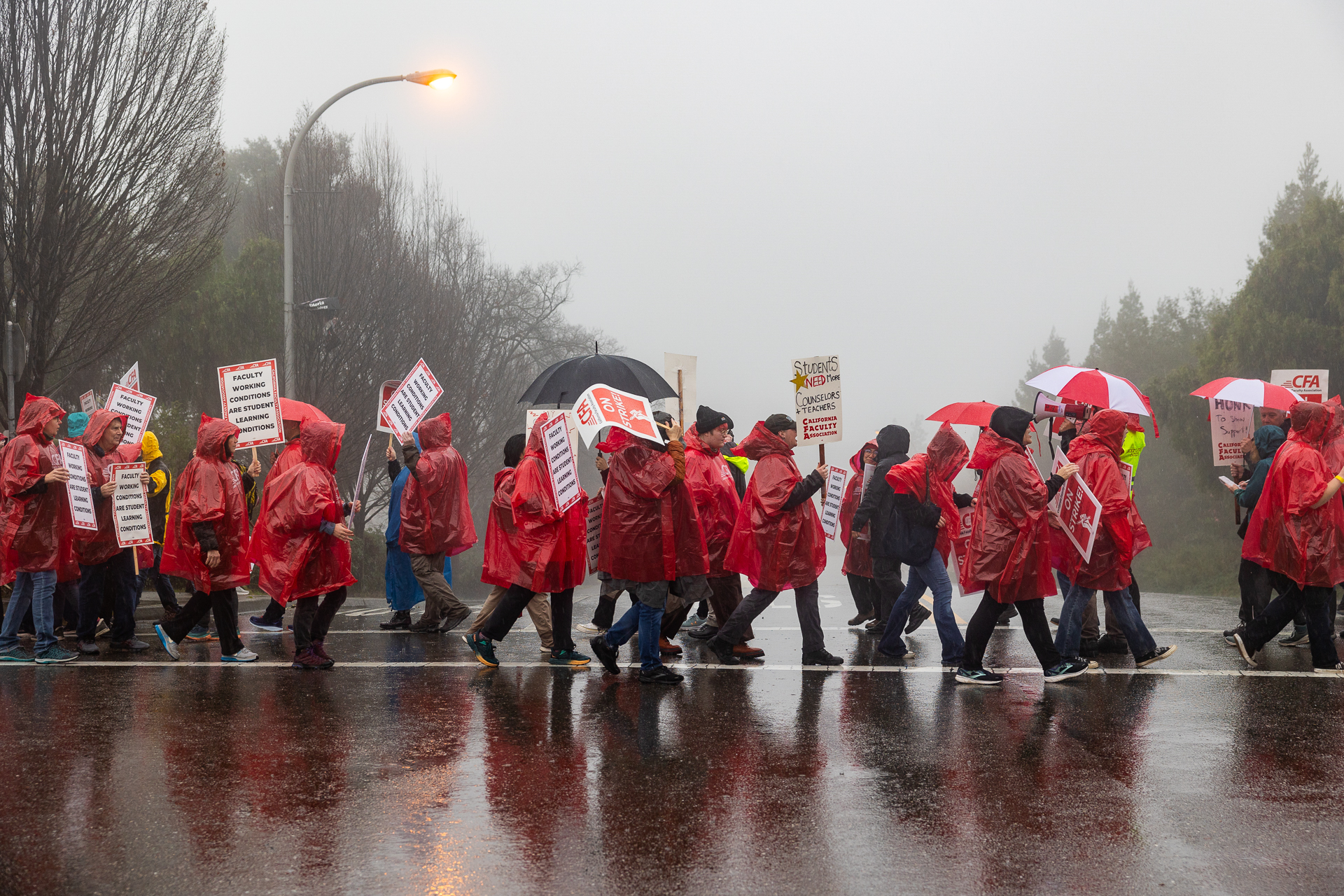
Cal State Long Beach student Gabriela Alvarez said she joined the demonstration outside the university to support her professors and to reject tuition hikes that will start this fall.
“It’s important for our professors to be treated right, we need more student resources here, we’re trying to lower tuition prices,” Alvarez said.