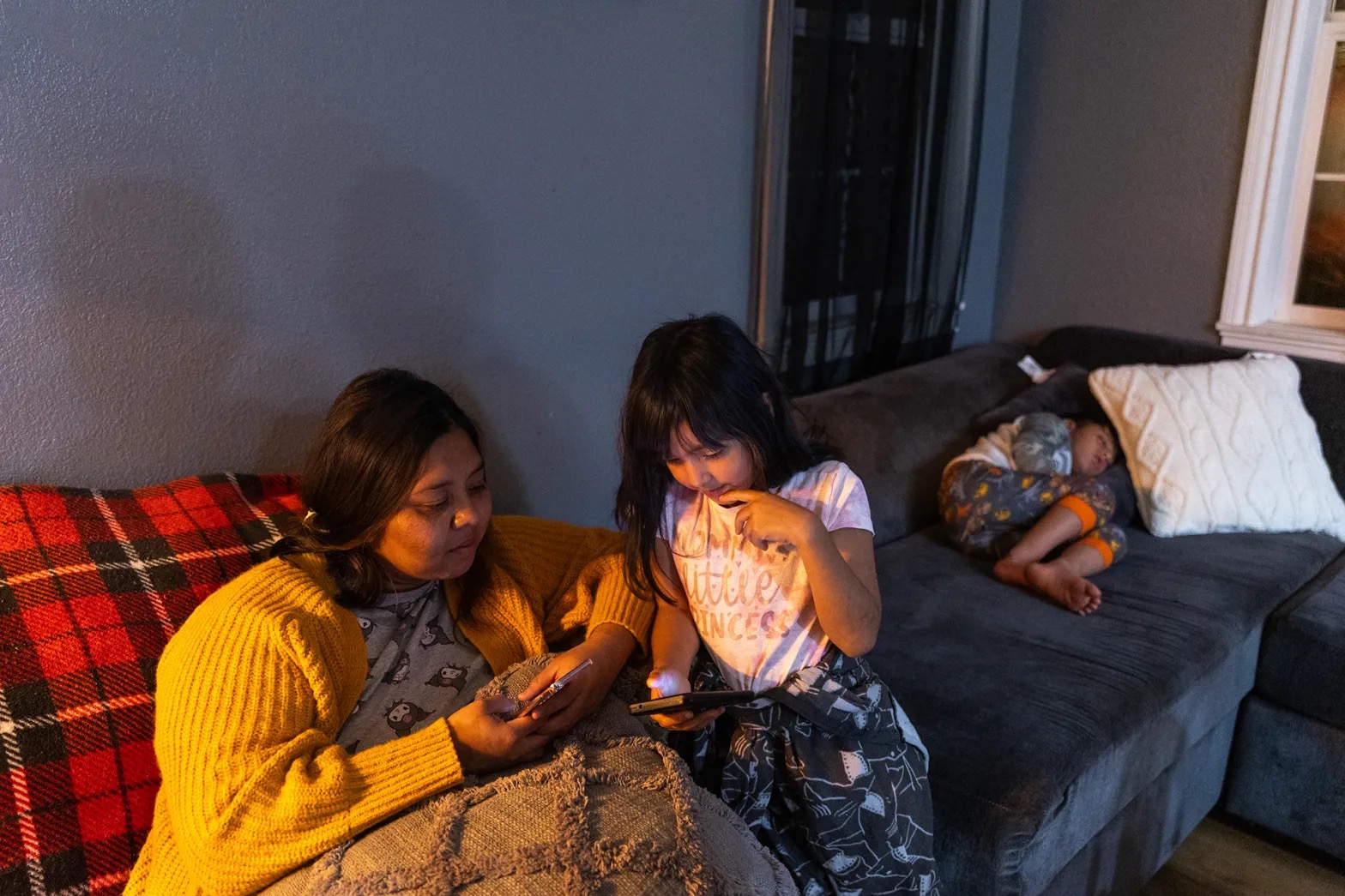
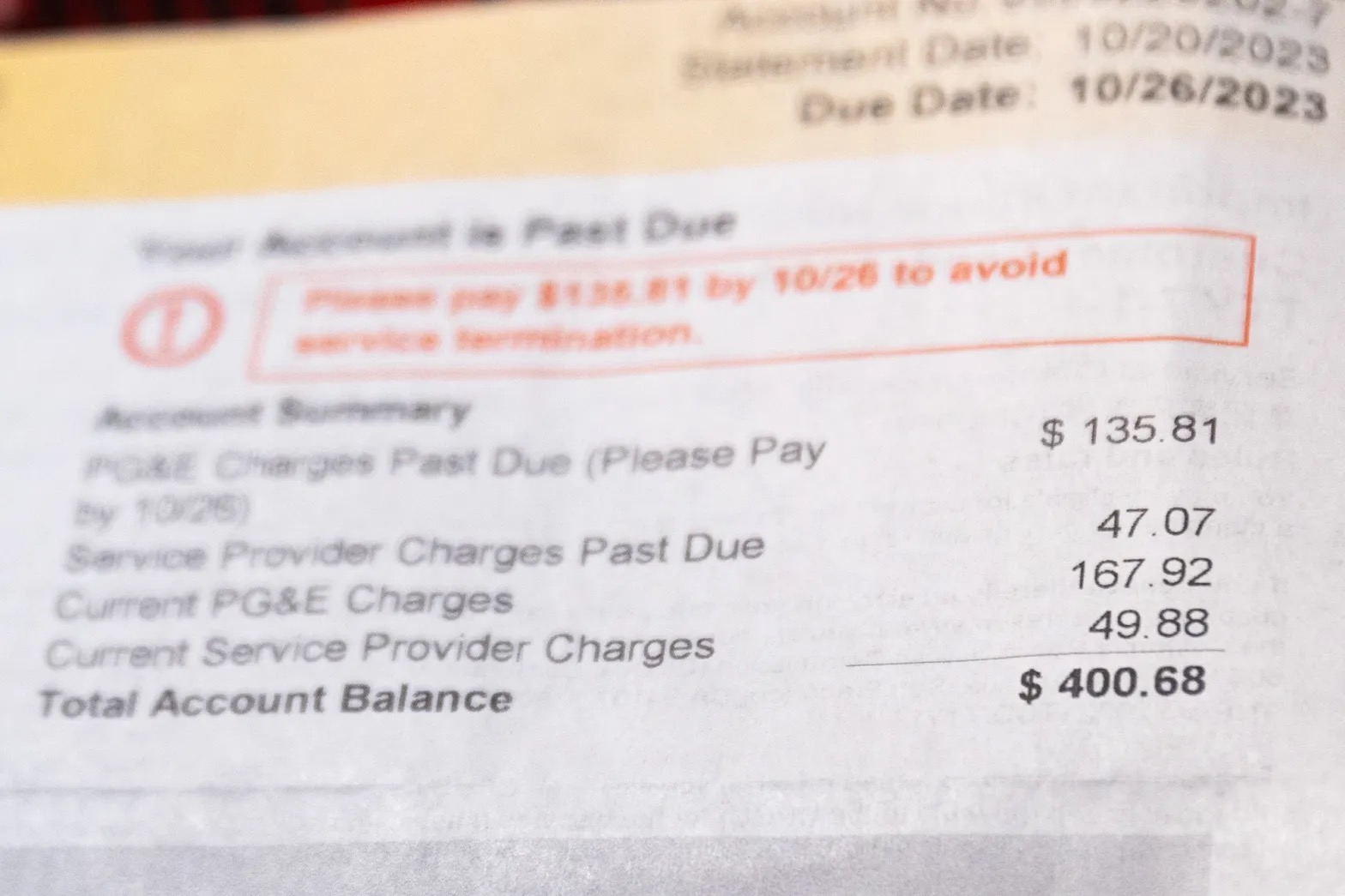
Angelica Vásquez’s anxiety soared when she read the notice on her most recent electric bill: “Please pay $135.81 by 10/26 to avoid service termination.”
But the warning was part of a bigger problem. Vásquez owed a total of $400.68 to Pacific Gas & Electric.
For the past four months, the 43-year-old Salvadoran immigrant has been on disability leave from her job at Tesla due to a shoulder injury, she said. Vásquez has also been unable to do her second job, as a part-time house cleaner, to help pay the $3,000 monthly rent on the San Leandro house she shares with her husband, two daughters and two grandchildren.
In the early hours of Nov. 9, Vásquez wanted to warm up the house for her grandchildren, who needed to shower and get ready for school. But there was no power. Vásquez said she immediately called PG&E and explained that she had no money.
The utility giant didn’t offer much help, she said.
“We had to borrow money,” Vásquez added, recounting the day her family remained without power until 11 p.m. “Our food went to waste, so we didn’t have lunch and dinner that day. There’s medicine in the fridge that no longer works.”
Vásquez is one of millions of residents across the state who have seen significant increases in their electric bills in recent years.
Bills for most PG&E customers are soon slated to rise again following the California Public Utilities Commission’s approval last week of rate increases, which the Oakland-based utility requested to pay for safety and reliability upgrades and inflation costs.
Starting in January, the average residential customer’s combined monthly electric and natural gas bill will increase by $32.62, or nearly 13%.
According to the last electric rate report by the commission’s Public Advocates Office, PG&E rates increased by 92% between January 2014 and September 2015.
“We are working to keep customer cost increases at or below assumed inflation for the long term, between an average of 2 and 4% a year. We reduced our operating costs by 3% in 2022,” PG&E said in a statement to CalMatters.
‘We can’t afford to stay’
But California residential electricity prices are already more than twice the national average, according to the report by the Public Advocates Office.
State Sen. Brian Dahle (R-Bieber), vice chairperson of the Energy, Utilities and Communications Committee, said his office receives many calls from people complaining about electric bills.
“People that are barely making it, people on disability, you name it,” Dahle told CalMatters. “We get those calls, and they’re like, ‘We can’t afford to stay,’ and it’s heartbreaking.”
“The more money PG&E spends, the more they make, and that’s not right,” he added. “We need to make sure that we’re holding them accountable, that we are getting the projects completed with the minimum amount of cost.”
Dahle’s district encompasses 11 counties in Northern California, including some of the ones most impacted by recent wildfires. The same state regulators that will vote on PG&E’s proposed increases are also considering a $45 million penalty against the utility in connection with the Dixie Fire, the second-largest wildfire in state history, that began in Butte County in 2021.
PG&E said it is constructing underground power lines, an exceedingly expensive undertaking that it argues will reduce the risk of electrical-triggered wildfires by 98%.
Wildfire mitigation is not the only driver of the rate increases, according to the latest report by the Public Advocates Office.