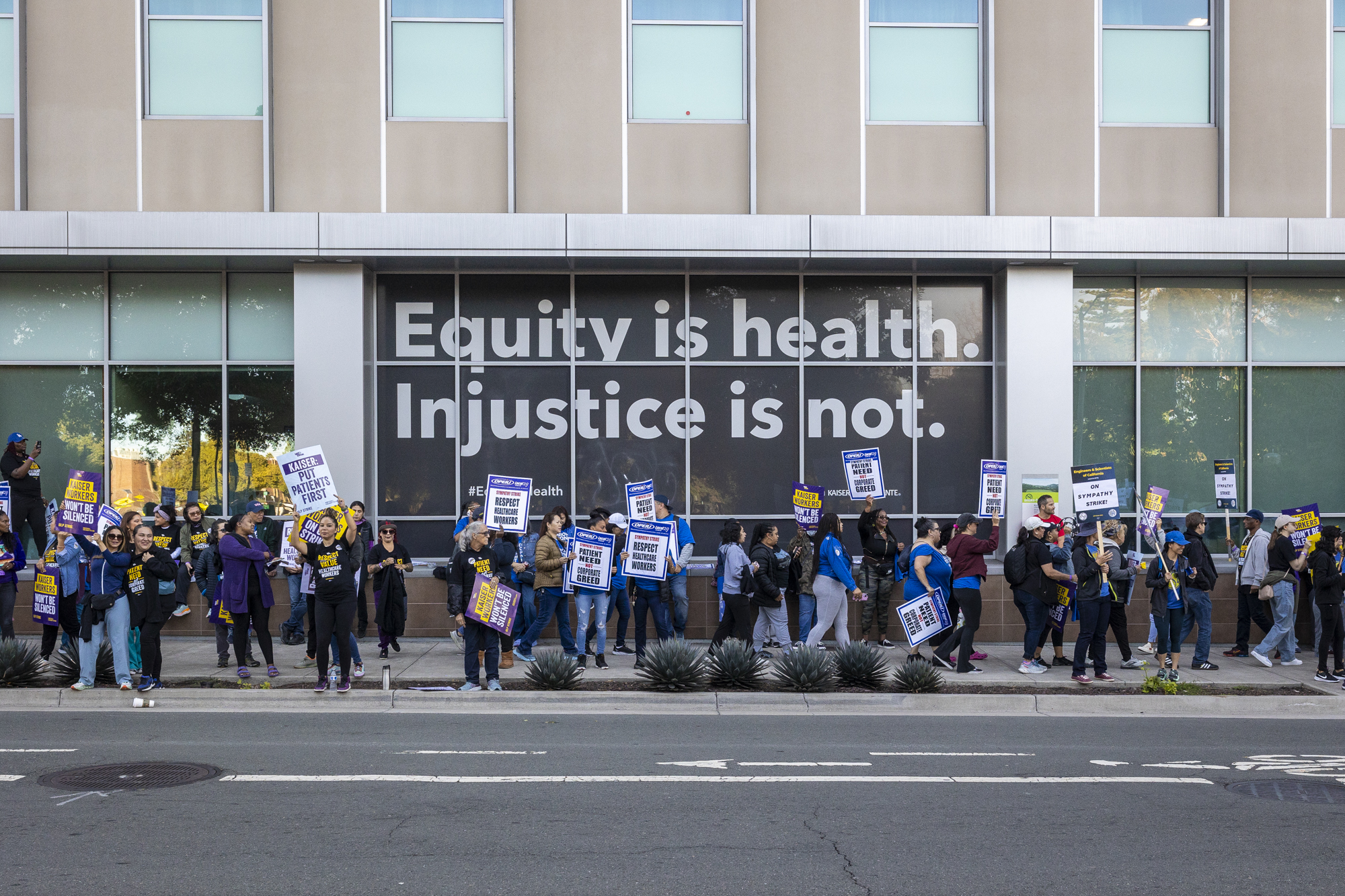
Day two of the largest health care worker strike in U.S. history is underway across the country and in the Bay Area, as tens of thousands of Kaiser workers are seeking higher wages and increased staffing.
“Frontline health care workers are awaiting a meaningful response from Kaiser executives regarding some of our key priorities including safe staffing, outsourcing protections for incumbent health care workers, and fair wages to reduce turnover,” said Caroline Lucas, a spokesperson for the Coalition of Kaiser Permanente Unions.
Kaiser Permanente leaders and union representatives met Monday and Tuesday for bargaining, but did not come to an agreement before workers began striking on Wednesday morning. As of Wednesday evening, there were no new negotiation sessions scheduled, Lucas said.
The strike is slated to end at 6 a.m. on Saturday morning, according to statements from both Kaiser Permanente and the coalition representing Kaiser workers unions.
“We will coordinate with Coalition leaders to reconvene bargaining as soon as possible,” a spokesperson for Kaiser told KQED on Thursday. “We will work hard to reach an agreement so that together, we can all return to delivering on the mission of Kaiser Permanente for the benefit of our members, patients, employees, physicians, customers, and communities.”
In a press statement days before the strike began, Kaiser said it hired 29,000 people in 2022, and 22,000 so far in 2023. Of the new hires this year, the company said more than 9,800 are in jobs represented by the Coalition of Kaiser Permanente Unions.
In earlier bargaining talks this year, Kaiser said it agreed to accelerate bringing on new staff and set a goal of adding 10,000 new employees represented by the Coalition by the end of 2023.
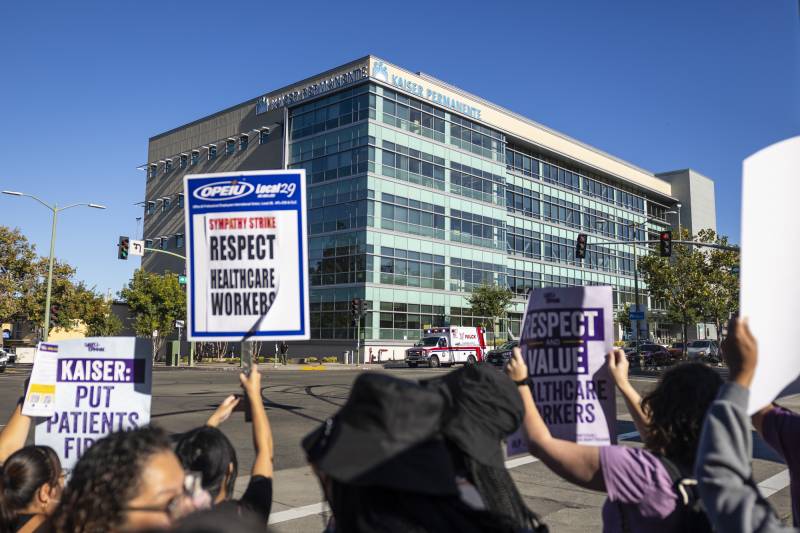
“Kaiser Permanente’s efforts are paying off: We expect to reach the 10,000 new hire goal by the end of October, if not sooner, and we won’t stop there,” the press statement reads. “We are committed to addressing every area of staffing that is still challenging. We’ve also taken actions to streamline the screening, hiring, and onboarding process.”
Roles impacted by the strike this week include respiratory therapists, optometrists, behavioral health workers, medical assistants and many others.
In an email, a Kaiser spokesperson said they will hire “contingent workers” to fill in for workers on strike this week. Some elective surgeries have been rescheduled, and wait times for COVID-19 and flu vaccines are also impacted. (Read KQED’s guide for Kaiser patients during the strike and what you need to know.)
Workers on the picket lines this week told KQED they feel overworked and underpaid, and that low staffing after the pandemic has come at the expense of the quality of patient care.