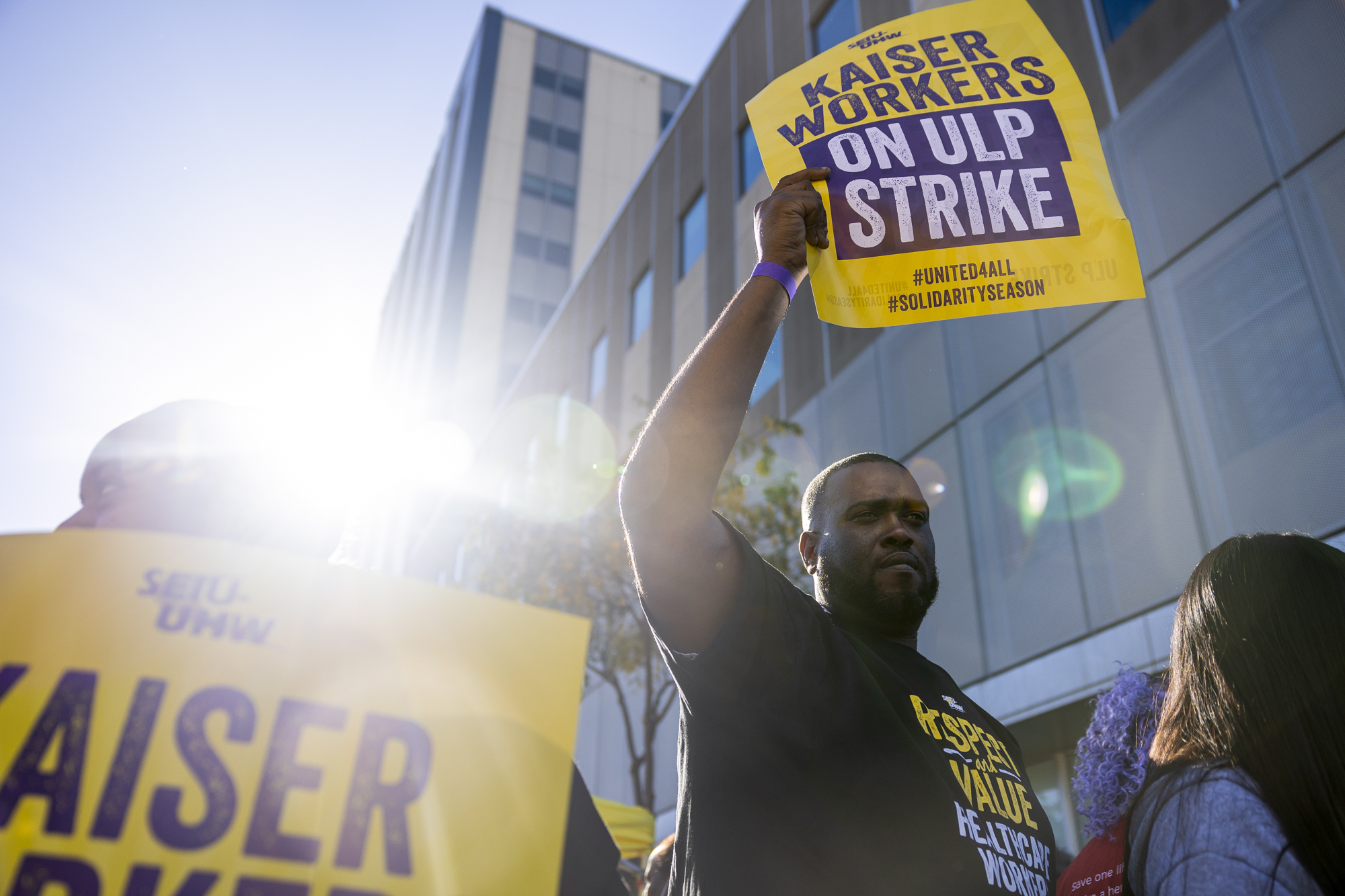
Nearly 23,000 Kaiser Permanente X-ray operators, surgical technicians, nursing assistants and other health care workers in the Bay Area began striking Wednesday morning as contract negotiations continue.
“We have committed to a three-day strike,” said Timothy Regan, a Kaiser health educator of 25 years who was picketing outside the San Francisco Medical Center before dawn.
Employees will be striking across the Bay Area from Wednesday until 6 a.m. on Saturday, including at Kaiser hospitals in Oakland, Antioch, Fremont, Manteca, Redwood City, Richmond, San Francisco, South San Francisco, San José, Santa Clara, Santa Rosa, Vallejo and Walnut Creek.
Kaiser workers are pushing for increased staffing and pay increases to prevent burnout after millions of health care workers left their jobs during the pandemic.
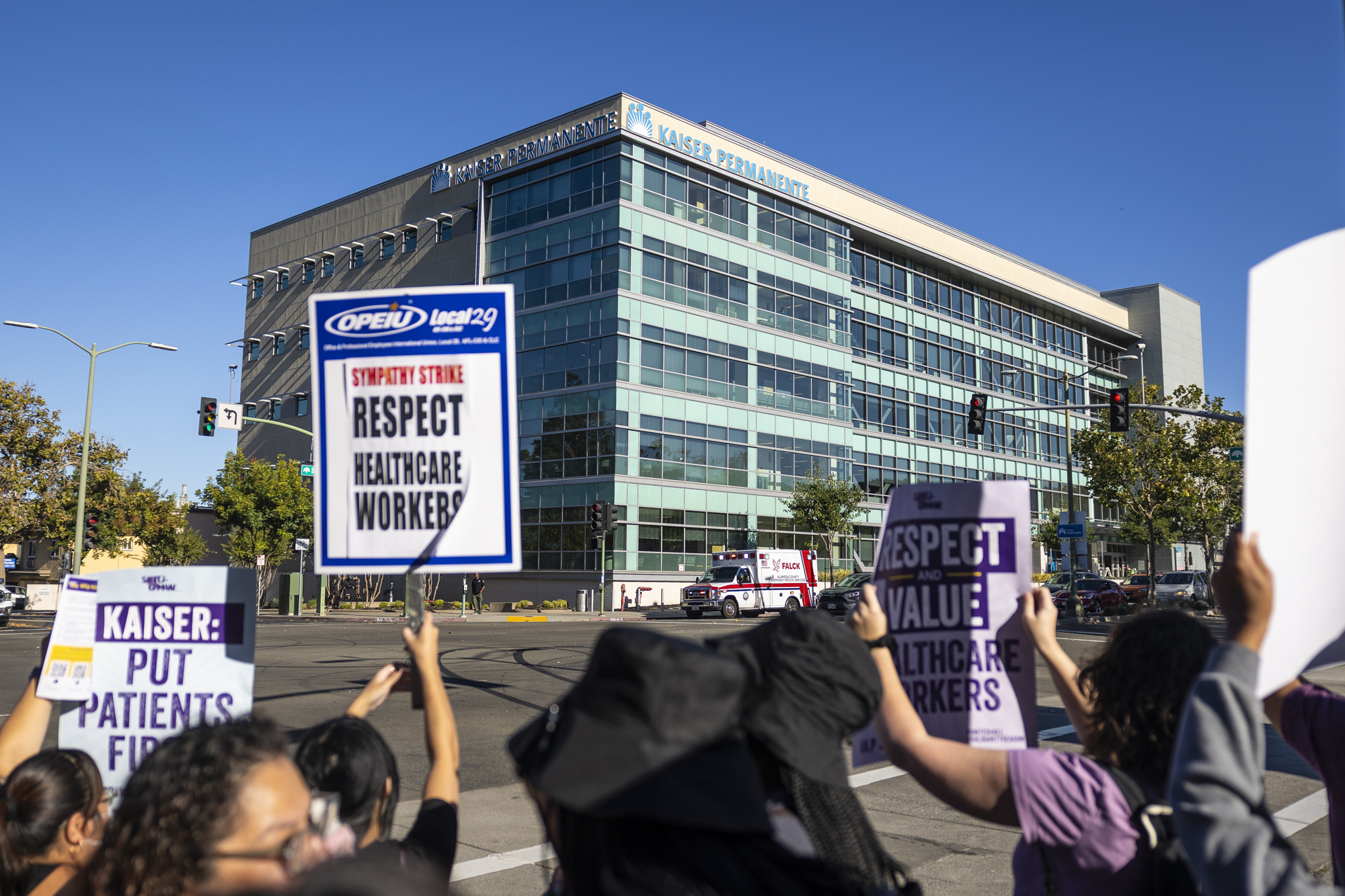
“Short staffing is the biggest thing that affects patient care and quality of care,” Edith Hurtado, a medical assistant at Kaiser, told KQED while picketing outside the San Francisco facility on Wednesday. “Patients have a long wait period or [are] not getting the care they need and have to wait for a medication or injection. The quality of patient care does diminish when we don’t have a full staff.”
But the three-day strike is expected to exacerbate vaccine wait times for many patients at Kaiser, which serves more than 9.4 million people across California and is one of the largest private employers in the state. Non-emergency health services including elective surgeries have been rescheduled at some locations as well.
Some laboratory, radiology and optical locations may be closed or operating at reduced hours during the strike, a spokesperson for Kaiser told KQED in an email.
Getting vaccines
Lily Young has been struggling to find a booster shot for her two young children at her local Kaiser facilities in Sacramento. The strike has made her feel “very nervous” about their ability to get vaccinated before a scheduled trip.
“About half of my friends are Kaiser members and we are all just scrambling and trying to get these COVID shots,” said Young. “I support the workers and their right to unionize, the right to get fair wages and get compensation, most certainly. But the reality is that it does have an impact on patients.”

Employees like Hurtado, who is also a Kaiser patient, said they hope the strike will put pressure on executives to improve conditions for workers, and by extension, patients.
“I’m a patient here. My family are patients here. We want better quality care and full staffing,” she said. “We’re here to fight not only for us as health care workers, but for our patients as well.”