In Madera County, one-fifth of residents live in poverty and many don’t have health insurance.
The last thing this largely rural, Latino-majority part of the San Joaquin Valley needed was for its only general hospital to close its doors.
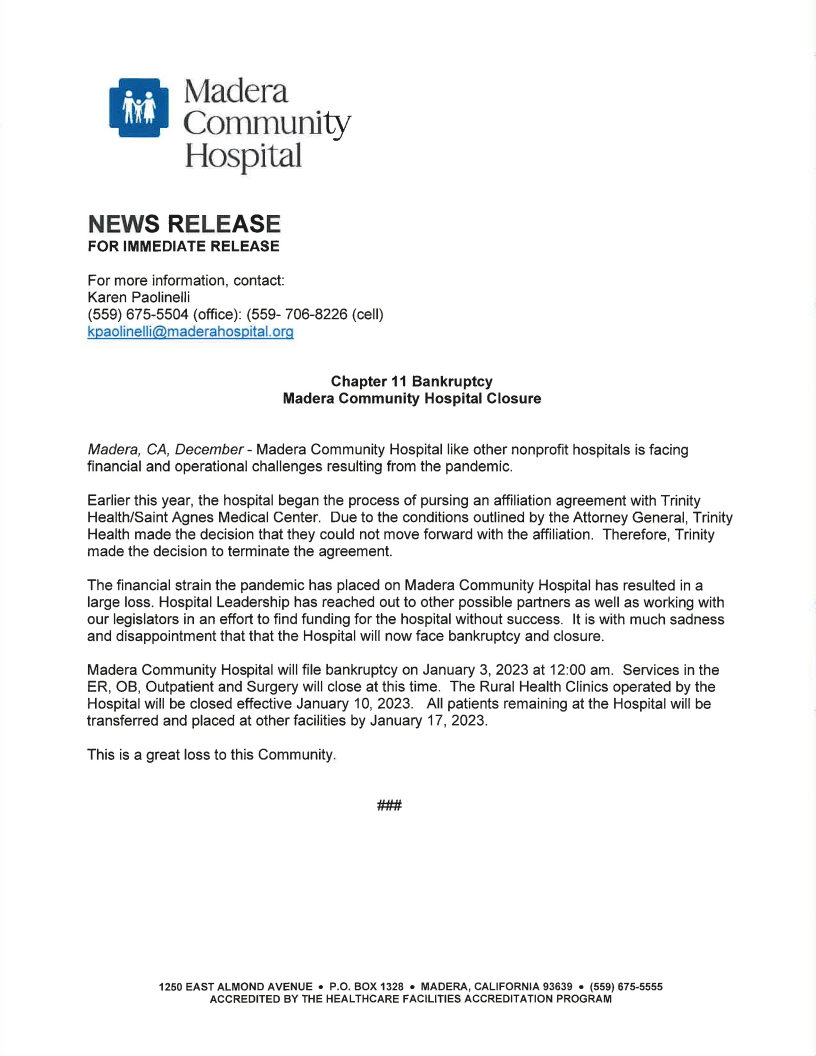
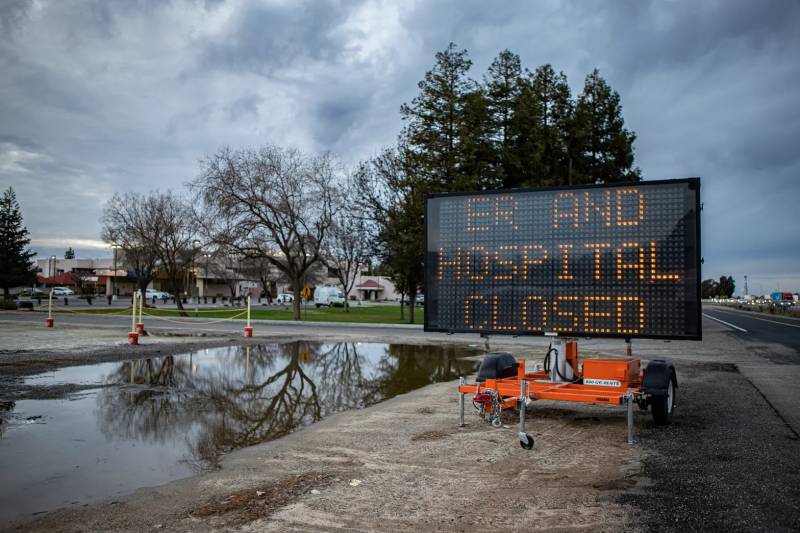
But years of financial struggles forced the 106-bed Madera Community Hospital and its three clinics to shut down completely in early January. The COVID-19 pandemic pushed the 51-year-old hospital over the brink, hospital leaders said.
Now the hospital’s board and local officials are scrambling for solutions, including searching for a new potential buyer. And Madera Community is just one example of California hospitals in financial distress. State lawmakers and industry leaders caution that other nonprofit hospitals are in a dire fiscal situation and, without assistance, could potentially close.
“It’s a disaster. This is a facility that people depend on,” said Democratic state Sen. Anna Caballero, who represents the Madera area. “This is a loss of services that is going to be really felt in many of our small communities.”
Esther Vargas, 73, knows it. She said it was common for residents in her small community of La Vina to rely on physicians associated with Madera Community Hospital for a variety of health issues that many believe are linked to their area’s exposure to frequent fumigation and crop burning.
On particularly bad air days, she said, she can barely go outside without her throat closing up. Now, if she has an asthma attack, she’ll likely have to travel 20 miles farther to an emergency room in Fresno. “I’m going to miss having the hospital,” Vargas said in Spanish.
Madera Community, an independent nonprofit private hospital, was the only place adults could go for emergency services within the county. (Madera is also home to Valley Children’s, a pediatric hospital.) And until late December, the hospital was scheduled to be sold to Trinity Health, a nonprofit Catholic health care system that owns Saint Agnes Medical Center in Fresno. The state attorney general’s office, which regulates health care mergers that involve a nonprofit, said Trinity Health pulled out of negotiations after refusing to meet important conditions, which included price caps, as well as maintaining language services, charity programs and privileges for existing staff.
“These minimal conditions were necessary because without them, the communities could not be assured of even basic essential services,” the attorney general’s office said in a statement.
The California Hospital Association has pushed back on the attorney general’s conditions (PDF), arguing that some of the requirements were too strict in a situation where the goal was to save a hospital from financial collapse. These conditions are supposed to protect consumers, but in this case, the industry association argues, they did the opposite, forcing the hospital to close and leaving Madera patients with less access to care.
‘At a tipping point’
Madera Community Hospital’s financial records, as kept by the state, show the hospital had been unstable even years prior to the pandemic. The hospital’s recent losses were tied to increases in day-to-day costs, which are difficult to cover for long periods, especially for hospitals with limited reserves, according to one analysis prepared by health economists for the attorney general.
Caballero said Madera’s hospital officials first approached her last July in search of help. The state promised the hospital $5 million to keep services running while it finalized its negotiations with Trinity Health. That money was supposed to go to Madera Community Hospital early this year, but that aid is no longer available now that the hospital is closed, Caballero said.
The hospital now would likely need a lot more than $5 million to reopen its doors.
“They’re not the only hospital. There are other hospitals in very similar situations,” Caballero said. “So my guess is that whatever solution we come up with for Madera has to be able to work for other hospitals as well.”
Madera Community, like other hospitals that serve largely lower-income patients, for years had been underfunded, said Carmela Coyle, president of the California Hospital Association.
Those hospitals depend largely on government-funded programs, such as Medi-Cal, the state’s health insurance program for lower-income residents, and Medicare, the insurance program for those 65 and older and those with disabilities. Those programs tend to pay providers below the cost of care and less than what private insurance pays. In addition, the significant expenses of responding to the COVID-19 pandemic, including paying for expensive travel nurses who came from out of state or other parts of California, overwhelmed the hospital, Coyle said.