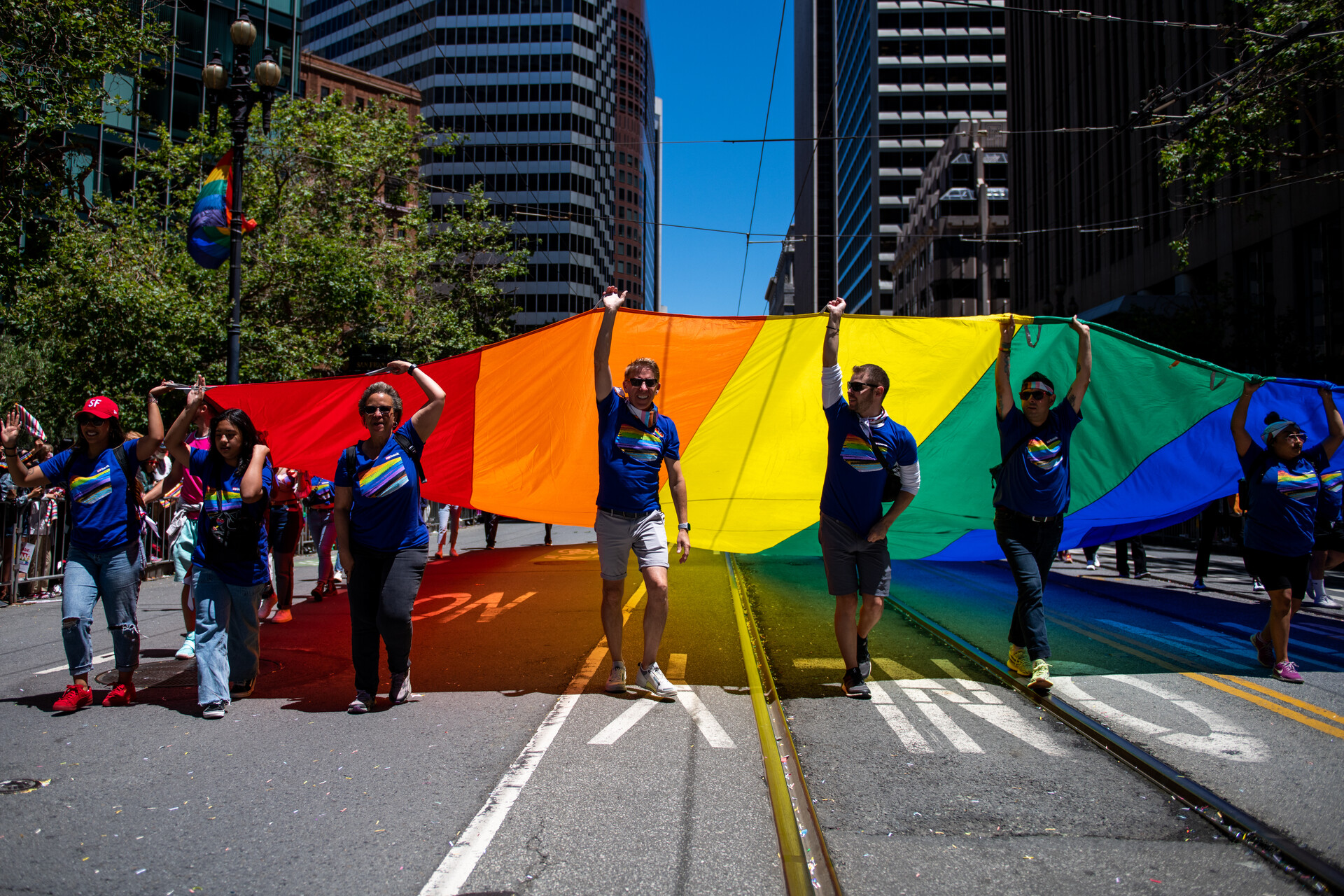
The sun shone down on Market and Noe streets on Saturday, cleared of cars and filled with smiling people. Vendors sold paintings of an idealized Castro neighborhood to passers-by. A drag queen in a yellow jumpsuit sashayed on a stage sporting signage behind her that read "FAMILY PRIDE" — this was San Francisco's first annual Family Pride block party. Parents held children on their shoulders and swayed to the beat.
Husbands Maple Chen and Collin Anthony Chen pushed their stroller through it all. But as their 6-month-old son Henry goggled, wide-eyed but calm, at the sights of his very first Pride weekend, a familiar worry were on his fathers' minds.
If the recent Supreme Court decision to overturn Roe v. Wade curtailing abortion rights across the country weren't weighty enough, a warning came written in the opinion of Justice Clarence Thomas, a stray few lines amid the 213-page decision that could change the course of the country, and their family's life.
A court ruling on same-sex marriages could be reconsidered by the court next, Justice Thomas wrote.
"When I was a teenager, I never thought having kids would be possible, that our relationships would ever be recognized legally," Collin Anthony Chen told KQED. "So then when I finally was able to have Henry and, of course, Maple as well, the relationship, I just couldn't believe it. I was just in shock. I was in awe."
He's anxious now, he said: "If we're going back to the decisions that have been made by the Supreme Court, all of that is now in jeopardy."
That's especially worrisome, Maple Chen said, "if we're thinking about our next kid."
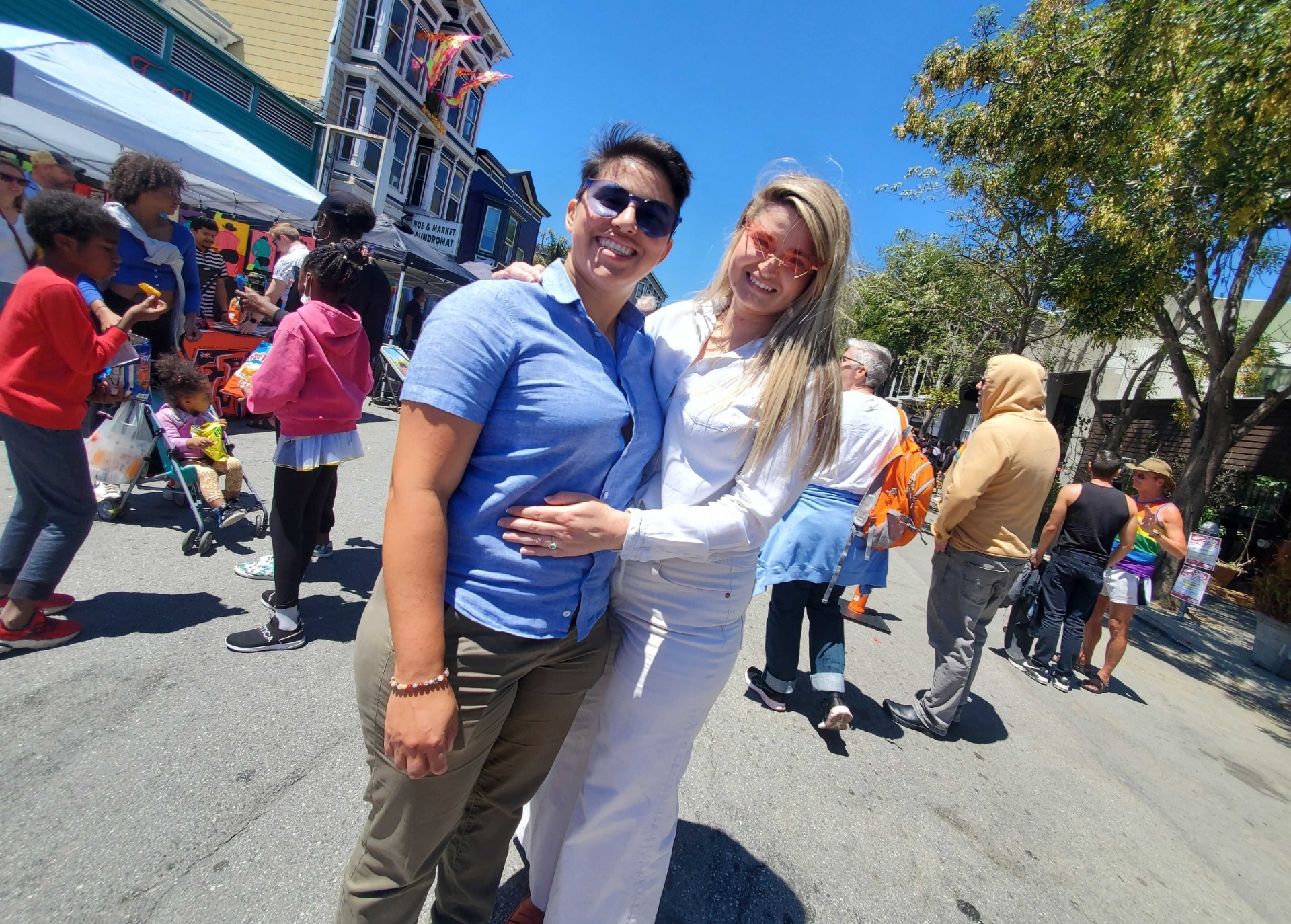
Their family wasn't alone in their concern. Wives Luisa Hurtado and Nicole Brown also were at the Family Pride block party. They worried how losing same-sex marriage rights would affect their co-owned business, and their hope to adopt a child from Colombia, where Hurtado hails from.
"We want to adopt and kind of have kids that are also part of my culture," Hurtado said. They thought there had been enough progress in both countries to make that dream a reality.
Even worse, Brown felt Thomas' warning spurred unanswered questions that could lead to diminished lives. "What if we can't be gay at work? What if we need to shield ourselves, and be a fraction of who we are?" she said.
Across the bay, Lake Merritt played host to Oakland Black Pride. James Cox, advocacy director for the eponymous organization that sponsors the event, said despite the Pride weekend celebrations, the recent Supreme Court decision was top of everybody's mind.
“This is just a start, taking away women’s rights. Next it’s going to be taking away LGBTQ rights, trans rights, the rights of interracial couples. Like, how far are they going to go with this?" they asked.
In Friday's decision, Justice Thomas cited three past rulings to revisit, centering on contraception, sodomy and same-sex marriage. Melissa Murray, an NYU legal scholar with expertise in constitutional law, told NPR that Thomas essentially pointed the way toward other laws the public could push for reconsideration.
"In doing so, he's essentially inviting future challenges to rights of same-sex marriage, rights of contraception, rights of parents to raise their children in the manner of their choosing," Murray said. "All of those rights are underlaid by the same grant of liberty that Roe was underlaid by, and that has been found to be insufficient to root this in constitutional protection."
And while Thomas' fellow conservative justices explicitly wrote that their decision to overturn Roe v. Wade should not, and would not, affect those other decisions, the liberal justices plainly disagreed in their dissenting opinion.