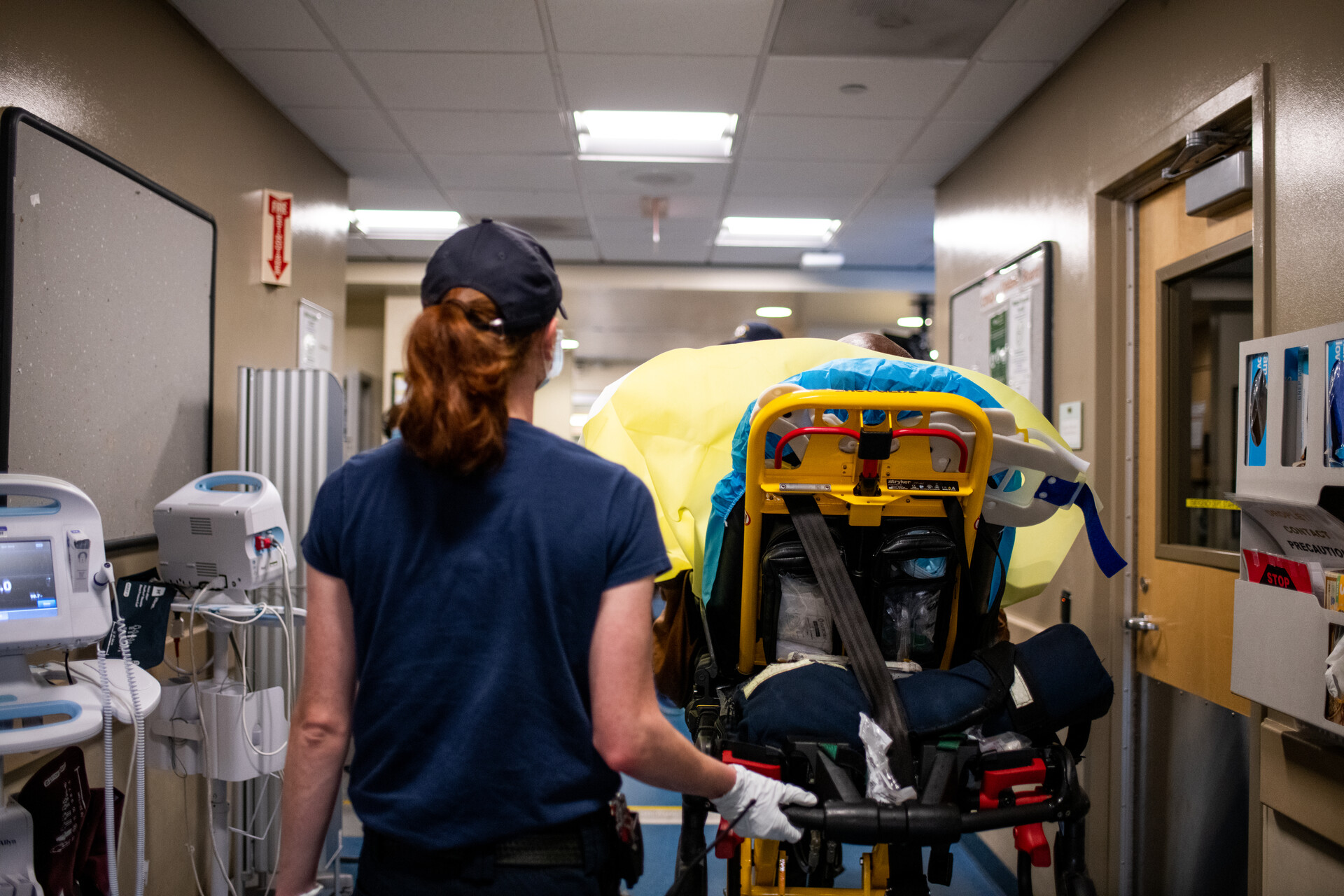
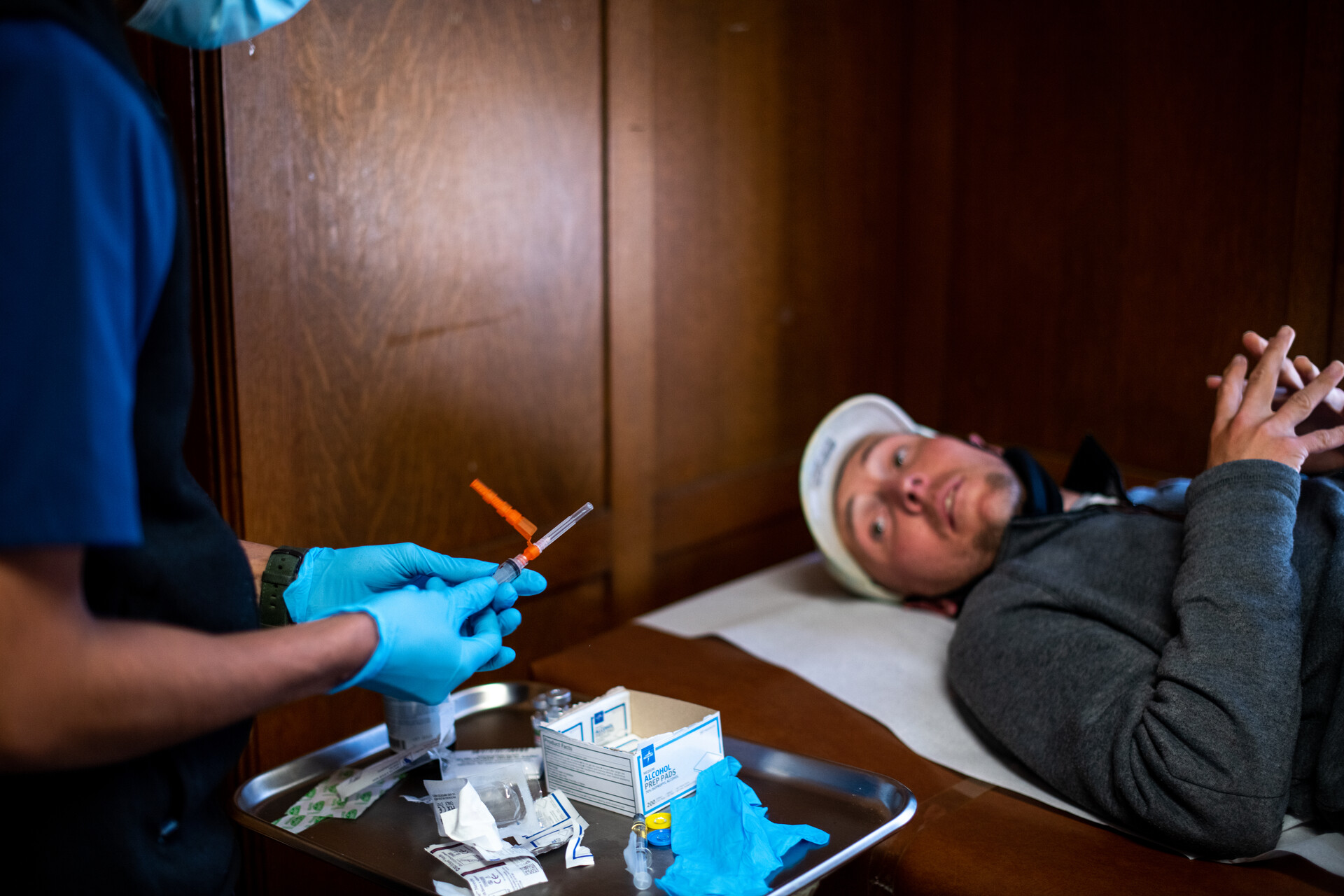
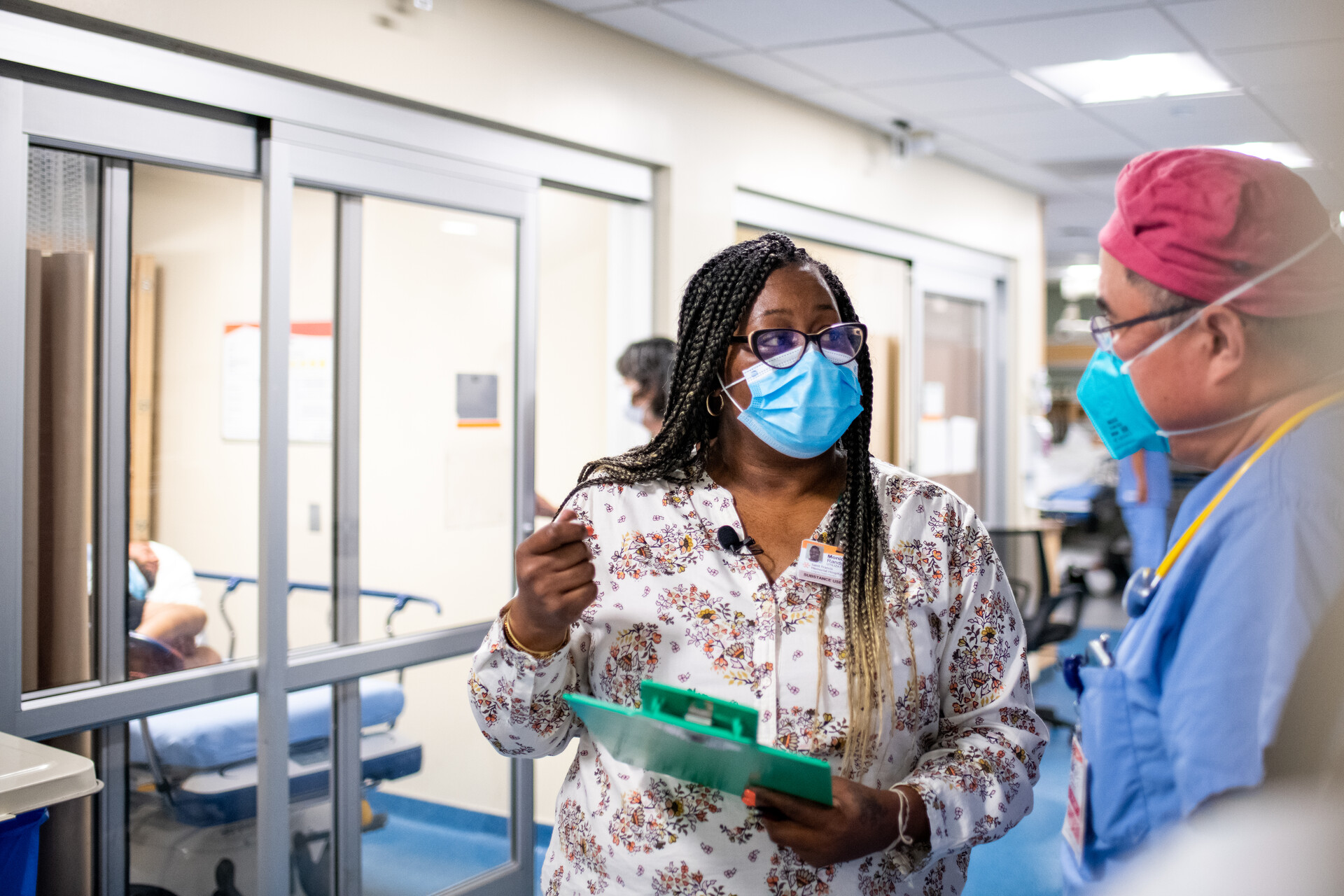
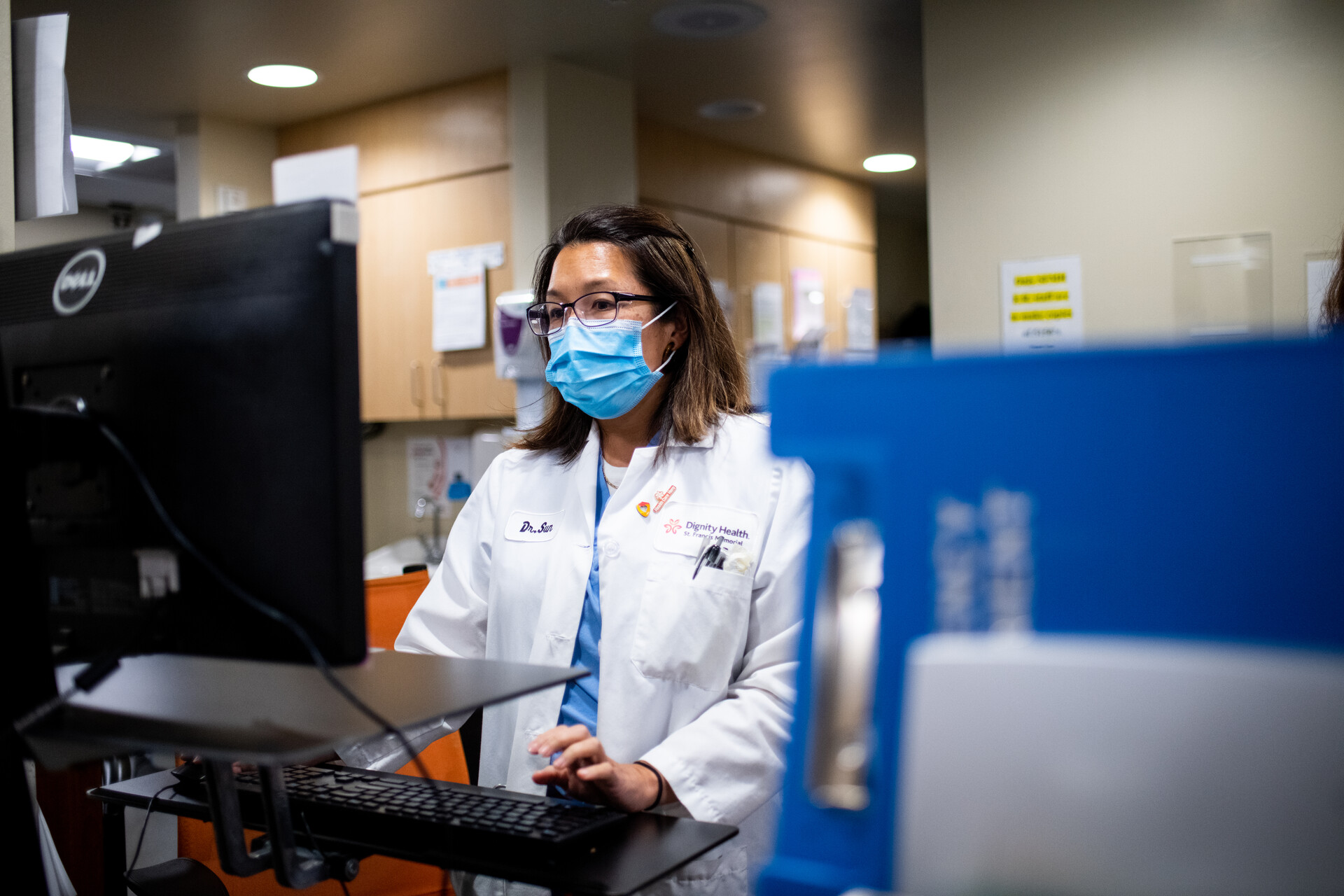
Inside Saint Francis Memorial Hospital’s frenetic emergency room, near San Francisco’s Tenderloin neighborhood, Dr. Joanne Sun quickly scans the medical record of her fourth overdose patient of the day.
“It seems to me that people are mainly overdosing on fentanyl,” said Sun, the hospital’s emergency department director. “A lot of times they don’t even realize that what they bought off the street was fentanyl. Their intent was actually to do crystal or cocaine.”
Fentanyl is a synthetic opioid that’s up to 100 times stronger than morphine, and is now commonly mixed in street drugs.
“I think the pandemic has made everything worse in terms of mental health,” Sun said. “And unfortunately, drugs are going to be a crutch.”
Almost on cue, an older Black man with bloodshot eyes is wheeled through the ambulance bay. He says he intended to smoke crack, but overdosed after unknowingly inhaling fentanyl.
Black people who use drugs in San Francisco are nearly six times more likely than people of other races there to die of accidental overdoses, according to data recently compiled by The San Francisco Chronicle.
That discrepancy can be directly attributed to structural racism, according to the city’s Department of Public Health. “Among the effects of structural racism are years of unjust drug policies that punish rather than offer care, unaffordable housing, poverty, inequitable access to effective treatments for opioid use disorder, and discriminatory practices in the healthcare system,” a department spokesperson said in an email.
San Francisco has one of the nation’s highest overdose rates, with a related death rate more than triple those in Los Angeles and New York. To put that in context, nearly three times as many people in this city died from drug overdoses than from COVID-19 last year.
Shifting treatment from jails to hospitals
For decades, authorities have punished people who do drugs, even as the statistics have overwhelmingly demonstrated that such an approach is simply not effective in stemming drug use.
More than 93,000 people in the United States died from drug overdoses last year — an average of about 250 people a day — the highest one-year death toll on record. That includes the most deaths to date from overdoses of synthetic opioids, like fentanyl, as well as stimulants, like cocaine.