
Updated June 29. Lea este artículo en español.
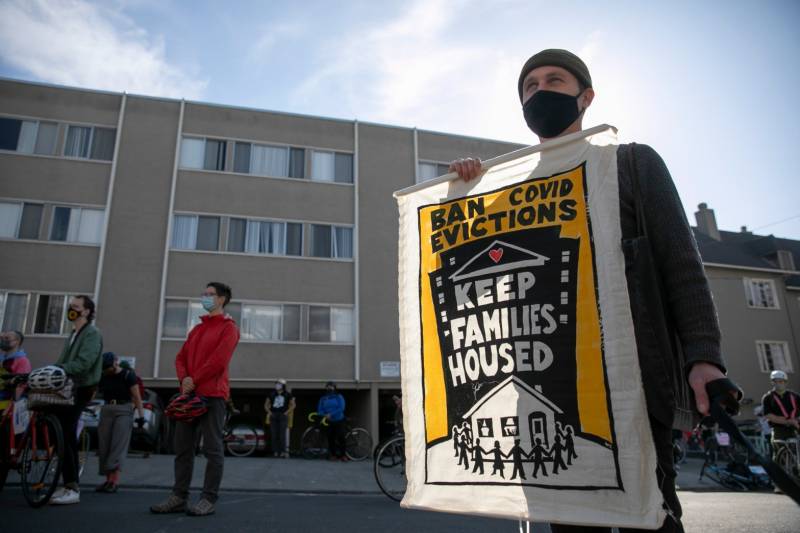
California renters, who are still struggling to pay the rent even as the pandemic wanes, will be shielded from eviction through Sept. 30 under a last-minute deal announced June 25 by Gov. Gavin Newsom and legislative leaders.
The agreement, which more fully opens up $5.2 billion to pay full back rent and rent going forward, was approved Monday by the Assembly and state Senate. Newsom, who faces a recall election later this year, signed the bill Monday night, just before the existing protections expire after Wednesday, June 30.
In statements, Newsom and legislative leaders who negotiated the new protections said they would keep families from falling through the safety net as California reopens from COVID-19 and the economy recovers.
“This proposal avoids a massive eviction cliff, allowing us to keep tenants in their homes and get landlords the financial support they need,” said Assembly Housing and Community Development Committee Chair David Chiu, a San Francisco Democrat who put together the initial moratorium.
Some tenant groups, however, wanted a longer extension of the eviction ban, saying that three months isn’t long enough to get rent relief distributed.
“This timeline does not match the reality the state faces and tenants will be left out to dry,” Francisco Dueñas, executive director of Housing Now!, said in a statement.
Assembly Speaker Anthony Rendon, a Lakewood Democrat, told CalMatters that lawmakers couldn’t guarantee they would get rental relief to everyone by Sept. 30, “but we do want to do everything we possibly can.”
He said the Legislature would reassess the program as the end date draws closer. “We’re trying to implement new processes and protections, and we’re hoping that those will be effective,” he said. “And we’re also obviously hoping that the economy is in full swing and hopefully an eviction moratorium will not be necessary moving forward.”
While advocacy groups representing tenants and landlords said they were shut out of the negotiations — similar to the last two rounds of negotiations — both sides managed to get some key provisions they wanted. Here are some key components of Assembly Bill 832:
What would this mean for tenants?
Tenants would have a defense in court should their landlord evict them over non-payment of rent through Sept. 30. They still have to submit a declaration saying they are unable to make full rent, and pay at least 25% of their monthly rent between Sept. 1, 2020 and June 2021, or in bulk, by Sept. 30, to avoid eviction.
“If you are served with a 15-day notice and do not provide the declaration form to your landlord before the 15-day notice expires, you could be evicted,” the bill says.
Additional documentation, such as a bank statement proving a decrease in income, could be required in cases where a landlord has proof the tenant makes over a certain income.
Tenants will still need to abide by their lease in order to avoid eviction for reasons other than non-payment of rent.
Evictions over non-payment of rent could resume on Oct. 1, but people who make less than 80% of the area median income and were financially affected by COVID would have another six months to apply for rental assistance funds.
If the rent relief application goes through, the eviction process will be blocked, and landlords will be able to receive compensation for missed back rent. If the tenant is ineligible, however, the proceeding will continue.
Lupe Arreola, executive director of Tenants Together, said while the additional legal protections sound good in theory, they may not work in real life. “We’re saying that’s wishful thinking. We’re saying that’s not going to happen.”