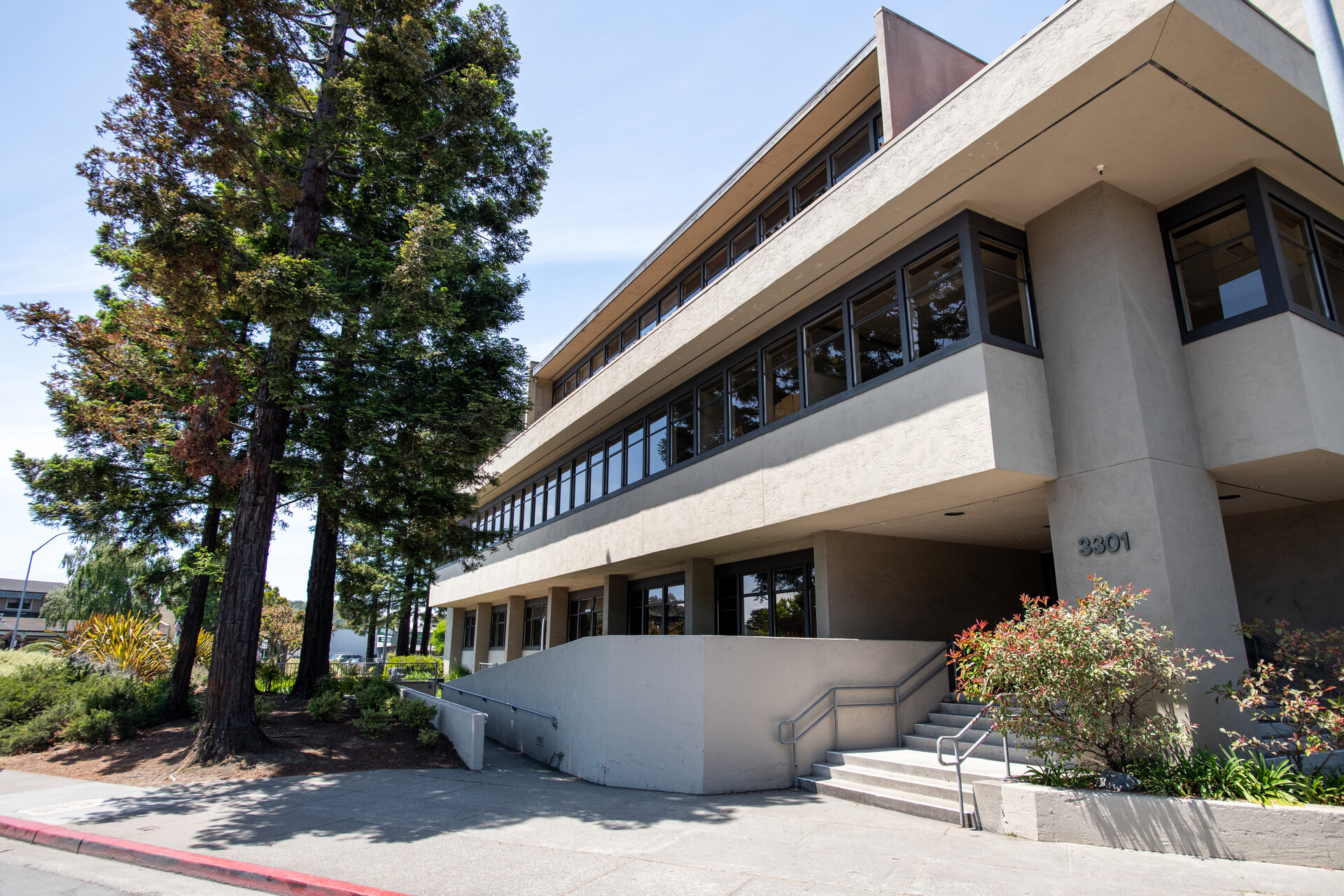
When Letta “Oneka” Glover checked into the shelter in San Rafael, she was exhausted.
She’s 50 and has bad knees, a condition made worse by sleeping in her car. That’s where she was living in February when she heard about the new shelter on Kerner Boulevard. She moved in a week later.
“It was relief,” Glover said. “I felt like I could kind of let my shoulders down, you know, and not have to be so on guard about everything.”
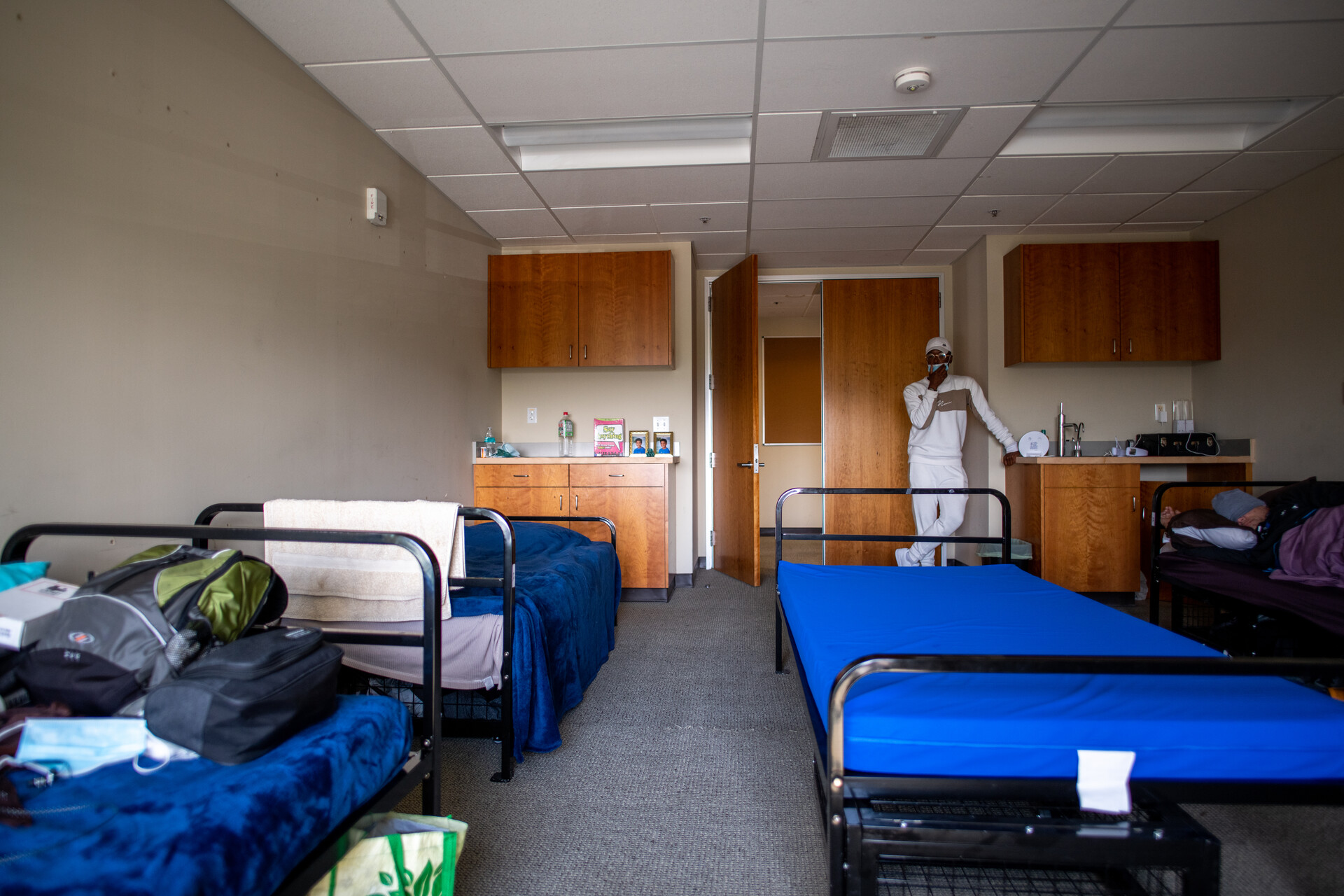
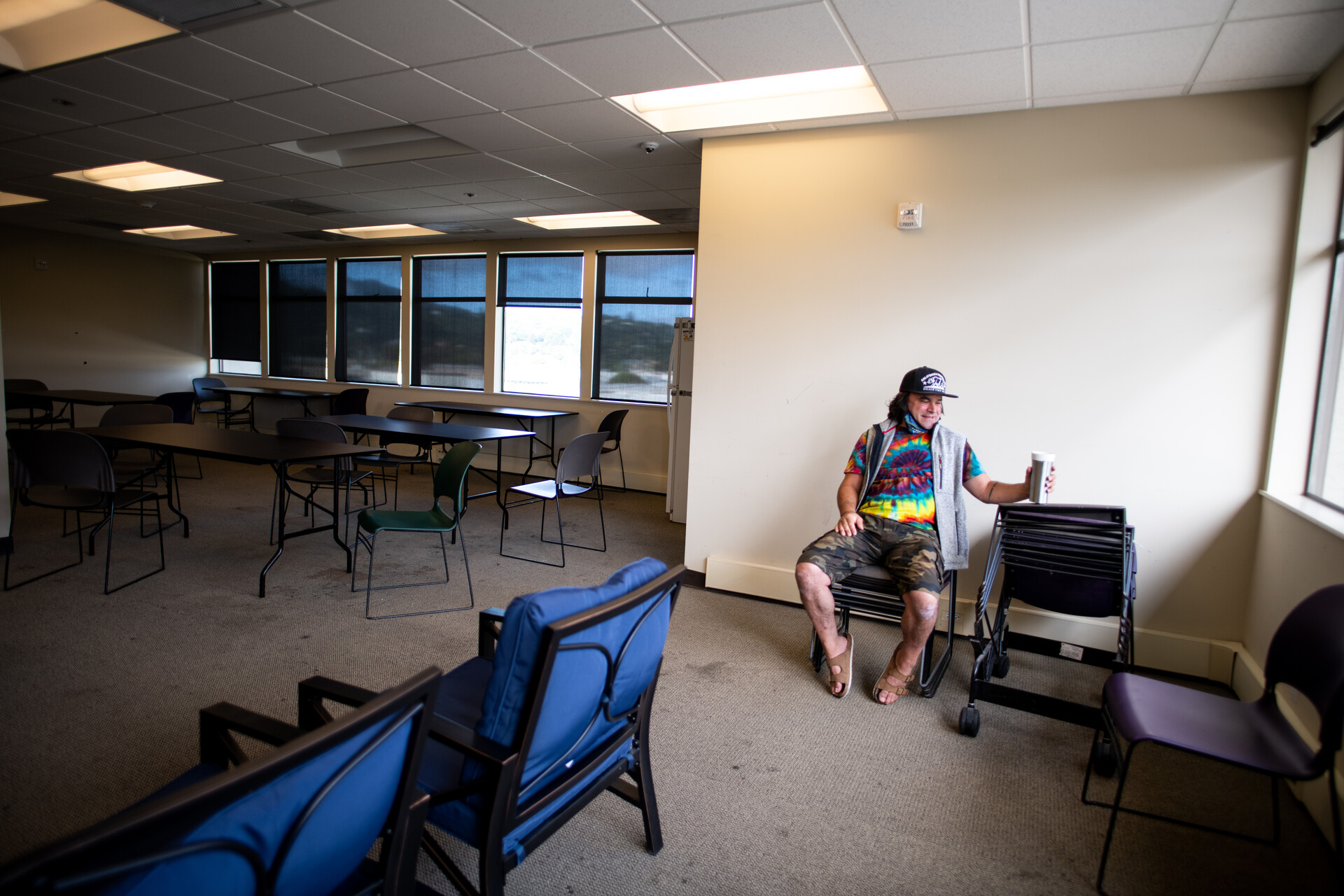
This shelter isn’t like others, where she’s stayed. It’s tucked into the third floor of an office building that was once home to a legal services company. But instead of desks and chairs inside the offices, there are cots. The old lobby is now a shared work space, with computers for residents to search for jobs and housing. Large windows line a common room, with views of Mount Tamalpais.
Usually, temporary shelters are built in factories or warehouses, said Paul Fordham, deputy executive director of Homeward Bound of Marin, which is operating the shelter until it can be converted into permanent housing.
“But there’s so much light here,” he said. “It’s a very dignified, nice space to rebuild your life.”
The site is one of 94 projects funded through Homekey, a statewide program that’s created nearly 6,000 new units of housing. While the majority are hotel and motel conversions, they also include tiny homes and former vacation rentals, a college dormitory and single-family houses.
Though Homekey is barely a year old, Gov. Gavin Newsom is proposing a massive $7 billion, 46,000-unit expansion of the program. Half of the funding would be dedicated to housing for people with acute behavioral and mental health needs. It’s all part of his $12 billion proposal to combat homelessness over the next two years.
Policy experts, service providers and others who work on homelessness in California have lauded Homekey as a monumental step in creating desperately needed new subsidized housing for the state’s more than 161,000 homeless residents. But they’re only cautiously optimistic about its future.
Many of the projects will need additional money to convert to permanent housing, and they’ll also need ongoing funding to pay for services that are often critical for keeping people housed.
“It’s a great concept,” said Ellen Hammerle, Catholic Charities’ chief programs officer. “My concern is that we need to sustain it.”
And, this new housing will need to produce a visible reduction in chronic homelessness, said Andrew Hening, co-founder of the nonprofit Opening Doors Marin. It’s an issue voters say is one of their top concerns.
“From the public’s perception of this issue, if we don’t solve chronic homelessness, then it’s going to feel like nothing has been accomplished,” Hening said.
A ‘Herculean’ Task
The idea of converting existing buildings into housing for people experiencing homelessness had been bandied about for years, said Jason Elliott, Newsom’s senior counselor on housing. But it had never been tried at this scale.
When the coronavirus pandemic hit California, Newsom’s administration first launched Project Roomkey, an effort to temporarily house some 23,000 homeless seniors and medically vulnerable people in hotels and motels across the state.
But where would they all go once those hotels close? Homekey was one answer.
“So the question is,” Elliott said, “how do you get housing open as quickly and cost effectively as possible?”
Homekey launched in June 2020. To pay for it, the state relied on $750 million in federal CARES Act funding and nearly $100 million in state general funds and philanthropic donations. The federal money, however, had to be spent by the end of 2020.
That meant cities and counties had to identify and evaluate sites, find service providers and development partners, get the projects approved and close escrow — all within a matter of months.
The timeline was “Herculean,” said Ashley Hart McIntyre, Marin County’s homelessness policy analyst. But it also helped the projects quickly clear hurdles that typically take years to overcome: The state Legislature waived some environmental reviews to speed projects along, and there was less time for community opposition.
Already, the program has become a national model, said Diane Yentel, the president and CEO of the National Low Income Housing Coalition. In the latest round of federal stimulus, approved in March, Congress allocated $5 billion for states to create new affordable housing, including hotel and motel conversions.
“I don’t think we would have been able to be successful in getting Congress to put that $5 billion forward for this purpose if we hadn’t had states like California take that first step,” Yentel said.
Many city and county officials also say Homekey helped overcome some of the bureaucracy that’s come to define California’s disjointed approach to addressing homelessness. A scathing audit published earlier this year found there are nine state agencies administering 41 separate programs.