
Updated Dec. 25, 2020 at 8:45 a.m.
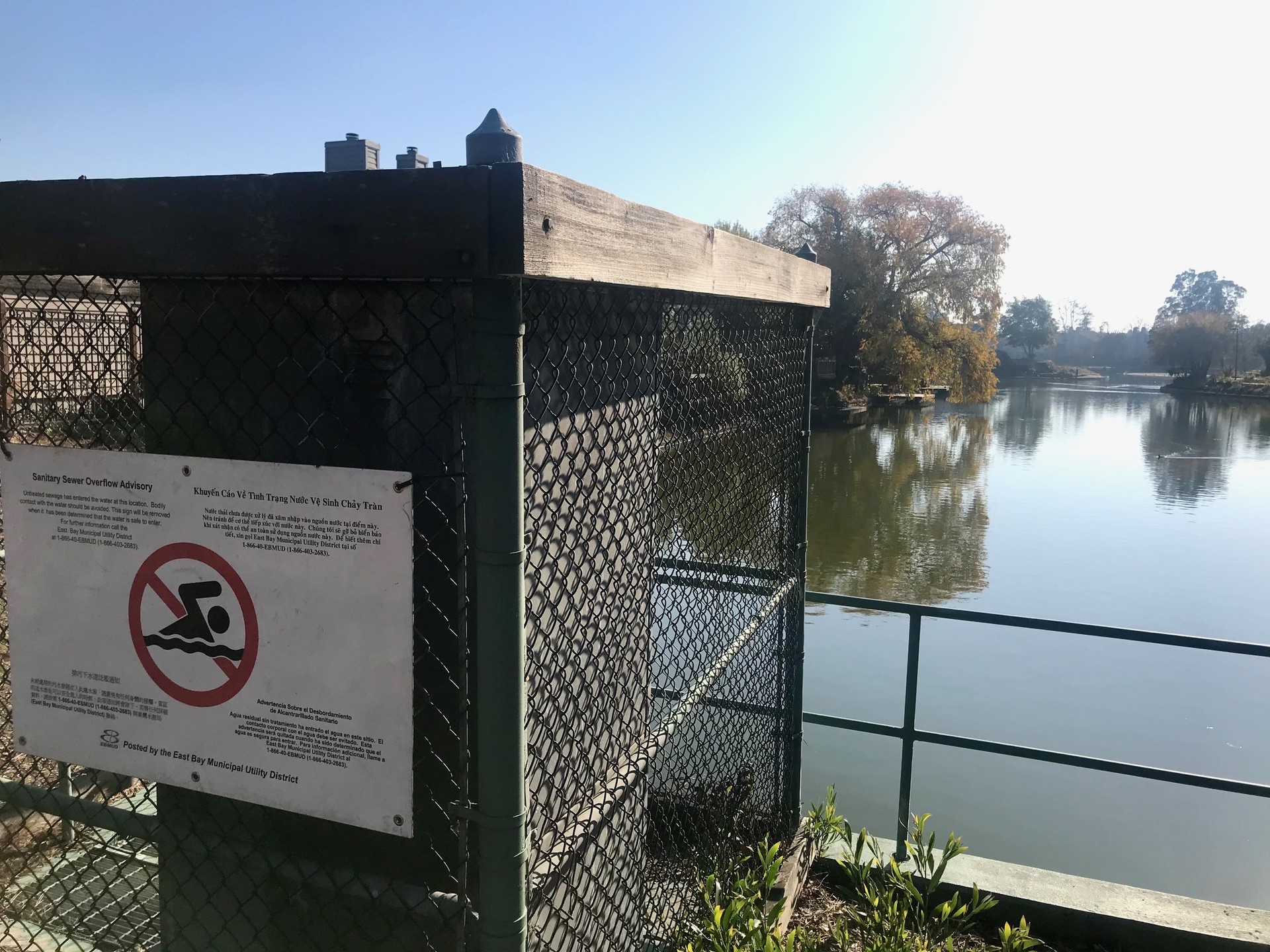
State water quality regulators are investigating a large wastewater spill that sent close to 100,000 gallons of untreated sewage into an Alameda lagoon last week, prompting the East Bay’s largest water agency to urge people to stay out of the body of water for eight days.
A power outage at an East Bay Municipal Utility District pumping station, along with a problem with a backup generator, led to the release of the sludge on Bay Farm Island on Dec. 16, according to the agency.
The release marks the second time in the last four months that power problems at the agency led to a major sewage spill.
In August, a series of electrical failures at EBMUD’s main wastewater treatment plant caused the release of 47,000 gallons of untreated sewage and 3.7 million gallons of partially treated wastewater into the Oakland Estuary.
“Two large sewage spills resulting from power outages and backup generator failures in a matter of months can no longer be excused as an accident,” said Sejal Choksi-Chugh, executive director of San Francisco Baykeeper, which for years has pushed EBMUD to do more to prevent wastewater spills.
“This appears to be an operational problem that EBMUD needs to solve in order to prevent these kinds of spills from posing a significant health threat to the Bay and the people of the Bay Area,” Choksi-Chugh said in an email.
The Oakland estuary release in August garnered significant media attention. It came at around the same time California put in place rolling blackouts for the first time in decades, when public scrutiny of the state’s infrastructure was heightened.
EBMUD representative Andrea Pook stresses that the summer spill and last week’s spill in Alameda are not connected.
“There were two spills due to power outages but they were completely different circumstances,” Pook said in an email.
The most recent spill took place near Robert Davey Jr. Drive and Packet Landing Road by Earhart Elementary School. Initially, crews reported that around 10,000 gallons had been released. Two days later, EBMUD revised up its estimate to 97,000 gallons.