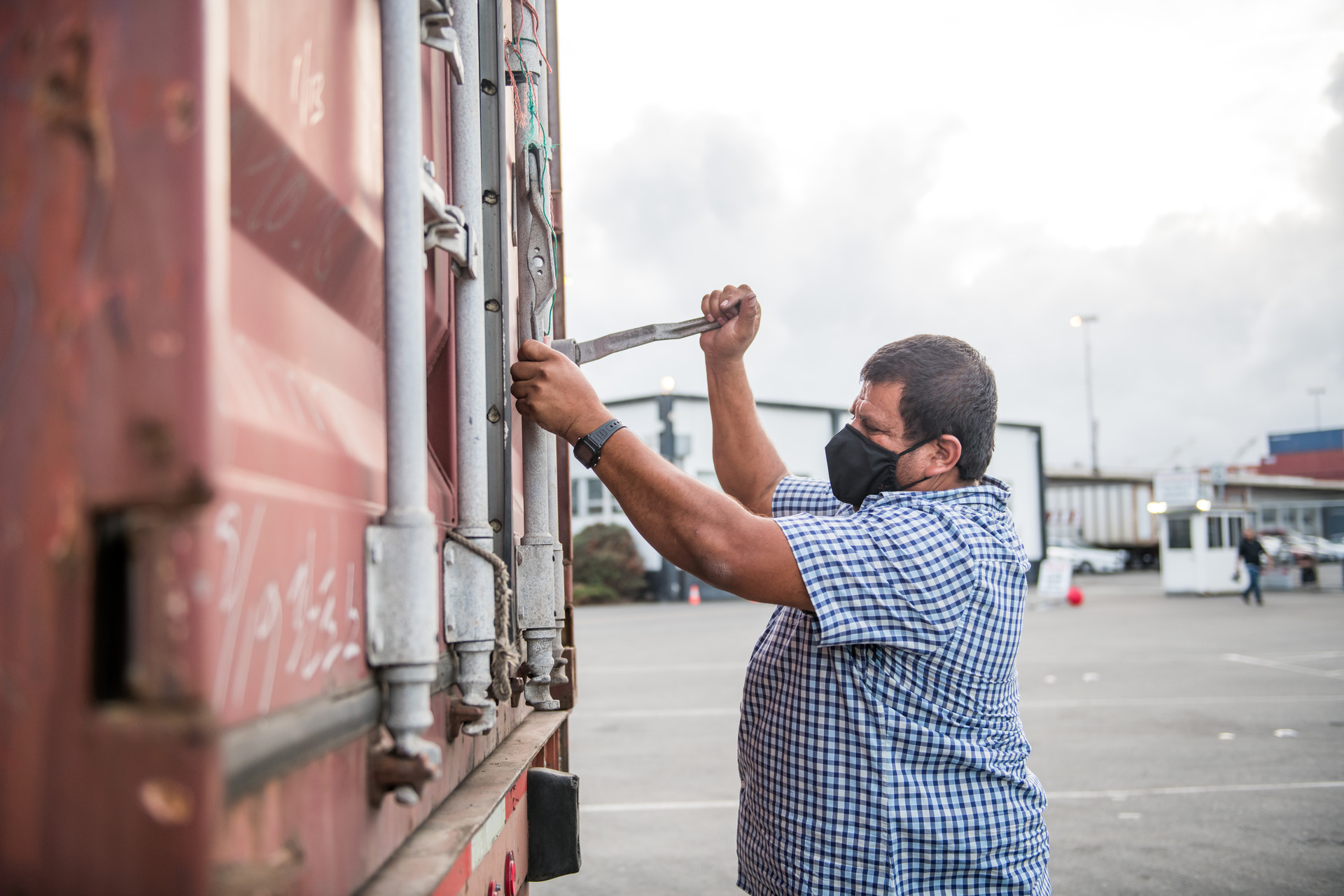
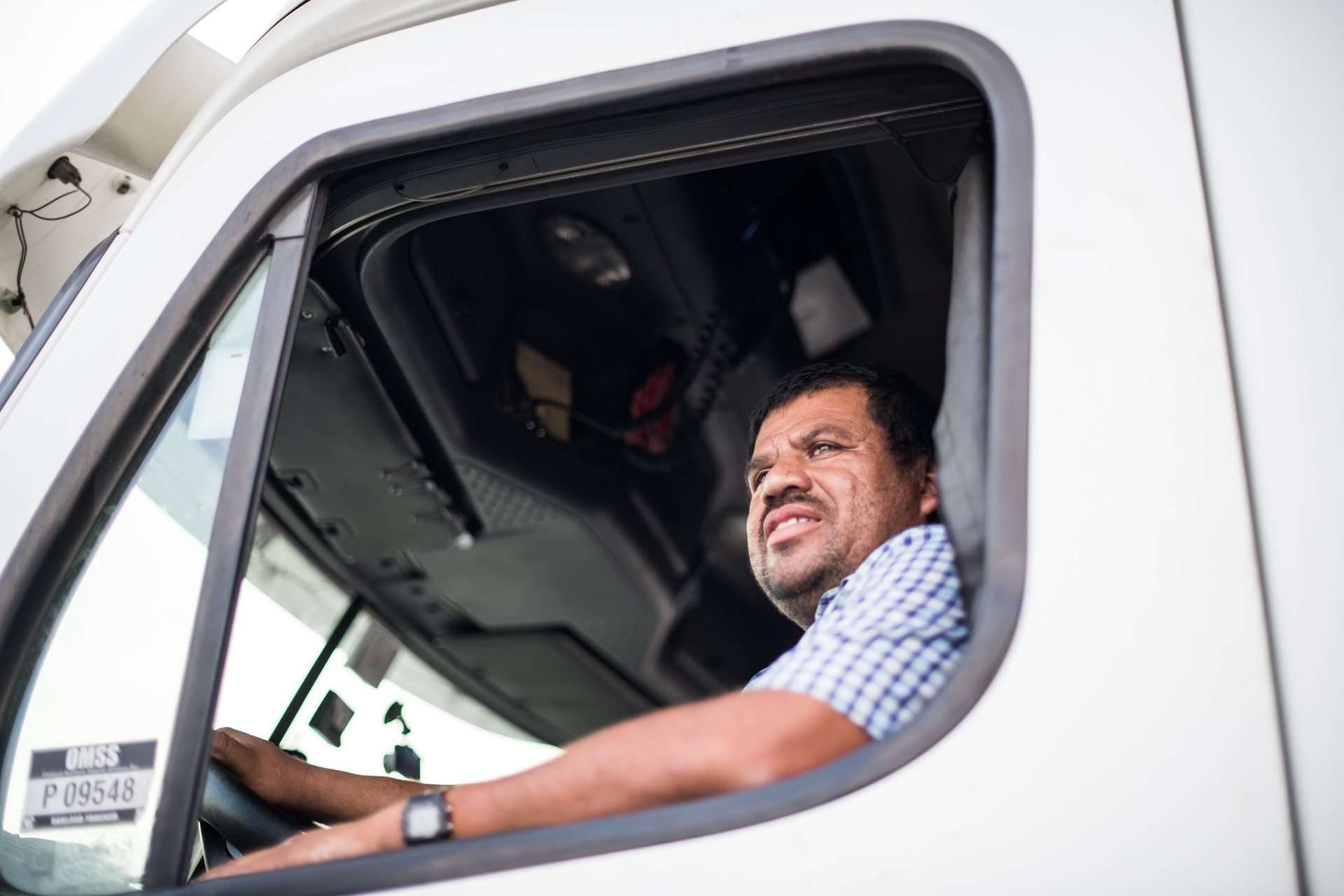
Truck driver Jesus Perlera, 39, puts in long days transporting grocery products from the Port of Oakland to warehouses and supermarkets — work deemed essential during the coronavirus pandemic.
Perlera, an immigrant from El Salvador, has lived for two decades in the United States. But his right to be here, and his permit to work, depend on a humanitarian protection — known as temporary protected status (TPS) — that President Trump has been fighting to end for nationals from El Salvador and five other countries.
Throughout Trump's presidency, Perlera has spent many sleepless nights at his home in Concord, worrying that if his TPS ends, he could lose his business and be separated from his two U.S.-born children.
So when Joe Biden won the presidential election earlier this month, signaling a sea change in immigration policy, Perlera was deeply relieved.
“I felt an enormous amount of peace,” Perlera said in Spanish. “I feel more relaxed and calm. Now I hope this new Biden administration fulfills what it has promised us.”
Perlera is one of nearly a quarter of a million immigrants in California — including an estimated 85,000 essential workers — whose temporary permits to live and work in the U.S. could be protected under Biden. The president-elect is expected to use his executive power to reverse many of Trump’s attempts to crackdown on immigration, including his efforts to strip TPS from most recipients and to end Deferred Action for Childhood Arrivals, a program that benefits hundreds of thousands of young undocumented people known as Dreamers.
While Biden has also promised to pursue a broader immigration reform bill that grants a pathway to citizenship to all 11 million undocumented immigrants in the U.S. — including DACA and TPS holders — succeeding in that effort will be a much heavier lift.
For one thing, to pass legislation, Biden will need a majority of votes in the Senate, which he is not guaranteed to have. But the new president will also have to wrestle with more pressing priorities at the beginning of his administration, said Muzaffar Chishti, a senior fellow at the Migration Policy Institute in Washington, D.C.
“The pandemic is going to dominate the oxygen for at least one year,” said Chishti. “The presidency will have very little time to do anything in a focused way on anything other than health and economic issues.”
Former presidents George W. Bush and Barack Obama also took office with strong mandates to create paths to citizenship for many of the nation’s undocumented immigrants, Chishti noted, but their first terms were consumed instead with crises: the 9/11 attacks for Bush and the Great Recession for Obama.
“Biden is inheriting another piece of bad luck here. Just imagine, with a high unemployment rate, how do you argue for legalizing 11 million people?” he said. “It's a very hard sell, and therefore, I consider that kind of big immigration bill very difficult in the short run.”
But immigrant advocates have vowed to press Biden to deliver permanent residency — the path to citizenship — for DACA and TPS holders, most of whom have established deep roots in the U.S.
Lariza Dugan-Cuadra, executive director of the Central American Resource Center in San Francisco, said it won’t be enough for the next president to merely restore the temporary protections to the way they were before Trump tried to end them.
By law, TPS is granted in set periods of time ranging from six to 18 months. DACA recipients must reapply for the protections every two years.
“Landing us on the status quo will be a good start,” said Dugan-Cuadra. “We only see it as a short-term action to provide immediate relief, but we will not accept anything other than a legislative path for permanency for both Dreamers and TPS.”
Federal courts have delayed efforts by the Trump administration to rescind TPS for more than 400,000 people from El Salvador, Haiti, Honduras, Nepal, Nicaragua and Sudan. But this fall, a three-judge panel of the 9th U.S. Circuit Court of Appeals sided with Trump, ruling that the president could move forward with the terminations.
Plaintiffs in that case, a group of TPS holders and their U.S. citizen children, plan to ask a larger panel of the 9th Circuit to review the decision. The earliest that immigration officials could rescind work permits for nationals of El Salvador would be November 2021. Immigrants from the other impacted countries could see their protections expire as soon as March, said ACLU attorney Ahilan Arulanantham, who represents plaintiffs in the case.
The courts have also intervened to keep DACA alive for nearly 650,000 recipients. But the Trump administration stopped accepting first-time applicants after it announced it was rescinding the program in 2017.