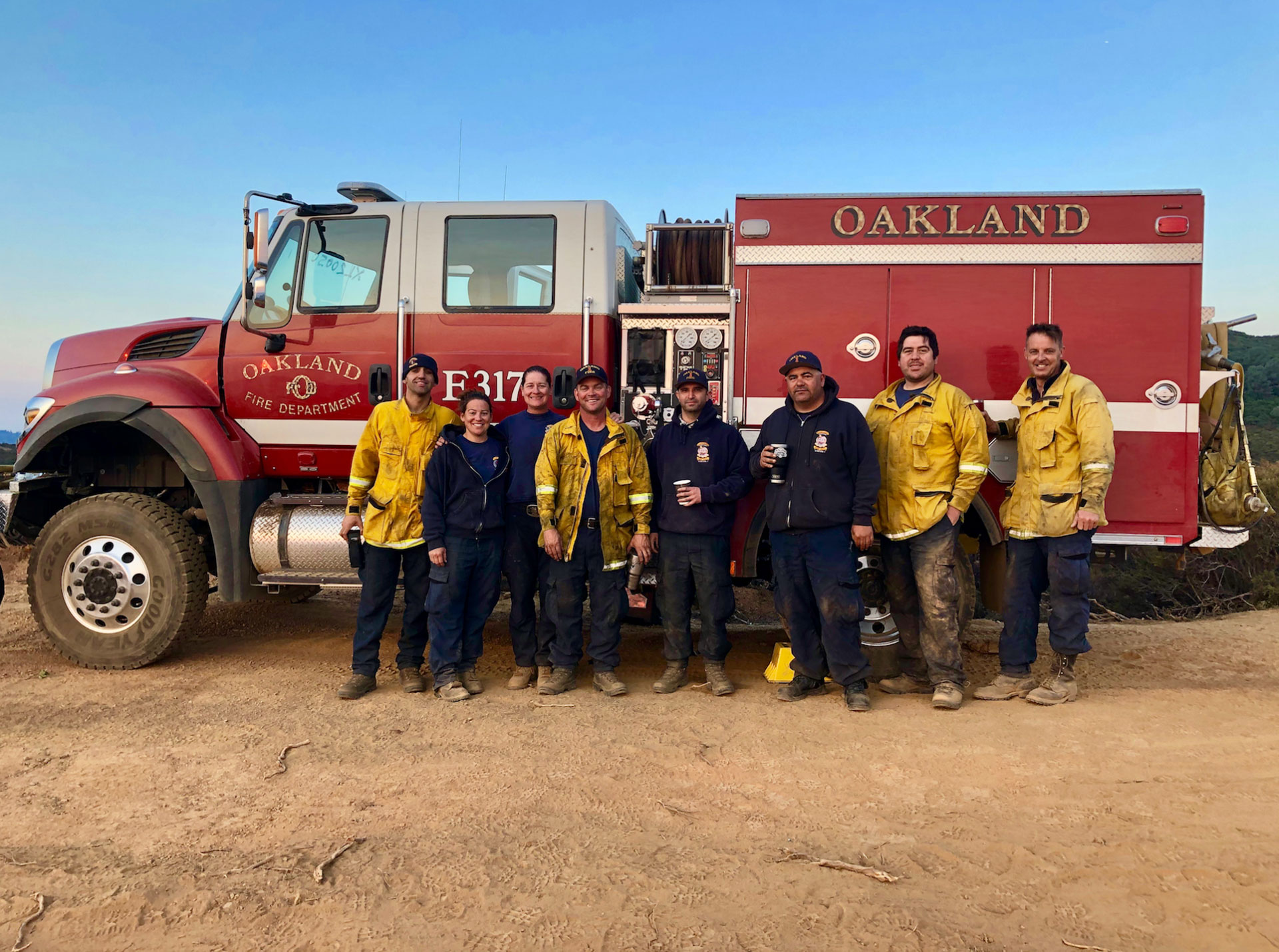
When a fire tore through a large commercial building in the heart of Oakland’s Chinatown last month, Oakland Fire Department Captain Christopher Foley was one of the first on the scene, leading the battalion that quashed the flames within just a few hours.
That intense but brief firefight was a marked contrast to his experience the previous week on a strike team battling the massive SCU Lighting Complex, a blaze that burned for well over a month, devouring nearly 400,000 acres on the southeastern edges of the Bay Area before it was fully contained on Oct. 1 — one of the largest wildfires in California history.
“The fires in the urban areas, everybody is moving very, very quickly, whereas the wildland fires are more of a methodical [process],” said Foley, who’s based at Station 4 on International Boulevard. “You might be working four days ahead of the fire.”
And when you’re working a wildfire, you don’t get any breaks.
“It’s a different pace because you are working literally for 24 hours straight,” he said. “You are on your feet, working a tool, working a saw, putting in hose line for 24 hours. Whereas, the fire [in Chinatown], which is the biggest fire the city has seen in this calendar year, the fire is over in two hours.”
For years, Foley has helped battle wildfires as part of California’s mutual aid system, a sprawling network of first responders from scores of local fire departments across the state, called on to assist Cal Fire and federal crews when extra hands are needed — which is almost always, these days.
First conceived in the 1950s, California’s Fire and Rescue Mutual Aid System is one of the oldest and most robust of its kind. And as fires here continue to grow bigger and more ferocious, the state is relying on it more than ever before.