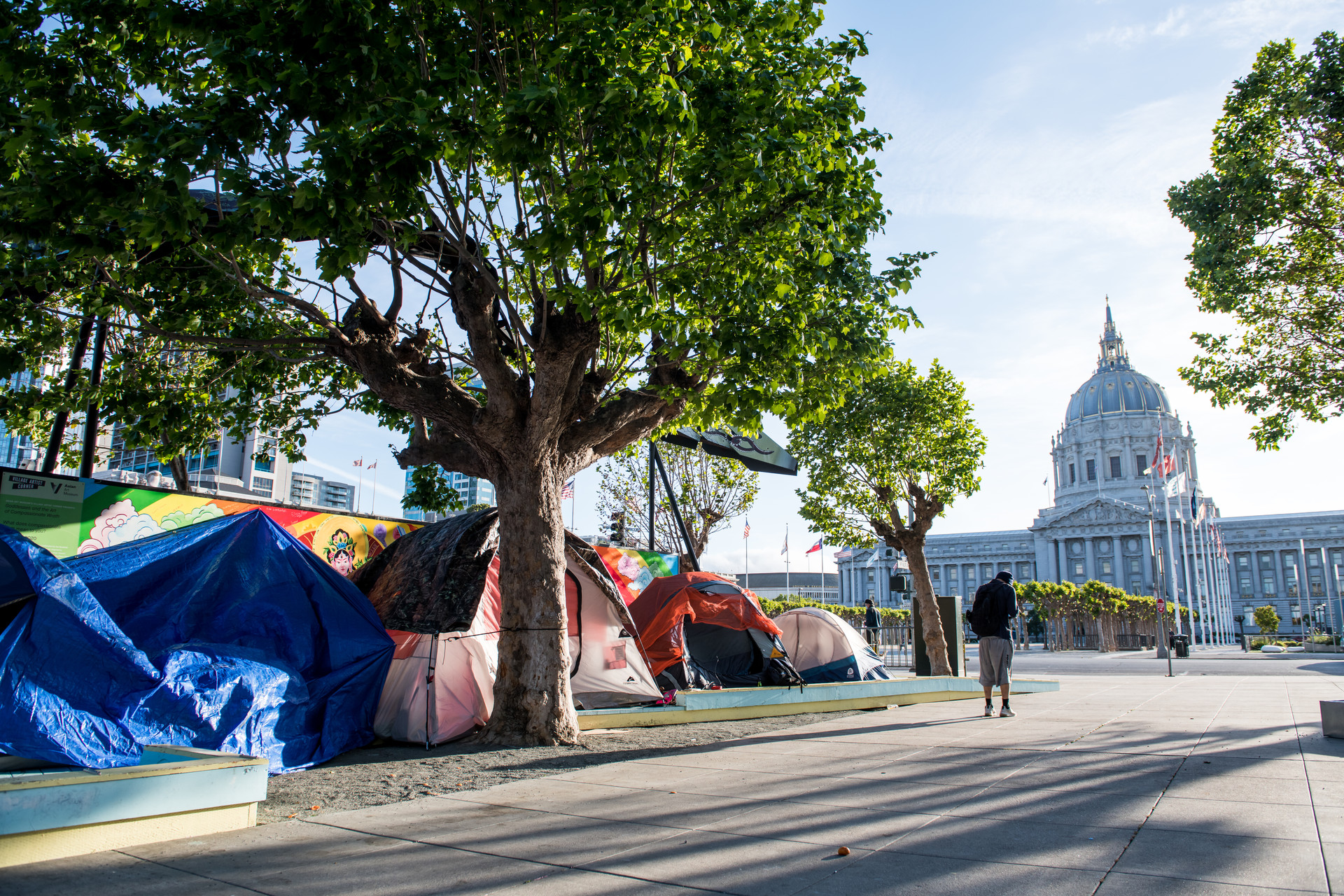
San Francisco has $492 million burning a hole in its pocket, and it’s about to spend it all on helping the homeless.
That’s the amount the city has collected so far in tax dollars from Proposition C, which San Francisco voters approved in 2018. Authored by the San Francisco Coalition on Homelessness, the measure raised taxes on businesses in the city making more than $50 million annually in gross receipts to provide additional funding for homeless services, particularly mental health needs.
Any number of homeless programs may be funded by these dollars, including a new mental health crisis team to respond to non-violent altercations involving unhoused populations, replacing what has traditionally been a law enforcement response.
Programs that offer rental assistance for people on the brink of homelessness, RV sites for those sleeping in vehicles and outdoor “safe sleeping sites” for occupants of tent encampments may also receive much-needed funding.
But although Proposition C passed nearly two years ago, San Francisco hasn’t been able to spend a dime of the money collected until just this week.
That’s because of a legal challenge mounted in April 2019 that halted spending, forcing city officials to sock away the cash, while waiting, purse strings in hand, for a court decision to come down.
The legal morass evaporated Wednesday when the California Supreme Court declined to take an appeal from the Howard Jarvis Taxpayers Association, which had sued, unsuccessfully, to block the measure, arguing that San Francisco needed a two-thirds majority to pass the tax.
San Francisco is now free to spend that $492 million in taxes already collected from the measure, and is expected to continue collecting, on average, about $300 million annually from it.
So where will the city spend their millions? And who will ultimately make that decision?
The answer is both simple and complicated: The measure states that the funding must be used for certain objectives, like mental health assistance and shelter beds, but determining which specific services should receive funding under those broad umbrellas is a wholly different matter, one that three distinct entities will have to wrestle over: San Francisco Mayor London Breed, the Board of Supervisors, and a Proposition C oversight committee, whose first meeting is scheduled for Sept. 16.
Paying the Piper
The first big spend for Proposition C won’t be to buy new shelter beds or fund new homelessness programs — instead, it will be to pay back the city, which has been spending its own money on those things.
Roughly $196 million will repay San Francisco’s general fund, and other funds, for affordable housing costs spent as part of the mayor’s Homeless Recovery Plan, which proposes 1,000 new permanent supportive housing units as part of this year’s budget and 500 more units next year.