
Across the country, farmworkers are among those at the highest risk for COVID-19 and face an increased threat of employment reduction or loss.
In California, 20% of agricultural workers who are still working have had their hours reduced, according to a study by the California Institute for Rural Studies. On top of that, due to unemployment and lack of access, food insecurity is impacting communities across the United States and is expected to continue into the rest of the year, according to Feeding America.
In the Bay Area, one community has maintained a low case rate and hopes to continue the trend with a creative solution to achieve food security.
Food accessibility can be especially hard for people living in Año Nuevo, a small town about a 40-minute drive from Half Moon Bay. The local supermarkets are at least 30 minutes away. Some in the community struggled with the rising cost of food — especially meat.
After California shelter-in-place orders came into effect in March, a ranch in the coastal town of Pescadero, 15 miles from Año Nuevo, partnered with a nonprofit to support the community by providing ongoing food donations. At the beginning, TomKat Ranch and Puente de la Costa Sur gave a weekly donation of meat, but they soon found that other staples like eggs and milk were in short supply.
“There was increasing food insecurity in our community,” said Annie Fresquez who serves as the director of visitor experience at TomKat Ranch. “We wanted to help so we jumped in to connect our farmers and builders and community members with a project that would create food security — while bringing people together.”
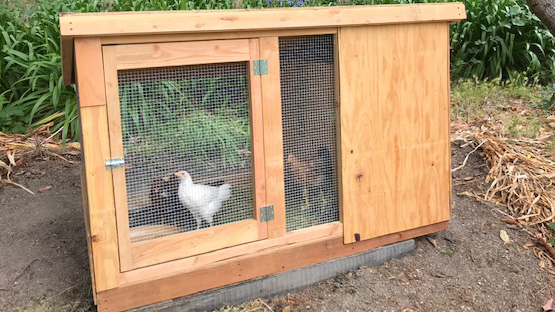
Alas, the “Mini Coop Project” was born.
The collaboration provided 15 at-risk families in the Pescadero community with tools, training and materials to raise and care for a small flock of four to six egg-laying chickens.
“We are the only organization of our kind on the South Coast,” said Puente Executive Director Rita Mancera. “We serve a community that is very big geographically — 160 square miles.”
The community consists of mostly unincorporated towns near the coast, such as La Honda, Loma Mar, Pescadero and San Gregorio. Mancera said the bulk of their work is an effort “to create [a] more equitable future for farmworkers and their families.” She said many are hard-working and often earning minimum wage. Still, overtime for farmworkers in California was not granted until 2016, and despite the law, is not always enforced. “Our work has been guided by an equity lens before it was the work that everybody was doing,” Mancera said.
“Before it became a health issue for our community, it was an economic issue,” Mancera said. “People were stressed out in March and April — not knowing how they were going to support their families. … How they were going to pay rent or how they weren’t going to cover certain bills.”
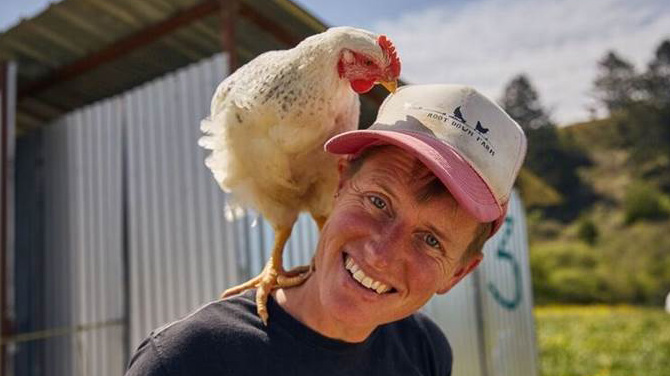
As Fresquez wrote in the initial proposal, the project is an effort to address food shortages “by empowering families to produce eggs at home using ecologically friendly and economically efficient production practices.” Each mini coop also comes with instructions in English and Spanish, so families can assemble it together.
One of the people who’s benefited from this program is Antonio Reyes, a Mexican-born Año Nuevo resident who works for Fogline Farm, an organic poultry farm. When his wife lost her job as a housekeeper at the beginning of the pandemic, the family’s financial responsibilities rested on his shoulders.
“We struggled since most of my salary would be spent on rent,” Reyes said. His wife has been back to work for around a month now and they received assistance for two months of rent from Puente — but he said there are still many expenses piling up, including food.
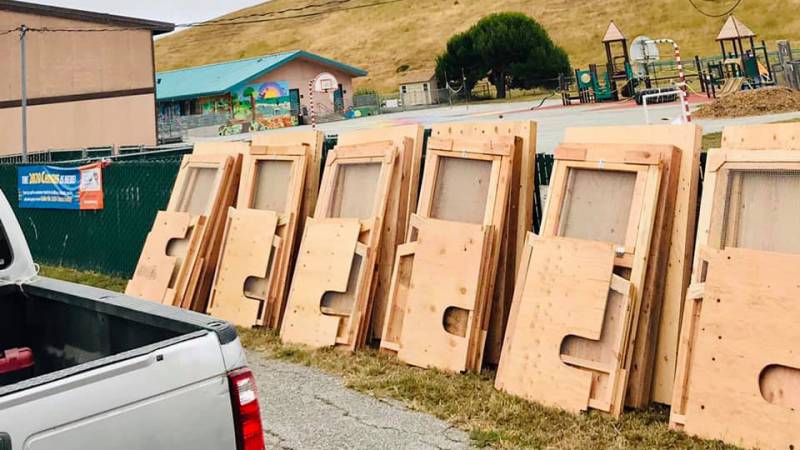
While the family visited food banks in their town, he signed up to be part of the the Mini Coop Project as soon as he heard of the program.
“I believe it is a good investment,” Reyes said. “It will be something that we will take advantage of every day once the chicken is ready to produce eggs.”
Three weeks after Reyes applied to the program, Puente gave him four chickens, including food and a house for them. He’ll have his own fresh eggs in about three months when the chickens are mature and ready to lay their first eggs.