
We've included a list of resources below.
Updated April 24 at 12:50 p.m.
To state the obvious, these are some very tough times for small businesses.
With all of California — and large swaths of the rest of the country — under shelter-in-place orders, only “essential” small businesses are allowed to stay open, and many of those have been forced to dramatically cut their services. A growing number are resorting to online fundraising campaigns, hoping loyal customers will invest in their survival.
From restaurants and bookstores to dry cleaners and hair salons, small businesses are a big deal in the U.S., employing nearly half of the nation's workforce. Most of these institutions, which were already operating on razor-thin margins, have been hit particularly hard by the coronavirus pandemic. And without major assistance, many simply won't be able to weather their economic losses.
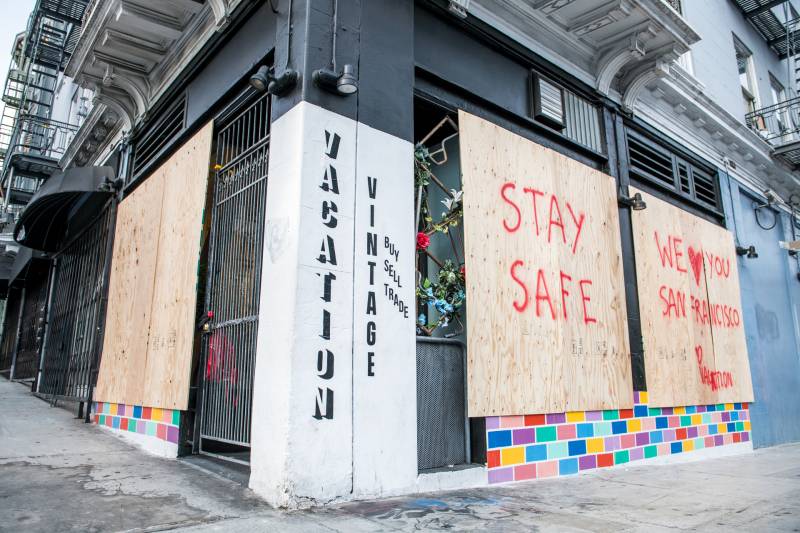
Jesse Savell, who owns Poulet deli, a North Berkeley institution, understands this all too well. After several weeks of trying to keep his kitchen open for take-out only service, he made the tough decision over the weekend to temporarily shutter the operation and furlough his remaining employees for at least the next month.
“Sales dropped dramatically,” Savell said, noting that his insurance doesn't cover any kind of disaster like this. “It came down to: was it worth it to stay open in order to leave the lights on, or close down and let people collect unemployment?”
But even beyond that financial reality, he said, much of the decision to close came down to health and safety concerns for both his employees and his customers.
“It's the nature of food service — you have to get close to people,” Savell said. “It’s not something I feel like we’re able to properly handle. It went from a month ago being concerned about giving customers dry chicken to, are we causing someone to get sick and possibly die?”
Like millions of other small business owners, Savell is seeking temporary financial assistance from the federal government and local sources. He said he's confident he'll be able to reopen soon.
“We’re coming back — this isn’t the end,” he said. “This is temporary. We’re sure of that.”
Scores of other local business owners, though, are less sanguine.
“I've heard the whole range — from utter fear to folks who are more analytical and trying to decide, does it make sense to try to stay open and take on more debt or should we call it a day?” said Jeri Boomgaarden, senior development director at the East Bay Community Foundation (EBCF), which recently started a COVID-19 relief fund that gives small grants to local organizations.
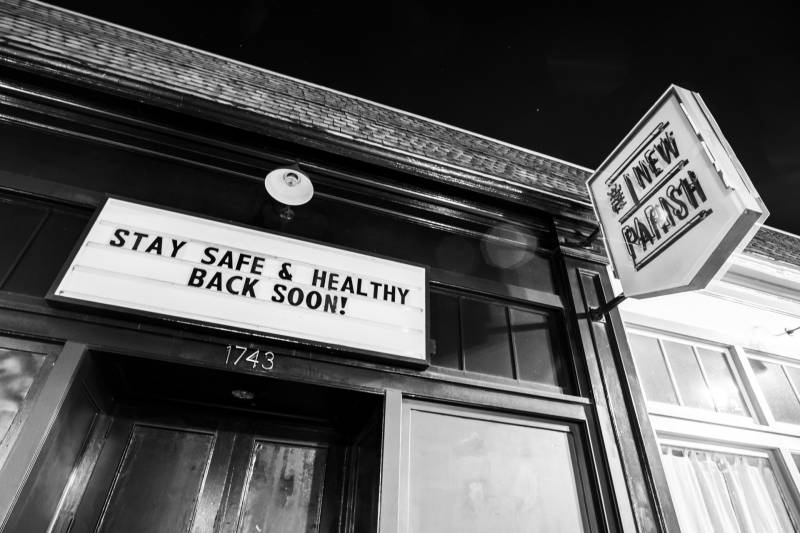
In response to the crisis, federal, state and local governments, as well as a growing number of private institutions like EBCF, have scrambled to set up programs to help small businesses and community organizations stay alive.
The following is a list of some — but definitely not all — of the lifelines Bay Area businesses can try to take advantage of.
Federal Assistance
Paycheck Protection Program (PPP)
Update — June 8, 2020: New rules passed by Congress last week give small business owners more time and flexibility to spend their PPP money and still qualify to have part of the loan forgiven. Borrowers can now use the money over a 24-week period, rather than the 8-week timeframe set in the initial legislation. Furthermore, loans can still be forgiven even if a business doesn't rehire the same number of workers it employed pre-pandemic. And business owners now only have to use at least 60% of the loan on payroll, down from 75%.
Overseen by the U.S. Small Business Administration (SBA) as part of a suite of relief plans, the PPP offers relief to help small businesses retain workers and continue to pay bills during the pandemic. Through the program, businesses can apply for low-interest, government-backed loans from private banks to cover up to two months of their average monthly payroll costs, plus an additional 25%, with a cap of $10 million.
The program will likely need additional funding in the future. The PPP initially received $350 billion in funding from the massive $2 trillion emergency stimulus package Congress passed in late March, but those funds ran out quickly.
The best part: Much of the the loan can effectively turn into a grant — with most of it forgiven — if businesses keep their employees on the payroll for at least two months after receiving funding and use 75% of it for payroll costs. For the parts of the loan that are not forgiven, payments will be deferred for six months, with a 1% interest rate and maturity period of two years.
The terms of this loan, however, are pretty complicated and convoluted, with lots of caveats and nuances — and the description above is very general. So make sure you read the fine print before applying. The U.S. Chamber of Commerce produced this helpful guide to clarify some of the nitty gritty.
On April 24, President Trump signed a new relief package that includes an additional $321 billion for the PPP. That's after the program ran out of money just 13 days following its launch in early April, leaving scores of business owners in limbo.
Who's eligible: Small U.S. businesses with up to 500 employees, in addition to some nonprofits and veterans organizations. Self-employed workers, independent contractors (freelancers) and sole proprietors can also apply. No collateral or personal guarantees are required.
The program began accepting applications from small businesses and sole proprietors on April 3. Independent contractors and self-employed individuals could begin applying on April 10. Loans are available through June 30.