Stacey Milbern never imagined she'd be making large batches of hand sanitizer in her kitchen.
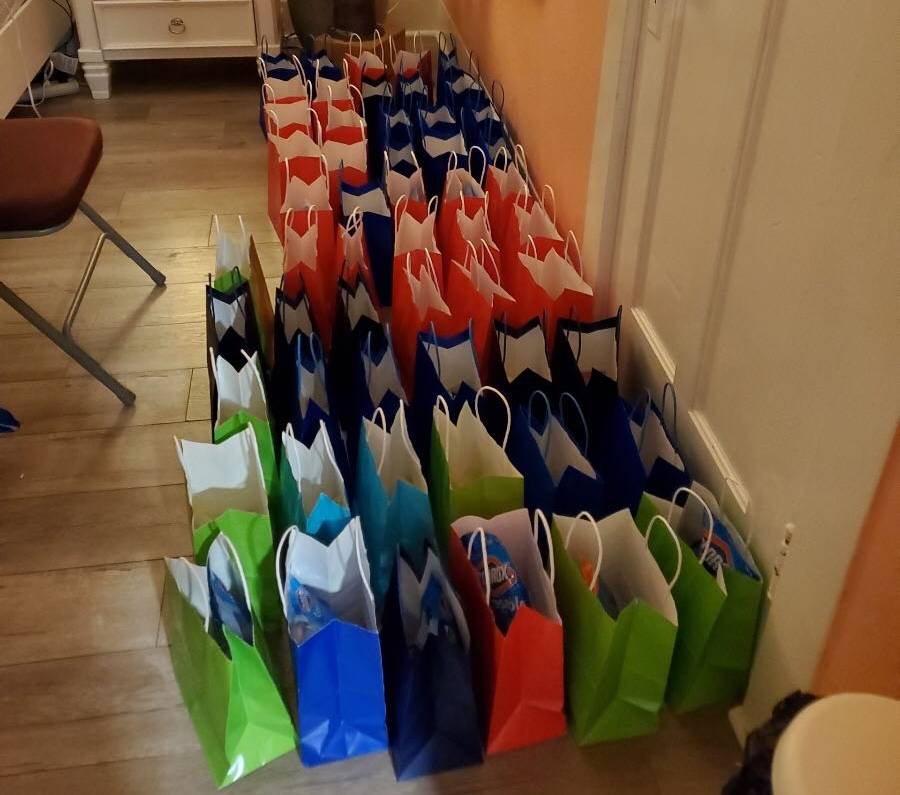
But over the last week, as the spread of the coronavirus has hit the Bay Area — and the world — Milbern and four other volunteers, all of whom identify as disabled, queer people of color, have produced nearly 100 anti-coronavirus kits, and are distributing them to people living in Oakland homeless encampments.
Along with the hand sanitizer — which is 90% rubbing alcohol mixed with glycerine and aloe vera — the kits include disinfectant and an emergency vitamin mix, all made from scratch by members of the group in Milbern's East Oakland home (in consultation with a nurse practitioner), as well as an N95 respirator mask and gloves.
"We are particularly concerned with people in encampments who don’t have access to soap and water," said Milbern, who has muscular dystrophy and uses a ventilator to breathe.
Many in the disabled community are all too familiar with feeling isolated and surviving in crisis mode, she said, when resources and support are in short supply. Her small group, which calls itself the Disability Justice Culture Club, wanted to use that DIY know-how to help their own community and other underserved populations.
"Often times, disabled people have the solutions that society needs. We call it crip — or crippled — wisdom," said Milbern, 32, who has a day job as a human resources specialist. "We know how infections spread and how to properly wear a mask and wash your hands."
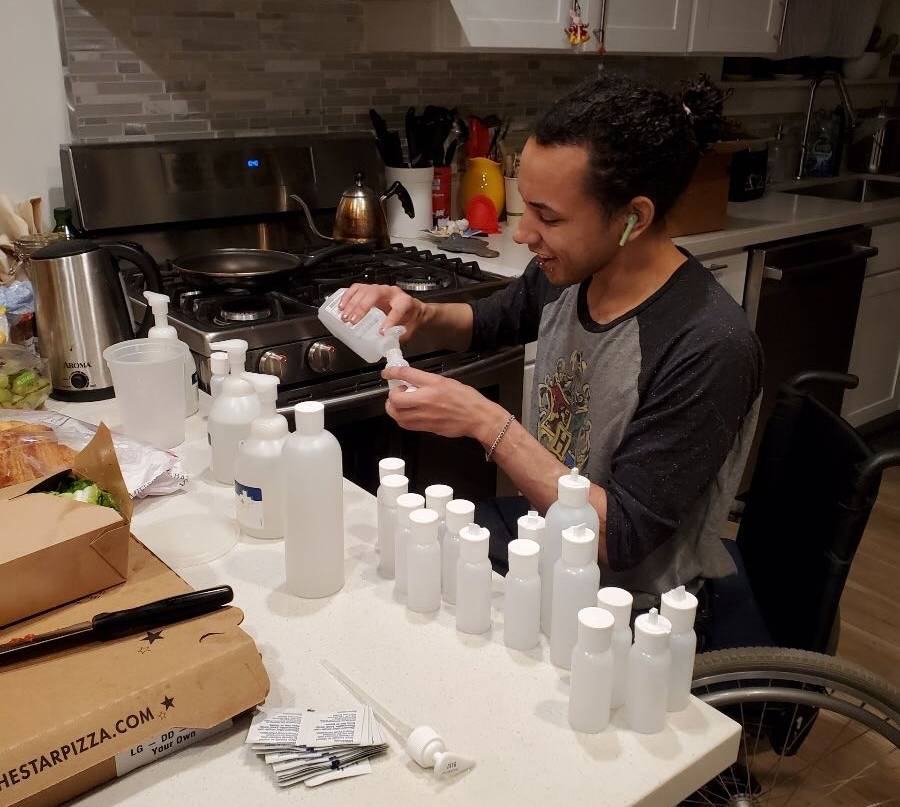
Milbern said the kits, distributed in partnership with other community groups, have been well received, and now they're struggling to keep up with demand. She said they had hoped to create more than double the number of kits by now, but have had trouble finding enough raw materials at the 30-some stores they've gone to in recent days, where shelves have been swept clean by frantic customers hoarding supplies.
"I think it's really discouraging right now to see that," she said, noting that the overwhelming focus seems to be on personal safety, not the well-being of the larger community. "Really, what it takes to flatten the curve is collective action and collective commitment. Interdependence is going to be what saves us, and COVID-19 is the extreme example of this.”
Milbern also has her own health to worry about. She was recently diagnosed with kidney cancer, and on Monday found out that her surgery to remove it, scheduled for later this week, had been postponed because of shelter-in-place orders.
"My surgeon said even though my cancer is fast growing, I can survive another 30 days. But I likely wouldn't survive getting coronavirus," she said in a text message later that day. "It didn't hit me it was that serious/deadly to me personally. I'm really worried for myself and [my] disabled friends."