Apprenticeships are Bringing New Workers to Heritage Industries
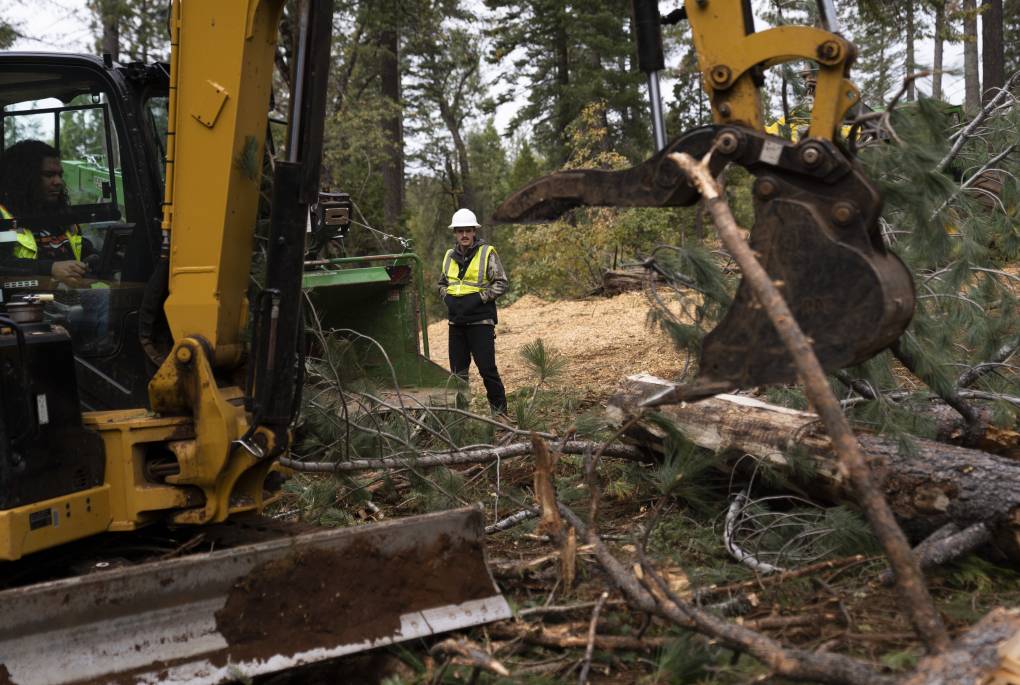
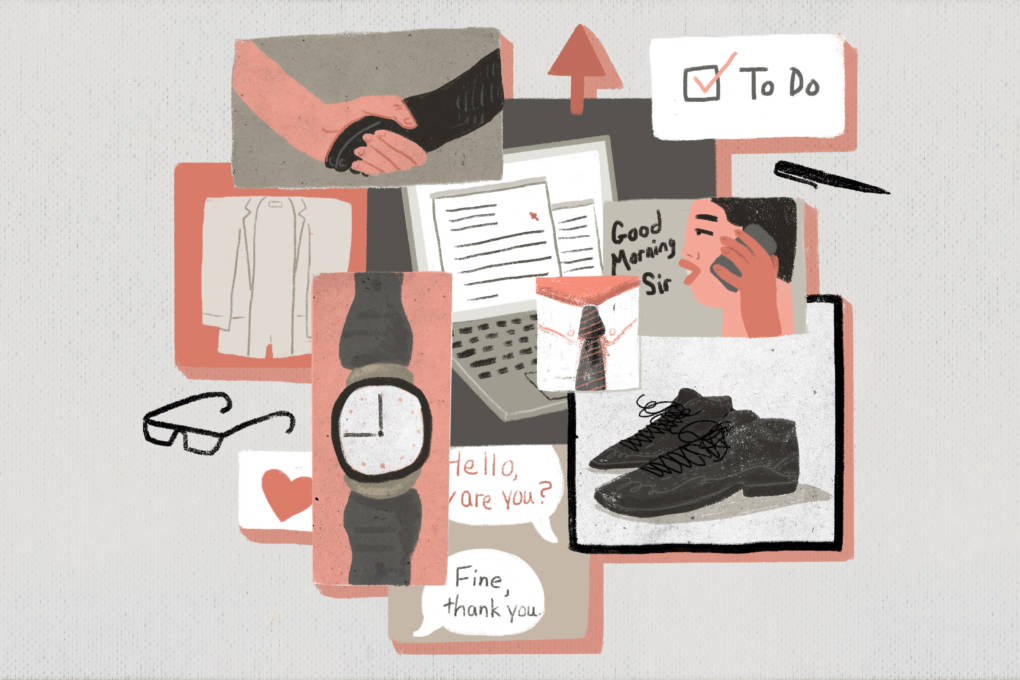
How Teens are Learning Crucial ‘Soft Skills’ Before Their Internships Start
Want to Offer Internships At Your School? A Tool To Make It Easier
Trying To Get Your First Job? There's A Class For That
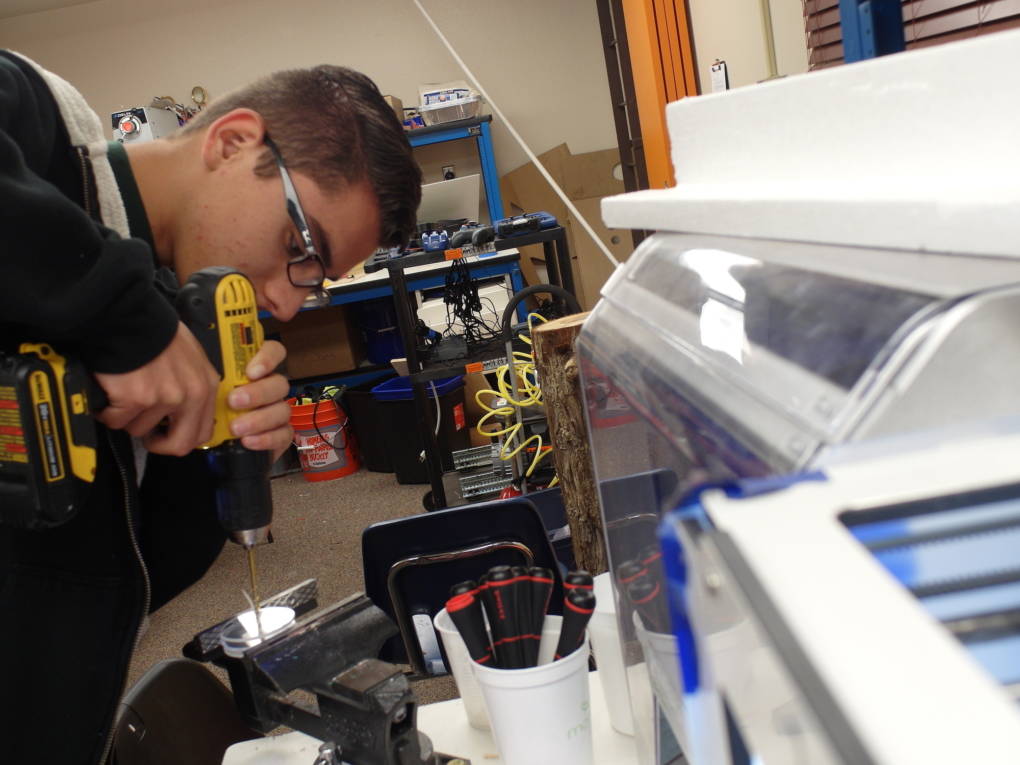
How Internships Connect First Generation College Bound Students to STEM Careers
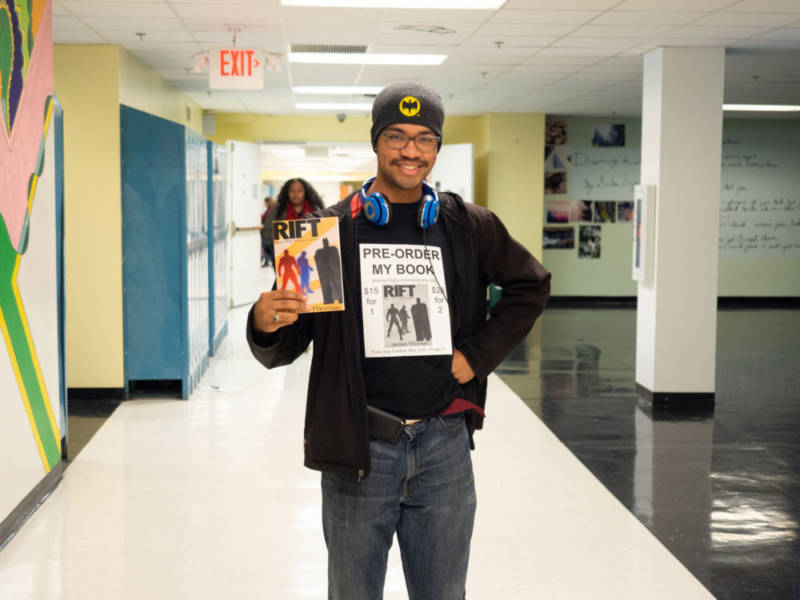
Can Schools Change Measures of Success by Focusing on Meaningful Work Instead of Test Scores?
Interests-to-Internships: When Students Take the Lead in Learning
Teens Try Out "Real Life" With Internships For Academic Credit
Sponsored
Player sponsored by
window.__IS_SSR__=true
window.__INITIAL_STATE__={
"attachmentsReducer": {
"audio_0": {
"type": "attachments",
"id": "audio_0",
"imgSizes": {
"kqedFullSize": {
"file": "https://ww2.kqed.org/news/wp-content/themes/KQED-unified/img/audio_bgs/background0.jpg"
}
}
},
"audio_1": {
"type": "attachments",
"id": "audio_1",
"imgSizes": {
"kqedFullSize": {
"file": "https://ww2.kqed.org/news/wp-content/themes/KQED-unified/img/audio_bgs/background1.jpg"
}
}
},
"audio_2": {
"type": "attachments",
"id": "audio_2",
"imgSizes": {
"kqedFullSize": {
"file": "https://ww2.kqed.org/news/wp-content/themes/KQED-unified/img/audio_bgs/background2.jpg"
}
}
},
"audio_3": {
"type": "attachments",
"id": "audio_3",
"imgSizes": {
"kqedFullSize": {
"file": "https://ww2.kqed.org/news/wp-content/themes/KQED-unified/img/audio_bgs/background3.jpg"
}
}
},
"audio_4": {
"type": "attachments",
"id": "audio_4",
"imgSizes": {
"kqedFullSize": {
"file": "https://ww2.kqed.org/news/wp-content/themes/KQED-unified/img/audio_bgs/background4.jpg"
}
}
},
"placeholder": {
"type": "attachments",
"id": "placeholder",
"imgSizes": {
"thumbnail": {
"file": "https://cdn.kqed.org/wp-content/uploads/2024/12/KQED-Default-Image-816638274-2000x1333-1-160x107.jpg",
"width": 160,
"height": 107,
"mimeType": "image/jpeg"
},
"medium": {
"file": "https://cdn.kqed.org/wp-content/uploads/2024/12/KQED-Default-Image-816638274-2000x1333-1-800x533.jpg",
"width": 800,
"height": 533,
"mimeType": "image/jpeg"
},
"medium_large": {
"file": "https://cdn.kqed.org/wp-content/uploads/2024/12/KQED-Default-Image-816638274-2000x1333-1-768x512.jpg",
"width": 768,
"height": 512,
"mimeType": "image/jpeg"
},
"large": {
"file": "https://cdn.kqed.org/wp-content/uploads/2024/12/KQED-Default-Image-816638274-2000x1333-1-1020x680.jpg",
"width": 1020,
"height": 680,
"mimeType": "image/jpeg"
},
"1536x1536": {
"file": "https://cdn.kqed.org/wp-content/uploads/2024/12/KQED-Default-Image-816638274-2000x1333-1-1536x1024.jpg",
"width": 1536,
"height": 1024,
"mimeType": "image/jpeg"
},
"fd-lrg": {
"file": "https://cdn.kqed.org/wp-content/uploads/2024/12/KQED-Default-Image-816638274-2000x1333-1-1536x1024.jpg",
"width": 1536,
"height": 1024,
"mimeType": "image/jpeg"
},
"fd-med": {
"file": "https://cdn.kqed.org/wp-content/uploads/2024/12/KQED-Default-Image-816638274-2000x1333-1-1020x680.jpg",
"width": 1020,
"height": 680,
"mimeType": "image/jpeg"
},
"fd-sm": {
"file": "https://cdn.kqed.org/wp-content/uploads/2024/12/KQED-Default-Image-816638274-2000x1333-1-800x533.jpg",
"width": 800,
"height": 533,
"mimeType": "image/jpeg"
},
"post-thumbnail": {
"file": "https://cdn.kqed.org/wp-content/uploads/2024/12/KQED-Default-Image-816638274-2000x1333-1-672x372.jpg",
"width": 672,
"height": 372,
"mimeType": "image/jpeg"
},
"twentyfourteen-full-width": {
"file": "https://cdn.kqed.org/wp-content/uploads/2024/12/KQED-Default-Image-816638274-2000x1333-1-1038x576.jpg",
"width": 1038,
"height": 576,
"mimeType": "image/jpeg"
},
"xxsmall": {
"file": "https://cdn.kqed.org/wp-content/uploads/2024/12/KQED-Default-Image-816638274-2000x1333-1-160x107.jpg",
"width": 160,
"height": 107,
"mimeType": "image/jpeg"
},
"xsmall": {
"file": "https://cdn.kqed.org/wp-content/uploads/2024/12/KQED-Default-Image-816638274-2000x1333-1-672x372.jpg",
"width": 672,
"height": 372,
"mimeType": "image/jpeg"
},
"small": {
"file": "https://cdn.kqed.org/wp-content/uploads/2024/12/KQED-Default-Image-816638274-2000x1333-1-672x372.jpg",
"width": 672,
"height": 372,
"mimeType": "image/jpeg"
},
"xlarge": {
"file": "https://cdn.kqed.org/wp-content/uploads/2024/12/KQED-Default-Image-816638274-2000x1333-1-1020x680.jpg",
"width": 1020,
"height": 680,
"mimeType": "image/jpeg"
},
"full-width": {
"file": "https://cdn.kqed.org/wp-content/uploads/2024/12/KQED-Default-Image-816638274-2000x1333-1-1920x1280.jpg",
"width": 1920,
"height": 1280,
"mimeType": "image/jpeg"
},
"guest-author-32": {
"file": "https://cdn.kqed.org/wp-content/uploads/2025/01/KQED-Default-Image-816638274-1333x1333-1-160x160.jpg",
"width": 32,
"height": 32,
"mimeType": "image/jpeg"
},
"guest-author-50": {
"file": "https://cdn.kqed.org/wp-content/uploads/2025/01/KQED-Default-Image-816638274-1333x1333-1-160x160.jpg",
"width": 50,
"height": 50,
"mimeType": "image/jpeg"
},
"guest-author-64": {
"file": "https://cdn.kqed.org/wp-content/uploads/2025/01/KQED-Default-Image-816638274-1333x1333-1-160x160.jpg",
"width": 64,
"height": 64,
"mimeType": "image/jpeg"
},
"guest-author-96": {
"file": "https://cdn.kqed.org/wp-content/uploads/2025/01/KQED-Default-Image-816638274-1333x1333-1-160x160.jpg",
"width": 96,
"height": 96,
"mimeType": "image/jpeg"
},
"guest-author-128": {
"file": "https://cdn.kqed.org/wp-content/uploads/2025/01/KQED-Default-Image-816638274-1333x1333-1-160x160.jpg",
"width": 128,
"height": 128,
"mimeType": "image/jpeg"
},
"detail": {
"file": "https://cdn.kqed.org/wp-content/uploads/2025/01/KQED-Default-Image-816638274-1333x1333-1-160x160.jpg",
"width": 160,
"height": 160,
"mimeType": "image/jpeg"
},
"kqedFullSize": {
"file": "https://cdn.kqed.org/wp-content/uploads/2024/12/KQED-Default-Image-816638274-2000x1333-1.jpg",
"width": 2000,
"height": 1333
}
}
},
"mindshift_65342": {
"type": "attachments",
"id": "mindshift_65342",
"meta": {
"index": "attachments_1716263798",
"site": "mindshift",
"id": "65342",
"found": true
},
"title": "rix-heritage apprenticeship-06FEAT",
"publishDate": 1742320909,
"status": "inherit",
"parent": 65335,
"modified": 1742327083,
"caption": "Talon Gramps-Green, left, and Bryce Shannon make brush into wood chips using a mini-excavator and chipper at a logging site on Wednesday, Oct. 30, 2024, in Shingletown, Calif.",
"credit": "Minh Connors for The Hechinger Report",
"altTag": "Person walking in forest amid heavy machinery",
"description": null,
"imgSizes": {
"medium": {
"file": "https://cdn.kqed.org/wp-content/uploads/sites/23/2025/03/rix-heritage-apprenticeship-06FEAT-800x538.jpg",
"width": 800,
"height": 538,
"mimeType": "image/jpeg"
},
"large": {
"file": "https://cdn.kqed.org/wp-content/uploads/sites/23/2025/03/rix-heritage-apprenticeship-06FEAT-1020x685.jpg",
"width": 1020,
"height": 685,
"mimeType": "image/jpeg"
},
"thumbnail": {
"file": "https://cdn.kqed.org/wp-content/uploads/sites/23/2025/03/rix-heritage-apprenticeship-06FEAT-160x108.jpg",
"width": 160,
"height": 108,
"mimeType": "image/jpeg"
},
"medium_large": {
"file": "https://cdn.kqed.org/wp-content/uploads/sites/23/2025/03/rix-heritage-apprenticeship-06FEAT-768x516.jpg",
"width": 768,
"height": 516,
"mimeType": "image/jpeg"
},
"1536x1536": {
"file": "https://cdn.kqed.org/wp-content/uploads/sites/23/2025/03/rix-heritage-apprenticeship-06FEAT-1536x1032.jpg",
"width": 1536,
"height": 1032,
"mimeType": "image/jpeg"
},
"2048x2048": {
"file": "https://cdn.kqed.org/wp-content/uploads/sites/23/2025/03/rix-heritage-apprenticeship-06FEAT-2048x1376.jpg",
"width": 2048,
"height": 1376,
"mimeType": "image/jpeg"
},
"post-thumbnail": {
"file": "https://cdn.kqed.org/wp-content/uploads/sites/23/2025/03/rix-heritage-apprenticeship-06FEAT-672x372.jpg",
"width": 672,
"height": 372,
"mimeType": "image/jpeg"
},
"twentyfourteen-full-width": {
"file": "https://cdn.kqed.org/wp-content/uploads/sites/23/2025/03/rix-heritage-apprenticeship-06FEAT-1038x576.jpg",
"width": 1038,
"height": 576,
"mimeType": "image/jpeg"
},
"full-width": {
"file": "https://cdn.kqed.org/wp-content/uploads/sites/23/2025/03/rix-heritage-apprenticeship-06FEAT-1920x1290.jpg",
"width": 1920,
"height": 1290,
"mimeType": "image/jpeg"
},
"kqedFullSize": {
"file": "https://cdn.kqed.org/wp-content/uploads/sites/23/2025/03/rix-heritage-apprenticeship-06FEAT-scaled.jpg",
"width": 2560,
"height": 1720
}
},
"fetchFailed": false,
"isLoading": false
},
"mindshift_52633": {
"type": "attachments",
"id": "mindshift_52633",
"meta": {
"index": "attachments_1716263798",
"site": "mindshift",
"id": "52633",
"found": true
},
"parent": 52626,
"imgSizes": {
"small": {
"file": "https://ww2.kqed.org/app/uploads/sites/23/2018/11/iStock-484376236-520x347.jpg",
"width": 520,
"mimeType": "image/jpeg",
"height": 347
},
"twentyfourteen-full-width": {
"file": "https://ww2.kqed.org/app/uploads/sites/23/2018/11/iStock-484376236-1038x576.jpg",
"width": 1038,
"mimeType": "image/jpeg",
"height": 576
},
"thumbnail": {
"file": "https://ww2.kqed.org/app/uploads/sites/23/2018/11/iStock-484376236-160x107.jpg",
"width": 160,
"mimeType": "image/jpeg",
"height": 107
},
"fd-sm": {
"file": "https://ww2.kqed.org/app/uploads/sites/23/2018/11/iStock-484376236-960x640.jpg",
"width": 960,
"mimeType": "image/jpeg",
"height": 640
},
"post-thumbnail": {
"file": "https://ww2.kqed.org/app/uploads/sites/23/2018/11/iStock-484376236-672x372.jpg",
"width": 672,
"mimeType": "image/jpeg",
"height": 372
},
"xsmall": {
"file": "https://ww2.kqed.org/app/uploads/sites/23/2018/11/iStock-484376236-375x250.jpg",
"width": 375,
"mimeType": "image/jpeg",
"height": 250
},
"kqedFullSize": {
"file": "https://ww2.kqed.org/app/uploads/sites/23/2018/11/iStock-484376236-e1543569209773.jpg",
"width": 1920,
"height": 1280
},
"large": {
"file": "https://ww2.kqed.org/app/uploads/sites/23/2018/11/iStock-484376236-1020x680.jpg",
"width": 1020,
"mimeType": "image/jpeg",
"height": 680
},
"xlarge": {
"file": "https://ww2.kqed.org/app/uploads/sites/23/2018/11/iStock-484376236-1180x787.jpg",
"width": 1180,
"mimeType": "image/jpeg",
"height": 787
},
"complete_open_graph": {
"file": "https://ww2.kqed.org/app/uploads/sites/23/2018/11/iStock-484376236-1200x800.jpg",
"width": 1200,
"mimeType": "image/jpeg",
"height": 800
},
"guest-author-50": {
"file": "https://ww2.kqed.org/app/uploads/sites/23/2018/11/iStock-484376236-50x50.jpg",
"width": 50,
"mimeType": "image/jpeg",
"height": 50
},
"guest-author-96": {
"file": "https://ww2.kqed.org/app/uploads/sites/23/2018/11/iStock-484376236-96x96.jpg",
"width": 96,
"mimeType": "image/jpeg",
"height": 96
},
"medium": {
"file": "https://ww2.kqed.org/app/uploads/sites/23/2018/11/iStock-484376236-800x533.jpg",
"width": 800,
"mimeType": "image/jpeg",
"height": 533
},
"guest-author-64": {
"file": "https://ww2.kqed.org/app/uploads/sites/23/2018/11/iStock-484376236-64x64.jpg",
"width": 64,
"mimeType": "image/jpeg",
"height": 64
},
"guest-author-32": {
"file": "https://ww2.kqed.org/app/uploads/sites/23/2018/11/iStock-484376236-32x32.jpg",
"width": 32,
"mimeType": "image/jpeg",
"height": 32
},
"fd-lrg": {
"file": "https://ww2.kqed.org/app/uploads/sites/23/2018/11/iStock-484376236-1920x1280.jpg",
"width": 1920,
"mimeType": "image/jpeg",
"height": 1280
},
"fd-med": {
"file": "https://ww2.kqed.org/app/uploads/sites/23/2018/11/iStock-484376236-1180x787.jpg",
"width": 1180,
"mimeType": "image/jpeg",
"height": 787
},
"full-width": {
"file": "https://ww2.kqed.org/app/uploads/sites/23/2018/11/iStock-484376236-1920x1280.jpg",
"width": 1920,
"mimeType": "image/jpeg",
"height": 1280
},
"detail": {
"file": "https://ww2.kqed.org/app/uploads/sites/23/2018/11/iStock-484376236-150x150.jpg",
"width": 150,
"mimeType": "image/jpeg",
"height": 150
},
"medium_large": {
"file": "https://ww2.kqed.org/app/uploads/sites/23/2018/11/iStock-484376236-768x512.jpg",
"width": 768,
"mimeType": "image/jpeg",
"height": 512
},
"guest-author-128": {
"file": "https://ww2.kqed.org/app/uploads/sites/23/2018/11/iStock-484376236-128x128.jpg",
"width": 128,
"mimeType": "image/jpeg",
"height": 128
},
"xxsmall": {
"file": "https://ww2.kqed.org/app/uploads/sites/23/2018/11/iStock-484376236-240x160.jpg",
"width": 240,
"mimeType": "image/jpeg",
"height": 160
}
},
"publishDate": 1543569180,
"modified": 1543569221,
"caption": null,
"description": null,
"title": "Engineer And Apprentice Planning CNC Machinery Project",
"credit": "iStock/monkeybusinessimages",
"status": "inherit",
"fetchFailed": false,
"isLoading": false
},
"mindshift_52329": {
"type": "attachments",
"id": "mindshift_52329",
"meta": {
"index": "attachments_1716263798",
"site": "mindshift",
"id": "52329",
"found": true
},
"parent": 52325,
"imgSizes": {
"small": {
"file": "https://ww2.kqed.org/app/uploads/sites/23/2018/10/carpentry-internship-520x293.png",
"width": 520,
"mimeType": "image/png",
"height": 293
},
"twentyfourteen-full-width": {
"file": "https://ww2.kqed.org/app/uploads/sites/23/2018/10/carpentry-internship-1038x576.png",
"width": 1038,
"mimeType": "image/png",
"height": 576
},
"thumbnail": {
"file": "https://ww2.kqed.org/app/uploads/sites/23/2018/10/carpentry-internship-160x90.png",
"width": 160,
"mimeType": "image/png",
"height": 90
},
"fd-sm": {
"file": "https://ww2.kqed.org/app/uploads/sites/23/2018/10/carpentry-internship-960x540.png",
"width": 960,
"mimeType": "image/png",
"height": 540
},
"post-thumbnail": {
"file": "https://ww2.kqed.org/app/uploads/sites/23/2018/10/carpentry-internship-672x372.png",
"width": 672,
"mimeType": "image/png",
"height": 372
},
"xsmall": {
"file": "https://ww2.kqed.org/app/uploads/sites/23/2018/10/carpentry-internship-375x211.png",
"width": 375,
"mimeType": "image/png",
"height": 211
},
"kqedFullSize": {
"file": "https://ww2.kqed.org/app/uploads/sites/23/2018/10/carpentry-internship.png",
"width": 2121,
"height": 1194
},
"large": {
"file": "https://ww2.kqed.org/app/uploads/sites/23/2018/10/carpentry-internship-1020x574.png",
"width": 1020,
"mimeType": "image/png",
"height": 574
},
"xlarge": {
"file": "https://ww2.kqed.org/app/uploads/sites/23/2018/10/carpentry-internship-1180x664.png",
"width": 1180,
"mimeType": "image/png",
"height": 664
},
"complete_open_graph": {
"file": "https://ww2.kqed.org/app/uploads/sites/23/2018/10/carpentry-internship-1200x676.png",
"width": 1200,
"mimeType": "image/png",
"height": 676
},
"guest-author-50": {
"file": "https://ww2.kqed.org/app/uploads/sites/23/2018/10/carpentry-internship-50x50.png",
"width": 50,
"mimeType": "image/png",
"height": 50
},
"guest-author-96": {
"file": "https://ww2.kqed.org/app/uploads/sites/23/2018/10/carpentry-internship-96x96.png",
"width": 96,
"mimeType": "image/png",
"height": 96
},
"medium": {
"file": "https://ww2.kqed.org/app/uploads/sites/23/2018/10/carpentry-internship-800x450.png",
"width": 800,
"mimeType": "image/png",
"height": 450
},
"guest-author-64": {
"file": "https://ww2.kqed.org/app/uploads/sites/23/2018/10/carpentry-internship-64x64.png",
"width": 64,
"mimeType": "image/png",
"height": 64
},
"guest-author-32": {
"file": "https://ww2.kqed.org/app/uploads/sites/23/2018/10/carpentry-internship-32x32.png",
"width": 32,
"mimeType": "image/png",
"height": 32
},
"fd-lrg": {
"file": "https://ww2.kqed.org/app/uploads/sites/23/2018/10/carpentry-internship-1920x1081.png",
"width": 1920,
"mimeType": "image/png",
"height": 1081
},
"fd-med": {
"file": "https://ww2.kqed.org/app/uploads/sites/23/2018/10/carpentry-internship-1180x664.png",
"width": 1180,
"mimeType": "image/png",
"height": 664
},
"full-width": {
"file": "https://ww2.kqed.org/app/uploads/sites/23/2018/10/carpentry-internship-1920x1081.png",
"width": 1920,
"mimeType": "image/png",
"height": 1081
},
"detail": {
"file": "https://ww2.kqed.org/app/uploads/sites/23/2018/10/carpentry-internship-150x150.png",
"width": 150,
"mimeType": "image/png",
"height": 150
},
"medium_large": {
"file": "https://ww2.kqed.org/app/uploads/sites/23/2018/10/carpentry-internship-768x432.png",
"width": 768,
"mimeType": "image/png",
"height": 432
},
"guest-author-128": {
"file": "https://ww2.kqed.org/app/uploads/sites/23/2018/10/carpentry-internship-128x128.png",
"width": 128,
"mimeType": "image/png",
"height": 128
},
"xxsmall": {
"file": "https://ww2.kqed.org/app/uploads/sites/23/2018/10/carpentry-internship-240x135.png",
"width": 240,
"mimeType": "image/png",
"height": 135
}
},
"publishDate": 1539640219,
"modified": 1539640636,
"caption": null,
"description": null,
"title": "carpentry-internship",
"credit": "iStock/monkeybusinessimages",
"status": "inherit",
"fetchFailed": false,
"isLoading": false
},
"mindshift_51728": {
"type": "attachments",
"id": "mindshift_51728",
"meta": {
"index": "attachments_1716263798",
"site": "mindshift",
"id": "51728",
"found": true
},
"parent": 51727,
"imgSizes": {
"small": {
"file": "https://ww2.kqed.org/app/uploads/sites/23/2018/07/professionalism-101_slide-60bee794e8a2e7aebfaedb743ac6ddf793638301-520x347.jpg",
"width": 520,
"mimeType": "image/jpeg",
"height": 347
},
"twentyfourteen-full-width": {
"file": "https://ww2.kqed.org/app/uploads/sites/23/2018/07/professionalism-101_slide-60bee794e8a2e7aebfaedb743ac6ddf793638301-1038x576.jpg",
"width": 1038,
"mimeType": "image/jpeg",
"height": 576
},
"thumbnail": {
"file": "https://ww2.kqed.org/app/uploads/sites/23/2018/07/professionalism-101_slide-60bee794e8a2e7aebfaedb743ac6ddf793638301-160x107.jpg",
"width": 160,
"mimeType": "image/jpeg",
"height": 107
},
"fd-sm": {
"file": "https://ww2.kqed.org/app/uploads/sites/23/2018/07/professionalism-101_slide-60bee794e8a2e7aebfaedb743ac6ddf793638301-960x640.jpg",
"width": 960,
"mimeType": "image/jpeg",
"height": 640
},
"post-thumbnail": {
"file": "https://ww2.kqed.org/app/uploads/sites/23/2018/07/professionalism-101_slide-60bee794e8a2e7aebfaedb743ac6ddf793638301-672x372.jpg",
"width": 672,
"mimeType": "image/jpeg",
"height": 372
},
"xsmall": {
"file": "https://ww2.kqed.org/app/uploads/sites/23/2018/07/professionalism-101_slide-60bee794e8a2e7aebfaedb743ac6ddf793638301-375x250.jpg",
"width": 375,
"mimeType": "image/jpeg",
"height": 250
},
"kqedFullSize": {
"file": "https://ww2.kqed.org/app/uploads/sites/23/2018/07/professionalism-101_slide-60bee794e8a2e7aebfaedb743ac6ddf793638301-e1532412469945.jpg",
"width": 1920,
"height": 1280
},
"large": {
"file": "https://ww2.kqed.org/app/uploads/sites/23/2018/07/professionalism-101_slide-60bee794e8a2e7aebfaedb743ac6ddf793638301-1020x680.jpg",
"width": 1020,
"mimeType": "image/jpeg",
"height": 680
},
"xlarge": {
"file": "https://ww2.kqed.org/app/uploads/sites/23/2018/07/professionalism-101_slide-60bee794e8a2e7aebfaedb743ac6ddf793638301-1180x787.jpg",
"width": 1180,
"mimeType": "image/jpeg",
"height": 787
},
"complete_open_graph": {
"file": "https://ww2.kqed.org/app/uploads/sites/23/2018/07/professionalism-101_slide-60bee794e8a2e7aebfaedb743ac6ddf793638301-1200x800.jpg",
"width": 1200,
"mimeType": "image/jpeg",
"height": 800
},
"guest-author-50": {
"file": "https://ww2.kqed.org/app/uploads/sites/23/2018/07/professionalism-101_slide-60bee794e8a2e7aebfaedb743ac6ddf793638301-50x50.jpg",
"width": 50,
"mimeType": "image/jpeg",
"height": 50
},
"guest-author-96": {
"file": "https://ww2.kqed.org/app/uploads/sites/23/2018/07/professionalism-101_slide-60bee794e8a2e7aebfaedb743ac6ddf793638301-96x96.jpg",
"width": 96,
"mimeType": "image/jpeg",
"height": 96
},
"medium": {
"file": "https://ww2.kqed.org/app/uploads/sites/23/2018/07/professionalism-101_slide-60bee794e8a2e7aebfaedb743ac6ddf793638301-800x533.jpg",
"width": 800,
"mimeType": "image/jpeg",
"height": 533
},
"guest-author-64": {
"file": "https://ww2.kqed.org/app/uploads/sites/23/2018/07/professionalism-101_slide-60bee794e8a2e7aebfaedb743ac6ddf793638301-64x64.jpg",
"width": 64,
"mimeType": "image/jpeg",
"height": 64
},
"guest-author-32": {
"file": "https://ww2.kqed.org/app/uploads/sites/23/2018/07/professionalism-101_slide-60bee794e8a2e7aebfaedb743ac6ddf793638301-32x32.jpg",
"width": 32,
"mimeType": "image/jpeg",
"height": 32
},
"fd-lrg": {
"file": "https://ww2.kqed.org/app/uploads/sites/23/2018/07/professionalism-101_slide-60bee794e8a2e7aebfaedb743ac6ddf793638301-1920x1280.jpg",
"width": 1920,
"mimeType": "image/jpeg",
"height": 1280
},
"fd-med": {
"file": "https://ww2.kqed.org/app/uploads/sites/23/2018/07/professionalism-101_slide-60bee794e8a2e7aebfaedb743ac6ddf793638301-1180x787.jpg",
"width": 1180,
"mimeType": "image/jpeg",
"height": 787
},
"full-width": {
"file": "https://ww2.kqed.org/app/uploads/sites/23/2018/07/professionalism-101_slide-60bee794e8a2e7aebfaedb743ac6ddf793638301-1920x1280.jpg",
"width": 1920,
"mimeType": "image/jpeg",
"height": 1280
},
"detail": {
"file": "https://ww2.kqed.org/app/uploads/sites/23/2018/07/professionalism-101_slide-60bee794e8a2e7aebfaedb743ac6ddf793638301-150x150.jpg",
"width": 150,
"mimeType": "image/jpeg",
"height": 150
},
"medium_large": {
"file": "https://ww2.kqed.org/app/uploads/sites/23/2018/07/professionalism-101_slide-60bee794e8a2e7aebfaedb743ac6ddf793638301-768x512.jpg",
"width": 768,
"mimeType": "image/jpeg",
"height": 512
},
"guest-author-128": {
"file": "https://ww2.kqed.org/app/uploads/sites/23/2018/07/professionalism-101_slide-60bee794e8a2e7aebfaedb743ac6ddf793638301-128x128.jpg",
"width": 128,
"mimeType": "image/jpeg",
"height": 128
},
"xxsmall": {
"file": "https://ww2.kqed.org/app/uploads/sites/23/2018/07/professionalism-101_slide-60bee794e8a2e7aebfaedb743ac6ddf793638301-240x160.jpg",
"width": 240,
"mimeType": "image/jpeg",
"height": 160
}
},
"publishDate": 1532412371,
"modified": 1532412480,
"caption": null,
"description": "Professionalism 101",
"title": "Professionalism 101",
"credit": "NPR/LA Johnson",
"status": "inherit",
"fetchFailed": false,
"isLoading": false
},
"mindshift_51368": {
"type": "attachments",
"id": "mindshift_51368",
"meta": {
"index": "attachments_1716263798",
"site": "mindshift",
"id": "51368",
"found": true
},
"parent": 51364,
"imgSizes": {
"small": {
"file": "https://ww2.kqed.org/app/uploads/sites/23/2018/06/Joanne-Jacobs-CarlosDrill3-520x390.jpg",
"width": 520,
"mimeType": "image/jpeg",
"height": 390
},
"twentyfourteen-full-width": {
"file": "https://ww2.kqed.org/app/uploads/sites/23/2018/06/Joanne-Jacobs-CarlosDrill3-1038x576.jpg",
"width": 1038,
"mimeType": "image/jpeg",
"height": 576
},
"thumbnail": {
"file": "https://ww2.kqed.org/app/uploads/sites/23/2018/06/Joanne-Jacobs-CarlosDrill3-160x120.jpg",
"width": 160,
"mimeType": "image/jpeg",
"height": 120
},
"fd-sm": {
"file": "https://ww2.kqed.org/app/uploads/sites/23/2018/06/Joanne-Jacobs-CarlosDrill3-960x720.jpg",
"width": 960,
"mimeType": "image/jpeg",
"height": 720
},
"post-thumbnail": {
"file": "https://ww2.kqed.org/app/uploads/sites/23/2018/06/Joanne-Jacobs-CarlosDrill3-672x372.jpg",
"width": 672,
"mimeType": "image/jpeg",
"height": 372
},
"xsmall": {
"file": "https://ww2.kqed.org/app/uploads/sites/23/2018/06/Joanne-Jacobs-CarlosDrill3-375x281.jpg",
"width": 375,
"mimeType": "image/jpeg",
"height": 281
},
"kqedFullSize": {
"file": "https://ww2.kqed.org/app/uploads/sites/23/2018/06/Joanne-Jacobs-CarlosDrill3-e1528355219574.jpg",
"width": 1920,
"height": 1440
},
"large": {
"file": "https://ww2.kqed.org/app/uploads/sites/23/2018/06/Joanne-Jacobs-CarlosDrill3-1020x765.jpg",
"width": 1020,
"mimeType": "image/jpeg",
"height": 765
},
"xlarge": {
"file": "https://ww2.kqed.org/app/uploads/sites/23/2018/06/Joanne-Jacobs-CarlosDrill3-1180x885.jpg",
"width": 1180,
"mimeType": "image/jpeg",
"height": 885
},
"complete_open_graph": {
"file": "https://ww2.kqed.org/app/uploads/sites/23/2018/06/Joanne-Jacobs-CarlosDrill3-1200x900.jpg",
"width": 1200,
"mimeType": "image/jpeg",
"height": 900
},
"guest-author-50": {
"file": "https://ww2.kqed.org/app/uploads/sites/23/2018/06/Joanne-Jacobs-CarlosDrill3-50x50.jpg",
"width": 50,
"mimeType": "image/jpeg",
"height": 50
},
"guest-author-96": {
"file": "https://ww2.kqed.org/app/uploads/sites/23/2018/06/Joanne-Jacobs-CarlosDrill3-96x96.jpg",
"width": 96,
"mimeType": "image/jpeg",
"height": 96
},
"medium": {
"file": "https://ww2.kqed.org/app/uploads/sites/23/2018/06/Joanne-Jacobs-CarlosDrill3-800x600.jpg",
"width": 800,
"mimeType": "image/jpeg",
"height": 600
},
"guest-author-64": {
"file": "https://ww2.kqed.org/app/uploads/sites/23/2018/06/Joanne-Jacobs-CarlosDrill3-64x64.jpg",
"width": 64,
"mimeType": "image/jpeg",
"height": 64
},
"guest-author-32": {
"file": "https://ww2.kqed.org/app/uploads/sites/23/2018/06/Joanne-Jacobs-CarlosDrill3-32x32.jpg",
"width": 32,
"mimeType": "image/jpeg",
"height": 32
},
"fd-lrg": {
"file": "https://ww2.kqed.org/app/uploads/sites/23/2018/06/Joanne-Jacobs-CarlosDrill3-1920x1440.jpg",
"width": 1920,
"mimeType": "image/jpeg",
"height": 1440
},
"fd-med": {
"file": "https://ww2.kqed.org/app/uploads/sites/23/2018/06/Joanne-Jacobs-CarlosDrill3-1180x885.jpg",
"width": 1180,
"mimeType": "image/jpeg",
"height": 885
},
"full-width": {
"file": "https://ww2.kqed.org/app/uploads/sites/23/2018/06/Joanne-Jacobs-CarlosDrill3-1920x1440.jpg",
"width": 1920,
"mimeType": "image/jpeg",
"height": 1440
},
"detail": {
"file": "https://ww2.kqed.org/app/uploads/sites/23/2018/06/Joanne-Jacobs-CarlosDrill3-150x150.jpg",
"width": 150,
"mimeType": "image/jpeg",
"height": 150
},
"medium_large": {
"file": "https://ww2.kqed.org/app/uploads/sites/23/2018/06/Joanne-Jacobs-CarlosDrill3-768x576.jpg",
"width": 768,
"mimeType": "image/jpeg",
"height": 576
},
"guest-author-128": {
"file": "https://ww2.kqed.org/app/uploads/sites/23/2018/06/Joanne-Jacobs-CarlosDrill3-128x128.jpg",
"width": 128,
"mimeType": "image/jpeg",
"height": 128
},
"xxsmall": {
"file": "https://ww2.kqed.org/app/uploads/sites/23/2018/06/Joanne-Jacobs-CarlosDrill3-240x180.jpg",
"width": 240,
"mimeType": "image/jpeg",
"height": 180
}
},
"publishDate": 1528355038,
"modified": 1528355253,
"caption": "Carlos Huerta, a DCP Alum Rock High sophomore, works on a “drop-and-dash” robot for the Silicon Valley Tech Challenge. ",
"description": null,
"title": "Joanne Jacobs - CarlosDrill3",
"credit": "Joanne Jacobs for The Hechinger Report",
"status": "inherit",
"fetchFailed": false,
"isLoading": false
},
"mindshift_51228": {
"type": "attachments",
"id": "mindshift_51228",
"meta": {
"index": "attachments_1716263798",
"site": "mindshift",
"id": "51228",
"found": true
},
"parent": 51223,
"imgSizes": {
"small": {
"file": "https://ww2.kqed.org/app/uploads/sites/23/2018/05/Diallo_80536-1000x0-c-default-520x390.jpg",
"width": 520,
"mimeType": "image/jpeg",
"height": 390
},
"twentyfourteen-full-width": {
"file": "https://ww2.kqed.org/app/uploads/sites/23/2018/05/Diallo_80536-1000x0-c-default-1000x576.jpg",
"width": 1000,
"mimeType": "image/jpeg",
"height": 576
},
"thumbnail": {
"file": "https://ww2.kqed.org/app/uploads/sites/23/2018/05/Diallo_80536-1000x0-c-default-160x120.jpg",
"width": 160,
"mimeType": "image/jpeg",
"height": 120
},
"fd-sm": {
"file": "https://ww2.kqed.org/app/uploads/sites/23/2018/05/Diallo_80536-1000x0-c-default-960x720.jpg",
"width": 960,
"mimeType": "image/jpeg",
"height": 720
},
"post-thumbnail": {
"file": "https://ww2.kqed.org/app/uploads/sites/23/2018/05/Diallo_80536-1000x0-c-default-672x372.jpg",
"width": 672,
"mimeType": "image/jpeg",
"height": 372
},
"xsmall": {
"file": "https://ww2.kqed.org/app/uploads/sites/23/2018/05/Diallo_80536-1000x0-c-default-375x281.jpg",
"width": 375,
"mimeType": "image/jpeg",
"height": 281
},
"kqedFullSize": {
"file": "https://ww2.kqed.org/app/uploads/sites/23/2018/05/Diallo_80536-1000x0-c-default.jpg",
"width": 1000,
"height": 750
},
"guest-author-50": {
"file": "https://ww2.kqed.org/app/uploads/sites/23/2018/05/Diallo_80536-1000x0-c-default-50x50.jpg",
"width": 50,
"mimeType": "image/jpeg",
"height": 50
},
"guest-author-96": {
"file": "https://ww2.kqed.org/app/uploads/sites/23/2018/05/Diallo_80536-1000x0-c-default-96x96.jpg",
"width": 96,
"mimeType": "image/jpeg",
"height": 96
},
"medium": {
"file": "https://ww2.kqed.org/app/uploads/sites/23/2018/05/Diallo_80536-1000x0-c-default-800x600.jpg",
"width": 800,
"mimeType": "image/jpeg",
"height": 600
},
"guest-author-64": {
"file": "https://ww2.kqed.org/app/uploads/sites/23/2018/05/Diallo_80536-1000x0-c-default-64x64.jpg",
"width": 64,
"mimeType": "image/jpeg",
"height": 64
},
"guest-author-32": {
"file": "https://ww2.kqed.org/app/uploads/sites/23/2018/05/Diallo_80536-1000x0-c-default-32x32.jpg",
"width": 32,
"mimeType": "image/jpeg",
"height": 32
},
"detail": {
"file": "https://ww2.kqed.org/app/uploads/sites/23/2018/05/Diallo_80536-1000x0-c-default-150x150.jpg",
"width": 150,
"mimeType": "image/jpeg",
"height": 150
},
"medium_large": {
"file": "https://ww2.kqed.org/app/uploads/sites/23/2018/05/Diallo_80536-1000x0-c-default-768x576.jpg",
"width": 768,
"mimeType": "image/jpeg",
"height": 576
},
"guest-author-128": {
"file": "https://ww2.kqed.org/app/uploads/sites/23/2018/05/Diallo_80536-1000x0-c-default-128x128.jpg",
"width": 128,
"mimeType": "image/jpeg",
"height": 128
},
"xxsmall": {
"file": "https://ww2.kqed.org/app/uploads/sites/23/2018/05/Diallo_80536-1000x0-c-default-240x180.jpg",
"width": 240,
"mimeType": "image/jpeg",
"height": 180
}
},
"publishDate": 1526320719,
"modified": 1526320786,
"caption": "James Thomas wrote and published a novel for his senior year Capstone project at the Science Leadership Academy. ",
"description": null,
"title": "Diallo_80536-1000x0-c-default",
"credit": "Amadou Diallo for The Hechinger Report",
"status": "inherit",
"fetchFailed": false,
"isLoading": false
},
"mindshift_45465": {
"type": "attachments",
"id": "mindshift_45465",
"meta": {
"index": "attachments_1716263798",
"site": "mindshift",
"id": "45465",
"found": true
},
"parent": 45453,
"imgSizes": {
"twentyfourteen-full-width": {
"file": "https://ww2.kqed.org/app/uploads/sites/23/2016/06/Kris-color-corrected-1038x576.jpg",
"width": 1038,
"mimeType": "image/jpeg",
"height": 576
},
"thumbnail": {
"file": "https://ww2.kqed.org/app/uploads/sites/23/2016/06/Kris-color-corrected-400x260.jpg",
"width": 400,
"mimeType": "image/jpeg",
"height": 260
},
"fd-sm": {
"file": "https://ww2.kqed.org/app/uploads/sites/23/2016/06/Kris-color-corrected-960x623.jpg",
"width": 960,
"mimeType": "image/jpeg",
"height": 623
},
"post-thumbnail": {
"file": "https://ww2.kqed.org/app/uploads/sites/23/2016/06/Kris-color-corrected-672x372.jpg",
"width": 672,
"mimeType": "image/jpeg",
"height": 372
},
"kqedFullSize": {
"file": "https://ww2.kqed.org/app/uploads/sites/23/2016/06/Kris-color-corrected.jpg",
"width": 2000,
"height": 1298
},
"large": {
"file": "https://ww2.kqed.org/app/uploads/sites/23/2016/06/Kris-color-corrected-1440x935.jpg",
"width": 1440,
"mimeType": "image/jpeg",
"height": 935
},
"guest-author-50": {
"file": "https://ww2.kqed.org/app/uploads/sites/23/2016/06/Kris-color-corrected-50x50.jpg",
"width": 50,
"mimeType": "image/jpeg",
"height": 50
},
"guest-author-96": {
"file": "https://ww2.kqed.org/app/uploads/sites/23/2016/06/Kris-color-corrected-96x96.jpg",
"width": 96,
"mimeType": "image/jpeg",
"height": 96
},
"medium": {
"file": "https://ww2.kqed.org/app/uploads/sites/23/2016/06/Kris-color-corrected-800x519.jpg",
"width": 800,
"mimeType": "image/jpeg",
"height": 519
},
"guest-author-64": {
"file": "https://ww2.kqed.org/app/uploads/sites/23/2016/06/Kris-color-corrected-64x64.jpg",
"width": 64,
"mimeType": "image/jpeg",
"height": 64
},
"guest-author-32": {
"file": "https://ww2.kqed.org/app/uploads/sites/23/2016/06/Kris-color-corrected-32x32.jpg",
"width": 32,
"mimeType": "image/jpeg",
"height": 32
},
"cat_post_thumb_sizecategory-posts-2": {
"file": "https://ww2.kqed.org/app/uploads/sites/23/2016/06/Kris-color-corrected-50x50.jpg",
"width": 50,
"mimeType": "image/jpeg",
"height": 50
},
"fd-lrg": {
"file": "https://ww2.kqed.org/app/uploads/sites/23/2016/06/Kris-color-corrected-1920x1246.jpg",
"width": 1920,
"mimeType": "image/jpeg",
"height": 1246
},
"fd-med": {
"file": "https://ww2.kqed.org/app/uploads/sites/23/2016/06/Kris-color-corrected-1180x766.jpg",
"width": 1180,
"mimeType": "image/jpeg",
"height": 766
},
"detail": {
"file": "https://ww2.kqed.org/app/uploads/sites/23/2016/06/Kris-color-corrected-150x150.jpg",
"width": 150,
"mimeType": "image/jpeg",
"height": 150
},
"medium_large": {
"file": "https://ww2.kqed.org/app/uploads/sites/23/2016/06/Kris-color-corrected-768x498.jpg",
"width": 768,
"mimeType": "image/jpeg",
"height": 498
},
"guest-author-128": {
"file": "https://ww2.kqed.org/app/uploads/sites/23/2016/06/Kris-color-corrected-128x128.jpg",
"width": 128,
"mimeType": "image/jpeg",
"height": 128
}
},
"publishDate": 1465932566,
"modified": 1465932624,
"caption": "Kris McCoy works with his mentor Murray Rubenzahl to cut wood they will use to frame a closet.",
"description": "Kris McCoy works with his mentor Murray Rubenzahl to cut wood they will use to frame a closet.",
"title": "Kris-color-corrected",
"credit": "Katrina Schwartz",
"status": "inherit",
"fetchFailed": false,
"isLoading": false
},
"mindshift_34381": {
"type": "attachments",
"id": "mindshift_34381",
"meta": {
"index": "attachments_1716263798",
"site": "mindshift",
"id": "34381",
"found": true
},
"parent": 34377,
"imgSizes": {
"thumbnail": {
"file": "https://ww2.kqed.org/app/uploads/sites/23/2014/03/real-world-400x225.jpg",
"width": 400,
"mimeType": "image/jpeg",
"height": 225
},
"fd-sm": {
"file": "https://ww2.kqed.org/app/uploads/sites/23/2014/03/real-world-320x180.jpg",
"width": 320,
"mimeType": "image/jpeg",
"height": 180
},
"kqedFullSize": {
"file": "https://ww2.kqed.org/app/uploads/sites/23/2014/03/real-world.jpg",
"width": 640,
"height": 360
},
"guest-author-96": {
"file": "https://ww2.kqed.org/app/uploads/sites/23/2014/03/real-world-96x96.jpg",
"width": 96,
"mimeType": "image/jpeg",
"height": 96
},
"guest-author-64": {
"file": "https://ww2.kqed.org/app/uploads/sites/23/2014/03/real-world-64x64.jpg",
"width": 64,
"mimeType": "image/jpeg",
"height": 64
},
"guest-author-32": {
"file": "https://ww2.kqed.org/app/uploads/sites/23/2014/03/real-world-32x32.jpg",
"width": 32,
"mimeType": "image/jpeg",
"height": 32
},
"guest-author-128": {
"file": "https://ww2.kqed.org/app/uploads/sites/23/2014/03/real-world-128x128.jpg",
"width": 128,
"mimeType": "image/jpeg",
"height": 128
}
},
"publishDate": 1393882555,
"modified": 1393882555,
"caption": null,
"description": null,
"title": "real-world",
"credit": null,
"status": "inherit",
"fetchFailed": false,
"isLoading": false
}
},
"audioPlayerReducer": {
"postId": "stream_live",
"isPaused": true,
"isPlaying": false,
"pfsActive": false,
"pledgeModalIsOpen": true,
"playerDrawerIsOpen": false
},
"authorsReducer": {
"byline_mindshift_65335": {
"type": "authors",
"id": "byline_mindshift_65335",
"meta": {
"override": true
},
"slug": "byline_mindshift_65335",
"name": "Katie Rix, \u003ca href=\"https://hechingerreport.org/\">The Hechinger Report\u003c/a>",
"isLoading": false
},
"byline_mindshift_52626": {
"type": "authors",
"id": "byline_mindshift_52626",
"meta": {
"override": true
},
"slug": "byline_mindshift_52626",
"name": "\u003ca href=\"https://hechingerreport.org/\">Sarah Gonser, The Hechinger Report\u003c/a>",
"isLoading": false
},
"byline_mindshift_51727": {
"type": "authors",
"id": "byline_mindshift_51727",
"meta": {
"override": true
},
"slug": "byline_mindshift_51727",
"name": "Elissa Nadworny",
"isLoading": false
},
"byline_mindshift_51364": {
"type": "authors",
"id": "byline_mindshift_51364",
"meta": {
"override": true
},
"slug": "byline_mindshift_51364",
"name": "\u003ca href=\"http://hechingerreport.org/\">Joanne Jacobs, The Hechinger Report\u003c/a>",
"isLoading": false
},
"byline_mindshift_51223": {
"type": "authors",
"id": "byline_mindshift_51223",
"meta": {
"override": true
},
"slug": "byline_mindshift_51223",
"name": "\u003ca href=\"http://hechingerreport.org/author/amadou-diallo\">Amadou Diallo\u003c/a>",
"isLoading": false
},
"katrinaschwartz": {
"type": "authors",
"id": "234",
"meta": {
"index": "authors_1716337520",
"id": "234",
"found": true
},
"name": "Katrina Schwartz",
"firstName": "Katrina",
"lastName": "Schwartz",
"slug": "katrinaschwartz",
"email": "kschwartz@kqed.org",
"display_author_email": false,
"staff_mastheads": [
"news"
],
"title": "Producer",
"bio": "Katrina Schwartz is a journalist based in San Francisco. She's worked at KPCC public radio in LA and has reported on air and online for KQED since 2010. She covered how teaching and learning is changing for MindShift between 2012 and 2020. She is the co-host of the MindShift podcast and now produces KQED's Bay Curious podcast.",
"avatar": "https://secure.gravatar.com/avatar/a6a567574dafefa959593925eead665c?s=600&d=blank&r=g",
"twitter": "kschwart",
"facebook": null,
"instagram": null,
"linkedin": null,
"sites": [
{
"site": "news",
"roles": [
"editor"
]
},
{
"site": "mindshift",
"roles": [
"administrator"
]
},
{
"site": "stateofhealth",
"roles": [
"author"
]
},
{
"site": "science",
"roles": [
"editor"
]
}
],
"headData": {
"title": "Katrina Schwartz | KQED",
"description": "Producer",
"ogImgSrc": "https://secure.gravatar.com/avatar/a6a567574dafefa959593925eead665c?s=600&d=blank&r=g",
"twImgSrc": "https://secure.gravatar.com/avatar/a6a567574dafefa959593925eead665c?s=600&d=blank&r=g"
},
"isLoading": false,
"link": "/author/katrinaschwartz"
},
"mindshift": {
"type": "authors",
"id": "4354",
"meta": {
"index": "authors_1716337520",
"id": "4354",
"found": true
},
"name": "MindShift",
"firstName": "MindShift",
"lastName": null,
"slug": "mindshift",
"email": "tina@barseghian.com",
"display_author_email": false,
"staff_mastheads": [],
"title": null,
"bio": null,
"avatar": "https://secure.gravatar.com/avatar/ae7f1f73a229130205aa5f57b55eaf16?s=600&d=blank&r=g",
"twitter": null,
"facebook": null,
"instagram": null,
"linkedin": null,
"sites": [
{
"site": "arts",
"roles": [
"author"
]
},
{
"site": "mindshift",
"roles": [
"editor"
]
}
],
"headData": {
"title": "MindShift | KQED",
"description": null,
"ogImgSrc": "https://secure.gravatar.com/avatar/ae7f1f73a229130205aa5f57b55eaf16?s=600&d=blank&r=g",
"twImgSrc": "https://secure.gravatar.com/avatar/ae7f1f73a229130205aa5f57b55eaf16?s=600&d=blank&r=g"
},
"isLoading": false,
"link": "/author/mindshift"
}
},
"breakingNewsReducer": {},
"pagesReducer": {},
"postsReducer": {
"stream_live": {
"type": "live",
"id": "stream_live",
"audioUrl": "https://streams.kqed.org/kqedradio",
"title": "Live Stream",
"excerpt": "Live Stream information currently unavailable.",
"link": "/radio",
"featImg": "",
"label": {
"name": "KQED Live",
"link": "/"
}
},
"stream_kqedNewscast": {
"type": "posts",
"id": "stream_kqedNewscast",
"audioUrl": "https://www.kqed.org/.stream/anon/radio/RDnews/newscast.mp3?_=1",
"title": "KQED Newscast",
"featImg": "",
"label": {
"name": "88.5 FM",
"link": "/"
}
},
"mindshift_65335": {
"type": "posts",
"id": "mindshift_65335",
"meta": {
"index": "posts_1716263798",
"site": "mindshift",
"id": "65335",
"score": null,
"sort": [
1742378410000
]
},
"guestAuthors": [],
"slug": "apprenticeships-are-bringing-new-workers-to-heritage-industries",
"title": "Apprenticeships are Bringing New Workers to Heritage Industries",
"publishDate": 1742378410,
"format": "standard",
"headTitle": "Apprenticeships are Bringing New Workers to Heritage Industries | KQED",
"labelTerm": {
"term": 21847,
"site": "mindshift"
},
"content": "\u003cp>\u003cem>This story about \u003c/em>\u003ca href=\"https://hechingerreport.org/apprenticeships-are-bringing-new-workers-to-heritage-industries\">\u003cem>learning on the job\u003c/em>\u003c/a>\u003cem> was produced by \u003c/em>\u003ca href=\"https://hechingerreport.org/\">The Hechinger Report\u003c/a>\u003cem>, a nonprofit, independent news organization focused on inequality and innovation in education. Sign up for \u003c/em>\u003ca href=\"https://hechingerreport.org/highereducation/\">\u003cem>the Hechinger newsletter\u003c/em>\u003c/a>\u003cem>.\u003c/em>\u003c/p>\n\u003cp>SHINGLETOWN, Calif. — On a cold morning in October, the sun shone weakly through tall sugar pines and cedars in Shingletown, a small Northern California outpost whose name is a reminder of its history as a logging camp in the 1800s. Up a gravel road banked with iron-rich red soil, Dylan Knight took a break from stacking logs.\u003c/p>\n\u003cp>Knight is one of 10 student loggers at Shasta College training to operate the heavy equipment required for modern-day logging: processors to remove limbs from logs that have just been cut, skidders to pull logs out of the cutting site, loaders to stack and sort the logs by species and masticators to mulch up debris.\u003c/p>\n\u003cp>For centuries, logging was a seasonal, learn-on-the-job trade passed down from father to son. But as climate change and innovations in the industry have changed logging into a year-round business, there aren’t always enough workers to fill jobs.\u003c/p>\n\u003cp>“Our workforce was dying,” said Delbert Gannon, owner of Creekside Logging. “You couldn’t even pick from the bottom of the barrel. It was affecting our production and our ability to haul logs. We felt we had to do something.”\u003c/p>\n\u003cp>[ad fullwidth]\u003c/p>\n\u003cp>Around the country, community colleges are stepping in to run apprenticeship programs for heritage industries, such as logging and aquaculture, which are too small to run. These partnerships help colleges expand the workforce development programs central to their mission. The partnerships also help keep small businesses in small industries alive by managing state and federal grants and providing the equipment, courses and staff to train workers.\u003c/p>\n\u003cp>As industries go, logging is small, and it’s struggling. In 2023 there were only \u003ca href=\"https://www.bls.gov/ooh/farming-fishing-and-forestry/logging-workers.htm\">about 50,000 logging jobs\u003c/a> in the U.S., but the number of logging companies has been \u003ca href=\"https://data.bls.gov/timeseries/ENUUS000205113?amp%253bdata_tool=XGtable&output_view=data&include_graphs=true\">on the decline\u003c/a> for several years. \u003ca href=\"https://forestresources.org/2024/08/08/why-we-still-need-to-worry-about-the-logging-sector/\">Most loggers are over 50\u003c/a>, according to industry data, and older generations are retiring, contributing to more than 6,000 vacant positions every year on average. The median \u003ca href=\"https://www.bls.gov/ooh/farming-fishing-and-forestry/logging-workers.htm\">annual salary\u003c/a> for loggers is about $50,000.\u003c/p>\n\u003cfigure id=\"attachment_65345\" class=\"wp-caption alignnone\" style=\"max-width: 2560px\">\u003cimg loading=\"lazy\" decoding=\"async\" class=\"size-full wp-image-65345\" src=\"https://cdn.kqed.org/wp-content/uploads/sites/23/2025/03/rix-heritage-apprenticeship-08-scaled.jpg\" alt=\"Person with helmet covered with stickers\" width=\"2560\" height=\"1801\" srcset=\"https://cdn.kqed.org/wp-content/uploads/sites/23/2025/03/rix-heritage-apprenticeship-08-scaled.jpg 2560w, https://cdn.kqed.org/wp-content/uploads/sites/23/2025/03/rix-heritage-apprenticeship-08-800x563.jpg 800w, https://cdn.kqed.org/wp-content/uploads/sites/23/2025/03/rix-heritage-apprenticeship-08-1020x718.jpg 1020w, https://cdn.kqed.org/wp-content/uploads/sites/23/2025/03/rix-heritage-apprenticeship-08-160x113.jpg 160w, https://cdn.kqed.org/wp-content/uploads/sites/23/2025/03/rix-heritage-apprenticeship-08-768x540.jpg 768w, https://cdn.kqed.org/wp-content/uploads/sites/23/2025/03/rix-heritage-apprenticeship-08-1536x1081.jpg 1536w, https://cdn.kqed.org/wp-content/uploads/sites/23/2025/03/rix-heritage-apprenticeship-08-2048x1441.jpg 2048w, https://cdn.kqed.org/wp-content/uploads/sites/23/2025/03/rix-heritage-apprenticeship-08-1920x1351.jpg 1920w\" sizes=\"auto, (max-width: 2560px) 100vw, 2560px\">\u003cfigcaption class=\"wp-caption-text\">Talon Gramps-Green shows stickers on his helmet at a logging site on Wednesday, Oct. 30, 2024, in Shingletown, Calif. \u003ccite>(Minh Connors for The Hechinger Report)\u003c/cite>\u003c/figcaption>\u003c/figure>\n\u003cp>Retirements have hit Creekside Logging hard. In 2018 Gannon’s company had jobs to do, and the machines to do them, but nobody to do the work. He reached out to Shasta College, which offers certificates and degrees in forestry and heavy equipment operation, to see if there might be a student who could help.\u003c/p>\n\u003cp>That conversation led to a formal partnership between the college and 19 timber companies to create a pre-apprenticeship course in \u003ca href=\"https://www.shastacollege.edu/academics/programs/heavy-equipment-operations/heavy-logging-equipment-operations/\">Heavy Equipment Logging Operations\u003c/a>. Soon after, they formed the \u003ca href=\"https://craftprogram.net/\">California Registered Apprenticeship Forest Training\u003c/a> program. Shasta College used $3.5 million in grant funds to buy the equipment pre-apprentices use.\u003c/p>\n\u003cp>Logging instruction takes place on land owned by Sierra Pacific Industries lumber company — which does not employ its own loggers and so relies on companies like Creekside Lumber to fell and transport logs to mills.\u003c/p>\n\u003cp>Each semester, 10 student loggers like Knight take the pre-apprenticeship course at Shasta College. Nearly all are hired upon completion. Once employed, they continue their work as apprentices in the forest training program, which Shasta College runs in partnership with employers like Gannon. State apprenticeship funds help employers offset the cost of training new workers, as well as the lost productivity of on-the-job mentors.\u003c/p>\n\u003cp>For Creekside Logging — a 22-person company — working with Shasta College makes participation in the apprenticeship program possible. Gannon’s company often trained new loggers, only to have them back out of the job months later. It can cost tens of thousands of dollars to train a new worker, and Creekside couldn’t afford to keep taking the financial risk. Now Gannon has a steady flow of committed employees, trained at the college rather than on his payroll. Workers who complete the pre-apprenticeship know what they’re getting into — working outdoors in the cold all day, driving big machines and cutting down trees.\u003c/p>\n\u003cp>Workers who complete the apprenticeship, Gannon said, are generally looking for a career and not just a seasonal job.\u003c/p>\n\u003cp>“You get folks that are going to show up every day,” Gannon said. “They got to test drive the career and know they like heavy equipment. They want to work in the woods. The college has solved that for us.”\u003c/p>\n\u003cp>Apprentices benefit too. Workers who didn’t grow up around a trade can try it out, which for some means tracking down an elusive pathway into the work. Kyra Lierly grew up in Redding, about 30 miles west of Shingletown, and previously worked for the California Department of Forestry as a firefighter. She’s used to hard work, but when she looked into getting a job as a logger she couldn’t find a way in. Some companies had no office phone or website, she says. Jobs were given out casually, by word of mouth.\u003c/p>\n\u003cfigure id=\"attachment_65340\" class=\"wp-caption alignnone\" style=\"max-width: 2560px\">\u003cimg loading=\"lazy\" decoding=\"async\" class=\"size-full wp-image-65340\" src=\"https://cdn.kqed.org/wp-content/uploads/sites/23/2025/03/rix-heritage-apprenticeship-03-scaled.jpg\" alt=\"Person operating heavy machinery\" width=\"2560\" height=\"1791\" srcset=\"https://cdn.kqed.org/wp-content/uploads/sites/23/2025/03/rix-heritage-apprenticeship-03-scaled.jpg 2560w, https://cdn.kqed.org/wp-content/uploads/sites/23/2025/03/rix-heritage-apprenticeship-03-800x560.jpg 800w, https://cdn.kqed.org/wp-content/uploads/sites/23/2025/03/rix-heritage-apprenticeship-03-1020x714.jpg 1020w, https://cdn.kqed.org/wp-content/uploads/sites/23/2025/03/rix-heritage-apprenticeship-03-160x112.jpg 160w, https://cdn.kqed.org/wp-content/uploads/sites/23/2025/03/rix-heritage-apprenticeship-03-768x537.jpg 768w, https://cdn.kqed.org/wp-content/uploads/sites/23/2025/03/rix-heritage-apprenticeship-03-1536x1075.jpg 1536w, https://cdn.kqed.org/wp-content/uploads/sites/23/2025/03/rix-heritage-apprenticeship-03-2048x1433.jpg 2048w, https://cdn.kqed.org/wp-content/uploads/sites/23/2025/03/rix-heritage-apprenticeship-03-1920x1343.jpg 1920w\" sizes=\"auto, (max-width: 2560px) 100vw, 2560px\">\u003cfigcaption class=\"wp-caption-text\">Lucas Licea operates a loader at a logging site on Wednesday, Oct. 30, 2024, in Shingletown, Calif. The loader is responsible for stacking and organizing logs \u003ccite>(Minh Connors for The Hechinger Report)\u003c/cite>\u003c/figcaption>\u003c/figure>\n\u003cp>“A lot of logging outfits are sketchy, and I wanted to work somewhere safe,” said Lierly, 25. She worked as an apprentice with Creekside Lumber but is taking a break while she completes an internship at Sierra Pacific Industries, a lumber producer, and gets a certificate in natural resources at Shasta College.\u003c/p>\n\u003cp>“The apprenticeship made forestry less intimidating because the college isn’t going to partner with any company that isn’t reputable,” Lierly said.\u003c/p>\n\u003cp>Apprenticeships, with their combination of hands-on and classroom learning, are found in many union halls but, until now, was not known to be common practice in the forested sites of logging crews.\u003c/p>\n\u003cp>State and federally registered apprenticeships have gained popularity in recent years as training tools in health care, cybersecurity and telecommunications.\u003c/p>\n\u003cp>Federal funding grew steadily from $145 million in \u003ca href=\"https://crsreports.congress.gov/product/pdf/R/R45171\">2018\u003c/a> to more than \u003ca href=\"https://www.dol.gov/newsroom/releases/eta/eta20240711-0\">$244 million\u003c/a> during the last years of the Biden administration. That money was used to support apprenticeships in traditional building trades as well as industries that don’t traditionally offer registered apprenticeships, including teaching and nursing.\u003c/p>\n\u003cp>The investment was meant to address the \u003ca href=\"https://www.uschamber.com/workforce/understanding-americas-labor-shortage\">shortage of skilled workers\u003c/a>. The number of working adults in the U.S. doesn’t align with the number of skilled jobs, a disparity that is only slowly recovering after the pandemic.\u003c/p>\n\u003cp>Labor shortages hit especially hard in rural areas, where trades like logging have an outsized impact on their local economies. For regional heritage trades like logging, just a few apprentices can make the difference between staying in business and shutting down.\u003c/p>\n\u003cp>“There’s a common misconception of registered apprentices that they’re only in the building trades when most are in a variety of sectors,” said Manny Lamarre, who served as deputy assistant secretary for employment and training with the Labor Department during the Biden administration. More than 5,000 new occupations have registered with the department to offer apprenticeships since 2021, he said. “We can specifically support unique small occupations in rural communities where a lot of people are retiring.”\u003c/p>\n\u003cfigure id=\"attachment_65344\" class=\"wp-caption alignnone\" style=\"max-width: 2560px\">\u003cimg loading=\"lazy\" decoding=\"async\" class=\"size-full wp-image-65344\" src=\"https://cdn.kqed.org/wp-content/uploads/sites/23/2025/03/rix-heritage-apprenticeship-04-scaled.jpg\" alt=\"Person operating heavy machinery while being supervised\" width=\"2560\" height=\"1844\" srcset=\"https://cdn.kqed.org/wp-content/uploads/sites/23/2025/03/rix-heritage-apprenticeship-04-scaled.jpg 2560w, https://cdn.kqed.org/wp-content/uploads/sites/23/2025/03/rix-heritage-apprenticeship-04-800x576.jpg 800w, https://cdn.kqed.org/wp-content/uploads/sites/23/2025/03/rix-heritage-apprenticeship-04-1020x735.jpg 1020w, https://cdn.kqed.org/wp-content/uploads/sites/23/2025/03/rix-heritage-apprenticeship-04-160x115.jpg 160w, https://cdn.kqed.org/wp-content/uploads/sites/23/2025/03/rix-heritage-apprenticeship-04-768x553.jpg 768w, https://cdn.kqed.org/wp-content/uploads/sites/23/2025/03/rix-heritage-apprenticeship-04-1536x1106.jpg 1536w, https://cdn.kqed.org/wp-content/uploads/sites/23/2025/03/rix-heritage-apprenticeship-04-2048x1475.jpg 2048w, https://cdn.kqed.org/wp-content/uploads/sites/23/2025/03/rix-heritage-apprenticeship-04-1920x1383.jpg 1920w\" sizes=\"auto, (max-width: 2560px) 100vw, 2560px\">\u003cfigcaption class=\"wp-caption-text\">Chris Hockenberry, left, observes the pre-apprentices as Dylan Knight drives a masticator at a logging site on Wednesday, Oct. 30, 2024, in Shingletown, Calif. \u003ccite>(Minh Connors for The Hechinger Report)\u003c/cite>\u003c/figcaption>\u003c/figure>\n\u003cp>Education Secretary Linda McMahon, who was confirmed earlier this month, said in her confirmation hearing that she supports apprenticeships. But \u003ca href=\"https://the-job.beehiiv.com/p/more-apprenticeship-cuts\">ongoing cuts\u003c/a> make it unclear what the new federal role will be in supporting such programs.\u003c/p>\n\u003cp>However, “sharing the capacity has been an important way to get apprenticeships into rural and small employers,” said Vanessa Bennett, director at the Center for Apprenticeship and Work-Based Learning at the nonprofit Jobs for the Future. It’s helpful when employers partner with a nonprofit or community college that can sponsor an apprenticeship program, as Shasta College does, Bennett said.\u003c/p>\n\u003cp>Once Knight, the student logger, completes the heavy equipment pre-apprenticeship, he plans to return to his hometown of Oroville, about 100 miles south of Shingletown. His tribe — the Berry Creek Rancheria of Tyme Maidu Indians — is starting its own logging crew, and Knight will be one of only two members trained to use some of the most challenging pieces of logging equipment.\u003c/p>\n\u003cp>“This program is awesome,” said Knight, 24. “It’s really hands-on. You learn as you go and it helps to have a great instructor.”\u003c/p>\n\u003cp>Across the country in Maine, a community college is helping to train apprentices for jobs at heritage oyster, mussel and kelp farms that have struggled to find enough workers to meet the growing demand for shellfish. Often classified as \u003ca href=\"https://www.ncfh.org/aquaculture-workers-fact-sheet.html#:~:text=Aquaculture%20workers%20in%20the%20U.S.,%2Dharvest%20processing.%5B9%5D\">seasonal work\u003c/a>, aquaculture jobs can become year-round careers for workers trained in both harvesting shellfish and planning for future seasons.\u003c/p>\n\u003cp>“I love the farm work and I feel confident that I will be able to make a full-length career out of this,” said Gabe Chlebowski, who completed a year-long apprenticeship with Muscongus Bay Aquaculture, which harvests in Damariscotta, Maine. A farm boy from rural Pennsylvania, Chlebowski worked in construction and stone masonry after high school. When his parents moved to Maine, he realized that he wanted a job on the water. With no prior experience, he applied for an oyster farming apprenticeship and was accepted.\u003c/p>\n\u003cp>“I was the youngest by five years and the only person who’d never worked on water,” said Chlebowski, 22. “I grew up in a landlocked state surrounded by corn fields. I had the work ethic and no idea what I was doing in boats.”\u003c/p>\n\u003cfigure id=\"attachment_65339\" class=\"wp-caption alignnone\" style=\"max-width: 2560px\">\u003cimg loading=\"lazy\" decoding=\"async\" class=\"size-full wp-image-65339\" src=\"https://cdn.kqed.org/wp-content/uploads/sites/23/2025/03/rix-heritage-apprenticeship-02-scaled.jpg\" alt=\"Person in helmet walking through forest\" width=\"2560\" height=\"1707\" srcset=\"https://cdn.kqed.org/wp-content/uploads/sites/23/2025/03/rix-heritage-apprenticeship-02-scaled.jpg 2560w, https://cdn.kqed.org/wp-content/uploads/sites/23/2025/03/rix-heritage-apprenticeship-02-800x533.jpg 800w, https://cdn.kqed.org/wp-content/uploads/sites/23/2025/03/rix-heritage-apprenticeship-02-1020x680.jpg 1020w, https://cdn.kqed.org/wp-content/uploads/sites/23/2025/03/rix-heritage-apprenticeship-02-160x107.jpg 160w, https://cdn.kqed.org/wp-content/uploads/sites/23/2025/03/rix-heritage-apprenticeship-02-768x512.jpg 768w, https://cdn.kqed.org/wp-content/uploads/sites/23/2025/03/rix-heritage-apprenticeship-02-1536x1024.jpg 1536w, https://cdn.kqed.org/wp-content/uploads/sites/23/2025/03/rix-heritage-apprenticeship-02-2048x1365.jpg 2048w, https://cdn.kqed.org/wp-content/uploads/sites/23/2025/03/rix-heritage-apprenticeship-02-1920x1280.jpg 1920w\" sizes=\"auto, (max-width: 2560px) 100vw, 2560px\">\u003cfigcaption class=\"wp-caption-text\">Eric Aguilar walks through a logging site on Wednesday, Oct. 30, 2024, in Shingletown, Calif. \u003ccite>(Minh Connors for The Hechinger Report)\u003c/cite>\u003c/figcaption>\u003c/figure>\n\u003cp>The apprenticeship program was launched in 2023 by the Gulf of Maine Research Institute, which joined with the Maine Aquaculture Association and Educate Maine to create a yearlong apprenticeship with Southern Maine Community College. Apprentices take classes in shellfish biology, water safety, skiff driving and basic boat maintenance. Grants helped pay for the boots, jackets and fishing bibs apprentices needed.\u003c/p>\n\u003cp>“The workforce here was a bottleneck,” said Carissa Maurin, aquaculture program manager for GMRI. New workers with degrees in marine biology were changing their minds after starting training at aquaculture farms. “Farms were wasting time and money on employees that didn’t want to be there.”\u003c/p>\n\u003cp>Chlebowski completed the apprenticeship at Muscongus Bay in September. He learned how to repair a Yamaha outdoor motor, how to grade oysters and how to work on a 24-foot, flat-bottom skiff. He stayed on as an employee, working at the farm on the Damariscotta River — the oyster capital of New England. The company is known for two varieties of oysters: Dodge Cove Pemaquid and Wawenauk.\u003c/p>\n\u003cp>Oyster farming generates local pride, Chlebowski said. The Shuck Station in downtown Damariscotta gives oyster farmers a free drink when they come in and there’s an annual summer shucking festival. But the company is trying to provide careers, Chlebowski said, not just high-season jobs.\u003c/p>\n\u003cp>“It can be hard to make a career out of farming, but it’s like any trade,” he said, adding that there is work to do year-round. “Welding and HVAC have trade schools and apprenticeships. Why shouldn’t aquaculture?”\u003c/p>\n\u003cp>Chlebowski’s apprenticeship turned into a career. Back in Shingletown, students in the logging program hope for the same result when they finish.\u003c/p>\n\u003cp>Until then, they spend Mondays, Wednesdays and Fridays in the woods learning how to operate and maintain equipment. Tuesdays and Thursdays are spent on Shasta College’s Redding campus, where the apprentices take three classes: construction equipment operation, introduction to forestry and wood products and milling.\u003c/p>\n\u003cfigure id=\"attachment_65338\" class=\"wp-caption alignnone\" style=\"max-width: 2560px\">\u003cimg loading=\"lazy\" decoding=\"async\" class=\"size-full wp-image-65338\" src=\"https://cdn.kqed.org/wp-content/uploads/sites/23/2025/03/rix-heritage-apprenticeship-01-scaled.jpg\" alt=\"Person walks past heavy machinery in a forest\" width=\"2560\" height=\"1707\" srcset=\"https://cdn.kqed.org/wp-content/uploads/sites/23/2025/03/rix-heritage-apprenticeship-01-scaled.jpg 2560w, https://cdn.kqed.org/wp-content/uploads/sites/23/2025/03/rix-heritage-apprenticeship-01-800x533.jpg 800w, https://cdn.kqed.org/wp-content/uploads/sites/23/2025/03/rix-heritage-apprenticeship-01-1020x680.jpg 1020w, https://cdn.kqed.org/wp-content/uploads/sites/23/2025/03/rix-heritage-apprenticeship-01-160x107.jpg 160w, https://cdn.kqed.org/wp-content/uploads/sites/23/2025/03/rix-heritage-apprenticeship-01-768x512.jpg 768w, https://cdn.kqed.org/wp-content/uploads/sites/23/2025/03/rix-heritage-apprenticeship-01-1536x1024.jpg 1536w, https://cdn.kqed.org/wp-content/uploads/sites/23/2025/03/rix-heritage-apprenticeship-01-2048x1365.jpg 2048w, https://cdn.kqed.org/wp-content/uploads/sites/23/2025/03/rix-heritage-apprenticeship-01-1920x1280.jpg 1920w\" sizes=\"auto, (max-width: 2560px) 100vw, 2560px\">\u003cfigcaption class=\"wp-caption-text\">Chris Hockenberry observes the pre-apprentices as Dylan Knight drives a masticator at a logging site on Wednesday, Oct. 30, 2024, in Shingletown, Calif. \u003ccite>(Minh Connors for The Hechinger Report)\u003c/cite>\u003c/figcaption>\u003c/figure>\n\u003cp>At the end of the semester, students demonstrate their skills at a showcase in the Shingletown woods. Logging company representatives will attend and scout for workers. Students typically get offers at the showcase. So far, 50 students have completed the pre-apprenticeship program and most transitioned into full apprenticeships. Fifteen people have completed the full apprenticeship program and now earn from $40,000 to $90,000 a year as loggers.\u003c/p>\n\u003cp>Mentorship is at the heart of apprenticeships. On the job, new workers are paired with more experienced loggers who pass on knowledge and supervise the rookies as they complete tasks. Pre-apprentices at Shasta College learn from Jonas Lindblom, the program’s heavy equipment and logging operations instructor.\u003c/p>\n\u003cp>At the logging site, Lindblom watches as a tall sugar pine slowly falls and thuds to the ground. Lindblom’s father, grandfathers and great-grandfather all drove trucks for logging companies in Northern California.\u003c/p>\n\u003cp>This is a good area for apprentices to “just be able to learn at their pace,” he said. “They’re not pushed and they can get comfortable in the machines without developing bad habits along the way.”\u003c/p>\n\u003cp>Lindblom, who studied agriculture education at Chico State University, spent all his breaks during college working as a logger. He works closely with the logging companies that partner with the program to make sure he’s teaching up-to-date practices. It’s better for new loggers to learn in this outdoor classroom, he said, than on the job.\u003c/p>\n\u003cfigure id=\"attachment_65343\" class=\"wp-caption alignnone\" style=\"max-width: 2560px\">\u003cimg loading=\"lazy\" decoding=\"async\" class=\"size-full wp-image-65343\" src=\"https://cdn.kqed.org/wp-content/uploads/sites/23/2025/03/rix-heritage-apprenticeship-05-scaled.jpg\" alt=\"Cut tree trunk with embedded axe\" width=\"2560\" height=\"1707\" srcset=\"https://cdn.kqed.org/wp-content/uploads/sites/23/2025/03/rix-heritage-apprenticeship-05-scaled.jpg 2560w, https://cdn.kqed.org/wp-content/uploads/sites/23/2025/03/rix-heritage-apprenticeship-05-800x533.jpg 800w, https://cdn.kqed.org/wp-content/uploads/sites/23/2025/03/rix-heritage-apprenticeship-05-1020x680.jpg 1020w, https://cdn.kqed.org/wp-content/uploads/sites/23/2025/03/rix-heritage-apprenticeship-05-160x107.jpg 160w, https://cdn.kqed.org/wp-content/uploads/sites/23/2025/03/rix-heritage-apprenticeship-05-768x512.jpg 768w, https://cdn.kqed.org/wp-content/uploads/sites/23/2025/03/rix-heritage-apprenticeship-05-1536x1024.jpg 1536w, https://cdn.kqed.org/wp-content/uploads/sites/23/2025/03/rix-heritage-apprenticeship-05-2048x1365.jpg 2048w, https://cdn.kqed.org/wp-content/uploads/sites/23/2025/03/rix-heritage-apprenticeship-05-1920x1280.jpg 1920w\" sizes=\"auto, (max-width: 2560px) 100vw, 2560px\">\u003cfigcaption class=\"wp-caption-text\">An axe in a freshly cut tree stump at a logging site on Wednesday, Oct. 30, 2024, in Shingletown, Calif. \u003ccite>(Minh Connors for The Hechinger Report)\u003c/cite>\u003c/figcaption>\u003c/figure>\n\u003cp>“The majority of these students did not grow up in logging families,” he said. “This is a great opportunity to pass on this knowledge and share where the industry is going.”\u003c/p>\n\u003cp>\u003cem>Contact editor Christina A. Samuels at 212-678-3635 or \u003c/em>\u003ca href=\"mailto:samuels@hechingereport.org\">\u003cem>samuels@hechingereport.org\u003c/em>\u003c/a>.\u003c/p>\n\u003cp>[ad floatright]\u003c/p>\n\u003cp>\u003cem>This story about \u003c/em>\u003ca href=\"https://hechingerreport.org/apprenticeships-are-bringing-new-workers-to-heritage-industries\">\u003cem>learning on the job\u003c/em>\u003c/a>\u003cem> was produced by \u003c/em>\u003ca href=\"https://hechingerreport.org/\">The Hechinger Report\u003c/a>\u003cem>, a nonprofit, independent news organization focused on inequality and innovation in education. Sign up for \u003c/em>\u003ca href=\"https://hechingerreport.org/highereducation/\">\u003cem>the Hechinger newsletter\u003c/em>\u003c/a>\u003cem>.\u003c/em>\u003c/p>\n\n",
"blocks": [],
"excerpt": "Apprenticeship programs for heritage industries, such as logging and aquaculture, which can be very small are being adopted by community colleges and can help students learn on the job. \r\n",
"status": "publish",
"parent": 0,
"modified": 1742327591,
"stats": {
"hasAudio": false,
"hasVideo": false,
"hasChartOrMap": false,
"iframeSrcs": [],
"hasGoogleForm": false,
"hasGallery": false,
"hasHearkenModule": false,
"hasPolis": false,
"paragraphCount": 47,
"wordCount": 2452
},
"headData": {
"title": "Apprenticeships are Bringing New Workers to Heritage Industries | KQED",
"description": "Apprenticeship programs for heritage industries, such as logging and aquaculture, which can be very small are being adopted by community colleges and can help students learn on the job. \r\n",
"ogTitle": "",
"ogDescription": "",
"ogImgId": "",
"twTitle": "",
"twDescription": "",
"twImgId": "",
"schema": {
"@context": "https://schema.org",
"@type": "Article",
"headline": "Apprenticeships are Bringing New Workers to Heritage Industries",
"datePublished": "2025-03-19T03:00:10-07:00",
"dateModified": "2025-03-18T12:53:11-07:00",
"image": "https://cdn.kqed.org/wp-content/uploads/2020/02/KQED-OG-Image@1x.png"
}
},
"sticky": false,
"nprByline": "Katie Rix, \u003ca href=\"https://hechingerreport.org/\">The Hechinger Report\u003c/a>",
"templateType": "standard",
"featuredImageType": "standard",
"excludeFromSiteSearch": "Include",
"showOnAuthorArchivePages": "No",
"articleAge": "0",
"path": "/mindshift/65335/apprenticeships-are-bringing-new-workers-to-heritage-industries",
"audioTrackLength": null,
"parsedContent": [
{
"type": "contentString",
"content": "\u003cdiv class=\"post-body\">\u003cp>\u003cp>\u003cem>This story about \u003c/em>\u003ca href=\"https://hechingerreport.org/apprenticeships-are-bringing-new-workers-to-heritage-industries\">\u003cem>learning on the job\u003c/em>\u003c/a>\u003cem> was produced by \u003c/em>\u003ca href=\"https://hechingerreport.org/\">The Hechinger Report\u003c/a>\u003cem>, a nonprofit, independent news organization focused on inequality and innovation in education. Sign up for \u003c/em>\u003ca href=\"https://hechingerreport.org/highereducation/\">\u003cem>the Hechinger newsletter\u003c/em>\u003c/a>\u003cem>.\u003c/em>\u003c/p>\n\u003cp>SHINGLETOWN, Calif. — On a cold morning in October, the sun shone weakly through tall sugar pines and cedars in Shingletown, a small Northern California outpost whose name is a reminder of its history as a logging camp in the 1800s. Up a gravel road banked with iron-rich red soil, Dylan Knight took a break from stacking logs.\u003c/p>\n\u003cp>Knight is one of 10 student loggers at Shasta College training to operate the heavy equipment required for modern-day logging: processors to remove limbs from logs that have just been cut, skidders to pull logs out of the cutting site, loaders to stack and sort the logs by species and masticators to mulch up debris.\u003c/p>\n\u003cp>For centuries, logging was a seasonal, learn-on-the-job trade passed down from father to son. But as climate change and innovations in the industry have changed logging into a year-round business, there aren’t always enough workers to fill jobs.\u003c/p>\n\u003cp>“Our workforce was dying,” said Delbert Gannon, owner of Creekside Logging. “You couldn’t even pick from the bottom of the barrel. It was affecting our production and our ability to haul logs. We felt we had to do something.”\u003c/p>\n\u003cp>\u003c/p>\u003c/div>",
"attributes": {
"named": {},
"numeric": []
}
},
{
"type": "component",
"content": "",
"name": "ad",
"attributes": {
"named": {
"label": "fullwidth"
},
"numeric": [
"fullwidth"
]
}
},
{
"type": "contentString",
"content": "\u003cdiv class=\"post-body\">\u003cp>\u003c/p>\n\u003cp>Around the country, community colleges are stepping in to run apprenticeship programs for heritage industries, such as logging and aquaculture, which are too small to run. These partnerships help colleges expand the workforce development programs central to their mission. The partnerships also help keep small businesses in small industries alive by managing state and federal grants and providing the equipment, courses and staff to train workers.\u003c/p>\n\u003cp>As industries go, logging is small, and it’s struggling. In 2023 there were only \u003ca href=\"https://www.bls.gov/ooh/farming-fishing-and-forestry/logging-workers.htm\">about 50,000 logging jobs\u003c/a> in the U.S., but the number of logging companies has been \u003ca href=\"https://data.bls.gov/timeseries/ENUUS000205113?amp%253bdata_tool=XGtable&output_view=data&include_graphs=true\">on the decline\u003c/a> for several years. \u003ca href=\"https://forestresources.org/2024/08/08/why-we-still-need-to-worry-about-the-logging-sector/\">Most loggers are over 50\u003c/a>, according to industry data, and older generations are retiring, contributing to more than 6,000 vacant positions every year on average. The median \u003ca href=\"https://www.bls.gov/ooh/farming-fishing-and-forestry/logging-workers.htm\">annual salary\u003c/a> for loggers is about $50,000.\u003c/p>\n\u003cfigure id=\"attachment_65345\" class=\"wp-caption alignnone\" style=\"max-width: 2560px\">\u003cimg loading=\"lazy\" decoding=\"async\" class=\"size-full wp-image-65345\" src=\"https://cdn.kqed.org/wp-content/uploads/sites/23/2025/03/rix-heritage-apprenticeship-08-scaled.jpg\" alt=\"Person with helmet covered with stickers\" width=\"2560\" height=\"1801\" srcset=\"https://cdn.kqed.org/wp-content/uploads/sites/23/2025/03/rix-heritage-apprenticeship-08-scaled.jpg 2560w, https://cdn.kqed.org/wp-content/uploads/sites/23/2025/03/rix-heritage-apprenticeship-08-800x563.jpg 800w, https://cdn.kqed.org/wp-content/uploads/sites/23/2025/03/rix-heritage-apprenticeship-08-1020x718.jpg 1020w, https://cdn.kqed.org/wp-content/uploads/sites/23/2025/03/rix-heritage-apprenticeship-08-160x113.jpg 160w, https://cdn.kqed.org/wp-content/uploads/sites/23/2025/03/rix-heritage-apprenticeship-08-768x540.jpg 768w, https://cdn.kqed.org/wp-content/uploads/sites/23/2025/03/rix-heritage-apprenticeship-08-1536x1081.jpg 1536w, https://cdn.kqed.org/wp-content/uploads/sites/23/2025/03/rix-heritage-apprenticeship-08-2048x1441.jpg 2048w, https://cdn.kqed.org/wp-content/uploads/sites/23/2025/03/rix-heritage-apprenticeship-08-1920x1351.jpg 1920w\" sizes=\"auto, (max-width: 2560px) 100vw, 2560px\">\u003cfigcaption class=\"wp-caption-text\">Talon Gramps-Green shows stickers on his helmet at a logging site on Wednesday, Oct. 30, 2024, in Shingletown, Calif. \u003ccite>(Minh Connors for The Hechinger Report)\u003c/cite>\u003c/figcaption>\u003c/figure>\n\u003cp>Retirements have hit Creekside Logging hard. In 2018 Gannon’s company had jobs to do, and the machines to do them, but nobody to do the work. He reached out to Shasta College, which offers certificates and degrees in forestry and heavy equipment operation, to see if there might be a student who could help.\u003c/p>\n\u003cp>That conversation led to a formal partnership between the college and 19 timber companies to create a pre-apprenticeship course in \u003ca href=\"https://www.shastacollege.edu/academics/programs/heavy-equipment-operations/heavy-logging-equipment-operations/\">Heavy Equipment Logging Operations\u003c/a>. Soon after, they formed the \u003ca href=\"https://craftprogram.net/\">California Registered Apprenticeship Forest Training\u003c/a> program. Shasta College used $3.5 million in grant funds to buy the equipment pre-apprentices use.\u003c/p>\n\u003cp>Logging instruction takes place on land owned by Sierra Pacific Industries lumber company — which does not employ its own loggers and so relies on companies like Creekside Lumber to fell and transport logs to mills.\u003c/p>\n\u003cp>Each semester, 10 student loggers like Knight take the pre-apprenticeship course at Shasta College. Nearly all are hired upon completion. Once employed, they continue their work as apprentices in the forest training program, which Shasta College runs in partnership with employers like Gannon. State apprenticeship funds help employers offset the cost of training new workers, as well as the lost productivity of on-the-job mentors.\u003c/p>\n\u003cp>For Creekside Logging — a 22-person company — working with Shasta College makes participation in the apprenticeship program possible. Gannon’s company often trained new loggers, only to have them back out of the job months later. It can cost tens of thousands of dollars to train a new worker, and Creekside couldn’t afford to keep taking the financial risk. Now Gannon has a steady flow of committed employees, trained at the college rather than on his payroll. Workers who complete the pre-apprenticeship know what they’re getting into — working outdoors in the cold all day, driving big machines and cutting down trees.\u003c/p>\n\u003cp>Workers who complete the apprenticeship, Gannon said, are generally looking for a career and not just a seasonal job.\u003c/p>\n\u003cp>“You get folks that are going to show up every day,” Gannon said. “They got to test drive the career and know they like heavy equipment. They want to work in the woods. The college has solved that for us.”\u003c/p>\n\u003cp>Apprentices benefit too. Workers who didn’t grow up around a trade can try it out, which for some means tracking down an elusive pathway into the work. Kyra Lierly grew up in Redding, about 30 miles west of Shingletown, and previously worked for the California Department of Forestry as a firefighter. She’s used to hard work, but when she looked into getting a job as a logger she couldn’t find a way in. Some companies had no office phone or website, she says. Jobs were given out casually, by word of mouth.\u003c/p>\n\u003cfigure id=\"attachment_65340\" class=\"wp-caption alignnone\" style=\"max-width: 2560px\">\u003cimg loading=\"lazy\" decoding=\"async\" class=\"size-full wp-image-65340\" src=\"https://cdn.kqed.org/wp-content/uploads/sites/23/2025/03/rix-heritage-apprenticeship-03-scaled.jpg\" alt=\"Person operating heavy machinery\" width=\"2560\" height=\"1791\" srcset=\"https://cdn.kqed.org/wp-content/uploads/sites/23/2025/03/rix-heritage-apprenticeship-03-scaled.jpg 2560w, https://cdn.kqed.org/wp-content/uploads/sites/23/2025/03/rix-heritage-apprenticeship-03-800x560.jpg 800w, https://cdn.kqed.org/wp-content/uploads/sites/23/2025/03/rix-heritage-apprenticeship-03-1020x714.jpg 1020w, https://cdn.kqed.org/wp-content/uploads/sites/23/2025/03/rix-heritage-apprenticeship-03-160x112.jpg 160w, https://cdn.kqed.org/wp-content/uploads/sites/23/2025/03/rix-heritage-apprenticeship-03-768x537.jpg 768w, https://cdn.kqed.org/wp-content/uploads/sites/23/2025/03/rix-heritage-apprenticeship-03-1536x1075.jpg 1536w, https://cdn.kqed.org/wp-content/uploads/sites/23/2025/03/rix-heritage-apprenticeship-03-2048x1433.jpg 2048w, https://cdn.kqed.org/wp-content/uploads/sites/23/2025/03/rix-heritage-apprenticeship-03-1920x1343.jpg 1920w\" sizes=\"auto, (max-width: 2560px) 100vw, 2560px\">\u003cfigcaption class=\"wp-caption-text\">Lucas Licea operates a loader at a logging site on Wednesday, Oct. 30, 2024, in Shingletown, Calif. The loader is responsible for stacking and organizing logs \u003ccite>(Minh Connors for The Hechinger Report)\u003c/cite>\u003c/figcaption>\u003c/figure>\n\u003cp>“A lot of logging outfits are sketchy, and I wanted to work somewhere safe,” said Lierly, 25. She worked as an apprentice with Creekside Lumber but is taking a break while she completes an internship at Sierra Pacific Industries, a lumber producer, and gets a certificate in natural resources at Shasta College.\u003c/p>\n\u003cp>“The apprenticeship made forestry less intimidating because the college isn’t going to partner with any company that isn’t reputable,” Lierly said.\u003c/p>\n\u003cp>Apprenticeships, with their combination of hands-on and classroom learning, are found in many union halls but, until now, was not known to be common practice in the forested sites of logging crews.\u003c/p>\n\u003cp>State and federally registered apprenticeships have gained popularity in recent years as training tools in health care, cybersecurity and telecommunications.\u003c/p>\n\u003cp>Federal funding grew steadily from $145 million in \u003ca href=\"https://crsreports.congress.gov/product/pdf/R/R45171\">2018\u003c/a> to more than \u003ca href=\"https://www.dol.gov/newsroom/releases/eta/eta20240711-0\">$244 million\u003c/a> during the last years of the Biden administration. That money was used to support apprenticeships in traditional building trades as well as industries that don’t traditionally offer registered apprenticeships, including teaching and nursing.\u003c/p>\n\u003cp>The investment was meant to address the \u003ca href=\"https://www.uschamber.com/workforce/understanding-americas-labor-shortage\">shortage of skilled workers\u003c/a>. The number of working adults in the U.S. doesn’t align with the number of skilled jobs, a disparity that is only slowly recovering after the pandemic.\u003c/p>\n\u003cp>Labor shortages hit especially hard in rural areas, where trades like logging have an outsized impact on their local economies. For regional heritage trades like logging, just a few apprentices can make the difference between staying in business and shutting down.\u003c/p>\n\u003cp>“There’s a common misconception of registered apprentices that they’re only in the building trades when most are in a variety of sectors,” said Manny Lamarre, who served as deputy assistant secretary for employment and training with the Labor Department during the Biden administration. More than 5,000 new occupations have registered with the department to offer apprenticeships since 2021, he said. “We can specifically support unique small occupations in rural communities where a lot of people are retiring.”\u003c/p>\n\u003cfigure id=\"attachment_65344\" class=\"wp-caption alignnone\" style=\"max-width: 2560px\">\u003cimg loading=\"lazy\" decoding=\"async\" class=\"size-full wp-image-65344\" src=\"https://cdn.kqed.org/wp-content/uploads/sites/23/2025/03/rix-heritage-apprenticeship-04-scaled.jpg\" alt=\"Person operating heavy machinery while being supervised\" width=\"2560\" height=\"1844\" srcset=\"https://cdn.kqed.org/wp-content/uploads/sites/23/2025/03/rix-heritage-apprenticeship-04-scaled.jpg 2560w, https://cdn.kqed.org/wp-content/uploads/sites/23/2025/03/rix-heritage-apprenticeship-04-800x576.jpg 800w, https://cdn.kqed.org/wp-content/uploads/sites/23/2025/03/rix-heritage-apprenticeship-04-1020x735.jpg 1020w, https://cdn.kqed.org/wp-content/uploads/sites/23/2025/03/rix-heritage-apprenticeship-04-160x115.jpg 160w, https://cdn.kqed.org/wp-content/uploads/sites/23/2025/03/rix-heritage-apprenticeship-04-768x553.jpg 768w, https://cdn.kqed.org/wp-content/uploads/sites/23/2025/03/rix-heritage-apprenticeship-04-1536x1106.jpg 1536w, https://cdn.kqed.org/wp-content/uploads/sites/23/2025/03/rix-heritage-apprenticeship-04-2048x1475.jpg 2048w, https://cdn.kqed.org/wp-content/uploads/sites/23/2025/03/rix-heritage-apprenticeship-04-1920x1383.jpg 1920w\" sizes=\"auto, (max-width: 2560px) 100vw, 2560px\">\u003cfigcaption class=\"wp-caption-text\">Chris Hockenberry, left, observes the pre-apprentices as Dylan Knight drives a masticator at a logging site on Wednesday, Oct. 30, 2024, in Shingletown, Calif. \u003ccite>(Minh Connors for The Hechinger Report)\u003c/cite>\u003c/figcaption>\u003c/figure>\n\u003cp>Education Secretary Linda McMahon, who was confirmed earlier this month, said in her confirmation hearing that she supports apprenticeships. But \u003ca href=\"https://the-job.beehiiv.com/p/more-apprenticeship-cuts\">ongoing cuts\u003c/a> make it unclear what the new federal role will be in supporting such programs.\u003c/p>\n\u003cp>However, “sharing the capacity has been an important way to get apprenticeships into rural and small employers,” said Vanessa Bennett, director at the Center for Apprenticeship and Work-Based Learning at the nonprofit Jobs for the Future. It’s helpful when employers partner with a nonprofit or community college that can sponsor an apprenticeship program, as Shasta College does, Bennett said.\u003c/p>\n\u003cp>Once Knight, the student logger, completes the heavy equipment pre-apprenticeship, he plans to return to his hometown of Oroville, about 100 miles south of Shingletown. His tribe — the Berry Creek Rancheria of Tyme Maidu Indians — is starting its own logging crew, and Knight will be one of only two members trained to use some of the most challenging pieces of logging equipment.\u003c/p>\n\u003cp>“This program is awesome,” said Knight, 24. “It’s really hands-on. You learn as you go and it helps to have a great instructor.”\u003c/p>\n\u003cp>Across the country in Maine, a community college is helping to train apprentices for jobs at heritage oyster, mussel and kelp farms that have struggled to find enough workers to meet the growing demand for shellfish. Often classified as \u003ca href=\"https://www.ncfh.org/aquaculture-workers-fact-sheet.html#:~:text=Aquaculture%20workers%20in%20the%20U.S.,%2Dharvest%20processing.%5B9%5D\">seasonal work\u003c/a>, aquaculture jobs can become year-round careers for workers trained in both harvesting shellfish and planning for future seasons.\u003c/p>\n\u003cp>“I love the farm work and I feel confident that I will be able to make a full-length career out of this,” said Gabe Chlebowski, who completed a year-long apprenticeship with Muscongus Bay Aquaculture, which harvests in Damariscotta, Maine. A farm boy from rural Pennsylvania, Chlebowski worked in construction and stone masonry after high school. When his parents moved to Maine, he realized that he wanted a job on the water. With no prior experience, he applied for an oyster farming apprenticeship and was accepted.\u003c/p>\n\u003cp>“I was the youngest by five years and the only person who’d never worked on water,” said Chlebowski, 22. “I grew up in a landlocked state surrounded by corn fields. I had the work ethic and no idea what I was doing in boats.”\u003c/p>\n\u003cfigure id=\"attachment_65339\" class=\"wp-caption alignnone\" style=\"max-width: 2560px\">\u003cimg loading=\"lazy\" decoding=\"async\" class=\"size-full wp-image-65339\" src=\"https://cdn.kqed.org/wp-content/uploads/sites/23/2025/03/rix-heritage-apprenticeship-02-scaled.jpg\" alt=\"Person in helmet walking through forest\" width=\"2560\" height=\"1707\" srcset=\"https://cdn.kqed.org/wp-content/uploads/sites/23/2025/03/rix-heritage-apprenticeship-02-scaled.jpg 2560w, https://cdn.kqed.org/wp-content/uploads/sites/23/2025/03/rix-heritage-apprenticeship-02-800x533.jpg 800w, https://cdn.kqed.org/wp-content/uploads/sites/23/2025/03/rix-heritage-apprenticeship-02-1020x680.jpg 1020w, https://cdn.kqed.org/wp-content/uploads/sites/23/2025/03/rix-heritage-apprenticeship-02-160x107.jpg 160w, https://cdn.kqed.org/wp-content/uploads/sites/23/2025/03/rix-heritage-apprenticeship-02-768x512.jpg 768w, https://cdn.kqed.org/wp-content/uploads/sites/23/2025/03/rix-heritage-apprenticeship-02-1536x1024.jpg 1536w, https://cdn.kqed.org/wp-content/uploads/sites/23/2025/03/rix-heritage-apprenticeship-02-2048x1365.jpg 2048w, https://cdn.kqed.org/wp-content/uploads/sites/23/2025/03/rix-heritage-apprenticeship-02-1920x1280.jpg 1920w\" sizes=\"auto, (max-width: 2560px) 100vw, 2560px\">\u003cfigcaption class=\"wp-caption-text\">Eric Aguilar walks through a logging site on Wednesday, Oct. 30, 2024, in Shingletown, Calif. \u003ccite>(Minh Connors for The Hechinger Report)\u003c/cite>\u003c/figcaption>\u003c/figure>\n\u003cp>The apprenticeship program was launched in 2023 by the Gulf of Maine Research Institute, which joined with the Maine Aquaculture Association and Educate Maine to create a yearlong apprenticeship with Southern Maine Community College. Apprentices take classes in shellfish biology, water safety, skiff driving and basic boat maintenance. Grants helped pay for the boots, jackets and fishing bibs apprentices needed.\u003c/p>\n\u003cp>“The workforce here was a bottleneck,” said Carissa Maurin, aquaculture program manager for GMRI. New workers with degrees in marine biology were changing their minds after starting training at aquaculture farms. “Farms were wasting time and money on employees that didn’t want to be there.”\u003c/p>\n\u003cp>Chlebowski completed the apprenticeship at Muscongus Bay in September. He learned how to repair a Yamaha outdoor motor, how to grade oysters and how to work on a 24-foot, flat-bottom skiff. He stayed on as an employee, working at the farm on the Damariscotta River — the oyster capital of New England. The company is known for two varieties of oysters: Dodge Cove Pemaquid and Wawenauk.\u003c/p>\n\u003cp>Oyster farming generates local pride, Chlebowski said. The Shuck Station in downtown Damariscotta gives oyster farmers a free drink when they come in and there’s an annual summer shucking festival. But the company is trying to provide careers, Chlebowski said, not just high-season jobs.\u003c/p>\n\u003cp>“It can be hard to make a career out of farming, but it’s like any trade,” he said, adding that there is work to do year-round. “Welding and HVAC have trade schools and apprenticeships. Why shouldn’t aquaculture?”\u003c/p>\n\u003cp>Chlebowski’s apprenticeship turned into a career. Back in Shingletown, students in the logging program hope for the same result when they finish.\u003c/p>\n\u003cp>Until then, they spend Mondays, Wednesdays and Fridays in the woods learning how to operate and maintain equipment. Tuesdays and Thursdays are spent on Shasta College’s Redding campus, where the apprentices take three classes: construction equipment operation, introduction to forestry and wood products and milling.\u003c/p>\n\u003cfigure id=\"attachment_65338\" class=\"wp-caption alignnone\" style=\"max-width: 2560px\">\u003cimg loading=\"lazy\" decoding=\"async\" class=\"size-full wp-image-65338\" src=\"https://cdn.kqed.org/wp-content/uploads/sites/23/2025/03/rix-heritage-apprenticeship-01-scaled.jpg\" alt=\"Person walks past heavy machinery in a forest\" width=\"2560\" height=\"1707\" srcset=\"https://cdn.kqed.org/wp-content/uploads/sites/23/2025/03/rix-heritage-apprenticeship-01-scaled.jpg 2560w, https://cdn.kqed.org/wp-content/uploads/sites/23/2025/03/rix-heritage-apprenticeship-01-800x533.jpg 800w, https://cdn.kqed.org/wp-content/uploads/sites/23/2025/03/rix-heritage-apprenticeship-01-1020x680.jpg 1020w, https://cdn.kqed.org/wp-content/uploads/sites/23/2025/03/rix-heritage-apprenticeship-01-160x107.jpg 160w, https://cdn.kqed.org/wp-content/uploads/sites/23/2025/03/rix-heritage-apprenticeship-01-768x512.jpg 768w, https://cdn.kqed.org/wp-content/uploads/sites/23/2025/03/rix-heritage-apprenticeship-01-1536x1024.jpg 1536w, https://cdn.kqed.org/wp-content/uploads/sites/23/2025/03/rix-heritage-apprenticeship-01-2048x1365.jpg 2048w, https://cdn.kqed.org/wp-content/uploads/sites/23/2025/03/rix-heritage-apprenticeship-01-1920x1280.jpg 1920w\" sizes=\"auto, (max-width: 2560px) 100vw, 2560px\">\u003cfigcaption class=\"wp-caption-text\">Chris Hockenberry observes the pre-apprentices as Dylan Knight drives a masticator at a logging site on Wednesday, Oct. 30, 2024, in Shingletown, Calif. \u003ccite>(Minh Connors for The Hechinger Report)\u003c/cite>\u003c/figcaption>\u003c/figure>\n\u003cp>At the end of the semester, students demonstrate their skills at a showcase in the Shingletown woods. Logging company representatives will attend and scout for workers. Students typically get offers at the showcase. So far, 50 students have completed the pre-apprenticeship program and most transitioned into full apprenticeships. Fifteen people have completed the full apprenticeship program and now earn from $40,000 to $90,000 a year as loggers.\u003c/p>\n\u003cp>Mentorship is at the heart of apprenticeships. On the job, new workers are paired with more experienced loggers who pass on knowledge and supervise the rookies as they complete tasks. Pre-apprentices at Shasta College learn from Jonas Lindblom, the program’s heavy equipment and logging operations instructor.\u003c/p>\n\u003cp>At the logging site, Lindblom watches as a tall sugar pine slowly falls and thuds to the ground. Lindblom’s father, grandfathers and great-grandfather all drove trucks for logging companies in Northern California.\u003c/p>\n\u003cp>This is a good area for apprentices to “just be able to learn at their pace,” he said. “They’re not pushed and they can get comfortable in the machines without developing bad habits along the way.”\u003c/p>\n\u003cp>Lindblom, who studied agriculture education at Chico State University, spent all his breaks during college working as a logger. He works closely with the logging companies that partner with the program to make sure he’s teaching up-to-date practices. It’s better for new loggers to learn in this outdoor classroom, he said, than on the job.\u003c/p>\n\u003cfigure id=\"attachment_65343\" class=\"wp-caption alignnone\" style=\"max-width: 2560px\">\u003cimg loading=\"lazy\" decoding=\"async\" class=\"size-full wp-image-65343\" src=\"https://cdn.kqed.org/wp-content/uploads/sites/23/2025/03/rix-heritage-apprenticeship-05-scaled.jpg\" alt=\"Cut tree trunk with embedded axe\" width=\"2560\" height=\"1707\" srcset=\"https://cdn.kqed.org/wp-content/uploads/sites/23/2025/03/rix-heritage-apprenticeship-05-scaled.jpg 2560w, https://cdn.kqed.org/wp-content/uploads/sites/23/2025/03/rix-heritage-apprenticeship-05-800x533.jpg 800w, https://cdn.kqed.org/wp-content/uploads/sites/23/2025/03/rix-heritage-apprenticeship-05-1020x680.jpg 1020w, https://cdn.kqed.org/wp-content/uploads/sites/23/2025/03/rix-heritage-apprenticeship-05-160x107.jpg 160w, https://cdn.kqed.org/wp-content/uploads/sites/23/2025/03/rix-heritage-apprenticeship-05-768x512.jpg 768w, https://cdn.kqed.org/wp-content/uploads/sites/23/2025/03/rix-heritage-apprenticeship-05-1536x1024.jpg 1536w, https://cdn.kqed.org/wp-content/uploads/sites/23/2025/03/rix-heritage-apprenticeship-05-2048x1365.jpg 2048w, https://cdn.kqed.org/wp-content/uploads/sites/23/2025/03/rix-heritage-apprenticeship-05-1920x1280.jpg 1920w\" sizes=\"auto, (max-width: 2560px) 100vw, 2560px\">\u003cfigcaption class=\"wp-caption-text\">An axe in a freshly cut tree stump at a logging site on Wednesday, Oct. 30, 2024, in Shingletown, Calif. \u003ccite>(Minh Connors for The Hechinger Report)\u003c/cite>\u003c/figcaption>\u003c/figure>\n\u003cp>“The majority of these students did not grow up in logging families,” he said. “This is a great opportunity to pass on this knowledge and share where the industry is going.”\u003c/p>\n\u003cp>\u003cem>Contact editor Christina A. Samuels at 212-678-3635 or \u003c/em>\u003ca href=\"mailto:samuels@hechingereport.org\">\u003cem>samuels@hechingereport.org\u003c/em>\u003c/a>.\u003c/p>\n\u003cp>\u003c/p>\u003c/div>",
"attributes": {
"named": {},
"numeric": []
}
},
{
"type": "component",
"content": "",
"name": "ad",
"attributes": {
"named": {
"label": "floatright"
},
"numeric": [
"floatright"
]
}
},
{
"type": "contentString",
"content": "\u003cdiv class=\"post-body\">\u003cp>\u003c/p>\n\u003cp>\u003cem>This story about \u003c/em>\u003ca href=\"https://hechingerreport.org/apprenticeships-are-bringing-new-workers-to-heritage-industries\">\u003cem>learning on the job\u003c/em>\u003c/a>\u003cem> was produced by \u003c/em>\u003ca href=\"https://hechingerreport.org/\">The Hechinger Report\u003c/a>\u003cem>, a nonprofit, independent news organization focused on inequality and innovation in education. Sign up for \u003c/em>\u003ca href=\"https://hechingerreport.org/highereducation/\">\u003cem>the Hechinger newsletter\u003c/em>\u003c/a>\u003cem>.\u003c/em>\u003c/p>\n\n\u003c/div>\u003c/p>",
"attributes": {
"named": {},
"numeric": []
}
}
],
"link": "/mindshift/65335/apprenticeships-are-bringing-new-workers-to-heritage-industries",
"authors": [
"byline_mindshift_65335"
],
"programs": [
"mindshift_21847"
],
"categories": [
"mindshift_21478"
],
"tags": [
"mindshift_20968",
"mindshift_21188",
"mindshift_20848"
],
"featImg": "mindshift_65342",
"label": "mindshift_21847"
},
"mindshift_52626": {
"type": "posts",
"id": "mindshift_52626",
"meta": {
"index": "posts_1716263798",
"site": "mindshift",
"id": "52626",
"score": null,
"sort": [
1543569690000
]
},
"parent": 0,
"labelTerm": {
"site": "mindshift"
},
"blocks": [],
"publishDate": 1543569690,
"format": "standard",
"disqusTitle": "How Teens are Learning Crucial ‘Soft Skills’ Before Their Internships Start",
"title": "How Teens are Learning Crucial ‘Soft Skills’ Before Their Internships Start",
"headTitle": "MindShift | KQED News",
"content": "\u003cp>\u003cem>Editor’s note: This story about \u003c/em>\u003ca href=\"https://hechingerreport.org/businesses-say-students-arent-mastering-basic-workplace-skills-are-they-right/\">\u003cem>soft skills\u003c/em>\u003c/a>\u003cem> is part of \u003c/em>\u003ca href=\"http://hechingerreport.org/map-to-the-middle-class/\">\u003cem>Map to the Middle Class\u003c/em>\u003c/a>\u003cem>, a \u003c/em>\u003ca href=\"https://hechingerreport.org/\">Hechinger Report\u003c/a>\u003cem> series examining how schools can prepare students for the good middle-class jobs of the future.\u003c/em>\u003c/p>\n\u003cp>When Emma Campbell began planning how to spend her summer, one thing was clear: To drive to the stables to go riding and get to and from home and her gym, she’d need to buy a lot of gas for her car, and to do that — she’d need a job. After finishing her junior year at Coventry High School, a large public school in Rhode Island, she figured her best shot at summer employment would be at Dunkin’ Donuts, or maybe a local coffee shop. But then she received an email from her guidance counselor about a new summer internship program that connected high schoolers from across the state with paid internships in local businesses, and the idea of pouring coffee all summer was dumped.\u003c/p>\n\u003cp>Working in an office instead of a restaurant “would probably be a much better experience,” said Campbell, who is 17 and dreams of becoming a scientist. Even so, the prospect of spending the summer working alongside seasoned professionals terrified her.\u003c/p>\n\u003cp>Luckily, the internship program, called Prepare Rhode Island, was designed to anticipate the nervousness a student like Campbell might experience — as well as the inevitable host of faux pas, communication disconnects and other workplace etiquette snafus that can occur when teenagers enter professional work settings. To help ward off such problems, the program featured an orientation and interview process to carefully match students with local businesses. Next, and perhaps most importantly, the 162 students who made the cut attended a five-day boot camp in which they learned crucial workplace skills such as goal setting, effective communication, teamwork, public speaking, conflict resolution and critical thinking.\u003c/p>\n\u003cfigure id=\"attachment_52629\" class=\"wp-caption alignright\" style=\"max-width: 220px\">\u003cimg class=\"wp-image-52629\" src=\"https://ww2.kqed.org/mindshift/wp-content/uploads/sites/23/2018/11/Sarah-Gonser-SoftSkils1-e1543567990159.jpg\" alt=\"\" width=\"220\" height=\"314\" srcset=\"https://ww2.kqed.org/app/uploads/sites/23/2018/11/Sarah-Gonser-SoftSkils1-e1543567990159.jpg 1753w, https://ww2.kqed.org/app/uploads/sites/23/2018/11/Sarah-Gonser-SoftSkils1-e1543567990159-160x228.jpg 160w, https://ww2.kqed.org/app/uploads/sites/23/2018/11/Sarah-Gonser-SoftSkils1-e1543567990159-800x1140.jpg 800w, https://ww2.kqed.org/app/uploads/sites/23/2018/11/Sarah-Gonser-SoftSkils1-e1543567990159-768x1095.jpg 768w, https://ww2.kqed.org/app/uploads/sites/23/2018/11/Sarah-Gonser-SoftSkils1-e1543567990159-1020x1454.jpg 1020w, https://ww2.kqed.org/app/uploads/sites/23/2018/11/Sarah-Gonser-SoftSkils1-e1543567990159-842x1200.jpg 842w, https://ww2.kqed.org/app/uploads/sites/23/2018/11/Sarah-Gonser-SoftSkils1-e1543567990159-1180x1682.jpg 1180w, https://ww2.kqed.org/app/uploads/sites/23/2018/11/Sarah-Gonser-SoftSkils1-e1543567990159-960x1369.jpg 960w, https://ww2.kqed.org/app/uploads/sites/23/2018/11/Sarah-Gonser-SoftSkils1-e1543567990159-240x342.jpg 240w, https://ww2.kqed.org/app/uploads/sites/23/2018/11/Sarah-Gonser-SoftSkils1-e1543567990159-375x535.jpg 375w, https://ww2.kqed.org/app/uploads/sites/23/2018/11/Sarah-Gonser-SoftSkils1-e1543567990159-520x741.jpg 520w\" sizes=\"(max-width: 220px) 100vw, 220px\">\u003cfigcaption class=\"wp-caption-text\">Emma Campbell, 17, a senior at Coventry High School, interned at Amgen last summer via PrepareRI, a statewide workforce prep program for Rhode Island students. \u003ccite>(Courtesy of Michele Carey Balme)\u003c/cite>\u003c/figcaption>\u003c/figure>\n\u003cp>“It was incredibly intimidating at first,” Campbell recalled of the boot camp and its various challenges, such as attending a networking lunch with local heads of industry. “But it pushed me out of my comfort zone, made me get used to things like being able to communicate with people openly.”\u003c/p>\n\u003cp>[ad fullwidth]\u003c/p>\n\u003cp>As the labor market tightens, businesses are on the hunt, looking to fill jobs with young people coming out of schools and colleges. While there’s been a \u003ca href=\"https://www.bls.gov/spotlight/2017/science-technology-engineering-and-mathematics-stem-occupations-past-present-and-future/pdf/science-technology-engineering-and-mathematics-stem-occupations-past-present-and-future.pdf\">lot of talk\u003c/a> about the \u003ca href=\"https://hechingerreport.org/without-changes-education-future-work-will-leave-people-behind/\">demand\u003c/a> for \u003ca href=\"https://hechingerreport.org/one-reason-students-arent-prepared-for-stem-careers-no-physics-in-high-school/\">technical capabilities\u003c/a> among this burgeoning pool of labor, employers complain that students lack fundamental skills: things like being able to collaborate, communicate, think critically and interact effectively with coworkers.\u003c/p>\n\u003cp>In response, some states have added requirements that schools teach these skills, sometimes referred to as “soft skills” or “\u003ca href=\"https://cte.ed.gov/initiatives/employability-skills-framework\">employability skills\u003c/a>.” States are adopting online curricula, or in some cases, developing their own programs from the ground up. But some education experts argue that too much of the burden for training people on the professional skills they need is falling on educators. For this training to be truly effective, they say, schools also need help from local industries to provide rigorous real-life workplace learning experiences. Programs like Prepare Rhode Island can offer an ideal way to get kids into the workplace, while sharing the responsibility for their training with employers, experts say.\u003c/p>\n\u003cp>This year, after a two-year survey of 1,100 employers in the state, the Georgia Department of Labor concluded that 85 percent of the businesses surveyed were deeply concerned with workers’ poor soft skills and work ethic. Topmost among employer worries were attendance and punctuality, attitude and respect, discipline and character. Among the findings, 87 percent of employers expressed concerns about their workers’ abilities to engage in creative thinking and problem solving.\u003c/p>\n\u003cp>“In the workforce shortage we’re facing right now, soft skills are very much one of the biggest concerns,” said Mark Butler, commissioner for the Georgia Department of Labor, who is spearheading the state’s Business Employability Skills Training, a soft skills program that, he said, is now in 200 high schools and 30 middle schools and is expected to expand to elementary school. “The biggest reason people aren’t getting work right now is not so much a lack of technical training, it’s really their lack of soft skills. Most employers are desperate for workers, and willing to train people to do those jobs. Where they’re struggling is to correct some of the behavior issues.”\u003c/p>\n\u003cp>After agreeing to take on 10 summer interns from the Prepare Rhode Island program last summer, Cathy Desjarlais, a human resources manager at biotech company Amgen’s Rhode Island site, had reservations about the new interns, apprehensive they would display the behavior issues Butler described. “Would they come appropriately dressed, would they behave appropriately in our corporate setting — even just walking through the hallways — they are high school students and this would be, for many of them, their first work experience in a corporate setting,” said Desjarlais. “My main concern was how they’d adapt to the workplace and could they behave.”\u003c/p>\n\u003cfigure id=\"attachment_52630\" class=\"wp-caption alignnone\" style=\"max-width: 800px\">\u003cimg class=\"size-full wp-image-52630\" src=\"https://ww2.kqed.org/mindshift/wp-content/uploads/sites/23/2018/11/soft-skills-graphic.png\" alt=\"\" width=\"800\" height=\"600\" srcset=\"https://ww2.kqed.org/app/uploads/sites/23/2018/11/soft-skills-graphic.png 800w, https://ww2.kqed.org/app/uploads/sites/23/2018/11/soft-skills-graphic-160x120.png 160w, https://ww2.kqed.org/app/uploads/sites/23/2018/11/soft-skills-graphic-768x576.png 768w, https://ww2.kqed.org/app/uploads/sites/23/2018/11/soft-skills-graphic-240x180.png 240w, https://ww2.kqed.org/app/uploads/sites/23/2018/11/soft-skills-graphic-375x281.png 375w, https://ww2.kqed.org/app/uploads/sites/23/2018/11/soft-skills-graphic-520x390.png 520w\" sizes=\"(max-width: 800px) 100vw, 800px\">\u003cfigcaption class=\"wp-caption-text\">Here are the skills businesses look for in young people\u003c/figcaption>\u003c/figure>\n\u003cp>Research suggests Desjarlais was right to be concerned. When the National Association of Colleges \u003ca href=\"http://www.naceweb.org/career-readiness/competencies/are-college-graduates-career-ready/\">surveyed\u003c/a> employers and graduating college seniors last year, it discovered a broad disconnect between how each party perceived students’ competencies in areas such as oral and written communication, career management and leadership. The greatest discrepancy concerned students’ professionalism and work ethic: While nearly 90 percent of students rated themselves as proficient in this area, only 42 percent of employers in fact considered them such.\u003c/p>\n\u003cp>Some experts, though, point out that employer handwringing over young people’s lack of preparedness isn’t novel. “Industry and education people want to talk about 21st-century skills and soft skills and lump them all together as if we’re talking about something new,” said Grover Whitehurst, senior fellow in economic studies for the Brookings Institution, a Washington think tank. “These are also 19th-century skills.”\u003c/p>\n\u003cp>Peter Cappelli, a professor at the University of Pennsylvania’s Wharton School, disputes the notion that young people today have less ability to engage effectively in a workplace than those of prior generations. “Employers have always complained that young people lack maturity. That’s because they are young,” Cappelli said.\u003c/p>\n\u003cp>Still, as employers clamor for workers with these aptitudes, more and more states are integrating soft skills instruction into the K-12 curriculum. Indiana, for example, passed a \u003ca href=\"http://iga.in.gov/static-documents/0/6/f/e/06fefe81/SB0297.05.ENRH.pdf\">law\u003c/a> this spring requiring all schools to begin teaching employability skills by the beginning of 2019. California is exploring how to best teach these skills to students through the \u003ca href=\"https://www.mdrc.org/project/new-world-work#overview\">New World of Work program\u003c/a>, a U.S. Department of Education-funded project currently being piloted at nine community colleges that includes a classroom curriculum, workplace learning and a credential. While many state programs bear similarities to U.S. Department of Education \u003ca href=\"https://cte.ed.gov/initiatives/employability-skills-framework\">recommendations\u003c/a> for career and technical education programs, individual states tweak components to suit their industry sectors.\u003c/p>\n\u003cp>Prepare Rhode Island, for example, is a direct response to the state’s looming workforce shortage. By 2020, the state estimates \u003ca href=\"http://economicprogressri.org/wp-content/uploads/2018/01/SOW2017-Full-Updated-Report-for-web-FINAL.pdf\">70 percent\u003c/a> of its jobs will require either an industry-recognized certificate or a post-secondary degree, and yet, less than 45 percent of the state’s residents have any education beyond high school. The state is pouring money into myriad job-training efforts — including $3 million into a variety of youth initiatives this year, $739,228 of which funded the Prepare Rhode Island boot camp and internship, according to Heather Hudson, executive director of the Governor’s Workforce Board, the state agency behind the effort.\u003c/p>\n\u003cp>The Workforce Board chose an independent nonprofit to operate the internship program and act as a middleman between schools and local businesses. That took some of the burden off teachers and school administrators who are already stretched thin, say the program’s backers. “While our educational system is in the mix here, changing that system just takes longer than the timeframe we have to ramp up,” said Nina Pande, executive director of the nonprofit, Skills for Rhode Island’s Future. “So we’re supplementing to make sure our children don’t fall even farther behind in understanding what the workplace will demand of them when they graduate.”\u003c/p>\n\u003cp>The nonprofit was charged with vetting the interns, bringing local industry into the mix, as well as providing training, covering liability and paying the interns an above-minimum wage of $11.25 per hour for two months of summer work. Not having to deal with all those concerns, said Amgen’s Desjarlais, went a long way toward convincing her company to participate. “There has to be something in it for both parties, especially if you’re working to get the corporation to recognize the benefit,” she said. “It’s tough for employers to say no to a program where all you need to do is take the interns on. I think if there’s incentive, that will help open doors.”\u003c/p>\n\u003cfigure id=\"attachment_52628\" class=\"wp-caption alignright\" style=\"max-width: 233px\">\u003cimg class=\"size-full wp-image-52628\" src=\"https://ww2.kqed.org/mindshift/wp-content/uploads/sites/23/2018/11/Sarah-Gonser-SoftSkills2d-e1543567824254.jpg\" alt=\"\" width=\"233\" height=\"316\" srcset=\"https://ww2.kqed.org/app/uploads/sites/23/2018/11/Sarah-Gonser-SoftSkills2d-e1543567824254.jpg 233w, https://ww2.kqed.org/app/uploads/sites/23/2018/11/Sarah-Gonser-SoftSkills2d-e1543567824254-160x217.jpg 160w\" sizes=\"(max-width: 233px) 100vw, 233px\">\u003cfigcaption class=\"wp-caption-text\">Nariq Richardson, 18, is a senior at Rhode Island’s Academy for Career Exploration. A summer internship at Gilbane, a construction company, inspired him to seriously consider a career in the field, maybe as a project manager or architect. \u003ccite>(Courtesy of Vilson Gamez)\u003c/cite>\u003c/figcaption>\u003c/figure>\n\u003cp>Nariq Richardson, a senior at Academy for Career Exploration, a high school in Providence, spent his summer internship at Gilbane, a local construction company. At Gilbane, Richardson worked on a variety of tasks, including inserting hyperlinks into the firm’s blueprints and documenting construction progress with 360-degree photos he took at a job site. “That was my first real, paying job. I was really nervous, but I gained a lot of confidence,” said the 18-year-old.\u003c/p>\n\u003cp>Before the internship, Richardson had envisioned a technical career like computer programming. But Prepare Rhode Island taught him that he can excel in multitasking, working with colleagues and problem solving. Now he’s thinking of going into the construction field, he said, “maybe as a project manager or architect.”\u003c/p>\n\u003cp>\u003cem>This story about \u003c/em>\u003ca href=\"https://hechingerreport.org/businesses-say-students-arent-mastering-basic-workplace-skills-are-they-right/\">\u003cem>soft skills\u003c/em>\u003c/a>\u003cem> was produced by \u003c/em>\u003ca href=\"http://hechingerreport.org/\">The Hechinger Report\u003c/a>\u003cem>, a nonprofit, independent news organization focused on inequality and innovation in education. Sign up for \u003c/em>\u003ca href=\"http://eepurl.com/c36ixT\">\u003cem>Hechinger’s newsletter\u003c/em>\u003c/a>\u003cem>.\u003c/em>\u003c/p>\n\u003cp>[ad floatright]\u003c/p>\n\u003cp> \u003c/p>\n\n",
"disqusIdentifier": "52626 https://ww2.kqed.org/mindshift/?p=52626",
"disqusUrl": "https://ww2.kqed.org/mindshift/2018/11/30/how-teens-are-learning-crucial-soft-skills-before-their-internships-start/",
"stats": {
"hasVideo": false,
"hasChartOrMap": false,
"hasAudio": false,
"hasPolis": false,
"wordCount": 1795,
"hasGoogleForm": false,
"hasGallery": false,
"hasHearkenModule": false,
"iframeSrcs": [],
"paragraphCount": 22
},
"modified": 1543569690,
"excerpt": "As employers clamor for better-prepared workers, some states tiptoe into teaching kids employability skills. ",
"headData": {
"twImgId": "",
"twTitle": "",
"ogTitle": "",
"ogImgId": "",
"twDescription": "",
"description": "As employers clamor for better-prepared workers, some states tiptoe into teaching kids employability skills. ",
"title": "How Teens are Learning Crucial ‘Soft Skills’ Before Their Internships Start | KQED",
"ogDescription": "",
"schema": {
"@context": "https://schema.org",
"@type": "Article",
"headline": "How Teens are Learning Crucial ‘Soft Skills’ Before Their Internships Start",
"datePublished": "2018-11-30T01:21:30-08:00",
"dateModified": "2018-11-30T01:21:30-08:00",
"image": "https://cdn.kqed.org/wp-content/uploads/2020/02/KQED-OG-Image@1x.png"
}
},
"guestAuthors": [],
"slug": "how-teens-are-learning-crucial-soft-skills-before-their-internships-start",
"status": "publish",
"nprByline": "\u003ca href=\"https://hechingerreport.org/\">Sarah Gonser, The Hechinger Report\u003c/a>",
"path": "/mindshift/52626/how-teens-are-learning-crucial-soft-skills-before-their-internships-start",
"audioTrackLength": null,
"parsedContent": [
{
"type": "contentString",
"content": "\u003cdiv class=\"post-body\">\u003cp>\u003cp>\u003cem>Editor’s note: This story about \u003c/em>\u003ca href=\"https://hechingerreport.org/businesses-say-students-arent-mastering-basic-workplace-skills-are-they-right/\">\u003cem>soft skills\u003c/em>\u003c/a>\u003cem> is part of \u003c/em>\u003ca href=\"http://hechingerreport.org/map-to-the-middle-class/\">\u003cem>Map to the Middle Class\u003c/em>\u003c/a>\u003cem>, a \u003c/em>\u003ca href=\"https://hechingerreport.org/\">Hechinger Report\u003c/a>\u003cem> series examining how schools can prepare students for the good middle-class jobs of the future.\u003c/em>\u003c/p>\n\u003cp>When Emma Campbell began planning how to spend her summer, one thing was clear: To drive to the stables to go riding and get to and from home and her gym, she’d need to buy a lot of gas for her car, and to do that — she’d need a job. After finishing her junior year at Coventry High School, a large public school in Rhode Island, she figured her best shot at summer employment would be at Dunkin’ Donuts, or maybe a local coffee shop. But then she received an email from her guidance counselor about a new summer internship program that connected high schoolers from across the state with paid internships in local businesses, and the idea of pouring coffee all summer was dumped.\u003c/p>\n\u003cp>Working in an office instead of a restaurant “would probably be a much better experience,” said Campbell, who is 17 and dreams of becoming a scientist. Even so, the prospect of spending the summer working alongside seasoned professionals terrified her.\u003c/p>\n\u003cp>Luckily, the internship program, called Prepare Rhode Island, was designed to anticipate the nervousness a student like Campbell might experience — as well as the inevitable host of faux pas, communication disconnects and other workplace etiquette snafus that can occur when teenagers enter professional work settings. To help ward off such problems, the program featured an orientation and interview process to carefully match students with local businesses. Next, and perhaps most importantly, the 162 students who made the cut attended a five-day boot camp in which they learned crucial workplace skills such as goal setting, effective communication, teamwork, public speaking, conflict resolution and critical thinking.\u003c/p>\n\u003cfigure id=\"attachment_52629\" class=\"wp-caption alignright\" style=\"max-width: 220px\">\u003cimg class=\"wp-image-52629\" src=\"https://ww2.kqed.org/mindshift/wp-content/uploads/sites/23/2018/11/Sarah-Gonser-SoftSkils1-e1543567990159.jpg\" alt=\"\" width=\"220\" height=\"314\" srcset=\"https://ww2.kqed.org/app/uploads/sites/23/2018/11/Sarah-Gonser-SoftSkils1-e1543567990159.jpg 1753w, https://ww2.kqed.org/app/uploads/sites/23/2018/11/Sarah-Gonser-SoftSkils1-e1543567990159-160x228.jpg 160w, https://ww2.kqed.org/app/uploads/sites/23/2018/11/Sarah-Gonser-SoftSkils1-e1543567990159-800x1140.jpg 800w, https://ww2.kqed.org/app/uploads/sites/23/2018/11/Sarah-Gonser-SoftSkils1-e1543567990159-768x1095.jpg 768w, https://ww2.kqed.org/app/uploads/sites/23/2018/11/Sarah-Gonser-SoftSkils1-e1543567990159-1020x1454.jpg 1020w, https://ww2.kqed.org/app/uploads/sites/23/2018/11/Sarah-Gonser-SoftSkils1-e1543567990159-842x1200.jpg 842w, https://ww2.kqed.org/app/uploads/sites/23/2018/11/Sarah-Gonser-SoftSkils1-e1543567990159-1180x1682.jpg 1180w, https://ww2.kqed.org/app/uploads/sites/23/2018/11/Sarah-Gonser-SoftSkils1-e1543567990159-960x1369.jpg 960w, https://ww2.kqed.org/app/uploads/sites/23/2018/11/Sarah-Gonser-SoftSkils1-e1543567990159-240x342.jpg 240w, https://ww2.kqed.org/app/uploads/sites/23/2018/11/Sarah-Gonser-SoftSkils1-e1543567990159-375x535.jpg 375w, https://ww2.kqed.org/app/uploads/sites/23/2018/11/Sarah-Gonser-SoftSkils1-e1543567990159-520x741.jpg 520w\" sizes=\"(max-width: 220px) 100vw, 220px\">\u003cfigcaption class=\"wp-caption-text\">Emma Campbell, 17, a senior at Coventry High School, interned at Amgen last summer via PrepareRI, a statewide workforce prep program for Rhode Island students. \u003ccite>(Courtesy of Michele Carey Balme)\u003c/cite>\u003c/figcaption>\u003c/figure>\n\u003cp>“It was incredibly intimidating at first,” Campbell recalled of the boot camp and its various challenges, such as attending a networking lunch with local heads of industry. “But it pushed me out of my comfort zone, made me get used to things like being able to communicate with people openly.”\u003c/p>\n\u003cp>\u003c/p>\u003c/div>",
"attributes": {
"named": {},
"numeric": []
}
},
{
"type": "component",
"content": "",
"name": "ad",
"attributes": {
"named": {
"label": "fullwidth"
},
"numeric": [
"fullwidth"
]
}
},
{
"type": "contentString",
"content": "\u003cdiv class=\"post-body\">\u003cp>\u003c/p>\n\u003cp>As the labor market tightens, businesses are on the hunt, looking to fill jobs with young people coming out of schools and colleges. While there’s been a \u003ca href=\"https://www.bls.gov/spotlight/2017/science-technology-engineering-and-mathematics-stem-occupations-past-present-and-future/pdf/science-technology-engineering-and-mathematics-stem-occupations-past-present-and-future.pdf\">lot of talk\u003c/a> about the \u003ca href=\"https://hechingerreport.org/without-changes-education-future-work-will-leave-people-behind/\">demand\u003c/a> for \u003ca href=\"https://hechingerreport.org/one-reason-students-arent-prepared-for-stem-careers-no-physics-in-high-school/\">technical capabilities\u003c/a> among this burgeoning pool of labor, employers complain that students lack fundamental skills: things like being able to collaborate, communicate, think critically and interact effectively with coworkers.\u003c/p>\n\u003cp>In response, some states have added requirements that schools teach these skills, sometimes referred to as “soft skills” or “\u003ca href=\"https://cte.ed.gov/initiatives/employability-skills-framework\">employability skills\u003c/a>.” States are adopting online curricula, or in some cases, developing their own programs from the ground up. But some education experts argue that too much of the burden for training people on the professional skills they need is falling on educators. For this training to be truly effective, they say, schools also need help from local industries to provide rigorous real-life workplace learning experiences. Programs like Prepare Rhode Island can offer an ideal way to get kids into the workplace, while sharing the responsibility for their training with employers, experts say.\u003c/p>\n\u003cp>This year, after a two-year survey of 1,100 employers in the state, the Georgia Department of Labor concluded that 85 percent of the businesses surveyed were deeply concerned with workers’ poor soft skills and work ethic. Topmost among employer worries were attendance and punctuality, attitude and respect, discipline and character. Among the findings, 87 percent of employers expressed concerns about their workers’ abilities to engage in creative thinking and problem solving.\u003c/p>\n\u003cp>“In the workforce shortage we’re facing right now, soft skills are very much one of the biggest concerns,” said Mark Butler, commissioner for the Georgia Department of Labor, who is spearheading the state’s Business Employability Skills Training, a soft skills program that, he said, is now in 200 high schools and 30 middle schools and is expected to expand to elementary school. “The biggest reason people aren’t getting work right now is not so much a lack of technical training, it’s really their lack of soft skills. Most employers are desperate for workers, and willing to train people to do those jobs. Where they’re struggling is to correct some of the behavior issues.”\u003c/p>\n\u003cp>After agreeing to take on 10 summer interns from the Prepare Rhode Island program last summer, Cathy Desjarlais, a human resources manager at biotech company Amgen’s Rhode Island site, had reservations about the new interns, apprehensive they would display the behavior issues Butler described. “Would they come appropriately dressed, would they behave appropriately in our corporate setting — even just walking through the hallways — they are high school students and this would be, for many of them, their first work experience in a corporate setting,” said Desjarlais. “My main concern was how they’d adapt to the workplace and could they behave.”\u003c/p>\n\u003cfigure id=\"attachment_52630\" class=\"wp-caption alignnone\" style=\"max-width: 800px\">\u003cimg class=\"size-full wp-image-52630\" src=\"https://ww2.kqed.org/mindshift/wp-content/uploads/sites/23/2018/11/soft-skills-graphic.png\" alt=\"\" width=\"800\" height=\"600\" srcset=\"https://ww2.kqed.org/app/uploads/sites/23/2018/11/soft-skills-graphic.png 800w, https://ww2.kqed.org/app/uploads/sites/23/2018/11/soft-skills-graphic-160x120.png 160w, https://ww2.kqed.org/app/uploads/sites/23/2018/11/soft-skills-graphic-768x576.png 768w, https://ww2.kqed.org/app/uploads/sites/23/2018/11/soft-skills-graphic-240x180.png 240w, https://ww2.kqed.org/app/uploads/sites/23/2018/11/soft-skills-graphic-375x281.png 375w, https://ww2.kqed.org/app/uploads/sites/23/2018/11/soft-skills-graphic-520x390.png 520w\" sizes=\"(max-width: 800px) 100vw, 800px\">\u003cfigcaption class=\"wp-caption-text\">Here are the skills businesses look for in young people\u003c/figcaption>\u003c/figure>\n\u003cp>Research suggests Desjarlais was right to be concerned. When the National Association of Colleges \u003ca href=\"http://www.naceweb.org/career-readiness/competencies/are-college-graduates-career-ready/\">surveyed\u003c/a> employers and graduating college seniors last year, it discovered a broad disconnect between how each party perceived students’ competencies in areas such as oral and written communication, career management and leadership. The greatest discrepancy concerned students’ professionalism and work ethic: While nearly 90 percent of students rated themselves as proficient in this area, only 42 percent of employers in fact considered them such.\u003c/p>\n\u003cp>Some experts, though, point out that employer handwringing over young people’s lack of preparedness isn’t novel. “Industry and education people want to talk about 21st-century skills and soft skills and lump them all together as if we’re talking about something new,” said Grover Whitehurst, senior fellow in economic studies for the Brookings Institution, a Washington think tank. “These are also 19th-century skills.”\u003c/p>\n\u003cp>Peter Cappelli, a professor at the University of Pennsylvania’s Wharton School, disputes the notion that young people today have less ability to engage effectively in a workplace than those of prior generations. “Employers have always complained that young people lack maturity. That’s because they are young,” Cappelli said.\u003c/p>\n\u003cp>Still, as employers clamor for workers with these aptitudes, more and more states are integrating soft skills instruction into the K-12 curriculum. Indiana, for example, passed a \u003ca href=\"http://iga.in.gov/static-documents/0/6/f/e/06fefe81/SB0297.05.ENRH.pdf\">law\u003c/a> this spring requiring all schools to begin teaching employability skills by the beginning of 2019. California is exploring how to best teach these skills to students through the \u003ca href=\"https://www.mdrc.org/project/new-world-work#overview\">New World of Work program\u003c/a>, a U.S. Department of Education-funded project currently being piloted at nine community colleges that includes a classroom curriculum, workplace learning and a credential. While many state programs bear similarities to U.S. Department of Education \u003ca href=\"https://cte.ed.gov/initiatives/employability-skills-framework\">recommendations\u003c/a> for career and technical education programs, individual states tweak components to suit their industry sectors.\u003c/p>\n\u003cp>Prepare Rhode Island, for example, is a direct response to the state’s looming workforce shortage. By 2020, the state estimates \u003ca href=\"http://economicprogressri.org/wp-content/uploads/2018/01/SOW2017-Full-Updated-Report-for-web-FINAL.pdf\">70 percent\u003c/a> of its jobs will require either an industry-recognized certificate or a post-secondary degree, and yet, less than 45 percent of the state’s residents have any education beyond high school. The state is pouring money into myriad job-training efforts — including $3 million into a variety of youth initiatives this year, $739,228 of which funded the Prepare Rhode Island boot camp and internship, according to Heather Hudson, executive director of the Governor’s Workforce Board, the state agency behind the effort.\u003c/p>\n\u003cp>The Workforce Board chose an independent nonprofit to operate the internship program and act as a middleman between schools and local businesses. That took some of the burden off teachers and school administrators who are already stretched thin, say the program’s backers. “While our educational system is in the mix here, changing that system just takes longer than the timeframe we have to ramp up,” said Nina Pande, executive director of the nonprofit, Skills for Rhode Island’s Future. “So we’re supplementing to make sure our children don’t fall even farther behind in understanding what the workplace will demand of them when they graduate.”\u003c/p>\n\u003cp>The nonprofit was charged with vetting the interns, bringing local industry into the mix, as well as providing training, covering liability and paying the interns an above-minimum wage of $11.25 per hour for two months of summer work. Not having to deal with all those concerns, said Amgen’s Desjarlais, went a long way toward convincing her company to participate. “There has to be something in it for both parties, especially if you’re working to get the corporation to recognize the benefit,” she said. “It’s tough for employers to say no to a program where all you need to do is take the interns on. I think if there’s incentive, that will help open doors.”\u003c/p>\n\u003cfigure id=\"attachment_52628\" class=\"wp-caption alignright\" style=\"max-width: 233px\">\u003cimg class=\"size-full wp-image-52628\" src=\"https://ww2.kqed.org/mindshift/wp-content/uploads/sites/23/2018/11/Sarah-Gonser-SoftSkills2d-e1543567824254.jpg\" alt=\"\" width=\"233\" height=\"316\" srcset=\"https://ww2.kqed.org/app/uploads/sites/23/2018/11/Sarah-Gonser-SoftSkills2d-e1543567824254.jpg 233w, https://ww2.kqed.org/app/uploads/sites/23/2018/11/Sarah-Gonser-SoftSkills2d-e1543567824254-160x217.jpg 160w\" sizes=\"(max-width: 233px) 100vw, 233px\">\u003cfigcaption class=\"wp-caption-text\">Nariq Richardson, 18, is a senior at Rhode Island’s Academy for Career Exploration. A summer internship at Gilbane, a construction company, inspired him to seriously consider a career in the field, maybe as a project manager or architect. \u003ccite>(Courtesy of Vilson Gamez)\u003c/cite>\u003c/figcaption>\u003c/figure>\n\u003cp>Nariq Richardson, a senior at Academy for Career Exploration, a high school in Providence, spent his summer internship at Gilbane, a local construction company. At Gilbane, Richardson worked on a variety of tasks, including inserting hyperlinks into the firm’s blueprints and documenting construction progress with 360-degree photos he took at a job site. “That was my first real, paying job. I was really nervous, but I gained a lot of confidence,” said the 18-year-old.\u003c/p>\n\u003cp>Before the internship, Richardson had envisioned a technical career like computer programming. But Prepare Rhode Island taught him that he can excel in multitasking, working with colleagues and problem solving. Now he’s thinking of going into the construction field, he said, “maybe as a project manager or architect.”\u003c/p>\n\u003cp>\u003cem>This story about \u003c/em>\u003ca href=\"https://hechingerreport.org/businesses-say-students-arent-mastering-basic-workplace-skills-are-they-right/\">\u003cem>soft skills\u003c/em>\u003c/a>\u003cem> was produced by \u003c/em>\u003ca href=\"http://hechingerreport.org/\">The Hechinger Report\u003c/a>\u003cem>, a nonprofit, independent news organization focused on inequality and innovation in education. Sign up for \u003c/em>\u003ca href=\"http://eepurl.com/c36ixT\">\u003cem>Hechinger’s newsletter\u003c/em>\u003c/a>\u003cem>.\u003c/em>\u003c/p>\n\u003cp>\u003c/p>\u003c/div>",
"attributes": {
"named": {},
"numeric": []
}
},
{
"type": "component",
"content": "",
"name": "ad",
"attributes": {
"named": {
"label": "floatright"
},
"numeric": [
"floatright"
]
}
},
{
"type": "contentString",
"content": "\u003cdiv class=\"post-body\">\u003cp>\u003c/p>\n\u003cp> \u003c/p>\n\n\u003c/div>\u003c/p>",
"attributes": {
"named": {},
"numeric": []
}
}
],
"link": "/mindshift/52626/how-teens-are-learning-crucial-soft-skills-before-their-internships-start",
"authors": [
"byline_mindshift_52626"
],
"categories": [
"mindshift_192"
],
"tags": [
"mindshift_843",
"mindshift_891",
"mindshift_20784",
"mindshift_1040",
"mindshift_20848",
"mindshift_21235",
"mindshift_21037",
"mindshift_21234"
],
"featImg": "mindshift_52633",
"label": "mindshift"
},
"mindshift_52325": {
"type": "posts",
"id": "mindshift_52325",
"meta": {
"index": "posts_1716263798",
"site": "mindshift",
"id": "52325",
"score": null,
"sort": [
1540193886000
]
},
"parent": 0,
"labelTerm": {
"site": "mindshift"
},
"blocks": [],
"publishDate": 1540193886,
"format": "standard",
"disqusTitle": "Want to Offer Internships At Your School? A Tool To Make It Easier",
"title": "Want to Offer Internships At Your School? A Tool To Make It Easier",
"headTitle": "MindShift | KQED News",
"content": "\u003cp>Work-based opportunities are becoming more popular in many high schools as educators and parents look for ways to connect academic learning to real-world work. States like \u003ca href=\"https://education.vermont.gov/student-learning/flexible-pathways/work-based-learning\" target=\"_blank\" rel=\"noopener\">Vermont\u003c/a> and \u003ca href=\"https://nhlearninginitiative.org/our-initial-projects/\" target=\"_blank\" rel=\"noopener\">New Hampshire\u003c/a> already have work-based learning pathways at the state level, and voters in cities like Oakland have approved money to expand “linked learning.” Internships are also emerging as a way to help low-income students develop professional networks like those more affluent students have access to through family connections and community.\u003c/p>\n\u003cp>Many educators see \u003ca href=\"https://www.kqed.org/mindshift/34377/the-value-of-interships-a-dose-of-the-real-world-in-high-school\" target=\"_blank\" rel=\"noopener\">the value in work-based learning opportunities\u003c/a>, but the logistical challenges are daunting. Schools are responsible for students during school hours and are nervous to send them off campus for credit-bearing opportunities that they can’t supervise. Big high schools have so many student schedules to manage that off-campus opportunities can seem like one thing too many. And, even when schools do have some work-based programming, it’s often tied to a program or teacher. For example, career technical education (CTE) teachers may have a small work-based program that’s completely separate from opportunities elsewhere in the building.\u003c/p>\n\u003cp>Schools in the \u003ca href=\"https://www.bigpicture.org/\" target=\"_blank\" rel=\"noopener\">Big Picture Learning \u003c/a>network have long held internships as a core part of the teaching model, so it made sense for the organization to develop a tool to help educators manage those programs. In the process, they’re trying to make internships more palatable to a broader group of schools. Their tool is called \u003ca href=\"https://www.imblaze.org/\" target=\"_blank\" rel=\"noopener\">ImBlaze\u003c/a>.\u003c/p>\n\u003cp>“We’re really trying to put a flag in the hill about what internships are and the importance of real world learning,” said David Berg, the director of technology at Big Picture Learning.\u003c/p>\n\u003cfigure id=\"attachment_52327\" class=\"wp-caption aligncenter\" style=\"max-width: 1097px\">\u003cimg class=\"size-full wp-image-52327\" src=\"https://ww2.kqed.org/mindshift/wp-content/uploads/sites/23/2018/10/ImBlaze-cycle.png\" alt=\"\" width=\"1097\" height=\"719\" srcset=\"https://ww2.kqed.org/app/uploads/sites/23/2018/10/ImBlaze-cycle.png 1097w, https://ww2.kqed.org/app/uploads/sites/23/2018/10/ImBlaze-cycle-160x105.png 160w, https://ww2.kqed.org/app/uploads/sites/23/2018/10/ImBlaze-cycle-800x524.png 800w, https://ww2.kqed.org/app/uploads/sites/23/2018/10/ImBlaze-cycle-768x503.png 768w, https://ww2.kqed.org/app/uploads/sites/23/2018/10/ImBlaze-cycle-1020x669.png 1020w, https://ww2.kqed.org/app/uploads/sites/23/2018/10/ImBlaze-cycle-960x629.png 960w, https://ww2.kqed.org/app/uploads/sites/23/2018/10/ImBlaze-cycle-240x157.png 240w, https://ww2.kqed.org/app/uploads/sites/23/2018/10/ImBlaze-cycle-375x246.png 375w, https://ww2.kqed.org/app/uploads/sites/23/2018/10/ImBlaze-cycle-520x341.png 520w\" sizes=\"(max-width: 1097px) 100vw, 1097px\">\u003cfigcaption class=\"wp-caption-text\">The process of securing an internship from beginning to end in the ImBlaze system. \u003ccite>(\u003ca href=\"https://www.imblaze.org/\">ImBlaze\u003c/a>)\u003c/cite>\u003c/figcaption>\u003c/figure>\n\u003cp>At its core, ImBlaze is a networked database of internship opportunities that students can search, favorite and request. The platform allows internship coordinators and teachers to see a snapshot of all student internships in a semester and facilitates logging internship hours and communication with mentors. It's currently being used in more than 50 schools and was recently selected to be part of the \u003ca href=\"http://www.wise-qatar.org/wise-accelerator\" target=\"_blank\" rel=\"noopener\">WISE accelerator\u003c/a>, a program for ed-tech startups that have strong potential to have a positive impact and could scale internationally.\u003c/p>\n\u003cp>[ad fullwidth]\u003c/p>\n\u003cp>“Schools really want to know where their kids are,” Berg said. “It’s easier to keep them all in the building because then you know where they are. But the technology lets you know where kids are pretty well.”\u003c/p>\n\u003cp>Big Picture schools see work-based learning as an \u003ca href=\"https://www.kqed.org/mindshift/41562/is-the-public-system-scared-to-put-students-at-the-center-of-education\" target=\"_blank\" rel=\"noopener\">important part of a young person’s education\u003c/a>. At many schools in the network, students spend two days a week at internships of their choosing where they are mentored by a professional in that field. That learning then becomes the basis for more traditional academic work in school.\u003c/p>\n\u003cp>“We think it should be the right of every student by the time they graduate high school to have had a mentor,” Berg said. “We want to make it possible for this to be the norm in schools.”\u003c/p>\n\u003cp>Big Picture has found that \u003ca href=\"https://www.kqed.org/mindshift/45453/interests-to-internships-when-students-take-the-lead-in-learning\" target=\"_blank\" rel=\"noopener\">internships often help re-engage students\u003c/a> who haven’t traditionally done well in school. Many adolescents have trouble seeing how classroom learning and homework connects to their lives outside of school. Work-based learning can help bridge that gap. Or, like sports for some kids, it could be the reason students are willing to put up with the rest of school.\u003c/p>\n\u003cp>But to have that effect, students must be given time to explore their passions and investigate internships where they’ll be happy working for a semester or a whole year. ImBlaze tries to streamline the process of finding an internship and embeds some of the best practices Big Picture Learning has discovered through trial and error into the technology.\u003c/p>\n\u003cp>“The platform is really less about the platform,” Berg said, “but it’s existence helps us inform the conversation about what work-based learning should be like.”\u003c/p>\n\u003cp>\u003cstrong>HOW IMBLAZE WORKS\u003c/strong>\u003c/p>\n\u003cp>ImBlaze is a database of internship opportunities curated and maintained by an internship coordinator at the school. Students can search this database for opportunities and suggest sites that interest them if they aren’t already in the system. Once students finds something they want to pursue, they request it.\u003c/p>\n\u003cp>\u003c!-- iframe plugin v.4.3 wordpress.org/plugins/iframe/ -->\u003cbr>\n\u003ciframe src=\"https://player.vimeo.com/video/225448984\" width=\"640\" height=\"360\" frameborder=\"0\" scrolling=\"yes\" class=\"iframe-class\">\u003c/iframe>\u003c/p>\n\u003cp>The internship coordinator reviews the request and then approves or denies the student to pursue the internship. This step allows the coordinator, who has a birds-eye view of the program, to make sure students across the school are equitably able to access internships. Once that approval comes through, the student can see contact information for the mentor and can reach out to set up an interview or shadow day. The student only has a certain amount of time to pursue the internship before it becomes available to other students again. That prevents students from hogging internships that they aren’t pursuing in good faith.\u003c/p>\n\u003cp>If the student and mentor hit it off and intend to formalize the internship, the student requests to start through the app. At that point, the classroom teacher gets an email and has the power to approve or deny the internship. Throughout the semester, students can track their attendance through the app, set goals, and receive feedback from internship mentors.\u003c/p>\n\u003cp>“This platform doesn’t make an internship happen,” Berg said. “It’s management of the logistics.” That’s significant because the human elements of this process are important. Students have to initiate the process, show interest in something, follow up on that interest and eventually log their hours and progress.\u003c/p>\n\u003cp>All these interactions through the app are visible to the internship coordinator, who then has an overall picture of which internships are running smoothly, which mentors need a check-in, and whether or not students are actually going to their internships.\u003c/p>\n\u003cp>“It makes the internship process very deliberative and it makes it very step by step,” said Robert Fung, the internship coordinator at \u003ca href=\"https://www.sandiegounified.org/schools/san-diego-metropolitan-regional-technical\" target=\"_blank\" rel=\"noopener\">San Diego MET High School\u003c/a>, a Big Picture school.\u003c/p>\n\u003cp>Before switching to ImBlaze, Fung said his school tried a variety of methods to manage their internships. At first they had an offline database students had to take turns searching. Then they moved to an in-house Google Fusion Table set-up that allowed students to search online and filter for various interests. Students filled out paper timesheets to track their hours at internship sites and inevitably those weren’t very trustworthy. Students would forget to fill them out daily and end up guessing at their hours when it was time to turn in the logs.\u003c/p>\n\u003cp>\u003cimg class=\"aligncenter size-large wp-image-52331\" src=\"https://ww2.kqed.org/mindshift/wp-content/uploads/sites/23/2018/10/STEMinternship-1020x574.png\" alt=\"\" width=\"640\" height=\"360\" srcset=\"https://ww2.kqed.org/app/uploads/sites/23/2018/10/STEMinternship-1020x574.png 1020w, https://ww2.kqed.org/app/uploads/sites/23/2018/10/STEMinternship-160x90.png 160w, https://ww2.kqed.org/app/uploads/sites/23/2018/10/STEMinternship-800x450.png 800w, https://ww2.kqed.org/app/uploads/sites/23/2018/10/STEMinternship-768x432.png 768w, https://ww2.kqed.org/app/uploads/sites/23/2018/10/STEMinternship-1200x675.png 1200w, https://ww2.kqed.org/app/uploads/sites/23/2018/10/STEMinternship-1180x664.png 1180w, https://ww2.kqed.org/app/uploads/sites/23/2018/10/STEMinternship-960x540.png 960w, https://ww2.kqed.org/app/uploads/sites/23/2018/10/STEMinternship-240x135.png 240w, https://ww2.kqed.org/app/uploads/sites/23/2018/10/STEMinternship-375x211.png 375w, https://ww2.kqed.org/app/uploads/sites/23/2018/10/STEMinternship-520x293.png 520w\" sizes=\"(max-width: 640px) 100vw, 640px\">\u003c/p>\n\u003cp>Fung said he was drawn to ImBlaze because the user interface was easy for students to use. They have an app on their phone, which makes it easy to check in when they arrive at their internship and check out when they leave. ImBlaze uses GPS data from the student’s phone to confirm they are at their internship site, but students can turn off that feature if they don’t want to be tracked. When students check in, they’re asked to list a few goals for the day. When they check out, their internship mentor gets an email asking them to confirm that they were there. In that email the mentor can see what the student’s goals were for the day and give feedback if they want.\u003c/p>\n\u003cp>“One of the things we’re concerned about in internships is that often kids go to their internship and then go home,” Berg said. That means if the student had an issue at their internship that day, he or she may never report it. ImBlaze offers many more opportunities for communication between the student and the school as well as the mentor and the school.\u003c/p>\n\u003cp>“I did not expect mentors to leave comments very often, but they have left them with good frequency,” Fung said. To him, that’s one unexpected benefit of ImBlaze. Most mentors don’t have a problem writing a quick response when they get the check-out email, so Fung has a much better record and sense of the student’s progression at the internship site.\u003c/p>\n\u003cp>“What I’ve found is they’ll leave comments that are insightful, even if they’re not lengthy,” Fung said. “I think it creates this living regular conversation that gives us good feedback, good data, but also makes us feel more in touch with the mentors.”\u003c/p>\n\u003cp>Under his old system, Fung often wouldn’t hear about issues at an internship until he visited the site. Now, he’s able to help mediate smaller issues before they become bigger. The enhanced communication also means that Fung knows right away if a student is skipping out on their internship and can talk to them about it.\u003c/p>\n\u003cp>In the first year of implementation, Fung said the main problems he had revolved around teacher buy-in. Many members of his staff were used to the old way of doing internships, and some had developed short cuts, so they chafed against the methodical, step-by-step nature of ImBlaze. The technology intentionally slows the process down to make sure students aren’t hastily assigned to internships they don’t actually want. Fung has also found that teachers had trouble learning how to use the tool and needed some training. Students, on the other hand, didn’t seem to have any problems.\u003c/p>\n\u003cp>\u003cstrong>NETWORKS AS EQUITY\u003c/strong>\u003c/p>\n\u003cp>“What students know is important, but who students know is also really important for their success in life,” David Berg said. “That’s something that has become much more laser focused in the work itself.”\u003c/p>\n\u003cp>As a teacher and administrator, Berg didn’t understand just how much social networks mattered for closing the opportunity gap. Since he’s become more focused on internship offerings in various parts of the country and by different schools, he’s come to see just how unequal those networks can be.\u003c/p>\n\u003cfigure id=\"attachment_52346\" class=\"wp-caption aligncenter\" style=\"max-width: 600px\">\u003cimg class=\"size-full wp-image-52346\" src=\"https://ww2.kqed.org/mindshift/wp-content/uploads/sites/23/2018/10/Internship-Opportunity-Distribution-Between-Two-Schools-in-Same-Region.png\" alt=\"Internship opportunity distribution between two schools in same region.\" width=\"600\" height=\"371\" srcset=\"https://ww2.kqed.org/app/uploads/sites/23/2018/10/Internship-Opportunity-Distribution-Between-Two-Schools-in-Same-Region.png 600w, https://ww2.kqed.org/app/uploads/sites/23/2018/10/Internship-Opportunity-Distribution-Between-Two-Schools-in-Same-Region-160x99.png 160w, https://ww2.kqed.org/app/uploads/sites/23/2018/10/Internship-Opportunity-Distribution-Between-Two-Schools-in-Same-Region-240x148.png 240w, https://ww2.kqed.org/app/uploads/sites/23/2018/10/Internship-Opportunity-Distribution-Between-Two-Schools-in-Same-Region-375x232.png 375w, https://ww2.kqed.org/app/uploads/sites/23/2018/10/Internship-Opportunity-Distribution-Between-Two-Schools-in-Same-Region-520x322.png 520w\" sizes=\"(max-width: 600px) 100vw, 600px\">\u003cfigcaption class=\"wp-caption-text\">Internship opportunity distribution between two schools in same region. \u003ccite>(Courtesy David Berg/Big Picture Learning)\u003c/cite>\u003c/figcaption>\u003c/figure>\n\u003cp>Often the internships a school has cultivated don’t match the interests of students. ImBlaze has a “wishlist” feature where students can list internships they’d like to have. Berg noticed that 25 percent of the internships listed in ImBlaze are in the field of education (which makes sense because teachers know other educators), but many students request healthcare-related internships on their wishlists. With that knowledge, the internship coordinator at a school can actively try to cultivate more internship experiences in that field.\u003c/p>\n\u003cp>“We’re really concerned around the inequity of social capital,” Berg said. “We’re collecting data around this now. We see how some schools using our platform have more opportunities than other schools.”\u003c/p>\n\u003cp>That’s why Big Picture would like to see ImBlaze used regionally -- schools could share their social networks. Right now, each school has its own network of internship opportunities that no one else can see. Berg would like to move towards a system where ImBlaze is managed by a district or other regional player so that students at one school could see the internship opportunities cultivated by another school. This would help equalize the kinds of internships on offer. One school might have a bunch of internships in the arts or trades while another has more in science and technology fields. If they shared, both sets of students would have access to more types of internship opportunities.\u003c/p>\n\u003cp>“It’s tricky because we want schools to own the relationships,” Berg said. “We want there to be a real personal component.”\u003c/p>\n\u003cp>Big Picture has found that when a school cultivates a relationship with internship mentors, students have better experiences. While they want to open up the opportunities available to students, no matter where they live, they don’t want ImBlaze to become an impersonal job board experience.\u003c/p>\n\u003cp>\u003ca href=\"https://www.heretohere.org/\" target=\"_blank\" rel=\"noopener\">Here To Here\u003c/a>, a Bronx-based non-profit working to connect high schools, community colleges, businesses, and community-based organizations through internships is piloting the type of regional approach Berg envisions. The program works with eight high schools in the South Bronx, all of which have different levels of comfort with internships.\u003c/p>\n\u003cp>“We’re trying to use it as a regional portal; so our eight schools are all in one ImBlaze portal,” said Noel Parish, director of high school partnerships for Here To Here.\u003c/p>\n\u003cp>They have a naming convention to differentiate the internship opportunities a school’s staff brought in versus ones Here To Here cultivated. When students search the system for an internship, they first look at the opportunities their school has, along with the ones available to everyone through Here To Here. Over time, if another school’s internships aren’t filled, the staff can release them to the broader community.\u003c/p>\n\u003cp>“At the beginning of the school year folks were very nervous about sharing a portal and having all those things listed transparently in one place,” Parish said.\u003c/p>\n\u003cp>But as they got used to the system they could see its value. For example, one school had numerous EMT opportunities that no other school could offer. When a few of those spots became available to the broader Bronx high school community it was a boon to students who wouldn’t otherwise have had access.\u003c/p>\n\u003cp>A side benefit of this regional approach to using ImBlaze is a more fully developed asset map of what’s available to students in each area. To truly offer students work-based opportunities that reflect their interests and give them networks in professional fields where they may not otherwise know anyone personally, educators have to be intentional about the internships on offer.\u003c/p>\n\u003cp>“I really believe that this is something that helps every young person prepare to enter the workforce and go to college,” Parish said. “You can waste a lot of money in college if you don't know what you want to do.”\u003c/p>\n\u003cp>[ad floatright]\u003c/p>\n\u003cp>For his part, David Berg hopes the tool they’ve developed will make work-based learning cheaper and easier to manage. He sees national interest in things like career technical education, internships, and other real-world learning opportunities as a positive shift in education and doesn’t want it to lose momentum for lack of a good tool to manage the logistics. Big Picture does charge an on-boarding fee when schools start using ImBlaze and a per student charge year over year. Berg said the organization was working to reduce the per student charges to zero through philanthropic funding, but has not yet reached that goal.\u003c/p>\n\n",
"disqusIdentifier": "52325 https://ww2.kqed.org/mindshift/?p=52325",
"disqusUrl": "https://ww2.kqed.org/mindshift/2018/10/22/want-to-offer-internships-at-your-school-a-tool-to-make-it-easier/",
"stats": {
"hasVideo": true,
"hasChartOrMap": true,
"hasAudio": false,
"hasPolis": false,
"wordCount": 2525,
"hasGoogleForm": false,
"hasGallery": false,
"hasHearkenModule": false,
"iframeSrcs": [
"https://player.vimeo.com/video/225448984"
],
"paragraphCount": 45
},
"modified": 1540193886,
"excerpt": "An online database tool to manage student internships could make work-based learning much easier for schools.",
"headData": {
"twImgId": "",
"twTitle": "",
"ogTitle": "",
"ogImgId": "",
"twDescription": "",
"description": "An online database tool to manage student internships could make work-based learning much easier for schools.",
"title": "Want to Offer Internships At Your School? A Tool To Make It Easier | KQED",
"ogDescription": "",
"schema": {
"@context": "https://schema.org",
"@type": "Article",
"headline": "Want to Offer Internships At Your School? A Tool To Make It Easier",
"datePublished": "2018-10-22T00:38:06-07:00",
"dateModified": "2018-10-22T00:38:06-07:00",
"image": "https://cdn.kqed.org/wp-content/uploads/2020/02/KQED-OG-Image@1x.png"
}
},
"guestAuthors": [],
"slug": "want-to-offer-internships-at-your-school-a-tool-to-make-it-easier",
"status": "publish",
"path": "/mindshift/52325/want-to-offer-internships-at-your-school-a-tool-to-make-it-easier",
"audioTrackLength": null,
"parsedContent": [
{
"type": "contentString",
"content": "\u003cdiv class=\"post-body\">\u003cp>\u003cp>Work-based opportunities are becoming more popular in many high schools as educators and parents look for ways to connect academic learning to real-world work. States like \u003ca href=\"https://education.vermont.gov/student-learning/flexible-pathways/work-based-learning\" target=\"_blank\" rel=\"noopener\">Vermont\u003c/a> and \u003ca href=\"https://nhlearninginitiative.org/our-initial-projects/\" target=\"_blank\" rel=\"noopener\">New Hampshire\u003c/a> already have work-based learning pathways at the state level, and voters in cities like Oakland have approved money to expand “linked learning.” Internships are also emerging as a way to help low-income students develop professional networks like those more affluent students have access to through family connections and community.\u003c/p>\n\u003cp>Many educators see \u003ca href=\"https://www.kqed.org/mindshift/34377/the-value-of-interships-a-dose-of-the-real-world-in-high-school\" target=\"_blank\" rel=\"noopener\">the value in work-based learning opportunities\u003c/a>, but the logistical challenges are daunting. Schools are responsible for students during school hours and are nervous to send them off campus for credit-bearing opportunities that they can’t supervise. Big high schools have so many student schedules to manage that off-campus opportunities can seem like one thing too many. And, even when schools do have some work-based programming, it’s often tied to a program or teacher. For example, career technical education (CTE) teachers may have a small work-based program that’s completely separate from opportunities elsewhere in the building.\u003c/p>\n\u003cp>Schools in the \u003ca href=\"https://www.bigpicture.org/\" target=\"_blank\" rel=\"noopener\">Big Picture Learning \u003c/a>network have long held internships as a core part of the teaching model, so it made sense for the organization to develop a tool to help educators manage those programs. In the process, they’re trying to make internships more palatable to a broader group of schools. Their tool is called \u003ca href=\"https://www.imblaze.org/\" target=\"_blank\" rel=\"noopener\">ImBlaze\u003c/a>.\u003c/p>\n\u003cp>“We’re really trying to put a flag in the hill about what internships are and the importance of real world learning,” said David Berg, the director of technology at Big Picture Learning.\u003c/p>\n\u003cfigure id=\"attachment_52327\" class=\"wp-caption aligncenter\" style=\"max-width: 1097px\">\u003cimg class=\"size-full wp-image-52327\" src=\"https://ww2.kqed.org/mindshift/wp-content/uploads/sites/23/2018/10/ImBlaze-cycle.png\" alt=\"\" width=\"1097\" height=\"719\" srcset=\"https://ww2.kqed.org/app/uploads/sites/23/2018/10/ImBlaze-cycle.png 1097w, https://ww2.kqed.org/app/uploads/sites/23/2018/10/ImBlaze-cycle-160x105.png 160w, https://ww2.kqed.org/app/uploads/sites/23/2018/10/ImBlaze-cycle-800x524.png 800w, https://ww2.kqed.org/app/uploads/sites/23/2018/10/ImBlaze-cycle-768x503.png 768w, https://ww2.kqed.org/app/uploads/sites/23/2018/10/ImBlaze-cycle-1020x669.png 1020w, https://ww2.kqed.org/app/uploads/sites/23/2018/10/ImBlaze-cycle-960x629.png 960w, https://ww2.kqed.org/app/uploads/sites/23/2018/10/ImBlaze-cycle-240x157.png 240w, https://ww2.kqed.org/app/uploads/sites/23/2018/10/ImBlaze-cycle-375x246.png 375w, https://ww2.kqed.org/app/uploads/sites/23/2018/10/ImBlaze-cycle-520x341.png 520w\" sizes=\"(max-width: 1097px) 100vw, 1097px\">\u003cfigcaption class=\"wp-caption-text\">The process of securing an internship from beginning to end in the ImBlaze system. \u003ccite>(\u003ca href=\"https://www.imblaze.org/\">ImBlaze\u003c/a>)\u003c/cite>\u003c/figcaption>\u003c/figure>\n\u003cp>At its core, ImBlaze is a networked database of internship opportunities that students can search, favorite and request. The platform allows internship coordinators and teachers to see a snapshot of all student internships in a semester and facilitates logging internship hours and communication with mentors. It's currently being used in more than 50 schools and was recently selected to be part of the \u003ca href=\"http://www.wise-qatar.org/wise-accelerator\" target=\"_blank\" rel=\"noopener\">WISE accelerator\u003c/a>, a program for ed-tech startups that have strong potential to have a positive impact and could scale internationally.\u003c/p>\n\u003cp>\u003c/p>\u003c/div>",
"attributes": {
"named": {},
"numeric": []
}
},
{
"type": "component",
"content": "",
"name": "ad",
"attributes": {
"named": {
"label": "fullwidth"
},
"numeric": [
"fullwidth"
]
}
},
{
"type": "contentString",
"content": "\u003cdiv class=\"post-body\">\u003cp>\u003c/p>\n\u003cp>“Schools really want to know where their kids are,” Berg said. “It’s easier to keep them all in the building because then you know where they are. But the technology lets you know where kids are pretty well.”\u003c/p>\n\u003cp>Big Picture schools see work-based learning as an \u003ca href=\"https://www.kqed.org/mindshift/41562/is-the-public-system-scared-to-put-students-at-the-center-of-education\" target=\"_blank\" rel=\"noopener\">important part of a young person’s education\u003c/a>. At many schools in the network, students spend two days a week at internships of their choosing where they are mentored by a professional in that field. That learning then becomes the basis for more traditional academic work in school.\u003c/p>\n\u003cp>“We think it should be the right of every student by the time they graduate high school to have had a mentor,” Berg said. “We want to make it possible for this to be the norm in schools.”\u003c/p>\n\u003cp>Big Picture has found that \u003ca href=\"https://www.kqed.org/mindshift/45453/interests-to-internships-when-students-take-the-lead-in-learning\" target=\"_blank\" rel=\"noopener\">internships often help re-engage students\u003c/a> who haven’t traditionally done well in school. Many adolescents have trouble seeing how classroom learning and homework connects to their lives outside of school. Work-based learning can help bridge that gap. Or, like sports for some kids, it could be the reason students are willing to put up with the rest of school.\u003c/p>\n\u003cp>But to have that effect, students must be given time to explore their passions and investigate internships where they’ll be happy working for a semester or a whole year. ImBlaze tries to streamline the process of finding an internship and embeds some of the best practices Big Picture Learning has discovered through trial and error into the technology.\u003c/p>\n\u003cp>“The platform is really less about the platform,” Berg said, “but it’s existence helps us inform the conversation about what work-based learning should be like.”\u003c/p>\n\u003cp>\u003cstrong>HOW IMBLAZE WORKS\u003c/strong>\u003c/p>\n\u003cp>ImBlaze is a database of internship opportunities curated and maintained by an internship coordinator at the school. Students can search this database for opportunities and suggest sites that interest them if they aren’t already in the system. Once students finds something they want to pursue, they request it.\u003c/p>\n\u003cp>\u003c!-- iframe plugin v.4.3 wordpress.org/plugins/iframe/ -->\u003cbr>\n\u003ciframe src=\"https://player.vimeo.com/video/225448984\" width=\"640\" height=\"360\" frameborder=\"0\" scrolling=\"yes\" class=\"iframe-class\">\u003c/iframe>\u003c/p>\n\u003cp>The internship coordinator reviews the request and then approves or denies the student to pursue the internship. This step allows the coordinator, who has a birds-eye view of the program, to make sure students across the school are equitably able to access internships. Once that approval comes through, the student can see contact information for the mentor and can reach out to set up an interview or shadow day. The student only has a certain amount of time to pursue the internship before it becomes available to other students again. That prevents students from hogging internships that they aren’t pursuing in good faith.\u003c/p>\n\u003cp>If the student and mentor hit it off and intend to formalize the internship, the student requests to start through the app. At that point, the classroom teacher gets an email and has the power to approve or deny the internship. Throughout the semester, students can track their attendance through the app, set goals, and receive feedback from internship mentors.\u003c/p>\n\u003cp>“This platform doesn’t make an internship happen,” Berg said. “It’s management of the logistics.” That’s significant because the human elements of this process are important. Students have to initiate the process, show interest in something, follow up on that interest and eventually log their hours and progress.\u003c/p>\n\u003cp>All these interactions through the app are visible to the internship coordinator, who then has an overall picture of which internships are running smoothly, which mentors need a check-in, and whether or not students are actually going to their internships.\u003c/p>\n\u003cp>“It makes the internship process very deliberative and it makes it very step by step,” said Robert Fung, the internship coordinator at \u003ca href=\"https://www.sandiegounified.org/schools/san-diego-metropolitan-regional-technical\" target=\"_blank\" rel=\"noopener\">San Diego MET High School\u003c/a>, a Big Picture school.\u003c/p>\n\u003cp>Before switching to ImBlaze, Fung said his school tried a variety of methods to manage their internships. At first they had an offline database students had to take turns searching. Then they moved to an in-house Google Fusion Table set-up that allowed students to search online and filter for various interests. Students filled out paper timesheets to track their hours at internship sites and inevitably those weren’t very trustworthy. Students would forget to fill them out daily and end up guessing at their hours when it was time to turn in the logs.\u003c/p>\n\u003cp>\u003cimg class=\"aligncenter size-large wp-image-52331\" src=\"https://ww2.kqed.org/mindshift/wp-content/uploads/sites/23/2018/10/STEMinternship-1020x574.png\" alt=\"\" width=\"640\" height=\"360\" srcset=\"https://ww2.kqed.org/app/uploads/sites/23/2018/10/STEMinternship-1020x574.png 1020w, https://ww2.kqed.org/app/uploads/sites/23/2018/10/STEMinternship-160x90.png 160w, https://ww2.kqed.org/app/uploads/sites/23/2018/10/STEMinternship-800x450.png 800w, https://ww2.kqed.org/app/uploads/sites/23/2018/10/STEMinternship-768x432.png 768w, https://ww2.kqed.org/app/uploads/sites/23/2018/10/STEMinternship-1200x675.png 1200w, https://ww2.kqed.org/app/uploads/sites/23/2018/10/STEMinternship-1180x664.png 1180w, https://ww2.kqed.org/app/uploads/sites/23/2018/10/STEMinternship-960x540.png 960w, https://ww2.kqed.org/app/uploads/sites/23/2018/10/STEMinternship-240x135.png 240w, https://ww2.kqed.org/app/uploads/sites/23/2018/10/STEMinternship-375x211.png 375w, https://ww2.kqed.org/app/uploads/sites/23/2018/10/STEMinternship-520x293.png 520w\" sizes=\"(max-width: 640px) 100vw, 640px\">\u003c/p>\n\u003cp>Fung said he was drawn to ImBlaze because the user interface was easy for students to use. They have an app on their phone, which makes it easy to check in when they arrive at their internship and check out when they leave. ImBlaze uses GPS data from the student’s phone to confirm they are at their internship site, but students can turn off that feature if they don’t want to be tracked. When students check in, they’re asked to list a few goals for the day. When they check out, their internship mentor gets an email asking them to confirm that they were there. In that email the mentor can see what the student’s goals were for the day and give feedback if they want.\u003c/p>\n\u003cp>“One of the things we’re concerned about in internships is that often kids go to their internship and then go home,” Berg said. That means if the student had an issue at their internship that day, he or she may never report it. ImBlaze offers many more opportunities for communication between the student and the school as well as the mentor and the school.\u003c/p>\n\u003cp>“I did not expect mentors to leave comments very often, but they have left them with good frequency,” Fung said. To him, that’s one unexpected benefit of ImBlaze. Most mentors don’t have a problem writing a quick response when they get the check-out email, so Fung has a much better record and sense of the student’s progression at the internship site.\u003c/p>\n\u003cp>“What I’ve found is they’ll leave comments that are insightful, even if they’re not lengthy,” Fung said. “I think it creates this living regular conversation that gives us good feedback, good data, but also makes us feel more in touch with the mentors.”\u003c/p>\n\u003cp>Under his old system, Fung often wouldn’t hear about issues at an internship until he visited the site. Now, he’s able to help mediate smaller issues before they become bigger. The enhanced communication also means that Fung knows right away if a student is skipping out on their internship and can talk to them about it.\u003c/p>\n\u003cp>In the first year of implementation, Fung said the main problems he had revolved around teacher buy-in. Many members of his staff were used to the old way of doing internships, and some had developed short cuts, so they chafed against the methodical, step-by-step nature of ImBlaze. The technology intentionally slows the process down to make sure students aren’t hastily assigned to internships they don’t actually want. Fung has also found that teachers had trouble learning how to use the tool and needed some training. Students, on the other hand, didn’t seem to have any problems.\u003c/p>\n\u003cp>\u003cstrong>NETWORKS AS EQUITY\u003c/strong>\u003c/p>\n\u003cp>“What students know is important, but who students know is also really important for their success in life,” David Berg said. “That’s something that has become much more laser focused in the work itself.”\u003c/p>\n\u003cp>As a teacher and administrator, Berg didn’t understand just how much social networks mattered for closing the opportunity gap. Since he’s become more focused on internship offerings in various parts of the country and by different schools, he’s come to see just how unequal those networks can be.\u003c/p>\n\u003cfigure id=\"attachment_52346\" class=\"wp-caption aligncenter\" style=\"max-width: 600px\">\u003cimg class=\"size-full wp-image-52346\" src=\"https://ww2.kqed.org/mindshift/wp-content/uploads/sites/23/2018/10/Internship-Opportunity-Distribution-Between-Two-Schools-in-Same-Region.png\" alt=\"Internship opportunity distribution between two schools in same region.\" width=\"600\" height=\"371\" srcset=\"https://ww2.kqed.org/app/uploads/sites/23/2018/10/Internship-Opportunity-Distribution-Between-Two-Schools-in-Same-Region.png 600w, https://ww2.kqed.org/app/uploads/sites/23/2018/10/Internship-Opportunity-Distribution-Between-Two-Schools-in-Same-Region-160x99.png 160w, https://ww2.kqed.org/app/uploads/sites/23/2018/10/Internship-Opportunity-Distribution-Between-Two-Schools-in-Same-Region-240x148.png 240w, https://ww2.kqed.org/app/uploads/sites/23/2018/10/Internship-Opportunity-Distribution-Between-Two-Schools-in-Same-Region-375x232.png 375w, https://ww2.kqed.org/app/uploads/sites/23/2018/10/Internship-Opportunity-Distribution-Between-Two-Schools-in-Same-Region-520x322.png 520w\" sizes=\"(max-width: 600px) 100vw, 600px\">\u003cfigcaption class=\"wp-caption-text\">Internship opportunity distribution between two schools in same region. \u003ccite>(Courtesy David Berg/Big Picture Learning)\u003c/cite>\u003c/figcaption>\u003c/figure>\n\u003cp>Often the internships a school has cultivated don’t match the interests of students. ImBlaze has a “wishlist” feature where students can list internships they’d like to have. Berg noticed that 25 percent of the internships listed in ImBlaze are in the field of education (which makes sense because teachers know other educators), but many students request healthcare-related internships on their wishlists. With that knowledge, the internship coordinator at a school can actively try to cultivate more internship experiences in that field.\u003c/p>\n\u003cp>“We’re really concerned around the inequity of social capital,” Berg said. “We’re collecting data around this now. We see how some schools using our platform have more opportunities than other schools.”\u003c/p>\n\u003cp>That’s why Big Picture would like to see ImBlaze used regionally -- schools could share their social networks. Right now, each school has its own network of internship opportunities that no one else can see. Berg would like to move towards a system where ImBlaze is managed by a district or other regional player so that students at one school could see the internship opportunities cultivated by another school. This would help equalize the kinds of internships on offer. One school might have a bunch of internships in the arts or trades while another has more in science and technology fields. If they shared, both sets of students would have access to more types of internship opportunities.\u003c/p>\n\u003cp>“It’s tricky because we want schools to own the relationships,” Berg said. “We want there to be a real personal component.”\u003c/p>\n\u003cp>Big Picture has found that when a school cultivates a relationship with internship mentors, students have better experiences. While they want to open up the opportunities available to students, no matter where they live, they don’t want ImBlaze to become an impersonal job board experience.\u003c/p>\n\u003cp>\u003ca href=\"https://www.heretohere.org/\" target=\"_blank\" rel=\"noopener\">Here To Here\u003c/a>, a Bronx-based non-profit working to connect high schools, community colleges, businesses, and community-based organizations through internships is piloting the type of regional approach Berg envisions. The program works with eight high schools in the South Bronx, all of which have different levels of comfort with internships.\u003c/p>\n\u003cp>“We’re trying to use it as a regional portal; so our eight schools are all in one ImBlaze portal,” said Noel Parish, director of high school partnerships for Here To Here.\u003c/p>\n\u003cp>They have a naming convention to differentiate the internship opportunities a school’s staff brought in versus ones Here To Here cultivated. When students search the system for an internship, they first look at the opportunities their school has, along with the ones available to everyone through Here To Here. Over time, if another school’s internships aren’t filled, the staff can release them to the broader community.\u003c/p>\n\u003cp>“At the beginning of the school year folks were very nervous about sharing a portal and having all those things listed transparently in one place,” Parish said.\u003c/p>\n\u003cp>But as they got used to the system they could see its value. For example, one school had numerous EMT opportunities that no other school could offer. When a few of those spots became available to the broader Bronx high school community it was a boon to students who wouldn’t otherwise have had access.\u003c/p>\n\u003cp>A side benefit of this regional approach to using ImBlaze is a more fully developed asset map of what’s available to students in each area. To truly offer students work-based opportunities that reflect their interests and give them networks in professional fields where they may not otherwise know anyone personally, educators have to be intentional about the internships on offer.\u003c/p>\n\u003cp>“I really believe that this is something that helps every young person prepare to enter the workforce and go to college,” Parish said. “You can waste a lot of money in college if you don't know what you want to do.”\u003c/p>\n\u003cp>\u003c/p>\u003c/div>",
"attributes": {
"named": {},
"numeric": []
}
},
{
"type": "component",
"content": "",
"name": "ad",
"attributes": {
"named": {
"label": "floatright"
},
"numeric": [
"floatright"
]
}
},
{
"type": "contentString",
"content": "\u003cdiv class=\"post-body\">\u003cp>\u003c/p>\n\u003cp>For his part, David Berg hopes the tool they’ve developed will make work-based learning cheaper and easier to manage. He sees national interest in things like career technical education, internships, and other real-world learning opportunities as a positive shift in education and doesn’t want it to lose momentum for lack of a good tool to manage the logistics. Big Picture does charge an on-boarding fee when schools start using ImBlaze and a per student charge year over year. Berg said the organization was working to reduce the per student charges to zero through philanthropic funding, but has not yet reached that goal.\u003c/p>\n\n\u003c/div>\u003c/p>",
"attributes": {
"named": {},
"numeric": []
}
}
],
"link": "/mindshift/52325/want-to-offer-internships-at-your-school-a-tool-to-make-it-easier",
"authors": [
"234"
],
"categories": [
"mindshift_195"
],
"tags": [
"mindshift_20891",
"mindshift_20678",
"mindshift_20583",
"mindshift_20784",
"mindshift_1040",
"mindshift_20848",
"mindshift_20700"
],
"featImg": "mindshift_52329",
"label": "mindshift"
},
"mindshift_51727": {
"type": "posts",
"id": "mindshift_51727",
"meta": {
"index": "posts_1716263798",
"site": "mindshift",
"id": "51727",
"score": null,
"sort": [
1532412484000
]
},
"parent": 0,
"labelTerm": {
"site": "mindshift"
},
"blocks": [],
"publishDate": 1532412484,
"format": "standard",
"disqusTitle": "Trying To Get Your First Job? There's A Class For That",
"title": "Trying To Get Your First Job? There's A Class For That",
"headTitle": "MindShift | KQED News",
"content": "\u003cp>Look people in the eye. Smile. Shake hands. Sit up tall. Speak clearly and confidently.\u003c/p>\n\u003cp>That's the last-minute advice professor Paul Calhoun gives a handful of college students before they head off for a series of job interviews. The Skidmore College juniors and seniors he's talking to are dressed in suits and button-downs; dresses and heels. They stand out in a college library swimming with other finals-takers, most in sweatpants or leggings and T-shirts.\u003c/p>\n\u003cp>There isn't an actual job on the other end of these interviews, just a satisfactory/unsatisfactory grade from a class called \u003ca href=\"http://catalog.skidmore.edu/preview_course_nopop.php?catoid=19&coid=37692\">Presenting the Brand Called Me\u003c/a> at this liberal arts college in upstate New York.\u003c/p>\n\u003cp>Calhoun created the popular, semester-long course 10 years ago. He'd spent more than three decades working in the banking industry, where he saw the importance of presentation skills: \"A lot of it is acting.\"\u003c/p>\n\u003cp>When he came to Skidmore as a business professor, he noticed a lot of students struggling with self-confidence and public speaking. \"Students just plain don't like to talk about themselves,\" Calhoun says. \"Some students have never had to.\"\u003c/p>\n\u003cp>[ad fullwidth]\u003c/p>\n\u003cp>He enlisted the help of theater professors to help him shape what eventually became this class, in order to give business majors \"the same training that the theater department gives to actors.\"\u003c/p>\n\u003cp>Over the 13 weeks, there's some role-playing with improv — \"Talk for a minute about anything — go!\" There are dance classes, and a slew of guest speakers who talk about cover letters, resumes and personal branding. By the end of the course, students leave with a polished \u003ca href=\"https://lifehacker.com/5960201/use-the-star-technique-to-ace-your-interviews\">\"STAR\" story\u003c/a> — the short story you craft about yourself and your abilities that's designed to help land you a job.\u003c/p>\n\u003cp>\"People don't remember when you tell them you're good at something,\" Calhoun explains, \"they remember when you tell them a story that proves you're good at something.\"\u003c/p>\n\u003cp>I took this course my senior year at Skidmore and my mock interview ended up landing me my first job. I'm not the only one with a story like that, and the students wrapping up the course this year are anticipating that it will have that power for them, too.\u003c/p>\n\u003cp>Dante Delemos is a junior business major, soft-spoken but confident. In his mock interviews, he tells a story about losing the election for class president, back when he was in high school.\u003c/p>\n\u003cp>Is he nervous? After all, he's had only one other job interview before today.\u003c/p>\n\u003cp>Yeah, he says, a little bit. But it could have been much worse: \"Being able to put myself in a headspace where it's just for a class and it's a learning experience,\" he says, \"that definitely helps it not be such a nerve-wracking experience.\"\u003c/p>\n\u003cp>Delemos is originally from the Bronx, and he's the first in his family to go to college.\u003c/p>\n\u003cp>\"I like to use that as an advantage,\" he says. \"I come from a place where people aren't very successful, and that makes me want to drive to be more successful.\"\u003c/p>\n\u003cp>He says this class has helped him realize that telling a story — \u003cem>his story\u003c/em> — has value, so he uses it whenever he can: in cover letters, to shape his resume and during interviews.\u003c/p>\n\u003cp>And it worked. Delemos is spending the summer working in finance, with an internship in Manhattan.\u003c/p>\n\u003cp>To land internships like that, students need these skills. And yet, there's a big divide between folks who just know them — maybe their parents or guidance counselors or others taught them — and those who don't. Often, that divide widens for students who come from low-income families.\u003c/p>\n\u003cp>\u003cstrong>Course in high school, too\u003c/strong>\u003c/p>\n\u003cp>\"I didn't know what a resume was at one point in time and I didn't know how important they were,\" Tytianna McClenningham, a recent high school graduate, says in the sun-drenched cafeteria at Ballou Senior High School in Washington, D.C.\u003c/p>\n\u003cp>In her sophomore year, she took a class called Tenacity that's in a handful of the city's public schools. In addition to making resumes, the class created professional-sounding email addresses for themselves. Say goodbye to \"Bubblegum123.\"\u003c/p>\n\u003cp>\"You can't email your future boss with some really odd email name,\" she explains. And there's email etiquette, too. \"I didn't even think it was important to use a subject in an email,\" McClenningham says. \"But now I know.\"\u003c/p>\n\u003cp>The Tenacity curriculum is filled with lots of useful tips, from how to dress professionally to how to \u003ca href=\"https://www.npr.org/sections/codeswitch/2013/04/08/176064688/how-code-switching-explains-the-world\">code-switch \u003c/a>under pressure. But McClenningham says the biggest thing she learned was confidence. She's straight-up cocky about her stellar resume, and maybe she should be: Most of her friends didn't take the class, so they look to her for help and edits on theirs.\u003c/p>\n\u003cp>\u003c/p>\n\u003cp>That resume helped her land a summer internship. And when she starts college at Central State University near Dayton, Ohio, this fall, she says she's actually looking forward to interviewing for jobs and work study.\u003c/p>\n\u003cdiv class=\"fullattribution\">Copyright 2018 NPR. To see more, visit http://www.npr.org/.\u003cimg src=\"https://www.google-analytics.com/__utm.gif?utmac=UA-5828686-4&utmdt=Trying+To+Get+Your+First+Job%3F+There%27s+A+Class+For+That&utme=8(APIKey)9(MDAxOTAwOTE4MDEyMTkxMDAzNjczZDljZA004)\">\u003c/div>\n\n",
"disqusIdentifier": "51727 https://ww2.kqed.org/mindshift/?p=51727",
"disqusUrl": "https://ww2.kqed.org/mindshift/2018/07/23/trying-to-get-your-first-job-theres-a-class-for-that/",
"stats": {
"hasVideo": false,
"hasChartOrMap": false,
"hasAudio": false,
"hasPolis": false,
"wordCount": 869,
"hasGoogleForm": false,
"hasGallery": false,
"hasHearkenModule": false,
"iframeSrcs": [],
"paragraphCount": 25
},
"modified": 1532412484,
"excerpt": "Didn't land an internship or job this summer? Maybe next school year you could try taking a class. Many courses help with your cover letter, resume and interview skills.",
"headData": {
"twImgId": "",
"twTitle": "",
"ogTitle": "",
"ogImgId": "",
"twDescription": "",
"description": "Didn't land an internship or job this summer? Maybe next school year you could try taking a class. Many courses help with your cover letter, resume and interview skills.",
"title": "Trying To Get Your First Job? There's A Class For That | KQED",
"ogDescription": "",
"schema": {
"@context": "https://schema.org",
"@type": "Article",
"headline": "Trying To Get Your First Job? There's A Class For That",
"datePublished": "2018-07-23T23:08:04-07:00",
"dateModified": "2018-07-23T23:08:04-07:00",
"image": "https://cdn.kqed.org/wp-content/uploads/2020/02/KQED-OG-Image@1x.png"
}
},
"guestAuthors": [],
"slug": "trying-to-get-your-first-job-theres-a-class-for-that",
"status": "publish",
"nprApiLink": "http://api.npr.org/query?id=605213032&apiKey=MDAxOTAwOTE4MDEyMTkxMDAzNjczZDljZA004",
"nprByline": "Elissa Nadworny",
"nprStoryDate": "Mon, 23 Jul 2018 16:27:00 -0400",
"nprLastModifiedDate": "Mon, 23 Jul 2018 18:21:37 -0400",
"nprHtmlLink": "https://www.npr.org/sections/ed/2018/07/23/605213032/trying-to-get-your-first-job-theres-a-class-for-that?ft=nprml&f=605213032",
"nprAudio": "https://ondemand.npr.org/anon.npr-mp3/npr/atc/2018/07/20180723_atc_trying_to_get_your_first_job_theres_a_class_for_that.mp3?orgId=1&topicId=1013&d=210&p=2&story=605213032&ft=nprml&f=605213032",
"nprImageAgency": "NPR",
"nprImageCredit": "LA Johnson",
"nprAudioM3u": "http://api.npr.org/m3u/1631626883-9be00f.m3u?orgId=1&topicId=1013&d=210&p=2&story=605213032&ft=nprml&f=605213032",
"nprStoryId": "605213032",
"nprRetrievedStory": "1",
"nprPubDate": "Mon, 23 Jul 2018 20:33:00 -0400",
"path": "/mindshift/51727/trying-to-get-your-first-job-theres-a-class-for-that",
"audioUrl": "https://ondemand.npr.org/anon.npr-mp3/npr/atc/2018/07/20180723_atc_trying_to_get_your_first_job_theres_a_class_for_that.mp3?orgId=1&topicId=1013&d=210&p=2&story=605213032&ft=nprml&f=605213032",
"audioTrackLength": null,
"parsedContent": [
{
"type": "contentString",
"content": "\u003cdiv class=\"post-body\">\u003cp>\u003cp>Look people in the eye. Smile. Shake hands. Sit up tall. Speak clearly and confidently.\u003c/p>\n\u003cp>That's the last-minute advice professor Paul Calhoun gives a handful of college students before they head off for a series of job interviews. The Skidmore College juniors and seniors he's talking to are dressed in suits and button-downs; dresses and heels. They stand out in a college library swimming with other finals-takers, most in sweatpants or leggings and T-shirts.\u003c/p>\n\u003cp>There isn't an actual job on the other end of these interviews, just a satisfactory/unsatisfactory grade from a class called \u003ca href=\"http://catalog.skidmore.edu/preview_course_nopop.php?catoid=19&coid=37692\">Presenting the Brand Called Me\u003c/a> at this liberal arts college in upstate New York.\u003c/p>\n\u003cp>Calhoun created the popular, semester-long course 10 years ago. He'd spent more than three decades working in the banking industry, where he saw the importance of presentation skills: \"A lot of it is acting.\"\u003c/p>\n\u003cp>When he came to Skidmore as a business professor, he noticed a lot of students struggling with self-confidence and public speaking. \"Students just plain don't like to talk about themselves,\" Calhoun says. \"Some students have never had to.\"\u003c/p>\n\u003cp>\u003c/p>\u003c/div>",
"attributes": {
"named": {},
"numeric": []
}
},
{
"type": "component",
"content": "",
"name": "ad",
"attributes": {
"named": {
"label": "fullwidth"
},
"numeric": [
"fullwidth"
]
}
},
{
"type": "contentString",
"content": "\u003cdiv class=\"post-body\">\u003cp>\u003c/p>\n\u003cp>He enlisted the help of theater professors to help him shape what eventually became this class, in order to give business majors \"the same training that the theater department gives to actors.\"\u003c/p>\n\u003cp>Over the 13 weeks, there's some role-playing with improv — \"Talk for a minute about anything — go!\" There are dance classes, and a slew of guest speakers who talk about cover letters, resumes and personal branding. By the end of the course, students leave with a polished \u003ca href=\"https://lifehacker.com/5960201/use-the-star-technique-to-ace-your-interviews\">\"STAR\" story\u003c/a> — the short story you craft about yourself and your abilities that's designed to help land you a job.\u003c/p>\n\u003cp>\"People don't remember when you tell them you're good at something,\" Calhoun explains, \"they remember when you tell them a story that proves you're good at something.\"\u003c/p>\n\u003cp>I took this course my senior year at Skidmore and my mock interview ended up landing me my first job. I'm not the only one with a story like that, and the students wrapping up the course this year are anticipating that it will have that power for them, too.\u003c/p>\n\u003cp>Dante Delemos is a junior business major, soft-spoken but confident. In his mock interviews, he tells a story about losing the election for class president, back when he was in high school.\u003c/p>\n\u003cp>Is he nervous? After all, he's had only one other job interview before today.\u003c/p>\n\u003cp>Yeah, he says, a little bit. But it could have been much worse: \"Being able to put myself in a headspace where it's just for a class and it's a learning experience,\" he says, \"that definitely helps it not be such a nerve-wracking experience.\"\u003c/p>\n\u003cp>Delemos is originally from the Bronx, and he's the first in his family to go to college.\u003c/p>\n\u003cp>\"I like to use that as an advantage,\" he says. \"I come from a place where people aren't very successful, and that makes me want to drive to be more successful.\"\u003c/p>\n\u003cp>He says this class has helped him realize that telling a story — \u003cem>his story\u003c/em> — has value, so he uses it whenever he can: in cover letters, to shape his resume and during interviews.\u003c/p>\n\u003cp>And it worked. Delemos is spending the summer working in finance, with an internship in Manhattan.\u003c/p>\n\u003cp>To land internships like that, students need these skills. And yet, there's a big divide between folks who just know them — maybe their parents or guidance counselors or others taught them — and those who don't. Often, that divide widens for students who come from low-income families.\u003c/p>\n\u003cp>\u003cstrong>Course in high school, too\u003c/strong>\u003c/p>\n\u003cp>\"I didn't know what a resume was at one point in time and I didn't know how important they were,\" Tytianna McClenningham, a recent high school graduate, says in the sun-drenched cafeteria at Ballou Senior High School in Washington, D.C.\u003c/p>\n\u003cp>In her sophomore year, she took a class called Tenacity that's in a handful of the city's public schools. In addition to making resumes, the class created professional-sounding email addresses for themselves. Say goodbye to \"Bubblegum123.\"\u003c/p>\n\u003cp>\"You can't email your future boss with some really odd email name,\" she explains. And there's email etiquette, too. \"I didn't even think it was important to use a subject in an email,\" McClenningham says. \"But now I know.\"\u003c/p>\n\u003cp>The Tenacity curriculum is filled with lots of useful tips, from how to dress professionally to how to \u003ca href=\"https://www.npr.org/sections/codeswitch/2013/04/08/176064688/how-code-switching-explains-the-world\">code-switch \u003c/a>under pressure. But McClenningham says the biggest thing she learned was confidence. She's straight-up cocky about her stellar resume, and maybe she should be: Most of her friends didn't take the class, so they look to her for help and edits on theirs.\u003c/p>\n\u003cp>\u003c/p>\n\u003cp>That resume helped her land a summer internship. And when she starts college at Central State University near Dayton, Ohio, this fall, she says she's actually looking forward to interviewing for jobs and work study.\u003c/p>\n\u003cdiv class=\"fullattribution\">Copyright 2018 NPR. To see more, visit http://www.npr.org/.\u003cimg src=\"https://www.google-analytics.com/__utm.gif?utmac=UA-5828686-4&utmdt=Trying+To+Get+Your+First+Job%3F+There%27s+A+Class+For+That&utme=8(APIKey)9(MDAxOTAwOTE4MDEyMTkxMDAzNjczZDljZA004)\">\u003c/div>\n\n\u003c/div>\u003c/p>",
"attributes": {
"named": {},
"numeric": []
}
}
],
"link": "/mindshift/51727/trying-to-get-your-first-job-theres-a-class-for-that",
"authors": [
"byline_mindshift_51727"
],
"categories": [
"mindshift_192"
],
"tags": [
"mindshift_20784",
"mindshift_1040",
"mindshift_20848"
],
"featImg": "mindshift_51728",
"label": "mindshift"
},
"mindshift_51364": {
"type": "posts",
"id": "mindshift_51364",
"meta": {
"index": "posts_1716263798",
"site": "mindshift",
"id": "51364",
"score": null,
"sort": [
1528356491000
]
},
"parent": 0,
"labelTerm": {
"site": "mindshift"
},
"blocks": [],
"publishDate": 1528356491,
"format": "standard",
"disqusTitle": "How Internships Connect First Generation College Bound Students to STEM Careers",
"title": "How Internships Connect First Generation College Bound Students to STEM Careers",
"headTitle": "MindShift | KQED News",
"content": "\u003cp>\u003cem>This story on \u003c/em>\u003ca href=\"http://hechingerreport.org/how-silicon-valley-schools-are-trying-to-boost-lower-income-students-into-high-tech-jobs/\">\u003cem>STEM education\u003c/em>\u003c/a>\u003cem> was produced by \u003c/em>\u003ca href=\"http://hechingerreport.org/content/common-core-can-help-english-learners-california-new-study-says_17439/hechingerreport.org\">The Hechinger Report\u003c/a>\u003cem>, a nonprofit, independent news organization focused on inequality and innovation in education. Read more about\u003c/em> \u003ca href=\"http://hechingerreport.org/category/higher_ed/\">\u003cem>higher education\u003c/em>\u003c/a>\u003cem>.\u003c/em>\u003c/p>\n\u003cp>SAN JOSE, Calif. — It was not an ordinary lunch period at Downtown College Prep Alum Rock High. Berenice Espino and her \u003ca href=\"http://www.thequestinstitute.com/ISS/\">Quest for Space\u003c/a> teammates had gathered in the engineering classroom to watch as\u003ca href=\"https://www.youtube.com/watch?v=C8TbJd4-2_M&feature=youtu.be\"> a SpaceX rocket\u003c/a> was launched into the atmosphere heading for the International Space Station, carrying onboard a science experiment they’d designed. NASA astronauts would test the device, which analyzes the effects of weightlessness on cooling and heating systems, and send data back to the students.\u003c/p>\n\u003cp>The launch marked the latest effort by the 5-year-old charter school, to expose students to the skills they’ll need to access high-tech jobs. The day after the launch, for example, Espino and classmate Jaime Sanchez were learning Python programming through Udacity, an online education platform that offers “nanodegrees.” Other students in their engineering class were constructing a robot for the Dell-sponsored Silicon Valley Tech Challenge and designing a “tiny house” to shelter a homeless person.\u003c/p>\n\u003cp>Most students at the high school, on San Jose’s East Side in the southern end of Silicon Valley, are from Mexican immigrant families. Nearly all will be the first in their families to go to college; some will be the first to complete high school. Espino’s mother works as a cook. Sanchez’s father is a landscaper; his stepfather, a construction worker.\u003c/p>\n\u003cp>The kids who grow up in Silicon Valley’s Latino neighborhoods, the children of groundskeepers, janitors, cooks and construction workers, rarely get a shot at high-paying, high-tech jobs. Just 4.7 percent of the Valley’s tech professionals are Latino and 2.2 percent are African-American, according to 2015 data from the American Community Survey. By contrast, 57 percent are foreign born, with many coming from India and China, a local industry group estimates.\u003c/p>\n\u003cp>[ad fullwidth]\u003c/p>\n\u003cp>Across California, Latino and black students, many from low-income families, earn lower scores on state exams than white or Asian students and are far less likely to take the advanced math and science classes that prepare students for high-tech majors and careers. Bay Area nonprofits are working with schools to improve math proficiency. For example, the Silicon Valley Education Foundation’s summer program, Elevate Math, is raising algebra readiness, a critical first step on the STEM success track.\u003c/p>\n\u003cp>However, educators realize that getting students on track academically isn’t enough. They’re also trying to make working-class students aware of the high-tech career opportunities just a few miles up the road.\u003c/p>\n\u003cp>“Half our kids don’t know what’s out there or what it means to be an engineer,” said Chris Funk, superintendent of the East Side Union High School District, which serves San Jose’s majority Latino and Vietnamese immigrant neighborhoods. “They drive past the tech buildings, but they don’t know what’s going on inside.”\u003c/p>\n\u003cfigure id=\"attachment_51367\" class=\"wp-caption alignnone\" style=\"max-width: 1920px\">\u003cimg class=\"size-full wp-image-51367\" src=\"https://ww2.kqed.org/mindshift/wp-content/uploads/sites/23/2018/06/Joanne-Jacobs-JosueDrillPress-e1528356154218.jpg\" alt=\"\" width=\"1920\" height=\"1440\">\u003cfigcaption class=\"wp-caption-text\">Using a drill press in the engineering lab of his San Jose high school, Josue Valverde Ortiz makes wheels for a robot that will compete in the Silicon Valley Tech Challenge. “We don’t have much of a budget, so we use what we have,” he says. \u003ccite>(Joanne Jacobs for The Hechinger Report)\u003c/cite>\u003c/figcaption>\u003c/figure>\n\u003cp>Fifteen miles north of Funk’s office is Google’s headquarters, known as the Googleplex, in Mountain View, once a blue-collar town. The children of immigrant laborers attend high schools alongside the children of “tech titans” in the Mountain View-Los Altos district, says Darya Larizadeh.\u003c/p>\n\u003cp>She leads a two-year-old district program designed to expose lower-income students to professional careers. Pathways, Exposure, Academic Connection, Knowledge (PEAK) takes students to local companies such as Google and Facebook, as well as to hospitals, law firms and other businesses. It also organizes weeklong internships and job shadowing during school breaks. “Our goal is for them to see tech as something they could choose,” says Larizadeh.\u003c/p>\n\u003cp>Other Bay Area districts also see the need to connect first-generation, college-bound students to careers. In the last five years, San Francisco Unified, Oakland Unified, East Side, San Jose Unified, plus smaller districts and charters, have partnered with the nonprofit \u003ca href=\"http://www.genesysworks.org/\">Genesys Works\u003c/a> to place 12th-graders in nine-month internships at high-tech and other companies.\u003c/p>\n\u003cp>During the summer before the students’ senior year, Genesys Works trains them in technical skills, such as information technology, as well as soft skills, like writing professional e-mails, handling feedback and networking. Once school starts, students spend their mornings in class and their afternoons at work, averaging 20 hours a week at $13 to $15 an hour*. Nearly all enroll in college, says Peter Katz, executive director of Genesys Works - Bay Area.\u003c/p>\n\u003cp>The program, founded in Houston in 2002, plans to train and place 150 interns in the Bay Area this fall. Most come from non-white, lower-income families and will be first-generation college students, says Katz.\u003c/p>\n\u003cfigure id=\"attachment_51366\" class=\"wp-caption alignright\" style=\"max-width: 300px\">\u003cimg class=\"wp-image-51366\" src=\"https://ww2.kqed.org/mindshift/wp-content/uploads/sites/23/2018/06/JoanneJacobs3-e1528355909519.jpg\" alt=\"\" width=\"300\" height=\"352\" srcset=\"https://ww2.kqed.org/app/uploads/sites/23/2018/06/JoanneJacobs3-e1528355909519.jpg 1175w, https://ww2.kqed.org/app/uploads/sites/23/2018/06/JoanneJacobs3-e1528355909519-160x188.jpg 160w, https://ww2.kqed.org/app/uploads/sites/23/2018/06/JoanneJacobs3-e1528355909519-800x940.jpg 800w, https://ww2.kqed.org/app/uploads/sites/23/2018/06/JoanneJacobs3-e1528355909519-768x902.jpg 768w, https://ww2.kqed.org/app/uploads/sites/23/2018/06/JoanneJacobs3-e1528355909519-1020x1198.jpg 1020w, https://ww2.kqed.org/app/uploads/sites/23/2018/06/JoanneJacobs3-e1528355909519-1022x1200.jpg 1022w, https://ww2.kqed.org/app/uploads/sites/23/2018/06/JoanneJacobs3-e1528355909519-960x1127.jpg 960w, https://ww2.kqed.org/app/uploads/sites/23/2018/06/JoanneJacobs3-e1528355909519-240x282.jpg 240w, https://ww2.kqed.org/app/uploads/sites/23/2018/06/JoanneJacobs3-e1528355909519-375x440.jpg 375w, https://ww2.kqed.org/app/uploads/sites/23/2018/06/JoanneJacobs3-e1528355909519-520x611.jpg 520w\" sizes=\"(max-width: 300px) 100vw, 300px\">\u003cfigcaption class=\"wp-caption-text\">As a high schooler, Kateryn Raymundo interned at Salesforce, a tech company, through the nonprofit Genesys Works. She now attends San Francisco State and hopes to have a career in marketing. \u003ccite>(Photo courtesy of Pedro Raymundo)\u003c/cite>\u003c/figcaption>\u003c/figure>\n\u003cp>Kateryn Raymundo, who emigrated with her family from Guatemala when she was eight, was in the first group of interns five years ago. A student at George Washington High, a large public school in San Francisco, she wanted to go to college but had little sense of what her career options might be. “I didn’t know what was out there,” she recalls. Her father, a welder, and her mother, a hotel housekeeper, didn’t finish middle school.\u003c/p>\n\u003cp>Genesys Works found Raymundo an internship in customer support at SalesForce, a cloud computing company, then helped her apply to college. Four years later, she’s completing a marketing degree at San Francisco State while working full-time at SalesForce as a data analyst. She’s built “an awesome network,” she says, which she hopes will help her land a marketing job when she graduates this December.\u003c/p>\n\u003cp>While DCP Alum Rock’s first graduating class is finishing their first year of college, graduates of its sister school near downtown San Jose, DCP El Primero High, have been moving on to higher education for over a decade: The first class graduated in 2004. Those who earn in-demand tech degrees tend to do well, said Edgar Chavez, college success director for the Downtown College Prep charter network, which also includes two middle schools. However, many students major in the social sciences in college, then struggle to find professional jobs. To help college graduates launch careers, DCP now provides career counseling — and sometimes internships. Chavez is pushing every student to complete a summer internship in college — or earlier.\u003c/p>\n\u003cp>Patricia Villegas, a 2004 graduate, is helping alumni with resumes, interviews and advice. A staffing agency employee, she recruits contract workers for Google. To land even a temporary job there, applicants need a four-year degree, software skills and real-world experience, she says. “Internships are super, super important.”\u003c/p>\n\u003cp>At DCP Alum Rock, students get plenty of hands-on experience. The school’s engineering program started in 2014, when Principal Terri Furton realized math teacher Luis Ruelas had, in her words, a love for “what you can do with math.” Together they adopted the \u003ca href=\"https://www.pltw.org/\">Project Lead the Way\u003c/a> curriculum, an instructional approach that encourages students to identify community problems and design solutions.\u003c/p>\n\u003cp>That first year, with California gripped by an historic drought, an Alum Rock team designed a gray-water recycling system that was a national winner in a Samsung-sponsored contest. The award money covered the costs of outfitting the lab. “We didn’t think we could beat teams from the rich schools,” recalls Jaime Sanchez, Espino’s Python partner. “But we did.”\u003c/p>\n\u003cp>More recently, when the city of San Jose announced a design contest for “tiny houses” for the homeless, Ruelas’ students went to work on a plan, crowd-funding money to pay for materials. Faced with neighborhood resistance, the city downscaled the project and canceled the contest. Undaunted, the students plan to build the house in the fall and find a place for it, perhaps at a church.\u003c/p>\n\u003cp>“Even achievers don’t see engineering as an option,” says Ruelas, a Mexican immigrant who struggled to learn English so he could earn a materials science degree at San Jose State. When students try it, they’re hooked, he says.\u003c/p>\n\u003cp>Today, 55 percent of DCP Alum Rock students take engineering or computer science, including a lab where they work on projects for competitions in robotics, rocketry and engineering. The school also offers a \u003ca href=\"https://build.org/\">BUILD\u003c/a> \u003ca href=\"https://build.org/\">entrepreneurship class\u003c/a> where students develop product ideas and pitch them to Silicon Valley professionals. For a U.N.-sponsored conference for high schoolers in New York City, DCP Alum Rock pupils collaborated with students in Jiangsu, China, via video chat, to design a way to cool homes and filter air without electricity.\u003c/p>\n\u003cp>Like other Bay Area schools, DCP is also emphasizing internships and similar experiences that expose students to professional careers, says Kelly Neal, who manages partnerships for DCP. This year, four DCP students are interning through Genesys Works, at Service Now, a cloud computing company, and at Silicon Valley Bank. Others have worked with researchers at Stanford, Berkeley and other university labs. This summer, for the first time, nine students will study abroad.\u003c/p>\n\u003cp>“It’s beneficial to realize that not everybody looks like them and to have that experience before they go to college,” says Neal.\u003c/p>\n\u003cp>Espino, who watched her science project launch into space, will study software engineering at the University of California at Merced starting this fall. \u003ca href=\"https://www.collegefactual.com/colleges/university-of-california-merced/student-life/diversity/\">While nearly half of the university’s student body is Latino\u003c/a>, she doesn’t expect to see many first-generation Latinas in her engineering and computer science classes. That doesn’t faze her.\u003c/p>\n\u003cp>On launch day, her computer-science teacher, John Benoit, a former Intel engineer, gave the rocketry team patches commemorating the flight. He told the students, “That’s how rocket scientists brag.” As “lead scientist” with her school team, Espino had earned her flight patch.\u003c/p>\n\u003cp>*\u003cem>Correction: This version of the story updates the hourly wage of interns who participate in Genesys Works programs.\u003c/em>\u003c/p>\n\u003cp>[ad floatright]\u003c/p>\n\u003cp>\u003cem>This story on \u003c/em>\u003ca href=\"http://hechingerreport.org/how-silicon-valley-schools-are-trying-to-boost-lower-income-students-into-high-tech-jobs/\">\u003cem>STEM education\u003c/em>\u003c/a>\u003cem> was produced by \u003c/em>\u003ca href=\"http://hechingerreport.org/content/common-core-can-help-english-learners-california-new-study-says_17439/hechingerreport.org\">The Hechinger Report\u003c/a>\u003cem>, a nonprofit, independent news organization focused on inequality and innovation in education. Read more about\u003c/em> \u003ca href=\"http://hechingerreport.org/category/higher_ed/\">\u003cem>higher education\u003c/em>\u003c/a>\u003cem>.\u003c/em>\u003c/p>\n\n",
"disqusIdentifier": "51364 https://ww2.kqed.org/mindshift/?p=51364",
"disqusUrl": "https://ww2.kqed.org/mindshift/2018/06/07/how-internships-connect-first-generation-college-bound-students-to-stem-careers/",
"stats": {
"hasVideo": false,
"hasChartOrMap": false,
"hasAudio": false,
"hasPolis": false,
"wordCount": 1825,
"hasGoogleForm": false,
"hasGallery": false,
"hasHearkenModule": false,
"iframeSrcs": [],
"paragraphCount": 30
},
"modified": 1528397364,
"excerpt": "Internships, contests and engineering coursework give teens from the area’s majority-Latino high schools an entree to STEM careers\r\n",
"headData": {
"twImgId": "",
"twTitle": "",
"ogTitle": "",
"ogImgId": "",
"twDescription": "",
"description": "Internships, contests and engineering coursework give teens from the area’s majority-Latino high schools an entree to STEM careers\r\n",
"title": "How Internships Connect First Generation College Bound Students to STEM Careers | KQED",
"ogDescription": "",
"schema": {
"@context": "https://schema.org",
"@type": "Article",
"headline": "How Internships Connect First Generation College Bound Students to STEM Careers",
"datePublished": "2018-06-07T00:28:11-07:00",
"dateModified": "2018-06-07T11:49:24-07:00",
"image": "https://cdn.kqed.org/wp-content/uploads/2020/02/KQED-OG-Image@1x.png"
}
},
"guestAuthors": [],
"slug": "how-internships-connect-first-generation-college-bound-students-to-stem-careers",
"status": "publish",
"nprByline": "\u003ca href=\"http://hechingerreport.org/\">Joanne Jacobs, The Hechinger Report\u003c/a>",
"path": "/mindshift/51364/how-internships-connect-first-generation-college-bound-students-to-stem-careers",
"audioTrackLength": null,
"parsedContent": [
{
"type": "contentString",
"content": "\u003cdiv class=\"post-body\">\u003cp>\u003cp>\u003cem>This story on \u003c/em>\u003ca href=\"http://hechingerreport.org/how-silicon-valley-schools-are-trying-to-boost-lower-income-students-into-high-tech-jobs/\">\u003cem>STEM education\u003c/em>\u003c/a>\u003cem> was produced by \u003c/em>\u003ca href=\"http://hechingerreport.org/content/common-core-can-help-english-learners-california-new-study-says_17439/hechingerreport.org\">The Hechinger Report\u003c/a>\u003cem>, a nonprofit, independent news organization focused on inequality and innovation in education. Read more about\u003c/em> \u003ca href=\"http://hechingerreport.org/category/higher_ed/\">\u003cem>higher education\u003c/em>\u003c/a>\u003cem>.\u003c/em>\u003c/p>\n\u003cp>SAN JOSE, Calif. — It was not an ordinary lunch period at Downtown College Prep Alum Rock High. Berenice Espino and her \u003ca href=\"http://www.thequestinstitute.com/ISS/\">Quest for Space\u003c/a> teammates had gathered in the engineering classroom to watch as\u003ca href=\"https://www.youtube.com/watch?v=C8TbJd4-2_M&feature=youtu.be\"> a SpaceX rocket\u003c/a> was launched into the atmosphere heading for the International Space Station, carrying onboard a science experiment they’d designed. NASA astronauts would test the device, which analyzes the effects of weightlessness on cooling and heating systems, and send data back to the students.\u003c/p>\n\u003cp>The launch marked the latest effort by the 5-year-old charter school, to expose students to the skills they’ll need to access high-tech jobs. The day after the launch, for example, Espino and classmate Jaime Sanchez were learning Python programming through Udacity, an online education platform that offers “nanodegrees.” Other students in their engineering class were constructing a robot for the Dell-sponsored Silicon Valley Tech Challenge and designing a “tiny house” to shelter a homeless person.\u003c/p>\n\u003cp>Most students at the high school, on San Jose’s East Side in the southern end of Silicon Valley, are from Mexican immigrant families. Nearly all will be the first in their families to go to college; some will be the first to complete high school. Espino’s mother works as a cook. Sanchez’s father is a landscaper; his stepfather, a construction worker.\u003c/p>\n\u003cp>The kids who grow up in Silicon Valley’s Latino neighborhoods, the children of groundskeepers, janitors, cooks and construction workers, rarely get a shot at high-paying, high-tech jobs. Just 4.7 percent of the Valley’s tech professionals are Latino and 2.2 percent are African-American, according to 2015 data from the American Community Survey. By contrast, 57 percent are foreign born, with many coming from India and China, a local industry group estimates.\u003c/p>\n\u003cp>\u003c/p>\u003c/div>",
"attributes": {
"named": {},
"numeric": []
}
},
{
"type": "component",
"content": "",
"name": "ad",
"attributes": {
"named": {
"label": "fullwidth"
},
"numeric": [
"fullwidth"
]
}
},
{
"type": "contentString",
"content": "\u003cdiv class=\"post-body\">\u003cp>\u003c/p>\n\u003cp>Across California, Latino and black students, many from low-income families, earn lower scores on state exams than white or Asian students and are far less likely to take the advanced math and science classes that prepare students for high-tech majors and careers. Bay Area nonprofits are working with schools to improve math proficiency. For example, the Silicon Valley Education Foundation’s summer program, Elevate Math, is raising algebra readiness, a critical first step on the STEM success track.\u003c/p>\n\u003cp>However, educators realize that getting students on track academically isn’t enough. They’re also trying to make working-class students aware of the high-tech career opportunities just a few miles up the road.\u003c/p>\n\u003cp>“Half our kids don’t know what’s out there or what it means to be an engineer,” said Chris Funk, superintendent of the East Side Union High School District, which serves San Jose’s majority Latino and Vietnamese immigrant neighborhoods. “They drive past the tech buildings, but they don’t know what’s going on inside.”\u003c/p>\n\u003cfigure id=\"attachment_51367\" class=\"wp-caption alignnone\" style=\"max-width: 1920px\">\u003cimg class=\"size-full wp-image-51367\" src=\"https://ww2.kqed.org/mindshift/wp-content/uploads/sites/23/2018/06/Joanne-Jacobs-JosueDrillPress-e1528356154218.jpg\" alt=\"\" width=\"1920\" height=\"1440\">\u003cfigcaption class=\"wp-caption-text\">Using a drill press in the engineering lab of his San Jose high school, Josue Valverde Ortiz makes wheels for a robot that will compete in the Silicon Valley Tech Challenge. “We don’t have much of a budget, so we use what we have,” he says. \u003ccite>(Joanne Jacobs for The Hechinger Report)\u003c/cite>\u003c/figcaption>\u003c/figure>\n\u003cp>Fifteen miles north of Funk’s office is Google’s headquarters, known as the Googleplex, in Mountain View, once a blue-collar town. The children of immigrant laborers attend high schools alongside the children of “tech titans” in the Mountain View-Los Altos district, says Darya Larizadeh.\u003c/p>\n\u003cp>She leads a two-year-old district program designed to expose lower-income students to professional careers. Pathways, Exposure, Academic Connection, Knowledge (PEAK) takes students to local companies such as Google and Facebook, as well as to hospitals, law firms and other businesses. It also organizes weeklong internships and job shadowing during school breaks. “Our goal is for them to see tech as something they could choose,” says Larizadeh.\u003c/p>\n\u003cp>Other Bay Area districts also see the need to connect first-generation, college-bound students to careers. In the last five years, San Francisco Unified, Oakland Unified, East Side, San Jose Unified, plus smaller districts and charters, have partnered with the nonprofit \u003ca href=\"http://www.genesysworks.org/\">Genesys Works\u003c/a> to place 12th-graders in nine-month internships at high-tech and other companies.\u003c/p>\n\u003cp>During the summer before the students’ senior year, Genesys Works trains them in technical skills, such as information technology, as well as soft skills, like writing professional e-mails, handling feedback and networking. Once school starts, students spend their mornings in class and their afternoons at work, averaging 20 hours a week at $13 to $15 an hour*. Nearly all enroll in college, says Peter Katz, executive director of Genesys Works - Bay Area.\u003c/p>\n\u003cp>The program, founded in Houston in 2002, plans to train and place 150 interns in the Bay Area this fall. Most come from non-white, lower-income families and will be first-generation college students, says Katz.\u003c/p>\n\u003cfigure id=\"attachment_51366\" class=\"wp-caption alignright\" style=\"max-width: 300px\">\u003cimg class=\"wp-image-51366\" src=\"https://ww2.kqed.org/mindshift/wp-content/uploads/sites/23/2018/06/JoanneJacobs3-e1528355909519.jpg\" alt=\"\" width=\"300\" height=\"352\" srcset=\"https://ww2.kqed.org/app/uploads/sites/23/2018/06/JoanneJacobs3-e1528355909519.jpg 1175w, https://ww2.kqed.org/app/uploads/sites/23/2018/06/JoanneJacobs3-e1528355909519-160x188.jpg 160w, https://ww2.kqed.org/app/uploads/sites/23/2018/06/JoanneJacobs3-e1528355909519-800x940.jpg 800w, https://ww2.kqed.org/app/uploads/sites/23/2018/06/JoanneJacobs3-e1528355909519-768x902.jpg 768w, https://ww2.kqed.org/app/uploads/sites/23/2018/06/JoanneJacobs3-e1528355909519-1020x1198.jpg 1020w, https://ww2.kqed.org/app/uploads/sites/23/2018/06/JoanneJacobs3-e1528355909519-1022x1200.jpg 1022w, https://ww2.kqed.org/app/uploads/sites/23/2018/06/JoanneJacobs3-e1528355909519-960x1127.jpg 960w, https://ww2.kqed.org/app/uploads/sites/23/2018/06/JoanneJacobs3-e1528355909519-240x282.jpg 240w, https://ww2.kqed.org/app/uploads/sites/23/2018/06/JoanneJacobs3-e1528355909519-375x440.jpg 375w, https://ww2.kqed.org/app/uploads/sites/23/2018/06/JoanneJacobs3-e1528355909519-520x611.jpg 520w\" sizes=\"(max-width: 300px) 100vw, 300px\">\u003cfigcaption class=\"wp-caption-text\">As a high schooler, Kateryn Raymundo interned at Salesforce, a tech company, through the nonprofit Genesys Works. She now attends San Francisco State and hopes to have a career in marketing. \u003ccite>(Photo courtesy of Pedro Raymundo)\u003c/cite>\u003c/figcaption>\u003c/figure>\n\u003cp>Kateryn Raymundo, who emigrated with her family from Guatemala when she was eight, was in the first group of interns five years ago. A student at George Washington High, a large public school in San Francisco, she wanted to go to college but had little sense of what her career options might be. “I didn’t know what was out there,” she recalls. Her father, a welder, and her mother, a hotel housekeeper, didn’t finish middle school.\u003c/p>\n\u003cp>Genesys Works found Raymundo an internship in customer support at SalesForce, a cloud computing company, then helped her apply to college. Four years later, she’s completing a marketing degree at San Francisco State while working full-time at SalesForce as a data analyst. She’s built “an awesome network,” she says, which she hopes will help her land a marketing job when she graduates this December.\u003c/p>\n\u003cp>While DCP Alum Rock’s first graduating class is finishing their first year of college, graduates of its sister school near downtown San Jose, DCP El Primero High, have been moving on to higher education for over a decade: The first class graduated in 2004. Those who earn in-demand tech degrees tend to do well, said Edgar Chavez, college success director for the Downtown College Prep charter network, which also includes two middle schools. However, many students major in the social sciences in college, then struggle to find professional jobs. To help college graduates launch careers, DCP now provides career counseling — and sometimes internships. Chavez is pushing every student to complete a summer internship in college — or earlier.\u003c/p>\n\u003cp>Patricia Villegas, a 2004 graduate, is helping alumni with resumes, interviews and advice. A staffing agency employee, she recruits contract workers for Google. To land even a temporary job there, applicants need a four-year degree, software skills and real-world experience, she says. “Internships are super, super important.”\u003c/p>\n\u003cp>At DCP Alum Rock, students get plenty of hands-on experience. The school’s engineering program started in 2014, when Principal Terri Furton realized math teacher Luis Ruelas had, in her words, a love for “what you can do with math.” Together they adopted the \u003ca href=\"https://www.pltw.org/\">Project Lead the Way\u003c/a> curriculum, an instructional approach that encourages students to identify community problems and design solutions.\u003c/p>\n\u003cp>That first year, with California gripped by an historic drought, an Alum Rock team designed a gray-water recycling system that was a national winner in a Samsung-sponsored contest. The award money covered the costs of outfitting the lab. “We didn’t think we could beat teams from the rich schools,” recalls Jaime Sanchez, Espino’s Python partner. “But we did.”\u003c/p>\n\u003cp>More recently, when the city of San Jose announced a design contest for “tiny houses” for the homeless, Ruelas’ students went to work on a plan, crowd-funding money to pay for materials. Faced with neighborhood resistance, the city downscaled the project and canceled the contest. Undaunted, the students plan to build the house in the fall and find a place for it, perhaps at a church.\u003c/p>\n\u003cp>“Even achievers don’t see engineering as an option,” says Ruelas, a Mexican immigrant who struggled to learn English so he could earn a materials science degree at San Jose State. When students try it, they’re hooked, he says.\u003c/p>\n\u003cp>Today, 55 percent of DCP Alum Rock students take engineering or computer science, including a lab where they work on projects for competitions in robotics, rocketry and engineering. The school also offers a \u003ca href=\"https://build.org/\">BUILD\u003c/a> \u003ca href=\"https://build.org/\">entrepreneurship class\u003c/a> where students develop product ideas and pitch them to Silicon Valley professionals. For a U.N.-sponsored conference for high schoolers in New York City, DCP Alum Rock pupils collaborated with students in Jiangsu, China, via video chat, to design a way to cool homes and filter air without electricity.\u003c/p>\n\u003cp>Like other Bay Area schools, DCP is also emphasizing internships and similar experiences that expose students to professional careers, says Kelly Neal, who manages partnerships for DCP. This year, four DCP students are interning through Genesys Works, at Service Now, a cloud computing company, and at Silicon Valley Bank. Others have worked with researchers at Stanford, Berkeley and other university labs. This summer, for the first time, nine students will study abroad.\u003c/p>\n\u003cp>“It’s beneficial to realize that not everybody looks like them and to have that experience before they go to college,” says Neal.\u003c/p>\n\u003cp>Espino, who watched her science project launch into space, will study software engineering at the University of California at Merced starting this fall. \u003ca href=\"https://www.collegefactual.com/colleges/university-of-california-merced/student-life/diversity/\">While nearly half of the university’s student body is Latino\u003c/a>, she doesn’t expect to see many first-generation Latinas in her engineering and computer science classes. That doesn’t faze her.\u003c/p>\n\u003cp>On launch day, her computer-science teacher, John Benoit, a former Intel engineer, gave the rocketry team patches commemorating the flight. He told the students, “That’s how rocket scientists brag.” As “lead scientist” with her school team, Espino had earned her flight patch.\u003c/p>\n\u003cp>*\u003cem>Correction: This version of the story updates the hourly wage of interns who participate in Genesys Works programs.\u003c/em>\u003c/p>\n\u003cp>\u003c/p>\u003c/div>",
"attributes": {
"named": {},
"numeric": []
}
},
{
"type": "component",
"content": "",
"name": "ad",
"attributes": {
"named": {
"label": "floatright"
},
"numeric": [
"floatright"
]
}
},
{
"type": "contentString",
"content": "\u003cdiv class=\"post-body\">\u003cp>\u003c/p>\n\u003cp>\u003cem>This story on \u003c/em>\u003ca href=\"http://hechingerreport.org/how-silicon-valley-schools-are-trying-to-boost-lower-income-students-into-high-tech-jobs/\">\u003cem>STEM education\u003c/em>\u003c/a>\u003cem> was produced by \u003c/em>\u003ca href=\"http://hechingerreport.org/content/common-core-can-help-english-learners-california-new-study-says_17439/hechingerreport.org\">The Hechinger Report\u003c/a>\u003cem>, a nonprofit, independent news organization focused on inequality and innovation in education. Read more about\u003c/em> \u003ca href=\"http://hechingerreport.org/category/higher_ed/\">\u003cem>higher education\u003c/em>\u003c/a>\u003cem>.\u003c/em>\u003c/p>\n\n\u003c/div>\u003c/p>",
"attributes": {
"named": {},
"numeric": []
}
}
],
"link": "/mindshift/51364/how-internships-connect-first-generation-college-bound-students-to-stem-careers",
"authors": [
"byline_mindshift_51364"
],
"categories": [
"mindshift_192"
],
"tags": [
"mindshift_20701",
"mindshift_20784",
"mindshift_1040",
"mindshift_310",
"mindshift_68",
"mindshift_20848",
"mindshift_391"
],
"featImg": "mindshift_51368",
"label": "mindshift"
},
"mindshift_51223": {
"type": "posts",
"id": "mindshift_51223",
"meta": {
"index": "posts_1716263798",
"site": "mindshift",
"id": "51223",
"score": null,
"sort": [
1526324969000
]
},
"parent": 0,
"labelTerm": {
"site": "mindshift"
},
"blocks": [],
"publishDate": 1526324969,
"format": "standard",
"disqusTitle": "Can Schools Change Measures of Success by Focusing on Meaningful Work Instead of Test Scores?",
"title": "Can Schools Change Measures of Success by Focusing on Meaningful Work Instead of Test Scores?",
"headTitle": "MindShift | KQED News",
"content": "\u003cp>\u003cem>This story about project-based learning was produced by The Hechinger Report, a nonprofit, independent news organization focused on inequality and innovation in education. Sign up for the \u003ca href=\"http://eepurl.com/hagg-/\">Hechinger newsletter.\u003c/a>\u003c/em>\u003c/p>\n\u003cp>PHILADELPHIA — In a city that’s struggled to meet the educational needs of many of its children, especially its most vulnerable ones, a select group of district high schools is shunning the traditional classroom model in which teachers dispense knowledge from the front of the room and measure progress with tests. Instead, the schools have adopted an approach that’s become increasingly popular among education advocates and funders: project-based learning.\u003c/p>\n\u003cp>In this model, students embark on in-depth investigations relevant to their lives and their communities. Projects are organized around the development of skills like student collaboration, problem-solving and self-reflection through assignments that blend research with public presentations. They’re precisely the skills that colleges and \u003ca href=\"http://www.amanet.org/uploaded/2012-Critical-Skills-Survey.pdf\">employers say graduates need for success\u003c/a>.\u003c/p>\n\u003cp>Yet, in a school district where \u003ca href=\"https://www.philasd.org/performance/programsservices/school-progress-reports/district-scorecard/#1516201963551-80237f7d-9a0d\">more than half of 8-year-olds are reading below grade level and a third of high school students don’t graduate\u003c/a>, there’s an urgency to demonstrate improved results. One of the challenges facing a project-based learning (PBL) model lies in measuring the very benefits that characterize it. “We haven’t figured out how to assess the outcomes of PBL and that is a huge issue,” said Maia Bloomfield Cucchiara, associate professor at Temple University.\u003c/p>\n\u003cp>Standardized tests don’t measure student engagement or deep thinking about relevant, meaningful content. The tests have their place, said Cucchiara, who also serves on the board of the city’s newest project-based high school, but “they don’t begin to capture all the things that we’re hoping [kids] will get out of this education.”\u003c/p>\n\u003cp>[ad fullwidth]\u003c/p>\n\u003cp>That’s a potential liability in a city looking to change the narrative of an urban school system that persistently \u003ca href=\"https://cdn.philasd.org/offices/performance/Open_Data/School_Performance/PSSA_Keystone/2016_2017_PSSA_Keystone_All_Data.zip\">lags behind\u003c/a> \u003ca href=\"http://www.education.pa.gov/Data-and-Statistics/Pages/Keystone-Exams-Results.aspx\">statewide averages\u003c/a> in academic proficiency. Philadelphia’s move toward the project-based model is part of a broader push to open alternatives to neighborhood comprehensive schools, which have struggled in the face of chronic underfunding.\u003c/p>\n\u003cp>Project-based learning advocates are confident that the model can succeed in Philadelphia by providing students with skills that translate equally to both postsecondary and career options. Less certain, however, is whether its adoption can push educators, students and families to re-examine assumptions about the very purpose of high school. Is the goal to improve test scores or prepare students for adulthood?\u003c/p>\n\u003cfigure id=\"attachment_51229\" class=\"wp-caption alignnone\" style=\"max-width: 1000px\">\u003cimg class=\"size-full wp-image-51229\" src=\"https://ww2.kqed.org/mindshift/wp-content/uploads/sites/23/2018/05/Diallo_80558-1000x0-c-default.jpg\" alt=\"\" width=\"1000\" height=\"750\" srcset=\"https://ww2.kqed.org/app/uploads/sites/23/2018/05/Diallo_80558-1000x0-c-default.jpg 1000w, https://ww2.kqed.org/app/uploads/sites/23/2018/05/Diallo_80558-1000x0-c-default-160x120.jpg 160w, https://ww2.kqed.org/app/uploads/sites/23/2018/05/Diallo_80558-1000x0-c-default-800x600.jpg 800w, https://ww2.kqed.org/app/uploads/sites/23/2018/05/Diallo_80558-1000x0-c-default-768x576.jpg 768w, https://ww2.kqed.org/app/uploads/sites/23/2018/05/Diallo_80558-1000x0-c-default-960x720.jpg 960w, https://ww2.kqed.org/app/uploads/sites/23/2018/05/Diallo_80558-1000x0-c-default-240x180.jpg 240w, https://ww2.kqed.org/app/uploads/sites/23/2018/05/Diallo_80558-1000x0-c-default-375x281.jpg 375w, https://ww2.kqed.org/app/uploads/sites/23/2018/05/Diallo_80558-1000x0-c-default-520x390.jpg 520w\" sizes=\"(max-width: 1000px) 100vw, 1000px\">\u003cfigcaption class=\"wp-caption-text\">Ninth-graders at the Science Leadership Academy work on a group project in science class. \u003ccite>(Amadou Diallo for The Hechinger Report)\u003c/cite>\u003c/figcaption>\u003c/figure>\n\u003cp>At the city’s project-based schools, the student experience is markedly different from that in more traditional high schools.\u003c/p>\n\u003cp>Spread out among the retro-chic sofas and love seats of the Bar Hygge brewpub in Philadelphia’s gentrified Fairmount neighborhood, a class of ninth-graders from Vaux Big Picture High School listens to restaurant co-owner Stew Keener talk about the collaboration and problem-solving that occurs on a daily basis in the food business. “Every meal service here is like the fourth quarter of a tie ball game,” he told them. “So when a problem comes up you can’t look for somebody to blame, you have to work together and come up with a solution.”\u003c/p>\n\u003cp>The message of teamwork and accountability, all in the service of a tangible product is, by now, a familiar one for this inaugural class of students at Vaux, the newest addition to Philadelphia’s network of recently opened small high schools designed around the project-based learning curriculum.\u003c/p>\n\u003cp>The visit to Bar Hygge is part of a required course in which freshmen spend one afternoon each week visiting a different business or community organization in order to identify internship opportunities they’d like to pursue in their sophomore year.\u003c/p>\n\u003cfigure class=\"media-mod img-container alignright inline-core-image\">\u003c/figure>\n\u003cp>The internships will serve as a linchpin of the school’s “real-world learning” academic model, said David Bromley, founder and executive director of Big Picture Philadelphia, which started the school. “For us, PBL is when they’re developing projects that they’re interested in with somebody in the community … projects that have some kind of impact. Our goal is that everything they learn in the classroom they apply in their internships.”\u003c/p>\n\u003cp>Vaux principal Gabriel Kuriloff emphasizes that the school has developed rigorous internal assessments to measure progress. “We’re getting an incredible amount of data about our students on the ground. But that doesn’t translate to a school report card,” he said, referring to the annual assessments that highlight a school’s performance on standardized tests. “There’s no [statewide] assessment for being able to look people in the eye and speak clearly.”\u003c/p>\n\u003cp>One of the barriers to measuring the effectiveness of the model is that there’s no universal standard for what constitutes a project-based learning curriculum. At Vaux, the model is designed around the internship program. Some schools have adopted a more career and technical education approach while others focus on projects tied to community needs.\u003c/p>\n\u003cfigure id=\"attachment_51226\" class=\"wp-caption alignnone\" style=\"max-width: 1000px\">\u003cimg class=\"size-full wp-image-51226\" src=\"https://ww2.kqed.org/mindshift/wp-content/uploads/sites/23/2018/05/Diallo_00451-1000x0-c-default.jpg\" alt=\"\" width=\"1000\" height=\"750\" srcset=\"https://ww2.kqed.org/app/uploads/sites/23/2018/05/Diallo_00451-1000x0-c-default.jpg 1000w, https://ww2.kqed.org/app/uploads/sites/23/2018/05/Diallo_00451-1000x0-c-default-160x120.jpg 160w, https://ww2.kqed.org/app/uploads/sites/23/2018/05/Diallo_00451-1000x0-c-default-800x600.jpg 800w, https://ww2.kqed.org/app/uploads/sites/23/2018/05/Diallo_00451-1000x0-c-default-768x576.jpg 768w, https://ww2.kqed.org/app/uploads/sites/23/2018/05/Diallo_00451-1000x0-c-default-960x720.jpg 960w, https://ww2.kqed.org/app/uploads/sites/23/2018/05/Diallo_00451-1000x0-c-default-240x180.jpg 240w, https://ww2.kqed.org/app/uploads/sites/23/2018/05/Diallo_00451-1000x0-c-default-375x281.jpg 375w, https://ww2.kqed.org/app/uploads/sites/23/2018/05/Diallo_00451-1000x0-c-default-520x390.jpg 520w\" sizes=\"(max-width: 1000px) 100vw, 1000px\">\u003cfigcaption class=\"wp-caption-text\">At The Workshop School, English teacher Swetha Narasimhan works with ninth-graders on a project in which they create an original children’s book. \u003ccite>(Amadou Diallo for The Hechinger Report)\u003c/cite>\u003c/figcaption>\u003c/figure>\n\u003cp>At The Workshop School, a project-based high school just a few miles west of Philadelphia’s Center City, more than 50 percent of each student’s day is dedicated to the research and implementation of a project, from designing a solar cellphone charger for personal use to auto repair for neighborhood clients (the school houses automotive and woodworking facilities). College-bound 18-year-old senior Miracle Townes has dreamed of owning her own businesses from an early age. She’s always been a self-motivated student, but what’s changed during her time at the school has been her ability to work with others. “When I came here,” she said, “I didn’t really want to share my work with people. I used to take the projects over and just do it myself, like ‘I’m gonna get us all an A on this project.’ But here you have to make sure everybody participates.”\u003c/p>\n\u003cp>What she’s learned, she says, is how to recognize group dynamics. “We have a few people in my class who are shy and don’t like to talk,” she explained. “If I’m placed in a group project with them I won’t say anything at the beginning even if I already have an idea because I want to hear from them. In my career I’m going to be working with other people and bringing my ideas to the table. Now I feel like I can tell when I’m talking too much, so I’ll know when to pull back.”\u003c/p>\n\u003cp>The process of learning is just as important as the resulting product, said Workshop principal Simon Hauger. “For our kids, we want the work of school to be closely tied to the work that’s going to be demanded of them as adults.”\u003c/p>\n\u003cp>Hauger doesn’t sugarcoat the challenges that his students face. “Our kids are dealing with the trauma of poverty,” he said. (Eighty-eight percent of the school’s students qualify for free or reduced-price lunch, a national measure of poverty.) Hauger believes that the project-based learning framework is flexible enough to accommodate the needs of schools serving affluent neighborhoods and those serving under-resourced neighborhoods because, at its core, he says, is the effort to build a real sense of community where kids feel safe enough to take risks, identify their passions and act on honest self-evaluations of their strengths and weaknesses. High school, he said, should be a place where students “develop a deep sense of who they are and tie that to a future vision for themselves.”\u003c/p>\n\u003cp>Education advocates say that, looking beyond test scores, a more accurate measure of success for Workshop, or any other high school, should involve following kids in the years after graduation. Are they engaged in a postsecondary experience that’s meaningful, like working at a living wage job with upward mobility or attending a college or technical school?\u003c/p>\n\u003cp>Fostering that kind of success isn’t easy. It demands unwavering commitment from teachers and stable leadership through the inevitable challenges. North Philadelphia’s The LINC High School, set in an area with \u003ca href=\"http://www.philly.com/philly/news/crime/philly-crime-decrease-homicides-over-300-ross-police-20171229.html\">one of the city’s highest violent crime rates\u003c/a>, has faced several obstacles in its short history. Designed around a project-based learning curriculum when it opened in 2014, the school’s founding principal announced she was leaving for a job in Baltimore \u003ca href=\"http://thenotebook.org/articles/2014/09/17/principal-saliyah-cruz-leaving-the-linc-for-job-in-baltimore\">just days into the first school year\u003c/a>, a move that led to an exodus of some faculty and students and a retreat to more traditional methods.\u003c/p>\n\u003cfigure id=\"attachment_51227\" class=\"wp-caption alignnone\" style=\"max-width: 1000px\">\u003cimg class=\"size-full wp-image-51227\" src=\"https://ww2.kqed.org/mindshift/wp-content/uploads/sites/23/2018/05/Diallo_10502-1000x0-c-default.jpg\" alt=\"\" width=\"1000\" height=\"750\" srcset=\"https://ww2.kqed.org/app/uploads/sites/23/2018/05/Diallo_10502-1000x0-c-default.jpg 1000w, https://ww2.kqed.org/app/uploads/sites/23/2018/05/Diallo_10502-1000x0-c-default-160x120.jpg 160w, https://ww2.kqed.org/app/uploads/sites/23/2018/05/Diallo_10502-1000x0-c-default-800x600.jpg 800w, https://ww2.kqed.org/app/uploads/sites/23/2018/05/Diallo_10502-1000x0-c-default-768x576.jpg 768w, https://ww2.kqed.org/app/uploads/sites/23/2018/05/Diallo_10502-1000x0-c-default-960x720.jpg 960w, https://ww2.kqed.org/app/uploads/sites/23/2018/05/Diallo_10502-1000x0-c-default-240x180.jpg 240w, https://ww2.kqed.org/app/uploads/sites/23/2018/05/Diallo_10502-1000x0-c-default-375x281.jpg 375w, https://ww2.kqed.org/app/uploads/sites/23/2018/05/Diallo_10502-1000x0-c-default-520x390.jpg 520w\" sizes=\"(max-width: 1000px) 100vw, 1000px\">\u003cfigcaption class=\"wp-caption-text\">At The LINC High School, students Jose Vasquez, Sevonne Brockington and Anjeline Genao review a video project in the school’s digital lab. \u003ccite>(Amadou Diallo for The Hechinger Report)\u003c/cite>\u003c/figcaption>\u003c/figure>\n\u003cp>Current principal Bridget Bujak says that following the upheaval of having three principals in a single year, the school did not begin to reintroduce the schoolwide project-based learning curriculum until 2017. “Everyone really struggled with the model,” she said, noting that as a nonselective school, she has some ninth-graders coming in at a kindergarten reading level. While the program is less hands-on than Workshop’s, student work remains focused on the surrounding community. Recent projects involved creating designs for residential construction and analysis of neighborhood crime patterns.\u003c/p>\n\u003cp>“Projects are really hard, collaboration is really hard,” said Bujak. “For this to work there has to be a culture of care for each other. And when there is friction among students or teachers we have to put it on the table. We have sit-downs, we have conversations. We can’t ignore it.”\u003c/p>\n\u003cp>Project-based learning’s student-focused approach, which values the process of learning for each child rather than simply recording test grades, forces everyone in the building to work more closely together, Philadelphia educators in the project-based learning schools say. The result has been strengthened relationships between students and teachers, helping schools be more attentive to their students’ needs beyond academics.\u003c/p>\n\u003cp>Sixteen-year-old junior, Rosbeiris Gomez, who will be taking community college classes during her senior year, says the work at LINC has been challenging and meaningful. But just as important, she adds, is the sense of care, which has allowed her to talk to school staff about personal issues in situations where she has needed outside help. “Everybody here knows each other,” she said. “There are times when I walk by Ms. Bujak in the hallway and she’s like ‘Rose, come here.’ She wants to catch up if it’s been a while since we have talked because she knows that since my first year, when I was down or feeling sad, she would be the one I would go to.”\u003c/p>\n\u003cp>Building meaningful, caring relationships like these is crucial to success, teachers and principals say, but is not something you’re rewarded for on a proficiency test. Philadelphia assistant superintendent Christina Grant, who oversees the district’s network of project-based learning high schools, stresses that while project-based learning schools may put an emphasis on difficult-to-measure metrics, they will be held to the same level of accountability as other district schools. “None of the things we measure have shifted,” she said.\u003c/p>\n\u003cp>If the project-based learning schools show measurable gains in test scores or graduation rates, she said, the district will look to them for methods that can be expanded to primary schools.\u003c/p>\n\u003cp>An unqualified success for these new schools would be results like those at Science Leadership Academy, a magnet school that is home to the district’s longest-running project-based learning program, which opened in 2006. The school combines rigorous research with student-driven projects that have impact beyond the school building. One student project involved putting on a city-wide Ultimate Frisbee tournament. In the 2016-17 school year, 99 percent of its seniors graduated, and 84 percent attended college immediately afterward. Algebra, Biology and English literature proficiency scores at the school are more than double the district high school average.\u003c/p>\n\u003cp>“As a magnet school,” said Science Leadership Academy principal Chris Lehmann, “we need to be able to prove that the learning we engage in here shows up on the test … without falling into a teach-for-the-test problem. It’s a balancing act. It always has been.”\u003c/p>\n\u003cp>It may prove difficult for other schools to replicate Science Leadership Academy’s performance, however. As a magnet school, it has selective admissions and attracts students from a wider range of socioeconomic backgrounds (fewer than half its students receive free or reduced-price lunch, for example) than the city’s other project-based learning schools.\u003c/p>\n\u003cp>Lehmann acknowledges the inherent advantages at a school that’s able to choose its students — applicants must meet minimum grade requirements and sit for an interview — but, like his counterparts at Philadelphia’s nonselective project-based learning schools, he argues that we need to be taking a more holistic view of school performance. “How you judge a school is an incredibly nuanced thing,” he said. “The way that we take care of each other and the way that we learn are intertwined.” There may not be a quantitative metric to assess whether students are being provided with meaningful work in an environment that lets them know they are cared for, but Lehmann believes that without those components, grades and test scores become an end unto themselves.\u003c/p>\n\u003cp>Tamir Harper is an 18-year-old senior at Science Leadership Academy whose passion is education reform: In 2017 he founded a \u003ca href=\"https://www.urbedadvocates.org/\">nonprofit that advocates for quality urban education\u003c/a>. He says that when he arrived at the school he was obsessed with grades. “I just wanted to know ‘How can I get an A?’ I didn’t care if I was learning, or comprehending,” he said. “Now I’m a student that wants to learn, and I don’t worry about the end result [grade]. I’m into the process.” He says a big part of that shift was the relationships he forged at school. “We’re not just project-based, we’re a community-driven school,” he said.\u003c/p>\n\u003cp>Fellow senior Madison Militello, 18, says her middle school was very strict, with no room for individual connections. “Here I don’t feel like the teachers are above me. I feel like we’re on the same level,” she said, noting that she’s still close with some teachers even though she doesn’t have their classes anymore. “You can’t teach a group of students you don’t have a connection with.”\u003c/p>\n\u003cp>That sentiment was a common refrain at Vaux, LINC and Workshop, each of which offer slightly different approaches to project-based learning in underserved communities. Educators at each are confident that the skills their students are acquiring — collaboration, critical thinking and problem-solving — will eventually manifest themselves in improved results on more traditional metrics like math and reading tests. More importantly, however, they believe that students will be much more prepared for the real world when they leave school. Whether project-based learning done on a larger scale can turn the tide in Philadelphia is another question.\u003c/p>\n\u003cp>“You can create the perfect school model and it’s still not going to solve American poverty,” Hauger said. “We’re moving the needle for every child who comes through the door and sometimes that doesn’t feel like enough.”\u003c/p>\n\u003cp>[ad floatright]\u003c/p>\n\u003cp>\u003cem>This story about project-based learning \u003c/em>\u003cem>was produced by \u003c/em>The Hechinger Report\u003cem>, a nonprofit, independent news organization focused on inequality and innovation in education. Sign up for the \u003c/em>\u003ca href=\"http://eepurl.com/hagg-/\">\u003cem>Hechinger newsletter\u003c/em>\u003c/a>\u003cem>.\u003c/em>\u003c/p>\n\n",
"disqusIdentifier": "51223 https://ww2.kqed.org/mindshift/?p=51223",
"disqusUrl": "https://ww2.kqed.org/mindshift/2018/05/14/can-schools-change-measures-of-success-by-focusing-on-meaningful-work-instead-of-test-scores/",
"stats": {
"hasVideo": false,
"hasChartOrMap": false,
"hasAudio": false,
"hasPolis": false,
"wordCount": 2801,
"hasGoogleForm": false,
"hasGallery": false,
"hasHearkenModule": false,
"iframeSrcs": [],
"paragraphCount": 37
},
"modified": 1526324969,
"excerpt": "Can the long-struggling Philadelphia school system change how we measure success by focusing on meaningful work instead of test scores?\r\n",
"headData": {
"twImgId": "",
"twTitle": "",
"ogTitle": "",
"ogImgId": "",
"twDescription": "",
"description": "Can the long-struggling Philadelphia school system change how we measure success by focusing on meaningful work instead of test scores?\r\n",
"title": "Can Schools Change Measures of Success by Focusing on Meaningful Work Instead of Test Scores? | KQED",
"ogDescription": "",
"schema": {
"@context": "https://schema.org",
"@type": "Article",
"headline": "Can Schools Change Measures of Success by Focusing on Meaningful Work Instead of Test Scores?",
"datePublished": "2018-05-14T12:09:29-07:00",
"dateModified": "2018-05-14T12:09:29-07:00",
"image": "https://cdn.kqed.org/wp-content/uploads/2020/02/KQED-OG-Image@1x.png"
}
},
"guestAuthors": [],
"slug": "can-schools-change-measures-of-success-by-focusing-on-meaningful-work-instead-of-test-scores",
"status": "publish",
"nprByline": "\u003ca href=\"http://hechingerreport.org/author/amadou-diallo\">Amadou Diallo\u003c/a>",
"path": "/mindshift/51223/can-schools-change-measures-of-success-by-focusing-on-meaningful-work-instead-of-test-scores",
"audioTrackLength": null,
"parsedContent": [
{
"type": "contentString",
"content": "\u003cdiv class=\"post-body\">\u003cp>\u003cp>\u003cem>This story about project-based learning was produced by The Hechinger Report, a nonprofit, independent news organization focused on inequality and innovation in education. Sign up for the \u003ca href=\"http://eepurl.com/hagg-/\">Hechinger newsletter.\u003c/a>\u003c/em>\u003c/p>\n\u003cp>PHILADELPHIA — In a city that’s struggled to meet the educational needs of many of its children, especially its most vulnerable ones, a select group of district high schools is shunning the traditional classroom model in which teachers dispense knowledge from the front of the room and measure progress with tests. Instead, the schools have adopted an approach that’s become increasingly popular among education advocates and funders: project-based learning.\u003c/p>\n\u003cp>In this model, students embark on in-depth investigations relevant to their lives and their communities. Projects are organized around the development of skills like student collaboration, problem-solving and self-reflection through assignments that blend research with public presentations. They’re precisely the skills that colleges and \u003ca href=\"http://www.amanet.org/uploaded/2012-Critical-Skills-Survey.pdf\">employers say graduates need for success\u003c/a>.\u003c/p>\n\u003cp>Yet, in a school district where \u003ca href=\"https://www.philasd.org/performance/programsservices/school-progress-reports/district-scorecard/#1516201963551-80237f7d-9a0d\">more than half of 8-year-olds are reading below grade level and a third of high school students don’t graduate\u003c/a>, there’s an urgency to demonstrate improved results. One of the challenges facing a project-based learning (PBL) model lies in measuring the very benefits that characterize it. “We haven’t figured out how to assess the outcomes of PBL and that is a huge issue,” said Maia Bloomfield Cucchiara, associate professor at Temple University.\u003c/p>\n\u003cp>Standardized tests don’t measure student engagement or deep thinking about relevant, meaningful content. The tests have their place, said Cucchiara, who also serves on the board of the city’s newest project-based high school, but “they don’t begin to capture all the things that we’re hoping [kids] will get out of this education.”\u003c/p>\n\u003cp>\u003c/p>\u003c/div>",
"attributes": {
"named": {},
"numeric": []
}
},
{
"type": "component",
"content": "",
"name": "ad",
"attributes": {
"named": {
"label": "fullwidth"
},
"numeric": [
"fullwidth"
]
}
},
{
"type": "contentString",
"content": "\u003cdiv class=\"post-body\">\u003cp>\u003c/p>\n\u003cp>That’s a potential liability in a city looking to change the narrative of an urban school system that persistently \u003ca href=\"https://cdn.philasd.org/offices/performance/Open_Data/School_Performance/PSSA_Keystone/2016_2017_PSSA_Keystone_All_Data.zip\">lags behind\u003c/a> \u003ca href=\"http://www.education.pa.gov/Data-and-Statistics/Pages/Keystone-Exams-Results.aspx\">statewide averages\u003c/a> in academic proficiency. Philadelphia’s move toward the project-based model is part of a broader push to open alternatives to neighborhood comprehensive schools, which have struggled in the face of chronic underfunding.\u003c/p>\n\u003cp>Project-based learning advocates are confident that the model can succeed in Philadelphia by providing students with skills that translate equally to both postsecondary and career options. Less certain, however, is whether its adoption can push educators, students and families to re-examine assumptions about the very purpose of high school. Is the goal to improve test scores or prepare students for adulthood?\u003c/p>\n\u003cfigure id=\"attachment_51229\" class=\"wp-caption alignnone\" style=\"max-width: 1000px\">\u003cimg class=\"size-full wp-image-51229\" src=\"https://ww2.kqed.org/mindshift/wp-content/uploads/sites/23/2018/05/Diallo_80558-1000x0-c-default.jpg\" alt=\"\" width=\"1000\" height=\"750\" srcset=\"https://ww2.kqed.org/app/uploads/sites/23/2018/05/Diallo_80558-1000x0-c-default.jpg 1000w, https://ww2.kqed.org/app/uploads/sites/23/2018/05/Diallo_80558-1000x0-c-default-160x120.jpg 160w, https://ww2.kqed.org/app/uploads/sites/23/2018/05/Diallo_80558-1000x0-c-default-800x600.jpg 800w, https://ww2.kqed.org/app/uploads/sites/23/2018/05/Diallo_80558-1000x0-c-default-768x576.jpg 768w, https://ww2.kqed.org/app/uploads/sites/23/2018/05/Diallo_80558-1000x0-c-default-960x720.jpg 960w, https://ww2.kqed.org/app/uploads/sites/23/2018/05/Diallo_80558-1000x0-c-default-240x180.jpg 240w, https://ww2.kqed.org/app/uploads/sites/23/2018/05/Diallo_80558-1000x0-c-default-375x281.jpg 375w, https://ww2.kqed.org/app/uploads/sites/23/2018/05/Diallo_80558-1000x0-c-default-520x390.jpg 520w\" sizes=\"(max-width: 1000px) 100vw, 1000px\">\u003cfigcaption class=\"wp-caption-text\">Ninth-graders at the Science Leadership Academy work on a group project in science class. \u003ccite>(Amadou Diallo for The Hechinger Report)\u003c/cite>\u003c/figcaption>\u003c/figure>\n\u003cp>At the city’s project-based schools, the student experience is markedly different from that in more traditional high schools.\u003c/p>\n\u003cp>Spread out among the retro-chic sofas and love seats of the Bar Hygge brewpub in Philadelphia’s gentrified Fairmount neighborhood, a class of ninth-graders from Vaux Big Picture High School listens to restaurant co-owner Stew Keener talk about the collaboration and problem-solving that occurs on a daily basis in the food business. “Every meal service here is like the fourth quarter of a tie ball game,” he told them. “So when a problem comes up you can’t look for somebody to blame, you have to work together and come up with a solution.”\u003c/p>\n\u003cp>The message of teamwork and accountability, all in the service of a tangible product is, by now, a familiar one for this inaugural class of students at Vaux, the newest addition to Philadelphia’s network of recently opened small high schools designed around the project-based learning curriculum.\u003c/p>\n\u003cp>The visit to Bar Hygge is part of a required course in which freshmen spend one afternoon each week visiting a different business or community organization in order to identify internship opportunities they’d like to pursue in their sophomore year.\u003c/p>\n\u003cfigure class=\"media-mod img-container alignright inline-core-image\">\u003c/figure>\n\u003cp>The internships will serve as a linchpin of the school’s “real-world learning” academic model, said David Bromley, founder and executive director of Big Picture Philadelphia, which started the school. “For us, PBL is when they’re developing projects that they’re interested in with somebody in the community … projects that have some kind of impact. Our goal is that everything they learn in the classroom they apply in their internships.”\u003c/p>\n\u003cp>Vaux principal Gabriel Kuriloff emphasizes that the school has developed rigorous internal assessments to measure progress. “We’re getting an incredible amount of data about our students on the ground. But that doesn’t translate to a school report card,” he said, referring to the annual assessments that highlight a school’s performance on standardized tests. “There’s no [statewide] assessment for being able to look people in the eye and speak clearly.”\u003c/p>\n\u003cp>One of the barriers to measuring the effectiveness of the model is that there’s no universal standard for what constitutes a project-based learning curriculum. At Vaux, the model is designed around the internship program. Some schools have adopted a more career and technical education approach while others focus on projects tied to community needs.\u003c/p>\n\u003cfigure id=\"attachment_51226\" class=\"wp-caption alignnone\" style=\"max-width: 1000px\">\u003cimg class=\"size-full wp-image-51226\" src=\"https://ww2.kqed.org/mindshift/wp-content/uploads/sites/23/2018/05/Diallo_00451-1000x0-c-default.jpg\" alt=\"\" width=\"1000\" height=\"750\" srcset=\"https://ww2.kqed.org/app/uploads/sites/23/2018/05/Diallo_00451-1000x0-c-default.jpg 1000w, https://ww2.kqed.org/app/uploads/sites/23/2018/05/Diallo_00451-1000x0-c-default-160x120.jpg 160w, https://ww2.kqed.org/app/uploads/sites/23/2018/05/Diallo_00451-1000x0-c-default-800x600.jpg 800w, https://ww2.kqed.org/app/uploads/sites/23/2018/05/Diallo_00451-1000x0-c-default-768x576.jpg 768w, https://ww2.kqed.org/app/uploads/sites/23/2018/05/Diallo_00451-1000x0-c-default-960x720.jpg 960w, https://ww2.kqed.org/app/uploads/sites/23/2018/05/Diallo_00451-1000x0-c-default-240x180.jpg 240w, https://ww2.kqed.org/app/uploads/sites/23/2018/05/Diallo_00451-1000x0-c-default-375x281.jpg 375w, https://ww2.kqed.org/app/uploads/sites/23/2018/05/Diallo_00451-1000x0-c-default-520x390.jpg 520w\" sizes=\"(max-width: 1000px) 100vw, 1000px\">\u003cfigcaption class=\"wp-caption-text\">At The Workshop School, English teacher Swetha Narasimhan works with ninth-graders on a project in which they create an original children’s book. \u003ccite>(Amadou Diallo for The Hechinger Report)\u003c/cite>\u003c/figcaption>\u003c/figure>\n\u003cp>At The Workshop School, a project-based high school just a few miles west of Philadelphia’s Center City, more than 50 percent of each student’s day is dedicated to the research and implementation of a project, from designing a solar cellphone charger for personal use to auto repair for neighborhood clients (the school houses automotive and woodworking facilities). College-bound 18-year-old senior Miracle Townes has dreamed of owning her own businesses from an early age. She’s always been a self-motivated student, but what’s changed during her time at the school has been her ability to work with others. “When I came here,” she said, “I didn’t really want to share my work with people. I used to take the projects over and just do it myself, like ‘I’m gonna get us all an A on this project.’ But here you have to make sure everybody participates.”\u003c/p>\n\u003cp>What she’s learned, she says, is how to recognize group dynamics. “We have a few people in my class who are shy and don’t like to talk,” she explained. “If I’m placed in a group project with them I won’t say anything at the beginning even if I already have an idea because I want to hear from them. In my career I’m going to be working with other people and bringing my ideas to the table. Now I feel like I can tell when I’m talking too much, so I’ll know when to pull back.”\u003c/p>\n\u003cp>The process of learning is just as important as the resulting product, said Workshop principal Simon Hauger. “For our kids, we want the work of school to be closely tied to the work that’s going to be demanded of them as adults.”\u003c/p>\n\u003cp>Hauger doesn’t sugarcoat the challenges that his students face. “Our kids are dealing with the trauma of poverty,” he said. (Eighty-eight percent of the school’s students qualify for free or reduced-price lunch, a national measure of poverty.) Hauger believes that the project-based learning framework is flexible enough to accommodate the needs of schools serving affluent neighborhoods and those serving under-resourced neighborhoods because, at its core, he says, is the effort to build a real sense of community where kids feel safe enough to take risks, identify their passions and act on honest self-evaluations of their strengths and weaknesses. High school, he said, should be a place where students “develop a deep sense of who they are and tie that to a future vision for themselves.”\u003c/p>\n\u003cp>Education advocates say that, looking beyond test scores, a more accurate measure of success for Workshop, or any other high school, should involve following kids in the years after graduation. Are they engaged in a postsecondary experience that’s meaningful, like working at a living wage job with upward mobility or attending a college or technical school?\u003c/p>\n\u003cp>Fostering that kind of success isn’t easy. It demands unwavering commitment from teachers and stable leadership through the inevitable challenges. North Philadelphia’s The LINC High School, set in an area with \u003ca href=\"http://www.philly.com/philly/news/crime/philly-crime-decrease-homicides-over-300-ross-police-20171229.html\">one of the city’s highest violent crime rates\u003c/a>, has faced several obstacles in its short history. Designed around a project-based learning curriculum when it opened in 2014, the school’s founding principal announced she was leaving for a job in Baltimore \u003ca href=\"http://thenotebook.org/articles/2014/09/17/principal-saliyah-cruz-leaving-the-linc-for-job-in-baltimore\">just days into the first school year\u003c/a>, a move that led to an exodus of some faculty and students and a retreat to more traditional methods.\u003c/p>\n\u003cfigure id=\"attachment_51227\" class=\"wp-caption alignnone\" style=\"max-width: 1000px\">\u003cimg class=\"size-full wp-image-51227\" src=\"https://ww2.kqed.org/mindshift/wp-content/uploads/sites/23/2018/05/Diallo_10502-1000x0-c-default.jpg\" alt=\"\" width=\"1000\" height=\"750\" srcset=\"https://ww2.kqed.org/app/uploads/sites/23/2018/05/Diallo_10502-1000x0-c-default.jpg 1000w, https://ww2.kqed.org/app/uploads/sites/23/2018/05/Diallo_10502-1000x0-c-default-160x120.jpg 160w, https://ww2.kqed.org/app/uploads/sites/23/2018/05/Diallo_10502-1000x0-c-default-800x600.jpg 800w, https://ww2.kqed.org/app/uploads/sites/23/2018/05/Diallo_10502-1000x0-c-default-768x576.jpg 768w, https://ww2.kqed.org/app/uploads/sites/23/2018/05/Diallo_10502-1000x0-c-default-960x720.jpg 960w, https://ww2.kqed.org/app/uploads/sites/23/2018/05/Diallo_10502-1000x0-c-default-240x180.jpg 240w, https://ww2.kqed.org/app/uploads/sites/23/2018/05/Diallo_10502-1000x0-c-default-375x281.jpg 375w, https://ww2.kqed.org/app/uploads/sites/23/2018/05/Diallo_10502-1000x0-c-default-520x390.jpg 520w\" sizes=\"(max-width: 1000px) 100vw, 1000px\">\u003cfigcaption class=\"wp-caption-text\">At The LINC High School, students Jose Vasquez, Sevonne Brockington and Anjeline Genao review a video project in the school’s digital lab. \u003ccite>(Amadou Diallo for The Hechinger Report)\u003c/cite>\u003c/figcaption>\u003c/figure>\n\u003cp>Current principal Bridget Bujak says that following the upheaval of having three principals in a single year, the school did not begin to reintroduce the schoolwide project-based learning curriculum until 2017. “Everyone really struggled with the model,” she said, noting that as a nonselective school, she has some ninth-graders coming in at a kindergarten reading level. While the program is less hands-on than Workshop’s, student work remains focused on the surrounding community. Recent projects involved creating designs for residential construction and analysis of neighborhood crime patterns.\u003c/p>\n\u003cp>“Projects are really hard, collaboration is really hard,” said Bujak. “For this to work there has to be a culture of care for each other. And when there is friction among students or teachers we have to put it on the table. We have sit-downs, we have conversations. We can’t ignore it.”\u003c/p>\n\u003cp>Project-based learning’s student-focused approach, which values the process of learning for each child rather than simply recording test grades, forces everyone in the building to work more closely together, Philadelphia educators in the project-based learning schools say. The result has been strengthened relationships between students and teachers, helping schools be more attentive to their students’ needs beyond academics.\u003c/p>\n\u003cp>Sixteen-year-old junior, Rosbeiris Gomez, who will be taking community college classes during her senior year, says the work at LINC has been challenging and meaningful. But just as important, she adds, is the sense of care, which has allowed her to talk to school staff about personal issues in situations where she has needed outside help. “Everybody here knows each other,” she said. “There are times when I walk by Ms. Bujak in the hallway and she’s like ‘Rose, come here.’ She wants to catch up if it’s been a while since we have talked because she knows that since my first year, when I was down or feeling sad, she would be the one I would go to.”\u003c/p>\n\u003cp>Building meaningful, caring relationships like these is crucial to success, teachers and principals say, but is not something you’re rewarded for on a proficiency test. Philadelphia assistant superintendent Christina Grant, who oversees the district’s network of project-based learning high schools, stresses that while project-based learning schools may put an emphasis on difficult-to-measure metrics, they will be held to the same level of accountability as other district schools. “None of the things we measure have shifted,” she said.\u003c/p>\n\u003cp>If the project-based learning schools show measurable gains in test scores or graduation rates, she said, the district will look to them for methods that can be expanded to primary schools.\u003c/p>\n\u003cp>An unqualified success for these new schools would be results like those at Science Leadership Academy, a magnet school that is home to the district’s longest-running project-based learning program, which opened in 2006. The school combines rigorous research with student-driven projects that have impact beyond the school building. One student project involved putting on a city-wide Ultimate Frisbee tournament. In the 2016-17 school year, 99 percent of its seniors graduated, and 84 percent attended college immediately afterward. Algebra, Biology and English literature proficiency scores at the school are more than double the district high school average.\u003c/p>\n\u003cp>“As a magnet school,” said Science Leadership Academy principal Chris Lehmann, “we need to be able to prove that the learning we engage in here shows up on the test … without falling into a teach-for-the-test problem. It’s a balancing act. It always has been.”\u003c/p>\n\u003cp>It may prove difficult for other schools to replicate Science Leadership Academy’s performance, however. As a magnet school, it has selective admissions and attracts students from a wider range of socioeconomic backgrounds (fewer than half its students receive free or reduced-price lunch, for example) than the city’s other project-based learning schools.\u003c/p>\n\u003cp>Lehmann acknowledges the inherent advantages at a school that’s able to choose its students — applicants must meet minimum grade requirements and sit for an interview — but, like his counterparts at Philadelphia’s nonselective project-based learning schools, he argues that we need to be taking a more holistic view of school performance. “How you judge a school is an incredibly nuanced thing,” he said. “The way that we take care of each other and the way that we learn are intertwined.” There may not be a quantitative metric to assess whether students are being provided with meaningful work in an environment that lets them know they are cared for, but Lehmann believes that without those components, grades and test scores become an end unto themselves.\u003c/p>\n\u003cp>Tamir Harper is an 18-year-old senior at Science Leadership Academy whose passion is education reform: In 2017 he founded a \u003ca href=\"https://www.urbedadvocates.org/\">nonprofit that advocates for quality urban education\u003c/a>. He says that when he arrived at the school he was obsessed with grades. “I just wanted to know ‘How can I get an A?’ I didn’t care if I was learning, or comprehending,” he said. “Now I’m a student that wants to learn, and I don’t worry about the end result [grade]. I’m into the process.” He says a big part of that shift was the relationships he forged at school. “We’re not just project-based, we’re a community-driven school,” he said.\u003c/p>\n\u003cp>Fellow senior Madison Militello, 18, says her middle school was very strict, with no room for individual connections. “Here I don’t feel like the teachers are above me. I feel like we’re on the same level,” she said, noting that she’s still close with some teachers even though she doesn’t have their classes anymore. “You can’t teach a group of students you don’t have a connection with.”\u003c/p>\n\u003cp>That sentiment was a common refrain at Vaux, LINC and Workshop, each of which offer slightly different approaches to project-based learning in underserved communities. Educators at each are confident that the skills their students are acquiring — collaboration, critical thinking and problem-solving — will eventually manifest themselves in improved results on more traditional metrics like math and reading tests. More importantly, however, they believe that students will be much more prepared for the real world when they leave school. Whether project-based learning done on a larger scale can turn the tide in Philadelphia is another question.\u003c/p>\n\u003cp>“You can create the perfect school model and it’s still not going to solve American poverty,” Hauger said. “We’re moving the needle for every child who comes through the door and sometimes that doesn’t feel like enough.”\u003c/p>\n\u003cp>\u003c/p>\u003c/div>",
"attributes": {
"named": {},
"numeric": []
}
},
{
"type": "component",
"content": "",
"name": "ad",
"attributes": {
"named": {
"label": "floatright"
},
"numeric": [
"floatright"
]
}
},
{
"type": "contentString",
"content": "\u003cdiv class=\"post-body\">\u003cp>\u003c/p>\n\u003cp>\u003cem>This story about project-based learning \u003c/em>\u003cem>was produced by \u003c/em>The Hechinger Report\u003cem>, a nonprofit, independent news organization focused on inequality and innovation in education. Sign up for the \u003c/em>\u003ca href=\"http://eepurl.com/hagg-/\">\u003cem>Hechinger newsletter\u003c/em>\u003c/a>\u003cem>.\u003c/em>\u003c/p>\n\n\u003c/div>\u003c/p>",
"attributes": {
"named": {},
"numeric": []
}
}
],
"link": "/mindshift/51223/can-schools-change-measures-of-success-by-focusing-on-meaningful-work-instead-of-test-scores",
"authors": [
"byline_mindshift_51223"
],
"categories": [
"mindshift_192"
],
"tags": [
"mindshift_108",
"mindshift_20891",
"mindshift_20784",
"mindshift_1040",
"mindshift_20848",
"mindshift_256",
"mindshift_956",
"mindshift_883"
],
"featImg": "mindshift_51228",
"label": "mindshift"
},
"mindshift_45453": {
"type": "posts",
"id": "mindshift_45453",
"meta": {
"index": "posts_1716263798",
"site": "mindshift",
"id": "45453",
"score": null,
"sort": [
1466062401000
]
},
"parent": 0,
"labelTerm": {
"site": "mindshift"
},
"blocks": [],
"publishDate": 1466062401,
"format": "standard",
"disqusTitle": "Interests-to-Internships: When Students Take the Lead in Learning",
"title": "Interests-to-Internships: When Students Take the Lead in Learning",
"headTitle": "MindShift | KQED News",
"content": "\u003cp>College and career readiness is a ubiquitous education catch-phrase, but in reality many high schools focus primarily on the “college” side of the equation. In part, that’s because \u003ca href=\"http://www.frbsf.org/economic-research/publications/economic-letter/2014/may/is-college-worth-it-education-tuition-wages/\" target=\"_blank\">research has shown\u003c/a> that young adults who graduate with college degrees tend to have better job prospects and earning potential throughout their lives, and educators rightly want to ensure that all students are able to take advantage of those opportunities. But what about the kids who just aren’t interested in college? And, even if kids do want to go to college, what might be lost in the development of a whole person when teenagers are asked to focus solely on traditional academics?\u003c/p>\n\u003cp>\u003ca href=\"http://www.theatlantic.com/business/archive/2015/09/vocational-education-high-school-philadelphia/407212/\" target=\"_blank\">Various school models\u003c/a> have tried to integrate more hands-on learning into the traditional school day, including schools in the \u003ca href=\"http://www.bigpicture.org/apps/pages/index.jsp?uREC_ID=389353&type=d&pREC_ID=902235\" target=\"_blank\">Big Picture Learning\u003c/a> network. One such school in Oakland, \u003ca href=\"http://www.ousd.org/metwest\" target=\"_blank\">MetWest High School\u003c/a>, aims to help high school students explore their passions outside of school and bring that learning and experience back into the academic setting. MetWest focuses on relationships, relevance and rigor, in that order.\u003c/p>\n\u003cp>[soundcloud url=\"https://api.soundcloud.com/tracks/269457498\" params=\"color=ff5500&inverse=false&auto_play=false&show_user=true\" width=\"100%\" height=\"20\" iframe=\"true\" /]\u003c/p>\n\u003cfigure id=\"attachment_45513\" class=\"wp-caption aligncenter\" style=\"max-width: 640px\">\u003cimg class=\"size-large wp-image-45513\" src=\"http://ww2.kqed.org/mindshift/wp-content/uploads/sites/23/2016/06/Kris-portrait-1440x989.jpg\" alt=\"Kris McCoy.\" width=\"640\" height=\"440\" srcset=\"https://ww2.kqed.org/app/uploads/sites/23/2016/06/Kris-portrait-1440x989.jpg 1440w, https://ww2.kqed.org/app/uploads/sites/23/2016/06/Kris-portrait-400x275.jpg 400w, https://ww2.kqed.org/app/uploads/sites/23/2016/06/Kris-portrait-800x550.jpg 800w, https://ww2.kqed.org/app/uploads/sites/23/2016/06/Kris-portrait-768x528.jpg 768w, https://ww2.kqed.org/app/uploads/sites/23/2016/06/Kris-portrait-1180x811.jpg 1180w, https://ww2.kqed.org/app/uploads/sites/23/2016/06/Kris-portrait-960x660.jpg 960w\" sizes=\"(max-width: 640px) 100vw, 640px\">\u003cfigcaption class=\"wp-caption-text\">Kris McCoy. \u003ccite>(Katrina Schwartz)\u003c/cite>\u003c/figcaption>\u003c/figure>\n\u003cp>A cornerstone of \u003ca href=\"http://ww2.kqed.org/mindshift/2015/12/08/is-the-public-system-scared-to-put-students-at-the-center-of-education/\" target=\"_blank\">Big Picture Learning model\u003c/a> is that teenagers need to begin building networks and discovering their passions in the real world, \u003ca href=\"http://ww2.kqed.org/mindshift/2014/03/07/the-value-of-interships-a-dose-of-the-real-world-in-high-school/\" target=\"_blank\">through internships\u003c/a>. Students spend two days each week with a mentor at a business or organization that interests them. During the first several weeks of school, students research opportunities, set up meetings with potential work sites, travel to meet potential mentors, and work to make a good impression. For school leaders, this entire process is valuable for young people who are about to embark into the world and be treated as adults.\u003c/p>\n\u003cp>\"As a young person approaches adulthood they should spend more time out in the real world,” said Greg Cluster, MetWest’s internship coordinator and assistant principal. The MetWest internship model gives students an opportunity to connect with adults outside their families and neighborhoods, building the kind of network that can help them with college recommendations, future jobs, and practical advice.\u003c/p>\n\u003cfigure id=\"attachment_45501\" class=\"wp-caption aligncenter\" style=\"max-width: 640px\">\u003cimg class=\"size-large wp-image-45501\" src=\"http://ww2.kqed.org/mindshift/wp-content/uploads/sites/23/2016/06/kris-in-car-1440x1080.jpg\" alt=\"Kris uses specialized equipment to look at information on a car's computer.\" width=\"640\" height=\"480\" srcset=\"https://ww2.kqed.org/app/uploads/sites/23/2016/06/kris-in-car-1440x1080.jpg 1440w, https://ww2.kqed.org/app/uploads/sites/23/2016/06/kris-in-car-400x300.jpg 400w, https://ww2.kqed.org/app/uploads/sites/23/2016/06/kris-in-car-800x600.jpg 800w, https://ww2.kqed.org/app/uploads/sites/23/2016/06/kris-in-car-768x576.jpg 768w, https://ww2.kqed.org/app/uploads/sites/23/2016/06/kris-in-car-1180x885.jpg 1180w, https://ww2.kqed.org/app/uploads/sites/23/2016/06/kris-in-car-960x720.jpg 960w\" sizes=\"(max-width: 640px) 100vw, 640px\">\u003cfigcaption class=\"wp-caption-text\">Kris uses specialized equipment to look at information on a car's computer. \u003ccite>(Katrina Schwartz)\u003c/cite>\u003c/figcaption>\u003c/figure>\n\u003cp>MetWest's individualized approach has made a huge difference for Kris McCoy. McCoy had struggled in school and was involved in an armed robbery part-way through his eighth grade year. He served time in juvenile hall for that offense. He also got into several fights his first year at MetWest.\u003c/p>\n\u003cp>[ad fullwidth]\u003c/p>\n\u003cp>“He came with an ankle bracelet, and with visits from his parole officer,” said McCoy's teacher, Shannon Carey. “And needing to be the alpha male and needing to show MetWest who he was and that he shouldn’t be messed with. He was way more concerned with that than he was with his academics or his future career.”\u003c/p>\n\u003cp>If the internships are a big draw to this high school, the close-knit relationships are what make the program work. Advisors like Carey each have a cohort of 20 students that they follow throughout four years of high school. Carey gets to know each student and their families well along the way. She also teaches English and social studies to that group, often weaving students’ personal interests into \u003ca href=\"http://ww2.kqed.org/mindshift/2015/11/04/talk-to-teachers-students-share-how-and-why-theyd-change-education/\" target=\"_blank\">the assignments\u003c/a> and offering a lot of choice within the whole group instruction.\u003c/p>\n\u003cp>The school practices a restorative justice approach to discipline, which Carey says she was using a lot that first year. She kept a plant in the middle of the room because she and her students were circling up so often. In those circles they would talk about how to repair the many instances of harm that were happening. “He would have been kicked out of another high school if he had been fighting the way he had been when he first arrived here,” Carey said.\u003c/p>\n\u003cfigure id=\"attachment_45491\" class=\"wp-caption aligncenter\" style=\"max-width: 640px\">\u003cimg class=\"size-large wp-image-45491\" src=\"http://ww2.kqed.org/mindshift/wp-content/uploads/sites/23/2016/06/Kris-work-on-car-1440x1080.jpg\" alt=\"Kris examines a car at L&L Auto Shop.\" width=\"640\" height=\"480\" srcset=\"https://ww2.kqed.org/app/uploads/sites/23/2016/06/Kris-work-on-car-1440x1080.jpg 1440w, https://ww2.kqed.org/app/uploads/sites/23/2016/06/Kris-work-on-car-400x300.jpg 400w, https://ww2.kqed.org/app/uploads/sites/23/2016/06/Kris-work-on-car-800x600.jpg 800w, https://ww2.kqed.org/app/uploads/sites/23/2016/06/Kris-work-on-car-768x576.jpg 768w, https://ww2.kqed.org/app/uploads/sites/23/2016/06/Kris-work-on-car-1180x885.jpg 1180w, https://ww2.kqed.org/app/uploads/sites/23/2016/06/Kris-work-on-car-960x720.jpg 960w\" sizes=\"(max-width: 640px) 100vw, 640px\">\u003cfigcaption class=\"wp-caption-text\">Kris examines a car at L&L Auto Shop. \u003ccite>(Katrina Schwartz)\u003c/cite>\u003c/figcaption>\u003c/figure>\n\u003cp>Instead, McCoy began to trust Carey, something she says is very important for him to learn. He found himself an internship at an auto repair shop. His boss, Edward Lam, gave him a chance when no one else would, and treated him like an employee, while teaching him ever more complicated mechanical skills. In consultation with McCoy’s family, Carey decided to allow him to stay at that internship for several years, a fairly uncommon practice at MetWest.\u003c/p>\n\u003cp>“For students, like Kris, who really struggle with positive adult relationships, I see no reason to interrupt that relationship,” Carey said. “He can go deep in the content and he can go really deep in the really caring, trusting, loving relationship with adult men in his life.”\u003c/p>\n\u003cp>Tragically, Lam died suddenly in December of McCoy’s junior year. McCoy was devastated. “If it wasn’t for that shop I wouldn’t be alive,” McCoy said. “That shop kept me off the streets, it kept me out of jail. It gave me something to do with all my craft and my skills.”\u003c/p>\n\u003cp>McCoy said everything started to go downhill after Lam’s death. He began skipping school and his grades were slipping. He got into an altercation with a neighbor that forced him to move in with his grandparents to get out of the neighborhood.\u003c/p>\n\u003cfigure id=\"attachment_45468\" class=\"wp-caption aligncenter\" style=\"max-width: 640px\">\u003cimg class=\"size-large wp-image-45468\" src=\"http://ww2.kqed.org/mindshift/wp-content/uploads/sites/23/2016/06/Kris-framing-1440x1080.jpg\" alt=\"Rubenzahl helps McCoy put the finishing touches on the framing for a closet they are building.\" width=\"640\" height=\"480\" srcset=\"https://ww2.kqed.org/app/uploads/sites/23/2016/06/Kris-framing-1440x1080.jpg 1440w, https://ww2.kqed.org/app/uploads/sites/23/2016/06/Kris-framing-400x300.jpg 400w, https://ww2.kqed.org/app/uploads/sites/23/2016/06/Kris-framing-800x600.jpg 800w, https://ww2.kqed.org/app/uploads/sites/23/2016/06/Kris-framing-768x576.jpg 768w, https://ww2.kqed.org/app/uploads/sites/23/2016/06/Kris-framing-1180x885.jpg 1180w, https://ww2.kqed.org/app/uploads/sites/23/2016/06/Kris-framing-960x720.jpg 960w\" sizes=\"(max-width: 640px) 100vw, 640px\">\u003cfigcaption class=\"wp-caption-text\">Rubenzahl helps McCoy put the finishing touches on the framing for a closet they are building. \u003ccite>(Katrina Schwartz)\u003c/cite>\u003c/figcaption>\u003c/figure>\n\u003cp>During this rough patch, McCoy started doing odd jobs for money with his neighbor, Murray Rubenzahl, who runs a contracting and rental business. Eventually, Rubenzahl became McCoy’s new mentor. They bond over a shared love of dirt bikes, but Rubenzahl takes his role as mentor seriously. He’s careful to lead by example, and doesn’t miss a chance to help McCoy see how his actions, like being late to work, affect the business.\u003c/p>\n\u003cp>“His presence here did push me to another level, “ Rubenzahl said. He’s excited to share his knowledge and skills with McCoy, and genuinely enjoys his company. “It’s something I’ve always been looking for, but was always too busy to set it up,” he said.\u003c/p>\n\u003cp>Rubenzahl is now part of McCoy’s “village,” the community of people who care deeply about his safety and happiness. Through those rough months after Lam’s death, no one gave up on McCoy, a fact not lost on him.\u003c/p>\n\u003cp>“MetWest has love for me,” he said. “They give me chances because they know I’m worth it. It was a point in my life when I was doubting myself.”\u003c/p>\n\u003cp>His teacher, Shannon Carey, has been patient, but firm with McCoy throughout this period. She reminded him of her expectations, but supported him with extensions on work and access to tutors. She knows how much the men at the auto shop meant to him, but doesn’t regret that the internship ultimately led to more loss in his life. She says it’s better for him to experience that with the support of the school than on his own.\u003c/p>\n\u003cp>“Just because a student appears to be backtracking or has lapses of reason or lapses in their school work that does not mean they aren’t progressing,” Carey said. She described the learning path as one of loop-de-loops, not a straight course. “It’s completely normal and needs to be supported, and attention needs to be brought to it, but there should be no faith lost or anger drummed up. That’s just the way it is for teens.”\u003c/p>\n\u003cp>\u003cstrong>Pursuing Interests\u003c/strong>\u003c/p>\n\u003cp>For some kids, connecting with people for internships is easy because they already have a deep passion for something. MetWest senior Ivan Reyes has loved fashion since he was eight and told his mom to stop dressing him. In his first three years at MetWest, he interned at a screen printing shop to learn how to design and print his own shirts, became proficient in the software Adobe Illustrator, and then worked at a local small business, where he learned the practical side of being an entrepreneur.\u003c/p>\n\u003cp>Reyes has his own clothing line, which he’s been able to display at the shop where he interned. The first time someone bought one of his shirts, he felt extremely motivated to continue improving his design skills so he could make new and better clothes. He likes MetWest because he can pursue his passion as part of school.\u003c/p>\n\u003cp>\u003c!-- iframe plugin v.4.3 wordpress.org/plugins/iframe/ -->\u003cbr>\n\u003ciframe width=\"640\" height=\"360\" src=\"https://www.youtube.com/embed/gfvOOm0e_0Q?rel=0\" frameborder=\"0\" scrolling=\"yes\" class=\"iframe-class\">\u003c/iframe>\u003c/p>\n\u003cp>“It would have been harder for me to get started because I wouldn’t have the school day to learn how to screen print and use Illustrator,” Reyes said. He’s also taking a community college class on apparel design and fashion history, which has helped him broaden his ideas about the kind of clothes he wants to design. And in his history classes at MetWest, his teacher, Shannon Carey is looking for ways to connect American history to the clothes of the time as a way to engage Reyes in the class.\u003c/p>\n\u003cp>Not all kids are as passionate about one thing as Reyes. Interest discovery and support are a big part of the first month of school for exactly that reason. Organizations and businesses visit the school to try and interest students in an internship and advisors work hard to help students figure out what they might like to work on for the year. Sometimes they visit students’ homes and talk with their parents about past interests that might be latent. Other times they help students recognize a passion that arises through class discussion.\u003c/p>\n\u003caside class=\"pullquote alignleft\">'Just because a student appears to be backtracking or has lapses of reason or lapses in their school work that does not mean they aren't progressing.'\u003ccite>Shannon Carey, MetWest teacher\u003c/cite>\u003c/aside>\n\u003cp>“I’m thinking about probably working with kids, or something to do with art, I’m still thinking about it,” said Alpha Cisse at the start of his junior year. Cisse has dabbled in several areas for his internships. He worked at a local TV station, learning the basics of animation and video production. Then he worked at a local screen printing shop. He didn’t have a great experience there, but he learned some valuable lessons he’s applying to his next internship. He’s not going to leave the search to the last minute, and he's learned to ask more specific questions about what will be expected of him so he knows if it’s something he wants to do or not.\u003c/p>\n\u003cp>“Picking something you really enjoy and are passionate about makes the experience much better,” Cisse said. Between his sophomore and junior years Cisse participated in a coding bootcamp called \u003ca href=\"http://www.hackthehood.org/\">Hack The Hood\u003c/a>, where he learned to make websites. He’s now using the network he created through that program to find an internship he’ll be excited to do.\u003c/p>\n\u003cp>“Interests are there, but in order to act on them you have to be able to name them,” Cluster said. Many students end up working on issues that affect their lives or their family personally. Students have worked on education reform, diabetes care, and with social justice organizations. Often times the internship program is the reason students wanted to attend MetWest.\u003c/p>\n\u003cp>\u003cstrong>DRAWBACKS TO THE MODEL\u003c/strong>\u003c/p>\n\u003cp>While MetWest’s small size makes it possible for teachers to have these intense relationships with students, it can also be limiting. The school hasn’t been able to innovate in its science and math programs in the same way that it has for English and social studies. Those classes still look fairly traditional, although the school leadership is willing to be flexible if students can find courses outside of school that could meet a requirement. For advanced classes most students attend Laney College, which is just next door.\u003c/p>\n\u003cp>There’s also the risk that after experiencing such a close-knit, supportive high school community students will feel lost when they graduate. Carey worries about that sometimes, but she’s doing her best to prepare her students by doing deep inquiry about what they want their future lives to look like and how they plan to get there.\u003c/p>\n\u003cp>[ad floatright]\u003c/p>\n\u003cp>“I have come to the belief that having the experience of being in a loving and caring community, while it might be jarring outside of it, really builds you up in a way that will bloom later,” Carey said. When students first leave MetWest, it might feel like jumping into a cold ocean, but Carey hopes while they are at the school they are learning the skills to recreate that type of community wherever they go.\u003c/p>\n\n",
"disqusIdentifier": "45453 http://ww2.kqed.org/mindshift/?p=45453",
"disqusUrl": "https://ww2.kqed.org/mindshift/2016/06/16/interests-to-internships-when-students-take-the-lead-in-learning/",
"stats": {
"hasVideo": true,
"hasChartOrMap": true,
"hasAudio": false,
"hasPolis": false,
"wordCount": 2189,
"hasGoogleForm": false,
"hasGallery": false,
"hasHearkenModule": false,
"iframeSrcs": [
"https://www.youtube.com/embed/gfvOOm0e_0Q"
],
"paragraphCount": 34
},
"modified": 1492623846,
"excerpt": "Internships chosen by students are one way to bring real-world relevance back to the classroom.",
"headData": {
"twImgId": "",
"twTitle": "",
"ogTitle": "",
"ogImgId": "",
"twDescription": "",
"description": "Internships chosen by students are one way to bring real-world relevance back to the classroom.",
"title": "Interests-to-Internships: When Students Take the Lead in Learning | KQED",
"ogDescription": "",
"schema": {
"@context": "https://schema.org",
"@type": "Article",
"headline": "Interests-to-Internships: When Students Take the Lead in Learning",
"datePublished": "2016-06-16T00:33:21-07:00",
"dateModified": "2017-04-19T10:44:06-07:00",
"image": "https://cdn.kqed.org/wp-content/uploads/2020/02/KQED-OG-Image@1x.png"
}
},
"guestAuthors": [],
"slug": "interests-to-internships-when-students-take-the-lead-in-learning",
"status": "publish",
"path": "/mindshift/45453/interests-to-internships-when-students-take-the-lead-in-learning",
"audioTrackLength": null,
"parsedContent": [
{
"type": "contentString",
"content": "\u003cdiv class=\"post-body\">\u003cp>\u003cp>College and career readiness is a ubiquitous education catch-phrase, but in reality many high schools focus primarily on the “college” side of the equation. In part, that’s because \u003ca href=\"http://www.frbsf.org/economic-research/publications/economic-letter/2014/may/is-college-worth-it-education-tuition-wages/\" target=\"_blank\">research has shown\u003c/a> that young adults who graduate with college degrees tend to have better job prospects and earning potential throughout their lives, and educators rightly want to ensure that all students are able to take advantage of those opportunities. But what about the kids who just aren’t interested in college? And, even if kids do want to go to college, what might be lost in the development of a whole person when teenagers are asked to focus solely on traditional academics?\u003c/p>\n\u003cp>\u003ca href=\"http://www.theatlantic.com/business/archive/2015/09/vocational-education-high-school-philadelphia/407212/\" target=\"_blank\">Various school models\u003c/a> have tried to integrate more hands-on learning into the traditional school day, including schools in the \u003ca href=\"http://www.bigpicture.org/apps/pages/index.jsp?uREC_ID=389353&type=d&pREC_ID=902235\" target=\"_blank\">Big Picture Learning\u003c/a> network. One such school in Oakland, \u003ca href=\"http://www.ousd.org/metwest\" target=\"_blank\">MetWest High School\u003c/a>, aims to help high school students explore their passions outside of school and bring that learning and experience back into the academic setting. MetWest focuses on relationships, relevance and rigor, in that order.\u003c/p>\n\u003cp>\u003c/p>\u003cp>\u003cdiv class='utils-parseShortcode-shortcodes-__shortcodes__shortcodeWrapper'>\n \u003ciframe width='100%' height='20'\n scrolling='no' frameborder='no'\n src='https://w.soundcloud.com/player/?url=https://api.soundcloud.com/tracks/269457498&visual=true&color=ff5500&inverse=false&auto_play=false&show_user=true'\n title='https://api.soundcloud.com/tracks/269457498'>\n \u003c/iframe>\n \u003c/div>\u003c/p>\u003cp>\u003c/p>\n\u003cfigure id=\"attachment_45513\" class=\"wp-caption aligncenter\" style=\"max-width: 640px\">\u003cimg class=\"size-large wp-image-45513\" src=\"http://ww2.kqed.org/mindshift/wp-content/uploads/sites/23/2016/06/Kris-portrait-1440x989.jpg\" alt=\"Kris McCoy.\" width=\"640\" height=\"440\" srcset=\"https://ww2.kqed.org/app/uploads/sites/23/2016/06/Kris-portrait-1440x989.jpg 1440w, https://ww2.kqed.org/app/uploads/sites/23/2016/06/Kris-portrait-400x275.jpg 400w, https://ww2.kqed.org/app/uploads/sites/23/2016/06/Kris-portrait-800x550.jpg 800w, https://ww2.kqed.org/app/uploads/sites/23/2016/06/Kris-portrait-768x528.jpg 768w, https://ww2.kqed.org/app/uploads/sites/23/2016/06/Kris-portrait-1180x811.jpg 1180w, https://ww2.kqed.org/app/uploads/sites/23/2016/06/Kris-portrait-960x660.jpg 960w\" sizes=\"(max-width: 640px) 100vw, 640px\">\u003cfigcaption class=\"wp-caption-text\">Kris McCoy. \u003ccite>(Katrina Schwartz)\u003c/cite>\u003c/figcaption>\u003c/figure>\n\u003cp>A cornerstone of \u003ca href=\"http://ww2.kqed.org/mindshift/2015/12/08/is-the-public-system-scared-to-put-students-at-the-center-of-education/\" target=\"_blank\">Big Picture Learning model\u003c/a> is that teenagers need to begin building networks and discovering their passions in the real world, \u003ca href=\"http://ww2.kqed.org/mindshift/2014/03/07/the-value-of-interships-a-dose-of-the-real-world-in-high-school/\" target=\"_blank\">through internships\u003c/a>. Students spend two days each week with a mentor at a business or organization that interests them. During the first several weeks of school, students research opportunities, set up meetings with potential work sites, travel to meet potential mentors, and work to make a good impression. For school leaders, this entire process is valuable for young people who are about to embark into the world and be treated as adults.\u003c/p>\n\u003cp>\"As a young person approaches adulthood they should spend more time out in the real world,” said Greg Cluster, MetWest’s internship coordinator and assistant principal. The MetWest internship model gives students an opportunity to connect with adults outside their families and neighborhoods, building the kind of network that can help them with college recommendations, future jobs, and practical advice.\u003c/p>\n\u003cfigure id=\"attachment_45501\" class=\"wp-caption aligncenter\" style=\"max-width: 640px\">\u003cimg class=\"size-large wp-image-45501\" src=\"http://ww2.kqed.org/mindshift/wp-content/uploads/sites/23/2016/06/kris-in-car-1440x1080.jpg\" alt=\"Kris uses specialized equipment to look at information on a car's computer.\" width=\"640\" height=\"480\" srcset=\"https://ww2.kqed.org/app/uploads/sites/23/2016/06/kris-in-car-1440x1080.jpg 1440w, https://ww2.kqed.org/app/uploads/sites/23/2016/06/kris-in-car-400x300.jpg 400w, https://ww2.kqed.org/app/uploads/sites/23/2016/06/kris-in-car-800x600.jpg 800w, https://ww2.kqed.org/app/uploads/sites/23/2016/06/kris-in-car-768x576.jpg 768w, https://ww2.kqed.org/app/uploads/sites/23/2016/06/kris-in-car-1180x885.jpg 1180w, https://ww2.kqed.org/app/uploads/sites/23/2016/06/kris-in-car-960x720.jpg 960w\" sizes=\"(max-width: 640px) 100vw, 640px\">\u003cfigcaption class=\"wp-caption-text\">Kris uses specialized equipment to look at information on a car's computer. \u003ccite>(Katrina Schwartz)\u003c/cite>\u003c/figcaption>\u003c/figure>\n\u003cp>MetWest's individualized approach has made a huge difference for Kris McCoy. McCoy had struggled in school and was involved in an armed robbery part-way through his eighth grade year. He served time in juvenile hall for that offense. He also got into several fights his first year at MetWest.\u003c/p>\n\u003cp>\u003c/p>\u003c/div>",
"attributes": {
"named": {},
"numeric": []
}
},
{
"type": "component",
"content": "",
"name": "ad",
"attributes": {
"named": {
"label": "fullwidth"
},
"numeric": [
"fullwidth"
]
}
},
{
"type": "contentString",
"content": "\u003cdiv class=\"post-body\">\u003cp>\u003c/p>\n\u003cp>“He came with an ankle bracelet, and with visits from his parole officer,” said McCoy's teacher, Shannon Carey. “And needing to be the alpha male and needing to show MetWest who he was and that he shouldn’t be messed with. He was way more concerned with that than he was with his academics or his future career.”\u003c/p>\n\u003cp>If the internships are a big draw to this high school, the close-knit relationships are what make the program work. Advisors like Carey each have a cohort of 20 students that they follow throughout four years of high school. Carey gets to know each student and their families well along the way. She also teaches English and social studies to that group, often weaving students’ personal interests into \u003ca href=\"http://ww2.kqed.org/mindshift/2015/11/04/talk-to-teachers-students-share-how-and-why-theyd-change-education/\" target=\"_blank\">the assignments\u003c/a> and offering a lot of choice within the whole group instruction.\u003c/p>\n\u003cp>The school practices a restorative justice approach to discipline, which Carey says she was using a lot that first year. She kept a plant in the middle of the room because she and her students were circling up so often. In those circles they would talk about how to repair the many instances of harm that were happening. “He would have been kicked out of another high school if he had been fighting the way he had been when he first arrived here,” Carey said.\u003c/p>\n\u003cfigure id=\"attachment_45491\" class=\"wp-caption aligncenter\" style=\"max-width: 640px\">\u003cimg class=\"size-large wp-image-45491\" src=\"http://ww2.kqed.org/mindshift/wp-content/uploads/sites/23/2016/06/Kris-work-on-car-1440x1080.jpg\" alt=\"Kris examines a car at L&L Auto Shop.\" width=\"640\" height=\"480\" srcset=\"https://ww2.kqed.org/app/uploads/sites/23/2016/06/Kris-work-on-car-1440x1080.jpg 1440w, https://ww2.kqed.org/app/uploads/sites/23/2016/06/Kris-work-on-car-400x300.jpg 400w, https://ww2.kqed.org/app/uploads/sites/23/2016/06/Kris-work-on-car-800x600.jpg 800w, https://ww2.kqed.org/app/uploads/sites/23/2016/06/Kris-work-on-car-768x576.jpg 768w, https://ww2.kqed.org/app/uploads/sites/23/2016/06/Kris-work-on-car-1180x885.jpg 1180w, https://ww2.kqed.org/app/uploads/sites/23/2016/06/Kris-work-on-car-960x720.jpg 960w\" sizes=\"(max-width: 640px) 100vw, 640px\">\u003cfigcaption class=\"wp-caption-text\">Kris examines a car at L&L Auto Shop. \u003ccite>(Katrina Schwartz)\u003c/cite>\u003c/figcaption>\u003c/figure>\n\u003cp>Instead, McCoy began to trust Carey, something she says is very important for him to learn. He found himself an internship at an auto repair shop. His boss, Edward Lam, gave him a chance when no one else would, and treated him like an employee, while teaching him ever more complicated mechanical skills. In consultation with McCoy’s family, Carey decided to allow him to stay at that internship for several years, a fairly uncommon practice at MetWest.\u003c/p>\n\u003cp>“For students, like Kris, who really struggle with positive adult relationships, I see no reason to interrupt that relationship,” Carey said. “He can go deep in the content and he can go really deep in the really caring, trusting, loving relationship with adult men in his life.”\u003c/p>\n\u003cp>Tragically, Lam died suddenly in December of McCoy’s junior year. McCoy was devastated. “If it wasn’t for that shop I wouldn’t be alive,” McCoy said. “That shop kept me off the streets, it kept me out of jail. It gave me something to do with all my craft and my skills.”\u003c/p>\n\u003cp>McCoy said everything started to go downhill after Lam’s death. He began skipping school and his grades were slipping. He got into an altercation with a neighbor that forced him to move in with his grandparents to get out of the neighborhood.\u003c/p>\n\u003cfigure id=\"attachment_45468\" class=\"wp-caption aligncenter\" style=\"max-width: 640px\">\u003cimg class=\"size-large wp-image-45468\" src=\"http://ww2.kqed.org/mindshift/wp-content/uploads/sites/23/2016/06/Kris-framing-1440x1080.jpg\" alt=\"Rubenzahl helps McCoy put the finishing touches on the framing for a closet they are building.\" width=\"640\" height=\"480\" srcset=\"https://ww2.kqed.org/app/uploads/sites/23/2016/06/Kris-framing-1440x1080.jpg 1440w, https://ww2.kqed.org/app/uploads/sites/23/2016/06/Kris-framing-400x300.jpg 400w, https://ww2.kqed.org/app/uploads/sites/23/2016/06/Kris-framing-800x600.jpg 800w, https://ww2.kqed.org/app/uploads/sites/23/2016/06/Kris-framing-768x576.jpg 768w, https://ww2.kqed.org/app/uploads/sites/23/2016/06/Kris-framing-1180x885.jpg 1180w, https://ww2.kqed.org/app/uploads/sites/23/2016/06/Kris-framing-960x720.jpg 960w\" sizes=\"(max-width: 640px) 100vw, 640px\">\u003cfigcaption class=\"wp-caption-text\">Rubenzahl helps McCoy put the finishing touches on the framing for a closet they are building. \u003ccite>(Katrina Schwartz)\u003c/cite>\u003c/figcaption>\u003c/figure>\n\u003cp>During this rough patch, McCoy started doing odd jobs for money with his neighbor, Murray Rubenzahl, who runs a contracting and rental business. Eventually, Rubenzahl became McCoy’s new mentor. They bond over a shared love of dirt bikes, but Rubenzahl takes his role as mentor seriously. He’s careful to lead by example, and doesn’t miss a chance to help McCoy see how his actions, like being late to work, affect the business.\u003c/p>\n\u003cp>“His presence here did push me to another level, “ Rubenzahl said. He’s excited to share his knowledge and skills with McCoy, and genuinely enjoys his company. “It’s something I’ve always been looking for, but was always too busy to set it up,” he said.\u003c/p>\n\u003cp>Rubenzahl is now part of McCoy’s “village,” the community of people who care deeply about his safety and happiness. Through those rough months after Lam’s death, no one gave up on McCoy, a fact not lost on him.\u003c/p>\n\u003cp>“MetWest has love for me,” he said. “They give me chances because they know I’m worth it. It was a point in my life when I was doubting myself.”\u003c/p>\n\u003cp>His teacher, Shannon Carey, has been patient, but firm with McCoy throughout this period. She reminded him of her expectations, but supported him with extensions on work and access to tutors. She knows how much the men at the auto shop meant to him, but doesn’t regret that the internship ultimately led to more loss in his life. She says it’s better for him to experience that with the support of the school than on his own.\u003c/p>\n\u003cp>“Just because a student appears to be backtracking or has lapses of reason or lapses in their school work that does not mean they aren’t progressing,” Carey said. She described the learning path as one of loop-de-loops, not a straight course. “It’s completely normal and needs to be supported, and attention needs to be brought to it, but there should be no faith lost or anger drummed up. That’s just the way it is for teens.”\u003c/p>\n\u003cp>\u003cstrong>Pursuing Interests\u003c/strong>\u003c/p>\n\u003cp>For some kids, connecting with people for internships is easy because they already have a deep passion for something. MetWest senior Ivan Reyes has loved fashion since he was eight and told his mom to stop dressing him. In his first three years at MetWest, he interned at a screen printing shop to learn how to design and print his own shirts, became proficient in the software Adobe Illustrator, and then worked at a local small business, where he learned the practical side of being an entrepreneur.\u003c/p>\n\u003cp>Reyes has his own clothing line, which he’s been able to display at the shop where he interned. The first time someone bought one of his shirts, he felt extremely motivated to continue improving his design skills so he could make new and better clothes. He likes MetWest because he can pursue his passion as part of school.\u003c/p>\n\u003cp>\u003c!-- iframe plugin v.4.3 wordpress.org/plugins/iframe/ -->\u003cbr>\n\u003ciframe width=\"640\" height=\"360\" src=\"https://www.youtube.com/embed/gfvOOm0e_0Q?rel=0\" frameborder=\"0\" scrolling=\"yes\" class=\"iframe-class\">\u003c/iframe>\u003c/p>\n\u003cp>“It would have been harder for me to get started because I wouldn’t have the school day to learn how to screen print and use Illustrator,” Reyes said. He’s also taking a community college class on apparel design and fashion history, which has helped him broaden his ideas about the kind of clothes he wants to design. And in his history classes at MetWest, his teacher, Shannon Carey is looking for ways to connect American history to the clothes of the time as a way to engage Reyes in the class.\u003c/p>\n\u003cp>Not all kids are as passionate about one thing as Reyes. Interest discovery and support are a big part of the first month of school for exactly that reason. Organizations and businesses visit the school to try and interest students in an internship and advisors work hard to help students figure out what they might like to work on for the year. Sometimes they visit students’ homes and talk with their parents about past interests that might be latent. Other times they help students recognize a passion that arises through class discussion.\u003c/p>\n\u003caside class=\"pullquote alignleft\">'Just because a student appears to be backtracking or has lapses of reason or lapses in their school work that does not mean they aren't progressing.'\u003ccite>Shannon Carey, MetWest teacher\u003c/cite>\u003c/aside>\n\u003cp>“I’m thinking about probably working with kids, or something to do with art, I’m still thinking about it,” said Alpha Cisse at the start of his junior year. Cisse has dabbled in several areas for his internships. He worked at a local TV station, learning the basics of animation and video production. Then he worked at a local screen printing shop. He didn’t have a great experience there, but he learned some valuable lessons he’s applying to his next internship. He’s not going to leave the search to the last minute, and he's learned to ask more specific questions about what will be expected of him so he knows if it’s something he wants to do or not.\u003c/p>\n\u003cp>“Picking something you really enjoy and are passionate about makes the experience much better,” Cisse said. Between his sophomore and junior years Cisse participated in a coding bootcamp called \u003ca href=\"http://www.hackthehood.org/\">Hack The Hood\u003c/a>, where he learned to make websites. He’s now using the network he created through that program to find an internship he’ll be excited to do.\u003c/p>\n\u003cp>“Interests are there, but in order to act on them you have to be able to name them,” Cluster said. Many students end up working on issues that affect their lives or their family personally. Students have worked on education reform, diabetes care, and with social justice organizations. Often times the internship program is the reason students wanted to attend MetWest.\u003c/p>\n\u003cp>\u003cstrong>DRAWBACKS TO THE MODEL\u003c/strong>\u003c/p>\n\u003cp>While MetWest’s small size makes it possible for teachers to have these intense relationships with students, it can also be limiting. The school hasn’t been able to innovate in its science and math programs in the same way that it has for English and social studies. Those classes still look fairly traditional, although the school leadership is willing to be flexible if students can find courses outside of school that could meet a requirement. For advanced classes most students attend Laney College, which is just next door.\u003c/p>\n\u003cp>There’s also the risk that after experiencing such a close-knit, supportive high school community students will feel lost when they graduate. Carey worries about that sometimes, but she’s doing her best to prepare her students by doing deep inquiry about what they want their future lives to look like and how they plan to get there.\u003c/p>\n\u003cp>\u003c/p>\u003c/div>",
"attributes": {
"named": {},
"numeric": []
}
},
{
"type": "component",
"content": "",
"name": "ad",
"attributes": {
"named": {
"label": "floatright"
},
"numeric": [
"floatright"
]
}
},
{
"type": "contentString",
"content": "\u003cdiv class=\"post-body\">\u003cp>\u003c/p>\n\u003cp>“I have come to the belief that having the experience of being in a loving and caring community, while it might be jarring outside of it, really builds you up in a way that will bloom later,” Carey said. When students first leave MetWest, it might feel like jumping into a cold ocean, but Carey hopes while they are at the school they are learning the skills to recreate that type of community wherever they go.\u003c/p>\n\n\u003c/div>\u003c/p>",
"attributes": {
"named": {},
"numeric": []
}
}
],
"link": "/mindshift/45453/interests-to-internships-when-students-take-the-lead-in-learning",
"authors": [
"234"
],
"categories": [
"mindshift_194",
"mindshift_193"
],
"tags": [
"mindshift_21089",
"mindshift_20891",
"mindshift_20784",
"mindshift_1040",
"mindshift_20848",
"mindshift_20923"
],
"featImg": "mindshift_45465",
"label": "mindshift"
},
"mindshift_40104": {
"type": "posts",
"id": "mindshift_40104",
"meta": {
"index": "posts_1716263798",
"site": "mindshift",
"id": "40104",
"score": null,
"sort": [
1429132802000
]
},
"parent": 0,
"labelTerm": {
"site": "mindshift"
},
"blocks": [],
"publishDate": 1429132802,
"format": "standard",
"disqusTitle": "Teens Try Out \"Real Life\" With Internships For Academic Credit",
"title": "Teens Try Out \"Real Life\" With Internships For Academic Credit",
"headTitle": "MindShift | KQED News",
"content": "\u003cp>Extended-learning opportunities are finding favor in more U.S. high schools as educators look for ways to give teenagers avenues to explore what they might like to do with their lives. By thinking outside of the classroom, kids who may not have thrived in traditional academic settings can find opportunities in the field. In this \u003ca href=\"http://www.theatlantic.com/education/archive/2015/04/where-kids-learn-more-outside-their-classrooms-than-in-them/390297/\" target=\"_blank\">Atlantic article\u003c/a>, Emily Richmond describes a school in Pittsfield, New Hampshire where students get class credit for completing internships in the community. Richmond writes:\u003c/p>\n\u003cp>\"Before digging into what extended learning is, it’s important to understand what it is not. Pittsfield’s educators emphasize their program isn’t a shortcut toward earning course credit or a means of removing students from classrooms or a substitute for school teachers. And the learning doesn't always take place during the regular academic day. Students are expected to fulfill rigorous guidelines to demonstrate what they’ve learned: They must maintain a journal detailing their activities, complete assignments, undergo multiple assessments, and create a final project and presentation.\u003c/p>\n\u003cp>While the program is voluntary, it’s become an increasingly popular option. To date, 264 students have participated in their own projects over the past five years. Ward estimated that 75 percent of them are currently working in or pursuing postsecondary studies in related fields. She’s been able to find matches for just about every career field students have requested, from dental hygiene to graphic design, though some students have had to travel to bigger cities or do some of their activities via videoconferencing.\"\u003c/p>\n\u003cp>http://www.theatlantic.com/education/archive/2015/04/where-kids-learn-more-outside-their-classrooms-than-in-them/390297/\u003c/p>\n\u003cp>[ad fullwidth]\u003c/p>\u003cp>\u003c/p>\n",
"disqusIdentifier": "40104 http://ww2.kqed.org/mindshift/?p=40104",
"disqusUrl": "https://ww2.kqed.org/mindshift/2015/04/15/teens-try-out-real-life-with-internships-for-academic-credit/",
"stats": {
"hasVideo": false,
"hasChartOrMap": false,
"hasAudio": false,
"hasPolis": false,
"wordCount": 282,
"hasGoogleForm": false,
"hasGallery": false,
"hasHearkenModule": false,
"iframeSrcs": [],
"paragraphCount": 5
},
"modified": 1456262114,
"excerpt": "When kids get a chance to explore careers in high school, they often find motivation and direction.",
"headData": {
"twImgId": "",
"twTitle": "",
"ogTitle": "",
"ogImgId": "",
"twDescription": "",
"description": "When kids get a chance to explore careers in high school, they often find motivation and direction.",
"title": "Teens Try Out \"Real Life\" With Internships For Academic Credit | KQED",
"ogDescription": "",
"schema": {
"@context": "https://schema.org",
"@type": "Article",
"headline": "Teens Try Out \"Real Life\" With Internships For Academic Credit",
"datePublished": "2015-04-15T14:20:02-07:00",
"dateModified": "2016-02-23T13:15:14-08:00",
"image": "https://cdn.kqed.org/wp-content/uploads/2020/02/KQED-OG-Image@1x.png"
}
},
"guestAuthors": [],
"slug": "teens-try-out-real-life-with-internships-for-academic-credit",
"status": "publish",
"path": "/mindshift/40104/teens-try-out-real-life-with-internships-for-academic-credit",
"audioTrackLength": null,
"parsedContent": [
{
"type": "contentString",
"content": "\u003cdiv class=\"post-body\">\u003cp>\u003cp>Extended-learning opportunities are finding favor in more U.S. high schools as educators look for ways to give teenagers avenues to explore what they might like to do with their lives. By thinking outside of the classroom, kids who may not have thrived in traditional academic settings can find opportunities in the field. In this \u003ca href=\"http://www.theatlantic.com/education/archive/2015/04/where-kids-learn-more-outside-their-classrooms-than-in-them/390297/\" target=\"_blank\">Atlantic article\u003c/a>, Emily Richmond describes a school in Pittsfield, New Hampshire where students get class credit for completing internships in the community. Richmond writes:\u003c/p>\n\u003cp>\"Before digging into what extended learning is, it’s important to understand what it is not. Pittsfield’s educators emphasize their program isn’t a shortcut toward earning course credit or a means of removing students from classrooms or a substitute for school teachers. And the learning doesn't always take place during the regular academic day. Students are expected to fulfill rigorous guidelines to demonstrate what they’ve learned: They must maintain a journal detailing their activities, complete assignments, undergo multiple assessments, and create a final project and presentation.\u003c/p>\n\u003cp>While the program is voluntary, it’s become an increasingly popular option. To date, 264 students have participated in their own projects over the past five years. Ward estimated that 75 percent of them are currently working in or pursuing postsecondary studies in related fields. She’s been able to find matches for just about every career field students have requested, from dental hygiene to graphic design, though some students have had to travel to bigger cities or do some of their activities via videoconferencing.\"\u003c/p>\n\u003cp>http://www.theatlantic.com/education/archive/2015/04/where-kids-learn-more-outside-their-classrooms-than-in-them/390297/\u003c/p>\n\u003cp>\u003c/p>\u003c/div>",
"attributes": {
"named": {},
"numeric": []
}
},
{
"type": "component",
"content": "",
"name": "ad",
"attributes": {
"named": {
"label": "fullwidth"
},
"numeric": [
"fullwidth"
]
}
},
{
"type": "contentString",
"content": "\u003cdiv class=\"post-body\">\u003cp>\u003c/p>\u003cp>\u003c/p>\n\u003c/div>\u003c/p>",
"attributes": {
"named": {},
"numeric": []
}
}
],
"link": "/mindshift/40104/teens-try-out-real-life-with-internships-for-academic-credit",
"authors": [
"4354"
],
"categories": [
"mindshift_193"
],
"tags": [
"mindshift_20848"
],
"featImg": "mindshift_34381",
"label": "mindshift"
}
},
"programsReducer": {
"all-things-considered": {
"id": "all-things-considered",
"title": "All Things Considered",
"info": "Every weekday, \u003cem>All Things Considered\u003c/em> hosts Robert Siegel, Audie Cornish, Ari Shapiro, and Kelly McEvers present the program's trademark mix of news, interviews, commentaries, reviews, and offbeat features. Michel Martin hosts on the weekends.",
"airtime": "MON-FRI 1pm-2pm, 4:30pm-6:30pm\u003cbr />SAT-SUN 5pm-6pm",
"imageSrc": "https://cdn.kqed.org/wp-content/uploads/2024/04/All-Things-Considered-Podcast-Tile-360x360-1.jpg",
"officialWebsiteLink": "https://www.npr.org/programs/all-things-considered/",
"meta": {
"site": "news",
"source": "npr"
},
"link": "/radio/program/all-things-considered"
},
"american-suburb-podcast": {
"id": "american-suburb-podcast",
"title": "American Suburb: The Podcast",
"tagline": "The flip side of gentrification, told through one town",
"info": "Gentrification is changing cities across America, forcing people from neighborhoods they have long called home. Call them the displaced. Now those priced out of the Bay Area are looking for a better life in an unlikely place. American Suburb follows this migration to one California town along the Delta, 45 miles from San Francisco. But is this once sleepy suburb ready for them?",
"imageSrc": "https://cdn.kqed.org/wp-content/uploads/2024/04/American-Suburb-Podcast-Tile-703x703-1.jpg",
"officialWebsiteLink": "/news/series/american-suburb-podcast",
"meta": {
"site": "news",
"source": "kqed",
"order": 19
},
"link": "/news/series/american-suburb-podcast/",
"subscribe": {
"npr": "https://rpb3r.app.goo.gl/RBrW",
"apple": "https://itunes.apple.com/WebObjects/MZStore.woa/wa/viewPodcast?mt=2&id=1287748328",
"tuneIn": "https://tunein.com/radio/American-Suburb-p1086805/",
"rss": "https://ww2.kqed.org/news/series/american-suburb-podcast/feed/podcast",
"google": "https://podcasts.google.com/feed/aHR0cHM6Ly9mZWVkcy5tZWdhcGhvbmUuZm0vS1FJTkMzMDExODgxNjA5"
}
},
"baycurious": {
"id": "baycurious",
"title": "Bay Curious",
"tagline": "Exploring the Bay Area, one question at a time",
"info": "KQED’s new podcast, Bay Curious, gets to the bottom of the mysteries — both profound and peculiar — that give the Bay Area its unique identity. And we’ll do it with your help! You ask the questions. You decide what Bay Curious investigates. And you join us on the journey to find the answers.",
"imageSrc": "https://cdn.kqed.org/wp-content/uploads/2024/04/Bay-Curious-Podcast-Tile-703x703-1.jpg",
"imageAlt": "\"KQED Bay Curious",
"officialWebsiteLink": "/news/series/baycurious",
"meta": {
"site": "news",
"source": "kqed",
"order": 3
},
"link": "/podcasts/baycurious",
"subscribe": {
"apple": "https://podcasts.apple.com/us/podcast/bay-curious/id1172473406",
"npr": "https://www.npr.org/podcasts/500557090/bay-curious",
"rss": "https://ww2.kqed.org/news/category/bay-curious-podcast/feed/podcast",
"google": "https://podcasts.google.com/feed/aHR0cHM6Ly93dzIua3FlZC5vcmcvbmV3cy9jYXRlZ29yeS9iYXktY3VyaW91cy1wb2RjYXN0L2ZlZWQvcG9kY2FzdA",
"stitcher": "https://www.stitcher.com/podcast/kqed/bay-curious",
"spotify": "https://open.spotify.com/show/6O76IdmhixfijmhTZLIJ8k"
}
},
"bbc-world-service": {
"id": "bbc-world-service",
"title": "BBC World Service",
"info": "The day's top stories from BBC News compiled twice daily in the week, once at weekends.",
"airtime": "MON-FRI 9pm-10pm, TUE-FRI 1am-2am",
"imageSrc": "https://cdn.kqed.org/wp-content/uploads/2024/04/BBC-World-Service-Podcast-Tile-360x360-1.jpg",
"officialWebsiteLink": "https://www.bbc.co.uk/sounds/play/live:bbc_world_service",
"meta": {
"site": "news",
"source": "BBC World Service"
},
"link": "/radio/program/bbc-world-service",
"subscribe": {
"apple": "https://itunes.apple.com/us/podcast/global-news-podcast/id135067274?mt=2",
"tuneIn": "https://tunein.com/radio/BBC-World-Service-p455581/",
"rss": "https://podcasts.files.bbci.co.uk/p02nq0gn.rss"
}
},
"californiareport": {
"id": "californiareport",
"title": "The California Report",
"tagline": "California, day by day",
"info": "KQED’s statewide radio news program providing daily coverage of issues, trends and public policy decisions.",
"imageSrc": "https://cdn.kqed.org/wp-content/uploads/2024/04/The-California-Report-Podcast-Tile-703x703-1.jpg",
"imageAlt": "KQED The California Report",
"officialWebsiteLink": "/californiareport",
"meta": {
"site": "news",
"source": "kqed",
"order": 8
},
"link": "/californiareport",
"subscribe": {
"apple": "https://podcasts.apple.com/us/podcast/kqeds-the-california-report/id79681292",
"google": "https://podcasts.google.com/feed/aHR0cHM6Ly9mZWVkcy5tZWdhcGhvbmUuZm0vS1FJTkM1MDAyODE4NTgz",
"npr": "https://www.npr.org/podcasts/432285393/the-california-report",
"stitcher": "https://www.stitcher.com/podcast/kqedfm-kqeds-the-california-report-podcast-8838",
"rss": "https://ww2.kqed.org/news/tag/tcram/feed/podcast"
}
},
"californiareportmagazine": {
"id": "californiareportmagazine",
"title": "The California Report Magazine",
"tagline": "Your state, your stories",
"info": "Every week, The California Report Magazine takes you on a road trip for the ears: to visit the places and meet the people who make California unique. The in-depth storytelling podcast from the California Report.",
"airtime": "FRI 4:30pm-5pm, 6:30pm-7pm, 11pm-11:30pm",
"imageSrc": "https://cdn.kqed.org/wp-content/uploads/2024/04/The-California-Report-Magazine-Podcast-Tile-703x703-1.jpg",
"imageAlt": "KQED The California Report Magazine",
"officialWebsiteLink": "/californiareportmagazine",
"meta": {
"site": "news",
"source": "kqed",
"order": 10
},
"link": "/californiareportmagazine",
"subscribe": {
"apple": "https://podcasts.apple.com/us/podcast/the-california-report-magazine/id1314750545",
"google": "https://podcasts.google.com/feed/aHR0cHM6Ly9mZWVkcy5tZWdhcGhvbmUuZm0vS1FJTkM3NjkwNjk1OTAz",
"npr": "https://www.npr.org/podcasts/564733126/the-california-report-magazine",
"stitcher": "https://www.stitcher.com/podcast/kqed/the-california-report-magazine",
"rss": "https://ww2.kqed.org/news/tag/tcrmag/feed/podcast"
}
},
"city-arts": {
"id": "city-arts",
"title": "City Arts & Lectures",
"info": "A one-hour radio program to hear celebrated writers, artists and thinkers address contemporary ideas and values, often discussing the creative process. Please note: tapes or transcripts are not available",
"imageSrc": "https://ww2.kqed.org/radio/wp-content/uploads/sites/50/2018/05/cityartsandlecture-300x300.jpg",
"officialWebsiteLink": "https://www.cityarts.net/",
"airtime": "SUN 1pm-2pm, TUE 10pm, WED 1am",
"meta": {
"site": "news",
"source": "City Arts & Lectures"
},
"link": "https://www.cityarts.net",
"subscribe": {
"tuneIn": "https://tunein.com/radio/City-Arts-and-Lectures-p692/",
"rss": "https://www.cityarts.net/feed/"
}
},
"closealltabs": {
"id": "closealltabs",
"title": "Close All Tabs",
"tagline": "Your irreverent guide to the trends redefining our world",
"info": "Close All Tabs breaks down how digital culture shapes our world through thoughtful insights and irreverent humor.",
"imageSrc": "https://cdn.kqed.org/wp-content/uploads/2025/02/CAT_2_Tile-scaled.jpg",
"imageAlt": "\"KQED Close All Tabs",
"officialWebsiteLink": "/podcasts/closealltabs",
"meta": {
"site": "news",
"source": "kqed",
"order": 1
},
"link": "/podcasts/closealltabs",
"subscribe": {
"apple": "https://podcasts.apple.com/us/podcast/close-all-tabs/id214663465",
"rss": "https://feeds.megaphone.fm/KQINC6993880386",
"amazon": "https://music.amazon.com/podcasts/92d9d4ac-67a3-4eed-b10a-fb45d45b1ef2/close-all-tabs",
"spotify": "https://open.spotify.com/show/6LAJFHnGK1pYXYzv6SIol6?si=deb0cae19813417c"
}
},
"code-switch-life-kit": {
"id": "code-switch-life-kit",
"title": "Code Switch / Life Kit",
"info": "\u003cem>Code Switch\u003c/em>, which listeners will hear in the first part of the hour, has fearless and much-needed conversations about race. Hosted by journalists of color, the show tackles the subject of race head-on, exploring how it impacts every part of society — from politics and pop culture to history, sports and more.\u003cbr />\u003cbr />\u003cem>Life Kit\u003c/em>, which will be in the second part of the hour, guides you through spaces and feelings no one prepares you for — from finances to mental health, from workplace microaggressions to imposter syndrome, from relationships to parenting. The show features experts with real world experience and shares their knowledge. Because everyone needs a little help being human.\u003cbr />\u003cbr />\u003ca href=\"https://www.npr.org/podcasts/510312/codeswitch\">\u003cem>Code Switch\u003c/em> offical site and podcast\u003c/a>\u003cbr />\u003ca href=\"https://www.npr.org/lifekit\">\u003cem>Life Kit\u003c/em> offical site and podcast\u003c/a>\u003cbr />",
"airtime": "SUN 9pm-10pm",
"imageSrc": "https://cdn.kqed.org/wp-content/uploads/2024/04/Code-Switch-Life-Kit-Podcast-Tile-360x360-1.jpg",
"meta": {
"site": "radio",
"source": "npr"
},
"link": "/radio/program/code-switch-life-kit",
"subscribe": {
"apple": "https://podcasts.apple.com/podcast/1112190608?mt=2&at=11l79Y&ct=nprdirectory",
"google": "https://podcasts.google.com/feed/aHR0cHM6Ly93d3cubnByLm9yZy9yc3MvcG9kY2FzdC5waHA_aWQ9NTEwMzEy",
"spotify": "https://open.spotify.com/show/3bExJ9JQpkwNhoHvaIIuyV",
"rss": "https://feeds.npr.org/510312/podcast.xml"
}
},
"commonwealth-club": {
"id": "commonwealth-club",
"title": "Commonwealth Club of California Podcast",
"info": "The Commonwealth Club of California is the nation's oldest and largest public affairs forum. As a non-partisan forum, The Club brings to the public airwaves diverse viewpoints on important topics. The Club's weekly radio broadcast - the oldest in the U.S., dating back to 1924 - is carried across the nation on public radio stations and is now podcasting. Our website archive features audio of our recent programs, as well as selected speeches from our long and distinguished history. This podcast feed is usually updated twice a week and is always un-edited.",
"airtime": "THU 10pm, FRI 1am",
"imageSrc": "https://cdn.kqed.org/wp-content/uploads/2024/04/Commonwealth-Club-Podcast-Tile-360x360-1.jpg",
"officialWebsiteLink": "https://www.commonwealthclub.org/podcasts",
"meta": {
"site": "news",
"source": "Commonwealth Club of California"
},
"link": "/radio/program/commonwealth-club",
"subscribe": {
"apple": "https://itunes.apple.com/us/podcast/commonwealth-club-of-california-podcast/id976334034?mt=2",
"google": "https://podcasts.google.com/feed/aHR0cDovL3d3dy5jb21tb253ZWFsdGhjbHViLm9yZy9hdWRpby9wb2RjYXN0L3dlZWtseS54bWw",
"tuneIn": "https://tunein.com/radio/Commonwealth-Club-of-California-p1060/"
}
},
"forum": {
"id": "forum",
"title": "Forum",
"tagline": "The conversation starts here",
"info": "KQED’s live call-in program discussing local, state, national and international issues, as well as in-depth interviews.",
"airtime": "MON-FRI 9am-11am, 10pm-11pm",
"imageSrc": "https://cdn.kqed.org/wp-content/uploads/2024/04/Forum-Podcast-Tile-703x703-1.jpg",
"imageAlt": "KQED Forum with Mina Kim and Alexis Madrigal",
"officialWebsiteLink": "/forum",
"meta": {
"site": "news",
"source": "kqed",
"order": 9
},
"link": "/forum",
"subscribe": {
"apple": "https://podcasts.apple.com/us/podcast/kqeds-forum/id73329719",
"google": "https://podcasts.google.com/feed/aHR0cHM6Ly9mZWVkcy5tZWdhcGhvbmUuZm0vS1FJTkM5NTU3MzgxNjMz",
"npr": "https://www.npr.org/podcasts/432307980/forum",
"stitcher": "https://www.stitcher.com/podcast/kqedfm-kqeds-forum-podcast",
"rss": "https://feeds.megaphone.fm/KQINC9557381633"
}
},
"freakonomics-radio": {
"id": "freakonomics-radio",
"title": "Freakonomics Radio",
"info": "Freakonomics Radio is a one-hour award-winning podcast and public-radio project hosted by Stephen Dubner, with co-author Steve Levitt as a regular guest. It is produced in partnership with WNYC.",
"imageSrc": "https://ww2.kqed.org/news/wp-content/uploads/sites/10/2018/05/freakonomicsRadio.png",
"officialWebsiteLink": "http://freakonomics.com/",
"airtime": "SUN 1am-2am, SAT 3pm-4pm",
"meta": {
"site": "radio",
"source": "WNYC"
},
"link": "/radio/program/freakonomics-radio",
"subscribe": {
"npr": "https://rpb3r.app.goo.gl/4s8b",
"apple": "https://itunes.apple.com/us/podcast/freakonomics-radio/id354668519",
"tuneIn": "https://tunein.com/podcasts/WNYC-Podcasts/Freakonomics-Radio-p272293/",
"rss": "https://feeds.feedburner.com/freakonomicsradio"
}
},
"fresh-air": {
"id": "fresh-air",
"title": "Fresh Air",
"info": "Hosted by Terry Gross, \u003cem>Fresh Air from WHYY\u003c/em> is the Peabody Award-winning weekday magazine of contemporary arts and issues. One of public radio's most popular programs, Fresh Air features intimate conversations with today's biggest luminaries.",
"airtime": "MON-FRI 7pm-8pm",
"imageSrc": "https://cdn.kqed.org/wp-content/uploads/2024/04/Fresh-Air-Podcast-Tile-360x360-1.jpg",
"officialWebsiteLink": "https://www.npr.org/programs/fresh-air/",
"meta": {
"site": "radio",
"source": "npr"
},
"link": "/radio/program/fresh-air",
"subscribe": {
"npr": "https://rpb3r.app.goo.gl/4s8b",
"apple": "https://itunes.apple.com/WebObjects/MZStore.woa/wa/viewPodcast?s=143441&mt=2&id=214089682&at=11l79Y&ct=nprdirectory",
"tuneIn": "https://tunein.com/radio/Fresh-Air-p17/",
"rss": "https://feeds.npr.org/381444908/podcast.xml"
}
},
"here-and-now": {
"id": "here-and-now",
"title": "Here & Now",
"info": "A live production of NPR and WBUR Boston, in collaboration with stations across the country, Here & Now reflects the fluid world of news as it's happening in the middle of the day, with timely, in-depth news, interviews and conversation. Hosted by Robin Young, Jeremy Hobson and Tonya Mosley.",
"airtime": "MON-THU 11am-12pm",
"imageSrc": "https://cdn.kqed.org/wp-content/uploads/2024/04/Here-And-Now-Podcast-Tile-360x360-1.jpg",
"officialWebsiteLink": "http://www.wbur.org/hereandnow",
"meta": {
"site": "news",
"source": "npr"
},
"link": "/radio/program/here-and-now",
"subsdcribe": {
"apple": "https://itunes.apple.com/WebObjects/MZStore.woa/wa/viewPodcast?mt=2&id=426698661",
"tuneIn": "https://tunein.com/radio/Here--Now-p211/",
"rss": "https://feeds.npr.org/510051/podcast.xml"
}
},
"hidden-brain": {
"id": "hidden-brain",
"title": "Hidden Brain",
"info": "Shankar Vedantam uses science and storytelling to reveal the unconscious patterns that drive human behavior, shape our choices and direct our relationships.",
"imageSrc": "https://ww2.kqed.org/radio/wp-content/uploads/sites/50/2018/05/hiddenbrain.jpg",
"officialWebsiteLink": "https://www.npr.org/series/423302056/hidden-brain",
"airtime": "SUN 7pm-8pm",
"meta": {
"site": "news",
"source": "NPR"
},
"link": "/radio/program/hidden-brain",
"subscribe": {
"apple": "https://itunes.apple.com/us/podcast/hidden-brain/id1028908750?mt=2",
"tuneIn": "https://tunein.com/podcasts/Science-Podcasts/Hidden-Brain-p787503/",
"rss": "https://feeds.npr.org/510308/podcast.xml"
}
},
"how-i-built-this": {
"id": "how-i-built-this",
"title": "How I Built This with Guy Raz",
"info": "Guy Raz dives into the stories behind some of the world's best known companies. How I Built This weaves a narrative journey about innovators, entrepreneurs and idealists—and the movements they built.",
"imageSrc": "https://ww2.kqed.org/news/wp-content/uploads/sites/10/2018/05/howIBuiltThis.png",
"officialWebsiteLink": "https://www.npr.org/podcasts/510313/how-i-built-this",
"airtime": "SUN 7:30pm-8pm",
"meta": {
"site": "news",
"source": "npr"
},
"link": "/radio/program/how-i-built-this",
"subscribe": {
"npr": "https://rpb3r.app.goo.gl/3zxy",
"apple": "https://itunes.apple.com/us/podcast/how-i-built-this-with-guy-raz/id1150510297?mt=2",
"tuneIn": "https://tunein.com/podcasts/Arts--Culture-Podcasts/How-I-Built-This-p910896/",
"rss": "https://feeds.npr.org/510313/podcast.xml"
}
},
"hyphenacion": {
"id": "hyphenacion",
"title": "Hyphenación",
"tagline": "Where conversation and cultura meet",
"info": "What kind of no sabo word is Hyphenación? For us, it’s about living within a hyphenation. Like being a third-gen Mexican-American from the Texas border now living that Bay Area Chicano life. Like Xorje! Each week we bring together a couple of hyphenated Latinos to talk all about personal life choices: family, careers, relationships, belonging … everything is on the table. ",
"imageSrc": "https://cdn.kqed.org/wp-content/uploads/2025/03/Hyphenacion_FinalAssets_PodcastTile.png",
"imageAlt": "KQED Hyphenación",
"officialWebsiteLink": "/podcasts/hyphenacion",
"meta": {
"site": "news",
"source": "kqed",
"order": 15
},
"link": "/podcasts/hyphenacion",
"subscribe": {
"apple": "https://podcasts.apple.com/us/podcast/hyphenaci%C3%B3n/id1191591838",
"spotify": "https://open.spotify.com/show/2p3Fifq96nw9BPcmFdIq0o?si=39209f7b25774f38",
"youtube": "https://www.youtube.com/c/kqedarts",
"amazon": "https://music.amazon.com/podcasts/6c3dd23c-93fb-4aab-97ba-1725fa6315f1/hyphenaci%C3%B3n",
"rss": "https://feeds.megaphone.fm/KQINC2275451163"
}
},
"jerrybrown": {
"id": "jerrybrown",
"title": "The Political Mind of Jerry Brown",
"tagline": "Lessons from a lifetime in politics",
"info": "The Political Mind of Jerry Brown brings listeners the wisdom of the former Governor, Mayor, and presidential candidate. Scott Shafer interviewed Brown for more than 40 hours, covering the former governor's life and half-century in the political game – and Brown has some lessons he'd like to share. ",
"imageSrc": "https://cdn.kqed.org/wp-content/uploads/2024/04/The-Political-Mind-of-Jerry-Brown-Podcast-Tile-703x703-1.jpg",
"imageAlt": "KQED The Political Mind of Jerry Brown",
"officialWebsiteLink": "/podcasts/jerrybrown",
"meta": {
"site": "news",
"source": "kqed",
"order": 18
},
"link": "/podcasts/jerrybrown",
"subscribe": {
"npr": "https://www.npr.org/podcasts/790253322/the-political-mind-of-jerry-brown",
"apple": "https://itunes.apple.com/us/podcast/id1492194549",
"rss": "https://ww2.kqed.org/news/series/jerrybrown/feed/podcast/",
"tuneIn": "http://tun.in/pjGcK",
"stitcher": "https://www.stitcher.com/podcast/kqed/the-political-mind-of-jerry-brown",
"spotify": "https://open.spotify.com/show/54C1dmuyFyKMFttY6X2j6r?si=K8SgRCoISNK6ZbjpXrX5-w",
"google": "https://podcasts.google.com/feed/aHR0cHM6Ly93dzIua3FlZC5vcmcvbmV3cy9zZXJpZXMvamVycnlicm93bi9mZWVkL3BvZGNhc3Qv"
}
},
"latino-usa": {
"id": "latino-usa",
"title": "Latino USA",
"airtime": "MON 1am-2am, SUN 6pm-7pm",
"info": "Latino USA, the radio journal of news and culture, is the only national, English-language radio program produced from a Latino perspective.",
"imageSrc": "https://ww2.kqed.org/radio/wp-content/uploads/sites/50/2018/04/latinoUsa.jpg",
"officialWebsiteLink": "http://latinousa.org/",
"meta": {
"site": "news",
"source": "npr"
},
"link": "/radio/program/latino-usa",
"subscribe": {
"npr": "https://rpb3r.app.goo.gl/xtTd",
"apple": "https://itunes.apple.com/WebObjects/MZStore.woa/wa/viewPodcast?s=143441&mt=2&id=79681317&at=11l79Y&ct=nprdirectory",
"tuneIn": "https://tunein.com/radio/Latino-USA-p621/",
"rss": "https://feeds.npr.org/510016/podcast.xml"
}
},
"marketplace": {
"id": "marketplace",
"title": "Marketplace",
"info": "Our flagship program, helmed by Kai Ryssdal, examines what the day in money delivered, through stories, conversations, newsworthy numbers and more. Updated Monday through Friday at about 3:30 p.m. PT.",
"airtime": "MON-FRI 4pm-4:30pm, MON-WED 6:30pm-7pm",
"imageSrc": "https://cdn.kqed.org/wp-content/uploads/2024/04/Marketplace-Podcast-Tile-360x360-1.jpg",
"officialWebsiteLink": "https://www.marketplace.org/",
"meta": {
"site": "news",
"source": "American Public Media"
},
"link": "/radio/program/marketplace",
"subscribe": {
"apple": "https://itunes.apple.com/WebObjects/MZStore.woa/wa/viewPodcast?s=143441&mt=2&id=201853034&at=11l79Y&ct=nprdirectory",
"tuneIn": "https://tunein.com/radio/APM-Marketplace-p88/",
"rss": "https://feeds.publicradio.org/public_feeds/marketplace-pm/rss/rss"
}
},
"masters-of-scale": {
"id": "masters-of-scale",
"title": "Masters of Scale",
"info": "Masters of Scale is an original podcast in which LinkedIn co-founder and Greylock Partner Reid Hoffman sets out to describe and prove theories that explain how great entrepreneurs take their companies from zero to a gazillion in ingenious fashion.",
"airtime": "Every other Wednesday June 12 through October 16 at 8pm (repeats Thursdays at 2am)",
"imageSrc": "https://cdn.kqed.org/wp-content/uploads/2024/04/Masters-of-Scale-Podcast-Tile-360x360-1.jpg",
"officialWebsiteLink": "https://mastersofscale.com/",
"meta": {
"site": "radio",
"source": "WaitWhat"
},
"link": "/radio/program/masters-of-scale",
"subscribe": {
"apple": "http://mastersofscale.app.link/",
"rss": "https://rss.art19.com/masters-of-scale"
}
},
"mindshift": {
"id": "mindshift",
"title": "MindShift",
"tagline": "A podcast about the future of learning and how we raise our kids",
"info": "The MindShift podcast explores the innovations in education that are shaping how kids learn. Hosts Ki Sung and Katrina Schwartz introduce listeners to educators, researchers, parents and students who are developing effective ways to improve how kids learn. We cover topics like how fed-up administrators are developing surprising tactics to deal with classroom disruptions; how listening to podcasts are helping kids develop reading skills; the consequences of overparenting; and why interdisciplinary learning can engage students on all ends of the traditional achievement spectrum. This podcast is part of the MindShift education site, a division of KQED News. KQED is an NPR/PBS member station based in San Francisco. You can also visit the MindShift website for episodes and supplemental blog posts or tweet us \u003ca href=\"https://twitter.com/MindShiftKQED\">@MindShiftKQED\u003c/a> or visit us at \u003ca href=\"/mindshift\">MindShift.KQED.org\u003c/a>",
"imageSrc": "https://cdn.kqed.org/wp-content/uploads/2024/04/Mindshift-Podcast-Tile-703x703-1.jpg",
"imageAlt": "KQED MindShift: How We Will Learn",
"officialWebsiteLink": "/mindshift/",
"meta": {
"site": "news",
"source": "kqed",
"order": 12
},
"link": "/podcasts/mindshift",
"subscribe": {
"apple": "https://podcasts.apple.com/us/podcast/mindshift-podcast/id1078765985",
"google": "https://podcasts.google.com/feed/aHR0cHM6Ly9mZWVkcy5tZWdhcGhvbmUuZm0vS1FJTkM1NzY0NjAwNDI5",
"npr": "https://www.npr.org/podcasts/464615685/mind-shift-podcast",
"stitcher": "https://www.stitcher.com/podcast/kqed/stories-teachers-share",
"spotify": "https://open.spotify.com/show/0MxSpNYZKNprFLCl7eEtyx"
}
},
"morning-edition": {
"id": "morning-edition",
"title": "Morning Edition",
"info": "\u003cem>Morning Edition\u003c/em> takes listeners around the country and the world with multi-faceted stories and commentaries every weekday. Hosts Steve Inskeep, David Greene and Rachel Martin bring you the latest breaking news and features to prepare you for the day.",
"airtime": "MON-FRI 3am-9am",
"imageSrc": "https://cdn.kqed.org/wp-content/uploads/2024/04/Morning-Edition-Podcast-Tile-360x360-1.jpg",
"officialWebsiteLink": "https://www.npr.org/programs/morning-edition/",
"meta": {
"site": "news",
"source": "npr"
},
"link": "/radio/program/morning-edition"
},
"onourwatch": {
"id": "onourwatch",
"title": "On Our Watch",
"tagline": "Deeply-reported investigative journalism",
"info": "For decades, the process for how police police themselves has been inconsistent – if not opaque. In some states, like California, these proceedings were completely hidden. After a new police transparency law unsealed scores of internal affairs files, our reporters set out to examine these cases and the shadow world of police discipline. On Our Watch brings listeners into the rooms where officers are questioned and witnesses are interrogated to find out who this system is really protecting. Is it the officers, or the public they've sworn to serve?",
"imageSrc": "https://cdn.kqed.org/wp-content/uploads/2024/04/On-Our-Watch-Podcast-Tile-703x703-1.jpg",
"imageAlt": "On Our Watch from NPR and KQED",
"officialWebsiteLink": "/podcasts/onourwatch",
"meta": {
"site": "news",
"source": "kqed",
"order": 11
},
"link": "/podcasts/onourwatch",
"subscribe": {
"apple": "https://podcasts.apple.com/podcast/id1567098962",
"google": "https://podcasts.google.com/feed/aHR0cHM6Ly9mZWVkcy5ucHIub3JnLzUxMDM2MC9wb2RjYXN0LnhtbD9zYz1nb29nbGVwb2RjYXN0cw",
"npr": "https://rpb3r.app.goo.gl/onourwatch",
"spotify": "https://open.spotify.com/show/0OLWoyizopu6tY1XiuX70x",
"tuneIn": "https://tunein.com/radio/On-Our-Watch-p1436229/",
"stitcher": "https://www.stitcher.com/show/on-our-watch",
"rss": "https://feeds.npr.org/510360/podcast.xml"
}
},
"on-the-media": {
"id": "on-the-media",
"title": "On The Media",
"info": "Our weekly podcast explores how the media 'sausage' is made, casts an incisive eye on fluctuations in the marketplace of ideas, and examines threats to the freedom of information and expression in America and abroad. For one hour a week, the show tries to lift the veil from the process of \"making media,\" especially news media, because it's through that lens that we see the world and the world sees us",
"airtime": "SUN 2pm-3pm, MON 12am-1am",
"imageSrc": "https://ww2.kqed.org/radio/wp-content/uploads/sites/50/2018/04/onTheMedia.png",
"officialWebsiteLink": "https://www.wnycstudios.org/shows/otm",
"meta": {
"site": "news",
"source": "wnyc"
},
"link": "/radio/program/on-the-media",
"subscribe": {
"apple": "https://itunes.apple.com/us/podcast/on-the-media/id73330715?mt=2",
"tuneIn": "https://tunein.com/radio/On-the-Media-p69/",
"rss": "http://feeds.wnyc.org/onthemedia"
}
},
"pbs-newshour": {
"id": "pbs-newshour",
"title": "PBS NewsHour",
"info": "Analysis, background reports and updates from the PBS NewsHour putting today's news in context.",
"airtime": "MON-FRI 3pm-4pm",
"imageSrc": "https://cdn.kqed.org/wp-content/uploads/2024/04/PBS-News-Hour-Podcast-Tile-360x360-1.jpg",
"officialWebsiteLink": "https://www.pbs.org/newshour/",
"meta": {
"site": "news",
"source": "pbs"
},
"link": "/radio/program/pbs-newshour",
"subscribe": {
"apple": "https://itunes.apple.com/us/podcast/pbs-newshour-full-show/id394432287?mt=2",
"tuneIn": "https://tunein.com/radio/PBS-NewsHour---Full-Show-p425698/",
"rss": "https://www.pbs.org/newshour/feeds/rss/podcasts/show"
}
},
"perspectives": {
"id": "perspectives",
"title": "Perspectives",
"tagline": "KQED's series of daily listener commentaries since 1991",
"info": "KQED's series of daily listener commentaries since 1991.",
"imageSrc": "https://cdn.kqed.org/wp-content/uploads/2025/01/Perspectives_Tile_Final.jpg",
"officialWebsiteLink": "/perspectives/",
"meta": {
"site": "radio",
"source": "kqed",
"order": 14
},
"link": "/perspectives",
"subscribe": {
"apple": "https://podcasts.apple.com/us/podcast/id73801135",
"npr": "https://www.npr.org/podcasts/432309616/perspectives",
"rss": "https://ww2.kqed.org/perspectives/category/perspectives/feed/",
"google": "https://podcasts.google.com/feed/aHR0cHM6Ly93dzIua3FlZC5vcmcvcGVyc3BlY3RpdmVzL2NhdGVnb3J5L3BlcnNwZWN0aXZlcy9mZWVkLw"
}
},
"planet-money": {
"id": "planet-money",
"title": "Planet Money",
"info": "The economy explained. Imagine you could call up a friend and say, Meet me at the bar and tell me what's going on with the economy. Now imagine that's actually a fun evening.",
"airtime": "SUN 3pm-4pm",
"imageSrc": "https://ww2.kqed.org/radio/wp-content/uploads/sites/50/2018/04/planetmoney.jpg",
"officialWebsiteLink": "https://www.npr.org/sections/money/",
"meta": {
"site": "news",
"source": "npr"
},
"link": "/radio/program/planet-money",
"subscribe": {
"npr": "https://rpb3r.app.goo.gl/M4f5",
"apple": "https://itunes.apple.com/us/podcast/planet-money/id290783428?mt=2",
"tuneIn": "https://tunein.com/podcasts/Business--Economics-Podcasts/Planet-Money-p164680/",
"rss": "https://feeds.npr.org/510289/podcast.xml"
}
},
"politicalbreakdown": {
"id": "politicalbreakdown",
"title": "Political Breakdown",
"tagline": "Politics from a personal perspective",
"info": "Political Breakdown is a new series that explores the political intersection of California and the nation. Each week hosts Scott Shafer and Marisa Lagos are joined with a new special guest to unpack politics -- with personality — and offer an insider’s glimpse at how politics happens.",
"airtime": "THU 6:30pm-7pm",
"imageSrc": "https://cdn.kqed.org/wp-content/uploads/2024/04/Political-Breakdown-2024-Podcast-Tile-703x703-1.jpg",
"imageAlt": "KQED Political Breakdown",
"officialWebsiteLink": "/podcasts/politicalbreakdown",
"meta": {
"site": "radio",
"source": "kqed",
"order": 5
},
"link": "/podcasts/politicalbreakdown",
"subscribe": {
"apple": "https://podcasts.apple.com/us/podcast/political-breakdown/id1327641087",
"google": "https://podcasts.google.com/feed/aHR0cHM6Ly9mZWVkcy5tZWdhcGhvbmUuZm0vS1FJTkM5Nzk2MzI2MTEx",
"npr": "https://www.npr.org/podcasts/572155894/political-breakdown",
"stitcher": "https://www.stitcher.com/podcast/kqed/political-breakdown",
"spotify": "https://open.spotify.com/show/07RVyIjIdk2WDuVehvBMoN",
"rss": "https://ww2.kqed.org/news/tag/political-breakdown/feed/podcast"
}
},
"possible": {
"id": "possible",
"title": "Possible",
"info": "Possible is hosted by entrepreneur Reid Hoffman and writer Aria Finger. Together in Possible, Hoffman and Finger lead enlightening discussions about building a brighter collective future. The show features interviews with visionary guests like Trevor Noah, Sam Altman and Janette Sadik-Khan. Possible paints an optimistic portrait of the world we can create through science, policy, business, art and our shared humanity. It asks: What if everything goes right for once? How can we get there? Each episode also includes a short fiction story generated by advanced AI GPT-4, serving as a thought-provoking springboard to speculate how humanity could leverage technology for good.",
"airtime": "SUN 2pm",
"imageSrc": "https://cdn.kqed.org/wp-content/uploads/2024/04/Possible-Podcast-Tile-360x360-1.jpg",
"officialWebsiteLink": "https://www.possible.fm/",
"meta": {
"site": "news",
"source": "Possible"
},
"link": "/radio/program/possible",
"subscribe": {
"apple": "https://podcasts.apple.com/us/podcast/possible/id1677184070",
"spotify": "https://open.spotify.com/show/730YpdUSNlMyPQwNnyjp4k"
}
},
"pri-the-world": {
"id": "pri-the-world",
"title": "PRI's The World: Latest Edition",
"info": "Each weekday, host Marco Werman and his team of producers bring you the world's most interesting stories in an hour of radio that reminds us just how small our planet really is.",
"airtime": "MON-FRI 2pm-3pm",
"imageSrc": "https://cdn.kqed.org/wp-content/uploads/2024/04/The-World-Podcast-Tile-360x360-1.jpg",
"officialWebsiteLink": "https://www.pri.org/programs/the-world",
"meta": {
"site": "news",
"source": "PRI"
},
"link": "/radio/program/pri-the-world",
"subscribe": {
"apple": "https://itunes.apple.com/us/podcast/pris-the-world-latest-edition/id278196007?mt=2",
"tuneIn": "https://tunein.com/podcasts/News--Politics-Podcasts/PRIs-The-World-p24/",
"rss": "http://feeds.feedburner.com/pri/theworld"
}
},
"radiolab": {
"id": "radiolab",
"title": "Radiolab",
"info": "A two-time Peabody Award-winner, Radiolab is an investigation told through sounds and stories, and centered around one big idea. In the Radiolab world, information sounds like music and science and culture collide. Hosted by Jad Abumrad and Robert Krulwich, the show is designed for listeners who demand skepticism, but appreciate wonder. WNYC Studios is the producer of other leading podcasts including Freakonomics Radio, Death, Sex & Money, On the Media and many more.",
"airtime": "SUN 12am-1am, SAT 2pm-3pm",
"imageSrc": "https://ww2.kqed.org/radio/wp-content/uploads/sites/50/2018/04/radiolab1400.png",
"officialWebsiteLink": "https://www.wnycstudios.org/shows/radiolab/",
"meta": {
"site": "science",
"source": "WNYC"
},
"link": "/radio/program/radiolab",
"subscribe": {
"apple": "https://itunes.apple.com/us/podcast/radiolab/id152249110?mt=2",
"tuneIn": "https://tunein.com/radio/RadioLab-p68032/",
"rss": "https://feeds.wnyc.org/radiolab"
}
},
"reveal": {
"id": "reveal",
"title": "Reveal",
"info": "Created by The Center for Investigative Reporting and PRX, Reveal is public radios first one-hour weekly radio show and podcast dedicated to investigative reporting. Credible, fact based and without a partisan agenda, Reveal combines the power and artistry of driveway moment storytelling with data-rich reporting on critically important issues. The result is stories that inform and inspire, arming our listeners with information to right injustices, hold the powerful accountable and improve lives.Reveal is hosted by Al Letson and showcases the award-winning work of CIR and newsrooms large and small across the nation. In a radio and podcast market crowded with choices, Reveal focuses on important and often surprising stories that illuminate the world for our listeners.",
"airtime": "SAT 4pm-5pm",
"imageSrc": "https://ww2.kqed.org/radio/wp-content/uploads/sites/50/2018/04/reveal300px.png",
"officialWebsiteLink": "https://www.revealnews.org/episodes/",
"meta": {
"site": "news",
"source": "npr"
},
"link": "/radio/program/reveal",
"subscribe": {
"apple": "https://itunes.apple.com/us/podcast/reveal/id886009669",
"tuneIn": "https://tunein.com/radio/Reveal-p679597/",
"rss": "http://feeds.revealradio.org/revealpodcast"
}
},
"rightnowish": {
"id": "rightnowish",
"title": "Rightnowish",
"tagline": "Art is where you find it",
"info": "Rightnowish digs into life in the Bay Area right now… ish. Journalist Pendarvis Harshaw takes us to galleries painted on the sides of liquor stores in West Oakland. We'll dance in warehouses in the Bayview, make smoothies with kids in South Berkeley, and listen to classical music in a 1984 Cutlass Supreme in Richmond. Every week, Pen talks to movers and shakers about how the Bay Area shapes what they create, and how they shape the place we call home.",
"imageSrc": "https://cdn.kqed.org/wp-content/uploads/2024/04/Rightnowish-Podcast-Tile-500x500-1.jpg",
"imageAlt": "KQED Rightnowish with Pendarvis Harshaw",
"officialWebsiteLink": "/podcasts/rightnowish",
"meta": {
"site": "arts",
"source": "kqed",
"order": 16
},
"link": "/podcasts/rightnowish",
"subscribe": {
"npr": "https://www.npr.org/podcasts/721590300/rightnowish",
"rss": "https://ww2.kqed.org/arts/programs/rightnowish/feed/podcast",
"apple": "https://podcasts.apple.com/us/podcast/rightnowish/id1482187648",
"stitcher": "https://www.stitcher.com/podcast/kqed/rightnowish",
"google": "https://podcasts.google.com/feed/aHR0cHM6Ly9mZWVkcy5tZWdhcGhvbmUuZm0vS1FJTkMxMjU5MTY3NDc4",
"spotify": "https://open.spotify.com/show/7kEJuafTzTVan7B78ttz1I"
}
},
"science-friday": {
"id": "science-friday",
"title": "Science Friday",
"info": "Science Friday is a weekly science talk show, broadcast live over public radio stations nationwide. Each week, the show focuses on science topics that are in the news and tries to bring an educated, balanced discussion to bear on the scientific issues at hand. Panels of expert guests join host Ira Flatow, a veteran science journalist, to discuss science and to take questions from listeners during the call-in portion of the program.",
"airtime": "FRI 11am-1pm",
"imageSrc": "https://cdn.kqed.org/wp-content/uploads/2024/04/Science-Friday-Podcast-Tile-360x360-1.jpg",
"officialWebsiteLink": "https://www.wnycstudios.org/shows/science-friday",
"meta": {
"site": "news",
"source": "npr"
},
"link": "/radio/program/science-friday",
"subscribe": {
"apple": "https://itunes.apple.com/WebObjects/MZStore.woa/wa/viewPodcast?s=143441&mt=2&id=73329284&at=11l79Y&ct=nprdirectory",
"tuneIn": "https://tunein.com/radio/Science-Friday-p394/",
"rss": "http://feeds.wnyc.org/science-friday"
}
},
"snap-judgment": {
"id": "snap-judgment",
"title": "Snap Judgment",
"tagline": "Real stories with killer beats",
"info": "The Snap Judgment radio show and podcast mixes real stories with killer beats to produce cinematic, dramatic radio. Snap's musical brand of storytelling dares listeners to see the world through the eyes of another. This is storytelling... with a BEAT!! Snap first aired on public radio stations nationwide in July 2010. Today, Snap Judgment airs on over 450 public radio stations and is brought to the airwaves by KQED & PRX.",
"airtime": "SAT 1pm-2pm, 9pm-10pm",
"imageSrc": "https://cdn.kqed.org/wp-content/uploads/2024/05/Snap-Judgment-Podcast-Tile-703x703-1.jpg",
"officialWebsiteLink": "https://snapjudgment.org",
"meta": {
"site": "arts",
"source": "kqed",
"order": 4
},
"link": "https://snapjudgment.org",
"subscribe": {
"apple": "https://podcasts.apple.com/us/podcast/snap-judgment/id283657561",
"npr": "https://www.npr.org/podcasts/449018144/snap-judgment",
"stitcher": "https://www.pandora.com/podcast/snap-judgment/PC:241?source=stitcher-sunset",
"spotify": "https://open.spotify.com/show/3Cct7ZWmxHNAtLgBTqjC5v",
"rss": "https://snap.feed.snapjudgment.org/"
}
},
"soldout": {
"id": "soldout",
"title": "SOLD OUT: Rethinking Housing in America",
"tagline": "A new future for housing",
"info": "Sold Out: Rethinking Housing in America",
"imageSrc": "https://cdn.kqed.org/wp-content/uploads/2024/04/Sold-Out-Podcast-Tile-703x703-1.jpg",
"imageAlt": "KQED Sold Out: Rethinking Housing in America",
"officialWebsiteLink": "/podcasts/soldout",
"meta": {
"site": "news",
"source": "kqed",
"order": 13
},
"link": "/podcasts/soldout",
"subscribe": {
"npr": "https://www.npr.org/podcasts/911586047/s-o-l-d-o-u-t-a-new-future-for-housing",
"apple": "https://podcasts.apple.com/us/podcast/introducing-sold-out-rethinking-housing-in-america/id1531354937",
"rss": "https://feeds.megaphone.fm/soldout",
"spotify": "https://open.spotify.com/show/38dTBSk2ISFoPiyYNoKn1X",
"stitcher": "https://www.stitcher.com/podcast/kqed/sold-out-rethinking-housing-in-america",
"tunein": "https://tunein.com/radio/SOLD-OUT-Rethinking-Housing-in-America-p1365871/",
"google": "https://podcasts.google.com/feed/aHR0cHM6Ly9mZWVkcy5tZWdhcGhvbmUuZm0vc29sZG91dA"
}
},
"spooked": {
"id": "spooked",
"title": "Spooked",
"tagline": "True-life supernatural stories",
"info": "",
"imageSrc": "https://cdn.kqed.org/wp-content/uploads/2024/10/Spooked-Podcast-Tile-703x703-1.jpg",
"imageAlt": "",
"officialWebsiteLink": "https://spookedpodcast.org/",
"meta": {
"site": "news",
"source": "kqed",
"order": 7
},
"link": "https://spookedpodcast.org/",
"subscribe": {
"apple": "https://podcasts.apple.com/us/podcast/spooked/id1279361017",
"npr": "https://www.npr.org/podcasts/549547848/snap-judgment-presents-spooked",
"spotify": "https://open.spotify.com/show/76571Rfl3m7PLJQZKQIGCT",
"rss": "https://feeds.simplecast.com/TBotaapn"
}
},
"tech-nation": {
"id": "tech-nation",
"title": "Tech Nation Radio Podcast",
"info": "Tech Nation is a weekly public radio program, hosted by Dr. Moira Gunn. Founded in 1993, it has grown from a simple interview show to a multi-faceted production, featuring conversations with noted technology and science leaders, and a weekly science and technology-related commentary.",
"airtime": "FRI 10pm",
"imageSrc": "https://cdn.kqed.org/wp-content/uploads/2024/04/Tech-Nation-Radio-Podcast-Tile-360x360-1.jpg",
"officialWebsiteLink": "http://technation.podomatic.com/",
"meta": {
"site": "science",
"source": "Tech Nation Media"
},
"link": "/radio/program/tech-nation",
"subscribe": {
"rss": "https://technation.podomatic.com/rss2.xml"
}
},
"ted-radio-hour": {
"id": "ted-radio-hour",
"title": "TED Radio Hour",
"info": "The TED Radio Hour is a journey through fascinating ideas, astonishing inventions, fresh approaches to old problems, and new ways to think and create.",
"airtime": "SUN 3pm-4pm, SAT 10pm-11pm",
"imageSrc": "https://ww2.kqed.org/radio/wp-content/uploads/sites/50/2018/04/tedRadioHour.jpg",
"officialWebsiteLink": "https://www.npr.org/programs/ted-radio-hour/?showDate=2018-06-22",
"meta": {
"site": "news",
"source": "npr"
},
"link": "/radio/program/ted-radio-hour",
"subscribe": {
"npr": "https://rpb3r.app.goo.gl/8vsS",
"apple": "https://itunes.apple.com/WebObjects/MZStore.woa/wa/viewPodcast?s=143441&mt=2&id=523121474&at=11l79Y&ct=nprdirectory",
"tuneIn": "https://tunein.com/radio/TED-Radio-Hour-p418021/",
"rss": "https://feeds.npr.org/510298/podcast.xml"
}
},
"thebay": {
"id": "thebay",
"title": "The Bay",
"tagline": "Local news to keep you rooted",
"info": "Host Devin Katayama walks you through the biggest story of the day with reporters and newsmakers.",
"imageSrc": "https://cdn.kqed.org/wp-content/uploads/2024/04/The-Bay-Podcast-Tile-703x703-1.jpg",
"imageAlt": "KQED The Bay",
"officialWebsiteLink": "/podcasts/thebay",
"meta": {
"site": "radio",
"source": "kqed",
"order": 2
},
"link": "/podcasts/thebay",
"subscribe": {
"apple": "https://podcasts.apple.com/us/podcast/the-bay/id1350043452",
"google": "https://podcasts.google.com/feed/aHR0cHM6Ly9mZWVkcy5tZWdhcGhvbmUuZm0vS1FJTkM4MjU5Nzg2MzI3",
"npr": "https://www.npr.org/podcasts/586725995/the-bay",
"stitcher": "https://www.stitcher.com/podcast/kqed/the-bay",
"spotify": "https://open.spotify.com/show/4BIKBKIujizLHlIlBNaAqQ",
"rss": "https://feeds.megaphone.fm/KQINC8259786327"
}
},
"thelatest": {
"id": "thelatest",
"title": "The Latest",
"tagline": "Trusted local news in real time",
"info": "",
"imageSrc": "https://cdn.kqed.org/wp-content/uploads/2025/05/The-Latest-2025-Podcast-Tile-703x703-1.jpg",
"imageAlt": "KQED The Latest",
"officialWebsiteLink": "/thelatest",
"meta": {
"site": "news",
"source": "kqed",
"order": 6
},
"link": "/thelatest",
"subscribe": {
"apple": "https://podcasts.apple.com/us/podcast/the-latest-from-kqed/id1197721799",
"npr": "https://www.npr.org/podcasts/1257949365/the-latest-from-k-q-e-d",
"spotify": "https://open.spotify.com/show/5KIIXMgM9GTi5AepwOYvIZ?si=bd3053fec7244dba",
"rss": "https://feeds.megaphone.fm/KQINC9137121918"
}
},
"theleap": {
"id": "theleap",
"title": "The Leap",
"tagline": "What if you closed your eyes, and jumped?",
"info": "Stories about people making dramatic, risky changes, told by award-winning public radio reporter Judy Campbell.",
"imageSrc": "https://cdn.kqed.org/wp-content/uploads/2024/04/The-Leap-Podcast-Tile-703x703-1.jpg",
"imageAlt": "KQED The Leap",
"officialWebsiteLink": "/podcasts/theleap",
"meta": {
"site": "news",
"source": "kqed",
"order": 17
},
"link": "/podcasts/theleap",
"subscribe": {
"apple": "https://podcasts.apple.com/us/podcast/the-leap/id1046668171",
"google": "https://podcasts.google.com/feed/aHR0cHM6Ly9mZWVkcy5tZWdhcGhvbmUuZm0vS1FJTkM0NTcwODQ2MjY2",
"npr": "https://www.npr.org/podcasts/447248267/the-leap",
"stitcher": "https://www.stitcher.com/podcast/kqed/the-leap",
"spotify": "https://open.spotify.com/show/3sSlVHHzU0ytLwuGs1SD1U",
"rss": "https://ww2.kqed.org/news/programs/the-leap/feed/podcast"
}
},
"the-moth-radio-hour": {
"id": "the-moth-radio-hour",
"title": "The Moth Radio Hour",
"info": "Since its launch in 1997, The Moth has presented thousands of true stories, told live and without notes, to standing-room-only crowds worldwide. Moth storytellers stand alone, under a spotlight, with only a microphone and a roomful of strangers. The storyteller and the audience embark on a high-wire act of shared experience which is both terrifying and exhilarating. Since 2008, The Moth podcast has featured many of our favorite stories told live on Moth stages around the country. For information on all of our programs and live events, visit themoth.org.",
"airtime": "SAT 8pm-9pm and SUN 11am-12pm",
"imageSrc": "https://ww2.kqed.org/radio/wp-content/uploads/sites/50/2018/04/theMoth.jpg",
"officialWebsiteLink": "https://themoth.org/",
"meta": {
"site": "arts",
"source": "prx"
},
"link": "/radio/program/the-moth-radio-hour",
"subscribe": {
"apple": "https://itunes.apple.com/us/podcast/the-moth-podcast/id275699983?mt=2",
"tuneIn": "https://tunein.com/radio/The-Moth-p273888/",
"rss": "http://feeds.themoth.org/themothpodcast"
}
},
"the-new-yorker-radio-hour": {
"id": "the-new-yorker-radio-hour",
"title": "The New Yorker Radio Hour",
"info": "The New Yorker Radio Hour is a weekly program presented by the magazine's editor, David Remnick, and produced by WNYC Studios and The New Yorker. Each episode features a diverse mix of interviews, profiles, storytelling, and an occasional burst of humor inspired by the magazine, and shaped by its writers, artists, and editors. This isn't a radio version of a magazine, but something all its own, reflecting the rich possibilities of audio storytelling and conversation. Theme music for the show was composed and performed by Merrill Garbus of tUnE-YArDs.",
"airtime": "SAT 10am-11am",
"imageSrc": "https://cdn.kqed.org/wp-content/uploads/2024/04/The-New-Yorker-Podcast-Tile-360x360-1.jpg",
"officialWebsiteLink": "https://www.wnycstudios.org/shows/tnyradiohour",
"meta": {
"site": "arts",
"source": "WNYC"
},
"link": "/radio/program/the-new-yorker-radio-hour",
"subscribe": {
"apple": "https://itunes.apple.com/us/podcast/id1050430296",
"tuneIn": "https://tunein.com/podcasts/WNYC-Podcasts/New-Yorker-Radio-Hour-p803804/",
"rss": "https://feeds.feedburner.com/newyorkerradiohour"
}
},
"the-sam-sanders-show": {
"id": "the-sam-sanders-show",
"title": "The Sam Sanders Show",
"info": "One of public radio's most dynamic voices, Sam Sanders helped launch The NPR Politics Podcast and hosted NPR's hit show It's Been A Minute. Now, the award-winning host returns with something brand new, The Sam Sanders Show. Every week, Sam Sanders and friends dig into the culture that shapes our lives: what's driving the biggest trends, how artists really think, and even the memes you can't stop scrolling past. Sam is beloved for his way of unpacking the world and bringing you up close to fresh currents and engaging conversations. The Sam Sanders Show is smart, funny and always a good time.",
"airtime": "FRI 12-1pm AND SAT 11am-12pm",
"imageSrc": "https://cdn.kqed.org/wp-content/uploads/2025/11/The-Sam-Sanders-Show-Podcast-Tile-400x400-1.jpg",
"officialWebsiteLink": "https://www.kcrw.com/shows/the-sam-sanders-show/latest",
"meta": {
"site": "arts",
"source": "KCRW"
},
"link": "https://www.kcrw.com/shows/the-sam-sanders-show/latest",
"subscribe": {
"rss": "https://feed.cdnstream1.com/zjb/feed/download/ac/28/59/ac28594c-e1d0-4231-8728-61865cdc80e8.xml"
}
},
"the-splendid-table": {
"id": "the-splendid-table",
"title": "The Splendid Table",
"info": "\u003cem>The Splendid Table\u003c/em> hosts our nation's conversations about cooking, sustainability and food culture.",
"imageSrc": "https://cdn.kqed.org/wp-content/uploads/2024/04/The-Splendid-Table-Podcast-Tile-360x360-1.jpg",
"officialWebsiteLink": "https://www.splendidtable.org/",
"airtime": "SUN 10-11 pm",
"meta": {
"site": "radio",
"source": "npr"
},
"link": "/radio/program/the-splendid-table"
},
"this-american-life": {
"id": "this-american-life",
"title": "This American Life",
"info": "This American Life is a weekly public radio show, heard by 2.2 million people on more than 500 stations. Another 2.5 million people download the weekly podcast. It is hosted by Ira Glass, produced in collaboration with Chicago Public Media, delivered to stations by PRX The Public Radio Exchange, and has won all of the major broadcasting awards.",
"airtime": "SAT 12pm-1pm, 7pm-8pm",
"imageSrc": "https://ww2.kqed.org/radio/wp-content/uploads/sites/50/2018/04/thisAmericanLife.png",
"officialWebsiteLink": "https://www.thisamericanlife.org/",
"meta": {
"site": "news",
"source": "wbez"
},
"link": "/radio/program/this-american-life",
"subscribe": {
"apple": "https://itunes.apple.com/WebObjects/MZStore.woa/wa/viewPodcast?s=143441&mt=2&id=201671138&at=11l79Y&ct=nprdirectory",
"rss": "https://www.thisamericanlife.org/podcast/rss.xml"
}
},
"tinydeskradio": {
"id": "tinydeskradio",
"title": "Tiny Desk Radio",
"info": "We're bringing the best of Tiny Desk to the airwaves, only on public radio.",
"airtime": "SUN 8pm and SAT 9pm",
"imageSrc": "https://cdn.kqed.org/wp-content/uploads/2025/04/300x300-For-Member-Station-Logo-Tiny-Desk-Radio-@2x.png",
"officialWebsiteLink": "https://www.npr.org/series/g-s1-52030/tiny-desk-radio",
"meta": {
"site": "news",
"source": "npr"
},
"link": "/radio/program/tinydeskradio",
"subscribe": {
"rss": "https://feeds.npr.org/g-s1-52030/rss.xml"
}
},
"wait-wait-dont-tell-me": {
"id": "wait-wait-dont-tell-me",
"title": "Wait Wait... Don't Tell Me!",
"info": "Peter Sagal and Bill Kurtis host the weekly NPR News quiz show alongside some of the best and brightest news and entertainment personalities.",
"airtime": "SUN 10am-11am, SAT 11am-12pm, SAT 6pm-7pm",
"imageSrc": "https://cdn.kqed.org/wp-content/uploads/2024/04/Wait-Wait-Podcast-Tile-300x300-1.jpg",
"officialWebsiteLink": "https://www.npr.org/programs/wait-wait-dont-tell-me/",
"meta": {
"site": "news",
"source": "npr"
},
"link": "/radio/program/wait-wait-dont-tell-me",
"subscribe": {
"npr": "https://rpb3r.app.goo.gl/Xogv",
"apple": "https://itunes.apple.com/WebObjects/MZStore.woa/wa/viewPodcast?s=143441&mt=2&id=121493804&at=11l79Y&ct=nprdirectory",
"tuneIn": "https://tunein.com/radio/Wait-Wait-Dont-Tell-Me-p46/",
"rss": "https://feeds.npr.org/344098539/podcast.xml"
}
},
"weekend-edition-saturday": {
"id": "weekend-edition-saturday",
"title": "Weekend Edition Saturday",
"info": "Weekend Edition Saturday wraps up the week's news and offers a mix of analysis and features on a wide range of topics, including arts, sports, entertainment, and human interest stories. The two-hour program is hosted by NPR's Peabody Award-winning Scott Simon.",
"airtime": "SAT 5am-10am",
"imageSrc": "https://cdn.kqed.org/wp-content/uploads/2024/04/Weekend-Edition-Podcast-Tile-360x360-1.jpg",
"officialWebsiteLink": "https://www.npr.org/programs/weekend-edition-saturday/",
"meta": {
"site": "news",
"source": "npr"
},
"link": "/radio/program/weekend-edition-saturday"
},
"weekend-edition-sunday": {
"id": "weekend-edition-sunday",
"title": "Weekend Edition Sunday",
"info": "Weekend Edition Sunday features interviews with newsmakers, artists, scientists, politicians, musicians, writers, theologians and historians. The program has covered news events from Nelson Mandela's 1990 release from a South African prison to the capture of Saddam Hussein.",
"airtime": "SUN 5am-10am",
"imageSrc": "https://cdn.kqed.org/wp-content/uploads/2024/04/Weekend-Edition-Podcast-Tile-360x360-1.jpg",
"officialWebsiteLink": "https://www.npr.org/programs/weekend-edition-sunday/",
"meta": {
"site": "news",
"source": "npr"
},
"link": "/radio/program/weekend-edition-sunday"
}
},
"racesReducer": {},
"racesGenElectionReducer": {},
"radioSchedulesReducer": {},
"listsReducer": {
"posts/mindshift?tag=internship": {
"isFetching": false,
"latestQuery": {
"from": 0,
"postsToRender": 9
},
"tag": null,
"vitalsOnly": true,
"totalRequested": 8,
"isLoading": false,
"isLoadingMore": true,
"total": {
"value": 8,
"relation": "eq"
},
"items": [
"mindshift_65335",
"mindshift_52626",
"mindshift_52325",
"mindshift_51727",
"mindshift_51364",
"mindshift_51223",
"mindshift_45453",
"mindshift_40104"
]
}
},
"recallGuideReducer": {
"intros": {},
"policy": {},
"candidates": {}
},
"savedArticleReducer": {
"articles": [],
"status": {}
},
"pfsSessionReducer": {},
"subscriptionsReducer": {},
"termsReducer": {
"about": {
"name": "About",
"type": "terms",
"id": "about",
"slug": "about",
"link": "/about",
"taxonomy": "site"
},
"arts": {
"name": "Arts & Culture",
"grouping": [
"arts",
"pop",
"trulyca"
],
"description": "KQED Arts provides daily in-depth coverage of the Bay Area's music, art, film, performing arts, literature and arts news, as well as cultural commentary and criticism.",
"type": "terms",
"id": "arts",
"slug": "arts",
"link": "/arts",
"taxonomy": "site"
},
"artschool": {
"name": "Art School",
"parent": "arts",
"type": "terms",
"id": "artschool",
"slug": "artschool",
"link": "/artschool",
"taxonomy": "site"
},
"bayareabites": {
"name": "KQED food",
"grouping": [
"food",
"bayareabites",
"checkplease"
],
"parent": "food",
"type": "terms",
"id": "bayareabites",
"slug": "bayareabites",
"link": "/food",
"taxonomy": "site"
},
"bayareahiphop": {
"name": "Bay Area Hiphop",
"type": "terms",
"id": "bayareahiphop",
"slug": "bayareahiphop",
"link": "/bayareahiphop",
"taxonomy": "site"
},
"campaign21": {
"name": "Campaign 21",
"type": "terms",
"id": "campaign21",
"slug": "campaign21",
"link": "/campaign21",
"taxonomy": "site"
},
"checkplease": {
"name": "KQED food",
"grouping": [
"food",
"bayareabites",
"checkplease"
],
"parent": "food",
"type": "terms",
"id": "checkplease",
"slug": "checkplease",
"link": "/food",
"taxonomy": "site"
},
"education": {
"name": "Education",
"grouping": [
"education"
],
"type": "terms",
"id": "education",
"slug": "education",
"link": "/education",
"taxonomy": "site"
},
"elections": {
"name": "Elections",
"type": "terms",
"id": "elections",
"slug": "elections",
"link": "/elections",
"taxonomy": "site"
},
"events": {
"name": "Events",
"type": "terms",
"id": "events",
"slug": "events",
"link": "/events",
"taxonomy": "site"
},
"event": {
"name": "Event",
"alias": "events",
"type": "terms",
"id": "event",
"slug": "event",
"link": "/event",
"taxonomy": "site"
},
"filmschoolshorts": {
"name": "Film School Shorts",
"type": "terms",
"id": "filmschoolshorts",
"slug": "filmschoolshorts",
"link": "/filmschoolshorts",
"taxonomy": "site"
},
"food": {
"name": "KQED food",
"grouping": [
"food",
"bayareabites",
"checkplease"
],
"type": "terms",
"id": "food",
"slug": "food",
"link": "/food",
"taxonomy": "site"
},
"forum": {
"name": "Forum",
"relatedContentQuery": "posts/forum?",
"parent": "news",
"type": "terms",
"id": "forum",
"slug": "forum",
"link": "/forum",
"taxonomy": "site"
},
"futureofyou": {
"name": "Future of You",
"grouping": [
"science",
"futureofyou"
],
"parent": "science",
"type": "terms",
"id": "futureofyou",
"slug": "futureofyou",
"link": "/futureofyou",
"taxonomy": "site"
},
"jpepinheart": {
"name": "KQED food",
"relatedContentQuery": "posts/food,bayareabites,checkplease",
"parent": "food",
"type": "terms",
"id": "jpepinheart",
"slug": "jpepinheart",
"link": "/food",
"taxonomy": "site"
},
"liveblog": {
"name": "Live Blog",
"type": "terms",
"id": "liveblog",
"slug": "liveblog",
"link": "/liveblog",
"taxonomy": "site"
},
"livetv": {
"name": "Live TV",
"parent": "tv",
"type": "terms",
"id": "livetv",
"slug": "livetv",
"link": "/livetv",
"taxonomy": "site"
},
"lowdown": {
"name": "The Lowdown",
"relatedContentQuery": "posts/lowdown?",
"parent": "news",
"type": "terms",
"id": "lowdown",
"slug": "lowdown",
"link": "/lowdown",
"taxonomy": "site"
},
"mindshift": {
"name": "Mindshift",
"parent": "news",
"description": "MindShift explores the future of education by highlighting the innovative – and sometimes counterintuitive – ways educators and parents are helping all children succeed.",
"type": "terms",
"id": "mindshift",
"slug": "mindshift",
"link": "/mindshift",
"taxonomy": "site"
},
"news": {
"name": "News",
"grouping": [
"news",
"forum"
],
"type": "terms",
"id": "news",
"slug": "news",
"link": "/news",
"taxonomy": "site"
},
"perspectives": {
"name": "Perspectives",
"parent": "radio",
"type": "terms",
"id": "perspectives",
"slug": "perspectives",
"link": "/perspectives",
"taxonomy": "site"
},
"podcasts": {
"name": "Podcasts",
"type": "terms",
"id": "podcasts",
"slug": "podcasts",
"link": "/podcasts",
"taxonomy": "site"
},
"pop": {
"name": "Pop",
"parent": "arts",
"type": "terms",
"id": "pop",
"slug": "pop",
"link": "/pop",
"taxonomy": "site"
},
"pressroom": {
"name": "Pressroom",
"type": "terms",
"id": "pressroom",
"slug": "pressroom",
"link": "/pressroom",
"taxonomy": "site"
},
"quest": {
"name": "Quest",
"parent": "science",
"type": "terms",
"id": "quest",
"slug": "quest",
"link": "/quest",
"taxonomy": "site"
},
"radio": {
"name": "Radio",
"grouping": [
"forum",
"perspectives"
],
"description": "Listen to KQED Public Radio – home of Forum and The California Report – on 88.5 FM in San Francisco, 89.3 FM in Sacramento, 88.3 FM in Santa Rosa and 88.1 FM in Martinez.",
"type": "terms",
"id": "radio",
"slug": "radio",
"link": "/radio",
"taxonomy": "site"
},
"root": {
"name": "KQED",
"image": "https://ww2.kqed.org/app/uploads/2020/02/KQED-OG-Image@1x.png",
"imageWidth": 1200,
"imageHeight": 630,
"headData": {
"title": "KQED | News, Radio, Podcasts, TV | Public Media for Northern California",
"description": "KQED provides public radio, television, and independent reporting on issues that matter to the Bay Area. We’re the NPR and PBS member station for Northern California."
},
"type": "terms",
"id": "root",
"slug": "root",
"link": "/root",
"taxonomy": "site"
},
"science": {
"name": "Science",
"grouping": [
"science",
"futureofyou"
],
"description": "KQED Science brings you award-winning science and environment coverage from the Bay Area and beyond.",
"type": "terms",
"id": "science",
"slug": "science",
"link": "/science",
"taxonomy": "site"
},
"stateofhealth": {
"name": "State of Health",
"parent": "science",
"type": "terms",
"id": "stateofhealth",
"slug": "stateofhealth",
"link": "/stateofhealth",
"taxonomy": "site"
},
"support": {
"name": "Support",
"type": "terms",
"id": "support",
"slug": "support",
"link": "/support",
"taxonomy": "site"
},
"thedolist": {
"name": "The Do List",
"parent": "arts",
"type": "terms",
"id": "thedolist",
"slug": "thedolist",
"link": "/thedolist",
"taxonomy": "site"
},
"trulyca": {
"name": "Truly CA",
"grouping": [
"arts",
"pop",
"trulyca"
],
"parent": "arts",
"type": "terms",
"id": "trulyca",
"slug": "trulyca",
"link": "/trulyca",
"taxonomy": "site"
},
"tv": {
"name": "TV",
"type": "terms",
"id": "tv",
"slug": "tv",
"link": "/tv",
"taxonomy": "site"
},
"voterguide": {
"name": "Voter Guide",
"parent": "elections",
"alias": "elections",
"type": "terms",
"id": "voterguide",
"slug": "voterguide",
"link": "/voterguide",
"taxonomy": "site"
},
"guiaelectoral": {
"name": "Guia Electoral",
"parent": "elections",
"alias": "elections",
"type": "terms",
"id": "guiaelectoral",
"slug": "guiaelectoral",
"link": "/guiaelectoral",
"taxonomy": "site"
},
"mindshift_20848": {
"type": "terms",
"id": "mindshift_20848",
"meta": {
"index": "terms_1716263798",
"site": "mindshift",
"id": "20848",
"found": true
},
"relationships": {},
"featImg": null,
"name": "internship",
"description": null,
"taxonomy": "tag",
"headData": {
"twImgId": null,
"twTitle": null,
"ogTitle": null,
"ogImgId": null,
"twDescription": null,
"description": null,
"title": "internship Archives | KQED Mindshift",
"ogDescription": null,
"imageData": {
"ogImageSize": {
"file": "https://cdn.kqed.org/wp-content/uploads/2020/02/KQED-OG-Image@1x.png",
"width": 1200,
"height": 630
},
"twImageSize": {
"file": "https://cdn.kqed.org/wp-content/uploads/2020/02/KQED-OG-Image@1x.png"
},
"twitterCard": "summary_large_image"
}
},
"ttid": 20126,
"slug": "internship",
"isLoading": false,
"link": "/mindshift/tag/internship"
},
"mindshift_21847": {
"type": "terms",
"id": "mindshift_21847",
"meta": {
"index": "terms_1716263798",
"site": "mindshift",
"id": "21847",
"found": true
},
"relationships": {},
"featImg": null,
"name": "MindShift",
"description": null,
"taxonomy": "program",
"headData": {
"twImgId": null,
"twTitle": null,
"ogTitle": null,
"ogImgId": null,
"twDescription": null,
"description": null,
"title": "MindShift Archives - KQED Mindshift",
"ogDescription": null
},
"ttid": 21119,
"slug": "mindshift",
"isLoading": false,
"link": "/mindshift/program/mindshift"
},
"mindshift_21478": {
"type": "terms",
"id": "mindshift_21478",
"meta": {
"index": "terms_1716263798",
"site": "mindshift",
"id": "21478",
"found": true
},
"relationships": {},
"featImg": null,
"name": "Career and Technical Education",
"description": null,
"taxonomy": "category",
"headData": {
"twImgId": null,
"twTitle": null,
"ogTitle": null,
"ogImgId": null,
"twDescription": null,
"description": null,
"title": "Career and Technical Education Archives | KQED Mindshift",
"ogDescription": null
},
"ttid": 20750,
"slug": "career-and-technical-education",
"isLoading": false,
"link": "/mindshift/category/career-and-technical-education"
},
"mindshift_20968": {
"type": "terms",
"id": "mindshift_20968",
"meta": {
"index": "terms_1716263798",
"site": "mindshift",
"id": "20968",
"found": true
},
"relationships": {},
"featImg": null,
"name": "apprenticeships",
"description": null,
"taxonomy": "tag",
"headData": {
"twImgId": null,
"twTitle": null,
"ogTitle": null,
"ogImgId": null,
"twDescription": null,
"description": null,
"title": "apprenticeships Archives | KQED Mindshift",
"ogDescription": null
},
"ttid": 20240,
"slug": "apprenticeships",
"isLoading": false,
"link": "/mindshift/tag/apprenticeships"
},
"mindshift_21188": {
"type": "terms",
"id": "mindshift_21188",
"meta": {
"index": "terms_1716263798",
"site": "mindshift",
"id": "21188",
"found": true
},
"relationships": {},
"featImg": null,
"name": "Career and Technical Education",
"description": null,
"taxonomy": "tag",
"headData": {
"twImgId": null,
"twTitle": null,
"ogTitle": null,
"ogImgId": null,
"twDescription": null,
"description": null,
"title": "Career and Technical Education Archives | KQED Mindshift",
"ogDescription": null
},
"ttid": 20460,
"slug": "career-and-technical-education",
"isLoading": false,
"link": "/mindshift/tag/career-and-technical-education"
},
"mindshift_21892": {
"type": "terms",
"id": "mindshift_21892",
"meta": {
"index": "terms_1716263798",
"site": "mindshift",
"id": "21892",
"found": true
},
"relationships": {},
"featImg": null,
"name": "Education",
"description": null,
"taxonomy": "interest",
"headData": {
"twImgId": null,
"twTitle": null,
"ogTitle": null,
"ogImgId": null,
"twDescription": null,
"description": null,
"title": "Education Archives - MindShift",
"ogDescription": null
},
"ttid": 21164,
"slug": "education",
"isLoading": false,
"link": "/mindshift/interest/education"
},
"mindshift_192": {
"type": "terms",
"id": "mindshift_192",
"meta": {
"index": "terms_1716263798",
"site": "mindshift",
"id": "192",
"found": true
},
"relationships": {},
"featImg": null,
"name": "Big Ideas",
"description": "The latest findings from experts in the field related to the future of learning.",
"taxonomy": "category",
"headData": {
"twImgId": null,
"twTitle": null,
"ogTitle": null,
"ogImgId": null,
"twDescription": null,
"description": "The latest findings from experts in the field related to the future of learning.",
"title": "Big Ideas Archives | KQED Mindshift",
"ogDescription": null
},
"ttid": 192,
"slug": "big-ideas",
"isLoading": false,
"link": "/mindshift/category/big-ideas"
},
"mindshift_843": {
"type": "terms",
"id": "mindshift_843",
"meta": {
"index": "terms_1716263798",
"site": "mindshift",
"id": "843",
"found": true
},
"relationships": {},
"featImg": null,
"name": "critical thinking",
"description": null,
"taxonomy": "tag",
"headData": {
"twImgId": null,
"twTitle": null,
"ogTitle": null,
"ogImgId": null,
"twDescription": null,
"description": null,
"title": "critical thinking Archives | KQED Mindshift",
"ogDescription": null
},
"ttid": 846,
"slug": "critical-thinking",
"isLoading": false,
"link": "/mindshift/tag/critical-thinking"
},
"mindshift_891": {
"type": "terms",
"id": "mindshift_891",
"meta": {
"index": "terms_1716263798",
"site": "mindshift",
"id": "891",
"found": true
},
"relationships": {},
"featImg": null,
"name": "employment",
"description": null,
"taxonomy": "tag",
"headData": {
"twImgId": null,
"twTitle": null,
"ogTitle": null,
"ogImgId": null,
"twDescription": null,
"description": null,
"title": "employment Archives | KQED Mindshift",
"ogDescription": null
},
"ttid": 895,
"slug": "employment",
"isLoading": false,
"link": "/mindshift/tag/employment"
},
"mindshift_20784": {
"type": "terms",
"id": "mindshift_20784",
"meta": {
"index": "terms_1716263798",
"site": "mindshift",
"id": "20784",
"found": true
},
"relationships": {},
"featImg": null,
"name": "featured",
"description": null,
"taxonomy": "tag",
"headData": {
"twImgId": null,
"twTitle": null,
"ogTitle": null,
"ogImgId": null,
"twDescription": null,
"description": null,
"title": "featured Archives | KQED Mindshift",
"ogDescription": null
},
"ttid": 20061,
"slug": "featured",
"isLoading": false,
"link": "/mindshift/tag/featured"
},
"mindshift_1040": {
"type": "terms",
"id": "mindshift_1040",
"meta": {
"index": "terms_1716263798",
"site": "mindshift",
"id": "1040",
"found": true
},
"relationships": {},
"featImg": null,
"name": "full-image",
"description": null,
"taxonomy": "tag",
"headData": {
"twImgId": null,
"twTitle": null,
"ogTitle": null,
"ogImgId": null,
"twDescription": null,
"description": null,
"title": "full-image Archives | KQED Mindshift",
"ogDescription": null
},
"ttid": 1045,
"slug": "full-image",
"isLoading": false,
"link": "/mindshift/tag/full-image"
},
"mindshift_21235": {
"type": "terms",
"id": "mindshift_21235",
"meta": {
"index": "terms_1716263798",
"site": "mindshift",
"id": "21235",
"found": true
},
"relationships": {},
"featImg": null,
"name": "Prepare Rhode Island",
"description": null,
"taxonomy": "tag",
"headData": {
"twImgId": null,
"twTitle": null,
"ogTitle": null,
"ogImgId": null,
"twDescription": null,
"description": null,
"title": "Prepare Rhode Island Archives | KQED Mindshift",
"ogDescription": null
},
"ttid": 20507,
"slug": "prepare-rhode-island",
"isLoading": false,
"link": "/mindshift/tag/prepare-rhode-island"
},
"mindshift_21037": {
"type": "terms",
"id": "mindshift_21037",
"meta": {
"index": "terms_1716263798",
"site": "mindshift",
"id": "21037",
"found": true
},
"relationships": {},
"featImg": null,
"name": "public speaking",
"description": null,
"taxonomy": "tag",
"headData": {
"twImgId": null,
"twTitle": null,
"ogTitle": null,
"ogImgId": null,
"twDescription": null,
"description": null,
"title": "public speaking Archives | KQED Mindshift",
"ogDescription": null
},
"ttid": 20309,
"slug": "public-speaking",
"isLoading": false,
"link": "/mindshift/tag/public-speaking"
},
"mindshift_21234": {
"type": "terms",
"id": "mindshift_21234",
"meta": {
"index": "terms_1716263798",
"site": "mindshift",
"id": "21234",
"found": true
},
"relationships": {},
"featImg": null,
"name": "soft skills",
"description": null,
"taxonomy": "tag",
"headData": {
"twImgId": null,
"twTitle": null,
"ogTitle": null,
"ogImgId": null,
"twDescription": null,
"description": null,
"title": "soft skills Archives | KQED Mindshift",
"ogDescription": null
},
"ttid": 20506,
"slug": "soft-skills",
"isLoading": false,
"link": "/mindshift/tag/soft-skills"
},
"mindshift_195": {
"type": "terms",
"id": "mindshift_195",
"meta": {
"index": "terms_1716263798",
"site": "mindshift",
"id": "195",
"found": true
},
"relationships": {},
"featImg": null,
"name": "Digital Tools",
"description": "How devices, software, and the Internet are changing the classroom dynamic.",
"taxonomy": "category",
"headData": {
"twImgId": null,
"twTitle": null,
"ogTitle": null,
"ogImgId": null,
"twDescription": null,
"description": "How devices, software, and the Internet are changing the classroom dynamic.",
"title": "Digital Tools Archives | KQED Mindshift",
"ogDescription": null
},
"ttid": 195,
"slug": "digital-tools",
"isLoading": false,
"link": "/mindshift/category/digital-tools"
},
"mindshift_20891": {
"type": "terms",
"id": "mindshift_20891",
"meta": {
"index": "terms_1716263798",
"site": "mindshift",
"id": "20891",
"found": true
},
"relationships": {},
"featImg": null,
"name": "Big Picture Learning",
"description": null,
"taxonomy": "tag",
"headData": {
"twImgId": null,
"twTitle": null,
"ogTitle": null,
"ogImgId": null,
"twDescription": null,
"description": null,
"title": "Big Picture Learning Archives | KQED Mindshift",
"ogDescription": null
},
"ttid": 20169,
"slug": "big-picture-learning",
"isLoading": false,
"link": "/mindshift/tag/big-picture-learning"
},
"mindshift_20678": {
"type": "terms",
"id": "mindshift_20678",
"meta": {
"index": "terms_1716263798",
"site": "mindshift",
"id": "20678",
"found": true
},
"relationships": {},
"featImg": null,
"name": "education technology",
"description": null,
"taxonomy": "tag",
"headData": {
"twImgId": null,
"twTitle": null,
"ogTitle": null,
"ogImgId": null,
"twDescription": null,
"description": null,
"title": "education technology Archives | KQED Mindshift",
"ogDescription": null
},
"ttid": 19955,
"slug": "education-technology",
"isLoading": false,
"link": "/mindshift/tag/education-technology"
},
"mindshift_20583": {
"type": "terms",
"id": "mindshift_20583",
"meta": {
"index": "terms_1716263798",
"site": "mindshift",
"id": "20583",
"found": true
},
"relationships": {},
"featImg": null,
"name": "educational apps",
"description": null,
"taxonomy": "tag",
"headData": {
"twImgId": null,
"twTitle": null,
"ogTitle": null,
"ogImgId": null,
"twDescription": null,
"description": null,
"title": "educational apps Archives | KQED Mindshift",
"ogDescription": null
},
"ttid": 19860,
"slug": "educational-apps-2",
"isLoading": false,
"link": "/mindshift/tag/educational-apps-2"
},
"mindshift_20700": {
"type": "terms",
"id": "mindshift_20700",
"meta": {
"index": "terms_1716263798",
"site": "mindshift",
"id": "20700",
"found": true
},
"relationships": {},
"featImg": null,
"name": "opportunity gap",
"description": null,
"taxonomy": "tag",
"headData": {
"twImgId": null,
"twTitle": null,
"ogTitle": null,
"ogImgId": null,
"twDescription": null,
"description": null,
"title": "opportunity gap Archives | KQED Mindshift",
"ogDescription": null
},
"ttid": 19977,
"slug": "opportunity-gap",
"isLoading": false,
"link": "/mindshift/tag/opportunity-gap"
},
"mindshift_20701": {
"type": "terms",
"id": "mindshift_20701",
"meta": {
"index": "terms_1716263798",
"site": "mindshift",
"id": "20701",
"found": true
},
"relationships": {},
"featImg": null,
"name": "equity",
"description": null,
"taxonomy": "tag",
"headData": {
"twImgId": null,
"twTitle": null,
"ogTitle": null,
"ogImgId": null,
"twDescription": null,
"description": null,
"title": "equity Archives - KQED Mindshift",
"ogDescription": null
},
"ttid": 19978,
"slug": "equity",
"isLoading": false,
"link": "/mindshift/tag/equity"
},
"mindshift_310": {
"type": "terms",
"id": "mindshift_310",
"meta": {
"index": "terms_1716263798",
"site": "mindshift",
"id": "310",
"found": true
},
"relationships": {},
"featImg": null,
"name": "Hechinger",
"description": null,
"taxonomy": "tag",
"headData": {
"twImgId": null,
"twTitle": null,
"ogTitle": null,
"ogImgId": null,
"twDescription": null,
"description": null,
"title": "Hechinger Archives | KQED Mindshift",
"ogDescription": null
},
"ttid": 311,
"slug": "hechinger",
"isLoading": false,
"link": "/mindshift/tag/hechinger"
},
"mindshift_68": {
"type": "terms",
"id": "mindshift_68",
"meta": {
"index": "terms_1716263798",
"site": "mindshift",
"id": "68",
"found": true
},
"relationships": {},
"featImg": null,
"name": "Higher Education",
"description": null,
"taxonomy": "tag",
"headData": {
"twImgId": null,
"twTitle": null,
"ogTitle": null,
"ogImgId": null,
"twDescription": null,
"description": null,
"title": "Higher Education Archives - KQED Mindshift",
"ogDescription": null
},
"ttid": 68,
"slug": "higher-education",
"isLoading": false,
"link": "/mindshift/tag/higher-education"
},
"mindshift_391": {
"type": "terms",
"id": "mindshift_391",
"meta": {
"index": "terms_1716263798",
"site": "mindshift",
"id": "391",
"found": true
},
"relationships": {},
"featImg": null,
"name": "STEM education",
"description": null,
"taxonomy": "tag",
"headData": {
"twImgId": null,
"twTitle": null,
"ogTitle": null,
"ogImgId": null,
"twDescription": null,
"description": null,
"title": "STEM education Archives | KQED Mindshift",
"ogDescription": null
},
"ttid": 392,
"slug": "stem-education",
"isLoading": false,
"link": "/mindshift/tag/stem-education"
},
"mindshift_108": {
"type": "terms",
"id": "mindshift_108",
"meta": {
"index": "terms_1716263798",
"site": "mindshift",
"id": "108",
"found": true
},
"relationships": {},
"featImg": null,
"name": "assessment",
"description": null,
"taxonomy": "tag",
"headData": {
"twImgId": null,
"twTitle": null,
"ogTitle": null,
"ogImgId": null,
"twDescription": null,
"description": null,
"title": "assessment Archives | KQED Mindshift",
"ogDescription": null
},
"ttid": 108,
"slug": "assessments",
"isLoading": false,
"link": "/mindshift/tag/assessments"
},
"mindshift_256": {
"type": "terms",
"id": "mindshift_256",
"meta": {
"index": "terms_1716263798",
"site": "mindshift",
"id": "256",
"found": true
},
"relationships": {},
"featImg": null,
"name": "Project Based Learning",
"description": "Educators use Project Based Learning to allow students to make projects as they learn certain subjects.",
"taxonomy": "tag",
"headData": {
"twImgId": null,
"twTitle": null,
"ogTitle": null,
"ogImgId": null,
"twDescription": null,
"description": "Educators use Project Based Learning to allow students to make projects as they learn certain subjects.",
"title": "Project Based Learning Archives - KQED Mindshift",
"ogDescription": null
},
"ttid": 256,
"slug": "project-based-learning",
"isLoading": false,
"link": "/mindshift/tag/project-based-learning"
},
"mindshift_956": {
"type": "terms",
"id": "mindshift_956",
"meta": {
"index": "terms_1716263798",
"site": "mindshift",
"id": "956",
"found": true
},
"relationships": {},
"featImg": null,
"name": "Science Leadership Academy",
"description": null,
"taxonomy": "tag",
"headData": {
"twImgId": null,
"twTitle": null,
"ogTitle": null,
"ogImgId": null,
"twDescription": null,
"description": null,
"title": "Science Leadership Academy Archives | KQED Mindshift",
"ogDescription": null
},
"ttid": 961,
"slug": "science-leadership-academy",
"isLoading": false,
"link": "/mindshift/tag/science-leadership-academy"
},
"mindshift_883": {
"type": "terms",
"id": "mindshift_883",
"meta": {
"index": "terms_1716263798",
"site": "mindshift",
"id": "883",
"found": true
},
"relationships": {},
"featImg": null,
"name": "standardized tests",
"description": null,
"taxonomy": "tag",
"headData": {
"twImgId": null,
"twTitle": null,
"ogTitle": null,
"ogImgId": null,
"twDescription": null,
"description": null,
"title": "standardized tests Archives | KQED Mindshift",
"ogDescription": null
},
"ttid": 886,
"slug": "standardized-tests",
"isLoading": false,
"link": "/mindshift/tag/standardized-tests"
},
"mindshift_194": {
"type": "terms",
"id": "mindshift_194",
"meta": {
"index": "terms_1716263798",
"site": "mindshift",
"id": "194",
"found": true
},
"relationships": {},
"featImg": null,
"name": "Culture",
"description": "How trends in technology – social networks, Internet privacy, cyberbullying – influence education.",
"taxonomy": "category",
"headData": {
"twImgId": null,
"twTitle": null,
"ogTitle": null,
"ogImgId": null,
"twDescription": null,
"description": "How trends in technology – social networks, Internet privacy, cyberbullying – influence education.",
"title": "Culture Archives | KQED Mindshift",
"ogDescription": null
},
"ttid": 194,
"slug": "culture",
"isLoading": false,
"link": "/mindshift/category/culture"
},
"mindshift_193": {
"type": "terms",
"id": "mindshift_193",
"meta": {
"index": "terms_1716263798",
"site": "mindshift",
"id": "193",
"found": true
},
"relationships": {},
"featImg": null,
"name": "Teaching Strategies",
"description": "Innovative ideas - projects, processes, curricula, and more - that are transforming how we teach and learn.",
"taxonomy": "category",
"headData": {
"twImgId": null,
"twTitle": null,
"ogTitle": null,
"ogImgId": null,
"twDescription": null,
"description": "Innovative ideas - projects, processes, curricula, and more - that are transforming how we teach and learn.",
"title": "Teaching Strategies Archives | KQED Mindshift",
"ogDescription": null
},
"ttid": 193,
"slug": "teaching-strategies",
"isLoading": false,
"link": "/mindshift/category/teaching-strategies"
},
"mindshift_21089": {
"type": "terms",
"id": "mindshift_21089",
"meta": {
"index": "terms_1716263798",
"site": "mindshift",
"id": "21089",
"found": true
},
"relationships": {},
"featImg": null,
"name": "Bay Area Teachers",
"description": null,
"taxonomy": "tag",
"headData": {
"twImgId": null,
"twTitle": null,
"ogTitle": null,
"ogImgId": null,
"twDescription": null,
"description": null,
"title": "Bay Area Teachers Archives | KQED Mindshift",
"ogDescription": null
},
"ttid": 20361,
"slug": "bay-area-teachers",
"isLoading": false,
"link": "/mindshift/tag/bay-area-teachers"
},
"mindshift_20923": {
"type": "terms",
"id": "mindshift_20923",
"meta": {
"index": "terms_1716263798",
"site": "mindshift",
"id": "20923",
"found": true
},
"relationships": {},
"featImg": null,
"name": "MetWest",
"description": null,
"taxonomy": "tag",
"headData": {
"twImgId": null,
"twTitle": null,
"ogTitle": null,
"ogImgId": null,
"twDescription": null,
"description": null,
"title": "MetWest Archives | KQED Mindshift",
"ogDescription": null
},
"ttid": 20195,
"slug": "metwest",
"isLoading": false,
"link": "/mindshift/tag/metwest"
}
},
"userAgentReducer": {
"userAgent": "Mozilla/5.0 AppleWebKit/537.36 (KHTML, like Gecko; compatible; ClaudeBot/1.0; +claudebot@anthropic.com)",
"isBot": true
},
"userPermissionsReducer": {
"wpLoggedIn": false
},
"localStorageReducer": {},
"browserHistoryReducer": [],
"eventsReducer": {},
"fssReducer": {},
"tvDailyScheduleReducer": {},
"tvWeeklyScheduleReducer": {},
"tvPrimetimeScheduleReducer": {},
"tvMonthlyScheduleReducer": {},
"userAccountReducer": {
"user": {
"email": null,
"emailStatus": "EMAIL_UNVALIDATED",
"loggedStatus": "LOGGED_OUT",
"loggingChecked": false,
"articles": [],
"firstName": null,
"lastName": null,
"phoneNumber": null,
"fetchingMembership": false,
"membershipError": false,
"memberships": [
{
"id": null,
"startDate": null,
"firstName": null,
"lastName": null,
"familyNumber": null,
"memberNumber": null,
"memberSince": null,
"expirationDate": null,
"pfsEligible": false,
"isSustaining": false,
"membershipLevel": "Prospect",
"membershipStatus": "Non Member",
"lastGiftDate": null,
"renewalDate": null,
"lastDonationAmount": null
}
]
},
"authModal": {
"isOpen": false,
"view": "LANDING_VIEW"
},
"error": null
},
"youthMediaReducer": {},
"checkPleaseReducer": {
"filterData": {},
"restaurantData": []
},
"location": {
"pathname": "/mindshift/tag/internship",
"previousPathname": "/"
}
}