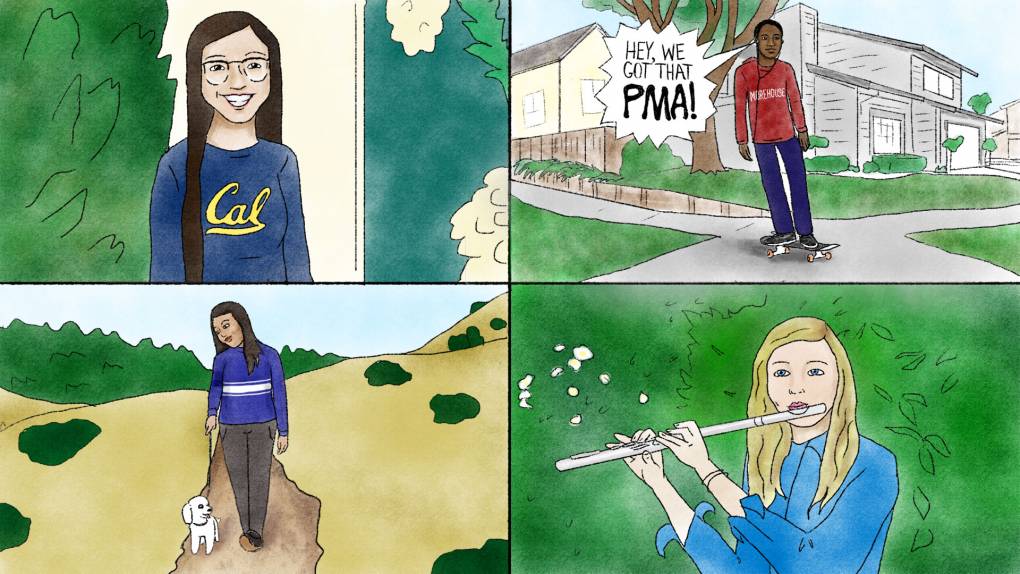
window.__IS_SSR__=true
window.__INITIAL_STATE__={
"attachmentsReducer": {
"audio_0": {
"type": "attachments",
"id": "audio_0",
"imgSizes": {
"kqedFullSize": {
"file": "https://ww2.kqed.org/news/wp-content/themes/KQED-unified/img/audio_bgs/background0.jpg"
}
}
},
"audio_1": {
"type": "attachments",
"id": "audio_1",
"imgSizes": {
"kqedFullSize": {
"file": "https://ww2.kqed.org/news/wp-content/themes/KQED-unified/img/audio_bgs/background1.jpg"
}
}
},
"audio_2": {
"type": "attachments",
"id": "audio_2",
"imgSizes": {
"kqedFullSize": {
"file": "https://ww2.kqed.org/news/wp-content/themes/KQED-unified/img/audio_bgs/background2.jpg"
}
}
},
"audio_3": {
"type": "attachments",
"id": "audio_3",
"imgSizes": {
"kqedFullSize": {
"file": "https://ww2.kqed.org/news/wp-content/themes/KQED-unified/img/audio_bgs/background3.jpg"
}
}
},
"audio_4": {
"type": "attachments",
"id": "audio_4",
"imgSizes": {
"kqedFullSize": {
"file": "https://ww2.kqed.org/news/wp-content/themes/KQED-unified/img/audio_bgs/background4.jpg"
}
}
},
"placeholder": {
"type": "attachments",
"id": "placeholder",
"imgSizes": {
"thumbnail": {
"file": "https://cdn.kqed.org/wp-content/uploads/2024/12/KQED-Default-Image-816638274-2000x1333-1-160x107.jpg",
"width": 160,
"height": 107,
"mimeType": "image/jpeg"
},
"medium": {
"file": "https://cdn.kqed.org/wp-content/uploads/2024/12/KQED-Default-Image-816638274-2000x1333-1-800x533.jpg",
"width": 800,
"height": 533,
"mimeType": "image/jpeg"
},
"medium_large": {
"file": "https://cdn.kqed.org/wp-content/uploads/2024/12/KQED-Default-Image-816638274-2000x1333-1-768x512.jpg",
"width": 768,
"height": 512,
"mimeType": "image/jpeg"
},
"large": {
"file": "https://cdn.kqed.org/wp-content/uploads/2024/12/KQED-Default-Image-816638274-2000x1333-1-1020x680.jpg",
"width": 1020,
"height": 680,
"mimeType": "image/jpeg"
},
"1536x1536": {
"file": "https://cdn.kqed.org/wp-content/uploads/2024/12/KQED-Default-Image-816638274-2000x1333-1-1536x1024.jpg",
"width": 1536,
"height": 1024,
"mimeType": "image/jpeg"
},
"fd-lrg": {
"file": "https://cdn.kqed.org/wp-content/uploads/2024/12/KQED-Default-Image-816638274-2000x1333-1-1536x1024.jpg",
"width": 1536,
"height": 1024,
"mimeType": "image/jpeg"
},
"fd-med": {
"file": "https://cdn.kqed.org/wp-content/uploads/2024/12/KQED-Default-Image-816638274-2000x1333-1-1020x680.jpg",
"width": 1020,
"height": 680,
"mimeType": "image/jpeg"
},
"fd-sm": {
"file": "https://cdn.kqed.org/wp-content/uploads/2024/12/KQED-Default-Image-816638274-2000x1333-1-800x533.jpg",
"width": 800,
"height": 533,
"mimeType": "image/jpeg"
},
"post-thumbnail": {
"file": "https://cdn.kqed.org/wp-content/uploads/2024/12/KQED-Default-Image-816638274-2000x1333-1-672x372.jpg",
"width": 672,
"height": 372,
"mimeType": "image/jpeg"
},
"twentyfourteen-full-width": {
"file": "https://cdn.kqed.org/wp-content/uploads/2024/12/KQED-Default-Image-816638274-2000x1333-1-1038x576.jpg",
"width": 1038,
"height": 576,
"mimeType": "image/jpeg"
},
"xxsmall": {
"file": "https://cdn.kqed.org/wp-content/uploads/2024/12/KQED-Default-Image-816638274-2000x1333-1-160x107.jpg",
"width": 160,
"height": 107,
"mimeType": "image/jpeg"
},
"xsmall": {
"file": "https://cdn.kqed.org/wp-content/uploads/2024/12/KQED-Default-Image-816638274-2000x1333-1-672x372.jpg",
"width": 672,
"height": 372,
"mimeType": "image/jpeg"
},
"small": {
"file": "https://cdn.kqed.org/wp-content/uploads/2024/12/KQED-Default-Image-816638274-2000x1333-1-672x372.jpg",
"width": 672,
"height": 372,
"mimeType": "image/jpeg"
},
"xlarge": {
"file": "https://cdn.kqed.org/wp-content/uploads/2024/12/KQED-Default-Image-816638274-2000x1333-1-1020x680.jpg",
"width": 1020,
"height": 680,
"mimeType": "image/jpeg"
},
"full-width": {
"file": "https://cdn.kqed.org/wp-content/uploads/2024/12/KQED-Default-Image-816638274-2000x1333-1-1920x1280.jpg",
"width": 1920,
"height": 1280,
"mimeType": "image/jpeg"
},
"guest-author-32": {
"file": "https://cdn.kqed.org/wp-content/uploads/2025/01/KQED-Default-Image-816638274-1333x1333-1-160x160.jpg",
"width": 32,
"height": 32,
"mimeType": "image/jpeg"
},
"guest-author-50": {
"file": "https://cdn.kqed.org/wp-content/uploads/2025/01/KQED-Default-Image-816638274-1333x1333-1-160x160.jpg",
"width": 50,
"height": 50,
"mimeType": "image/jpeg"
},
"guest-author-64": {
"file": "https://cdn.kqed.org/wp-content/uploads/2025/01/KQED-Default-Image-816638274-1333x1333-1-160x160.jpg",
"width": 64,
"height": 64,
"mimeType": "image/jpeg"
},
"guest-author-96": {
"file": "https://cdn.kqed.org/wp-content/uploads/2025/01/KQED-Default-Image-816638274-1333x1333-1-160x160.jpg",
"width": 96,
"height": 96,
"mimeType": "image/jpeg"
},
"guest-author-128": {
"file": "https://cdn.kqed.org/wp-content/uploads/2025/01/KQED-Default-Image-816638274-1333x1333-1-160x160.jpg",
"width": 128,
"height": 128,
"mimeType": "image/jpeg"
},
"detail": {
"file": "https://cdn.kqed.org/wp-content/uploads/2025/01/KQED-Default-Image-816638274-1333x1333-1-160x160.jpg",
"width": 160,
"height": 160,
"mimeType": "image/jpeg"
},
"kqedFullSize": {
"file": "https://cdn.kqed.org/wp-content/uploads/2024/12/KQED-Default-Image-816638274-2000x1333-1.jpg",
"width": 2000,
"height": 1333
}
}
},
"mindshift_56360": {
"type": "attachments",
"id": "mindshift_56360",
"meta": {
"index": "attachments_1716263798",
"site": "mindshift",
"id": "56360",
"found": true
},
"parent": 56247,
"imgSizes": {
"twentyfourteen-full-width": {
"file": "https://ww2.kqed.org/app/uploads/sites/23/2020/07/Mindshift_episode2_v2-1038x576.jpg",
"width": 1038,
"mimeType": "image/jpeg",
"height": 576
},
"thumbnail": {
"file": "https://ww2.kqed.org/app/uploads/sites/23/2020/07/Mindshift_episode2_v2-160x90.jpg",
"width": 160,
"mimeType": "image/jpeg",
"height": 90
},
"post-thumbnail": {
"file": "https://ww2.kqed.org/app/uploads/sites/23/2020/07/Mindshift_episode2_v2-672x372.jpg",
"width": 672,
"mimeType": "image/jpeg",
"height": 372
},
"kqedFullSize": {
"file": "https://ww2.kqed.org/app/uploads/sites/23/2020/07/Mindshift_episode2_v2.jpg",
"width": 1920,
"height": 1080
},
"large": {
"file": "https://ww2.kqed.org/app/uploads/sites/23/2020/07/Mindshift_episode2_v2-1020x574.jpg",
"width": 1020,
"mimeType": "image/jpeg",
"height": 574
},
"1536x1536": {
"file": "https://ww2.kqed.org/app/uploads/sites/23/2020/07/Mindshift_episode2_v2-1536x864.jpg",
"width": 1536,
"mimeType": "image/jpeg",
"height": 864
},
"medium": {
"file": "https://ww2.kqed.org/app/uploads/sites/23/2020/07/Mindshift_episode2_v2-800x450.jpg",
"width": 800,
"mimeType": "image/jpeg",
"height": 450
},
"medium_large": {
"file": "https://ww2.kqed.org/app/uploads/sites/23/2020/07/Mindshift_episode2_v2-768x432.jpg",
"width": 768,
"mimeType": "image/jpeg",
"height": 432
}
},
"publishDate": 1595871553,
"modified": 1595871616,
"caption": "Four students from different parts of the San Francisco Bay Area shared their experiences of the Spring of 2020 when coronavirus closed down their schools.",
"description": null,
"title": "Mindshift_episode2_v2",
"credit": "Kelly Heigert/KQED",
"status": "inherit",
"isLoading": false,
"fetchFailed": false
},
"mindshift_56270": {
"type": "attachments",
"id": "mindshift_56270",
"meta": {
"index": "attachments_1716263798",
"site": "mindshift",
"id": "56270",
"found": true
},
"parent": 56268,
"imgSizes": {
"twentyfourteen-full-width": {
"file": "https://ww2.kqed.org/app/uploads/sites/23/2020/07/Ashanti-Branch-emotional-intelligence-1038x576.jpg",
"width": 1038,
"mimeType": "image/jpeg",
"height": 576
},
"thumbnail": {
"file": "https://ww2.kqed.org/app/uploads/sites/23/2020/07/Ashanti-Branch-emotional-intelligence-160x89.jpg",
"width": 160,
"mimeType": "image/jpeg",
"height": 89
},
"post-thumbnail": {
"file": "https://ww2.kqed.org/app/uploads/sites/23/2020/07/Ashanti-Branch-emotional-intelligence-672x372.jpg",
"width": 672,
"mimeType": "image/jpeg",
"height": 372
},
"kqedFullSize": {
"file": "https://ww2.kqed.org/app/uploads/sites/23/2020/07/Ashanti-Branch-emotional-intelligence.jpg",
"width": 1940,
"height": 1080
},
"large": {
"file": "https://ww2.kqed.org/app/uploads/sites/23/2020/07/Ashanti-Branch-emotional-intelligence-1020x568.jpg",
"width": 1020,
"mimeType": "image/jpeg",
"height": 568
},
"1536x1536": {
"file": "https://ww2.kqed.org/app/uploads/sites/23/2020/07/Ashanti-Branch-emotional-intelligence-1536x855.jpg",
"width": 1536,
"mimeType": "image/jpeg",
"height": 855
},
"full-width": {
"file": "https://ww2.kqed.org/app/uploads/sites/23/2020/07/Ashanti-Branch-emotional-intelligence-1920x1069.jpg",
"width": 1920,
"mimeType": "image/jpeg",
"height": 1069
},
"medium": {
"file": "https://ww2.kqed.org/app/uploads/sites/23/2020/07/Ashanti-Branch-emotional-intelligence-800x445.jpg",
"width": 800,
"mimeType": "image/jpeg",
"height": 445
},
"medium_large": {
"file": "https://ww2.kqed.org/app/uploads/sites/23/2020/07/Ashanti-Branch-emotional-intelligence-768x428.jpg",
"width": 768,
"mimeType": "image/jpeg",
"height": 428
}
},
"publishDate": 1594413516,
"modified": 1594413611,
"caption": "Ashanti Branch, founder of Ever Forward/Siempre Adelante, listens intently to middle school boys at Academy of Alameda.",
"description": null,
"title": "Ashanti-Branch-emotional-intelligence",
"credit": "Josh Egel/Ever Forward Siempre Adelante",
"status": "inherit",
"isLoading": false,
"fetchFailed": false
},
"mindshift_56242": {
"type": "attachments",
"id": "mindshift_56242",
"meta": {
"index": "attachments_1716263798",
"site": "mindshift",
"id": "56242",
"found": true
},
"parent": 56241,
"imgSizes": {
"twentyfourteen-full-width": {
"file": "https://ww2.kqed.org/app/uploads/sites/23/2020/07/gettyimages-1221104571_slide-648d882d04f425d649799d7e0d81838e5c409cb9-1038x576.jpg",
"width": 1038,
"mimeType": "image/jpeg",
"height": 576
},
"thumbnail": {
"file": "https://ww2.kqed.org/app/uploads/sites/23/2020/07/gettyimages-1221104571_slide-648d882d04f425d649799d7e0d81838e5c409cb9-160x107.jpg",
"width": 160,
"mimeType": "image/jpeg",
"height": 107
},
"post-thumbnail": {
"file": "https://ww2.kqed.org/app/uploads/sites/23/2020/07/gettyimages-1221104571_slide-648d882d04f425d649799d7e0d81838e5c409cb9-672x372.jpg",
"width": 672,
"mimeType": "image/jpeg",
"height": 372
},
"kqedFullSize": {
"file": "https://ww2.kqed.org/app/uploads/sites/23/2020/07/gettyimages-1221104571_slide-648d882d04f425d649799d7e0d81838e5c409cb9-scaled-e1594273632465.jpg",
"width": 1920,
"height": 1280
},
"2048x2048": {
"file": "https://ww2.kqed.org/app/uploads/sites/23/2020/07/gettyimages-1221104571_slide-648d882d04f425d649799d7e0d81838e5c409cb9-2048x1365.jpg",
"width": 2048,
"mimeType": "image/jpeg",
"height": 1365
},
"large": {
"file": "https://ww2.kqed.org/app/uploads/sites/23/2020/07/gettyimages-1221104571_slide-648d882d04f425d649799d7e0d81838e5c409cb9-1020x680.jpg",
"width": 1020,
"mimeType": "image/jpeg",
"height": 680
},
"1536x1536": {
"file": "https://ww2.kqed.org/app/uploads/sites/23/2020/07/gettyimages-1221104571_slide-648d882d04f425d649799d7e0d81838e5c409cb9-1536x1024.jpg",
"width": 1536,
"mimeType": "image/jpeg",
"height": 1024
},
"full-width": {
"file": "https://ww2.kqed.org/app/uploads/sites/23/2020/07/gettyimages-1221104571_slide-648d882d04f425d649799d7e0d81838e5c409cb9-1920x1280.jpg",
"width": 1920,
"mimeType": "image/jpeg",
"height": 1280
},
"medium": {
"file": "https://ww2.kqed.org/app/uploads/sites/23/2020/07/gettyimages-1221104571_slide-648d882d04f425d649799d7e0d81838e5c409cb9-800x533.jpg",
"width": 800,
"mimeType": "image/jpeg",
"height": 533
},
"medium_large": {
"file": "https://ww2.kqed.org/app/uploads/sites/23/2020/07/gettyimages-1221104571_slide-648d882d04f425d649799d7e0d81838e5c409cb9-768x512.jpg",
"width": 768,
"mimeType": "image/jpeg",
"height": 512
}
},
"publishDate": 1594273595,
"modified": 1594273645,
"caption": "Black Students Matter demonstrators march en route to a rally at the Department of Education in Washington, D.C., on June 19.\n",
"description": "Black Students Matter demonstrators march en route to a rally at the Department of Education in Washington, D.C., on June 19.",
"title": "Black Students Matter demonstrators march en route to a rally at the Department of Education in Washington, D.C., on June 19.",
"credit": "Tom Williams/CQ-Roll Call via Getty Images",
"status": "inherit",
"isLoading": false,
"fetchFailed": false
},
"mindshift_56214": {
"type": "attachments",
"id": "mindshift_56214",
"meta": {
"index": "attachments_1716263798",
"site": "mindshift",
"id": "56214",
"found": true
},
"parent": 56213,
"imgSizes": {
"twentyfourteen-full-width": {
"file": "https://ww2.kqed.org/app/uploads/sites/23/2020/07/Mindshift2020-for-social_1-e1594073459323-1038x576.png",
"width": 1038,
"mimeType": "image/png",
"height": 576
},
"thumbnail": {
"file": "https://ww2.kqed.org/app/uploads/sites/23/2020/07/Mindshift2020-for-social_1-e1594073459323-160x96.png",
"width": 160,
"mimeType": "image/png",
"height": 96
},
"post-thumbnail": {
"file": "https://ww2.kqed.org/app/uploads/sites/23/2020/07/Mindshift2020-for-social_1-e1594073459323-672x372.png",
"width": 672,
"mimeType": "image/png",
"height": 372
},
"kqedFullSize": {
"file": "https://ww2.kqed.org/app/uploads/sites/23/2020/07/Mindshift2020-for-social_1-e1594073485507.png",
"width": 1920,
"height": 1158
},
"2048x2048": {
"file": "https://ww2.kqed.org/app/uploads/sites/23/2020/07/Mindshift2020-for-social_1-e1594073459323-2048x1235.png",
"width": 2048,
"mimeType": "image/png",
"height": 1235
},
"large": {
"file": "https://ww2.kqed.org/app/uploads/sites/23/2020/07/Mindshift2020-for-social_1-e1594073459323-1020x615.png",
"width": 1020,
"mimeType": "image/png",
"height": 615
},
"1536x1536": {
"file": "https://ww2.kqed.org/app/uploads/sites/23/2020/07/Mindshift2020-for-social_1-e1594073459323-1536x926.png",
"width": 1536,
"mimeType": "image/png",
"height": 926
},
"full-width": {
"file": "https://ww2.kqed.org/app/uploads/sites/23/2020/07/Mindshift2020-for-social_1-e1594073459323-1920x1158.png",
"width": 1920,
"mimeType": "image/png",
"height": 1158
},
"medium": {
"file": "https://ww2.kqed.org/app/uploads/sites/23/2020/07/Mindshift2020-for-social_1-e1594073459323-800x482.png",
"width": 800,
"mimeType": "image/png",
"height": 482
},
"medium_large": {
"file": "https://ww2.kqed.org/app/uploads/sites/23/2020/07/Mindshift2020-for-social_1-e1594073459323-768x463.png",
"width": 768,
"mimeType": "image/png",
"height": 463
}
},
"publishDate": 1594073392,
"modified": 1594073504,
"caption": null,
"description": null,
"title": "Mindshift2020-for-social_1",
"credit": "Kelly Heigert/KQED",
"status": "inherit",
"isLoading": false,
"fetchFailed": false
},
"mindshift_56204": {
"type": "attachments",
"id": "mindshift_56204",
"meta": {
"index": "attachments_1716263798",
"site": "mindshift",
"id": "56204",
"found": true
},
"parent": 56195,
"imgSizes": {
"twentyfourteen-full-width": {
"file": "https://ww2.kqed.org/app/uploads/sites/23/2020/07/iStock-1224289074-1038x576.jpg",
"width": 1038,
"mimeType": "image/jpeg",
"height": 576
},
"thumbnail": {
"file": "https://ww2.kqed.org/app/uploads/sites/23/2020/07/iStock-1224289074-160x107.jpg",
"width": 160,
"mimeType": "image/jpeg",
"height": 107
},
"post-thumbnail": {
"file": "https://ww2.kqed.org/app/uploads/sites/23/2020/07/iStock-1224289074-672x372.jpg",
"width": 672,
"mimeType": "image/jpeg",
"height": 372
},
"kqedFullSize": {
"file": "https://ww2.kqed.org/app/uploads/sites/23/2020/07/iStock-1224289074.jpg",
"width": 2121,
"height": 1414
},
"2048x2048": {
"file": "https://ww2.kqed.org/app/uploads/sites/23/2020/07/iStock-1224289074-2048x1365.jpg",
"width": 2048,
"mimeType": "image/jpeg",
"height": 1365
},
"large": {
"file": "https://ww2.kqed.org/app/uploads/sites/23/2020/07/iStock-1224289074-1020x680.jpg",
"width": 1020,
"mimeType": "image/jpeg",
"height": 680
},
"1536x1536": {
"file": "https://ww2.kqed.org/app/uploads/sites/23/2020/07/iStock-1224289074-1536x1024.jpg",
"width": 1536,
"mimeType": "image/jpeg",
"height": 1024
},
"full-width": {
"file": "https://ww2.kqed.org/app/uploads/sites/23/2020/07/iStock-1224289074-1920x1280.jpg",
"width": 1920,
"mimeType": "image/jpeg",
"height": 1280
},
"medium": {
"file": "https://ww2.kqed.org/app/uploads/sites/23/2020/07/iStock-1224289074-800x533.jpg",
"width": 800,
"mimeType": "image/jpeg",
"height": 533
},
"medium_large": {
"file": "https://ww2.kqed.org/app/uploads/sites/23/2020/07/iStock-1224289074-768x512.jpg",
"width": 768,
"mimeType": "image/jpeg",
"height": 512
}
},
"publishDate": 1593985098,
"modified": 1593985119,
"caption": null,
"description": null,
"title": "iStock-1224289074",
"credit": "ThitareeSarmkasat/iStock",
"status": "inherit",
"isLoading": false,
"fetchFailed": false
},
"mindshift_56190": {
"type": "attachments",
"id": "mindshift_56190",
"meta": {
"index": "attachments_1716263798",
"site": "mindshift",
"id": "56190",
"found": true
},
"parent": 56187,
"imgSizes": {
"twentyfourteen-full-width": {
"file": "https://ww2.kqed.org/app/uploads/sites/23/2020/07/iStock-184785879-1038x576.jpg",
"width": 1038,
"mimeType": "image/jpeg",
"height": 576
},
"thumbnail": {
"file": "https://ww2.kqed.org/app/uploads/sites/23/2020/07/iStock-184785879-160x107.jpg",
"width": 160,
"mimeType": "image/jpeg",
"height": 107
},
"post-thumbnail": {
"file": "https://ww2.kqed.org/app/uploads/sites/23/2020/07/iStock-184785879-672x372.jpg",
"width": 672,
"mimeType": "image/jpeg",
"height": 372
},
"kqedFullSize": {
"file": "https://ww2.kqed.org/app/uploads/sites/23/2020/07/iStock-184785879-e1593676807493.jpg",
"width": 1920,
"height": 1280
},
"2048x2048": {
"file": "https://ww2.kqed.org/app/uploads/sites/23/2020/07/iStock-184785879-2048x1365.jpg",
"width": 2048,
"mimeType": "image/jpeg",
"height": 1365
},
"large": {
"file": "https://ww2.kqed.org/app/uploads/sites/23/2020/07/iStock-184785879-1020x680.jpg",
"width": 1020,
"mimeType": "image/jpeg",
"height": 680
},
"1536x1536": {
"file": "https://ww2.kqed.org/app/uploads/sites/23/2020/07/iStock-184785879-1536x1024.jpg",
"width": 1536,
"mimeType": "image/jpeg",
"height": 1024
},
"full-width": {
"file": "https://ww2.kqed.org/app/uploads/sites/23/2020/07/iStock-184785879-1920x1280.jpg",
"width": 1920,
"mimeType": "image/jpeg",
"height": 1280
},
"medium": {
"file": "https://ww2.kqed.org/app/uploads/sites/23/2020/07/iStock-184785879-800x533.jpg",
"width": 800,
"mimeType": "image/jpeg",
"height": 533
},
"medium_large": {
"file": "https://ww2.kqed.org/app/uploads/sites/23/2020/07/iStock-184785879-768x512.jpg",
"width": 768,
"mimeType": "image/jpeg",
"height": 512
}
},
"publishDate": 1593676778,
"modified": 1593678028,
"caption": null,
"description": null,
"title": null,
"credit": "Yobro10/iStock",
"status": "inherit",
"isLoading": false,
"fetchFailed": false
},
"mindshift_56181": {
"type": "attachments",
"id": "mindshift_56181",
"meta": {
"index": "attachments_1716263798",
"site": "mindshift",
"id": "56181",
"found": true
},
"parent": 56180,
"imgSizes": {
"twentyfourteen-full-width": {
"file": "https://ww2.kqed.org/app/uploads/sites/23/2020/06/ap_20154068480009_wide-07bad657e07b7a1a89fd50a0f4b3fe642e7eeb36-1038x576.jpg",
"width": 1038,
"mimeType": "image/jpeg",
"height": 576
},
"thumbnail": {
"file": "https://ww2.kqed.org/app/uploads/sites/23/2020/06/ap_20154068480009_wide-07bad657e07b7a1a89fd50a0f4b3fe642e7eeb36-160x90.jpg",
"width": 160,
"mimeType": "image/jpeg",
"height": 90
},
"post-thumbnail": {
"file": "https://ww2.kqed.org/app/uploads/sites/23/2020/06/ap_20154068480009_wide-07bad657e07b7a1a89fd50a0f4b3fe642e7eeb36-672x372.jpg",
"width": 672,
"mimeType": "image/jpeg",
"height": 372
},
"kqedFullSize": {
"file": "https://ww2.kqed.org/app/uploads/sites/23/2020/06/ap_20154068480009_wide-07bad657e07b7a1a89fd50a0f4b3fe642e7eeb36-scaled-e1593499602254.jpg",
"width": 1920,
"height": 1080
},
"2048x2048": {
"file": "https://ww2.kqed.org/app/uploads/sites/23/2020/06/ap_20154068480009_wide-07bad657e07b7a1a89fd50a0f4b3fe642e7eeb36-2048x1152.jpg",
"width": 2048,
"mimeType": "image/jpeg",
"height": 1152
},
"large": {
"file": "https://ww2.kqed.org/app/uploads/sites/23/2020/06/ap_20154068480009_wide-07bad657e07b7a1a89fd50a0f4b3fe642e7eeb36-1020x574.jpg",
"width": 1020,
"mimeType": "image/jpeg",
"height": 574
},
"1536x1536": {
"file": "https://ww2.kqed.org/app/uploads/sites/23/2020/06/ap_20154068480009_wide-07bad657e07b7a1a89fd50a0f4b3fe642e7eeb36-1536x864.jpg",
"width": 1536,
"mimeType": "image/jpeg",
"height": 864
},
"full-width": {
"file": "https://ww2.kqed.org/app/uploads/sites/23/2020/06/ap_20154068480009_wide-07bad657e07b7a1a89fd50a0f4b3fe642e7eeb36-1920x1080.jpg",
"width": 1920,
"mimeType": "image/jpeg",
"height": 1080
},
"medium": {
"file": "https://ww2.kqed.org/app/uploads/sites/23/2020/06/ap_20154068480009_wide-07bad657e07b7a1a89fd50a0f4b3fe642e7eeb36-800x450.jpg",
"width": 800,
"mimeType": "image/jpeg",
"height": 450
},
"medium_large": {
"file": "https://ww2.kqed.org/app/uploads/sites/23/2020/06/ap_20154068480009_wide-07bad657e07b7a1a89fd50a0f4b3fe642e7eeb36-768x432.jpg",
"width": 768,
"mimeType": "image/jpeg",
"height": 432
}
},
"publishDate": 1593499566,
"modified": 1593499628,
"caption": "Kristina Washington, special education staff member at Desert Heights Preparatory Academy, walks past desks and chairs at the closed Glendale, Ariz., school in early June.",
"description": "Kristina Washington, special education staff member at Desert Heights Preparatory Academy, walks past desks and chairs at the closed Glendale, Ariz., school in early June.",
"title": "Kristina Washington, special education staff member at Desert Heights Preparatory Academy, walks past desks and chairs at the closed Glendale, Ariz., school in early June.",
"credit": "Ross D. Franklin/AP",
"status": "inherit",
"isLoading": false,
"fetchFailed": false
},
"mindshift_56171": {
"type": "attachments",
"id": "mindshift_56171",
"meta": {
"index": "attachments_1716263798",
"site": "mindshift",
"id": "56171",
"found": true
},
"parent": 56168,
"imgSizes": {
"twentyfourteen-full-width": {
"file": "https://ww2.kqed.org/app/uploads/sites/23/2020/06/Thespys-2-1038x562.png",
"width": 1038,
"mimeType": "image/png",
"height": 562
},
"thumbnail": {
"file": "https://ww2.kqed.org/app/uploads/sites/23/2020/06/Thespys-2-160x85.png",
"width": 160,
"mimeType": "image/png",
"height": 85
},
"post-thumbnail": {
"file": "https://ww2.kqed.org/app/uploads/sites/23/2020/06/Thespys-2-672x372.png",
"width": 672,
"mimeType": "image/png",
"height": 372
},
"kqedFullSize": {
"file": "https://ww2.kqed.org/app/uploads/sites/23/2020/06/Thespys-2.png",
"width": 1056,
"height": 562
},
"large": {
"file": "https://ww2.kqed.org/app/uploads/sites/23/2020/06/Thespys-2-1020x543.png",
"width": 1020,
"mimeType": "image/png",
"height": 543
},
"medium": {
"file": "https://ww2.kqed.org/app/uploads/sites/23/2020/06/Thespys-2-800x426.png",
"width": 800,
"mimeType": "image/png",
"height": 426
},
"medium_large": {
"file": "https://ww2.kqed.org/app/uploads/sites/23/2020/06/Thespys-2-768x409.png",
"width": 768,
"mimeType": "image/png",
"height": 409
}
},
"publishDate": 1593422184,
"modified": 1593454637,
"caption": "Virtual International Thespian Festival opening ceremony virtual choir.",
"description": null,
"title": "Thespys-2",
"credit": "V-ITF/YouTube",
"status": "inherit",
"isLoading": false,
"fetchFailed": false
},
"mindshift_56162": {
"type": "attachments",
"id": "mindshift_56162",
"meta": {
"index": "attachments_1716263798",
"site": "mindshift",
"id": "56162",
"found": true
},
"parent": 56161,
"imgSizes": {
"thumbnail": {
"file": "https://ww2.kqed.org/app/uploads/sites/23/2020/06/ymca-airplane_custom-b205565dcd6192e8bcd19b5f52a855c616aeadf1-160x97.jpe",
"width": 160,
"mimeType": "image/jpeg",
"height": 97
},
"post-thumbnail": {
"file": "https://ww2.kqed.org/app/uploads/sites/23/2020/06/ymca-airplane_custom-b205565dcd6192e8bcd19b5f52a855c616aeadf1-672x372.jpe",
"width": 672,
"mimeType": "image/jpeg",
"height": 372
},
"kqedFullSize": {
"file": "https://ww2.kqed.org/app/uploads/sites/23/2020/06/ymca-airplane_custom-b205565dcd6192e8bcd19b5f52a855c616aeadf1.jpe",
"width": 755,
"height": 460
}
},
"publishDate": 1593062915,
"modified": 1593063081,
"caption": "To help with social distancing, children at Valley of the Sun YMCA sites in Arizona were taught to make \"airplane arms\" when standing in line.\n",
"description": "To help with social distancing, children at Valley of the Sun YMCA sites in Arizona were taught to make \"airplane arms\" when standing in line.",
"title": "To help with social distancing, children at Valley of the Sun YMCA sites in Arizona were taught to make \"airplane arms\" when standing in line.",
"credit": "Valley of the Sun YMCA",
"status": "inherit",
"isLoading": false,
"fetchFailed": false
},
"mindshift_56157": {
"type": "attachments",
"id": "mindshift_56157",
"meta": {
"index": "attachments_1716263798",
"site": "mindshift",
"id": "56157",
"found": true
},
"parent": 56156,
"imgSizes": {
"twentyfourteen-full-width": {
"file": "https://ww2.kqed.org/app/uploads/sites/23/2020/06/jjoshua-npr-policingschool_slide-0f0f7256e723e0e92149149013f35d3ac5b6400e-1038x576.jpg",
"width": 1038,
"mimeType": "image/jpeg",
"height": 576
},
"thumbnail": {
"file": "https://ww2.kqed.org/app/uploads/sites/23/2020/06/jjoshua-npr-policingschool_slide-0f0f7256e723e0e92149149013f35d3ac5b6400e-160x107.jpg",
"width": 160,
"mimeType": "image/jpeg",
"height": 107
},
"post-thumbnail": {
"file": "https://ww2.kqed.org/app/uploads/sites/23/2020/06/jjoshua-npr-policingschool_slide-0f0f7256e723e0e92149149013f35d3ac5b6400e-672x372.jpg",
"width": 672,
"mimeType": "image/jpeg",
"height": 372
},
"kqedFullSize": {
"file": "https://ww2.kqed.org/app/uploads/sites/23/2020/06/jjoshua-npr-policingschool_slide-0f0f7256e723e0e92149149013f35d3ac5b6400e-scaled-e1592984536798.jpg",
"width": 1920,
"height": 1280
},
"2048x2048": {
"file": "https://ww2.kqed.org/app/uploads/sites/23/2020/06/jjoshua-npr-policingschool_slide-0f0f7256e723e0e92149149013f35d3ac5b6400e-2048x1365.jpg",
"width": 2048,
"mimeType": "image/jpeg",
"height": 1365
},
"large": {
"file": "https://ww2.kqed.org/app/uploads/sites/23/2020/06/jjoshua-npr-policingschool_slide-0f0f7256e723e0e92149149013f35d3ac5b6400e-1020x680.jpg",
"width": 1020,
"mimeType": "image/jpeg",
"height": 680
},
"1536x1536": {
"file": "https://ww2.kqed.org/app/uploads/sites/23/2020/06/jjoshua-npr-policingschool_slide-0f0f7256e723e0e92149149013f35d3ac5b6400e-1536x1024.jpg",
"width": 1536,
"mimeType": "image/jpeg",
"height": 1024
},
"full-width": {
"file": "https://ww2.kqed.org/app/uploads/sites/23/2020/06/jjoshua-npr-policingschool_slide-0f0f7256e723e0e92149149013f35d3ac5b6400e-1920x1280.jpg",
"width": 1920,
"mimeType": "image/jpeg",
"height": 1280
},
"medium": {
"file": "https://ww2.kqed.org/app/uploads/sites/23/2020/06/jjoshua-npr-policingschool_slide-0f0f7256e723e0e92149149013f35d3ac5b6400e-800x533.jpg",
"width": 800,
"mimeType": "image/jpeg",
"height": 533
},
"medium_large": {
"file": "https://ww2.kqed.org/app/uploads/sites/23/2020/06/jjoshua-npr-policingschool_slide-0f0f7256e723e0e92149149013f35d3ac5b6400e-768x512.jpg",
"width": 768,
"mimeType": "image/jpeg",
"height": 512
}
},
"publishDate": 1592984433,
"modified": 1592984560,
"caption": null,
"description": "Policing in schools has gone too far.",
"title": "Policing in schools has gone too far.",
"credit": "Jonell Joshua for NPR",
"status": "inherit",
"isLoading": false,
"fetchFailed": false
},
"mindshift_56139": {
"type": "attachments",
"id": "mindshift_56139",
"meta": {
"index": "attachments_1716263798",
"site": "mindshift",
"id": "56139",
"found": true
},
"parent": 56136,
"imgSizes": {
"twentyfourteen-full-width": {
"file": "https://ww2.kqed.org/app/uploads/sites/23/2020/06/iStock-891634690-1038x576.jpg",
"width": 1038,
"mimeType": "image/jpeg",
"height": 576
},
"thumbnail": {
"file": "https://ww2.kqed.org/app/uploads/sites/23/2020/06/iStock-891634690-160x107.jpg",
"width": 160,
"mimeType": "image/jpeg",
"height": 107
},
"post-thumbnail": {
"file": "https://ww2.kqed.org/app/uploads/sites/23/2020/06/iStock-891634690-672x372.jpg",
"width": 672,
"mimeType": "image/jpeg",
"height": 372
},
"kqedFullSize": {
"file": "https://ww2.kqed.org/app/uploads/sites/23/2020/06/iStock-891634690.jpg",
"width": 2119,
"height": 1414
},
"large": {
"file": "https://ww2.kqed.org/app/uploads/sites/23/2020/06/iStock-891634690-1020x681.jpg",
"width": 1020,
"mimeType": "image/jpeg",
"height": 681
},
"full-width": {
"file": "https://ww2.kqed.org/app/uploads/sites/23/2020/06/iStock-891634690-1920x1281.jpg",
"width": 1920,
"mimeType": "image/jpeg",
"height": 1281
},
"medium": {
"file": "https://ww2.kqed.org/app/uploads/sites/23/2020/06/iStock-891634690-800x534.jpg",
"width": 800,
"mimeType": "image/jpeg",
"height": 534
},
"medium_large": {
"file": "https://ww2.kqed.org/app/uploads/sites/23/2020/06/iStock-891634690-768x512.jpg",
"width": 768,
"mimeType": "image/jpeg",
"height": 512
}
},
"publishDate": 1592813336,
"modified": 1592813356,
"caption": null,
"description": null,
"title": "iStock-891634690",
"credit": "LightFieldStudios/iStock",
"status": "inherit",
"isLoading": false,
"fetchFailed": false
},
"mindshift_56142": {
"type": "attachments",
"id": "mindshift_56142",
"meta": {
"index": "attachments_1716263798",
"site": "mindshift",
"id": "56142",
"found": true
},
"parent": 56141,
"imgSizes": {
"twentyfourteen-full-width": {
"file": "https://ww2.kqed.org/app/uploads/sites/23/2020/06/enadworny-anash-1lighter_slide-5fb8bfc60c0b2628ce9ae7161f4fa9dad8de6b48-1038x576.jpg",
"width": 1038,
"mimeType": "image/jpeg",
"height": 576
},
"thumbnail": {
"file": "https://ww2.kqed.org/app/uploads/sites/23/2020/06/enadworny-anash-1lighter_slide-5fb8bfc60c0b2628ce9ae7161f4fa9dad8de6b48-160x107.jpg",
"width": 160,
"mimeType": "image/jpeg",
"height": 107
},
"post-thumbnail": {
"file": "https://ww2.kqed.org/app/uploads/sites/23/2020/06/enadworny-anash-1lighter_slide-5fb8bfc60c0b2628ce9ae7161f4fa9dad8de6b48-672x372.jpg",
"width": 672,
"mimeType": "image/jpeg",
"height": 372
},
"kqedFullSize": {
"file": "https://ww2.kqed.org/app/uploads/sites/23/2020/06/enadworny-anash-1lighter_slide-5fb8bfc60c0b2628ce9ae7161f4fa9dad8de6b48-e1592893560334.jpg",
"width": 1920,
"height": 1280
},
"large": {
"file": "https://ww2.kqed.org/app/uploads/sites/23/2020/06/enadworny-anash-1lighter_slide-5fb8bfc60c0b2628ce9ae7161f4fa9dad8de6b48-1020x680.jpg",
"width": 1020,
"mimeType": "image/jpeg",
"height": 680
},
"full-width": {
"file": "https://ww2.kqed.org/app/uploads/sites/23/2020/06/enadworny-anash-1lighter_slide-5fb8bfc60c0b2628ce9ae7161f4fa9dad8de6b48-1920x1280.jpg",
"width": 1920,
"mimeType": "image/jpeg",
"height": 1280
},
"medium": {
"file": "https://ww2.kqed.org/app/uploads/sites/23/2020/06/enadworny-anash-1lighter_slide-5fb8bfc60c0b2628ce9ae7161f4fa9dad8de6b48-800x533.jpg",
"width": 800,
"mimeType": "image/jpeg",
"height": 533
},
"medium_large": {
"file": "https://ww2.kqed.org/app/uploads/sites/23/2020/06/enadworny-anash-1lighter_slide-5fb8bfc60c0b2628ce9ae7161f4fa9dad8de6b48-768x512.jpg",
"width": 768,
"mimeType": "image/jpeg",
"height": 512
}
},
"publishDate": 1592893487,
"modified": 1592893578,
"caption": "Amiri Nash, 18, co-founded an organization that creates signs about racial injustice to post in predominantly white neighborhoods.\n",
"description": "Amiri Nash, 18, co-founded an organization that creates signs about racial injustice to post in predominantly white neighborhoods.",
"title": "Amiri Nash, 18, co-founded an organization that creates signs about racial injustice to post in predominantly white neighborhoods.",
"credit": "Elissa Nadworny/NPR",
"status": "inherit",
"isLoading": false,
"fetchFailed": false
}
},
"audioPlayerReducer": {
"postId": "stream_live",
"isPaused": true,
"isPlaying": false,
"pfsActive": false,
"pledgeModalIsOpen": true,
"playerDrawerIsOpen": false,
"liveAudioPlayStartedAt": 0,
"liveAudioPlayContext": ""
},
"authorsReducer": {
"byline_mindshift_56241": {
"type": "authors",
"id": "byline_mindshift_56241",
"meta": {
"override": true
},
"slug": "byline_mindshift_56241",
"name": "Ailsa Chang, Jonaki Mehta, Christianna Silva",
"isLoading": false
},
"byline_mindshift_56180": {
"type": "authors",
"id": "byline_mindshift_56180",
"meta": {
"override": true
},
"slug": "byline_mindshift_56180",
"name": "Anya Kamenetz",
"isLoading": false
},
"byline_mindshift_56161": {
"type": "authors",
"id": "byline_mindshift_56161",
"meta": {
"override": true
},
"slug": "byline_mindshift_56161",
"name": "Anya Kamenetz",
"isLoading": false
},
"byline_mindshift_56156": {
"type": "authors",
"id": "byline_mindshift_56156",
"meta": {
"override": true
},
"slug": "byline_mindshift_56156",
"name": "Anya Kamenetz",
"isLoading": false
},
"byline_mindshift_56141": {
"type": "authors",
"id": "byline_mindshift_56141",
"meta": {
"override": true
},
"slug": "byline_mindshift_56141",
"name": "Anya Kamenetz, Jeffrey Pierre, Sequoia Carrillo, Elissa Nadworny ",
"isLoading": false
},
"katrinaschwartz": {
"type": "authors",
"id": "234",
"meta": {
"index": "authors_1716337520",
"id": "234",
"found": true
},
"name": "Katrina Schwartz",
"firstName": "Katrina",
"lastName": "Schwartz",
"slug": "katrinaschwartz",
"email": "kschwartz@kqed.org",
"display_author_email": false,
"staff_mastheads": [
"news"
],
"title": "Producer",
"bio": "Katrina Schwartz is a journalist based in San Francisco. She's worked at KPCC public radio in LA and has reported on air and online for KQED since 2010. She covered how teaching and learning is changing for MindShift between 2012 and 2020. She is the co-host of the MindShift podcast and now produces KQED's Bay Curious podcast.",
"avatar": "https://secure.gravatar.com/avatar/edb4ee79070447a018538c9aae6eeecf28786515b8a0c30e43b6b7dce5aa44c8?s=600&d=blank&r=g",
"twitter": "kschwart",
"bluesky": null,
"facebook": null,
"instagram": null,
"linkedin": null,
"sites": [
{
"site": "",
"roles": [
"editor"
]
},
{
"site": "news",
"roles": [
"editor"
]
},
{
"site": "mindshift",
"roles": [
"administrator"
]
},
{
"site": "stateofhealth",
"roles": [
"author"
]
},
{
"site": "science",
"roles": [
"editor"
]
}
],
"headData": {
"title": "Katrina Schwartz | KQED",
"description": "Producer",
"ogImgSrc": "https://secure.gravatar.com/avatar/edb4ee79070447a018538c9aae6eeecf28786515b8a0c30e43b6b7dce5aa44c8?s=600&d=blank&r=g",
"twImgSrc": "https://secure.gravatar.com/avatar/edb4ee79070447a018538c9aae6eeecf28786515b8a0c30e43b6b7dce5aa44c8?s=600&d=blank&r=g"
},
"isLoading": false,
"link": "/author/katrinaschwartz"
},
"hollykorbey": {
"type": "authors",
"id": "4445",
"meta": {
"index": "authors_1716337520",
"id": "4445",
"found": true
},
"name": "Holly Korbey",
"firstName": "Holly",
"lastName": "Korbey",
"slug": "hollykorbey",
"email": "holly@hollykorbey.com",
"display_author_email": false,
"staff_mastheads": [],
"title": null,
"bio": "Holly Korbey's work on parenting and education has appeared in The New York Times, The Atlantic, Babble, Brain, Child Magazine, and others. She lives in Nashville with her family. Follow her on Twitter: @HKorbey",
"avatar": "https://secure.gravatar.com/avatar/f385f7a3b90e52ecd5e85c24fbd0a363?s=600&d=blank&r=g",
"twitter": null,
"facebook": null,
"instagram": null,
"linkedin": null,
"sites": [
{
"site": "mindshift",
"roles": [
"contributor"
]
}
],
"headData": {
"title": "Holly Korbey | KQED",
"description": null,
"ogImgSrc": "https://secure.gravatar.com/avatar/f385f7a3b90e52ecd5e85c24fbd0a363?s=600&d=blank&r=g",
"twImgSrc": "https://secure.gravatar.com/avatar/f385f7a3b90e52ecd5e85c24fbd0a363?s=600&d=blank&r=g"
},
"isLoading": false,
"link": "/author/hollykorbey"
},
"ksung": {
"type": "authors",
"id": "4596",
"meta": {
"index": "authors_1716337520",
"id": "4596",
"found": true
},
"name": "Ki Sung",
"firstName": "Ki",
"lastName": "Sung",
"slug": "ksung",
"email": "ksung@kqed.org",
"display_author_email": false,
"staff_mastheads": [
"news"
],
"title": "KQED Contributor",
"bio": "Ki Sung is Managing Editor of Digital News at KQED. She is former Senior Editor of MindShift and worked at NPR before joining KQED in 2014.",
"avatar": "https://secure.gravatar.com/avatar/64271e01dc95486c133be56937739045b7c00c990525bf9add12d3dd4f0433c9?s=600&d=blank&r=g",
"twitter": null,
"bluesky": null,
"facebook": null,
"instagram": null,
"linkedin": null,
"sites": [
{
"site": "arts",
"roles": [
"administrator"
]
},
{
"site": "news",
"roles": [
"administrator"
]
},
{
"site": "mindshift",
"roles": [
"administrator"
]
},
{
"site": "science",
"roles": [
"administrator"
]
},
{
"site": "forum",
"roles": [
"administrator"
]
},
{
"site": "perspectives",
"roles": [
"administrator"
]
},
{
"site": "elections",
"roles": [
"administrator"
]
}
],
"headData": {
"title": "Ki Sung | KQED",
"description": "KQED Contributor",
"ogImgSrc": "https://secure.gravatar.com/avatar/64271e01dc95486c133be56937739045b7c00c990525bf9add12d3dd4f0433c9?s=600&d=blank&r=g",
"twImgSrc": "https://secure.gravatar.com/avatar/64271e01dc95486c133be56937739045b7c00c990525bf9add12d3dd4f0433c9?s=600&d=blank&r=g"
},
"isLoading": false,
"link": "/author/ksung"
},
"kdnewhouse": {
"type": "authors",
"id": "11487",
"meta": {
"index": "authors_1716337520",
"id": "11487",
"found": true
},
"name": "Kara Newhouse",
"firstName": "Kara",
"lastName": "Newhouse",
"slug": "kdnewhouse",
"email": "knewhouse@kqed.org",
"display_author_email": false,
"staff_mastheads": [],
"title": "MindShift Editor",
"bio": null,
"avatar": "https://secure.gravatar.com/avatar/3dceed6fb271527113abfa9a8e9df34e?s=600&d=blank&r=g",
"twitter": null,
"facebook": null,
"instagram": null,
"linkedin": null,
"sites": [
{
"site": "",
"roles": [
"editor"
]
},
{
"site": "mindshift",
"roles": []
}
],
"headData": {
"title": "Kara Newhouse | KQED",
"description": "MindShift Editor",
"ogImgSrc": "https://secure.gravatar.com/avatar/3dceed6fb271527113abfa9a8e9df34e?s=600&d=blank&r=g",
"twImgSrc": "https://secure.gravatar.com/avatar/3dceed6fb271527113abfa9a8e9df34e?s=600&d=blank&r=g"
},
"isLoading": false,
"link": "/author/kdnewhouse"
}
},
"pagesReducer": {
"mindshift_tag_featured": {
"type": "terms",
"id": "mindshift_20784",
"meta": {
"index": "terms_1716263798",
"site": "mindshift",
"id": "20784",
"score": 7.6562457
},
"featImg": null,
"name": "featured",
"description": null,
"taxonomy": "tag",
"headData": {
"twImgId": null,
"twTitle": null,
"ogTitle": null,
"ogImgId": null,
"twDescription": null,
"description": null,
"title": "featured Archives | KQED Mindshift",
"ogDescription": null
},
"ttid": 20061,
"slug": "featured",
"isLoading": false,
"title": "featured",
"pageMeta": {
"site": "mindshift",
"WpPageTemplate": "page-topic-editorial",
"currentPage": 1
},
"blocks": [
{
"blockName": "kqed/post-list",
"attrs": {
"layout": "cardArticle2",
"query": "posts/mindshift?tag=featured",
"seeMore": false,
"paginated": true,
"page": 1
}
},
{
"blockName": "kqed/ad"
}
]
}
},
"pfsSessionReducer": {},
"postsReducer": {
"stream_live": {
"type": "live",
"id": "stream_live",
"audioUrl": "https://hls.kqed.org/hls/kqed_app/playlist.m3u8",
"title": "Live Stream",
"excerpt": "Live Stream information currently unavailable.",
"link": "/radio",
"featImg": "",
"label": {
"name": "KQED Live",
"link": "/"
}
},
"stream_kqedNewscast": {
"type": "posts",
"id": "stream_kqedNewscast",
"audioUrl": "https://www.kqed.org/.stream/anon/radio/RDnews/newscast.mp3?_=1",
"title": "KQED Newscast",
"featImg": "",
"label": {
"name": "88.5 FM",
"link": "/"
}
},
"mindshift_56247": {
"type": "posts",
"id": "mindshift_56247",
"meta": {
"index": "posts_1716263798",
"site": "mindshift",
"id": "56247",
"score": null,
"sort": [
1595919710000
]
},
"guestAuthors": [],
"slug": "high-schoolers-share-their-worlds-with-us",
"title": "Prom? Canceled. Graduation? Online. High Schoolers Share Their Worlds With Us",
"publishDate": 1595919710,
"format": "standard",
"headTitle": "Prom? Canceled. Graduation? Online. High Schoolers Share Their Worlds With Us | KQED",
"labelTerm": {
"term": 21942,
"site": "mindshift"
},
"content": "\u003cp>When the coronavirus pandemic forced schools across the country to close it was a shock. Teachers and kids weren’t prepared. Many thought it would be a longer than normal spring break. It wasn’t. In the San Francisco Bay Area, schools stayed closed for the rest of the academic year.\u003c/p>\n\u003cp>This is a historic moment, and there’s been a lot of coverage about how it has affected parents, teachers and schools. But teens are only in high school once, and students are missing out on a lot right now. We wanted to honor that.\u003c/p>\n\u003cp>For the past several months, four teenagers from around the Bay Area have been recording audio diaries about their experience of life sheltering in place. These are their stories.\u003c/p>\n\u003ch1>Taila Lee\u003c/h1>\n\u003cfigure id=\"attachment_11816763\" class=\"wp-caption aligncenter\" style=\"max-width: 1920px\">\u003cimg loading=\"lazy\" decoding=\"async\" class=\"wp-image-11816763 size-full\" src=\"https://ww2.kqed.org/app/uploads/sites/10/2020/05/RS43075_010_KQED_BayCurious_TailaLee_05042020-qut.jpg\" alt=\"High school senior Taila Lee holds her prom dress at her home in San Carlos on April 4, 2020.\" width=\"1920\" height=\"1278\">\u003cfigcaption class=\"wp-caption-text\">High school senior Taila Lee holds the prom dress she never got to wear at her home in San Carlos on April 4, 2020.\u003c/figcaption>\u003c/figure>\n\u003cp>“I’m Taila Lee. I’m a senior at Woodside High School. I’m still taking a lot of time to adjust to online learning. This is only day 3 and I already feel a little bit behind. I think I’m really missing the structure of the school day. I’m also really missing face-to-face instruction and that social interaction with teachers and classmates.”\u003c/p>\n\u003cp>“It’s Tuesday, March 31 and just about two hours ago I found out I’m not going back to school. We’re continuing online learning for the rest of the year, until June. And that means March 13 was the last day of my senior year. And I’m really sad. I’m not going to be able to go prom. I’m not going to sign yearbooks with my friends. I’m not going to hug people goodbye at graduation, take photos. My first semester of college might even be online, which is really crazy to think about.”\u003c/p>\n\u003cfigure id=\"attachment_56249\" class=\"wp-caption aligncenter\" style=\"max-width: 1920px\">\u003cimg loading=\"lazy\" decoding=\"async\" class=\"size-full wp-image-56249\" src=\"https://ww2.kqed.org/app/uploads/sites/23/2020/07/TailaLee2.jpg\" alt=\"Taila Lee stands in her front yard.\" width=\"1920\" height=\"1278\" srcset=\"https://cdn.kqed.org/wp-content/uploads/sites/23/2020/07/TailaLee2.jpg 1920w, https://cdn.kqed.org/wp-content/uploads/sites/23/2020/07/TailaLee2-800x533.jpg 800w, https://cdn.kqed.org/wp-content/uploads/sites/23/2020/07/TailaLee2-1020x679.jpg 1020w, https://cdn.kqed.org/wp-content/uploads/sites/23/2020/07/TailaLee2-160x107.jpg 160w, https://cdn.kqed.org/wp-content/uploads/sites/23/2020/07/TailaLee2-768x511.jpg 768w, https://cdn.kqed.org/wp-content/uploads/sites/23/2020/07/TailaLee2-1536x1022.jpg 1536w\" sizes=\"(max-width: 1920px) 100vw, 1920px\">\u003cfigcaption class=\"wp-caption-text\">Taila Lee, a senior at Woodside High School, at her home. \u003ccite>(Beth LaBerge/KQED)\u003c/cite>\u003c/figcaption>\u003c/figure>\n\u003cp>“I committed to UC Berkeley two days ago. I always imagined pressing the accept button one night and then the next day at school, I’d be able to tell my friends and teachers in person. It was this big, exciting moment I had always pictured.”\u003c/p>\n\u003cp>[ad fullwidth]\u003c/p>\n\u003cp>“It’s Friday, June 5th and today I graduated high school from my couch. They showed graduation slides with the graduate’s name, photo and message and I got pretty excited when I finally saw my slide after probably 200 other slides. But my heart kind of dropped when the announcer pronounced my name wrong. You know, it’s graduation, it’s already disappointing enough that we’re having a virtual graduation, instead of an in person one. So for my name to be pronounced wrong, in addition to having my entire high school experience summed up by a five second grad slide, it was super disappointing. I just don’t really feel like I’ve graduated.”\u003c/p>\n\u003cp>“However, I did feel better after picking up my diploma in person. After the diploma pick up station, we drove through a line of teachers waving and cheering and that was really amazing.”\u003c/p>\n\u003ch1>Qadir Scott\u003c/h1>\n\u003cfigure id=\"attachment_56250\" class=\"wp-caption aligncenter\" style=\"max-width: 1920px\">\u003cimg loading=\"lazy\" decoding=\"async\" class=\"size-full wp-image-56250\" src=\"https://ww2.kqed.org/app/uploads/sites/23/2020/07/RS43086_002_KQED_BayCurious_QadirScott_05062020-qut1.jpg\" alt=\"Qadir Scott, a senior at Oakland Technical High school, leans on his skateboard.\" width=\"1920\" height=\"1280\" srcset=\"https://cdn.kqed.org/wp-content/uploads/sites/23/2020/07/RS43086_002_KQED_BayCurious_QadirScott_05062020-qut1.jpg 1920w, https://cdn.kqed.org/wp-content/uploads/sites/23/2020/07/RS43086_002_KQED_BayCurious_QadirScott_05062020-qut1-800x533.jpg 800w, https://cdn.kqed.org/wp-content/uploads/sites/23/2020/07/RS43086_002_KQED_BayCurious_QadirScott_05062020-qut1-1020x680.jpg 1020w, https://cdn.kqed.org/wp-content/uploads/sites/23/2020/07/RS43086_002_KQED_BayCurious_QadirScott_05062020-qut1-160x107.jpg 160w, https://cdn.kqed.org/wp-content/uploads/sites/23/2020/07/RS43086_002_KQED_BayCurious_QadirScott_05062020-qut1-768x512.jpg 768w, https://cdn.kqed.org/wp-content/uploads/sites/23/2020/07/RS43086_002_KQED_BayCurious_QadirScott_05062020-qut1-1536x1024.jpg 1536w\" sizes=\"(max-width: 1920px) 100vw, 1920px\">\u003cfigcaption class=\"wp-caption-text\">Qadir Scott, a senior at Oakland Tech. \u003ccite>(Beth LaBerge/KQED)\u003c/cite>\u003c/figcaption>\u003c/figure>\n\u003cp>“This is Qadir Scott. I’m a senior at Oakland Tech. A big thing with me, I listen to this band called \u003ca href=\"https://badbrains.com/\">Bad Brains\u003c/a>. Something they talk about is keeping that PMA. That’s positive mind and attitude. PMA. Control everything that you can control, you know. Everything else will kind of play out, but if you keep that positive attitude and mindset, you can achieve anything. That’s exactly how I’m thinking about it right now. Make the best out of it. The way I see it is like, class of 2020, the corona class, COVID-19. We’re part of a bigger moment in history.”\u003c/p>\n\u003cp>“I’m going to Morehouse [College] in the fall. I’m excited about that. But we’re going to do online school, I’m pretty sure, for the first month or two. I don’t really know how to feel about that. It kinda sucks because you kinda want to just jump right into your college experience. But it might make it easier, who knows. I’m kinda just playing it by ear, again trying to keep a positive mind attitude.”\u003c/p>\n\u003cfigure id=\"attachment_11816764\" class=\"wp-caption aligncenter\" style=\"max-width: 1920px\">\u003cimg loading=\"lazy\" decoding=\"async\" class=\"wp-image-11816764 size-full\" src=\"https://ww2.kqed.org/app/uploads/sites/10/2020/05/RS43093_010_KQED_BayCurious_QadirScott_05062020-qut.jpg\" alt=\"Qadir Scott, a senior at Oakland Tech, in Alameda on April 6, 2020.\" width=\"1920\" height=\"1280\">\u003cfigcaption class=\"wp-caption-text\">Qadir’s mantra “positive, mind, attitude” has helped him stay positive during shelter-in-place. He also tries to get out and skateboard when he can.\u003c/figcaption>\u003c/figure>\n\u003cp>“It’s Saturday, June 6th. A lot’s been going on. Following the death of George Floyd, there’s been a lot of civil unrest, a lot of protests. I’ve protested a few times. I’m glad to see so many people unified. Friends, family, anybody, everybody, all races, all genders. Everybody is out here. Pandemic going on, people getting shot and killed left and right. Even at these protests, like people peacefully protesting are getting harmed by the police. Growing up in an activist household, my mom and my grandma and the people I was surrounded by, I’ve been kinda educated on the topic and understanding how systematic oppression works.\u003c/p>\n\u003cp>You know, it’s crazy, honestly, it’s about time. Do I think this is the super big change where racism just doesn’t exist anymore? Nah. But it’s definitely a step in the right direction.”\u003c/p>\n\u003ch1>Julisa Gomez Reyes\u003c/h1>\n\u003cfigure id=\"attachment_11816766\" class=\"wp-caption aligncenter\" style=\"max-width: 1920px\">\u003cimg loading=\"lazy\" decoding=\"async\" class=\"size-full wp-image-11816766\" src=\"https://ww2.kqed.org/app/uploads/sites/10/2020/05/RS43096_003_KQED_BayCurious_Julisa_05062020-qut.jpg\" alt=\"Julisa Gomez Reyes, a high school junior, at her home in San Jose on April 6.\" width=\"1920\" height=\"1280\">\u003cfigcaption class=\"wp-caption-text\">Julisa Gomez Reyes, a high school junior, at her home in San Jose on April 6, 2020.\u003c/figcaption>\u003c/figure>\n\u003cp>“My name is Julisa Gomez Reyes. I’m a junior at Independence High School in San Jose. I miss school. I miss my friends. I miss my teachers. I miss the classroom. And this is something that I never thought I would be saying.”\u003c/p>\n\u003cp>“My sleep schedule is really bad right now. The nights are where I’m awake and during the day I’m asleep. And I’m trying to fix that, especially with my family, we’re all doing it. My mom’s out of a job and we just don’t want to do anything because, I don’t know, we can’t go out and we’re usually a quiet family so it’s very difficult to get anything done.”\u003c/p>\n\u003cfigure id=\"attachment_56252\" class=\"wp-caption aligncenter\" style=\"max-width: 1920px\">\u003cimg loading=\"lazy\" decoding=\"async\" class=\"wp-image-56252 size-full\" src=\"https://ww2.kqed.org/app/uploads/sites/23/2020/07/RS43098_005_KQED_BayCurious_Julisa_05062020-qut.jpg\" alt=\"Julisa Gomez Reyes, a high school junior, stuides in her backyard.\" width=\"1920\" height=\"1280\" srcset=\"https://cdn.kqed.org/wp-content/uploads/sites/23/2020/07/RS43098_005_KQED_BayCurious_Julisa_05062020-qut.jpg 1920w, https://cdn.kqed.org/wp-content/uploads/sites/23/2020/07/RS43098_005_KQED_BayCurious_Julisa_05062020-qut-800x533.jpg 800w, https://cdn.kqed.org/wp-content/uploads/sites/23/2020/07/RS43098_005_KQED_BayCurious_Julisa_05062020-qut-1020x680.jpg 1020w, https://cdn.kqed.org/wp-content/uploads/sites/23/2020/07/RS43098_005_KQED_BayCurious_Julisa_05062020-qut-160x107.jpg 160w, https://cdn.kqed.org/wp-content/uploads/sites/23/2020/07/RS43098_005_KQED_BayCurious_Julisa_05062020-qut-768x512.jpg 768w, https://cdn.kqed.org/wp-content/uploads/sites/23/2020/07/RS43098_005_KQED_BayCurious_Julisa_05062020-qut-1536x1024.jpg 1536w\" sizes=\"(max-width: 1920px) 100vw, 1920px\">\u003cfigcaption class=\"wp-caption-text\">Julisa misses school, her friends, and volunteering with a local education non-profit. She says it’s hard to stay motivated when she’s at home all the time. \u003ccite>(Beth LaBerge/KQED)\u003c/cite>\u003c/figcaption>\u003c/figure>\n\u003cp>“Me and my little sister have been heavily affected by [my parents] fighting. It has made us struggle with anxiety, which is something that I don’t think they see in it.”\u003c/p>\n\u003cp>“Every time they fight, I treat them like children because that’s what it seems like. I’m the only one acting like an adult. I just want all of this to end. And it’s harder to do in this pandemic because we’re at home with each other 24/7. Without this pandemic, I could be going to school, and getting my mind off it for a while.”\u003c/p>\n\u003cp>“My AP experience wasn’t really good. For my first exam it was right after my parents’ fight and I was distracted because they were in the same room together. It really made me uncomfortable and I couldn’t focus. For my second AP exam, my laptop stopped working. For some reason, my laptop does this thing where it automatically disconnects from the internet, so I couldn’t move on to the second question.\u003c/p>\n\u003cp>This year hasn’t been a good year for me.”\u003c/p>\n\u003ch1>Genevieve Schweitzer\u003c/h1>\n\u003cfigure id=\"attachment_11816765\" class=\"wp-caption aligncenter\" style=\"max-width: 1920px\">\u003cimg loading=\"lazy\" decoding=\"async\" class=\"size-full wp-image-11816765\" src=\"https://ww2.kqed.org/app/uploads/sites/10/2020/05/RS43080_005_KQED_BayCurious_GenevieveSchweitzer_05062020-qut.jpg\" alt=\"Genevieve Schweitzer, a junior in high school, plays the flute in her backyard on April 6, 2020.\" width=\"1920\" height=\"1280\">\u003cfigcaption class=\"wp-caption-text\">Genevieve Schweitzer, a junior in high school, plays the flute in her backyard on April 6, 2020.\u003c/figcaption>\u003c/figure>\n\u003cp>“My name is Genevieve Schweitzer. I’m a junior at El Cerrito High School and I’m doing fine. I just miss my friends and doing normal things. It’s Day eight. I’m sitting on my bed, basically in the position I’ve been in all day. I’m just thinking about all the things that have been canceled. Like concerts and trips to Disneyland with my band that we were planning, and prom. I already have my prom dress and it’s just hanging in my closet looking sad. But there’s definitely worse things going on right now so I don’t feel like I can complain too much.”\u003c/p>\n\u003cp>“I just got back from the school. They opened it for one afternoon so we could come get our stuff from our lockers and check out textbooks and things like that. There was a security guard sitting out front with hand sanitizer and wipes and you had to tell them where you were going and why. I didn’t expect it to feel so sad to see the school so empty and to be back. I already had my last day as a junior in high school. And when I come back, I’m going to be a senior.”\u003c/p>\n\u003cfigure id=\"attachment_56251\" class=\"wp-caption aligncenter\" style=\"max-width: 1920px\">\u003cimg loading=\"lazy\" decoding=\"async\" class=\"wp-image-56251 size-full\" src=\"https://ww2.kqed.org/app/uploads/sites/23/2020/07/RS43082_007_KQED_BayCurious_GenevieveSchweitzer_05062020-qut.jpg\" alt=\"Genevieve Schweitzer and her sister, Julia, study in their backyard.\" width=\"1920\" height=\"1280\" srcset=\"https://cdn.kqed.org/wp-content/uploads/sites/23/2020/07/RS43082_007_KQED_BayCurious_GenevieveSchweitzer_05062020-qut.jpg 1920w, https://cdn.kqed.org/wp-content/uploads/sites/23/2020/07/RS43082_007_KQED_BayCurious_GenevieveSchweitzer_05062020-qut-800x533.jpg 800w, https://cdn.kqed.org/wp-content/uploads/sites/23/2020/07/RS43082_007_KQED_BayCurious_GenevieveSchweitzer_05062020-qut-1020x680.jpg 1020w, https://cdn.kqed.org/wp-content/uploads/sites/23/2020/07/RS43082_007_KQED_BayCurious_GenevieveSchweitzer_05062020-qut-160x107.jpg 160w, https://cdn.kqed.org/wp-content/uploads/sites/23/2020/07/RS43082_007_KQED_BayCurious_GenevieveSchweitzer_05062020-qut-768x512.jpg 768w, https://cdn.kqed.org/wp-content/uploads/sites/23/2020/07/RS43082_007_KQED_BayCurious_GenevieveSchweitzer_05062020-qut-1536x1024.jpg 1536w\" sizes=\"(max-width: 1920px) 100vw, 1920px\">\u003cfigcaption class=\"wp-caption-text\">Genevieve Schweitzer (right), a junior in high school, and her sister, Julia (left), study Spanish in their backyard. \u003ccite>(Beth LaBerge/KQED)\u003c/cite>\u003c/figcaption>\u003c/figure>\n\u003cp>“So it is Monday, April 27. And that means that it’s the start of my seventh week in self isolation. Thinking back, I started all this feeling almost excited, like it was an adventure. I was kind of curious to see how distance learning would work. I don’t think I understood how dangerous the coronavirus really was. But then time went on, and like more and more restrictions were put on us. And the length kept getting extended. And soon we were out of school until summer. And we were hearing all these scary stories about the virus destroying communities. And now I would say it’s a lot more real. And I also feel like I’ve lost my motivation compared to the beginning of all this. I sleep in more and I go to bed later. I procrastinate on some of my work, and I feel like I spend less time outside and more time in my room.”\u003c/p>\n\u003cp>“It’s Monday, May 11th, and that means that AP tests are starting this week. My first one is tomorrow and I’m feeling a little nervous. I think I would feel like ten times more confident if it was just the regular format of the test. There’s so much unknown and a lot that could go wrong with the uploading process.”\u003c/p>\n\u003cp>[ad floatright]\u003c/p>\n\u003cp>\u003cem>Read and listen to more student perspectives as part of \u003ca href=\"https://www.kqed.org/youthtakeover\">KQED’s Youth Takeover 2020\u003c/a>.\u003c/em>\u003c/p>\n\n",
"blocks": [],
"excerpt": "High school students had to adjust to distance learning quickly after the coronavirus pandemic hit. Four teens from around the Bay Area recorded audio diaries documenting the moments big and small that defined Spring of 2020.",
"status": "publish",
"parent": 0,
"modified": 1726872556,
"stats": {
"hasAudio": false,
"hasVideo": false,
"hasChartOrMap": false,
"iframeSrcs": [],
"hasGoogleForm": false,
"hasGallery": false,
"hasHearkenModule": false,
"hasPolis": false,
"paragraphCount": 25,
"wordCount": 1885
},
"headData": {
"title": "Prom? Canceled. Graduation? Online. High Schoolers Share Their Worlds With Us | KQED",
"description": "High school students had to adjust to distance learning quickly after the coronavirus pandemic hit. Four teens from around the Bay Area recorded audio diaries documenting the moments big and small that defined Spring of 2020.",
"ogTitle": "",
"ogDescription": "",
"ogImgId": "",
"twTitle": "",
"twDescription": "",
"twImgId": "",
"schema": {
"@context": "https://schema.org",
"@type": "Article",
"headline": "Prom? Canceled. Graduation? Online. High Schoolers Share Their Worlds With Us",
"datePublished": "2020-07-28T00:01:50-07:00",
"dateModified": "2024-09-20T15:49:16-07:00",
"image": "https://cdn.kqed.org/wp-content/uploads/2020/02/KQED-OG-Image@1x.png"
}
},
"audioUrl": "https://www.podtrac.com/pts/redirect.mp3/traffic.megaphone.fm/KQINC3350324621.mp3",
"sticky": false,
"WpOldSlug": "__trashed-2",
"path": "/mindshift/56247/high-schoolers-share-their-worlds-with-us",
"audioTrackLength": null,
"parsedContent": [
{
"type": "contentString",
"content": "\u003cdiv class=\"post-body\">\u003cp>\u003cp>When the coronavirus pandemic forced schools across the country to close it was a shock. Teachers and kids weren’t prepared. Many thought it would be a longer than normal spring break. It wasn’t. In the San Francisco Bay Area, schools stayed closed for the rest of the academic year.\u003c/p>\n\u003cp>This is a historic moment, and there’s been a lot of coverage about how it has affected parents, teachers and schools. But teens are only in high school once, and students are missing out on a lot right now. We wanted to honor that.\u003c/p>\n\u003cp>For the past several months, four teenagers from around the Bay Area have been recording audio diaries about their experience of life sheltering in place. These are their stories.\u003c/p>\n\u003ch1>Taila Lee\u003c/h1>\n\u003cfigure id=\"attachment_11816763\" class=\"wp-caption aligncenter\" style=\"max-width: 1920px\">\u003cimg loading=\"lazy\" decoding=\"async\" class=\"wp-image-11816763 size-full\" src=\"https://ww2.kqed.org/app/uploads/sites/10/2020/05/RS43075_010_KQED_BayCurious_TailaLee_05042020-qut.jpg\" alt=\"High school senior Taila Lee holds her prom dress at her home in San Carlos on April 4, 2020.\" width=\"1920\" height=\"1278\">\u003cfigcaption class=\"wp-caption-text\">High school senior Taila Lee holds the prom dress she never got to wear at her home in San Carlos on April 4, 2020.\u003c/figcaption>\u003c/figure>\n\u003cp>“I’m Taila Lee. I’m a senior at Woodside High School. I’m still taking a lot of time to adjust to online learning. This is only day 3 and I already feel a little bit behind. I think I’m really missing the structure of the school day. I’m also really missing face-to-face instruction and that social interaction with teachers and classmates.”\u003c/p>\n\u003cp>“It’s Tuesday, March 31 and just about two hours ago I found out I’m not going back to school. We’re continuing online learning for the rest of the year, until June. And that means March 13 was the last day of my senior year. And I’m really sad. I’m not going to be able to go prom. I’m not going to sign yearbooks with my friends. I’m not going to hug people goodbye at graduation, take photos. My first semester of college might even be online, which is really crazy to think about.”\u003c/p>\n\u003cfigure id=\"attachment_56249\" class=\"wp-caption aligncenter\" style=\"max-width: 1920px\">\u003cimg loading=\"lazy\" decoding=\"async\" class=\"size-full wp-image-56249\" src=\"https://ww2.kqed.org/app/uploads/sites/23/2020/07/TailaLee2.jpg\" alt=\"Taila Lee stands in her front yard.\" width=\"1920\" height=\"1278\" srcset=\"https://cdn.kqed.org/wp-content/uploads/sites/23/2020/07/TailaLee2.jpg 1920w, https://cdn.kqed.org/wp-content/uploads/sites/23/2020/07/TailaLee2-800x533.jpg 800w, https://cdn.kqed.org/wp-content/uploads/sites/23/2020/07/TailaLee2-1020x679.jpg 1020w, https://cdn.kqed.org/wp-content/uploads/sites/23/2020/07/TailaLee2-160x107.jpg 160w, https://cdn.kqed.org/wp-content/uploads/sites/23/2020/07/TailaLee2-768x511.jpg 768w, https://cdn.kqed.org/wp-content/uploads/sites/23/2020/07/TailaLee2-1536x1022.jpg 1536w\" sizes=\"(max-width: 1920px) 100vw, 1920px\">\u003cfigcaption class=\"wp-caption-text\">Taila Lee, a senior at Woodside High School, at her home. \u003ccite>(Beth LaBerge/KQED)\u003c/cite>\u003c/figcaption>\u003c/figure>\n\u003cp>“I committed to UC Berkeley two days ago. I always imagined pressing the accept button one night and then the next day at school, I’d be able to tell my friends and teachers in person. It was this big, exciting moment I had always pictured.”\u003c/p>\n\u003cp>\u003c/p>\u003c/div>",
"attributes": {
"named": {},
"numeric": []
}
},
{
"type": "component",
"content": "",
"name": "ad",
"attributes": {
"named": {
"label": "fullwidth"
},
"numeric": [
"fullwidth"
]
}
},
{
"type": "contentString",
"content": "\u003cdiv class=\"post-body\">\u003cp>\u003c/p>\n\u003cp>“It’s Friday, June 5th and today I graduated high school from my couch. They showed graduation slides with the graduate’s name, photo and message and I got pretty excited when I finally saw my slide after probably 200 other slides. But my heart kind of dropped when the announcer pronounced my name wrong. You know, it’s graduation, it’s already disappointing enough that we’re having a virtual graduation, instead of an in person one. So for my name to be pronounced wrong, in addition to having my entire high school experience summed up by a five second grad slide, it was super disappointing. I just don’t really feel like I’ve graduated.”\u003c/p>\n\u003cp>“However, I did feel better after picking up my diploma in person. After the diploma pick up station, we drove through a line of teachers waving and cheering and that was really amazing.”\u003c/p>\n\u003ch1>Qadir Scott\u003c/h1>\n\u003cfigure id=\"attachment_56250\" class=\"wp-caption aligncenter\" style=\"max-width: 1920px\">\u003cimg loading=\"lazy\" decoding=\"async\" class=\"size-full wp-image-56250\" src=\"https://ww2.kqed.org/app/uploads/sites/23/2020/07/RS43086_002_KQED_BayCurious_QadirScott_05062020-qut1.jpg\" alt=\"Qadir Scott, a senior at Oakland Technical High school, leans on his skateboard.\" width=\"1920\" height=\"1280\" srcset=\"https://cdn.kqed.org/wp-content/uploads/sites/23/2020/07/RS43086_002_KQED_BayCurious_QadirScott_05062020-qut1.jpg 1920w, https://cdn.kqed.org/wp-content/uploads/sites/23/2020/07/RS43086_002_KQED_BayCurious_QadirScott_05062020-qut1-800x533.jpg 800w, https://cdn.kqed.org/wp-content/uploads/sites/23/2020/07/RS43086_002_KQED_BayCurious_QadirScott_05062020-qut1-1020x680.jpg 1020w, https://cdn.kqed.org/wp-content/uploads/sites/23/2020/07/RS43086_002_KQED_BayCurious_QadirScott_05062020-qut1-160x107.jpg 160w, https://cdn.kqed.org/wp-content/uploads/sites/23/2020/07/RS43086_002_KQED_BayCurious_QadirScott_05062020-qut1-768x512.jpg 768w, https://cdn.kqed.org/wp-content/uploads/sites/23/2020/07/RS43086_002_KQED_BayCurious_QadirScott_05062020-qut1-1536x1024.jpg 1536w\" sizes=\"(max-width: 1920px) 100vw, 1920px\">\u003cfigcaption class=\"wp-caption-text\">Qadir Scott, a senior at Oakland Tech. \u003ccite>(Beth LaBerge/KQED)\u003c/cite>\u003c/figcaption>\u003c/figure>\n\u003cp>“This is Qadir Scott. I’m a senior at Oakland Tech. A big thing with me, I listen to this band called \u003ca href=\"https://badbrains.com/\">Bad Brains\u003c/a>. Something they talk about is keeping that PMA. That’s positive mind and attitude. PMA. Control everything that you can control, you know. Everything else will kind of play out, but if you keep that positive attitude and mindset, you can achieve anything. That’s exactly how I’m thinking about it right now. Make the best out of it. The way I see it is like, class of 2020, the corona class, COVID-19. We’re part of a bigger moment in history.”\u003c/p>\n\u003cp>“I’m going to Morehouse [College] in the fall. I’m excited about that. But we’re going to do online school, I’m pretty sure, for the first month or two. I don’t really know how to feel about that. It kinda sucks because you kinda want to just jump right into your college experience. But it might make it easier, who knows. I’m kinda just playing it by ear, again trying to keep a positive mind attitude.”\u003c/p>\n\u003cfigure id=\"attachment_11816764\" class=\"wp-caption aligncenter\" style=\"max-width: 1920px\">\u003cimg loading=\"lazy\" decoding=\"async\" class=\"wp-image-11816764 size-full\" src=\"https://ww2.kqed.org/app/uploads/sites/10/2020/05/RS43093_010_KQED_BayCurious_QadirScott_05062020-qut.jpg\" alt=\"Qadir Scott, a senior at Oakland Tech, in Alameda on April 6, 2020.\" width=\"1920\" height=\"1280\">\u003cfigcaption class=\"wp-caption-text\">Qadir’s mantra “positive, mind, attitude” has helped him stay positive during shelter-in-place. He also tries to get out and skateboard when he can.\u003c/figcaption>\u003c/figure>\n\u003cp>“It’s Saturday, June 6th. A lot’s been going on. Following the death of George Floyd, there’s been a lot of civil unrest, a lot of protests. I’ve protested a few times. I’m glad to see so many people unified. Friends, family, anybody, everybody, all races, all genders. Everybody is out here. Pandemic going on, people getting shot and killed left and right. Even at these protests, like people peacefully protesting are getting harmed by the police. Growing up in an activist household, my mom and my grandma and the people I was surrounded by, I’ve been kinda educated on the topic and understanding how systematic oppression works.\u003c/p>\n\u003cp>You know, it’s crazy, honestly, it’s about time. Do I think this is the super big change where racism just doesn’t exist anymore? Nah. But it’s definitely a step in the right direction.”\u003c/p>\n\u003ch1>Julisa Gomez Reyes\u003c/h1>\n\u003cfigure id=\"attachment_11816766\" class=\"wp-caption aligncenter\" style=\"max-width: 1920px\">\u003cimg loading=\"lazy\" decoding=\"async\" class=\"size-full wp-image-11816766\" src=\"https://ww2.kqed.org/app/uploads/sites/10/2020/05/RS43096_003_KQED_BayCurious_Julisa_05062020-qut.jpg\" alt=\"Julisa Gomez Reyes, a high school junior, at her home in San Jose on April 6.\" width=\"1920\" height=\"1280\">\u003cfigcaption class=\"wp-caption-text\">Julisa Gomez Reyes, a high school junior, at her home in San Jose on April 6, 2020.\u003c/figcaption>\u003c/figure>\n\u003cp>“My name is Julisa Gomez Reyes. I’m a junior at Independence High School in San Jose. I miss school. I miss my friends. I miss my teachers. I miss the classroom. And this is something that I never thought I would be saying.”\u003c/p>\n\u003cp>“My sleep schedule is really bad right now. The nights are where I’m awake and during the day I’m asleep. And I’m trying to fix that, especially with my family, we’re all doing it. My mom’s out of a job and we just don’t want to do anything because, I don’t know, we can’t go out and we’re usually a quiet family so it’s very difficult to get anything done.”\u003c/p>\n\u003cfigure id=\"attachment_56252\" class=\"wp-caption aligncenter\" style=\"max-width: 1920px\">\u003cimg loading=\"lazy\" decoding=\"async\" class=\"wp-image-56252 size-full\" src=\"https://ww2.kqed.org/app/uploads/sites/23/2020/07/RS43098_005_KQED_BayCurious_Julisa_05062020-qut.jpg\" alt=\"Julisa Gomez Reyes, a high school junior, stuides in her backyard.\" width=\"1920\" height=\"1280\" srcset=\"https://cdn.kqed.org/wp-content/uploads/sites/23/2020/07/RS43098_005_KQED_BayCurious_Julisa_05062020-qut.jpg 1920w, https://cdn.kqed.org/wp-content/uploads/sites/23/2020/07/RS43098_005_KQED_BayCurious_Julisa_05062020-qut-800x533.jpg 800w, https://cdn.kqed.org/wp-content/uploads/sites/23/2020/07/RS43098_005_KQED_BayCurious_Julisa_05062020-qut-1020x680.jpg 1020w, https://cdn.kqed.org/wp-content/uploads/sites/23/2020/07/RS43098_005_KQED_BayCurious_Julisa_05062020-qut-160x107.jpg 160w, https://cdn.kqed.org/wp-content/uploads/sites/23/2020/07/RS43098_005_KQED_BayCurious_Julisa_05062020-qut-768x512.jpg 768w, https://cdn.kqed.org/wp-content/uploads/sites/23/2020/07/RS43098_005_KQED_BayCurious_Julisa_05062020-qut-1536x1024.jpg 1536w\" sizes=\"(max-width: 1920px) 100vw, 1920px\">\u003cfigcaption class=\"wp-caption-text\">Julisa misses school, her friends, and volunteering with a local education non-profit. She says it’s hard to stay motivated when she’s at home all the time. \u003ccite>(Beth LaBerge/KQED)\u003c/cite>\u003c/figcaption>\u003c/figure>\n\u003cp>“Me and my little sister have been heavily affected by [my parents] fighting. It has made us struggle with anxiety, which is something that I don’t think they see in it.”\u003c/p>\n\u003cp>“Every time they fight, I treat them like children because that’s what it seems like. I’m the only one acting like an adult. I just want all of this to end. And it’s harder to do in this pandemic because we’re at home with each other 24/7. Without this pandemic, I could be going to school, and getting my mind off it for a while.”\u003c/p>\n\u003cp>“My AP experience wasn’t really good. For my first exam it was right after my parents’ fight and I was distracted because they were in the same room together. It really made me uncomfortable and I couldn’t focus. For my second AP exam, my laptop stopped working. For some reason, my laptop does this thing where it automatically disconnects from the internet, so I couldn’t move on to the second question.\u003c/p>\n\u003cp>This year hasn’t been a good year for me.”\u003c/p>\n\u003ch1>Genevieve Schweitzer\u003c/h1>\n\u003cfigure id=\"attachment_11816765\" class=\"wp-caption aligncenter\" style=\"max-width: 1920px\">\u003cimg loading=\"lazy\" decoding=\"async\" class=\"size-full wp-image-11816765\" src=\"https://ww2.kqed.org/app/uploads/sites/10/2020/05/RS43080_005_KQED_BayCurious_GenevieveSchweitzer_05062020-qut.jpg\" alt=\"Genevieve Schweitzer, a junior in high school, plays the flute in her backyard on April 6, 2020.\" width=\"1920\" height=\"1280\">\u003cfigcaption class=\"wp-caption-text\">Genevieve Schweitzer, a junior in high school, plays the flute in her backyard on April 6, 2020.\u003c/figcaption>\u003c/figure>\n\u003cp>“My name is Genevieve Schweitzer. I’m a junior at El Cerrito High School and I’m doing fine. I just miss my friends and doing normal things. It’s Day eight. I’m sitting on my bed, basically in the position I’ve been in all day. I’m just thinking about all the things that have been canceled. Like concerts and trips to Disneyland with my band that we were planning, and prom. I already have my prom dress and it’s just hanging in my closet looking sad. But there’s definitely worse things going on right now so I don’t feel like I can complain too much.”\u003c/p>\n\u003cp>“I just got back from the school. They opened it for one afternoon so we could come get our stuff from our lockers and check out textbooks and things like that. There was a security guard sitting out front with hand sanitizer and wipes and you had to tell them where you were going and why. I didn’t expect it to feel so sad to see the school so empty and to be back. I already had my last day as a junior in high school. And when I come back, I’m going to be a senior.”\u003c/p>\n\u003cfigure id=\"attachment_56251\" class=\"wp-caption aligncenter\" style=\"max-width: 1920px\">\u003cimg loading=\"lazy\" decoding=\"async\" class=\"wp-image-56251 size-full\" src=\"https://ww2.kqed.org/app/uploads/sites/23/2020/07/RS43082_007_KQED_BayCurious_GenevieveSchweitzer_05062020-qut.jpg\" alt=\"Genevieve Schweitzer and her sister, Julia, study in their backyard.\" width=\"1920\" height=\"1280\" srcset=\"https://cdn.kqed.org/wp-content/uploads/sites/23/2020/07/RS43082_007_KQED_BayCurious_GenevieveSchweitzer_05062020-qut.jpg 1920w, https://cdn.kqed.org/wp-content/uploads/sites/23/2020/07/RS43082_007_KQED_BayCurious_GenevieveSchweitzer_05062020-qut-800x533.jpg 800w, https://cdn.kqed.org/wp-content/uploads/sites/23/2020/07/RS43082_007_KQED_BayCurious_GenevieveSchweitzer_05062020-qut-1020x680.jpg 1020w, https://cdn.kqed.org/wp-content/uploads/sites/23/2020/07/RS43082_007_KQED_BayCurious_GenevieveSchweitzer_05062020-qut-160x107.jpg 160w, https://cdn.kqed.org/wp-content/uploads/sites/23/2020/07/RS43082_007_KQED_BayCurious_GenevieveSchweitzer_05062020-qut-768x512.jpg 768w, https://cdn.kqed.org/wp-content/uploads/sites/23/2020/07/RS43082_007_KQED_BayCurious_GenevieveSchweitzer_05062020-qut-1536x1024.jpg 1536w\" sizes=\"(max-width: 1920px) 100vw, 1920px\">\u003cfigcaption class=\"wp-caption-text\">Genevieve Schweitzer (right), a junior in high school, and her sister, Julia (left), study Spanish in their backyard. \u003ccite>(Beth LaBerge/KQED)\u003c/cite>\u003c/figcaption>\u003c/figure>\n\u003cp>“So it is Monday, April 27. And that means that it’s the start of my seventh week in self isolation. Thinking back, I started all this feeling almost excited, like it was an adventure. I was kind of curious to see how distance learning would work. I don’t think I understood how dangerous the coronavirus really was. But then time went on, and like more and more restrictions were put on us. And the length kept getting extended. And soon we were out of school until summer. And we were hearing all these scary stories about the virus destroying communities. And now I would say it’s a lot more real. And I also feel like I’ve lost my motivation compared to the beginning of all this. I sleep in more and I go to bed later. I procrastinate on some of my work, and I feel like I spend less time outside and more time in my room.”\u003c/p>\n\u003cp>“It’s Monday, May 11th, and that means that AP tests are starting this week. My first one is tomorrow and I’m feeling a little nervous. I think I would feel like ten times more confident if it was just the regular format of the test. There’s so much unknown and a lot that could go wrong with the uploading process.”\u003c/p>\n\u003cp>\u003c/p>\u003c/div>",
"attributes": {
"named": {},
"numeric": []
}
},
{
"type": "component",
"content": "",
"name": "ad",
"attributes": {
"named": {
"label": "floatright"
},
"numeric": [
"floatright"
]
}
},
{
"type": "contentString",
"content": "\u003cdiv class=\"post-body\">\u003cp>\u003c/p>\n\u003cp>\u003cem>Read and listen to more student perspectives as part of \u003ca href=\"https://www.kqed.org/youthtakeover\">KQED’s Youth Takeover 2020\u003c/a>.\u003c/em>\u003c/p>\n\n\u003c/div>\u003c/p>",
"attributes": {
"named": {},
"numeric": []
}
}
],
"link": "/mindshift/56247/high-schoolers-share-their-worlds-with-us",
"authors": [
"234"
],
"programs": [
"mindshift_21847",
"mindshift_21942"
],
"categories": [
"mindshift_21345",
"mindshift_21130",
"mindshift_21848"
],
"tags": [
"mindshift_21344",
"mindshift_21343",
"mindshift_358",
"mindshift_20784",
"mindshift_1040",
"mindshift_21359",
"mindshift_20624"
],
"featImg": "mindshift_56360",
"label": "mindshift_21942"
},
"mindshift_56268": {
"type": "posts",
"id": "mindshift_56268",
"meta": {
"index": "posts_1716263798",
"site": "mindshift",
"id": "56268",
"score": null,
"sort": [
1594711629000
]
},
"guestAuthors": [],
"slug": "how-learning-emotional-skills-can-help-boys-become-men",
"title": "How Learning Emotional Skills Can Help Boys Become Men",
"publishDate": 1594711629,
"format": "standard",
"headTitle": "How Learning Emotional Skills Can Help Boys Become Men | KQED",
"labelTerm": {
"term": 21942,
"site": "mindshift"
},
"content": "\u003cp>Ashanti Branch was working as an engineer when a friend called him up to ask if he would volunteer a few hours on Saturday mornings to tutor students in math for the \u003ca href=\"https://www2.ed.gov/programs/trioupbound/index.html\">Upward Bound\u003c/a> program at Mills College. Branch grew up in Oakland, attended its public schools, worked hard and went on to get a college degree from Cal Poly in San Luis Obispo, California. He figured it was time to give back a little, but he only committed to a few months. He surprised himself by taking his students’ academic progress personally.\u003c/p>\n\u003cp>“The fire started,” Branch said. “And I was trying to run from it. I was like, wait, teachers don’t make money. I don’t want to be no teacher.”\u003c/p>\n\u003cp>But he couldn’t outrun the calling to become a teacher, so he went back to school to earn his credential and started teaching math at San Lorenzo High School near Oakland. Right away he noticed that some students were not succeeding in his class, and they were mostly young men. So he invited a group of them to come to his classroom at lunch – he’d provide food – so they could tell him how to be a better teacher.\u003c/p>\n\u003cfigure id=\"attachment_56271\" class=\"wp-caption aligncenter\" style=\"max-width: 1940px\">\u003cimg loading=\"lazy\" decoding=\"async\" class=\"size-full wp-image-56271\" src=\"https://ww2.kqed.org/app/uploads/sites/23/2020/07/Ashanti-Branch-emotional-intelligence2.jpg\" alt=\"Students sit in a circle in the gym working on an activity Ashanti Branch facilitates.\" width=\"1940\" height=\"1080\" srcset=\"https://cdn.kqed.org/wp-content/uploads/sites/23/2020/07/Ashanti-Branch-emotional-intelligence2.jpg 1940w, https://cdn.kqed.org/wp-content/uploads/sites/23/2020/07/Ashanti-Branch-emotional-intelligence2-800x445.jpg 800w, https://cdn.kqed.org/wp-content/uploads/sites/23/2020/07/Ashanti-Branch-emotional-intelligence2-1020x568.jpg 1020w, https://cdn.kqed.org/wp-content/uploads/sites/23/2020/07/Ashanti-Branch-emotional-intelligence2-160x89.jpg 160w, https://cdn.kqed.org/wp-content/uploads/sites/23/2020/07/Ashanti-Branch-emotional-intelligence2-768x428.jpg 768w, https://cdn.kqed.org/wp-content/uploads/sites/23/2020/07/Ashanti-Branch-emotional-intelligence2-1536x855.jpg 1536w, https://cdn.kqed.org/wp-content/uploads/sites/23/2020/07/Ashanti-Branch-emotional-intelligence2-1920x1069.jpg 1920w\" sizes=\"(max-width: 1940px) 100vw, 1940px\">\u003cfigcaption class=\"wp-caption-text\">Ashanti Branch facilitates and Ever Forward activity with boys at Academy of Alameda. \u003ccite>(Josh Egel/Ever Forward Siempre Adelante)\u003c/cite>\u003c/figcaption>\u003c/figure>\n\u003cp>“And what they started talking about was, ‘I ain’t gonna be no nerd, no geek, no teacher’s pet.’ Everything about ‘smart’ to them was negative. And I realized my job was to build a space that was smart and cool.”\u003c/p>\n\u003cp>So Branch kept buying those students lunch, building a rapport with them, making them feel special, chosen. He saw a lot of himself in those students.\u003c/p>\n\u003cp>[ad fullwidth]\u003c/p>\n\u003cp>“What I realized they needed was what I needed in high school. I needed a space to just be human. And to be like, ‘I’m going through stuff, and I don’t get to talk about it, I just have to pretend everything is great. Everything is not. I’m struggling.’”\u003c/p>\n\u003cp>And just like that, without even meaning to do it, Branch started the Ever Forward Club. It became a place where students felt safe to reveal their weaknesses, ask for help, get support and be smart. Branch made them feel like they mattered. He set high expectations for students and provided academic support when they needed it. If he saw Ever Forward students in the hallways when they should be in class, he challenged them on it. When they skipped school, he’d show up at their homes to ask what was going on and ask if they needed anything. He wanted them to know they were missed.\u003c/p>\n\u003cp>“What I realized happens with a lot of teachers, and at schools in general, is that if the students are not doing what we expect them to do, sometimes the teacher will be like, ‘You have to fix what you’re not doing right.’ With no instruction on how to fix it. I was going to hold them to really high expectations. And I was gonna provide a high level of support for them.”\u003c/p>\n\u003cp>Branch created the first Ever Forward Club out of an empathetic understanding of what kids needed. He grew up in Oakland. His dad died before he was born and his mom raised Branch and his younger siblings on her own. As the oldest kid, Branch had a lot of responsibilities growing up, like watching his siblings, cooking meals and cleaning. Even at a young age, he knew it felt like a burden. But he never told his teachers that stuff. Instead, he bottled up his anger and sadness. He wondered what might have been different in his life if he’d had a space like the Ever Forward Club growing up.\u003c/p>\n\u003cp>What was instinct for Branch has increasingly been on the minds of education scholars, psychologists and \u003ca href=\"https://www.kqed.org/mindshift/52413/how-teachers-designed-a-school-centered-on-caring-relationships\">educators\u003c/a>. Schools now put more emphasis on the \u003ca href=\"https://www.kqed.org/mindshift/52980/six-ways-to-teach-social-and-emotional-skills-all-day\">social and emotional needs of students\u003c/a>, taking heed of \u003ca href=\"https://casel.org/basic-research-resources/\">decades of research\u003c/a> showing that academic performance can’t be separated from overall wellness. Many schools try to create a similar sense of belonging through their \u003ca href=\"https://www.kqed.org/mindshift/43362/how-schools-build-a-positive-culture-through-advisory\">advisory programs\u003c/a>, and increasingly psychologists like Marc Brackett, the Director of the Yale Center on Emotional Intelligence, are talking about the \u003ca href=\"https://www.kqed.org/mindshift/54853/why-its-imperative-we-all-learn-to-be-emotion-scientists\">importance of emotional intelligence\u003c/a>.\u003c/p>\n\u003cp>“The really powerful emotions build up inside us, like a dark force that inevitably poisons everything we do, whether we like it or not. Hurt feelings don’t vanish on their own. They don’t heal themselves. If we don’t express our emotions, they pile up like a debt that will eventually come due,” Brackett writes in his book \u003cem>\u003ca href=\"https://us.macmillan.com/books/9781250212849\">Permission to Feel: Unlocking the Power of Emotions to Help Our Kids, Ourselves, and Our Society Thrive\u003c/a>\u003c/em>.\u003c/p>\n\u003cp>Brackett and others make the simple case that most people aren’t good at identifying or dealing with their emotions, which adversely affects their academic and work performance, as well as their happiness. But adults and kids can learn tools to improve their emotional intelligence. This work is important for everyone, but Ashanti Branch witnessed firsthand that boys in his school often had the toughest time expressing emotion. They were battling against a culture telling them what men can and can’t do.\u003c/p>\n\u003cp>“They don’t have any emotional language,” Branch said. The two most common emotions he saw kids express were anger and humor – the hammer and the tickler, as he calls them. “[For] most of them, when the tickler doesn’t work, they pull out the hammer. Some of [them] are using hammers on things that need like a screwdriver. How do we help them learn to use more tools?”\u003c/p>\n\u003cp>Branch has experience dealing with student anger. In the process of holding them to high expectations – often riding them to get their work done, show up on time and meet their commitments – students directed their frustration and anger at him. He encouraged it by telling them not to ignore their feelings.\u003c/p>\n\u003cfigure id=\"attachment_56272\" class=\"wp-caption aligncenter\" style=\"max-width: 1940px\">\u003cimg loading=\"lazy\" decoding=\"async\" class=\"size-full wp-image-56272\" src=\"https://ww2.kqed.org/app/uploads/sites/23/2020/07/Ashanti-Branch-emotional-intelligence3.jpg\" alt=\"Ashanti Branch at his former high school, where he was also a dean, Fremont High.\" width=\"1940\" height=\"1080\" srcset=\"https://cdn.kqed.org/wp-content/uploads/sites/23/2020/07/Ashanti-Branch-emotional-intelligence3.jpg 1940w, https://cdn.kqed.org/wp-content/uploads/sites/23/2020/07/Ashanti-Branch-emotional-intelligence3-800x445.jpg 800w, https://cdn.kqed.org/wp-content/uploads/sites/23/2020/07/Ashanti-Branch-emotional-intelligence3-1020x568.jpg 1020w, https://cdn.kqed.org/wp-content/uploads/sites/23/2020/07/Ashanti-Branch-emotional-intelligence3-160x89.jpg 160w, https://cdn.kqed.org/wp-content/uploads/sites/23/2020/07/Ashanti-Branch-emotional-intelligence3-768x428.jpg 768w, https://cdn.kqed.org/wp-content/uploads/sites/23/2020/07/Ashanti-Branch-emotional-intelligence3-1536x855.jpg 1536w, https://cdn.kqed.org/wp-content/uploads/sites/23/2020/07/Ashanti-Branch-emotional-intelligence3-1920x1069.jpg 1920w\" sizes=\"(max-width: 1940px) 100vw, 1940px\">\u003cfigcaption class=\"wp-caption-text\">Ashanti Branch at an empty Fremont High School during the coronavirus pandemic. Ashanti graduated from Fremont and later became a dean there. \u003ccite>(Beth LaBerge/KQED)\u003c/cite>\u003c/figcaption>\u003c/figure>\n\u003cp>“‘Cuz I didn’t do it to make you mad. But it made you \u003cem>mad\u003c/em>, or it made you \u003cem>upset\u003c/em>, or \u003cem>sad\u003c/em> or \u003cem>embarrassed\u003c/em>,’ and I used those emotion words with them because they turn everything into anger,” he said. Branch said the boys he works with reach for anger because “in our community, where I live and a lot of them live, anger is respected by men.”\u003c/p>\n\u003cp>When Branch started to realize the unique trap these young men he cared about were in, he started looking for more resources. He joined several men’s groups including ones offered by \u003ca href=\"https://mankindproject.org/\">The Mankind Project\u003c/a>, \u003ca href=\"https://www.evryman.com/\">Evryman\u003c/a> and \u003ca href=\"https://www.mentordiscoverinspire.org/\">MDI\u003c/a>. He realized he’d been looking for that kind of gender-specific space for a while – a place where he could share openly with other men about the unique challenges of being men in this world. He discovered the power men can reclaim when they are vulnerable and talk about what they are feeling. And he was surprised to find he could trust other men to hold him accountable to his commitments and goals out of care and respect. He realized that his intuition to push his students to acknowledge and talk about their feelings was more important than ever.\u003cbr>\n\u003cstrong>\u003cbr>\nThe Evolution of Ever Forward\u003c/strong>\u003c/p>\n\u003cp>Ashanti Branch taught in the classroom for 12 years, while running, supporting and fundraising for the Ever Forward Club on the side. But the crushing workload contributed to Branch having several serious panic attacks.\u003c/p>\n\u003cp>“I remember feeling so overwhelmed,” Branch said. “I didn’t know any better, but to give 100%.”\u003c/p>\n\u003cp>He wanted to have a more systemic impact, and he wanted the work to be sustainable for him, so he moved into school administration. After a few years, that didn’t seem right either, so Branch decided to start an official non-profit, \u003ca href=\"https://everforwardclub.org/\">Ever Forward/Siempre Adelante\u003c/a>.\u003c/p>\n\u003cp>Ever Forward/Siempre Adelante works on three levels: It supports Ever Forward Clubs in schools, provides professional development to teachers and administrators interested in this kind of mentoring work, and creates outward facing opportunities for schools to engage in the work through efforts like the \u003ca href=\"https://everforwardclub.org/100kmasks\">#100kMaskChallenge\u003c/a>, a simple activity that can help adults learn more about what’s going on in the lives of their students.\u003c/p>\n\u003cp>https://www.youtube.com/watch?v=hc45-ptHMxo\u003c/p>\n\u003cp>\u003cstrong>\u003cbr>\nEver Forward at Academy of Alameda\u003c/strong>\u003c/p>\n\u003cp>Carlos Velazquez runs an Ever Forward Club at Academy of Alameda, in a city just outside of Oakland. Like Ashanti Branch, Velazquez experienced the power of men’s groups in his own life. He started attending a group at \u003ca href=\"https://laclinica.org/location/la-clinica-fruitvale-village/\">La Clinica de la Raza\u003c/a>, in the Fruitvale neighborhood of Oakland, while trying to make some changes in his personal life.\u003c/p>\n\u003cfigure id=\"attachment_56273\" class=\"wp-caption aligncenter\" style=\"max-width: 1940px\">\u003cimg loading=\"lazy\" decoding=\"async\" class=\"size-full wp-image-56273\" src=\"https://ww2.kqed.org/app/uploads/sites/23/2020/07/Carlos-Velazquez-emotional-intelligence.jpg\" alt=\"Carlos Velazquez poses with a mask on at Academy of Alameda.\" width=\"1940\" height=\"1080\" srcset=\"https://cdn.kqed.org/wp-content/uploads/sites/23/2020/07/Carlos-Velazquez-emotional-intelligence.jpg 1940w, https://cdn.kqed.org/wp-content/uploads/sites/23/2020/07/Carlos-Velazquez-emotional-intelligence-800x445.jpg 800w, https://cdn.kqed.org/wp-content/uploads/sites/23/2020/07/Carlos-Velazquez-emotional-intelligence-1020x568.jpg 1020w, https://cdn.kqed.org/wp-content/uploads/sites/23/2020/07/Carlos-Velazquez-emotional-intelligence-160x89.jpg 160w, https://cdn.kqed.org/wp-content/uploads/sites/23/2020/07/Carlos-Velazquez-emotional-intelligence-768x428.jpg 768w, https://cdn.kqed.org/wp-content/uploads/sites/23/2020/07/Carlos-Velazquez-emotional-intelligence-1536x855.jpg 1536w, https://cdn.kqed.org/wp-content/uploads/sites/23/2020/07/Carlos-Velazquez-emotional-intelligence-1920x1069.jpg 1920w\" sizes=\"(max-width: 1940px) 100vw, 1940px\">\u003cfigcaption class=\"wp-caption-text\">Carlos Velazquez poses with a mask on outside a classroom at Academy of Alameda. \u003ccite>(Beth LaBerge/KQED)\u003c/cite>\u003c/figcaption>\u003c/figure>\n\u003cp>He began to realize that he’d grown up with some toxic messages about what it means to be a man – treat women badly, don’t ask for help, do everything on your own – and those were adversely affecting his romantic relationships. As he began to unpack and dismantle the messages he’d been taught explicitly and implicitly about how to be a man, he also started wondering if he could help his students see a different way of doing things.\u003c/p>\n\u003cp>“I’m well aware that conditioning and socialization is super heavy,” Velazquez said. “These kids are getting messages of what it means to be a man constantly. And I know I’m going against that. And so for me, my hope for them is that seeds get planted that show them that, yes, there is another way for a man to be in this world.”\u003c/p>\n\u003cp>Velazquez’ school runs an advisory program. The Ever Forward Club fits into that structure. Velazquez meets with his group of about 20 middle school boys four times a week. One of those meetings always focuses on checking in and talking about how the boys are feeling. The other three meetings cover more traditional advisory activities like academic support and study skills.\u003c/p>\n\u003cfigure id=\"attachment_56274\" class=\"wp-caption alignright\" style=\"max-width: 640px\">\u003cimg loading=\"lazy\" decoding=\"async\" class=\"size-large wp-image-56274\" src=\"https://ww2.kqed.org/app/uploads/sites/23/2020/07/Carlos-Velazquez-1020x1292.jpg\" alt=\"Carlos Velazquez\" width=\"640\" height=\"811\" srcset=\"https://cdn.kqed.org/wp-content/uploads/sites/23/2020/07/Carlos-Velazquez-1020x1292.jpg 1020w, https://cdn.kqed.org/wp-content/uploads/sites/23/2020/07/Carlos-Velazquez-800x1013.jpg 800w, https://cdn.kqed.org/wp-content/uploads/sites/23/2020/07/Carlos-Velazquez-160x203.jpg 160w, https://cdn.kqed.org/wp-content/uploads/sites/23/2020/07/Carlos-Velazquez-768x973.jpg 768w, https://cdn.kqed.org/wp-content/uploads/sites/23/2020/07/Carlos-Velazquez.jpg 1091w\" sizes=\"(max-width: 640px) 100vw, 640px\">\u003cfigcaption class=\"wp-caption-text\">Carlos Velazquez on his back deck. \u003ccite>(Courtesy of Carlos Velazquez)\u003c/cite>\u003c/figcaption>\u003c/figure>\n\u003cp>“They can be pretty rowdy sometimes because they come in from whatever class they had before and they bring that energy,” Velazquez said about the students’ transition to the meetings. When COVID-19 forced schools to close, and students to shelter in place, the group met via Zoom.\u003c/p>\n\u003cp>The group starts most meetings by reciting the \u003ca href=\"http://vue.annenberginstitute.org/perspectives/lak%E2%80%99ech-you-are-my-other\">Inlakesh poem\u003c/a> based on Mayan principals. Velazquez says the poem helps create “sacred space” in the group, drawing a line between what happened before the meeting, and the vulnerable space they will share together. It’s not easy. The boys often don’t open up right away. Velazquez has found that he has to model the vulnerability and language he hopes to see, and then often the boys will follow.\u003c/p>\n\u003cp>“The first time I remember that I felt safe to share in the group was when one of the boys shared something about their home life. Something they would never share in any circumstance,” said Angel, an eighth grader at the Academy of Alameda. “That was what first gave me a lot of trust in the group.”\u003c/p>\n\u003cp>Angel said he feels better knowing the boys in the group are there to support him because it’s hard to ask for help or talk about feelings in other parts of his life.\u003c/p>\n\u003cp>“People would think of you as weird or like too much for anyone else to handle,” Angel said. “It doesn’t feel too safe because you feel like other people are going to make fun of you.”\u003c/p>\n\u003cp>It can be hard to know if the Ever Forward Club is having much of an effect. Velazquez says his boys still get in fights; they still struggle in school sometimes; they still mess up. But he gets glimpses that it’s working. For example, a math teacher told him that three boys from his group stood out to her because of the way they collaborated productively in her class. Or, when Velazquez asks for help supporting a group member who is struggling, all the boys will volunteer. Those are the moments that give him hope.\u003c/p>\n\u003cp>\u003cstrong>The Future of Ever Forward/Siempre Adelante\u003c/strong>\u003c/p>\n\u003cp>Ashanti Branch has spent the last several years trying to convince other schools that this work is worth investment. It has been an uphill battle. Schools have limited budgets and many competing priorities – especially now that the coronavirus has decimated the funds states have to allocate for education, while at the same time requiring expensive changes to staffing and facilities.\u003c/p>\n\u003cp>But even before the global pandemic upended how schools operate, Branch found many educators and administrators resistant to his message. Some didn’t believe boys need gender-specific support, others didn’t have enough male teachers – and especially not \u003ca href=\"https://www.kqed.org/news/11791679/the-future-is-male-why-california-needs-more-male-teachers-of-color\">male teachers of color\u003c/a> – to support the work. Meanwhile, \u003ca href=\"https://nces.ed.gov/programs/digest/d18/tables/dt18_204.50.asp?current=yes\">national data shows\u003c/a> over 70% of emotional disturbance diagnoses are for boys.\u003c/p>\n\u003cp>“Every school is different,” Branch said, “But a lot of schools I go to, when we look at their suspension data, their attendance data, their referral data, young men are usually the highest number. Not every school, but a lot of schools. So why is it we don’t put money aside for a young men intervention program?”\u003c/p>\n\u003cp>The challenges of creating spaces like Ever Forward Clubs at schools intersect with so many other thorny issues in education: teacher shortages, faculty diversity, lack of funding, overburdened teachers and administrators, parental support and lack of time, to name just a few.\u003c/p>\n\u003cp>Branch understands all these challenges – he lived them in school buildings for more than a decade – but he has also seen how boys blossom when they have a safe space to get academic and emotional support. All the boys in the first Ever Forward Club graduated high school. Kids were clamoring to join, and Branch eventually started a separate group for young women who demanded something similar.\u003c/p>\n\u003cp>“Our young men are humans and they have big hearts,” Branch said. “But they’ve been taught to shut them down. And that’s the scariest thing I see.”\u003c/p>\n\u003cp>Ever Forward/Siempre Adelante is now thinking creatively about how to make the biggest impact. In the 2020 school year Branch started a program for students to start Ever Forward Clubs at their schools. He’s considered partnering with community organizations to run clubs, hoping to find more consistency in funding and staffing there.\u003c/p>\n\u003cp>He said his work started with boys of color because that was who he taught, but the longer he does this work, the more he realizes students and teachers are all wearing masks of different kinds. Everyone can benefit from this work.\u003c/p>\n\u003cp>[ad floatright]\u003c/p>\n\u003cp>He thinks we’d all be better off if we start acknowledging the difference between what we present and what we’re really feeling. And make space to talk about it.\u003c/p>\n\n",
"blocks": [],
"excerpt": "Society sends boys clear messages about what it means to be a man – men don’t show emotion, they handle things on their own, they don’t need other people. Some educators are emphasizing emotional intelligence as a way to move past these sometimes harmful stereotypes.",
"status": "publish",
"parent": 0,
"modified": 1726872567,
"stats": {
"hasAudio": false,
"hasVideo": true,
"hasChartOrMap": false,
"iframeSrcs": [],
"hasGoogleForm": false,
"hasGallery": false,
"hasHearkenModule": false,
"hasPolis": false,
"paragraphCount": 43,
"wordCount": 2631
},
"headData": {
"title": "How Learning Emotional Skills Can Help Boys Become Men | KQED",
"description": "Society sends boys clear messages about what it means to be a man – men don’t show emotion, they handle things on their own, they don’t need other people. Some educators are emphasizing emotional intelligence as a way to move past these sometimes harmful stereotypes.",
"ogTitle": "",
"ogDescription": "",
"ogImgId": "",
"twTitle": "",
"twDescription": "",
"twImgId": "",
"schema": {
"@context": "https://schema.org",
"@type": "Article",
"headline": "How Learning Emotional Skills Can Help Boys Become Men",
"datePublished": "2020-07-14T00:27:09-07:00",
"dateModified": "2024-09-20T15:49:27-07:00",
"image": "https://cdn.kqed.org/wp-content/uploads/2020/02/KQED-OG-Image@1x.png"
}
},
"audioUrl": "https://www.podtrac.com/pts/redirect.mp3/traffic.megaphone.fm/KQINC4142602579.mp3",
"sticky": false,
"path": "/mindshift/56268/how-learning-emotional-skills-can-help-boys-become-men",
"audioTrackLength": null,
"parsedContent": [
{
"type": "contentString",
"content": "\u003cdiv class=\"post-body\">\u003cp>\u003cp>Ashanti Branch was working as an engineer when a friend called him up to ask if he would volunteer a few hours on Saturday mornings to tutor students in math for the \u003ca href=\"https://www2.ed.gov/programs/trioupbound/index.html\">Upward Bound\u003c/a> program at Mills College. Branch grew up in Oakland, attended its public schools, worked hard and went on to get a college degree from Cal Poly in San Luis Obispo, California. He figured it was time to give back a little, but he only committed to a few months. He surprised himself by taking his students’ academic progress personally.\u003c/p>\n\u003cp>“The fire started,” Branch said. “And I was trying to run from it. I was like, wait, teachers don’t make money. I don’t want to be no teacher.”\u003c/p>\n\u003cp>But he couldn’t outrun the calling to become a teacher, so he went back to school to earn his credential and started teaching math at San Lorenzo High School near Oakland. Right away he noticed that some students were not succeeding in his class, and they were mostly young men. So he invited a group of them to come to his classroom at lunch – he’d provide food – so they could tell him how to be a better teacher.\u003c/p>\n\u003cfigure id=\"attachment_56271\" class=\"wp-caption aligncenter\" style=\"max-width: 1940px\">\u003cimg loading=\"lazy\" decoding=\"async\" class=\"size-full wp-image-56271\" src=\"https://ww2.kqed.org/app/uploads/sites/23/2020/07/Ashanti-Branch-emotional-intelligence2.jpg\" alt=\"Students sit in a circle in the gym working on an activity Ashanti Branch facilitates.\" width=\"1940\" height=\"1080\" srcset=\"https://cdn.kqed.org/wp-content/uploads/sites/23/2020/07/Ashanti-Branch-emotional-intelligence2.jpg 1940w, https://cdn.kqed.org/wp-content/uploads/sites/23/2020/07/Ashanti-Branch-emotional-intelligence2-800x445.jpg 800w, https://cdn.kqed.org/wp-content/uploads/sites/23/2020/07/Ashanti-Branch-emotional-intelligence2-1020x568.jpg 1020w, https://cdn.kqed.org/wp-content/uploads/sites/23/2020/07/Ashanti-Branch-emotional-intelligence2-160x89.jpg 160w, https://cdn.kqed.org/wp-content/uploads/sites/23/2020/07/Ashanti-Branch-emotional-intelligence2-768x428.jpg 768w, https://cdn.kqed.org/wp-content/uploads/sites/23/2020/07/Ashanti-Branch-emotional-intelligence2-1536x855.jpg 1536w, https://cdn.kqed.org/wp-content/uploads/sites/23/2020/07/Ashanti-Branch-emotional-intelligence2-1920x1069.jpg 1920w\" sizes=\"(max-width: 1940px) 100vw, 1940px\">\u003cfigcaption class=\"wp-caption-text\">Ashanti Branch facilitates and Ever Forward activity with boys at Academy of Alameda. \u003ccite>(Josh Egel/Ever Forward Siempre Adelante)\u003c/cite>\u003c/figcaption>\u003c/figure>\n\u003cp>“And what they started talking about was, ‘I ain’t gonna be no nerd, no geek, no teacher’s pet.’ Everything about ‘smart’ to them was negative. And I realized my job was to build a space that was smart and cool.”\u003c/p>\n\u003cp>So Branch kept buying those students lunch, building a rapport with them, making them feel special, chosen. He saw a lot of himself in those students.\u003c/p>\n\u003cp>\u003c/p>\u003c/div>",
"attributes": {
"named": {},
"numeric": []
}
},
{
"type": "component",
"content": "",
"name": "ad",
"attributes": {
"named": {
"label": "fullwidth"
},
"numeric": [
"fullwidth"
]
}
},
{
"type": "contentString",
"content": "\u003cdiv class=\"post-body\">\u003cp>\u003c/p>\n\u003cp>“What I realized they needed was what I needed in high school. I needed a space to just be human. And to be like, ‘I’m going through stuff, and I don’t get to talk about it, I just have to pretend everything is great. Everything is not. I’m struggling.’”\u003c/p>\n\u003cp>And just like that, without even meaning to do it, Branch started the Ever Forward Club. It became a place where students felt safe to reveal their weaknesses, ask for help, get support and be smart. Branch made them feel like they mattered. He set high expectations for students and provided academic support when they needed it. If he saw Ever Forward students in the hallways when they should be in class, he challenged them on it. When they skipped school, he’d show up at their homes to ask what was going on and ask if they needed anything. He wanted them to know they were missed.\u003c/p>\n\u003cp>“What I realized happens with a lot of teachers, and at schools in general, is that if the students are not doing what we expect them to do, sometimes the teacher will be like, ‘You have to fix what you’re not doing right.’ With no instruction on how to fix it. I was going to hold them to really high expectations. And I was gonna provide a high level of support for them.”\u003c/p>\n\u003cp>Branch created the first Ever Forward Club out of an empathetic understanding of what kids needed. He grew up in Oakland. His dad died before he was born and his mom raised Branch and his younger siblings on her own. As the oldest kid, Branch had a lot of responsibilities growing up, like watching his siblings, cooking meals and cleaning. Even at a young age, he knew it felt like a burden. But he never told his teachers that stuff. Instead, he bottled up his anger and sadness. He wondered what might have been different in his life if he’d had a space like the Ever Forward Club growing up.\u003c/p>\n\u003cp>What was instinct for Branch has increasingly been on the minds of education scholars, psychologists and \u003ca href=\"https://www.kqed.org/mindshift/52413/how-teachers-designed-a-school-centered-on-caring-relationships\">educators\u003c/a>. Schools now put more emphasis on the \u003ca href=\"https://www.kqed.org/mindshift/52980/six-ways-to-teach-social-and-emotional-skills-all-day\">social and emotional needs of students\u003c/a>, taking heed of \u003ca href=\"https://casel.org/basic-research-resources/\">decades of research\u003c/a> showing that academic performance can’t be separated from overall wellness. Many schools try to create a similar sense of belonging through their \u003ca href=\"https://www.kqed.org/mindshift/43362/how-schools-build-a-positive-culture-through-advisory\">advisory programs\u003c/a>, and increasingly psychologists like Marc Brackett, the Director of the Yale Center on Emotional Intelligence, are talking about the \u003ca href=\"https://www.kqed.org/mindshift/54853/why-its-imperative-we-all-learn-to-be-emotion-scientists\">importance of emotional intelligence\u003c/a>.\u003c/p>\n\u003cp>“The really powerful emotions build up inside us, like a dark force that inevitably poisons everything we do, whether we like it or not. Hurt feelings don’t vanish on their own. They don’t heal themselves. If we don’t express our emotions, they pile up like a debt that will eventually come due,” Brackett writes in his book \u003cem>\u003ca href=\"https://us.macmillan.com/books/9781250212849\">Permission to Feel: Unlocking the Power of Emotions to Help Our Kids, Ourselves, and Our Society Thrive\u003c/a>\u003c/em>.\u003c/p>\n\u003cp>Brackett and others make the simple case that most people aren’t good at identifying or dealing with their emotions, which adversely affects their academic and work performance, as well as their happiness. But adults and kids can learn tools to improve their emotional intelligence. This work is important for everyone, but Ashanti Branch witnessed firsthand that boys in his school often had the toughest time expressing emotion. They were battling against a culture telling them what men can and can’t do.\u003c/p>\n\u003cp>“They don’t have any emotional language,” Branch said. The two most common emotions he saw kids express were anger and humor – the hammer and the tickler, as he calls them. “[For] most of them, when the tickler doesn’t work, they pull out the hammer. Some of [them] are using hammers on things that need like a screwdriver. How do we help them learn to use more tools?”\u003c/p>\n\u003cp>Branch has experience dealing with student anger. In the process of holding them to high expectations – often riding them to get their work done, show up on time and meet their commitments – students directed their frustration and anger at him. He encouraged it by telling them not to ignore their feelings.\u003c/p>\n\u003cfigure id=\"attachment_56272\" class=\"wp-caption aligncenter\" style=\"max-width: 1940px\">\u003cimg loading=\"lazy\" decoding=\"async\" class=\"size-full wp-image-56272\" src=\"https://ww2.kqed.org/app/uploads/sites/23/2020/07/Ashanti-Branch-emotional-intelligence3.jpg\" alt=\"Ashanti Branch at his former high school, where he was also a dean, Fremont High.\" width=\"1940\" height=\"1080\" srcset=\"https://cdn.kqed.org/wp-content/uploads/sites/23/2020/07/Ashanti-Branch-emotional-intelligence3.jpg 1940w, https://cdn.kqed.org/wp-content/uploads/sites/23/2020/07/Ashanti-Branch-emotional-intelligence3-800x445.jpg 800w, https://cdn.kqed.org/wp-content/uploads/sites/23/2020/07/Ashanti-Branch-emotional-intelligence3-1020x568.jpg 1020w, https://cdn.kqed.org/wp-content/uploads/sites/23/2020/07/Ashanti-Branch-emotional-intelligence3-160x89.jpg 160w, https://cdn.kqed.org/wp-content/uploads/sites/23/2020/07/Ashanti-Branch-emotional-intelligence3-768x428.jpg 768w, https://cdn.kqed.org/wp-content/uploads/sites/23/2020/07/Ashanti-Branch-emotional-intelligence3-1536x855.jpg 1536w, https://cdn.kqed.org/wp-content/uploads/sites/23/2020/07/Ashanti-Branch-emotional-intelligence3-1920x1069.jpg 1920w\" sizes=\"(max-width: 1940px) 100vw, 1940px\">\u003cfigcaption class=\"wp-caption-text\">Ashanti Branch at an empty Fremont High School during the coronavirus pandemic. Ashanti graduated from Fremont and later became a dean there. \u003ccite>(Beth LaBerge/KQED)\u003c/cite>\u003c/figcaption>\u003c/figure>\n\u003cp>“‘Cuz I didn’t do it to make you mad. But it made you \u003cem>mad\u003c/em>, or it made you \u003cem>upset\u003c/em>, or \u003cem>sad\u003c/em> or \u003cem>embarrassed\u003c/em>,’ and I used those emotion words with them because they turn everything into anger,” he said. Branch said the boys he works with reach for anger because “in our community, where I live and a lot of them live, anger is respected by men.”\u003c/p>\n\u003cp>When Branch started to realize the unique trap these young men he cared about were in, he started looking for more resources. He joined several men’s groups including ones offered by \u003ca href=\"https://mankindproject.org/\">The Mankind Project\u003c/a>, \u003ca href=\"https://www.evryman.com/\">Evryman\u003c/a> and \u003ca href=\"https://www.mentordiscoverinspire.org/\">MDI\u003c/a>. He realized he’d been looking for that kind of gender-specific space for a while – a place where he could share openly with other men about the unique challenges of being men in this world. He discovered the power men can reclaim when they are vulnerable and talk about what they are feeling. And he was surprised to find he could trust other men to hold him accountable to his commitments and goals out of care and respect. He realized that his intuition to push his students to acknowledge and talk about their feelings was more important than ever.\u003cbr>\n\u003cstrong>\u003cbr>\nThe Evolution of Ever Forward\u003c/strong>\u003c/p>\n\u003cp>Ashanti Branch taught in the classroom for 12 years, while running, supporting and fundraising for the Ever Forward Club on the side. But the crushing workload contributed to Branch having several serious panic attacks.\u003c/p>\n\u003cp>“I remember feeling so overwhelmed,” Branch said. “I didn’t know any better, but to give 100%.”\u003c/p>\n\u003cp>He wanted to have a more systemic impact, and he wanted the work to be sustainable for him, so he moved into school administration. After a few years, that didn’t seem right either, so Branch decided to start an official non-profit, \u003ca href=\"https://everforwardclub.org/\">Ever Forward/Siempre Adelante\u003c/a>.\u003c/p>\n\u003cp>Ever Forward/Siempre Adelante works on three levels: It supports Ever Forward Clubs in schools, provides professional development to teachers and administrators interested in this kind of mentoring work, and creates outward facing opportunities for schools to engage in the work through efforts like the \u003ca href=\"https://everforwardclub.org/100kmasks\">#100kMaskChallenge\u003c/a>, a simple activity that can help adults learn more about what’s going on in the lives of their students.\u003c/p>\u003c/p>\u003cp>\u003cspan class='utils-parseShortcode-shortcodes-__youtubeShortcode__embedYoutube'>\n \u003cspan class='utils-parseShortcode-shortcodes-__youtubeShortcode__embedYoutubeInside'>\n \u003ciframe\n loading='lazy'\n class='utils-parseShortcode-shortcodes-__youtubeShortcode__youtubePlayer'\n type='text/html'\n src='//www.youtube.com/embed/hc45-ptHMxo'\n title='//www.youtube.com/embed/hc45-ptHMxo'\n allowfullscreen='true'\n style='border:0;'>\u003c/iframe>\n \u003c/span>\n \u003c/span>\u003c/p>\u003cp>\u003cp>\u003cstrong>\u003cbr>\nEver Forward at Academy of Alameda\u003c/strong>\u003c/p>\n\u003cp>Carlos Velazquez runs an Ever Forward Club at Academy of Alameda, in a city just outside of Oakland. Like Ashanti Branch, Velazquez experienced the power of men’s groups in his own life. He started attending a group at \u003ca href=\"https://laclinica.org/location/la-clinica-fruitvale-village/\">La Clinica de la Raza\u003c/a>, in the Fruitvale neighborhood of Oakland, while trying to make some changes in his personal life.\u003c/p>\n\u003cfigure id=\"attachment_56273\" class=\"wp-caption aligncenter\" style=\"max-width: 1940px\">\u003cimg loading=\"lazy\" decoding=\"async\" class=\"size-full wp-image-56273\" src=\"https://ww2.kqed.org/app/uploads/sites/23/2020/07/Carlos-Velazquez-emotional-intelligence.jpg\" alt=\"Carlos Velazquez poses with a mask on at Academy of Alameda.\" width=\"1940\" height=\"1080\" srcset=\"https://cdn.kqed.org/wp-content/uploads/sites/23/2020/07/Carlos-Velazquez-emotional-intelligence.jpg 1940w, https://cdn.kqed.org/wp-content/uploads/sites/23/2020/07/Carlos-Velazquez-emotional-intelligence-800x445.jpg 800w, https://cdn.kqed.org/wp-content/uploads/sites/23/2020/07/Carlos-Velazquez-emotional-intelligence-1020x568.jpg 1020w, https://cdn.kqed.org/wp-content/uploads/sites/23/2020/07/Carlos-Velazquez-emotional-intelligence-160x89.jpg 160w, https://cdn.kqed.org/wp-content/uploads/sites/23/2020/07/Carlos-Velazquez-emotional-intelligence-768x428.jpg 768w, https://cdn.kqed.org/wp-content/uploads/sites/23/2020/07/Carlos-Velazquez-emotional-intelligence-1536x855.jpg 1536w, https://cdn.kqed.org/wp-content/uploads/sites/23/2020/07/Carlos-Velazquez-emotional-intelligence-1920x1069.jpg 1920w\" sizes=\"(max-width: 1940px) 100vw, 1940px\">\u003cfigcaption class=\"wp-caption-text\">Carlos Velazquez poses with a mask on outside a classroom at Academy of Alameda. \u003ccite>(Beth LaBerge/KQED)\u003c/cite>\u003c/figcaption>\u003c/figure>\n\u003cp>He began to realize that he’d grown up with some toxic messages about what it means to be a man – treat women badly, don’t ask for help, do everything on your own – and those were adversely affecting his romantic relationships. As he began to unpack and dismantle the messages he’d been taught explicitly and implicitly about how to be a man, he also started wondering if he could help his students see a different way of doing things.\u003c/p>\n\u003cp>“I’m well aware that conditioning and socialization is super heavy,” Velazquez said. “These kids are getting messages of what it means to be a man constantly. And I know I’m going against that. And so for me, my hope for them is that seeds get planted that show them that, yes, there is another way for a man to be in this world.”\u003c/p>\n\u003cp>Velazquez’ school runs an advisory program. The Ever Forward Club fits into that structure. Velazquez meets with his group of about 20 middle school boys four times a week. One of those meetings always focuses on checking in and talking about how the boys are feeling. The other three meetings cover more traditional advisory activities like academic support and study skills.\u003c/p>\n\u003cfigure id=\"attachment_56274\" class=\"wp-caption alignright\" style=\"max-width: 640px\">\u003cimg loading=\"lazy\" decoding=\"async\" class=\"size-large wp-image-56274\" src=\"https://ww2.kqed.org/app/uploads/sites/23/2020/07/Carlos-Velazquez-1020x1292.jpg\" alt=\"Carlos Velazquez\" width=\"640\" height=\"811\" srcset=\"https://cdn.kqed.org/wp-content/uploads/sites/23/2020/07/Carlos-Velazquez-1020x1292.jpg 1020w, https://cdn.kqed.org/wp-content/uploads/sites/23/2020/07/Carlos-Velazquez-800x1013.jpg 800w, https://cdn.kqed.org/wp-content/uploads/sites/23/2020/07/Carlos-Velazquez-160x203.jpg 160w, https://cdn.kqed.org/wp-content/uploads/sites/23/2020/07/Carlos-Velazquez-768x973.jpg 768w, https://cdn.kqed.org/wp-content/uploads/sites/23/2020/07/Carlos-Velazquez.jpg 1091w\" sizes=\"(max-width: 640px) 100vw, 640px\">\u003cfigcaption class=\"wp-caption-text\">Carlos Velazquez on his back deck. \u003ccite>(Courtesy of Carlos Velazquez)\u003c/cite>\u003c/figcaption>\u003c/figure>\n\u003cp>“They can be pretty rowdy sometimes because they come in from whatever class they had before and they bring that energy,” Velazquez said about the students’ transition to the meetings. When COVID-19 forced schools to close, and students to shelter in place, the group met via Zoom.\u003c/p>\n\u003cp>The group starts most meetings by reciting the \u003ca href=\"http://vue.annenberginstitute.org/perspectives/lak%E2%80%99ech-you-are-my-other\">Inlakesh poem\u003c/a> based on Mayan principals. Velazquez says the poem helps create “sacred space” in the group, drawing a line between what happened before the meeting, and the vulnerable space they will share together. It’s not easy. The boys often don’t open up right away. Velazquez has found that he has to model the vulnerability and language he hopes to see, and then often the boys will follow.\u003c/p>\n\u003cp>“The first time I remember that I felt safe to share in the group was when one of the boys shared something about their home life. Something they would never share in any circumstance,” said Angel, an eighth grader at the Academy of Alameda. “That was what first gave me a lot of trust in the group.”\u003c/p>\n\u003cp>Angel said he feels better knowing the boys in the group are there to support him because it’s hard to ask for help or talk about feelings in other parts of his life.\u003c/p>\n\u003cp>“People would think of you as weird or like too much for anyone else to handle,” Angel said. “It doesn’t feel too safe because you feel like other people are going to make fun of you.”\u003c/p>\n\u003cp>It can be hard to know if the Ever Forward Club is having much of an effect. Velazquez says his boys still get in fights; they still struggle in school sometimes; they still mess up. But he gets glimpses that it’s working. For example, a math teacher told him that three boys from his group stood out to her because of the way they collaborated productively in her class. Or, when Velazquez asks for help supporting a group member who is struggling, all the boys will volunteer. Those are the moments that give him hope.\u003c/p>\n\u003cp>\u003cstrong>The Future of Ever Forward/Siempre Adelante\u003c/strong>\u003c/p>\n\u003cp>Ashanti Branch has spent the last several years trying to convince other schools that this work is worth investment. It has been an uphill battle. Schools have limited budgets and many competing priorities – especially now that the coronavirus has decimated the funds states have to allocate for education, while at the same time requiring expensive changes to staffing and facilities.\u003c/p>\n\u003cp>But even before the global pandemic upended how schools operate, Branch found many educators and administrators resistant to his message. Some didn’t believe boys need gender-specific support, others didn’t have enough male teachers – and especially not \u003ca href=\"https://www.kqed.org/news/11791679/the-future-is-male-why-california-needs-more-male-teachers-of-color\">male teachers of color\u003c/a> – to support the work. Meanwhile, \u003ca href=\"https://nces.ed.gov/programs/digest/d18/tables/dt18_204.50.asp?current=yes\">national data shows\u003c/a> over 70% of emotional disturbance diagnoses are for boys.\u003c/p>\n\u003cp>“Every school is different,” Branch said, “But a lot of schools I go to, when we look at their suspension data, their attendance data, their referral data, young men are usually the highest number. Not every school, but a lot of schools. So why is it we don’t put money aside for a young men intervention program?”\u003c/p>\n\u003cp>The challenges of creating spaces like Ever Forward Clubs at schools intersect with so many other thorny issues in education: teacher shortages, faculty diversity, lack of funding, overburdened teachers and administrators, parental support and lack of time, to name just a few.\u003c/p>\n\u003cp>Branch understands all these challenges – he lived them in school buildings for more than a decade – but he has also seen how boys blossom when they have a safe space to get academic and emotional support. All the boys in the first Ever Forward Club graduated high school. Kids were clamoring to join, and Branch eventually started a separate group for young women who demanded something similar.\u003c/p>\n\u003cp>“Our young men are humans and they have big hearts,” Branch said. “But they’ve been taught to shut them down. And that’s the scariest thing I see.”\u003c/p>\n\u003cp>Ever Forward/Siempre Adelante is now thinking creatively about how to make the biggest impact. In the 2020 school year Branch started a program for students to start Ever Forward Clubs at their schools. He’s considered partnering with community organizations to run clubs, hoping to find more consistency in funding and staffing there.\u003c/p>\n\u003cp>He said his work started with boys of color because that was who he taught, but the longer he does this work, the more he realizes students and teachers are all wearing masks of different kinds. Everyone can benefit from this work.\u003c/p>\n\u003cp>\u003c/p>\u003c/div>",
"attributes": {
"named": {},
"numeric": []
}
},
{
"type": "component",
"content": "",
"name": "ad",
"attributes": {
"named": {
"label": "floatright"
},
"numeric": [
"floatright"
]
}
},
{
"type": "contentString",
"content": "\u003cdiv class=\"post-body\">\u003cp>\u003c/p>\n\u003cp>He thinks we’d all be better off if we start acknowledging the difference between what we present and what we’re really feeling. And make space to talk about it.\u003c/p>\n\n\u003c/div>\u003c/p>",
"attributes": {
"named": {},
"numeric": []
}
}
],
"link": "/mindshift/56268/how-learning-emotional-skills-can-help-boys-become-men",
"authors": [
"234"
],
"programs": [
"mindshift_21847",
"mindshift_21942"
],
"categories": [
"mindshift_21130",
"mindshift_21848"
],
"tags": [
"mindshift_20589",
"mindshift_21157",
"mindshift_21363",
"mindshift_20784",
"mindshift_1040",
"mindshift_21330",
"mindshift_20865",
"mindshift_943"
],
"featImg": "mindshift_56270",
"label": "mindshift_21942"
},
"mindshift_56241": {
"type": "posts",
"id": "mindshift_56241",
"meta": {
"index": "posts_1716263798",
"site": "mindshift",
"id": "56241",
"score": null,
"sort": [
1594274952000
]
},
"parent": 0,
"labelTerm": {
"site": "mindshift"
},
"blocks": [],
"publishDate": 1594274952,
"format": "standard",
"disqusTitle": "Effective Anti-Racist Education Requires More Diverse Teachers, More Training",
"title": "Effective Anti-Racist Education Requires More Diverse Teachers, More Training",
"headTitle": "MindShift | KQED News",
"content": "\u003cp>In the wake of ongoing \u003ca href=\"https://www.npr.org/sections/live-updates-protests-for-racial-justice\">protests for racial justice\u003c/a>, young people in America are demanding change from their schools.\u003c/p>\n\u003cp>Petitions are circulating all over the country in support of creating anti-racist education. One petition, \u003ca href=\"https://docs.google.com/forms/d/e/1FAIpQLSe9u42lRNLAMmPFZBvpvqko-KMm76iefppjlD1Kzp3GOxbh8A/viewform\">written by alumni of Xavier College Preparatory in Phoenix, Ariz.,\u003c/a> calls on the district to \"review and advance its curriculum, goals, and objectives as they related to social justice, diversity, equity, and inclusion.\"\u003c/p>\n\u003cp>\"Education is the most valuable tool to dismantle racism and create a more equitable society,\" the petition reads.\u003c/p>\n\u003cp>Sumaiya DeLane, along with Khadijah Adamu and Samiza Palmer, started \u003ca href=\"https://docs.google.com/document/d/1R6W7Z9YlDf32jKx-Uy8ZA_G-i8s_QBAMqgw5lUrGItM/edithttps://docs.google.com/document/d/1R6W7Z9YlDf32jKx-Uy8ZA_G-i8s_QBAMqgw5lUrGItM/edit\">a petition in Montgomery County, Md.\u003c/a>, where they went to school.\u003c/p>\n\u003cp>\"These are longstanding issues that need urgent solutions,\" DeLane says. \"It needs to be total transformation versus reform.\"\u003c/p>\n\u003cp>[ad fullwidth]\u003c/p>\n\u003cp>Palmer says she doesn't think there can be \"a truly anti-racist curriculum unless the teachers have gone through that same sort of training themselves.\"\u003c/p>\n\u003cp>Travis Bristol, an assistant professor of education at the University of California at Berkeley, agrees. He says that for students to receive an anti-racist education, teachers need better training and students need more diverse teachers.\u003c/p>\n\u003cp>All of this is in service to what he calls \"the American project\" of, in part, forming a more perfect union.\u003c/p>\n\u003cp>\"I believe that to begin the work of forming a more perfect union requires us to enact anti-racist teaching, but it also requires us to prepare teachers to think about how to design anti-racist teaching,\" says Bristol, who is also a former New York City teacher. \"And that is what gives me hope.\"\u003c/p>\n\u003cp>Here are excerpts from his interview on \u003cem>All Things Considered\u003c/em>.\u003c/p>\n\u003cp>\u003cstrong>When we say anti-racist education, or anti-racist teaching, what does that mean to you?\u003c/strong>\u003c/p>\n\u003cp>So for me, anti-racist teaching means a fundamental disruption of the way in which teaching and learning happens in our schools today: It centers whiteness and white people. And so we have to start with the preparation of teachers.\u003c/p>\n\u003cp>\u003cstrong>You looked closely at how diverse teachers can reshape education and how, in particular, Black teachers can play a role. Why is having Black teachers inside classrooms important — not just for Black students to get a quality education, but for all children to get a quality education? \u003c/strong>\u003c/p>\n\u003cp>There is convincing evidence that Black children perform better in school, that they are able to persist through high school, that they are less likely to get suspended and expelled if they have a Black teacher compared to a white teacher. So there's clear evidence that for Black students there is this added value for Black teachers. There is a growing body of evidence that for white students, that there is a preference for having a teacher of color when compared to a white teacher.\u003c/p>\n\u003cp>\u003cstrong>But at the same time, I understand that you found school systems have a really tough time retaining African American teachers. Why? \u003c/strong>\u003c/p>\n\u003cp>In my own research, I have found that school districts have done a remarkable job of recruiting Black teachers. But they have, in many ways, placed at the feet of Black teachers the undue expectation that they can somehow fundamentally address 400 years of oppression.\u003c/p>\n\u003cp>School districts concentrate Black teachers in the most challenging schools, without giving those Black teachers the necessary resources to address the 400 years of marginalization and subjugation.\u003c/p>\n\u003cp>And so because Black teachers are placed in the most challenging schools without the necessary resources to teach Black children, Black teachers are leaving their schools, not their students. They're leaving the poor working conditions, the conditions that do not give them the tools, the resources, the ongoing training to teach Black children.\u003c/p>\n\u003cp>And so out of frustration, while doing good work, while raising test scores, while allowing Black children to persist, they also leave because they recognize, at the end of the day, that they do not have the tools and resources to do the work of teaching.\u003c/p>\n\u003cp>\u003c/p>\n\u003cp>\u003cem>Listen to the full interview at the audio link above.\u003c/em>\u003c/p>\n\u003cdiv class=\"fullattribution\">Copyright 2020 NPR. To see more, visit https://www.npr.org.\u003cimg src=\"https://www.google-analytics.com/__utm.gif?utmac=UA-5828686-4&utmdt=Effective+Anti-Racist+Education+Requires+More+Diverse+Teachers%2C+More+Training&utme=8(APIKey)9(MDAxOTAwOTE4MDEyMTkxMDAzNjczZDljZA004)\">\u003c/div>\n\n",
"disqusIdentifier": "56241 https://ww2.kqed.org/mindshift/?p=56241",
"disqusUrl": "https://ww2.kqed.org/mindshift/2020/07/08/effective-anti-racist-education-requires-more-diverse-teachers-more-training/",
"stats": {
"hasVideo": false,
"hasChartOrMap": false,
"hasAudio": false,
"hasPolis": false,
"wordCount": 680,
"hasGoogleForm": false,
"hasGallery": false,
"hasHearkenModule": false,
"iframeSrcs": [],
"paragraphCount": 22
},
"modified": 1594274952,
"excerpt": "Travis Bristol, an assistant professor of education at the University of California at Berkeley, explains how teacher training and the presence of Black teachers can help reshape education.",
"headData": {
"twImgId": "",
"twTitle": "",
"ogTitle": "",
"ogImgId": "",
"twDescription": "",
"description": "Travis Bristol, an assistant professor of education at the University of California at Berkeley, explains how teacher training and the presence of Black teachers can help reshape education.",
"title": "Effective Anti-Racist Education Requires More Diverse Teachers, More Training - MindShift",
"ogDescription": "",
"schema": {
"@context": "https://schema.org",
"@type": "Article",
"headline": "Effective Anti-Racist Education Requires More Diverse Teachers, More Training",
"datePublished": "2020-07-08T23:09:12-07:00",
"dateModified": "2020-07-08T23:09:12-07:00",
"image": "https://cdn.kqed.org/wp-content/uploads/2020/02/KQED-OG-Image@1x.png"
}
},
"guestAuthors": [],
"slug": "effective-anti-racist-education-requires-more-diverse-teachers-more-training",
"status": "publish",
"nprApiLink": "http://api.npr.org/query?id=889112818&apiKey=MDAxOTAwOTE4MDEyMTkxMDAzNjczZDljZA004",
"nprByline": "Ailsa Chang, Jonaki Mehta, Christianna Silva",
"nprStoryDate": "Wed, 08 Jul 2020 18:41:00 -0400",
"nprLastModifiedDate": "Wed, 08 Jul 2020 18:41:49 -0400",
"nprHtmlLink": "https://www.npr.org/sections/live-updates-protests-for-racial-justice/2020/07/08/889112818/what-it-would-take-to-get-an-effective-anti-racist-education?ft=nprml&f=889112818",
"nprAudio": "https://ondemand.npr.org/anon.npr-mp3/npr/atc/2020/07/20200708_atc_what_it_would_take_to_get_an_effective_anti-racist_education.mp3?orgId=1&topicId=1013&d=273&p=2&story=889112818&ft=nprml&f=889112818",
"nprImageAgency": "CQ-Roll Call via Getty Images",
"nprImageCredit": "Tom Williams",
"nprAudioM3u": "http://api.npr.org/m3u/1889112819-c7206b.m3u?orgId=1&topicId=1013&d=273&p=2&story=889112818&ft=nprml&f=889112818",
"nprStoryId": "889112818",
"nprRetrievedStory": "1",
"nprPubDate": "Wed, 08 Jul 2020 18:41:00 -0400",
"path": "/mindshift/56241/effective-anti-racist-education-requires-more-diverse-teachers-more-training",
"audioUrl": "https://ondemand.npr.org/anon.npr-mp3/npr/atc/2020/07/20200708_atc_what_it_would_take_to_get_an_effective_anti-racist_education.mp3?orgId=1&topicId=1013&d=273&p=2&story=889112818&ft=nprml&f=889112818",
"audioTrackLength": null,
"parsedContent": [
{
"type": "contentString",
"content": "\u003cdiv class=\"post-body\">\u003cp>\u003cp>In the wake of ongoing \u003ca href=\"https://www.npr.org/sections/live-updates-protests-for-racial-justice\">protests for racial justice\u003c/a>, young people in America are demanding change from their schools.\u003c/p>\n\u003cp>Petitions are circulating all over the country in support of creating anti-racist education. One petition, \u003ca href=\"https://docs.google.com/forms/d/e/1FAIpQLSe9u42lRNLAMmPFZBvpvqko-KMm76iefppjlD1Kzp3GOxbh8A/viewform\">written by alumni of Xavier College Preparatory in Phoenix, Ariz.,\u003c/a> calls on the district to \"review and advance its curriculum, goals, and objectives as they related to social justice, diversity, equity, and inclusion.\"\u003c/p>\n\u003cp>\"Education is the most valuable tool to dismantle racism and create a more equitable society,\" the petition reads.\u003c/p>\n\u003cp>Sumaiya DeLane, along with Khadijah Adamu and Samiza Palmer, started \u003ca href=\"https://docs.google.com/document/d/1R6W7Z9YlDf32jKx-Uy8ZA_G-i8s_QBAMqgw5lUrGItM/edithttps://docs.google.com/document/d/1R6W7Z9YlDf32jKx-Uy8ZA_G-i8s_QBAMqgw5lUrGItM/edit\">a petition in Montgomery County, Md.\u003c/a>, where they went to school.\u003c/p>\n\u003cp>\"These are longstanding issues that need urgent solutions,\" DeLane says. \"It needs to be total transformation versus reform.\"\u003c/p>\n\u003cp>\u003c/p>\u003c/div>",
"attributes": {
"named": {},
"numeric": []
}
},
{
"type": "component",
"content": "",
"name": "ad",
"attributes": {
"named": {
"label": "fullwidth"
},
"numeric": [
"fullwidth"
]
}
},
{
"type": "contentString",
"content": "\u003cdiv class=\"post-body\">\u003cp>\u003c/p>\n\u003cp>Palmer says she doesn't think there can be \"a truly anti-racist curriculum unless the teachers have gone through that same sort of training themselves.\"\u003c/p>\n\u003cp>Travis Bristol, an assistant professor of education at the University of California at Berkeley, agrees. He says that for students to receive an anti-racist education, teachers need better training and students need more diverse teachers.\u003c/p>\n\u003cp>All of this is in service to what he calls \"the American project\" of, in part, forming a more perfect union.\u003c/p>\n\u003cp>\"I believe that to begin the work of forming a more perfect union requires us to enact anti-racist teaching, but it also requires us to prepare teachers to think about how to design anti-racist teaching,\" says Bristol, who is also a former New York City teacher. \"And that is what gives me hope.\"\u003c/p>\n\u003cp>Here are excerpts from his interview on \u003cem>All Things Considered\u003c/em>.\u003c/p>\n\u003cp>\u003cstrong>When we say anti-racist education, or anti-racist teaching, what does that mean to you?\u003c/strong>\u003c/p>\n\u003cp>So for me, anti-racist teaching means a fundamental disruption of the way in which teaching and learning happens in our schools today: It centers whiteness and white people. And so we have to start with the preparation of teachers.\u003c/p>\n\u003cp>\u003cstrong>You looked closely at how diverse teachers can reshape education and how, in particular, Black teachers can play a role. Why is having Black teachers inside classrooms important — not just for Black students to get a quality education, but for all children to get a quality education? \u003c/strong>\u003c/p>\n\u003cp>There is convincing evidence that Black children perform better in school, that they are able to persist through high school, that they are less likely to get suspended and expelled if they have a Black teacher compared to a white teacher. So there's clear evidence that for Black students there is this added value for Black teachers. There is a growing body of evidence that for white students, that there is a preference for having a teacher of color when compared to a white teacher.\u003c/p>\n\u003cp>\u003cstrong>But at the same time, I understand that you found school systems have a really tough time retaining African American teachers. Why? \u003c/strong>\u003c/p>\n\u003cp>In my own research, I have found that school districts have done a remarkable job of recruiting Black teachers. But they have, in many ways, placed at the feet of Black teachers the undue expectation that they can somehow fundamentally address 400 years of oppression.\u003c/p>\n\u003cp>School districts concentrate Black teachers in the most challenging schools, without giving those Black teachers the necessary resources to address the 400 years of marginalization and subjugation.\u003c/p>\n\u003cp>And so because Black teachers are placed in the most challenging schools without the necessary resources to teach Black children, Black teachers are leaving their schools, not their students. They're leaving the poor working conditions, the conditions that do not give them the tools, the resources, the ongoing training to teach Black children.\u003c/p>\n\u003cp>And so out of frustration, while doing good work, while raising test scores, while allowing Black children to persist, they also leave because they recognize, at the end of the day, that they do not have the tools and resources to do the work of teaching.\u003c/p>\n\u003cp>\u003c/p>\n\u003cp>\u003cem>Listen to the full interview at the audio link above.\u003c/em>\u003c/p>\n\u003cdiv class=\"fullattribution\">Copyright 2020 NPR. To see more, visit https://www.npr.org.\u003cimg src=\"https://www.google-analytics.com/__utm.gif?utmac=UA-5828686-4&utmdt=Effective+Anti-Racist+Education+Requires+More+Diverse+Teachers%2C+More+Training&utme=8(APIKey)9(MDAxOTAwOTE4MDEyMTkxMDAzNjczZDljZA004)\">\u003c/div>\n\n\u003c/div>\u003c/p>",
"attributes": {
"named": {},
"numeric": []
}
}
],
"link": "/mindshift/56241/effective-anti-racist-education-requires-more-diverse-teachers-more-training",
"authors": [
"byline_mindshift_56241"
],
"categories": [
"mindshift_21357"
],
"tags": [
"mindshift_21322",
"mindshift_20818",
"mindshift_21356",
"mindshift_20784",
"mindshift_1040",
"mindshift_21317"
],
"featImg": "mindshift_56242",
"label": "mindshift"
},
"mindshift_56213": {
"type": "posts",
"id": "mindshift_56213",
"meta": {
"index": "posts_1716263798",
"site": "mindshift",
"id": "56213",
"score": null,
"sort": [
1594102742000
]
},
"guestAuthors": [],
"slug": "mindshift-podcast-is-back-with-season-five",
"title": "MindShift Podcast is Back with Season Five!",
"publishDate": 1594102742,
"format": "standard",
"headTitle": "MindShift Podcast is Back with Season Five! | KQED",
"labelTerm": {
"term": 21942,
"site": "mindshift"
},
"content": "\u003cp class=\"p1\">The MindShift Podcast is back with our fifth season.\u003c/p>\n\u003cp class=\"p1\">We’re here just in time to unpack some of the extraordinary circumstances created by emergency distance learning and the COVID-19 pandemic. This season, you’ll hear how teachers and students prioritized what mattered most as school closures dragged on during shelter-in-place.\u003c/p>\n\u003cp class=\"p1\">Ki Sung reports on a journal assignment that helped teachers stay in touch with students and check in on their welfare while in the middle of a coronavirus hotspot. Katrina Schwartz will give you an intimate listen into some of the experiences students were having during shelter-in-place, including what it was like to take an AP test in a distracting home environment. The Class of 2020 missed out on major milestones, but found small ways to find joy and connection.\u003c/p>\n\u003cp>KQED News education reporter Vanessa Rancaño reports on intergenerational illiteracy and how one grandmother is sharing her story in order to change how reading is taught to children. You’ll also hear about how boys are learning emotional intelligence skills online and how fan fiction is making writing more fun for adolescents.\u003c/p>\n\u003cp>Subscribe in your favorite podcast app so you won’t miss a single episode. You can listen on \u003ca href=\"https://podcasts.apple.com/us/podcast/mindshift-podcast/id1078765985\">Apple Podcasts\u003c/a>, \u003ca href=\"https://play.google.com/music/listen?u=0#/ps/I4hhfs3azg3avjzbuowzeal5sze\" target=\"_blank\" rel=\"noopener noreferrer\">Google Podcasts\u003c/a>, \u003ca href=\"https://www.npr.org/podcasts/464615685/mind-shift-podcast\">NPR One\u003c/a>, \u003ca href=\"https://open.spotify.com/show/0MxSpNYZKNprFLCl7eEtyx\" target=\"_blank\" rel=\"noopener noreferrer\">Spotify\u003c/a>, \u003ca href=\"https://www.stitcher.com/podcast/kqed/stories-teachers-share\">Stitcher\u003c/a> or wherever you get your podcasts.\u003c/p>\n\u003cp>[ad fullwidth]\u003c/p>\u003cp>\u003c/p>\n",
"blocks": [],
"excerpt": "Get a preview of what's coming up on the MindShift Podcast!",
"status": "publish",
"parent": 0,
"modified": 1726872575,
"stats": {
"hasAudio": false,
"hasVideo": false,
"hasChartOrMap": false,
"iframeSrcs": [],
"hasGoogleForm": false,
"hasGallery": false,
"hasHearkenModule": false,
"hasPolis": false,
"paragraphCount": 4,
"wordCount": 234
},
"headData": {
"title": "MindShift Podcast is Back with Season Five! | KQED",
"description": "Hear a preview of the MindShift Podcast. Listen to how teachers and students tried to stay connected during COVID-19 emergency distance learning.",
"ogTitle": "",
"ogDescription": "",
"ogImgId": "",
"twTitle": "",
"twDescription": "",
"twImgId": "",
"socialDescription": "Hear a preview of the MindShift Podcast. Listen to how teachers and students tried to stay connected during COVID-19 emergency distance learning.",
"schema": {
"@context": "https://schema.org",
"@type": "Article",
"headline": "MindShift Podcast is Back with Season Five!",
"datePublished": "2020-07-06T23:19:02-07:00",
"dateModified": "2024-09-20T15:49:35-07:00",
"image": "https://cdn.kqed.org/wp-content/uploads/2020/02/KQED-OG-Image@1x.png"
}
},
"audioUrl": "https://traffic.megaphone.fm/KQINC5174923466.mp3",
"sticky": false,
"path": "/mindshift/56213/mindshift-podcast-is-back-with-season-five",
"audioTrackLength": null,
"parsedContent": [
{
"type": "contentString",
"content": "\u003cdiv class=\"post-body\">\u003cp>\u003cp class=\"p1\">The MindShift Podcast is back with our fifth season.\u003c/p>\n\u003cp class=\"p1\">We’re here just in time to unpack some of the extraordinary circumstances created by emergency distance learning and the COVID-19 pandemic. This season, you’ll hear how teachers and students prioritized what mattered most as school closures dragged on during shelter-in-place.\u003c/p>\n\u003cp class=\"p1\">Ki Sung reports on a journal assignment that helped teachers stay in touch with students and check in on their welfare while in the middle of a coronavirus hotspot. Katrina Schwartz will give you an intimate listen into some of the experiences students were having during shelter-in-place, including what it was like to take an AP test in a distracting home environment. The Class of 2020 missed out on major milestones, but found small ways to find joy and connection.\u003c/p>\n\u003cp>KQED News education reporter Vanessa Rancaño reports on intergenerational illiteracy and how one grandmother is sharing her story in order to change how reading is taught to children. You’ll also hear about how boys are learning emotional intelligence skills online and how fan fiction is making writing more fun for adolescents.\u003c/p>\n\u003cp>Subscribe in your favorite podcast app so you won’t miss a single episode. You can listen on \u003ca href=\"https://podcasts.apple.com/us/podcast/mindshift-podcast/id1078765985\">Apple Podcasts\u003c/a>, \u003ca href=\"https://play.google.com/music/listen?u=0#/ps/I4hhfs3azg3avjzbuowzeal5sze\" target=\"_blank\" rel=\"noopener noreferrer\">Google Podcasts\u003c/a>, \u003ca href=\"https://www.npr.org/podcasts/464615685/mind-shift-podcast\">NPR One\u003c/a>, \u003ca href=\"https://open.spotify.com/show/0MxSpNYZKNprFLCl7eEtyx\" target=\"_blank\" rel=\"noopener noreferrer\">Spotify\u003c/a>, \u003ca href=\"https://www.stitcher.com/podcast/kqed/stories-teachers-share\">Stitcher\u003c/a> or wherever you get your podcasts.\u003c/p>\n\u003cp>\u003c/p>\u003c/div>",
"attributes": {
"named": {},
"numeric": []
}
},
{
"type": "component",
"content": "",
"name": "ad",
"attributes": {
"named": {
"label": "fullwidth"
},
"numeric": [
"fullwidth"
]
}
},
{
"type": "contentString",
"content": "\u003cdiv class=\"post-body\">\u003cp>\u003c/p>\u003cp>\u003c/p>\n\u003c/div>\u003c/p>",
"attributes": {
"named": {},
"numeric": []
}
}
],
"link": "/mindshift/56213/mindshift-podcast-is-back-with-season-five",
"authors": [
"4596"
],
"programs": [
"mindshift_21847",
"mindshift_21942"
],
"categories": [
"mindshift_21130",
"mindshift_21848"
],
"tags": [
"mindshift_20784",
"mindshift_1040",
"mindshift_21132"
],
"featImg": "mindshift_56214",
"label": "mindshift_21942"
},
"mindshift_56195": {
"type": "posts",
"id": "mindshift_56195",
"meta": {
"index": "posts_1716263798",
"site": "mindshift",
"id": "56195",
"score": null,
"sort": [
1594021543000
]
},
"parent": 0,
"labelTerm": {
"site": "mindshift"
},
"blocks": [],
"publishDate": 1594021543,
"format": "standard",
"disqusTitle": "How Students Benefit from a School Reopening Plan Designed for Those at the Margins",
"title": "How Students Benefit from a School Reopening Plan Designed for Those at the Margins",
"headTitle": "MindShift | KQED News",
"content": "\u003cp>\u003cspan style=\"font-weight: 400\">Design processes typically start with an average population in mind. As a result, “a lot of people who are at margins get left out, or we worry about them ‘catching up’ to the design,” says MIT professor of civic design \u003c/span>\u003ca href=\"https://dusp.mit.edu/faculty/ceasar-mcdowell\">\u003cspan style=\"font-weight: 400\">Ceasar McDowell\u003c/span>\u003c/a>\u003cspan style=\"font-weight: 400\"> in a \u003c/span>\u003ca href=\"https://www.youtube.com/watch?v=Y7O9etlevyw&feature=youtu.be\">\u003cspan style=\"font-weight: 400\">2014 video\u003c/span>\u003c/a>\u003cspan style=\"font-weight: 400\"> by the Interaction Institute for Social Change. McDowell likens that approach to staking a large tent with poles at the center. When a strong wind comes, it will collapse. If, instead, the tent is staked from the outside, it is more likely to withstand the weather. That’s what McDowell calls “design for the margins.” He gives another example, this time involving humans: sidewalk curb cuts. Originally created to \u003c/span>\u003ca href=\"https://americanhistory.si.edu/blog/smashing-barriers-access-disability-activism-and-curb-cuts\">\u003cspan style=\"font-weight: 400\">help disabled World War II veterans\u003c/span>\u003c/a>\u003cspan style=\"font-weight: 400\"> navigate urban areas with wheelchairs, curb cuts \u003c/span>\u003ca href=\"https://ssir.org/articles/entry/the_curb_cut_effect\">\u003cspan style=\"font-weight: 400\">became a legal requirement\u003c/span>\u003c/a>\u003cspan style=\"font-weight: 400\"> under the 1990 Americans with Disabilities Act.\u003c/span>\u003c/p>\n\u003cp>\u003cspan style=\"font-weight: 400\">“Now \u003c/span>\u003ca href=\"https://ssir.org/articles/entry/the_curb_cut_effect\">\u003cspan style=\"font-weight: 400\">who benefits from that\u003c/span>\u003c/a>\u003cspan style=\"font-weight: 400\">?” McDowell asks. “Take your average day walking down the street, and you’ll see a little kid riding his tricycle right across down the curb cut and across the street. Someone pulling their grocery cart. Someone pushing their baby. You’ll even see runners making that run nice and smooth, they don’t even have to jump off the curb to do it. But where did it start? It started by taking care of and paying attention to someone — some group of people who were at the margin of society to make sure they were taken care of, and in turn we were all taken care of.”\u003c/span>\u003c/p>\n\u003cp>\u003cspan style=\"font-weight: 400\">The idea that creating equitable and flexible design can benefit all members of society undergirds \u003c/span>\u003ca href=\"https://www.udinstitute.org/what-is-ud\">\u003cspan style=\"font-weight: 400\">universal design\u003c/span>\u003c/a>\u003cspan style=\"font-weight: 400\">, a concept developed by architect \u003c/span>\u003ca href=\"https://www.nytimes.com/1998/07/13/us/ronald-l-mace-58-designer-of-buildings-accessible-to-all.html\">\u003cspan style=\"font-weight: 400\">Ronald Mace\u003c/span>\u003c/a>\u003cspan style=\"font-weight: 400\">. Rooted in the disability rights movement, universal design is typically applied to products and the built environment, but the principles offer a valuable way to reimagine educational spaces, particularly during the \u003c/span>\u003ca href=\"https://www.kqed.org/mindshift/tag/coronavirus\">\u003cspan style=\"font-weight: 400\">coronavirus crisis\u003c/span>\u003c/a>\u003cspan style=\"font-weight: 400\">. With the rapid switch to distance learning this spring, schools struggled to serve students who are at the margins for a variety of reasons, from \u003c/span>\u003ca href=\"https://www.usatoday.com/story/news/education/2020/05/22/coronavirus-parents-distance-learning-woes-kids-disabilities/5227887002/\">\u003cspan style=\"font-weight: 400\">disabilities\u003c/span>\u003c/a>\u003cspan style=\"font-weight: 400\"> to \u003c/span>\u003ca href=\"https://www.kqed.org/mindshift/55783/homeless-families-face-high-hurdles-home-schooling-their-kids\">\u003cspan style=\"font-weight: 400\">homelessness\u003c/span>\u003c/a>\u003cspan style=\"font-weight: 400\"> to \u003c/span>\u003ca href=\"https://www.kqed.org/mindshift/55976/survey-shows-big-remote-learning-gaps-for-low-income-and-special-needs-children\">\u003cspan style=\"font-weight: 400\">poverty\u003c/span>\u003c/a>\u003cspan style=\"font-weight: 400\">. Recently, as schools planned for reopening, educators attending a \u003c/span>\u003ca href=\"https://www.youtube.com/watch?v=Fjta0KC3NCs&feature=youtu.be&t=105\">\u003cspan style=\"font-weight: 400\">design challenge\u003c/span>\u003c/a>\u003cspan style=\"font-weight: 400\"> hosted by University of California Berkeley’s \u003c/span>\u003ca href=\"https://gse.berkeley.edu/professional-development/uc-berkeley-professional-development-providers\">\u003cspan style=\"font-weight: 400\">Professional Development Providers\u003c/span>\u003c/a>\u003cspan style=\"font-weight: 400\"> used universal design principles to think creatively about how schools might function in the fall. \u003c/span>\u003c/p>\n\u003cp>\u003cspan style=\"font-weight: 400\">Before the event, Shane Carter, one of the challenge coordinators, asked participants to consider two real students whose full and equal participation in school was limited by the mismatch between their circumstances and traditional structures and processes. During the event, attendees heard about school \u003c/span>\u003ca href=\"https://www.edweek.org/ew/articles/2020/06/11/how-schools-in-other-countries-have-reopened.html\">\u003cspan style=\"font-weight: 400\">reopening experiences\u003c/span>\u003c/a>\u003cspan style=\"font-weight: 400\"> from teachers in multiple countries. Then, in virtual breakout groups, teachers brainstormed what \u003c/span>\u003ca href=\"https://www.edweek.org/ew/articles/2020/06/11/what-needs-to-change-inside-school-buildings.html\">\u003cspan style=\"font-weight: 400\">resources\u003c/span>\u003c/a>\u003cspan style=\"font-weight: 400\"> and \u003c/span>\u003ca href=\"https://www.edweek.org/ew/articles/2020/06/11/6-ways-to-bring-students-and-staff.html\">\u003cspan style=\"font-weight: 400\">strategies\u003c/span>\u003c/a>\u003cspan style=\"font-weight: 400\"> they would need to implement new health-protective measures such as masks, ventilation, health screenings, sanitation, cohort learning and social distancing. They were encouraged to keep in mind the two students they had identified to ensure that they designed classroom and school practices that were “capacious enough and flexible enough” for all students.\u003c/span>\u003c/p>\n\u003cfigure id=\"attachment_56197\" class=\"wp-caption alignnone\" style=\"max-width: 960px\">\u003ca href=\"https://docs.google.com/presentation/d/1NnMOHS_I7P86pUtsyeKNNE4hzXWNwrNV8Th_A_O_b_Q/edit#slide=id.p\">\u003cimg class=\"wp-image-56197 size-full\" src=\"https://ww2.kqed.org/app/uploads/sites/23/2020/07/DC-Slidedeck-2-Imagining-Schools-in-Fall-2020.png\" alt=\"\" width=\"960\" height=\"540\" srcset=\"https://ww2.kqed.org/app/uploads/sites/23/2020/07/DC-Slidedeck-2-Imagining-Schools-in-Fall-2020.png 960w, https://ww2.kqed.org/app/uploads/sites/23/2020/07/DC-Slidedeck-2-Imagining-Schools-in-Fall-2020-800x450.png 800w, https://ww2.kqed.org/app/uploads/sites/23/2020/07/DC-Slidedeck-2-Imagining-Schools-in-Fall-2020-160x90.png 160w, https://ww2.kqed.org/app/uploads/sites/23/2020/07/DC-Slidedeck-2-Imagining-Schools-in-Fall-2020-768x432.png 768w\" sizes=\"(max-width: 960px) 100vw, 960px\">\u003c/a>\u003cfigcaption class=\"wp-caption-text\">Imagining Classrooms in Fall 2020 Design Challenge \u003ccite>(UC Berkeley Professional Development Providers )\u003c/cite>\u003c/figcaption>\u003c/figure>\n\u003cp>\u003cspan style=\"font-weight: 400\">In one breakout room for elementary educators, participants discussed the merits and drawbacks of masks and \u003c/span>\u003ca href=\"https://www.nytimes.com/2020/05/24/health/coronavirus-face-shields.html\">\u003cspan style=\"font-weight: 400\">face shields\u003c/span>\u003c/a>\u003cspan style=\"font-weight: 400\"> and how young kids might respond to each. When a teacher said that one of her students was hard of hearing and needed to read lips, someone else said she had seen \u003c/span>\u003ca href=\"https://unric.org/en/covid-19-transparent-masks-made-for-the-deaf-and-hard-of-hearing-in-belgium/\">\u003cspan style=\"font-weight: 400\">transparent masks\u003c/span>\u003c/a>\u003cspan style=\"font-weight: 400\"> designed for that purpose. Another teacher said that such masks could be helpful for all young kids as they’re learning nonverbal communication. They could also help teachers better understand students while wearing masks. From there, the group’s ideas started rolling. What if older kids in the district made transparent masks as part of an art or technology course? That could be a boost if time in those subjects is reduced due to rotational schedules, one teacher noted. Another pointed out that it would ensure all students had masks, regardless of family income.\u003c/span>\u003c/p>\n\u003cp>[ad fullwidth]\u003c/p>\n\u003cp>\u003cspan style=\"font-weight: 400\">In other rooms, teachers discussed laundering masks at school, providing individual science kits, installing microphones for teachers and dozens of other ideas to accommodate new health and safety measures while centering the needs of marginalized students. The breakout sessions lasted about 35 minutes — just enough for participants to scratch the surface of creative solutions. After the stress of emergency distance learning and as they face ongoing uncertainty, this summer may be \u003c/span>\u003ca href=\"https://www.usnews.com/news/education-news/articles/2020-06-04/schools-plan-to-reopen-as-watchdog-finds-major-facility-problems\">\u003cspan style=\"font-weight: 400\">an anxious time for educators\u003c/span>\u003c/a>\u003cspan style=\"font-weight: 400\">, but participants in the challenge said they felt empowered by the information shared and the opportunity to think collaboratively about the fall. With most of the nearly 200 attendees coming from California, some asked the organizers to share email lists so that colleagues could bring the model back to their districts. “In an ideal world, a community would spend five solid days on this,” said Carter, who hopes that the process will be used and improved upon by other educators. The \u003c/span>\u003ca href=\"https://www.youtube.com/watch?v=Fjta0KC3NCs\">\u003cspan style=\"font-weight: 400\">panel recording\u003c/span>\u003c/a>\u003cspan style=\"font-weight: 400\"> and \u003c/span>\u003ca href=\"https://docs.google.com/document/d/1i-OTEMbt2N3AtYe5Gatx-XNmtcd-4Pjdy0rXPCJciEg/edit\">\u003cspan style=\"font-weight: 400\">activity materials\u003c/span>\u003c/a>\u003cspan style=\"font-weight: 400\"> for the challenge are available online.\u003c/span>\u003c/p>\n\u003cfigure id=\"attachment_56196\" class=\"wp-caption alignnone\" style=\"max-width: 960px\">\u003ca href=\"https://docs.google.com/presentation/d/1NnMOHS_I7P86pUtsyeKNNE4hzXWNwrNV8Th_A_O_b_Q/edit#slide=id.p\">\u003cimg class=\"wp-image-56196 size-full\" src=\"https://ww2.kqed.org/app/uploads/sites/23/2020/07/DC-Slidedeck-2-Imagining-Schools-in-Fall-2020-1.png\" alt=\"\" width=\"960\" height=\"540\" srcset=\"https://ww2.kqed.org/app/uploads/sites/23/2020/07/DC-Slidedeck-2-Imagining-Schools-in-Fall-2020-1.png 960w, https://ww2.kqed.org/app/uploads/sites/23/2020/07/DC-Slidedeck-2-Imagining-Schools-in-Fall-2020-1-800x450.png 800w, https://ww2.kqed.org/app/uploads/sites/23/2020/07/DC-Slidedeck-2-Imagining-Schools-in-Fall-2020-1-160x90.png 160w, https://ww2.kqed.org/app/uploads/sites/23/2020/07/DC-Slidedeck-2-Imagining-Schools-in-Fall-2020-1-768x432.png 768w\" sizes=\"(max-width: 960px) 100vw, 960px\">\u003c/a>\u003cfigcaption class=\"wp-caption-text\">Imagining Classrooms in Fall 2020 Design Challenge. \u003ccite>(UC Berkeley Professional Development Providers )\u003c/cite>\u003c/figcaption>\u003c/figure>\n\u003cp>\u003cspan style=\"font-weight: 400\">A former high school teacher of 18 years, Carter said that teachers are accustomed to “constantly planning for a series of contingencies,” but they need time to do so. Although guidance from state departments of education and public health agencies may change in the coming months, by looking at \u003c/span>\u003ca href=\"https://www.npr.org/sections/coronavirus-live-updates/2020/06/01/867158531/u-k-schools-begin-reopening-despite-coronavirus-concerns\">\u003cspan style=\"font-weight: 400\">responses in other countries\u003c/span>\u003c/a>\u003cspan style=\"font-weight: 400\">, it’s possible to see the range of likelihoods, she said. As \u003c/span>\u003ca href=\"https://www.kqed.org/mindshift/55838/seven-distance-learning-priorities-to-consider-before-reopening-schools\">\u003cspan style=\"font-weight: 400\">education leaders plan for multiple options\u003c/span>\u003c/a>\u003cspan style=\"font-weight: 400\"> at a district level, they could be tapping into \u003c/span>\u003ca href=\"https://www.kqed.org/mindshift/56068/how-teachers-want-emergency-distance-learning-improved\">\u003cspan style=\"font-weight: 400\">teachers’ knowledge and experiences\u003c/span>\u003c/a>\u003cspan style=\"font-weight: 400\"> to generate ideas that “lead to actual positive outcomes for education rather than simply \u003c/span>\u003ca href=\"https://www.npr.org/sections/coronavirus-live-updates/2020/06/10/874049532/senate-panel-asks-when-can-k-12-schools-safely-reopen\">\u003cspan style=\"font-weight: 400\">mitigating harm\u003c/span>\u003c/a>\u003cspan style=\"font-weight: 400\">.”\u003c/span>\u003c/p>\n\u003cp>\u003cspan style=\"font-weight: 400\">In the directions for the design challenge, organizers also noted that educators shouldn’t assume they know what groups at the margins might want when it comes to reopening schools. Students and families should be involved in the conversations, too. It would be easy for educators to view the needs of marginalized students as an added challenge on top of the stress of the pandemic, but the UC Berkeley event showed that the \u003c/span>\u003ca href=\"https://www.edweek.org/ew/issues/reopening-schools/the-socially-distanced-school-day.html\">\u003cspan style=\"font-weight: 400\">changes demanded by COVID-19\u003c/span>\u003c/a>\u003cspan style=\"font-weight: 400\"> offer a chance to \u003c/span>\u003ca href=\"https://www.kqed.org/mindshift/50675/five-ways-to-sustain-school-change-through-pushback-struggle-and-fatigue\">\u003cspan style=\"font-weight: 400\">think differently about schools\u003c/span>\u003c/a>\u003cspan style=\"font-weight: 400\">. Annie Johnston, another coordinator for the design challenge, said that “inclusion” in education has traditionally referred to bringing special education students into mainstream classes. “But really the idea that you can’t make substantive changes to a culture and (structure) without including all of the stakeholders and bringing the people from the margins into the center — it’s a real shift in a conception,” she said.\u003c/span>\u003c/p>\n\u003cp>https://www.youtube.com/watch?v=Fjta0KC3NCs\u003c/p>\n\u003cp>[ad floatright]\u003c/p>\n\u003cp class=\"p1\">\u003cspan class=\"s1\">\u003ci>This story is part of a MindShift series that explores solutions for returning to school during the COVID19 pandemic, supported in part by the \u003c/i>\u003ca href=\"https://www.schusterman.org/\">\u003cspan class=\"s2\">\u003ci>Charles\u003c/i>\u003c/span>\u003cspan class=\"s3\"> \u003c/span>\u003cspan class=\"s4\">\u003ci>and Lynn Schusterman Family Foundation\u003c/i>\u003c/span>\u003c/a>\u003ci>. MindShift retains sole editorial control over all content. \u003c/i>\u003c/span>\u003c/p>\n\n",
"disqusIdentifier": "56195 https://ww2.kqed.org/mindshift/?p=56195",
"disqusUrl": "https://ww2.kqed.org/mindshift/2020/07/06/how-students-benefit-from-a-school-reopening-plan-designed-for-those-at-the-margins/",
"stats": {
"hasVideo": true,
"hasChartOrMap": false,
"hasAudio": false,
"hasPolis": false,
"wordCount": 1170,
"hasGoogleForm": false,
"hasGallery": false,
"hasHearkenModule": false,
"iframeSrcs": [],
"paragraphCount": 10
},
"modified": 1594021543,
"excerpt": "By designing a better school experience for students at the margins, educators can make the in-school experience better for all. ",
"headData": {
"twImgId": "",
"twTitle": "",
"ogTitle": "",
"ogImgId": "",
"twDescription": "",
"description": "By designing a better school experience for students at the margins, educators can make the in-school experience better for all. ",
"title": "How Students Benefit from a School Reopening Plan Designed for Those at the Margins - MindShift",
"ogDescription": "",
"schema": {
"@context": "https://schema.org",
"@type": "Article",
"headline": "How Students Benefit from a School Reopening Plan Designed for Those at the Margins",
"datePublished": "2020-07-06T00:45:43-07:00",
"dateModified": "2020-07-06T00:45:43-07:00",
"image": "https://cdn.kqed.org/wp-content/uploads/2020/02/KQED-OG-Image@1x.png"
}
},
"guestAuthors": [],
"slug": "how-students-benefit-from-a-school-reopening-plan-designed-for-those-at-the-margins",
"status": "publish",
"path": "/mindshift/56195/how-students-benefit-from-a-school-reopening-plan-designed-for-those-at-the-margins",
"audioTrackLength": null,
"parsedContent": [
{
"type": "contentString",
"content": "\u003cdiv class=\"post-body\">\u003cp>\u003cp>\u003cspan style=\"font-weight: 400\">Design processes typically start with an average population in mind. As a result, “a lot of people who are at margins get left out, or we worry about them ‘catching up’ to the design,” says MIT professor of civic design \u003c/span>\u003ca href=\"https://dusp.mit.edu/faculty/ceasar-mcdowell\">\u003cspan style=\"font-weight: 400\">Ceasar McDowell\u003c/span>\u003c/a>\u003cspan style=\"font-weight: 400\"> in a \u003c/span>\u003ca href=\"https://www.youtube.com/watch?v=Y7O9etlevyw&feature=youtu.be\">\u003cspan style=\"font-weight: 400\">2014 video\u003c/span>\u003c/a>\u003cspan style=\"font-weight: 400\"> by the Interaction Institute for Social Change. McDowell likens that approach to staking a large tent with poles at the center. When a strong wind comes, it will collapse. If, instead, the tent is staked from the outside, it is more likely to withstand the weather. That’s what McDowell calls “design for the margins.” He gives another example, this time involving humans: sidewalk curb cuts. Originally created to \u003c/span>\u003ca href=\"https://americanhistory.si.edu/blog/smashing-barriers-access-disability-activism-and-curb-cuts\">\u003cspan style=\"font-weight: 400\">help disabled World War II veterans\u003c/span>\u003c/a>\u003cspan style=\"font-weight: 400\"> navigate urban areas with wheelchairs, curb cuts \u003c/span>\u003ca href=\"https://ssir.org/articles/entry/the_curb_cut_effect\">\u003cspan style=\"font-weight: 400\">became a legal requirement\u003c/span>\u003c/a>\u003cspan style=\"font-weight: 400\"> under the 1990 Americans with Disabilities Act.\u003c/span>\u003c/p>\n\u003cp>\u003cspan style=\"font-weight: 400\">“Now \u003c/span>\u003ca href=\"https://ssir.org/articles/entry/the_curb_cut_effect\">\u003cspan style=\"font-weight: 400\">who benefits from that\u003c/span>\u003c/a>\u003cspan style=\"font-weight: 400\">?” McDowell asks. “Take your average day walking down the street, and you’ll see a little kid riding his tricycle right across down the curb cut and across the street. Someone pulling their grocery cart. Someone pushing their baby. You’ll even see runners making that run nice and smooth, they don’t even have to jump off the curb to do it. But where did it start? It started by taking care of and paying attention to someone — some group of people who were at the margin of society to make sure they were taken care of, and in turn we were all taken care of.”\u003c/span>\u003c/p>\n\u003cp>\u003cspan style=\"font-weight: 400\">The idea that creating equitable and flexible design can benefit all members of society undergirds \u003c/span>\u003ca href=\"https://www.udinstitute.org/what-is-ud\">\u003cspan style=\"font-weight: 400\">universal design\u003c/span>\u003c/a>\u003cspan style=\"font-weight: 400\">, a concept developed by architect \u003c/span>\u003ca href=\"https://www.nytimes.com/1998/07/13/us/ronald-l-mace-58-designer-of-buildings-accessible-to-all.html\">\u003cspan style=\"font-weight: 400\">Ronald Mace\u003c/span>\u003c/a>\u003cspan style=\"font-weight: 400\">. Rooted in the disability rights movement, universal design is typically applied to products and the built environment, but the principles offer a valuable way to reimagine educational spaces, particularly during the \u003c/span>\u003ca href=\"https://www.kqed.org/mindshift/tag/coronavirus\">\u003cspan style=\"font-weight: 400\">coronavirus crisis\u003c/span>\u003c/a>\u003cspan style=\"font-weight: 400\">. With the rapid switch to distance learning this spring, schools struggled to serve students who are at the margins for a variety of reasons, from \u003c/span>\u003ca href=\"https://www.usatoday.com/story/news/education/2020/05/22/coronavirus-parents-distance-learning-woes-kids-disabilities/5227887002/\">\u003cspan style=\"font-weight: 400\">disabilities\u003c/span>\u003c/a>\u003cspan style=\"font-weight: 400\"> to \u003c/span>\u003ca href=\"https://www.kqed.org/mindshift/55783/homeless-families-face-high-hurdles-home-schooling-their-kids\">\u003cspan style=\"font-weight: 400\">homelessness\u003c/span>\u003c/a>\u003cspan style=\"font-weight: 400\"> to \u003c/span>\u003ca href=\"https://www.kqed.org/mindshift/55976/survey-shows-big-remote-learning-gaps-for-low-income-and-special-needs-children\">\u003cspan style=\"font-weight: 400\">poverty\u003c/span>\u003c/a>\u003cspan style=\"font-weight: 400\">. Recently, as schools planned for reopening, educators attending a \u003c/span>\u003ca href=\"https://www.youtube.com/watch?v=Fjta0KC3NCs&feature=youtu.be&t=105\">\u003cspan style=\"font-weight: 400\">design challenge\u003c/span>\u003c/a>\u003cspan style=\"font-weight: 400\"> hosted by University of California Berkeley’s \u003c/span>\u003ca href=\"https://gse.berkeley.edu/professional-development/uc-berkeley-professional-development-providers\">\u003cspan style=\"font-weight: 400\">Professional Development Providers\u003c/span>\u003c/a>\u003cspan style=\"font-weight: 400\"> used universal design principles to think creatively about how schools might function in the fall. \u003c/span>\u003c/p>\n\u003cp>\u003cspan style=\"font-weight: 400\">Before the event, Shane Carter, one of the challenge coordinators, asked participants to consider two real students whose full and equal participation in school was limited by the mismatch between their circumstances and traditional structures and processes. During the event, attendees heard about school \u003c/span>\u003ca href=\"https://www.edweek.org/ew/articles/2020/06/11/how-schools-in-other-countries-have-reopened.html\">\u003cspan style=\"font-weight: 400\">reopening experiences\u003c/span>\u003c/a>\u003cspan style=\"font-weight: 400\"> from teachers in multiple countries. Then, in virtual breakout groups, teachers brainstormed what \u003c/span>\u003ca href=\"https://www.edweek.org/ew/articles/2020/06/11/what-needs-to-change-inside-school-buildings.html\">\u003cspan style=\"font-weight: 400\">resources\u003c/span>\u003c/a>\u003cspan style=\"font-weight: 400\"> and \u003c/span>\u003ca href=\"https://www.edweek.org/ew/articles/2020/06/11/6-ways-to-bring-students-and-staff.html\">\u003cspan style=\"font-weight: 400\">strategies\u003c/span>\u003c/a>\u003cspan style=\"font-weight: 400\"> they would need to implement new health-protective measures such as masks, ventilation, health screenings, sanitation, cohort learning and social distancing. They were encouraged to keep in mind the two students they had identified to ensure that they designed classroom and school practices that were “capacious enough and flexible enough” for all students.\u003c/span>\u003c/p>\n\u003cfigure id=\"attachment_56197\" class=\"wp-caption alignnone\" style=\"max-width: 960px\">\u003ca href=\"https://docs.google.com/presentation/d/1NnMOHS_I7P86pUtsyeKNNE4hzXWNwrNV8Th_A_O_b_Q/edit#slide=id.p\">\u003cimg class=\"wp-image-56197 size-full\" src=\"https://ww2.kqed.org/app/uploads/sites/23/2020/07/DC-Slidedeck-2-Imagining-Schools-in-Fall-2020.png\" alt=\"\" width=\"960\" height=\"540\" srcset=\"https://ww2.kqed.org/app/uploads/sites/23/2020/07/DC-Slidedeck-2-Imagining-Schools-in-Fall-2020.png 960w, https://ww2.kqed.org/app/uploads/sites/23/2020/07/DC-Slidedeck-2-Imagining-Schools-in-Fall-2020-800x450.png 800w, https://ww2.kqed.org/app/uploads/sites/23/2020/07/DC-Slidedeck-2-Imagining-Schools-in-Fall-2020-160x90.png 160w, https://ww2.kqed.org/app/uploads/sites/23/2020/07/DC-Slidedeck-2-Imagining-Schools-in-Fall-2020-768x432.png 768w\" sizes=\"(max-width: 960px) 100vw, 960px\">\u003c/a>\u003cfigcaption class=\"wp-caption-text\">Imagining Classrooms in Fall 2020 Design Challenge \u003ccite>(UC Berkeley Professional Development Providers )\u003c/cite>\u003c/figcaption>\u003c/figure>\n\u003cp>\u003cspan style=\"font-weight: 400\">In one breakout room for elementary educators, participants discussed the merits and drawbacks of masks and \u003c/span>\u003ca href=\"https://www.nytimes.com/2020/05/24/health/coronavirus-face-shields.html\">\u003cspan style=\"font-weight: 400\">face shields\u003c/span>\u003c/a>\u003cspan style=\"font-weight: 400\"> and how young kids might respond to each. When a teacher said that one of her students was hard of hearing and needed to read lips, someone else said she had seen \u003c/span>\u003ca href=\"https://unric.org/en/covid-19-transparent-masks-made-for-the-deaf-and-hard-of-hearing-in-belgium/\">\u003cspan style=\"font-weight: 400\">transparent masks\u003c/span>\u003c/a>\u003cspan style=\"font-weight: 400\"> designed for that purpose. Another teacher said that such masks could be helpful for all young kids as they’re learning nonverbal communication. They could also help teachers better understand students while wearing masks. From there, the group’s ideas started rolling. What if older kids in the district made transparent masks as part of an art or technology course? That could be a boost if time in those subjects is reduced due to rotational schedules, one teacher noted. Another pointed out that it would ensure all students had masks, regardless of family income.\u003c/span>\u003c/p>\n\u003cp>\u003c/p>\u003c/div>",
"attributes": {
"named": {},
"numeric": []
}
},
{
"type": "component",
"content": "",
"name": "ad",
"attributes": {
"named": {
"label": "fullwidth"
},
"numeric": [
"fullwidth"
]
}
},
{
"type": "contentString",
"content": "\u003cdiv class=\"post-body\">\u003cp>\u003c/p>\n\u003cp>\u003cspan style=\"font-weight: 400\">In other rooms, teachers discussed laundering masks at school, providing individual science kits, installing microphones for teachers and dozens of other ideas to accommodate new health and safety measures while centering the needs of marginalized students. The breakout sessions lasted about 35 minutes — just enough for participants to scratch the surface of creative solutions. After the stress of emergency distance learning and as they face ongoing uncertainty, this summer may be \u003c/span>\u003ca href=\"https://www.usnews.com/news/education-news/articles/2020-06-04/schools-plan-to-reopen-as-watchdog-finds-major-facility-problems\">\u003cspan style=\"font-weight: 400\">an anxious time for educators\u003c/span>\u003c/a>\u003cspan style=\"font-weight: 400\">, but participants in the challenge said they felt empowered by the information shared and the opportunity to think collaboratively about the fall. With most of the nearly 200 attendees coming from California, some asked the organizers to share email lists so that colleagues could bring the model back to their districts. “In an ideal world, a community would spend five solid days on this,” said Carter, who hopes that the process will be used and improved upon by other educators. The \u003c/span>\u003ca href=\"https://www.youtube.com/watch?v=Fjta0KC3NCs\">\u003cspan style=\"font-weight: 400\">panel recording\u003c/span>\u003c/a>\u003cspan style=\"font-weight: 400\"> and \u003c/span>\u003ca href=\"https://docs.google.com/document/d/1i-OTEMbt2N3AtYe5Gatx-XNmtcd-4Pjdy0rXPCJciEg/edit\">\u003cspan style=\"font-weight: 400\">activity materials\u003c/span>\u003c/a>\u003cspan style=\"font-weight: 400\"> for the challenge are available online.\u003c/span>\u003c/p>\n\u003cfigure id=\"attachment_56196\" class=\"wp-caption alignnone\" style=\"max-width: 960px\">\u003ca href=\"https://docs.google.com/presentation/d/1NnMOHS_I7P86pUtsyeKNNE4hzXWNwrNV8Th_A_O_b_Q/edit#slide=id.p\">\u003cimg class=\"wp-image-56196 size-full\" src=\"https://ww2.kqed.org/app/uploads/sites/23/2020/07/DC-Slidedeck-2-Imagining-Schools-in-Fall-2020-1.png\" alt=\"\" width=\"960\" height=\"540\" srcset=\"https://ww2.kqed.org/app/uploads/sites/23/2020/07/DC-Slidedeck-2-Imagining-Schools-in-Fall-2020-1.png 960w, https://ww2.kqed.org/app/uploads/sites/23/2020/07/DC-Slidedeck-2-Imagining-Schools-in-Fall-2020-1-800x450.png 800w, https://ww2.kqed.org/app/uploads/sites/23/2020/07/DC-Slidedeck-2-Imagining-Schools-in-Fall-2020-1-160x90.png 160w, https://ww2.kqed.org/app/uploads/sites/23/2020/07/DC-Slidedeck-2-Imagining-Schools-in-Fall-2020-1-768x432.png 768w\" sizes=\"(max-width: 960px) 100vw, 960px\">\u003c/a>\u003cfigcaption class=\"wp-caption-text\">Imagining Classrooms in Fall 2020 Design Challenge. \u003ccite>(UC Berkeley Professional Development Providers )\u003c/cite>\u003c/figcaption>\u003c/figure>\n\u003cp>\u003cspan style=\"font-weight: 400\">A former high school teacher of 18 years, Carter said that teachers are accustomed to “constantly planning for a series of contingencies,” but they need time to do so. Although guidance from state departments of education and public health agencies may change in the coming months, by looking at \u003c/span>\u003ca href=\"https://www.npr.org/sections/coronavirus-live-updates/2020/06/01/867158531/u-k-schools-begin-reopening-despite-coronavirus-concerns\">\u003cspan style=\"font-weight: 400\">responses in other countries\u003c/span>\u003c/a>\u003cspan style=\"font-weight: 400\">, it’s possible to see the range of likelihoods, she said. As \u003c/span>\u003ca href=\"https://www.kqed.org/mindshift/55838/seven-distance-learning-priorities-to-consider-before-reopening-schools\">\u003cspan style=\"font-weight: 400\">education leaders plan for multiple options\u003c/span>\u003c/a>\u003cspan style=\"font-weight: 400\"> at a district level, they could be tapping into \u003c/span>\u003ca href=\"https://www.kqed.org/mindshift/56068/how-teachers-want-emergency-distance-learning-improved\">\u003cspan style=\"font-weight: 400\">teachers’ knowledge and experiences\u003c/span>\u003c/a>\u003cspan style=\"font-weight: 400\"> to generate ideas that “lead to actual positive outcomes for education rather than simply \u003c/span>\u003ca href=\"https://www.npr.org/sections/coronavirus-live-updates/2020/06/10/874049532/senate-panel-asks-when-can-k-12-schools-safely-reopen\">\u003cspan style=\"font-weight: 400\">mitigating harm\u003c/span>\u003c/a>\u003cspan style=\"font-weight: 400\">.”\u003c/span>\u003c/p>\n\u003cp>\u003cspan style=\"font-weight: 400\">In the directions for the design challenge, organizers also noted that educators shouldn’t assume they know what groups at the margins might want when it comes to reopening schools. Students and families should be involved in the conversations, too. It would be easy for educators to view the needs of marginalized students as an added challenge on top of the stress of the pandemic, but the UC Berkeley event showed that the \u003c/span>\u003ca href=\"https://www.edweek.org/ew/issues/reopening-schools/the-socially-distanced-school-day.html\">\u003cspan style=\"font-weight: 400\">changes demanded by COVID-19\u003c/span>\u003c/a>\u003cspan style=\"font-weight: 400\"> offer a chance to \u003c/span>\u003ca href=\"https://www.kqed.org/mindshift/50675/five-ways-to-sustain-school-change-through-pushback-struggle-and-fatigue\">\u003cspan style=\"font-weight: 400\">think differently about schools\u003c/span>\u003c/a>\u003cspan style=\"font-weight: 400\">. Annie Johnston, another coordinator for the design challenge, said that “inclusion” in education has traditionally referred to bringing special education students into mainstream classes. “But really the idea that you can’t make substantive changes to a culture and (structure) without including all of the stakeholders and bringing the people from the margins into the center — it’s a real shift in a conception,” she said.\u003c/span>\u003c/p>\u003c/p>\u003cp>\u003cspan class='utils-parseShortcode-shortcodes-__youtubeShortcode__embedYoutube'>\n \u003cspan class='utils-parseShortcode-shortcodes-__youtubeShortcode__embedYoutubeInside'>\n \u003ciframe\n loading='lazy'\n class='utils-parseShortcode-shortcodes-__youtubeShortcode__youtubePlayer'\n type='text/html'\n src='//www.youtube.com/embed/Fjta0KC3NCs'\n title='//www.youtube.com/embed/Fjta0KC3NCs'\n allowfullscreen='true'\n style='border:0;'>\u003c/iframe>\n \u003c/span>\n \u003c/span>\u003c/p>\u003cp>\u003cp>\u003c/p>\u003c/div>",
"attributes": {
"named": {},
"numeric": []
}
},
{
"type": "component",
"content": "",
"name": "ad",
"attributes": {
"named": {
"label": "floatright"
},
"numeric": [
"floatright"
]
}
},
{
"type": "contentString",
"content": "\u003cdiv class=\"post-body\">\u003cp>\u003c/p>\n\u003cp class=\"p1\">\u003cspan class=\"s1\">\u003ci>This story is part of a MindShift series that explores solutions for returning to school during the COVID19 pandemic, supported in part by the \u003c/i>\u003ca href=\"https://www.schusterman.org/\">\u003cspan class=\"s2\">\u003ci>Charles\u003c/i>\u003c/span>\u003cspan class=\"s3\"> \u003c/span>\u003cspan class=\"s4\">\u003ci>and Lynn Schusterman Family Foundation\u003c/i>\u003c/span>\u003c/a>\u003ci>. MindShift retains sole editorial control over all content. \u003c/i>\u003c/span>\u003c/p>\n\n\u003c/div>\u003c/p>",
"attributes": {
"named": {},
"numeric": []
}
}
],
"link": "/mindshift/56195/how-students-benefit-from-a-school-reopening-plan-designed-for-those-at-the-margins",
"authors": [
"11487"
],
"categories": [
"mindshift_21345",
"mindshift_193"
],
"tags": [
"mindshift_21344",
"mindshift_21343",
"mindshift_167",
"mindshift_358",
"mindshift_20701",
"mindshift_20784",
"mindshift_1040",
"mindshift_96",
"mindshift_256",
"mindshift_21362"
],
"featImg": "mindshift_56204",
"label": "mindshift"
},
"mindshift_56187": {
"type": "posts",
"id": "mindshift_56187",
"meta": {
"index": "posts_1716263798",
"site": "mindshift",
"id": "56187",
"score": null,
"sort": [
1593678041000
]
},
"parent": 0,
"labelTerm": {
"site": "mindshift"
},
"blocks": [],
"publishDate": 1593678041,
"format": "standard",
"disqusTitle": "6 Things Anti-Racist Educators Want Grown-ups to Know about Teaching and Raising Kids",
"title": "6 Things Anti-Racist Educators Want Grown-ups to Know about Teaching and Raising Kids",
"headTitle": "MindShift | KQED News",
"content": "\u003cp>\u003cspan style=\"font-weight: 400\">For most of Karyn Parsons’ life, race was considered an impolite conversation topic. But as America \u003c/span>\u003ca href=\"https://www.npr.org/series/868567696/america-reckons-with-racial-injustice\">\u003cspan style=\"font-weight: 400\">reckons with racial injustice\u003c/span>\u003c/a>\u003cspan style=\"font-weight: 400\"> following the police killing of George Floyd, that view is changing. Parsons, who is best known for her \u003c/span>\u003ca href=\"https://www.npr.org/2014/11/15/364079701/howd-karyn-parsons-get-her-gig-on-fresh-prince-brattiness\">\u003cspan style=\"font-weight: 400\">role as Will Smith’s self-absorbed cousin\u003c/span>\u003c/a> Hilary Banks\u003cspan style=\"font-weight: 400\"> on “The Fresh Prince of Bel Air,” is glad. “I’m seeing so many people, so many white people, \u003c/span>\u003ca href=\"https://www.npr.org/2020/06/16/878963732/why-now-white-people\">\u003cspan style=\"font-weight: 400\">for the first time\u003c/span>\u003c/a>\u003cspan style=\"font-weight: 400\"> taking a hard look at things and asking questions,” she said. Currently a \u003c/span>\u003ca href=\"https://www.kirkusreviews.com/book-reviews/karyn-parsons/how-high-the-moon/\">\u003cspan style=\"font-weight: 400\">children’s author\u003c/span>\u003c/a>\u003cspan style=\"font-weight: 400\"> and founder of a \u003c/span>\u003ca href=\"https://www.sweetblackberry.org/our-mission.html\">\u003cspan style=\"font-weight: 400\">media organization\u003c/span>\u003c/a>\u003cspan style=\"font-weight: 400\"> that celebrates little-known achievements by African Americans, Parsons was one of several panelists in a recent town hall on “\u003c/span>\u003ca href=\"https://www.youtube.com/watch?v=IXOMGkiQ_8I&t=3767s\">\u003cspan style=\"font-weight: 400\">How to Raise and Teach Anti-Racist Kids\u003c/span>\u003c/a>\u003cspan style=\"font-weight: 400\">,” hosted by the \u003c/span>\u003ca href=\"https://www.literacyworldwide.org/\">\u003cspan style=\"font-weight: 400\">International Literacy Association\u003c/span>\u003c/a>\u003cspan style=\"font-weight: 400\">. During the event, educators and equity activists addressed questions related to when and how to talk about race with young people and how to \u003c/span>\u003ca href=\"https://www.kqed.org/mindshift/54999/how-ibram-x-kendis-definition-of-antiracism-applies-to-schools\">\u003cspan style=\"font-weight: 400\">challenge systemic racism in schools\u003c/span>\u003c/a>\u003cspan style=\"font-weight: 400\">.\u003c/span>\u003c/p>\n\u003cp>https://www.youtube.com/watch?v=IXOMGkiQ_8I&t=3767s\u003c/p>\n\u003ch2>\u003cb>1. Learn and Reflect\u003c/b>\u003c/h2>\n\u003cp>\u003cspan style=\"font-weight: 400\">It’s impossible for adults to engage kids in learning about race and racism without understanding these topics themselves, panelists said. “You can’t teach what you don’t know,” said \u003c/span>\u003ca href=\"https://kassandcorn.com/\">\u003cspan style=\"font-weight: 400\">Cornelius Minor\u003c/span>\u003c/a>\u003cspan style=\"font-weight: 400\">, author of “\u003c/span>\u003ca href=\"https://www.goodreads.com/book/show/41970684-we-got-this\">\u003cspan style=\"font-weight: 400\">We Got This: Equity, Access, and the Quest to Be Who Our Students Need Us to Be\u003c/span>\u003c/a>\u003cspan style=\"font-weight: 400\">.” \u003c/span>\u003ca href=\"https://www.gordonschool.org/about/meet-gordons-next-head-of-school/about-noni-thomas-lpez\">\u003cspan style=\"font-weight: 400\">Noni Thomas López\u003c/span>\u003c/a>\u003cspan style=\"font-weight: 400\">, head of school at the Gordon School in Rhode Island, said that studying how Black people have been excluded from equal legal, economic and \u003c/span>\u003ca href=\"https://www.kqed.org/mindshift/56098/four-ways-racial-inequity-harms-american-schoolchildren\">\u003cspan style=\"font-weight: 400\">educational\u003c/span>\u003c/a>\u003cspan style=\"font-weight: 400\"> opportunities \u003c/span>\u003ca href=\"https://www.washingtonpost.com/nation/2020/06/08/understanding-racism-inequality-america/?arc404=true\">\u003cspan style=\"font-weight: 400\">throughout U.S. history\u003c/span>\u003c/a>\u003cspan style=\"font-weight: 400\"> is “an important first step in anti-racist work.” Alongside those \u003c/span>\u003ca href=\"https://www.tolerance.org/podcasts/teaching-hard-history/american-slavery\">\u003cspan style=\"font-weight: 400\">hard history\u003c/span>\u003c/a>\u003cspan style=\"font-weight: 400\"> topics, adults should also read and learn about \u003c/span>\u003ca href=\"https://www.nytimes.com/2020/04/16/parenting/black-history-month-kids.html\">\u003cspan style=\"font-weight: 400\">Black joy\u003c/span>\u003c/a>\u003cspan style=\"font-weight: 400\">, resilience and love, and be able to share that with children, Thomas López said.\u003c/span>\u003c/p>\n\u003cp>\u003cspan style=\"font-weight: 400\">While studying history, panelists encouraged parents and teachers to interrogate themselves about their biases and how those affect their interactions. “A lot of people are feeling secure in themselves and they’re not asking hard questions,” said Parsons. “Children are sponges, we know that. They’re going to pick this up and they’re going to feel bias, so they’re going to feel when adults haven’t done this work themselves.” As an example, author and literacy advocate \u003c/span>\u003ca href=\"https://www.pamallyn.com/about\">\u003cspan style=\"font-weight: 400\">Pam Allyn\u003c/span>\u003c/a>\u003cspan style=\"font-weight: 400\">, suggested that educators \u003c/span>\u003ca href=\"https://www.edutopia.org/blog/deficit-model-is-harming-students-janice-lombardi\">\u003cspan style=\"font-weight: 400\">rethink how they talk about children\u003c/span>\u003c/a>\u003cspan style=\"font-weight: 400\">, such as terms like “struggling readers.” Allyn said she would like to start literacy conversations by recognizing all the skills children use to communicate, including \u003c/span>\u003ca href=\"https://www.psychologytoday.com/us/blog/life-bilingual/201603/what-is-translanguaging\">\u003cspan style=\"font-weight: 400\">across languages\u003c/span>\u003c/a>\u003cspan style=\"font-weight: 400\">. “Children are brilliant, and I think that we have made this whole way of thinking about teaching, truthfully, we’ve made it into a pathology.”\u003c/span>\u003c/p>\n\u003cp>\u003cspan style=\"font-weight: 400\">Although the panelists emphasized studying history and self-reflection as first steps, they are not tasks that can ever really be marked as completed. “You don’t get to the end of the journey and you’re suddenly anti-racist,” said Thomas López. \u003c/span>\u003c/p>\n\u003ch2>\u003cb>2. Talk About Race Early and Often\u003c/b>\u003c/h2>\n\u003cp>\u003cspan style=\"font-weight: 400\">No child is too young to learn about systemic racism in developmentally appropriate ways, according to author and educator \u003c/span>\u003ca href=\"https://www.anti-biasmontessori.com/\">\u003cspan style=\"font-weight: 400\">Tiffany Jewell\u003c/span>\u003c/a>\u003cspan style=\"font-weight: 400\">. In explaining the police killing of George Floyd to her own kids, for instance, she told them that “one (police officer) hurt him so much that he died, and three of them stood around and let it happen.” Jewell said it’s important for her children “to know you can’t hurt somebody else’s body and you can’t stand by and watch it happen, too.”\u003c/span>\u003c/p>\n\u003cp>[ad fullwidth]\u003c/p>\n\u003cp>\u003cspan style=\"font-weight: 400\">Grown-ups often get uncomfortable when kids point out skin color, but that’s a natural part of processing the world, said Thomas López. But the problems emerge when those differences convey negative associations. Racist perceptions are prevalent enough that kids will \u003c/span>\u003ca href=\"https://www.cnn.com/2010/US/05/13/doll.study/index.html\">\u003cspan style=\"font-weight: 400\">absorb implicit bias\u003c/span>\u003c/a>\u003cspan style=\"font-weight: 400\">, whether or not the adults in their lives express racist attitudes, she said. “They’re breathing those things in, so if you’re not actively countering those messages, then they’re going to stick.” \u003c/span>\u003c/p>\n\u003cp>\u003ca href=\"https://nymag.com/strategist/article/anti-racist-childrens-books.html\">\u003cspan style=\"font-weight: 400\">Books\u003c/span>\u003c/a>\u003cspan style=\"font-weight: 400\"> and \u003c/span>\u003ca href=\"https://www.cnn.com/2020/06/06/app-news-section/cnn-sesame-street-race-town-hall-app-june-6-2020-app/index.html\">\u003cspan style=\"font-weight: 400\">other media\u003c/span>\u003c/a>\u003cspan style=\"font-weight: 400\"> can help start \u003c/span>\u003ca href=\"https://www.wbez.org/stories/talking-to-kids-about-racism-police-violence-and-george-floyds-death/043a74a1-ceff-4039-acf0-82454936ff07\">\u003cspan style=\"font-weight: 400\">conversations about race with kids\u003c/span>\u003c/a>\u003cspan style=\"font-weight: 400\">. Jewell emphasized telling kids the truth and encouraging them to ask questions. The speakers also made clear that these conversations are not one-and-done events. Black families, by necessity, have multiple versions of \u003c/span>\u003ca href=\"https://www.washingtonpost.com/lifestyle/2020/06/05/black-families-like-mine-race-talk-comes-early-its-painful-its-not-optional/\">\u003cspan style=\"font-weight: 400\">“the talk”\u003c/span>\u003c/a>\u003cspan style=\"font-weight: 400\"> about racism as their kids age, “to make sure their kid doesn’t become the next \u003c/span>\u003ca href=\"https://www.npr.org/2019/08/09/748351764/5-years-after-michael-brown-shooting-slow-signs-of-progress\">\u003cspan style=\"font-weight: 400\">Michael Brown\u003c/span>\u003c/a>\u003cspan style=\"font-weight: 400\">,” said Minor. Non-Black families must do the same.\u003c/span>\u003c/p>\n\u003ch2>\u003cb>3. Be Willing to be Uncomfortable\u003c/b>\u003c/h2>\n\u003cp>\u003cspan style=\"font-weight: 400\">For adults accustomed to the false paradigm of “\u003c/span>\u003ca href=\"https://blogs.edweek.org/teachers/classroom_qa_with_larry_ferlazzo/2020/02/saying_i_dont_see_color_denies_the_racial_identity_of_students.html\">\u003cspan style=\"font-weight: 400\">not seeing color\u003c/span>\u003c/a>\u003cspan style=\"font-weight: 400\">,” starting to \u003c/span>\u003ca href=\"https://blogs.edweek.org/teachers/teaching_now/2020/06/as_protests_erupt_after_george_floyds_death_teachers_grieve_with_students_from_a_distance.html\">\u003cspan style=\"font-weight: 400\">address systemic racism\u003c/span>\u003c/a>\u003cspan style=\"font-weight: 400\"> will be uncomfortable. By sitting with that discomfort, teachers and parents demonstrate the importance of these issues and model a willingness to make mistakes. Allyn said she finds strength in being able to say, “I’m messy, I’m not sure I know how to do this, but I want to keep doing this. I want to work on this for the rest of my life, the best I can.”\u003c/span>\u003c/p>\n\u003cp>\u003cspan style=\"font-weight: 400\">The speakers also noted how heavily the work of raising and teaching anti-racist kids weighs \u003c/span>\u003ca href=\"https://www.kqed.org/mindshift/56038/how-indigenous-black-and-poc-educators-envision-a-better-school-experience\">\u003cspan style=\"font-weight: 400\">on educators of color\u003c/span>\u003c/a>\u003cspan style=\"font-weight: 400\">. Minor said he entered college with the goal of becoming the best reading teacher in New York City, but \u003c/span>\u003ca href=\"https://www.kqed.org/mindshift/56044/how-nyc-students-and-teachers-are-making-sense-of-george-floyds-killing\">\u003cspan style=\"font-weight: 400\">fighting systemic racism in schools\u003c/span>\u003c/a>\u003cspan style=\"font-weight: 400\"> takes time and energy from that pursuit. “My great stress comes from having been robbed of my dreams by racism.”\u003c/span>\u003c/p>\n\u003ch2>\u003cb>4. Teaching Kindness is Not Enough\u003c/b>\u003c/h2>\n\u003cp>\u003cspan style=\"font-weight: 400\">Minor said that many people think that racism means being mean to Black people. That limited definition makes it harder to see the connections between individual actions and systemic issues, such as \u003c/span>\u003ca href=\"https://www.npr.org/sections/ed/2017/01/27/511428075/does-your-school-arrest-students\">\u003cspan style=\"font-weight: 400\">disproportionate disciplinary rates\u003c/span>\u003c/a>\u003cspan style=\"font-weight: 400\"> for Black students. Jewell defines racism as both personal prejudice and “the misuse and abuse of power.” She said that’s a definition that people of any age can understand. “It also allows us to see that being nice isn’t going to end racism. It allows us to understand that we need to more than just unpack our own biases but we have to move it into institutions … and look at the policies and procedures and laws.”\u003c/span>\u003c/p>\n\u003ch2>\u003cb>5. Be Radically Pro-Kid\u003c/b>\u003c/h2>\n\u003cp>\u003cspan style=\"font-weight: 400\">During the question and answer period, a teacher from a rural, predominantly white school asked how to respond to colleagues who might push back against anti-racist initiatives and proclaim that “\u003c/span>\u003ca href=\"https://www.cnn.com/2020/06/10/us/all-lives-matter-reenact-george-floyd-black-lives-matter-trnd/index.html\">\u003cspan style=\"font-weight: 400\">all lives matter\u003c/span>\u003c/a>\u003cspan style=\"font-weight: 400\">.” Minor’s advice was to be “radically pro-kid.” It is an educator's job to create opportunities for children and to teach kids to create opportunities for themselves, he said. “As such, anything that stands in the way of opportunity for a child is my enemy. So, police shooting brown children — you can’t read if you’re dead. Kids being malnourished because they live in food deserts — you can’t write powerful poetry if you don’t have all your vitamins.” Minor said he considers it his responsibility to make things uncomfortable for educators who do not see \u003c/span>\u003ca href=\"https://apnews.com/927a71acf45a4a66bc91d588da7f51ef\">\u003cspan style=\"font-weight: 400\">kids being shot by police\u003c/span>\u003c/a>\u003cspan style=\"font-weight: 400\"> or \u003c/span>\u003ca href=\"https://mississippitoday.org/2020/06/10/the-most-nutritious-meal-theyll-get-how-mississippi-districts-are-feeding-kids-in-a-pandemic/\">\u003cspan style=\"font-weight: 400\">not having enough to eat\u003c/span>\u003c/a>\u003cspan style=\"font-weight: 400\"> as problems worth addressing in school. “So when people say things like ‘all lives matter,’ it’s really important to note that, yes, we do understand that all lives matter, but until Black lives matter in a demonstrably clear way, through law enforcement, through education, through access to food and medical care, until Black lives matter, all lives cannot matter.”\u003c/span>\u003c/p>\n\u003ch2>\u003cb>6. Teachers Have Power\u003c/b>\u003c/h2>\n\u003cp>\u003cspan style=\"font-weight: 400\">Jewell said she felt she had more power as a classroom teacher than she did as an administrator because she worked directly with students and parents every day. Teachers should use that proximity to relay what families are experiencing to school leaders and to \u003c/span>\u003ca href=\"https://www.kqed.org/mindshift/56156/why-theres-a-push-to-get-police-out-of-schools\">\u003cspan style=\"font-weight: 400\">ask challenging questions\u003c/span>\u003c/a>\u003cspan style=\"font-weight: 400\">, she said. “Don’t be afraid. Just go forth and do it, because if you’re not going to, somebody else might not.”\u003c/span>\u003c/p>\n\u003cp>\u003ca href=\"https://kwamealexander.com/about/me\">\u003cspan style=\"font-weight: 400\">Kwame Alexander\u003c/span>\u003c/a>\u003cspan style=\"font-weight: 400\">, the bestselling \u003c/span>\u003ca href=\"https://www.npr.org/books/authors/383316440/kwame-alexander\">\u003cspan style=\"font-weight: 400\">author\u003c/span>\u003c/a>\u003cspan style=\"font-weight: 400\"> and \u003c/span>\u003ca href=\"https://www.npr.org/2020/05/27/862339935/running-for-your-life-a-community-poem-for-ahmaud-arbery\">\u003cspan style=\"font-weight: 400\">poet\u003c/span>\u003c/a>\u003cspan style=\"font-weight: 400\"> who organized the town hall, closed the event with a moment of silence. During that time, the black screen filled up, one by one, with the \u003c/span>\u003ca href=\"https://www.npr.org/2020/05/29/865261916/a-decade-of-watching-black-people-die\">\u003cspan style=\"font-weight: 400\">names\u003c/span>\u003c/a>\u003cspan style=\"font-weight: 400\"> of hundreds of individuals killed by racist violence. “We have the capacity to make that page blank,” Alexander said.\u003c/span>\u003c/p>\n\u003cp>[ad floatright]\u003c/p>\n\u003cp>https://twitter.com/kwamealexander/status/1274975137268367364\u003c/p>\n\n",
"disqusIdentifier": "56187 https://ww2.kqed.org/mindshift/?p=56187",
"disqusUrl": "https://ww2.kqed.org/mindshift/2020/07/02/6-things-anti-racist-educators-want-grown-ups-to-know-about-teaching-and-raising-kids/",
"stats": {
"hasVideo": true,
"hasChartOrMap": false,
"hasAudio": false,
"hasPolis": false,
"wordCount": 1454,
"hasGoogleForm": false,
"hasGallery": false,
"hasHearkenModule": false,
"iframeSrcs": [],
"paragraphCount": 15
},
"modified": 1593678041,
"excerpt": "For adults accustomed to the false paradigm of “not seeing color,” starting to address systemic racism will be uncomfortable. By sitting with that discomfort, teachers and parents demonstrate the importance of these issues and model a willingness to make mistakes. ",
"headData": {
"twImgId": "",
"twTitle": "",
"ogTitle": "",
"ogImgId": "",
"twDescription": "",
"description": "For adults accustomed to the false paradigm of “not seeing color,” starting to address systemic racism will be uncomfortable. By sitting with that discomfort, teachers and parents demonstrate the importance of these issues and model a willingness to make mistakes. ",
"title": "6 Things Anti-Racist Educators Want Grown-ups to Know about Teaching and Raising Kids - MindShift",
"ogDescription": "",
"schema": {
"@context": "https://schema.org",
"@type": "Article",
"headline": "6 Things Anti-Racist Educators Want Grown-ups to Know about Teaching and Raising Kids",
"datePublished": "2020-07-02T01:20:41-07:00",
"dateModified": "2020-07-02T01:20:41-07:00",
"image": "https://cdn.kqed.org/wp-content/uploads/2020/02/KQED-OG-Image@1x.png"
}
},
"guestAuthors": [],
"slug": "6-things-anti-racist-educators-want-grown-ups-to-know-about-teaching-and-raising-kids",
"status": "publish",
"path": "/mindshift/56187/6-things-anti-racist-educators-want-grown-ups-to-know-about-teaching-and-raising-kids",
"audioTrackLength": null,
"parsedContent": [
{
"type": "contentString",
"content": "\u003cdiv class=\"post-body\">\u003cp>\u003cp>\u003cspan style=\"font-weight: 400\">For most of Karyn Parsons’ life, race was considered an impolite conversation topic. But as America \u003c/span>\u003ca href=\"https://www.npr.org/series/868567696/america-reckons-with-racial-injustice\">\u003cspan style=\"font-weight: 400\">reckons with racial injustice\u003c/span>\u003c/a>\u003cspan style=\"font-weight: 400\"> following the police killing of George Floyd, that view is changing. Parsons, who is best known for her \u003c/span>\u003ca href=\"https://www.npr.org/2014/11/15/364079701/howd-karyn-parsons-get-her-gig-on-fresh-prince-brattiness\">\u003cspan style=\"font-weight: 400\">role as Will Smith’s self-absorbed cousin\u003c/span>\u003c/a> Hilary Banks\u003cspan style=\"font-weight: 400\"> on “The Fresh Prince of Bel Air,” is glad. “I’m seeing so many people, so many white people, \u003c/span>\u003ca href=\"https://www.npr.org/2020/06/16/878963732/why-now-white-people\">\u003cspan style=\"font-weight: 400\">for the first time\u003c/span>\u003c/a>\u003cspan style=\"font-weight: 400\"> taking a hard look at things and asking questions,” she said. Currently a \u003c/span>\u003ca href=\"https://www.kirkusreviews.com/book-reviews/karyn-parsons/how-high-the-moon/\">\u003cspan style=\"font-weight: 400\">children’s author\u003c/span>\u003c/a>\u003cspan style=\"font-weight: 400\"> and founder of a \u003c/span>\u003ca href=\"https://www.sweetblackberry.org/our-mission.html\">\u003cspan style=\"font-weight: 400\">media organization\u003c/span>\u003c/a>\u003cspan style=\"font-weight: 400\"> that celebrates little-known achievements by African Americans, Parsons was one of several panelists in a recent town hall on “\u003c/span>\u003ca href=\"https://www.youtube.com/watch?v=IXOMGkiQ_8I&t=3767s\">\u003cspan style=\"font-weight: 400\">How to Raise and Teach Anti-Racist Kids\u003c/span>\u003c/a>\u003cspan style=\"font-weight: 400\">,” hosted by the \u003c/span>\u003ca href=\"https://www.literacyworldwide.org/\">\u003cspan style=\"font-weight: 400\">International Literacy Association\u003c/span>\u003c/a>\u003cspan style=\"font-weight: 400\">. During the event, educators and equity activists addressed questions related to when and how to talk about race with young people and how to \u003c/span>\u003ca href=\"https://www.kqed.org/mindshift/54999/how-ibram-x-kendis-definition-of-antiracism-applies-to-schools\">\u003cspan style=\"font-weight: 400\">challenge systemic racism in schools\u003c/span>\u003c/a>\u003cspan style=\"font-weight: 400\">.\u003c/span>\u003c/p>\u003c/p>\u003cp>\u003cspan class='utils-parseShortcode-shortcodes-__youtubeShortcode__embedYoutube'>\n \u003cspan class='utils-parseShortcode-shortcodes-__youtubeShortcode__embedYoutubeInside'>\n \u003ciframe\n loading='lazy'\n class='utils-parseShortcode-shortcodes-__youtubeShortcode__youtubePlayer'\n type='text/html'\n src='//www.youtube.com/embed/IXOMGkiQ_8I'\n title='//www.youtube.com/embed/IXOMGkiQ_8I'\n allowfullscreen='true'\n style='border:0;'>\u003c/iframe>\n \u003c/span>\n \u003c/span>\u003c/p>\u003cp>\u003ch2>\u003cb>1. Learn and Reflect\u003c/b>\u003c/h2>\n\u003cp>\u003cspan style=\"font-weight: 400\">It’s impossible for adults to engage kids in learning about race and racism without understanding these topics themselves, panelists said. “You can’t teach what you don’t know,” said \u003c/span>\u003ca href=\"https://kassandcorn.com/\">\u003cspan style=\"font-weight: 400\">Cornelius Minor\u003c/span>\u003c/a>\u003cspan style=\"font-weight: 400\">, author of “\u003c/span>\u003ca href=\"https://www.goodreads.com/book/show/41970684-we-got-this\">\u003cspan style=\"font-weight: 400\">We Got This: Equity, Access, and the Quest to Be Who Our Students Need Us to Be\u003c/span>\u003c/a>\u003cspan style=\"font-weight: 400\">.” \u003c/span>\u003ca href=\"https://www.gordonschool.org/about/meet-gordons-next-head-of-school/about-noni-thomas-lpez\">\u003cspan style=\"font-weight: 400\">Noni Thomas López\u003c/span>\u003c/a>\u003cspan style=\"font-weight: 400\">, head of school at the Gordon School in Rhode Island, said that studying how Black people have been excluded from equal legal, economic and \u003c/span>\u003ca href=\"https://www.kqed.org/mindshift/56098/four-ways-racial-inequity-harms-american-schoolchildren\">\u003cspan style=\"font-weight: 400\">educational\u003c/span>\u003c/a>\u003cspan style=\"font-weight: 400\"> opportunities \u003c/span>\u003ca href=\"https://www.washingtonpost.com/nation/2020/06/08/understanding-racism-inequality-america/?arc404=true\">\u003cspan style=\"font-weight: 400\">throughout U.S. history\u003c/span>\u003c/a>\u003cspan style=\"font-weight: 400\"> is “an important first step in anti-racist work.” Alongside those \u003c/span>\u003ca href=\"https://www.tolerance.org/podcasts/teaching-hard-history/american-slavery\">\u003cspan style=\"font-weight: 400\">hard history\u003c/span>\u003c/a>\u003cspan style=\"font-weight: 400\"> topics, adults should also read and learn about \u003c/span>\u003ca href=\"https://www.nytimes.com/2020/04/16/parenting/black-history-month-kids.html\">\u003cspan style=\"font-weight: 400\">Black joy\u003c/span>\u003c/a>\u003cspan style=\"font-weight: 400\">, resilience and love, and be able to share that with children, Thomas López said.\u003c/span>\u003c/p>\n\u003cp>\u003cspan style=\"font-weight: 400\">While studying history, panelists encouraged parents and teachers to interrogate themselves about their biases and how those affect their interactions. “A lot of people are feeling secure in themselves and they’re not asking hard questions,” said Parsons. “Children are sponges, we know that. They’re going to pick this up and they’re going to feel bias, so they’re going to feel when adults haven’t done this work themselves.” As an example, author and literacy advocate \u003c/span>\u003ca href=\"https://www.pamallyn.com/about\">\u003cspan style=\"font-weight: 400\">Pam Allyn\u003c/span>\u003c/a>\u003cspan style=\"font-weight: 400\">, suggested that educators \u003c/span>\u003ca href=\"https://www.edutopia.org/blog/deficit-model-is-harming-students-janice-lombardi\">\u003cspan style=\"font-weight: 400\">rethink how they talk about children\u003c/span>\u003c/a>\u003cspan style=\"font-weight: 400\">, such as terms like “struggling readers.” Allyn said she would like to start literacy conversations by recognizing all the skills children use to communicate, including \u003c/span>\u003ca href=\"https://www.psychologytoday.com/us/blog/life-bilingual/201603/what-is-translanguaging\">\u003cspan style=\"font-weight: 400\">across languages\u003c/span>\u003c/a>\u003cspan style=\"font-weight: 400\">. “Children are brilliant, and I think that we have made this whole way of thinking about teaching, truthfully, we’ve made it into a pathology.”\u003c/span>\u003c/p>\n\u003cp>\u003cspan style=\"font-weight: 400\">Although the panelists emphasized studying history and self-reflection as first steps, they are not tasks that can ever really be marked as completed. “You don’t get to the end of the journey and you’re suddenly anti-racist,” said Thomas López. \u003c/span>\u003c/p>\n\u003ch2>\u003cb>2. Talk About Race Early and Often\u003c/b>\u003c/h2>\n\u003cp>\u003cspan style=\"font-weight: 400\">No child is too young to learn about systemic racism in developmentally appropriate ways, according to author and educator \u003c/span>\u003ca href=\"https://www.anti-biasmontessori.com/\">\u003cspan style=\"font-weight: 400\">Tiffany Jewell\u003c/span>\u003c/a>\u003cspan style=\"font-weight: 400\">. In explaining the police killing of George Floyd to her own kids, for instance, she told them that “one (police officer) hurt him so much that he died, and three of them stood around and let it happen.” Jewell said it’s important for her children “to know you can’t hurt somebody else’s body and you can’t stand by and watch it happen, too.”\u003c/span>\u003c/p>\n\u003cp>\u003c/p>\u003c/div>",
"attributes": {
"named": {},
"numeric": []
}
},
{
"type": "component",
"content": "",
"name": "ad",
"attributes": {
"named": {
"label": "fullwidth"
},
"numeric": [
"fullwidth"
]
}
},
{
"type": "contentString",
"content": "\u003cdiv class=\"post-body\">\u003cp>\u003c/p>\n\u003cp>\u003cspan style=\"font-weight: 400\">Grown-ups often get uncomfortable when kids point out skin color, but that’s a natural part of processing the world, said Thomas López. But the problems emerge when those differences convey negative associations. Racist perceptions are prevalent enough that kids will \u003c/span>\u003ca href=\"https://www.cnn.com/2010/US/05/13/doll.study/index.html\">\u003cspan style=\"font-weight: 400\">absorb implicit bias\u003c/span>\u003c/a>\u003cspan style=\"font-weight: 400\">, whether or not the adults in their lives express racist attitudes, she said. “They’re breathing those things in, so if you’re not actively countering those messages, then they’re going to stick.” \u003c/span>\u003c/p>\n\u003cp>\u003ca href=\"https://nymag.com/strategist/article/anti-racist-childrens-books.html\">\u003cspan style=\"font-weight: 400\">Books\u003c/span>\u003c/a>\u003cspan style=\"font-weight: 400\"> and \u003c/span>\u003ca href=\"https://www.cnn.com/2020/06/06/app-news-section/cnn-sesame-street-race-town-hall-app-june-6-2020-app/index.html\">\u003cspan style=\"font-weight: 400\">other media\u003c/span>\u003c/a>\u003cspan style=\"font-weight: 400\"> can help start \u003c/span>\u003ca href=\"https://www.wbez.org/stories/talking-to-kids-about-racism-police-violence-and-george-floyds-death/043a74a1-ceff-4039-acf0-82454936ff07\">\u003cspan style=\"font-weight: 400\">conversations about race with kids\u003c/span>\u003c/a>\u003cspan style=\"font-weight: 400\">. Jewell emphasized telling kids the truth and encouraging them to ask questions. The speakers also made clear that these conversations are not one-and-done events. Black families, by necessity, have multiple versions of \u003c/span>\u003ca href=\"https://www.washingtonpost.com/lifestyle/2020/06/05/black-families-like-mine-race-talk-comes-early-its-painful-its-not-optional/\">\u003cspan style=\"font-weight: 400\">“the talk”\u003c/span>\u003c/a>\u003cspan style=\"font-weight: 400\"> about racism as their kids age, “to make sure their kid doesn’t become the next \u003c/span>\u003ca href=\"https://www.npr.org/2019/08/09/748351764/5-years-after-michael-brown-shooting-slow-signs-of-progress\">\u003cspan style=\"font-weight: 400\">Michael Brown\u003c/span>\u003c/a>\u003cspan style=\"font-weight: 400\">,” said Minor. Non-Black families must do the same.\u003c/span>\u003c/p>\n\u003ch2>\u003cb>3. Be Willing to be Uncomfortable\u003c/b>\u003c/h2>\n\u003cp>\u003cspan style=\"font-weight: 400\">For adults accustomed to the false paradigm of “\u003c/span>\u003ca href=\"https://blogs.edweek.org/teachers/classroom_qa_with_larry_ferlazzo/2020/02/saying_i_dont_see_color_denies_the_racial_identity_of_students.html\">\u003cspan style=\"font-weight: 400\">not seeing color\u003c/span>\u003c/a>\u003cspan style=\"font-weight: 400\">,” starting to \u003c/span>\u003ca href=\"https://blogs.edweek.org/teachers/teaching_now/2020/06/as_protests_erupt_after_george_floyds_death_teachers_grieve_with_students_from_a_distance.html\">\u003cspan style=\"font-weight: 400\">address systemic racism\u003c/span>\u003c/a>\u003cspan style=\"font-weight: 400\"> will be uncomfortable. By sitting with that discomfort, teachers and parents demonstrate the importance of these issues and model a willingness to make mistakes. Allyn said she finds strength in being able to say, “I’m messy, I’m not sure I know how to do this, but I want to keep doing this. I want to work on this for the rest of my life, the best I can.”\u003c/span>\u003c/p>\n\u003cp>\u003cspan style=\"font-weight: 400\">The speakers also noted how heavily the work of raising and teaching anti-racist kids weighs \u003c/span>\u003ca href=\"https://www.kqed.org/mindshift/56038/how-indigenous-black-and-poc-educators-envision-a-better-school-experience\">\u003cspan style=\"font-weight: 400\">on educators of color\u003c/span>\u003c/a>\u003cspan style=\"font-weight: 400\">. Minor said he entered college with the goal of becoming the best reading teacher in New York City, but \u003c/span>\u003ca href=\"https://www.kqed.org/mindshift/56044/how-nyc-students-and-teachers-are-making-sense-of-george-floyds-killing\">\u003cspan style=\"font-weight: 400\">fighting systemic racism in schools\u003c/span>\u003c/a>\u003cspan style=\"font-weight: 400\"> takes time and energy from that pursuit. “My great stress comes from having been robbed of my dreams by racism.”\u003c/span>\u003c/p>\n\u003ch2>\u003cb>4. Teaching Kindness is Not Enough\u003c/b>\u003c/h2>\n\u003cp>\u003cspan style=\"font-weight: 400\">Minor said that many people think that racism means being mean to Black people. That limited definition makes it harder to see the connections between individual actions and systemic issues, such as \u003c/span>\u003ca href=\"https://www.npr.org/sections/ed/2017/01/27/511428075/does-your-school-arrest-students\">\u003cspan style=\"font-weight: 400\">disproportionate disciplinary rates\u003c/span>\u003c/a>\u003cspan style=\"font-weight: 400\"> for Black students. Jewell defines racism as both personal prejudice and “the misuse and abuse of power.” She said that’s a definition that people of any age can understand. “It also allows us to see that being nice isn’t going to end racism. It allows us to understand that we need to more than just unpack our own biases but we have to move it into institutions … and look at the policies and procedures and laws.”\u003c/span>\u003c/p>\n\u003ch2>\u003cb>5. Be Radically Pro-Kid\u003c/b>\u003c/h2>\n\u003cp>\u003cspan style=\"font-weight: 400\">During the question and answer period, a teacher from a rural, predominantly white school asked how to respond to colleagues who might push back against anti-racist initiatives and proclaim that “\u003c/span>\u003ca href=\"https://www.cnn.com/2020/06/10/us/all-lives-matter-reenact-george-floyd-black-lives-matter-trnd/index.html\">\u003cspan style=\"font-weight: 400\">all lives matter\u003c/span>\u003c/a>\u003cspan style=\"font-weight: 400\">.” Minor’s advice was to be “radically pro-kid.” It is an educator's job to create opportunities for children and to teach kids to create opportunities for themselves, he said. “As such, anything that stands in the way of opportunity for a child is my enemy. So, police shooting brown children — you can’t read if you’re dead. Kids being malnourished because they live in food deserts — you can’t write powerful poetry if you don’t have all your vitamins.” Minor said he considers it his responsibility to make things uncomfortable for educators who do not see \u003c/span>\u003ca href=\"https://apnews.com/927a71acf45a4a66bc91d588da7f51ef\">\u003cspan style=\"font-weight: 400\">kids being shot by police\u003c/span>\u003c/a>\u003cspan style=\"font-weight: 400\"> or \u003c/span>\u003ca href=\"https://mississippitoday.org/2020/06/10/the-most-nutritious-meal-theyll-get-how-mississippi-districts-are-feeding-kids-in-a-pandemic/\">\u003cspan style=\"font-weight: 400\">not having enough to eat\u003c/span>\u003c/a>\u003cspan style=\"font-weight: 400\"> as problems worth addressing in school. “So when people say things like ‘all lives matter,’ it’s really important to note that, yes, we do understand that all lives matter, but until Black lives matter in a demonstrably clear way, through law enforcement, through education, through access to food and medical care, until Black lives matter, all lives cannot matter.”\u003c/span>\u003c/p>\n\u003ch2>\u003cb>6. Teachers Have Power\u003c/b>\u003c/h2>\n\u003cp>\u003cspan style=\"font-weight: 400\">Jewell said she felt she had more power as a classroom teacher than she did as an administrator because she worked directly with students and parents every day. Teachers should use that proximity to relay what families are experiencing to school leaders and to \u003c/span>\u003ca href=\"https://www.kqed.org/mindshift/56156/why-theres-a-push-to-get-police-out-of-schools\">\u003cspan style=\"font-weight: 400\">ask challenging questions\u003c/span>\u003c/a>\u003cspan style=\"font-weight: 400\">, she said. “Don’t be afraid. Just go forth and do it, because if you’re not going to, somebody else might not.”\u003c/span>\u003c/p>\n\u003cp>\u003ca href=\"https://kwamealexander.com/about/me\">\u003cspan style=\"font-weight: 400\">Kwame Alexander\u003c/span>\u003c/a>\u003cspan style=\"font-weight: 400\">, the bestselling \u003c/span>\u003ca href=\"https://www.npr.org/books/authors/383316440/kwame-alexander\">\u003cspan style=\"font-weight: 400\">author\u003c/span>\u003c/a>\u003cspan style=\"font-weight: 400\"> and \u003c/span>\u003ca href=\"https://www.npr.org/2020/05/27/862339935/running-for-your-life-a-community-poem-for-ahmaud-arbery\">\u003cspan style=\"font-weight: 400\">poet\u003c/span>\u003c/a>\u003cspan style=\"font-weight: 400\"> who organized the town hall, closed the event with a moment of silence. During that time, the black screen filled up, one by one, with the \u003c/span>\u003ca href=\"https://www.npr.org/2020/05/29/865261916/a-decade-of-watching-black-people-die\">\u003cspan style=\"font-weight: 400\">names\u003c/span>\u003c/a>\u003cspan style=\"font-weight: 400\"> of hundreds of individuals killed by racist violence. “We have the capacity to make that page blank,” Alexander said.\u003c/span>\u003c/p>\n\u003cp>\u003c/p>\u003c/div>",
"attributes": {
"named": {},
"numeric": []
}
},
{
"type": "component",
"content": "",
"name": "ad",
"attributes": {
"named": {
"label": "floatright"
},
"numeric": [
"floatright"
]
}
},
{
"type": "contentString",
"content": "\u003cdiv class=\"post-body\">\u003cp>\u003c/p>\u003c/p>\u003c/div>",
"attributes": {
"named": {},
"numeric": []
}
},
{
"type": "component",
"content": "",
"name": "singleTwitterStatus",
"attributes": {
"named": {
"id": "1274975137268367364"
},
"numeric": []
}
},
{
"type": "contentString",
"content": "\u003cdiv class=\"post-body\">\u003cp>\n\n\u003c/div>\u003c/p>",
"attributes": {
"named": {},
"numeric": []
}
}
],
"link": "/mindshift/56187/6-things-anti-racist-educators-want-grown-ups-to-know-about-teaching-and-raising-kids",
"authors": [
"11487"
],
"categories": [
"mindshift_21357"
],
"tags": [
"mindshift_21322",
"mindshift_21356",
"mindshift_20701",
"mindshift_20784",
"mindshift_1040",
"mindshift_21317"
],
"featImg": "mindshift_56190",
"label": "mindshift"
},
"mindshift_56180": {
"type": "posts",
"id": "mindshift_56180",
"meta": {
"index": "posts_1716263798",
"site": "mindshift",
"id": "56180",
"score": null,
"sort": [
1593499667000
]
},
"parent": 0,
"labelTerm": {
"site": "mindshift"
},
"blocks": [],
"publishDate": 1593499667,
"format": "standard",
"disqusTitle": "U.S. Pediatricians Call For In-Person School This Fall",
"title": "U.S. Pediatricians Call For In-Person School This Fall",
"headTitle": "MindShift | KQED News",
"content": "\u003cp>The nation's pediatricians have come out with \u003ca href=\"https://services.aap.org/en/pages/2019-novel-coronavirus-covid-19-infections/clinical-guidance/covid-19-planning-considerations-return-to-in-person-education-in-schools/\">a strong statement\u003c/a> in favor of bringing children back to the classroom this fall wherever and whenever they can do so safely. The American Academy of Pediatrics' guidance \"strongly advocates that all policy considerations for the coming school year should start with a goal of having students physically present in school.\"\u003c/p>\n\u003cp>The guidance says \"schools are fundamental to child and adolescent development and well-being.\"\u003c/p>\n\u003cp>The AAP cites \"mounting \u003ca href=\"https://www.npr.org/2020/06/24/882316641/what-parents-can-learn-from-child-care-centers-that-stayed-open-during-lockdowns\">evidence\u003c/a>\" that transmission of the coronavirus by young children is uncommon, partly because they are less likely to contract it in the first place.\u003c/p>\n\u003cp>On the other hand, the AAP argues that based on the\u003ca href=\"https://www.npr.org/2020/05/15/856594247/researchers-examine-long-term-effects-of-students-being-out-of-school\"> nation's experience this spring\u003c/a>, remote learning is likely to result in severe learning loss and increased social isolation. Social isolation, in turn, can breed serious social, emotional and health issues: \"child and adolescent physical or sexual abuse, substance use, depression, and suicidal ideation.\" Furthermore, these impacts will be visited more severely on Black and brown children, as well as low-income children and those with learning disabilities.\u003c/p>\n\u003cp>The guidance for returning to in-person schooling includes recommendations about physical distancing, cleaning and disinfection, hand-washing, and using outdoor spaces whenever possible.\u003c/p>\n\u003cp>[ad fullwidth]\u003c/p>\n\u003cp>The AAP argues that offering elementary school children the opportunity to go to school every day should be given due consideration over spacing guidelines if capacity is an issue: \"Schools should weigh the benefits of strict adherence to a 6-feet spacing rule between students with the potential downside if remote learning is the only alternative.\"\u003c/p>\n\u003cp>And, it also argues that masks are probably not practical for children younger than middle school unless they can wear a mask without increased face touching.\u003c/p>\n\u003cp>The guidelines do note that adult school staff are more at risk compared to young children and need to be able to distance from other adults as much as possible — no in-person faculty meetings, no class visits by parents. And they emphasize the need to make accommodations for students who are medically fragile or have special health care needs or disabilities.\u003c/p>\n\u003cp>However, these guidelines don't necessarily address the health concerns of America's teachers or their willingness to return to in-person teaching. \u003ca href=\"https://www.usnews.com/news/education-news/articles/2020-05-01/one-third-of-teachers-are-at-higher-risk-for-coronavirus\">Federal data show \u003c/a>nearly a third of teachers are over 50, putting them in a higher risk category when it comes to the disease.\u003c/p>\n\u003cp>\u003c/p>\n\u003cp>Fairfax County Public Schools in Virginia, for example, recently announced its \u003ca href=\"https://www.fcps.edu/news/fcps-offer-choices-2020-21-school-year\">reopening plans\u003c/a>, offering families a choice between two days a week of in-person classes or an all-remote schedule plus extra intervention on a third day for students who need it. The county's three educator unions resisted, arguing in a statement that remote learning should continue. \"Our educators are overwhelmingly not comfortable returning to schools,\" said Tina Williams, president of Fairfax County Federation of Teachers. \"They fear for their lives, the lives of their students and the lives of their families.\"\u003c/p>\n\u003cdiv class=\"fullattribution\">Copyright 2020 NPR. To see more, visit https://www.npr.org.\u003cimg src=\"https://www.google-analytics.com/__utm.gif?utmac=UA-5828686-4&utmdt=U.S.+Pediatricians+Call+For+In-Person+School+This+Fall&utme=8(APIKey)9(MDAxOTAwOTE4MDEyMTkxMDAzNjczZDljZA004)\">\u003c/div>\n\n",
"disqusIdentifier": "56180 https://ww2.kqed.org/mindshift/?p=56180",
"disqusUrl": "https://ww2.kqed.org/mindshift/2020/06/29/u-s-pediatricians-call-for-in-person-school-this-fall/",
"stats": {
"hasVideo": false,
"hasChartOrMap": false,
"hasAudio": false,
"hasPolis": false,
"wordCount": 503,
"hasGoogleForm": false,
"hasGallery": false,
"hasHearkenModule": false,
"iframeSrcs": [],
"paragraphCount": 12
},
"modified": 1593499667,
"excerpt": "The dangers of social isolation outweigh the risks of in-person classes for most children, says the American Academy of Pediatrics. ",
"headData": {
"twImgId": "",
"twTitle": "",
"ogTitle": "",
"ogImgId": "",
"twDescription": "",
"description": "The dangers of social isolation outweigh the risks of in-person classes for most children, says the American Academy of Pediatrics. ",
"title": "U.S. Pediatricians Call For In-Person School This Fall - MindShift",
"ogDescription": "",
"schema": {
"@context": "https://schema.org",
"@type": "Article",
"headline": "U.S. Pediatricians Call For In-Person School This Fall",
"datePublished": "2020-06-29T23:47:47-07:00",
"dateModified": "2020-06-29T23:47:47-07:00",
"image": "https://cdn.kqed.org/wp-content/uploads/2020/02/KQED-OG-Image@1x.png"
}
},
"guestAuthors": [],
"slug": "u-s-pediatricians-call-for-in-person-school-this-fall",
"status": "publish",
"nprApiLink": "http://api.npr.org/query?id=884638999&apiKey=MDAxOTAwOTE4MDEyMTkxMDAzNjczZDljZA004",
"nprByline": "Anya Kamenetz",
"nprStoryDate": "Mon, 29 Jun 2020 12:33:16 -0400",
"nprLastModifiedDate": "Mon, 29 Jun 2020 12:58:50 -0400",
"nprHtmlLink": "https://www.npr.org/sections/coronavirus-live-updates/2020/06/29/884638999/u-s-pediatricians-call-for-in-person-school-this-fall?ft=nprml&f=884638999",
"nprImageAgency": "AP",
"nprImageCredit": "Ross D. Franklin",
"nprStoryId": "884638999",
"nprRetrievedStory": "1",
"nprPubDate": "Mon, 29 Jun 2020 12:58:00 -0400",
"path": "/mindshift/56180/u-s-pediatricians-call-for-in-person-school-this-fall",
"audioTrackLength": null,
"parsedContent": [
{
"type": "contentString",
"content": "\u003cdiv class=\"post-body\">\u003cp>\u003cp>The nation's pediatricians have come out with \u003ca href=\"https://services.aap.org/en/pages/2019-novel-coronavirus-covid-19-infections/clinical-guidance/covid-19-planning-considerations-return-to-in-person-education-in-schools/\">a strong statement\u003c/a> in favor of bringing children back to the classroom this fall wherever and whenever they can do so safely. The American Academy of Pediatrics' guidance \"strongly advocates that all policy considerations for the coming school year should start with a goal of having students physically present in school.\"\u003c/p>\n\u003cp>The guidance says \"schools are fundamental to child and adolescent development and well-being.\"\u003c/p>\n\u003cp>The AAP cites \"mounting \u003ca href=\"https://www.npr.org/2020/06/24/882316641/what-parents-can-learn-from-child-care-centers-that-stayed-open-during-lockdowns\">evidence\u003c/a>\" that transmission of the coronavirus by young children is uncommon, partly because they are less likely to contract it in the first place.\u003c/p>\n\u003cp>On the other hand, the AAP argues that based on the\u003ca href=\"https://www.npr.org/2020/05/15/856594247/researchers-examine-long-term-effects-of-students-being-out-of-school\"> nation's experience this spring\u003c/a>, remote learning is likely to result in severe learning loss and increased social isolation. Social isolation, in turn, can breed serious social, emotional and health issues: \"child and adolescent physical or sexual abuse, substance use, depression, and suicidal ideation.\" Furthermore, these impacts will be visited more severely on Black and brown children, as well as low-income children and those with learning disabilities.\u003c/p>\n\u003cp>The guidance for returning to in-person schooling includes recommendations about physical distancing, cleaning and disinfection, hand-washing, and using outdoor spaces whenever possible.\u003c/p>\n\u003cp>\u003c/p>\u003c/div>",
"attributes": {
"named": {},
"numeric": []
}
},
{
"type": "component",
"content": "",
"name": "ad",
"attributes": {
"named": {
"label": "fullwidth"
},
"numeric": [
"fullwidth"
]
}
},
{
"type": "contentString",
"content": "\u003cdiv class=\"post-body\">\u003cp>\u003c/p>\n\u003cp>The AAP argues that offering elementary school children the opportunity to go to school every day should be given due consideration over spacing guidelines if capacity is an issue: \"Schools should weigh the benefits of strict adherence to a 6-feet spacing rule between students with the potential downside if remote learning is the only alternative.\"\u003c/p>\n\u003cp>And, it also argues that masks are probably not practical for children younger than middle school unless they can wear a mask without increased face touching.\u003c/p>\n\u003cp>The guidelines do note that adult school staff are more at risk compared to young children and need to be able to distance from other adults as much as possible — no in-person faculty meetings, no class visits by parents. And they emphasize the need to make accommodations for students who are medically fragile or have special health care needs or disabilities.\u003c/p>\n\u003cp>However, these guidelines don't necessarily address the health concerns of America's teachers or their willingness to return to in-person teaching. \u003ca href=\"https://www.usnews.com/news/education-news/articles/2020-05-01/one-third-of-teachers-are-at-higher-risk-for-coronavirus\">Federal data show \u003c/a>nearly a third of teachers are over 50, putting them in a higher risk category when it comes to the disease.\u003c/p>\n\u003cp>\u003c/p>\n\u003cp>Fairfax County Public Schools in Virginia, for example, recently announced its \u003ca href=\"https://www.fcps.edu/news/fcps-offer-choices-2020-21-school-year\">reopening plans\u003c/a>, offering families a choice between two days a week of in-person classes or an all-remote schedule plus extra intervention on a third day for students who need it. The county's three educator unions resisted, arguing in a statement that remote learning should continue. \"Our educators are overwhelmingly not comfortable returning to schools,\" said Tina Williams, president of Fairfax County Federation of Teachers. \"They fear for their lives, the lives of their students and the lives of their families.\"\u003c/p>\n\u003cdiv class=\"fullattribution\">Copyright 2020 NPR. To see more, visit https://www.npr.org.\u003cimg src=\"https://www.google-analytics.com/__utm.gif?utmac=UA-5828686-4&utmdt=U.S.+Pediatricians+Call+For+In-Person+School+This+Fall&utme=8(APIKey)9(MDAxOTAwOTE4MDEyMTkxMDAzNjczZDljZA004)\">\u003c/div>\n\n\u003c/div>\u003c/p>",
"attributes": {
"named": {},
"numeric": []
}
}
],
"link": "/mindshift/56180/u-s-pediatricians-call-for-in-person-school-this-fall",
"authors": [
"byline_mindshift_56180"
],
"categories": [
"mindshift_21358"
],
"tags": [
"mindshift_21344",
"mindshift_21343",
"mindshift_358",
"mindshift_20784",
"mindshift_1040",
"mindshift_21359"
],
"featImg": "mindshift_56181",
"label": "mindshift"
},
"mindshift_56168": {
"type": "posts",
"id": "mindshift_56168",
"meta": {
"index": "posts_1716263798",
"site": "mindshift",
"id": "56168",
"score": null,
"sort": [
1593423039000
]
},
"parent": 0,
"labelTerm": {
"site": "mindshift"
},
"blocks": [],
"publishDate": 1593423039,
"format": "standard",
"disqusTitle": "When the Show Must Go On Online for Theater Students",
"title": "When the Show Must Go On Online for Theater Students",
"headTitle": "MindShift | KQED News",
"content": "\u003cp>\u003cspan style=\"font-weight: 400\">After roles as a gravedigger in a grunge rock musical adaptation of \u003c/span>\u003ci>\u003cspan style=\"font-weight: 400\">Hamlet\u003c/span>\u003c/i>\u003cspan style=\"font-weight: 400\"> and the Wicked Witch’s second-in-command in \u003c/span>\u003ci>\u003cspan style=\"font-weight: 400\">The Wiz\u003c/span>\u003c/i>\u003cspan style=\"font-weight: 400\">, this spring, due to the spread of COVID-19, high school junior Jack Tatara found himself trying out a brand-new role: quarantined theater kid. When school closed and the theater program moved online, Tatara performed in their Zoom-based radio play of “The Twilight Zone.” He enjoyed performing from his bedroom so much, he’s considering joining the school’s summer program, which is now going online as well. \u003c/span>\u003c/p>\n\u003cp>\u003cspan style=\"font-weight: 400\">In years past, Winston Prep in New York City, which serves students with learning disabilities and challenges like dyslexia, ADHD and Nonverbal Learning Disorder, offered the Summer Theater, Arts and Music Program, or \u003c/span>\u003ci>\u003cspan style=\"font-weight: 400\">Stamp\u003c/span>\u003c/i>\u003cspan style=\"font-weight: 400\">, for students to hone their performing skills, socialize and have fun outside the classroom environment. But this year, due to coronavirus restrictions, \u003c/span>\u003ci>\u003cspan style=\"font-weight: 400\">Stamp\u003c/span>\u003c/i>\u003cspan style=\"font-weight: 400\"> is trying to recreate itself online. \u003c/span>\u003c/p>\n\u003cp>\u003cspan style=\"font-weight: 400\">Summer online offerings include work on acting and music skills, and a performance of some kind. Rachel McAlinn, Winston Prep’s theater teacher, said that even though this year Stamp can’t happen in person, students still need the support the arts program provides: keeping up social skills and fostering an important sense of community. \u003c/span>\u003c/p>\n\u003cp>\u003cspan style=\"font-weight: 400\">“A lot of these kids would not be grouped together academically in school, based on their learning profiles,” McAlinn said. “But we’re all together in the theater program. We consider ourselves a family.” \u003c/span>\u003c/p>\n\u003cp>\u003cspan style=\"font-weight: 400\">Like summer stock and Shakespeare in the Park, summer theater programs for students have a long tradition. For young performers, summer programs are often the place where they can hone their skills in a focused environment, build community with like-minded kids and have fun—not to mention have the opportunity to put on a high-quality performance. While most professional theaters have discontinued public performances\u003c/span>\u003ca href=\"blank\"> \u003cspan style=\"font-weight: 400\">until 2021\u003c/span>\u003c/a>\u003cspan style=\"font-weight: 400\">, and most school districts remain closed due to the spread of the coronavirus, many educational theater programs are turning to online programs to keep students engaged over the summer. Legacy arts institutions and local groups alike are remaking the summer theater program for students from their homes—performing “radio plays,” providing online singing and dancing classes, and learning new skills like acting for the camera—all to keep theater alive for their students. \u003c/span>\u003c/p>\n\u003cp>[ad fullwidth]\u003c/p>\n\u003cp>\u003cspan style=\"font-weight: 400\">At the same time, educational theater programs are straining to keep their organizations alive. Many of these programs are self-sustaining, raising money through box office sales and program advertising from big summer performances that won’t be happening. Without those sales, and without enrollment fees from students, programs are hoping they can hang on long enough to reopen safely next summer. Though arts programs are almost always in jeopardy, the pressures of closures from COVID-19, mixed with economic distress, make this summer especially consequential. \u003c/span>\u003c/p>\n\u003ch2>\u003cb>Summer theater moves online\u003c/b>\u003c/h2>\n\u003cp>\u003cspan style=\"font-weight: 400\">When the University of North Carolina School of the Arts \u003c/span>\u003ca href=\"https://www.uncsa.edu/summer/index.aspx\">\u003cspan style=\"font-weight: 400\">Summer Intensive\u003c/span>\u003c/a>\u003cspan style=\"font-weight: 400\"> closed due to COVID-19, the faculty and staff quickly processed their initial shock and sprang into action. In summers past, UNCSA provided serious theater students with the kind of immersive training that prepares future regional professionals and Broadway stars. Ranging in age from fourteen to nineteen, students accepted into the prestigious program participated in four weeks of intense training, with days of acting, singing and dancing often running from 9 a.m. until 9 p.m., and ending with a big performance. \u003c/span>\u003c/p>\n\u003cp>https://twitter.com/AcademyActingCo/status/1275243369032269834\u003c/p>\n\u003cp>\u003cspan style=\"font-weight: 400\">This summer, drama program director Kelly Maxner and the faculty decided to innovate quickly, offering a scaled-back online program with fewer students, more teachers, and slashing the attendance cost in half. With a curriculum based on what they learned teaching performance online during the spring semester to UNCSA undergrads, the online classes in singing, dancing and acting for high schoolers will be less focused on a final performance and more on boosting specific skills, like acting for the camera. They’ve also added a master class in art for social change—how artists behave as citizens, taking a specific look at current events and how artists adapt and express themselves. \u003c/span>\u003c/p>\n\u003cp>\u003cspan style=\"font-weight: 400\">“We recognize strongly that we can’t do what we did before,” Maxner said. “But what we’ve done is distilled the curriculum, the essentials of the training. We decided what was essential and important—not just for the arts training but for the whole experience of the intensive.” \u003c/span>\u003c/p>\n\u003cp>\u003cspan style=\"font-weight: 400\">The \u003c/span>\u003ca href=\"https://ccm.uc.edu/summer/high-school-arts-immersion.html\">\u003cspan style=\"font-weight: 400\">High School Summer Immersion\u003c/span>\u003c/a>\u003cspan style=\"font-weight: 400\"> program at the University of Cincinnati College-Conservatory of Music, in Cincinnati, Ohio, is running through all of June and a part of July, and includes a high school musical theater workshop, a ballet camp for elementary kids, and private music lessons. Enrollment in the summer program has remained high, even after the summer’s classes moved online. The High School Immersion Musical Theatre Workshop, for example, filled up in just a few days—a testament to how much kids want to keep performing even though the environment won’t be the same, said Anne Cushing-Reid, Director of Preparatory and Community Engagement. \u003c/span>\u003c/p>\n\u003cp>\u003cspan style=\"font-weight: 400\">The Conservatory’s focus has been on making students feel as if they were present on campus “These aren’t your typical online classes,” Cushing-Reid wrote in an email. “They’re designed to get students out of their seats and onto their at-home ‘dance floors’ or ‘music studios’—whether that is their living room, driveway or bedroom.”\u003c/span>\u003c/p>\n\u003cp>\u003cspan style=\"font-weight: 400\">Students in the musical theater workshop will also get a chance to work with more guest faculty through Zoom than had they met in person. Successful alumnus from Broadway, Off-Broadway and regional theater are able to join online meetings more easily, “expanding students’ networks and imparting expert knowledge from the performing arts industry,” Cushing-Reid said. \u003c/span>\u003c/p>\n\u003ch2>\u003cb>Different challenges, new benefits\u003c/b>\u003c/h2>\n\u003cp>\u003cspan style=\"font-weight: 400\">Even smaller, regional programs are finding creative ways to engage young performers. The nonprofit \u003c/span>\u003ca href=\"http://www.mudlarktheater.org/\">\u003cspan style=\"font-weight: 400\">Mudlark Theatre\u003c/span>\u003c/a>\u003cspan style=\"font-weight: 400\"> in Evanston, Illinois, is hoping to be able to open for summer camps, according to state guidelines, by late June or early July. In the meantime, Mudlark has been providing experiences for students online, including parodies of the news and a character-based role-playing game like \u003ca href=\"https://www.kqed.org/mindshift/tag/dungeons-dragons\">Dungeons & Dragons\u003c/a>, to keep students performing even if it’s not exactly theater.\u003c/span>\u003c/p>\n\u003cfigure id=\"attachment_56169\" class=\"wp-caption alignnone\" style=\"max-width: 828px\">\u003cimg class=\"size-full wp-image-56169\" src=\"https://ww2.kqed.org/app/uploads/sites/23/2020/06/IMG_0774.jpg\" alt=\"\" width=\"828\" height=\"963\" srcset=\"https://ww2.kqed.org/app/uploads/sites/23/2020/06/IMG_0774.jpg 828w, https://ww2.kqed.org/app/uploads/sites/23/2020/06/IMG_0774-800x930.jpg 800w, https://ww2.kqed.org/app/uploads/sites/23/2020/06/IMG_0774-160x186.jpg 160w, https://ww2.kqed.org/app/uploads/sites/23/2020/06/IMG_0774-768x893.jpg 768w\" sizes=\"(max-width: 828px) 100vw, 828px\">\u003cfigcaption class=\"wp-caption-text\">Evansville Vanderburgh School Corporation All-City Summer Musical production of Les Misérables. \u003ccite>(Courtesy of EVSC)\u003c/cite>\u003c/figcaption>\u003c/figure>\n\u003cp>\u003cspan style=\"font-weight: 400\">The All-City Summer Musical in Evansville, Indiana, a showcase of the best high school talent in the city, has been a big summer box-office draw in an area that boasts a strong performing tradition for more than thirty years, including when I attended this program as a high schooler many years ago. When performances of \u003c/span>\u003ci>\u003cspan style=\"font-weight: 400\">Sweeney Todd\u003c/span>\u003c/i>\u003cspan style=\"font-weight: 400\">, set for mid-July, were cancelled, all but two of the students decided to stay on for an online experience—even when director Robert Hunt and producer Tiffany Schriber Ball weren’t exactly sure what that would look like. \u003c/span>\u003c/p>\n\u003cp>\u003cspan style=\"font-weight: 400\">Based loosely on what they’d seen Broadway performers put together online, Schriber Ball and Hunt quickly decided that the performers would work on musical theatre scenes and song selections, and the orchestra would work on the \u003c/span>\u003ci>\u003cspan style=\"font-weight: 400\">Sweeney Todd Suite\u003c/span>\u003c/i>\u003cspan style=\"font-weight: 400\">, all on Zoom. They enlisted the help of a local university technical director to teach the backstage crew—the students who usually build the sets, and run lights and sound—how to design a set. Using both set-design software and old-fashioned popsicle sticks and glue to create models, students are gaining a new skill they wouldn’t have a chance to learn during a “normal” summer production. \u003c/span>\u003c/p>\n\u003cp>\u003cspan style=\"font-weight: 400\">Early rehearsals have shown the social aspect of doing theater together—one of its biggest draws—is still lively, even online. Students are hanging around in “meetings,” even during the scheduled breaks, to joke around and talk. “One of the cast traditions is playing frisbee during breaks,” Hunt said. “And I was so thrilled to see they were playing ‘virtual’ frisbee with each other, saying ‘here, it’s coming for you!’” \u003c/span>\u003c/p>\n\u003ch2>\u003cb>Uncertain what the future brings, the show goes on \u003c/b>\u003c/h2>\n\u003cp>\u003cspan style=\"font-weight: 400\">Even one of the country’s largest high school theater gatherings and competitions, the\u003c/span>\u003ca href=\"https://itf.pathable.co/performances\"> \u003cspan style=\"font-weight: 400\">International Thespian Festival\u003c/span>\u003c/a>\u003cspan style=\"font-weight: 400\">, held for the past 25 summers at the University of Nebraska in Lincoln, is going virtual this year. The Educational Theatre Association, with chapters in 45 states and serving more than 130,000 theatre educators and students, is hosting the virtual event. It will include both pre-recorded performances of school productions that happened before schools closed, as well as an online showcase and some live-streaming events. \u003c/span>\u003c/p>\n\u003cp>https://www.youtube.com/watch?v=fy_Eq59EYlo&feature=youtu.be\u003c/p>\n\u003cp> \u003c/p>\n\u003cp>\u003cspan style=\"font-weight: 400\">The professional group is providing guidance for schools and programs as summer programs move online and re-invent a theatrical experience for students, even as the future for performances is uncertain. \u003c/span>\u003c/p>\n\u003cp>\u003cspan style=\"font-weight: 400\">Jim Palmarini, the Educational Theatre Association’s educational policy director, said their “\u003ca href=\"https://higherlogicdownload.s3.amazonaws.com/SCHOOLTHEATRE/7f9e7fa8-ea41-4033-b6a3-1ce9da6a7b6f/UploadedFiles/HPVMgpNDTw2FWro1JLiL_EdTA_ReOpen_Guide_2020_FINAL.pdf\">Recommendations for Reopening Theatre Programs\u003c/a>” guide was issued in June, acknowledging that ultimately each state’s and district’s requirements will be different. “The guide is seeking to address the middle ground of how each theatre program can safely reopen in the fall,” he said. “While performance remains central to school theatre programs, we know that producing live shows will be a challenge for many schools this upcoming school year. Because of that, we’re putting a lot of emphasis on the creative ways that schools can move their performances to an online format. Things are changing so fast that it is hard to say which school will be to do live performances, and which will not.”\u003c/span>\u003c/p>\n\u003cp>\u003cspan style=\"font-weight: 400\">The loss of public performances is bigger than dashed dreams of stardom. After spring shows were cancelled, and summer programs moved online, many programs lost a season’s worth of box office revenue to help mount the next show. A recent\u003c/span>\u003ca href=\"blank\"> \u003cspan style=\"font-weight: 400\">CDC study showing\u003c/span>\u003c/a>\u003cspan style=\"font-weight: 400\"> that aerosol droplets transmitted by singing could pose a serious risk not just to singers standing close together, but to the audience as well, may mean performances are postponed for much longer. And providing summer online experiences also reveal \u003c/span>\u003ca href=\"https://hechingerreport.org/should-schools-teach-anyone-who-can-get-online-or-no-one-at-all/\">\u003cspan style=\"font-weight: 400\">big gaps in student equity\u003c/span>\u003c/a>\u003cspan style=\"font-weight: 400\">, since not everybody has a computer at home, or a decent internet connection. Schools and programs want to know: when will it be safe to perform in person again? \u003c/span>\u003c/p>\n\u003cp>\u003cspan style=\"font-weight: 400\">School theaters are also worried about looming\u003c/span>\u003ca href=\"blank\"> \u003cspan style=\"font-weight: 400\">state budget cuts\u003c/span>\u003c/a>\u003cspan style=\"font-weight: 400\">, due to lost tax revenue affected by the pandemic, for which the arts are usually first on the chopping block. \u003c/span>\u003c/p>\n\u003cp>\u003cspan style=\"font-weight: 400\">But for some programs, lost revenue and public performances have to be set aside: for students, the show must go on. For the past ninety-two summers, some of the country’s most accomplished high school actors, singers, dancers and musicians arrive at the \u003c/span>\u003ca href=\"https://www.interlochen.org/\">\u003cspan style=\"font-weight: 400\">Interlochen Center for the Arts\u003c/span>\u003c/a>\u003cspan style=\"font-weight: 400\"> in the woods of northern Michigan for a remote, focused six-week summer arts program to hone their skills. This summer’s online program, which will feature acting and musical theater classes and some kind of recorded end-of-season performance, won’t look the same. But the distance, said theater arts summer program director Bill Church, will make hearts grow fonder—not just for theater kids, but the educators who teach them. \u003c/span>\u003c/p>\n\u003cp>\u003cspan style=\"font-weight: 400\">“When we get to invite people back, it’s going to be ridiculous,” Church said. “The celebration and the joy—I don’t think anyone will ever take theater or rehearsal for granted ever again.” \u003c/span>\u003c/p>\n\u003cp>[ad floatright]\u003c/p>\n\u003cp>\u003cem>Correction: An earlier version of this article misspelled Jack Tatara's name. We regret this error. \u003c/em>\u003c/p>\n\n",
"disqusIdentifier": "56168 https://ww2.kqed.org/mindshift/?p=56168",
"disqusUrl": "https://ww2.kqed.org/mindshift/2020/06/29/when-the-show-must-go-online-for-theater-students/",
"stats": {
"hasVideo": true,
"hasChartOrMap": false,
"hasAudio": false,
"hasPolis": false,
"wordCount": 2041,
"hasGoogleForm": false,
"hasGallery": false,
"hasHearkenModule": false,
"iframeSrcs": [],
"paragraphCount": 26
},
"modified": 1594835451,
"excerpt": "High school theater programs are reinventing the summer arts camp during a pandemic, all to keep theater alive for students.",
"headData": {
"twImgId": "",
"twTitle": "",
"ogTitle": "",
"ogImgId": "",
"twDescription": "",
"description": "High school theater programs are reinventing the summer arts camp during a pandemic, all to keep theater alive for students.",
"title": "When the Show Must Go On Online for Theater Students - MindShift",
"ogDescription": "",
"schema": {
"@context": "https://schema.org",
"@type": "Article",
"headline": "When the Show Must Go On Online for Theater Students",
"datePublished": "2020-06-29T02:30:39-07:00",
"dateModified": "2020-07-15T10:50:51-07:00",
"image": "https://cdn.kqed.org/wp-content/uploads/2020/02/KQED-OG-Image@1x.png"
}
},
"guestAuthors": [],
"slug": "when-the-show-must-go-online-for-theater-students",
"status": "publish",
"path": "/mindshift/56168/when-the-show-must-go-online-for-theater-students",
"audioTrackLength": null,
"parsedContent": [
{
"type": "contentString",
"content": "\u003cdiv class=\"post-body\">\u003cp>\u003cp>\u003cspan style=\"font-weight: 400\">After roles as a gravedigger in a grunge rock musical adaptation of \u003c/span>\u003ci>\u003cspan style=\"font-weight: 400\">Hamlet\u003c/span>\u003c/i>\u003cspan style=\"font-weight: 400\"> and the Wicked Witch’s second-in-command in \u003c/span>\u003ci>\u003cspan style=\"font-weight: 400\">The Wiz\u003c/span>\u003c/i>\u003cspan style=\"font-weight: 400\">, this spring, due to the spread of COVID-19, high school junior Jack Tatara found himself trying out a brand-new role: quarantined theater kid. When school closed and the theater program moved online, Tatara performed in their Zoom-based radio play of “The Twilight Zone.” He enjoyed performing from his bedroom so much, he’s considering joining the school’s summer program, which is now going online as well. \u003c/span>\u003c/p>\n\u003cp>\u003cspan style=\"font-weight: 400\">In years past, Winston Prep in New York City, which serves students with learning disabilities and challenges like dyslexia, ADHD and Nonverbal Learning Disorder, offered the Summer Theater, Arts and Music Program, or \u003c/span>\u003ci>\u003cspan style=\"font-weight: 400\">Stamp\u003c/span>\u003c/i>\u003cspan style=\"font-weight: 400\">, for students to hone their performing skills, socialize and have fun outside the classroom environment. But this year, due to coronavirus restrictions, \u003c/span>\u003ci>\u003cspan style=\"font-weight: 400\">Stamp\u003c/span>\u003c/i>\u003cspan style=\"font-weight: 400\"> is trying to recreate itself online. \u003c/span>\u003c/p>\n\u003cp>\u003cspan style=\"font-weight: 400\">Summer online offerings include work on acting and music skills, and a performance of some kind. Rachel McAlinn, Winston Prep’s theater teacher, said that even though this year Stamp can’t happen in person, students still need the support the arts program provides: keeping up social skills and fostering an important sense of community. \u003c/span>\u003c/p>\n\u003cp>\u003cspan style=\"font-weight: 400\">“A lot of these kids would not be grouped together academically in school, based on their learning profiles,” McAlinn said. “But we’re all together in the theater program. We consider ourselves a family.” \u003c/span>\u003c/p>\n\u003cp>\u003cspan style=\"font-weight: 400\">Like summer stock and Shakespeare in the Park, summer theater programs for students have a long tradition. For young performers, summer programs are often the place where they can hone their skills in a focused environment, build community with like-minded kids and have fun—not to mention have the opportunity to put on a high-quality performance. While most professional theaters have discontinued public performances\u003c/span>\u003ca href=\"blank\"> \u003cspan style=\"font-weight: 400\">until 2021\u003c/span>\u003c/a>\u003cspan style=\"font-weight: 400\">, and most school districts remain closed due to the spread of the coronavirus, many educational theater programs are turning to online programs to keep students engaged over the summer. Legacy arts institutions and local groups alike are remaking the summer theater program for students from their homes—performing “radio plays,” providing online singing and dancing classes, and learning new skills like acting for the camera—all to keep theater alive for their students. \u003c/span>\u003c/p>\n\u003cp>\u003c/p>\u003c/div>",
"attributes": {
"named": {},
"numeric": []
}
},
{
"type": "component",
"content": "",
"name": "ad",
"attributes": {
"named": {
"label": "fullwidth"
},
"numeric": [
"fullwidth"
]
}
},
{
"type": "contentString",
"content": "\u003cdiv class=\"post-body\">\u003cp>\u003c/p>\n\u003cp>\u003cspan style=\"font-weight: 400\">At the same time, educational theater programs are straining to keep their organizations alive. Many of these programs are self-sustaining, raising money through box office sales and program advertising from big summer performances that won’t be happening. Without those sales, and without enrollment fees from students, programs are hoping they can hang on long enough to reopen safely next summer. Though arts programs are almost always in jeopardy, the pressures of closures from COVID-19, mixed with economic distress, make this summer especially consequential. \u003c/span>\u003c/p>\n\u003ch2>\u003cb>Summer theater moves online\u003c/b>\u003c/h2>\n\u003cp>\u003cspan style=\"font-weight: 400\">When the University of North Carolina School of the Arts \u003c/span>\u003ca href=\"https://www.uncsa.edu/summer/index.aspx\">\u003cspan style=\"font-weight: 400\">Summer Intensive\u003c/span>\u003c/a>\u003cspan style=\"font-weight: 400\"> closed due to COVID-19, the faculty and staff quickly processed their initial shock and sprang into action. In summers past, UNCSA provided serious theater students with the kind of immersive training that prepares future regional professionals and Broadway stars. Ranging in age from fourteen to nineteen, students accepted into the prestigious program participated in four weeks of intense training, with days of acting, singing and dancing often running from 9 a.m. until 9 p.m., and ending with a big performance. \u003c/span>\u003c/p>\u003c/p>\u003c/div>",
"attributes": {
"named": {},
"numeric": []
}
},
{
"type": "component",
"content": "",
"name": "singleTwitterStatus",
"attributes": {
"named": {
"id": "1275243369032269834"
},
"numeric": []
}
},
{
"type": "contentString",
"content": "\u003cdiv class=\"post-body\">\u003cp>\n\u003cp>\u003cspan style=\"font-weight: 400\">This summer, drama program director Kelly Maxner and the faculty decided to innovate quickly, offering a scaled-back online program with fewer students, more teachers, and slashing the attendance cost in half. With a curriculum based on what they learned teaching performance online during the spring semester to UNCSA undergrads, the online classes in singing, dancing and acting for high schoolers will be less focused on a final performance and more on boosting specific skills, like acting for the camera. They’ve also added a master class in art for social change—how artists behave as citizens, taking a specific look at current events and how artists adapt and express themselves. \u003c/span>\u003c/p>\n\u003cp>\u003cspan style=\"font-weight: 400\">“We recognize strongly that we can’t do what we did before,” Maxner said. “But what we’ve done is distilled the curriculum, the essentials of the training. We decided what was essential and important—not just for the arts training but for the whole experience of the intensive.” \u003c/span>\u003c/p>\n\u003cp>\u003cspan style=\"font-weight: 400\">The \u003c/span>\u003ca href=\"https://ccm.uc.edu/summer/high-school-arts-immersion.html\">\u003cspan style=\"font-weight: 400\">High School Summer Immersion\u003c/span>\u003c/a>\u003cspan style=\"font-weight: 400\"> program at the University of Cincinnati College-Conservatory of Music, in Cincinnati, Ohio, is running through all of June and a part of July, and includes a high school musical theater workshop, a ballet camp for elementary kids, and private music lessons. Enrollment in the summer program has remained high, even after the summer’s classes moved online. The High School Immersion Musical Theatre Workshop, for example, filled up in just a few days—a testament to how much kids want to keep performing even though the environment won’t be the same, said Anne Cushing-Reid, Director of Preparatory and Community Engagement. \u003c/span>\u003c/p>\n\u003cp>\u003cspan style=\"font-weight: 400\">The Conservatory’s focus has been on making students feel as if they were present on campus “These aren’t your typical online classes,” Cushing-Reid wrote in an email. “They’re designed to get students out of their seats and onto their at-home ‘dance floors’ or ‘music studios’—whether that is their living room, driveway or bedroom.”\u003c/span>\u003c/p>\n\u003cp>\u003cspan style=\"font-weight: 400\">Students in the musical theater workshop will also get a chance to work with more guest faculty through Zoom than had they met in person. Successful alumnus from Broadway, Off-Broadway and regional theater are able to join online meetings more easily, “expanding students’ networks and imparting expert knowledge from the performing arts industry,” Cushing-Reid said. \u003c/span>\u003c/p>\n\u003ch2>\u003cb>Different challenges, new benefits\u003c/b>\u003c/h2>\n\u003cp>\u003cspan style=\"font-weight: 400\">Even smaller, regional programs are finding creative ways to engage young performers. The nonprofit \u003c/span>\u003ca href=\"http://www.mudlarktheater.org/\">\u003cspan style=\"font-weight: 400\">Mudlark Theatre\u003c/span>\u003c/a>\u003cspan style=\"font-weight: 400\"> in Evanston, Illinois, is hoping to be able to open for summer camps, according to state guidelines, by late June or early July. In the meantime, Mudlark has been providing experiences for students online, including parodies of the news and a character-based role-playing game like \u003ca href=\"https://www.kqed.org/mindshift/tag/dungeons-dragons\">Dungeons & Dragons\u003c/a>, to keep students performing even if it’s not exactly theater.\u003c/span>\u003c/p>\n\u003cfigure id=\"attachment_56169\" class=\"wp-caption alignnone\" style=\"max-width: 828px\">\u003cimg class=\"size-full wp-image-56169\" src=\"https://ww2.kqed.org/app/uploads/sites/23/2020/06/IMG_0774.jpg\" alt=\"\" width=\"828\" height=\"963\" srcset=\"https://ww2.kqed.org/app/uploads/sites/23/2020/06/IMG_0774.jpg 828w, https://ww2.kqed.org/app/uploads/sites/23/2020/06/IMG_0774-800x930.jpg 800w, https://ww2.kqed.org/app/uploads/sites/23/2020/06/IMG_0774-160x186.jpg 160w, https://ww2.kqed.org/app/uploads/sites/23/2020/06/IMG_0774-768x893.jpg 768w\" sizes=\"(max-width: 828px) 100vw, 828px\">\u003cfigcaption class=\"wp-caption-text\">Evansville Vanderburgh School Corporation All-City Summer Musical production of Les Misérables. \u003ccite>(Courtesy of EVSC)\u003c/cite>\u003c/figcaption>\u003c/figure>\n\u003cp>\u003cspan style=\"font-weight: 400\">The All-City Summer Musical in Evansville, Indiana, a showcase of the best high school talent in the city, has been a big summer box-office draw in an area that boasts a strong performing tradition for more than thirty years, including when I attended this program as a high schooler many years ago. When performances of \u003c/span>\u003ci>\u003cspan style=\"font-weight: 400\">Sweeney Todd\u003c/span>\u003c/i>\u003cspan style=\"font-weight: 400\">, set for mid-July, were cancelled, all but two of the students decided to stay on for an online experience—even when director Robert Hunt and producer Tiffany Schriber Ball weren’t exactly sure what that would look like. \u003c/span>\u003c/p>\n\u003cp>\u003cspan style=\"font-weight: 400\">Based loosely on what they’d seen Broadway performers put together online, Schriber Ball and Hunt quickly decided that the performers would work on musical theatre scenes and song selections, and the orchestra would work on the \u003c/span>\u003ci>\u003cspan style=\"font-weight: 400\">Sweeney Todd Suite\u003c/span>\u003c/i>\u003cspan style=\"font-weight: 400\">, all on Zoom. They enlisted the help of a local university technical director to teach the backstage crew—the students who usually build the sets, and run lights and sound—how to design a set. Using both set-design software and old-fashioned popsicle sticks and glue to create models, students are gaining a new skill they wouldn’t have a chance to learn during a “normal” summer production. \u003c/span>\u003c/p>\n\u003cp>\u003cspan style=\"font-weight: 400\">Early rehearsals have shown the social aspect of doing theater together—one of its biggest draws—is still lively, even online. Students are hanging around in “meetings,” even during the scheduled breaks, to joke around and talk. “One of the cast traditions is playing frisbee during breaks,” Hunt said. “And I was so thrilled to see they were playing ‘virtual’ frisbee with each other, saying ‘here, it’s coming for you!’” \u003c/span>\u003c/p>\n\u003ch2>\u003cb>Uncertain what the future brings, the show goes on \u003c/b>\u003c/h2>\n\u003cp>\u003cspan style=\"font-weight: 400\">Even one of the country’s largest high school theater gatherings and competitions, the\u003c/span>\u003ca href=\"https://itf.pathable.co/performances\"> \u003cspan style=\"font-weight: 400\">International Thespian Festival\u003c/span>\u003c/a>\u003cspan style=\"font-weight: 400\">, held for the past 25 summers at the University of Nebraska in Lincoln, is going virtual this year. The Educational Theatre Association, with chapters in 45 states and serving more than 130,000 theatre educators and students, is hosting the virtual event. It will include both pre-recorded performances of school productions that happened before schools closed, as well as an online showcase and some live-streaming events. \u003c/span>\u003c/p>\u003c/p>\u003cp>\u003cspan class='utils-parseShortcode-shortcodes-__youtubeShortcode__embedYoutube'>\n \u003cspan class='utils-parseShortcode-shortcodes-__youtubeShortcode__embedYoutubeInside'>\n \u003ciframe\n loading='lazy'\n class='utils-parseShortcode-shortcodes-__youtubeShortcode__youtubePlayer'\n type='text/html'\n src='//www.youtube.com/embed/fy_Eq59EYlo'\n title='//www.youtube.com/embed/fy_Eq59EYlo'\n allowfullscreen='true'\n style='border:0;'>\u003c/iframe>\n \u003c/span>\n \u003c/span>\u003c/p>\u003cp>\u003cp> \u003c/p>\n\u003cp>\u003cspan style=\"font-weight: 400\">The professional group is providing guidance for schools and programs as summer programs move online and re-invent a theatrical experience for students, even as the future for performances is uncertain. \u003c/span>\u003c/p>\n\u003cp>\u003cspan style=\"font-weight: 400\">Jim Palmarini, the Educational Theatre Association’s educational policy director, said their “\u003ca href=\"https://higherlogicdownload.s3.amazonaws.com/SCHOOLTHEATRE/7f9e7fa8-ea41-4033-b6a3-1ce9da6a7b6f/UploadedFiles/HPVMgpNDTw2FWro1JLiL_EdTA_ReOpen_Guide_2020_FINAL.pdf\">Recommendations for Reopening Theatre Programs\u003c/a>” guide was issued in June, acknowledging that ultimately each state’s and district’s requirements will be different. “The guide is seeking to address the middle ground of how each theatre program can safely reopen in the fall,” he said. “While performance remains central to school theatre programs, we know that producing live shows will be a challenge for many schools this upcoming school year. Because of that, we’re putting a lot of emphasis on the creative ways that schools can move their performances to an online format. Things are changing so fast that it is hard to say which school will be to do live performances, and which will not.”\u003c/span>\u003c/p>\n\u003cp>\u003cspan style=\"font-weight: 400\">The loss of public performances is bigger than dashed dreams of stardom. After spring shows were cancelled, and summer programs moved online, many programs lost a season’s worth of box office revenue to help mount the next show. A recent\u003c/span>\u003ca href=\"blank\"> \u003cspan style=\"font-weight: 400\">CDC study showing\u003c/span>\u003c/a>\u003cspan style=\"font-weight: 400\"> that aerosol droplets transmitted by singing could pose a serious risk not just to singers standing close together, but to the audience as well, may mean performances are postponed for much longer. And providing summer online experiences also reveal \u003c/span>\u003ca href=\"https://hechingerreport.org/should-schools-teach-anyone-who-can-get-online-or-no-one-at-all/\">\u003cspan style=\"font-weight: 400\">big gaps in student equity\u003c/span>\u003c/a>\u003cspan style=\"font-weight: 400\">, since not everybody has a computer at home, or a decent internet connection. Schools and programs want to know: when will it be safe to perform in person again? \u003c/span>\u003c/p>\n\u003cp>\u003cspan style=\"font-weight: 400\">School theaters are also worried about looming\u003c/span>\u003ca href=\"blank\"> \u003cspan style=\"font-weight: 400\">state budget cuts\u003c/span>\u003c/a>\u003cspan style=\"font-weight: 400\">, due to lost tax revenue affected by the pandemic, for which the arts are usually first on the chopping block. \u003c/span>\u003c/p>\n\u003cp>\u003cspan style=\"font-weight: 400\">But for some programs, lost revenue and public performances have to be set aside: for students, the show must go on. For the past ninety-two summers, some of the country’s most accomplished high school actors, singers, dancers and musicians arrive at the \u003c/span>\u003ca href=\"https://www.interlochen.org/\">\u003cspan style=\"font-weight: 400\">Interlochen Center for the Arts\u003c/span>\u003c/a>\u003cspan style=\"font-weight: 400\"> in the woods of northern Michigan for a remote, focused six-week summer arts program to hone their skills. This summer’s online program, which will feature acting and musical theater classes and some kind of recorded end-of-season performance, won’t look the same. But the distance, said theater arts summer program director Bill Church, will make hearts grow fonder—not just for theater kids, but the educators who teach them. \u003c/span>\u003c/p>\n\u003cp>\u003cspan style=\"font-weight: 400\">“When we get to invite people back, it’s going to be ridiculous,” Church said. “The celebration and the joy—I don’t think anyone will ever take theater or rehearsal for granted ever again.” \u003c/span>\u003c/p>\n\u003cp>\u003c/p>\u003c/div>",
"attributes": {
"named": {},
"numeric": []
}
},
{
"type": "component",
"content": "",
"name": "ad",
"attributes": {
"named": {
"label": "floatright"
},
"numeric": [
"floatright"
]
}
},
{
"type": "contentString",
"content": "\u003cdiv class=\"post-body\">\u003cp>\u003c/p>\n\u003cp>\u003cem>Correction: An earlier version of this article misspelled Jack Tatara's name. We regret this error. \u003c/em>\u003c/p>\n\n\u003c/div>\u003c/p>",
"attributes": {
"named": {},
"numeric": []
}
}
],
"link": "/mindshift/56168/when-the-show-must-go-online-for-theater-students",
"authors": [
"4445"
],
"categories": [
"mindshift_21358"
],
"tags": [
"mindshift_20854",
"mindshift_950",
"mindshift_21344",
"mindshift_21343",
"mindshift_358",
"mindshift_20784",
"mindshift_1040",
"mindshift_21007"
],
"featImg": "mindshift_56171",
"label": "mindshift"
},
"mindshift_56161": {
"type": "posts",
"id": "mindshift_56161",
"meta": {
"index": "posts_1716263798",
"site": "mindshift",
"id": "56161",
"score": null,
"sort": [
1593063327000
]
},
"parent": 0,
"labelTerm": {
"site": "mindshift"
},
"blocks": [],
"publishDate": 1593063327,
"format": "standard",
"disqusTitle": "What Parents Can Learn From Child Care Centers That Stayed Open During COVID19 Lockdowns",
"title": "What Parents Can Learn From Child Care Centers That Stayed Open During COVID19 Lockdowns",
"headTitle": "MindShift | KQED News",
"content": "\u003cp>When Arizona schools shut down in mid-March to prevent the spread of the coronavirus, Tatiana Laimit, a nurse in Phoenix, knew she needed a backup plan. Laimit is a single mother of a 6-year-old girl and had recently relocated to the area. She didn't have any friends or family nearby to ask for help.\u003c/p>\n\u003cp>It was past 8 on a Friday night when she shot off an email to her local YMCA to ask if they were providing emergency care for the children of front-line workers. \"And immediately [someone] responded and let me know, 'Yes.' \"\u003c/p>\n\u003cp>Throughout the pandemic, many child care centers have stayed open for the children of front-line workers — everyone from doctors to grocery store clerks. YMCA of the USA and New York City's Department of Education have been caring for, collectively, tens of thousands of children since March, and both tell NPR they have no reports of coronavirus clusters or outbreaks. As school districts sweat over reopening plans, and with just over half of parents \u003ca href=\"https://news.gallup.com/poll/312674/parents-slightly-favor-full-time-person-school-fall.aspx\">telling pollsters\u003c/a> they're comfortable with in-person school this fall, public health and policy experts say education leaders should be discussing and drawing on these real-world child care experiences.\u003c/p>\n\u003cp>The Y says that during the lockdowns it cared for up to 40,000 children between the ages of 1 and 14 at 1,100 separate sites, often in partnership with local and state governments. And in New York City, the pandemic's national epicenter in March and April, the city's Department of Education reports that it cared for more than 10,000 children at 170 sites.\u003c/p>\n\u003cp>Working in early days, and on very short notice, these two organizations followed safety guidance that closely resembles what's now been \u003ca href=\"https://www.npr.org/sections/coronavirus-live-updates/2020/05/14/856483424/cdc-issues-decision-tools-to-guide-reopening-of-schools-businesses-transit\">officially put out\u003c/a> by the Centers for Disease Control and Prevention. The Y says a few staff members and parents at sites around the country did test positive, but there are no records of having more than one case at a site. This, among a population of essential workers.\u003c/p>\n\u003cp>[ad fullwidth]\u003c/p>\n\u003cp>In a \u003ca href=\"https://docs.google.com/spreadsheets/d/1L45r63t8hpYfGLpT6gWKjYMscu8Wut6jtlxO-1FAW9c/edit#gid=204576280\">separate, unscientific survey\u003c/a> of child care centers, Brown University economist Emily Oster found that, as of Tuesday afternoon, among 916 centers serving more than 20,000 children, just over 1% of staff and 0.16% of children were confirmed infected with the coronavirus.\u003c/p>\n\u003cp>The Y emphasized to NPR that its data is not comprehensive, and the availability of testing has varied across the country. But experts say it's worth taking these low numbers into account.\u003c/p>\n\u003cfigure id=\"attachment_56163\" class=\"wp-caption alignright\" style=\"max-width: 200px\">\u003cimg class=\"size-full wp-image-56163\" src=\"https://ww2.kqed.org/app/uploads/sites/23/2020/06/ymca-temp1_custom-f2738490111b426ff8741a02bb9d3570d9bce251.jpe\" alt=\"\" width=\"200\" height=\"129\" srcset=\"https://ww2.kqed.org/app/uploads/sites/23/2020/06/ymca-temp1_custom-f2738490111b426ff8741a02bb9d3570d9bce251.jpe 200w, https://ww2.kqed.org/app/uploads/sites/23/2020/06/ymca-temp1_custom-f2738490111b426ff8741a02bb9d3570d9bce251-160x103.jpe 160w\" sizes=\"(max-width: 200px) 100vw, 200px\">\u003cfigcaption class=\"wp-caption-text\">A Valley of the Sun YMCA staff member takes the temperature of a child before she enters child care. \u003ccite>(Valley of the Sun YMCA)\u003c/cite>\u003c/figcaption>\u003c/figure>\n\u003cp>\"There are almost no recorded cases of child-to-adult transmission of COVID-19,\" says Elliot Haspel, an education policy expert and child care advocate who wrote \u003ca href=\"http://earlylearningnation.com/2020/06/opinion-child-cares-look-safe-its-time-to-act-like-it/\">an op-ed\u003c/a> arguing for reopening full-time child care and schools as soon as possible. \"It's not zero risk, [but] we're acting with a March 2020 understanding of COVID-19 and kids, and not with a June 2020 understanding of COVID-19 and kids.\"\u003c/p>\n\u003cp>\u003cstrong>Pods and \"airplane arms\"\u003c/strong>\u003c/p>\n\u003cp>In March, the CDC had yet to issue its official guidance about how to safely operate schools or group child care. And yet, the protocols that the Y and New York City came up with were strikingly similar to the CDC's May recommendations, as well as guidelines now being considered by states and districts.\u003c/p>\n\u003cp>In order to slow the spread of illness, local YMCAs and New York City grouped \"pods\" of no more than nine children with each adult. Heidi Brasher of the YMCA of the USA says this often meant using spaces such as basketball courts or even boardrooms, taking advantage of buildings that were otherwise closed. \"They were very creative in the way they utilized space,\" Brasher says.\u003c/p>\n\u003cp>Pods didn't mix, but social distancing and use of masks weren't necessarily observed within each pod, especially with very young children — the Y cares for children as young as 1 year old.\u003c/p>\n\u003cp>Brasher says her organization consulted with the CDC to create a \"quick start\" guide for each location around the country to get up and running with emergency child care, going over everything from morning check-in procedures to food prep.\u003c/p>\n\u003cp>They did temperature checks and symptom screenings on each child coming in each day, with staff members wearing masks, gloves and gowns where available. Children with symptoms were urged to stay home.\u003c/p>\n\u003cp>Staff came up with creative ways to reinforce frequent and thorough hand-washing. Libby Corral is chief operating officer of the Valley of the Sun YMCA, which operated nine emergency child care sites across Arizona (this month they expanded to regular camp programming). She says that at the beginning of each 30-minute activity, such as sports or craft time, children get a stamp or marker doodle on their hands, which they have to wash off before moving on to the next activity.\u003c/p>\n\u003cp>\"We were teaching them not just 'rinse your hands,' but 'scrub them.' And instead of having to dread washing their hands, they were able to get excited and laugh and have fun while they were doing that.\"\u003c/p>\n\u003cp>They also reinforce social distancing by having the kids make \"airplane arms\" when they're standing in line or moving from place to place. And children get their own materials, such as art supplies, to use from day to day, rather than sharing. Having individual materials worked so well, says Corral, that they plan to make it a policy in the future.\u003c/p>\n\u003cfigure id=\"attachment_56164\" class=\"wp-caption alignnone\" style=\"max-width: 1221px\">\u003cimg class=\"size-full wp-image-56164\" src=\"https://ww2.kqed.org/app/uploads/sites/23/2020/06/ymca-masks1-ed9261aa398f162e6b06bb2a41aa2a5117acc57d.jpe\" alt=\"\" width=\"1221\" height=\"916\" srcset=\"https://ww2.kqed.org/app/uploads/sites/23/2020/06/ymca-masks1-ed9261aa398f162e6b06bb2a41aa2a5117acc57d.jpe 1221w, https://ww2.kqed.org/app/uploads/sites/23/2020/06/ymca-masks1-ed9261aa398f162e6b06bb2a41aa2a5117acc57d-800x600.jpe 800w, https://ww2.kqed.org/app/uploads/sites/23/2020/06/ymca-masks1-ed9261aa398f162e6b06bb2a41aa2a5117acc57d-1020x765.jpe 1020w, https://ww2.kqed.org/app/uploads/sites/23/2020/06/ymca-masks1-ed9261aa398f162e6b06bb2a41aa2a5117acc57d-160x120.jpe 160w, https://ww2.kqed.org/app/uploads/sites/23/2020/06/ymca-masks1-ed9261aa398f162e6b06bb2a41aa2a5117acc57d-768x576.jpe 768w\" sizes=\"(max-width: 1221px) 100vw, 1221px\">\u003cfigcaption class=\"wp-caption-text\">A Valley of the Sun YMCA staff member poses with children after a craft project that involved making face masks. \u003ccite>(Valley of the Sun YMCA)\u003c/cite>\u003c/figcaption>\u003c/figure>\n\u003cp>Of course, running things this way is expensive. Even after emergency state aid, her YMCA locations ran at a deficit, Corral says.\u003c/p>\n\u003cp>In New York, which is still operating its city-run child care centers, the rules are similar, and in some ways stricter. Face coverings are mandatory for all, whereas children at YMCA sites aren't required to wear them. Social distancing is maintained as much as possible by everyone inside the building, reinforced with 6-foot-long posters of animals like sea turtles. And daily temperature checks of everyone coming in the building are done by school nurses, according to New York City Department of Education spokeswoman Katie O'Hanlon.\u003c/p>\n\u003cp>Officials with both organizations say they don't know of any clusters of cases associated with a site. Corral, in Arizona, says she knows of one case in which a staff member, who didn't work directly with children, tested positive, and another case in which a parent called in and volunteered to self-quarantine after an exposure.\u003c/p>\n\u003cp>Laimit, the nurse in Phoenix, credits the Valley of the Sun YMCA with \"really great communication,\" both about health practices and her daughter's social and emotional needs.\u003c/p>\n\u003cp>\"It takes a weight off of me as a parent, because when I'm at work, especially providing care for others — and it's absolutely chaotic right now, Arizona is on the rise with their COVID cases — not having to worry about my daughter and her safety ... it's a savior for me. It's a weight off of my shoulders.\"\u003c/p>\n\u003cp>\u003cstrong>\"There are ways to substantially reduce the risks\"\u003c/strong>\u003c/p>\n\u003cp>Should parents across the country stop worrying about sending their kids off to camp and school, as long as a version of these guidelines is followed?\u003c/p>\n\u003cp>Dr. Joshua Sharfstein at the Johns Hopkins School of Public Health says we can learn from the YMCA and New York City examples, but we shouldn't overgeneralize.\u003c/p>\n\u003cp>\"These experiences illustrate that it's possible to bring kids together without a guarantee of an outbreak or a serious situation developing,\" he explains. On the other hand, they don't guarantee the opposite.\u003c/p>\n\u003cp>Sharfstein agrees it's OK to extrapolate — not only from essential worker child care in the U.S., but from the experiences of countries around the world where schools have already opened up. \"There are ways to substantially reduce the risks when kids get together,\" he says.\u003c/p>\n\u003cp>He also agrees with Haspel, the child care advocate, in saying that \"there is converging evidence that the coronavirus doesn't transmit among children like the flu — that it's a lower risk.\"\u003c/p>\n\u003cp>There are two related reasons for this, Sharfstein explains: One is that children \u003ca href=\"https://www.npr.org/sections/goatsandsoda/2020/06/20/880983822/coronavirus-mystery-are-kids-less-likely-to-catch-it-than-adults-are\">seem to be less likely to get infected\u003c/a>, and the second is that when they \u003cem>are \u003c/em>infected they are much more likely to be mildly symptomatic or asymptomatic. If they're not coughing or sneezing, it's harder for them to spread the virus to others. \u003cem>The New Yorker\u003c/em> \u003ca href=\"https://www.newyorker.com/magazine/2020/06/08/how-iceland-beat-the-coronavirus\">reported\u003c/a> that Iceland, which did extensive contact tracing, found only two examples of child-to-parent transmission.\u003c/p>\n\u003cp>\u003cstrong>A question of priorities\u003c/strong>\u003c/p>\n\u003cp>Sharfstein says there are still some really important things we don't know — and that we'd like to know — as group child care and schools start to open up. He cites a \u003ca href=\"https://www.centerforhealthsecurity.org/our-work/publications/2020/filling-in-the-blanks-national-research-needs-to-guide-decisions-about-reopening-schools-in-the-united-states\">May report\u003c/a> from the Johns Hopkins Center for Health Security. It calls for a national research agenda to quickly address the outstanding questions about children and the coronavirus. Among them, says the report:\u003c/p>\n\u003cblockquote>\u003cp>\"How vulnerable to severe illness are students who have underlying health conditions, such as asthma, diabetes, or severe obesity? How safe is it for adults who themselves have serious underlying health conditions? ... How safe is it for teachers, administrators, and other school staff? ... Are certain school communities at greater risk than others relative to exposure, and should each school community be evaluated independently to determine level of risk?\"\u003c/p>\u003c/blockquote>\n\u003cp>And then there's the question of priorities. Among all the steps organizations are taking — hand-washing, masks, temperature checks, pods, social distancing, and guidelines about staying home if sick — which are the most important?\u003c/p>\n\u003cp>And crucially, how important is group size? The recommendation to keep groups of children small and separate imposes a particular burden on school districts. In most places, reducing class sizes means reducing in-person class time, staggering schedules and continuing remote learning in parallel with in-class instruction. That requires resources that not all students and schools have access to.\u003c/p>\n\u003cp>Right now, Sharfstein says, we just don't know how important it is to limit group size. \"I think it's a failure that we haven't prioritized opening schools.\"\u003c/p>\n\u003cp>[ad floatright]\u003c/p>\n\u003cp>Prioritizing schools, he adds, means doing lots of research on children and the coronavirus as soon as possible to inform the right policies to put in place.\u003c/p>\n\u003cdiv class=\"fullattribution\">Copyright 2020 NPR. To see more, visit https://www.npr.org.\u003cimg src=\"https://www.google-analytics.com/__utm.gif?utmac=UA-5828686-4&utmdt=What+Parents+Can+Learn+From+Child+Care+Centers+That+Stayed+Open+During+Lockdowns&utme=8(APIKey)9(MDAxOTAwOTE4MDEyMTkxMDAzNjczZDljZA004)\">\u003c/div>\n\n",
"disqusIdentifier": "56161 https://ww2.kqed.org/mindshift/?p=56161",
"disqusUrl": "https://ww2.kqed.org/mindshift/2020/06/24/what-parents-can-learn-from-child-care-centers-that-stayed-open-during-covid19-lockdowns/",
"stats": {
"hasVideo": false,
"hasChartOrMap": false,
"hasAudio": false,
"hasPolis": false,
"wordCount": 1787,
"hasGoogleForm": false,
"hasGallery": false,
"hasHearkenModule": false,
"iframeSrcs": [],
"paragraphCount": 38
},
"modified": 1593063327,
"excerpt": "The Y, and New York City's Department of Education, have been caring for tens of thousands of children during the pandemic. Neither has had reports of coronavirus clusters or outbreaks.",
"headData": {
"twImgId": "",
"twTitle": "",
"ogTitle": "",
"ogImgId": "",
"twDescription": "",
"description": "The Y, and New York City's Department of Education, have been caring for tens of thousands of children during the pandemic. Neither has had reports of coronavirus clusters or outbreaks.",
"title": "What Parents Can Learn From Child Care Centers That Stayed Open During COVID19 Lockdowns - MindShift",
"ogDescription": "",
"schema": {
"@context": "https://schema.org",
"@type": "Article",
"headline": "What Parents Can Learn From Child Care Centers That Stayed Open During COVID19 Lockdowns",
"datePublished": "2020-06-24T22:35:27-07:00",
"dateModified": "2020-06-24T22:35:27-07:00",
"image": "https://cdn.kqed.org/wp-content/uploads/2020/02/KQED-OG-Image@1x.png"
}
},
"guestAuthors": [],
"slug": "what-parents-can-learn-from-child-care-centers-that-stayed-open-during-covid19-lockdowns",
"status": "publish",
"nprApiLink": "http://api.npr.org/query?id=882316641&apiKey=MDAxOTAwOTE4MDEyMTkxMDAzNjczZDljZA004",
"nprByline": "Anya Kamenetz",
"nprStoryDate": "Wed, 24 Jun 2020 07:01:00 -0400",
"nprLastModifiedDate": "Wed, 24 Jun 2020 17:47:29 -0400",
"nprHtmlLink": "https://www.npr.org/2020/06/24/882316641/what-parents-can-learn-from-child-care-centers-that-stayed-open-during-lockdowns?ft=nprml&f=882316641",
"nprAudio": "https://ondemand.npr.org/anon.npr-mp3/npr/atc/2020/06/20200624_atc_what_parents_can_learn_from_child_care_centers_that_stayed_open_during_lockdowns.mp3?orgId=1&topicId=1013&aggIds=812054919&d=226&p=2&story=882316641&ft=nprml&f=882316641",
"nprImageAgency": "Valley of the Sun YMCA",
"nprAudioM3u": "http://api.npr.org/m3u/1883017083-5e663e.m3u?orgId=1&topicId=1013&aggIds=812054919&d=226&p=2&story=882316641&ft=nprml&f=882316641",
"nprStoryId": "882316641",
"nprRetrievedStory": "1",
"nprPubDate": "Wed, 24 Jun 2020 15:24:00 -0400",
"path": "/mindshift/56161/what-parents-can-learn-from-child-care-centers-that-stayed-open-during-covid19-lockdowns",
"audioUrl": "https://ondemand.npr.org/anon.npr-mp3/npr/atc/2020/06/20200624_atc_what_parents_can_learn_from_child_care_centers_that_stayed_open_during_lockdowns.mp3?orgId=1&topicId=1013&aggIds=812054919&d=226&p=2&story=882316641&ft=nprml&f=882316641",
"audioTrackLength": null,
"parsedContent": [
{
"type": "contentString",
"content": "\u003cdiv class=\"post-body\">\u003cp>\u003cp>When Arizona schools shut down in mid-March to prevent the spread of the coronavirus, Tatiana Laimit, a nurse in Phoenix, knew she needed a backup plan. Laimit is a single mother of a 6-year-old girl and had recently relocated to the area. She didn't have any friends or family nearby to ask for help.\u003c/p>\n\u003cp>It was past 8 on a Friday night when she shot off an email to her local YMCA to ask if they were providing emergency care for the children of front-line workers. \"And immediately [someone] responded and let me know, 'Yes.' \"\u003c/p>\n\u003cp>Throughout the pandemic, many child care centers have stayed open for the children of front-line workers — everyone from doctors to grocery store clerks. YMCA of the USA and New York City's Department of Education have been caring for, collectively, tens of thousands of children since March, and both tell NPR they have no reports of coronavirus clusters or outbreaks. As school districts sweat over reopening plans, and with just over half of parents \u003ca href=\"https://news.gallup.com/poll/312674/parents-slightly-favor-full-time-person-school-fall.aspx\">telling pollsters\u003c/a> they're comfortable with in-person school this fall, public health and policy experts say education leaders should be discussing and drawing on these real-world child care experiences.\u003c/p>\n\u003cp>The Y says that during the lockdowns it cared for up to 40,000 children between the ages of 1 and 14 at 1,100 separate sites, often in partnership with local and state governments. And in New York City, the pandemic's national epicenter in March and April, the city's Department of Education reports that it cared for more than 10,000 children at 170 sites.\u003c/p>\n\u003cp>Working in early days, and on very short notice, these two organizations followed safety guidance that closely resembles what's now been \u003ca href=\"https://www.npr.org/sections/coronavirus-live-updates/2020/05/14/856483424/cdc-issues-decision-tools-to-guide-reopening-of-schools-businesses-transit\">officially put out\u003c/a> by the Centers for Disease Control and Prevention. The Y says a few staff members and parents at sites around the country did test positive, but there are no records of having more than one case at a site. This, among a population of essential workers.\u003c/p>\n\u003cp>\u003c/p>\u003c/div>",
"attributes": {
"named": {},
"numeric": []
}
},
{
"type": "component",
"content": "",
"name": "ad",
"attributes": {
"named": {
"label": "fullwidth"
},
"numeric": [
"fullwidth"
]
}
},
{
"type": "contentString",
"content": "\u003cdiv class=\"post-body\">\u003cp>\u003c/p>\n\u003cp>In a \u003ca href=\"https://docs.google.com/spreadsheets/d/1L45r63t8hpYfGLpT6gWKjYMscu8Wut6jtlxO-1FAW9c/edit#gid=204576280\">separate, unscientific survey\u003c/a> of child care centers, Brown University economist Emily Oster found that, as of Tuesday afternoon, among 916 centers serving more than 20,000 children, just over 1% of staff and 0.16% of children were confirmed infected with the coronavirus.\u003c/p>\n\u003cp>The Y emphasized to NPR that its data is not comprehensive, and the availability of testing has varied across the country. But experts say it's worth taking these low numbers into account.\u003c/p>\n\u003cfigure id=\"attachment_56163\" class=\"wp-caption alignright\" style=\"max-width: 200px\">\u003cimg class=\"size-full wp-image-56163\" src=\"https://ww2.kqed.org/app/uploads/sites/23/2020/06/ymca-temp1_custom-f2738490111b426ff8741a02bb9d3570d9bce251.jpe\" alt=\"\" width=\"200\" height=\"129\" srcset=\"https://ww2.kqed.org/app/uploads/sites/23/2020/06/ymca-temp1_custom-f2738490111b426ff8741a02bb9d3570d9bce251.jpe 200w, https://ww2.kqed.org/app/uploads/sites/23/2020/06/ymca-temp1_custom-f2738490111b426ff8741a02bb9d3570d9bce251-160x103.jpe 160w\" sizes=\"(max-width: 200px) 100vw, 200px\">\u003cfigcaption class=\"wp-caption-text\">A Valley of the Sun YMCA staff member takes the temperature of a child before she enters child care. \u003ccite>(Valley of the Sun YMCA)\u003c/cite>\u003c/figcaption>\u003c/figure>\n\u003cp>\"There are almost no recorded cases of child-to-adult transmission of COVID-19,\" says Elliot Haspel, an education policy expert and child care advocate who wrote \u003ca href=\"http://earlylearningnation.com/2020/06/opinion-child-cares-look-safe-its-time-to-act-like-it/\">an op-ed\u003c/a> arguing for reopening full-time child care and schools as soon as possible. \"It's not zero risk, [but] we're acting with a March 2020 understanding of COVID-19 and kids, and not with a June 2020 understanding of COVID-19 and kids.\"\u003c/p>\n\u003cp>\u003cstrong>Pods and \"airplane arms\"\u003c/strong>\u003c/p>\n\u003cp>In March, the CDC had yet to issue its official guidance about how to safely operate schools or group child care. And yet, the protocols that the Y and New York City came up with were strikingly similar to the CDC's May recommendations, as well as guidelines now being considered by states and districts.\u003c/p>\n\u003cp>In order to slow the spread of illness, local YMCAs and New York City grouped \"pods\" of no more than nine children with each adult. Heidi Brasher of the YMCA of the USA says this often meant using spaces such as basketball courts or even boardrooms, taking advantage of buildings that were otherwise closed. \"They were very creative in the way they utilized space,\" Brasher says.\u003c/p>\n\u003cp>Pods didn't mix, but social distancing and use of masks weren't necessarily observed within each pod, especially with very young children — the Y cares for children as young as 1 year old.\u003c/p>\n\u003cp>Brasher says her organization consulted with the CDC to create a \"quick start\" guide for each location around the country to get up and running with emergency child care, going over everything from morning check-in procedures to food prep.\u003c/p>\n\u003cp>They did temperature checks and symptom screenings on each child coming in each day, with staff members wearing masks, gloves and gowns where available. Children with symptoms were urged to stay home.\u003c/p>\n\u003cp>Staff came up with creative ways to reinforce frequent and thorough hand-washing. Libby Corral is chief operating officer of the Valley of the Sun YMCA, which operated nine emergency child care sites across Arizona (this month they expanded to regular camp programming). She says that at the beginning of each 30-minute activity, such as sports or craft time, children get a stamp or marker doodle on their hands, which they have to wash off before moving on to the next activity.\u003c/p>\n\u003cp>\"We were teaching them not just 'rinse your hands,' but 'scrub them.' And instead of having to dread washing their hands, they were able to get excited and laugh and have fun while they were doing that.\"\u003c/p>\n\u003cp>They also reinforce social distancing by having the kids make \"airplane arms\" when they're standing in line or moving from place to place. And children get their own materials, such as art supplies, to use from day to day, rather than sharing. Having individual materials worked so well, says Corral, that they plan to make it a policy in the future.\u003c/p>\n\u003cfigure id=\"attachment_56164\" class=\"wp-caption alignnone\" style=\"max-width: 1221px\">\u003cimg class=\"size-full wp-image-56164\" src=\"https://ww2.kqed.org/app/uploads/sites/23/2020/06/ymca-masks1-ed9261aa398f162e6b06bb2a41aa2a5117acc57d.jpe\" alt=\"\" width=\"1221\" height=\"916\" srcset=\"https://ww2.kqed.org/app/uploads/sites/23/2020/06/ymca-masks1-ed9261aa398f162e6b06bb2a41aa2a5117acc57d.jpe 1221w, https://ww2.kqed.org/app/uploads/sites/23/2020/06/ymca-masks1-ed9261aa398f162e6b06bb2a41aa2a5117acc57d-800x600.jpe 800w, https://ww2.kqed.org/app/uploads/sites/23/2020/06/ymca-masks1-ed9261aa398f162e6b06bb2a41aa2a5117acc57d-1020x765.jpe 1020w, https://ww2.kqed.org/app/uploads/sites/23/2020/06/ymca-masks1-ed9261aa398f162e6b06bb2a41aa2a5117acc57d-160x120.jpe 160w, https://ww2.kqed.org/app/uploads/sites/23/2020/06/ymca-masks1-ed9261aa398f162e6b06bb2a41aa2a5117acc57d-768x576.jpe 768w\" sizes=\"(max-width: 1221px) 100vw, 1221px\">\u003cfigcaption class=\"wp-caption-text\">A Valley of the Sun YMCA staff member poses with children after a craft project that involved making face masks. \u003ccite>(Valley of the Sun YMCA)\u003c/cite>\u003c/figcaption>\u003c/figure>\n\u003cp>Of course, running things this way is expensive. Even after emergency state aid, her YMCA locations ran at a deficit, Corral says.\u003c/p>\n\u003cp>In New York, which is still operating its city-run child care centers, the rules are similar, and in some ways stricter. Face coverings are mandatory for all, whereas children at YMCA sites aren't required to wear them. Social distancing is maintained as much as possible by everyone inside the building, reinforced with 6-foot-long posters of animals like sea turtles. And daily temperature checks of everyone coming in the building are done by school nurses, according to New York City Department of Education spokeswoman Katie O'Hanlon.\u003c/p>\n\u003cp>Officials with both organizations say they don't know of any clusters of cases associated with a site. Corral, in Arizona, says she knows of one case in which a staff member, who didn't work directly with children, tested positive, and another case in which a parent called in and volunteered to self-quarantine after an exposure.\u003c/p>\n\u003cp>Laimit, the nurse in Phoenix, credits the Valley of the Sun YMCA with \"really great communication,\" both about health practices and her daughter's social and emotional needs.\u003c/p>\n\u003cp>\"It takes a weight off of me as a parent, because when I'm at work, especially providing care for others — and it's absolutely chaotic right now, Arizona is on the rise with their COVID cases — not having to worry about my daughter and her safety ... it's a savior for me. It's a weight off of my shoulders.\"\u003c/p>\n\u003cp>\u003cstrong>\"There are ways to substantially reduce the risks\"\u003c/strong>\u003c/p>\n\u003cp>Should parents across the country stop worrying about sending their kids off to camp and school, as long as a version of these guidelines is followed?\u003c/p>\n\u003cp>Dr. Joshua Sharfstein at the Johns Hopkins School of Public Health says we can learn from the YMCA and New York City examples, but we shouldn't overgeneralize.\u003c/p>\n\u003cp>\"These experiences illustrate that it's possible to bring kids together without a guarantee of an outbreak or a serious situation developing,\" he explains. On the other hand, they don't guarantee the opposite.\u003c/p>\n\u003cp>Sharfstein agrees it's OK to extrapolate — not only from essential worker child care in the U.S., but from the experiences of countries around the world where schools have already opened up. \"There are ways to substantially reduce the risks when kids get together,\" he says.\u003c/p>\n\u003cp>He also agrees with Haspel, the child care advocate, in saying that \"there is converging evidence that the coronavirus doesn't transmit among children like the flu — that it's a lower risk.\"\u003c/p>\n\u003cp>There are two related reasons for this, Sharfstein explains: One is that children \u003ca href=\"https://www.npr.org/sections/goatsandsoda/2020/06/20/880983822/coronavirus-mystery-are-kids-less-likely-to-catch-it-than-adults-are\">seem to be less likely to get infected\u003c/a>, and the second is that when they \u003cem>are \u003c/em>infected they are much more likely to be mildly symptomatic or asymptomatic. If they're not coughing or sneezing, it's harder for them to spread the virus to others. \u003cem>The New Yorker\u003c/em> \u003ca href=\"https://www.newyorker.com/magazine/2020/06/08/how-iceland-beat-the-coronavirus\">reported\u003c/a> that Iceland, which did extensive contact tracing, found only two examples of child-to-parent transmission.\u003c/p>\n\u003cp>\u003cstrong>A question of priorities\u003c/strong>\u003c/p>\n\u003cp>Sharfstein says there are still some really important things we don't know — and that we'd like to know — as group child care and schools start to open up. He cites a \u003ca href=\"https://www.centerforhealthsecurity.org/our-work/publications/2020/filling-in-the-blanks-national-research-needs-to-guide-decisions-about-reopening-schools-in-the-united-states\">May report\u003c/a> from the Johns Hopkins Center for Health Security. It calls for a national research agenda to quickly address the outstanding questions about children and the coronavirus. Among them, says the report:\u003c/p>\n\u003cblockquote>\u003cp>\"How vulnerable to severe illness are students who have underlying health conditions, such as asthma, diabetes, or severe obesity? How safe is it for adults who themselves have serious underlying health conditions? ... How safe is it for teachers, administrators, and other school staff? ... Are certain school communities at greater risk than others relative to exposure, and should each school community be evaluated independently to determine level of risk?\"\u003c/p>\u003c/blockquote>\n\u003cp>And then there's the question of priorities. Among all the steps organizations are taking — hand-washing, masks, temperature checks, pods, social distancing, and guidelines about staying home if sick — which are the most important?\u003c/p>\n\u003cp>And crucially, how important is group size? The recommendation to keep groups of children small and separate imposes a particular burden on school districts. In most places, reducing class sizes means reducing in-person class time, staggering schedules and continuing remote learning in parallel with in-class instruction. That requires resources that not all students and schools have access to.\u003c/p>\n\u003cp>Right now, Sharfstein says, we just don't know how important it is to limit group size. \"I think it's a failure that we haven't prioritized opening schools.\"\u003c/p>\n\u003cp>\u003c/p>\u003c/div>",
"attributes": {
"named": {},
"numeric": []
}
},
{
"type": "component",
"content": "",
"name": "ad",
"attributes": {
"named": {
"label": "floatright"
},
"numeric": [
"floatright"
]
}
},
{
"type": "contentString",
"content": "\u003cdiv class=\"post-body\">\u003cp>\u003c/p>\n\u003cp>Prioritizing schools, he adds, means doing lots of research on children and the coronavirus as soon as possible to inform the right policies to put in place.\u003c/p>\n\u003cdiv class=\"fullattribution\">Copyright 2020 NPR. To see more, visit https://www.npr.org.\u003cimg src=\"https://www.google-analytics.com/__utm.gif?utmac=UA-5828686-4&utmdt=What+Parents+Can+Learn+From+Child+Care+Centers+That+Stayed+Open+During+Lockdowns&utme=8(APIKey)9(MDAxOTAwOTE4MDEyMTkxMDAzNjczZDljZA004)\">\u003c/div>\n\n\u003c/div>\u003c/p>",
"attributes": {
"named": {},
"numeric": []
}
}
],
"link": "/mindshift/56161/what-parents-can-learn-from-child-care-centers-that-stayed-open-during-covid19-lockdowns",
"authors": [
"byline_mindshift_56161"
],
"categories": [
"mindshift_21345"
],
"tags": [
"mindshift_21344",
"mindshift_21343",
"mindshift_358",
"mindshift_20720",
"mindshift_20784",
"mindshift_1040",
"mindshift_21361",
"mindshift_21359"
],
"featImg": "mindshift_56162",
"label": "mindshift"
},
"mindshift_56156": {
"type": "posts",
"id": "mindshift_56156",
"meta": {
"index": "posts_1716263798",
"site": "mindshift",
"id": "56156",
"score": null,
"sort": [
1592984672000
]
},
"parent": 0,
"labelTerm": {
"site": "mindshift"
},
"blocks": [],
"publishDate": 1592984672,
"format": "standard",
"disqusTitle": "Why There's A Push To Get Police Out Of Schools",
"title": "Why There's A Push To Get Police Out Of Schools",
"headTitle": "MindShift | KQED News",
"content": "\u003cp>At least two-thirds of American high school students attend a school with a police officer, \u003ca href=\"https://www.urban.org/urban-wire/prevalence-police-officers-us-schools\">according to the Urban Institute\u003c/a>, and that proportion is higher for students of color. Now, the national uprising for racial justice has led to a push to remove police officers from security positions inside schools. School systems in \u003ca href=\"https://www.startribune.com/mpls-school-board-ends-contract-with-police-for-school-resource-officers/570967942/\">Minneapolis\u003c/a>, \u003ca href=\"https://www.wisn.com/article/mps-school-board-votes-to-end-contract-with-milwaukee-police/32911094\">Milwaukee\u003c/a>, \u003ca href=\"https://denver.cbslocal.com/2020/06/11/school-leaders-parents-debate-police-officers-in-denver-public-schools/\">Denver\u003c/a>, \u003ca href=\"https://www.oregonlive.com/education/2020/06/portland-superintendent-says-hes-discontinuing-school-resource-officer-program.html\">Portland, Ore.\u003c/a>, and \u003ca href=\"https://www.sfchronicle.com/bayarea/article/Oakland-school-board-and-superintendent-back-15331729.php\">two\u003c/a> \u003ca href=\"https://www.mercurynews.com/2020/06/14/west-contra-costa-school-district-ends-police-services-contracts-for-2020-21/\">districts\u003c/a> in the Bay Area have all moved in recent weeks to suspend or phase out ties with police.\u003c/p>\n\u003cp>Jesse Hagopian, a teacher and activist in Seattle, says removing police from schools has been a key demand of the Black Lives Matter movement for years.\u003c/p>\n\u003cp>\"There's just so much research that shows that they aren't making our kids safe.\"\u003c/p>\n\u003cp>Data show that schools with cops are \u003ca href=\"https://papers.ssrn.com/sol3/papers.cfm?abstract_id=2577333\">more likely to refer children to law enforcement\u003c/a>, \u003ca href=\"https://www.tandfonline.com/doi/full/10.1080/07418825.2011.615754?scroll=top&needAccess=true&\">including for non-serious violent behaviors\u003c/a>. In 43 states and the District of Columbia, Black students are more likely to be arrested than other students while at school, according to \u003ca href=\"https://www.edweek.org/ew/articles/2017/01/25/black-students-more-likely-to-be-arrested.html\">an analysis by the Education Week Research Center\u003c/a>.\u003c/p>\n\u003cp>\"And there's been horrific acts of police violence in schools,\" Hagopian adds.\u003c/p>\n\u003cp>[ad fullwidth]\u003c/p>\n\u003cp>He points to two separate incidents captured on body cameras in the fall semester of 2019. One officer in Florida \u003ca href=\"https://www.nytimes.com/2020/02/27/us/orlando-6-year-old-arrested.html\">put a 6-year-old girl in handcuffs\u003c/a> as she sobbed. Another in New Mexico was shown shoving an 11-year-old girl against a wall. Both students were Black.\u003c/p>\n\u003cp>\"And what is happening in schools around the country,\" says Hagopian, \"is, instead of figuring out how to help that [student] who's having a difficult time by having counselors, we meet these kids with force.\"\u003c/p>\n\u003cp>This all adds up to what Monique Morris calls the criminalization of Black students.\u003c/p>\n\u003cp>\"The presence of police in schools, I believe, is fueled by a dehumanization of children of color, which suggests that there needs to be a constant surveillance of these children in schools.\"\u003c/p>\n\u003cp>Morris is the author of the books \u003ca href=\"https://www.npr.org/sections/ed/2016/03/23/471267584/the-untold-stories-of-black-girls\">\u003cem>Pushout\u003c/em> \u003c/a>and \u003cem>Sing A Rhythm, Dance a Blues\u003c/em> about Black girls' educational experiences. She says \u003ca href=\"https://www.the74million.org/the-students-were-the-danger-in-racially-diverse-schools-police-were-more-likely-to-view-students-as-threats-study-shows/\">new research shows\u003c/a> that police in majority white and affluent schools are more likely to think of their job as protecting the school from outside threats, such as shootings. But in schools that were lower-income and majority students of color, they are instead looking at the students themselves as threats.\u003c/p>\n\u003cp>\"For children of color, we see that this leads to a hyper-criminalization and a way that people perceive them to be criminal, even if they are just being children,\" Morris explains.\u003c/p>\n\u003cp>School resource officer programs began in the 1950s in Flint, Mich., as a form of community policing and to strengthen ties between young people and police, says Mo Canady of the National Association of School Resource Officers. They grew quickly starting in the 1990s amid fear about school shootings. The U.S. Department of Justice has funded these programs to the tune of tens of millions of dollars, \u003ca href=\"https://www.justice.gov/opa/pr/department-justice-awards-more-853-million-grants-address-school-violence\">expanding its support\u003c/a> after the Parkland, Fla., school shooting in 2018.\u003c/p>\n\u003cp>Federal data \u003ca href=\"https://www.aclu.org/issues/juvenile-justice/school-prison-pipeline/cops-and-no-counselors\">analyzed by the American Civil Liberties\u003c/a> Union shows millions of students, especially students of color, attend schools that have police officers, but no nurse or school psychologist.\u003c/p>\n\u003cp>In the past, parents have \u003ca href=\"https://www.washingtonpost.com/local/education/survey-finds-wide-opposition-among-parents-to-arming-teachers/\">largely supported\u003c/a> the presence of armed officers in schools, and until recently so have teacher unions. That changed on June 18, when the American Federation of Teachers, one of the country's largest teacher unions, \u003ca href=\"https://www.aft.org/news/aft-expands-anti-racism-efforts-calls-separating-police-and-schools\">passed a resolution\u003c/a> calling for the separation of school safety and policing.\u003c/p>\n\u003cp>\"There isn't much evidence indicating that police officers in schools make schools safer,\" says Dominique Parris of the research organization Child Trends. \"What they do do is increase the likelihood that Black and brown children are going to be involved in the legal system early and often.\"\u003c/p>\n\u003cp>There are dozens of documented incidents in the past decade where a resource officer \u003ca href=\"https://www.cbsnews.com/news/school-resource-officer-used-taser-to-wake-sleeping-student-smithville-ohio/\">tasered\u003c/a>, \u003ca href=\"https://www.azcentral.com/story/news/local/phoenix-breaking/2019/10/25/isaac-middle-school-fight-leads-resource-officer-using-pepper-spray/2458631001/\">pepper sprayed\u003c/a>, injured or otherwise used force on a student.\u003c/p>\n\u003cp>Mo Canady of NASRO argues this is a problem of training. When properly trained by his organization, he says SROs can prevent violence and juvenile arrests while building positive relationships. \"When these relationships are built the way they should be, then we wind up with students sharing information with SROs. We wind up with parents of students sharing information. And sometimes that information helps us to stop a potential act of violence before it ever, ever occurs.\"\u003c/p>\n\u003cp>A 2018 \u003ca href=\"https://www.washingtonpost.com/graphics/2018/local/us-school-shootings-history/?itid=lk_inline_manual_47\">Washington Post analysis \u003c/a>of nearly 200 incidents of gun violence on campus found only two times where a school resource officer successfully intervened in a shooting. Canady says there are many more. \"In several ... incidents SROs responded and stopped the shootings before more lives were lost. In some cases, they stopped the shooting before any lives were lost.\"\u003c/p>\n\u003cp>He cites as a success story a \u003ca href=\"https://www.washingtonpost.com/local/public-safety/teenager-shot-by-fellow-student-at-maryland-high-school-is-brain-dead-will-be-removed-from-life-support-family-says/2018/03/22/70e83aec-2e26-11e8-8688-e053ba58f1e4_story.html\">2018 incident in Maryland\u003c/a> where a high school student killed an ex-girlfriend, injured another boy and then shot himself fatally as he was fired on by an SRO.\u003c/p>\n\u003cp>Still, research doesn't definitively show SROs are effective at improving school safety. The good news, say Morris and Parris, is that there \u003cem>are \u003c/em>evidence-based alternatives. These include restorative justice programs, a program called \u003ca href=\"https://www.pbis.org/\">Positive Behavioral Interventions and Supports\u003c/a>, and having mental health counselors and other support staff available when students are acting out.\u003c/p>\n\u003cp>\"If there is conflict, rather than calling in law enforcement, [the student] can take a breath and go into meditation or they can watch a video and learn how to reset their emotions,\" says Morris.\u003c/p>\n\u003cp>\u003ca href=\"https://www.npr.org/2019/11/27/782902802/active-shooter-drills-may-not-stop-a-school-shooting-but-this-method-could\">Research by the U.S. Secret Service\u003c/a> shows these interventions — designed to build trust between students and adults — can also prevent gun violence and mass shootings by making \"bystander\" students more likely to speak up if a classmate is making threats to others, or is suicidal.\u003c/p>\n\u003cp>\u003c/p>\n\u003cp>Morris says these alternative strategies can make schools safer and more welcoming for all students, without police.\u003c/p>\n\u003cdiv class=\"fullattribution\">Copyright 2020 NPR. To see more, visit https://www.npr.org.\u003cimg src=\"https://www.google-analytics.com/__utm.gif?utmac=UA-5828686-4&utmdt=Why+There%27s+A+Push+To+Get+Police+Out+Of+Schools&utme=8(APIKey)9(MDAxOTAwOTE4MDEyMTkxMDAzNjczZDljZA004)\">\u003c/div>\n\n",
"disqusIdentifier": "56156 https://ww2.kqed.org/mindshift/?p=56156",
"disqusUrl": "https://ww2.kqed.org/mindshift/2020/06/24/why-theres-a-push-to-get-police-out-of-schools/",
"stats": {
"hasVideo": false,
"hasChartOrMap": false,
"hasAudio": false,
"hasPolis": false,
"wordCount": 999,
"hasGoogleForm": false,
"hasGallery": false,
"hasHearkenModule": false,
"iframeSrcs": [],
"paragraphCount": 25
},
"modified": 1592984672,
"excerpt": "In most states, Black students are more likely to be arrested at school, and according to one expert, \"There isn't much evidence indicating that police officers in schools make schools safer.\" ",
"headData": {
"twImgId": "",
"twTitle": "",
"ogTitle": "",
"ogImgId": "",
"twDescription": "",
"description": "In most states, Black students are more likely to be arrested at school, and according to one expert, "There isn't much evidence indicating that police officers in schools make schools safer." ",
"title": "Why There's A Push To Get Police Out Of Schools - MindShift",
"ogDescription": "",
"schema": {
"@context": "https://schema.org",
"@type": "Article",
"headline": "Why There's A Push To Get Police Out Of Schools",
"datePublished": "2020-06-24T00:44:32-07:00",
"dateModified": "2020-06-24T00:44:32-07:00",
"image": "https://cdn.kqed.org/wp-content/uploads/2020/02/KQED-OG-Image@1x.png"
}
},
"guestAuthors": [],
"slug": "why-theres-a-push-to-get-police-out-of-schools",
"status": "publish",
"nprApiLink": "http://api.npr.org/query?id=881608999&apiKey=MDAxOTAwOTE4MDEyMTkxMDAzNjczZDljZA004",
"nprByline": "Anya Kamenetz",
"nprStoryDate": "Tue, 23 Jun 2020 07:00:25 -0400",
"nprLastModifiedDate": "Tue, 23 Jun 2020 08:35:58 -0400",
"nprHtmlLink": "https://www.npr.org/2020/06/23/881608999/why-theres-a-push-to-get-police-out-of-schools?ft=nprml&f=881608999",
"nprAudio": "https://ondemand.npr.org/anon.npr-mp3/npr/atc/2020/06/20200621_atc_police_out_of_schools.mp3?orgId=1&topicId=1013&aggIds=868567696&d=244&story=881608999&ft=nprml&f=881608999",
"nprImageAgency": "Jonell Joshua for NPR",
"nprAudioM3u": "http://api.npr.org/m3u/1881609547-3fb668.m3u?orgId=1&topicId=1013&aggIds=868567696&d=244&story=881608999&ft=nprml&f=881608999",
"nprStoryId": "881608999",
"nprRetrievedStory": "1",
"nprPubDate": "Tue, 23 Jun 2020 08:35:00 -0400",
"path": "/mindshift/56156/why-theres-a-push-to-get-police-out-of-schools",
"audioUrl": "https://ondemand.npr.org/anon.npr-mp3/npr/atc/2020/06/20200621_atc_police_out_of_schools.mp3?orgId=1&topicId=1013&aggIds=868567696&d=244&story=881608999&ft=nprml&f=881608999",
"audioTrackLength": null,
"parsedContent": [
{
"type": "contentString",
"content": "\u003cdiv class=\"post-body\">\u003cp>\u003cp>At least two-thirds of American high school students attend a school with a police officer, \u003ca href=\"https://www.urban.org/urban-wire/prevalence-police-officers-us-schools\">according to the Urban Institute\u003c/a>, and that proportion is higher for students of color. Now, the national uprising for racial justice has led to a push to remove police officers from security positions inside schools. School systems in \u003ca href=\"https://www.startribune.com/mpls-school-board-ends-contract-with-police-for-school-resource-officers/570967942/\">Minneapolis\u003c/a>, \u003ca href=\"https://www.wisn.com/article/mps-school-board-votes-to-end-contract-with-milwaukee-police/32911094\">Milwaukee\u003c/a>, \u003ca href=\"https://denver.cbslocal.com/2020/06/11/school-leaders-parents-debate-police-officers-in-denver-public-schools/\">Denver\u003c/a>, \u003ca href=\"https://www.oregonlive.com/education/2020/06/portland-superintendent-says-hes-discontinuing-school-resource-officer-program.html\">Portland, Ore.\u003c/a>, and \u003ca href=\"https://www.sfchronicle.com/bayarea/article/Oakland-school-board-and-superintendent-back-15331729.php\">two\u003c/a> \u003ca href=\"https://www.mercurynews.com/2020/06/14/west-contra-costa-school-district-ends-police-services-contracts-for-2020-21/\">districts\u003c/a> in the Bay Area have all moved in recent weeks to suspend or phase out ties with police.\u003c/p>\n\u003cp>Jesse Hagopian, a teacher and activist in Seattle, says removing police from schools has been a key demand of the Black Lives Matter movement for years.\u003c/p>\n\u003cp>\"There's just so much research that shows that they aren't making our kids safe.\"\u003c/p>\n\u003cp>Data show that schools with cops are \u003ca href=\"https://papers.ssrn.com/sol3/papers.cfm?abstract_id=2577333\">more likely to refer children to law enforcement\u003c/a>, \u003ca href=\"https://www.tandfonline.com/doi/full/10.1080/07418825.2011.615754?scroll=top&needAccess=true&\">including for non-serious violent behaviors\u003c/a>. In 43 states and the District of Columbia, Black students are more likely to be arrested than other students while at school, according to \u003ca href=\"https://www.edweek.org/ew/articles/2017/01/25/black-students-more-likely-to-be-arrested.html\">an analysis by the Education Week Research Center\u003c/a>.\u003c/p>\n\u003cp>\"And there's been horrific acts of police violence in schools,\" Hagopian adds.\u003c/p>\n\u003cp>\u003c/p>\u003c/div>",
"attributes": {
"named": {},
"numeric": []
}
},
{
"type": "component",
"content": "",
"name": "ad",
"attributes": {
"named": {
"label": "fullwidth"
},
"numeric": [
"fullwidth"
]
}
},
{
"type": "contentString",
"content": "\u003cdiv class=\"post-body\">\u003cp>\u003c/p>\n\u003cp>He points to two separate incidents captured on body cameras in the fall semester of 2019. One officer in Florida \u003ca href=\"https://www.nytimes.com/2020/02/27/us/orlando-6-year-old-arrested.html\">put a 6-year-old girl in handcuffs\u003c/a> as she sobbed. Another in New Mexico was shown shoving an 11-year-old girl against a wall. Both students were Black.\u003c/p>\n\u003cp>\"And what is happening in schools around the country,\" says Hagopian, \"is, instead of figuring out how to help that [student] who's having a difficult time by having counselors, we meet these kids with force.\"\u003c/p>\n\u003cp>This all adds up to what Monique Morris calls the criminalization of Black students.\u003c/p>\n\u003cp>\"The presence of police in schools, I believe, is fueled by a dehumanization of children of color, which suggests that there needs to be a constant surveillance of these children in schools.\"\u003c/p>\n\u003cp>Morris is the author of the books \u003ca href=\"https://www.npr.org/sections/ed/2016/03/23/471267584/the-untold-stories-of-black-girls\">\u003cem>Pushout\u003c/em> \u003c/a>and \u003cem>Sing A Rhythm, Dance a Blues\u003c/em> about Black girls' educational experiences. She says \u003ca href=\"https://www.the74million.org/the-students-were-the-danger-in-racially-diverse-schools-police-were-more-likely-to-view-students-as-threats-study-shows/\">new research shows\u003c/a> that police in majority white and affluent schools are more likely to think of their job as protecting the school from outside threats, such as shootings. But in schools that were lower-income and majority students of color, they are instead looking at the students themselves as threats.\u003c/p>\n\u003cp>\"For children of color, we see that this leads to a hyper-criminalization and a way that people perceive them to be criminal, even if they are just being children,\" Morris explains.\u003c/p>\n\u003cp>School resource officer programs began in the 1950s in Flint, Mich., as a form of community policing and to strengthen ties between young people and police, says Mo Canady of the National Association of School Resource Officers. They grew quickly starting in the 1990s amid fear about school shootings. The U.S. Department of Justice has funded these programs to the tune of tens of millions of dollars, \u003ca href=\"https://www.justice.gov/opa/pr/department-justice-awards-more-853-million-grants-address-school-violence\">expanding its support\u003c/a> after the Parkland, Fla., school shooting in 2018.\u003c/p>\n\u003cp>Federal data \u003ca href=\"https://www.aclu.org/issues/juvenile-justice/school-prison-pipeline/cops-and-no-counselors\">analyzed by the American Civil Liberties\u003c/a> Union shows millions of students, especially students of color, attend schools that have police officers, but no nurse or school psychologist.\u003c/p>\n\u003cp>In the past, parents have \u003ca href=\"https://www.washingtonpost.com/local/education/survey-finds-wide-opposition-among-parents-to-arming-teachers/\">largely supported\u003c/a> the presence of armed officers in schools, and until recently so have teacher unions. That changed on June 18, when the American Federation of Teachers, one of the country's largest teacher unions, \u003ca href=\"https://www.aft.org/news/aft-expands-anti-racism-efforts-calls-separating-police-and-schools\">passed a resolution\u003c/a> calling for the separation of school safety and policing.\u003c/p>\n\u003cp>\"There isn't much evidence indicating that police officers in schools make schools safer,\" says Dominique Parris of the research organization Child Trends. \"What they do do is increase the likelihood that Black and brown children are going to be involved in the legal system early and often.\"\u003c/p>\n\u003cp>There are dozens of documented incidents in the past decade where a resource officer \u003ca href=\"https://www.cbsnews.com/news/school-resource-officer-used-taser-to-wake-sleeping-student-smithville-ohio/\">tasered\u003c/a>, \u003ca href=\"https://www.azcentral.com/story/news/local/phoenix-breaking/2019/10/25/isaac-middle-school-fight-leads-resource-officer-using-pepper-spray/2458631001/\">pepper sprayed\u003c/a>, injured or otherwise used force on a student.\u003c/p>\n\u003cp>Mo Canady of NASRO argues this is a problem of training. When properly trained by his organization, he says SROs can prevent violence and juvenile arrests while building positive relationships. \"When these relationships are built the way they should be, then we wind up with students sharing information with SROs. We wind up with parents of students sharing information. And sometimes that information helps us to stop a potential act of violence before it ever, ever occurs.\"\u003c/p>\n\u003cp>A 2018 \u003ca href=\"https://www.washingtonpost.com/graphics/2018/local/us-school-shootings-history/?itid=lk_inline_manual_47\">Washington Post analysis \u003c/a>of nearly 200 incidents of gun violence on campus found only two times where a school resource officer successfully intervened in a shooting. Canady says there are many more. \"In several ... incidents SROs responded and stopped the shootings before more lives were lost. In some cases, they stopped the shooting before any lives were lost.\"\u003c/p>\n\u003cp>He cites as a success story a \u003ca href=\"https://www.washingtonpost.com/local/public-safety/teenager-shot-by-fellow-student-at-maryland-high-school-is-brain-dead-will-be-removed-from-life-support-family-says/2018/03/22/70e83aec-2e26-11e8-8688-e053ba58f1e4_story.html\">2018 incident in Maryland\u003c/a> where a high school student killed an ex-girlfriend, injured another boy and then shot himself fatally as he was fired on by an SRO.\u003c/p>\n\u003cp>Still, research doesn't definitively show SROs are effective at improving school safety. The good news, say Morris and Parris, is that there \u003cem>are \u003c/em>evidence-based alternatives. These include restorative justice programs, a program called \u003ca href=\"https://www.pbis.org/\">Positive Behavioral Interventions and Supports\u003c/a>, and having mental health counselors and other support staff available when students are acting out.\u003c/p>\n\u003cp>\"If there is conflict, rather than calling in law enforcement, [the student] can take a breath and go into meditation or they can watch a video and learn how to reset their emotions,\" says Morris.\u003c/p>\n\u003cp>\u003ca href=\"https://www.npr.org/2019/11/27/782902802/active-shooter-drills-may-not-stop-a-school-shooting-but-this-method-could\">Research by the U.S. Secret Service\u003c/a> shows these interventions — designed to build trust between students and adults — can also prevent gun violence and mass shootings by making \"bystander\" students more likely to speak up if a classmate is making threats to others, or is suicidal.\u003c/p>\n\u003cp>\u003c/p>\n\u003cp>Morris says these alternative strategies can make schools safer and more welcoming for all students, without police.\u003c/p>\n\u003cdiv class=\"fullattribution\">Copyright 2020 NPR. To see more, visit https://www.npr.org.\u003cimg src=\"https://www.google-analytics.com/__utm.gif?utmac=UA-5828686-4&utmdt=Why+There%27s+A+Push+To+Get+Police+Out+Of+Schools&utme=8(APIKey)9(MDAxOTAwOTE4MDEyMTkxMDAzNjczZDljZA004)\">\u003c/div>\n\n\u003c/div>\u003c/p>",
"attributes": {
"named": {},
"numeric": []
}
}
],
"link": "/mindshift/56156/why-theres-a-push-to-get-police-out-of-schools",
"authors": [
"byline_mindshift_56156"
],
"categories": [
"mindshift_192"
],
"tags": [
"mindshift_21356",
"mindshift_20701",
"mindshift_20784",
"mindshift_1040",
"mindshift_21317",
"mindshift_21360"
],
"featImg": "mindshift_56157",
"label": "mindshift"
},
"mindshift_56136": {
"type": "posts",
"id": "mindshift_56136",
"meta": {
"index": "posts_1716263798",
"site": "mindshift",
"id": "56136",
"score": null,
"sort": [
1592813518000
]
},
"parent": 0,
"labelTerm": {
"site": "mindshift"
},
"blocks": [],
"publishDate": 1592813518,
"format": "standard",
"title": "Talking Math With Tweens: How to Bring Math into Daily Life with Middle Schoolers",
"headTitle": "Talking Math With Tweens: How to Bring Math into Daily Life with Middle Schoolers | KQED",
"content": "\u003cp>\u003cspan style=\"font-weight: 400\">Is a dump truck a vehicle? What about a skateboard? An elevator? A hamster wheel? These are some of the questions math educator Christopher Danielson has asked — or been asked — while playing \u003c/span>\u003ca href=\"http://talkingmathwithkids.squarespace.com/posts/2020/3/15/is-it-or-not-excursions-in-mathematical-definitions\">\u003cspan style=\"font-weight: 400\">a reasoning game\u003c/span>\u003c/a>\u003cspan style=\"font-weight: 400\"> he calls “Is It or Not?” The game began with \u003c/span>\u003ca href=\"https://talkingmathwithkids.com/2019/09/09/vehicle-chat-invitation/\">\u003cspan style=\"font-weight: 400\">a debate\u003c/span>\u003c/a>\u003cspan style=\"font-weight: 400\"> between another math educator, \u003c/span>\u003ca href=\"https://twitter.com/kassiaowedekind\">\u003cspan style=\"font-weight: 400\">Kassia Wedekind\u003c/span>\u003c/a>\u003cspan style=\"font-weight: 400\">, and her six-year-old daughter, but Danielson has played it with children of all ages, including his own. “It was a dinner table conversation. Both kids really joined in on it and enjoyed thinking of interesting, additional cases,” he said. His daughter, who was 12 at the time, raised the hamster wheel question and continued developing the list well after the meal ended.\u003c/span>\u003c/p>\n\u003cp>\u003cspan style=\"font-weight: 400\">Definitions are central to mathematics, but children’s concept images — what they picture for a triangle, for example — do not always line up with the concept definition. “Is It or Not?” helps them strengthen their concept images. It’s also a fun way to bring mathematical thinking into everyday conversation, a practice Danielson champions on his blog, \u003c/span>\u003ca href=\"https://talkingmathwithkids.com/\">\u003cspan style=\"font-weight: 400\">Talking Math With Your Kids\u003c/span>\u003c/a>\u003cspan style=\"font-weight: 400\">, and through an \u003c/span>\u003ca href=\"https://twitter.com/hashtag/tmwyk?src=hashtag_click\">\u003cspan style=\"font-weight: 400\">ongoing Twitter discussion\u003c/span>\u003c/a>\u003cspan style=\"font-weight: 400\">.\u003c/span>\u003c/p>\n\u003cp>\u003cspan style=\"font-weight: 400\">“Our inclination is to think of math as a thing that happens in school,” Danielson said. That leaves parents in the role of homework helper and can lead to anxiety \u003c/span>\u003ca href=\"https://www.kqed.org/mindshift/41639/homework-battles-when-parent-help-negatively-affects-students\">\u003cspan style=\"font-weight: 400\">when parents lack math confidence\u003c/span>\u003c/a>\u003cspan style=\"font-weight: 400\">, especially as kids reach middle school and algebra enters the picture. \u003c/span>\u003ca href=\"https://www.kqed.org/mindshift/55550/tips-for-managing-the-stress-of-social-distancing-as-a-family\">\u003cspan style=\"font-weight: 400\">Such stress\u003c/span>\u003c/a>\u003cspan style=\"font-weight: 400\"> may be particularly acute as parents try to keep their kids’ education on track during \u003c/span>\u003ca href=\"https://www.kqed.org/mindshift/tag/coronavirus\">\u003cspan style=\"font-weight: 400\">distance learning\u003c/span>\u003c/a>\u003cspan style=\"font-weight: 400\">. But watching over your middle schooler’s shoulder as they complete worksheets is not the only or best way to help them. By asking open-ended questions, developing a shared math language and connecting math to young people’s interests, parents can support pre-teens’ \u003c/span>\u003ca href=\"https://www.kqed.org/mindshift/54389/3-ways-to-shape-math-into-a-positive-experience\">\u003cspan style=\"font-weight: 400\">mathematical development\u003c/span>\u003c/a>\u003cspan style=\"font-weight: 400\"> in a way that is more fun for everyone involved.\u003c/span>\u003c/p>\n\u003ch2>\u003cb>Ask Open-ended Questions\u003c/b>\u003c/h2>\n\u003cp>\u003cspan style=\"font-weight: 400\">“I think for students and our own kids, we want to rescue them as they’re working on math. We just want to tell them how to do it,” said eighth grade math instructor and \u003c/span>\u003ca href=\"https://chalkbeat.org/posts/tn/2017/09/28/tennessee-meet-your-new-teacher-of-the-year/\">\u003cspan style=\"font-weight: 400\">former Tennessee teacher of the year\u003c/span>\u003c/a>\u003cspan style=\"font-weight: 400\"> Cicely Woodard. She suggested a different starting point for parents: asking questions. That’s a central practice in her \u003c/span>\u003ca href=\"https://www.kqed.org/mindshift/50620/how-to-ease-students-into-independent-inquiry-projects\">\u003cspan style=\"font-weight: 400\">inquiry-driven classroom\u003c/span>\u003c/a>\u003cspan style=\"font-weight: 400\">, and she shared a few to try:\u003c/span>\u003c/p>\n\u003cul>\n\u003cli style=\"font-weight: 400\">\u003cspan style=\"font-weight: 400\">What do you notice about the problem?\u003c/span>\u003c/li>\n\u003cli style=\"font-weight: 400\">\u003cspan style=\"font-weight: 400\">What are you wondering?\u003c/span>\u003c/li>\n\u003cli style=\"font-weight: 400\">\u003cspan style=\"font-weight: 400\">What does this symbol mean?\u003c/span>\u003c/li>\n\u003cli style=\"font-weight: 400\">\u003cspan style=\"font-weight: 400\">What do you see?\u003c/span>\u003c/li>\n\u003c/ul>\n\u003cp>\u003cspan style=\"font-weight: 400\">These questions can be applied to formal math problems but also during informal conversations, such as noticing patterns in nature. Listening to kids’ answers, said Woodard, can “reveal important information about what they understand and don’t understand.”\u003c/span>\u003c/p>\n\u003ch2>\u003cb>Develop a Shared Language\u003c/b>\u003c/h2>\n\u003cp>\u003cspan style=\"font-weight: 400\">Talking about math takes practice. To give students a structure for engaging in math conversations, Woodard presents sentence stems, such as:\u003c/span>\u003c/p>\n\u003cul>\n\u003cli style=\"font-weight: 400\">\u003cspan style=\"font-weight: 400\">“I agree/disagree with ____ because …” \u003c/span>\u003c/li>\n\u003cli style=\"font-weight: 400\">\u003cspan style=\"font-weight: 400\">“My solution is like ____’s because …”\u003c/span>\u003c/li>\n\u003cli style=\"font-weight: 400\">\u003cspan style=\"font-weight: 400\">“I don’t understand ____ part of your reasoning, because …”\u003c/span>\u003c/li>\n\u003c/ul>\n\u003cp>\u003cspan style=\"font-weight: 400\">In her classroom, Woodard’s students use these phrases to compare ideas in small groups, then present different solution paths to the class. At home, young people can use sentence starters like these in family conversations about topics such as screen time or budgets. It’s “amazing” to watch tweens articulate decisions about math when “given the tools and the opportunities to do it,” Woodard said.\u003c/span>\u003c/p>\n\u003ch2>\u003cb>Make the Stakes Real\u003c/b>\u003c/h2>\n\u003cp>\u003ca href=\"https://psycnet.apa.org/record/2002-02473-003\">\u003cspan style=\"font-weight: 400\">Identity development\u003c/span>\u003c/a>\u003cspan style=\"font-weight: 400\"> looms large in middle schoolers’ lives. For this reason, Danielson said, math talk with tweens should focus on “helping them gain leverage or influence in the world.” For example, when Danielson’s son was 13, he hired him to help with the manufacturing process for the \u003c/span>\u003ca href=\"http://talkingmathwithkids.squarespace.com/store/wooden-tiling-turtlesstarter-pack\">\u003cspan style=\"font-weight: 400\">tesselating turtle sets\u003c/span>\u003c/a>\u003cspan style=\"font-weight: 400\"> he sells. The pair agreed to a per-pound rate, and when payment time arrived, Danielson asked his son to calculate the bill. Similarly, after his daughter and a friend provided leaf-raking services at a per-bag rate, Danielson asked how much he owed. The friend reacted with surprise. His daughter was accustomed to doing \u003c/span>\u003ca href=\"https://www.kqed.org/mindshift/55327/how-hands-on-projects-can-deepen-math-learning-for-teens\">\u003cspan style=\"font-weight: 400\">real-world math\u003c/span>\u003c/a>\u003cspan style=\"font-weight: 400\">, but for her friend, “the idea that she would be responsible for producing a calculation was foreign,” Danielson said.\u003c/span>\u003c/p>\n\u003cp>[ad fullwidth]\u003c/p>\n\u003cp>\u003cspan style=\"font-weight: 400\">Woodard agreed that it’s important for middle schoolers to explore math problems that are related to their everyday lives. Providing those entry points requires knowing what kids care about, she said. From sports statistics to recipe conversions, math hooks can be found in any topic.\u003c/span>\u003c/p>\n\u003ch2>\u003cb>Have Fun\u003c/b>\u003c/h2>\n\u003cp>\u003cspan style=\"font-weight: 400\">Danielson often brings math into daily life by making a game out of something mundane. When his family dines out or goes grocery shopping, they play their own version of “The Price Is Right,” guessing what the total cost will be. These days, that game may mean inviting kids to look at a grocery list and predict the total before adding items to a virtual shopping cart. Regardless, the same principles apply. “The most useful thing for parents to do is to pay attention to the times in their own lives when they bump up against numbers or patterns, and instead of leaping to telling … think about how to engage their kids in that,” he said.\u003c/span>\u003c/p>\n\u003cp>\u003cspan style=\"font-weight: 400\">That process is less predictable than printing out a worksheet and checking a box on a daily schedule. It involves watching for opportunities and seizing the moment. “There’s a lot of trust involved that injecting these conversations into our life over the long-span is going to be productive even if I can’t see it in the 15-minute chunks that school gets doled out in,” Danielson said.\u003c/span>\u003c/p>\n\u003cp>\u003c/p>\n\u003cp>\u003cspan style=\"font-weight: 400\">He thinks it’s worth it. “If the only reading that kids ever did was the reading that happens in school, we would feel that something was lost,” he said. “I feel the same way about math.”\u003c/span>\u003c/p>\n\n",
"stats": {
"hasVideo": false,
"hasChartOrMap": false,
"hasAudio": false,
"hasPolis": false,
"wordCount": 1024,
"hasGoogleForm": false,
"hasGallery": false,
"hasHearkenModule": false,
"iframeSrcs": [],
"paragraphCount": 14
},
"modified": 1710774097,
"excerpt": "Getting tweens to think more mathematically can be happen through open-ended inquiry into everyday life. ",
"headData": {
"twImgId": "",
"twTitle": "",
"ogTitle": "",
"ogImgId": "",
"twDescription": "",
"description": "Getting tweens to think more mathematically can be happen through open-ended inquiry into everyday life. ",
"title": "Talking Math With Tweens: How to Bring Math into Daily Life with Middle Schoolers | KQED",
"ogDescription": "",
"schema": {
"@context": "https://schema.org",
"@type": "Article",
"headline": "Talking Math With Tweens: How to Bring Math into Daily Life with Middle Schoolers",
"datePublished": "2020-06-22T01:11:58-07:00",
"dateModified": "2024-03-18T08:01:37-07:00",
"image": "https://cdn.kqed.org/wp-content/uploads/2020/02/KQED-OG-Image@1x.png"
}
},
"guestAuthors": [],
"slug": "talking-math-with-tweens-how-to-bring-math-into-daily-life-with-middle-schoolers",
"status": "publish",
"excludeFromSiteSearch": "Include",
"sticky": false,
"articleAge": "0",
"path": "/mindshift/56136/talking-math-with-tweens-how-to-bring-math-into-daily-life-with-middle-schoolers",
"audioTrackLength": null,
"parsedContent": [
{
"type": "contentString",
"content": "\u003cdiv class=\"post-body\">\u003cp>\u003cp>\u003cspan style=\"font-weight: 400\">Is a dump truck a vehicle? What about a skateboard? An elevator? A hamster wheel? These are some of the questions math educator Christopher Danielson has asked — or been asked — while playing \u003c/span>\u003ca href=\"http://talkingmathwithkids.squarespace.com/posts/2020/3/15/is-it-or-not-excursions-in-mathematical-definitions\">\u003cspan style=\"font-weight: 400\">a reasoning game\u003c/span>\u003c/a>\u003cspan style=\"font-weight: 400\"> he calls “Is It or Not?” The game began with \u003c/span>\u003ca href=\"https://talkingmathwithkids.com/2019/09/09/vehicle-chat-invitation/\">\u003cspan style=\"font-weight: 400\">a debate\u003c/span>\u003c/a>\u003cspan style=\"font-weight: 400\"> between another math educator, \u003c/span>\u003ca href=\"https://twitter.com/kassiaowedekind\">\u003cspan style=\"font-weight: 400\">Kassia Wedekind\u003c/span>\u003c/a>\u003cspan style=\"font-weight: 400\">, and her six-year-old daughter, but Danielson has played it with children of all ages, including his own. “It was a dinner table conversation. Both kids really joined in on it and enjoyed thinking of interesting, additional cases,” he said. His daughter, who was 12 at the time, raised the hamster wheel question and continued developing the list well after the meal ended.\u003c/span>\u003c/p>\n\u003cp>\u003cspan style=\"font-weight: 400\">Definitions are central to mathematics, but children’s concept images — what they picture for a triangle, for example — do not always line up with the concept definition. “Is It or Not?” helps them strengthen their concept images. It’s also a fun way to bring mathematical thinking into everyday conversation, a practice Danielson champions on his blog, \u003c/span>\u003ca href=\"https://talkingmathwithkids.com/\">\u003cspan style=\"font-weight: 400\">Talking Math With Your Kids\u003c/span>\u003c/a>\u003cspan style=\"font-weight: 400\">, and through an \u003c/span>\u003ca href=\"https://twitter.com/hashtag/tmwyk?src=hashtag_click\">\u003cspan style=\"font-weight: 400\">ongoing Twitter discussion\u003c/span>\u003c/a>\u003cspan style=\"font-weight: 400\">.\u003c/span>\u003c/p>\n\u003cp>\u003cspan style=\"font-weight: 400\">“Our inclination is to think of math as a thing that happens in school,” Danielson said. That leaves parents in the role of homework helper and can lead to anxiety \u003c/span>\u003ca href=\"https://www.kqed.org/mindshift/41639/homework-battles-when-parent-help-negatively-affects-students\">\u003cspan style=\"font-weight: 400\">when parents lack math confidence\u003c/span>\u003c/a>\u003cspan style=\"font-weight: 400\">, especially as kids reach middle school and algebra enters the picture. \u003c/span>\u003ca href=\"https://www.kqed.org/mindshift/55550/tips-for-managing-the-stress-of-social-distancing-as-a-family\">\u003cspan style=\"font-weight: 400\">Such stress\u003c/span>\u003c/a>\u003cspan style=\"font-weight: 400\"> may be particularly acute as parents try to keep their kids’ education on track during \u003c/span>\u003ca href=\"https://www.kqed.org/mindshift/tag/coronavirus\">\u003cspan style=\"font-weight: 400\">distance learning\u003c/span>\u003c/a>\u003cspan style=\"font-weight: 400\">. But watching over your middle schooler’s shoulder as they complete worksheets is not the only or best way to help them. By asking open-ended questions, developing a shared math language and connecting math to young people’s interests, parents can support pre-teens’ \u003c/span>\u003ca href=\"https://www.kqed.org/mindshift/54389/3-ways-to-shape-math-into-a-positive-experience\">\u003cspan style=\"font-weight: 400\">mathematical development\u003c/span>\u003c/a>\u003cspan style=\"font-weight: 400\"> in a way that is more fun for everyone involved.\u003c/span>\u003c/p>\n\u003ch2>\u003cb>Ask Open-ended Questions\u003c/b>\u003c/h2>\n\u003cp>\u003cspan style=\"font-weight: 400\">“I think for students and our own kids, we want to rescue them as they’re working on math. We just want to tell them how to do it,” said eighth grade math instructor and \u003c/span>\u003ca href=\"https://chalkbeat.org/posts/tn/2017/09/28/tennessee-meet-your-new-teacher-of-the-year/\">\u003cspan style=\"font-weight: 400\">former Tennessee teacher of the year\u003c/span>\u003c/a>\u003cspan style=\"font-weight: 400\"> Cicely Woodard. She suggested a different starting point for parents: asking questions. That’s a central practice in her \u003c/span>\u003ca href=\"https://www.kqed.org/mindshift/50620/how-to-ease-students-into-independent-inquiry-projects\">\u003cspan style=\"font-weight: 400\">inquiry-driven classroom\u003c/span>\u003c/a>\u003cspan style=\"font-weight: 400\">, and she shared a few to try:\u003c/span>\u003c/p>\n\u003cul>\n\u003cli style=\"font-weight: 400\">\u003cspan style=\"font-weight: 400\">What do you notice about the problem?\u003c/span>\u003c/li>\n\u003cli style=\"font-weight: 400\">\u003cspan style=\"font-weight: 400\">What are you wondering?\u003c/span>\u003c/li>\n\u003cli style=\"font-weight: 400\">\u003cspan style=\"font-weight: 400\">What does this symbol mean?\u003c/span>\u003c/li>\n\u003cli style=\"font-weight: 400\">\u003cspan style=\"font-weight: 400\">What do you see?\u003c/span>\u003c/li>\n\u003c/ul>\n\u003cp>\u003cspan style=\"font-weight: 400\">These questions can be applied to formal math problems but also during informal conversations, such as noticing patterns in nature. Listening to kids’ answers, said Woodard, can “reveal important information about what they understand and don’t understand.”\u003c/span>\u003c/p>\n\u003ch2>\u003cb>Develop a Shared Language\u003c/b>\u003c/h2>\n\u003cp>\u003cspan style=\"font-weight: 400\">Talking about math takes practice. To give students a structure for engaging in math conversations, Woodard presents sentence stems, such as:\u003c/span>\u003c/p>\n\u003cul>\n\u003cli style=\"font-weight: 400\">\u003cspan style=\"font-weight: 400\">“I agree/disagree with ____ because …” \u003c/span>\u003c/li>\n\u003cli style=\"font-weight: 400\">\u003cspan style=\"font-weight: 400\">“My solution is like ____’s because …”\u003c/span>\u003c/li>\n\u003cli style=\"font-weight: 400\">\u003cspan style=\"font-weight: 400\">“I don’t understand ____ part of your reasoning, because …”\u003c/span>\u003c/li>\n\u003c/ul>\n\u003cp>\u003cspan style=\"font-weight: 400\">In her classroom, Woodard’s students use these phrases to compare ideas in small groups, then present different solution paths to the class. At home, young people can use sentence starters like these in family conversations about topics such as screen time or budgets. It’s “amazing” to watch tweens articulate decisions about math when “given the tools and the opportunities to do it,” Woodard said.\u003c/span>\u003c/p>\n\u003ch2>\u003cb>Make the Stakes Real\u003c/b>\u003c/h2>\n\u003cp>\u003ca href=\"https://psycnet.apa.org/record/2002-02473-003\">\u003cspan style=\"font-weight: 400\">Identity development\u003c/span>\u003c/a>\u003cspan style=\"font-weight: 400\"> looms large in middle schoolers’ lives. For this reason, Danielson said, math talk with tweens should focus on “helping them gain leverage or influence in the world.” For example, when Danielson’s son was 13, he hired him to help with the manufacturing process for the \u003c/span>\u003ca href=\"http://talkingmathwithkids.squarespace.com/store/wooden-tiling-turtlesstarter-pack\">\u003cspan style=\"font-weight: 400\">tesselating turtle sets\u003c/span>\u003c/a>\u003cspan style=\"font-weight: 400\"> he sells. The pair agreed to a per-pound rate, and when payment time arrived, Danielson asked his son to calculate the bill. Similarly, after his daughter and a friend provided leaf-raking services at a per-bag rate, Danielson asked how much he owed. The friend reacted with surprise. His daughter was accustomed to doing \u003c/span>\u003ca href=\"https://www.kqed.org/mindshift/55327/how-hands-on-projects-can-deepen-math-learning-for-teens\">\u003cspan style=\"font-weight: 400\">real-world math\u003c/span>\u003c/a>\u003cspan style=\"font-weight: 400\">, but for her friend, “the idea that she would be responsible for producing a calculation was foreign,” Danielson said.\u003c/span>\u003c/p>\n\u003cp>\u003c/p>\u003c/div>",
"attributes": {
"named": {},
"numeric": []
}
},
{
"type": "component",
"content": "",
"name": "ad",
"attributes": {
"named": {
"label": "fullwidth"
},
"numeric": [
"fullwidth"
]
}
},
{
"type": "contentString",
"content": "\u003cdiv class=\"post-body\">\u003cp>\u003c/p>\n\u003cp>\u003cspan style=\"font-weight: 400\">Woodard agreed that it’s important for middle schoolers to explore math problems that are related to their everyday lives. Providing those entry points requires knowing what kids care about, she said. From sports statistics to recipe conversions, math hooks can be found in any topic.\u003c/span>\u003c/p>\n\u003ch2>\u003cb>Have Fun\u003c/b>\u003c/h2>\n\u003cp>\u003cspan style=\"font-weight: 400\">Danielson often brings math into daily life by making a game out of something mundane. When his family dines out or goes grocery shopping, they play their own version of “The Price Is Right,” guessing what the total cost will be. These days, that game may mean inviting kids to look at a grocery list and predict the total before adding items to a virtual shopping cart. Regardless, the same principles apply. “The most useful thing for parents to do is to pay attention to the times in their own lives when they bump up against numbers or patterns, and instead of leaping to telling … think about how to engage their kids in that,” he said.\u003c/span>\u003c/p>\n\u003cp>\u003cspan style=\"font-weight: 400\">That process is less predictable than printing out a worksheet and checking a box on a daily schedule. It involves watching for opportunities and seizing the moment. “There’s a lot of trust involved that injecting these conversations into our life over the long-span is going to be productive even if I can’t see it in the 15-minute chunks that school gets doled out in,” Danielson said.\u003c/span>\u003c/p>\n\u003cp>\u003c/p>\n\u003cp>\u003cspan style=\"font-weight: 400\">He thinks it’s worth it. “If the only reading that kids ever did was the reading that happens in school, we would feel that something was lost,” he said. “I feel the same way about math.”\u003c/span>\u003c/p>\n\n\u003c/div>\u003c/p>",
"attributes": {
"named": {},
"numeric": []
}
}
],
"link": "/mindshift/56136/talking-math-with-tweens-how-to-bring-math-into-daily-life-with-middle-schoolers",
"authors": [
"11487"
],
"categories": [
"mindshift_193"
],
"tags": [
"mindshift_21093",
"mindshift_21344",
"mindshift_21343",
"mindshift_358",
"mindshift_20784",
"mindshift_1040",
"mindshift_797",
"mindshift_392",
"mindshift_20893",
"mindshift_145"
],
"featImg": "mindshift_56139",
"label": "mindshift"
},
"mindshift_56141": {
"type": "posts",
"id": "mindshift_56141",
"meta": {
"index": "posts_1716263798",
"site": "mindshift",
"id": "56141",
"score": null,
"sort": [
1592721141000
]
},
"parent": 0,
"labelTerm": {
"site": "mindshift"
},
"blocks": [],
"publishDate": 1592721141,
"format": "standard",
"disqusTitle": "'I'm Willing To Fight For America': 5 Student Activists On Protesting For Change",
"title": "'I'm Willing To Fight For America': 5 Student Activists On Protesting For Change",
"headTitle": "MindShift | KQED News",
"content": "\u003cp>Peaceful, student-led protests have been a powerful force for change throughout American history.\u003c/p>\n\u003cp>In 1925, for example, students at Fisk University staged a 10-week protest to speak out against the school's president, who didn't want students starting a chapter of the N.A.A.C.P. In 1940, almost 2,000 students protested after New York University decided to pull a black player from its football roster to accommodate the University of Missouri's segregationists.\u003c/p>\n\u003cp>And campus-based protests, including against racism, were a major lever of social change in the 1960s.\u003c/p>\n\u003cp>But during one of the largest protest movements of our generation, campuses nationwide have been shut down due to COVID-19.\u003c/p>\n\u003cp>So what does student activism look like today? It's happening online and in the streets; with art and tech skills. NPR Ed spoke to five high school and college students fighting in different ways for black lives, an end to police brutality and structural racism.\u003c/p>\n\u003cp>[ad fullwidth]\u003c/p>\n\u003cp>\u003cstrong>Julian Dowell, 20, Washington, D.C.\u003c/strong>\u003c/p>\n\u003cp>When he was growing up, Julian Dowell says, his mom was a big advocate for reading up on racism in American history. \"In the eighth grade I was reading Cornel West. Michelle Alexander's \u003cem>The New Jim Crow\u003c/em> had just come out,\" he says. \"So when Trayvon Martin occurred, I was actually kind of in my school mobilizing people around me, like, yo, we're gonna do a day where we're all going to wear our hood up.\"\u003c/p>\n\u003cp>Today Dowell is a junior Georgetown University, studying African-American studies and thinking about adding economics. But his biggest interest is understanding \u003ca href=\"https://www.instagram.com/arkitekt.x/\">augmented reality technology\u003c/a> — and finding a way to use it as a tool to protest and speak out.\u003c/p>\n\u003cfigure id=\"attachment_56143\" class=\"wp-caption alignright\" style=\"max-width: 200px\">\u003cimg class=\"size-full wp-image-56143\" src=\"https://ww2.kqed.org/app/uploads/sites/23/2020/06/jdowell-pic2toned_custom-0529007824c2e070dc7c93634f30883d419dd9b7.jpg\" alt=\"\" width=\"200\" height=\"331\" srcset=\"https://ww2.kqed.org/app/uploads/sites/23/2020/06/jdowell-pic2toned_custom-0529007824c2e070dc7c93634f30883d419dd9b7.jpg 200w, https://ww2.kqed.org/app/uploads/sites/23/2020/06/jdowell-pic2toned_custom-0529007824c2e070dc7c93634f30883d419dd9b7-160x265.jpg 160w\" sizes=\"(max-width: 200px) 100vw, 200px\">\u003cfigcaption class=\"wp-caption-text\">Julian Dowell, 20, says he's wrestling with the idea of what it means to be an activist right now, and also asking himself: \"What are the limits of the virtual world?\" \u003ccite>(LA Johnson/NPR)\u003c/cite>\u003c/figcaption>\u003c/figure>\n\u003cp>\"Even in this moment, you see a lot of rallying cries behind George Floyd. But mind you, Breonna Taylor's death was, what, three months ago? So it was really important for me as a black man to say how can I amplify this quotable of, 'say her name,' \" he says. \"More often than not, black women don't don't receive that opportunity.\"\u003c/p>\n\u003cp>Before he visited the newly named \u003ca href=\"https://www.npr.org/sections/live-updates-protests-for-racial-justice/2020/06/05/870833518/black-lives-matter-plaza-across-from-white-house-is-christened-by-d-c-leaders\">Black Lives Matter Plaza\u003c/a> in Washington, D.C., he created an app that allowed people in the plaza to use their phone to find a mural of \u003ca href=\"https://www.npr.org/2020/06/04/869930040/as-the-nation-chants-her-name-breonna-taylors-family-grieves-a-life-robbed\">Breonna Taylor,\u003c/a> shot by police in her home in Louisville, Ky. When you click on the image, you hear Taylor's mother speaking about her.\u003c/p>\n\u003cp>\"I wanted people to say her name. I wanted people to hear her mother's voice,\" he says. \"I didn't want to dehumanize her in the way that her death had. I want to humanize or I want to memorialize her.\"\u003c/p>\n\u003cp>At the same time Dowell is wrestling with the idea of what it means to be a student activist, he's also asking himself: \"What are the limits of the virtual world?\"\u003c/p>\n\u003cp>There have been instances of social media influencers \u003ca href=\"https://www.theguardian.com/media/2020/jun/11/influencers-protests-staged-photos-black-lives-matter\">using \u003c/a>the Black Lives Matter protest movement as a photo opportunity. There are posts of influencers posting in front \u003ca href=\"https://www.theguardian.com/media/2020/jun/11/influencers-protests-staged-photos-black-lives-matter\">of looted stores\u003c/a> or coming to a march with hair and makeup done \u003ca href=\"https://www.mirror.co.uk/3am/celebrity-news/instagram-stars-blasted-treating-black-22147599\">only to take\u003c/a> a picture. Social capital, he says, is a real thing and many people want to be on the right side of history.\u003c/p>\n\u003cp>The solution, he says, is nuanced and complicated and won't be solved in just talking about the issue of systemic racism and performative activism. Another thing Dowell is fighting for when he protests is making sure the right people have access.\u003c/p>\n\u003cp>\"Lean into technology companies. Give black and brown communities access to resources. Give them access to free Code Academy. Send them links to free code camps. Make sure there's pipelines for opportunities for students,\" he says, to find access to workshops that teach people computer coding and developing apps.\u003c/p>\n\u003cfigure id=\"attachment_56144\" class=\"wp-caption alignright\" style=\"max-width: 200px\">\u003cimg class=\"size-full wp-image-56144\" src=\"https://ww2.kqed.org/app/uploads/sites/23/2020/06/aaronf-photonpr_custom-dedf35b62352be720acf34881b6b43caf74033a3.jpg\" alt=\"\" width=\"200\" height=\"312\" srcset=\"https://ww2.kqed.org/app/uploads/sites/23/2020/06/aaronf-photonpr_custom-dedf35b62352be720acf34881b6b43caf74033a3.jpg 200w, https://ww2.kqed.org/app/uploads/sites/23/2020/06/aaronf-photonpr_custom-dedf35b62352be720acf34881b6b43caf74033a3-160x250.jpg 160w\" sizes=\"(max-width: 200px) 100vw, 200px\">\u003cfigcaption class=\"wp-caption-text\">Aaron Narraph Fernando, 19, made waves when he created a spreadsheet of law enforcement unions' political contributions to New York City Democrats. \u003ccite>(LA Johnson/NPR)\u003c/cite>\u003c/figcaption>\u003c/figure>\n\u003cp>\u003cstrong>Aaron Narraph Fernando, 19, New York City\u003c/strong>\u003c/p>\n\u003cp>Aaron Narraph Fernando, born and raised in Queens, New York, is a rising junior at John Jay College of Criminal Justice in Manhattan, where he studies law and society. He's also running unopposed for a local Democratic Party position called County Committee. And in his spare time he's been making waves in New York City politics armed with just a Google Doc and a Twitter account.\u003c/p>\n\u003cp>\"A few weeks ago, even before the George Floyd protests started, I started looking into fundraising numbers for state-level candidates. I was curious to see how challengers were doing against their incumbents in terms of fundraising. And I started noticing that a lot of these so-called progressive Democrats were taking a lot of money from these very conservative police unions and other law enforcement things like correction officers' unions and the court officer unions. So I started making a list of all the different law enforcement unions and also how much money they had given to different New York City Democrats this cycle.\"\u003c/p>\n\u003cp>While contributions from unions to Democratic politicians might have raised few eyebrows in the past, Fernando and other activists saw this money, and the influence it brings, as standing in the way of measures like the recently passed repeal of Section 50-a, a law shielding the personnel records of police officers. He started making a list of law enforcement unions' political contributions to New York City Democrats.\u003c/p>\n\u003cp>\"And I wasn't really sure what to do with the list until the George Floyd protest really started. And we started seeing more and more people be aware of the very aggressive role that police take in our communities. And a lot of people started to ask me how they could take action if they couldn't go out and protest in the streets.\"\u003c/p>\n\u003cp>\"I tweeted out, I asked people if this is a good time to drop my spreadsheet showing which New York City officials are taking money from law enforcement. And I got like 800 'likes' in like an hour. So I was like, OK. People really care about this. They're really engaged right now. They really want to get involved and know how they can make a difference. So I posted my spreadsheet.\"\u003c/p>\n\u003cp>Then, something surprising happened. Politicians started responding to public pressure.\u003c/p>\n\u003cp>\u003ca href=\"https://theappeal.org/new-york-lawmakers-reject-police-money/\">\"Aravella Simotas,\u003c/a> an assembly member in Astoria [donated her law enforcement contributions to racial justice organizations] under pressure from her primary challenger. Then all the dominoes fell...Today we've had \u003ca href=\"https://twitter.com/aaronnarraph/status/1266871795388502016\">19 different elected officials\u003c/a> in New York City say they're going to donate their money to anti-racist causes. And so far, we've had almost $60,000 in law enforcement contributions donated to anti-racist causes. And I think we'll see more and more in the coming weeks.\"\u003c/p>\n\u003cp>Fernando is quick to say that he thinks direct action in the streets is the most powerful way to make change, and to downplay his own contribution.\u003c/p>\n\u003cp>\"I'm not the first person to talk about the power that this money can have. People in criminal justice spaces have known about this for a long time. I'm just somebody who compiled that data to an easily accessible spreadsheet.\" And sometimes that is all you need.\u003c/p>\n\u003cfigure id=\"attachment_56145\" class=\"wp-caption alignright\" style=\"max-width: 200px\">\u003cimg class=\"size-full wp-image-56145\" src=\"https://ww2.kqed.org/app/uploads/sites/23/2020/06/kinsaleh-nprportrait_custom-dadf5d67fe6bc63e7b21f07f9fb68a8d7f0d5179.jpg\" alt=\"\" width=\"200\" height=\"365\" srcset=\"https://ww2.kqed.org/app/uploads/sites/23/2020/06/kinsaleh-nprportrait_custom-dadf5d67fe6bc63e7b21f07f9fb68a8d7f0d5179.jpg 200w, https://ww2.kqed.org/app/uploads/sites/23/2020/06/kinsaleh-nprportrait_custom-dadf5d67fe6bc63e7b21f07f9fb68a8d7f0d5179-160x292.jpg 160w\" sizes=\"(max-width: 200px) 100vw, 200px\">\u003cfigcaption class=\"wp-caption-text\">Long-time activist Kinsale Hueston, 20, is a student at Yale University and an enrolled member of the Navajo Nation. \u003ccite>(LA Johnson/NPR)\u003c/cite>\u003c/figcaption>\u003c/figure>\n\u003cp>\u003cstrong>Kinsale Hueston, 20, Los Angeles\u003c/strong>\u003c/p>\n\u003cp>After organizing on campus for two years, Kinsale Hueston has had to get creative. As a student at Yale University, her approach to amplifying marginalized voices is generally through art — she's a nationally recognized poet. And as COVID-19 took hold in the Navajo Nation, she found that her Instagram posts and reposts were getting a lot of attention: \"It's made me really happy to see friends of mine who have never really shared anything about native issues — or anything like that before — amplifying what I've been sharing.\"\u003c/p>\n\u003cp>Hueston is an enrolled member of the Navajo Nation who mostly grew up in California. In high school, protest movements around the \u003ca href=\"https://www.csvanw.org/mmiw/\">missing and murdered indigenous women's movement\u003c/a> as well as the Dakota Access Pipeline, \"helped [her] get involved at the local level, especially with the urban native community in L.A.\"\u003c/p>\n\u003cp>She started using social media back then to educate and raise awareness on these issues, but she says this time is different: \"Usually what I face is like not a lot of reposts, not a lot of response. But now because people have been kicked off campus and they have to go online in this specific scenario, they're looking for these opportunities to learn.\"\u003c/p>\n\u003cp>And her approach is working. She's gained almost 12,000 Instagram followers in the past 30 days. She posts primarily about the high rates of COVID-19 on the Navajo reservation, but she recognizes that there is another huge movement rippling through the country right now. Both, she says, focused on the same thing: \"You can't put one issue over the other because that's what, you know, the white state wants us to do. They want us to fight like this. And instead we have to be good relatives to each other and listen to each other and address the needs of all of our communities right now.\"\u003c/p>\n\u003cp>She had one final message: Don't forget the artists.\u003c/p>\n\u003cp>\"There are so many incredible black singers, visual artists, writers who are making such incredible work to bring joy right now. And I think that's also such an important part of movements, is the healing and the beauty that can come out of it. I think art is so important because it allows us to see the future that we want to manifest and work towards.\"\u003c/p>\n\u003cfigure id=\"attachment_56146\" class=\"wp-caption alignright\" style=\"max-width: 1920px\">\u003cimg class=\"size-full wp-image-56146\" src=\"https://ww2.kqed.org/app/uploads/sites/23/2020/06/nadworny_sign-of-justice_slide-4572c0420787e5b6d820f0ac58ae6470ecb2f684-e1592893767107.jpg\" alt=\"\" width=\"1920\" height=\"1280\">\u003cfigcaption class=\"wp-caption-text\">Amiri Nash's signs have QR codes with resources, including a link to donate to the Black Lives Matter movement. \u003ccite>(Elissa Nadworny/NPR)\u003c/cite>\u003c/figcaption>\u003c/figure>\n\u003cp>\u003cstrong>Amiri Nash, 18, Washington, D.C.\u003c/strong>\u003c/p>\n\u003cp>Amiri Nash, who will be starting as a freshman at Brown University, has been watching people \"perform Internet activism.\" They'll re-post something, comment or change their profile picture to a black screen, but \"have a false sense of engagement with the cause and the movement and the idea.\"\u003c/p>\n\u003cp>So Nash and a friend, Lexi Brown, started a project called \u003ca href=\"https://instagram.com/signofjustice?igshid=ccl0lcuhxhan\">Sign of Justice\u003c/a>, an organization that creates signs with scan codes, to post in public places that are predominantly white. (One sign, for example, says, \"A man was lynched by police. What are you doing about it? Text 'Floyd' to 55156. Use your privilege for good.\")\u003c/p>\n\u003cp>\"It brings conversations to communities and it really gets you out of your house and doing something,\" Nash said. One of the best parts: \"You can do it while social distancing.\"\u003c/p>\n\u003cp>The signs have QR codes with resources, including a link to donate to the Black Lives Matter movement. Before the police involved with George Floyd's murder had been charged, a sign displayed a number that you could text that would automatically sign a petition to get them charged. The signs are traveling across the world — through England, Germany, the Netherlands and Canada.\u003c/p>\n\u003cp>The signs are another way to fight for change and an acknowledgment that protesting could be a luxury during a pandemic. \"There are still some people that have immunocompromised systems that aren't able to protest, or people that just have COVID fears in general, which is completely valid,\" he says.\u003c/p>\n\u003cp>Millions of people around the world — from \u003ca href=\"https://www.npr.org/2020/05/31/866428272/george-floyd-reverberates-globally-thousands-protest-in-germany-u-k-canada\">New Zealand to Iran\u003c/a> — have taken to the streets, and while Nash is positive about the visibility of these demonstrations, he says it's too soon to celebrate.\u003c/p>\n\u003cp>\"Right now, I'm hopeful because I've seen so many people get involved. I've been seeing so many people go to protests and hang signs and spread awareness. But also I don't want the hope to block the very real reality that none of this really matters unless we hold everyone accountable, unless we get real systemic change, unless the police officers who murdered George Floyd and Breonna Taylor are actually convicted and spend time in jail.\"\u003c/p>\n\u003cfigure id=\"attachment_56147\" class=\"wp-caption alignright\" style=\"max-width: 200px\">\u003cimg class=\"size-full wp-image-56147\" src=\"https://ww2.kqed.org/app/uploads/sites/23/2020/06/ayeshac-portraitnpr_custom-1ef2128c5640dfa6d75a8faf467dcd05b93a27b4.jpg\" alt=\"\" width=\"200\" height=\"333\" srcset=\"https://ww2.kqed.org/app/uploads/sites/23/2020/06/ayeshac-portraitnpr_custom-1ef2128c5640dfa6d75a8faf467dcd05b93a27b4.jpg 200w, https://ww2.kqed.org/app/uploads/sites/23/2020/06/ayeshac-portraitnpr_custom-1ef2128c5640dfa6d75a8faf467dcd05b93a27b4-160x266.jpg 160w\" sizes=\"(max-width: 200px) 100vw, 200px\">\u003cfigcaption class=\"wp-caption-text\">After George Floyd's death, Ayesha Chaudhry, 16, teamed up with some of her best friends to organize a Black Lives Matter march in the Republican-leaning Cincinnati suburb where she lives. \u003ccite>(LA Johnson/NPR)\u003c/cite>\u003c/figcaption>\u003c/figure>\n\u003cp>\u003cstrong>Ayesha Chaudhry, 16, Mason, Ohio\u003c/strong>\u003c/p>\n\u003cp>As an immigrant from Pakistan, Ayesha Chaudhry has a unique perspective on America's racial divisions.\u003c/p>\n\u003cp>\"I'm so, so, so grateful for the life that America has provided me. But it's because I'm so grateful for that life that I'm willing to fight for America and willing to fight for American citizens' liberties and making sure that they're, you know, living in a place that they love.\"\u003c/p>\n\u003cp>After George Floyd's death, she teamed up with some of her best friends — all teenage girls who met in AP government class — to organize the Black Lives Matter \u003ca href=\"https://www.cincinnati.com/story/news/2020/06/13/student-led-protest-mason-set-begin-1-p-m/3182644001/\">march \u003c/a>in the Republican-leaning Cincinnati suburb of Mason, Ohio. The peaceful protest was four blocks long, and honored other victims of police killings, as well as the recent murder of a black transgender woman, Riah Milton, in nearby Liberty Township \u003ca href=\"https://www.cincinnati.com/story/news/2020/06/12/riah-joyful-person-family-remembers-woman-killed-liberty-township-robbery/5346645002/\">during an attempted robbery\u003c/a>.\u003c/p>\n\u003cp>Chaudhry said the turnout, and all aspects of the day, left her feeling full of gratitude.\u003c/p>\n\u003cp>\"A lot of people doubted the organizers. We are all young girls. I kept telling people that I know Mason [residents] had it in them. And I was just — I was really grateful to be proven right.\"\u003c/p>\n\u003cp>In her spare time, Chaudhry runs a nonprofit media company that presents makeup looks for all skin tones, and she does makeovers and photo shoots for underrepresented people, such as gay couples. She has an Instagram feed, a Youtube channel, and a podcast, too, all under the name \u003ca href=\"https://www.instagram.com/ylbgmedia/\">\"Your local brown girl media.\"\u003c/a> But her dream job, she says, is to be a lawyer for the ACLU.\u003c/p>\n\u003cp>She says there's something big that people get wrong about this current wave of youth and student activists — that they're somehow anti-America.\u003c/p>\n\u003cp>[ad floatright]\u003c/p>\n\u003cp>\"I think the teenagers of today, despite how aggressive their rhetoric is, love this country. I know I do. And they love it to the point of invention. They love it to the point of inventing a new system that works for the country that they love so much.\"\u003c/p>\n\u003cdiv class=\"fullattribution\">Copyright 2020 NPR. To see more, visit https://www.npr.org.\u003cimg src=\"https://www.google-analytics.com/__utm.gif?utmac=UA-5828686-4&utmdt=%27I%27m+Willing+To+Fight+For+America%27%3A+5+Student+Activists+On+Protesting+For+Change&utme=8(APIKey)9(MDAxOTAwOTE4MDEyMTkxMDAzNjczZDljZA004)\">\u003c/div>\n\n",
"disqusIdentifier": "56141 https://ww2.kqed.org/mindshift/?p=56141",
"disqusUrl": "https://ww2.kqed.org/mindshift/2020/06/20/im-willing-to-fight-for-america-5-student-activists-on-protesting-for-change/",
"stats": {
"hasVideo": false,
"hasChartOrMap": false,
"hasAudio": false,
"hasPolis": false,
"wordCount": 2482,
"hasGoogleForm": false,
"hasGallery": false,
"hasHearkenModule": false,
"iframeSrcs": [],
"paragraphCount": 51
},
"modified": 1592894026,
"excerpt": "COVID-19 closed schools all over the world. But students are still taking the lead in the Black Lives Matter protests. So we ask student activists how they're organizing during the pandemic. ",
"headData": {
"twImgId": "",
"twTitle": "",
"ogTitle": "",
"ogImgId": "",
"twDescription": "",
"description": "COVID-19 closed schools all over the world. But students are still taking the lead in the Black Lives Matter protests. So we ask student activists how they're organizing during the pandemic. ",
"title": "'I'm Willing To Fight For America': 5 Student Activists On Protesting For Change - MindShift",
"ogDescription": "",
"schema": {
"@context": "https://schema.org",
"@type": "Article",
"headline": "'I'm Willing To Fight For America': 5 Student Activists On Protesting For Change",
"datePublished": "2020-06-20T23:32:21-07:00",
"dateModified": "2020-06-22T23:33:46-07:00",
"image": "https://cdn.kqed.org/wp-content/uploads/2020/02/KQED-OG-Image@1x.png"
}
},
"guestAuthors": [],
"slug": "im-willing-to-fight-for-america-5-student-activists-on-protesting-for-change",
"status": "publish",
"nprApiLink": "http://api.npr.org/query?id=880224955&apiKey=MDAxOTAwOTE4MDEyMTkxMDAzNjczZDljZA004",
"nprByline": "Anya Kamenetz, Jeffrey Pierre, Sequoia Carrillo, Elissa Nadworny ",
"nprStoryDate": "Fri, 19 Jun 2020 12:29:27 -0400",
"nprLastModifiedDate": "Fri, 19 Jun 2020 13:13:40 -0400",
"nprHtmlLink": "https://www.npr.org/2020/06/19/880224955/i-m-willing-to-fight-for-america-5-student-activists-on-protesting-for-change?ft=nprml&f=880224955",
"nprImageAgency": "NPR",
"nprImageCredit": "Elissa Nadworny",
"nprStoryId": "880224955",
"nprRetrievedStory": "1",
"nprPubDate": "Fri, 19 Jun 2020 13:13:00 -0400",
"path": "/mindshift/56141/im-willing-to-fight-for-america-5-student-activists-on-protesting-for-change",
"audioTrackLength": null,
"parsedContent": [
{
"type": "contentString",
"content": "\u003cdiv class=\"post-body\">\u003cp>\u003cp>Peaceful, student-led protests have been a powerful force for change throughout American history.\u003c/p>\n\u003cp>In 1925, for example, students at Fisk University staged a 10-week protest to speak out against the school's president, who didn't want students starting a chapter of the N.A.A.C.P. In 1940, almost 2,000 students protested after New York University decided to pull a black player from its football roster to accommodate the University of Missouri's segregationists.\u003c/p>\n\u003cp>And campus-based protests, including against racism, were a major lever of social change in the 1960s.\u003c/p>\n\u003cp>But during one of the largest protest movements of our generation, campuses nationwide have been shut down due to COVID-19.\u003c/p>\n\u003cp>So what does student activism look like today? It's happening online and in the streets; with art and tech skills. NPR Ed spoke to five high school and college students fighting in different ways for black lives, an end to police brutality and structural racism.\u003c/p>\n\u003cp>\u003c/p>\u003c/div>",
"attributes": {
"named": {},
"numeric": []
}
},
{
"type": "component",
"content": "",
"name": "ad",
"attributes": {
"named": {
"label": "fullwidth"
},
"numeric": [
"fullwidth"
]
}
},
{
"type": "contentString",
"content": "\u003cdiv class=\"post-body\">\u003cp>\u003c/p>\n\u003cp>\u003cstrong>Julian Dowell, 20, Washington, D.C.\u003c/strong>\u003c/p>\n\u003cp>When he was growing up, Julian Dowell says, his mom was a big advocate for reading up on racism in American history. \"In the eighth grade I was reading Cornel West. Michelle Alexander's \u003cem>The New Jim Crow\u003c/em> had just come out,\" he says. \"So when Trayvon Martin occurred, I was actually kind of in my school mobilizing people around me, like, yo, we're gonna do a day where we're all going to wear our hood up.\"\u003c/p>\n\u003cp>Today Dowell is a junior Georgetown University, studying African-American studies and thinking about adding economics. But his biggest interest is understanding \u003ca href=\"https://www.instagram.com/arkitekt.x/\">augmented reality technology\u003c/a> — and finding a way to use it as a tool to protest and speak out.\u003c/p>\n\u003cfigure id=\"attachment_56143\" class=\"wp-caption alignright\" style=\"max-width: 200px\">\u003cimg class=\"size-full wp-image-56143\" src=\"https://ww2.kqed.org/app/uploads/sites/23/2020/06/jdowell-pic2toned_custom-0529007824c2e070dc7c93634f30883d419dd9b7.jpg\" alt=\"\" width=\"200\" height=\"331\" srcset=\"https://ww2.kqed.org/app/uploads/sites/23/2020/06/jdowell-pic2toned_custom-0529007824c2e070dc7c93634f30883d419dd9b7.jpg 200w, https://ww2.kqed.org/app/uploads/sites/23/2020/06/jdowell-pic2toned_custom-0529007824c2e070dc7c93634f30883d419dd9b7-160x265.jpg 160w\" sizes=\"(max-width: 200px) 100vw, 200px\">\u003cfigcaption class=\"wp-caption-text\">Julian Dowell, 20, says he's wrestling with the idea of what it means to be an activist right now, and also asking himself: \"What are the limits of the virtual world?\" \u003ccite>(LA Johnson/NPR)\u003c/cite>\u003c/figcaption>\u003c/figure>\n\u003cp>\"Even in this moment, you see a lot of rallying cries behind George Floyd. But mind you, Breonna Taylor's death was, what, three months ago? So it was really important for me as a black man to say how can I amplify this quotable of, 'say her name,' \" he says. \"More often than not, black women don't don't receive that opportunity.\"\u003c/p>\n\u003cp>Before he visited the newly named \u003ca href=\"https://www.npr.org/sections/live-updates-protests-for-racial-justice/2020/06/05/870833518/black-lives-matter-plaza-across-from-white-house-is-christened-by-d-c-leaders\">Black Lives Matter Plaza\u003c/a> in Washington, D.C., he created an app that allowed people in the plaza to use their phone to find a mural of \u003ca href=\"https://www.npr.org/2020/06/04/869930040/as-the-nation-chants-her-name-breonna-taylors-family-grieves-a-life-robbed\">Breonna Taylor,\u003c/a> shot by police in her home in Louisville, Ky. When you click on the image, you hear Taylor's mother speaking about her.\u003c/p>\n\u003cp>\"I wanted people to say her name. I wanted people to hear her mother's voice,\" he says. \"I didn't want to dehumanize her in the way that her death had. I want to humanize or I want to memorialize her.\"\u003c/p>\n\u003cp>At the same time Dowell is wrestling with the idea of what it means to be a student activist, he's also asking himself: \"What are the limits of the virtual world?\"\u003c/p>\n\u003cp>There have been instances of social media influencers \u003ca href=\"https://www.theguardian.com/media/2020/jun/11/influencers-protests-staged-photos-black-lives-matter\">using \u003c/a>the Black Lives Matter protest movement as a photo opportunity. There are posts of influencers posting in front \u003ca href=\"https://www.theguardian.com/media/2020/jun/11/influencers-protests-staged-photos-black-lives-matter\">of looted stores\u003c/a> or coming to a march with hair and makeup done \u003ca href=\"https://www.mirror.co.uk/3am/celebrity-news/instagram-stars-blasted-treating-black-22147599\">only to take\u003c/a> a picture. Social capital, he says, is a real thing and many people want to be on the right side of history.\u003c/p>\n\u003cp>The solution, he says, is nuanced and complicated and won't be solved in just talking about the issue of systemic racism and performative activism. Another thing Dowell is fighting for when he protests is making sure the right people have access.\u003c/p>\n\u003cp>\"Lean into technology companies. Give black and brown communities access to resources. Give them access to free Code Academy. Send them links to free code camps. Make sure there's pipelines for opportunities for students,\" he says, to find access to workshops that teach people computer coding and developing apps.\u003c/p>\n\u003cfigure id=\"attachment_56144\" class=\"wp-caption alignright\" style=\"max-width: 200px\">\u003cimg class=\"size-full wp-image-56144\" src=\"https://ww2.kqed.org/app/uploads/sites/23/2020/06/aaronf-photonpr_custom-dedf35b62352be720acf34881b6b43caf74033a3.jpg\" alt=\"\" width=\"200\" height=\"312\" srcset=\"https://ww2.kqed.org/app/uploads/sites/23/2020/06/aaronf-photonpr_custom-dedf35b62352be720acf34881b6b43caf74033a3.jpg 200w, https://ww2.kqed.org/app/uploads/sites/23/2020/06/aaronf-photonpr_custom-dedf35b62352be720acf34881b6b43caf74033a3-160x250.jpg 160w\" sizes=\"(max-width: 200px) 100vw, 200px\">\u003cfigcaption class=\"wp-caption-text\">Aaron Narraph Fernando, 19, made waves when he created a spreadsheet of law enforcement unions' political contributions to New York City Democrats. \u003ccite>(LA Johnson/NPR)\u003c/cite>\u003c/figcaption>\u003c/figure>\n\u003cp>\u003cstrong>Aaron Narraph Fernando, 19, New York City\u003c/strong>\u003c/p>\n\u003cp>Aaron Narraph Fernando, born and raised in Queens, New York, is a rising junior at John Jay College of Criminal Justice in Manhattan, where he studies law and society. He's also running unopposed for a local Democratic Party position called County Committee. And in his spare time he's been making waves in New York City politics armed with just a Google Doc and a Twitter account.\u003c/p>\n\u003cp>\"A few weeks ago, even before the George Floyd protests started, I started looking into fundraising numbers for state-level candidates. I was curious to see how challengers were doing against their incumbents in terms of fundraising. And I started noticing that a lot of these so-called progressive Democrats were taking a lot of money from these very conservative police unions and other law enforcement things like correction officers' unions and the court officer unions. So I started making a list of all the different law enforcement unions and also how much money they had given to different New York City Democrats this cycle.\"\u003c/p>\n\u003cp>While contributions from unions to Democratic politicians might have raised few eyebrows in the past, Fernando and other activists saw this money, and the influence it brings, as standing in the way of measures like the recently passed repeal of Section 50-a, a law shielding the personnel records of police officers. He started making a list of law enforcement unions' political contributions to New York City Democrats.\u003c/p>\n\u003cp>\"And I wasn't really sure what to do with the list until the George Floyd protest really started. And we started seeing more and more people be aware of the very aggressive role that police take in our communities. And a lot of people started to ask me how they could take action if they couldn't go out and protest in the streets.\"\u003c/p>\n\u003cp>\"I tweeted out, I asked people if this is a good time to drop my spreadsheet showing which New York City officials are taking money from law enforcement. And I got like 800 'likes' in like an hour. So I was like, OK. People really care about this. They're really engaged right now. They really want to get involved and know how they can make a difference. So I posted my spreadsheet.\"\u003c/p>\n\u003cp>Then, something surprising happened. Politicians started responding to public pressure.\u003c/p>\n\u003cp>\u003ca href=\"https://theappeal.org/new-york-lawmakers-reject-police-money/\">\"Aravella Simotas,\u003c/a> an assembly member in Astoria [donated her law enforcement contributions to racial justice organizations] under pressure from her primary challenger. Then all the dominoes fell...Today we've had \u003ca href=\"https://twitter.com/aaronnarraph/status/1266871795388502016\">19 different elected officials\u003c/a> in New York City say they're going to donate their money to anti-racist causes. And so far, we've had almost $60,000 in law enforcement contributions donated to anti-racist causes. And I think we'll see more and more in the coming weeks.\"\u003c/p>\n\u003cp>Fernando is quick to say that he thinks direct action in the streets is the most powerful way to make change, and to downplay his own contribution.\u003c/p>\n\u003cp>\"I'm not the first person to talk about the power that this money can have. People in criminal justice spaces have known about this for a long time. I'm just somebody who compiled that data to an easily accessible spreadsheet.\" And sometimes that is all you need.\u003c/p>\n\u003cfigure id=\"attachment_56145\" class=\"wp-caption alignright\" style=\"max-width: 200px\">\u003cimg class=\"size-full wp-image-56145\" src=\"https://ww2.kqed.org/app/uploads/sites/23/2020/06/kinsaleh-nprportrait_custom-dadf5d67fe6bc63e7b21f07f9fb68a8d7f0d5179.jpg\" alt=\"\" width=\"200\" height=\"365\" srcset=\"https://ww2.kqed.org/app/uploads/sites/23/2020/06/kinsaleh-nprportrait_custom-dadf5d67fe6bc63e7b21f07f9fb68a8d7f0d5179.jpg 200w, https://ww2.kqed.org/app/uploads/sites/23/2020/06/kinsaleh-nprportrait_custom-dadf5d67fe6bc63e7b21f07f9fb68a8d7f0d5179-160x292.jpg 160w\" sizes=\"(max-width: 200px) 100vw, 200px\">\u003cfigcaption class=\"wp-caption-text\">Long-time activist Kinsale Hueston, 20, is a student at Yale University and an enrolled member of the Navajo Nation. \u003ccite>(LA Johnson/NPR)\u003c/cite>\u003c/figcaption>\u003c/figure>\n\u003cp>\u003cstrong>Kinsale Hueston, 20, Los Angeles\u003c/strong>\u003c/p>\n\u003cp>After organizing on campus for two years, Kinsale Hueston has had to get creative. As a student at Yale University, her approach to amplifying marginalized voices is generally through art — she's a nationally recognized poet. And as COVID-19 took hold in the Navajo Nation, she found that her Instagram posts and reposts were getting a lot of attention: \"It's made me really happy to see friends of mine who have never really shared anything about native issues — or anything like that before — amplifying what I've been sharing.\"\u003c/p>\n\u003cp>Hueston is an enrolled member of the Navajo Nation who mostly grew up in California. In high school, protest movements around the \u003ca href=\"https://www.csvanw.org/mmiw/\">missing and murdered indigenous women's movement\u003c/a> as well as the Dakota Access Pipeline, \"helped [her] get involved at the local level, especially with the urban native community in L.A.\"\u003c/p>\n\u003cp>She started using social media back then to educate and raise awareness on these issues, but she says this time is different: \"Usually what I face is like not a lot of reposts, not a lot of response. But now because people have been kicked off campus and they have to go online in this specific scenario, they're looking for these opportunities to learn.\"\u003c/p>\n\u003cp>And her approach is working. She's gained almost 12,000 Instagram followers in the past 30 days. She posts primarily about the high rates of COVID-19 on the Navajo reservation, but she recognizes that there is another huge movement rippling through the country right now. Both, she says, focused on the same thing: \"You can't put one issue over the other because that's what, you know, the white state wants us to do. They want us to fight like this. And instead we have to be good relatives to each other and listen to each other and address the needs of all of our communities right now.\"\u003c/p>\n\u003cp>She had one final message: Don't forget the artists.\u003c/p>\n\u003cp>\"There are so many incredible black singers, visual artists, writers who are making such incredible work to bring joy right now. And I think that's also such an important part of movements, is the healing and the beauty that can come out of it. I think art is so important because it allows us to see the future that we want to manifest and work towards.\"\u003c/p>\n\u003cfigure id=\"attachment_56146\" class=\"wp-caption alignright\" style=\"max-width: 1920px\">\u003cimg class=\"size-full wp-image-56146\" src=\"https://ww2.kqed.org/app/uploads/sites/23/2020/06/nadworny_sign-of-justice_slide-4572c0420787e5b6d820f0ac58ae6470ecb2f684-e1592893767107.jpg\" alt=\"\" width=\"1920\" height=\"1280\">\u003cfigcaption class=\"wp-caption-text\">Amiri Nash's signs have QR codes with resources, including a link to donate to the Black Lives Matter movement. \u003ccite>(Elissa Nadworny/NPR)\u003c/cite>\u003c/figcaption>\u003c/figure>\n\u003cp>\u003cstrong>Amiri Nash, 18, Washington, D.C.\u003c/strong>\u003c/p>\n\u003cp>Amiri Nash, who will be starting as a freshman at Brown University, has been watching people \"perform Internet activism.\" They'll re-post something, comment or change their profile picture to a black screen, but \"have a false sense of engagement with the cause and the movement and the idea.\"\u003c/p>\n\u003cp>So Nash and a friend, Lexi Brown, started a project called \u003ca href=\"https://instagram.com/signofjustice?igshid=ccl0lcuhxhan\">Sign of Justice\u003c/a>, an organization that creates signs with scan codes, to post in public places that are predominantly white. (One sign, for example, says, \"A man was lynched by police. What are you doing about it? Text 'Floyd' to 55156. Use your privilege for good.\")\u003c/p>\n\u003cp>\"It brings conversations to communities and it really gets you out of your house and doing something,\" Nash said. One of the best parts: \"You can do it while social distancing.\"\u003c/p>\n\u003cp>The signs have QR codes with resources, including a link to donate to the Black Lives Matter movement. Before the police involved with George Floyd's murder had been charged, a sign displayed a number that you could text that would automatically sign a petition to get them charged. The signs are traveling across the world — through England, Germany, the Netherlands and Canada.\u003c/p>\n\u003cp>The signs are another way to fight for change and an acknowledgment that protesting could be a luxury during a pandemic. \"There are still some people that have immunocompromised systems that aren't able to protest, or people that just have COVID fears in general, which is completely valid,\" he says.\u003c/p>\n\u003cp>Millions of people around the world — from \u003ca href=\"https://www.npr.org/2020/05/31/866428272/george-floyd-reverberates-globally-thousands-protest-in-germany-u-k-canada\">New Zealand to Iran\u003c/a> — have taken to the streets, and while Nash is positive about the visibility of these demonstrations, he says it's too soon to celebrate.\u003c/p>\n\u003cp>\"Right now, I'm hopeful because I've seen so many people get involved. I've been seeing so many people go to protests and hang signs and spread awareness. But also I don't want the hope to block the very real reality that none of this really matters unless we hold everyone accountable, unless we get real systemic change, unless the police officers who murdered George Floyd and Breonna Taylor are actually convicted and spend time in jail.\"\u003c/p>\n\u003cfigure id=\"attachment_56147\" class=\"wp-caption alignright\" style=\"max-width: 200px\">\u003cimg class=\"size-full wp-image-56147\" src=\"https://ww2.kqed.org/app/uploads/sites/23/2020/06/ayeshac-portraitnpr_custom-1ef2128c5640dfa6d75a8faf467dcd05b93a27b4.jpg\" alt=\"\" width=\"200\" height=\"333\" srcset=\"https://ww2.kqed.org/app/uploads/sites/23/2020/06/ayeshac-portraitnpr_custom-1ef2128c5640dfa6d75a8faf467dcd05b93a27b4.jpg 200w, https://ww2.kqed.org/app/uploads/sites/23/2020/06/ayeshac-portraitnpr_custom-1ef2128c5640dfa6d75a8faf467dcd05b93a27b4-160x266.jpg 160w\" sizes=\"(max-width: 200px) 100vw, 200px\">\u003cfigcaption class=\"wp-caption-text\">After George Floyd's death, Ayesha Chaudhry, 16, teamed up with some of her best friends to organize a Black Lives Matter march in the Republican-leaning Cincinnati suburb where she lives. \u003ccite>(LA Johnson/NPR)\u003c/cite>\u003c/figcaption>\u003c/figure>\n\u003cp>\u003cstrong>Ayesha Chaudhry, 16, Mason, Ohio\u003c/strong>\u003c/p>\n\u003cp>As an immigrant from Pakistan, Ayesha Chaudhry has a unique perspective on America's racial divisions.\u003c/p>\n\u003cp>\"I'm so, so, so grateful for the life that America has provided me. But it's because I'm so grateful for that life that I'm willing to fight for America and willing to fight for American citizens' liberties and making sure that they're, you know, living in a place that they love.\"\u003c/p>\n\u003cp>After George Floyd's death, she teamed up with some of her best friends — all teenage girls who met in AP government class — to organize the Black Lives Matter \u003ca href=\"https://www.cincinnati.com/story/news/2020/06/13/student-led-protest-mason-set-begin-1-p-m/3182644001/\">march \u003c/a>in the Republican-leaning Cincinnati suburb of Mason, Ohio. The peaceful protest was four blocks long, and honored other victims of police killings, as well as the recent murder of a black transgender woman, Riah Milton, in nearby Liberty Township \u003ca href=\"https://www.cincinnati.com/story/news/2020/06/12/riah-joyful-person-family-remembers-woman-killed-liberty-township-robbery/5346645002/\">during an attempted robbery\u003c/a>.\u003c/p>\n\u003cp>Chaudhry said the turnout, and all aspects of the day, left her feeling full of gratitude.\u003c/p>\n\u003cp>\"A lot of people doubted the organizers. We are all young girls. I kept telling people that I know Mason [residents] had it in them. And I was just — I was really grateful to be proven right.\"\u003c/p>\n\u003cp>In her spare time, Chaudhry runs a nonprofit media company that presents makeup looks for all skin tones, and she does makeovers and photo shoots for underrepresented people, such as gay couples. She has an Instagram feed, a Youtube channel, and a podcast, too, all under the name \u003ca href=\"https://www.instagram.com/ylbgmedia/\">\"Your local brown girl media.\"\u003c/a> But her dream job, she says, is to be a lawyer for the ACLU.\u003c/p>\n\u003cp>She says there's something big that people get wrong about this current wave of youth and student activists — that they're somehow anti-America.\u003c/p>\n\u003cp>\u003c/p>\u003c/div>",
"attributes": {
"named": {},
"numeric": []
}
},
{
"type": "component",
"content": "",
"name": "ad",
"attributes": {
"named": {
"label": "floatright"
},
"numeric": [
"floatright"
]
}
},
{
"type": "contentString",
"content": "\u003cdiv class=\"post-body\">\u003cp>\u003c/p>\n\u003cp>\"I think the teenagers of today, despite how aggressive their rhetoric is, love this country. I know I do. And they love it to the point of invention. They love it to the point of inventing a new system that works for the country that they love so much.\"\u003c/p>\n\u003cdiv class=\"fullattribution\">Copyright 2020 NPR. To see more, visit https://www.npr.org.\u003cimg src=\"https://www.google-analytics.com/__utm.gif?utmac=UA-5828686-4&utmdt=%27I%27m+Willing+To+Fight+For+America%27%3A+5+Student+Activists+On+Protesting+For+Change&utme=8(APIKey)9(MDAxOTAwOTE4MDEyMTkxMDAzNjczZDljZA004)\">\u003c/div>\n\n\u003c/div>\u003c/p>",
"attributes": {
"named": {},
"numeric": []
}
}
],
"link": "/mindshift/56141/im-willing-to-fight-for-america-5-student-activists-on-protesting-for-change",
"authors": [
"byline_mindshift_56141"
],
"categories": [
"mindshift_21357"
],
"tags": [
"mindshift_21322",
"mindshift_21356",
"mindshift_20533",
"mindshift_21344",
"mindshift_21343",
"mindshift_20784",
"mindshift_1040",
"mindshift_21278"
],
"featImg": "mindshift_56142",
"label": "mindshift"
}
},
"podcastsReducer": {
"isFetching": false,
"fetchFailed": false,
"hasFetched": false,
"podcasts": {}
},
"radioProgramsReducer": {
"isFetching": false,
"fetchFailed": false,
"hasFetched": false,
"radioPrograms": {}
},
"radioSearchSegmentsReducer": {},
"programsReducer": {
"all-things-considered": {
"id": "all-things-considered",
"title": "All Things Considered",
"info": "Every weekday, \u003cem>All Things Considered\u003c/em> hosts Robert Siegel, Audie Cornish, Ari Shapiro, and Kelly McEvers present the program's trademark mix of news, interviews, commentaries, reviews, and offbeat features. Michel Martin hosts on the weekends.",
"airtime": "MON-FRI 1pm-2pm, 4:30pm-6:30pm\u003cbr />SAT-SUN 5pm-6pm",
"imageSrc": "https://cdn.kqed.org/wp-content/uploads/2024/04/All-Things-Considered-Podcast-Tile-360x360-1.jpg",
"officialWebsiteLink": "https://www.npr.org/programs/all-things-considered/",
"meta": {
"site": "news",
"source": "npr"
},
"link": "/radio/program/all-things-considered"
},
"american-suburb-podcast": {
"id": "american-suburb-podcast",
"title": "American Suburb: The Podcast",
"tagline": "The flip side of gentrification, told through one town",
"info": "Gentrification is changing cities across America, forcing people from neighborhoods they have long called home. Call them the displaced. Now those priced out of the Bay Area are looking for a better life in an unlikely place. American Suburb follows this migration to one California town along the Delta, 45 miles from San Francisco. But is this once sleepy suburb ready for them?",
"imageSrc": "https://cdn.kqed.org/wp-content/uploads/2024/04/American-Suburb-Podcast-Tile-703x703-1.jpg",
"officialWebsiteLink": "/news/series/american-suburb-podcast",
"meta": {
"site": "news",
"source": "kqed",
"order": 19
},
"link": "/news/series/american-suburb-podcast/",
"subscribe": {
"npr": "https://rpb3r.app.goo.gl/RBrW",
"apple": "https://itunes.apple.com/WebObjects/MZStore.woa/wa/viewPodcast?mt=2&id=1287748328",
"tuneIn": "https://tunein.com/radio/American-Suburb-p1086805/",
"rss": "https://ww2.kqed.org/news/series/american-suburb-podcast/feed/podcast",
"google": "https://podcasts.google.com/feed/aHR0cHM6Ly9mZWVkcy5tZWdhcGhvbmUuZm0vS1FJTkMzMDExODgxNjA5"
}
},
"baycurious": {
"id": "baycurious",
"title": "Bay Curious",
"tagline": "Exploring the Bay Area, one question at a time",
"info": "KQED’s new podcast, Bay Curious, gets to the bottom of the mysteries — both profound and peculiar — that give the Bay Area its unique identity. And we’ll do it with your help! You ask the questions. You decide what Bay Curious investigates. And you join us on the journey to find the answers.",
"imageSrc": "https://cdn.kqed.org/wp-content/uploads/2024/04/Bay-Curious-Podcast-Tile-703x703-1.jpg",
"imageAlt": "KQED Bay Curious",
"officialWebsiteLink": "/news/series/baycurious",
"meta": {
"site": "news",
"source": "kqed",
"order": 3
},
"link": "/podcasts/baycurious",
"subscribe": {
"apple": "https://podcasts.apple.com/us/podcast/bay-curious/id1172473406",
"npr": "https://www.npr.org/podcasts/500557090/bay-curious",
"rss": "https://ww2.kqed.org/news/category/bay-curious-podcast/feed/podcast",
"amazon": "https://music.amazon.com/podcasts/9a90d476-aa04-455d-9a4c-0871ed6216d4/bay-curious",
"stitcher": "https://www.stitcher.com/podcast/kqed/bay-curious",
"spotify": "https://open.spotify.com/show/6O76IdmhixfijmhTZLIJ8k"
}
},
"bbc-world-service": {
"id": "bbc-world-service",
"title": "BBC World Service",
"info": "The day's top stories from BBC News compiled twice daily in the week, once at weekends.",
"airtime": "MON-FRI 9pm-10pm, TUE-FRI 1am-2am",
"imageSrc": "https://cdn.kqed.org/wp-content/uploads/2024/04/BBC-World-Service-Podcast-Tile-360x360-1.jpg",
"officialWebsiteLink": "https://www.bbc.co.uk/sounds/play/live:bbc_world_service",
"meta": {
"site": "news",
"source": "BBC World Service"
},
"link": "/radio/program/bbc-world-service",
"subscribe": {
"apple": "https://itunes.apple.com/us/podcast/global-news-podcast/id135067274?mt=2",
"tuneIn": "https://tunein.com/radio/BBC-World-Service-p455581/",
"rss": "https://podcasts.files.bbci.co.uk/p02nq0gn.rss"
}
},
"californiareport": {
"id": "californiareport",
"title": "The California Report",
"tagline": "California, day by day",
"info": "KQED’s statewide radio news program providing daily coverage of issues, trends and public policy decisions.",
"imageSrc": "https://cdn.kqed.org/wp-content/uploads/2024/04/The-California-Report-Podcast-Tile-703x703-1.jpg",
"imageAlt": "KQED The California Report",
"officialWebsiteLink": "/californiareport",
"meta": {
"site": "news",
"source": "kqed",
"order": 8
},
"link": "/californiareport",
"subscribe": {
"apple": "https://podcasts.apple.com/us/podcast/kqeds-the-california-report/id79681292",
"amazon": "https://music.amazon.com/podcasts/26099305-72af-4542-9dde-ac1807fe36d5/kqed-s-the-california-report",
"npr": "https://www.npr.org/podcasts/432285393/the-california-report",
"stitcher": "https://www.stitcher.com/podcast/kqedfm-kqeds-the-california-report-podcast-8838",
"rss": "https://ww2.kqed.org/news/tag/tcram/feed/podcast"
}
},
"californiareportmagazine": {
"id": "californiareportmagazine",
"title": "The California Report Magazine",
"tagline": "Your state, your stories",
"info": "Every week, The California Report Magazine takes you on a road trip for the ears: to visit the places and meet the people who make California unique. The in-depth storytelling podcast from the California Report.",
"airtime": "FRI 4:30pm-5pm, 6:30pm-7pm, 11pm-11:30pm",
"imageSrc": "https://cdn.kqed.org/wp-content/uploads/2024/04/The-California-Report-Magazine-Podcast-Tile-703x703-1.jpg",
"imageAlt": "KQED The California Report Magazine",
"officialWebsiteLink": "/californiareportmagazine",
"meta": {
"site": "news",
"source": "kqed",
"order": 10
},
"link": "/californiareportmagazine",
"subscribe": {
"apple": "https://podcasts.apple.com/us/podcast/the-california-report-magazine/id1314750545",
"google": "https://podcasts.google.com/feed/aHR0cHM6Ly9mZWVkcy5tZWdhcGhvbmUuZm0vS1FJTkM3NjkwNjk1OTAz",
"npr": "https://www.npr.org/podcasts/564733126/the-california-report-magazine",
"stitcher": "https://www.stitcher.com/podcast/kqed/the-california-report-magazine",
"rss": "https://ww2.kqed.org/news/tag/tcrmag/feed/podcast"
}
},
"city-arts": {
"id": "city-arts",
"title": "City Arts & Lectures",
"info": "A one-hour radio program to hear celebrated writers, artists and thinkers address contemporary ideas and values, often discussing the creative process. Please note: tapes or transcripts are not available",
"imageSrc": "https://ww2.kqed.org/radio/wp-content/uploads/sites/50/2018/05/cityartsandlecture-300x300.jpg",
"officialWebsiteLink": "https://www.cityarts.net/",
"airtime": "SUN 1pm-2pm, TUE 10pm, WED 1am",
"meta": {
"site": "news",
"source": "City Arts & Lectures"
},
"link": "https://www.cityarts.net",
"subscribe": {
"tuneIn": "https://tunein.com/radio/City-Arts-and-Lectures-p692/",
"rss": "https://www.cityarts.net/feed/"
}
},
"closealltabs": {
"id": "closealltabs",
"title": "Close All Tabs",
"tagline": "Your irreverent guide to the trends redefining our world",
"info": "Close All Tabs breaks down how digital culture shapes our world through thoughtful insights and irreverent humor.",
"imageSrc": "https://cdn.kqed.org/wp-content/uploads/2025/02/CAT_2_Tile-scaled.jpg",
"imageAlt": "KQED Close All Tabs",
"officialWebsiteLink": "/podcasts/closealltabs",
"meta": {
"site": "news",
"source": "kqed",
"order": 1
},
"link": "/podcasts/closealltabs",
"subscribe": {
"apple": "https://podcasts.apple.com/us/podcast/close-all-tabs/id214663465",
"rss": "https://feeds.megaphone.fm/KQINC6993880386",
"amazon": "https://music.amazon.com/podcasts/92d9d4ac-67a3-4eed-b10a-fb45d45b1ef2/close-all-tabs",
"spotify": "https://open.spotify.com/show/6LAJFHnGK1pYXYzv6SIol6?si=deb0cae19813417c"
}
},
"code-switch-life-kit": {
"id": "code-switch-life-kit",
"title": "Code Switch / Life Kit",
"info": "\u003cem>Code Switch\u003c/em>, which listeners will hear in the first part of the hour, has fearless and much-needed conversations about race. Hosted by journalists of color, the show tackles the subject of race head-on, exploring how it impacts every part of society — from politics and pop culture to history, sports and more.\u003cbr />\u003cbr />\u003cem>Life Kit\u003c/em>, which will be in the second part of the hour, guides you through spaces and feelings no one prepares you for — from finances to mental health, from workplace microaggressions to imposter syndrome, from relationships to parenting. The show features experts with real world experience and shares their knowledge. Because everyone needs a little help being human.\u003cbr />\u003cbr />\u003ca href=\"https://www.npr.org/podcasts/510312/codeswitch\">\u003cem>Code Switch\u003c/em> offical site and podcast\u003c/a>\u003cbr />\u003ca href=\"https://www.npr.org/lifekit\">\u003cem>Life Kit\u003c/em> offical site and podcast\u003c/a>\u003cbr />",
"airtime": "SUN 9pm-10pm",
"imageSrc": "https://cdn.kqed.org/wp-content/uploads/2024/04/Code-Switch-Life-Kit-Podcast-Tile-360x360-1.jpg",
"meta": {
"site": "radio",
"source": "npr"
},
"link": "/radio/program/code-switch-life-kit",
"subscribe": {
"apple": "https://podcasts.apple.com/podcast/1112190608?mt=2&at=11l79Y&ct=nprdirectory",
"google": "https://podcasts.google.com/feed/aHR0cHM6Ly93d3cubnByLm9yZy9yc3MvcG9kY2FzdC5waHA_aWQ9NTEwMzEy",
"spotify": "https://open.spotify.com/show/3bExJ9JQpkwNhoHvaIIuyV",
"rss": "https://feeds.npr.org/510312/podcast.xml"
}
},
"commonwealth-club": {
"id": "commonwealth-club",
"title": "Commonwealth Club of California Podcast",
"info": "The Commonwealth Club of California is the nation's oldest and largest public affairs forum. As a non-partisan forum, The Club brings to the public airwaves diverse viewpoints on important topics. The Club's weekly radio broadcast - the oldest in the U.S., dating back to 1924 - is carried across the nation on public radio stations and is now podcasting. Our website archive features audio of our recent programs, as well as selected speeches from our long and distinguished history. This podcast feed is usually updated twice a week and is always un-edited.",
"airtime": "THU 10pm, FRI 1am",
"imageSrc": "https://cdn.kqed.org/wp-content/uploads/2024/04/Commonwealth-Club-Podcast-Tile-360x360-1.jpg",
"officialWebsiteLink": "https://www.commonwealthclub.org/podcasts",
"meta": {
"site": "news",
"source": "Commonwealth Club of California"
},
"link": "/radio/program/commonwealth-club",
"subscribe": {
"apple": "https://itunes.apple.com/us/podcast/commonwealth-club-of-california-podcast/id976334034?mt=2",
"google": "https://podcasts.google.com/feed/aHR0cDovL3d3dy5jb21tb253ZWFsdGhjbHViLm9yZy9hdWRpby9wb2RjYXN0L3dlZWtseS54bWw",
"tuneIn": "https://tunein.com/radio/Commonwealth-Club-of-California-p1060/"
}
},
"forum": {
"id": "forum",
"title": "Forum",
"tagline": "The conversation starts here",
"info": "KQED’s live call-in program discussing local, state, national and international issues, as well as in-depth interviews.",
"airtime": "MON-FRI 9am-11am, 10pm-11pm",
"imageSrc": "https://cdn.kqed.org/wp-content/uploads/2024/04/Forum-Podcast-Tile-703x703-1.jpg",
"imageAlt": "KQED Forum with Mina Kim and Alexis Madrigal",
"officialWebsiteLink": "/forum",
"meta": {
"site": "news",
"source": "kqed",
"order": 9
},
"link": "/forum",
"subscribe": {
"apple": "https://podcasts.apple.com/us/podcast/kqeds-forum/id73329719",
"google": "https://podcasts.google.com/feed/aHR0cHM6Ly9mZWVkcy5tZWdhcGhvbmUuZm0vS1FJTkM5NTU3MzgxNjMz",
"npr": "https://www.npr.org/podcasts/432307980/forum",
"stitcher": "https://www.stitcher.com/podcast/kqedfm-kqeds-forum-podcast",
"rss": "https://feeds.megaphone.fm/KQINC9557381633"
}
},
"freakonomics-radio": {
"id": "freakonomics-radio",
"title": "Freakonomics Radio",
"info": "Freakonomics Radio is a one-hour award-winning podcast and public-radio project hosted by Stephen Dubner, with co-author Steve Levitt as a regular guest. It is produced in partnership with WNYC.",
"imageSrc": "https://ww2.kqed.org/news/wp-content/uploads/sites/10/2018/05/freakonomicsRadio.png",
"officialWebsiteLink": "http://freakonomics.com/",
"airtime": "SUN 1am-2am, SAT 3pm-4pm",
"meta": {
"site": "radio",
"source": "WNYC"
},
"link": "/radio/program/freakonomics-radio",
"subscribe": {
"npr": "https://rpb3r.app.goo.gl/4s8b",
"apple": "https://itunes.apple.com/us/podcast/freakonomics-radio/id354668519",
"tuneIn": "https://tunein.com/podcasts/WNYC-Podcasts/Freakonomics-Radio-p272293/",
"rss": "https://feeds.feedburner.com/freakonomicsradio"
}
},
"fresh-air": {
"id": "fresh-air",
"title": "Fresh Air",
"info": "Hosted by Terry Gross, \u003cem>Fresh Air from WHYY\u003c/em> is the Peabody Award-winning weekday magazine of contemporary arts and issues. One of public radio's most popular programs, Fresh Air features intimate conversations with today's biggest luminaries.",
"airtime": "MON-FRI 7pm-8pm",
"imageSrc": "https://cdn.kqed.org/wp-content/uploads/2024/04/Fresh-Air-Podcast-Tile-360x360-1.jpg",
"officialWebsiteLink": "https://www.npr.org/programs/fresh-air/",
"meta": {
"site": "radio",
"source": "npr"
},
"link": "/radio/program/fresh-air",
"subscribe": {
"npr": "https://rpb3r.app.goo.gl/4s8b",
"apple": "https://itunes.apple.com/WebObjects/MZStore.woa/wa/viewPodcast?s=143441&mt=2&id=214089682&at=11l79Y&ct=nprdirectory",
"tuneIn": "https://tunein.com/radio/Fresh-Air-p17/",
"rss": "https://feeds.npr.org/381444908/podcast.xml"
}
},
"here-and-now": {
"id": "here-and-now",
"title": "Here & Now",
"info": "A live production of NPR and WBUR Boston, in collaboration with stations across the country, Here & Now reflects the fluid world of news as it's happening in the middle of the day, with timely, in-depth news, interviews and conversation. Hosted by Robin Young, Jeremy Hobson and Tonya Mosley.",
"airtime": "MON-THU 11am-12pm",
"imageSrc": "https://cdn.kqed.org/wp-content/uploads/2024/04/Here-And-Now-Podcast-Tile-360x360-1.jpg",
"officialWebsiteLink": "http://www.wbur.org/hereandnow",
"meta": {
"site": "news",
"source": "npr"
},
"link": "/radio/program/here-and-now",
"subsdcribe": {
"apple": "https://itunes.apple.com/WebObjects/MZStore.woa/wa/viewPodcast?mt=2&id=426698661",
"tuneIn": "https://tunein.com/radio/Here--Now-p211/",
"rss": "https://feeds.npr.org/510051/podcast.xml"
}
},
"hidden-brain": {
"id": "hidden-brain",
"title": "Hidden Brain",
"info": "Shankar Vedantam uses science and storytelling to reveal the unconscious patterns that drive human behavior, shape our choices and direct our relationships.",
"imageSrc": "https://ww2.kqed.org/radio/wp-content/uploads/sites/50/2018/05/hiddenbrain.jpg",
"officialWebsiteLink": "https://www.npr.org/series/423302056/hidden-brain",
"airtime": "SUN 7pm-8pm",
"meta": {
"site": "news",
"source": "NPR"
},
"link": "/radio/program/hidden-brain",
"subscribe": {
"apple": "https://itunes.apple.com/us/podcast/hidden-brain/id1028908750?mt=2",
"tuneIn": "https://tunein.com/podcasts/Science-Podcasts/Hidden-Brain-p787503/",
"rss": "https://feeds.npr.org/510308/podcast.xml"
}
},
"how-i-built-this": {
"id": "how-i-built-this",
"title": "How I Built This with Guy Raz",
"info": "Guy Raz dives into the stories behind some of the world's best known companies. How I Built This weaves a narrative journey about innovators, entrepreneurs and idealists—and the movements they built.",
"imageSrc": "https://ww2.kqed.org/news/wp-content/uploads/sites/10/2018/05/howIBuiltThis.png",
"officialWebsiteLink": "https://www.npr.org/podcasts/510313/how-i-built-this",
"airtime": "SUN 7:30pm-8pm",
"meta": {
"site": "news",
"source": "npr"
},
"link": "/radio/program/how-i-built-this",
"subscribe": {
"npr": "https://rpb3r.app.goo.gl/3zxy",
"apple": "https://itunes.apple.com/us/podcast/how-i-built-this-with-guy-raz/id1150510297?mt=2",
"tuneIn": "https://tunein.com/podcasts/Arts--Culture-Podcasts/How-I-Built-This-p910896/",
"rss": "https://feeds.npr.org/510313/podcast.xml"
}
},
"hyphenacion": {
"id": "hyphenacion",
"title": "Hyphenación",
"tagline": "Where conversation and cultura meet",
"info": "What kind of no sabo word is Hyphenación? For us, it’s about living within a hyphenation. Like being a third-gen Mexican-American from the Texas border now living that Bay Area Chicano life. Like Xorje! Each week we bring together a couple of hyphenated Latinos to talk all about personal life choices: family, careers, relationships, belonging … everything is on the table. ",
"imageSrc": "https://cdn.kqed.org/wp-content/uploads/2025/03/Hyphenacion_FinalAssets_PodcastTile.png",
"imageAlt": "KQED Hyphenación",
"officialWebsiteLink": "/podcasts/hyphenacion",
"meta": {
"site": "news",
"source": "kqed",
"order": 15
},
"link": "/podcasts/hyphenacion",
"subscribe": {
"apple": "https://podcasts.apple.com/us/podcast/hyphenaci%C3%B3n/id1191591838",
"spotify": "https://open.spotify.com/show/2p3Fifq96nw9BPcmFdIq0o?si=39209f7b25774f38",
"youtube": "https://www.youtube.com/c/kqedarts",
"amazon": "https://music.amazon.com/podcasts/6c3dd23c-93fb-4aab-97ba-1725fa6315f1/hyphenaci%C3%B3n",
"rss": "https://feeds.megaphone.fm/KQINC2275451163"
}
},
"jerrybrown": {
"id": "jerrybrown",
"title": "The Political Mind of Jerry Brown",
"tagline": "Lessons from a lifetime in politics",
"info": "The Political Mind of Jerry Brown brings listeners the wisdom of the former Governor, Mayor, and presidential candidate. Scott Shafer interviewed Brown for more than 40 hours, covering the former governor's life and half-century in the political game – and Brown has some lessons he'd like to share. ",
"imageSrc": "https://cdn.kqed.org/wp-content/uploads/2024/04/The-Political-Mind-of-Jerry-Brown-Podcast-Tile-703x703-1.jpg",
"imageAlt": "KQED The Political Mind of Jerry Brown",
"officialWebsiteLink": "/podcasts/jerrybrown",
"meta": {
"site": "news",
"source": "kqed",
"order": 18
},
"link": "/podcasts/jerrybrown",
"subscribe": {
"npr": "https://www.npr.org/podcasts/790253322/the-political-mind-of-jerry-brown",
"apple": "https://itunes.apple.com/us/podcast/id1492194549",
"rss": "https://ww2.kqed.org/news/series/jerrybrown/feed/podcast/",
"tuneIn": "http://tun.in/pjGcK",
"stitcher": "https://www.stitcher.com/podcast/kqed/the-political-mind-of-jerry-brown",
"spotify": "https://open.spotify.com/show/54C1dmuyFyKMFttY6X2j6r?si=K8SgRCoISNK6ZbjpXrX5-w",
"amazon": "https://music.amazon.com/podcasts/44420f75-3b0e-4301-ab3b-16da6b09e543/the-political-mind-of-jerry-brown"
}
},
"latino-usa": {
"id": "latino-usa",
"title": "Latino USA",
"airtime": "MON 1am-2am, SUN 6pm-7pm",
"info": "Latino USA, the radio journal of news and culture, is the only national, English-language radio program produced from a Latino perspective.",
"imageSrc": "https://ww2.kqed.org/radio/wp-content/uploads/sites/50/2018/04/latinoUsa.jpg",
"officialWebsiteLink": "http://latinousa.org/",
"meta": {
"site": "news",
"source": "npr"
},
"link": "/radio/program/latino-usa",
"subscribe": {
"npr": "https://rpb3r.app.goo.gl/xtTd",
"apple": "https://itunes.apple.com/WebObjects/MZStore.woa/wa/viewPodcast?s=143441&mt=2&id=79681317&at=11l79Y&ct=nprdirectory",
"tuneIn": "https://tunein.com/radio/Latino-USA-p621/",
"rss": "https://feeds.npr.org/510016/podcast.xml"
}
},
"marketplace": {
"id": "marketplace",
"title": "Marketplace",
"info": "Our flagship program, helmed by Kai Ryssdal, examines what the day in money delivered, through stories, conversations, newsworthy numbers and more. Updated Monday through Friday at about 3:30 p.m. PT.",
"airtime": "MON-FRI 4pm-4:30pm, MON-WED 6:30pm-7pm",
"imageSrc": "https://cdn.kqed.org/wp-content/uploads/2024/04/Marketplace-Podcast-Tile-360x360-1.jpg",
"officialWebsiteLink": "https://www.marketplace.org/",
"meta": {
"site": "news",
"source": "American Public Media"
},
"link": "/radio/program/marketplace",
"subscribe": {
"apple": "https://itunes.apple.com/WebObjects/MZStore.woa/wa/viewPodcast?s=143441&mt=2&id=201853034&at=11l79Y&ct=nprdirectory",
"tuneIn": "https://tunein.com/radio/APM-Marketplace-p88/",
"rss": "https://feeds.publicradio.org/public_feeds/marketplace-pm/rss/rss"
}
},
"masters-of-scale": {
"id": "masters-of-scale",
"title": "Masters of Scale",
"info": "Masters of Scale is an original podcast in which LinkedIn co-founder and Greylock Partner Reid Hoffman sets out to describe and prove theories that explain how great entrepreneurs take their companies from zero to a gazillion in ingenious fashion.",
"airtime": "Every other Wednesday June 12 through October 16 at 8pm (repeats Thursdays at 2am)",
"imageSrc": "https://cdn.kqed.org/wp-content/uploads/2024/04/Masters-of-Scale-Podcast-Tile-360x360-1.jpg",
"officialWebsiteLink": "https://mastersofscale.com/",
"meta": {
"site": "radio",
"source": "WaitWhat"
},
"link": "/radio/program/masters-of-scale",
"subscribe": {
"apple": "http://mastersofscale.app.link/",
"rss": "https://rss.art19.com/masters-of-scale"
}
},
"mindshift": {
"id": "mindshift",
"title": "MindShift",
"tagline": "A podcast about the future of learning and how we raise our kids",
"info": "The MindShift podcast explores the innovations in education that are shaping how kids learn. Hosts Ki Sung and Katrina Schwartz introduce listeners to educators, researchers, parents and students who are developing effective ways to improve how kids learn. We cover topics like how fed-up administrators are developing surprising tactics to deal with classroom disruptions; how listening to podcasts are helping kids develop reading skills; the consequences of overparenting; and why interdisciplinary learning can engage students on all ends of the traditional achievement spectrum. This podcast is part of the MindShift education site, a division of KQED News. KQED is an NPR/PBS member station based in San Francisco. You can also visit the MindShift website for episodes and supplemental blog posts or tweet us \u003ca href=\"https://twitter.com/MindShiftKQED\">@MindShiftKQED\u003c/a> or visit us at \u003ca href=\"/mindshift\">MindShift.KQED.org\u003c/a>",
"imageSrc": "https://cdn.kqed.org/wp-content/uploads/2024/04/Mindshift-Podcast-Tile-703x703-1.jpg",
"imageAlt": "KQED MindShift: How We Will Learn",
"officialWebsiteLink": "/mindshift/",
"meta": {
"site": "news",
"source": "kqed",
"order": 12
},
"link": "/podcasts/mindshift",
"subscribe": {
"apple": "https://podcasts.apple.com/us/podcast/mindshift-podcast/id1078765985",
"google": "https://podcasts.google.com/feed/aHR0cHM6Ly9mZWVkcy5tZWdhcGhvbmUuZm0vS1FJTkM1NzY0NjAwNDI5",
"npr": "https://www.npr.org/podcasts/464615685/mind-shift-podcast",
"stitcher": "https://www.stitcher.com/podcast/kqed/stories-teachers-share",
"spotify": "https://open.spotify.com/show/0MxSpNYZKNprFLCl7eEtyx"
}
},
"morning-edition": {
"id": "morning-edition",
"title": "Morning Edition",
"info": "\u003cem>Morning Edition\u003c/em> takes listeners around the country and the world with multi-faceted stories and commentaries every weekday. Hosts Steve Inskeep, David Greene and Rachel Martin bring you the latest breaking news and features to prepare you for the day.",
"airtime": "MON-FRI 3am-9am",
"imageSrc": "https://cdn.kqed.org/wp-content/uploads/2024/04/Morning-Edition-Podcast-Tile-360x360-1.jpg",
"officialWebsiteLink": "https://www.npr.org/programs/morning-edition/",
"meta": {
"site": "news",
"source": "npr"
},
"link": "/radio/program/morning-edition"
},
"onourwatch": {
"id": "onourwatch",
"title": "On Our Watch",
"tagline": "Deeply-reported investigative journalism",
"info": "For decades, the process for how police police themselves has been inconsistent – if not opaque. In some states, like California, these proceedings were completely hidden. After a new police transparency law unsealed scores of internal affairs files, our reporters set out to examine these cases and the shadow world of police discipline. On Our Watch brings listeners into the rooms where officers are questioned and witnesses are interrogated to find out who this system is really protecting. Is it the officers, or the public they've sworn to serve?",
"imageSrc": "https://cdn.kqed.org/wp-content/uploads/2024/04/On-Our-Watch-Podcast-Tile-703x703-1.jpg",
"imageAlt": "On Our Watch from NPR and KQED",
"officialWebsiteLink": "/podcasts/onourwatch",
"meta": {
"site": "news",
"source": "kqed",
"order": 11
},
"link": "/podcasts/onourwatch",
"subscribe": {
"apple": "https://podcasts.apple.com/podcast/id1567098962",
"google": "https://podcasts.google.com/feed/aHR0cHM6Ly9mZWVkcy5ucHIub3JnLzUxMDM2MC9wb2RjYXN0LnhtbD9zYz1nb29nbGVwb2RjYXN0cw",
"npr": "https://rpb3r.app.goo.gl/onourwatch",
"spotify": "https://open.spotify.com/show/0OLWoyizopu6tY1XiuX70x",
"tuneIn": "https://tunein.com/radio/On-Our-Watch-p1436229/",
"stitcher": "https://www.stitcher.com/show/on-our-watch",
"rss": "https://feeds.npr.org/510360/podcast.xml"
}
},
"on-the-media": {
"id": "on-the-media",
"title": "On The Media",
"info": "Our weekly podcast explores how the media 'sausage' is made, casts an incisive eye on fluctuations in the marketplace of ideas, and examines threats to the freedom of information and expression in America and abroad. For one hour a week, the show tries to lift the veil from the process of \"making media,\" especially news media, because it's through that lens that we see the world and the world sees us",
"airtime": "SUN 2pm-3pm, MON 12am-1am",
"imageSrc": "https://ww2.kqed.org/radio/wp-content/uploads/sites/50/2018/04/onTheMedia.png",
"officialWebsiteLink": "https://www.wnycstudios.org/shows/otm",
"meta": {
"site": "news",
"source": "wnyc"
},
"link": "/radio/program/on-the-media",
"subscribe": {
"apple": "https://itunes.apple.com/us/podcast/on-the-media/id73330715?mt=2",
"tuneIn": "https://tunein.com/radio/On-the-Media-p69/",
"rss": "http://feeds.wnyc.org/onthemedia"
}
},
"pbs-newshour": {
"id": "pbs-newshour",
"title": "PBS NewsHour",
"info": "Analysis, background reports and updates from the PBS NewsHour putting today's news in context.",
"airtime": "MON-FRI 3pm-4pm",
"imageSrc": "https://cdn.kqed.org/wp-content/uploads/2024/04/PBS-News-Hour-Podcast-Tile-360x360-1.jpg",
"officialWebsiteLink": "https://www.pbs.org/newshour/",
"meta": {
"site": "news",
"source": "pbs"
},
"link": "/radio/program/pbs-newshour",
"subscribe": {
"apple": "https://itunes.apple.com/us/podcast/pbs-newshour-full-show/id394432287?mt=2",
"tuneIn": "https://tunein.com/radio/PBS-NewsHour---Full-Show-p425698/",
"rss": "https://www.pbs.org/newshour/feeds/rss/podcasts/show"
}
},
"perspectives": {
"id": "perspectives",
"title": "Perspectives",
"tagline": "KQED's series of daily listener commentaries since 1991",
"info": "KQED's series of daily listener commentaries since 1991.",
"imageSrc": "https://cdn.kqed.org/wp-content/uploads/2025/01/Perspectives_Tile_Final.jpg",
"imageAlt": "KQED Perspectives",
"officialWebsiteLink": "/perspectives/",
"meta": {
"site": "radio",
"source": "kqed",
"order": 14
},
"link": "/perspectives",
"subscribe": {
"apple": "https://podcasts.apple.com/us/podcast/id73801135",
"npr": "https://www.npr.org/podcasts/432309616/perspectives",
"rss": "https://ww2.kqed.org/perspectives/category/perspectives/feed/",
"google": "https://podcasts.google.com/feed/aHR0cHM6Ly93dzIua3FlZC5vcmcvcGVyc3BlY3RpdmVzL2NhdGVnb3J5L3BlcnNwZWN0aXZlcy9mZWVkLw"
}
},
"planet-money": {
"id": "planet-money",
"title": "Planet Money",
"info": "The economy explained. Imagine you could call up a friend and say, Meet me at the bar and tell me what's going on with the economy. Now imagine that's actually a fun evening.",
"airtime": "SUN 3pm-4pm",
"imageSrc": "https://ww2.kqed.org/radio/wp-content/uploads/sites/50/2018/04/planetmoney.jpg",
"officialWebsiteLink": "https://www.npr.org/sections/money/",
"meta": {
"site": "news",
"source": "npr"
},
"link": "/radio/program/planet-money",
"subscribe": {
"npr": "https://rpb3r.app.goo.gl/M4f5",
"apple": "https://itunes.apple.com/us/podcast/planet-money/id290783428?mt=2",
"tuneIn": "https://tunein.com/podcasts/Business--Economics-Podcasts/Planet-Money-p164680/",
"rss": "https://feeds.npr.org/510289/podcast.xml"
}
},
"politicalbreakdown": {
"id": "politicalbreakdown",
"title": "Political Breakdown",
"tagline": "Politics from a personal perspective",
"info": "Political Breakdown is a new series that explores the political intersection of California and the nation. Each week hosts Scott Shafer and Marisa Lagos are joined with a new special guest to unpack politics -- with personality — and offer an insider’s glimpse at how politics happens.",
"airtime": "THU 6:30pm-7pm",
"imageSrc": "https://cdn.kqed.org/wp-content/uploads/2024/04/Political-Breakdown-2024-Podcast-Tile-703x703-1.jpg",
"imageAlt": "KQED Political Breakdown",
"officialWebsiteLink": "/podcasts/politicalbreakdown",
"meta": {
"site": "radio",
"source": "kqed",
"order": 5
},
"link": "/podcasts/politicalbreakdown",
"subscribe": {
"apple": "https://podcasts.apple.com/us/podcast/political-breakdown/id1327641087",
"amazon": "https://music.amazon.com/podcasts/e0c2d153-ad36-4c8d-901d-f1da6a724824/political-breakdown",
"npr": "https://www.npr.org/podcasts/572155894/political-breakdown",
"stitcher": "https://www.stitcher.com/podcast/kqed/political-breakdown",
"spotify": "https://open.spotify.com/show/07RVyIjIdk2WDuVehvBMoN",
"rss": "https://ww2.kqed.org/news/tag/political-breakdown/feed/podcast"
}
},
"possible": {
"id": "possible",
"title": "Possible",
"info": "Possible is hosted by entrepreneur Reid Hoffman and writer Aria Finger. Together in Possible, Hoffman and Finger lead enlightening discussions about building a brighter collective future. The show features interviews with visionary guests like Trevor Noah, Sam Altman and Janette Sadik-Khan. Possible paints an optimistic portrait of the world we can create through science, policy, business, art and our shared humanity. It asks: What if everything goes right for once? How can we get there? Each episode also includes a short fiction story generated by advanced AI GPT-4, serving as a thought-provoking springboard to speculate how humanity could leverage technology for good.",
"airtime": "SUN 2pm",
"imageSrc": "https://cdn.kqed.org/wp-content/uploads/2024/04/Possible-Podcast-Tile-360x360-1.jpg",
"officialWebsiteLink": "https://www.possible.fm/",
"meta": {
"site": "news",
"source": "Possible"
},
"link": "/radio/program/possible",
"subscribe": {
"apple": "https://podcasts.apple.com/us/podcast/possible/id1677184070",
"spotify": "https://open.spotify.com/show/730YpdUSNlMyPQwNnyjp4k"
}
},
"pri-the-world": {
"id": "pri-the-world",
"title": "PRI's The World: Latest Edition",
"info": "Each weekday, host Marco Werman and his team of producers bring you the world's most interesting stories in an hour of radio that reminds us just how small our planet really is.",
"airtime": "MON-FRI 2pm-3pm",
"imageSrc": "https://cdn.kqed.org/wp-content/uploads/2024/04/The-World-Podcast-Tile-360x360-1.jpg",
"officialWebsiteLink": "https://www.pri.org/programs/the-world",
"meta": {
"site": "news",
"source": "PRI"
},
"link": "/radio/program/pri-the-world",
"subscribe": {
"apple": "https://itunes.apple.com/us/podcast/pris-the-world-latest-edition/id278196007?mt=2",
"tuneIn": "https://tunein.com/podcasts/News--Politics-Podcasts/PRIs-The-World-p24/",
"rss": "http://feeds.feedburner.com/pri/theworld"
}
},
"radiolab": {
"id": "radiolab",
"title": "Radiolab",
"info": "A two-time Peabody Award-winner, Radiolab is an investigation told through sounds and stories, and centered around one big idea. In the Radiolab world, information sounds like music and science and culture collide. Hosted by Jad Abumrad and Robert Krulwich, the show is designed for listeners who demand skepticism, but appreciate wonder. WNYC Studios is the producer of other leading podcasts including Freakonomics Radio, Death, Sex & Money, On the Media and many more.",
"airtime": "SUN 12am-1am, SAT 2pm-3pm",
"imageSrc": "https://ww2.kqed.org/radio/wp-content/uploads/sites/50/2018/04/radiolab1400.png",
"officialWebsiteLink": "https://www.wnycstudios.org/shows/radiolab/",
"meta": {
"site": "science",
"source": "WNYC"
},
"link": "/radio/program/radiolab",
"subscribe": {
"apple": "https://itunes.apple.com/us/podcast/radiolab/id152249110?mt=2",
"tuneIn": "https://tunein.com/radio/RadioLab-p68032/",
"rss": "https://feeds.wnyc.org/radiolab"
}
},
"reveal": {
"id": "reveal",
"title": "Reveal",
"info": "Created by The Center for Investigative Reporting and PRX, Reveal is public radios first one-hour weekly radio show and podcast dedicated to investigative reporting. Credible, fact based and without a partisan agenda, Reveal combines the power and artistry of driveway moment storytelling with data-rich reporting on critically important issues. The result is stories that inform and inspire, arming our listeners with information to right injustices, hold the powerful accountable and improve lives.Reveal is hosted by Al Letson and showcases the award-winning work of CIR and newsrooms large and small across the nation. In a radio and podcast market crowded with choices, Reveal focuses on important and often surprising stories that illuminate the world for our listeners.",
"airtime": "SAT 4pm-5pm",
"imageSrc": "https://ww2.kqed.org/radio/wp-content/uploads/sites/50/2018/04/reveal300px.png",
"officialWebsiteLink": "https://www.revealnews.org/episodes/",
"meta": {
"site": "news",
"source": "npr"
},
"link": "/radio/program/reveal",
"subscribe": {
"apple": "https://itunes.apple.com/us/podcast/reveal/id886009669",
"tuneIn": "https://tunein.com/radio/Reveal-p679597/",
"rss": "http://feeds.revealradio.org/revealpodcast"
}
},
"rightnowish": {
"id": "rightnowish",
"title": "Rightnowish",
"tagline": "Art is where you find it",
"info": "Rightnowish digs into life in the Bay Area right now… ish. Journalist Pendarvis Harshaw takes us to galleries painted on the sides of liquor stores in West Oakland. We'll dance in warehouses in the Bayview, make smoothies with kids in South Berkeley, and listen to classical music in a 1984 Cutlass Supreme in Richmond. Every week, Pen talks to movers and shakers about how the Bay Area shapes what they create, and how they shape the place we call home.",
"imageSrc": "https://cdn.kqed.org/wp-content/uploads/2024/04/Rightnowish-Podcast-Tile-500x500-1.jpg",
"imageAlt": "KQED Rightnowish with Pendarvis Harshaw",
"officialWebsiteLink": "/podcasts/rightnowish",
"meta": {
"site": "arts",
"source": "kqed",
"order": 16
},
"link": "/podcasts/rightnowish",
"subscribe": {
"npr": "https://www.npr.org/podcasts/721590300/rightnowish",
"rss": "https://ww2.kqed.org/arts/programs/rightnowish/feed/podcast",
"apple": "https://podcasts.apple.com/us/podcast/rightnowish/id1482187648",
"stitcher": "https://www.stitcher.com/podcast/kqed/rightnowish",
"google": "https://podcasts.google.com/feed/aHR0cHM6Ly9mZWVkcy5tZWdhcGhvbmUuZm0vS1FJTkMxMjU5MTY3NDc4",
"spotify": "https://open.spotify.com/show/7kEJuafTzTVan7B78ttz1I"
}
},
"science-friday": {
"id": "science-friday",
"title": "Science Friday",
"info": "Science Friday is a weekly science talk show, broadcast live over public radio stations nationwide. Each week, the show focuses on science topics that are in the news and tries to bring an educated, balanced discussion to bear on the scientific issues at hand. Panels of expert guests join host Ira Flatow, a veteran science journalist, to discuss science and to take questions from listeners during the call-in portion of the program.",
"airtime": "FRI 11am-1pm",
"imageSrc": "https://cdn.kqed.org/wp-content/uploads/2024/04/Science-Friday-Podcast-Tile-360x360-1.jpg",
"officialWebsiteLink": "https://www.wnycstudios.org/shows/science-friday",
"meta": {
"site": "news",
"source": "npr"
},
"link": "/radio/program/science-friday",
"subscribe": {
"apple": "https://itunes.apple.com/WebObjects/MZStore.woa/wa/viewPodcast?s=143441&mt=2&id=73329284&at=11l79Y&ct=nprdirectory",
"tuneIn": "https://tunein.com/radio/Science-Friday-p394/",
"rss": "http://feeds.wnyc.org/science-friday"
}
},
"snap-judgment": {
"id": "snap-judgment",
"title": "Snap Judgment",
"tagline": "Real stories with killer beats",
"info": "The Snap Judgment radio show and podcast mixes real stories with killer beats to produce cinematic, dramatic radio. Snap's musical brand of storytelling dares listeners to see the world through the eyes of another. This is storytelling... with a BEAT!! Snap first aired on public radio stations nationwide in July 2010. Today, Snap Judgment airs on over 450 public radio stations and is brought to the airwaves by KQED & PRX.",
"airtime": "SAT 1pm-2pm, 9pm-10pm",
"imageSrc": "https://cdn.kqed.org/wp-content/uploads/2024/05/Snap-Judgment-Podcast-Tile-703x703-1.jpg",
"imageAlt": "KQED Snap Judgment",
"officialWebsiteLink": "https://snapjudgment.org",
"meta": {
"site": "arts",
"source": "kqed",
"order": 4
},
"link": "https://snapjudgment.org",
"subscribe": {
"apple": "https://podcasts.apple.com/us/podcast/snap-judgment/id283657561",
"npr": "https://www.npr.org/podcasts/449018144/snap-judgment",
"stitcher": "https://www.pandora.com/podcast/snap-judgment/PC:241?source=stitcher-sunset",
"spotify": "https://open.spotify.com/show/3Cct7ZWmxHNAtLgBTqjC5v",
"rss": "https://snap.feed.snapjudgment.org/"
}
},
"soldout": {
"id": "soldout",
"title": "SOLD OUT: Rethinking Housing in America",
"tagline": "A new future for housing",
"info": "Sold Out: Rethinking Housing in America",
"imageSrc": "https://cdn.kqed.org/wp-content/uploads/2024/04/Sold-Out-Podcast-Tile-703x703-1.jpg",
"imageAlt": "KQED Sold Out: Rethinking Housing in America",
"officialWebsiteLink": "/podcasts/soldout",
"meta": {
"site": "news",
"source": "kqed",
"order": 13
},
"link": "/podcasts/soldout",
"subscribe": {
"npr": "https://www.npr.org/podcasts/911586047/s-o-l-d-o-u-t-a-new-future-for-housing",
"apple": "https://podcasts.apple.com/us/podcast/introducing-sold-out-rethinking-housing-in-america/id1531354937",
"rss": "https://feeds.megaphone.fm/soldout",
"spotify": "https://open.spotify.com/show/38dTBSk2ISFoPiyYNoKn1X",
"stitcher": "https://www.stitcher.com/podcast/kqed/sold-out-rethinking-housing-in-america",
"tunein": "https://tunein.com/radio/SOLD-OUT-Rethinking-Housing-in-America-p1365871/"
}
},
"spooked": {
"id": "spooked",
"title": "Spooked",
"tagline": "True-life supernatural stories",
"info": "",
"imageSrc": "https://cdn.kqed.org/wp-content/uploads/2024/10/Spooked-Podcast-Tile-703x703-1.jpg",
"imageAlt": "KQED Spooked",
"officialWebsiteLink": "https://spookedpodcast.org/",
"meta": {
"site": "news",
"source": "kqed",
"order": 7
},
"link": "https://spookedpodcast.org/",
"subscribe": {
"apple": "https://podcasts.apple.com/us/podcast/spooked/id1279361017",
"npr": "https://www.npr.org/podcasts/549547848/snap-judgment-presents-spooked",
"spotify": "https://open.spotify.com/show/76571Rfl3m7PLJQZKQIGCT",
"rss": "https://feeds.simplecast.com/TBotaapn"
}
},
"tech-nation": {
"id": "tech-nation",
"title": "Tech Nation Radio Podcast",
"info": "Tech Nation is a weekly public radio program, hosted by Dr. Moira Gunn. Founded in 1993, it has grown from a simple interview show to a multi-faceted production, featuring conversations with noted technology and science leaders, and a weekly science and technology-related commentary.",
"airtime": "FRI 10pm",
"imageSrc": "https://cdn.kqed.org/wp-content/uploads/2024/04/Tech-Nation-Radio-Podcast-Tile-360x360-1.jpg",
"officialWebsiteLink": "http://technation.podomatic.com/",
"meta": {
"site": "science",
"source": "Tech Nation Media"
},
"link": "/radio/program/tech-nation",
"subscribe": {
"rss": "https://technation.podomatic.com/rss2.xml"
}
},
"ted-radio-hour": {
"id": "ted-radio-hour",
"title": "TED Radio Hour",
"info": "The TED Radio Hour is a journey through fascinating ideas, astonishing inventions, fresh approaches to old problems, and new ways to think and create.",
"airtime": "SUN 3pm-4pm, SAT 10pm-11pm",
"imageSrc": "https://ww2.kqed.org/radio/wp-content/uploads/sites/50/2018/04/tedRadioHour.jpg",
"officialWebsiteLink": "https://www.npr.org/programs/ted-radio-hour/?showDate=2018-06-22",
"meta": {
"site": "news",
"source": "npr"
},
"link": "/radio/program/ted-radio-hour",
"subscribe": {
"npr": "https://rpb3r.app.goo.gl/8vsS",
"apple": "https://itunes.apple.com/WebObjects/MZStore.woa/wa/viewPodcast?s=143441&mt=2&id=523121474&at=11l79Y&ct=nprdirectory",
"tuneIn": "https://tunein.com/radio/TED-Radio-Hour-p418021/",
"rss": "https://feeds.npr.org/510298/podcast.xml"
}
},
"thebay": {
"id": "thebay",
"title": "The Bay",
"tagline": "Local news to keep you rooted",
"info": "Host Devin Katayama walks you through the biggest story of the day with reporters and newsmakers.",
"imageSrc": "https://cdn.kqed.org/wp-content/uploads/2024/04/The-Bay-Podcast-Tile-703x703-1.jpg",
"imageAlt": "KQED The Bay",
"officialWebsiteLink": "/podcasts/thebay",
"meta": {
"site": "radio",
"source": "kqed",
"order": 2
},
"link": "/podcasts/thebay",
"subscribe": {
"apple": "https://podcasts.apple.com/us/podcast/the-bay/id1350043452",
"amazon": "https://music.amazon.com/podcasts/d800ea4c-7a2c-42f2-b861-edaf78a5db0b/the-bay",
"npr": "https://www.npr.org/podcasts/586725995/the-bay",
"stitcher": "https://www.stitcher.com/podcast/kqed/the-bay",
"spotify": "https://open.spotify.com/show/4BIKBKIujizLHlIlBNaAqQ",
"rss": "https://feeds.megaphone.fm/KQINC8259786327"
}
},
"thelatest": {
"id": "thelatest",
"title": "The Latest",
"tagline": "Trusted local news in real time",
"info": "",
"imageSrc": "https://cdn.kqed.org/wp-content/uploads/2025/05/The-Latest-2025-Podcast-Tile-703x703-1.jpg",
"imageAlt": "KQED The Latest",
"officialWebsiteLink": "/thelatest",
"meta": {
"site": "news",
"source": "kqed",
"order": 6
},
"link": "/thelatest",
"subscribe": {
"apple": "https://podcasts.apple.com/us/podcast/the-latest-from-kqed/id1197721799",
"npr": "https://www.npr.org/podcasts/1257949365/the-latest-from-k-q-e-d",
"spotify": "https://open.spotify.com/show/5KIIXMgM9GTi5AepwOYvIZ?si=bd3053fec7244dba",
"rss": "https://feeds.megaphone.fm/KQINC9137121918"
}
},
"theleap": {
"id": "theleap",
"title": "The Leap",
"tagline": "What if you closed your eyes, and jumped?",
"info": "Stories about people making dramatic, risky changes, told by award-winning public radio reporter Judy Campbell.",
"imageSrc": "https://cdn.kqed.org/wp-content/uploads/2024/04/The-Leap-Podcast-Tile-703x703-1.jpg",
"imageAlt": "KQED The Leap",
"officialWebsiteLink": "/podcasts/theleap",
"meta": {
"site": "news",
"source": "kqed",
"order": 17
},
"link": "/podcasts/theleap",
"subscribe": {
"apple": "https://podcasts.apple.com/us/podcast/the-leap/id1046668171",
"npr": "https://www.npr.org/podcasts/447248267/the-leap",
"stitcher": "https://www.stitcher.com/podcast/kqed/the-leap",
"spotify": "https://open.spotify.com/show/3sSlVHHzU0ytLwuGs1SD1U",
"rss": "https://ww2.kqed.org/news/programs/the-leap/feed/podcast"
}
},
"the-moth-radio-hour": {
"id": "the-moth-radio-hour",
"title": "The Moth Radio Hour",
"info": "Since its launch in 1997, The Moth has presented thousands of true stories, told live and without notes, to standing-room-only crowds worldwide. Moth storytellers stand alone, under a spotlight, with only a microphone and a roomful of strangers. The storyteller and the audience embark on a high-wire act of shared experience which is both terrifying and exhilarating. Since 2008, The Moth podcast has featured many of our favorite stories told live on Moth stages around the country. For information on all of our programs and live events, visit themoth.org.",
"airtime": "SAT 8pm-9pm and SUN 11am-12pm",
"imageSrc": "https://ww2.kqed.org/radio/wp-content/uploads/sites/50/2018/04/theMoth.jpg",
"officialWebsiteLink": "https://themoth.org/",
"meta": {
"site": "arts",
"source": "prx"
},
"link": "/radio/program/the-moth-radio-hour",
"subscribe": {
"apple": "https://itunes.apple.com/us/podcast/the-moth-podcast/id275699983?mt=2",
"tuneIn": "https://tunein.com/radio/The-Moth-p273888/",
"rss": "http://feeds.themoth.org/themothpodcast"
}
},
"the-new-yorker-radio-hour": {
"id": "the-new-yorker-radio-hour",
"title": "The New Yorker Radio Hour",
"info": "The New Yorker Radio Hour is a weekly program presented by the magazine's editor, David Remnick, and produced by WNYC Studios and The New Yorker. Each episode features a diverse mix of interviews, profiles, storytelling, and an occasional burst of humor inspired by the magazine, and shaped by its writers, artists, and editors. This isn't a radio version of a magazine, but something all its own, reflecting the rich possibilities of audio storytelling and conversation. Theme music for the show was composed and performed by Merrill Garbus of tUnE-YArDs.",
"airtime": "SAT 10am-11am",
"imageSrc": "https://cdn.kqed.org/wp-content/uploads/2024/04/The-New-Yorker-Podcast-Tile-360x360-1.jpg",
"officialWebsiteLink": "https://www.wnycstudios.org/shows/tnyradiohour",
"meta": {
"site": "arts",
"source": "WNYC"
},
"link": "/radio/program/the-new-yorker-radio-hour",
"subscribe": {
"apple": "https://itunes.apple.com/us/podcast/id1050430296",
"tuneIn": "https://tunein.com/podcasts/WNYC-Podcasts/New-Yorker-Radio-Hour-p803804/",
"rss": "https://feeds.feedburner.com/newyorkerradiohour"
}
},
"the-sam-sanders-show": {
"id": "the-sam-sanders-show",
"title": "The Sam Sanders Show",
"info": "One of public radio's most dynamic voices, Sam Sanders helped launch The NPR Politics Podcast and hosted NPR's hit show It's Been A Minute. Now, the award-winning host returns with something brand new, The Sam Sanders Show. Every week, Sam Sanders and friends dig into the culture that shapes our lives: what's driving the biggest trends, how artists really think, and even the memes you can't stop scrolling past. Sam is beloved for his way of unpacking the world and bringing you up close to fresh currents and engaging conversations. The Sam Sanders Show is smart, funny and always a good time.",
"airtime": "FRI 12-1pm AND SAT 11am-12pm",
"imageSrc": "https://cdn.kqed.org/wp-content/uploads/2025/11/The-Sam-Sanders-Show-Podcast-Tile-400x400-1.jpg",
"officialWebsiteLink": "https://www.kcrw.com/shows/the-sam-sanders-show/latest",
"meta": {
"site": "arts",
"source": "KCRW"
},
"link": "https://www.kcrw.com/shows/the-sam-sanders-show/latest",
"subscribe": {
"rss": "https://feed.cdnstream1.com/zjb/feed/download/ac/28/59/ac28594c-e1d0-4231-8728-61865cdc80e8.xml"
}
},
"the-splendid-table": {
"id": "the-splendid-table",
"title": "The Splendid Table",
"info": "\u003cem>The Splendid Table\u003c/em> hosts our nation's conversations about cooking, sustainability and food culture.",
"imageSrc": "https://cdn.kqed.org/wp-content/uploads/2024/04/The-Splendid-Table-Podcast-Tile-360x360-1.jpg",
"officialWebsiteLink": "https://www.splendidtable.org/",
"airtime": "SUN 10-11 pm",
"meta": {
"site": "radio",
"source": "npr"
},
"link": "/radio/program/the-splendid-table"
},
"this-american-life": {
"id": "this-american-life",
"title": "This American Life",
"info": "This American Life is a weekly public radio show, heard by 2.2 million people on more than 500 stations. Another 2.5 million people download the weekly podcast. It is hosted by Ira Glass, produced in collaboration with Chicago Public Media, delivered to stations by PRX The Public Radio Exchange, and has won all of the major broadcasting awards.",
"airtime": "SAT 12pm-1pm, 7pm-8pm",
"imageSrc": "https://ww2.kqed.org/radio/wp-content/uploads/sites/50/2018/04/thisAmericanLife.png",
"officialWebsiteLink": "https://www.thisamericanlife.org/",
"meta": {
"site": "news",
"source": "wbez"
},
"link": "/radio/program/this-american-life",
"subscribe": {
"apple": "https://itunes.apple.com/WebObjects/MZStore.woa/wa/viewPodcast?s=143441&mt=2&id=201671138&at=11l79Y&ct=nprdirectory",
"rss": "https://www.thisamericanlife.org/podcast/rss.xml"
}
},
"tinydeskradio": {
"id": "tinydeskradio",
"title": "Tiny Desk Radio",
"info": "We're bringing the best of Tiny Desk to the airwaves, only on public radio.",
"airtime": "SUN 8pm and SAT 9pm",
"imageSrc": "https://cdn.kqed.org/wp-content/uploads/2025/04/300x300-For-Member-Station-Logo-Tiny-Desk-Radio-@2x.png",
"officialWebsiteLink": "https://www.npr.org/series/g-s1-52030/tiny-desk-radio",
"meta": {
"site": "news",
"source": "npr"
},
"link": "/radio/program/tinydeskradio",
"subscribe": {
"rss": "https://feeds.npr.org/g-s1-52030/rss.xml"
}
},
"wait-wait-dont-tell-me": {
"id": "wait-wait-dont-tell-me",
"title": "Wait Wait... Don't Tell Me!",
"info": "Peter Sagal and Bill Kurtis host the weekly NPR News quiz show alongside some of the best and brightest news and entertainment personalities.",
"airtime": "SUN 10am-11am, SAT 11am-12pm, SAT 6pm-7pm",
"imageSrc": "https://cdn.kqed.org/wp-content/uploads/2024/04/Wait-Wait-Podcast-Tile-300x300-1.jpg",
"officialWebsiteLink": "https://www.npr.org/programs/wait-wait-dont-tell-me/",
"meta": {
"site": "news",
"source": "npr"
},
"link": "/radio/program/wait-wait-dont-tell-me",
"subscribe": {
"npr": "https://rpb3r.app.goo.gl/Xogv",
"apple": "https://itunes.apple.com/WebObjects/MZStore.woa/wa/viewPodcast?s=143441&mt=2&id=121493804&at=11l79Y&ct=nprdirectory",
"tuneIn": "https://tunein.com/radio/Wait-Wait-Dont-Tell-Me-p46/",
"rss": "https://feeds.npr.org/344098539/podcast.xml"
}
},
"weekend-edition-saturday": {
"id": "weekend-edition-saturday",
"title": "Weekend Edition Saturday",
"info": "Weekend Edition Saturday wraps up the week's news and offers a mix of analysis and features on a wide range of topics, including arts, sports, entertainment, and human interest stories. The two-hour program is hosted by NPR's Peabody Award-winning Scott Simon.",
"airtime": "SAT 5am-10am",
"imageSrc": "https://cdn.kqed.org/wp-content/uploads/2024/04/Weekend-Edition-Podcast-Tile-360x360-1.jpg",
"officialWebsiteLink": "https://www.npr.org/programs/weekend-edition-saturday/",
"meta": {
"site": "news",
"source": "npr"
},
"link": "/radio/program/weekend-edition-saturday"
},
"weekend-edition-sunday": {
"id": "weekend-edition-sunday",
"title": "Weekend Edition Sunday",
"info": "Weekend Edition Sunday features interviews with newsmakers, artists, scientists, politicians, musicians, writers, theologians and historians. The program has covered news events from Nelson Mandela's 1990 release from a South African prison to the capture of Saddam Hussein.",
"airtime": "SUN 5am-10am",
"imageSrc": "https://cdn.kqed.org/wp-content/uploads/2024/04/Weekend-Edition-Podcast-Tile-360x360-1.jpg",
"officialWebsiteLink": "https://www.npr.org/programs/weekend-edition-sunday/",
"meta": {
"site": "news",
"source": "npr"
},
"link": "/radio/program/weekend-edition-sunday"
}
},
"racesReducer": {},
"racesGenElectionReducer": {},
"racesGenElection2026Reducer": {},
"racesGeneralEl2026Reducer": {},
"radioSchedulesReducer": {},
"listsReducer": {
"posts/mindshift?tag=featured": {
"isFetching": false,
"latestQuery": {
"from": 0,
"size": 12
},
"vitalsOnly": false,
"totalRequested": 12,
"isLoading": false,
"isLoadingMore": true,
"total": {
"value": 1082,
"relation": "eq"
},
"items": [
"mindshift_56247",
"mindshift_56268",
"mindshift_56241",
"mindshift_56213",
"mindshift_56195",
"mindshift_56187",
"mindshift_56180",
"mindshift_56168",
"mindshift_56161",
"mindshift_56156",
"mindshift_56136",
"mindshift_56141"
],
"complete": true
}
},
"recallGuideReducer": {
"intros": {},
"policy": {},
"candidates": {}
},
"savedArticleReducer": {
"articles": [],
"status": {}
},
"newslettersReducer": {
"isFetching": false,
"fetchFailed": false,
"hasFetched": false,
"newsletters": {},
"isSubscribing": false,
"isUnsubscribing": false,
"subscribedNewsletters": {}
},
"termsReducer": {
"about": {
"name": "About",
"type": "terms",
"id": "about",
"slug": "about",
"link": "/about",
"taxonomy": "site"
},
"arts": {
"name": "Arts & Culture",
"grouping": [
"arts",
"pop",
"trulyca"
],
"description": "KQED Arts provides daily in-depth coverage of the Bay Area's music, art, film, performing arts, literature and arts news, as well as cultural commentary and criticism.",
"type": "terms",
"id": "arts",
"slug": "arts",
"link": "/arts",
"taxonomy": "site"
},
"artschool": {
"name": "Art School",
"parent": "arts",
"type": "terms",
"id": "artschool",
"slug": "artschool",
"link": "/artschool",
"taxonomy": "site"
},
"bayareabites": {
"name": "KQED food",
"grouping": [
"food",
"bayareabites",
"checkplease"
],
"parent": "food",
"type": "terms",
"id": "bayareabites",
"slug": "bayareabites",
"link": "/food",
"taxonomy": "site"
},
"bayareahiphop": {
"name": "Bay Area Hiphop",
"type": "terms",
"id": "bayareahiphop",
"slug": "bayareahiphop",
"link": "/bayareahiphop",
"taxonomy": "site"
},
"campaign21": {
"name": "Campaign 21",
"type": "terms",
"id": "campaign21",
"slug": "campaign21",
"link": "/campaign21",
"taxonomy": "site"
},
"careers": {
"name": "Careers",
"type": "terms",
"id": "careers",
"slug": "careers",
"link": "/careers",
"taxonomy": "site"
},
"checkplease": {
"name": "KQED food",
"grouping": [
"food",
"bayareabites",
"checkplease"
],
"parent": "food",
"type": "terms",
"id": "checkplease",
"slug": "checkplease",
"link": "/food",
"taxonomy": "site"
},
"education": {
"name": "Education",
"grouping": [
"education"
],
"type": "terms",
"id": "education",
"slug": "education",
"link": "/education",
"taxonomy": "site"
},
"elections": {
"name": "Elections",
"type": "terms",
"id": "elections",
"slug": "elections",
"link": "/elections",
"taxonomy": "site"
},
"events": {
"name": "Events",
"type": "terms",
"id": "events",
"slug": "events",
"link": "/events",
"taxonomy": "site"
},
"event": {
"name": "Event",
"alias": "events",
"type": "terms",
"id": "event",
"slug": "event",
"link": "/event",
"taxonomy": "site"
},
"filmschoolshorts": {
"name": "Film School Shorts",
"type": "terms",
"id": "filmschoolshorts",
"slug": "filmschoolshorts",
"link": "/filmschoolshorts",
"taxonomy": "site"
},
"food": {
"name": "KQED food",
"grouping": [
"food",
"bayareabites",
"checkplease"
],
"type": "terms",
"id": "food",
"slug": "food",
"link": "/food",
"taxonomy": "site"
},
"forum": {
"name": "Forum",
"relatedContentQuery": "posts/forum?",
"parent": "news",
"type": "terms",
"id": "forum",
"slug": "forum",
"link": "/forum",
"taxonomy": "site"
},
"futureofyou": {
"name": "Future of You",
"grouping": [
"science",
"futureofyou"
],
"parent": "science",
"type": "terms",
"id": "futureofyou",
"slug": "futureofyou",
"link": "/futureofyou",
"taxonomy": "site"
},
"jpepinheart": {
"name": "KQED food",
"relatedContentQuery": "posts/food,bayareabites,checkplease",
"parent": "food",
"type": "terms",
"id": "jpepinheart",
"slug": "jpepinheart",
"link": "/food",
"taxonomy": "site"
},
"liveblog": {
"name": "Live Blog",
"type": "terms",
"id": "liveblog",
"slug": "liveblog",
"link": "/liveblog",
"taxonomy": "site"
},
"livetv": {
"name": "Live TV",
"parent": "tv",
"type": "terms",
"id": "livetv",
"slug": "livetv",
"link": "/livetv",
"taxonomy": "site"
},
"lowdown": {
"name": "The Lowdown",
"relatedContentQuery": "posts/lowdown?",
"parent": "news",
"type": "terms",
"id": "lowdown",
"slug": "lowdown",
"link": "/lowdown",
"taxonomy": "site"
},
"mindshift": {
"name": "Mindshift",
"parent": "news",
"description": "MindShift explores the future of education by highlighting the innovative – and sometimes counterintuitive – ways educators and parents are helping all children succeed.",
"type": "terms",
"id": "mindshift",
"slug": "mindshift",
"link": "/mindshift",
"taxonomy": "site"
},
"news": {
"name": "News",
"grouping": [
"news",
"forum"
],
"type": "terms",
"id": "news",
"slug": "news",
"link": "/news",
"taxonomy": "site"
},
"newsletters": {
"name": "newsletters",
"type": "terms",
"id": "newsletters",
"slug": "newsletters",
"link": "/newsletters",
"taxonomy": "site"
},
"perspectives": {
"name": "Perspectives",
"parent": "radio",
"type": "terms",
"id": "perspectives",
"slug": "perspectives",
"link": "/perspectives",
"taxonomy": "site"
},
"podcasts": {
"name": "Podcasts",
"type": "terms",
"id": "podcasts",
"slug": "podcasts",
"link": "/podcasts",
"taxonomy": "site"
},
"pop": {
"name": "Pop",
"parent": "arts",
"type": "terms",
"id": "pop",
"slug": "pop",
"link": "/pop",
"taxonomy": "site"
},
"pressroom": {
"name": "Pressroom",
"type": "terms",
"id": "pressroom",
"slug": "pressroom",
"link": "/pressroom",
"taxonomy": "site"
},
"quest": {
"name": "Quest",
"parent": "science",
"type": "terms",
"id": "quest",
"slug": "quest",
"link": "/quest",
"taxonomy": "site"
},
"radio": {
"name": "Radio",
"grouping": [
"forum",
"perspectives"
],
"description": "Listen to KQED Public Radio – home of Forum and The California Report – on 88.5 FM in San Francisco, 89.3 FM in Sacramento, 88.3 FM in Santa Rosa and 88.1 FM in Martinez.",
"type": "terms",
"id": "radio",
"slug": "radio",
"link": "/radio",
"taxonomy": "site"
},
"root": {
"name": "KQED",
"image": "https://ww2.kqed.org/app/uploads/2020/02/KQED-OG-Image@1x.png",
"imageWidth": 1200,
"imageHeight": 630,
"headData": {
"title": "KQED | News, Radio, Podcasts, TV | Public Media for Northern California",
"description": "KQED provides public radio, television, and independent reporting on issues that matter to the Bay Area. We’re the NPR and PBS member station for Northern California."
},
"type": "terms",
"id": "root",
"slug": "root",
"link": "/root",
"taxonomy": "site"
},
"science": {
"name": "Science",
"grouping": [
"science",
"futureofyou"
],
"description": "KQED Science brings you award-winning science and environment coverage from the Bay Area and beyond.",
"type": "terms",
"id": "science",
"slug": "science",
"link": "/science",
"taxonomy": "site"
},
"stateofhealth": {
"name": "State of Health",
"parent": "science",
"type": "terms",
"id": "stateofhealth",
"slug": "stateofhealth",
"link": "/stateofhealth",
"taxonomy": "site"
},
"support": {
"name": "Support",
"type": "terms",
"id": "support",
"slug": "support",
"link": "/support",
"taxonomy": "site"
},
"thedolist": {
"name": "The Do List",
"parent": "arts",
"type": "terms",
"id": "thedolist",
"slug": "thedolist",
"link": "/thedolist",
"taxonomy": "site"
},
"trulyca": {
"name": "Truly CA",
"grouping": [
"arts",
"pop",
"trulyca"
],
"parent": "arts",
"type": "terms",
"id": "trulyca",
"slug": "trulyca",
"link": "/trulyca",
"taxonomy": "site"
},
"tv": {
"name": "TV",
"type": "terms",
"id": "tv",
"slug": "tv",
"link": "/tv",
"taxonomy": "site"
},
"voterguide": {
"name": "Voter Guide",
"parent": "elections",
"alias": "elections",
"type": "terms",
"id": "voterguide",
"slug": "voterguide",
"link": "/voterguide",
"taxonomy": "site"
},
"guiaelectoral": {
"name": "Guia Electoral",
"parent": "elections",
"alias": "elections",
"type": "terms",
"id": "guiaelectoral",
"slug": "guiaelectoral",
"link": "/guiaelectoral",
"taxonomy": "site"
},
"mindshift_tag_featured": {
"isLoading": true
},
"mindshift_20784": {
"type": "terms",
"id": "mindshift_20784",
"meta": {
"index": "terms_1716263798",
"site": "mindshift",
"id": "20784",
"found": true
},
"relationships": {},
"featImg": null,
"name": "featured",
"description": null,
"taxonomy": "tag",
"headData": {
"twImgId": null,
"twTitle": null,
"ogTitle": null,
"ogImgId": null,
"twDescription": null,
"description": null,
"title": "featured Archives | KQED Mindshift",
"ogDescription": null
},
"ttid": 20061,
"slug": "featured",
"isLoading": false,
"link": "/mindshift/tag/featured"
},
"mindshift_21847": {
"type": "terms",
"id": "mindshift_21847",
"meta": {
"index": "terms_1716263798",
"site": "mindshift",
"id": "21847",
"found": true
},
"relationships": {},
"featImg": null,
"name": "MindShift",
"description": null,
"taxonomy": "program",
"headData": {
"twImgId": null,
"twTitle": null,
"ogTitle": null,
"ogImgId": null,
"twDescription": null,
"description": null,
"title": "MindShift Archives - KQED Mindshift",
"ogDescription": null
},
"ttid": 21119,
"slug": "mindshift",
"isLoading": false,
"link": "/mindshift/program/mindshift"
},
"mindshift_21942": {
"type": "terms",
"id": "mindshift_21942",
"meta": {
"index": "terms_1716263798",
"site": "mindshift",
"id": "21942",
"found": true
},
"relationships": {},
"name": "Mindshift Podcast",
"slug": "mindshiftpodcast",
"taxonomy": "program",
"description": null,
"featImg": null,
"headData": {
"title": "Mindshift Podcast - KQED Mindshift",
"description": null,
"ogTitle": null,
"ogDescription": null,
"ogImgId": null,
"twTitle": null,
"twDescription": null,
"twImgId": null
},
"ttid": 21214,
"isLoading": false,
"link": "/mindshift/program/mindshiftpodcast"
},
"mindshift_21345": {
"type": "terms",
"id": "mindshift_21345",
"meta": {
"index": "terms_1716263798",
"site": "mindshift",
"id": "21345",
"found": true
},
"relationships": {},
"featImg": null,
"name": "COVID-19",
"description": null,
"taxonomy": "category",
"headData": {
"twImgId": null,
"twTitle": null,
"ogTitle": null,
"ogImgId": null,
"twDescription": null,
"description": null,
"title": "COVID-19 Archives | KQED Mindshift",
"ogDescription": null
},
"ttid": 20617,
"slug": "covid-19",
"isLoading": false,
"link": "/mindshift/category/covid-19"
},
"mindshift_21130": {
"type": "terms",
"id": "mindshift_21130",
"meta": {
"index": "terms_1716263798",
"site": "mindshift",
"id": "21130",
"found": true
},
"relationships": {},
"featImg": "https://ww2.kqed.org/app/uploads/sites/23/2017/08/Mindshift_KQEDorg_1440x1103_02-1.jpg",
"name": "MindShift Podcast",
"description": "It’s easy to see a child’s education as a path determined by grades, test scores and extra curricular activities. But genuine learning is about so much more than the points schools tally. MindShift explores the future of education by investigating innovations and issues that are shaping how kids learn.\r\nEmotional safety, trust, and relationships: this season, we investigate the intangible, and often overlooked, elements of academic success. You’ll hear how teacher home visits can help parents see themselves as a valued a partner in their child’s education; how far a public high school goes to develop an inclusive experience for the crucial transition to ninth grade; how parents and schools can address childhood trauma so it doesn’t become an obstacle to learning, and what parents and communities can do to help kids grow.\r\nThis podcast is part of the MindShift education site, a division of KQED News. KQED is an NPR/PBS member station based in San Francisco. You can also visit the MindShift website for episodes and supplemental blog posts or tweet us @MindShiftKQED or visit us at MindShift.KQED.org.",
"taxonomy": "category",
"headData": {
"twImgId": null,
"twTitle": null,
"ogTitle": null,
"ogImgId": null,
"twDescription": null,
"description": "It’s easy to see a child’s education as a path determined by grades, test scores and extra curricular activities. But genuine learning is about so much more than the points schools tally. MindShift explores the future of education by investigating innovations and issues that are shaping how kids learn. Emotional safety, trust, and relationships: this season, we investigate the intangible, and often overlooked, elements of academic success. You’ll hear how teacher home visits can help parents see themselves as a valued a partner in their child’s education; how far a public high school goes to develop an inclusive experience for the crucial transition to ninth grade; how parents and schools can address childhood trauma so it doesn’t become an obstacle to learning, and what parents and communities can do to help kids grow. This podcast is part of the MindShift education site, a division of KQED News. KQED is an NPR/PBS member station based in San Francisco. You can also visit the MindShift website for episodes and supplemental blog posts or tweet us @MindShiftKQED or visit us at MindShift.KQED.org.",
"title": "MindShift Podcast Archives | KQED Mindshift",
"ogDescription": null
},
"ttid": 20402,
"slug": "mindshiftpodcast",
"isLoading": false,
"link": "/mindshift/category/mindshiftpodcast"
},
"mindshift_21848": {
"type": "terms",
"id": "mindshift_21848",
"meta": {
"index": "terms_1716263798",
"site": "mindshift",
"id": "21848",
"found": true
},
"relationships": {},
"featImg": null,
"name": "Podcast",
"description": null,
"taxonomy": "category",
"headData": {
"twImgId": null,
"twTitle": null,
"ogTitle": null,
"ogImgId": null,
"twDescription": null,
"description": null,
"title": "Podcast Archives - KQED Mindshift",
"ogDescription": null
},
"ttid": 21120,
"slug": "podcast",
"isLoading": false,
"link": "/mindshift/category/podcast"
},
"mindshift_21344": {
"type": "terms",
"id": "mindshift_21344",
"meta": {
"index": "terms_1716263798",
"site": "mindshift",
"id": "21344",
"found": true
},
"relationships": {},
"featImg": null,
"name": "coronavirus",
"description": null,
"taxonomy": "tag",
"headData": {
"twImgId": null,
"twTitle": null,
"ogTitle": null,
"ogImgId": null,
"twDescription": null,
"description": null,
"title": "coronavirus Archives | KQED Mindshift",
"ogDescription": null
},
"ttid": 20616,
"slug": "coronavirus",
"isLoading": false,
"link": "/mindshift/tag/coronavirus"
},
"mindshift_21343": {
"type": "terms",
"id": "mindshift_21343",
"meta": {
"index": "terms_1716263798",
"site": "mindshift",
"id": "21343",
"found": true
},
"relationships": {},
"featImg": null,
"name": "COVID-19",
"description": null,
"taxonomy": "tag",
"headData": {
"twImgId": null,
"twTitle": null,
"ogTitle": null,
"ogImgId": null,
"twDescription": null,
"description": null,
"title": "COVID-19 Archives - KQED Mindshift",
"ogDescription": null
},
"ttid": 20615,
"slug": "covid-19",
"isLoading": false,
"link": "/mindshift/tag/covid-19"
},
"mindshift_358": {
"type": "terms",
"id": "mindshift_358",
"meta": {
"index": "terms_1716263798",
"site": "mindshift",
"id": "358",
"found": true
},
"relationships": {},
"featImg": null,
"name": "distance learning",
"description": null,
"taxonomy": "tag",
"headData": {
"twImgId": null,
"twTitle": null,
"ogTitle": null,
"ogImgId": null,
"twDescription": null,
"description": null,
"title": "distance learning Archives - KQED Mindshift",
"ogDescription": null
},
"ttid": 359,
"slug": "distance-learning",
"isLoading": false,
"link": "/mindshift/tag/distance-learning"
},
"mindshift_1040": {
"type": "terms",
"id": "mindshift_1040",
"meta": {
"index": "terms_1716263798",
"site": "mindshift",
"id": "1040",
"found": true
},
"relationships": {},
"featImg": null,
"name": "full-image",
"description": null,
"taxonomy": "tag",
"headData": {
"twImgId": null,
"twTitle": null,
"ogTitle": null,
"ogImgId": null,
"twDescription": null,
"description": null,
"title": "full-image Archives | KQED Mindshift",
"ogDescription": null
},
"ttid": 1045,
"slug": "full-image",
"isLoading": false,
"link": "/mindshift/tag/full-image"
},
"mindshift_21359": {
"type": "terms",
"id": "mindshift_21359",
"meta": {
"index": "terms_1716263798",
"site": "mindshift",
"id": "21359",
"found": true
},
"relationships": {},
"featImg": null,
"name": "social distancing",
"description": null,
"taxonomy": "tag",
"headData": {
"twImgId": null,
"twTitle": null,
"ogTitle": null,
"ogImgId": null,
"twDescription": null,
"description": null,
"title": "social distancing Archives | KQED Mindshift",
"ogDescription": null
},
"ttid": 20631,
"slug": "social-distancing",
"isLoading": false,
"link": "/mindshift/tag/social-distancing"
},
"mindshift_20624": {
"type": "terms",
"id": "mindshift_20624",
"meta": {
"index": "terms_1716263798",
"site": "mindshift",
"id": "20624",
"found": true
},
"relationships": {},
"featImg": null,
"name": "student voices",
"description": null,
"taxonomy": "tag",
"headData": {
"twImgId": null,
"twTitle": null,
"ogTitle": null,
"ogImgId": null,
"twDescription": null,
"description": null,
"title": "student voices Archives | KQED Mindshift",
"ogDescription": null
},
"ttid": 19901,
"slug": "student-voices",
"isLoading": false,
"link": "/mindshift/tag/student-voices"
},
"mindshift_20589": {
"type": "terms",
"id": "mindshift_20589",
"meta": {
"index": "terms_1716263798",
"site": "mindshift",
"id": "20589",
"found": true
},
"relationships": {},
"featImg": null,
"name": "anxiety",
"description": null,
"taxonomy": "tag",
"headData": {
"twImgId": null,
"twTitle": null,
"ogTitle": null,
"ogImgId": null,
"twDescription": null,
"description": null,
"title": "anxiety Archives | KQED Mindshift",
"ogDescription": null
},
"ttid": 19866,
"slug": "anxiety",
"isLoading": false,
"link": "/mindshift/tag/anxiety"
},
"mindshift_21157": {
"type": "terms",
"id": "mindshift_21157",
"meta": {
"index": "terms_1716263798",
"site": "mindshift",
"id": "21157",
"found": true
},
"relationships": {},
"featImg": null,
"name": "emotional intelligence",
"description": null,
"taxonomy": "tag",
"headData": {
"twImgId": null,
"twTitle": null,
"ogTitle": null,
"ogImgId": null,
"twDescription": null,
"description": null,
"title": "emotional intelligence Archives | KQED Mindshift",
"ogDescription": null
},
"ttid": 20429,
"slug": "emotional-intelligence",
"isLoading": false,
"link": "/mindshift/tag/emotional-intelligence"
},
"mindshift_21363": {
"type": "terms",
"id": "mindshift_21363",
"meta": {
"index": "terms_1716263798",
"site": "mindshift",
"id": "21363",
"found": true
},
"relationships": {},
"featImg": null,
"name": "Ever Forward",
"description": null,
"taxonomy": "tag",
"headData": {
"twImgId": null,
"twTitle": null,
"ogTitle": null,
"ogImgId": null,
"twDescription": null,
"description": null,
"title": "Ever Forward Archives | KQED Mindshift",
"ogDescription": null
},
"ttid": 20635,
"slug": "ever-forward",
"isLoading": false,
"link": "/mindshift/tag/ever-forward"
},
"mindshift_21330": {
"type": "terms",
"id": "mindshift_21330",
"meta": {
"index": "terms_1716263798",
"site": "mindshift",
"id": "21330",
"found": true
},
"relationships": {},
"featImg": null,
"name": "masculinity",
"description": null,
"taxonomy": "tag",
"headData": {
"twImgId": null,
"twTitle": null,
"ogTitle": null,
"ogImgId": null,
"twDescription": null,
"description": null,
"title": "masculinity Archives | KQED Mindshift",
"ogDescription": null
},
"ttid": 20602,
"slug": "masculinity",
"isLoading": false,
"link": "/mindshift/tag/masculinity"
},
"mindshift_20865": {
"type": "terms",
"id": "mindshift_20865",
"meta": {
"index": "terms_1716263798",
"site": "mindshift",
"id": "20865",
"found": true
},
"relationships": {},
"featImg": null,
"name": "mental health",
"description": null,
"taxonomy": "tag",
"headData": {
"twImgId": null,
"twTitle": null,
"ogTitle": null,
"ogImgId": null,
"twDescription": null,
"description": null,
"title": "mental health Archives - KQED Mindshift",
"ogDescription": null
},
"ttid": 20143,
"slug": "mental-health",
"isLoading": false,
"link": "/mindshift/tag/mental-health"
},
"mindshift_943": {
"type": "terms",
"id": "mindshift_943",
"meta": {
"index": "terms_1716263798",
"site": "mindshift",
"id": "943",
"found": true
},
"relationships": {},
"featImg": null,
"name": "social emotional learning",
"description": null,
"taxonomy": "tag",
"headData": {
"twImgId": null,
"twTitle": null,
"ogTitle": null,
"ogImgId": null,
"twDescription": null,
"description": null,
"title": "social emotional learning Archives - KQED Mindshift",
"ogDescription": null
},
"ttid": 948,
"slug": "social-emotional-learning",
"isLoading": false,
"link": "/mindshift/tag/social-emotional-learning"
},
"mindshift_21357": {
"type": "terms",
"id": "mindshift_21357",
"meta": {
"index": "terms_1716263798",
"site": "mindshift",
"id": "21357",
"found": true
},
"relationships": {},
"featImg": null,
"name": "Antiracism",
"description": null,
"taxonomy": "category",
"headData": {
"twImgId": null,
"twTitle": null,
"ogTitle": null,
"ogImgId": null,
"twDescription": null,
"description": null,
"title": "Antiracism Archives | KQED Mindshift",
"ogDescription": null
},
"ttid": 20629,
"slug": "antiracism",
"isLoading": false,
"link": "/mindshift/category/antiracism"
},
"mindshift_21322": {
"type": "terms",
"id": "mindshift_21322",
"meta": {
"index": "terms_1716263798",
"site": "mindshift",
"id": "21322",
"found": true
},
"relationships": {},
"featImg": null,
"name": "antiracist",
"description": null,
"taxonomy": "tag",
"headData": {
"twImgId": null,
"twTitle": null,
"ogTitle": null,
"ogImgId": null,
"twDescription": null,
"description": null,
"title": "antiracist Archives | KQED Mindshift",
"ogDescription": null
},
"ttid": 20594,
"slug": "antiracist",
"isLoading": false,
"link": "/mindshift/tag/antiracist"
},
"mindshift_20818": {
"type": "terms",
"id": "mindshift_20818",
"meta": {
"index": "terms_1716263798",
"site": "mindshift",
"id": "20818",
"found": true
},
"relationships": {},
"featImg": null,
"name": "bias",
"description": null,
"taxonomy": "tag",
"headData": {
"twImgId": null,
"twTitle": null,
"ogTitle": null,
"ogImgId": null,
"twDescription": null,
"description": null,
"title": "bias Archives | KQED Mindshift",
"ogDescription": null
},
"ttid": 20095,
"slug": "bias",
"isLoading": false,
"link": "/mindshift/tag/bias"
},
"mindshift_21356": {
"type": "terms",
"id": "mindshift_21356",
"meta": {
"index": "terms_1716263798",
"site": "mindshift",
"id": "21356",
"found": true
},
"relationships": {},
"featImg": null,
"name": "Black Lives Matter",
"description": null,
"taxonomy": "tag",
"headData": {
"twImgId": null,
"twTitle": null,
"ogTitle": null,
"ogImgId": null,
"twDescription": null,
"description": null,
"title": "Black Lives Matter Archives | KQED Mindshift",
"ogDescription": null
},
"ttid": 20628,
"slug": "black-lives-matter",
"isLoading": false,
"link": "/mindshift/tag/black-lives-matter"
},
"mindshift_21317": {
"type": "terms",
"id": "mindshift_21317",
"meta": {
"index": "terms_1716263798",
"site": "mindshift",
"id": "21317",
"found": true
},
"relationships": {},
"featImg": null,
"name": "racism",
"description": null,
"taxonomy": "tag",
"headData": {
"twImgId": null,
"twTitle": null,
"ogTitle": null,
"ogImgId": null,
"twDescription": null,
"description": null,
"title": "racism Archives | KQED Mindshift",
"ogDescription": null
},
"ttid": 20589,
"slug": "racism",
"isLoading": false,
"link": "/mindshift/tag/racism"
},
"mindshift_21132": {
"type": "terms",
"id": "mindshift_21132",
"meta": {
"index": "terms_1716263798",
"site": "mindshift",
"id": "21132",
"found": true
},
"relationships": {},
"featImg": null,
"name": "MindShift Podcast",
"description": null,
"taxonomy": "tag",
"headData": {
"twImgId": null,
"twTitle": null,
"ogTitle": null,
"ogImgId": null,
"twDescription": null,
"description": null,
"title": "MindShift Podcast Archives | KQED Mindshift",
"ogDescription": null
},
"ttid": 20404,
"slug": "mindshift-podcast",
"isLoading": false,
"link": "/mindshift/tag/mindshift-podcast"
},
"mindshift_193": {
"type": "terms",
"id": "mindshift_193",
"meta": {
"index": "terms_1716263798",
"site": "mindshift",
"id": "193",
"found": true
},
"relationships": {},
"featImg": null,
"name": "Teaching Strategies",
"description": "Innovative ideas - projects, processes, curricula, and more - that are transforming how we teach and learn.",
"taxonomy": "category",
"headData": {
"twImgId": null,
"twTitle": null,
"ogTitle": null,
"ogImgId": null,
"twDescription": null,
"description": "Innovative ideas - projects, processes, curricula, and more - that are transforming how we teach and learn.",
"title": "Teaching Strategies Archives | KQED Mindshift",
"ogDescription": null
},
"ttid": 193,
"slug": "teaching-strategies",
"isLoading": false,
"link": "/mindshift/category/teaching-strategies"
},
"mindshift_167": {
"type": "terms",
"id": "mindshift_167",
"meta": {
"index": "terms_1716263798",
"site": "mindshift",
"id": "167",
"found": true
},
"relationships": {},
"featImg": null,
"name": "design thinking",
"description": null,
"taxonomy": "tag",
"headData": {
"twImgId": null,
"twTitle": null,
"ogTitle": null,
"ogImgId": null,
"twDescription": null,
"description": null,
"title": "design thinking Archives | KQED Mindshift",
"ogDescription": null
},
"ttid": 167,
"slug": "design-thinking",
"isLoading": false,
"link": "/mindshift/tag/design-thinking"
},
"mindshift_20701": {
"type": "terms",
"id": "mindshift_20701",
"meta": {
"index": "terms_1716263798",
"site": "mindshift",
"id": "20701",
"found": true
},
"relationships": {},
"featImg": null,
"name": "equity",
"description": null,
"taxonomy": "tag",
"headData": {
"twImgId": null,
"twTitle": null,
"ogTitle": null,
"ogImgId": null,
"twDescription": null,
"description": null,
"title": "equity Archives - KQED Mindshift",
"ogDescription": null
},
"ttid": 19978,
"slug": "equity",
"isLoading": false,
"link": "/mindshift/tag/equity"
},
"mindshift_96": {
"type": "terms",
"id": "mindshift_96",
"meta": {
"index": "terms_1716263798",
"site": "mindshift",
"id": "96",
"found": true
},
"relationships": {},
"featImg": null,
"name": "professional development",
"description": null,
"taxonomy": "tag",
"headData": {
"twImgId": null,
"twTitle": null,
"ogTitle": null,
"ogImgId": null,
"twDescription": null,
"description": null,
"title": "professional development Archives | KQED Mindshift",
"ogDescription": null
},
"ttid": 96,
"slug": "professional-development",
"isLoading": false,
"link": "/mindshift/tag/professional-development"
},
"mindshift_256": {
"type": "terms",
"id": "mindshift_256",
"meta": {
"index": "terms_1716263798",
"site": "mindshift",
"id": "256",
"found": true
},
"relationships": {},
"featImg": null,
"name": "Project Based Learning",
"description": "Educators use Project Based Learning to allow students to make projects as they learn certain subjects.",
"taxonomy": "tag",
"headData": {
"twImgId": null,
"twTitle": null,
"ogTitle": null,
"ogImgId": null,
"twDescription": null,
"description": "Educators use Project Based Learning to allow students to make projects as they learn certain subjects.",
"title": "Project Based Learning Archives - KQED Mindshift",
"ogDescription": null
},
"ttid": 256,
"slug": "project-based-learning",
"isLoading": false,
"link": "/mindshift/tag/project-based-learning"
},
"mindshift_21362": {
"type": "terms",
"id": "mindshift_21362",
"meta": {
"index": "terms_1716263798",
"site": "mindshift",
"id": "21362",
"found": true
},
"relationships": {},
"featImg": null,
"name": "universal design",
"description": null,
"taxonomy": "tag",
"headData": {
"twImgId": null,
"twTitle": null,
"ogTitle": null,
"ogImgId": null,
"twDescription": null,
"description": null,
"title": "universal design Archives | KQED Mindshift",
"ogDescription": null
},
"ttid": 20634,
"slug": "universal-design",
"isLoading": false,
"link": "/mindshift/tag/universal-design"
},
"mindshift_21358": {
"type": "terms",
"id": "mindshift_21358",
"meta": {
"index": "terms_1716263798",
"site": "mindshift",
"id": "21358",
"found": true
},
"relationships": {},
"featImg": null,
"name": "Distance Learning",
"description": null,
"taxonomy": "category",
"headData": {
"twImgId": null,
"twTitle": null,
"ogTitle": null,
"ogImgId": null,
"twDescription": null,
"description": "Learn about the benefits and challenges of online learning and the future of distance education through our archive, \"Distance Learning\".",
"title": "Distance Learning - Education News and Updates | KQED",
"ogDescription": null
},
"ttid": 20630,
"slug": "distance-learning",
"isLoading": false,
"link": "/mindshift/category/distance-learning"
},
"mindshift_20854": {
"type": "terms",
"id": "mindshift_20854",
"meta": {
"index": "terms_1716263798",
"site": "mindshift",
"id": "20854",
"found": true
},
"relationships": {},
"featImg": null,
"name": "art education",
"description": null,
"taxonomy": "tag",
"headData": {
"twImgId": null,
"twTitle": null,
"ogTitle": null,
"ogImgId": null,
"twDescription": null,
"description": null,
"title": "art education Archives | KQED Mindshift",
"ogDescription": null
},
"ttid": 20132,
"slug": "art-education",
"isLoading": false,
"link": "/mindshift/tag/art-education"
},
"mindshift_950": {
"type": "terms",
"id": "mindshift_950",
"meta": {
"index": "terms_1716263798",
"site": "mindshift",
"id": "950",
"found": true
},
"relationships": {},
"featImg": null,
"name": "arts",
"description": null,
"taxonomy": "tag",
"headData": {
"twImgId": null,
"twTitle": null,
"ogTitle": null,
"ogImgId": null,
"twDescription": null,
"description": null,
"title": "arts Archives | KQED Mindshift",
"ogDescription": null
},
"ttid": 955,
"slug": "arts",
"isLoading": false,
"link": "/mindshift/tag/arts"
},
"mindshift_21007": {
"type": "terms",
"id": "mindshift_21007",
"meta": {
"index": "terms_1716263798",
"site": "mindshift",
"id": "21007",
"found": true
},
"relationships": {},
"featImg": null,
"name": "theater",
"description": null,
"taxonomy": "tag",
"headData": {
"twImgId": null,
"twTitle": null,
"ogTitle": null,
"ogImgId": null,
"twDescription": null,
"description": null,
"title": "theater Archives | KQED Mindshift",
"ogDescription": null
},
"ttid": 20279,
"slug": "theater",
"isLoading": false,
"link": "/mindshift/tag/theater"
},
"mindshift_20720": {
"type": "terms",
"id": "mindshift_20720",
"meta": {
"index": "terms_1716263798",
"site": "mindshift",
"id": "20720",
"found": true
},
"relationships": {},
"featImg": null,
"name": "early childhood education",
"description": null,
"taxonomy": "tag",
"headData": {
"twImgId": null,
"twTitle": null,
"ogTitle": null,
"ogImgId": null,
"twDescription": null,
"description": null,
"title": "early childhood education Archives | KQED Mindshift",
"ogDescription": null
},
"ttid": 19997,
"slug": "early-childhood-education",
"isLoading": false,
"link": "/mindshift/tag/early-childhood-education"
},
"mindshift_21361": {
"type": "terms",
"id": "mindshift_21361",
"meta": {
"index": "terms_1716263798",
"site": "mindshift",
"id": "21361",
"found": true
},
"relationships": {},
"featImg": null,
"name": "school reopening",
"description": null,
"taxonomy": "tag",
"headData": {
"twImgId": null,
"twTitle": null,
"ogTitle": null,
"ogImgId": null,
"twDescription": null,
"description": null,
"title": "school reopening Archives | KQED Mindshift",
"ogDescription": null
},
"ttid": 20633,
"slug": "school-reopening",
"isLoading": false,
"link": "/mindshift/tag/school-reopening"
},
"mindshift_192": {
"type": "terms",
"id": "mindshift_192",
"meta": {
"index": "terms_1716263798",
"site": "mindshift",
"id": "192",
"found": true
},
"relationships": {},
"featImg": null,
"name": "Big Ideas",
"description": "The latest findings from experts in the field related to the future of learning.",
"taxonomy": "category",
"headData": {
"twImgId": null,
"twTitle": null,
"ogTitle": null,
"ogImgId": null,
"twDescription": null,
"description": "The latest findings from experts in the field related to the future of learning.",
"title": "Big Ideas Archives | KQED Mindshift",
"ogDescription": null
},
"ttid": 192,
"slug": "big-ideas",
"isLoading": false,
"link": "/mindshift/category/big-ideas"
},
"mindshift_21360": {
"type": "terms",
"id": "mindshift_21360",
"meta": {
"index": "terms_1716263798",
"site": "mindshift",
"id": "21360",
"found": true
},
"relationships": {},
"featImg": null,
"name": "school resource officers",
"description": null,
"taxonomy": "tag",
"headData": {
"twImgId": null,
"twTitle": null,
"ogTitle": null,
"ogImgId": null,
"twDescription": null,
"description": null,
"title": "school resource officers Archives | KQED Mindshift",
"ogDescription": null
},
"ttid": 20632,
"slug": "school-resource-officers",
"isLoading": false,
"link": "/mindshift/tag/school-resource-officers"
},
"mindshift_21093": {
"type": "terms",
"id": "mindshift_21093",
"meta": {
"index": "terms_1716263798",
"site": "mindshift",
"id": "21093",
"found": true
},
"relationships": {},
"featImg": null,
"name": "adolescence",
"description": null,
"taxonomy": "tag",
"headData": {
"twImgId": null,
"twTitle": null,
"ogTitle": null,
"ogImgId": null,
"twDescription": null,
"description": null,
"title": "adolescence Archives | KQED Mindshift",
"ogDescription": null
},
"ttid": 20365,
"slug": "adolescence",
"isLoading": false,
"link": "/mindshift/tag/adolescence"
},
"mindshift_797": {
"type": "terms",
"id": "mindshift_797",
"meta": {
"index": "terms_1716263798",
"site": "mindshift",
"id": "797",
"found": true
},
"relationships": {},
"featImg": null,
"name": "inquiry learning",
"description": null,
"taxonomy": "tag",
"headData": {
"twImgId": null,
"twTitle": null,
"ogTitle": null,
"ogImgId": null,
"twDescription": null,
"description": null,
"title": "inquiry learning Archives - KQED Mindshift",
"ogDescription": null
},
"ttid": 800,
"slug": "inquiry-learning",
"isLoading": false,
"link": "/mindshift/tag/inquiry-learning"
},
"mindshift_392": {
"type": "terms",
"id": "mindshift_392",
"meta": {
"index": "terms_1716263798",
"site": "mindshift",
"id": "392",
"found": true
},
"relationships": {},
"featImg": null,
"name": "math",
"description": null,
"taxonomy": "tag",
"headData": {
"twImgId": null,
"twTitle": null,
"ogTitle": null,
"ogImgId": null,
"twDescription": null,
"description": null,
"title": "math Archives - KQED Mindshift",
"ogDescription": null
},
"ttid": 393,
"slug": "math",
"isLoading": false,
"link": "/mindshift/tag/math"
},
"mindshift_20893": {
"type": "terms",
"id": "mindshift_20893",
"meta": {
"index": "terms_1716263798",
"site": "mindshift",
"id": "20893",
"found": true
},
"relationships": {},
"featImg": null,
"name": "math anxiety",
"description": null,
"taxonomy": "tag",
"headData": {
"twImgId": null,
"twTitle": null,
"ogTitle": null,
"ogImgId": null,
"twDescription": null,
"description": null,
"title": "math anxiety Archives | KQED Mindshift",
"ogDescription": null
},
"ttid": 20171,
"slug": "math-anxiety",
"isLoading": false,
"link": "/mindshift/tag/math-anxiety"
},
"mindshift_145": {
"type": "terms",
"id": "mindshift_145",
"meta": {
"index": "terms_1716263798",
"site": "mindshift",
"id": "145",
"found": true
},
"relationships": {},
"featImg": null,
"name": "Middle School",
"description": null,
"taxonomy": "tag",
"headData": {
"twImgId": null,
"twTitle": null,
"ogTitle": null,
"ogImgId": null,
"twDescription": null,
"description": null,
"title": "Middle School Archives | KQED Mindshift",
"ogDescription": null
},
"ttid": 145,
"slug": "middle-school",
"isLoading": false,
"link": "/mindshift/tag/middle-school"
},
"mindshift_20533": {
"type": "terms",
"id": "mindshift_20533",
"meta": {
"index": "terms_1716263798",
"site": "mindshift",
"id": "20533",
"found": true
},
"relationships": {},
"featImg": null,
"name": "civics",
"description": null,
"taxonomy": "tag",
"headData": {
"twImgId": null,
"twTitle": null,
"ogTitle": null,
"ogImgId": null,
"twDescription": null,
"description": null,
"title": "civics Archives | KQED Mindshift",
"ogDescription": null
},
"ttid": 19810,
"slug": "civics",
"isLoading": false,
"link": "/mindshift/tag/civics"
},
"mindshift_21278": {
"type": "terms",
"id": "mindshift_21278",
"meta": {
"index": "terms_1716263798",
"site": "mindshift",
"id": "21278",
"found": true
},
"relationships": {},
"featImg": null,
"name": "student activism",
"description": null,
"taxonomy": "tag",
"headData": {
"twImgId": null,
"twTitle": null,
"ogTitle": null,
"ogImgId": null,
"twDescription": null,
"description": null,
"title": "student activism Archives | KQED Mindshift",
"ogDescription": null
},
"ttid": 20550,
"slug": "student-activism",
"isLoading": false,
"link": "/mindshift/tag/student-activism"
}
},
"userPermissionsReducer": {
"wpLoggedIn": false
},
"eventsReducer": {},
"fssReducer": {},
"tvDailyScheduleReducer": {},
"tvWeeklyScheduleReducer": {},
"tvPrimetimeScheduleReducer": {},
"tvMonthlyScheduleReducer": {},
"userAccountReducer": {
"user": {
"email": null,
"emailStatus": "EMAIL_UNVALIDATED",
"loggedStatus": "LOGGED_OUT",
"loggingChecked": false,
"articles": [],
"firstName": null,
"lastName": null,
"phoneNumber": null,
"fetchingMembership": false,
"membershipError": false,
"memberships": [
{
"id": null,
"startDate": null,
"firstName": null,
"lastName": null,
"familyNumber": null,
"memberNumber": null,
"memberSince": null,
"expirationDate": null,
"pfsEligible": false,
"isSustaining": false,
"membershipLevel": "Prospect",
"membershipStatus": "Non Member",
"lastGiftDate": null,
"renewalDate": null,
"lastDonationAmount": null
}
]
},
"authModal": {
"isOpen": false,
"view": "LANDING_VIEW"
},
"error": null
},
"youthMediaReducer": {},
"checkPleaseReducer": {
"filterData": {
"region": {
"key": "Restaurant Region",
"filters": [
"Any Region"
]
},
"cuisine": {
"key": "Restaurant Cuisine",
"filters": [
"Any Cuisine"
]
}
},
"restaurantDataById": {},
"restaurantIdsSorted": [],
"error": null
},
"userAgentReducer": {
"userAgent": "Mozilla/5.0 AppleWebKit/537.36 (KHTML, like Gecko; compatible; ClaudeBot/1.0; +claudebot@anthropic.com)",
"isBot": true
},
"requestOutcomesReducer": {
"notFound": []
},
"navPromosReducer": {
"isFetching": false,
"fetchFailed": false,
"hasFetched": true,
"promos": {
"news": {},
"podcasts-radio": {},
"video-tv": {},
"events": {},
"support": {
"name": "Shop exclusive Bay Area offers",
"link": "https://shop.kqed.org/",
"imageURL": "https://cdn.kqed.org/wp-content/uploads/2026/11/Nav-Support-KQED-Marketplace@2x-e29b8111.png",
"description": "100% of net proceeds go to support KQED’s mission."
}
}
}
}