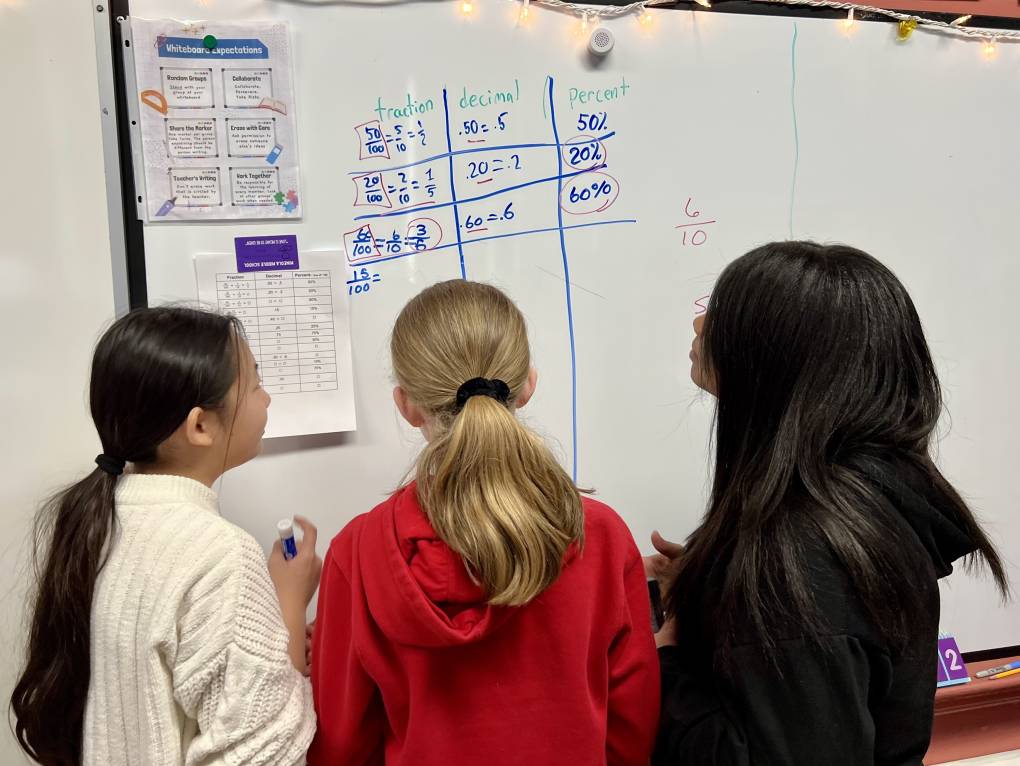
How to Get Kids Thinking Instead of Mimicking in Math Class
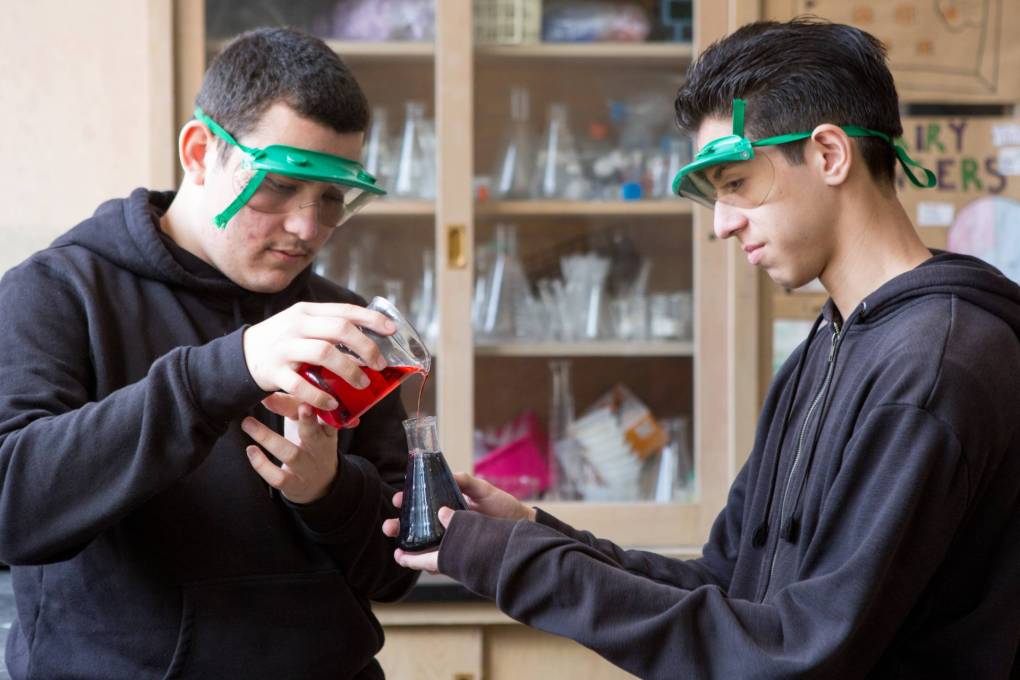
A tale of two science classrooms: How different approaches to participation shape learning
How student-led vision statements can nurture school community
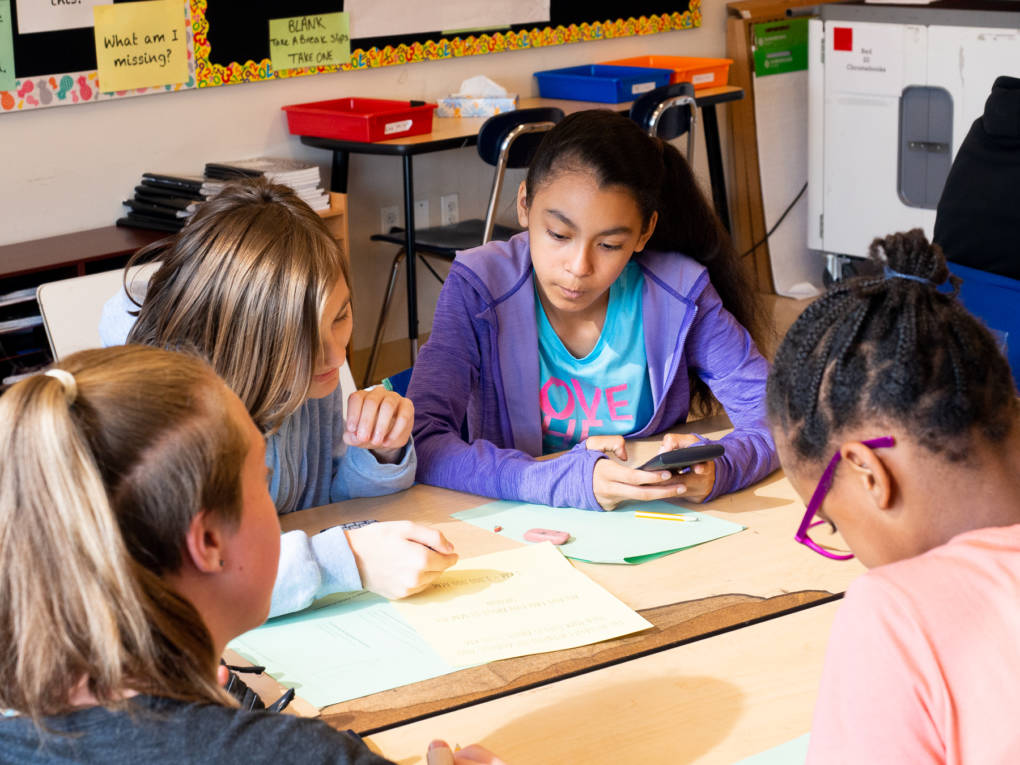
How Collaboration Unlocks Learning and Lessens Student Isolation
How A School Prioritizes Character as Much as Academics
Four Research-Based Strategies To Ignite Intrinsic Motivation In Students
A Tech Tool Designed For Collaboration Online And Offline
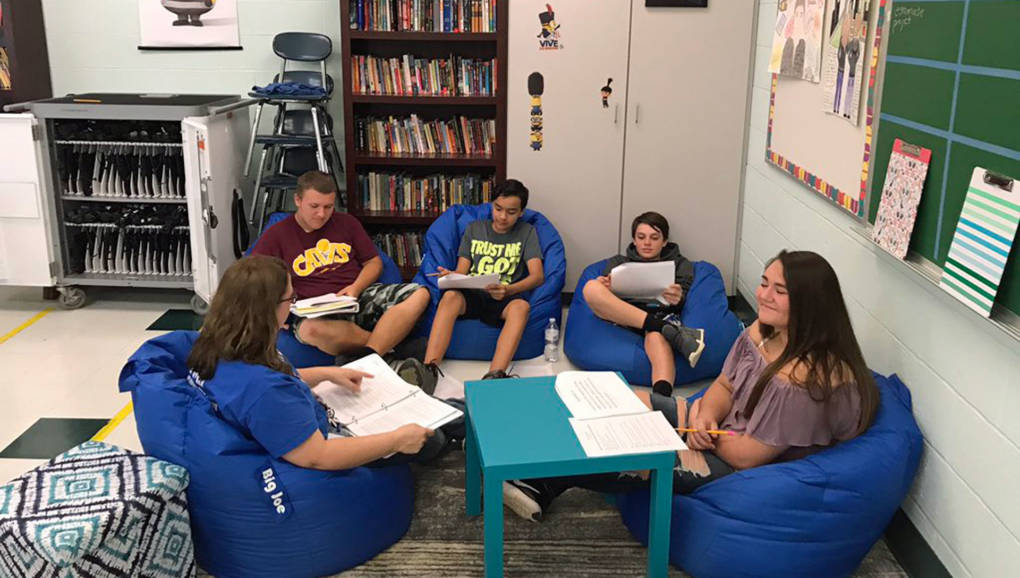
What Teachers Must Consider When Moving to Flexible Seating
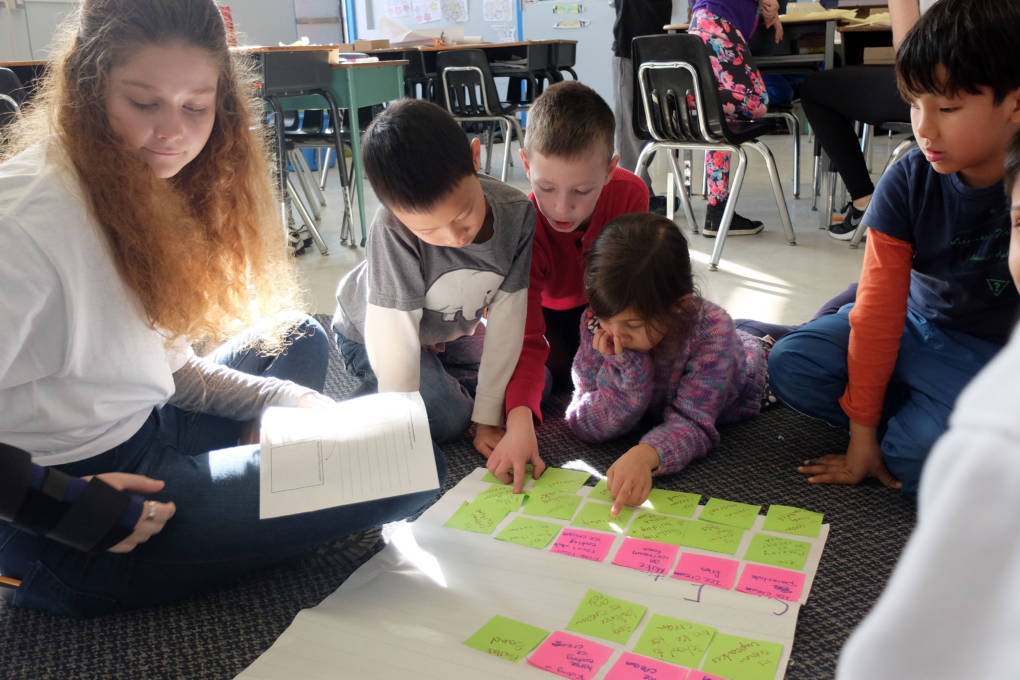
Three Tools for Teaching Critical Thinking and Problem Solving Skills
Major support for MindShift comes from
Player sponsored by
window.__IS_SSR__=true
window.__INITIAL_STATE__={
"attachmentsReducer": {
"audio_0": {
"type": "attachments",
"id": "audio_0",
"imgSizes": {
"kqedFullSize": {
"file": "https://ww2.kqed.org/news/wp-content/themes/KQED-unified/img/audio_bgs/background0.jpg"
}
}
},
"audio_1": {
"type": "attachments",
"id": "audio_1",
"imgSizes": {
"kqedFullSize": {
"file": "https://ww2.kqed.org/news/wp-content/themes/KQED-unified/img/audio_bgs/background1.jpg"
}
}
},
"audio_2": {
"type": "attachments",
"id": "audio_2",
"imgSizes": {
"kqedFullSize": {
"file": "https://ww2.kqed.org/news/wp-content/themes/KQED-unified/img/audio_bgs/background2.jpg"
}
}
},
"audio_3": {
"type": "attachments",
"id": "audio_3",
"imgSizes": {
"kqedFullSize": {
"file": "https://ww2.kqed.org/news/wp-content/themes/KQED-unified/img/audio_bgs/background3.jpg"
}
}
},
"audio_4": {
"type": "attachments",
"id": "audio_4",
"imgSizes": {
"kqedFullSize": {
"file": "https://ww2.kqed.org/news/wp-content/themes/KQED-unified/img/audio_bgs/background4.jpg"
}
}
},
"placeholder": {
"type": "attachments",
"id": "placeholder",
"imgSizes": {
"thumbnail": {
"file": "https://cdn.kqed.org/wp-content/uploads/2024/12/KQED-Default-Image-816638274-2000x1333-1-160x107.jpg",
"width": 160,
"height": 107,
"mimeType": "image/jpeg"
},
"medium": {
"file": "https://cdn.kqed.org/wp-content/uploads/2024/12/KQED-Default-Image-816638274-2000x1333-1-800x533.jpg",
"width": 800,
"height": 533,
"mimeType": "image/jpeg"
},
"medium_large": {
"file": "https://cdn.kqed.org/wp-content/uploads/2024/12/KQED-Default-Image-816638274-2000x1333-1-768x512.jpg",
"width": 768,
"height": 512,
"mimeType": "image/jpeg"
},
"large": {
"file": "https://cdn.kqed.org/wp-content/uploads/2024/12/KQED-Default-Image-816638274-2000x1333-1-1020x680.jpg",
"width": 1020,
"height": 680,
"mimeType": "image/jpeg"
},
"1536x1536": {
"file": "https://cdn.kqed.org/wp-content/uploads/2024/12/KQED-Default-Image-816638274-2000x1333-1-1536x1024.jpg",
"width": 1536,
"height": 1024,
"mimeType": "image/jpeg"
},
"fd-lrg": {
"file": "https://cdn.kqed.org/wp-content/uploads/2024/12/KQED-Default-Image-816638274-2000x1333-1-1536x1024.jpg",
"width": 1536,
"height": 1024,
"mimeType": "image/jpeg"
},
"fd-med": {
"file": "https://cdn.kqed.org/wp-content/uploads/2024/12/KQED-Default-Image-816638274-2000x1333-1-1020x680.jpg",
"width": 1020,
"height": 680,
"mimeType": "image/jpeg"
},
"fd-sm": {
"file": "https://cdn.kqed.org/wp-content/uploads/2024/12/KQED-Default-Image-816638274-2000x1333-1-800x533.jpg",
"width": 800,
"height": 533,
"mimeType": "image/jpeg"
},
"post-thumbnail": {
"file": "https://cdn.kqed.org/wp-content/uploads/2024/12/KQED-Default-Image-816638274-2000x1333-1-672x372.jpg",
"width": 672,
"height": 372,
"mimeType": "image/jpeg"
},
"twentyfourteen-full-width": {
"file": "https://cdn.kqed.org/wp-content/uploads/2024/12/KQED-Default-Image-816638274-2000x1333-1-1038x576.jpg",
"width": 1038,
"height": 576,
"mimeType": "image/jpeg"
},
"xxsmall": {
"file": "https://cdn.kqed.org/wp-content/uploads/2024/12/KQED-Default-Image-816638274-2000x1333-1-160x107.jpg",
"width": 160,
"height": 107,
"mimeType": "image/jpeg"
},
"xsmall": {
"file": "https://cdn.kqed.org/wp-content/uploads/2024/12/KQED-Default-Image-816638274-2000x1333-1-672x372.jpg",
"width": 672,
"height": 372,
"mimeType": "image/jpeg"
},
"small": {
"file": "https://cdn.kqed.org/wp-content/uploads/2024/12/KQED-Default-Image-816638274-2000x1333-1-672x372.jpg",
"width": 672,
"height": 372,
"mimeType": "image/jpeg"
},
"xlarge": {
"file": "https://cdn.kqed.org/wp-content/uploads/2024/12/KQED-Default-Image-816638274-2000x1333-1-1020x680.jpg",
"width": 1020,
"height": 680,
"mimeType": "image/jpeg"
},
"full-width": {
"file": "https://cdn.kqed.org/wp-content/uploads/2024/12/KQED-Default-Image-816638274-2000x1333-1-1920x1280.jpg",
"width": 1920,
"height": 1280,
"mimeType": "image/jpeg"
},
"guest-author-32": {
"file": "https://cdn.kqed.org/wp-content/uploads/2025/01/KQED-Default-Image-816638274-1333x1333-1-160x160.jpg",
"width": 32,
"height": 32,
"mimeType": "image/jpeg"
},
"guest-author-50": {
"file": "https://cdn.kqed.org/wp-content/uploads/2025/01/KQED-Default-Image-816638274-1333x1333-1-160x160.jpg",
"width": 50,
"height": 50,
"mimeType": "image/jpeg"
},
"guest-author-64": {
"file": "https://cdn.kqed.org/wp-content/uploads/2025/01/KQED-Default-Image-816638274-1333x1333-1-160x160.jpg",
"width": 64,
"height": 64,
"mimeType": "image/jpeg"
},
"guest-author-96": {
"file": "https://cdn.kqed.org/wp-content/uploads/2025/01/KQED-Default-Image-816638274-1333x1333-1-160x160.jpg",
"width": 96,
"height": 96,
"mimeType": "image/jpeg"
},
"guest-author-128": {
"file": "https://cdn.kqed.org/wp-content/uploads/2025/01/KQED-Default-Image-816638274-1333x1333-1-160x160.jpg",
"width": 128,
"height": 128,
"mimeType": "image/jpeg"
},
"detail": {
"file": "https://cdn.kqed.org/wp-content/uploads/2025/01/KQED-Default-Image-816638274-1333x1333-1-160x160.jpg",
"width": 160,
"height": 160,
"mimeType": "image/jpeg"
},
"kqedFullSize": {
"file": "https://cdn.kqed.org/wp-content/uploads/2024/12/KQED-Default-Image-816638274-2000x1333-1.jpg",
"width": 2000,
"height": 1333
}
}
},
"mindshift_64549": {
"type": "attachments",
"id": "mindshift_64549",
"meta": {
"index": "attachments_1716263798",
"site": "mindshift",
"id": "64549",
"found": true
},
"title": "btcFEAT",
"publishDate": 1724728407,
"status": "inherit",
"parent": 64539,
"modified": 1724728851,
"caption": "Students in Staci Durnin's sixth grade math class convert fractions and decimals into percents at Mineola Middle School in New York on March 25, 2024.",
"credit": "Kara Newhouse/KQED",
"altTag": "Three middle school girls stand facing a whiteboard with rows of number conversions written on it.",
"description": null,
"imgSizes": {
"medium": {
"file": "https://cdn.kqed.org/wp-content/uploads/sites/23/2024/08/btcFEAT-800x600.jpg",
"width": 800,
"height": 600,
"mimeType": "image/jpeg"
},
"large": {
"file": "https://cdn.kqed.org/wp-content/uploads/sites/23/2024/08/btcFEAT-1020x766.jpg",
"width": 1020,
"height": 766,
"mimeType": "image/jpeg"
},
"thumbnail": {
"file": "https://cdn.kqed.org/wp-content/uploads/sites/23/2024/08/btcFEAT-160x120.jpg",
"width": 160,
"height": 120,
"mimeType": "image/jpeg"
},
"medium_large": {
"file": "https://cdn.kqed.org/wp-content/uploads/sites/23/2024/08/btcFEAT-768x576.jpg",
"width": 768,
"height": 576,
"mimeType": "image/jpeg"
},
"1536x1536": {
"file": "https://cdn.kqed.org/wp-content/uploads/sites/23/2024/08/btcFEAT-1536x1153.jpg",
"width": 1536,
"height": 1153,
"mimeType": "image/jpeg"
},
"2048x2048": {
"file": "https://cdn.kqed.org/wp-content/uploads/sites/23/2024/08/btcFEAT-2048x1537.jpg",
"width": 2048,
"height": 1537,
"mimeType": "image/jpeg"
},
"post-thumbnail": {
"file": "https://cdn.kqed.org/wp-content/uploads/sites/23/2024/08/btcFEAT-672x372.jpg",
"width": 672,
"height": 372,
"mimeType": "image/jpeg"
},
"twentyfourteen-full-width": {
"file": "https://cdn.kqed.org/wp-content/uploads/sites/23/2024/08/btcFEAT-1038x576.jpg",
"width": 1038,
"height": 576,
"mimeType": "image/jpeg"
},
"full-width": {
"file": "https://cdn.kqed.org/wp-content/uploads/sites/23/2024/08/btcFEAT-1920x1441.jpg",
"width": 1920,
"height": 1441,
"mimeType": "image/jpeg"
},
"kqedFullSize": {
"file": "https://cdn.kqed.org/wp-content/uploads/sites/23/2024/08/btcFEAT-scaled.jpg",
"width": 2560,
"height": 1921
}
},
"isLoading": false,
"fetchFailed": false
},
"mindshift_61322": {
"type": "attachments",
"id": "mindshift_61322",
"meta": {
"index": "attachments_1716263798",
"site": "mindshift",
"id": "61322",
"found": true
},
"parent": 61319,
"imgSizes": {
"twentyfourteen-full-width": {
"file": "https://ww2.kqed.org/app/uploads/sites/23/2023/03/AMERICANED_SKYLINE_016-scaled-e1680218446313-1038x576.jpg",
"width": 1038,
"mimeType": "image/jpeg",
"height": 576
},
"thumbnail": {
"file": "https://ww2.kqed.org/app/uploads/sites/23/2023/03/AMERICANED_SKYLINE_016-scaled-e1680218446313-160x107.jpg",
"width": 160,
"mimeType": "image/jpeg",
"height": 107
},
"post-thumbnail": {
"file": "https://ww2.kqed.org/app/uploads/sites/23/2023/03/AMERICANED_SKYLINE_016-scaled-e1680218446313-672x372.jpg",
"width": 672,
"mimeType": "image/jpeg",
"height": 372
},
"kqedFullSize": {
"file": "https://ww2.kqed.org/app/uploads/sites/23/2023/03/AMERICANED_SKYLINE_016-scaled-e1680218446313.jpg",
"width": 1920,
"height": 1280
},
"2048x2048": {
"file": "https://ww2.kqed.org/app/uploads/sites/23/2023/03/AMERICANED_SKYLINE_016-2048x1365.jpg",
"width": 2048,
"mimeType": "image/jpeg",
"height": 1365
},
"large": {
"file": "https://ww2.kqed.org/app/uploads/sites/23/2023/03/AMERICANED_SKYLINE_016-scaled-e1680218446313-1020x680.jpg",
"width": 1020,
"mimeType": "image/jpeg",
"height": 680
},
"1536x1536": {
"file": "https://ww2.kqed.org/app/uploads/sites/23/2023/03/AMERICANED_SKYLINE_016-scaled-e1680218446313-1536x1024.jpg",
"width": 1536,
"mimeType": "image/jpeg",
"height": 1024
},
"full-width": {
"file": "https://ww2.kqed.org/app/uploads/sites/23/2023/03/AMERICANED_SKYLINE_016-1920x1280.jpg",
"width": 1920,
"mimeType": "image/jpeg",
"height": 1280
},
"medium": {
"file": "https://ww2.kqed.org/app/uploads/sites/23/2023/03/AMERICANED_SKYLINE_016-scaled-e1680218446313-800x533.jpg",
"width": 800,
"mimeType": "image/jpeg",
"height": 533
},
"medium_large": {
"file": "https://ww2.kqed.org/app/uploads/sites/23/2023/03/AMERICANED_SKYLINE_016-scaled-e1680218446313-768x512.jpg",
"width": 768,
"mimeType": "image/jpeg",
"height": 512
}
},
"publishDate": 1680218379,
"modified": 1680218462,
"caption": null,
"description": null,
"title": "Two high school boys with science beakers",
"credit": "Allison Shelley/The Verbatim Agency for EDUimages",
"status": "inherit",
"altTag": "Students in deeper learning classrooms master academic content while building critical thinking skills.",
"isLoading": false,
"fetchFailed": false
},
"mindshift_58617": {
"type": "attachments",
"id": "mindshift_58617",
"meta": {
"index": "attachments_1716263798",
"site": "mindshift",
"id": "58617",
"found": true
},
"parent": 58616,
"imgSizes": {
"twentyfourteen-full-width": {
"file": "https://ww2.kqed.org/app/uploads/sites/23/2021/10/co-create-class-vision-1038x576.jpg",
"width": 1038,
"mimeType": "image/jpeg",
"height": 576
},
"thumbnail": {
"file": "https://ww2.kqed.org/app/uploads/sites/23/2021/10/co-create-class-vision-160x107.jpg",
"width": 160,
"mimeType": "image/jpeg",
"height": 107
},
"post-thumbnail": {
"file": "https://ww2.kqed.org/app/uploads/sites/23/2021/10/co-create-class-vision-672x372.jpg",
"width": 672,
"mimeType": "image/jpeg",
"height": 372
},
"kqedFullSize": {
"file": "https://ww2.kqed.org/app/uploads/sites/23/2021/10/co-create-class-vision.jpg",
"width": 1920,
"height": 1278
},
"large": {
"file": "https://ww2.kqed.org/app/uploads/sites/23/2021/10/co-create-class-vision-1020x679.jpg",
"width": 1020,
"mimeType": "image/jpeg",
"height": 679
},
"1536x1536": {
"file": "https://ww2.kqed.org/app/uploads/sites/23/2021/10/co-create-class-vision-1536x1022.jpg",
"width": 1536,
"mimeType": "image/jpeg",
"height": 1022
},
"medium": {
"file": "https://ww2.kqed.org/app/uploads/sites/23/2021/10/co-create-class-vision-800x533.jpg",
"width": 800,
"mimeType": "image/jpeg",
"height": 533
},
"medium_large": {
"file": "https://ww2.kqed.org/app/uploads/sites/23/2021/10/co-create-class-vision-768x511.jpg",
"width": 768,
"mimeType": "image/jpeg",
"height": 511
}
},
"publishDate": 1633991573,
"modified": 1633991600,
"caption": null,
"description": null,
"title": "co-create-class-vision",
"credit": "Serhii Bolshakov/iStock",
"status": "inherit",
"altTag": null,
"isLoading": false,
"fetchFailed": false
},
"mindshift_54495": {
"type": "attachments",
"id": "mindshift_54495",
"meta": {
"index": "attachments_1716263798",
"site": "mindshift",
"id": "54495",
"found": true
},
"parent": 54486,
"imgSizes": {
"twentyfourteen-full-width": {
"file": "https://ww2.kqed.org/app/uploads/sites/23/2019/09/iStock-641755684-1038x576.jpg",
"width": 1038,
"mimeType": "image/jpeg",
"height": 576
},
"thumbnail": {
"file": "https://ww2.kqed.org/app/uploads/sites/23/2019/09/iStock-641755684-160x107.jpg",
"width": 160,
"mimeType": "image/jpeg",
"height": 107
},
"post-thumbnail": {
"file": "https://ww2.kqed.org/app/uploads/sites/23/2019/09/iStock-641755684-672x372.jpg",
"width": 672,
"mimeType": "image/jpeg",
"height": 372
},
"kqedFullSize": {
"file": "https://ww2.kqed.org/app/uploads/sites/23/2019/09/iStock-641755684-e1569305198853.jpg",
"width": 1920,
"height": 1280
},
"large": {
"file": "https://ww2.kqed.org/app/uploads/sites/23/2019/09/iStock-641755684-1020x680.jpg",
"width": 1020,
"mimeType": "image/jpeg",
"height": 680
},
"complete_open_graph": {
"file": "https://ww2.kqed.org/app/uploads/sites/23/2019/09/iStock-641755684-1200x800.jpg",
"width": 1200,
"mimeType": "image/jpeg",
"height": 800
},
"full-width": {
"file": "https://ww2.kqed.org/app/uploads/sites/23/2019/09/iStock-641755684-1920x1280.jpg",
"width": 1920,
"mimeType": "image/jpeg",
"height": 1280
},
"medium": {
"file": "https://ww2.kqed.org/app/uploads/sites/23/2019/09/iStock-641755684-800x533.jpg",
"width": 800,
"mimeType": "image/jpeg",
"height": 533
},
"medium_large": {
"file": "https://ww2.kqed.org/app/uploads/sites/23/2019/09/iStock-641755684-768x512.jpg",
"width": 768,
"mimeType": "image/jpeg",
"height": 512
}
},
"publishDate": 1569305171,
"modified": 1569305192,
"caption": null,
"description": null,
"title": "Working Together In Lesson",
"credit": "DGLimages/iStock",
"status": "inherit",
"isLoading": false,
"fetchFailed": false
},
"mindshift_54300": {
"type": "attachments",
"id": "mindshift_54300",
"meta": {
"index": "attachments_1716263798",
"site": "mindshift",
"id": "54300",
"found": true
},
"parent": 54286,
"imgSizes": {
"twentyfourteen-full-width": {
"file": "https://ww2.kqed.org/app/uploads/sites/23/2019/08/Amadou-Diallo-Diallo_91230-1038x576.jpg",
"width": 1038,
"mimeType": "image/jpeg",
"height": 576
},
"thumbnail": {
"file": "https://ww2.kqed.org/app/uploads/sites/23/2019/08/Amadou-Diallo-Diallo_91230-160x120.jpg",
"width": 160,
"mimeType": "image/jpeg",
"height": 120
},
"post-thumbnail": {
"file": "https://ww2.kqed.org/app/uploads/sites/23/2019/08/Amadou-Diallo-Diallo_91230-672x372.jpg",
"width": 672,
"mimeType": "image/jpeg",
"height": 372
},
"kqedFullSize": {
"file": "https://ww2.kqed.org/app/uploads/sites/23/2019/08/Amadou-Diallo-Diallo_91230-e1567489621975.jpg",
"width": 1800,
"height": 1350
},
"large": {
"file": "https://ww2.kqed.org/app/uploads/sites/23/2019/08/Amadou-Diallo-Diallo_91230-1020x765.jpg",
"width": 1020,
"mimeType": "image/jpeg",
"height": 765
},
"complete_open_graph": {
"file": "https://ww2.kqed.org/app/uploads/sites/23/2019/08/Amadou-Diallo-Diallo_91230-1200x900.jpg",
"width": 1200,
"mimeType": "image/jpeg",
"height": 900
},
"medium": {
"file": "https://ww2.kqed.org/app/uploads/sites/23/2019/08/Amadou-Diallo-Diallo_91230-800x600.jpg",
"width": 800,
"mimeType": "image/jpeg",
"height": 600
},
"medium_large": {
"file": "https://ww2.kqed.org/app/uploads/sites/23/2019/08/Amadou-Diallo-Diallo_91230-768x576.jpg",
"width": 768,
"mimeType": "image/jpeg",
"height": 576
}
},
"publishDate": 1567488572,
"modified": 1567489657,
"caption": "Sixth graders at Capital City Public Charter School work collaboratively on a math problem. ",
"description": null,
"title": "Samantha Clarke 6th grade math and science class",
"credit": "Amadou Diallo for The Hechinger Report",
"status": "inherit",
"isLoading": false,
"fetchFailed": false
},
"mindshift_53677": {
"type": "attachments",
"id": "mindshift_53677",
"meta": {
"index": "attachments_1716263798",
"site": "mindshift",
"id": "53677",
"found": true
},
"parent": 53426,
"imgSizes": {
"twentyfourteen-full-width": {
"file": "https://ww2.kqed.org/app/uploads/sites/23/2019/04/iStock-619270182-1038x576.jpg",
"width": 1038,
"mimeType": "image/jpeg",
"height": 576
},
"thumbnail": {
"file": "https://ww2.kqed.org/app/uploads/sites/23/2019/04/iStock-619270182-160x160.jpg",
"width": 160,
"mimeType": "image/jpeg",
"height": 160
},
"post-thumbnail": {
"file": "https://ww2.kqed.org/app/uploads/sites/23/2019/04/iStock-619270182-672x372.jpg",
"width": 672,
"mimeType": "image/jpeg",
"height": 372
},
"kqedFullSize": {
"file": "https://ww2.kqed.org/app/uploads/sites/23/2019/04/iStock-619270182.jpg",
"width": 1953,
"height": 1953
},
"large": {
"file": "https://ww2.kqed.org/app/uploads/sites/23/2019/04/iStock-619270182-1020x1020.jpg",
"width": 1020,
"mimeType": "image/jpeg",
"height": 1020
},
"complete_open_graph": {
"file": "https://ww2.kqed.org/app/uploads/sites/23/2019/04/iStock-619270182-1200x1200.jpg",
"width": 1200,
"mimeType": "image/jpeg",
"height": 1200
},
"full-width": {
"file": "https://ww2.kqed.org/app/uploads/sites/23/2019/04/iStock-619270182-1920x1920.jpg",
"width": 1920,
"mimeType": "image/jpeg",
"height": 1920
},
"medium": {
"file": "https://ww2.kqed.org/app/uploads/sites/23/2019/04/iStock-619270182-800x800.jpg",
"width": 800,
"mimeType": "image/jpeg",
"height": 800
},
"medium_large": {
"file": "https://ww2.kqed.org/app/uploads/sites/23/2019/04/iStock-619270182-768x768.jpg",
"width": 768,
"mimeType": "image/jpeg",
"height": 768
}
},
"publishDate": 1558336445,
"modified": 1558336469,
"caption": null,
"description": null,
"title": "Girl Connects Lightbulb",
"credit": "yvonnestewarthenderson/iStock",
"status": "inherit",
"isLoading": false,
"fetchFailed": false
},
"mindshift_49845": {
"type": "attachments",
"id": "mindshift_49845",
"meta": {
"index": "attachments_1716263798",
"site": "mindshift",
"id": "49845",
"found": true
},
"parent": 49841,
"imgSizes": {
"small": {
"file": "https://ww2.kqed.org/app/uploads/sites/23/2017/12/kids-discuss-520x293.jpg",
"width": 520,
"mimeType": "image/jpeg",
"height": 293
},
"twentyfourteen-full-width": {
"file": "https://ww2.kqed.org/app/uploads/sites/23/2017/12/kids-discuss-1038x576.jpg",
"width": 1038,
"mimeType": "image/jpeg",
"height": 576
},
"thumbnail": {
"file": "https://ww2.kqed.org/app/uploads/sites/23/2017/12/kids-discuss-160x90.jpg",
"width": 160,
"mimeType": "image/jpeg",
"height": 90
},
"fd-sm": {
"file": "https://ww2.kqed.org/app/uploads/sites/23/2017/12/kids-discuss-960x540.jpg",
"width": 960,
"mimeType": "image/jpeg",
"height": 540
},
"post-thumbnail": {
"file": "https://ww2.kqed.org/app/uploads/sites/23/2017/12/kids-discuss-672x372.jpg",
"width": 672,
"mimeType": "image/jpeg",
"height": 372
},
"xsmall": {
"file": "https://ww2.kqed.org/app/uploads/sites/23/2017/12/kids-discuss-375x211.jpg",
"width": 375,
"mimeType": "image/jpeg",
"height": 211
},
"kqedFullSize": {
"file": "https://ww2.kqed.org/app/uploads/sites/23/2017/12/kids-discuss.jpg",
"width": 1920,
"height": 1080
},
"large": {
"file": "https://ww2.kqed.org/app/uploads/sites/23/2017/12/kids-discuss-1020x574.jpg",
"width": 1020,
"mimeType": "image/jpeg",
"height": 574
},
"xlarge": {
"file": "https://ww2.kqed.org/app/uploads/sites/23/2017/12/kids-discuss-1180x664.jpg",
"width": 1180,
"mimeType": "image/jpeg",
"height": 664
},
"guest-author-50": {
"file": "https://ww2.kqed.org/app/uploads/sites/23/2017/12/kids-discuss-50x50.jpg",
"width": 50,
"mimeType": "image/jpeg",
"height": 50
},
"guest-author-96": {
"file": "https://ww2.kqed.org/app/uploads/sites/23/2017/12/kids-discuss-96x96.jpg",
"width": 96,
"mimeType": "image/jpeg",
"height": 96
},
"medium": {
"file": "https://ww2.kqed.org/app/uploads/sites/23/2017/12/kids-discuss-800x450.jpg",
"width": 800,
"mimeType": "image/jpeg",
"height": 450
},
"guest-author-64": {
"file": "https://ww2.kqed.org/app/uploads/sites/23/2017/12/kids-discuss-64x64.jpg",
"width": 64,
"mimeType": "image/jpeg",
"height": 64
},
"guest-author-32": {
"file": "https://ww2.kqed.org/app/uploads/sites/23/2017/12/kids-discuss-32x32.jpg",
"width": 32,
"mimeType": "image/jpeg",
"height": 32
},
"fd-lrg": {
"file": "https://ww2.kqed.org/app/uploads/sites/23/2017/12/kids-discuss-1920x1080.jpg",
"width": 1920,
"mimeType": "image/jpeg",
"height": 1080
},
"fd-med": {
"file": "https://ww2.kqed.org/app/uploads/sites/23/2017/12/kids-discuss-1180x664.jpg",
"width": 1180,
"mimeType": "image/jpeg",
"height": 664
},
"full-width": {
"file": "https://ww2.kqed.org/app/uploads/sites/23/2017/12/kids-discuss-1920x1080.jpg",
"width": 1920,
"mimeType": "image/jpeg",
"height": 1080
},
"detail": {
"file": "https://ww2.kqed.org/app/uploads/sites/23/2017/12/kids-discuss-150x150.jpg",
"width": 150,
"mimeType": "image/jpeg",
"height": 150
},
"medium_large": {
"file": "https://ww2.kqed.org/app/uploads/sites/23/2017/12/kids-discuss-768x432.jpg",
"width": 768,
"mimeType": "image/jpeg",
"height": 432
},
"guest-author-128": {
"file": "https://ww2.kqed.org/app/uploads/sites/23/2017/12/kids-discuss-128x128.jpg",
"width": 128,
"mimeType": "image/jpeg",
"height": 128
},
"xxsmall": {
"file": "https://ww2.kqed.org/app/uploads/sites/23/2017/12/kids-discuss-240x135.jpg",
"width": 240,
"mimeType": "image/jpeg",
"height": 135
}
},
"publishDate": 1512679900,
"modified": 1512679991,
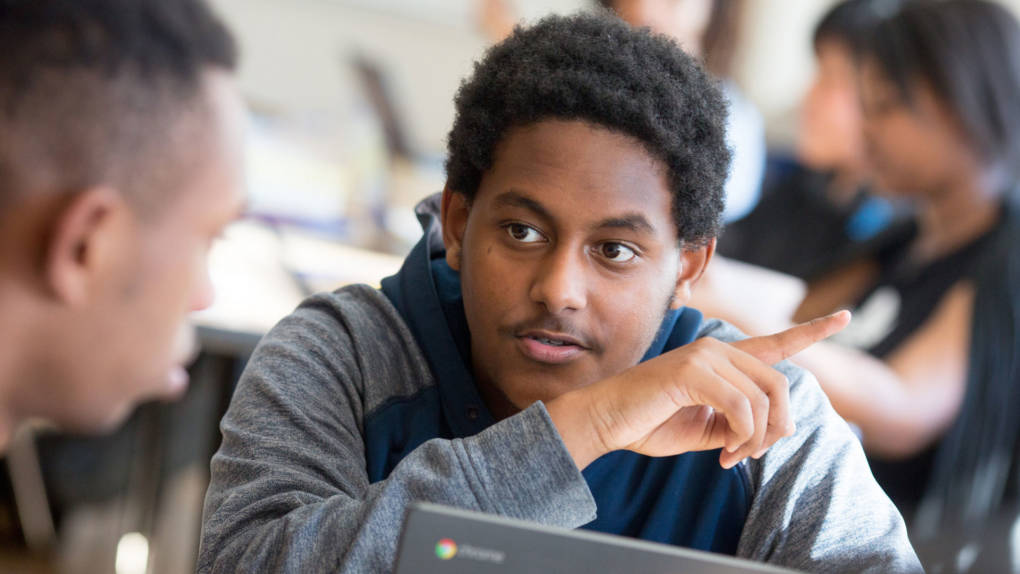
"caption": "Students discuss.",
"description": null,
"title": "kids-discuss",
"credit": "\u003ca href=\" www.deeperlearning4all.org/images\">Courtesy of Allison Shelley/The Verbatim Agency for American Education: Images of Teachers and Students in Action\u003c/a>",
"status": "inherit",
"isLoading": false,
"fetchFailed": false
},
"mindshift_49664": {
"type": "attachments",
"id": "mindshift_49664",
"meta": {
"index": "attachments_1716263798",
"site": "mindshift",
"id": "49664",
"found": true
},
"parent": 49647,
"imgSizes": {
"small": {
"file": "https://ww2.kqed.org/app/uploads/sites/23/2017/11/flexible-seating-520x295.jpg",
"width": 520,
"mimeType": "image/jpeg",
"height": 295
},
"twentyfourteen-full-width": {
"file": "https://ww2.kqed.org/app/uploads/sites/23/2017/11/flexible-seating-1038x576.jpg",
"width": 1038,
"mimeType": "image/jpeg",
"height": 576
},
"thumbnail": {
"file": "https://ww2.kqed.org/app/uploads/sites/23/2017/11/flexible-seating-160x91.jpg",
"width": 160,
"mimeType": "image/jpeg",
"height": 91
},
"fd-sm": {
"file": "https://ww2.kqed.org/app/uploads/sites/23/2017/11/flexible-seating-960x544.jpg",
"width": 960,
"mimeType": "image/jpeg",
"height": 544
},
"post-thumbnail": {
"file": "https://ww2.kqed.org/app/uploads/sites/23/2017/11/flexible-seating-672x372.jpg",
"width": 672,
"mimeType": "image/jpeg",
"height": 372
},
"xsmall": {
"file": "https://ww2.kqed.org/app/uploads/sites/23/2017/11/flexible-seating-375x213.jpg",
"width": 375,
"mimeType": "image/jpeg",
"height": 213
},
"kqedFullSize": {
"file": "https://ww2.kqed.org/app/uploads/sites/23/2017/11/flexible-seating.jpg",
"width": 1920,
"height": 1088
},
"large": {
"file": "https://ww2.kqed.org/app/uploads/sites/23/2017/11/flexible-seating-1020x578.jpg",
"width": 1020,
"mimeType": "image/jpeg",
"height": 578
},
"xlarge": {
"file": "https://ww2.kqed.org/app/uploads/sites/23/2017/11/flexible-seating-1180x669.jpg",
"width": 1180,
"mimeType": "image/jpeg",
"height": 669
},
"guest-author-50": {
"file": "https://ww2.kqed.org/app/uploads/sites/23/2017/11/flexible-seating-50x50.jpg",
"width": 50,
"mimeType": "image/jpeg",
"height": 50
},
"guest-author-96": {
"file": "https://ww2.kqed.org/app/uploads/sites/23/2017/11/flexible-seating-96x96.jpg",
"width": 96,
"mimeType": "image/jpeg",
"height": 96
},
"medium": {
"file": "https://ww2.kqed.org/app/uploads/sites/23/2017/11/flexible-seating-800x453.jpg",
"width": 800,
"mimeType": "image/jpeg",
"height": 453
},
"guest-author-64": {
"file": "https://ww2.kqed.org/app/uploads/sites/23/2017/11/flexible-seating-64x64.jpg",
"width": 64,
"mimeType": "image/jpeg",
"height": 64
},
"guest-author-32": {
"file": "https://ww2.kqed.org/app/uploads/sites/23/2017/11/flexible-seating-32x32.jpg",
"width": 32,
"mimeType": "image/jpeg",
"height": 32
},
"fd-lrg": {
"file": "https://ww2.kqed.org/app/uploads/sites/23/2017/11/flexible-seating-1920x1088.jpg",
"width": 1920,
"mimeType": "image/jpeg",
"height": 1088
},
"fd-med": {
"file": "https://ww2.kqed.org/app/uploads/sites/23/2017/11/flexible-seating-1180x669.jpg",
"width": 1180,
"mimeType": "image/jpeg",
"height": 669
},
"full-width": {
"file": "https://ww2.kqed.org/app/uploads/sites/23/2017/11/flexible-seating-1920x1088.jpg",
"width": 1920,
"mimeType": "image/jpeg",
"height": 1088
},
"detail": {
"file": "https://ww2.kqed.org/app/uploads/sites/23/2017/11/flexible-seating-150x150.jpg",
"width": 150,
"mimeType": "image/jpeg",
"height": 150
},
"medium_large": {
"file": "https://ww2.kqed.org/app/uploads/sites/23/2017/11/flexible-seating-768x435.jpg",
"width": 768,
"mimeType": "image/jpeg",
"height": 435
},
"guest-author-128": {
"file": "https://ww2.kqed.org/app/uploads/sites/23/2017/11/flexible-seating-128x128.jpg",
"width": 128,
"mimeType": "image/jpeg",
"height": 128
},
"xxsmall": {
"file": "https://ww2.kqed.org/app/uploads/sites/23/2017/11/flexible-seating-240x136.jpg",
"width": 240,
"mimeType": "image/jpeg",
"height": 136
}
},
"publishDate": 1510166391,
"modified": 1511224521,
"caption": "Eighth-graders in Amber Chandler's English class rotate through various flexible seating options depending on the activity.",
"description": null,
"title": "flexible-seating",
"credit": "Courtesy \u003ca href=\"https://twitter.com/MsAmberChandler\">Amber Chandler\u003c/a>",
"status": "inherit",
"isLoading": false,
"fetchFailed": false
},
"mindshift_46856": {
"type": "attachments",
"id": "mindshift_46856",
"meta": {
"index": "attachments_1716263798",
"site": "mindshift",
"id": "46856",
"found": true
},
"parent": 46781,
"imgSizes": {
"small": {
"file": "https://ww2.kqed.org/app/uploads/sites/23/2016/11/3-Integrative-Thinking-Process-Clustering-Ideas-Grade-2-520x347.jpg",
"width": 520,
"mimeType": "image/jpeg",
"height": 347
},
"twentyfourteen-full-width": {
"file": "https://ww2.kqed.org/app/uploads/sites/23/2016/11/3-Integrative-Thinking-Process-Clustering-Ideas-Grade-2-1038x576.jpg",
"width": 1038,
"mimeType": "image/jpeg",
"height": 576
},
"thumbnail": {
"file": "https://ww2.kqed.org/app/uploads/sites/23/2016/11/3-Integrative-Thinking-Process-Clustering-Ideas-Grade-2-160x107.jpg",
"width": 160,
"mimeType": "image/jpeg",
"height": 107
},
"fd-sm": {
"file": "https://ww2.kqed.org/app/uploads/sites/23/2016/11/3-Integrative-Thinking-Process-Clustering-Ideas-Grade-2-960x640.jpg",
"width": 960,
"mimeType": "image/jpeg",
"height": 640
},
"post-thumbnail": {
"file": "https://ww2.kqed.org/app/uploads/sites/23/2016/11/3-Integrative-Thinking-Process-Clustering-Ideas-Grade-2-672x372.jpg",
"width": 672,
"mimeType": "image/jpeg",
"height": 372
},
"xsmall": {
"file": "https://ww2.kqed.org/app/uploads/sites/23/2016/11/3-Integrative-Thinking-Process-Clustering-Ideas-Grade-2-375x250.jpg",
"width": 375,
"mimeType": "image/jpeg",
"height": 250
},
"kqedFullSize": {
"file": "https://ww2.kqed.org/app/uploads/sites/23/2016/11/3-Integrative-Thinking-Process-Clustering-Ideas-Grade-2-e1478806781326.jpg",
"width": 1920,
"height": 1280
},
"large": {
"file": "https://ww2.kqed.org/app/uploads/sites/23/2016/11/3-Integrative-Thinking-Process-Clustering-Ideas-Grade-2-1020x680.jpg",
"width": 1020,
"mimeType": "image/jpeg",
"height": 680
},
"xlarge": {
"file": "https://ww2.kqed.org/app/uploads/sites/23/2016/11/3-Integrative-Thinking-Process-Clustering-Ideas-Grade-2-1180x786.jpg",
"width": 1180,
"mimeType": "image/jpeg",
"height": 786
},
"guest-author-50": {
"file": "https://ww2.kqed.org/app/uploads/sites/23/2016/11/3-Integrative-Thinking-Process-Clustering-Ideas-Grade-2-50x50.jpg",
"width": 50,
"mimeType": "image/jpeg",
"height": 50
},
"guest-author-96": {
"file": "https://ww2.kqed.org/app/uploads/sites/23/2016/11/3-Integrative-Thinking-Process-Clustering-Ideas-Grade-2-96x96.jpg",
"width": 96,
"mimeType": "image/jpeg",
"height": 96
},
"medium": {
"file": "https://ww2.kqed.org/app/uploads/sites/23/2016/11/3-Integrative-Thinking-Process-Clustering-Ideas-Grade-2-800x533.jpg",
"width": 800,
"mimeType": "image/jpeg",
"height": 533
},
"guest-author-64": {
"file": "https://ww2.kqed.org/app/uploads/sites/23/2016/11/3-Integrative-Thinking-Process-Clustering-Ideas-Grade-2-64x64.jpg",
"width": 64,
"mimeType": "image/jpeg",
"height": 64
},
"guest-author-32": {
"file": "https://ww2.kqed.org/app/uploads/sites/23/2016/11/3-Integrative-Thinking-Process-Clustering-Ideas-Grade-2-32x32.jpg",
"width": 32,
"mimeType": "image/jpeg",
"height": 32
},
"fd-lrg": {
"file": "https://ww2.kqed.org/app/uploads/sites/23/2016/11/3-Integrative-Thinking-Process-Clustering-Ideas-Grade-2-1920x1280.jpg",
"width": 1920,
"mimeType": "image/jpeg",
"height": 1280
},
"fd-med": {
"file": "https://ww2.kqed.org/app/uploads/sites/23/2016/11/3-Integrative-Thinking-Process-Clustering-Ideas-Grade-2-1180x786.jpg",
"width": 1180,
"mimeType": "image/jpeg",
"height": 786
},
"full-width": {
"file": "https://ww2.kqed.org/app/uploads/sites/23/2016/11/3-Integrative-Thinking-Process-Clustering-Ideas-Grade-2-1920x1280.jpg",
"width": 1920,
"mimeType": "image/jpeg",
"height": 1280
},
"detail": {
"file": "https://ww2.kqed.org/app/uploads/sites/23/2016/11/3-Integrative-Thinking-Process-Clustering-Ideas-Grade-2-150x150.jpg",
"width": 150,
"mimeType": "image/jpeg",
"height": 150
},
"medium_large": {
"file": "https://ww2.kqed.org/app/uploads/sites/23/2016/11/3-Integrative-Thinking-Process-Clustering-Ideas-Grade-2-768x512.jpg",
"width": 768,
"mimeType": "image/jpeg",
"height": 512
},
"guest-author-128": {
"file": "https://ww2.kqed.org/app/uploads/sites/23/2016/11/3-Integrative-Thinking-Process-Clustering-Ideas-Grade-2-128x128.jpg",
"width": 128,
"mimeType": "image/jpeg",
"height": 128
},
"xxsmall": {
"file": "https://ww2.kqed.org/app/uploads/sites/23/2016/11/3-Integrative-Thinking-Process-Clustering-Ideas-Grade-2-240x160.jpg",
"width": 240,
"mimeType": "image/jpeg",
"height": 160
}
},
"publishDate": 1478026182,
"modified": 1478026216,
"caption": "Kristen Sligner’s Grade 2 class used a case study about an ice cream company to explore tensions. After completing their Pro-Pro charts and creating a reframe question, students brainstormed possible solutions. Here students are clustering their ideas before focusing on ones to pursue. ",
"description": null,
"title": "3-integrative-thinking-process-clustering-ideas-grade-2",
"credit": "Courtesy I-Think Initiative",
"status": "inherit",
"isLoading": false,
"fetchFailed": false
}
},
"audioPlayerReducer": {
"postId": "stream_live",
"isPaused": true,
"isPlaying": false,
"pfsActive": false,
"pledgeModalIsOpen": true,
"playerDrawerIsOpen": false
},
"authorsReducer": {
"byline_mindshift_54286": {
"type": "authors",
"id": "byline_mindshift_54286",
"meta": {
"override": true
},
"slug": "byline_mindshift_54286",
"name": "\u003ca href=\"https://hechingerreport.org/\">Amadou Diallo, The Hechinger Report\u003c/a>",
"isLoading": false
},
"katrinaschwartz": {
"type": "authors",
"id": "234",
"meta": {
"index": "authors_1716337520",
"id": "234",
"found": true
},
"name": "Katrina Schwartz",
"firstName": "Katrina",
"lastName": "Schwartz",
"slug": "katrinaschwartz",
"email": "kschwartz@kqed.org",
"display_author_email": false,
"staff_mastheads": [
"news"
],
"title": "Producer",
"bio": "Katrina Schwartz is a journalist based in San Francisco. She's worked at KPCC public radio in LA and has reported on air and online for KQED since 2010. She covered how teaching and learning is changing for MindShift between 2012 and 2020. She is the co-host of the MindShift podcast and now produces KQED's Bay Curious podcast.",
"avatar": "https://secure.gravatar.com/avatar/a6a567574dafefa959593925eead665c?s=600&d=blank&r=g",
"twitter": "kschwart",
"facebook": null,
"instagram": null,
"linkedin": null,
"sites": [
{
"site": "news",
"roles": [
"editor"
]
},
{
"site": "mindshift",
"roles": [
"administrator"
]
},
{
"site": "stateofhealth",
"roles": [
"author"
]
},
{
"site": "science",
"roles": [
"editor"
]
}
],
"headData": {
"title": "Katrina Schwartz | KQED",
"description": "Producer",
"ogImgSrc": "https://secure.gravatar.com/avatar/a6a567574dafefa959593925eead665c?s=600&d=blank&r=g",
"twImgSrc": "https://secure.gravatar.com/avatar/a6a567574dafefa959593925eead665c?s=600&d=blank&r=g"
},
"isLoading": false,
"link": "/author/katrinaschwartz"
},
"mindshift": {
"type": "authors",
"id": "4354",
"meta": {
"index": "authors_1716337520",
"id": "4354",
"found": true
},
"name": "MindShift",
"firstName": "MindShift",
"lastName": null,
"slug": "mindshift",
"email": "tina@barseghian.com",
"display_author_email": false,
"staff_mastheads": [],
"title": null,
"bio": null,
"avatar": "https://secure.gravatar.com/avatar/ae7f1f73a229130205aa5f57b55eaf16?s=600&d=blank&r=g",
"twitter": null,
"facebook": null,
"instagram": null,
"linkedin": null,
"sites": [
{
"site": "arts",
"roles": [
"author"
]
},
{
"site": "mindshift",
"roles": [
"editor"
]
}
],
"headData": {
"title": "MindShift | KQED",
"description": null,
"ogImgSrc": "https://secure.gravatar.com/avatar/ae7f1f73a229130205aa5f57b55eaf16?s=600&d=blank&r=g",
"twImgSrc": "https://secure.gravatar.com/avatar/ae7f1f73a229130205aa5f57b55eaf16?s=600&d=blank&r=g"
},
"isLoading": false,
"link": "/author/mindshift"
},
"kdnewhouse": {
"type": "authors",
"id": "11487",
"meta": {
"index": "authors_1716337520",
"id": "11487",
"found": true
},
"name": "Kara Newhouse",
"firstName": "Kara",
"lastName": "Newhouse",
"slug": "kdnewhouse",
"email": "knewhouse@kqed.org",
"display_author_email": false,
"staff_mastheads": [],
"title": "MindShift Editor",
"bio": null,
"avatar": "https://secure.gravatar.com/avatar/3dceed6fb271527113abfa9a8e9df34e?s=600&d=blank&r=g",
"twitter": null,
"facebook": null,
"instagram": null,
"linkedin": null,
"sites": [
{
"site": "",
"roles": [
"editor"
]
},
{
"site": "mindshift",
"roles": []
}
],
"headData": {
"title": "Kara Newhouse | KQED",
"description": "MindShift Editor",
"ogImgSrc": "https://secure.gravatar.com/avatar/3dceed6fb271527113abfa9a8e9df34e?s=600&d=blank&r=g",
"twImgSrc": "https://secure.gravatar.com/avatar/3dceed6fb271527113abfa9a8e9df34e?s=600&d=blank&r=g"
},
"isLoading": false,
"link": "/author/kdnewhouse"
},
"ngobir": {
"type": "authors",
"id": "11721",
"meta": {
"index": "authors_1716337520",
"id": "11721",
"found": true
},
"name": "Nimah Gobir",
"firstName": "Nimah",
"lastName": "Gobir",
"slug": "ngobir",
"email": "ngobir@kqed.org",
"display_author_email": false,
"staff_mastheads": [],
"title": "KQED Contributor",
"bio": null,
"avatar": "https://secure.gravatar.com/avatar/e08e101e43fc79cc7bcd0c19038d7d08?s=600&d=blank&r=g",
"twitter": null,
"facebook": null,
"instagram": null,
"linkedin": null,
"sites": [
{
"site": "mindshift",
"roles": [
"editor"
]
}
],
"headData": {
"title": "Nimah Gobir | KQED",
"description": "KQED Contributor",
"ogImgSrc": "https://secure.gravatar.com/avatar/e08e101e43fc79cc7bcd0c19038d7d08?s=600&d=blank&r=g",
"twImgSrc": "https://secure.gravatar.com/avatar/e08e101e43fc79cc7bcd0c19038d7d08?s=600&d=blank&r=g"
},
"isLoading": false,
"link": "/author/ngobir"
}
},
"breakingNewsReducer": {},
"pagesReducer": {},
"postsReducer": {
"stream_live": {
"type": "live",
"id": "stream_live",
"audioUrl": "https://streams.kqed.org/kqedradio",
"title": "Live Stream",
"excerpt": "Live Stream information currently unavailable.",
"link": "/radio",
"featImg": "",
"label": {
"name": "KQED Live",
"link": "/"
}
},
"stream_kqedNewscast": {
"type": "posts",
"id": "stream_kqedNewscast",
"audioUrl": "https://www.kqed.org/.stream/anon/radio/RDnews/newscast.mp3?_=1",
"title": "KQED Newscast",
"featImg": "",
"label": {
"name": "88.5 FM",
"link": "/"
}
},
"mindshift_64539": {
"type": "posts",
"id": "mindshift_64539",
"meta": {
"index": "posts_1716263798",
"site": "mindshift",
"id": "64539",
"score": null,
"sort": [
1724752823000
]
},
"guestAuthors": [],
"slug": "how-to-get-kids-thinking-instead-of-mimicking-in-math-class",
"title": "How to Get Kids Thinking Instead of Mimicking in Math Class",
"publishDate": 1724752823,
"format": "standard",
"headTitle": "How to Get Kids Thinking Instead of Mimicking in Math Class | KQED",
"labelTerm": {
"term": 21942,
"site": "mindshift"
},
"content": "\u003cp>\u003ca href=\"#episode-transcript\">\u003ci>View the full episode transcript.\u003c/i>\u003c/a>\u003c/p>\n\u003cp>\u003cspan style=\"font-weight: 400\">In many math classes, students are ready to bolt as soon as the bell rings. Not in \u003ca href=\"https://x.com/staci_durnin\">Staci Durnin\u003c/a>’s room. “A lot of times I hear kids say, ‘that was two periods of math already?’ And you know, when I hear that, it just makes me so happy,” said Durnin, who teaches sixth grade math at Mineola Middle School in New York. “Now I’m almost running out of time because, when the bell rings, they don’t want to leave the boards.”\u003c/span>\u003c/p>\n\u003cp>\u003cspan style=\"font-weight: 400\">It wasn’t always that way. After 29 years of teaching, Durnin last year adopted a new instructional approach called “thinking classrooms.” The model was developed by \u003c/span>\u003ca href=\"https://www.sfu.ca/education/faculty-profiles/pliljedahl.html\">\u003cspan style=\"font-weight: 400\">Simon Fraser University professor\u003c/span>\u003c/a>\u003cspan style=\"font-weight: 400\"> and researcher \u003ca href=\"https://x.com/pgliljedahl\">Peter Liljedahl\u003c/a> and laid out in his book, \u003c/span>\u003ca href=\"https://us.corwin.com/books/building-thinking-classrooms-268862\">\u003ci>\u003cspan style=\"font-weight: 400\">Building Thinking Classrooms in Mathematics\u003c/span>\u003c/i>\u003c/a>\u003cspan style=\"font-weight: 400\">. Liljedahl said that his work is “a reaction to an observed and documented reality that the majority of students spend the majority of their time in math classrooms not thinking.” What are they doing instead? Mimicking.\u003c/span>\u003c/p>\n\u003cp>\u003cspan style=\"font-weight: 400\">The \u003c/span>\u003ca href=\"https://ascd.org/el/articles/you-do-we-do-i-do-a-strategy-for-productive-struggle\">\u003cspan style=\"font-weight: 400\">“I do, we do, you do”\u003c/span>\u003c/a>\u003cspan style=\"font-weight: 400\"> approach is a common teaching strategy in math classrooms. In it, a teacher demonstrates how to solve a certain type of problem, the class practices as a whole, and students practice independently. But Liljedahl said, “There’s nothing about that environment that prepares students for all of a sudden me saying, ‘Well, here, let me show you this property. Now figure out what this is,’ because all of their habits are around mimicking. And this is a problem because if students are not thinking, they’re not learning.”\u003c/span>\u003c/p>\n\u003cp>\u003cspan style=\"font-weight: 400\">The thinking classrooms model shakes up the norms of math class to create \u003c/span>\u003ca href=\"https://www.edutopia.org/article/independent-critical-thinking-math/\">\u003cspan style=\"font-weight: 400\">a different culture\u003c/span>\u003c/a>\u003cspan style=\"font-weight: 400\"> around problem-solving. It draws on 15 years of Liljedahl’s \u003ca href=\"https://www.researchgate.net/publication/275953429_Building_Thinking_Classrooms_Conditions_for_Problem_Solving\">research\u003c/a> about how teaching practices affect different outcomes, such as, how quickly students start a math task, their eagerness to try a problem, how much they persist in a task, \u003c/span>\u003cspan style=\"font-weight: 400\">and other behaviors related to engagement\u003c/span>\u003cspan style=\"font-weight: 400\">.\u003c/span>\u003c/p>\n\u003cp>[ad fullwidth]\u003c/p>\n\u003cp>\u003cspan style=\"font-weight: 400\">The model involves students working in small, randomly chosen groups; solving problems standing up at whiteboards; building on small bits of knowledge as they go; and consolidating their discoveries as a class after working through problems. As teachers of all subjects have struggled to get students engaged in the years after pandemic shutdowns, many in math have turned to these routines as a solution.\u003c/span>\u003c/p>\n\u003cp>https://twitter.com/staci_durnin/status/1793378687976636754\u003c/p>\n\u003cp>\u003cspan style=\"font-weight: 400\">For Durnin, it’s been transformative. “I’ve always looked forward to going to work, but even more so now because I know that there’s so much going on,” she said. “It’s just a lot of up out of the seats talking, collaborating. The kids are walking around the room, they’re working and they’re having fun.”\u003c/span>\u003c/p>\n\u003ch2>\u003cb>Visibly random groups\u003c/b>\u003c/h2>\n\u003cp>\u003cspan style=\"font-weight: 400\">Education leaders often tout collaboration as a “21st century skill.” But in the daily reality of classrooms, group work doesn’t always go well. Liljedahl has \u003c/span>\u003ca href=\"https://www.researchgate.net/profile/Peter-Liljedahl/publication/275953522_The_Affordances_of_Using_Visibly_Random_Groups_in_a_Mathematics_Classroom/links/554abf040cf29752ee7c332b/The-Affordances-of-Using-Visibly-Random-Groups-in-a-Mathematics-Classroom.pdf\">\u003cspan style=\"font-weight: 400\">studied how to improve it\u003c/span>\u003c/a>\u003cspan style=\"font-weight: 400\">, starting with a basic question: How are groups formed?\u003c/span>\u003c/p>\n\u003cp>\u003cspan style=\"font-weight: 400\">He describes two common approaches to creating student groups: teacher-assigned groups or student-selected groups. Teachers might prefer to choose groups based on academic or social goals, while students often like getting to work with their friends. It turns out, however, that neither approach is great for math engagement. Liljedahl found through interviews and surveys that regardless of who picks the groups, students go into their groups expecting to play a passive role. What works better for engagement are random groups, which break students’ expectations for how the group will act.\u003c/span>\u003c/p>\n\u003cfigure id=\"attachment_64546\" class=\"wp-caption alignright\" style=\"max-width: 250px\">\u003cimg loading=\"lazy\" decoding=\"async\" class=\"wp-image-64546\" src=\"https://cdn.kqed.org/wp-content/uploads/sites/23/2024/08/btc5-800x1067.jpg\" alt=\"\" width=\"250\" height=\"333\" srcset=\"https://cdn.kqed.org/wp-content/uploads/sites/23/2024/08/btc5-800x1067.jpg 800w, https://cdn.kqed.org/wp-content/uploads/sites/23/2024/08/btc5-1020x1360.jpg 1020w, https://cdn.kqed.org/wp-content/uploads/sites/23/2024/08/btc5-160x213.jpg 160w, https://cdn.kqed.org/wp-content/uploads/sites/23/2024/08/btc5-768x1024.jpg 768w, https://cdn.kqed.org/wp-content/uploads/sites/23/2024/08/btc5-1152x1536.jpg 1152w, https://cdn.kqed.org/wp-content/uploads/sites/23/2024/08/btc5-1536x2048.jpg 1536w, https://cdn.kqed.org/wp-content/uploads/sites/23/2024/08/btc5-scaled.jpg 1920w\" sizes=\"(max-width: 250px) 100vw, 250px\">\u003cfigcaption class=\"wp-caption-text\">Sixth graders convert fractions and decimals into percents with support from teacher Heather Hazen at Mineola Middle School in New York on March 25, 2024. \u003ccite>(Kara Newhouse/KQED)\u003c/cite>\u003c/figcaption>\u003c/figure>\n\u003cp>\u003cspan style=\"font-weight: 400\">But there’s a catch – students have to witness the groups being randomly assigned. They’ve had too many years of experience trying to decipher the logic behind teacher-assigned groups. They need to see the random assignment to believe it. Liljedahl calls this approach “visibly random grouping.” He suggests creating visibly random groups by having students pull from a deck of playing cards, but teachers who follow this approach have created their own methods, too.\u003c/span>\u003c/p>\n\u003cp>\u003cspan style=\"font-weight: 400\">In Melissa, Texas, ninth–grade math teacher Amber McMellan chose UNO cards to serve the purpose. She fans out the cards, and students pick one as they enter her room. Desks are clustered in threes with a jumbo UNO card at each to signal where each group will sit. McMellan said that the first year she tried visibly random groups, she wasn’t consistent with it, and students pushed back. The second year, she made it a daily routine, and students got on board. “Now my kids don’t even think twice about getting a card from me on the way into my classroom,” she said. “If I’m not standing over by the entryway with the cards out, they’ll walk up to me and just stand waiting for me to put the cards out. It’s pretty awesome.”\u003c/span>\u003c/p>\n\u003cp>\u003cspan style=\"font-weight: 400\">In Durnin’s classroom in New York, students pick groups via popsicle sticks with names written on them. According to Jena, one of Durnin’s students, at first it was disappointing not getting to team up with friends every day. “But now we know it’s a lot more helpful to be with other people,” she said. \u003c/span>\u003c/p>\n\u003cp>\u003cspan style=\"font-weight: 400\">Asked why it’s more helpful, Jena’s peers chimed in:\u003c/span>\u003c/p>\n\u003cp>\u003cspan style=\"font-weight: 400\">“Becoming friends with other people,” said Suraj.\u003c/span>\u003c/p>\n\u003cp>\u003cspan style=\"font-weight: 400\">“Probably you can communicate with others better,” said Sami.\u003c/span>\u003c/p>\n\u003cp>\u003cspan style=\"font-weight: 400\">“Different ways to help you learn,” said Roel.\u003c/span>\u003c/p>\n\u003cp>\u003cspan style=\"font-weight: 400\">“Maybe some people are better at the skill than you, so they can help you find strategies,” added Isabella.\u003c/span>\u003c/p>\n\u003cp>\u003cspan style=\"font-weight: 400\">Across more than a dozen of Durnin’s students in two different periods, a chorus emerged: The sixth graders liked working in random groups because they liked \u003c/span>\u003ca href=\"https://www.kqed.org/mindshift/62436/how-listening-to-students-stories-can-improve-math-class\">\u003cspan style=\"font-weight: 400\">learning about each other\u003c/span>\u003c/a>\u003cspan style=\"font-weight: 400\"> and helping each other learn.\u003c/span>\u003c/p>\n\u003cp>\u003cspan style=\"font-weight: 400\">That’s no surprise to Liljedahl. “In thinking classrooms one of the things that we started to see emerge very naturally was empathy appearing among students,” he said. “What we noticed was that real collaboration doesn’t actually begin until students care as much about their partners’ learning as their own learning. And when empathy is unlocked, so many things work better in a classroom.”\u003c/span>\u003c/p>\n\u003ch2>\u003cb>Vertical whiteboards\u003c/b>\u003c/h2>\n\u003cp>\u003cspan style=\"font-weight: 400\">In the thinking classrooms model, when students work in small groups, they don’t write in notebooks or on worksheets. Instead, they tackle math tasks on whiteboards or other \u003c/span>\u003ca href=\"https://www.youtube.com/watch?v=6Ri1vNQBk6I\">\u003cspan style=\"font-weight: 400\">vertical learning\u003c/span>\u003c/a>\u003cspan style=\"font-weight: 400\"> surfaces. This means they’re \u003c/span>\u003ca href=\"https://www.kqed.org/mindshift/58051/how-movement-and-gestures-can-improve-student-learning\">\u003cspan style=\"font-weight: 400\">up out of their seats\u003c/span>\u003c/a>\u003cspan style=\"font-weight: 400\"> – another thing kids tend to like – and that their work is visible to each other and their teachers.\u003c/span>\u003c/p>\n\u003cfigure id=\"attachment_64545\" class=\"wp-caption aligncenter\" style=\"max-width: 2560px\">\u003cimg loading=\"lazy\" decoding=\"async\" class=\"wp-image-64545 size-full\" src=\"https://cdn.kqed.org/wp-content/uploads/sites/23/2024/08/btc4-scaled.jpg\" alt=\"\" width=\"2560\" height=\"2048\" srcset=\"https://cdn.kqed.org/wp-content/uploads/sites/23/2024/08/btc4-scaled.jpg 2560w, https://cdn.kqed.org/wp-content/uploads/sites/23/2024/08/btc4-800x640.jpg 800w, https://cdn.kqed.org/wp-content/uploads/sites/23/2024/08/btc4-1020x816.jpg 1020w, https://cdn.kqed.org/wp-content/uploads/sites/23/2024/08/btc4-160x128.jpg 160w, https://cdn.kqed.org/wp-content/uploads/sites/23/2024/08/btc4-768x615.jpg 768w, https://cdn.kqed.org/wp-content/uploads/sites/23/2024/08/btc4-1536x1229.jpg 1536w, https://cdn.kqed.org/wp-content/uploads/sites/23/2024/08/btc4-2048x1639.jpg 2048w, https://cdn.kqed.org/wp-content/uploads/sites/23/2024/08/btc4-1920x1536.jpg 1920w\" sizes=\"(max-width: 2560px) 100vw, 2560px\">\u003cfigcaption class=\"wp-caption-text\">Students from two small groups discuss their problem solving strategies during math class at Mineola Middle School in New York on March 25, 2024. \u003ccite>(Kara Newhouse/KQED)\u003c/cite>\u003c/figcaption>\u003c/figure>\n\u003cp>\u003cspan style=\"font-weight: 400\">This also makes it easier to \u003c/span>\u003ca href=\"https://www.kqed.org/mindshift/60104/how-to-structure-academic-math-conversations-to-support-english-learners\">\u003cspan style=\"font-weight: 400\">differentiate instruction\u003c/span>\u003c/a>\u003cspan style=\"font-weight: 400\">. McMellan, the Texas teacher, said that while students are at the whiteboards, she moves around the room, listening to how students explain their problem-solving strategies and watching for students who are hanging back from their group. “That right there tells me that they’re not confident in what the group is doing,” she said. “So I’ll try to get in there and ask questions, and try to get them involved a little more like, you know, hey, why don’t you write while (the others are) talking?”\u003c/span>\u003c/p>\n\u003cp>\u003cspan style=\"font-weight: 400\">When groups are already connecting and collaborating, it’s powerful. “They get excited when they figure stuff out, and they literally celebrate,” McMellan said. “I’m more energized as a teacher because they’re energized.”\u003c/span>\u003c/p>\n\u003ch2>\u003cb>Thin slicing\u003c/b>\u003c/h2>\n\u003cp>\u003cspan style=\"font-weight: 400\">Last March, Durnin started class with a quick launch question: “You have 75% battery life on your phone or your iPad, and somebody else has one half of their battery life left. Who has more battery life? And how do you know?”\u003c/span>\u003c/p>\n\u003cp>\u003cspan style=\"font-weight: 400\">Students scribbled individually on their erasable table tops. After a few minutes discussing the solution as a whole class, they split into their random groups.\u003c/span>\u003c/p>\n\u003cp>\u003cspan style=\"font-weight: 400\">This was their first time working with percentages in math class, but there was no big lecture at the start. Liljedahl recommends that teachers only pre-teach a topic for three to five minutes, max. In his research, he found that students do a lot more thinking when they get started on math problems quickly. When students start the lesson in a passive mode, it’s hard to switch into a more active mental state.\u003c/span>\u003c/p>\n\u003cfigure id=\"attachment_64542\" class=\"wp-caption alignleft\" style=\"max-width: 250px\">\u003cimg loading=\"lazy\" decoding=\"async\" class=\"wp-image-64542\" src=\"https://cdn.kqed.org/wp-content/uploads/sites/23/2024/08/btc1-800x1040.jpg\" alt=\"\" width=\"250\" height=\"325\" srcset=\"https://cdn.kqed.org/wp-content/uploads/sites/23/2024/08/btc1-800x1040.jpg 800w, https://cdn.kqed.org/wp-content/uploads/sites/23/2024/08/btc1-1020x1326.jpg 1020w, https://cdn.kqed.org/wp-content/uploads/sites/23/2024/08/btc1-160x208.jpg 160w, https://cdn.kqed.org/wp-content/uploads/sites/23/2024/08/btc1-768x998.jpg 768w, https://cdn.kqed.org/wp-content/uploads/sites/23/2024/08/btc1-1181x1536.jpg 1181w, https://cdn.kqed.org/wp-content/uploads/sites/23/2024/08/btc1-1575x2048.jpg 1575w, https://cdn.kqed.org/wp-content/uploads/sites/23/2024/08/btc1-1920x2496.jpg 1920w, https://cdn.kqed.org/wp-content/uploads/sites/23/2024/08/btc1-scaled.jpg 1969w\" sizes=\"(max-width: 250px) 100vw, 250px\">\u003cfigcaption class=\"wp-caption-text\">Sixth grader Tyler converts fractions and decimals into percents at Mineola Middle School in New York on March 25, 2024. \u003ccite>(Kara Newhouse/KQED)\u003c/cite>\u003c/figcaption>\u003c/figure>\n\u003cp>\u003cspan style=\"font-weight: 400\">In Durnin’s class, each group copied a table with three columns onto the whiteboard. They needed to convert fractions and decimals into percentages, and vice versa. Some rows in the chart were already filled out, giving them examples. They worked row-by-row, with one student using the marker to write their peers’ ideas before switching roles. \u003c/span>\u003c/p>\n\u003cp>\u003cspan style=\"font-weight: 400\">The task was what Liljedahl calls a “thin slicing” task. Thin slicing is when students move through a series of problems that get slightly harder each time. Students start with something they know how to do, and the next problem has a very small variation. Instead of getting all the information up front, students \u003ca href=\"https://www.hmhco.com/blog/just-in-time-vs-just-in-case-scaffolding-how-to-foster-productive-perseverance\">build their knowledge as they go\u003c/a>.\u003c/span>\u003c/p>\n\u003cp>\u003cspan style=\"font-weight: 400\">Using the rows that were already completed as guides, students noticed patterns – like how changing a fraction’s denominator can help with conversions. “Now I understand that any number – if you turn the denominator into 100, it’s easy to get a percent,” said Jena as her group finished their chart. “Because then it’s just the top number basically. It’s out of 100.”\u003c/span>\u003c/p>\n\u003ch2>\u003cb>Consolidation\u003c/b>\u003c/h2>\n\u003cp>\u003cspan style=\"font-weight: 400\">With the \u003c/span>\u003ca href=\"https://www.kqed.org/mindshift/61581/how-a-debate-over-the-science-of-math-could-reignite-the-math-wars\">\u003cspan style=\"font-weight: 400\">math wars\u003c/span>\u003c/a>\u003cspan style=\"font-weight: 400\"> possibly \u003c/span>\u003ca href=\"https://www.kqed.org/mindshift/61712/do-math-drills-help-children-learn\">\u003cspan style=\"font-weight: 400\">making a resurgence\u003c/span>\u003c/a>\u003cspan style=\"font-weight: 400\">, some educators who favor explicit instruction have \u003c/span>\u003ca href=\"https://educationhq.com/news/dont-buy-into-building-thinking-classrooms-in-maths-its-a-fad-school-leader-166705/\">\u003cspan style=\"font-weight: 400\">criticized\u003c/span>\u003c/a>\u003cspan style=\"font-weight: 400\"> the thinking classrooms model as new packaging on old ideas of inquiry-based learning. But while the practices may \u003ca href=\"https://bhcommunitywatch.com/2022/11/01/thinking-classroom-or-sinking-classroom/\">not always be \u003c/a>\u003c/span>\u003cspan style=\"font-weight: 400\">implemented with fidelity\u003c/span>\u003cspan style=\"font-weight: 400\">, explicit instruction does play a role in a thinking classroom.\u003c/span>\u003c/p>\n\u003cfigure id=\"attachment_64544\" class=\"wp-caption aligncenter\" style=\"max-width: 2560px\">\u003cimg loading=\"lazy\" decoding=\"async\" class=\"wp-image-64544 size-full\" src=\"https://cdn.kqed.org/wp-content/uploads/sites/23/2024/08/btc3-scaled.jpg\" alt=\"\" width=\"2560\" height=\"1920\" srcset=\"https://cdn.kqed.org/wp-content/uploads/sites/23/2024/08/btc3-scaled.jpg 2560w, https://cdn.kqed.org/wp-content/uploads/sites/23/2024/08/btc3-800x600.jpg 800w, https://cdn.kqed.org/wp-content/uploads/sites/23/2024/08/btc3-1020x765.jpg 1020w, https://cdn.kqed.org/wp-content/uploads/sites/23/2024/08/btc3-160x120.jpg 160w, https://cdn.kqed.org/wp-content/uploads/sites/23/2024/08/btc3-768x576.jpg 768w, https://cdn.kqed.org/wp-content/uploads/sites/23/2024/08/btc3-1536x1152.jpg 1536w, https://cdn.kqed.org/wp-content/uploads/sites/23/2024/08/btc3-2048x1536.jpg 2048w, https://cdn.kqed.org/wp-content/uploads/sites/23/2024/08/btc3-1920x1440.jpg 1920w\" sizes=\"(max-width: 2560px) 100vw, 2560px\">\u003cfigcaption class=\"wp-caption-text\">Math teacher Staci Durnin discusses one group’s problem solving strategies during the “consolidation” portion of class at Mineola Middle School in New York on March 25, 2024. \u003ccite>(Kara Newhouse/KQED)\u003c/cite>\u003c/figcaption>\u003c/figure>\n\u003cp>\u003cspan style=\"font-weight: 400\">While students work at the boards, Durnin and her co-teacher — Heather Hazen, a special education teacher — visited the groups. They asked questions and gave students vocabulary or other information to extend their learning.\u003c/span>\u003c/p>\n\u003cp>\u003cspan style=\"font-weight: 400\">Then the whole class gathered together for what’s called “consolidation.” This is when Durnin helps everyone bring together the pieces of what they discovered into a bigger picture understanding. Durnin picked one group’s board to use as a model and highlighted the things they got right and mistakes that everyone could learn from. Instead of front loading concepts and vocabulary, she used this conversation to connect the key ideas to what students had discovered themselves.\u003c/span>\u003c/p>\n\u003cfigure id=\"attachment_64543\" class=\"wp-caption alignright\" style=\"max-width: 250px\">\u003cimg loading=\"lazy\" decoding=\"async\" class=\"wp-image-64543\" src=\"https://cdn.kqed.org/wp-content/uploads/sites/23/2024/08/btc2-800x1067.jpg\" alt=\"\" width=\"250\" height=\"333\" srcset=\"https://cdn.kqed.org/wp-content/uploads/sites/23/2024/08/btc2-800x1067.jpg 800w, https://cdn.kqed.org/wp-content/uploads/sites/23/2024/08/btc2-1020x1360.jpg 1020w, https://cdn.kqed.org/wp-content/uploads/sites/23/2024/08/btc2-160x213.jpg 160w, https://cdn.kqed.org/wp-content/uploads/sites/23/2024/08/btc2-768x1024.jpg 768w, https://cdn.kqed.org/wp-content/uploads/sites/23/2024/08/btc2-1152x1536.jpg 1152w, https://cdn.kqed.org/wp-content/uploads/sites/23/2024/08/btc2-1536x2048.jpg 1536w, https://cdn.kqed.org/wp-content/uploads/sites/23/2024/08/btc2-scaled.jpg 1920w\" sizes=\"(max-width: 250px) 100vw, 250px\">\u003cfigcaption class=\"wp-caption-text\">One group’s board work after being marked up by teacher Staci Durnin during the “consolidation” portion of class at Mineola Middle School in New York on March 25, 2024. \u003ccite>(Kara Newhouse/KQED)\u003c/cite>\u003c/figcaption>\u003c/figure>\n\u003cp>\u003cspan style=\"font-weight: 400\">Liljedahl said consolidation matters because “meaning making is messy,” but “meaning made can be really neat.” In other words, when students are at the whiteboards they’re in the thick of figuring out how math works. That’s really valuable. But it’s also disorganized. Consolidation helps students organize and formalize the chaos.\u003c/span>\u003c/p>\n\u003cp>\u003cspan style=\"font-weight: 400\">After consolidation, or for homework, students do something called “check your understanding” – individual practice with options to choose between difficulty levels of “mild,” “medium” or “spicy.” Liljedahl’s book also includes recommendations for how to approach assessments and grading in a thinking classrooms.\u003c/span>\u003c/p>\n\u003ch2>\u003cb>Resetting the culture\u003c/b>\u003c/h2>\n\u003cp>\u003cspan style=\"font-weight: 400\">In Liljedahl’s research, when teachers tried to apply the thinking classrooms routines by starting with the regular curriculum, students resisted. Even if students don’t like math class, they have certain expectations for it. Liljedahl found that it helps to learn the new norms through what he calls non-curricular highly engaging tasks. These are math problems and puzzles that are not linked to a learning objective. They can introduce a \u003ca href=\"https://www.kqed.org/mindshift/63556/high-school-math-can-be-playful-too\">playful energy\u003c/a> to the classroom.\u003c/span>\u003c/p>\n\u003cp>\u003cspan style=\"font-weight: 400\">“What that does is it makes math fun, and it makes math feel achievable and enjoyable. And it can be very disarming for students,” Liljedahl said. He recommends that teachers spend three to five lessons on non-curricular highly engaging tasks at the start of the year to prime students’ brains for active learning. Durnin said she also found them useful coming back from holiday breaks.\u003c/span>\u003c/p>\n\u003cp>https://twitter.com/staci_durnin/status/1785740630758510593\u003c/p>\n\u003cp>\u003cspan style=\"font-weight: 400\">“It’s a great way to enculture [students] into a new way of being,” Liljedahl said. “They might perceive that mathematics is different. They might perceive that you as a teacher is different, and that this is a safe space to engage in thought and collaboration. So we’ve just created sort of an aside — a safe space where students can be different and become different.”\u003c/span>\u003c/p>\n\u003cp>\u003cspan style=\"font-weight: 400\">In the usual culture of math class, \u003c/span>\u003ca href=\"https://www.kqed.org/mindshift/62436/how-listening-to-students-stories-can-improve-math-class\">\u003cspan style=\"font-weight: 400\">where hierarchy is pervasive\u003c/span>\u003c/a>\u003cspan style=\"font-weight: 400\">, it’s common to hear kids say they’re “\u003ca href=\"https://www.kqed.org/mindshift/54389/3-ways-to-shape-math-into-a-positive-experience\">not a math person\u003c/a>.” But seven months into their thinking classrooms experience, Durnin’s students had no problem identifying their strengths in math. Here’s what a few of them said:\u003c/span>\u003c/p>\n\u003cul>\n\u003cli style=\"font-weight: 400\">\u003cspan style=\"font-weight: 400\">“I’m good at factor puzzles and proportions and dividing fractions because I feel like I worked on those the most. So I’m really confident with those.” – Alexis\u003c/span>\u003c/li>\n\u003cli style=\"font-weight: 400\">\u003cspan style=\"font-weight: 400\">“I think I’m good at math ’cause I can teach people like this certain strategy, or if they’re having trouble with the question. But sometimes I do struggle, like everybody else.” – Thayla\u003c/span>\u003c/li>\n\u003cli style=\"font-weight: 400\">\u003cspan style=\"font-weight: 400\">“I just love problem solving. If I really want to do something, I’ll just focus my mind on only that and then block out everything else I’m working on.” – Chloe\u003c/span>\u003c/li>\n\u003c/ul>\n\u003cp>\u003cspan style=\"font-weight: 400\">As the school year wrapped up in June, Durnin said that her classes showed a deeper understanding of sixth grade math than students did in her many years teaching with more traditional methods.\u003c/span>\u003c/p>\n\u003cp>\u003cspan style=\"font-weight: 400\">Durnin also said it took a lot of work to for her to adapt her lesson plans but that the change in student engagement was worth it. Along the way, she sought help from a \u003c/span>\u003ca href=\"https://www.facebook.com/groups/buildingthinkingclassrooms\">\u003cspan style=\"font-weight: 400\">Facebook group\u003c/span>\u003c/a>\u003cspan style=\"font-weight: 400\"> where educators ask questions and share stories about thinking classroom practices every day. The group has over 66,000 members.\u003c/span>\u003c/p>\n\u003cp>\u003cspan style=\"font-weight: 400\">“I don’t think this is one of those teacher trends or a fad,” said McMellan, the Texas teacher. “It’s just good practices. And I think that’s what we’re all trying to find.”\u003c/span>\u003c/p>\n\u003cp>\u003c!-- iframe plugin v.4.3 wordpress.org/plugins/iframe/ -->\u003cbr>\n\u003ciframe loading=\"lazy\" frameborder=\"0\" height=\"200\" scrolling=\"no\" src=\"https://playlist.megaphone.fm/?e=KQINC8519622712\" width=\"100%\" class=\"iframe-class\">\u003c/iframe>\u003c/p>\n\u003ch2 id=\"episode-transcript\">Episode Transcript\u003c/h2>\n\u003cp>\u003cb>Staci Durnin\u003c/b>\u003cspan style=\"font-weight: 400\">: What does percent mean?\u003c/span>\u003c/p>\n\u003cp>\u003cspan style=\"font-weight: 400\">[\u003c/span>\u003ci>\u003cspan style=\"font-weight: 400\">Music\u003c/span>\u003c/i>\u003cspan style=\"font-weight: 400\">]\u003c/span>\u003c/p>\n\u003cp>\u003cb>Kara Newhouse:\u003c/b>\u003cspan style=\"font-weight: 400\"> Welcome to MindShift, where we explore the future of learning and how we raise our kids. I’m Kara Newhouse.\u003c/span>\u003c/p>\n\u003cp>\u003cb>Nimah Gobir: \u003c/b>\u003cspan style=\"font-weight: 400\">And I’m Nimah Gobir.\u003c/span>\u003c/p>\n\u003cp>\u003cb>Kara Newhouse: \u003c/b>\u003cspan style=\"font-weight: 400\">It would be an understatement to say that teachers have a lot on their plates right now.\u003c/span>\u003c/p>\n\u003cp>\u003cb>Nimah Gobir:\u003c/b>\u003cspan style=\"font-weight: 400\"> From book bans to chronic absenteeism to phone distractions, the list of challenges is long. And a lot of teachers are feeling the burnout.\u003c/span>\u003c/p>\n\u003cp>\u003cb>Kara Newhouse:\u003c/b>\u003cspan style=\"font-weight: 400\"> Which is why I was surprised when I started hearing a different refrain from math teachers. They were telling me that they’re more excited to go to work than ever – because their students are more excited than ever.\u003c/span>\u003c/p>\n\u003cp>\u003cb>Staci Durnin:\u003c/b> \u003cspan style=\"font-weight: 400\">It’s just a lot of up out of the seats talking, collaborating. The kids are walking around the room, they’re working and they’re having fun. \u003c/span>\u003ci>\u003cspan style=\"font-weight: 400\"> \u003c/span>\u003c/i>\u003c/p>\n\u003cp>\u003cb>Amber McMellan:\u003c/b> \u003cspan style=\"font-weight: 400\">And it’s really powerful to, to, to be able to walk around and, and just hear the conversations that the students have. It’s it it’s like food for the teacher heart, you know. \u003c/span>\u003c/p>\n\u003cp>\u003cb>Kara Newhouse: \u003c/b>\u003cspan style=\"font-weight: 400\">These teachers are talking about a new approach to math called “thinking classrooms.”\u003c/span>\u003c/p>\n\u003cp>\u003cb>Nimah Gobir:\u003c/b>\u003cspan style=\"font-weight: 400\"> In this model, students work standing up at whiteboards in different small groups every day.\u003c/span>\u003c/p>\n\u003cp>\u003cb>Kara Newhouse: \u003c/b>\u003cspan style=\"font-weight: 400\">It’s centered around a core idea: getting kids to \u003c/span>\u003ci>\u003cspan style=\"font-weight: 400\">think\u003c/span>\u003c/i>\u003cspan style=\"font-weight: 400\"> instead of \u003c/span>\u003ci>\u003cspan style=\"font-weight: 400\">mimic\u003c/span>\u003c/i>\u003cspan style=\"font-weight: 400\"> in math class.\u003c/span>\u003c/p>\n\u003cp>\u003cspan style=\"font-weight: 400\">[\u003c/span>\u003ci>\u003cspan style=\"font-weight: 400\">Music\u003c/span>\u003c/i>\u003cspan style=\"font-weight: 400\">]\u003c/span>\u003c/p>\n\u003cp>\u003cb>Peter Liljedahl: \u003c/b>\u003cspan style=\"font-weight: 400\">What teaching math so often has become is let me show you how to do it, and then you do it. Right. It’s sort of this ‘I do, we do, you do.’ And you’re going to learn to mimic these sorts of routines and practices.\u003c/span>\u003c/p>\n\u003cp>\u003cb>Kara Newhouse: \u003c/b>\u003cspan style=\"font-weight: 400\">That’s Peter Liljedahl, the researcher who created the thinking classrooms model. Peter says that problem solving is “what we do when we don’t know what to do.” And we don’t usually let kids hang out in that space.\u003c/span>\u003c/p>\n\u003cp>\u003cb>Peter Liljedahl: \u003c/b>\u003cspan style=\"font-weight: 400\">There’s been an agenda around teaching math through problem solving and teaching problem solving for 35 years now. But in order to do that, to really embrace that, to, if we really want to have students learning through problem solving, then they have to get stuck, and they have to think, and they have to get unstuck. \u003c/span>\u003c/p>\n\u003cp>\u003cb>Kara Newhouse: \u003c/b>\u003cspan style=\"font-weight: 400\">Peter’s book, \u003c/span>\u003ci>\u003cspan style=\"font-weight: 400\">Building Thinking Classrooms in Mathematics\u003c/span>\u003c/i>\u003cspan style=\"font-weight: 400\">, was published in 2020. It couldn’t have come at a better time. \u003c/span>\u003c/p>\n\u003cp>\u003cb>Nimah Gobir:\u003c/b>\u003cspan style=\"font-weight: 400\"> Getting kids excited about math has never been easy. And COVID didn’t help. Even now, a few years after distance learning, teachers of all subjects are struggling to get students engaged.\u003c/span>\u003c/p>\n\u003cp>\u003cb>Kara Newhouse:\u003c/b>\u003cspan style=\"font-weight: 400\"> So what makes thinking classrooms different? In this episode, we’ll visit a Long Island school where you’ll hear some of the key practices in action. And we’ll examine how these practices get kids thinking instead of mimicking in math. That’s all after the break. Stay with us.\u003c/span>\u003c/p>\n\u003cp>\u003cb>Staci Durnin: \u003c/b>\u003cspan style=\"font-weight: 400\">OK. If you could take out a marker.\u003c/span>\u003c/p>\n\u003cp>\u003cb>Kara Newhouse: \u003c/b>\u003cspan style=\"font-weight: 400\">This is Staci Durnin’s grade six math classroom at Mineola Middle School in New York. Today students are learning about percentages. They start with a question that puts percentages in a familiar context.\u003c/span>\u003c/p>\n\u003cp>\u003cb>Staci Durnin: \u003c/b>\u003cspan style=\"font-weight: 400\">Okay, so you have 75% battery life on your phone or your iPad, and somebody else has one half of their battery life left. Who has more battery life? And how do you know? Can you show the work on your tabletop?\u003c/span>\u003c/p>\n\u003cp>\u003cb>Kara Newhouse: \u003c/b>\u003cspan style=\"font-weight: 400\">Staci and her co-teacher read \u003c/span>\u003ci>\u003cspan style=\"font-weight: 400\">Building Thinking Classrooms \u003c/span>\u003c/i>\u003cspan style=\"font-weight: 400\">over the summer. They decided to try out the practices from the book in the new school year.\u003c/span>\u003c/p>\n\u003cp>\u003cb>Luke: \u003c/b>\u003cspan style=\"font-weight: 400\">Um, half of 100 is 50, making 75% more.\u003c/span>\u003c/p>\n\u003cp>\u003cb>Staci Durnin: \u003c/b>\u003cspan style=\"font-weight: 400\">Why did you choose to use this percent?\u003c/span>\u003c/p>\n\u003cp>\u003cb>Luke:\u003c/b> \u003cspan style=\"font-weight: 400\">Oh, because, for your phone, the max percent is 100%.\u003c/span>\u003c/p>\n\u003cp>\u003cb>Staci Durnin:\u003c/b>\u003cspan style=\"font-weight: 400\"> So half of 100% is 50%? And clearly, this is greater than this. Good. Anybody want to explain it differently? \u003c/span>\u003c/p>\n\u003cp>\u003cb>Kara Newhouse:\u003c/b>\u003cspan style=\"font-weight: 400\"> This opening problem only takes a few minutes. There’s no big lecture. Instead, students are going to try working with percentages right away. In his research, Peter Liljedahl has found that students do a lot more thinking when they get started on math problems quickly.\u003c/span>\u003c/p>\n\u003cp>\u003cb>Nimah Gobir: \u003c/b>\u003cspan style=\"font-weight: 400\">That’s because when students start the lesson in a passive mode, it’s very hard to switch into a more active mental state.\u003c/span>\u003c/p>\n\u003cp>\u003cb>Kara Newhouse: \u003c/b>\u003cspan style=\"font-weight: 400\">Peter recommends that teachers only pre-teach a topic for three to five minutes, max. Then students work on math problems standing up at whiteboards, in groups of 3. \u003c/span>\u003c/p>\n\u003cp>\u003cb>Staci Durnin: \u003c/b>\u003cspan style=\"font-weight: 400\">All right. So we’re going to hear our groups right now. Go find your board space and get working.\u003c/span>\u003c/p>\n\u003cp>\u003cb>Nimah Gobir:\u003c/b>\u003cspan style=\"font-weight: 400\"> In Staci Durnin’s classroom, groups are selected using popsicle sticks with students’ names written on them. A student draws the names.\u003c/span>\u003c/p>\n\u003cp>\u003cb>Unidentified student:\u003c/b> \u003cspan style=\"font-weight: 400\">Jack. Vanessa. Nick. … \u003c/span>\u003c/p>\n\u003cp>\u003cb>Unidentified student:\u003c/b> \u003cspan style=\"font-weight: 400\">Luke, Aleena and Akira.\u003c/span>\u003c/p>\n\u003cp>\u003cb>Kara Newhouse:\u003c/b>\u003cspan style=\"font-weight: 400\"> This way of picking groups is called \u003c/span>\u003ci>\u003cspan style=\"font-weight: 400\">visibly random groups\u003c/span>\u003c/i>\u003cspan style=\"font-weight: 400\">. It’s one of the key practices of thinking classrooms.\u003c/span>\u003c/p>\n\u003cp>\u003cspan style=\"font-weight: 400\">[\u003c/span>\u003ci>\u003cspan style=\"font-weight: 400\">Music\u003c/span>\u003c/i>\u003cspan style=\"font-weight: 400\">]\u003c/span>\u003c/p>\n\u003cp>\u003cb>Nimah Gobir:\u003c/b>\u003cspan style=\"font-weight: 400\"> Kara, let’s break that phrase down. Random groups means that students don’t pick their best friends to work with. It also means teachers don’t group students based on perceived ability.\u003c/span>\u003c/p>\n\u003cp>\u003cb>Kara Newhouse: \u003c/b>\u003cspan style=\"font-weight: 400\">In Peter’s research, he found that when teachers pick the groups or allow students to choose who to work with, the majority of students go into the groups expecting to play a certain role. And that role is usually passive.\u003c/span>\u003c/p>\n\u003cp>\u003cb>Nimah Gobir: \u003c/b>\u003cspan style=\"font-weight: 400\">But when groups are randomly assigned and change every day, students don’t get locked into roles. Different perspectives get shared, and more students offer their ideas for problem solving.\u003c/span>\u003c/p>\n\u003cp>\u003cb>Kara Newhouse: \u003c/b>\u003cspan style=\"font-weight: 400\">As for the “visibly” part of visibly random groups – that means that students actually \u003c/span>\u003ci>\u003cspan style=\"font-weight: 400\">see\u003c/span>\u003c/i>\u003cspan style=\"font-weight: 400\"> the groups being selected. It turns out that unless it happens in front of them, students don’t believe the groups are truly random.\u003c/span>\u003c/p>\n\u003cp>\u003cb>Heather Hazen: \u003c/b>\u003cspan style=\"font-weight: 400\">All right, everyone hear their groups? \u003c/span>\u003c/p>\n\u003cp>\u003cb>Unidentified student: \u003c/b>\u003cspan style=\"font-weight: 400\">I got the marker. \u003c/span>\u003c/p>\n\u003cp>\u003cb>Staci Durnin: \u003c/b>\u003cspan style=\"font-weight: 400\">Get some calculators. One marker per group. \u003c/span>\u003c/p>\n\u003cp>\u003cb>Kara Newhouse:\u003c/b>\u003cspan style=\"font-weight: 400\"> In their groups, the students copy a chart with 3 columns onto the whiteboards. They’re working to convert fractions and decimals into percentages, and vice versa.\u003c/span>\u003c/p>\n\u003cp>\u003cb>Jena: \u003c/b>\u003cspan style=\"font-weight: 400\">So, first, it’s 30 over 100.\u003c/span>\u003c/p>\n\u003cp>\u003cb>Roel:\u003c/b>\u003cspan style=\"font-weight: 400\"> 30.\u003c/span>\u003c/p>\n\u003cp>\u003cb>Jena:\u003c/b>\u003cspan style=\"font-weight: 400\"> Because it’s a percent.\u003c/span>\u003c/p>\n\u003cp>\u003cb>Roel:\u003c/b>\u003cspan style=\"font-weight: 400\"> 100.\u003c/span>\u003c/p>\n\u003cp>\u003cb>Jena: \u003c/b>\u003cspan style=\"font-weight: 400\">And then you do — \u003c/span>\u003c/p>\n\u003cp>\u003cb>Nicole: \u003c/b>\u003cspan style=\"font-weight: 400\">Three over —\u003c/span>\u003c/p>\n\u003cp>\u003cb>Jena: \u003c/b>\u003cspan style=\"font-weight: 400\">Equals, there should be —\u003c/span>\u003c/p>\n\u003cp>\u003cb>Roel: \u003c/b>\u003cspan style=\"font-weight: 400\">Three tenths?\u003c/span>\u003c/p>\n\u003cp>\u003cb>Nicole:\u003c/b>\u003cspan style=\"font-weight: 400\"> Three tenths.\u003c/span>\u003c/p>\n\u003cp>\u003cb>Jena: \u003c/b>\u003cspan style=\"font-weight: 400\">Yeah, three tenths.\u003c/span>\u003c/p>\n\u003cp>\u003cb>Kara Newhouse:\u003c/b>\u003cspan style=\"font-weight: 400\"> Remember, this is the first time these students are seeing percentages in math class. The way they’re learning is what Peter Liljedahl calls “thin slicing.” Thin slicing is when students move through a series of problems that get slightly harder each time.\u003c/span>\u003c/p>\n\u003cp>\u003cb>Nimah Gobir:\u003c/b>\u003cspan style=\"font-weight: 400\"> So they start with something they know how to do, and the next problem has a very small variation. Instead of getting all the information up front, students build their knowledge as they go.\u003c/span>\u003c/p>\n\u003cp>\u003cb>Kara Newhouse:\u003c/b>\u003cspan style=\"font-weight: 400\"> Here’s one student, Roel, explaining how his group converted a fraction into a percentage.\u003c/span>\u003c/p>\n\u003cp>\u003cb>Roel: \u003c/b>\u003cspan style=\"font-weight: 400\">So it’s 6/8, right? That’s six quarters out of eight quarters. That means it’s actually like at 100%, but it’s just a different type of fraction which can get you there. And if you do six divided by eight, which it will get, it will get, it will give you 75%.\u003c/span>\u003c/p>\n\u003cp>\u003cb>Kara Newhouse:\u003c/b>\u003cspan style=\"font-weight: 400\"> You can hear that he’s starting to make sense of the different types of conversions, even if he doesn’t have all the vocabulary nailed down yet.\u003c/span>\u003c/p>\n\u003cp>\u003cb>Roel: \u003c/b>\u003cspan style=\"font-weight: 400\">So now this is your basic ratio.\u003c/span>\u003c/p>\n\u003cp>\u003cb>Kara Newhouse:\u003c/b>\u003cspan style=\"font-weight: 400\"> Thin slicing allows students to notice patterns and make meaning from math instead of memorizing.\u003c/span>\u003c/p>\n\u003cp>\u003cb>Nimah Gobir: \u003c/b>\u003cspan style=\"font-weight: 400\">And by working in small groups, students can easily share what they’re noticing to help each other learn.\u003c/span>\u003c/p>\n\u003cp>\u003cb>Kara Newhouse: \u003c/b>\u003cspan style=\"font-weight: 400\">When I spoke with Jena – who was in the same group as Roel – she felt she had a good grasp on the lesson.\u003c/span>\u003c/p>\n\u003cp>\u003cb>Kara Newhouse: \u003c/b>\u003cspan style=\"font-weight: 400\">Had you learned anything about percents before today? \u003c/span>\u003c/p>\n\u003cp>\u003cb>Jena: \u003c/b>\u003cspan style=\"font-weight: 400\">Oh. \u003c/span>\u003c/p>\n\u003cp>\u003cb>Roel: \u003c/b>\u003cspan style=\"font-weight: 400\">Well yeah —\u003c/span>\u003c/p>\n\u003cp>\u003cb>Jena: \u003c/b>\u003cspan style=\"font-weight: 400\">Like I got a gist, but now I really understand it. \u003c/span>\u003c/p>\n\u003cp>\u003cb>Kara Newhouse: \u003c/b>\u003cspan style=\"font-weight: 400\">What do you understand now that you didn’t before? \u003c/span>\u003c/p>\n\u003cp>\u003cb>Jena: \u003c/b>\u003cspan style=\"font-weight: 400\">Well, now I understand that, like any number, if you turn the, uh, the denominator into 100, it’s easy to get a percent. \u003c/span>\u003c/p>\n\u003cp>\u003cb>Kara Newhouse: \u003c/b>\u003cspan style=\"font-weight: 400\">Why does that help? \u003c/span>\u003c/p>\n\u003cp>\u003cb>Jena: \u003c/b>\u003cspan style=\"font-weight: 400\">Because it, because then it’s just the top number basically. It’s out of 100. \u003c/span>\u003c/p>\n\u003cp>\u003cb>Nimah Gobir: \u003c/b>\u003cspan style=\"font-weight: 400\">Students are encouraged to share ideas between groups. That’s easy to do because their work is visible on the whiteboards.\u003c/span>\u003c/p>\n\u003cp>\u003cb>Kara Newhouse: \u003c/b>\u003cspan style=\"font-weight: 400\">Seeing the whiteboards also helps the teacher. Peter Liljedahl points out that when students are working in notebooks at their desks, it’s pretty hard to see their thinking.\u003c/span>\u003c/p>\n\u003cp>\u003cb>Peter Liljedahl: \u003c/b>\u003cspan style=\"font-weight: 400\">But if all of a sudden all the groups are vertical working on whiteboards, me as a teacher, standing in the middle of the room, I can see exactly where I need to be. And so it’s easier for me to differentiate now, because I can see that that group needs an extension, and that group needs a hint, and that those two groups actually just need to talk to each other, because one group has the knowledge and the other group needs it. And so differentiation becomes easier because everything is made visible.\u003c/span>\u003c/p>\n\u003cp>\u003cb>Nimah Gobir: \u003c/b>\u003cspan style=\"font-weight: 400\">Now, just because students are immersed in problem solving in a thinking classroom, it doesn’t mean there’s no teacher talk.\u003c/span>\u003c/p>\n\u003cp>\u003cb>Kara Newhouse: \u003c/b>\u003cspan style=\"font-weight: 400\">While students work at the boards, Staci Durnin and her co-teacher visit the groups. They ask questions and give students vocabulary or other information to extend their learning.\u003c/span>\u003c/p>\n\u003cp>\u003cb>Heather Hazen: \u003c/b>\u003cspan style=\"font-weight: 400\">So what was that divisible by?\u003c/span>\u003c/p>\n\u003cp>\u003cb>Nimah Gobir: \u003c/b>\u003cspan style=\"font-weight: 400\">Then, after board work, the whole class gathers together for what’s called \u003c/span>\u003ci>\u003cspan style=\"font-weight: 400\">consolidation\u003c/span>\u003c/i>\u003cspan style=\"font-weight: 400\">. \u003c/span>\u003c/p>\n\u003cp>\u003cb>Staci Durnin:\u003c/b>\u003cspan style=\"font-weight: 400\"> Why is this an easy way to get to a hundred? I like your thinking. Go ahead, finish it.\u003c/span>\u003c/p>\n\u003cp>\u003cb>Nimah Gobir: \u003c/b>\u003cspan style=\"font-weight: 400\">This is when Staci helps everyone bring together the pieces of what they discovered into a bigger picture understanding.\u003c/span>\u003c/p>\n\u003cp>\u003cb>Kara Newhouse: \u003c/b>\u003cspan style=\"font-weight: 400\">Staci picks one group’s board to use as a model – for both the things they got right and mistakes that everyone can learn from.\u003c/span>\u003c/p>\n\u003cp>\u003cb>Staci Durnin: \u003c/b>\u003cspan style=\"font-weight: 400\">So let’s talk about some patterns that you noticed here. Let’s look at this board work. \u003c/span>\u003c/p>\n\u003cp>\u003cb>Staci Durnin:\u003c/b>\u003cspan style=\"font-weight: 400\"> Who wants to start? Tell me about these two fractions.\u003c/span>\u003c/p>\n\u003cp>\u003cb>Unidentified student:\u003c/b>\u003cspan style=\"font-weight: 400\"> They’re multiplied by ten so they’re equivalent.\u003c/span>\u003c/p>\n\u003cp>\u003cb>Staci Durnin:\u003c/b>\u003cspan style=\"font-weight: 400\"> Good.\u003c/span>\u003c/p>\n\u003cp>\u003cb>Kara Newhouse:\u003c/b>\u003cspan style=\"font-weight: 400\"> When I asked Peter Liljedahl why consolidation matters, he said that meaning making is messy, but meaning made is neat.\u003c/span>\u003c/p>\n\u003cp>\u003cspan style=\"font-weight: 400\">[\u003c/span>\u003ci>\u003cspan style=\"font-weight: 400\">Music\u003c/span>\u003c/i>\u003cspan style=\"font-weight: 400\">]\u003c/span>\u003c/p>\n\u003cp>\u003cb>Kara Newhouse:\u003c/b>\u003cspan style=\"font-weight: 400\"> In other words, when students are at the whiteboards they’re in the thick of figuring out how math works. That’s really valuable. But it’s also disorganized.\u003c/span>\u003c/p>\n\u003cp>\u003cb>Nimah Gobir:\u003c/b> \u003ci>\u003cspan style=\"font-weight: 400\">Consolidation\u003c/span>\u003c/i>\u003cspan style=\"font-weight: 400\"> helps students organize the chaos.\u003c/span>\u003c/p>\n\u003cp>\u003cb>Staci Durnin: \u003c/b>\u003cspan style=\"font-weight: 400\">You know, you want to see a common mistake? If this wasn’t here, and this was the fraction 5/20, I often see this: oh, it’s 5%. \u003c/span>\u003c/p>\n\u003cp>\u003cb>Unidentified student: \u003c/b>\u003cspan style=\"font-weight: 400\">Percent has “cent” in and cent means 100.\u003c/span>\u003c/p>\n\u003cp>\u003cb>Staci Durnin:\u003c/b>\u003cspan style=\"font-weight: 400\"> Ooh.\u003c/span>\u003c/p>\n\u003cp>\u003cb>Kara Newhouse:\u003c/b>\u003cspan style=\"font-weight: 400\"> After consolidation, and for homework, students do something called Check Your Understanding, or CYUs. Instead of everyone doing the same worksheet, students choose between easy, medium and extreme challenges. \u003c/span>\u003c/p>\n\u003cp>\u003cb>Nimah Gobir:\u003c/b>\u003cspan style=\"font-weight: 400\"> It’s another way to differentiate their learning. And it develops student agency.\u003c/span>\u003c/p>\n\u003cp>\u003cspan style=\"font-weight: 400\">[\u003c/span>\u003ci>\u003cspan style=\"font-weight: 400\">Music\u003c/span>\u003c/i>\u003cspan style=\"font-weight: 400\">]\u003c/span>\u003c/p>\n\u003cp>\u003cb>Kara Newhouse:\u003c/b>\u003cspan style=\"font-weight: 400\"> All of these things we heard – students standing up at whiteboards, visibly random groups, thin slicing and consolidation – they’re totally different from how Staci Durnin used to teach.\u003c/span>\u003c/p>\n\u003cp>\u003cb>Staci Durnin: \u003c/b>\u003cspan style=\"font-weight: 400\">So if I taught this lesson two years ago, it would have been me up at the front of the room, showing the kids how to set up the proportion. How do you change this fraction into a percent? Let’s get the denominator into 100. Now, with the thin slicing, they’ve discovered all of that, right? They discovered that ‘Oh the denominator has to be 100 because percent is out of 100.’ And ‘Oh this fraction is equivalent to this. So this must also equal the same percent.’ So it’s getting them to discover, then you consolidate and talk about the important pieces to the lesson. And then they practice on their own.\u003c/span>\u003ci>\u003cspan style=\"font-weight: 400\"> \u003c/span>\u003c/i>\u003c/p>\n\u003cp>\u003cb>Nimah Gobir: \u003c/b>\u003cspan style=\"font-weight: 400\">Not only has Staci’s teaching method changed, but the way her students are showing up has changed. In most math classes I remember taking, my classmates and I were just … silent.\u003c/span>\u003c/p>\n\u003cp>\u003cspan style=\"font-weight: 400\">[\u003c/span>\u003ci>\u003cspan style=\"font-weight: 400\">Crickets sound effect\u003c/span>\u003c/i>\u003cspan style=\"font-weight: 400\">]\u003c/span>\u003c/p>\n\u003cp>\u003cb>Kara Newhouse: \u003c/b>\u003cspan style=\"font-weight: 400\">Part of the engagement comes from being up out of their seats. Movement can help generate problem-solving ideas and improve memory consolidation. And kids just like it more.\u003c/span>\u003c/p>\n\u003cp>\u003cb>Kara Newhouse: \u003c/b>\u003cspan style=\"font-weight: 400\">What’s your favorite thing about this class? \u003c/span>\u003c/p>\n\u003cp>\u003cb>Luke: \u003c/b>\u003cspan style=\"font-weight: 400\">The stand up activities you get to do every single day. Because I don’t like classrooms where all we do is sit down and look up at the board. I like classrooms where we’re involved in something and we get to do something. \u003c/span>\u003c/p>\n\u003cp>\u003cb>Kara Newhouse:\u003c/b>\u003cspan style=\"font-weight: 400\"> Staci’s students also told me they really like working in small groups at the whiteboards.\u003c/span>\u003c/p>\n\u003cp>\u003cb>Olivia: \u003c/b>\u003cspan style=\"font-weight: 400\">Yeah, I think it helps me more, actually, because there’s other people who might explain it better for me and I can understand it better.\u003c/span>\u003c/p>\n\u003cp>\u003cb>Hafsa: \u003c/b>\u003cspan style=\"font-weight: 400\">Also you’re working with different people, so then they might have different methods that you didn’t already learn.\u003c/span>\u003c/p>\n\u003cp>\u003cb>Nimah Gobir: \u003c/b>\u003cspan style=\"font-weight: 400\">Working in small, random groups feeds students’ social needs, which we know is really important for the adolescent brain. But Kara, in season eight, we talked about the needs of introverted students. How does the thinking classrooms model work for them? \u003c/span>\u003c/p>\n\u003cp>\u003cb>Kara Newhouse:\u003c/b>\u003cspan style=\"font-weight: 400\"> I talked to one student who said the noise at the whiteboards can be a lot. And depending on who’s in her group, sometimes she feels less comfortable sharing.\u003c/span>\u003c/p>\n\u003cp>\u003cb>Lucia: \u003c/b>\u003cspan style=\"font-weight: 400\">Sometimes I don’t like working up at the boards because, like, it shows everybody what you’re doing. But like, you sometimes want to keep in your own answers.\u003c/span>\u003c/p>\n\u003cp>\u003cb>Kara Newhouse: \u003c/b>\u003cspan style=\"font-weight: 400\">One of her classmates had a different take, though. She said that asking a question in front of the whole class can be scary.\u003c/span>\u003c/p>\n\u003cp>\u003cb>Alexis: \u003c/b>\u003cspan style=\"font-weight: 400\">I like small groups because at the boards, because it’s not like, as, not really embarrassing, but kind of, like when you get something wrong and like, your other partners can help you.\u003c/span>\u003ci>\u003cspan style=\"font-weight: 400\"> \u003c/span>\u003c/i>\u003c/p>\n\u003cp>\u003cb>Kara Newhouse:\u003c/b>\u003cspan style=\"font-weight: 400\"> Small, random groups can lower the social risk for making mistakes. That’s something that Staci’s co-teacher, Heather Hazen, noticed, too.\u003c/span>\u003c/p>\n\u003cp>\u003cb>Heather Hazen: \u003c/b>\u003cspan style=\"font-weight: 400\">So actually, when we started this the first few weeks of school, I said to Staci, like, this is so weird, but the kids are doing better.\u003c/span>\u003c/p>\n\u003cp>\u003cb>Kara Newhouse:\u003c/b>\u003cspan style=\"font-weight: 400\"> Heather is a special education teacher. She’s in the classroom with Staci to help out with students who need extra support.\u003c/span>\u003c/p>\n\u003cp>\u003cb>Heather Hazen: \u003c/b>\u003cspan style=\"font-weight: 400\">And what I find for most of the kids – most, not all of them, but most of them – it gives them a chance to sit back and look, and in the small group, they ask questions to their peers more often than they would, I guess, in class.\u003c/span>\u003c/p>\n\u003cp>\u003cb>Kara Newhouse:\u003c/b>\u003cspan style=\"font-weight: 400\"> Heather also said the thinking classrooms model allows different mathematical strengths to be seen.\u003c/span>\u003c/p>\n\u003cp>\u003cb>Heather Hazen: \u003c/b>\u003cspan style=\"font-weight: 400\">If we’re asking how many squares you see in this larger grid of squares, sometimes our struggling students are the ones that are doing best with that task. Or they may notice the pattern differently, or see it differently, or come up with another method that somebody else wasn’t thinking about. So they have chances to shine.\u003c/span>\u003c/p>\n\u003cp>\u003cspan style=\"font-weight: 400\">[\u003c/span>\u003ci>\u003cspan style=\"font-weight: 400\">Music\u003c/span>\u003c/i>\u003cspan style=\"font-weight: 400\">]\u003c/span>\u003c/p>\n\u003cp>\u003cb>Kara Newhouse:\u003c/b>\u003cspan style=\"font-weight: 400\"> I visited Staci and Heather’s classroom in March. By then, students were very accustomed to random groups and working at the whiteboards. But learning those norms takes work at the start of the year. That’s done through what Peter Liljedahl calls \u003c/span>\u003ci>\u003cspan style=\"font-weight: 400\">non-curricular highly engaging tasks.\u003c/span>\u003c/i>\u003c/p>\n\u003cp>\u003cspan style=\"font-weight: 400\">[\u003c/span>\u003ci>\u003cspan style=\"font-weight: 400\">Music\u003c/span>\u003c/i>\u003cspan style=\"font-weight: 400\">]\u003c/span>\u003c/p>\n\u003cp>\u003cb>Nimah Gobir:\u003c/b>\u003cspan style=\"font-weight: 400\"> These are math problems and puzzles that are not linked to a learning objective. They can introduce a playful energy to the classroom.\u003c/span>\u003c/p>\n\u003cp>\u003cb>Peter Liljedahl:\u003c/b> \u003cspan style=\"font-weight: 400\">And what that does is it makes math fun, and it makes math feel achievable and enjoyable. And it can be very disarming for students.\u003c/span>\u003c/p>\n\u003cp>\u003cb>Kara Newhouse:\u003c/b>\u003cspan style=\"font-weight: 400\"> In Peter’s research, when teachers tried to apply the thinking classrooms practices by starting with the regular curriculum…the students weren’t having it. \u003c/span>\u003cspan style=\"font-weight: 400\"> \u003c/span>\u003c/p>\n\u003cp>\u003cb>Peter Liljedahl: \u003c/b>\u003cspan style=\"font-weight: 400\">You know, students come into the, into a math classroom already sort of believing what math is and who they are in relation to mathematics. And then they enact those, those, those beliefs in the way they engage with a new teacher and new content.\u003c/span>\u003ci>\u003cspan style=\"font-weight: 400\"> \u003c/span>\u003c/i>\u003c/p>\n\u003cp>\u003cb>Kara Newhouse:\u003c/b>\u003cspan style=\"font-weight: 400\"> Highly engaging non-curricular tasks essentially jolt students out of their expectations for math class.\u003c/span>\u003c/p>\n\u003cp>\u003cb>Peter Liljedahl: \u003c/b>\u003cspan style=\"font-weight: 400\">It’s a great way to enculture them into a new way of being. They’ve re-constructed an identity for themselves. They have maybe re- rebuilt a relationship with mathematics. They might perceive that mathematics is different. They might perceive that you as a teacher is different, and that this is a safe space to, to engage in, in thought and collaboration. So we’ve just created sort of an aside – a safe space where students can be different and become different. \u003c/span>\u003c/p>\n\u003cp>\u003cb>Kara Newhouse:\u003c/b>\u003cspan style=\"font-weight: 400\"> This investment ends up paying off for the rest of the year.\u003c/span>\u003c/p>\n\u003cp>\u003cb>Peter Liljedahl:\u003c/b>\u003cspan style=\"font-weight: 400\"> When they’re not actively engaged in the learning in that way, everything is difficult. But when they are thinking anything is possible, like we’re tearing through Pythagoras in 55 minutes. Solving one- and two-step equations has never taken more than 45 minutes. Right. Factoring quadratics, which is a unit that can take anywhere from three to five days, we do it in 60 minutes.\u003c/span>\u003ci>\u003cspan style=\"font-weight: 400\"> \u003c/span>\u003c/i>\u003c/p>\n\u003cp>\u003cspan style=\"font-weight: 400\">[\u003c/span>\u003ci>\u003cspan style=\"font-weight: 400\">Music\u003c/span>\u003c/i>\u003cspan style=\"font-weight: 400\">]\u003c/span>\u003c/p>\n\u003cp>\u003cb>Kara Newhouse: \u003c/b>\u003cspan style=\"font-weight: 400\">For Staci Durnin, the evidence that thinking classrooms works is not how quickly her students get through the math, but that her students don’t want to stop.\u003c/span>\u003c/p>\n\u003cp>\u003cb>Staci Durnin: \u003c/b>\u003cspan style=\"font-weight: 400\">A lot of times I hear kids say, that was two periods of math already? And you know, when I hear that, it just makes me so happy. So I know, you know, in the past, the double period, even for me, it’s like I have another period of this, you know, this is tough. Now I’m almost running out of time because, when the bell rings, they don’t want to leave the boards.\u003c/span>\u003c/p>\n\u003cp>\u003cspan style=\"font-weight: 400\">[\u003c/span>\u003ci>\u003cspan style=\"font-weight: 400\">Music\u003c/span>\u003c/i>\u003cspan style=\"font-weight: 400\">]\u003c/span>\u003c/p>\n\u003cp>\u003cb>Kara Newhouse:\u003c/b>\u003cspan style=\"font-weight: 400\"> Nimah, I’ve never heard as many kids talking about the real substance of math as I did in just a few periods at Mineola Middle School. Not even when I was in the math club at my own middle school.\u003c/span>\u003c/p>\n\u003cp>\u003cb>Nimah Gobir:\u003c/b>\u003cspan style=\"font-weight: 400\"> It’s pretty remarkable. But you know what we DO hear a lot? Kids and grownups who say, “I’m not a math person.”\u003c/span>\u003c/p>\n\u003cp>\u003cb>Kara Newhouse:\u003c/b>\u003cspan style=\"font-weight: 400\"> The idea of people being inherently good or bad at math is often baked into the culture of school. But when I asked Staci’s students about their strengths in math, they answered easily.\u003c/span>\u003c/p>\n\u003cp>\u003cb>Alexis: \u003c/b>\u003cspan style=\"font-weight: 400\">Well, I’m good at, like, factor puzzles and, like, proportions and dividing fractions because I feel like I worked on those the most. So I’m really confident with those. \u003c/span>\u003c/p>\n\u003cp>\u003cb>Thayla: \u003c/b>\u003cspan style=\"font-weight: 400\">I think I’m good at math ’cause, like, I can teach people like this certain strategy, or like, if they’re having trouble with with the question. But sometimes I do struggle with, like everybody else. \u003c/span>\u003c/p>\n\u003cp>\u003cb>Chloe: \u003c/b>\u003cspan style=\"font-weight: 400\">I just, like, love problem solving. It’s just like if I really want to, like, do something, I’ll just like focus my mind on only that and then block out everything else I’m working on. \u003c/span>\u003c/p>\n\u003cp>\u003cspan style=\"font-weight: 400\">[\u003c/span>\u003ci>\u003cspan style=\"font-weight: 400\">Music\u003c/span>\u003c/i>\u003cspan style=\"font-weight: 400\">]\u003c/span>\u003c/p>\n\u003cp>\u003cb>Kara Newhouse: \u003c/b>\u003cspan style=\"font-weight: 400\">I checked in with Staci again as her school year wrapped up. She told me that her students this year showed a deeper understanding of grade six math than students did in her many years teaching with more traditional methods.\u003c/span>\u003c/p>\n\u003cp>\u003cb>Nimah Gobir: \u003c/b>\u003cspan style=\"font-weight: 400\">When math class focuses on getting students to think instead of mimic, their confidence and their problem solving skills grow.\u003c/span>\u003c/p>\n\u003cp>\u003cb>Kara Newhouse: \u003c/b>\u003cspan style=\"font-weight: 400\">And what that adds up to is a very bright future.\u003c/span>\u003c/p>\n\u003cp>\u003cspan style=\"font-weight: 400\">[Music]\u003c/span>\u003c/p>\n\u003cp>\u003cb>Kara Newhouse:\u003c/b>\u003cspan style=\"font-weight: 400\"> Big thanks to Staci Durnin and Heather Hazen at Mineola Middle School in New York. The students you heard in this episode were:\u003c/span>\u003c/p>\n\u003cp>\u003cspan style=\"font-weight: 400\">Roel, Jena, Nicole, Luke, Sami, Lucia, Alexis, Olivia, Hafsa, Thayla and Chloe.\u003c/span>\u003c/p>\n\u003cp>\u003cspan style=\"font-weight: 400\">Peter Liljedahl’s book is called \u003c/span>\u003ci>\u003cspan style=\"font-weight: 400\">Building Thinking Classrooms in Mathematics.\u003c/span>\u003c/i>\u003c/p>\n\u003cp>\u003cspan style=\"font-weight: 400\">Thanks also to Amber McMellan and Julie Frizzell.\u003c/span>\u003c/p>\n\u003cp>\u003cspan style=\"font-weight: 400\">I’m Kara Newhouse.\u003c/span>\u003c/p>\n\u003cp>\u003cb>Nimah Gobir:\u003c/b>\u003cspan style=\"font-weight: 400\"> And I’m Nimah Gobir.\u003c/span>\u003c/p>\n\u003cp>\u003cb>Kara Newhouse:\u003c/b>\u003cspan style=\"font-weight: 400\"> The rest of the MindShift team includes Ki Sung, Marlena Jackson-Retondo and Jennifer Ng.\u003c/span>\u003c/p>\n\u003cp>\u003cspan style=\"font-weight: 400\">Our editor is Chris Hambrick. Seth Samuel is our sound designer.\u003c/span>\u003c/p>\n\u003cp>\u003cspan style=\"font-weight: 400\">Additional support from Jen Chien, Katie Sprenger, Cesar Saldaña , Maha Sanad and Holly Kernan.\u003c/span>\u003c/p>\n\u003cp>\u003cb>Nimah Gobir:\u003c/b>\u003cspan style=\"font-weight: 400\"> MindShift is supported in part by the generosity of the William & Flora Hewlett Foundation and members of KQED.\u003c/span>\u003c/p>\n\u003cp>\u003cb>Kara Newhouse:\u003c/b>\u003cspan style=\"font-weight: 400\"> If you love MindShift, and enjoyed this episode, please share it with a friend. We really appreciate it. You can also read more or subscribe to our newsletter at K-Q-E-D-dot-org-slash-MindShift.\u003c/span>\u003c/p>\n\u003cp>[ad floatright]\u003c/p>\n\u003cp>\u003cspan style=\"font-weight: 400\">Thanks for listening!\u003c/span>\u003c/p>\n\n",
"blocks": [],
"excerpt": "A new teaching model is shaking up the norms of math class to create a different culture around problem-solving.",
"status": "publish",
"parent": 0,
"modified": 1726872236,
"stats": {
"hasAudio": true,
"hasVideo": false,
"hasChartOrMap": false,
"iframeSrcs": [],
"hasGoogleForm": false,
"hasGallery": false,
"hasHearkenModule": false,
"hasPolis": false,
"paragraphCount": 197,
"wordCount": 6411
},
"headData": {
"title": "How to Get Kids Thinking Instead of Mimicking in Math Class | KQED",
"description": "A new teaching model is shaking up the norms of math class to create a different culture around problem-solving.",
"ogTitle": "",
"ogDescription": "",
"ogImgId": "mindshift_64549",
"twTitle": "",
"twDescription": "",
"twImgId": "mindshift_64549",
"socialDescription": "A new teaching model is shaking up the norms of math class to create a different culture around problem-solving.",
"schema": {
"@context": "https://schema.org",
"@type": "Article",
"headline": "How to Get Kids Thinking Instead of Mimicking in Math Class",
"datePublished": "2024-08-27T03:00:23-07:00",
"dateModified": "2024-09-20T15:43:56-07:00",
"image": "https://cdn.kqed.org/wp-content/uploads/2020/02/KQED-OG-Image@1x.png"
}
},
"audioUrl": "https://www.podtrac.com/pts/redirect.mp3/chrt.fm/track/G6C7C3/traffic.megaphone.fm/KQINC8519622712.mp3?updated=1724702192",
"sticky": false,
"nprStoryId": "kqed-64539",
"excludeFromSiteSearch": "Include",
"articleAge": "0",
"path": "/mindshift/64539/how-to-get-kids-thinking-instead-of-mimicking-in-math-class",
"audioTrackLength": null,
"parsedContent": [
{
"type": "contentString",
"content": "\u003cdiv class=\"post-body\">\u003cp>\u003cp>\u003ca href=\"#episode-transcript\">\u003ci>View the full episode transcript.\u003c/i>\u003c/a>\u003c/p>\n\u003cp>\u003cspan style=\"font-weight: 400\">In many math classes, students are ready to bolt as soon as the bell rings. Not in \u003ca href=\"https://x.com/staci_durnin\">Staci Durnin\u003c/a>’s room. “A lot of times I hear kids say, ‘that was two periods of math already?’ And you know, when I hear that, it just makes me so happy,” said Durnin, who teaches sixth grade math at Mineola Middle School in New York. “Now I’m almost running out of time because, when the bell rings, they don’t want to leave the boards.”\u003c/span>\u003c/p>\n\u003cp>\u003cspan style=\"font-weight: 400\">It wasn’t always that way. After 29 years of teaching, Durnin last year adopted a new instructional approach called “thinking classrooms.” The model was developed by \u003c/span>\u003ca href=\"https://www.sfu.ca/education/faculty-profiles/pliljedahl.html\">\u003cspan style=\"font-weight: 400\">Simon Fraser University professor\u003c/span>\u003c/a>\u003cspan style=\"font-weight: 400\"> and researcher \u003ca href=\"https://x.com/pgliljedahl\">Peter Liljedahl\u003c/a> and laid out in his book, \u003c/span>\u003ca href=\"https://us.corwin.com/books/building-thinking-classrooms-268862\">\u003ci>\u003cspan style=\"font-weight: 400\">Building Thinking Classrooms in Mathematics\u003c/span>\u003c/i>\u003c/a>\u003cspan style=\"font-weight: 400\">. Liljedahl said that his work is “a reaction to an observed and documented reality that the majority of students spend the majority of their time in math classrooms not thinking.” What are they doing instead? Mimicking.\u003c/span>\u003c/p>\n\u003cp>\u003cspan style=\"font-weight: 400\">The \u003c/span>\u003ca href=\"https://ascd.org/el/articles/you-do-we-do-i-do-a-strategy-for-productive-struggle\">\u003cspan style=\"font-weight: 400\">“I do, we do, you do”\u003c/span>\u003c/a>\u003cspan style=\"font-weight: 400\"> approach is a common teaching strategy in math classrooms. In it, a teacher demonstrates how to solve a certain type of problem, the class practices as a whole, and students practice independently. But Liljedahl said, “There’s nothing about that environment that prepares students for all of a sudden me saying, ‘Well, here, let me show you this property. Now figure out what this is,’ because all of their habits are around mimicking. And this is a problem because if students are not thinking, they’re not learning.”\u003c/span>\u003c/p>\n\u003cp>\u003cspan style=\"font-weight: 400\">The thinking classrooms model shakes up the norms of math class to create \u003c/span>\u003ca href=\"https://www.edutopia.org/article/independent-critical-thinking-math/\">\u003cspan style=\"font-weight: 400\">a different culture\u003c/span>\u003c/a>\u003cspan style=\"font-weight: 400\"> around problem-solving. It draws on 15 years of Liljedahl’s \u003ca href=\"https://www.researchgate.net/publication/275953429_Building_Thinking_Classrooms_Conditions_for_Problem_Solving\">research\u003c/a> about how teaching practices affect different outcomes, such as, how quickly students start a math task, their eagerness to try a problem, how much they persist in a task, \u003c/span>\u003cspan style=\"font-weight: 400\">and other behaviors related to engagement\u003c/span>\u003cspan style=\"font-weight: 400\">.\u003c/span>\u003c/p>\n\u003cp>\u003c/p>\u003c/div>",
"attributes": {
"named": {},
"numeric": []
}
},
{
"type": "component",
"content": "",
"name": "ad",
"attributes": {
"named": {
"label": "fullwidth"
},
"numeric": [
"fullwidth"
]
}
},
{
"type": "contentString",
"content": "\u003cdiv class=\"post-body\">\u003cp>\u003c/p>\n\u003cp>\u003cspan style=\"font-weight: 400\">The model involves students working in small, randomly chosen groups; solving problems standing up at whiteboards; building on small bits of knowledge as they go; and consolidating their discoveries as a class after working through problems. As teachers of all subjects have struggled to get students engaged in the years after pandemic shutdowns, many in math have turned to these routines as a solution.\u003c/span>\u003c/p>\u003c/p>\u003c/div>",
"attributes": {
"named": {},
"numeric": []
}
},
{
"type": "component",
"content": "",
"name": "singleTwitterStatus",
"attributes": {
"named": {
"id": "1793378687976636754"
},
"numeric": []
}
},
{
"type": "contentString",
"content": "\u003cdiv class=\"post-body\">\u003cp>\n\u003cp>\u003cspan style=\"font-weight: 400\">For Durnin, it’s been transformative. “I’ve always looked forward to going to work, but even more so now because I know that there’s so much going on,” she said. “It’s just a lot of up out of the seats talking, collaborating. The kids are walking around the room, they’re working and they’re having fun.”\u003c/span>\u003c/p>\n\u003ch2>\u003cb>Visibly random groups\u003c/b>\u003c/h2>\n\u003cp>\u003cspan style=\"font-weight: 400\">Education leaders often tout collaboration as a “21st century skill.” But in the daily reality of classrooms, group work doesn’t always go well. Liljedahl has \u003c/span>\u003ca href=\"https://www.researchgate.net/profile/Peter-Liljedahl/publication/275953522_The_Affordances_of_Using_Visibly_Random_Groups_in_a_Mathematics_Classroom/links/554abf040cf29752ee7c332b/The-Affordances-of-Using-Visibly-Random-Groups-in-a-Mathematics-Classroom.pdf\">\u003cspan style=\"font-weight: 400\">studied how to improve it\u003c/span>\u003c/a>\u003cspan style=\"font-weight: 400\">, starting with a basic question: How are groups formed?\u003c/span>\u003c/p>\n\u003cp>\u003cspan style=\"font-weight: 400\">He describes two common approaches to creating student groups: teacher-assigned groups or student-selected groups. Teachers might prefer to choose groups based on academic or social goals, while students often like getting to work with their friends. It turns out, however, that neither approach is great for math engagement. Liljedahl found through interviews and surveys that regardless of who picks the groups, students go into their groups expecting to play a passive role. What works better for engagement are random groups, which break students’ expectations for how the group will act.\u003c/span>\u003c/p>\n\u003cfigure id=\"attachment_64546\" class=\"wp-caption alignright\" style=\"max-width: 250px\">\u003cimg loading=\"lazy\" decoding=\"async\" class=\"wp-image-64546\" src=\"https://cdn.kqed.org/wp-content/uploads/sites/23/2024/08/btc5-800x1067.jpg\" alt=\"\" width=\"250\" height=\"333\" srcset=\"https://cdn.kqed.org/wp-content/uploads/sites/23/2024/08/btc5-800x1067.jpg 800w, https://cdn.kqed.org/wp-content/uploads/sites/23/2024/08/btc5-1020x1360.jpg 1020w, https://cdn.kqed.org/wp-content/uploads/sites/23/2024/08/btc5-160x213.jpg 160w, https://cdn.kqed.org/wp-content/uploads/sites/23/2024/08/btc5-768x1024.jpg 768w, https://cdn.kqed.org/wp-content/uploads/sites/23/2024/08/btc5-1152x1536.jpg 1152w, https://cdn.kqed.org/wp-content/uploads/sites/23/2024/08/btc5-1536x2048.jpg 1536w, https://cdn.kqed.org/wp-content/uploads/sites/23/2024/08/btc5-scaled.jpg 1920w\" sizes=\"(max-width: 250px) 100vw, 250px\">\u003cfigcaption class=\"wp-caption-text\">Sixth graders convert fractions and decimals into percents with support from teacher Heather Hazen at Mineola Middle School in New York on March 25, 2024. \u003ccite>(Kara Newhouse/KQED)\u003c/cite>\u003c/figcaption>\u003c/figure>\n\u003cp>\u003cspan style=\"font-weight: 400\">But there’s a catch – students have to witness the groups being randomly assigned. They’ve had too many years of experience trying to decipher the logic behind teacher-assigned groups. They need to see the random assignment to believe it. Liljedahl calls this approach “visibly random grouping.” He suggests creating visibly random groups by having students pull from a deck of playing cards, but teachers who follow this approach have created their own methods, too.\u003c/span>\u003c/p>\n\u003cp>\u003cspan style=\"font-weight: 400\">In Melissa, Texas, ninth–grade math teacher Amber McMellan chose UNO cards to serve the purpose. She fans out the cards, and students pick one as they enter her room. Desks are clustered in threes with a jumbo UNO card at each to signal where each group will sit. McMellan said that the first year she tried visibly random groups, she wasn’t consistent with it, and students pushed back. The second year, she made it a daily routine, and students got on board. “Now my kids don’t even think twice about getting a card from me on the way into my classroom,” she said. “If I’m not standing over by the entryway with the cards out, they’ll walk up to me and just stand waiting for me to put the cards out. It’s pretty awesome.”\u003c/span>\u003c/p>\n\u003cp>\u003cspan style=\"font-weight: 400\">In Durnin’s classroom in New York, students pick groups via popsicle sticks with names written on them. According to Jena, one of Durnin’s students, at first it was disappointing not getting to team up with friends every day. “But now we know it’s a lot more helpful to be with other people,” she said. \u003c/span>\u003c/p>\n\u003cp>\u003cspan style=\"font-weight: 400\">Asked why it’s more helpful, Jena’s peers chimed in:\u003c/span>\u003c/p>\n\u003cp>\u003cspan style=\"font-weight: 400\">“Becoming friends with other people,” said Suraj.\u003c/span>\u003c/p>\n\u003cp>\u003cspan style=\"font-weight: 400\">“Probably you can communicate with others better,” said Sami.\u003c/span>\u003c/p>\n\u003cp>\u003cspan style=\"font-weight: 400\">“Different ways to help you learn,” said Roel.\u003c/span>\u003c/p>\n\u003cp>\u003cspan style=\"font-weight: 400\">“Maybe some people are better at the skill than you, so they can help you find strategies,” added Isabella.\u003c/span>\u003c/p>\n\u003cp>\u003cspan style=\"font-weight: 400\">Across more than a dozen of Durnin’s students in two different periods, a chorus emerged: The sixth graders liked working in random groups because they liked \u003c/span>\u003ca href=\"https://www.kqed.org/mindshift/62436/how-listening-to-students-stories-can-improve-math-class\">\u003cspan style=\"font-weight: 400\">learning about each other\u003c/span>\u003c/a>\u003cspan style=\"font-weight: 400\"> and helping each other learn.\u003c/span>\u003c/p>\n\u003cp>\u003cspan style=\"font-weight: 400\">That’s no surprise to Liljedahl. “In thinking classrooms one of the things that we started to see emerge very naturally was empathy appearing among students,” he said. “What we noticed was that real collaboration doesn’t actually begin until students care as much about their partners’ learning as their own learning. And when empathy is unlocked, so many things work better in a classroom.”\u003c/span>\u003c/p>\n\u003ch2>\u003cb>Vertical whiteboards\u003c/b>\u003c/h2>\n\u003cp>\u003cspan style=\"font-weight: 400\">In the thinking classrooms model, when students work in small groups, they don’t write in notebooks or on worksheets. Instead, they tackle math tasks on whiteboards or other \u003c/span>\u003ca href=\"https://www.youtube.com/watch?v=6Ri1vNQBk6I\">\u003cspan style=\"font-weight: 400\">vertical learning\u003c/span>\u003c/a>\u003cspan style=\"font-weight: 400\"> surfaces. This means they’re \u003c/span>\u003ca href=\"https://www.kqed.org/mindshift/58051/how-movement-and-gestures-can-improve-student-learning\">\u003cspan style=\"font-weight: 400\">up out of their seats\u003c/span>\u003c/a>\u003cspan style=\"font-weight: 400\"> – another thing kids tend to like – and that their work is visible to each other and their teachers.\u003c/span>\u003c/p>\n\u003cfigure id=\"attachment_64545\" class=\"wp-caption aligncenter\" style=\"max-width: 2560px\">\u003cimg loading=\"lazy\" decoding=\"async\" class=\"wp-image-64545 size-full\" src=\"https://cdn.kqed.org/wp-content/uploads/sites/23/2024/08/btc4-scaled.jpg\" alt=\"\" width=\"2560\" height=\"2048\" srcset=\"https://cdn.kqed.org/wp-content/uploads/sites/23/2024/08/btc4-scaled.jpg 2560w, https://cdn.kqed.org/wp-content/uploads/sites/23/2024/08/btc4-800x640.jpg 800w, https://cdn.kqed.org/wp-content/uploads/sites/23/2024/08/btc4-1020x816.jpg 1020w, https://cdn.kqed.org/wp-content/uploads/sites/23/2024/08/btc4-160x128.jpg 160w, https://cdn.kqed.org/wp-content/uploads/sites/23/2024/08/btc4-768x615.jpg 768w, https://cdn.kqed.org/wp-content/uploads/sites/23/2024/08/btc4-1536x1229.jpg 1536w, https://cdn.kqed.org/wp-content/uploads/sites/23/2024/08/btc4-2048x1639.jpg 2048w, https://cdn.kqed.org/wp-content/uploads/sites/23/2024/08/btc4-1920x1536.jpg 1920w\" sizes=\"(max-width: 2560px) 100vw, 2560px\">\u003cfigcaption class=\"wp-caption-text\">Students from two small groups discuss their problem solving strategies during math class at Mineola Middle School in New York on March 25, 2024. \u003ccite>(Kara Newhouse/KQED)\u003c/cite>\u003c/figcaption>\u003c/figure>\n\u003cp>\u003cspan style=\"font-weight: 400\">This also makes it easier to \u003c/span>\u003ca href=\"https://www.kqed.org/mindshift/60104/how-to-structure-academic-math-conversations-to-support-english-learners\">\u003cspan style=\"font-weight: 400\">differentiate instruction\u003c/span>\u003c/a>\u003cspan style=\"font-weight: 400\">. McMellan, the Texas teacher, said that while students are at the whiteboards, she moves around the room, listening to how students explain their problem-solving strategies and watching for students who are hanging back from their group. “That right there tells me that they’re not confident in what the group is doing,” she said. “So I’ll try to get in there and ask questions, and try to get them involved a little more like, you know, hey, why don’t you write while (the others are) talking?”\u003c/span>\u003c/p>\n\u003cp>\u003cspan style=\"font-weight: 400\">When groups are already connecting and collaborating, it’s powerful. “They get excited when they figure stuff out, and they literally celebrate,” McMellan said. “I’m more energized as a teacher because they’re energized.”\u003c/span>\u003c/p>\n\u003ch2>\u003cb>Thin slicing\u003c/b>\u003c/h2>\n\u003cp>\u003cspan style=\"font-weight: 400\">Last March, Durnin started class with a quick launch question: “You have 75% battery life on your phone or your iPad, and somebody else has one half of their battery life left. Who has more battery life? And how do you know?”\u003c/span>\u003c/p>\n\u003cp>\u003cspan style=\"font-weight: 400\">Students scribbled individually on their erasable table tops. After a few minutes discussing the solution as a whole class, they split into their random groups.\u003c/span>\u003c/p>\n\u003cp>\u003cspan style=\"font-weight: 400\">This was their first time working with percentages in math class, but there was no big lecture at the start. Liljedahl recommends that teachers only pre-teach a topic for three to five minutes, max. In his research, he found that students do a lot more thinking when they get started on math problems quickly. When students start the lesson in a passive mode, it’s hard to switch into a more active mental state.\u003c/span>\u003c/p>\n\u003cfigure id=\"attachment_64542\" class=\"wp-caption alignleft\" style=\"max-width: 250px\">\u003cimg loading=\"lazy\" decoding=\"async\" class=\"wp-image-64542\" src=\"https://cdn.kqed.org/wp-content/uploads/sites/23/2024/08/btc1-800x1040.jpg\" alt=\"\" width=\"250\" height=\"325\" srcset=\"https://cdn.kqed.org/wp-content/uploads/sites/23/2024/08/btc1-800x1040.jpg 800w, https://cdn.kqed.org/wp-content/uploads/sites/23/2024/08/btc1-1020x1326.jpg 1020w, https://cdn.kqed.org/wp-content/uploads/sites/23/2024/08/btc1-160x208.jpg 160w, https://cdn.kqed.org/wp-content/uploads/sites/23/2024/08/btc1-768x998.jpg 768w, https://cdn.kqed.org/wp-content/uploads/sites/23/2024/08/btc1-1181x1536.jpg 1181w, https://cdn.kqed.org/wp-content/uploads/sites/23/2024/08/btc1-1575x2048.jpg 1575w, https://cdn.kqed.org/wp-content/uploads/sites/23/2024/08/btc1-1920x2496.jpg 1920w, https://cdn.kqed.org/wp-content/uploads/sites/23/2024/08/btc1-scaled.jpg 1969w\" sizes=\"(max-width: 250px) 100vw, 250px\">\u003cfigcaption class=\"wp-caption-text\">Sixth grader Tyler converts fractions and decimals into percents at Mineola Middle School in New York on March 25, 2024. \u003ccite>(Kara Newhouse/KQED)\u003c/cite>\u003c/figcaption>\u003c/figure>\n\u003cp>\u003cspan style=\"font-weight: 400\">In Durnin’s class, each group copied a table with three columns onto the whiteboard. They needed to convert fractions and decimals into percentages, and vice versa. Some rows in the chart were already filled out, giving them examples. They worked row-by-row, with one student using the marker to write their peers’ ideas before switching roles. \u003c/span>\u003c/p>\n\u003cp>\u003cspan style=\"font-weight: 400\">The task was what Liljedahl calls a “thin slicing” task. Thin slicing is when students move through a series of problems that get slightly harder each time. Students start with something they know how to do, and the next problem has a very small variation. Instead of getting all the information up front, students \u003ca href=\"https://www.hmhco.com/blog/just-in-time-vs-just-in-case-scaffolding-how-to-foster-productive-perseverance\">build their knowledge as they go\u003c/a>.\u003c/span>\u003c/p>\n\u003cp>\u003cspan style=\"font-weight: 400\">Using the rows that were already completed as guides, students noticed patterns – like how changing a fraction’s denominator can help with conversions. “Now I understand that any number – if you turn the denominator into 100, it’s easy to get a percent,” said Jena as her group finished their chart. “Because then it’s just the top number basically. It’s out of 100.”\u003c/span>\u003c/p>\n\u003ch2>\u003cb>Consolidation\u003c/b>\u003c/h2>\n\u003cp>\u003cspan style=\"font-weight: 400\">With the \u003c/span>\u003ca href=\"https://www.kqed.org/mindshift/61581/how-a-debate-over-the-science-of-math-could-reignite-the-math-wars\">\u003cspan style=\"font-weight: 400\">math wars\u003c/span>\u003c/a>\u003cspan style=\"font-weight: 400\"> possibly \u003c/span>\u003ca href=\"https://www.kqed.org/mindshift/61712/do-math-drills-help-children-learn\">\u003cspan style=\"font-weight: 400\">making a resurgence\u003c/span>\u003c/a>\u003cspan style=\"font-weight: 400\">, some educators who favor explicit instruction have \u003c/span>\u003ca href=\"https://educationhq.com/news/dont-buy-into-building-thinking-classrooms-in-maths-its-a-fad-school-leader-166705/\">\u003cspan style=\"font-weight: 400\">criticized\u003c/span>\u003c/a>\u003cspan style=\"font-weight: 400\"> the thinking classrooms model as new packaging on old ideas of inquiry-based learning. But while the practices may \u003ca href=\"https://bhcommunitywatch.com/2022/11/01/thinking-classroom-or-sinking-classroom/\">not always be \u003c/a>\u003c/span>\u003cspan style=\"font-weight: 400\">implemented with fidelity\u003c/span>\u003cspan style=\"font-weight: 400\">, explicit instruction does play a role in a thinking classroom.\u003c/span>\u003c/p>\n\u003cfigure id=\"attachment_64544\" class=\"wp-caption aligncenter\" style=\"max-width: 2560px\">\u003cimg loading=\"lazy\" decoding=\"async\" class=\"wp-image-64544 size-full\" src=\"https://cdn.kqed.org/wp-content/uploads/sites/23/2024/08/btc3-scaled.jpg\" alt=\"\" width=\"2560\" height=\"1920\" srcset=\"https://cdn.kqed.org/wp-content/uploads/sites/23/2024/08/btc3-scaled.jpg 2560w, https://cdn.kqed.org/wp-content/uploads/sites/23/2024/08/btc3-800x600.jpg 800w, https://cdn.kqed.org/wp-content/uploads/sites/23/2024/08/btc3-1020x765.jpg 1020w, https://cdn.kqed.org/wp-content/uploads/sites/23/2024/08/btc3-160x120.jpg 160w, https://cdn.kqed.org/wp-content/uploads/sites/23/2024/08/btc3-768x576.jpg 768w, https://cdn.kqed.org/wp-content/uploads/sites/23/2024/08/btc3-1536x1152.jpg 1536w, https://cdn.kqed.org/wp-content/uploads/sites/23/2024/08/btc3-2048x1536.jpg 2048w, https://cdn.kqed.org/wp-content/uploads/sites/23/2024/08/btc3-1920x1440.jpg 1920w\" sizes=\"(max-width: 2560px) 100vw, 2560px\">\u003cfigcaption class=\"wp-caption-text\">Math teacher Staci Durnin discusses one group’s problem solving strategies during the “consolidation” portion of class at Mineola Middle School in New York on March 25, 2024. \u003ccite>(Kara Newhouse/KQED)\u003c/cite>\u003c/figcaption>\u003c/figure>\n\u003cp>\u003cspan style=\"font-weight: 400\">While students work at the boards, Durnin and her co-teacher — Heather Hazen, a special education teacher — visited the groups. They asked questions and gave students vocabulary or other information to extend their learning.\u003c/span>\u003c/p>\n\u003cp>\u003cspan style=\"font-weight: 400\">Then the whole class gathered together for what’s called “consolidation.” This is when Durnin helps everyone bring together the pieces of what they discovered into a bigger picture understanding. Durnin picked one group’s board to use as a model and highlighted the things they got right and mistakes that everyone could learn from. Instead of front loading concepts and vocabulary, she used this conversation to connect the key ideas to what students had discovered themselves.\u003c/span>\u003c/p>\n\u003cfigure id=\"attachment_64543\" class=\"wp-caption alignright\" style=\"max-width: 250px\">\u003cimg loading=\"lazy\" decoding=\"async\" class=\"wp-image-64543\" src=\"https://cdn.kqed.org/wp-content/uploads/sites/23/2024/08/btc2-800x1067.jpg\" alt=\"\" width=\"250\" height=\"333\" srcset=\"https://cdn.kqed.org/wp-content/uploads/sites/23/2024/08/btc2-800x1067.jpg 800w, https://cdn.kqed.org/wp-content/uploads/sites/23/2024/08/btc2-1020x1360.jpg 1020w, https://cdn.kqed.org/wp-content/uploads/sites/23/2024/08/btc2-160x213.jpg 160w, https://cdn.kqed.org/wp-content/uploads/sites/23/2024/08/btc2-768x1024.jpg 768w, https://cdn.kqed.org/wp-content/uploads/sites/23/2024/08/btc2-1152x1536.jpg 1152w, https://cdn.kqed.org/wp-content/uploads/sites/23/2024/08/btc2-1536x2048.jpg 1536w, https://cdn.kqed.org/wp-content/uploads/sites/23/2024/08/btc2-scaled.jpg 1920w\" sizes=\"(max-width: 250px) 100vw, 250px\">\u003cfigcaption class=\"wp-caption-text\">One group’s board work after being marked up by teacher Staci Durnin during the “consolidation” portion of class at Mineola Middle School in New York on March 25, 2024. \u003ccite>(Kara Newhouse/KQED)\u003c/cite>\u003c/figcaption>\u003c/figure>\n\u003cp>\u003cspan style=\"font-weight: 400\">Liljedahl said consolidation matters because “meaning making is messy,” but “meaning made can be really neat.” In other words, when students are at the whiteboards they’re in the thick of figuring out how math works. That’s really valuable. But it’s also disorganized. Consolidation helps students organize and formalize the chaos.\u003c/span>\u003c/p>\n\u003cp>\u003cspan style=\"font-weight: 400\">After consolidation, or for homework, students do something called “check your understanding” – individual practice with options to choose between difficulty levels of “mild,” “medium” or “spicy.” Liljedahl’s book also includes recommendations for how to approach assessments and grading in a thinking classrooms.\u003c/span>\u003c/p>\n\u003ch2>\u003cb>Resetting the culture\u003c/b>\u003c/h2>\n\u003cp>\u003cspan style=\"font-weight: 400\">In Liljedahl’s research, when teachers tried to apply the thinking classrooms routines by starting with the regular curriculum, students resisted. Even if students don’t like math class, they have certain expectations for it. Liljedahl found that it helps to learn the new norms through what he calls non-curricular highly engaging tasks. These are math problems and puzzles that are not linked to a learning objective. They can introduce a \u003ca href=\"https://www.kqed.org/mindshift/63556/high-school-math-can-be-playful-too\">playful energy\u003c/a> to the classroom.\u003c/span>\u003c/p>\n\u003cp>\u003cspan style=\"font-weight: 400\">“What that does is it makes math fun, and it makes math feel achievable and enjoyable. And it can be very disarming for students,” Liljedahl said. He recommends that teachers spend three to five lessons on non-curricular highly engaging tasks at the start of the year to prime students’ brains for active learning. Durnin said she also found them useful coming back from holiday breaks.\u003c/span>\u003c/p>\u003c/p>\u003c/div>",
"attributes": {
"named": {},
"numeric": []
}
},
{
"type": "component",
"content": "",
"name": "singleTwitterStatus",
"attributes": {
"named": {
"id": "1785740630758510593"
},
"numeric": []
}
},
{
"type": "contentString",
"content": "\u003cdiv class=\"post-body\">\u003cp>\n\u003cp>\u003cspan style=\"font-weight: 400\">“It’s a great way to enculture [students] into a new way of being,” Liljedahl said. “They might perceive that mathematics is different. They might perceive that you as a teacher is different, and that this is a safe space to engage in thought and collaboration. So we’ve just created sort of an aside — a safe space where students can be different and become different.”\u003c/span>\u003c/p>\n\u003cp>\u003cspan style=\"font-weight: 400\">In the usual culture of math class, \u003c/span>\u003ca href=\"https://www.kqed.org/mindshift/62436/how-listening-to-students-stories-can-improve-math-class\">\u003cspan style=\"font-weight: 400\">where hierarchy is pervasive\u003c/span>\u003c/a>\u003cspan style=\"font-weight: 400\">, it’s common to hear kids say they’re “\u003ca href=\"https://www.kqed.org/mindshift/54389/3-ways-to-shape-math-into-a-positive-experience\">not a math person\u003c/a>.” But seven months into their thinking classrooms experience, Durnin’s students had no problem identifying their strengths in math. Here’s what a few of them said:\u003c/span>\u003c/p>\n\u003cul>\n\u003cli style=\"font-weight: 400\">\u003cspan style=\"font-weight: 400\">“I’m good at factor puzzles and proportions and dividing fractions because I feel like I worked on those the most. So I’m really confident with those.” – Alexis\u003c/span>\u003c/li>\n\u003cli style=\"font-weight: 400\">\u003cspan style=\"font-weight: 400\">“I think I’m good at math ’cause I can teach people like this certain strategy, or if they’re having trouble with the question. But sometimes I do struggle, like everybody else.” – Thayla\u003c/span>\u003c/li>\n\u003cli style=\"font-weight: 400\">\u003cspan style=\"font-weight: 400\">“I just love problem solving. If I really want to do something, I’ll just focus my mind on only that and then block out everything else I’m working on.” – Chloe\u003c/span>\u003c/li>\n\u003c/ul>\n\u003cp>\u003cspan style=\"font-weight: 400\">As the school year wrapped up in June, Durnin said that her classes showed a deeper understanding of sixth grade math than students did in her many years teaching with more traditional methods.\u003c/span>\u003c/p>\n\u003cp>\u003cspan style=\"font-weight: 400\">Durnin also said it took a lot of work to for her to adapt her lesson plans but that the change in student engagement was worth it. Along the way, she sought help from a \u003c/span>\u003ca href=\"https://www.facebook.com/groups/buildingthinkingclassrooms\">\u003cspan style=\"font-weight: 400\">Facebook group\u003c/span>\u003c/a>\u003cspan style=\"font-weight: 400\"> where educators ask questions and share stories about thinking classroom practices every day. The group has over 66,000 members.\u003c/span>\u003c/p>\n\u003cp>\u003cspan style=\"font-weight: 400\">“I don’t think this is one of those teacher trends or a fad,” said McMellan, the Texas teacher. “It’s just good practices. And I think that’s what we’re all trying to find.”\u003c/span>\u003c/p>\n\u003cp>\u003c!-- iframe plugin v.4.3 wordpress.org/plugins/iframe/ -->\u003cbr>\n\u003ciframe loading=\"lazy\" frameborder=\"0\" height=\"200\" scrolling=\"no\" src=\"https://playlist.megaphone.fm/?e=KQINC8519622712\" width=\"100%\" class=\"iframe-class\">\u003c/iframe>\u003c/div>",
"attributes": {
"named": {},
"numeric": []
}
},
{
"type": "contentString",
"content": "\u003cdiv class=\"post-content post-body\">\u003ch2 id=\"episode-transcript\">Episode Transcript\u003c/h2>\n\u003cp>\u003cb>Staci Durnin\u003c/b>\u003cspan style=\"font-weight: 400\">: What does percent mean?\u003c/span>\u003c/p>\n\u003cp>\u003cspan style=\"font-weight: 400\">[\u003c/span>\u003ci>\u003cspan style=\"font-weight: 400\">Music\u003c/span>\u003c/i>\u003cspan style=\"font-weight: 400\">]\u003c/span>\u003c/p>\n\u003cp>\u003cb>Kara Newhouse:\u003c/b>\u003cspan style=\"font-weight: 400\"> Welcome to MindShift, where we explore the future of learning and how we raise our kids. I’m Kara Newhouse.\u003c/span>\u003c/p>\n\u003cp>\u003cb>Nimah Gobir: \u003c/b>\u003cspan style=\"font-weight: 400\">And I’m Nimah Gobir.\u003c/span>\u003c/p>\n\u003cp>\u003cb>Kara Newhouse: \u003c/b>\u003cspan style=\"font-weight: 400\">It would be an understatement to say that teachers have a lot on their plates right now.\u003c/span>\u003c/p>\n\u003cp>\u003cb>Nimah Gobir:\u003c/b>\u003cspan style=\"font-weight: 400\"> From book bans to chronic absenteeism to phone distractions, the list of challenges is long. And a lot of teachers are feeling the burnout.\u003c/span>\u003c/p>\n\u003cp>\u003cb>Kara Newhouse:\u003c/b>\u003cspan style=\"font-weight: 400\"> Which is why I was surprised when I started hearing a different refrain from math teachers. They were telling me that they’re more excited to go to work than ever – because their students are more excited than ever.\u003c/span>\u003c/p>\n\u003cp>\u003cb>Staci Durnin:\u003c/b> \u003cspan style=\"font-weight: 400\">It’s just a lot of up out of the seats talking, collaborating. The kids are walking around the room, they’re working and they’re having fun. \u003c/span>\u003ci>\u003cspan style=\"font-weight: 400\"> \u003c/span>\u003c/i>\u003c/p>\n\u003cp>\u003cb>Amber McMellan:\u003c/b> \u003cspan style=\"font-weight: 400\">And it’s really powerful to, to, to be able to walk around and, and just hear the conversations that the students have. It’s it it’s like food for the teacher heart, you know. \u003c/span>\u003c/p>\n\u003cp>\u003cb>Kara Newhouse: \u003c/b>\u003cspan style=\"font-weight: 400\">These teachers are talking about a new approach to math called “thinking classrooms.”\u003c/span>\u003c/p>\n\u003cp>\u003cb>Nimah Gobir:\u003c/b>\u003cspan style=\"font-weight: 400\"> In this model, students work standing up at whiteboards in different small groups every day.\u003c/span>\u003c/p>\n\u003cp>\u003cb>Kara Newhouse: \u003c/b>\u003cspan style=\"font-weight: 400\">It’s centered around a core idea: getting kids to \u003c/span>\u003ci>\u003cspan style=\"font-weight: 400\">think\u003c/span>\u003c/i>\u003cspan style=\"font-weight: 400\"> instead of \u003c/span>\u003ci>\u003cspan style=\"font-weight: 400\">mimic\u003c/span>\u003c/i>\u003cspan style=\"font-weight: 400\"> in math class.\u003c/span>\u003c/p>\n\u003cp>\u003cspan style=\"font-weight: 400\">[\u003c/span>\u003ci>\u003cspan style=\"font-weight: 400\">Music\u003c/span>\u003c/i>\u003cspan style=\"font-weight: 400\">]\u003c/span>\u003c/p>\n\u003cp>\u003cb>Peter Liljedahl: \u003c/b>\u003cspan style=\"font-weight: 400\">What teaching math so often has become is let me show you how to do it, and then you do it. Right. It’s sort of this ‘I do, we do, you do.’ And you’re going to learn to mimic these sorts of routines and practices.\u003c/span>\u003c/p>\n\u003cp>\u003cb>Kara Newhouse: \u003c/b>\u003cspan style=\"font-weight: 400\">That’s Peter Liljedahl, the researcher who created the thinking classrooms model. Peter says that problem solving is “what we do when we don’t know what to do.” And we don’t usually let kids hang out in that space.\u003c/span>\u003c/p>\n\u003cp>\u003cb>Peter Liljedahl: \u003c/b>\u003cspan style=\"font-weight: 400\">There’s been an agenda around teaching math through problem solving and teaching problem solving for 35 years now. But in order to do that, to really embrace that, to, if we really want to have students learning through problem solving, then they have to get stuck, and they have to think, and they have to get unstuck. \u003c/span>\u003c/p>\n\u003cp>\u003cb>Kara Newhouse: \u003c/b>\u003cspan style=\"font-weight: 400\">Peter’s book, \u003c/span>\u003ci>\u003cspan style=\"font-weight: 400\">Building Thinking Classrooms in Mathematics\u003c/span>\u003c/i>\u003cspan style=\"font-weight: 400\">, was published in 2020. It couldn’t have come at a better time. \u003c/span>\u003c/p>\n\u003cp>\u003cb>Nimah Gobir:\u003c/b>\u003cspan style=\"font-weight: 400\"> Getting kids excited about math has never been easy. And COVID didn’t help. Even now, a few years after distance learning, teachers of all subjects are struggling to get students engaged.\u003c/span>\u003c/p>\n\u003cp>\u003cb>Kara Newhouse:\u003c/b>\u003cspan style=\"font-weight: 400\"> So what makes thinking classrooms different? In this episode, we’ll visit a Long Island school where you’ll hear some of the key practices in action. And we’ll examine how these practices get kids thinking instead of mimicking in math. That’s all after the break. Stay with us.\u003c/span>\u003c/p>\n\u003cp>\u003cb>Staci Durnin: \u003c/b>\u003cspan style=\"font-weight: 400\">OK. If you could take out a marker.\u003c/span>\u003c/p>\n\u003cp>\u003cb>Kara Newhouse: \u003c/b>\u003cspan style=\"font-weight: 400\">This is Staci Durnin’s grade six math classroom at Mineola Middle School in New York. Today students are learning about percentages. They start with a question that puts percentages in a familiar context.\u003c/span>\u003c/p>\n\u003cp>\u003cb>Staci Durnin: \u003c/b>\u003cspan style=\"font-weight: 400\">Okay, so you have 75% battery life on your phone or your iPad, and somebody else has one half of their battery life left. Who has more battery life? And how do you know? Can you show the work on your tabletop?\u003c/span>\u003c/p>\n\u003cp>\u003cb>Kara Newhouse: \u003c/b>\u003cspan style=\"font-weight: 400\">Staci and her co-teacher read \u003c/span>\u003ci>\u003cspan style=\"font-weight: 400\">Building Thinking Classrooms \u003c/span>\u003c/i>\u003cspan style=\"font-weight: 400\">over the summer. They decided to try out the practices from the book in the new school year.\u003c/span>\u003c/p>\n\u003cp>\u003cb>Luke: \u003c/b>\u003cspan style=\"font-weight: 400\">Um, half of 100 is 50, making 75% more.\u003c/span>\u003c/p>\n\u003cp>\u003cb>Staci Durnin: \u003c/b>\u003cspan style=\"font-weight: 400\">Why did you choose to use this percent?\u003c/span>\u003c/p>\n\u003cp>\u003cb>Luke:\u003c/b> \u003cspan style=\"font-weight: 400\">Oh, because, for your phone, the max percent is 100%.\u003c/span>\u003c/p>\n\u003cp>\u003cb>Staci Durnin:\u003c/b>\u003cspan style=\"font-weight: 400\"> So half of 100% is 50%? And clearly, this is greater than this. Good. Anybody want to explain it differently? \u003c/span>\u003c/p>\n\u003cp>\u003cb>Kara Newhouse:\u003c/b>\u003cspan style=\"font-weight: 400\"> This opening problem only takes a few minutes. There’s no big lecture. Instead, students are going to try working with percentages right away. In his research, Peter Liljedahl has found that students do a lot more thinking when they get started on math problems quickly.\u003c/span>\u003c/p>\n\u003cp>\u003cb>Nimah Gobir: \u003c/b>\u003cspan style=\"font-weight: 400\">That’s because when students start the lesson in a passive mode, it’s very hard to switch into a more active mental state.\u003c/span>\u003c/p>\n\u003cp>\u003cb>Kara Newhouse: \u003c/b>\u003cspan style=\"font-weight: 400\">Peter recommends that teachers only pre-teach a topic for three to five minutes, max. Then students work on math problems standing up at whiteboards, in groups of 3. \u003c/span>\u003c/p>\n\u003cp>\u003cb>Staci Durnin: \u003c/b>\u003cspan style=\"font-weight: 400\">All right. So we’re going to hear our groups right now. Go find your board space and get working.\u003c/span>\u003c/p>\n\u003cp>\u003cb>Nimah Gobir:\u003c/b>\u003cspan style=\"font-weight: 400\"> In Staci Durnin’s classroom, groups are selected using popsicle sticks with students’ names written on them. A student draws the names.\u003c/span>\u003c/p>\n\u003cp>\u003cb>Unidentified student:\u003c/b> \u003cspan style=\"font-weight: 400\">Jack. Vanessa. Nick. … \u003c/span>\u003c/p>\n\u003cp>\u003cb>Unidentified student:\u003c/b> \u003cspan style=\"font-weight: 400\">Luke, Aleena and Akira.\u003c/span>\u003c/p>\n\u003cp>\u003cb>Kara Newhouse:\u003c/b>\u003cspan style=\"font-weight: 400\"> This way of picking groups is called \u003c/span>\u003ci>\u003cspan style=\"font-weight: 400\">visibly random groups\u003c/span>\u003c/i>\u003cspan style=\"font-weight: 400\">. It’s one of the key practices of thinking classrooms.\u003c/span>\u003c/p>\n\u003cp>\u003cspan style=\"font-weight: 400\">[\u003c/span>\u003ci>\u003cspan style=\"font-weight: 400\">Music\u003c/span>\u003c/i>\u003cspan style=\"font-weight: 400\">]\u003c/span>\u003c/p>\n\u003cp>\u003cb>Nimah Gobir:\u003c/b>\u003cspan style=\"font-weight: 400\"> Kara, let’s break that phrase down. Random groups means that students don’t pick their best friends to work with. It also means teachers don’t group students based on perceived ability.\u003c/span>\u003c/p>\n\u003cp>\u003cb>Kara Newhouse: \u003c/b>\u003cspan style=\"font-weight: 400\">In Peter’s research, he found that when teachers pick the groups or allow students to choose who to work with, the majority of students go into the groups expecting to play a certain role. And that role is usually passive.\u003c/span>\u003c/p>\n\u003cp>\u003cb>Nimah Gobir: \u003c/b>\u003cspan style=\"font-weight: 400\">But when groups are randomly assigned and change every day, students don’t get locked into roles. Different perspectives get shared, and more students offer their ideas for problem solving.\u003c/span>\u003c/p>\n\u003cp>\u003cb>Kara Newhouse: \u003c/b>\u003cspan style=\"font-weight: 400\">As for the “visibly” part of visibly random groups – that means that students actually \u003c/span>\u003ci>\u003cspan style=\"font-weight: 400\">see\u003c/span>\u003c/i>\u003cspan style=\"font-weight: 400\"> the groups being selected. It turns out that unless it happens in front of them, students don’t believe the groups are truly random.\u003c/span>\u003c/p>\n\u003cp>\u003cb>Heather Hazen: \u003c/b>\u003cspan style=\"font-weight: 400\">All right, everyone hear their groups? \u003c/span>\u003c/p>\n\u003cp>\u003cb>Unidentified student: \u003c/b>\u003cspan style=\"font-weight: 400\">I got the marker. \u003c/span>\u003c/p>\n\u003cp>\u003cb>Staci Durnin: \u003c/b>\u003cspan style=\"font-weight: 400\">Get some calculators. One marker per group. \u003c/span>\u003c/p>\n\u003cp>\u003cb>Kara Newhouse:\u003c/b>\u003cspan style=\"font-weight: 400\"> In their groups, the students copy a chart with 3 columns onto the whiteboards. They’re working to convert fractions and decimals into percentages, and vice versa.\u003c/span>\u003c/p>\n\u003cp>\u003cb>Jena: \u003c/b>\u003cspan style=\"font-weight: 400\">So, first, it’s 30 over 100.\u003c/span>\u003c/p>\n\u003cp>\u003cb>Roel:\u003c/b>\u003cspan style=\"font-weight: 400\"> 30.\u003c/span>\u003c/p>\n\u003cp>\u003cb>Jena:\u003c/b>\u003cspan style=\"font-weight: 400\"> Because it’s a percent.\u003c/span>\u003c/p>\n\u003cp>\u003cb>Roel:\u003c/b>\u003cspan style=\"font-weight: 400\"> 100.\u003c/span>\u003c/p>\n\u003cp>\u003cb>Jena: \u003c/b>\u003cspan style=\"font-weight: 400\">And then you do — \u003c/span>\u003c/p>\n\u003cp>\u003cb>Nicole: \u003c/b>\u003cspan style=\"font-weight: 400\">Three over —\u003c/span>\u003c/p>\n\u003cp>\u003cb>Jena: \u003c/b>\u003cspan style=\"font-weight: 400\">Equals, there should be —\u003c/span>\u003c/p>\n\u003cp>\u003cb>Roel: \u003c/b>\u003cspan style=\"font-weight: 400\">Three tenths?\u003c/span>\u003c/p>\n\u003cp>\u003cb>Nicole:\u003c/b>\u003cspan style=\"font-weight: 400\"> Three tenths.\u003c/span>\u003c/p>\n\u003cp>\u003cb>Jena: \u003c/b>\u003cspan style=\"font-weight: 400\">Yeah, three tenths.\u003c/span>\u003c/p>\n\u003cp>\u003cb>Kara Newhouse:\u003c/b>\u003cspan style=\"font-weight: 400\"> Remember, this is the first time these students are seeing percentages in math class. The way they’re learning is what Peter Liljedahl calls “thin slicing.” Thin slicing is when students move through a series of problems that get slightly harder each time.\u003c/span>\u003c/p>\n\u003cp>\u003cb>Nimah Gobir:\u003c/b>\u003cspan style=\"font-weight: 400\"> So they start with something they know how to do, and the next problem has a very small variation. Instead of getting all the information up front, students build their knowledge as they go.\u003c/span>\u003c/p>\n\u003cp>\u003cb>Kara Newhouse:\u003c/b>\u003cspan style=\"font-weight: 400\"> Here’s one student, Roel, explaining how his group converted a fraction into a percentage.\u003c/span>\u003c/p>\n\u003cp>\u003cb>Roel: \u003c/b>\u003cspan style=\"font-weight: 400\">So it’s 6/8, right? That’s six quarters out of eight quarters. That means it’s actually like at 100%, but it’s just a different type of fraction which can get you there. And if you do six divided by eight, which it will get, it will get, it will give you 75%.\u003c/span>\u003c/p>\n\u003cp>\u003cb>Kara Newhouse:\u003c/b>\u003cspan style=\"font-weight: 400\"> You can hear that he’s starting to make sense of the different types of conversions, even if he doesn’t have all the vocabulary nailed down yet.\u003c/span>\u003c/p>\n\u003cp>\u003cb>Roel: \u003c/b>\u003cspan style=\"font-weight: 400\">So now this is your basic ratio.\u003c/span>\u003c/p>\n\u003cp>\u003cb>Kara Newhouse:\u003c/b>\u003cspan style=\"font-weight: 400\"> Thin slicing allows students to notice patterns and make meaning from math instead of memorizing.\u003c/span>\u003c/p>\n\u003cp>\u003cb>Nimah Gobir: \u003c/b>\u003cspan style=\"font-weight: 400\">And by working in small groups, students can easily share what they’re noticing to help each other learn.\u003c/span>\u003c/p>\n\u003cp>\u003cb>Kara Newhouse: \u003c/b>\u003cspan style=\"font-weight: 400\">When I spoke with Jena – who was in the same group as Roel – she felt she had a good grasp on the lesson.\u003c/span>\u003c/p>\n\u003cp>\u003cb>Kara Newhouse: \u003c/b>\u003cspan style=\"font-weight: 400\">Had you learned anything about percents before today? \u003c/span>\u003c/p>\n\u003cp>\u003cb>Jena: \u003c/b>\u003cspan style=\"font-weight: 400\">Oh. \u003c/span>\u003c/p>\n\u003cp>\u003cb>Roel: \u003c/b>\u003cspan style=\"font-weight: 400\">Well yeah —\u003c/span>\u003c/p>\n\u003cp>\u003cb>Jena: \u003c/b>\u003cspan style=\"font-weight: 400\">Like I got a gist, but now I really understand it. \u003c/span>\u003c/p>\n\u003cp>\u003cb>Kara Newhouse: \u003c/b>\u003cspan style=\"font-weight: 400\">What do you understand now that you didn’t before? \u003c/span>\u003c/p>\n\u003cp>\u003cb>Jena: \u003c/b>\u003cspan style=\"font-weight: 400\">Well, now I understand that, like any number, if you turn the, uh, the denominator into 100, it’s easy to get a percent. \u003c/span>\u003c/p>\n\u003cp>\u003cb>Kara Newhouse: \u003c/b>\u003cspan style=\"font-weight: 400\">Why does that help? \u003c/span>\u003c/p>\n\u003cp>\u003cb>Jena: \u003c/b>\u003cspan style=\"font-weight: 400\">Because it, because then it’s just the top number basically. It’s out of 100. \u003c/span>\u003c/p>\n\u003cp>\u003cb>Nimah Gobir: \u003c/b>\u003cspan style=\"font-weight: 400\">Students are encouraged to share ideas between groups. That’s easy to do because their work is visible on the whiteboards.\u003c/span>\u003c/p>\n\u003cp>\u003cb>Kara Newhouse: \u003c/b>\u003cspan style=\"font-weight: 400\">Seeing the whiteboards also helps the teacher. Peter Liljedahl points out that when students are working in notebooks at their desks, it’s pretty hard to see their thinking.\u003c/span>\u003c/p>\n\u003cp>\u003cb>Peter Liljedahl: \u003c/b>\u003cspan style=\"font-weight: 400\">But if all of a sudden all the groups are vertical working on whiteboards, me as a teacher, standing in the middle of the room, I can see exactly where I need to be. And so it’s easier for me to differentiate now, because I can see that that group needs an extension, and that group needs a hint, and that those two groups actually just need to talk to each other, because one group has the knowledge and the other group needs it. And so differentiation becomes easier because everything is made visible.\u003c/span>\u003c/p>\n\u003cp>\u003cb>Nimah Gobir: \u003c/b>\u003cspan style=\"font-weight: 400\">Now, just because students are immersed in problem solving in a thinking classroom, it doesn’t mean there’s no teacher talk.\u003c/span>\u003c/p>\n\u003cp>\u003cb>Kara Newhouse: \u003c/b>\u003cspan style=\"font-weight: 400\">While students work at the boards, Staci Durnin and her co-teacher visit the groups. They ask questions and give students vocabulary or other information to extend their learning.\u003c/span>\u003c/p>\n\u003cp>\u003cb>Heather Hazen: \u003c/b>\u003cspan style=\"font-weight: 400\">So what was that divisible by?\u003c/span>\u003c/p>\n\u003cp>\u003cb>Nimah Gobir: \u003c/b>\u003cspan style=\"font-weight: 400\">Then, after board work, the whole class gathers together for what’s called \u003c/span>\u003ci>\u003cspan style=\"font-weight: 400\">consolidation\u003c/span>\u003c/i>\u003cspan style=\"font-weight: 400\">. \u003c/span>\u003c/p>\n\u003cp>\u003cb>Staci Durnin:\u003c/b>\u003cspan style=\"font-weight: 400\"> Why is this an easy way to get to a hundred? I like your thinking. Go ahead, finish it.\u003c/span>\u003c/p>\n\u003cp>\u003cb>Nimah Gobir: \u003c/b>\u003cspan style=\"font-weight: 400\">This is when Staci helps everyone bring together the pieces of what they discovered into a bigger picture understanding.\u003c/span>\u003c/p>\n\u003cp>\u003cb>Kara Newhouse: \u003c/b>\u003cspan style=\"font-weight: 400\">Staci picks one group’s board to use as a model – for both the things they got right and mistakes that everyone can learn from.\u003c/span>\u003c/p>\n\u003cp>\u003cb>Staci Durnin: \u003c/b>\u003cspan style=\"font-weight: 400\">So let’s talk about some patterns that you noticed here. Let’s look at this board work. \u003c/span>\u003c/p>\n\u003cp>\u003cb>Staci Durnin:\u003c/b>\u003cspan style=\"font-weight: 400\"> Who wants to start? Tell me about these two fractions.\u003c/span>\u003c/p>\n\u003cp>\u003cb>Unidentified student:\u003c/b>\u003cspan style=\"font-weight: 400\"> They’re multiplied by ten so they’re equivalent.\u003c/span>\u003c/p>\n\u003cp>\u003cb>Staci Durnin:\u003c/b>\u003cspan style=\"font-weight: 400\"> Good.\u003c/span>\u003c/p>\n\u003cp>\u003cb>Kara Newhouse:\u003c/b>\u003cspan style=\"font-weight: 400\"> When I asked Peter Liljedahl why consolidation matters, he said that meaning making is messy, but meaning made is neat.\u003c/span>\u003c/p>\n\u003cp>\u003cspan style=\"font-weight: 400\">[\u003c/span>\u003ci>\u003cspan style=\"font-weight: 400\">Music\u003c/span>\u003c/i>\u003cspan style=\"font-weight: 400\">]\u003c/span>\u003c/p>\n\u003cp>\u003cb>Kara Newhouse:\u003c/b>\u003cspan style=\"font-weight: 400\"> In other words, when students are at the whiteboards they’re in the thick of figuring out how math works. That’s really valuable. But it’s also disorganized.\u003c/span>\u003c/p>\n\u003cp>\u003cb>Nimah Gobir:\u003c/b> \u003ci>\u003cspan style=\"font-weight: 400\">Consolidation\u003c/span>\u003c/i>\u003cspan style=\"font-weight: 400\"> helps students organize the chaos.\u003c/span>\u003c/p>\n\u003cp>\u003cb>Staci Durnin: \u003c/b>\u003cspan style=\"font-weight: 400\">You know, you want to see a common mistake? If this wasn’t here, and this was the fraction 5/20, I often see this: oh, it’s 5%. \u003c/span>\u003c/p>\n\u003cp>\u003cb>Unidentified student: \u003c/b>\u003cspan style=\"font-weight: 400\">Percent has “cent” in and cent means 100.\u003c/span>\u003c/p>\n\u003cp>\u003cb>Staci Durnin:\u003c/b>\u003cspan style=\"font-weight: 400\"> Ooh.\u003c/span>\u003c/p>\n\u003cp>\u003cb>Kara Newhouse:\u003c/b>\u003cspan style=\"font-weight: 400\"> After consolidation, and for homework, students do something called Check Your Understanding, or CYUs. Instead of everyone doing the same worksheet, students choose between easy, medium and extreme challenges. \u003c/span>\u003c/p>\n\u003cp>\u003cb>Nimah Gobir:\u003c/b>\u003cspan style=\"font-weight: 400\"> It’s another way to differentiate their learning. And it develops student agency.\u003c/span>\u003c/p>\n\u003cp>\u003cspan style=\"font-weight: 400\">[\u003c/span>\u003ci>\u003cspan style=\"font-weight: 400\">Music\u003c/span>\u003c/i>\u003cspan style=\"font-weight: 400\">]\u003c/span>\u003c/p>\n\u003cp>\u003cb>Kara Newhouse:\u003c/b>\u003cspan style=\"font-weight: 400\"> All of these things we heard – students standing up at whiteboards, visibly random groups, thin slicing and consolidation – they’re totally different from how Staci Durnin used to teach.\u003c/span>\u003c/p>\n\u003cp>\u003cb>Staci Durnin: \u003c/b>\u003cspan style=\"font-weight: 400\">So if I taught this lesson two years ago, it would have been me up at the front of the room, showing the kids how to set up the proportion. How do you change this fraction into a percent? Let’s get the denominator into 100. Now, with the thin slicing, they’ve discovered all of that, right? They discovered that ‘Oh the denominator has to be 100 because percent is out of 100.’ And ‘Oh this fraction is equivalent to this. So this must also equal the same percent.’ So it’s getting them to discover, then you consolidate and talk about the important pieces to the lesson. And then they practice on their own.\u003c/span>\u003ci>\u003cspan style=\"font-weight: 400\"> \u003c/span>\u003c/i>\u003c/p>\n\u003cp>\u003cb>Nimah Gobir: \u003c/b>\u003cspan style=\"font-weight: 400\">Not only has Staci’s teaching method changed, but the way her students are showing up has changed. In most math classes I remember taking, my classmates and I were just … silent.\u003c/span>\u003c/p>\n\u003cp>\u003cspan style=\"font-weight: 400\">[\u003c/span>\u003ci>\u003cspan style=\"font-weight: 400\">Crickets sound effect\u003c/span>\u003c/i>\u003cspan style=\"font-weight: 400\">]\u003c/span>\u003c/p>\n\u003cp>\u003cb>Kara Newhouse: \u003c/b>\u003cspan style=\"font-weight: 400\">Part of the engagement comes from being up out of their seats. Movement can help generate problem-solving ideas and improve memory consolidation. And kids just like it more.\u003c/span>\u003c/p>\n\u003cp>\u003cb>Kara Newhouse: \u003c/b>\u003cspan style=\"font-weight: 400\">What’s your favorite thing about this class? \u003c/span>\u003c/p>\n\u003cp>\u003cb>Luke: \u003c/b>\u003cspan style=\"font-weight: 400\">The stand up activities you get to do every single day. Because I don’t like classrooms where all we do is sit down and look up at the board. I like classrooms where we’re involved in something and we get to do something. \u003c/span>\u003c/p>\n\u003cp>\u003cb>Kara Newhouse:\u003c/b>\u003cspan style=\"font-weight: 400\"> Staci’s students also told me they really like working in small groups at the whiteboards.\u003c/span>\u003c/p>\n\u003cp>\u003cb>Olivia: \u003c/b>\u003cspan style=\"font-weight: 400\">Yeah, I think it helps me more, actually, because there’s other people who might explain it better for me and I can understand it better.\u003c/span>\u003c/p>\n\u003cp>\u003cb>Hafsa: \u003c/b>\u003cspan style=\"font-weight: 400\">Also you’re working with different people, so then they might have different methods that you didn’t already learn.\u003c/span>\u003c/p>\n\u003cp>\u003cb>Nimah Gobir: \u003c/b>\u003cspan style=\"font-weight: 400\">Working in small, random groups feeds students’ social needs, which we know is really important for the adolescent brain. But Kara, in season eight, we talked about the needs of introverted students. How does the thinking classrooms model work for them? \u003c/span>\u003c/p>\n\u003cp>\u003cb>Kara Newhouse:\u003c/b>\u003cspan style=\"font-weight: 400\"> I talked to one student who said the noise at the whiteboards can be a lot. And depending on who’s in her group, sometimes she feels less comfortable sharing.\u003c/span>\u003c/p>\n\u003cp>\u003cb>Lucia: \u003c/b>\u003cspan style=\"font-weight: 400\">Sometimes I don’t like working up at the boards because, like, it shows everybody what you’re doing. But like, you sometimes want to keep in your own answers.\u003c/span>\u003c/p>\n\u003cp>\u003cb>Kara Newhouse: \u003c/b>\u003cspan style=\"font-weight: 400\">One of her classmates had a different take, though. She said that asking a question in front of the whole class can be scary.\u003c/span>\u003c/p>\n\u003cp>\u003cb>Alexis: \u003c/b>\u003cspan style=\"font-weight: 400\">I like small groups because at the boards, because it’s not like, as, not really embarrassing, but kind of, like when you get something wrong and like, your other partners can help you.\u003c/span>\u003ci>\u003cspan style=\"font-weight: 400\"> \u003c/span>\u003c/i>\u003c/p>\n\u003cp>\u003cb>Kara Newhouse:\u003c/b>\u003cspan style=\"font-weight: 400\"> Small, random groups can lower the social risk for making mistakes. That’s something that Staci’s co-teacher, Heather Hazen, noticed, too.\u003c/span>\u003c/p>\n\u003cp>\u003cb>Heather Hazen: \u003c/b>\u003cspan style=\"font-weight: 400\">So actually, when we started this the first few weeks of school, I said to Staci, like, this is so weird, but the kids are doing better.\u003c/span>\u003c/p>\n\u003cp>\u003cb>Kara Newhouse:\u003c/b>\u003cspan style=\"font-weight: 400\"> Heather is a special education teacher. She’s in the classroom with Staci to help out with students who need extra support.\u003c/span>\u003c/p>\n\u003cp>\u003cb>Heather Hazen: \u003c/b>\u003cspan style=\"font-weight: 400\">And what I find for most of the kids – most, not all of them, but most of them – it gives them a chance to sit back and look, and in the small group, they ask questions to their peers more often than they would, I guess, in class.\u003c/span>\u003c/p>\n\u003cp>\u003cb>Kara Newhouse:\u003c/b>\u003cspan style=\"font-weight: 400\"> Heather also said the thinking classrooms model allows different mathematical strengths to be seen.\u003c/span>\u003c/p>\n\u003cp>\u003cb>Heather Hazen: \u003c/b>\u003cspan style=\"font-weight: 400\">If we’re asking how many squares you see in this larger grid of squares, sometimes our struggling students are the ones that are doing best with that task. Or they may notice the pattern differently, or see it differently, or come up with another method that somebody else wasn’t thinking about. So they have chances to shine.\u003c/span>\u003c/p>\n\u003cp>\u003cspan style=\"font-weight: 400\">[\u003c/span>\u003ci>\u003cspan style=\"font-weight: 400\">Music\u003c/span>\u003c/i>\u003cspan style=\"font-weight: 400\">]\u003c/span>\u003c/p>\n\u003cp>\u003cb>Kara Newhouse:\u003c/b>\u003cspan style=\"font-weight: 400\"> I visited Staci and Heather’s classroom in March. By then, students were very accustomed to random groups and working at the whiteboards. But learning those norms takes work at the start of the year. That’s done through what Peter Liljedahl calls \u003c/span>\u003ci>\u003cspan style=\"font-weight: 400\">non-curricular highly engaging tasks.\u003c/span>\u003c/i>\u003c/p>\n\u003cp>\u003cspan style=\"font-weight: 400\">[\u003c/span>\u003ci>\u003cspan style=\"font-weight: 400\">Music\u003c/span>\u003c/i>\u003cspan style=\"font-weight: 400\">]\u003c/span>\u003c/p>\n\u003cp>\u003cb>Nimah Gobir:\u003c/b>\u003cspan style=\"font-weight: 400\"> These are math problems and puzzles that are not linked to a learning objective. They can introduce a playful energy to the classroom.\u003c/span>\u003c/p>\n\u003cp>\u003cb>Peter Liljedahl:\u003c/b> \u003cspan style=\"font-weight: 400\">And what that does is it makes math fun, and it makes math feel achievable and enjoyable. And it can be very disarming for students.\u003c/span>\u003c/p>\n\u003cp>\u003cb>Kara Newhouse:\u003c/b>\u003cspan style=\"font-weight: 400\"> In Peter’s research, when teachers tried to apply the thinking classrooms practices by starting with the regular curriculum…the students weren’t having it. \u003c/span>\u003cspan style=\"font-weight: 400\"> \u003c/span>\u003c/p>\n\u003cp>\u003cb>Peter Liljedahl: \u003c/b>\u003cspan style=\"font-weight: 400\">You know, students come into the, into a math classroom already sort of believing what math is and who they are in relation to mathematics. And then they enact those, those, those beliefs in the way they engage with a new teacher and new content.\u003c/span>\u003ci>\u003cspan style=\"font-weight: 400\"> \u003c/span>\u003c/i>\u003c/p>\n\u003cp>\u003cb>Kara Newhouse:\u003c/b>\u003cspan style=\"font-weight: 400\"> Highly engaging non-curricular tasks essentially jolt students out of their expectations for math class.\u003c/span>\u003c/p>\n\u003cp>\u003cb>Peter Liljedahl: \u003c/b>\u003cspan style=\"font-weight: 400\">It’s a great way to enculture them into a new way of being. They’ve re-constructed an identity for themselves. They have maybe re- rebuilt a relationship with mathematics. They might perceive that mathematics is different. They might perceive that you as a teacher is different, and that this is a safe space to, to engage in, in thought and collaboration. So we’ve just created sort of an aside – a safe space where students can be different and become different. \u003c/span>\u003c/p>\n\u003cp>\u003cb>Kara Newhouse:\u003c/b>\u003cspan style=\"font-weight: 400\"> This investment ends up paying off for the rest of the year.\u003c/span>\u003c/p>\n\u003cp>\u003cb>Peter Liljedahl:\u003c/b>\u003cspan style=\"font-weight: 400\"> When they’re not actively engaged in the learning in that way, everything is difficult. But when they are thinking anything is possible, like we’re tearing through Pythagoras in 55 minutes. Solving one- and two-step equations has never taken more than 45 minutes. Right. Factoring quadratics, which is a unit that can take anywhere from three to five days, we do it in 60 minutes.\u003c/span>\u003ci>\u003cspan style=\"font-weight: 400\"> \u003c/span>\u003c/i>\u003c/p>\n\u003cp>\u003cspan style=\"font-weight: 400\">[\u003c/span>\u003ci>\u003cspan style=\"font-weight: 400\">Music\u003c/span>\u003c/i>\u003cspan style=\"font-weight: 400\">]\u003c/span>\u003c/p>\n\u003cp>\u003cb>Kara Newhouse: \u003c/b>\u003cspan style=\"font-weight: 400\">For Staci Durnin, the evidence that thinking classrooms works is not how quickly her students get through the math, but that her students don’t want to stop.\u003c/span>\u003c/p>\n\u003cp>\u003cb>Staci Durnin: \u003c/b>\u003cspan style=\"font-weight: 400\">A lot of times I hear kids say, that was two periods of math already? And you know, when I hear that, it just makes me so happy. So I know, you know, in the past, the double period, even for me, it’s like I have another period of this, you know, this is tough. Now I’m almost running out of time because, when the bell rings, they don’t want to leave the boards.\u003c/span>\u003c/p>\n\u003cp>\u003cspan style=\"font-weight: 400\">[\u003c/span>\u003ci>\u003cspan style=\"font-weight: 400\">Music\u003c/span>\u003c/i>\u003cspan style=\"font-weight: 400\">]\u003c/span>\u003c/p>\n\u003cp>\u003cb>Kara Newhouse:\u003c/b>\u003cspan style=\"font-weight: 400\"> Nimah, I’ve never heard as many kids talking about the real substance of math as I did in just a few periods at Mineola Middle School. Not even when I was in the math club at my own middle school.\u003c/span>\u003c/p>\n\u003cp>\u003cb>Nimah Gobir:\u003c/b>\u003cspan style=\"font-weight: 400\"> It’s pretty remarkable. But you know what we DO hear a lot? Kids and grownups who say, “I’m not a math person.”\u003c/span>\u003c/p>\n\u003cp>\u003cb>Kara Newhouse:\u003c/b>\u003cspan style=\"font-weight: 400\"> The idea of people being inherently good or bad at math is often baked into the culture of school. But when I asked Staci’s students about their strengths in math, they answered easily.\u003c/span>\u003c/p>\n\u003cp>\u003cb>Alexis: \u003c/b>\u003cspan style=\"font-weight: 400\">Well, I’m good at, like, factor puzzles and, like, proportions and dividing fractions because I feel like I worked on those the most. So I’m really confident with those. \u003c/span>\u003c/p>\n\u003cp>\u003cb>Thayla: \u003c/b>\u003cspan style=\"font-weight: 400\">I think I’m good at math ’cause, like, I can teach people like this certain strategy, or like, if they’re having trouble with with the question. But sometimes I do struggle with, like everybody else. \u003c/span>\u003c/p>\n\u003cp>\u003cb>Chloe: \u003c/b>\u003cspan style=\"font-weight: 400\">I just, like, love problem solving. It’s just like if I really want to, like, do something, I’ll just like focus my mind on only that and then block out everything else I’m working on. \u003c/span>\u003c/p>\n\u003cp>\u003cspan style=\"font-weight: 400\">[\u003c/span>\u003ci>\u003cspan style=\"font-weight: 400\">Music\u003c/span>\u003c/i>\u003cspan style=\"font-weight: 400\">]\u003c/span>\u003c/p>\n\u003cp>\u003cb>Kara Newhouse: \u003c/b>\u003cspan style=\"font-weight: 400\">I checked in with Staci again as her school year wrapped up. She told me that her students this year showed a deeper understanding of grade six math than students did in her many years teaching with more traditional methods.\u003c/span>\u003c/p>\n\u003cp>\u003cb>Nimah Gobir: \u003c/b>\u003cspan style=\"font-weight: 400\">When math class focuses on getting students to think instead of mimic, their confidence and their problem solving skills grow.\u003c/span>\u003c/p>\n\u003cp>\u003cb>Kara Newhouse: \u003c/b>\u003cspan style=\"font-weight: 400\">And what that adds up to is a very bright future.\u003c/span>\u003c/p>\n\u003cp>\u003cspan style=\"font-weight: 400\">[Music]\u003c/span>\u003c/p>\n\u003cp>\u003cb>Kara Newhouse:\u003c/b>\u003cspan style=\"font-weight: 400\"> Big thanks to Staci Durnin and Heather Hazen at Mineola Middle School in New York. The students you heard in this episode were:\u003c/span>\u003c/p>\n\u003cp>\u003cspan style=\"font-weight: 400\">Roel, Jena, Nicole, Luke, Sami, Lucia, Alexis, Olivia, Hafsa, Thayla and Chloe.\u003c/span>\u003c/p>\n\u003cp>\u003cspan style=\"font-weight: 400\">Peter Liljedahl’s book is called \u003c/span>\u003ci>\u003cspan style=\"font-weight: 400\">Building Thinking Classrooms in Mathematics.\u003c/span>\u003c/i>\u003c/p>\n\u003cp>\u003cspan style=\"font-weight: 400\">Thanks also to Amber McMellan and Julie Frizzell.\u003c/span>\u003c/p>\n\u003cp>\u003cspan style=\"font-weight: 400\">I’m Kara Newhouse.\u003c/span>\u003c/p>\n\u003cp>\u003cb>Nimah Gobir:\u003c/b>\u003cspan style=\"font-weight: 400\"> And I’m Nimah Gobir.\u003c/span>\u003c/p>\n\u003cp>\u003cb>Kara Newhouse:\u003c/b>\u003cspan style=\"font-weight: 400\"> The rest of the MindShift team includes Ki Sung, Marlena Jackson-Retondo and Jennifer Ng.\u003c/span>\u003c/p>\n\u003cp>\u003cspan style=\"font-weight: 400\">Our editor is Chris Hambrick. Seth Samuel is our sound designer.\u003c/span>\u003c/p>\n\u003cp>\u003cspan style=\"font-weight: 400\">Additional support from Jen Chien, Katie Sprenger, Cesar Saldaña , Maha Sanad and Holly Kernan.\u003c/span>\u003c/p>\n\u003cp>\u003cb>Nimah Gobir:\u003c/b>\u003cspan style=\"font-weight: 400\"> MindShift is supported in part by the generosity of the William & Flora Hewlett Foundation and members of KQED.\u003c/span>\u003c/p>\n\u003cp>\u003cb>Kara Newhouse:\u003c/b>\u003cspan style=\"font-weight: 400\"> If you love MindShift, and enjoyed this episode, please share it with a friend. We really appreciate it. You can also read more or subscribe to our newsletter at K-Q-E-D-dot-org-slash-MindShift.\u003c/span>\u003c/p>\n\u003cp>\u003c/p>\n\u003cp>\u003cspan style=\"font-weight: 400\">Thanks for listening!\u003c/span>\u003c/p>\n\n\u003c/div>"
}
],
"link": "/mindshift/64539/how-to-get-kids-thinking-instead-of-mimicking-in-math-class",
"authors": [
"11487"
],
"programs": [
"mindshift_21942"
],
"categories": [
"mindshift_194",
"mindshift_21130",
"mindshift_21848"
],
"tags": [
"mindshift_1028",
"mindshift_392"
],
"featImg": "mindshift_64549",
"label": "mindshift_21942"
},
"mindshift_61319": {
"type": "posts",
"id": "mindshift_61319",
"meta": {
"index": "posts_1716263798",
"site": "mindshift",
"id": "61319",
"score": null,
"sort": [
1680602433000
]
},
"parent": 0,
"labelTerm": {
"site": "mindshift"
},
"blocks": [],
"publishDate": 1680602433,
"format": "standard",
"title": "A tale of two science classrooms: How different approaches to participation shape learning",
"headTitle": "A tale of two science classrooms: How different approaches to participation shape learning | KQED",
"content": "\u003cp>\u003cem>\u003cspan style=\"font-weight: 400\">Adapted with permission from Stroupe, D. (2023). \u003c/span>\u003ca href=\"https://hep.gse.harvard.edu/hep-home/books/growing-and-sustaining-student-centered-science-cl\" target=\"_blank\" rel=\"noopener\">\u003cspan style=\"font-weight: 400\">Growing and Sustaining Student-Centered Science Classrooms\u003c/span>\u003c/a>\u003cspan style=\"font-weight: 400\"> (p. 1-5). \u003ca href=\"https://www.hepg.org/hep-home/home\" target=\"_blank\" rel=\"noopener\">Harvard Education Press\u003c/a>. \u003c/span>\u003c/em>\u003c/p>\n\u003cp>\u003cspan style=\"font-weight: 400\">Teaching has always been a crucial and underappreciated profession across the world. Almost everyone spends some time in a school, and in those spaces, teachers play an important role in designing and facilitating opportunities for participation and learning. Many people fondly remember a favorite teacher and classroom or, conversely, might hope to forget a school that made them feel rejected. While society might collectively forget, those of us who spend time in schools know that teachers and administrators have a great responsibility as we shape the lives of children. By representing and upholding equitable communities and participatory structures that ensure powerful learning opportunities for children, especially those from marginalized communities, teachers and administrators can help change the world…\u003c/span>\u003c/p>\n\u003cp>\u003cspan style=\"font-weight: 400\">[Let’s peek]\u003c/span>\u003cspan style=\"font-weight: 400\"> into the classrooms of two teachers, who I will refer to as Teacher A and Teacher B. Both teachers graduated from the same teacher preparation program, and both taught life science in very diverse schools in the same district. However, Teacher A and Teacher B differed in how they chose to open up, or restrict, avenues for student talk and participation around knowledge in their science classrooms. Let’s look at an example from each class, both of which occurred at the beginning of the school year. As teachers and administrators, we know that the beginning of the school year is such an important time for building a foundation for a science community. For each example, imagine you are sitting in the room, as I was when I watched these lessons unfold, and immerse yourself in the sights and sounds of middle and high school science classes.\u003c/span>\u003c/p>\n\u003cp>\u003cspan style=\"font-weight: 400\">In Teacher A’s classroom, students are learning about why identical twins look alike, and why differences might exist even with their similar DNA. Following the first lessons in which students share some initial ideas about why identical twins might look similar and begin to hear terms such as “dominant,” “recessive,” “trait,”, “allele,” Teacher A decides that students should complete Punnett squares to visualize how physical traits and alleles are related. If you need a quick refresher about Punnett squares, recall that a Punnett square provides a space for visualizing and writing potential allele combinations for one offspring given the parents’ alleles. A typical example usually includes a two-by-two table, with two alleles from one parent on the side of the table, and two alleles from another parent above the table.\u003c/span>\u003c/p>\n\u003cp>\u003cspan style=\"font-weight: 400\">In this example, Teacher A demonstrated how to complete and interpret a Punnett square and asked students, in groups of two or three, to attempt three example squares as practice. After showing students how to correctly complete the squares, Teacher A wrote a new square on the whiteboard for students to attempt individually. As the murmurs of talk receded into individual pondering of the problem, a quiet student — one I had never heard speak in class before this moment — raised his hand. Tentatively, he asked, “Excuse me, Ms. [A]? I have a question. When we do Punnett squares, we also do examples with four kids. What if there are five kids? Where does the fifth kid go?”\u003c/span>\u003c/p>\n\u003cp>[ad fullwidth]\u003c/p>\n\u003cp>\u003cspan style=\"font-weight: 400\">Let’s pause here, in this moment, to think about the layers of what the quiet student said. For some people, the focus might fall on science knowledge and the student’s “incorrect” idea about Punnett squares; after all, the cells in a Punnett square provide a space for people to record possible allele combinations for an individual, and do not represent multiple children. Others might be interested in the student deciding to share a question in the class. What prompted this student to speak at this time, when they had never previously spoken in class? Another layer is that the student might be speaking on behalf of other students in the class. After all, if one student thinks that Punnett Squares illustrate multiple children, how many other students have the same question?\u003c/span>\u003c/p>\n\u003cp>\u003cspan style=\"font-weight: 400\">While Teacher A could have been considering any of those possibilities, their thinking remained invisible as they said back to the student: “That’s not how this works. We need to keep moving to finish the practice problems.” While this talk move (a talk move is a statement made by a teacher or student to open up or restrict future classroom talk) may seem routine to some teacher and administrators, from the perspective of this student, Teacher A’s words caused silence. Whenever I visited the classroom for the remainder of the school year, this student never spoke in class again — not to the teacher, other students, or administrators who entered the space.\u003c/span>\u003c/p>\n\u003cp>\u003cspan style=\"font-weight: 400\">Let’s move from Teacher A’s classroom to Teacher B’s classroom, just a few miles away. In Teacher B’s classroom, students were learning about evolution by asking “How did we get chihuahuas from wolves?” which a student asked Teacher B in the hallway after school early in the academic year. Before the class began, Teacher B told me that they wanted to make students feel like their ideas had value, and that, like scientists, ideas about the world could be put into the public plane of talk and analyzed by a larger community. For this lesson, Teacher B created a poster using a large piece of construction paper and wrote a title: “Our hypotheses: From Wolf to Woof.” After students had five minutes to discuss ideas in pairs, Teacher B announced that the whole class would now think together, given their discussions. To catalyze the conversation, Teacher B asked students to share ideas about why chihuahuas exist, especially if they look so different from wolves. Importantly, Teacher B told the class to share ideas, if possible, that they considered during conversations with peers. After several students offered hypotheses (“Maybe the DNA changed because of a mutation,” “Maybe a wolf had pups that were all really different in size”), a series of student comments occurred in quick succession:\u003c/span>\u003c/p>\n\u003cp>\u003cspan style=\"font-weight: 400\">\u003cstrong>STUDENT 1:\u003c/strong> “Maybe mating with a rabbit would make a dog small.”\u003c/span>\u003c/p>\n\u003cp>\u003cspan style=\"font-weight: 400\">\u003cstrong>STUDENT 2:\u003c/strong> “Yeah, a rabbit would make a small baby, not a Great Dane.” \u003c/span>\u003c/p>\n\u003cp>\u003cspan style=\"font-weight: 400\">\u003cstrong>STUDENT 3:\u003c/strong> “What about the ankle biter? Maybe a wolf mated with a rabbit to make an ankle biter.” [The class started calling chihuahuas “ankle biters” as a joke.]\u003c/span>\u003c/p>\n\u003cp>\u003cspan style=\"font-weight: 400\">Again, let’s pause here to consider the layers of complexity that arise \u003c/span>\u003cspan style=\"font-weight: 400\">simultaneously when these students shared ideas. Some teachers and administrators might worry about the students’ wrong ideas — we know that wolves and rabbits cannot create babies together. Other people might wonder about the students’ purpose in sharing ideas: Were they seeking attention, or purposefully trying to disrupt the class? Still others might be focused on Teacher B’s actions, questioning whether such a conversation is a productive use of class time.\u003c/span>\u003c/p>\n\u003cp>\u003cspan style=\"font-weight: 400\">Teacher B, however, recognized this moment as a point of departure from instruction that might limit students’ opportunities to engage in knowledge practices in a classroom. Here’s how the next minute of class unfolded:\u003c/span>\u003c/p>\n\u003cp>\u003cspan style=\"font-weight: 400\">\u003cstrong>TEACHER B:\u003c/strong> “Wait, why did you just joke that a rabbit mating with a wolf would make an ankle-biter dog as opposed to a Great Dane?”\u003c/span>\u003c/p>\n\u003cp>\u003cspan style=\"font-weight: 400\">\u003cstrong>STUDENT 3:\u003c/strong> Maybe because . . . rabbits are small. And ankle biters are small.\u003c/span>\u003c/p>\n\u003cp>\u003cspan style=\"font-weight: 400\">\u003cstrong>STUDENT 2:\u003c/strong> Oh, you feel my word. [Student 2 originally injected “ankle biter” into the science community.]\u003c/span>\u003c/p>\n\u003cp>\u003cspan style=\"font-weight: 400\">\u003cstrong>TEACHER B:\u003c/strong> It’s become a class word now.\u003c/span>\u003c/p>\n\u003cp>\u003cspan style=\"font-weight: 400\">\u003cstrong>STUDENT 3:\u003c/strong> Right. Rabbits have big ears. And ankle biters have ears that bend and look like rabbit ears.\u003c/span>\u003c/p>\n\u003cp>\u003cspan style=\"font-weight: 400\">\u003cstrong>TEACHER B:\u003c/strong> So what are you really suggesting about where chihuahuas get their traits?\u003c/span>\u003c/p>\n\u003cp>\u003cspan style=\"font-weight: 400\">\u003cstrong>MULTIPLE STUDENTS IN CLASS CALL OUT:\u003c/strong> From their parents.\u003c/span>\u003c/p>\n\u003cp>\u003cspan style=\"font-weight: 400\">Once students chimed into the discussion, the classroom talk exploded. Almost every student in the class raised their hand to contribute to the conversation, and by the end of class, three important ideas emerged: (1) parents must be close together to make babies (but all parents or just some species?, several students wondered); (2) Babies get traits from parents; (3) not all babies are identical to parents (some students wondered about animals that can clone themselves). Teacher B recorded these three ideas on the poster and told the students that their homework was to observe animals in the neighborhood to see if they all looked alike.\u003c/span>\u003c/p>\n\u003cp>\u003cspan style=\"font-weight: 400\">While these examples show a snapshot of the science communities found in the classrooms of Teacher A and Teacher B, there are three important features of the communities to highlight as a foundation for this book and our work as science teachers. First, how Teacher A and Teacher B opened up or constrained opportunities for student talk set the tone for the remainder of the school year. Students pay attention to teachers’ words and actions, and they notice how teachers respond to their ideas. Second, Teacher A and Teacher B sent different messages to students about what counts as a good statement to say out loud. By denying or valuing students’ statements, teachers demonstrate to students what words and ideas matter, and what words and ideas should remain silent. Third, Teacher A and Teacher B treated the purpose of participation differently. Teacher A wanted students to say correct answers and complete predetermined practice problems, while Teacher B helped students to shape the direction of knowledge production in the classroom by asking for multiple hypotheses, generating and using language to describe a phenomenon, and by encouraging and supporting students to share ideas. Each of these features sends visible and invisible messages to students about what knowledge matters, how knowledge should be invoked and used in a classroom, and who is allowed to share ideas and claims to knowledge in a classroom.\u003c/span>\u003c/p>\n\u003cp>[ad floatright]\u003c/p>\n\u003cp>\u003cspan style=\"font-weight: 400\">\u003cimg decoding=\"async\" loading=\"lazy\" class=\"size-full wp-image-61321 alignleft\" src=\"https://ww2.kqed.org/app/uploads/sites/23/2023/03/Stroupe-David.jpg\" alt=\"\" width=\"138\" height=\"165\">\u003cem>\u003ca href=\"https://education.msu.edu/people/Stroupe-David/\" target=\"_blank\" rel=\"noopener\">David Stroupe\u003c/a> is an associate professor of teacher education and science education, the associate director of STEM Teacher Education at the CREATE for STEM Institute, and the Director of Science and Society at State at Michigan State University. He has three overlapping areas of research interests anchored around ambitious and equitable teaching. First, he frames classrooms as science practice communities. Using lenses from Science, Technology, and Society (STS) and the History and Philosophy of Science (HPS), he examines how teachers and students disrupt epistemic injustice through the negotiation of power, knowledge, and epistemic agency. Second, he examines how beginning teachers learn from practice in and across their varied contexts. Third, he studies how teacher preparation programs can provide support and opportunities for beginning teachers to learn from practice. David has a background in biology and taught secondary life science for four years.\u003c/em>\u003c/span>\u003c/p>\n\n",
"stats": {
"hasVideo": false,
"hasChartOrMap": false,
"hasAudio": false,
"hasPolis": false,
"wordCount": 1829,
"hasGoogleForm": false,
"hasGallery": false,
"hasHearkenModule": false,
"iframeSrcs": [],
"paragraphCount": 25
},
"modified": 1682642172,
"excerpt": "The ways a teacher chooses to open up or constrain opportunities for student talk sets the tone for classroom engagement. David Stroupe explores two examples from science classes in an excerpt from his book, \"Growing and Sustaining Student-Centered Science Classrooms.\"",
"headData": {
"twImgId": "",
"twTitle": "",
"ogTitle": "",
"ogImgId": "",
"twDescription": "",
"description": "The ways a teacher chooses to open up or constrain opportunities for student talk sets the tone for classroom engagement.",
"title": "A tale of two science classrooms: How different approaches to participation shape learning | KQED",
"ogDescription": "",
"schema": {
"@context": "https://schema.org",
"@type": "Article",
"headline": "A tale of two science classrooms: How different approaches to participation shape learning",
"datePublished": "2023-04-04T03:00:33-07:00",
"dateModified": "2023-04-27T17:36:12-07:00",
"image": "https://cdn.kqed.org/wp-content/uploads/2020/02/KQED-OG-Image@1x.png"
}
},
"guestAuthors": [],
"slug": "a-tale-of-two-science-classrooms",
"status": "publish",
"excludeFromSiteSearch": "Include",
"articleAge": "0",
"path": "/mindshift/61319/a-tale-of-two-science-classrooms",
"audioTrackLength": null,
"parsedContent": [
{
"type": "contentString",
"content": "\u003cdiv class=\"post-body\">\u003cp>\u003cp>\u003cem>\u003cspan style=\"font-weight: 400\">Adapted with permission from Stroupe, D. (2023). \u003c/span>\u003ca href=\"https://hep.gse.harvard.edu/hep-home/books/growing-and-sustaining-student-centered-science-cl\" target=\"_blank\" rel=\"noopener\">\u003cspan style=\"font-weight: 400\">Growing and Sustaining Student-Centered Science Classrooms\u003c/span>\u003c/a>\u003cspan style=\"font-weight: 400\"> (p. 1-5). \u003ca href=\"https://www.hepg.org/hep-home/home\" target=\"_blank\" rel=\"noopener\">Harvard Education Press\u003c/a>. \u003c/span>\u003c/em>\u003c/p>\n\u003cp>\u003cspan style=\"font-weight: 400\">Teaching has always been a crucial and underappreciated profession across the world. Almost everyone spends some time in a school, and in those spaces, teachers play an important role in designing and facilitating opportunities for participation and learning. Many people fondly remember a favorite teacher and classroom or, conversely, might hope to forget a school that made them feel rejected. While society might collectively forget, those of us who spend time in schools know that teachers and administrators have a great responsibility as we shape the lives of children. By representing and upholding equitable communities and participatory structures that ensure powerful learning opportunities for children, especially those from marginalized communities, teachers and administrators can help change the world…\u003c/span>\u003c/p>\n\u003cp>\u003cspan style=\"font-weight: 400\">[Let’s peek]\u003c/span>\u003cspan style=\"font-weight: 400\"> into the classrooms of two teachers, who I will refer to as Teacher A and Teacher B. Both teachers graduated from the same teacher preparation program, and both taught life science in very diverse schools in the same district. However, Teacher A and Teacher B differed in how they chose to open up, or restrict, avenues for student talk and participation around knowledge in their science classrooms. Let’s look at an example from each class, both of which occurred at the beginning of the school year. As teachers and administrators, we know that the beginning of the school year is such an important time for building a foundation for a science community. For each example, imagine you are sitting in the room, as I was when I watched these lessons unfold, and immerse yourself in the sights and sounds of middle and high school science classes.\u003c/span>\u003c/p>\n\u003cp>\u003cspan style=\"font-weight: 400\">In Teacher A’s classroom, students are learning about why identical twins look alike, and why differences might exist even with their similar DNA. Following the first lessons in which students share some initial ideas about why identical twins might look similar and begin to hear terms such as “dominant,” “recessive,” “trait,”, “allele,” Teacher A decides that students should complete Punnett squares to visualize how physical traits and alleles are related. If you need a quick refresher about Punnett squares, recall that a Punnett square provides a space for visualizing and writing potential allele combinations for one offspring given the parents’ alleles. A typical example usually includes a two-by-two table, with two alleles from one parent on the side of the table, and two alleles from another parent above the table.\u003c/span>\u003c/p>\n\u003cp>\u003cspan style=\"font-weight: 400\">In this example, Teacher A demonstrated how to complete and interpret a Punnett square and asked students, in groups of two or three, to attempt three example squares as practice. After showing students how to correctly complete the squares, Teacher A wrote a new square on the whiteboard for students to attempt individually. As the murmurs of talk receded into individual pondering of the problem, a quiet student — one I had never heard speak in class before this moment — raised his hand. Tentatively, he asked, “Excuse me, Ms. [A]? I have a question. When we do Punnett squares, we also do examples with four kids. What if there are five kids? Where does the fifth kid go?”\u003c/span>\u003c/p>\n\u003cp>\u003c/p>\u003c/div>",
"attributes": {
"named": {},
"numeric": []
}
},
{
"type": "component",
"content": "",
"name": "ad",
"attributes": {
"named": {
"label": "fullwidth"
},
"numeric": [
"fullwidth"
]
}
},
{
"type": "contentString",
"content": "\u003cdiv class=\"post-body\">\u003cp>\u003c/p>\n\u003cp>\u003cspan style=\"font-weight: 400\">Let’s pause here, in this moment, to think about the layers of what the quiet student said. For some people, the focus might fall on science knowledge and the student’s “incorrect” idea about Punnett squares; after all, the cells in a Punnett square provide a space for people to record possible allele combinations for an individual, and do not represent multiple children. Others might be interested in the student deciding to share a question in the class. What prompted this student to speak at this time, when they had never previously spoken in class? Another layer is that the student might be speaking on behalf of other students in the class. After all, if one student thinks that Punnett Squares illustrate multiple children, how many other students have the same question?\u003c/span>\u003c/p>\n\u003cp>\u003cspan style=\"font-weight: 400\">While Teacher A could have been considering any of those possibilities, their thinking remained invisible as they said back to the student: “That’s not how this works. We need to keep moving to finish the practice problems.” While this talk move (a talk move is a statement made by a teacher or student to open up or restrict future classroom talk) may seem routine to some teacher and administrators, from the perspective of this student, Teacher A’s words caused silence. Whenever I visited the classroom for the remainder of the school year, this student never spoke in class again — not to the teacher, other students, or administrators who entered the space.\u003c/span>\u003c/p>\n\u003cp>\u003cspan style=\"font-weight: 400\">Let’s move from Teacher A’s classroom to Teacher B’s classroom, just a few miles away. In Teacher B’s classroom, students were learning about evolution by asking “How did we get chihuahuas from wolves?” which a student asked Teacher B in the hallway after school early in the academic year. Before the class began, Teacher B told me that they wanted to make students feel like their ideas had value, and that, like scientists, ideas about the world could be put into the public plane of talk and analyzed by a larger community. For this lesson, Teacher B created a poster using a large piece of construction paper and wrote a title: “Our hypotheses: From Wolf to Woof.” After students had five minutes to discuss ideas in pairs, Teacher B announced that the whole class would now think together, given their discussions. To catalyze the conversation, Teacher B asked students to share ideas about why chihuahuas exist, especially if they look so different from wolves. Importantly, Teacher B told the class to share ideas, if possible, that they considered during conversations with peers. After several students offered hypotheses (“Maybe the DNA changed because of a mutation,” “Maybe a wolf had pups that were all really different in size”), a series of student comments occurred in quick succession:\u003c/span>\u003c/p>\n\u003cp>\u003cspan style=\"font-weight: 400\">\u003cstrong>STUDENT 1:\u003c/strong> “Maybe mating with a rabbit would make a dog small.”\u003c/span>\u003c/p>\n\u003cp>\u003cspan style=\"font-weight: 400\">\u003cstrong>STUDENT 2:\u003c/strong> “Yeah, a rabbit would make a small baby, not a Great Dane.” \u003c/span>\u003c/p>\n\u003cp>\u003cspan style=\"font-weight: 400\">\u003cstrong>STUDENT 3:\u003c/strong> “What about the ankle biter? Maybe a wolf mated with a rabbit to make an ankle biter.” [The class started calling chihuahuas “ankle biters” as a joke.]\u003c/span>\u003c/p>\n\u003cp>\u003cspan style=\"font-weight: 400\">Again, let’s pause here to consider the layers of complexity that arise \u003c/span>\u003cspan style=\"font-weight: 400\">simultaneously when these students shared ideas. Some teachers and administrators might worry about the students’ wrong ideas — we know that wolves and rabbits cannot create babies together. Other people might wonder about the students’ purpose in sharing ideas: Were they seeking attention, or purposefully trying to disrupt the class? Still others might be focused on Teacher B’s actions, questioning whether such a conversation is a productive use of class time.\u003c/span>\u003c/p>\n\u003cp>\u003cspan style=\"font-weight: 400\">Teacher B, however, recognized this moment as a point of departure from instruction that might limit students’ opportunities to engage in knowledge practices in a classroom. Here’s how the next minute of class unfolded:\u003c/span>\u003c/p>\n\u003cp>\u003cspan style=\"font-weight: 400\">\u003cstrong>TEACHER B:\u003c/strong> “Wait, why did you just joke that a rabbit mating with a wolf would make an ankle-biter dog as opposed to a Great Dane?”\u003c/span>\u003c/p>\n\u003cp>\u003cspan style=\"font-weight: 400\">\u003cstrong>STUDENT 3:\u003c/strong> Maybe because . . . rabbits are small. And ankle biters are small.\u003c/span>\u003c/p>\n\u003cp>\u003cspan style=\"font-weight: 400\">\u003cstrong>STUDENT 2:\u003c/strong> Oh, you feel my word. [Student 2 originally injected “ankle biter” into the science community.]\u003c/span>\u003c/p>\n\u003cp>\u003cspan style=\"font-weight: 400\">\u003cstrong>TEACHER B:\u003c/strong> It’s become a class word now.\u003c/span>\u003c/p>\n\u003cp>\u003cspan style=\"font-weight: 400\">\u003cstrong>STUDENT 3:\u003c/strong> Right. Rabbits have big ears. And ankle biters have ears that bend and look like rabbit ears.\u003c/span>\u003c/p>\n\u003cp>\u003cspan style=\"font-weight: 400\">\u003cstrong>TEACHER B:\u003c/strong> So what are you really suggesting about where chihuahuas get their traits?\u003c/span>\u003c/p>\n\u003cp>\u003cspan style=\"font-weight: 400\">\u003cstrong>MULTIPLE STUDENTS IN CLASS CALL OUT:\u003c/strong> From their parents.\u003c/span>\u003c/p>\n\u003cp>\u003cspan style=\"font-weight: 400\">Once students chimed into the discussion, the classroom talk exploded. Almost every student in the class raised their hand to contribute to the conversation, and by the end of class, three important ideas emerged: (1) parents must be close together to make babies (but all parents or just some species?, several students wondered); (2) Babies get traits from parents; (3) not all babies are identical to parents (some students wondered about animals that can clone themselves). Teacher B recorded these three ideas on the poster and told the students that their homework was to observe animals in the neighborhood to see if they all looked alike.\u003c/span>\u003c/p>\n\u003cp>\u003cspan style=\"font-weight: 400\">While these examples show a snapshot of the science communities found in the classrooms of Teacher A and Teacher B, there are three important features of the communities to highlight as a foundation for this book and our work as science teachers. First, how Teacher A and Teacher B opened up or constrained opportunities for student talk set the tone for the remainder of the school year. Students pay attention to teachers’ words and actions, and they notice how teachers respond to their ideas. Second, Teacher A and Teacher B sent different messages to students about what counts as a good statement to say out loud. By denying or valuing students’ statements, teachers demonstrate to students what words and ideas matter, and what words and ideas should remain silent. Third, Teacher A and Teacher B treated the purpose of participation differently. Teacher A wanted students to say correct answers and complete predetermined practice problems, while Teacher B helped students to shape the direction of knowledge production in the classroom by asking for multiple hypotheses, generating and using language to describe a phenomenon, and by encouraging and supporting students to share ideas. Each of these features sends visible and invisible messages to students about what knowledge matters, how knowledge should be invoked and used in a classroom, and who is allowed to share ideas and claims to knowledge in a classroom.\u003c/span>\u003c/p>\n\u003cp>\u003c/p>\u003c/div>",
"attributes": {
"named": {},
"numeric": []
}
},
{
"type": "component",
"content": "",
"name": "ad",
"attributes": {
"named": {
"label": "floatright"
},
"numeric": [
"floatright"
]
}
},
{
"type": "contentString",
"content": "\u003cdiv class=\"post-body\">\u003cp>\u003c/p>\n\u003cp>\u003cspan style=\"font-weight: 400\">\u003cimg decoding=\"async\" loading=\"lazy\" class=\"size-full wp-image-61321 alignleft\" src=\"https://ww2.kqed.org/app/uploads/sites/23/2023/03/Stroupe-David.jpg\" alt=\"\" width=\"138\" height=\"165\">\u003cem>\u003ca href=\"https://education.msu.edu/people/Stroupe-David/\" target=\"_blank\" rel=\"noopener\">David Stroupe\u003c/a> is an associate professor of teacher education and science education, the associate director of STEM Teacher Education at the CREATE for STEM Institute, and the Director of Science and Society at State at Michigan State University. He has three overlapping areas of research interests anchored around ambitious and equitable teaching. First, he frames classrooms as science practice communities. Using lenses from Science, Technology, and Society (STS) and the History and Philosophy of Science (HPS), he examines how teachers and students disrupt epistemic injustice through the negotiation of power, knowledge, and epistemic agency. Second, he examines how beginning teachers learn from practice in and across their varied contexts. Third, he studies how teacher preparation programs can provide support and opportunities for beginning teachers to learn from practice. David has a background in biology and taught secondary life science for four years.\u003c/em>\u003c/span>\u003c/p>\n\n\u003c/div>\u003c/p>",
"attributes": {
"named": {},
"numeric": []
}
}
],
"link": "/mindshift/61319/a-tale-of-two-science-classrooms",
"authors": [
"4354"
],
"categories": [
"mindshift_21512",
"mindshift_21491",
"mindshift_20524",
"mindshift_193"
],
"tags": [
"mindshift_20786",
"mindshift_1028",
"mindshift_20701",
"mindshift_989",
"mindshift_20703",
"mindshift_551",
"mindshift_47",
"mindshift_21138",
"mindshift_391",
"mindshift_20616",
"mindshift_20852"
],
"featImg": "mindshift_61322",
"label": "mindshift"
},
"mindshift_58616": {
"type": "posts",
"id": "mindshift_58616",
"meta": {
"index": "posts_1716263798",
"site": "mindshift",
"id": "58616",
"score": null,
"sort": [
1634630732000
]
},
"parent": 0,
"labelTerm": {
"site": "mindshift"
},
"blocks": [],
"publishDate": 1634630732,
"format": "standard",
"disqusTitle": "How student-led vision statements can nurture school community",
"title": "How student-led vision statements can nurture school community",
"headTitle": "MindShift | KQED News",
"content": "\u003cp>\u003cspan style=\"font-weight: 400\">For teachers, the first weeks of school can feel like a blur, between setting the tone of your classroom and trying to \u003c/span>\u003ca href=\"https://www.kqed.org/mindshift/52183/teachers-strategies-for-pronouncing-and-remembering-students-names-correctly\">\u003cspan style=\"font-weight: 400\">remember a whole set of new names\u003c/span>\u003c/a>\u003cspan style=\"font-weight: 400\">. And when it comes to setting expectations and rules, teachers are usually the ones who determine those before students set foot in the door. While such rules are hard to enforce during the best of times, they’re proving to be especially difficult this year. \u003c/span>\u003c/p>\n\u003cp>\u003cspan style=\"font-weight: 400\">Caregivers and educators alike are seeing social regression in children who have missed out on formative time with their peers – not to mention disruptions created by the pandemic – which has given way to an increase in tantrums and outbursts, including the TikTok trend of \u003c/span>\u003ca href=\"https://www.cnn.com/2021/09/18/health/devious-licks-tiktok-challenge-wellness/index.html\">\u003cspan style=\"font-weight: 400\">vandalizing school property\u003c/span>\u003c/a>\u003cspan style=\"font-weight: 400\">. \u003c/span>\u003c/p>\n\u003cp>\u003cspan style=\"font-weight: 400\">In recent years, fifth grade teacher Jess Lifshitz has used the co-creation of vision statements with her students to set expectations and get ahead of behavior, while creating the kind of school community they want. This has meant letting go of some of her power by including students in the process of setting expectations.\u003c/span>\u003c/p>\n\u003cp>\u003cspan style=\"font-weight: 400\">“The statement itself is a statement of the type of classroom that we want to work towards every day,” says Lifshitz, who teaches at Meadowbrook Elementary School in Illinois. “We might not all contribute to that vision in the same way, but we're heading in the same direction.\"\u003c/span>\u003c/p>\n\u003cp>\u003cspan style=\"font-weight: 400\">Co-creating a class vision with her students also gave Lifshitz the opportunity to build relationships and get to know her learners in a way that’s easy to overlook at the start of the school year. ”So much of what we do is giving the kids procedures that they'll follow and dealing with supplies,” she says. “We spend a lot of those first days talking at kids, unless we very deliberately carve out time and space to invite them into the conversation.”\u003c/span>\u003c/p>\n\u003ch2>\u003cb>Critical Thinking About Rules\u003c/b>\u003c/h2>\n\u003cp>\u003cspan style=\"font-weight: 400\">Lifshitz started the process by discussing the ways behavior impacts one’s community. By focusing on the community, the onus is on the classroom as a collective, instead of individual compliance with the teacher’s demands. “One is really asking a child to fall in line, to follow my rules [and] to give up who you are because I said this is the way you should be, versus ‘I need you to make a shift or your community needs you to make a shift so we can all figure out how to coexist together so we can be successful.’”\u003c/span>\u003c/p>\n\u003cp>[ad fullwidth]\u003c/p>\n\u003cp>\u003cspan style=\"font-weight: 400\">There is a fear that given the agency to set classroom guidelines, students won’t take them seriously, like demanding everyday to be ice cream day or asking to install a classroom water slide. However, according to Lifshitz, students come up with thoughtful ways to coexist in the classroom alongside their classmates with the right scaffolding.\u003c/span>\u003c/p>\n\u003cp>\u003cspan style=\"font-weight: 400\">It took a while for her class vision activity to evolve into what it is today. When she first started doing the activity, she didn’t do a lot leading up to it. “On the first day, I just asked the kids what did they want from their classmates and what did they want from their teacher?” says Lifshitz. She was surprised to see that her students' voices still seemed missing from the final product. “I often still ended up with that same list of rules that I would have written on my own,” she says. “It wasn't doing what I needed it to do, what I wanted it to do or what kids deserved for it to do.” Her attempt at encouraging student agency felt “hokey,” like she was just going through the motions of collaboration without actually getting to the core of what they needed from her or what they needed from each other.\u003c/span>\u003c/p>\n\u003cp>\u003cspan style=\"font-weight: 400\">To make more room for authentic collaboration, Lifshitz began to start the school year with a conversation about rules. She wanted learners to think critically about how rules work in the world outside of their school, where rules come from and why we might choose to follow them or not follow them. \u003c/span>\u003c/p>\n\u003cp>\u003cspan style=\"font-weight: 400\">She gives students prompts to think through as a class while she takes notes of the questions and comments that come up during the discussion. First, students are asked to define a rule. Next, she’ll ask students if they should follow rules. Then, she’ll ask why students need to follow rules. She says at this point, most students feel as if they can predict where the line of questioning is going, which is why some collaborative rule setting activities, like the ones she initially tried out, didn’t work. \u003c/span>\u003c/p>\n\u003cp>\u003cspan style=\"font-weight: 400\">When they deliberate on the next question, she says there’s a shift in the room: Are there other rules that treat people unfairly? In response, students bring up the Civil Rights Movement and specific moments in history where rules were used to treat groups of people \u003c/span>\u003cspan style=\"font-weight: 400\">unfairly\u003c/span>\u003cspan style=\"font-weight: 400\">. Together they talk through the distinction between injustice from unequal access and things that just seem unfair like an older sibling having a later bedtime. \u003c/span>\u003c/p>\n\u003cp>\u003cspan style=\"font-weight: 400\">Sometimes she’ll read “\u003c/span>\u003cspan style=\"font-weight: 400\">\u003ca href=\"https://www.penguinrandomhouse.com/books/556226/the-wedding-portrait-by-innosanto-nagara/\">The Wedding Portrait\u003c/a>'' by Innosanto Nagara\u003c/span>\u003cspan style=\"font-weight: 400\"> or “\u003c/span>\u003cspan style=\"font-weight: 400\">\u003ca href=\"https://www.michelleknudsen.com/library_lion_77788.htm\">The Library Lion\u003c/a>” by Michelle Knudsen\u003c/span>\u003cspan style=\"font-weight: 400\"> with her class to provide more examples of when and why one should break rules. The class eventually arrives at a collective decision that rules are not the best way to express what kind of classroom they are hoping to build together.\u003c/span>\u003c/p>\n\u003cp>\u003cspan style=\"font-weight: 400\">“From there, we then shift to this idea that maybe what we need is a vision that allows us all to thrive. That shifts us to this conversation around creating a class vision statement.”\u003c/span>\u003c/p>\n\u003ch2>\u003cb>Core Questions For Visioning\u003c/b>\u003c/h2>\n\u003cp>\u003cspan style=\"font-weight: 400\">Lifshitz and her students use four core questions to help them think about how their class environment enables everyone to be their full self and learn in the best way possible. The core questions are:\u003c/span>\u003c/p>\n\u003cul>\n\u003cli style=\"font-weight: 400\">\u003cspan style=\"font-weight: 400\">What do you need from this physical space?\u003c/span>\u003c/li>\n\u003cli style=\"font-weight: 400\">\u003cspan style=\"font-weight: 400\">What do you need from yourself?\u003c/span>\u003c/li>\n\u003cli style=\"font-weight: 400\">\u003cspan style=\"font-weight: 400\">What do you need from the people learning around you?\u003c/span>\u003c/li>\n\u003cli style=\"font-weight: 400\">\u003cspan style=\"font-weight: 400\">What do you need from the people teaching you? \u003c/span>\u003c/li>\n\u003c/ul>\n\u003cfigure id=\"attachment_58648\" class=\"wp-caption alignnone\" style=\"max-width: 800px\">\u003ca href=\"https://ww2.kqed.org/app/uploads/sites/23/2021/10/guiding-questions-for-class-vision-scaled.jpeg\">\u003cimg class=\"size-medium wp-image-58648\" src=\"https://ww2.kqed.org/app/uploads/sites/23/2021/10/guiding-questions-for-class-vision-800x1067.jpeg\" alt=\"\" width=\"800\" height=\"1067\" srcset=\"https://ww2.kqed.org/app/uploads/sites/23/2021/10/guiding-questions-for-class-vision-800x1067.jpeg 800w, https://ww2.kqed.org/app/uploads/sites/23/2021/10/guiding-questions-for-class-vision-1020x1360.jpeg 1020w, https://ww2.kqed.org/app/uploads/sites/23/2021/10/guiding-questions-for-class-vision-160x213.jpeg 160w, https://ww2.kqed.org/app/uploads/sites/23/2021/10/guiding-questions-for-class-vision-768x1024.jpeg 768w, https://ww2.kqed.org/app/uploads/sites/23/2021/10/guiding-questions-for-class-vision-1152x1536.jpeg 1152w, https://ww2.kqed.org/app/uploads/sites/23/2021/10/guiding-questions-for-class-vision-1536x2048.jpeg 1536w, https://ww2.kqed.org/app/uploads/sites/23/2021/10/guiding-questions-for-class-vision-scaled.jpeg 1920w\" sizes=\"(max-width: 800px) 100vw, 800px\">\u003c/a>\u003cfigcaption class=\"wp-caption-text\">Lifshitz uses four core questions as the basis for their class vision statement. ( Courtesy of Jess Lifshitz)\u003c/figcaption>\u003c/figure>\n\u003cp>\u003cspan style=\"font-weight: 400\"> \u003c/span>\u003cspan style=\"font-weight: 400\">“I didn’t want to use words like ‘classmates’ and ‘teachers,’” says Lifshiftz. “I really wanted to reinforce that idea that depending on what moment it is we are all learners and we are all teachers in different ways.”\u003c/span>\u003c/p>\n\u003cp>\u003cspan style=\"font-weight: 400\">Lifshitz uses a multimodal approach to invite kids to think through the questions and make sure she has engagement from all of her students. She starts with Jamboard so kids can individually consider and record their answers to each question. \u003c/span>\u003c/p>\n\u003cp>\u003cspan style=\"font-weight: 400\">“I have found that when we do these activities and solely rely on verbal conversation, that tends to privilege certain students.” she says, referring to students that are more extroverted. “I wanted to make sure that there was space for my more quiet students, more introverted students, [and] students who maybe verbal processing isn’t a strength of theirs.”\u003c/span>\u003c/p>\n\u003cp>\u003cspan style=\"font-weight: 400\">For students who benefit from thinking things over with peers, Lifshitz also makes room for them to work together in small groups to discuss each question. She’ll circle the classroom while taking notes and then engage the whole class in a discussion. \u003c/span>\u003c/p>\n\u003cp>\u003cspan style=\"font-weight: 400\">Using a big piece of chart paper divided into four sections and labeled with the four core questions, she writes down their themes and ideas, leaving space for students to verbally add anything they didn’t surface in their groups.\u003c/span>\u003c/p>\n\u003cfigure id=\"attachment_58647\" class=\"wp-caption alignnone\" style=\"max-width: 800px\">\u003ca href=\"https://ww2.kqed.org/app/uploads/sites/23/2021/10/class-vision-statement-scaled.jpeg\">\u003cimg class=\"size-medium wp-image-58647\" src=\"https://ww2.kqed.org/app/uploads/sites/23/2021/10/class-vision-statement-800x1067.jpeg\" alt=\"\" width=\"800\" height=\"1067\" srcset=\"https://ww2.kqed.org/app/uploads/sites/23/2021/10/class-vision-statement-800x1067.jpeg 800w, https://ww2.kqed.org/app/uploads/sites/23/2021/10/class-vision-statement-1020x1360.jpeg 1020w, https://ww2.kqed.org/app/uploads/sites/23/2021/10/class-vision-statement-160x213.jpeg 160w, https://ww2.kqed.org/app/uploads/sites/23/2021/10/class-vision-statement-768x1024.jpeg 768w, https://ww2.kqed.org/app/uploads/sites/23/2021/10/class-vision-statement-1152x1536.jpeg 1152w, https://ww2.kqed.org/app/uploads/sites/23/2021/10/class-vision-statement-1536x2048.jpeg 1536w, https://ww2.kqed.org/app/uploads/sites/23/2021/10/class-vision-statement-scaled.jpeg 1920w\" sizes=\"(max-width: 800px) 100vw, 800px\">\u003c/a>\u003cfigcaption class=\"wp-caption-text\">Lifshitz writes down themes and ideas for their class vision. (Courtesy of Jess Lifshitz)\u003c/figcaption>\u003c/figure>\n\u003cp>\u003cspan style=\"font-weight: 400\">Each section forms the basis of the class vision statement, which Lifshitz types up and shares with students to review. “I show them our draft of the vision statement and allow them to leave notes on paper copies of what they think we're missing.” When students are done with their revisions, she uploads the finalized vision to Google classroom so her entire class has access to it. \u003c/span>\u003c/p>\n\u003ch2>\u003cb>Addressing Challenges \u003c/b>\u003c/h2>\n\u003cp>\u003cspan style=\"font-weight: 400\">In a time where many students are transitioning back to learning in school buildings, having authentic input from her students to co-create a class vision has helped Lifshitz understand students’ needs. \u003c/span>\u003c/p>\n\u003cp>\u003cspan style=\"font-weight: 400\">“It's really important to me that I adjust my teaching in those first few days to meet my kids where they are,” she says. “Making sure this process is collaborative and hearing from my kids what they need in this moment really allows me to do that in a way that I couldn’t if it wasn't collaborative.” \u003c/span>\u003c/p>\n\u003cp>\u003cspan style=\"font-weight: 400\">For example, this year, Lifshitz’s learners talked about needing a calm environment more than they had in past years. Kids also expressed desires regarding the classroom that she couldn’t meet such as wanting more flexibility in the physical space.\u003c/span>\u003c/p>\n\u003cp>\u003cspan style=\"font-weight: 400\">“A lot of that had to be taken away last year as social distancing became so very important in keeping our kids healthy and alive and well” says Lifshitz. “They missed having the flexibility of working in a spot that felt comfortable to them or moving around the room when they needed to.”\u003c/span>\u003c/p>\n\u003cp>\u003cspan style=\"font-weight: 400\">Co-creating a classroom vision has also given her students the opportunity to grow in a way that a strict set of rules might not have. She says students in one of her classes used to push and shove each other as they raced into the room to pick out the seats they wanted. Lifshitz was worried they were going to hurt each other and was also concerned that certain kids were feeling left out if other students did not want to sit next to them. Her first thought was to take away the ability for students to choose their own seats. Instead, she took time with her class to revisit their vision.\u003c/span>\u003c/p>\n\u003cp>\u003cspan style=\"font-weight: 400\">“The issue [was that] our actions weren’t making everyone feel included,” says Lifshitz. As they looked through their class vision, they assessed whether they were living into their expectations. They were able to have conversations about their intention and impact: even though students were just wanting to sit next to their friends, the impact was that other students were feeling excluded. When they recognized that they were straying from their class vision, several students noticeably changed their behavior. \u003c/span>\u003c/p>\n\u003cp>[ad floatright]\u003c/p>\n\u003cp>\u003cspan style=\"font-weight: 400\">“It doesn't work that way every time. There are still times where I can see that kids are being harmed and I need to step in in a more structured way. But at that moment, the kids showed me, ‘Look, we've got this. We can do this.’”\u003c/span>\u003c/p>\n\n",
"disqusIdentifier": "58616 https://ww2.kqed.org/mindshift/?p=58616",
"disqusUrl": "https://ww2.kqed.org/mindshift/2021/10/19/how-student-led-vision-statements-for-can-nurture-school-community/",
"stats": {
"hasVideo": false,
"hasChartOrMap": false,
"hasAudio": false,
"hasPolis": false,
"wordCount": 1850,
"hasGoogleForm": false,
"hasGallery": false,
"hasHearkenModule": false,
"iframeSrcs": [],
"paragraphCount": 28
},
"modified": 1634684454,
"excerpt": "Instead of enforcing a predetermined set of class rules, educators may find more success in collaborating with students to come up with the classroom expectations that enable them to thrive.\r\n",
"headData": {
"twImgId": "",
"twTitle": "",
"ogTitle": "",
"ogImgId": "",
"twDescription": "",
"description": "Instead of enforcing a predetermined set of class rules, educators may find more success in collaborating with students to come up with the classroom expectations that enable them to thrive.",
"title": "How student-led vision statements can nurture school community - MindShift",
"ogDescription": "",
"schema": {
"@context": "https://schema.org",
"@type": "Article",
"headline": "How student-led vision statements can nurture school community",
"datePublished": "2021-10-19T01:05:32-07:00",
"dateModified": "2021-10-19T16:00:54-07:00",
"image": "https://cdn.kqed.org/wp-content/uploads/2020/02/KQED-OG-Image@1x.png"
}
},
"guestAuthors": [],
"slug": "how-student-led-vision-statements-for-can-nurture-school-community",
"status": "publish",
"path": "/mindshift/58616/how-student-led-vision-statements-for-can-nurture-school-community",
"audioTrackLength": null,
"parsedContent": [
{
"type": "contentString",
"content": "\u003cdiv class=\"post-body\">\u003cp>\u003cp>\u003cspan style=\"font-weight: 400\">For teachers, the first weeks of school can feel like a blur, between setting the tone of your classroom and trying to \u003c/span>\u003ca href=\"https://www.kqed.org/mindshift/52183/teachers-strategies-for-pronouncing-and-remembering-students-names-correctly\">\u003cspan style=\"font-weight: 400\">remember a whole set of new names\u003c/span>\u003c/a>\u003cspan style=\"font-weight: 400\">. And when it comes to setting expectations and rules, teachers are usually the ones who determine those before students set foot in the door. While such rules are hard to enforce during the best of times, they’re proving to be especially difficult this year. \u003c/span>\u003c/p>\n\u003cp>\u003cspan style=\"font-weight: 400\">Caregivers and educators alike are seeing social regression in children who have missed out on formative time with their peers – not to mention disruptions created by the pandemic – which has given way to an increase in tantrums and outbursts, including the TikTok trend of \u003c/span>\u003ca href=\"https://www.cnn.com/2021/09/18/health/devious-licks-tiktok-challenge-wellness/index.html\">\u003cspan style=\"font-weight: 400\">vandalizing school property\u003c/span>\u003c/a>\u003cspan style=\"font-weight: 400\">. \u003c/span>\u003c/p>\n\u003cp>\u003cspan style=\"font-weight: 400\">In recent years, fifth grade teacher Jess Lifshitz has used the co-creation of vision statements with her students to set expectations and get ahead of behavior, while creating the kind of school community they want. This has meant letting go of some of her power by including students in the process of setting expectations.\u003c/span>\u003c/p>\n\u003cp>\u003cspan style=\"font-weight: 400\">“The statement itself is a statement of the type of classroom that we want to work towards every day,” says Lifshitz, who teaches at Meadowbrook Elementary School in Illinois. “We might not all contribute to that vision in the same way, but we're heading in the same direction.\"\u003c/span>\u003c/p>\n\u003cp>\u003cspan style=\"font-weight: 400\">Co-creating a class vision with her students also gave Lifshitz the opportunity to build relationships and get to know her learners in a way that’s easy to overlook at the start of the school year. ”So much of what we do is giving the kids procedures that they'll follow and dealing with supplies,” she says. “We spend a lot of those first days talking at kids, unless we very deliberately carve out time and space to invite them into the conversation.”\u003c/span>\u003c/p>\n\u003ch2>\u003cb>Critical Thinking About Rules\u003c/b>\u003c/h2>\n\u003cp>\u003cspan style=\"font-weight: 400\">Lifshitz started the process by discussing the ways behavior impacts one’s community. By focusing on the community, the onus is on the classroom as a collective, instead of individual compliance with the teacher’s demands. “One is really asking a child to fall in line, to follow my rules [and] to give up who you are because I said this is the way you should be, versus ‘I need you to make a shift or your community needs you to make a shift so we can all figure out how to coexist together so we can be successful.’”\u003c/span>\u003c/p>\n\u003cp>\u003c/p>\u003c/div>",
"attributes": {
"named": {},
"numeric": []
}
},
{
"type": "component",
"content": "",
"name": "ad",
"attributes": {
"named": {
"label": "fullwidth"
},
"numeric": [
"fullwidth"
]
}
},
{
"type": "contentString",
"content": "\u003cdiv class=\"post-body\">\u003cp>\u003c/p>\n\u003cp>\u003cspan style=\"font-weight: 400\">There is a fear that given the agency to set classroom guidelines, students won’t take them seriously, like demanding everyday to be ice cream day or asking to install a classroom water slide. However, according to Lifshitz, students come up with thoughtful ways to coexist in the classroom alongside their classmates with the right scaffolding.\u003c/span>\u003c/p>\n\u003cp>\u003cspan style=\"font-weight: 400\">It took a while for her class vision activity to evolve into what it is today. When she first started doing the activity, she didn’t do a lot leading up to it. “On the first day, I just asked the kids what did they want from their classmates and what did they want from their teacher?” says Lifshitz. She was surprised to see that her students' voices still seemed missing from the final product. “I often still ended up with that same list of rules that I would have written on my own,” she says. “It wasn't doing what I needed it to do, what I wanted it to do or what kids deserved for it to do.” Her attempt at encouraging student agency felt “hokey,” like she was just going through the motions of collaboration without actually getting to the core of what they needed from her or what they needed from each other.\u003c/span>\u003c/p>\n\u003cp>\u003cspan style=\"font-weight: 400\">To make more room for authentic collaboration, Lifshitz began to start the school year with a conversation about rules. She wanted learners to think critically about how rules work in the world outside of their school, where rules come from and why we might choose to follow them or not follow them. \u003c/span>\u003c/p>\n\u003cp>\u003cspan style=\"font-weight: 400\">She gives students prompts to think through as a class while she takes notes of the questions and comments that come up during the discussion. First, students are asked to define a rule. Next, she’ll ask students if they should follow rules. Then, she’ll ask why students need to follow rules. She says at this point, most students feel as if they can predict where the line of questioning is going, which is why some collaborative rule setting activities, like the ones she initially tried out, didn’t work. \u003c/span>\u003c/p>\n\u003cp>\u003cspan style=\"font-weight: 400\">When they deliberate on the next question, she says there’s a shift in the room: Are there other rules that treat people unfairly? In response, students bring up the Civil Rights Movement and specific moments in history where rules were used to treat groups of people \u003c/span>\u003cspan style=\"font-weight: 400\">unfairly\u003c/span>\u003cspan style=\"font-weight: 400\">. Together they talk through the distinction between injustice from unequal access and things that just seem unfair like an older sibling having a later bedtime. \u003c/span>\u003c/p>\n\u003cp>\u003cspan style=\"font-weight: 400\">Sometimes she’ll read “\u003c/span>\u003cspan style=\"font-weight: 400\">\u003ca href=\"https://www.penguinrandomhouse.com/books/556226/the-wedding-portrait-by-innosanto-nagara/\">The Wedding Portrait\u003c/a>'' by Innosanto Nagara\u003c/span>\u003cspan style=\"font-weight: 400\"> or “\u003c/span>\u003cspan style=\"font-weight: 400\">\u003ca href=\"https://www.michelleknudsen.com/library_lion_77788.htm\">The Library Lion\u003c/a>” by Michelle Knudsen\u003c/span>\u003cspan style=\"font-weight: 400\"> with her class to provide more examples of when and why one should break rules. The class eventually arrives at a collective decision that rules are not the best way to express what kind of classroom they are hoping to build together.\u003c/span>\u003c/p>\n\u003cp>\u003cspan style=\"font-weight: 400\">“From there, we then shift to this idea that maybe what we need is a vision that allows us all to thrive. That shifts us to this conversation around creating a class vision statement.”\u003c/span>\u003c/p>\n\u003ch2>\u003cb>Core Questions For Visioning\u003c/b>\u003c/h2>\n\u003cp>\u003cspan style=\"font-weight: 400\">Lifshitz and her students use four core questions to help them think about how their class environment enables everyone to be their full self and learn in the best way possible. The core questions are:\u003c/span>\u003c/p>\n\u003cul>\n\u003cli style=\"font-weight: 400\">\u003cspan style=\"font-weight: 400\">What do you need from this physical space?\u003c/span>\u003c/li>\n\u003cli style=\"font-weight: 400\">\u003cspan style=\"font-weight: 400\">What do you need from yourself?\u003c/span>\u003c/li>\n\u003cli style=\"font-weight: 400\">\u003cspan style=\"font-weight: 400\">What do you need from the people learning around you?\u003c/span>\u003c/li>\n\u003cli style=\"font-weight: 400\">\u003cspan style=\"font-weight: 400\">What do you need from the people teaching you? \u003c/span>\u003c/li>\n\u003c/ul>\n\u003cfigure id=\"attachment_58648\" class=\"wp-caption alignnone\" style=\"max-width: 800px\">\u003ca href=\"https://ww2.kqed.org/app/uploads/sites/23/2021/10/guiding-questions-for-class-vision-scaled.jpeg\">\u003cimg class=\"size-medium wp-image-58648\" src=\"https://ww2.kqed.org/app/uploads/sites/23/2021/10/guiding-questions-for-class-vision-800x1067.jpeg\" alt=\"\" width=\"800\" height=\"1067\" srcset=\"https://ww2.kqed.org/app/uploads/sites/23/2021/10/guiding-questions-for-class-vision-800x1067.jpeg 800w, https://ww2.kqed.org/app/uploads/sites/23/2021/10/guiding-questions-for-class-vision-1020x1360.jpeg 1020w, https://ww2.kqed.org/app/uploads/sites/23/2021/10/guiding-questions-for-class-vision-160x213.jpeg 160w, https://ww2.kqed.org/app/uploads/sites/23/2021/10/guiding-questions-for-class-vision-768x1024.jpeg 768w, https://ww2.kqed.org/app/uploads/sites/23/2021/10/guiding-questions-for-class-vision-1152x1536.jpeg 1152w, https://ww2.kqed.org/app/uploads/sites/23/2021/10/guiding-questions-for-class-vision-1536x2048.jpeg 1536w, https://ww2.kqed.org/app/uploads/sites/23/2021/10/guiding-questions-for-class-vision-scaled.jpeg 1920w\" sizes=\"(max-width: 800px) 100vw, 800px\">\u003c/a>\u003cfigcaption class=\"wp-caption-text\">Lifshitz uses four core questions as the basis for their class vision statement. ( Courtesy of Jess Lifshitz)\u003c/figcaption>\u003c/figure>\n\u003cp>\u003cspan style=\"font-weight: 400\"> \u003c/span>\u003cspan style=\"font-weight: 400\">“I didn’t want to use words like ‘classmates’ and ‘teachers,’” says Lifshiftz. “I really wanted to reinforce that idea that depending on what moment it is we are all learners and we are all teachers in different ways.”\u003c/span>\u003c/p>\n\u003cp>\u003cspan style=\"font-weight: 400\">Lifshitz uses a multimodal approach to invite kids to think through the questions and make sure she has engagement from all of her students. She starts with Jamboard so kids can individually consider and record their answers to each question. \u003c/span>\u003c/p>\n\u003cp>\u003cspan style=\"font-weight: 400\">“I have found that when we do these activities and solely rely on verbal conversation, that tends to privilege certain students.” she says, referring to students that are more extroverted. “I wanted to make sure that there was space for my more quiet students, more introverted students, [and] students who maybe verbal processing isn’t a strength of theirs.”\u003c/span>\u003c/p>\n\u003cp>\u003cspan style=\"font-weight: 400\">For students who benefit from thinking things over with peers, Lifshitz also makes room for them to work together in small groups to discuss each question. She’ll circle the classroom while taking notes and then engage the whole class in a discussion. \u003c/span>\u003c/p>\n\u003cp>\u003cspan style=\"font-weight: 400\">Using a big piece of chart paper divided into four sections and labeled with the four core questions, she writes down their themes and ideas, leaving space for students to verbally add anything they didn’t surface in their groups.\u003c/span>\u003c/p>\n\u003cfigure id=\"attachment_58647\" class=\"wp-caption alignnone\" style=\"max-width: 800px\">\u003ca href=\"https://ww2.kqed.org/app/uploads/sites/23/2021/10/class-vision-statement-scaled.jpeg\">\u003cimg class=\"size-medium wp-image-58647\" src=\"https://ww2.kqed.org/app/uploads/sites/23/2021/10/class-vision-statement-800x1067.jpeg\" alt=\"\" width=\"800\" height=\"1067\" srcset=\"https://ww2.kqed.org/app/uploads/sites/23/2021/10/class-vision-statement-800x1067.jpeg 800w, https://ww2.kqed.org/app/uploads/sites/23/2021/10/class-vision-statement-1020x1360.jpeg 1020w, https://ww2.kqed.org/app/uploads/sites/23/2021/10/class-vision-statement-160x213.jpeg 160w, https://ww2.kqed.org/app/uploads/sites/23/2021/10/class-vision-statement-768x1024.jpeg 768w, https://ww2.kqed.org/app/uploads/sites/23/2021/10/class-vision-statement-1152x1536.jpeg 1152w, https://ww2.kqed.org/app/uploads/sites/23/2021/10/class-vision-statement-1536x2048.jpeg 1536w, https://ww2.kqed.org/app/uploads/sites/23/2021/10/class-vision-statement-scaled.jpeg 1920w\" sizes=\"(max-width: 800px) 100vw, 800px\">\u003c/a>\u003cfigcaption class=\"wp-caption-text\">Lifshitz writes down themes and ideas for their class vision. (Courtesy of Jess Lifshitz)\u003c/figcaption>\u003c/figure>\n\u003cp>\u003cspan style=\"font-weight: 400\">Each section forms the basis of the class vision statement, which Lifshitz types up and shares with students to review. “I show them our draft of the vision statement and allow them to leave notes on paper copies of what they think we're missing.” When students are done with their revisions, she uploads the finalized vision to Google classroom so her entire class has access to it. \u003c/span>\u003c/p>\n\u003ch2>\u003cb>Addressing Challenges \u003c/b>\u003c/h2>\n\u003cp>\u003cspan style=\"font-weight: 400\">In a time where many students are transitioning back to learning in school buildings, having authentic input from her students to co-create a class vision has helped Lifshitz understand students’ needs. \u003c/span>\u003c/p>\n\u003cp>\u003cspan style=\"font-weight: 400\">“It's really important to me that I adjust my teaching in those first few days to meet my kids where they are,” she says. “Making sure this process is collaborative and hearing from my kids what they need in this moment really allows me to do that in a way that I couldn’t if it wasn't collaborative.” \u003c/span>\u003c/p>\n\u003cp>\u003cspan style=\"font-weight: 400\">For example, this year, Lifshitz’s learners talked about needing a calm environment more than they had in past years. Kids also expressed desires regarding the classroom that she couldn’t meet such as wanting more flexibility in the physical space.\u003c/span>\u003c/p>\n\u003cp>\u003cspan style=\"font-weight: 400\">“A lot of that had to be taken away last year as social distancing became so very important in keeping our kids healthy and alive and well” says Lifshitz. “They missed having the flexibility of working in a spot that felt comfortable to them or moving around the room when they needed to.”\u003c/span>\u003c/p>\n\u003cp>\u003cspan style=\"font-weight: 400\">Co-creating a classroom vision has also given her students the opportunity to grow in a way that a strict set of rules might not have. She says students in one of her classes used to push and shove each other as they raced into the room to pick out the seats they wanted. Lifshitz was worried they were going to hurt each other and was also concerned that certain kids were feeling left out if other students did not want to sit next to them. Her first thought was to take away the ability for students to choose their own seats. Instead, she took time with her class to revisit their vision.\u003c/span>\u003c/p>\n\u003cp>\u003cspan style=\"font-weight: 400\">“The issue [was that] our actions weren’t making everyone feel included,” says Lifshitz. As they looked through their class vision, they assessed whether they were living into their expectations. They were able to have conversations about their intention and impact: even though students were just wanting to sit next to their friends, the impact was that other students were feeling excluded. When they recognized that they were straying from their class vision, several students noticeably changed their behavior. \u003c/span>\u003c/p>\n\u003cp>\u003c/p>\u003c/div>",
"attributes": {
"named": {},
"numeric": []
}
},
{
"type": "component",
"content": "",
"name": "ad",
"attributes": {
"named": {
"label": "floatright"
},
"numeric": [
"floatright"
]
}
},
{
"type": "contentString",
"content": "\u003cdiv class=\"post-body\">\u003cp>\u003c/p>\n\u003cp>\u003cspan style=\"font-weight: 400\">“It doesn't work that way every time. There are still times where I can see that kids are being harmed and I need to step in in a more structured way. But at that moment, the kids showed me, ‘Look, we've got this. We can do this.’”\u003c/span>\u003c/p>\n\n\u003c/div>\u003c/p>",
"attributes": {
"named": {},
"numeric": []
}
}
],
"link": "/mindshift/58616/how-student-led-vision-statements-for-can-nurture-school-community",
"authors": [
"11721"
],
"categories": [
"mindshift_20729"
],
"tags": [
"mindshift_20738",
"mindshift_21198",
"mindshift_1028",
"mindshift_21036",
"mindshift_20794",
"mindshift_21395",
"mindshift_20779"
],
"featImg": "mindshift_58617",
"label": "mindshift"
},
"mindshift_54486": {
"type": "posts",
"id": "mindshift_54486",
"meta": {
"index": "posts_1716263798",
"site": "mindshift",
"id": "54486",
"score": null,
"sort": [
1569305261000
]
},
"parent": 0,
"labelTerm": {
"site": "mindshift"
},
"blocks": [],
"publishDate": 1569305261,
"format": "standard",
"disqusTitle": "How Collaboration Unlocks Learning and Lessens Student Isolation",
"title": "How Collaboration Unlocks Learning and Lessens Student Isolation",
"headTitle": "MindShift | KQED News",
"content": "\u003cp class=\"p1\">\u003cem>Excerpted from \u003ca href=\"https://www.youcubed.org/limitless-mind/\">LIMITLESS MIND\u003c/a> by Jo Boaler, copyright 2019. Reprinted with permission by HarperOne, an imprint of HarperCollins Publishers.\u003c/em>\u003c/p>\n\u003cp>\u003cstrong>By Jo Boaler\u003c/strong>\u003c/p>\n\u003cp class=\"p2\">Why Is Collaboration Important?\u003c/p>\n\u003cp class=\"p2\">Over my lifetime I have encountered a small number of fascinating situations, some through research and some through personal experience, in which collaboration and connection produced surprising outcomes. Some of these have related to learning, some to the pursuit of equity, and some to the advancement of ideas, even in the face of severe opposition. These different cases all shed light on something that neuroscience is also showing—when we connect with other people’s ideas there are multiple benefits for our brains and for our lives.\u003c/p>\n\u003cp class=\"p2\">Uri Treisman, a mathematician at the University of Texas at Austin, used to teach at the University of California, Berkeley. While Uri was at Berkeley, he noticed that 60 percent of African American students who took calculus were failing the class. This caused many to drop out of college altogether. Uri began looking at more university data and saw that no Chinese American students were failing calculus, so he asked the question: What is the difference between these two cultural groups that seems to be causing this discrepancy?\u003c/p>\n\u003cp>[ad fullwidth]\u003c/p>\n\u003cp class=\"p2\">Uri at first asked the other mathematics faculty what they thought the reason was. They came up with a range of reasons: perhaps African American students came into the university with lower math scores or an insufficient mathematical background; perhaps they were from less wealthy homes. None of these suggested reasons were correct. What Uri found, through studying the students at work, was that there was one difference—the African American students worked on math problems by themselves, whereas the Chinese American students worked collaboratively. The Chinese American students worked on their assigned math problems in their dormitories and in the dining halls, thinking about them together. By contrast the African American students worked alone in their dormitory rooms and when they struggled on problems, they decided they were just not “math people” and gave up.\u003c/p>\n\u003cp class=\"p2\">\u003ca href=\"https://www.youcubed.org/limitless-mind/\">\u003cimg class=\"alignright size-full wp-image-54489\" src=\"https://ww2.kqed.org/mindshift/wp-content/uploads/sites/23/2019/09/BOALER_LimitlessMind_HC-e1569303153159.jpg\" alt=\"\" width=\"250\" height=\"375\">\u003c/a>Uri and his team set up workshops for the more vulnerable students, including students of color. They created what Uri describes as a “challenging yet emotionally supportive academic environment.” In the workshops students worked on math problems together, considering together what it would take to achieve at the highest levels on different problems. The academic improvement that resulted from the workshops was significant. Within two years, the failure rate of African American students had dropped to zero, and the African American and Latino students who attended the workshops were outperforming their white and Asian classmates. This was an impressive result, and Uri has continued this approach at Austin. His approach has now been used in over two hundred different institutions of higher education. In writing about the experience, Uri says:\u003c/p>\n\u003cp class=\"p2\">\u003cem>We were able to convince the students in our orientation that success in college would require them to work with their peers, to create for themselves a community based on shared intellectual interests and common professional aims. How‐ ever, it took some work to teach them how to work together. After that it was really rather elementary pedagogy.\u003c/em>\u003c/p>\n\u003cp class=\"p2\">The fact that it took work to teach students how to collaborate with each other after they had spent thirteen years in school speaks to the problems in our school system, where the common pattern is that teachers lecture and students work through problems alone. The team leading the work‐ shops was right to point out that success in college requires working with others and making good connections. Many people know this, but they still see no role for collaboration in learning. When Uri and his team encouraged students to work together, their mathematical learning paths changed and they found success. This success story was about learning calculus in college, but we could substitute any other subject and expect similar results.\u003c/p>\n\u003cp class=\"p2\">Part of the reason students give up on learning is because they find it difficult and think they are alone in their struggle. An important change takes place when students work together and discover that everybody finds some or all of the work difficult. This is a critical moment for students, and one that helps them know that for everyone learning is a process and that obstacles are common.\u003c/p>\n\u003cp class=\"p2\">Another reason that students’ learning pathways change is because they receive an opportunity to connect ideas. Connecting with another person’s idea both requires and develops a higher level of understanding. When students work together (learning math, science, languages, English— anything), they get opportunities to make connections be‐ tween ideas, which is inherently valuable for them.\u003c/p>\n\u003cp class=\"p2\">A similarly noteworthy finding came from the results of a large‐scale testing program. In 2012, PISA assessments (international tests given to fifteen‐year‐olds worldwide, as mentioned earlier) showed that boys achieved at higher levels than girls in mathematics in thirty‐eight countries.\u003c/p>\n\u003cp class=\"p2\">This result was disappointing and surprising. In the US and in most other countries, the achievement of girls and boys in school is equal. This reminded me again of the ways that tests distort what students actually know and can do.\u003c/p>\n\u003cfigure id=\"attachment_54492\" class=\"wp-caption alignright\" style=\"max-width: 250px\">\u003cimg class=\"wp-image-54492\" src=\"https://ww2.kqed.org/mindshift/wp-content/uploads/sites/23/2019/09/Jo-Boaler-author-photo-Photo-Credit-Robert-Houser-Photography-2.jpg\" alt=\"\" width=\"250\" height=\"319\" srcset=\"https://ww2.kqed.org/app/uploads/sites/23/2019/09/Jo-Boaler-author-photo-Photo-Credit-Robert-Houser-Photography-2.jpg 1440w, https://ww2.kqed.org/app/uploads/sites/23/2019/09/Jo-Boaler-author-photo-Photo-Credit-Robert-Houser-Photography-2-160x204.jpg 160w, https://ww2.kqed.org/app/uploads/sites/23/2019/09/Jo-Boaler-author-photo-Photo-Credit-Robert-Houser-Photography-2-800x1020.jpg 800w, https://ww2.kqed.org/app/uploads/sites/23/2019/09/Jo-Boaler-author-photo-Photo-Credit-Robert-Houser-Photography-2-768x979.jpg 768w, https://ww2.kqed.org/app/uploads/sites/23/2019/09/Jo-Boaler-author-photo-Photo-Credit-Robert-Houser-Photography-2-1020x1301.jpg 1020w, https://ww2.kqed.org/app/uploads/sites/23/2019/09/Jo-Boaler-author-photo-Photo-Credit-Robert-Houser-Photography-2-941x1200.jpg 941w\" sizes=\"(max-width: 250px) 100vw, 250px\">\u003cfigcaption class=\"wp-caption-text\">Jo Boaler \u003ccite>(Robert Houser Photography)\u003c/cite>\u003c/figcaption>\u003c/figure>\n\u003cp class=\"p2\">This was underscored when the PISA team issued a report showing that when anxiety was factored into the analysis, the gap in achievement between girls and boys was fully explained by the lower confidence of girls.\u003cspan class=\"s1\"> \u003c/span>What appeared to be a gender difference in mathematics achievement was in reality a difference in mathematics confidence levels. Girls became more anxious when they took the individual math tests, a phenomenon that is well established,\u003cspan class=\"s1\"> \u003c/span>and one that should make any educator pause before basing decisions on test performance.\u003c/p>\n\u003cp class=\"p2\">The impact of the different testing conditions as well as the potential of collaboration for reducing inequalities were also shown by another assessment the PISA team conducted. In addition to the usual individual mathematics test, they did an assessment of collaborative problem solving. In this assessment students did not collaborate with other students but with a computer agent. They had to take on the ideas of the agent and connect with and build upon them to collaboratively solve complex problems.\u003cspan class=\"s1\"> \u003c/span>This, to me, gauges something much more valuable than what a student produces on an individual math test. Instead of reproducing knowledge individually, students are asked to consider another’s ideas and work with them to solve a complex problem. This is also more consistent with the world of work students are being prepared for.\u003c/p>\n\u003cp class=\"p2\">In the test of collaborative problem solving, administered in fifty‐one countries, girls outperformed boys in every country. This notable result was accompanied by two others—there were no significant differences in outcomes between advantaged and disadvantaged students, a rare and important finding. And in some countries diversity boosted performance. The team found that in some countries “non‐ immigrant” students achieved at higher levels when they were in schools with larger numbers of “immigrant” students, a fantastic result, suggesting that diverse communities of learners help students become better collaborators.\u003c/p>\n\u003cp class=\"p2\">The results of the PISA assessment of collaborative problem solving shine a light on the pursuit of equity, revealing also the discriminatory nature of individual testing, something that anyone who gets anxious about high‐stakes testing fully understands. What does it mean that for girls collaboration, even with a computer agent, increases their confidence levels and causes them to achieve at higher levels? Similarly, what does it mean that African American students go from failing calculus to outperforming other, previously more successful, students when they collaborate? This research reveals the potential of collaboration, not only for girls or students of color, but for all learners and thinkers. When you connect with someone else’s ideas, you enhance your brain, your understanding, and your perspective.\u003c/p>\n\u003cp class=\"p2\">Neuroscientists also know the importance of collaboration. Research shows that when people collaborate, the medial orbitofrontal cortex and the frontoparietal network are activated, the latter of which aids in the development of executive functions. Neuroscientists refer to these different brain areas as the “social brain.” When we collaborate, our brains are charged with the complex task of making sense of another’s thinking and learning to interact. Social cognition is the topic of much current neuroscientific investigation.\u003c/p>\n\u003cp class=\"p2\">Collaboration is vital for learning, for college success, for brain development, and for creating equitable outcomes. Beyond all of this, it is beneficial to establish interpersonal connections, especially in times of conflict and need.\u003c/p>\n\u003cp class=\"p2\">Victor and Mildred Goertzel studied seven hundred people who had made huge contributions to society, choosing those who had been the subject of at least two biographies, people such as Marie Curie and Henry Ford. They found, in‐ credibly, that less than 15 percent of the famous men and women had been raised in supportive families; 75 percent had grown up in families with severe problems such as “poverty, abuse, absent parents, alcoholism, serious illness,” and other major issues. Their study was conducted in the 1960s. Clinical psychologist Meg Jay, in her interesting Wall Street Journal article on resilience, reports that similar results would be found today and cites Oprah Winfrey, Howard Schultz, and LeBron James as examples of people who grew up in extreme hardship.\u003c/p>\n\u003cp class=\"p2\">Jay has studied resilience over many years and points out that people who survive hardship often do better, but not through “bouncing back,” as some think, because the recovery process takes time and is more of a battle than a bounce. She also points out those who ultimately benefit from hardship, becoming stronger and resilient, do so when they maintain self‐belief, when they “own the fighter within,” and when they connect with other people. The thing that people who overcome hardship and do not become defeated by it have in common is that in times of need they all reached out to someone—a friend, a family member, or a colleague—and those connections helped them survive and develop strength.\u003c/p>\n\u003cp>[ad floatright]\u003c/p>\n\u003cp class=\"p1\">\u003cem>Jo Boaler is the Nomellini-Olivier Professor of Education at Stanford, cofounder of \u003ca href=\"https://www.youcubed.org/\">youcubed.org\u003c/a> and author of \u003ca href=\"https://www.youcubed.org/limitless-mind/\">Limitless Mind: Learn, Lead & Live without Barriers\u003c/a> by HarperOne, an imprint of HarperCollins Publishers.\u003c/em>\u003c/p>\n\n",
"disqusIdentifier": "54486 https://ww2.kqed.org/mindshift/?p=54486",
"disqusUrl": "https://ww2.kqed.org/mindshift/2019/09/23/how-collaboration-unlocks-learning-and-lessens-student-isolation/",
"stats": {
"hasVideo": false,
"hasChartOrMap": false,
"hasAudio": false,
"hasPolis": false,
"wordCount": 1733,
"hasGoogleForm": false,
"hasGallery": false,
"hasHearkenModule": false,
"iframeSrcs": [],
"paragraphCount": 3
},
"modified": 1569305261,
"excerpt": "Working together helps students know that obstacles are a shared experience and that they're not alone in their struggles. Collaboration also helps deepen connections to learning. ",
"headData": {
"twImgId": "",
"twTitle": "",
"ogTitle": "",
"ogImgId": "",
"twDescription": "",
"description": "Working together helps students know that obstacles are a shared experience and that they're not alone in their struggles. Collaboration also helps deepen connections to learning. ",
"title": "How Collaboration Unlocks Learning and Lessens Student Isolation | KQED",
"ogDescription": "",
"schema": {
"@context": "https://schema.org",
"@type": "Article",
"headline": "How Collaboration Unlocks Learning and Lessens Student Isolation",
"datePublished": "2019-09-23T23:07:41-07:00",
"dateModified": "2019-09-23T23:07:41-07:00",
"image": "https://cdn.kqed.org/wp-content/uploads/2020/02/KQED-OG-Image@1x.png"
}
},
"guestAuthors": [],
"slug": "how-collaboration-unlocks-learning-and-lessens-student-isolation",
"status": "publish",
"path": "/mindshift/54486/how-collaboration-unlocks-learning-and-lessens-student-isolation",
"audioTrackLength": null,
"parsedContent": [
{
"type": "contentString",
"content": "\u003cdiv class=\"post-body\">\u003cp>\u003cp class=\"p1\">\u003cem>Excerpted from \u003ca href=\"https://www.youcubed.org/limitless-mind/\">LIMITLESS MIND\u003c/a> by Jo Boaler, copyright 2019. Reprinted with permission by HarperOne, an imprint of HarperCollins Publishers.\u003c/em>\u003c/p>\n\u003cp>\u003cstrong>By Jo Boaler\u003c/strong>\u003c/p>\n\u003cp class=\"p2\">Why Is Collaboration Important?\u003c/p>\n\u003cp class=\"p2\">Over my lifetime I have encountered a small number of fascinating situations, some through research and some through personal experience, in which collaboration and connection produced surprising outcomes. Some of these have related to learning, some to the pursuit of equity, and some to the advancement of ideas, even in the face of severe opposition. These different cases all shed light on something that neuroscience is also showing—when we connect with other people’s ideas there are multiple benefits for our brains and for our lives.\u003c/p>\n\u003cp class=\"p2\">Uri Treisman, a mathematician at the University of Texas at Austin, used to teach at the University of California, Berkeley. While Uri was at Berkeley, he noticed that 60 percent of African American students who took calculus were failing the class. This caused many to drop out of college altogether. Uri began looking at more university data and saw that no Chinese American students were failing calculus, so he asked the question: What is the difference between these two cultural groups that seems to be causing this discrepancy?\u003c/p>\n\u003cp>\u003c/p>\u003c/div>",
"attributes": {
"named": {},
"numeric": []
}
},
{
"type": "component",
"content": "",
"name": "ad",
"attributes": {
"named": {
"label": "fullwidth"
},
"numeric": [
"fullwidth"
]
}
},
{
"type": "contentString",
"content": "\u003cdiv class=\"post-body\">\u003cp>\u003c/p>\n\u003cp class=\"p2\">Uri at first asked the other mathematics faculty what they thought the reason was. They came up with a range of reasons: perhaps African American students came into the university with lower math scores or an insufficient mathematical background; perhaps they were from less wealthy homes. None of these suggested reasons were correct. What Uri found, through studying the students at work, was that there was one difference—the African American students worked on math problems by themselves, whereas the Chinese American students worked collaboratively. The Chinese American students worked on their assigned math problems in their dormitories and in the dining halls, thinking about them together. By contrast the African American students worked alone in their dormitory rooms and when they struggled on problems, they decided they were just not “math people” and gave up.\u003c/p>\n\u003cp class=\"p2\">\u003ca href=\"https://www.youcubed.org/limitless-mind/\">\u003cimg class=\"alignright size-full wp-image-54489\" src=\"https://ww2.kqed.org/mindshift/wp-content/uploads/sites/23/2019/09/BOALER_LimitlessMind_HC-e1569303153159.jpg\" alt=\"\" width=\"250\" height=\"375\">\u003c/a>Uri and his team set up workshops for the more vulnerable students, including students of color. They created what Uri describes as a “challenging yet emotionally supportive academic environment.” In the workshops students worked on math problems together, considering together what it would take to achieve at the highest levels on different problems. The academic improvement that resulted from the workshops was significant. Within two years, the failure rate of African American students had dropped to zero, and the African American and Latino students who attended the workshops were outperforming their white and Asian classmates. This was an impressive result, and Uri has continued this approach at Austin. His approach has now been used in over two hundred different institutions of higher education. In writing about the experience, Uri says:\u003c/p>\n\u003cp class=\"p2\">\u003cem>We were able to convince the students in our orientation that success in college would require them to work with their peers, to create for themselves a community based on shared intellectual interests and common professional aims. How‐ ever, it took some work to teach them how to work together. After that it was really rather elementary pedagogy.\u003c/em>\u003c/p>\n\u003cp class=\"p2\">The fact that it took work to teach students how to collaborate with each other after they had spent thirteen years in school speaks to the problems in our school system, where the common pattern is that teachers lecture and students work through problems alone. The team leading the work‐ shops was right to point out that success in college requires working with others and making good connections. Many people know this, but they still see no role for collaboration in learning. When Uri and his team encouraged students to work together, their mathematical learning paths changed and they found success. This success story was about learning calculus in college, but we could substitute any other subject and expect similar results.\u003c/p>\n\u003cp class=\"p2\">Part of the reason students give up on learning is because they find it difficult and think they are alone in their struggle. An important change takes place when students work together and discover that everybody finds some or all of the work difficult. This is a critical moment for students, and one that helps them know that for everyone learning is a process and that obstacles are common.\u003c/p>\n\u003cp class=\"p2\">Another reason that students’ learning pathways change is because they receive an opportunity to connect ideas. Connecting with another person’s idea both requires and develops a higher level of understanding. When students work together (learning math, science, languages, English— anything), they get opportunities to make connections be‐ tween ideas, which is inherently valuable for them.\u003c/p>\n\u003cp class=\"p2\">A similarly noteworthy finding came from the results of a large‐scale testing program. In 2012, PISA assessments (international tests given to fifteen‐year‐olds worldwide, as mentioned earlier) showed that boys achieved at higher levels than girls in mathematics in thirty‐eight countries.\u003c/p>\n\u003cp class=\"p2\">This result was disappointing and surprising. In the US and in most other countries, the achievement of girls and boys in school is equal. This reminded me again of the ways that tests distort what students actually know and can do.\u003c/p>\n\u003cfigure id=\"attachment_54492\" class=\"wp-caption alignright\" style=\"max-width: 250px\">\u003cimg class=\"wp-image-54492\" src=\"https://ww2.kqed.org/mindshift/wp-content/uploads/sites/23/2019/09/Jo-Boaler-author-photo-Photo-Credit-Robert-Houser-Photography-2.jpg\" alt=\"\" width=\"250\" height=\"319\" srcset=\"https://ww2.kqed.org/app/uploads/sites/23/2019/09/Jo-Boaler-author-photo-Photo-Credit-Robert-Houser-Photography-2.jpg 1440w, https://ww2.kqed.org/app/uploads/sites/23/2019/09/Jo-Boaler-author-photo-Photo-Credit-Robert-Houser-Photography-2-160x204.jpg 160w, https://ww2.kqed.org/app/uploads/sites/23/2019/09/Jo-Boaler-author-photo-Photo-Credit-Robert-Houser-Photography-2-800x1020.jpg 800w, https://ww2.kqed.org/app/uploads/sites/23/2019/09/Jo-Boaler-author-photo-Photo-Credit-Robert-Houser-Photography-2-768x979.jpg 768w, https://ww2.kqed.org/app/uploads/sites/23/2019/09/Jo-Boaler-author-photo-Photo-Credit-Robert-Houser-Photography-2-1020x1301.jpg 1020w, https://ww2.kqed.org/app/uploads/sites/23/2019/09/Jo-Boaler-author-photo-Photo-Credit-Robert-Houser-Photography-2-941x1200.jpg 941w\" sizes=\"(max-width: 250px) 100vw, 250px\">\u003cfigcaption class=\"wp-caption-text\">Jo Boaler \u003ccite>(Robert Houser Photography)\u003c/cite>\u003c/figcaption>\u003c/figure>\n\u003cp class=\"p2\">This was underscored when the PISA team issued a report showing that when anxiety was factored into the analysis, the gap in achievement between girls and boys was fully explained by the lower confidence of girls.\u003cspan class=\"s1\"> \u003c/span>What appeared to be a gender difference in mathematics achievement was in reality a difference in mathematics confidence levels. Girls became more anxious when they took the individual math tests, a phenomenon that is well established,\u003cspan class=\"s1\"> \u003c/span>and one that should make any educator pause before basing decisions on test performance.\u003c/p>\n\u003cp class=\"p2\">The impact of the different testing conditions as well as the potential of collaboration for reducing inequalities were also shown by another assessment the PISA team conducted. In addition to the usual individual mathematics test, they did an assessment of collaborative problem solving. In this assessment students did not collaborate with other students but with a computer agent. They had to take on the ideas of the agent and connect with and build upon them to collaboratively solve complex problems.\u003cspan class=\"s1\"> \u003c/span>This, to me, gauges something much more valuable than what a student produces on an individual math test. Instead of reproducing knowledge individually, students are asked to consider another’s ideas and work with them to solve a complex problem. This is also more consistent with the world of work students are being prepared for.\u003c/p>\n\u003cp class=\"p2\">In the test of collaborative problem solving, administered in fifty‐one countries, girls outperformed boys in every country. This notable result was accompanied by two others—there were no significant differences in outcomes between advantaged and disadvantaged students, a rare and important finding. And in some countries diversity boosted performance. The team found that in some countries “non‐ immigrant” students achieved at higher levels when they were in schools with larger numbers of “immigrant” students, a fantastic result, suggesting that diverse communities of learners help students become better collaborators.\u003c/p>\n\u003cp class=\"p2\">The results of the PISA assessment of collaborative problem solving shine a light on the pursuit of equity, revealing also the discriminatory nature of individual testing, something that anyone who gets anxious about high‐stakes testing fully understands. What does it mean that for girls collaboration, even with a computer agent, increases their confidence levels and causes them to achieve at higher levels? Similarly, what does it mean that African American students go from failing calculus to outperforming other, previously more successful, students when they collaborate? This research reveals the potential of collaboration, not only for girls or students of color, but for all learners and thinkers. When you connect with someone else’s ideas, you enhance your brain, your understanding, and your perspective.\u003c/p>\n\u003cp class=\"p2\">Neuroscientists also know the importance of collaboration. Research shows that when people collaborate, the medial orbitofrontal cortex and the frontoparietal network are activated, the latter of which aids in the development of executive functions. Neuroscientists refer to these different brain areas as the “social brain.” When we collaborate, our brains are charged with the complex task of making sense of another’s thinking and learning to interact. Social cognition is the topic of much current neuroscientific investigation.\u003c/p>\n\u003cp class=\"p2\">Collaboration is vital for learning, for college success, for brain development, and for creating equitable outcomes. Beyond all of this, it is beneficial to establish interpersonal connections, especially in times of conflict and need.\u003c/p>\n\u003cp class=\"p2\">Victor and Mildred Goertzel studied seven hundred people who had made huge contributions to society, choosing those who had been the subject of at least two biographies, people such as Marie Curie and Henry Ford. They found, in‐ credibly, that less than 15 percent of the famous men and women had been raised in supportive families; 75 percent had grown up in families with severe problems such as “poverty, abuse, absent parents, alcoholism, serious illness,” and other major issues. Their study was conducted in the 1960s. Clinical psychologist Meg Jay, in her interesting Wall Street Journal article on resilience, reports that similar results would be found today and cites Oprah Winfrey, Howard Schultz, and LeBron James as examples of people who grew up in extreme hardship.\u003c/p>\n\u003cp class=\"p2\">Jay has studied resilience over many years and points out that people who survive hardship often do better, but not through “bouncing back,” as some think, because the recovery process takes time and is more of a battle than a bounce. She also points out those who ultimately benefit from hardship, becoming stronger and resilient, do so when they maintain self‐belief, when they “own the fighter within,” and when they connect with other people. The thing that people who overcome hardship and do not become defeated by it have in common is that in times of need they all reached out to someone—a friend, a family member, or a colleague—and those connections helped them survive and develop strength.\u003c/p>\n\u003cp>\u003c/p>\u003c/div>",
"attributes": {
"named": {},
"numeric": []
}
},
{
"type": "component",
"content": "",
"name": "ad",
"attributes": {
"named": {
"label": "floatright"
},
"numeric": [
"floatright"
]
}
},
{
"type": "contentString",
"content": "\u003cdiv class=\"post-body\">\u003cp>\u003c/p>\n\u003cp class=\"p1\">\u003cem>Jo Boaler is the Nomellini-Olivier Professor of Education at Stanford, cofounder of \u003ca href=\"https://www.youcubed.org/\">youcubed.org\u003c/a> and author of \u003ca href=\"https://www.youcubed.org/limitless-mind/\">Limitless Mind: Learn, Lead & Live without Barriers\u003c/a> by HarperOne, an imprint of HarperCollins Publishers.\u003c/em>\u003c/p>\n\n\u003c/div>\u003c/p>",
"attributes": {
"named": {},
"numeric": []
}
}
],
"link": "/mindshift/54486/how-collaboration-unlocks-learning-and-lessens-student-isolation",
"authors": [
"4354"
],
"categories": [
"mindshift_193"
],
"tags": [
"mindshift_20589",
"mindshift_1028",
"mindshift_121",
"mindshift_939",
"mindshift_20784",
"mindshift_1040",
"mindshift_20512",
"mindshift_20943",
"mindshift_392",
"mindshift_20893",
"mindshift_46",
"mindshift_205"
],
"featImg": "mindshift_54495",
"label": "mindshift"
},
"mindshift_54286": {
"type": "posts",
"id": "mindshift_54286",
"meta": {
"index": "posts_1716263798",
"site": "mindshift",
"id": "54286",
"score": null,
"sort": [
1567490928000
]
},
"parent": 0,
"labelTerm": {
"site": "mindshift"
},
"blocks": [],
"publishDate": 1567490928,
"format": "standard",
"disqusTitle": "How A School Prioritizes Character as Much as Academics",
"title": "How A School Prioritizes Character as Much as Academics",
"headTitle": "MindShift | KQED News",
"content": "\u003cp>\u003cem>This story about \u003c/em>\u003ca href=\"https://hechingerreport.org/a-school-where-character-matters-as-much-as-academics/\">\u003cem>social emotional skills\u003c/em>\u003c/a>\u003cem> was produced by \u003c/em>\u003ca href=\"https://hechingerreport.org/\">The Hechinger Report\u003c/a>\u003cem>, a nonprofit, independent news organization focused on inequality and innovation in education. Sign up for the\u003c/em>\u003ca href=\"https://us2.list-manage.com/subscribe?u=66c306eebb323868c3ce353c1&id=d3ee4c3e04\"> \u003cem>Hechinger newsletter\u003c/em>\u003c/a>\u003cem>.\u003c/em>\u003c/p>\n\u003cp>WASHINGTON — It was late May in a conference room at Capital City Public Charter School and Nia Reese, an eighth grader dressed in a business suit, guided her audience through a PowerPoint presentation. She talked about her academic achievements, then segued to a project on gun violence and its toll on teenagers in her community.\u003c/p>\n\u003cp>“A struggle I had,” she said, her voice suddenly shaking, “was taking an emotional risk and talking about things I don’t usually talk about: how gun violence has affected people that I love.”\u003c/p>\n\u003cp>Nia took a moment to compose herself. She was halfway through the 40-minute talk. Her objective? To persuade a three-person panel of educators and community members that she was ready to graduate to Capital City’s high school program in the fall.\u003c/p>\n\u003cfigure id=\"attachment_54296\" class=\"wp-caption alignnone\" style=\"max-width: 1800px\">\u003cimg class=\"size-full wp-image-54296\" src=\"https://ww2.kqed.org/mindshift/wp-content/uploads/sites/23/2019/08/Amadou-Diallo-Diallo_91328.jpg\" alt=\"\" width=\"1800\" height=\"1350\" srcset=\"https://ww2.kqed.org/app/uploads/sites/23/2019/08/Amadou-Diallo-Diallo_91328.jpg 1800w, https://ww2.kqed.org/app/uploads/sites/23/2019/08/Amadou-Diallo-Diallo_91328-160x120.jpg 160w, https://ww2.kqed.org/app/uploads/sites/23/2019/08/Amadou-Diallo-Diallo_91328-800x600.jpg 800w, https://ww2.kqed.org/app/uploads/sites/23/2019/08/Amadou-Diallo-Diallo_91328-768x576.jpg 768w, https://ww2.kqed.org/app/uploads/sites/23/2019/08/Amadou-Diallo-Diallo_91328-1020x765.jpg 1020w, https://ww2.kqed.org/app/uploads/sites/23/2019/08/Amadou-Diallo-Diallo_91328-1200x900.jpg 1200w\" sizes=\"(max-width: 1800px) 100vw, 1800px\">\u003cfigcaption class=\"wp-caption-text\">At Capital City Public Charter School, eighth grader Nia Reese delivers a 40-minute presentation aimed at convincing panelists that she is prepared to move on to the campus’ high school. \u003ccite>(Amadou Diallo for The Hechinger Report)\u003c/cite>\u003c/figcaption>\u003c/figure>\n\u003cp>Nia is a good student with solid academic grades. But at this school, that’s not enough. The presentation, for which she spent months preparing, is required of all eighth graders who wish to continue on to the campus’ high school. While Capital City takes pride in preparing students academically for that next step, teachers and staff place an emphasis on ensuring that these young people are emotionally ready as well — with the social skills, like strength of character, resilience and integrity, needed to succeed.\u003c/p>\n\u003cp>[ad fullwidth]\u003c/p>\n\u003cp>Spurred by brain research that has shown a \u003ca href=\"https://onlinelibrary.wiley.com/doi/abs/10.1111/j.1467-8624.2004.00679.x\">strong connection\u003c/a> between the social and emotional skills of students and their cognitive development, more schools across the country are emphasizing “soft skills” such as communication, collaboration, self-awareness and problem-solving as part of a trend known as social and emotional learning, or SEL.\u003c/p>\n\u003cp>The obstacles to implementing SEL are significant. It requires resources and training at a time when many districts are struggling to \u003ca href=\"https://hechingerreport.org/how-does-underfunding-actually-affect-schools-four-questions-with-greene-county-superintendent-richard-fleming/\">provide the basics\u003c/a>. There are critics who contend that instilling social values in students is the purview of parents not schools, and others who fear that SEL could easily be used as yet another way to punish low-income students of color who don’t conform to behavioral norms.\u003c/p>\n\u003cp>Another big challenge is \u003ca href=\"https://hechingerreport.org/new-advances-measuring-social-emotional-learning/\">determining\u003c/a> how to measure social and emotional development in the first place. Unlike algebra or world history, there is no bubble sheet by which to judge students’ soft skills, let alone evaluate their growth over time. And even if there were standardized measures for traits like integrity and compassion, whose cultural norms should be used to judge the results?\u003c/p>\n\u003cp>Capital City is often cited by advocates of social and emotional learning for its commitment to putting these skills on a par with homework and exam scores. In addition to traditional academic grades, student report cards include marks from 1 to 4 on qualities such as organization, timeliness and accountability. While distilling character-based attributes to number grades has its skeptics, Capital City officials said the approach not only helps students gauge their progress, but signals just how important these skills are to their futures. Increasingly, it is these social and emotional skills — like perseverance and collaboration — that are seen as key to success in college and the workplace. Yet many employers say \u003ca href=\"https://www.bna.com/uploadedFiles/BNA_V2/Micro_Sites/2018/Future_of_Work/Workday%20Bloomberg%20Build-Tomorrow-Talent_FINAL.pdf\">graduates lack\u003c/a> these skills.\u003c/p>\n\u003cp>“We don’t question why students come to school to learn academics,” said Laina Cox, Capital City’s middle school principal. “And I see SEL the exact same way.”\u003c/p>\n\u003cfigure id=\"attachment_54301\" class=\"wp-caption alignnone\" style=\"max-width: 1800px\">\u003cimg class=\"size-full wp-image-54301\" src=\"https://ww2.kqed.org/mindshift/wp-content/uploads/sites/23/2019/08/Amadou-Diallo-Diallo_91211-e1567489609300.jpg\" alt=\"\" width=\"1800\" height=\"1350\">\u003cfigcaption class=\"wp-caption-text\">Samantha Clark teaches a sixth-grade combined math and science class at Capital City Public Charter School. \u003ccite>(Amadou Diallo for The Hechinger Report)\u003c/cite>\u003c/figcaption>\u003c/figure>\n\u003cp>Students talk about this so-called “character data” on a regular basis: in parent conferences, with their teachers, and during schoolwide “equity days,” where students discuss topics like religion and sexual orientation and participate in activities designed to build compassion and empathy. For Nia, the portfolio presentation represented a high-stakes opportunity to demonstrate her own character. She was being evaluated not only on her achievements over the last three years, but on her ability to communicate them effectively and put them in the context of her personal growth. Students who fail to receive a positive evaluation are given detailed feedback on where they need to improve and an opportunity to present again.\u003c/p>\n\u003cp>At Capital City, a 19-year old school in northwest D.C., social and emotional learning is woven into daily interactions between adults and students and integrated into classroom content. After completing a challenging science project, for example, students might be given the opportunity to reflect on not just the academic material, but on how they adopted strategies of perseverance or problem-solving to overcome obstacles that arose along the way.\u003c/p>\n\u003cp>Students hone public speaking and communication skills by regularly presenting their work. Feedback, whether from teachers or peers, is viewed as a crucial learning tool. Students describe the process of rewriting and revising as a prerequisite for submitting high-quality work. When reflecting on their time at Capital City, many students are quick to link outcomes like good grades to personal characteristics of persistence, self-confidence and the ability to manage their time wisely.\u003c/p>\n\u003cp>In addition to their academic classes, students have a daily advisory class (led by one of their current teachers) in groups limited to no more than 10. The advisory class is designed as a space where students are encouraged to discuss whatever’s on their minds — not just academic issues, but personal issues too. Sharing their stories, and listening to the experiences of their peers, can help build a level of trust and respect that teachers say is key to allowing students thrive both socially and academically.\u003c/p>\n\u003cp>“I got a bunch of friends who go to schools around the neighborhood and it’s like you go to school, you get your grades, alright we’re done for the day,” said Daniel Escobar, a 2019 graduate who plans to attend Washington Adventist University in the fall. “Capital City finds a way to make sure everyone feels safe, emotionally and also academically.”\u003c/p>\n\u003cp>“Without the social-emotional part I would have dropped out,” said 18-year-old Kimberly Hernandez, class of 2019. “In my family, a lot of people don’t really graduate from high school. There were various times at Capital City where I was just like, ‘Man I wanna drop out. It’s getting really hard.’ The students here, the teachers, the staff itself they were just like you have to stay, you have to work harder. I’m really proud of myself because I didn’t think I was going to make it this far in the first place.”\u003c/p>\n\u003cfigure id=\"attachment_54295\" class=\"wp-caption alignnone\" style=\"max-width: 1800px\">\u003cimg class=\"size-full wp-image-54295\" src=\"https://ww2.kqed.org/mindshift/wp-content/uploads/sites/23/2019/08/Amadou-Diallo-Diallo_91336.jpg\" alt=\"\" width=\"1800\" height=\"1350\" srcset=\"https://ww2.kqed.org/app/uploads/sites/23/2019/08/Amadou-Diallo-Diallo_91336.jpg 1800w, https://ww2.kqed.org/app/uploads/sites/23/2019/08/Amadou-Diallo-Diallo_91336-160x120.jpg 160w, https://ww2.kqed.org/app/uploads/sites/23/2019/08/Amadou-Diallo-Diallo_91336-800x600.jpg 800w, https://ww2.kqed.org/app/uploads/sites/23/2019/08/Amadou-Diallo-Diallo_91336-768x576.jpg 768w, https://ww2.kqed.org/app/uploads/sites/23/2019/08/Amadou-Diallo-Diallo_91336-1020x765.jpg 1020w, https://ww2.kqed.org/app/uploads/sites/23/2019/08/Amadou-Diallo-Diallo_91336-1200x900.jpg 1200w\" sizes=\"(max-width: 1800px) 100vw, 1800px\">\u003cfigcaption class=\"wp-caption-text\">Students at Capital City Public Charter School tend to one of the campus’ community gardens. \u003ccite>(Amadou Diallo for The Hechinger Report)\u003c/cite>\u003c/figcaption>\u003c/figure>\n\u003cp>In the majority black and Latino pre-K-12 school of roughly 1,000 students, 74 percent of whom come from low-income households, 100 percent of graduating seniors are accepted to college, officials said. The four- and five-year high school graduation rates of 86 percent and 98 percent, respectively, \u003ca href=\"https://dcschoolreportcard.org/schools/108-1207/graduation-rate\">exceed city averages\u003c/a>, as does attendance in both the \u003ca href=\"https://dcschoolreportcard.org/schools/108-0182/attendance\">middle school\u003c/a> and \u003ca href=\"https://dcschoolreportcard.org/schools/108-1207/attendance\">high school\u003c/a>.\u003c/p>\n\u003cp>\u003ca href=\"https://dcschoolreportcard.org/schools/108-0182/student-achievement?lang=en\">Middle school performance\u003c/a> on standardized tests, however, isn’t notably higher than city averages in English and dips below them in math. And within the school there remains a significant achievement gap, with black and Latino students scoring three times lower than their white classmates in English and five times lower in math. School leaders acknowledge that there is still plenty of work to be done, but argue for longer-term measures of success.\u003c/p>\n\u003cp>“I’m not saying test scores should be out the door,” said Cox. “What I’m saying is they shouldn’t be the only way we are judging our kids.”\u003c/p>\n\u003cp>To that end, Capital City’s high school counselors have made tracking students after graduation a priority. The results they cite are promising. Of its first class of seniors in 2012, 45 percent received a college degree within six years, according to documents provided by the school, far above the \u003ca href=\"https://collegeforamerica.org/college-completion-low-income-students/\">14 percent nationwide\u003c/a> average for low-income students. School leaders say their near-term goal is to increase that number to 60 percent, in line with the national average for all students. For subsequent graduating classes, the school’s latest figures indicate that 71 percent of students are still enrolled in college.\u003c/p>\n\u003cp>As social and emotional learning spreads, schools are increasingly wrestling with questions of assessment — how to quantify student performance in areas like self-awareness and problem-solving. Capital City’s approach of attaching grades to social and emotional skills on student report cards \u003ca href=\"https://www.edweek.org/ew/articles/2017/05/31/is-your-child-showing-grit-school-report.html\">isn’t unique\u003c/a>. Elementary schoolers in San Francisco Public Schools, for example, \u003ca href=\"http://www.sfusd.edu/en/news/media-coverage/2016-media-coverage-archive/11/new-report-cards-in-sf-a-f-grades-get-an-o-for-obsolete.html\">receive number grades\u003c/a> in areas like regulating their emotions and managing challenging situations. In Montgomery County, Maryland, \u003ca href=\"https://www.montgomeryschoolsmd.org/uploadedFiles/info/grading/SBRC_2018_2019_Gr3.pdf\">report cards specify\u003c/a> whether elementary school students “collaborate with others” and demonstrate “motivation and persistence.”\u003c/p>\n\u003cp>But there is disagreement, even among SEL proponents, not only over how to measure social and emotional learning, but \u003ca href=\"https://blogs.edweek.org/edweek/rulesforengagement/2015/05/grit_accountability_noncognitive_skills_duckworth_yeager.html\">whether to do it in the first place\u003c/a>. Methods for assessing SEL are only just emerging. Putting teachers in charge of deciding which students are socially competent raises concerns that educators’ unconscious biases could creep into the evaluation process, disproportionately penalizing students of color. Experts stress that grades should be used not as an end unto themselves, but as tool for helping students improve.\u003c/p>\n\u003cp>“It is useful to get a baseline understanding of where students are on things we want them to learn,” said Robert Jagers, vice president of research at CASEL, a nonprofit that advocates for social and emotional learning. But, he added, “[social and emotional] competencies are hard to measure.” Researchers like himself, he said, are “concerned about their use for high-stakes purposes” such as school accountability and funding.\u003c/p>\n\u003cfigure id=\"attachment_54302\" class=\"wp-caption alignnone\" style=\"max-width: 1800px\">\u003cimg class=\"size-full wp-image-54302\" src=\"https://ww2.kqed.org/mindshift/wp-content/uploads/sites/23/2019/08/Amadou-Diallo-Diallo_91183-e1567489544615.jpg\" alt=\"\" width=\"1800\" height=\"1350\">\u003cfigcaption class=\"wp-caption-text\">Capital City Public Charter School serves students throughout the Washington, D.C. area. A majority of the school’s students live in low-income households. \u003ccite>(Amadou Diallo for The Hechinger Report)\u003c/cite>\u003c/figcaption>\u003c/figure>\n\u003cp>Schools that do evaluate these skills need to consider including input beyond that of the classroom teacher, said Jagers. Students, parents and outside evaluators should also have a voice in whether the school is providing a safe and welcoming environment, through surveys and other tools. Done right, he said, social and emotional instruction will help elevate student performance in academic areas.\u003c/p>\n\u003cp>Hayden Frederick-Clarke, director of cultural proficiency at Boston Public Schools, likewise stressed that schools need to be careful about imposing the cultural norms of white teachers onto students from other backgrounds. Otherwise, he said, social and emotional learning can turn into “acculturation and assimilation activities.”\u003c/p>\n\u003cp>Capital City educators said they take steps to ensure that their process is fair and geared toward helping students improve. Students are measured on traits like reflection and accountability in the context of their academic work, school officials said. A research-heavy science project that involves numerous revisions and multiple draft deadlines, for example, provides an opportunity for a student to demonstrate organization and punctuality skills. A group project that ends in a class presentation will call upon a student’s communication abilities.\u003c/p>\n\u003cp>Students also discuss “character data” on more subjective qualities like integrity and character, but they don’t receive grades in these areas. The focus is on more concrete qualities like organization and timeliness in the context of their academic studies.\u003c/p>\n\u003cp>Administrators added the program places an emphasis on ensuring that the school’s teachers, many of whom are white, understand the importance of culturally responsive teaching. They receive professional training on race and implicit bias and participate in regular, often candid conversations about these topics with their colleagues. Teachers are also hired based in part on their understanding of, and commitment to, the school’s approach to social and emotional learning, said Cox.\u003c/p>\n\u003cp>“When I interviewed here,” said Lapeta Solomon, an English teacher who just finished her third year at the school, “I came in the door and I saw people laughing, I saw people talking to little kids, I saw people smiling, I saw people giving hugs. I knew this was for me. I called my partner and I was like ‘I’m home.’”\u003c/p>\n\u003cfigure id=\"attachment_54297\" class=\"wp-caption alignnone\" style=\"max-width: 1800px\">\u003cimg class=\"size-full wp-image-54297\" src=\"https://ww2.kqed.org/mindshift/wp-content/uploads/sites/23/2019/08/Amadou-Diallo-Diallo_91283.jpg\" alt=\"\" width=\"1800\" height=\"1350\" srcset=\"https://ww2.kqed.org/app/uploads/sites/23/2019/08/Amadou-Diallo-Diallo_91283.jpg 1800w, https://ww2.kqed.org/app/uploads/sites/23/2019/08/Amadou-Diallo-Diallo_91283-160x120.jpg 160w, https://ww2.kqed.org/app/uploads/sites/23/2019/08/Amadou-Diallo-Diallo_91283-800x600.jpg 800w, https://ww2.kqed.org/app/uploads/sites/23/2019/08/Amadou-Diallo-Diallo_91283-768x576.jpg 768w, https://ww2.kqed.org/app/uploads/sites/23/2019/08/Amadou-Diallo-Diallo_91283-1020x765.jpg 1020w, https://ww2.kqed.org/app/uploads/sites/23/2019/08/Amadou-Diallo-Diallo_91283-1200x900.jpg 1200w\" sizes=\"(max-width: 1800px) 100vw, 1800px\">\u003cfigcaption class=\"wp-caption-text\">Marnier Robinson's portfolio presentation. \u003ccite>(Amadou Diallo for The Hechinger Report)\u003c/cite>\u003c/figcaption>\u003c/figure>\n\u003cp>She and others noted that Capital City’s approach is not easy to replicate. The school serves grades pre-K to 12, providing a cohesive educational experience. And because Capital City is a lottery school, many of its students gain admission aided by a high level of parental involvement. Teachers also cited the autonomy they are given and their freedom from the strictures of teach-to-the-test mandates many said they’ve experienced at previous schools. Above all, however, the school’s educators cited the importance of creating mutual trust and respect between teachers and students.\u003c/p>\n\u003cp>The trust helped carry Nia, the eighth grader, through the jitters of her presentation day. As she wrapped up her portfolio presentation and listened to feedback from the panel, the atmosphere was more reminiscent of a PhD presentation than the conclusion of middle school. Afterward, Nia said she felt relieved to have the experience behind her but added that the months of preparation reminded her just how much she’s grown since arriving as a fifth grader.\u003c/p>\n\u003cp>“I’ve become more confident,” she said. Her experiences at Capital City, Nia said, would help carry her to high school and beyond.\u003c/p>\n\u003cp>\u003cem>This story about \u003c/em>\u003ca href=\"https://hechingerreport.org/a-school-where-character-matters-as-much-as-academics/\">\u003cem>social emotional skills\u003c/em>\u003c/a>\u003cem> was produced by \u003c/em>\u003ca href=\"https://hechingerreport.org/\">The Hechinger Report\u003c/a>\u003cem>, a nonprofit, independent news organization focused on inequality and innovation in education. Sign up for the\u003c/em>\u003ca href=\"https://us2.list-manage.com/subscribe?u=66c306eebb323868c3ce353c1&id=d3ee4c3e04\"> \u003cem>Hechinger newsletter\u003c/em>\u003c/a>\u003cem>.\u003c/em>\u003c/p>\n\u003cp>\u003cem> \u003c/em>\u003c/p>\n\u003cp>[ad floatright]\u003c/p>\n\u003cp> \u003c/p>\n\n",
"disqusIdentifier": "54286 https://ww2.kqed.org/mindshift/?p=54286",
"disqusUrl": "https://ww2.kqed.org/mindshift/2019/09/02/how-a-school-prioritizes-character-as-much-as-academics/",
"stats": {
"hasVideo": false,
"hasChartOrMap": false,
"hasAudio": false,
"hasPolis": false,
"wordCount": 2410,
"hasGoogleForm": false,
"hasGallery": false,
"hasHearkenModule": false,
"iframeSrcs": [],
"paragraphCount": 35
},
"modified": 1567532699,
"excerpt": "Capital City Public Charter School considers its students’ social and emotional development — their persistence, collaboration and integrity — to be just as important as their academic work. One way the school sends that message to young people is by grading them on their progress in areas like punctuality, timeliness and accountability, and discussing their “character data” in meetings with students and parents.",
"headData": {
"twImgId": "",
"twTitle": "",
"ogTitle": "",
"ogImgId": "",
"twDescription": "",
"description": "Capital City Public Charter School considers its students’ social and emotional development — their persistence, collaboration and integrity — to be just as important as their academic work. One way the school sends that message to young people is by grading them on their progress in areas like punctuality, timeliness and accountability, and discussing their “character data” in meetings with students and parents.",
"title": "How A School Prioritizes Character as Much as Academics | KQED",
"ogDescription": "",
"schema": {
"@context": "https://schema.org",
"@type": "Article",
"headline": "How A School Prioritizes Character as Much as Academics",
"datePublished": "2019-09-02T23:08:48-07:00",
"dateModified": "2019-09-03T10:44:59-07:00",
"image": "https://cdn.kqed.org/wp-content/uploads/2020/02/KQED-OG-Image@1x.png"
}
},
"guestAuthors": [],
"slug": "how-a-school-prioritizes-character-as-much-as-academics",
"status": "publish",
"nprByline": "\u003ca href=\"https://hechingerreport.org/\">Amadou Diallo, The Hechinger Report\u003c/a>",
"path": "/mindshift/54286/how-a-school-prioritizes-character-as-much-as-academics",
"audioTrackLength": null,
"parsedContent": [
{
"type": "contentString",
"content": "\u003cdiv class=\"post-body\">\u003cp>\u003cp>\u003cem>This story about \u003c/em>\u003ca href=\"https://hechingerreport.org/a-school-where-character-matters-as-much-as-academics/\">\u003cem>social emotional skills\u003c/em>\u003c/a>\u003cem> was produced by \u003c/em>\u003ca href=\"https://hechingerreport.org/\">The Hechinger Report\u003c/a>\u003cem>, a nonprofit, independent news organization focused on inequality and innovation in education. Sign up for the\u003c/em>\u003ca href=\"https://us2.list-manage.com/subscribe?u=66c306eebb323868c3ce353c1&id=d3ee4c3e04\"> \u003cem>Hechinger newsletter\u003c/em>\u003c/a>\u003cem>.\u003c/em>\u003c/p>\n\u003cp>WASHINGTON — It was late May in a conference room at Capital City Public Charter School and Nia Reese, an eighth grader dressed in a business suit, guided her audience through a PowerPoint presentation. She talked about her academic achievements, then segued to a project on gun violence and its toll on teenagers in her community.\u003c/p>\n\u003cp>“A struggle I had,” she said, her voice suddenly shaking, “was taking an emotional risk and talking about things I don’t usually talk about: how gun violence has affected people that I love.”\u003c/p>\n\u003cp>Nia took a moment to compose herself. She was halfway through the 40-minute talk. Her objective? To persuade a three-person panel of educators and community members that she was ready to graduate to Capital City’s high school program in the fall.\u003c/p>\n\u003cfigure id=\"attachment_54296\" class=\"wp-caption alignnone\" style=\"max-width: 1800px\">\u003cimg class=\"size-full wp-image-54296\" src=\"https://ww2.kqed.org/mindshift/wp-content/uploads/sites/23/2019/08/Amadou-Diallo-Diallo_91328.jpg\" alt=\"\" width=\"1800\" height=\"1350\" srcset=\"https://ww2.kqed.org/app/uploads/sites/23/2019/08/Amadou-Diallo-Diallo_91328.jpg 1800w, https://ww2.kqed.org/app/uploads/sites/23/2019/08/Amadou-Diallo-Diallo_91328-160x120.jpg 160w, https://ww2.kqed.org/app/uploads/sites/23/2019/08/Amadou-Diallo-Diallo_91328-800x600.jpg 800w, https://ww2.kqed.org/app/uploads/sites/23/2019/08/Amadou-Diallo-Diallo_91328-768x576.jpg 768w, https://ww2.kqed.org/app/uploads/sites/23/2019/08/Amadou-Diallo-Diallo_91328-1020x765.jpg 1020w, https://ww2.kqed.org/app/uploads/sites/23/2019/08/Amadou-Diallo-Diallo_91328-1200x900.jpg 1200w\" sizes=\"(max-width: 1800px) 100vw, 1800px\">\u003cfigcaption class=\"wp-caption-text\">At Capital City Public Charter School, eighth grader Nia Reese delivers a 40-minute presentation aimed at convincing panelists that she is prepared to move on to the campus’ high school. \u003ccite>(Amadou Diallo for The Hechinger Report)\u003c/cite>\u003c/figcaption>\u003c/figure>\n\u003cp>Nia is a good student with solid academic grades. But at this school, that’s not enough. The presentation, for which she spent months preparing, is required of all eighth graders who wish to continue on to the campus’ high school. While Capital City takes pride in preparing students academically for that next step, teachers and staff place an emphasis on ensuring that these young people are emotionally ready as well — with the social skills, like strength of character, resilience and integrity, needed to succeed.\u003c/p>\n\u003cp>\u003c/p>\u003c/div>",
"attributes": {
"named": {},
"numeric": []
}
},
{
"type": "component",
"content": "",
"name": "ad",
"attributes": {
"named": {
"label": "fullwidth"
},
"numeric": [
"fullwidth"
]
}
},
{
"type": "contentString",
"content": "\u003cdiv class=\"post-body\">\u003cp>\u003c/p>\n\u003cp>Spurred by brain research that has shown a \u003ca href=\"https://onlinelibrary.wiley.com/doi/abs/10.1111/j.1467-8624.2004.00679.x\">strong connection\u003c/a> between the social and emotional skills of students and their cognitive development, more schools across the country are emphasizing “soft skills” such as communication, collaboration, self-awareness and problem-solving as part of a trend known as social and emotional learning, or SEL.\u003c/p>\n\u003cp>The obstacles to implementing SEL are significant. It requires resources and training at a time when many districts are struggling to \u003ca href=\"https://hechingerreport.org/how-does-underfunding-actually-affect-schools-four-questions-with-greene-county-superintendent-richard-fleming/\">provide the basics\u003c/a>. There are critics who contend that instilling social values in students is the purview of parents not schools, and others who fear that SEL could easily be used as yet another way to punish low-income students of color who don’t conform to behavioral norms.\u003c/p>\n\u003cp>Another big challenge is \u003ca href=\"https://hechingerreport.org/new-advances-measuring-social-emotional-learning/\">determining\u003c/a> how to measure social and emotional development in the first place. Unlike algebra or world history, there is no bubble sheet by which to judge students’ soft skills, let alone evaluate their growth over time. And even if there were standardized measures for traits like integrity and compassion, whose cultural norms should be used to judge the results?\u003c/p>\n\u003cp>Capital City is often cited by advocates of social and emotional learning for its commitment to putting these skills on a par with homework and exam scores. In addition to traditional academic grades, student report cards include marks from 1 to 4 on qualities such as organization, timeliness and accountability. While distilling character-based attributes to number grades has its skeptics, Capital City officials said the approach not only helps students gauge their progress, but signals just how important these skills are to their futures. Increasingly, it is these social and emotional skills — like perseverance and collaboration — that are seen as key to success in college and the workplace. Yet many employers say \u003ca href=\"https://www.bna.com/uploadedFiles/BNA_V2/Micro_Sites/2018/Future_of_Work/Workday%20Bloomberg%20Build-Tomorrow-Talent_FINAL.pdf\">graduates lack\u003c/a> these skills.\u003c/p>\n\u003cp>“We don’t question why students come to school to learn academics,” said Laina Cox, Capital City’s middle school principal. “And I see SEL the exact same way.”\u003c/p>\n\u003cfigure id=\"attachment_54301\" class=\"wp-caption alignnone\" style=\"max-width: 1800px\">\u003cimg class=\"size-full wp-image-54301\" src=\"https://ww2.kqed.org/mindshift/wp-content/uploads/sites/23/2019/08/Amadou-Diallo-Diallo_91211-e1567489609300.jpg\" alt=\"\" width=\"1800\" height=\"1350\">\u003cfigcaption class=\"wp-caption-text\">Samantha Clark teaches a sixth-grade combined math and science class at Capital City Public Charter School. \u003ccite>(Amadou Diallo for The Hechinger Report)\u003c/cite>\u003c/figcaption>\u003c/figure>\n\u003cp>Students talk about this so-called “character data” on a regular basis: in parent conferences, with their teachers, and during schoolwide “equity days,” where students discuss topics like religion and sexual orientation and participate in activities designed to build compassion and empathy. For Nia, the portfolio presentation represented a high-stakes opportunity to demonstrate her own character. She was being evaluated not only on her achievements over the last three years, but on her ability to communicate them effectively and put them in the context of her personal growth. Students who fail to receive a positive evaluation are given detailed feedback on where they need to improve and an opportunity to present again.\u003c/p>\n\u003cp>At Capital City, a 19-year old school in northwest D.C., social and emotional learning is woven into daily interactions between adults and students and integrated into classroom content. After completing a challenging science project, for example, students might be given the opportunity to reflect on not just the academic material, but on how they adopted strategies of perseverance or problem-solving to overcome obstacles that arose along the way.\u003c/p>\n\u003cp>Students hone public speaking and communication skills by regularly presenting their work. Feedback, whether from teachers or peers, is viewed as a crucial learning tool. Students describe the process of rewriting and revising as a prerequisite for submitting high-quality work. When reflecting on their time at Capital City, many students are quick to link outcomes like good grades to personal characteristics of persistence, self-confidence and the ability to manage their time wisely.\u003c/p>\n\u003cp>In addition to their academic classes, students have a daily advisory class (led by one of their current teachers) in groups limited to no more than 10. The advisory class is designed as a space where students are encouraged to discuss whatever’s on their minds — not just academic issues, but personal issues too. Sharing their stories, and listening to the experiences of their peers, can help build a level of trust and respect that teachers say is key to allowing students thrive both socially and academically.\u003c/p>\n\u003cp>“I got a bunch of friends who go to schools around the neighborhood and it’s like you go to school, you get your grades, alright we’re done for the day,” said Daniel Escobar, a 2019 graduate who plans to attend Washington Adventist University in the fall. “Capital City finds a way to make sure everyone feels safe, emotionally and also academically.”\u003c/p>\n\u003cp>“Without the social-emotional part I would have dropped out,” said 18-year-old Kimberly Hernandez, class of 2019. “In my family, a lot of people don’t really graduate from high school. There were various times at Capital City where I was just like, ‘Man I wanna drop out. It’s getting really hard.’ The students here, the teachers, the staff itself they were just like you have to stay, you have to work harder. I’m really proud of myself because I didn’t think I was going to make it this far in the first place.”\u003c/p>\n\u003cfigure id=\"attachment_54295\" class=\"wp-caption alignnone\" style=\"max-width: 1800px\">\u003cimg class=\"size-full wp-image-54295\" src=\"https://ww2.kqed.org/mindshift/wp-content/uploads/sites/23/2019/08/Amadou-Diallo-Diallo_91336.jpg\" alt=\"\" width=\"1800\" height=\"1350\" srcset=\"https://ww2.kqed.org/app/uploads/sites/23/2019/08/Amadou-Diallo-Diallo_91336.jpg 1800w, https://ww2.kqed.org/app/uploads/sites/23/2019/08/Amadou-Diallo-Diallo_91336-160x120.jpg 160w, https://ww2.kqed.org/app/uploads/sites/23/2019/08/Amadou-Diallo-Diallo_91336-800x600.jpg 800w, https://ww2.kqed.org/app/uploads/sites/23/2019/08/Amadou-Diallo-Diallo_91336-768x576.jpg 768w, https://ww2.kqed.org/app/uploads/sites/23/2019/08/Amadou-Diallo-Diallo_91336-1020x765.jpg 1020w, https://ww2.kqed.org/app/uploads/sites/23/2019/08/Amadou-Diallo-Diallo_91336-1200x900.jpg 1200w\" sizes=\"(max-width: 1800px) 100vw, 1800px\">\u003cfigcaption class=\"wp-caption-text\">Students at Capital City Public Charter School tend to one of the campus’ community gardens. \u003ccite>(Amadou Diallo for The Hechinger Report)\u003c/cite>\u003c/figcaption>\u003c/figure>\n\u003cp>In the majority black and Latino pre-K-12 school of roughly 1,000 students, 74 percent of whom come from low-income households, 100 percent of graduating seniors are accepted to college, officials said. The four- and five-year high school graduation rates of 86 percent and 98 percent, respectively, \u003ca href=\"https://dcschoolreportcard.org/schools/108-1207/graduation-rate\">exceed city averages\u003c/a>, as does attendance in both the \u003ca href=\"https://dcschoolreportcard.org/schools/108-0182/attendance\">middle school\u003c/a> and \u003ca href=\"https://dcschoolreportcard.org/schools/108-1207/attendance\">high school\u003c/a>.\u003c/p>\n\u003cp>\u003ca href=\"https://dcschoolreportcard.org/schools/108-0182/student-achievement?lang=en\">Middle school performance\u003c/a> on standardized tests, however, isn’t notably higher than city averages in English and dips below them in math. And within the school there remains a significant achievement gap, with black and Latino students scoring three times lower than their white classmates in English and five times lower in math. School leaders acknowledge that there is still plenty of work to be done, but argue for longer-term measures of success.\u003c/p>\n\u003cp>“I’m not saying test scores should be out the door,” said Cox. “What I’m saying is they shouldn’t be the only way we are judging our kids.”\u003c/p>\n\u003cp>To that end, Capital City’s high school counselors have made tracking students after graduation a priority. The results they cite are promising. Of its first class of seniors in 2012, 45 percent received a college degree within six years, according to documents provided by the school, far above the \u003ca href=\"https://collegeforamerica.org/college-completion-low-income-students/\">14 percent nationwide\u003c/a> average for low-income students. School leaders say their near-term goal is to increase that number to 60 percent, in line with the national average for all students. For subsequent graduating classes, the school’s latest figures indicate that 71 percent of students are still enrolled in college.\u003c/p>\n\u003cp>As social and emotional learning spreads, schools are increasingly wrestling with questions of assessment — how to quantify student performance in areas like self-awareness and problem-solving. Capital City’s approach of attaching grades to social and emotional skills on student report cards \u003ca href=\"https://www.edweek.org/ew/articles/2017/05/31/is-your-child-showing-grit-school-report.html\">isn’t unique\u003c/a>. Elementary schoolers in San Francisco Public Schools, for example, \u003ca href=\"http://www.sfusd.edu/en/news/media-coverage/2016-media-coverage-archive/11/new-report-cards-in-sf-a-f-grades-get-an-o-for-obsolete.html\">receive number grades\u003c/a> in areas like regulating their emotions and managing challenging situations. In Montgomery County, Maryland, \u003ca href=\"https://www.montgomeryschoolsmd.org/uploadedFiles/info/grading/SBRC_2018_2019_Gr3.pdf\">report cards specify\u003c/a> whether elementary school students “collaborate with others” and demonstrate “motivation and persistence.”\u003c/p>\n\u003cp>But there is disagreement, even among SEL proponents, not only over how to measure social and emotional learning, but \u003ca href=\"https://blogs.edweek.org/edweek/rulesforengagement/2015/05/grit_accountability_noncognitive_skills_duckworth_yeager.html\">whether to do it in the first place\u003c/a>. Methods for assessing SEL are only just emerging. Putting teachers in charge of deciding which students are socially competent raises concerns that educators’ unconscious biases could creep into the evaluation process, disproportionately penalizing students of color. Experts stress that grades should be used not as an end unto themselves, but as tool for helping students improve.\u003c/p>\n\u003cp>“It is useful to get a baseline understanding of where students are on things we want them to learn,” said Robert Jagers, vice president of research at CASEL, a nonprofit that advocates for social and emotional learning. But, he added, “[social and emotional] competencies are hard to measure.” Researchers like himself, he said, are “concerned about their use for high-stakes purposes” such as school accountability and funding.\u003c/p>\n\u003cfigure id=\"attachment_54302\" class=\"wp-caption alignnone\" style=\"max-width: 1800px\">\u003cimg class=\"size-full wp-image-54302\" src=\"https://ww2.kqed.org/mindshift/wp-content/uploads/sites/23/2019/08/Amadou-Diallo-Diallo_91183-e1567489544615.jpg\" alt=\"\" width=\"1800\" height=\"1350\">\u003cfigcaption class=\"wp-caption-text\">Capital City Public Charter School serves students throughout the Washington, D.C. area. A majority of the school’s students live in low-income households. \u003ccite>(Amadou Diallo for The Hechinger Report)\u003c/cite>\u003c/figcaption>\u003c/figure>\n\u003cp>Schools that do evaluate these skills need to consider including input beyond that of the classroom teacher, said Jagers. Students, parents and outside evaluators should also have a voice in whether the school is providing a safe and welcoming environment, through surveys and other tools. Done right, he said, social and emotional instruction will help elevate student performance in academic areas.\u003c/p>\n\u003cp>Hayden Frederick-Clarke, director of cultural proficiency at Boston Public Schools, likewise stressed that schools need to be careful about imposing the cultural norms of white teachers onto students from other backgrounds. Otherwise, he said, social and emotional learning can turn into “acculturation and assimilation activities.”\u003c/p>\n\u003cp>Capital City educators said they take steps to ensure that their process is fair and geared toward helping students improve. Students are measured on traits like reflection and accountability in the context of their academic work, school officials said. A research-heavy science project that involves numerous revisions and multiple draft deadlines, for example, provides an opportunity for a student to demonstrate organization and punctuality skills. A group project that ends in a class presentation will call upon a student’s communication abilities.\u003c/p>\n\u003cp>Students also discuss “character data” on more subjective qualities like integrity and character, but they don’t receive grades in these areas. The focus is on more concrete qualities like organization and timeliness in the context of their academic studies.\u003c/p>\n\u003cp>Administrators added the program places an emphasis on ensuring that the school’s teachers, many of whom are white, understand the importance of culturally responsive teaching. They receive professional training on race and implicit bias and participate in regular, often candid conversations about these topics with their colleagues. Teachers are also hired based in part on their understanding of, and commitment to, the school’s approach to social and emotional learning, said Cox.\u003c/p>\n\u003cp>“When I interviewed here,” said Lapeta Solomon, an English teacher who just finished her third year at the school, “I came in the door and I saw people laughing, I saw people talking to little kids, I saw people smiling, I saw people giving hugs. I knew this was for me. I called my partner and I was like ‘I’m home.’”\u003c/p>\n\u003cfigure id=\"attachment_54297\" class=\"wp-caption alignnone\" style=\"max-width: 1800px\">\u003cimg class=\"size-full wp-image-54297\" src=\"https://ww2.kqed.org/mindshift/wp-content/uploads/sites/23/2019/08/Amadou-Diallo-Diallo_91283.jpg\" alt=\"\" width=\"1800\" height=\"1350\" srcset=\"https://ww2.kqed.org/app/uploads/sites/23/2019/08/Amadou-Diallo-Diallo_91283.jpg 1800w, https://ww2.kqed.org/app/uploads/sites/23/2019/08/Amadou-Diallo-Diallo_91283-160x120.jpg 160w, https://ww2.kqed.org/app/uploads/sites/23/2019/08/Amadou-Diallo-Diallo_91283-800x600.jpg 800w, https://ww2.kqed.org/app/uploads/sites/23/2019/08/Amadou-Diallo-Diallo_91283-768x576.jpg 768w, https://ww2.kqed.org/app/uploads/sites/23/2019/08/Amadou-Diallo-Diallo_91283-1020x765.jpg 1020w, https://ww2.kqed.org/app/uploads/sites/23/2019/08/Amadou-Diallo-Diallo_91283-1200x900.jpg 1200w\" sizes=\"(max-width: 1800px) 100vw, 1800px\">\u003cfigcaption class=\"wp-caption-text\">Marnier Robinson's portfolio presentation. \u003ccite>(Amadou Diallo for The Hechinger Report)\u003c/cite>\u003c/figcaption>\u003c/figure>\n\u003cp>She and others noted that Capital City’s approach is not easy to replicate. The school serves grades pre-K to 12, providing a cohesive educational experience. And because Capital City is a lottery school, many of its students gain admission aided by a high level of parental involvement. Teachers also cited the autonomy they are given and their freedom from the strictures of teach-to-the-test mandates many said they’ve experienced at previous schools. Above all, however, the school’s educators cited the importance of creating mutual trust and respect between teachers and students.\u003c/p>\n\u003cp>The trust helped carry Nia, the eighth grader, through the jitters of her presentation day. As she wrapped up her portfolio presentation and listened to feedback from the panel, the atmosphere was more reminiscent of a PhD presentation than the conclusion of middle school. Afterward, Nia said she felt relieved to have the experience behind her but added that the months of preparation reminded her just how much she’s grown since arriving as a fifth grader.\u003c/p>\n\u003cp>“I’ve become more confident,” she said. Her experiences at Capital City, Nia said, would help carry her to high school and beyond.\u003c/p>\n\u003cp>\u003cem>This story about \u003c/em>\u003ca href=\"https://hechingerreport.org/a-school-where-character-matters-as-much-as-academics/\">\u003cem>social emotional skills\u003c/em>\u003c/a>\u003cem> was produced by \u003c/em>\u003ca href=\"https://hechingerreport.org/\">The Hechinger Report\u003c/a>\u003cem>, a nonprofit, independent news organization focused on inequality and innovation in education. Sign up for the\u003c/em>\u003ca href=\"https://us2.list-manage.com/subscribe?u=66c306eebb323868c3ce353c1&id=d3ee4c3e04\"> \u003cem>Hechinger newsletter\u003c/em>\u003c/a>\u003cem>.\u003c/em>\u003c/p>\n\u003cp>\u003cem> \u003c/em>\u003c/p>\n\u003cp>\u003c/p>\u003c/div>",
"attributes": {
"named": {},
"numeric": []
}
},
{
"type": "component",
"content": "",
"name": "ad",
"attributes": {
"named": {
"label": "floatright"
},
"numeric": [
"floatright"
]
}
},
{
"type": "contentString",
"content": "\u003cdiv class=\"post-body\">\u003cp>\u003c/p>\n\u003cp> \u003c/p>\n\n\u003c/div>\u003c/p>",
"attributes": {
"named": {},
"numeric": []
}
}
],
"link": "/mindshift/54286/how-a-school-prioritizes-character-as-much-as-academics",
"authors": [
"byline_mindshift_54286"
],
"categories": [
"mindshift_1"
],
"tags": [
"mindshift_942",
"mindshift_20649",
"mindshift_1028",
"mindshift_21036",
"mindshift_20867",
"mindshift_21213",
"mindshift_943"
],
"featImg": "mindshift_54300",
"label": "mindshift"
},
"mindshift_53426": {
"type": "posts",
"id": "mindshift_53426",
"meta": {
"index": "posts_1716263798",
"site": "mindshift",
"id": "53426",
"score": null,
"sort": [
1558337219000
]
},
"parent": 0,
"labelTerm": {
"site": "mindshift"
},
"blocks": [],
"publishDate": 1558337219,
"format": "standard",
"disqusTitle": "Four Research-Based Strategies To Ignite Intrinsic Motivation In Students",
"title": "Four Research-Based Strategies To Ignite Intrinsic Motivation In Students",
"headTitle": "MindShift | KQED News",
"content": "\u003cp>Kathy Digsby has been teaching elementary school for a long time. She taught kindergarten for many years, then transferred to first grade. And even though she’s approaching sixty and planned to retire soon, part of her doesn’t want to leave the classroom. Recently she’s been mixing it up, \u003ca href=\"https://www.kqed.org/mindshift/52424/why-choice-matters-to-student-learning\" target=\"_blank\" rel=\"noopener\">injecting choice\u003c/a> into as many areas of the classroom as she can to engage her young learners. And it’s exciting.\u003c/p>\n\u003cp>“I think as teachers we feel like we have to be in control of everything in order for the kids to be okay and for them to learn,” Digsby said. A classic example is the “daily five” stations students rotate through during English Language Arts time. At one table, Digsby usually works on guided reading with a small group. Every 20 minutes, kids rotate between stations where they read to themselves, work on writing, do word work, or practice a skill on the computer. When the timer goes off students rotate, whether they’re done with the task or not.\u003c/p>\n\u003cp>“It was frustrating for me, I can’t imagine how they felt,” Digsby said.\u003c/p>\n\u003cp>So she decided to inject some choice into the station-rotation. Instead of pulling text-leveled reading groups, which often caused havoc because all the lowest readers were together, she started using her reading station to focus on social studies comprehension. And she let students choose their starting station and trusted them to move onto the next station when they felt they’d finished. She also let them pick where in the room they would work and with whom.\u003c/p>\n\u003cp>She knew that adding this element of choice meant more students might have questions or get stuck, so she first talked with her class about what it means to coach someone. They talked about not giving away the answer because then their friend wouldn’t learn, and about how important it is to work well together.\u003c/p>\n\u003cp>[ad fullwidth]\u003c/p>\n\u003cp>“I saw a huge difference in the level of engagement, the voice level in the room and just the whole atmosphere in the room when we went to that choice,” Digsby said.\u003c/p>\n\u003cp>It was a professional development session led by her district’s language arts curriculum director, \u003ca href=\"https://twitter.com/MrChase?ref_src=twsrc%5Egoogle%7Ctwcamp%5Eserp%7Ctwgr%5Eauthor\" target=\"_blank\" rel=\"noopener\">Zac Chase\u003c/a>, that got Digsby thinking about how she could give students more choice in their work and thus \u003ca href=\"https://www.kqed.org/mindshift/53256/how-to-develop-a-greater-sense-of-motivation-in-students\" target=\"_blank\" rel=\"noopener\">boost their motivation\u003c/a> for learning. Digsby moved to St. Vrain School District specifically because she felt the professional development there would push her to become a better teacher.\u003c/p>\n\u003cp>Chase gave a similar presentation on motivation along with the Executive Director of \u003ca href=\"https://www.inquiryschools.org/\" target=\"_blank\" rel=\"noopener\">Inquiry Schools\u003c/a>, \u003ca href=\"https://twitter.com/dlaufenberg\" target=\"_blank\" rel=\"noopener\">Diana Laufenberg\u003c/a>, at the \u003ca href=\"http://2019.educon.org/\" target=\"_blank\" rel=\"noopener\">EduCon Conference\u003c/a> hosted by \u003ca href=\"https://scienceleadership.org/\" target=\"_blank\" rel=\"noopener\">Science Leadership Academy\u003c/a> in Philadelphia. They presented intuitive research on \u003ca href=\"https://selfdeterminationtheory.org/SDT/documents/2000_GuayVallerandBlanchard_MO.pdf\" target=\"_blank\" rel=\"noopener\">situational motivation\u003c/a> that can be surprisingly hard to follow in real classrooms.\u003c/p>\n\u003cp>“Research shows students who believe their school work is interesting and important are cognitively engaged in trying to understand the material,” Laufenberg told the educators gathered. That also means they have intrinsic motivation, a quality many teachers complain students lack. So why aren’t all teachers ensuring every lesson plan engages students’ interests? Educators at EduCon were quick with their responses: it’s hard to tailor instruction to a diverse set of learners; it’s hard to convince learners of the long term benefits of their work when short term needs are more present; and of course, many teachers feel bound by curriculum, standards, and testing.\u003c/p>\n\u003cp>Chase and Laufenberg think situated motivation theory could be an approachable way for teachers to find inroads into the kind of cognitive engagement that leads to academic motivation. In a nutshell, situations can be either motivational or not. This makes intuitive sense to anyone who has watched a student struggle in class, give up easily and lack confidence only to see them practice a sport diligently, take feedback from a coach, and remain positive after a loss. That student feels motivated by their sport, but not in the classroom.\u003c/p>\n\u003cp>There are four common elements to motivational situations: choice, challenge, collaboration, and control.\u003c/p>\n\u003cp>\u003cstrong>CHOICE\u003c/strong>\u003c/p>\n\u003cp>On principle, choice is intuitive. \u003ca href=\"https://www.kqed.org/mindshift/31615/how-to-help-students-develop-the-motivation-to-learn\" target=\"_blank\" rel=\"noopener\">People tend to be more interested in things they get to choose\u003c/a>. But choice can also be unwieldy with a large group of students. Still, it’s often the easiest place to dip a toe in the water.\u003c/p>\n\u003cp>High school English teacher Tiffany Greenberg was frustrated that whenever she assigned her students reading for homework they’d come in the next day unprepared to discuss. That forced her to shift much of the reading into the classroom, but even then students dragged their feet.\u003c/p>\n\u003cp>“One of my biggest struggles was getting them to read in class,” Greenberg said. So, during a memoir unit she decided to try giving them choice over what they read. She chose shorter pieces as mentor texts and let them read their chosen books during silent reading time.\u003c/p>\n\u003cp>“What I loved about it was some of my kids read a book for the first time,” she said. She also let them choose how to present what they’d read, rather than forcing them to write an essay.\u003c/p>\n\u003cp>“Zac [Chase] encouraged me as a teacher to do less work and make the students do more work and as a product of that they would learn more,” Greenberg said.\u003c/p>\n\u003cp>At the end of the year, she surveyed her students and almost everyone enjoyed having that choice.\u003c/p>\n\u003cp>“With student choice still comes expectation and guidance,” Greenberg said. “There will still be checks and balances within class.” For example, she’s experimenting with asking students to do initial research on a new topic and only lecturing to fill in details she thinks they’ve missed in their research. There’s an element of choice there, but she’s also leveraging student autonomy, while showing them she trusts them. She also uses this as an opportunity to teach what makes a valid source.\u003c/p>\n\u003cp>“I feel like they just grasp the concepts so much more,” she said. “And my students are vocal about being tired sitting here listening to a teacher speak all the time.”\u003c/p>\n\u003cp>Often teachers fear choice because they don’t trust students will choose wisely. Or they worry that it will lead to an out-of-control classroom. And while those fears may be valid, \u003ca href=\"https://www.kqed.org/mindshift/52421/what-giving-students-choice-looks-like-in-the-classroom\" target=\"_blank\" rel=\"noopener\">trying it comes with an upside too\u003c/a>.\u003c/p>\n\u003cp>“The more proscribed I come as far as choice, the less I know what a kid would do with choice, and the less I know about their actual ability level,” Chase said. And, if every kid makes the same thing, the kid who struggles will stick out to everyone in the class. But if every kid can choose to demonstrate their knowledge in different ways, it’s not only more engaging for them, but the differences aren’t so obvious. The teacher still knows how much thinking is on display, but classmates may not.\u003c/p>\n\u003cp>\u003cstrong>CHALLENGE\u003c/strong>\u003c/p>\n\u003cp>“We always try to take out the challenge,\" Laufenberg said. \"But when we do that we’re removing a major factor of what makes something interesting.\" It can be hard to judge when \u003ca href=\"https://www.kqed.org/mindshift/34690/whats-the-sweet-spot-of-difficulty-for-learning\" target=\"_blank\" rel=\"noopener\">the challenge is just right\u003c/a>, but Chase and Laufenberg advise teachers to assume kids are more competent than we think. It won’t help to let a child struggle too much, but entertain the idea that \u003ca href=\"https://www.kqed.org/mindshift/40232/the-key-to-boosting-english-learners-language-skills-challenging-content\" target=\"_blank\" rel=\"noopener\">they can handle more challenge than you might think\u003c/a>.\u003c/p>\n\u003cp>“And if you want that as a school leader, treat your teachers that way,” Chase said. “Assume competence.”\u003c/p>\n\u003cp>One way teachers can remind themselves of students’ capabilities is to visit the grade above the one they teach. Chances are some of the students will be familiar and seeing the growth they’ve made in one year can be inspiring.\u003c/p>\n\u003cp>Chase acknowledges that often teachers’ tendency to scaffold too much comes from a caring place, but whenever he hears a teacher say that a student “can’t do that,” he replies, “that’s why we’re here.”\u003c/p>\n\u003cp>\u003cstrong>COLLABORATION\u003c/strong>\u003c/p>\n\u003cp>In recent years there’s be a lot of discussion of \u003ca href=\"https://www.kqed.org/mindshift/28201/how-to-foster-collaboration-and-team-spirit\" target=\"_blank\" rel=\"noopener\">collaboration as a skill kids will need\u003c/a> for the future workforce. And while that may be true, collaboration is also motivating. Kids are social beings and \u003ca href=\"https://www.kqed.org/mindshift/46021/how-listening-and-sharing-help-shape-collaborative-learning-experiences\" target=\"_blank\" rel=\"noopener\">learn a lot about the world and academics from talking to one another\u003c/a>.\u003c/p>\n\u003cp>Kathy Digsby, the first grade teacher in St. Vrain School District, has been trying to work collaborative structures into more of her teaching. She often starts by asking students to discuss in pairs and then has two pairs team up and work together.\u003c/p>\n\u003cp>In one assignment, Digsby asked the groups to design a good or service to help teachers gain back their lunch hour. “To hear that discussion and that collaboration amongst them, even though they’re six or seven-years-old, about how they’re going to get it to stand and what the structure was going to look like, was so beneficial for them as well as for myself,” she said.\u003c/p>\n\u003cp>She’s also noticed how smaller moments of collaboration can lift up students. In her classroom, a gifted boy is close friends with another boy who struggles to access a lot of the content. But his friend often chatters about things he’s learning, helping to seed prior knowledge.\u003c/p>\n\u003cp>In the past when students worked together, Digsby was concerned about one telling the other the answers. “I just had that mindset,” she said. “But then I was like, 'wait a minute, if I teach them to coach each other they can learn so much more from their friends along with myself'.”\u003c/p>\n\u003cp>Chase and Laufenberg offered some other simple ways to work collaboration into the classroom. Teachers could require that two classmates sign off on any assignment before it can be turned into the teacher, for example.\u003c/p>\n\u003cp>“If you had two other students in your classroom activate their skills, in this case as readers and writers, to sign off on the thing before you looked at it, and then said both of you are wrong, go help this person fix it,” Chase said. That would hold friends accountable for their peers’ work. “That is what interdependence is.”\u003c/p>\n\u003cp>Another idea, require students to quote one another in their reflections after turning in an assignment. That promotes autonomy, interest, and gives students control over who they collaborate with and how.\u003c/p>\n\u003cp>\u003cstrong>CONTROL\u003c/strong>\u003c/p>\n\u003cp>One way middle school math and science teacher Keith Kennison empowers his students to take control over their learning is by \u003ca href=\"https://www.kqed.org/mindshift/51186/how-helping-students-to-ask-better-questions-can-transform-classrooms\" target=\"_blank\" rel=\"noopener\">teaching them to question\u003c/a>.\u003c/p>\n\u003cp>“If students are the ones generating questions that’s huge,” Kennison said. “If they’re exploring something I can help guide them.”\u003c/p>\n\u003cp>He finds that choice, challenge, collaboration and control are woven closely together in his classroom. He spends time at the beginning of the year talking about how \u003ca href=\"https://www.kqed.org/mindshift/44109/could-this-digital-math-tool-change-instruction-for-the-better\" target=\"_blank\" rel=\"noopener\">math is a social endeavor\u003c/a> and that “anything that’s worthwhile that we’re exploring is going to be challenging. And when you’re exploring those ideas you should expect roadblocks.”\u003c/p>\n\u003cp>Students don’t always believe him at first, but he helps them discover themselves as learners using thinking maps. They discuss how \u003ca href=\"https://www.kqed.org/mindshift/47385/how-playing-with-math-helps-teachers-better-empathize-with-students\" target=\"_blank\" rel=\"noopener\">mathematicians make connections\u003c/a> to things they already know, plan how they’ll attack a new concept, and evaluate their own work. Kennison asks his students to design their own thinking maps.\u003c/p>\n\u003cp>“I spend a lot of time helping kids think about what sort of thinking goes into tackling anything worthwhile,” he said. It’s a slow and gradual process, but over the course of the year he weans them off asking him to help the minute they reach a roadblock, and they learn to lean on their peers to help figure out what they don’t know.\u003c/p>\n\u003cp>[ad floatright]\u003c/p>\n\u003cp>“It’s an uncomfortable class,” Kennison said “No one wants to wrestle with not knowing. But my job is to give them just the right amount of uncomfortableness.\"\u003c/p>\n\n",
"disqusIdentifier": "53426 https://ww2.kqed.org/mindshift/?p=53426",
"disqusUrl": "https://ww2.kqed.org/mindshift/2019/05/20/four-research-based-strategies-to-ignite-intrinsic-motivation-in-students/",
"stats": {
"hasVideo": false,
"hasChartOrMap": false,
"hasAudio": false,
"hasPolis": false,
"wordCount": 2068,
"hasGoogleForm": false,
"hasGallery": false,
"hasHearkenModule": false,
"iframeSrcs": [],
"paragraphCount": 45
},
"modified": 1558337219,
"excerpt": "Four elements help students develop intrinsic motivation for learning: choice, challenge, autonomy and collaboration.",
"headData": {
"twImgId": "",
"twTitle": "",
"ogTitle": "",
"ogImgId": "",
"twDescription": "",
"description": "Four elements help students develop intrinsic motivation for learning: choice, challenge, autonomy and collaboration.",
"title": "Four Research-Based Strategies To Ignite Intrinsic Motivation In Students | KQED",
"ogDescription": "",
"schema": {
"@context": "https://schema.org",
"@type": "Article",
"headline": "Four Research-Based Strategies To Ignite Intrinsic Motivation In Students",
"datePublished": "2019-05-20T00:26:59-07:00",
"dateModified": "2019-05-20T00:26:59-07:00",
"image": "https://cdn.kqed.org/wp-content/uploads/2020/02/KQED-OG-Image@1x.png"
}
},
"guestAuthors": [],
"slug": "four-research-based-strategies-to-ignite-intrinsic-motivation-in-students",
"status": "publish",
"path": "/mindshift/53426/four-research-based-strategies-to-ignite-intrinsic-motivation-in-students",
"audioTrackLength": null,
"parsedContent": [
{
"type": "contentString",
"content": "\u003cdiv class=\"post-body\">\u003cp>\u003cp>Kathy Digsby has been teaching elementary school for a long time. She taught kindergarten for many years, then transferred to first grade. And even though she’s approaching sixty and planned to retire soon, part of her doesn’t want to leave the classroom. Recently she’s been mixing it up, \u003ca href=\"https://www.kqed.org/mindshift/52424/why-choice-matters-to-student-learning\" target=\"_blank\" rel=\"noopener\">injecting choice\u003c/a> into as many areas of the classroom as she can to engage her young learners. And it’s exciting.\u003c/p>\n\u003cp>“I think as teachers we feel like we have to be in control of everything in order for the kids to be okay and for them to learn,” Digsby said. A classic example is the “daily five” stations students rotate through during English Language Arts time. At one table, Digsby usually works on guided reading with a small group. Every 20 minutes, kids rotate between stations where they read to themselves, work on writing, do word work, or practice a skill on the computer. When the timer goes off students rotate, whether they’re done with the task or not.\u003c/p>\n\u003cp>“It was frustrating for me, I can’t imagine how they felt,” Digsby said.\u003c/p>\n\u003cp>So she decided to inject some choice into the station-rotation. Instead of pulling text-leveled reading groups, which often caused havoc because all the lowest readers were together, she started using her reading station to focus on social studies comprehension. And she let students choose their starting station and trusted them to move onto the next station when they felt they’d finished. She also let them pick where in the room they would work and with whom.\u003c/p>\n\u003cp>She knew that adding this element of choice meant more students might have questions or get stuck, so she first talked with her class about what it means to coach someone. They talked about not giving away the answer because then their friend wouldn’t learn, and about how important it is to work well together.\u003c/p>\n\u003cp>\u003c/p>\u003c/div>",
"attributes": {
"named": {},
"numeric": []
}
},
{
"type": "component",
"content": "",
"name": "ad",
"attributes": {
"named": {
"label": "fullwidth"
},
"numeric": [
"fullwidth"
]
}
},
{
"type": "contentString",
"content": "\u003cdiv class=\"post-body\">\u003cp>\u003c/p>\n\u003cp>“I saw a huge difference in the level of engagement, the voice level in the room and just the whole atmosphere in the room when we went to that choice,” Digsby said.\u003c/p>\n\u003cp>It was a professional development session led by her district’s language arts curriculum director, \u003ca href=\"https://twitter.com/MrChase?ref_src=twsrc%5Egoogle%7Ctwcamp%5Eserp%7Ctwgr%5Eauthor\" target=\"_blank\" rel=\"noopener\">Zac Chase\u003c/a>, that got Digsby thinking about how she could give students more choice in their work and thus \u003ca href=\"https://www.kqed.org/mindshift/53256/how-to-develop-a-greater-sense-of-motivation-in-students\" target=\"_blank\" rel=\"noopener\">boost their motivation\u003c/a> for learning. Digsby moved to St. Vrain School District specifically because she felt the professional development there would push her to become a better teacher.\u003c/p>\n\u003cp>Chase gave a similar presentation on motivation along with the Executive Director of \u003ca href=\"https://www.inquiryschools.org/\" target=\"_blank\" rel=\"noopener\">Inquiry Schools\u003c/a>, \u003ca href=\"https://twitter.com/dlaufenberg\" target=\"_blank\" rel=\"noopener\">Diana Laufenberg\u003c/a>, at the \u003ca href=\"http://2019.educon.org/\" target=\"_blank\" rel=\"noopener\">EduCon Conference\u003c/a> hosted by \u003ca href=\"https://scienceleadership.org/\" target=\"_blank\" rel=\"noopener\">Science Leadership Academy\u003c/a> in Philadelphia. They presented intuitive research on \u003ca href=\"https://selfdeterminationtheory.org/SDT/documents/2000_GuayVallerandBlanchard_MO.pdf\" target=\"_blank\" rel=\"noopener\">situational motivation\u003c/a> that can be surprisingly hard to follow in real classrooms.\u003c/p>\n\u003cp>“Research shows students who believe their school work is interesting and important are cognitively engaged in trying to understand the material,” Laufenberg told the educators gathered. That also means they have intrinsic motivation, a quality many teachers complain students lack. So why aren’t all teachers ensuring every lesson plan engages students’ interests? Educators at EduCon were quick with their responses: it’s hard to tailor instruction to a diverse set of learners; it’s hard to convince learners of the long term benefits of their work when short term needs are more present; and of course, many teachers feel bound by curriculum, standards, and testing.\u003c/p>\n\u003cp>Chase and Laufenberg think situated motivation theory could be an approachable way for teachers to find inroads into the kind of cognitive engagement that leads to academic motivation. In a nutshell, situations can be either motivational or not. This makes intuitive sense to anyone who has watched a student struggle in class, give up easily and lack confidence only to see them practice a sport diligently, take feedback from a coach, and remain positive after a loss. That student feels motivated by their sport, but not in the classroom.\u003c/p>\n\u003cp>There are four common elements to motivational situations: choice, challenge, collaboration, and control.\u003c/p>\n\u003cp>\u003cstrong>CHOICE\u003c/strong>\u003c/p>\n\u003cp>On principle, choice is intuitive. \u003ca href=\"https://www.kqed.org/mindshift/31615/how-to-help-students-develop-the-motivation-to-learn\" target=\"_blank\" rel=\"noopener\">People tend to be more interested in things they get to choose\u003c/a>. But choice can also be unwieldy with a large group of students. Still, it’s often the easiest place to dip a toe in the water.\u003c/p>\n\u003cp>High school English teacher Tiffany Greenberg was frustrated that whenever she assigned her students reading for homework they’d come in the next day unprepared to discuss. That forced her to shift much of the reading into the classroom, but even then students dragged their feet.\u003c/p>\n\u003cp>“One of my biggest struggles was getting them to read in class,” Greenberg said. So, during a memoir unit she decided to try giving them choice over what they read. She chose shorter pieces as mentor texts and let them read their chosen books during silent reading time.\u003c/p>\n\u003cp>“What I loved about it was some of my kids read a book for the first time,” she said. She also let them choose how to present what they’d read, rather than forcing them to write an essay.\u003c/p>\n\u003cp>“Zac [Chase] encouraged me as a teacher to do less work and make the students do more work and as a product of that they would learn more,” Greenberg said.\u003c/p>\n\u003cp>At the end of the year, she surveyed her students and almost everyone enjoyed having that choice.\u003c/p>\n\u003cp>“With student choice still comes expectation and guidance,” Greenberg said. “There will still be checks and balances within class.” For example, she’s experimenting with asking students to do initial research on a new topic and only lecturing to fill in details she thinks they’ve missed in their research. There’s an element of choice there, but she’s also leveraging student autonomy, while showing them she trusts them. She also uses this as an opportunity to teach what makes a valid source.\u003c/p>\n\u003cp>“I feel like they just grasp the concepts so much more,” she said. “And my students are vocal about being tired sitting here listening to a teacher speak all the time.”\u003c/p>\n\u003cp>Often teachers fear choice because they don’t trust students will choose wisely. Or they worry that it will lead to an out-of-control classroom. And while those fears may be valid, \u003ca href=\"https://www.kqed.org/mindshift/52421/what-giving-students-choice-looks-like-in-the-classroom\" target=\"_blank\" rel=\"noopener\">trying it comes with an upside too\u003c/a>.\u003c/p>\n\u003cp>“The more proscribed I come as far as choice, the less I know what a kid would do with choice, and the less I know about their actual ability level,” Chase said. And, if every kid makes the same thing, the kid who struggles will stick out to everyone in the class. But if every kid can choose to demonstrate their knowledge in different ways, it’s not only more engaging for them, but the differences aren’t so obvious. The teacher still knows how much thinking is on display, but classmates may not.\u003c/p>\n\u003cp>\u003cstrong>CHALLENGE\u003c/strong>\u003c/p>\n\u003cp>“We always try to take out the challenge,\" Laufenberg said. \"But when we do that we’re removing a major factor of what makes something interesting.\" It can be hard to judge when \u003ca href=\"https://www.kqed.org/mindshift/34690/whats-the-sweet-spot-of-difficulty-for-learning\" target=\"_blank\" rel=\"noopener\">the challenge is just right\u003c/a>, but Chase and Laufenberg advise teachers to assume kids are more competent than we think. It won’t help to let a child struggle too much, but entertain the idea that \u003ca href=\"https://www.kqed.org/mindshift/40232/the-key-to-boosting-english-learners-language-skills-challenging-content\" target=\"_blank\" rel=\"noopener\">they can handle more challenge than you might think\u003c/a>.\u003c/p>\n\u003cp>“And if you want that as a school leader, treat your teachers that way,” Chase said. “Assume competence.”\u003c/p>\n\u003cp>One way teachers can remind themselves of students’ capabilities is to visit the grade above the one they teach. Chances are some of the students will be familiar and seeing the growth they’ve made in one year can be inspiring.\u003c/p>\n\u003cp>Chase acknowledges that often teachers’ tendency to scaffold too much comes from a caring place, but whenever he hears a teacher say that a student “can’t do that,” he replies, “that’s why we’re here.”\u003c/p>\n\u003cp>\u003cstrong>COLLABORATION\u003c/strong>\u003c/p>\n\u003cp>In recent years there’s be a lot of discussion of \u003ca href=\"https://www.kqed.org/mindshift/28201/how-to-foster-collaboration-and-team-spirit\" target=\"_blank\" rel=\"noopener\">collaboration as a skill kids will need\u003c/a> for the future workforce. And while that may be true, collaboration is also motivating. Kids are social beings and \u003ca href=\"https://www.kqed.org/mindshift/46021/how-listening-and-sharing-help-shape-collaborative-learning-experiences\" target=\"_blank\" rel=\"noopener\">learn a lot about the world and academics from talking to one another\u003c/a>.\u003c/p>\n\u003cp>Kathy Digsby, the first grade teacher in St. Vrain School District, has been trying to work collaborative structures into more of her teaching. She often starts by asking students to discuss in pairs and then has two pairs team up and work together.\u003c/p>\n\u003cp>In one assignment, Digsby asked the groups to design a good or service to help teachers gain back their lunch hour. “To hear that discussion and that collaboration amongst them, even though they’re six or seven-years-old, about how they’re going to get it to stand and what the structure was going to look like, was so beneficial for them as well as for myself,” she said.\u003c/p>\n\u003cp>She’s also noticed how smaller moments of collaboration can lift up students. In her classroom, a gifted boy is close friends with another boy who struggles to access a lot of the content. But his friend often chatters about things he’s learning, helping to seed prior knowledge.\u003c/p>\n\u003cp>In the past when students worked together, Digsby was concerned about one telling the other the answers. “I just had that mindset,” she said. “But then I was like, 'wait a minute, if I teach them to coach each other they can learn so much more from their friends along with myself'.”\u003c/p>\n\u003cp>Chase and Laufenberg offered some other simple ways to work collaboration into the classroom. Teachers could require that two classmates sign off on any assignment before it can be turned into the teacher, for example.\u003c/p>\n\u003cp>“If you had two other students in your classroom activate their skills, in this case as readers and writers, to sign off on the thing before you looked at it, and then said both of you are wrong, go help this person fix it,” Chase said. That would hold friends accountable for their peers’ work. “That is what interdependence is.”\u003c/p>\n\u003cp>Another idea, require students to quote one another in their reflections after turning in an assignment. That promotes autonomy, interest, and gives students control over who they collaborate with and how.\u003c/p>\n\u003cp>\u003cstrong>CONTROL\u003c/strong>\u003c/p>\n\u003cp>One way middle school math and science teacher Keith Kennison empowers his students to take control over their learning is by \u003ca href=\"https://www.kqed.org/mindshift/51186/how-helping-students-to-ask-better-questions-can-transform-classrooms\" target=\"_blank\" rel=\"noopener\">teaching them to question\u003c/a>.\u003c/p>\n\u003cp>“If students are the ones generating questions that’s huge,” Kennison said. “If they’re exploring something I can help guide them.”\u003c/p>\n\u003cp>He finds that choice, challenge, collaboration and control are woven closely together in his classroom. He spends time at the beginning of the year talking about how \u003ca href=\"https://www.kqed.org/mindshift/44109/could-this-digital-math-tool-change-instruction-for-the-better\" target=\"_blank\" rel=\"noopener\">math is a social endeavor\u003c/a> and that “anything that’s worthwhile that we’re exploring is going to be challenging. And when you’re exploring those ideas you should expect roadblocks.”\u003c/p>\n\u003cp>Students don’t always believe him at first, but he helps them discover themselves as learners using thinking maps. They discuss how \u003ca href=\"https://www.kqed.org/mindshift/47385/how-playing-with-math-helps-teachers-better-empathize-with-students\" target=\"_blank\" rel=\"noopener\">mathematicians make connections\u003c/a> to things they already know, plan how they’ll attack a new concept, and evaluate their own work. Kennison asks his students to design their own thinking maps.\u003c/p>\n\u003cp>“I spend a lot of time helping kids think about what sort of thinking goes into tackling anything worthwhile,” he said. It’s a slow and gradual process, but over the course of the year he weans them off asking him to help the minute they reach a roadblock, and they learn to lean on their peers to help figure out what they don’t know.\u003c/p>\n\u003cp>\u003c/p>\u003c/div>",
"attributes": {
"named": {},
"numeric": []
}
},
{
"type": "component",
"content": "",
"name": "ad",
"attributes": {
"named": {
"label": "floatright"
},
"numeric": [
"floatright"
]
}
},
{
"type": "contentString",
"content": "\u003cdiv class=\"post-body\">\u003cp>\u003c/p>\n\u003cp>“It’s an uncomfortable class,” Kennison said “No one wants to wrestle with not knowing. But my job is to give them just the right amount of uncomfortableness.\"\u003c/p>\n\n\u003c/div>\u003c/p>",
"attributes": {
"named": {},
"numeric": []
}
}
],
"link": "/mindshift/53426/four-research-based-strategies-to-ignite-intrinsic-motivation-in-students",
"authors": [
"234"
],
"categories": [
"mindshift_193"
],
"tags": [
"mindshift_20892",
"mindshift_21260",
"mindshift_1028",
"mindshift_20784",
"mindshift_1040",
"mindshift_20985",
"mindshift_21266"
],
"featImg": "mindshift_53677",
"label": "mindshift"
},
"mindshift_49841": {
"type": "posts",
"id": "mindshift_49841",
"meta": {
"index": "posts_1716263798",
"site": "mindshift",
"id": "49841",
"score": null,
"sort": [
1517233894000
]
},
"parent": 0,
"labelTerm": {
"site": "mindshift"
},
"blocks": [],
"publishDate": 1517233894,
"format": "standard",
"disqusTitle": "A Tech Tool Designed For Collaboration Online And Offline",
"title": "A Tech Tool Designed For Collaboration Online And Offline",
"headTitle": "MindShift | KQED News",
"content": "\u003cp>The \u003ca href=\"https://ww2.kqed.org/mindshift/2016/08/11/the-connections-between-computer-use-and-learning-outcomes-in-students/\" target=\"_blank\" rel=\"noopener\">lack of clear evidence\u003c/a> that adding technology to classrooms makes them more effective has dimmed some of the excitement around its potential to radically transform learning. Advocates for technology are quick to point out that \u003ca href=\"https://www.rand.org/pubs/research_reports/RR2042.html\" target=\"_blank\" rel=\"noopener\">implementation matters\u003c/a>, and getting the most out of technology that allows students to create, collaborate and connect across space and time will require \u003ca href=\"https://ww2.kqed.org/mindshift/2014/08/06/what-are-the-most-powerful-uses-of-tech-for-learning/\" target=\"_blank\" rel=\"noopener\">fundamental shifts in teaching\u003c/a>. Skeptics, meanwhile, worry that precious education dollars are spent on expensive technology that strips the learning environment of important social dimensions, instead \u003ca href=\"https://ww2.kqed.org/mindshift/2013/01/22/shifting-tactics-rocketship-changes-computer-lab-model/\" target=\"_blank\" rel=\"noopener\">isolating students on screens\u003c/a>.\u003c/p>\n\u003cp>There is truth in both sides of the argument. And \u003ca href=\"https://ww2.kqed.org/mindshift/2017/11/06/its-time-for-a-deeper-conversation-about-how-schools-use-technology/\" target=\"_blank\" rel=\"noopener\">lack of clarity \u003c/a>about how to ensure technology lives up to its potential has led harried teachers to question whether it’s worth their time to change everything they do in the classroom.\u003c/p>\n\u003cp>Educators in Horry County, South Carolina have gone through this cycle of excitement about technology followed by a period of rethinking their strategy over the past few years. “We expected to see things dramatically move towards the use of technology in a very productive, constructive, critical way,” said Jeanie Dailey, a social studies learning specialist for the district. “And I don’t think that happened.”\u003c/p>\n\u003cp>Teachers found, as many others have, that at points devices were distractions to students, they had a tendency to make learning more individualistic, and that adults can’t assume because students have grown up with technology they automatically know how to \u003ca href=\"https://ww2.kqed.org/mindshift/2013/05/24/teaching-respect-and-responsibility-even-to-digital-natives/\" target=\"_blank\" rel=\"noopener\">use devices productively\u003c/a>. “The piece that was making me so sad was that the kids weren’t being challenged to think collaboratively using these tools,” Dailey said.\u003c/p>\n\u003caside class=\"pullquote alignright\">'One of the things that has been a guiding principle of my career is we don't know the talents and strengths of the students in our room.'\u003ccite>Jeanie Dailey, social studies specialist\u003c/cite>\u003c/aside>\n\u003cp>But Dailey and a team of social studies teachers think they may have found a tool that gives them the flexibility to hold onto best practices they’ve long used, while leveraging computing power. \u003ca href=\"https://versolearning.com/\" target=\"_blank\" rel=\"noopener\">Verso Learning\u003c/a> is an Australian company that describes itself as a tool to help teachers take learning from the \u003ca href=\"https://ww2.kqed.org/mindshift/2017/06/14/how-do-you-know-when-a-teaching-strategy-is-most-effective-john-hattie-has-an-idea/\" target=\"_blank\" rel=\"noopener\">surface level to deep thinking\u003c/a> quickly. It’s basically an online communication platform, but Dailey and her team have found it has elevated the quality of thinking and discussion happening in middle school classrooms.\u003c/p>\n\u003cp>[ad fullwidth]\u003c/p>\n\u003cp>“I’ve never lost sight of the fact that true literacy is listening, speaking, reading and writing,” said Dailey, who has taught for 40 years. “It’s real simple, but we don’t do it. So I see this as an extension of the work I’ve done in my career. Verso excites me, quite frankly. It gets back to some of the basics, but it has a 21st century feel.”\u003c/p>\n\u003cp>Dailey has plenty of experience teaching these basic tenets of literacy without technology, but she has found elements of the virtual environment on Verso to be particularly powerful for highlighting unexpected pockets of brilliance in the room.\u003c/p>\n\u003cp>\u003c!-- iframe plugin v.4.3 wordpress.org/plugins/iframe/ -->\u003cbr>\n\u003ciframe width=\"640\" height=\"360\" src=\"https://www.youtube.com/embed/CMLab3sUN2w\" frameborder=\"0\" gesture=\"media\" allow=\"encrypted-media\" scrolling=\"yes\" class=\"iframe-class\">\u003c/iframe>\u003c/p>\n\u003cp>“One of the things that has been a guiding principle of my career is we don’t know the talents and strengths of the students in our room,” Dailey said. “We know the high flyers and we know the ones who don’t perform well.” Because students can interact anonymously on Verso’s platform, and they can’t see other students’ responses until they’ve shared one of their own, Dailey sees more participation and more interaction between students who may never work together otherwise.\u003c/p>\n\u003cp>Unlike many tools that intend to keep students within the program as much as possible, Verso is designed to meld face-to-face interaction with online collaboration. Verso CEO Phil Stubbs says often when teachers first experiment with Verso they make the mistake of using it as an online question asking tool. Stubbs likes to say, “We want to see kids not at their first thinking, but at their best thinking,” something he believes only happens when they’ve been exposed to the ideas of others.\u003c/p>\n\u003cp>For example, a typical activity middle school social studies teachers use starts with a provocative, open-ended question that drives at a hard-to-grasp or core concept in the curriculum. For seventh graders in Horry County studying global history, that prompt might be: What was the biggest cause of the French Revolution?\u003c/p>\n\u003cp>Students are given time to jot down their initial thoughts on paper and then they share their thinking in a small group. Only after they’ve had this initial opportunity to activate their thinking and interact with peers do students begin typing an answer into Verso – getting at what Stubbs would call their best thinking in that moment. Student responses to the question show up anonymously; after sharing their own response students are usually required to read and respond to several of their peers, also anonymously.\u003c/p>\n\u003cp>Then, teachers can easily group students based on their responses to the question. For example, they may put students who agree into a group and then ask them to discuss their thinking in face-to-face groups before collaboratively writing a statement that synthesizes the arguments each member made.\u003c/p>\n\u003caside class=\"pullquote alignleft\">'Some of the things they said were very deep thinking -- it was pretty awesome.'\u003ccite>Jennifer Wilson, seventh grade social studies teacher\u003c/cite>\u003c/aside>\n\u003cp>“If you can take kids to a synthesis level in one class, you’ve done a great job,” said Dailey, who is constantly pushing the teachers she coaches to remember that despite the massive amount of content social studies teachers have to cover in a year, none of it will make a lasting impact without deeper thinking.\u003c/p>\n\u003cp>“We run the danger of making it very low level questioning, very right/wrong answer questioning, multiple choice type responses and assessments,” Dailey said. “We run the risk in that kind of environment of forgetting what the big picture is -- that we want to make all kids college and career ready.”\u003c/p>\n\u003cp>For Samantha House, a seventh grade social studies teacher at St. James Middle School (a public school in Horry County), structuring the lesson so there are multiple points of collaboration helps all learners feel comfortable participating. “By the time it’s no longer anonymous they’ve had a lot of opportunities to see correct answers,” House said. “So they’ve learned from their peers.” And, just as importantly in her mind, many of her shy students, as well as those who struggle, have seen their ideas validated by anonymous peer responses. That makes them feel more confident to speak up during small group or whole-class discussions.\u003c/p>\n\u003cp>[contextly_sidebar id=\"Jwv2BpisDcuHIdM3Qd7iJV7KSKN2X5VT\"]\u003c/p>\n\u003cp>Early on House and other teachers realized that \u003ca href=\"https://ww2.kqed.org/mindshift/2017/10/15/developing-students-ability-to-give-and-take-effective-feedback/\" target=\"_blank\" rel=\"noopener\">students didn’t know how to give one another substantive feedback\u003c/a>. When asked to comment on one another’s contributions in Verso students would write unhelpful things like, “I agree.” In response, teachers started giving them sentence starters to agree, disagree or extend another person’s idea. House says she’s seen an improvement in the academic vocabulary students use when responding to each other. And she's beginning to see that online practice spill over into the conversations students have in-person too.\u003c/p>\n\u003cp>At first House worried that an anonymous online discussion forum like Verso would lead to inappropriate or bullying comments, but she’s been surprised that the only comments her students flag are ones that don’t appropriately use the sentence starters for good feedback.\u003c/p>\n\u003cp>When Jennifer Wilson first tried Verso with her seventh graders at Aynor Middle she hadn’t had any professional development. She used the tool as a space for students to make a claim about the book they were reading and back it up with evidence. That worked well, but she’s even more excited about the collaborative structures she has since learned through professional development. She says the Verso activities work best when she asks a meaty, open-ended question and pairs work in Verso with the Kagan cooperative structures teachers in this district have been using for some time.\u003c/p>\n\u003cp>For example Wilson asked students which founding document was most important to the country: the Declaration of Independence, the Constitution, or the Bill of Rights (students understood the Bill of Rights is part of the Constitution, but thought it should be considered on its own). To formulate answers students had to understand the differences in the documents and make evidence-based arguments. “Some of the things they said were very deep thinking -- it was pretty awesome,” Wilson said.\u003c/p>\n\u003cp>Wilson said preparing Verso lessons takes time because she has to plan a pre-Verso activity to get students thinking on their own, come up with a rich provocation or question for the Verso, and then make sure students debrief afterwards. She uses Verso once every two weeks, but she thinks the practice there is spilling over into students’ writing and academic discourse.\u003c/p>\n\u003cp>Using Verso can be a bit more challenging when there’s a broad array of abilities in the classroom. “With high level honors students that works beautifully,” said Annette Nerone, a seventh grade social studies teacher at Myrtle Beach Middle School. “It’s not as simple with lower-level kids because now you're introducing a lot of different processes in one lesson.” Nerone has more English language learners and kids with special needs in her classes and she finds they need more support with Verso activities because they require so much reading and writing.\u003c/p>\n\u003cp>“The higher level students can jump right in and they’ll basically do it on their own and the conversations are amazing. But with my lower level students, they need more support along the way,” Nerone said. She helps them by simplifying the instructions, offering sentence frames, and giving them lists of helpful vocabulary to include in their answers.\u003c/p>\n\u003cp>She also likes to start activities by having students work together so that the kids who understand more English can help their peers understand the question and documents. Despite the inherent challenges of working with students who are struggling with the language, Nerone says students are proud when they write a response in Verso and see it pop up in the class dialogue.\u003c/p>\n\u003cp>Nerone particularly likes using Verso in conjunction with the Kagan structures. She finds students enjoy the face-to-face interactions. “They’ll write interesting things to one another, but I think it’s kind of like human beings emailing back and forth. When you take the human side out of it you lose so much,” she said.\u003c/p>\n\u003cp>Verso CEO Phil Stubbs agrees that the collaboration piece is key to making Verso a deep learning experience. His team has baked collaborative structures into the \u003ca href=\"https://versolearning.com/campus-features/\" target=\"_blank\" rel=\"noopener\">premium version\u003c/a> of the technology with features like lesson builders, recipe cards, the ability to connect with other teachers, and other \u003ca href=\"https://versolearning.com/teaching-resources/sample-activities/\" target=\"_blank\" rel=\"noopener\">professional development\u003c/a>. “You can only move from best to better if you have collaborative structures,” Stubbs said.\u003c/p>\n\u003cp>Jeanie Dailey has appreciated Stubbs’ commitment to collaboration and the student experience. She knows his job is to sell a product, but she’s found him to be a helpful thought partner as she’s worked with classroom teachers on how to get the most out of the tool in Horry County.\u003c/p>\n\u003cp>“To me the exciting piece is if you can create a model that teachers can follow, step by step by step, you can change how they think about the construction of knowledge,” Dailey said. She believes the model they are following gets students to go from a surface knowledge of a subject to a deeper level of synthesis and reflection in one 60-minute class period. And some teachers even take it a step further, asking kids to think metacognitively about how the comments and suggestions of peers changed their thinking on a topic.\u003c/p>\n\u003cp>[ad floatright]\u003c/p>\n\u003cp>Dailey won’t have data until students take the standardized social studies exam in the spring, but she’s hoping all the writing they’ve done in Verso will boost their performance on the document-based questions. She says seeing improvement on test scores would be nice, but her real goals are bigger than that: “What I want to do as a social studies leader is help provide students with experiences that are enriching to them, that makes them better thinkers, deeper thinkers, more curious thinkers.”\u003c/p>\n\n",
"disqusIdentifier": "49841 https://ww2.kqed.org/mindshift/?p=49841",
"disqusUrl": "https://ww2.kqed.org/mindshift/2018/01/29/a-tech-tool-designed-for-collaboration-online-and-offline/",
"stats": {
"hasVideo": true,
"hasChartOrMap": true,
"hasAudio": false,
"hasPolis": false,
"wordCount": 2129,
"hasGoogleForm": false,
"hasGallery": false,
"hasHearkenModule": false,
"iframeSrcs": [
"https://www.youtube.com/embed/CMLab3sUN2w"
],
"paragraphCount": 32
},
"modified": 1517233894,
"excerpt": "These teachers say they've found a digital tool that melds tried-and-true teacher practices with effective online collaboration.",
"headData": {
"twImgId": "",
"twTitle": "",
"ogTitle": "",
"ogImgId": "",
"twDescription": "",
"description": "These teachers say they've found a digital tool that melds tried-and-true teacher practices with effective online collaboration.",
"title": "A Tech Tool Designed For Collaboration Online And Offline | KQED",
"ogDescription": "",
"schema": {
"@context": "https://schema.org",
"@type": "Article",
"headline": "A Tech Tool Designed For Collaboration Online And Offline",
"datePublished": "2018-01-29T05:51:34-08:00",
"dateModified": "2018-01-29T05:51:34-08:00",
"image": "https://cdn.kqed.org/wp-content/uploads/2020/02/KQED-OG-Image@1x.png"
}
},
"guestAuthors": [],
"slug": "a-tech-tool-designed-for-collaboration-online-and-offline",
"status": "publish",
"path": "/mindshift/49841/a-tech-tool-designed-for-collaboration-online-and-offline",
"audioTrackLength": null,
"parsedContent": [
{
"type": "contentString",
"content": "\u003cdiv class=\"post-body\">\u003cp>\u003cp>The \u003ca href=\"https://ww2.kqed.org/mindshift/2016/08/11/the-connections-between-computer-use-and-learning-outcomes-in-students/\" target=\"_blank\" rel=\"noopener\">lack of clear evidence\u003c/a> that adding technology to classrooms makes them more effective has dimmed some of the excitement around its potential to radically transform learning. Advocates for technology are quick to point out that \u003ca href=\"https://www.rand.org/pubs/research_reports/RR2042.html\" target=\"_blank\" rel=\"noopener\">implementation matters\u003c/a>, and getting the most out of technology that allows students to create, collaborate and connect across space and time will require \u003ca href=\"https://ww2.kqed.org/mindshift/2014/08/06/what-are-the-most-powerful-uses-of-tech-for-learning/\" target=\"_blank\" rel=\"noopener\">fundamental shifts in teaching\u003c/a>. Skeptics, meanwhile, worry that precious education dollars are spent on expensive technology that strips the learning environment of important social dimensions, instead \u003ca href=\"https://ww2.kqed.org/mindshift/2013/01/22/shifting-tactics-rocketship-changes-computer-lab-model/\" target=\"_blank\" rel=\"noopener\">isolating students on screens\u003c/a>.\u003c/p>\n\u003cp>There is truth in both sides of the argument. And \u003ca href=\"https://ww2.kqed.org/mindshift/2017/11/06/its-time-for-a-deeper-conversation-about-how-schools-use-technology/\" target=\"_blank\" rel=\"noopener\">lack of clarity \u003c/a>about how to ensure technology lives up to its potential has led harried teachers to question whether it’s worth their time to change everything they do in the classroom.\u003c/p>\n\u003cp>Educators in Horry County, South Carolina have gone through this cycle of excitement about technology followed by a period of rethinking their strategy over the past few years. “We expected to see things dramatically move towards the use of technology in a very productive, constructive, critical way,” said Jeanie Dailey, a social studies learning specialist for the district. “And I don’t think that happened.”\u003c/p>\n\u003cp>Teachers found, as many others have, that at points devices were distractions to students, they had a tendency to make learning more individualistic, and that adults can’t assume because students have grown up with technology they automatically know how to \u003ca href=\"https://ww2.kqed.org/mindshift/2013/05/24/teaching-respect-and-responsibility-even-to-digital-natives/\" target=\"_blank\" rel=\"noopener\">use devices productively\u003c/a>. “The piece that was making me so sad was that the kids weren’t being challenged to think collaboratively using these tools,” Dailey said.\u003c/p>\n\u003caside class=\"pullquote alignright\">'One of the things that has been a guiding principle of my career is we don't know the talents and strengths of the students in our room.'\u003ccite>Jeanie Dailey, social studies specialist\u003c/cite>\u003c/aside>\n\u003cp>But Dailey and a team of social studies teachers think they may have found a tool that gives them the flexibility to hold onto best practices they’ve long used, while leveraging computing power. \u003ca href=\"https://versolearning.com/\" target=\"_blank\" rel=\"noopener\">Verso Learning\u003c/a> is an Australian company that describes itself as a tool to help teachers take learning from the \u003ca href=\"https://ww2.kqed.org/mindshift/2017/06/14/how-do-you-know-when-a-teaching-strategy-is-most-effective-john-hattie-has-an-idea/\" target=\"_blank\" rel=\"noopener\">surface level to deep thinking\u003c/a> quickly. It’s basically an online communication platform, but Dailey and her team have found it has elevated the quality of thinking and discussion happening in middle school classrooms.\u003c/p>\n\u003cp>\u003c/p>\u003c/div>",
"attributes": {
"named": {},
"numeric": []
}
},
{
"type": "component",
"content": "",
"name": "ad",
"attributes": {
"named": {
"label": "fullwidth"
},
"numeric": [
"fullwidth"
]
}
},
{
"type": "contentString",
"content": "\u003cdiv class=\"post-body\">\u003cp>\u003c/p>\n\u003cp>“I’ve never lost sight of the fact that true literacy is listening, speaking, reading and writing,” said Dailey, who has taught for 40 years. “It’s real simple, but we don’t do it. So I see this as an extension of the work I’ve done in my career. Verso excites me, quite frankly. It gets back to some of the basics, but it has a 21st century feel.”\u003c/p>\n\u003cp>Dailey has plenty of experience teaching these basic tenets of literacy without technology, but she has found elements of the virtual environment on Verso to be particularly powerful for highlighting unexpected pockets of brilliance in the room.\u003c/p>\n\u003cp>\u003c!-- iframe plugin v.4.3 wordpress.org/plugins/iframe/ -->\u003cbr>\n\u003ciframe width=\"640\" height=\"360\" src=\"https://www.youtube.com/embed/CMLab3sUN2w\" frameborder=\"0\" gesture=\"media\" allow=\"encrypted-media\" scrolling=\"yes\" class=\"iframe-class\">\u003c/iframe>\u003c/p>\n\u003cp>“One of the things that has been a guiding principle of my career is we don’t know the talents and strengths of the students in our room,” Dailey said. “We know the high flyers and we know the ones who don’t perform well.” Because students can interact anonymously on Verso’s platform, and they can’t see other students’ responses until they’ve shared one of their own, Dailey sees more participation and more interaction between students who may never work together otherwise.\u003c/p>\n\u003cp>Unlike many tools that intend to keep students within the program as much as possible, Verso is designed to meld face-to-face interaction with online collaboration. Verso CEO Phil Stubbs says often when teachers first experiment with Verso they make the mistake of using it as an online question asking tool. Stubbs likes to say, “We want to see kids not at their first thinking, but at their best thinking,” something he believes only happens when they’ve been exposed to the ideas of others.\u003c/p>\n\u003cp>For example, a typical activity middle school social studies teachers use starts with a provocative, open-ended question that drives at a hard-to-grasp or core concept in the curriculum. For seventh graders in Horry County studying global history, that prompt might be: What was the biggest cause of the French Revolution?\u003c/p>\n\u003cp>Students are given time to jot down their initial thoughts on paper and then they share their thinking in a small group. Only after they’ve had this initial opportunity to activate their thinking and interact with peers do students begin typing an answer into Verso – getting at what Stubbs would call their best thinking in that moment. Student responses to the question show up anonymously; after sharing their own response students are usually required to read and respond to several of their peers, also anonymously.\u003c/p>\n\u003cp>Then, teachers can easily group students based on their responses to the question. For example, they may put students who agree into a group and then ask them to discuss their thinking in face-to-face groups before collaboratively writing a statement that synthesizes the arguments each member made.\u003c/p>\n\u003caside class=\"pullquote alignleft\">'Some of the things they said were very deep thinking -- it was pretty awesome.'\u003ccite>Jennifer Wilson, seventh grade social studies teacher\u003c/cite>\u003c/aside>\n\u003cp>“If you can take kids to a synthesis level in one class, you’ve done a great job,” said Dailey, who is constantly pushing the teachers she coaches to remember that despite the massive amount of content social studies teachers have to cover in a year, none of it will make a lasting impact without deeper thinking.\u003c/p>\n\u003cp>“We run the danger of making it very low level questioning, very right/wrong answer questioning, multiple choice type responses and assessments,” Dailey said. “We run the risk in that kind of environment of forgetting what the big picture is -- that we want to make all kids college and career ready.”\u003c/p>\n\u003cp>For Samantha House, a seventh grade social studies teacher at St. James Middle School (a public school in Horry County), structuring the lesson so there are multiple points of collaboration helps all learners feel comfortable participating. “By the time it’s no longer anonymous they’ve had a lot of opportunities to see correct answers,” House said. “So they’ve learned from their peers.” And, just as importantly in her mind, many of her shy students, as well as those who struggle, have seen their ideas validated by anonymous peer responses. That makes them feel more confident to speak up during small group or whole-class discussions.\u003c/p>\n\u003cp>\u003c/p>\u003cp>\u003c/p>\u003cp>\u003c/p>\n\u003cp>Early on House and other teachers realized that \u003ca href=\"https://ww2.kqed.org/mindshift/2017/10/15/developing-students-ability-to-give-and-take-effective-feedback/\" target=\"_blank\" rel=\"noopener\">students didn’t know how to give one another substantive feedback\u003c/a>. When asked to comment on one another’s contributions in Verso students would write unhelpful things like, “I agree.” In response, teachers started giving them sentence starters to agree, disagree or extend another person’s idea. House says she’s seen an improvement in the academic vocabulary students use when responding to each other. And she's beginning to see that online practice spill over into the conversations students have in-person too.\u003c/p>\n\u003cp>At first House worried that an anonymous online discussion forum like Verso would lead to inappropriate or bullying comments, but she’s been surprised that the only comments her students flag are ones that don’t appropriately use the sentence starters for good feedback.\u003c/p>\n\u003cp>When Jennifer Wilson first tried Verso with her seventh graders at Aynor Middle she hadn’t had any professional development. She used the tool as a space for students to make a claim about the book they were reading and back it up with evidence. That worked well, but she’s even more excited about the collaborative structures she has since learned through professional development. She says the Verso activities work best when she asks a meaty, open-ended question and pairs work in Verso with the Kagan cooperative structures teachers in this district have been using for some time.\u003c/p>\n\u003cp>For example Wilson asked students which founding document was most important to the country: the Declaration of Independence, the Constitution, or the Bill of Rights (students understood the Bill of Rights is part of the Constitution, but thought it should be considered on its own). To formulate answers students had to understand the differences in the documents and make evidence-based arguments. “Some of the things they said were very deep thinking -- it was pretty awesome,” Wilson said.\u003c/p>\n\u003cp>Wilson said preparing Verso lessons takes time because she has to plan a pre-Verso activity to get students thinking on their own, come up with a rich provocation or question for the Verso, and then make sure students debrief afterwards. She uses Verso once every two weeks, but she thinks the practice there is spilling over into students’ writing and academic discourse.\u003c/p>\n\u003cp>Using Verso can be a bit more challenging when there’s a broad array of abilities in the classroom. “With high level honors students that works beautifully,” said Annette Nerone, a seventh grade social studies teacher at Myrtle Beach Middle School. “It’s not as simple with lower-level kids because now you're introducing a lot of different processes in one lesson.” Nerone has more English language learners and kids with special needs in her classes and she finds they need more support with Verso activities because they require so much reading and writing.\u003c/p>\n\u003cp>“The higher level students can jump right in and they’ll basically do it on their own and the conversations are amazing. But with my lower level students, they need more support along the way,” Nerone said. She helps them by simplifying the instructions, offering sentence frames, and giving them lists of helpful vocabulary to include in their answers.\u003c/p>\n\u003cp>She also likes to start activities by having students work together so that the kids who understand more English can help their peers understand the question and documents. Despite the inherent challenges of working with students who are struggling with the language, Nerone says students are proud when they write a response in Verso and see it pop up in the class dialogue.\u003c/p>\n\u003cp>Nerone particularly likes using Verso in conjunction with the Kagan structures. She finds students enjoy the face-to-face interactions. “They’ll write interesting things to one another, but I think it’s kind of like human beings emailing back and forth. When you take the human side out of it you lose so much,” she said.\u003c/p>\n\u003cp>Verso CEO Phil Stubbs agrees that the collaboration piece is key to making Verso a deep learning experience. His team has baked collaborative structures into the \u003ca href=\"https://versolearning.com/campus-features/\" target=\"_blank\" rel=\"noopener\">premium version\u003c/a> of the technology with features like lesson builders, recipe cards, the ability to connect with other teachers, and other \u003ca href=\"https://versolearning.com/teaching-resources/sample-activities/\" target=\"_blank\" rel=\"noopener\">professional development\u003c/a>. “You can only move from best to better if you have collaborative structures,” Stubbs said.\u003c/p>\n\u003cp>Jeanie Dailey has appreciated Stubbs’ commitment to collaboration and the student experience. She knows his job is to sell a product, but she’s found him to be a helpful thought partner as she’s worked with classroom teachers on how to get the most out of the tool in Horry County.\u003c/p>\n\u003cp>“To me the exciting piece is if you can create a model that teachers can follow, step by step by step, you can change how they think about the construction of knowledge,” Dailey said. She believes the model they are following gets students to go from a surface knowledge of a subject to a deeper level of synthesis and reflection in one 60-minute class period. And some teachers even take it a step further, asking kids to think metacognitively about how the comments and suggestions of peers changed their thinking on a topic.\u003c/p>\n\u003cp>\u003c/p>\u003c/div>",
"attributes": {
"named": {},
"numeric": []
}
},
{
"type": "component",
"content": "",
"name": "ad",
"attributes": {
"named": {
"label": "floatright"
},
"numeric": [
"floatright"
]
}
},
{
"type": "contentString",
"content": "\u003cdiv class=\"post-body\">\u003cp>\u003c/p>\n\u003cp>Dailey won’t have data until students take the standardized social studies exam in the spring, but she’s hoping all the writing they’ve done in Verso will boost their performance on the document-based questions. She says seeing improvement on test scores would be nice, but her real goals are bigger than that: “What I want to do as a social studies leader is help provide students with experiences that are enriching to them, that makes them better thinkers, deeper thinkers, more curious thinkers.”\u003c/p>\n\n\u003c/div>\u003c/p>",
"attributes": {
"named": {},
"numeric": []
}
}
],
"link": "/mindshift/49841/a-tech-tool-designed-for-collaboration-online-and-offline",
"authors": [
"234"
],
"categories": [
"mindshift_195",
"mindshift_193"
],
"tags": [
"mindshift_1028",
"mindshift_20784",
"mindshift_21074",
"mindshift_1040",
"mindshift_20601",
"mindshift_125"
],
"featImg": "mindshift_49845",
"label": "mindshift"
},
"mindshift_49647": {
"type": "posts",
"id": "mindshift_49647",
"meta": {
"index": "posts_1716263798",
"site": "mindshift",
"id": "49647",
"score": null,
"sort": [
1511787659000
]
},
"parent": 0,
"labelTerm": {
"site": "mindshift"
},
"blocks": [],
"publishDate": 1511787659,
"format": "standard",
"disqusTitle": "What Teachers Must Consider When Moving to Flexible Seating",
"title": "What Teachers Must Consider When Moving to Flexible Seating",
"headTitle": "MindShift | KQED News",
"content": "\u003cp>Flexible seating in classrooms has become popular over the past few years as educators try to make school feel like a welcoming place with different kinds of spaces for different types of learning. Frustrated with static rows of clunky desks, some teachers have taken to rearranging their rooms, bringing in furniture from home, and generally trying to shake up the way classrooms feel by paying attention to lighting, color and clutter. Educators who have followed this path insist there are some serious considerations to keep in mind.\u003c/p>\n\u003cp>“I’m huge into student choice,” said \u003ca href=\"https://twitter.com/mrsfoxs3rdgrade\">Sarah Fox\u003c/a>, a third-grade teacher in rural North Dakota. Fox presented with several other educators at the International Society for Technology in Education on the challenges large and small to changing her classroom design. “I really like the collaborative piece of doing this because I can group my students and they can go find a spot and work.”\u003c/p>\n\u003cfigure id=\"attachment_49669\" class=\"wp-caption aligncenter\" style=\"max-width: 640px\">\u003cimg class=\"size-large wp-image-49669\" src=\"https://ww2.kqed.org/mindshift/wp-content/uploads/sites/23/2017/11/Fox-seating-1020x574.jpg\" alt=\"\" width=\"640\" height=\"360\" srcset=\"https://ww2.kqed.org/app/uploads/sites/23/2017/11/Fox-seating-1020x574.jpg 1020w, https://ww2.kqed.org/app/uploads/sites/23/2017/11/Fox-seating-160x90.jpg 160w, https://ww2.kqed.org/app/uploads/sites/23/2017/11/Fox-seating-800x450.jpg 800w, https://ww2.kqed.org/app/uploads/sites/23/2017/11/Fox-seating-768x432.jpg 768w, https://ww2.kqed.org/app/uploads/sites/23/2017/11/Fox-seating-1180x664.jpg 1180w, https://ww2.kqed.org/app/uploads/sites/23/2017/11/Fox-seating-960x540.jpg 960w, https://ww2.kqed.org/app/uploads/sites/23/2017/11/Fox-seating-240x135.jpg 240w, https://ww2.kqed.org/app/uploads/sites/23/2017/11/Fox-seating-375x211.jpg 375w, https://ww2.kqed.org/app/uploads/sites/23/2017/11/Fox-seating-520x293.jpg 520w\" sizes=\"(max-width: 640px) 100vw, 640px\">\u003cfigcaption class=\"wp-caption-text\">Sarah Fox has many different types of inexpensive seating options in her classroom. \u003ccite>(Photos Courtesy Sarah Fox)\u003c/cite>\u003c/figcaption>\u003c/figure>\n\u003cp>Fox spent last year transitioning into a flexible seating classroom, but this year she got rid of the desks entirely. She likes the way it opens up the space for students to move and makes them feel like every part of the room is theirs for learning. Fox reinforces this feeling by letting students rearrange the tables and chairs every few weeks. Each student gets a chance to set up the room on a rotating schedule (made easier this year because Fox has only eight students).\u003c/p>\n\u003cblockquote class=\"twitter-tweet\">\n\u003cp dir=\"ltr\" lang=\"en\">Because literacy gets better when you’re comfy. \u003ca href=\"https://twitter.com/hashtag/flexibleseating?src=hash&ref_src=twsrc%5Etfw\">#flexibleseating\u003c/a> \u003ca href=\"https://twitter.com/hashtag/successfulseats?src=hash&ref_src=twsrc%5Etfw\">#successfulseats\u003c/a> \u003ca href=\"https://twitter.com/hashtag/nec287?src=hash&ref_src=twsrc%5Etfw\">#nec287\u003c/a> \u003ca href=\"https://twitter.com/hashtag/287edchat?src=hash&ref_src=twsrc%5Etfw\">#287edchat\u003c/a> \u003ca href=\"https://t.co/l1rmrZbC4z\">pic.twitter.com/l1rmrZbC4z\u003c/a>\u003c/p>\n\u003cp>— Ms Melis (@MelisBrand) \u003ca href=\"https://twitter.com/MelisBrand/status/923586034964852742?ref_src=twsrc%5Etfw\">October 26, 2017\u003c/a>\u003c/p>\u003c/blockquote>\n\u003cp>“For the most part my classroom is a lot more positive,” Fox said. “My students are learning to interact with each other by using the flexible seating.” Sometimes two students want the same chair and Fox said they have learned valuable conflict resolution skills in those moments. Students know if they get into an argument about where to sit Fox will choose for them, and students don’t want to lose the privilege of free choice, so they’ve learned to peacefully resolve their problems.\u003c/p>\n\u003cp>\u003cstrong>WHO ELSE IS AFFECTED?\u003c/strong>\u003c/p>\n\u003cp>[ad fullwidth]\u003c/p>\n\u003cp>When thinking about moving to a flexible classroom design, the most important person to consult with may be the custodian. Getting buy-in from administrators is important, but the janitorial staff will be directly impacted by these physical changes, so making sure they are on board is both respectful and crucial to the project’s success. They also might know about unused furniture in storage that could be repurposed inexpensively.\u003c/p>\n\u003cblockquote class=\"twitter-tweet\">\n\u003cp dir=\"ltr\" lang=\"und\">\u003ca href=\"https://t.co/9PgbYyoYkr\">pic.twitter.com/9PgbYyoYkr\u003c/a>\u003c/p>\n\u003cp>— Heather Caldwell (@hnicole12) \u003ca href=\"https://twitter.com/hnicole12/status/923629232676392960?ref_src=twsrc%5Etfw\">October 26, 2017\u003c/a>\u003c/p>\u003c/blockquote>\n\u003cp>Students are also great consultants. “No matter if you have money or you don’t have money, I learned this the hard way, you have to get the kids involved,” said Brian Seymour, the director of instructional technology for Pickerington Local Schools in Ohio. He works in a district lucky enough to have some resources, so they put the question to students in a Shark Tank-like competition on classroom redesign.\u003c/p>\n\u003cp>It all started when the district went one-to-one with devices and no longer needed a computer lab. Administrators wanted to turn that room into a “learning lab,” collaborative space teachers could use when they needed a more flexible space for a project or activity. The experiment was such a success that teachers wanted to implement aspects of the learning lab design in their own classrooms. Seymour and his team turned the momentum into a project-based learning activity for students.\u003c/p>\n\u003cblockquote class=\"twitter-tweet\">\n\u003cp dir=\"ltr\" lang=\"en\">Finally have windows after years of teaching without-kids love them,teacher loves them & the flexible seating is perfect \u003ca href=\"https://twitter.com/hashtag/happyteach?src=hash&ref_src=twsrc%5Etfw\">#happyteach\u003c/a> \u003ca href=\"https://t.co/mxsSFihujS\">pic.twitter.com/mxsSFihujS\u003c/a>\u003c/p>\n\u003cp>— jonann ellner (@jaellner) \u003ca href=\"https://twitter.com/jaellner/status/926409699947401216?ref_src=twsrc%5Etfw\">November 3, 2017\u003c/a>\u003c/p>\u003c/blockquote>\n\u003cp>They researched the active learning movement, priced out different furniture options, crafted budgets and put together plans that they presented to school officials. “Almost every group got rid of the teacher desk,” Seymour said. Students even used 3-D modeling software to make sure their choices would fit in the rooms. The team that won is now helping the district rethink classrooms in several other buildings.\u003c/p>\n\u003cp>“We’re working with that group of four kids to try to redesign one or two classrooms in all of our middle school buildings,” Seymour said. He thinks the biggest mistake a district can make is to hop on the active learning space bandwagon, buy expensive furniture, and then find out the kids don’t like it. “The biggest thing I can say about working with children is: get them involved.”\u003c/p>\n\u003cblockquote class=\"twitter-tweet\">\n\u003cp dir=\"ltr\" lang=\"en\">Challenges: school rules abt classrm design & custodian. Pros: Ss LOVED it! Grt for fidgeters. Ss shcked thy had choice. \u003ca href=\"https://twitter.com/hashtag/flexibleseating?src=hash&ref_src=twsrc%5Etfw\">#flexibleseating\u003c/a>\u003c/p>\n\u003cp>— Dana Conn (@ProseAndConns) \u003ca href=\"https://twitter.com/ProseAndConns/status/923663449703321600?ref_src=twsrc%5Etfw\">October 26, 2017\u003c/a>\u003c/p>\u003c/blockquote>\n\u003cp>Fox also asked her students to give input on her space, but she didn’t have a budget for fancy furniture. Instead, she brings in items from home, looks for cheap furniture in thrift stores, and buys exercise balls and yoga mats at the Five Below. Her advice for teachers on a budget is to start with what they’ve got and ask for donations from friends and local businesses. She has velcro “sit spots” on the floor where her kids sit when she needs to do some direct instruction. Otherwise they work wherever is most comfortable for them around the room.\u003c/p>\n\u003cp>\u003cstrong>OTHER THINGS TO CONSIDER\u003c/strong>\u003c/p>\n\u003cp>Some districts have policies that require desks in the classroom. April DeGennaro teaches advanced kids in a Georgia district with that policy. Her students are all different ages who get pulled out of their general education class for more advanced work, but aren’t all working on the same thing at the same time. The traditional classroom with desks in rows facing forward makes very little sense for DeGennaro’s teaching environment. She has pushed the desks to the perimeter of the room so they form a border facing the wall. Some students sit there when they want to work quietly on something alone.\u003c/p>\n\u003cblockquote class=\"twitter-tweet\">\n\u003cp dir=\"ltr\" lang=\"en\">\u003ca href=\"https://twitter.com/hashtag/iteach9th?src=hash&ref_src=twsrc%5Etfw\">#iteach9th\u003c/a> and they love it. \u003ca href=\"https://t.co/pPpForkc45\">pic.twitter.com/pPpForkc45\u003c/a>\u003c/p>\n\u003cp>— Amy Causey (@causeya) \u003ca href=\"https://twitter.com/causeya/status/923496884408389633?ref_src=twsrc%5Etfw\">October 26, 2017\u003c/a>\u003c/p>\u003c/blockquote>\n\u003cp>Storage is another consideration. In a traditional classroom with desks, especially in elementary school, students store many of their supplies in their desks. When teachers remove the desks they come up with creative ways to deal with storage. Fox uses bookshelves for students’ notebooks and has each student store their markers, scissors and other supplies in bath totes that she repurposed. Storage and organization systems could be another fun challenge to put in the hands of students.\u003c/p>\n\u003cp>Fox also spends time laying out the expectations for how students should behave with the new class setup. Exercise balls may be a great way for fidgety kids to stay focused, but they’re also fun to bounce and throw at one another. Fox finds she has to continually remind her students about appropriate behavior and remain flexible herself.\u003c/p>\n\u003cp>“It doesn’t work if you go in and change your learning space, but you’re super rigid about it,” Fox said.\u003c/p>\n\u003cblockquote class=\"twitter-tweet\">\n\u003cp dir=\"ltr\" lang=\"en\">We have a lot at \u003ca href=\"https://twitter.com/MCCS_Leobreds?ref_src=twsrc%5Etfw\">@MCCS_Leobreds\u003c/a>! Take a look at a few of our classrooms \u003ca href=\"https://t.co/W0z66zILM5\">pic.twitter.com/W0z66zILM5\u003c/a>\u003c/p>\n\u003cp>— Middleburg Charter (@MCCS_Leobreds) \u003ca href=\"https://twitter.com/MCCS_Leobreds/status/923587799600783360?ref_src=twsrc%5Etfw\">October 26, 2017\u003c/a>\u003c/p>\u003c/blockquote>\n\u003cp>[ad floatright]\u003c/p>\n\u003cp>When thinking about different spaces in the classroom, it may be helpful to think about \u003ca href=\"https://www.nsd.org/cms/lib/WA01918953/Centricity/Domain/87/TLC%20Documents/Other%20TLC%20Documents/CampfiresInCyberspace.pdf\" target=\"_blank\" rel=\"noopener\">David Thornberg’s framework\u003c/a> for the learning spaces humans have always used: the campfire, the watering hole and the cave. The campfire is a place for storytelling, the direct flow of information from one person to another. The watering hole is a social place where peers can learn from one another. And the cave is solitary, a space for personal reflection and individual work. Teachers who have successfully moved to flexible learning spaces don’t just ditch desks. They provide all three of these learning spaces to kids.\u003c/p>\n\n",
"disqusIdentifier": "49647 https://ww2.kqed.org/mindshift/?p=49647",
"disqusUrl": "https://ww2.kqed.org/mindshift/2017/11/27/what-teachers-must-consider-when-moving-to-flexible-seating/",
"stats": {
"hasVideo": false,
"hasChartOrMap": false,
"hasAudio": false,
"hasPolis": false,
"wordCount": 1356,
"hasGoogleForm": false,
"hasGallery": false,
"hasHearkenModule": false,
"iframeSrcs": [],
"paragraphCount": 25
},
"modified": 1511787659,
"excerpt": "Many teachers are ditching desks for more flexible working spaces in their classrooms. They share how to get started, who to involve, and how to make this shift on the cheap.",
"headData": {
"twImgId": "",
"twTitle": "",
"ogTitle": "",
"ogImgId": "",
"twDescription": "",
"description": "Many teachers are ditching desks for more flexible working spaces in their classrooms. They share how to get started, who to involve, and how to make this shift on the cheap.",
"title": "What Teachers Must Consider When Moving to Flexible Seating | KQED",
"ogDescription": "",
"schema": {
"@context": "https://schema.org",
"@type": "Article",
"headline": "What Teachers Must Consider When Moving to Flexible Seating",
"datePublished": "2017-11-27T05:00:59-08:00",
"dateModified": "2017-11-27T05:00:59-08:00",
"image": "https://cdn.kqed.org/wp-content/uploads/2020/02/KQED-OG-Image@1x.png"
}
},
"guestAuthors": [],
"slug": "what-teachers-must-consider-when-moving-to-flexible-seating",
"status": "publish",
"path": "/mindshift/49647/what-teachers-must-consider-when-moving-to-flexible-seating",
"audioTrackLength": null,
"parsedContent": [
{
"type": "contentString",
"content": "\u003cdiv class=\"post-body\">\u003cp>\u003cp>Flexible seating in classrooms has become popular over the past few years as educators try to make school feel like a welcoming place with different kinds of spaces for different types of learning. Frustrated with static rows of clunky desks, some teachers have taken to rearranging their rooms, bringing in furniture from home, and generally trying to shake up the way classrooms feel by paying attention to lighting, color and clutter. Educators who have followed this path insist there are some serious considerations to keep in mind.\u003c/p>\n\u003cp>“I’m huge into student choice,” said \u003ca href=\"https://twitter.com/mrsfoxs3rdgrade\">Sarah Fox\u003c/a>, a third-grade teacher in rural North Dakota. Fox presented with several other educators at the International Society for Technology in Education on the challenges large and small to changing her classroom design. “I really like the collaborative piece of doing this because I can group my students and they can go find a spot and work.”\u003c/p>\n\u003cfigure id=\"attachment_49669\" class=\"wp-caption aligncenter\" style=\"max-width: 640px\">\u003cimg class=\"size-large wp-image-49669\" src=\"https://ww2.kqed.org/mindshift/wp-content/uploads/sites/23/2017/11/Fox-seating-1020x574.jpg\" alt=\"\" width=\"640\" height=\"360\" srcset=\"https://ww2.kqed.org/app/uploads/sites/23/2017/11/Fox-seating-1020x574.jpg 1020w, https://ww2.kqed.org/app/uploads/sites/23/2017/11/Fox-seating-160x90.jpg 160w, https://ww2.kqed.org/app/uploads/sites/23/2017/11/Fox-seating-800x450.jpg 800w, https://ww2.kqed.org/app/uploads/sites/23/2017/11/Fox-seating-768x432.jpg 768w, https://ww2.kqed.org/app/uploads/sites/23/2017/11/Fox-seating-1180x664.jpg 1180w, https://ww2.kqed.org/app/uploads/sites/23/2017/11/Fox-seating-960x540.jpg 960w, https://ww2.kqed.org/app/uploads/sites/23/2017/11/Fox-seating-240x135.jpg 240w, https://ww2.kqed.org/app/uploads/sites/23/2017/11/Fox-seating-375x211.jpg 375w, https://ww2.kqed.org/app/uploads/sites/23/2017/11/Fox-seating-520x293.jpg 520w\" sizes=\"(max-width: 640px) 100vw, 640px\">\u003cfigcaption class=\"wp-caption-text\">Sarah Fox has many different types of inexpensive seating options in her classroom. \u003ccite>(Photos Courtesy Sarah Fox)\u003c/cite>\u003c/figcaption>\u003c/figure>\n\u003cp>Fox spent last year transitioning into a flexible seating classroom, but this year she got rid of the desks entirely. She likes the way it opens up the space for students to move and makes them feel like every part of the room is theirs for learning. Fox reinforces this feeling by letting students rearrange the tables and chairs every few weeks. Each student gets a chance to set up the room on a rotating schedule (made easier this year because Fox has only eight students).\u003c/p>\n\u003cblockquote class=\"twitter-tweet\">\n\u003cp dir=\"ltr\" lang=\"en\">Because literacy gets better when you’re comfy. \u003ca href=\"https://twitter.com/hashtag/flexibleseating?src=hash&ref_src=twsrc%5Etfw\">#flexibleseating\u003c/a> \u003ca href=\"https://twitter.com/hashtag/successfulseats?src=hash&ref_src=twsrc%5Etfw\">#successfulseats\u003c/a> \u003ca href=\"https://twitter.com/hashtag/nec287?src=hash&ref_src=twsrc%5Etfw\">#nec287\u003c/a> \u003ca href=\"https://twitter.com/hashtag/287edchat?src=hash&ref_src=twsrc%5Etfw\">#287edchat\u003c/a> \u003ca href=\"https://t.co/l1rmrZbC4z\">pic.twitter.com/l1rmrZbC4z\u003c/a>\u003c/p>\n\u003cp>— Ms Melis (@MelisBrand) \u003ca href=\"https://twitter.com/MelisBrand/status/923586034964852742?ref_src=twsrc%5Etfw\">October 26, 2017\u003c/a>\u003c/p>\u003c/blockquote>\n\u003cp>“For the most part my classroom is a lot more positive,” Fox said. “My students are learning to interact with each other by using the flexible seating.” Sometimes two students want the same chair and Fox said they have learned valuable conflict resolution skills in those moments. Students know if they get into an argument about where to sit Fox will choose for them, and students don’t want to lose the privilege of free choice, so they’ve learned to peacefully resolve their problems.\u003c/p>\n\u003cp>\u003cstrong>WHO ELSE IS AFFECTED?\u003c/strong>\u003c/p>\n\u003cp>\u003c/p>\u003c/div>",
"attributes": {
"named": {},
"numeric": []
}
},
{
"type": "component",
"content": "",
"name": "ad",
"attributes": {
"named": {
"label": "fullwidth"
},
"numeric": [
"fullwidth"
]
}
},
{
"type": "contentString",
"content": "\u003cdiv class=\"post-body\">\u003cp>\u003c/p>\n\u003cp>When thinking about moving to a flexible classroom design, the most important person to consult with may be the custodian. Getting buy-in from administrators is important, but the janitorial staff will be directly impacted by these physical changes, so making sure they are on board is both respectful and crucial to the project’s success. They also might know about unused furniture in storage that could be repurposed inexpensively.\u003c/p>\n\u003cblockquote class=\"twitter-tweet\">\n\u003cp dir=\"ltr\" lang=\"und\">\u003ca href=\"https://t.co/9PgbYyoYkr\">pic.twitter.com/9PgbYyoYkr\u003c/a>\u003c/p>\n\u003cp>— Heather Caldwell (@hnicole12) \u003ca href=\"https://twitter.com/hnicole12/status/923629232676392960?ref_src=twsrc%5Etfw\">October 26, 2017\u003c/a>\u003c/p>\u003c/blockquote>\n\u003cp>Students are also great consultants. “No matter if you have money or you don’t have money, I learned this the hard way, you have to get the kids involved,” said Brian Seymour, the director of instructional technology for Pickerington Local Schools in Ohio. He works in a district lucky enough to have some resources, so they put the question to students in a Shark Tank-like competition on classroom redesign.\u003c/p>\n\u003cp>It all started when the district went one-to-one with devices and no longer needed a computer lab. Administrators wanted to turn that room into a “learning lab,” collaborative space teachers could use when they needed a more flexible space for a project or activity. The experiment was such a success that teachers wanted to implement aspects of the learning lab design in their own classrooms. Seymour and his team turned the momentum into a project-based learning activity for students.\u003c/p>\n\u003cblockquote class=\"twitter-tweet\">\n\u003cp dir=\"ltr\" lang=\"en\">Finally have windows after years of teaching without-kids love them,teacher loves them & the flexible seating is perfect \u003ca href=\"https://twitter.com/hashtag/happyteach?src=hash&ref_src=twsrc%5Etfw\">#happyteach\u003c/a> \u003ca href=\"https://t.co/mxsSFihujS\">pic.twitter.com/mxsSFihujS\u003c/a>\u003c/p>\n\u003cp>— jonann ellner (@jaellner) \u003ca href=\"https://twitter.com/jaellner/status/926409699947401216?ref_src=twsrc%5Etfw\">November 3, 2017\u003c/a>\u003c/p>\u003c/blockquote>\n\u003cp>They researched the active learning movement, priced out different furniture options, crafted budgets and put together plans that they presented to school officials. “Almost every group got rid of the teacher desk,” Seymour said. Students even used 3-D modeling software to make sure their choices would fit in the rooms. The team that won is now helping the district rethink classrooms in several other buildings.\u003c/p>\n\u003cp>“We’re working with that group of four kids to try to redesign one or two classrooms in all of our middle school buildings,” Seymour said. He thinks the biggest mistake a district can make is to hop on the active learning space bandwagon, buy expensive furniture, and then find out the kids don’t like it. “The biggest thing I can say about working with children is: get them involved.”\u003c/p>\n\u003cblockquote class=\"twitter-tweet\">\n\u003cp dir=\"ltr\" lang=\"en\">Challenges: school rules abt classrm design & custodian. Pros: Ss LOVED it! Grt for fidgeters. Ss shcked thy had choice. \u003ca href=\"https://twitter.com/hashtag/flexibleseating?src=hash&ref_src=twsrc%5Etfw\">#flexibleseating\u003c/a>\u003c/p>\n\u003cp>— Dana Conn (@ProseAndConns) \u003ca href=\"https://twitter.com/ProseAndConns/status/923663449703321600?ref_src=twsrc%5Etfw\">October 26, 2017\u003c/a>\u003c/p>\u003c/blockquote>\n\u003cp>Fox also asked her students to give input on her space, but she didn’t have a budget for fancy furniture. Instead, she brings in items from home, looks for cheap furniture in thrift stores, and buys exercise balls and yoga mats at the Five Below. Her advice for teachers on a budget is to start with what they’ve got and ask for donations from friends and local businesses. She has velcro “sit spots” on the floor where her kids sit when she needs to do some direct instruction. Otherwise they work wherever is most comfortable for them around the room.\u003c/p>\n\u003cp>\u003cstrong>OTHER THINGS TO CONSIDER\u003c/strong>\u003c/p>\n\u003cp>Some districts have policies that require desks in the classroom. April DeGennaro teaches advanced kids in a Georgia district with that policy. Her students are all different ages who get pulled out of their general education class for more advanced work, but aren’t all working on the same thing at the same time. The traditional classroom with desks in rows facing forward makes very little sense for DeGennaro’s teaching environment. She has pushed the desks to the perimeter of the room so they form a border facing the wall. Some students sit there when they want to work quietly on something alone.\u003c/p>\n\u003cblockquote class=\"twitter-tweet\">\n\u003cp dir=\"ltr\" lang=\"en\">\u003ca href=\"https://twitter.com/hashtag/iteach9th?src=hash&ref_src=twsrc%5Etfw\">#iteach9th\u003c/a> and they love it. \u003ca href=\"https://t.co/pPpForkc45\">pic.twitter.com/pPpForkc45\u003c/a>\u003c/p>\n\u003cp>— Amy Causey (@causeya) \u003ca href=\"https://twitter.com/causeya/status/923496884408389633?ref_src=twsrc%5Etfw\">October 26, 2017\u003c/a>\u003c/p>\u003c/blockquote>\n\u003cp>Storage is another consideration. In a traditional classroom with desks, especially in elementary school, students store many of their supplies in their desks. When teachers remove the desks they come up with creative ways to deal with storage. Fox uses bookshelves for students’ notebooks and has each student store their markers, scissors and other supplies in bath totes that she repurposed. Storage and organization systems could be another fun challenge to put in the hands of students.\u003c/p>\n\u003cp>Fox also spends time laying out the expectations for how students should behave with the new class setup. Exercise balls may be a great way for fidgety kids to stay focused, but they’re also fun to bounce and throw at one another. Fox finds she has to continually remind her students about appropriate behavior and remain flexible herself.\u003c/p>\n\u003cp>“It doesn’t work if you go in and change your learning space, but you’re super rigid about it,” Fox said.\u003c/p>\n\u003cblockquote class=\"twitter-tweet\">\n\u003cp dir=\"ltr\" lang=\"en\">We have a lot at \u003ca href=\"https://twitter.com/MCCS_Leobreds?ref_src=twsrc%5Etfw\">@MCCS_Leobreds\u003c/a>! Take a look at a few of our classrooms \u003ca href=\"https://t.co/W0z66zILM5\">pic.twitter.com/W0z66zILM5\u003c/a>\u003c/p>\n\u003cp>— Middleburg Charter (@MCCS_Leobreds) \u003ca href=\"https://twitter.com/MCCS_Leobreds/status/923587799600783360?ref_src=twsrc%5Etfw\">October 26, 2017\u003c/a>\u003c/p>\u003c/blockquote>\n\u003cp>\u003c/p>\u003c/div>",
"attributes": {
"named": {},
"numeric": []
}
},
{
"type": "component",
"content": "",
"name": "ad",
"attributes": {
"named": {
"label": "floatright"
},
"numeric": [
"floatright"
]
}
},
{
"type": "contentString",
"content": "\u003cdiv class=\"post-body\">\u003cp>\u003c/p>\n\u003cp>When thinking about different spaces in the classroom, it may be helpful to think about \u003ca href=\"https://www.nsd.org/cms/lib/WA01918953/Centricity/Domain/87/TLC%20Documents/Other%20TLC%20Documents/CampfiresInCyberspace.pdf\" target=\"_blank\" rel=\"noopener\">David Thornberg’s framework\u003c/a> for the learning spaces humans have always used: the campfire, the watering hole and the cave. The campfire is a place for storytelling, the direct flow of information from one person to another. The watering hole is a social place where peers can learn from one another. And the cave is solitary, a space for personal reflection and individual work. Teachers who have successfully moved to flexible learning spaces don’t just ditch desks. They provide all three of these learning spaces to kids.\u003c/p>\n\n\u003c/div>\u003c/p>",
"attributes": {
"named": {},
"numeric": []
}
}
],
"link": "/mindshift/49647/what-teachers-must-consider-when-moving-to-flexible-seating",
"authors": [
"234"
],
"categories": [
"mindshift_194",
"mindshift_193"
],
"tags": [
"mindshift_20786",
"mindshift_1028",
"mindshift_20784",
"mindshift_21150",
"mindshift_1040"
],
"featImg": "mindshift_49664",
"label": "mindshift"
},
"mindshift_46781": {
"type": "posts",
"id": "mindshift_46781",
"meta": {
"index": "posts_1716263798",
"site": "mindshift",
"id": "46781",
"score": null,
"sort": [
1478503562000
]
},
"parent": 0,
"labelTerm": {
"site": "mindshift"
},
"blocks": [],
"publishDate": 1478503562,
"format": "standard",
"disqusTitle": "Three Tools for Teaching Critical Thinking and Problem Solving Skills",
"title": "Three Tools for Teaching Critical Thinking and Problem Solving Skills",
"headTitle": "MindShift | KQED News",
"content": "\u003cp>As the world economy shifts away from manufacturing jobs and towards service industry and creative jobs, there’s a consensus among parents, educators, politicians and business leaders that it is crucial students graduate into university or the workforce with the ability to identify and solve complex problems, think critically about information, work effectively in teams and communicate clearly about their thinking.\u003c/p>\n\u003cp>While many teachers agree with this premise, they don’t often know exactly how to teach these skills explicitly, especially because many of the mandates and required curriculum seem to push in the opposite direction. Process-oriented skills are hard to pin down; teachers can see them in certain students, but developing these competencies in students who aren’t already demonstrating them can be tricky. A few teachers in Ontario, Canada have been experimenting with tools they think could make the difference.\u003c/p>\n\u003cp>Jason Watt has always had very high expectations for his students, whether they were seven-year-olds in grade two or the young adolescents he now teaches in grade seven at Norseman Junior Middle School. But Watt was frustrated that in order to meet his expectations his students would often have to redo their work six or seven times. He often received writing responses that were a simple sentence and he was struggling to empower his students to push their thinking further. Many of them already had deeply ingrained ideas about what they were and weren’t good at, what they could and couldn’t accomplish.\u003c/p>\n\u003cp>“I wanted the kids to realize there is no bad answer,” Watt said. “There’s just an appropriate answer or a not-quite there answer.” In a training on “\u003ca href=\"http://www.rotmanithink.ca/who-we-are-what-is-integrative-thinking\">integrative thinking\u003c/a>” at the University of Toronto’s Rotman School of Management, Watt finally found the tools he needed to develop students’ critical thinking. Several Ontario school boards (the Canadian version of school districts) are now supporting training in the effort.\u003c/p>\n\u003cp>Originally developed by Rotman’s former dean, \u003ca href=\"http://rogerlmartin.com/meet-roger#medium-bio\" target=\"_blank\" rel=\"noopener noreferrer\">Roger Martin\u003c/a>, integrative thinking is a broad term to describe looking for solutions through the tensions inherent in different viewpoints. Martin noticed that effective CEOs understood that their own world view was limited, so they sought out opposing viewpoints and came to creative solutions by leveraging seemingly opposing positions. For the past seven years, a spin-off group called the \u003ca href=\"http://www.rotmanithink.ca/\" target=\"_blank\" rel=\"noopener noreferrer\">I-Think Initiative\u003c/a> has been \u003ca href=\"http://thelearningexchange.ca/itl-project-home/itl-project-i-think/\" target=\"_blank\" rel=\"noopener noreferrer\">training teachers\u003c/a> in the Toronto area on how integrative thinking can build critical thinking in students from a young age.\u003c/p>\n\u003cp>[ad fullwidth]\u003c/p>\n\u003cp>\u003cstrong>LADDER OF INFERENCE \u003c/strong>\u003c/p>\n\u003cp>One of the tools Jason Watt learned about in his training is called the \u003ca href=\"http://www.pon.harvard.edu/tag/ladder-of-inference/\" target=\"_blank\" rel=\"noopener noreferrer\">ladder of inference\u003c/a>. It’s a model for decision making behavior developed by Harvard professors Chris Argyris and Donald Schön. Essentially, it helps students slow down and realize which data they are taking into account when they make a decision and how the data they choose is informed by their past experiences. Assumptions are often made in a split second decision because the brain is wired to prioritize data that confirms the model a person already holds. The ladder of inference is a way to check those assumptions.\u003c/p>\n\u003cp>\u003c!-- iframe plugin v.4.3 wordpress.org/plugins/iframe/ -->\u003cbr>\n\u003ciframe width=\"640\" height=\"360\" src=\"https://www.youtube.com/embed/KJLqOclPqis\" frameborder=\"0\" scrolling=\"yes\" class=\"iframe-class\">\u003c/iframe>\u003c/p>\n\u003cp>Watt first used the ladder in a very basic way; he showed his grade two students an image of a soccer player lying on the ground, one leg up, holding his head. The image was intentionally a little vague. At first Watt’s students concluded that the man had fallen. But as they worked their way up the ladder of inference they began to notice different aspects of the image and add those to their “data pool.”\u003c/p>\n\u003cp>“Students started to realize there was a lot more going on in the picture just in terms of data than what they first said,” Watt said. For example, students would say the man was hurt. That’s not a data point, it’s an inference. Watt could tease out from them that they thought the man was hurt because he was on the ground, holding his head and had a pained look on his face. “I started getting much deeper, more thoughtful answers from students,” Watt said.\u003c/p>\n\u003cp>As students practiced using the ladder of inference in various content areas they also started to use it on their own when dealing with social problems. When there is a disagreement, students now use the ladder of inference to back up and think through the data they chose and the assumptions that stemmed from that data. Watt says now students solve problems on their own or ask a friend to help them make their ladders.\u003c/p>\n\u003cp>“We’ve learned that there’s nothing wrong with questioning, so the kids have become much more willing and accepting of criticism because it’s not really criticism anymore,” Watt said. He feels the integrative thinking tools have naturally encouraged his students to build a \u003ca href=\"https://ww2.kqed.org/mindshift/2015/11/16/growth-mindset-clearing-up-some-common-confusions/\" target=\"_blank\" rel=\"noopener noreferrer\">growth mindset\u003c/a> about all aspects of life because multiple viewpoints or ways to solve a problem are a core part of why integrative thinking works. Difference is the strength of the model.\u003c/p>\n\u003cfigure id=\"attachment_46858\" class=\"wp-caption alignright\" style=\"max-width: 686px\">\u003cimg class=\"size-full wp-image-46858\" src=\"http://ww2.kqed.org/mindshift/wp-content/uploads/sites/23/2016/11/1-Ladder-of-Inference-Grade-1.png\" alt=\"Students in Jummi Kim’s grade 1 class are making their thinking explicit using the Ladder of Inference. They are tracking where a conclusion of theirs comes from. Using post-its allows students to move parts of their thinking around as they gain clarity. \" width=\"686\" height=\"687\" srcset=\"https://ww2.kqed.org/app/uploads/sites/23/2016/11/1-Ladder-of-Inference-Grade-1.png 686w, https://ww2.kqed.org/app/uploads/sites/23/2016/11/1-Ladder-of-Inference-Grade-1-160x160.png 160w, https://ww2.kqed.org/app/uploads/sites/23/2016/11/1-Ladder-of-Inference-Grade-1-240x240.png 240w, https://ww2.kqed.org/app/uploads/sites/23/2016/11/1-Ladder-of-Inference-Grade-1-375x376.png 375w, https://ww2.kqed.org/app/uploads/sites/23/2016/11/1-Ladder-of-Inference-Grade-1-520x521.png 520w, https://ww2.kqed.org/app/uploads/sites/23/2016/11/1-Ladder-of-Inference-Grade-1-32x32.png 32w, https://ww2.kqed.org/app/uploads/sites/23/2016/11/1-Ladder-of-Inference-Grade-1-50x50.png 50w, https://ww2.kqed.org/app/uploads/sites/23/2016/11/1-Ladder-of-Inference-Grade-1-64x64.png 64w, https://ww2.kqed.org/app/uploads/sites/23/2016/11/1-Ladder-of-Inference-Grade-1-96x96.png 96w, https://ww2.kqed.org/app/uploads/sites/23/2016/11/1-Ladder-of-Inference-Grade-1-128x128.png 128w, https://ww2.kqed.org/app/uploads/sites/23/2016/11/1-Ladder-of-Inference-Grade-1-150x150.png 150w\" sizes=\"(max-width: 686px) 100vw, 686px\">\u003cfigcaption class=\"wp-caption-text\">Students in Jummi Kim’s grade 1 class are making their thinking explicit using the Ladder of Inference. They are tracking where a conclusion of theirs comes from. Using post-its allows students to move parts of their thinking around as they gain clarity. \u003ccite>(Courtesy Jummi Kim)\u003c/cite>\u003c/figcaption>\u003c/figure>\n\u003cp>\u003cstrong>PRO/PRO\u003c/strong>\u003c/p>\n\u003cp>Another integrative thinking tool called the pro/pro chart offers some good examples of how students are learning to think flexibly. Most people are familiar with pro/con charts, but in a pro/pro chart the group thinks through the positives of two different ideas. Rather than deciding between two choices, this tool helps students identify the positive traits of different viewpoints, and then create a third option by merging the good qualities of both.\u003c/p>\n\u003cp>Watt asked his students to brainstorm ideas for the worst restaurant of all time. When they had a good list of terrible ideas, Watt then asked groups of students to each take one idea and explain why it was the best restaurant of all time. One group had initially proposed a restaurant with no seating would be the worst; they reframed that to say if everyone was standing up they would move through the restaurant faster and turn more of a profit. A second group had said a restaurant in the woods would be terrible; they reframed that as dining under the stars.\u003c/p>\n\u003cp>“They were coming up with these really good ideas out of a terrible idea,” Watt said. “It helps kids see that they are capable and switches those mindsets.” Watt built on the activity, asking the groups to pitch their ideas in a Shark Tank or Dragon’s Den style contest. Students came up with hilarious slogans and designs for their restaurants and what started as a silly, fun activity became a rich interdisciplinary project with written and oral communication, presentation skills, media literacy, and of course, the process skills that enable them.\u003c/p>\n\u003cp>“The students now are no longer afraid to think,” Watt said. “They’re being more creative thinkers.” He even uses integrative thinking in math instruction, asking students to use the ladder of inference to determine information in a word problem, or asking them to do Pro/Pro charts for different multiplication strategies and then letting them come up with their own third way. His students’ math scores started skyrocketing, and even better, they no longer felt they weren’t “math people.”\u003c/p>\n\u003cp>\u003cstrong>PROVOKING SELF REFLECTION\u003c/strong>\u003c/p>\n\u003cp>Jennifer Warren became curious about integrative thinking through her daughter who kept coming home from her grade six classroom saying things like, “we had the most interesting discussion today.” That piqued Warren’s interest.\u003c/p>\n\u003cp>“The way she was talking about her own thinking developing, I was kind of thinking I didn’t think my students were saying the same kind of things,” Warren said. She wanted to be sure she was provoking the same response from her high school English students at Dundas Valley Secondary School in Hamilton. So when her board of education decided to fund the I-Think training she signed up.\u003c/p>\n\u003cfigure id=\"attachment_46860\" class=\"wp-caption alignright\" style=\"max-width: 640px\">\u003cimg class=\"wp-image-46860 size-large\" src=\"http://ww2.kqed.org/mindshift/wp-content/uploads/sites/23/2016/11/2-Integrative-Thinking-Process-Grade-9-Articulating-the-Models-and-Examining-the-Models-2-1020x1360.jpg\" alt=\"Grade 9 students from Branksome Hall beginning their Integrative Thinking experience with a challenge from the Toronto and Region Conservation Authority. Here are their Pro-Pro charts.\" width=\"640\" height=\"853\" srcset=\"https://ww2.kqed.org/app/uploads/sites/23/2016/11/2-Integrative-Thinking-Process-Grade-9-Articulating-the-Models-and-Examining-the-Models-2-1020x1360.jpg 1020w, https://ww2.kqed.org/app/uploads/sites/23/2016/11/2-Integrative-Thinking-Process-Grade-9-Articulating-the-Models-and-Examining-the-Models-2-160x213.jpg 160w, https://ww2.kqed.org/app/uploads/sites/23/2016/11/2-Integrative-Thinking-Process-Grade-9-Articulating-the-Models-and-Examining-the-Models-2-800x1067.jpg 800w, https://ww2.kqed.org/app/uploads/sites/23/2016/11/2-Integrative-Thinking-Process-Grade-9-Articulating-the-Models-and-Examining-the-Models-2-768x1024.jpg 768w, https://ww2.kqed.org/app/uploads/sites/23/2016/11/2-Integrative-Thinking-Process-Grade-9-Articulating-the-Models-and-Examining-the-Models-2-1920x2560.jpg 1920w, https://ww2.kqed.org/app/uploads/sites/23/2016/11/2-Integrative-Thinking-Process-Grade-9-Articulating-the-Models-and-Examining-the-Models-2-1180x1573.jpg 1180w, https://ww2.kqed.org/app/uploads/sites/23/2016/11/2-Integrative-Thinking-Process-Grade-9-Articulating-the-Models-and-Examining-the-Models-2-960x1280.jpg 960w, https://ww2.kqed.org/app/uploads/sites/23/2016/11/2-Integrative-Thinking-Process-Grade-9-Articulating-the-Models-and-Examining-the-Models-2-240x320.jpg 240w, https://ww2.kqed.org/app/uploads/sites/23/2016/11/2-Integrative-Thinking-Process-Grade-9-Articulating-the-Models-and-Examining-the-Models-2-375x500.jpg 375w, https://ww2.kqed.org/app/uploads/sites/23/2016/11/2-Integrative-Thinking-Process-Grade-9-Articulating-the-Models-and-Examining-the-Models-2-520x693.jpg 520w\" sizes=\"(max-width: 640px) 100vw, 640px\">\u003cfigcaption class=\"wp-caption-text\">Grade 9 students from Branksome Hall beginning their Integrative Thinking experience with a challenge from the Toronto and Region Conservation Authority. Here are their Pro-Pro charts. \u003ccite>(Courtesy I-Think Initiative)\u003c/cite>\u003c/figcaption>\u003c/figure>\n\u003cp>The integrative thinking tools gave Warren a solution to a problem she and many other teachers have struggled with for a long time: how to deepen student thinking. Until then, Warren had tried to do this by modeling what deep thinking looks like. She was confident she could help any student become a strong writer. But the integrative thinking training forced her to ask some hard questions about her instruction and prompted her realization that her students were recreating her example, not creating it on their own.\u003c/p>\n\u003cp>“It completely flipped what mattered to me in an English classroom,” Warren said. She used to be mostly concerned with the product. Now, “instead of defending a stance, I’m so much more interested in having students reflect on their stance and shift and explain why they shifted. That metacognitive piece is more interesting to me now.”\u003c/p>\n\u003cp>\u003cstrong>CAUSAL MODELS\u003c/strong>\u003c/p>\n\u003cp>Warren starts the first semester by asking students to do a causal model -- another core integrative thinking tool -- of their values. She asks them to pick three to five things they value, anything from profound qualities like independence or kindness, to passions like music or hockey. They then have to dive deeply into why they value those qualities, what caused that? Often this requires them to have conversations with family about values taught to them from a young age.\u003c/p>\n\u003cp>She then asks them to make visual representations of their causal models and present them to one another. “I like that because they realize people don’t value the same things that they do,” Warren said. Those causal models go up on the wall as a reminder that everyone in the class is different and that the diversity of values, perspectives and opinions makes them better problem solvers.\u003c/p>\n\u003cp>Warren teaches a course for students who failed the Ontario literacy exam, a graduation requirement. The kids in this class often don’t have a lot of self confidence and are often missing some key literacy skills, like the ability to elaborate on a topic in writing. The ladder of inference has been an incredible tool to help Warren walk students through their thinking, modeling the tool step by step, climbing up or down the ladder as students offer insights from the text.\u003c/p>\n\u003cp>“It was such a simple and elegant way to allow someone who couldn’t wrap their head around inferring to do it well,” Warren said. She thinks the visual of a ladder helped these struggling students pin their thoughts to different steps and make connections.\u003c/p>\n\u003cp>She’s also found the tool to be helpful when she has disagreements with students. She’ll use the language of the tools to describe to students what data she’s using to make conclusions about their work ethic, their attendance, their behavior. But she always asks, “What am I missing.”\u003c/p>\n\u003cp>“It changes the conversation,” Warren said. It gives her a voice to express her disappointment to students in a way that is transparent and uses the shared language of their critical thinking tools. And because integrative thinking is based on the fact that one’s understanding of something is always incomplete, constantly shifting, there is room for students to be participants in the conversation.\u003c/p>\n\u003cp>\u003cstrong>TRUE COLLABORATION\u003c/strong>\u003c/p>\n\u003cp>“I’m completely and utterly blown away whenever I use one of these tools with my kids,” said Kristen Slinger, a grade two teacher at Norseman Junior Middle School. Before learning about integrative thinking, Slinger would have said she has been doing collaboration in the classroom for the past ten years. But she’s shifted her definition of collaboration and now sees what she was doing before as merely asking kids to write on the same piece of paper.\u003c/p>\n\u003cp>“When you use these tools [students] realize that they hit a roadblock when not everyone is participating,” Slinger said. The natural need for every students’ voice in order to solve the problem creates genuine collaboration.\u003c/p>\n\u003cp>Slinger remembers one boy who came from a Montessori background. He was used to a small school and small classes and was overwhelmed when he joined her class of 20 and the broader school of close to 700 students. Slinger said he was selectively mute until Christmas, an issue she raised with his mother. The news came as a surprise to his mom who said he was very chatty at home. Slinger kept the boy in a consistent group so he could develop trust with a few peers and slowly he realized that they really wanted to hear his opinion.\u003c/p>\n\u003cp>\u003c!-- iframe plugin v.4.3 wordpress.org/plugins/iframe/ -->\u003cbr>\n\u003ciframe width=\"640\" height=\"360\" src=\"https://www.youtube.com/embed/8XPrjbj8yHE\" frameborder=\"0\" scrolling=\"yes\" class=\"iframe-class\">\u003c/iframe>\u003c/p>\n\u003cp>“It would have taken me probably months longer to get him to that point, but it was that idea that his peers valued what he had to say,” Slinger said. He went from never talking in class to volunteering to be the student who went around to other classes polling students on their favorite lemonade for a project.\u003c/p>\n\u003cp>Slinger said before she learned about integrative thinking she would get interesting responses from students, but she wouldn’t know how they got to their conclusions. The integrative thinking tools help make student thinking visible. “It’s the thinking that’s been put into the responses and the way it’s been broken down,” Slinger said. When she can see the steps of their thinking she has more ways to push them to go even further.\u003c/p>\n\u003cp>“I haven’t taken a course in a very long time that has reshaped my entire program,” she said.\u003c/p>\n\u003cp>\u003cstrong>GETTING STARTED\u003c/strong>\u003c/p>\n\u003cp>“The safest way in was by using fiction stories,” Slinger said of her own attempts to use integrative thinking. “Find that story that maybe has that emotional clincher that may have different endings and then stop there and use the ladder of inference to come up with what they think might happen at the end.”\u003c/p>\n\u003cp>Jason Watt suggests starting with an activity that’s part of the curriculum every year. That way a teacher new to the practice can compare the kind of thinking students demonstrate when using an integrative thinking tool with their previous lesson plan.\u003c/p>\n\u003cp>One important element of success is choosing a topic that’s engaging to kids, that has multiple entry points and solutions, and that has a real stakeholder. “One of the biggest mistakes is when you give the tension without the problem to be solved from a particular perspective,” said Nogah Kornberg, Associate Director of the I-Think Initiative at the Rotman School of Management.\u003c/p>\n\u003cp>For example, a grade one teacher offered her students a challenge from the school’s janitor. In the summer the trash is stored outside and becomes infested with bees. In the winter the trash is stored inside and smells bad. What might be a better solution? Giving students the challenge from the perspective of the stakeholder helps them solve the problem for him. If it is just presented as an A or a B solution, they don’t know who to solve for.\u003c/p>\n\u003cp>Kornberg was a high school teacher herself before becoming part of the I-Think Initiative. She sees the program as offering two things: critical thinking skills and building better citizens.\u003c/p>\n\u003cp>“We’re seeing quite young students learning how to play the game of school and this is about how to become good thinkers and good questioners of our thinking,” she said. Getting started on this metacognition piece can’t start too young in her opinion. She also sees the tool as a way to empower young people. “Because it’s rooted in problem solving it’s about saying things are the way they are, but we can make them better and I have a responsibility to make them better.”\u003c/p>\n\u003cp>Rahim Essabhai wholeheartedly agrees with Kornberg; he’s seen the shift in his students. He teaches a class called Business and Cooperative Education for seniors at John Polanyi Collegiate Institute that asks students to work on one big problem for an outside organization over the course of the school year.\u003c/p>\n\u003cp>“When I have my kids coming back to visit me and they say that this course has gotten them ready for the next stage more than any course they took in high school, I don’t take that lightly,” Essabhai said. And since students are coming up with interesting solutions to problems real businesses and organizations have, they see that their thinking has value.\u003c/p>\n\u003cp>And he knows students are using the tools beyond his course as well. In a final reflection for his class, one student described how she constantly found herself having to choose between hanging out with her friends and spending time with her little sister. When she did either she felt bad, so she came up with a third option. Once a month she hosted a gathering for all her friends and their little sisters to spend time together.\u003c/p>\n\u003cp>“They’re not being a passenger in their own life,” Essabhai said. “Nothing is too messy or too tough.” Growing students who feel that way about tough challenges should be an essential function of education.\u003c/p>\n\u003cp>Here's a challenge for your students to tackle:\u003c/p>\n\u003cp>[ad floatright]\u003c/p>\n\u003cp>\u003c!-- iframe plugin v.4.3 wordpress.org/plugins/iframe/ -->\u003cbr>\n\u003ciframe width=\"640\" height=\"360\" src=\"https://www.youtube.com/embed/H2LPpejfo6E\" frameborder=\"0\" scrolling=\"yes\" class=\"iframe-class\">\u003c/iframe>\u003c/p>\n\n",
"disqusIdentifier": "46781 http://ww2.kqed.org/mindshift/?p=46781",
"disqusUrl": "https://ww2.kqed.org/mindshift/2016/11/06/three-tools-for-teaching-critical-thinking-and-problem-solving-skills/",
"stats": {
"hasVideo": true,
"hasChartOrMap": false,
"hasAudio": false,
"hasPolis": false,
"wordCount": 3002,
"hasGoogleForm": false,
"hasGallery": false,
"hasHearkenModule": false,
"iframeSrcs": [],
"paragraphCount": 52
},
"modified": 1595253486,
"excerpt": "Teaching students how to make inferences and see positive sides of even terrible ideas can help them develop critical thinking skills.",
"headData": {
"twImgId": "",
"twTitle": "",
"ogTitle": "",
"ogImgId": "",
"twDescription": "",
"description": "Teaching students how to make inferences and see positive sides of even terrible ideas can help them develop critical thinking skills.",
"title": "Three Tools for Teaching Critical Thinking and Problem Solving Skills - MindShift",
"ogDescription": "",
"schema": {
"@context": "https://schema.org",
"@type": "Article",
"headline": "Three Tools for Teaching Critical Thinking and Problem Solving Skills",
"datePublished": "2016-11-06T23:26:02-08:00",
"dateModified": "2020-07-20T06:58:06-07:00",
"image": "https://cdn.kqed.org/wp-content/uploads/2020/02/KQED-OG-Image@1x.png"
}
},
"guestAuthors": [],
"slug": "three-tools-for-teaching-critical-thinking-and-problem-solving-skills",
"status": "publish",
"templateType": "standard",
"featuredImageType": "standard",
"path": "/mindshift/46781/three-tools-for-teaching-critical-thinking-and-problem-solving-skills",
"audioTrackLength": null,
"parsedContent": [
{
"type": "contentString",
"content": "\u003cdiv class=\"post-body\">\u003cp>\u003cp>As the world economy shifts away from manufacturing jobs and towards service industry and creative jobs, there’s a consensus among parents, educators, politicians and business leaders that it is crucial students graduate into university or the workforce with the ability to identify and solve complex problems, think critically about information, work effectively in teams and communicate clearly about their thinking.\u003c/p>\n\u003cp>While many teachers agree with this premise, they don’t often know exactly how to teach these skills explicitly, especially because many of the mandates and required curriculum seem to push in the opposite direction. Process-oriented skills are hard to pin down; teachers can see them in certain students, but developing these competencies in students who aren’t already demonstrating them can be tricky. A few teachers in Ontario, Canada have been experimenting with tools they think could make the difference.\u003c/p>\n\u003cp>Jason Watt has always had very high expectations for his students, whether they were seven-year-olds in grade two or the young adolescents he now teaches in grade seven at Norseman Junior Middle School. But Watt was frustrated that in order to meet his expectations his students would often have to redo their work six or seven times. He often received writing responses that were a simple sentence and he was struggling to empower his students to push their thinking further. Many of them already had deeply ingrained ideas about what they were and weren’t good at, what they could and couldn’t accomplish.\u003c/p>\n\u003cp>“I wanted the kids to realize there is no bad answer,” Watt said. “There’s just an appropriate answer or a not-quite there answer.” In a training on “\u003ca href=\"http://www.rotmanithink.ca/who-we-are-what-is-integrative-thinking\">integrative thinking\u003c/a>” at the University of Toronto’s Rotman School of Management, Watt finally found the tools he needed to develop students’ critical thinking. Several Ontario school boards (the Canadian version of school districts) are now supporting training in the effort.\u003c/p>\n\u003cp>Originally developed by Rotman’s former dean, \u003ca href=\"http://rogerlmartin.com/meet-roger#medium-bio\" target=\"_blank\" rel=\"noopener noreferrer\">Roger Martin\u003c/a>, integrative thinking is a broad term to describe looking for solutions through the tensions inherent in different viewpoints. Martin noticed that effective CEOs understood that their own world view was limited, so they sought out opposing viewpoints and came to creative solutions by leveraging seemingly opposing positions. For the past seven years, a spin-off group called the \u003ca href=\"http://www.rotmanithink.ca/\" target=\"_blank\" rel=\"noopener noreferrer\">I-Think Initiative\u003c/a> has been \u003ca href=\"http://thelearningexchange.ca/itl-project-home/itl-project-i-think/\" target=\"_blank\" rel=\"noopener noreferrer\">training teachers\u003c/a> in the Toronto area on how integrative thinking can build critical thinking in students from a young age.\u003c/p>\n\u003cp>\u003c/p>\u003c/div>",
"attributes": {
"named": {},
"numeric": []
}
},
{
"type": "component",
"content": "",
"name": "ad",
"attributes": {
"named": {
"label": "fullwidth"
},
"numeric": [
"fullwidth"
]
}
},
{
"type": "contentString",
"content": "\u003cdiv class=\"post-body\">\u003cp>\u003c/p>\n\u003cp>\u003cstrong>LADDER OF INFERENCE \u003c/strong>\u003c/p>\n\u003cp>One of the tools Jason Watt learned about in his training is called the \u003ca href=\"http://www.pon.harvard.edu/tag/ladder-of-inference/\" target=\"_blank\" rel=\"noopener noreferrer\">ladder of inference\u003c/a>. It’s a model for decision making behavior developed by Harvard professors Chris Argyris and Donald Schön. Essentially, it helps students slow down and realize which data they are taking into account when they make a decision and how the data they choose is informed by their past experiences. Assumptions are often made in a split second decision because the brain is wired to prioritize data that confirms the model a person already holds. The ladder of inference is a way to check those assumptions.\u003c/p>\n\u003cp>\u003c!-- iframe plugin v.4.3 wordpress.org/plugins/iframe/ -->\u003cbr>\n\u003ciframe width=\"640\" height=\"360\" src=\"https://www.youtube.com/embed/KJLqOclPqis\" frameborder=\"0\" scrolling=\"yes\" class=\"iframe-class\">\u003c/iframe>\u003c/p>\n\u003cp>Watt first used the ladder in a very basic way; he showed his grade two students an image of a soccer player lying on the ground, one leg up, holding his head. The image was intentionally a little vague. At first Watt’s students concluded that the man had fallen. But as they worked their way up the ladder of inference they began to notice different aspects of the image and add those to their “data pool.”\u003c/p>\n\u003cp>“Students started to realize there was a lot more going on in the picture just in terms of data than what they first said,” Watt said. For example, students would say the man was hurt. That’s not a data point, it’s an inference. Watt could tease out from them that they thought the man was hurt because he was on the ground, holding his head and had a pained look on his face. “I started getting much deeper, more thoughtful answers from students,” Watt said.\u003c/p>\n\u003cp>As students practiced using the ladder of inference in various content areas they also started to use it on their own when dealing with social problems. When there is a disagreement, students now use the ladder of inference to back up and think through the data they chose and the assumptions that stemmed from that data. Watt says now students solve problems on their own or ask a friend to help them make their ladders.\u003c/p>\n\u003cp>“We’ve learned that there’s nothing wrong with questioning, so the kids have become much more willing and accepting of criticism because it’s not really criticism anymore,” Watt said. He feels the integrative thinking tools have naturally encouraged his students to build a \u003ca href=\"https://ww2.kqed.org/mindshift/2015/11/16/growth-mindset-clearing-up-some-common-confusions/\" target=\"_blank\" rel=\"noopener noreferrer\">growth mindset\u003c/a> about all aspects of life because multiple viewpoints or ways to solve a problem are a core part of why integrative thinking works. Difference is the strength of the model.\u003c/p>\n\u003cfigure id=\"attachment_46858\" class=\"wp-caption alignright\" style=\"max-width: 686px\">\u003cimg class=\"size-full wp-image-46858\" src=\"http://ww2.kqed.org/mindshift/wp-content/uploads/sites/23/2016/11/1-Ladder-of-Inference-Grade-1.png\" alt=\"Students in Jummi Kim’s grade 1 class are making their thinking explicit using the Ladder of Inference. They are tracking where a conclusion of theirs comes from. Using post-its allows students to move parts of their thinking around as they gain clarity. \" width=\"686\" height=\"687\" srcset=\"https://ww2.kqed.org/app/uploads/sites/23/2016/11/1-Ladder-of-Inference-Grade-1.png 686w, https://ww2.kqed.org/app/uploads/sites/23/2016/11/1-Ladder-of-Inference-Grade-1-160x160.png 160w, https://ww2.kqed.org/app/uploads/sites/23/2016/11/1-Ladder-of-Inference-Grade-1-240x240.png 240w, https://ww2.kqed.org/app/uploads/sites/23/2016/11/1-Ladder-of-Inference-Grade-1-375x376.png 375w, https://ww2.kqed.org/app/uploads/sites/23/2016/11/1-Ladder-of-Inference-Grade-1-520x521.png 520w, https://ww2.kqed.org/app/uploads/sites/23/2016/11/1-Ladder-of-Inference-Grade-1-32x32.png 32w, https://ww2.kqed.org/app/uploads/sites/23/2016/11/1-Ladder-of-Inference-Grade-1-50x50.png 50w, https://ww2.kqed.org/app/uploads/sites/23/2016/11/1-Ladder-of-Inference-Grade-1-64x64.png 64w, https://ww2.kqed.org/app/uploads/sites/23/2016/11/1-Ladder-of-Inference-Grade-1-96x96.png 96w, https://ww2.kqed.org/app/uploads/sites/23/2016/11/1-Ladder-of-Inference-Grade-1-128x128.png 128w, https://ww2.kqed.org/app/uploads/sites/23/2016/11/1-Ladder-of-Inference-Grade-1-150x150.png 150w\" sizes=\"(max-width: 686px) 100vw, 686px\">\u003cfigcaption class=\"wp-caption-text\">Students in Jummi Kim’s grade 1 class are making their thinking explicit using the Ladder of Inference. They are tracking where a conclusion of theirs comes from. Using post-its allows students to move parts of their thinking around as they gain clarity. \u003ccite>(Courtesy Jummi Kim)\u003c/cite>\u003c/figcaption>\u003c/figure>\n\u003cp>\u003cstrong>PRO/PRO\u003c/strong>\u003c/p>\n\u003cp>Another integrative thinking tool called the pro/pro chart offers some good examples of how students are learning to think flexibly. Most people are familiar with pro/con charts, but in a pro/pro chart the group thinks through the positives of two different ideas. Rather than deciding between two choices, this tool helps students identify the positive traits of different viewpoints, and then create a third option by merging the good qualities of both.\u003c/p>\n\u003cp>Watt asked his students to brainstorm ideas for the worst restaurant of all time. When they had a good list of terrible ideas, Watt then asked groups of students to each take one idea and explain why it was the best restaurant of all time. One group had initially proposed a restaurant with no seating would be the worst; they reframed that to say if everyone was standing up they would move through the restaurant faster and turn more of a profit. A second group had said a restaurant in the woods would be terrible; they reframed that as dining under the stars.\u003c/p>\n\u003cp>“They were coming up with these really good ideas out of a terrible idea,” Watt said. “It helps kids see that they are capable and switches those mindsets.” Watt built on the activity, asking the groups to pitch their ideas in a Shark Tank or Dragon’s Den style contest. Students came up with hilarious slogans and designs for their restaurants and what started as a silly, fun activity became a rich interdisciplinary project with written and oral communication, presentation skills, media literacy, and of course, the process skills that enable them.\u003c/p>\n\u003cp>“The students now are no longer afraid to think,” Watt said. “They’re being more creative thinkers.” He even uses integrative thinking in math instruction, asking students to use the ladder of inference to determine information in a word problem, or asking them to do Pro/Pro charts for different multiplication strategies and then letting them come up with their own third way. His students’ math scores started skyrocketing, and even better, they no longer felt they weren’t “math people.”\u003c/p>\n\u003cp>\u003cstrong>PROVOKING SELF REFLECTION\u003c/strong>\u003c/p>\n\u003cp>Jennifer Warren became curious about integrative thinking through her daughter who kept coming home from her grade six classroom saying things like, “we had the most interesting discussion today.” That piqued Warren’s interest.\u003c/p>\n\u003cp>“The way she was talking about her own thinking developing, I was kind of thinking I didn’t think my students were saying the same kind of things,” Warren said. She wanted to be sure she was provoking the same response from her high school English students at Dundas Valley Secondary School in Hamilton. So when her board of education decided to fund the I-Think training she signed up.\u003c/p>\n\u003cfigure id=\"attachment_46860\" class=\"wp-caption alignright\" style=\"max-width: 640px\">\u003cimg class=\"wp-image-46860 size-large\" src=\"http://ww2.kqed.org/mindshift/wp-content/uploads/sites/23/2016/11/2-Integrative-Thinking-Process-Grade-9-Articulating-the-Models-and-Examining-the-Models-2-1020x1360.jpg\" alt=\"Grade 9 students from Branksome Hall beginning their Integrative Thinking experience with a challenge from the Toronto and Region Conservation Authority. Here are their Pro-Pro charts.\" width=\"640\" height=\"853\" srcset=\"https://ww2.kqed.org/app/uploads/sites/23/2016/11/2-Integrative-Thinking-Process-Grade-9-Articulating-the-Models-and-Examining-the-Models-2-1020x1360.jpg 1020w, https://ww2.kqed.org/app/uploads/sites/23/2016/11/2-Integrative-Thinking-Process-Grade-9-Articulating-the-Models-and-Examining-the-Models-2-160x213.jpg 160w, https://ww2.kqed.org/app/uploads/sites/23/2016/11/2-Integrative-Thinking-Process-Grade-9-Articulating-the-Models-and-Examining-the-Models-2-800x1067.jpg 800w, https://ww2.kqed.org/app/uploads/sites/23/2016/11/2-Integrative-Thinking-Process-Grade-9-Articulating-the-Models-and-Examining-the-Models-2-768x1024.jpg 768w, https://ww2.kqed.org/app/uploads/sites/23/2016/11/2-Integrative-Thinking-Process-Grade-9-Articulating-the-Models-and-Examining-the-Models-2-1920x2560.jpg 1920w, https://ww2.kqed.org/app/uploads/sites/23/2016/11/2-Integrative-Thinking-Process-Grade-9-Articulating-the-Models-and-Examining-the-Models-2-1180x1573.jpg 1180w, https://ww2.kqed.org/app/uploads/sites/23/2016/11/2-Integrative-Thinking-Process-Grade-9-Articulating-the-Models-and-Examining-the-Models-2-960x1280.jpg 960w, https://ww2.kqed.org/app/uploads/sites/23/2016/11/2-Integrative-Thinking-Process-Grade-9-Articulating-the-Models-and-Examining-the-Models-2-240x320.jpg 240w, https://ww2.kqed.org/app/uploads/sites/23/2016/11/2-Integrative-Thinking-Process-Grade-9-Articulating-the-Models-and-Examining-the-Models-2-375x500.jpg 375w, https://ww2.kqed.org/app/uploads/sites/23/2016/11/2-Integrative-Thinking-Process-Grade-9-Articulating-the-Models-and-Examining-the-Models-2-520x693.jpg 520w\" sizes=\"(max-width: 640px) 100vw, 640px\">\u003cfigcaption class=\"wp-caption-text\">Grade 9 students from Branksome Hall beginning their Integrative Thinking experience with a challenge from the Toronto and Region Conservation Authority. Here are their Pro-Pro charts. \u003ccite>(Courtesy I-Think Initiative)\u003c/cite>\u003c/figcaption>\u003c/figure>\n\u003cp>The integrative thinking tools gave Warren a solution to a problem she and many other teachers have struggled with for a long time: how to deepen student thinking. Until then, Warren had tried to do this by modeling what deep thinking looks like. She was confident she could help any student become a strong writer. But the integrative thinking training forced her to ask some hard questions about her instruction and prompted her realization that her students were recreating her example, not creating it on their own.\u003c/p>\n\u003cp>“It completely flipped what mattered to me in an English classroom,” Warren said. She used to be mostly concerned with the product. Now, “instead of defending a stance, I’m so much more interested in having students reflect on their stance and shift and explain why they shifted. That metacognitive piece is more interesting to me now.”\u003c/p>\n\u003cp>\u003cstrong>CAUSAL MODELS\u003c/strong>\u003c/p>\n\u003cp>Warren starts the first semester by asking students to do a causal model -- another core integrative thinking tool -- of their values. She asks them to pick three to five things they value, anything from profound qualities like independence or kindness, to passions like music or hockey. They then have to dive deeply into why they value those qualities, what caused that? Often this requires them to have conversations with family about values taught to them from a young age.\u003c/p>\n\u003cp>She then asks them to make visual representations of their causal models and present them to one another. “I like that because they realize people don’t value the same things that they do,” Warren said. Those causal models go up on the wall as a reminder that everyone in the class is different and that the diversity of values, perspectives and opinions makes them better problem solvers.\u003c/p>\n\u003cp>Warren teaches a course for students who failed the Ontario literacy exam, a graduation requirement. The kids in this class often don’t have a lot of self confidence and are often missing some key literacy skills, like the ability to elaborate on a topic in writing. The ladder of inference has been an incredible tool to help Warren walk students through their thinking, modeling the tool step by step, climbing up or down the ladder as students offer insights from the text.\u003c/p>\n\u003cp>“It was such a simple and elegant way to allow someone who couldn’t wrap their head around inferring to do it well,” Warren said. She thinks the visual of a ladder helped these struggling students pin their thoughts to different steps and make connections.\u003c/p>\n\u003cp>She’s also found the tool to be helpful when she has disagreements with students. She’ll use the language of the tools to describe to students what data she’s using to make conclusions about their work ethic, their attendance, their behavior. But she always asks, “What am I missing.”\u003c/p>\n\u003cp>“It changes the conversation,” Warren said. It gives her a voice to express her disappointment to students in a way that is transparent and uses the shared language of their critical thinking tools. And because integrative thinking is based on the fact that one’s understanding of something is always incomplete, constantly shifting, there is room for students to be participants in the conversation.\u003c/p>\n\u003cp>\u003cstrong>TRUE COLLABORATION\u003c/strong>\u003c/p>\n\u003cp>“I’m completely and utterly blown away whenever I use one of these tools with my kids,” said Kristen Slinger, a grade two teacher at Norseman Junior Middle School. Before learning about integrative thinking, Slinger would have said she has been doing collaboration in the classroom for the past ten years. But she’s shifted her definition of collaboration and now sees what she was doing before as merely asking kids to write on the same piece of paper.\u003c/p>\n\u003cp>“When you use these tools [students] realize that they hit a roadblock when not everyone is participating,” Slinger said. The natural need for every students’ voice in order to solve the problem creates genuine collaboration.\u003c/p>\n\u003cp>Slinger remembers one boy who came from a Montessori background. He was used to a small school and small classes and was overwhelmed when he joined her class of 20 and the broader school of close to 700 students. Slinger said he was selectively mute until Christmas, an issue she raised with his mother. The news came as a surprise to his mom who said he was very chatty at home. Slinger kept the boy in a consistent group so he could develop trust with a few peers and slowly he realized that they really wanted to hear his opinion.\u003c/p>\n\u003cp>\u003c!-- iframe plugin v.4.3 wordpress.org/plugins/iframe/ -->\u003cbr>\n\u003ciframe width=\"640\" height=\"360\" src=\"https://www.youtube.com/embed/8XPrjbj8yHE\" frameborder=\"0\" scrolling=\"yes\" class=\"iframe-class\">\u003c/iframe>\u003c/p>\n\u003cp>“It would have taken me probably months longer to get him to that point, but it was that idea that his peers valued what he had to say,” Slinger said. He went from never talking in class to volunteering to be the student who went around to other classes polling students on their favorite lemonade for a project.\u003c/p>\n\u003cp>Slinger said before she learned about integrative thinking she would get interesting responses from students, but she wouldn’t know how they got to their conclusions. The integrative thinking tools help make student thinking visible. “It’s the thinking that’s been put into the responses and the way it’s been broken down,” Slinger said. When she can see the steps of their thinking she has more ways to push them to go even further.\u003c/p>\n\u003cp>“I haven’t taken a course in a very long time that has reshaped my entire program,” she said.\u003c/p>\n\u003cp>\u003cstrong>GETTING STARTED\u003c/strong>\u003c/p>\n\u003cp>“The safest way in was by using fiction stories,” Slinger said of her own attempts to use integrative thinking. “Find that story that maybe has that emotional clincher that may have different endings and then stop there and use the ladder of inference to come up with what they think might happen at the end.”\u003c/p>\n\u003cp>Jason Watt suggests starting with an activity that’s part of the curriculum every year. That way a teacher new to the practice can compare the kind of thinking students demonstrate when using an integrative thinking tool with their previous lesson plan.\u003c/p>\n\u003cp>One important element of success is choosing a topic that’s engaging to kids, that has multiple entry points and solutions, and that has a real stakeholder. “One of the biggest mistakes is when you give the tension without the problem to be solved from a particular perspective,” said Nogah Kornberg, Associate Director of the I-Think Initiative at the Rotman School of Management.\u003c/p>\n\u003cp>For example, a grade one teacher offered her students a challenge from the school’s janitor. In the summer the trash is stored outside and becomes infested with bees. In the winter the trash is stored inside and smells bad. What might be a better solution? Giving students the challenge from the perspective of the stakeholder helps them solve the problem for him. If it is just presented as an A or a B solution, they don’t know who to solve for.\u003c/p>\n\u003cp>Kornberg was a high school teacher herself before becoming part of the I-Think Initiative. She sees the program as offering two things: critical thinking skills and building better citizens.\u003c/p>\n\u003cp>“We’re seeing quite young students learning how to play the game of school and this is about how to become good thinkers and good questioners of our thinking,” she said. Getting started on this metacognition piece can’t start too young in her opinion. She also sees the tool as a way to empower young people. “Because it’s rooted in problem solving it’s about saying things are the way they are, but we can make them better and I have a responsibility to make them better.”\u003c/p>\n\u003cp>Rahim Essabhai wholeheartedly agrees with Kornberg; he’s seen the shift in his students. He teaches a class called Business and Cooperative Education for seniors at John Polanyi Collegiate Institute that asks students to work on one big problem for an outside organization over the course of the school year.\u003c/p>\n\u003cp>“When I have my kids coming back to visit me and they say that this course has gotten them ready for the next stage more than any course they took in high school, I don’t take that lightly,” Essabhai said. And since students are coming up with interesting solutions to problems real businesses and organizations have, they see that their thinking has value.\u003c/p>\n\u003cp>And he knows students are using the tools beyond his course as well. In a final reflection for his class, one student described how she constantly found herself having to choose between hanging out with her friends and spending time with her little sister. When she did either she felt bad, so she came up with a third option. Once a month she hosted a gathering for all her friends and their little sisters to spend time together.\u003c/p>\n\u003cp>“They’re not being a passenger in their own life,” Essabhai said. “Nothing is too messy or too tough.” Growing students who feel that way about tough challenges should be an essential function of education.\u003c/p>\n\u003cp>Here's a challenge for your students to tackle:\u003c/p>\n\u003cp>\u003c/p>\u003c/div>",
"attributes": {
"named": {},
"numeric": []
}
},
{
"type": "component",
"content": "",
"name": "ad",
"attributes": {
"named": {
"label": "floatright"
},
"numeric": [
"floatright"
]
}
},
{
"type": "contentString",
"content": "\u003cdiv class=\"post-body\">\u003cp>\u003c/p>\n\u003cp>\u003c!-- iframe plugin v.4.3 wordpress.org/plugins/iframe/ -->\u003cbr>\n\u003ciframe width=\"640\" height=\"360\" src=\"https://www.youtube.com/embed/H2LPpejfo6E\" frameborder=\"0\" scrolling=\"yes\" class=\"iframe-class\">\u003c/iframe>\u003c/p>\n\n\u003c/div>\u003c/p>",
"attributes": {
"named": {},
"numeric": []
}
}
],
"link": "/mindshift/46781/three-tools-for-teaching-critical-thinking-and-problem-solving-skills",
"authors": [
"234"
],
"categories": [
"mindshift_193"
],
"tags": [
"mindshift_1028",
"mindshift_843",
"mindshift_20784",
"mindshift_1040",
"mindshift_21048",
"mindshift_21051",
"mindshift_20703"
],
"featImg": "mindshift_46856",
"label": "mindshift"
}
},
"programsReducer": {
"all-things-considered": {
"id": "all-things-considered",
"title": "All Things Considered",
"info": "Every weekday, \u003cem>All Things Considered\u003c/em> hosts Robert Siegel, Audie Cornish, Ari Shapiro, and Kelly McEvers present the program's trademark mix of news, interviews, commentaries, reviews, and offbeat features. Michel Martin hosts on the weekends.",
"airtime": "MON-FRI 1pm-2pm, 4:30pm-6:30pm\u003cbr />SAT-SUN 5pm-6pm",
"imageSrc": "https://cdn.kqed.org/wp-content/uploads/2024/04/All-Things-Considered-Podcast-Tile-360x360-1.jpg",
"officialWebsiteLink": "https://www.npr.org/programs/all-things-considered/",
"meta": {
"site": "news",
"source": "npr"
},
"link": "/radio/program/all-things-considered"
},
"american-suburb-podcast": {
"id": "american-suburb-podcast",
"title": "American Suburb: The Podcast",
"tagline": "The flip side of gentrification, told through one town",
"info": "Gentrification is changing cities across America, forcing people from neighborhoods they have long called home. Call them the displaced. Now those priced out of the Bay Area are looking for a better life in an unlikely place. American Suburb follows this migration to one California town along the Delta, 45 miles from San Francisco. But is this once sleepy suburb ready for them?",
"imageSrc": "https://cdn.kqed.org/wp-content/uploads/2024/04/American-Suburb-Podcast-Tile-703x703-1.jpg",
"officialWebsiteLink": "/news/series/american-suburb-podcast",
"meta": {
"site": "news",
"source": "kqed",
"order": 19
},
"link": "/news/series/american-suburb-podcast/",
"subscribe": {
"npr": "https://rpb3r.app.goo.gl/RBrW",
"apple": "https://itunes.apple.com/WebObjects/MZStore.woa/wa/viewPodcast?mt=2&id=1287748328",
"tuneIn": "https://tunein.com/radio/American-Suburb-p1086805/",
"rss": "https://ww2.kqed.org/news/series/american-suburb-podcast/feed/podcast",
"google": "https://podcasts.google.com/feed/aHR0cHM6Ly9mZWVkcy5tZWdhcGhvbmUuZm0vS1FJTkMzMDExODgxNjA5"
}
},
"baycurious": {
"id": "baycurious",
"title": "Bay Curious",
"tagline": "Exploring the Bay Area, one question at a time",
"info": "KQED’s new podcast, Bay Curious, gets to the bottom of the mysteries — both profound and peculiar — that give the Bay Area its unique identity. And we’ll do it with your help! You ask the questions. You decide what Bay Curious investigates. And you join us on the journey to find the answers.",
"imageSrc": "https://cdn.kqed.org/wp-content/uploads/2024/04/Bay-Curious-Podcast-Tile-703x703-1.jpg",
"imageAlt": "KQED Bay Curious",
"officialWebsiteLink": "/news/series/baycurious",
"meta": {
"site": "news",
"source": "kqed",
"order": 3
},
"link": "/podcasts/baycurious",
"subscribe": {
"apple": "https://podcasts.apple.com/us/podcast/bay-curious/id1172473406",
"npr": "https://www.npr.org/podcasts/500557090/bay-curious",
"rss": "https://ww2.kqed.org/news/category/bay-curious-podcast/feed/podcast",
"amazon": "https://music.amazon.com/podcasts/9a90d476-aa04-455d-9a4c-0871ed6216d4/bay-curious",
"stitcher": "https://www.stitcher.com/podcast/kqed/bay-curious",
"spotify": "https://open.spotify.com/show/6O76IdmhixfijmhTZLIJ8k"
}
},
"bbc-world-service": {
"id": "bbc-world-service",
"title": "BBC World Service",
"info": "The day's top stories from BBC News compiled twice daily in the week, once at weekends.",
"airtime": "MON-FRI 9pm-10pm, TUE-FRI 1am-2am",
"imageSrc": "https://cdn.kqed.org/wp-content/uploads/2024/04/BBC-World-Service-Podcast-Tile-360x360-1.jpg",
"officialWebsiteLink": "https://www.bbc.co.uk/sounds/play/live:bbc_world_service",
"meta": {
"site": "news",
"source": "BBC World Service"
},
"link": "/radio/program/bbc-world-service",
"subscribe": {
"apple": "https://itunes.apple.com/us/podcast/global-news-podcast/id135067274?mt=2",
"tuneIn": "https://tunein.com/radio/BBC-World-Service-p455581/",
"rss": "https://podcasts.files.bbci.co.uk/p02nq0gn.rss"
}
},
"californiareport": {
"id": "californiareport",
"title": "The California Report",
"tagline": "California, day by day",
"info": "KQED’s statewide radio news program providing daily coverage of issues, trends and public policy decisions.",
"imageSrc": "https://cdn.kqed.org/wp-content/uploads/2024/04/The-California-Report-Podcast-Tile-703x703-1.jpg",
"imageAlt": "KQED The California Report",
"officialWebsiteLink": "/californiareport",
"meta": {
"site": "news",
"source": "kqed",
"order": 8
},
"link": "/californiareport",
"subscribe": {
"apple": "https://podcasts.apple.com/us/podcast/kqeds-the-california-report/id79681292",
"amazon": "https://music.amazon.com/podcasts/26099305-72af-4542-9dde-ac1807fe36d5/kqed-s-the-california-report",
"npr": "https://www.npr.org/podcasts/432285393/the-california-report",
"stitcher": "https://www.stitcher.com/podcast/kqedfm-kqeds-the-california-report-podcast-8838",
"rss": "https://ww2.kqed.org/news/tag/tcram/feed/podcast"
}
},
"californiareportmagazine": {
"id": "californiareportmagazine",
"title": "The California Report Magazine",
"tagline": "Your state, your stories",
"info": "Every week, The California Report Magazine takes you on a road trip for the ears: to visit the places and meet the people who make California unique. The in-depth storytelling podcast from the California Report.",
"airtime": "FRI 4:30pm-5pm, 6:30pm-7pm, 11pm-11:30pm",
"imageSrc": "https://cdn.kqed.org/wp-content/uploads/2024/04/The-California-Report-Magazine-Podcast-Tile-703x703-1.jpg",
"imageAlt": "KQED The California Report Magazine",
"officialWebsiteLink": "/californiareportmagazine",
"meta": {
"site": "news",
"source": "kqed",
"order": 10
},
"link": "/californiareportmagazine",
"subscribe": {
"apple": "https://podcasts.apple.com/us/podcast/the-california-report-magazine/id1314750545",
"google": "https://podcasts.google.com/feed/aHR0cHM6Ly9mZWVkcy5tZWdhcGhvbmUuZm0vS1FJTkM3NjkwNjk1OTAz",
"npr": "https://www.npr.org/podcasts/564733126/the-california-report-magazine",
"stitcher": "https://www.stitcher.com/podcast/kqed/the-california-report-magazine",
"rss": "https://ww2.kqed.org/news/tag/tcrmag/feed/podcast"
}
},
"city-arts": {
"id": "city-arts",
"title": "City Arts & Lectures",
"info": "A one-hour radio program to hear celebrated writers, artists and thinkers address contemporary ideas and values, often discussing the creative process. Please note: tapes or transcripts are not available",
"imageSrc": "https://ww2.kqed.org/radio/wp-content/uploads/sites/50/2018/05/cityartsandlecture-300x300.jpg",
"officialWebsiteLink": "https://www.cityarts.net/",
"airtime": "SUN 1pm-2pm, TUE 10pm, WED 1am",
"meta": {
"site": "news",
"source": "City Arts & Lectures"
},
"link": "https://www.cityarts.net",
"subscribe": {
"tuneIn": "https://tunein.com/radio/City-Arts-and-Lectures-p692/",
"rss": "https://www.cityarts.net/feed/"
}
},
"closealltabs": {
"id": "closealltabs",
"title": "Close All Tabs",
"tagline": "Your irreverent guide to the trends redefining our world",
"info": "Close All Tabs breaks down how digital culture shapes our world through thoughtful insights and irreverent humor.",
"imageSrc": "https://cdn.kqed.org/wp-content/uploads/2025/02/CAT_2_Tile-scaled.jpg",
"imageAlt": "KQED Close All Tabs",
"officialWebsiteLink": "/podcasts/closealltabs",
"meta": {
"site": "news",
"source": "kqed",
"order": 1
},
"link": "/podcasts/closealltabs",
"subscribe": {
"apple": "https://podcasts.apple.com/us/podcast/close-all-tabs/id214663465",
"rss": "https://feeds.megaphone.fm/KQINC6993880386",
"amazon": "https://music.amazon.com/podcasts/92d9d4ac-67a3-4eed-b10a-fb45d45b1ef2/close-all-tabs",
"spotify": "https://open.spotify.com/show/6LAJFHnGK1pYXYzv6SIol6?si=deb0cae19813417c"
}
},
"code-switch-life-kit": {
"id": "code-switch-life-kit",
"title": "Code Switch / Life Kit",
"info": "\u003cem>Code Switch\u003c/em>, which listeners will hear in the first part of the hour, has fearless and much-needed conversations about race. Hosted by journalists of color, the show tackles the subject of race head-on, exploring how it impacts every part of society — from politics and pop culture to history, sports and more.\u003cbr />\u003cbr />\u003cem>Life Kit\u003c/em>, which will be in the second part of the hour, guides you through spaces and feelings no one prepares you for — from finances to mental health, from workplace microaggressions to imposter syndrome, from relationships to parenting. The show features experts with real world experience and shares their knowledge. Because everyone needs a little help being human.\u003cbr />\u003cbr />\u003ca href=\"https://www.npr.org/podcasts/510312/codeswitch\">\u003cem>Code Switch\u003c/em> offical site and podcast\u003c/a>\u003cbr />\u003ca href=\"https://www.npr.org/lifekit\">\u003cem>Life Kit\u003c/em> offical site and podcast\u003c/a>\u003cbr />",
"airtime": "SUN 9pm-10pm",
"imageSrc": "https://cdn.kqed.org/wp-content/uploads/2024/04/Code-Switch-Life-Kit-Podcast-Tile-360x360-1.jpg",
"meta": {
"site": "radio",
"source": "npr"
},
"link": "/radio/program/code-switch-life-kit",
"subscribe": {
"apple": "https://podcasts.apple.com/podcast/1112190608?mt=2&at=11l79Y&ct=nprdirectory",
"google": "https://podcasts.google.com/feed/aHR0cHM6Ly93d3cubnByLm9yZy9yc3MvcG9kY2FzdC5waHA_aWQ9NTEwMzEy",
"spotify": "https://open.spotify.com/show/3bExJ9JQpkwNhoHvaIIuyV",
"rss": "https://feeds.npr.org/510312/podcast.xml"
}
},
"commonwealth-club": {
"id": "commonwealth-club",
"title": "Commonwealth Club of California Podcast",
"info": "The Commonwealth Club of California is the nation's oldest and largest public affairs forum. As a non-partisan forum, The Club brings to the public airwaves diverse viewpoints on important topics. The Club's weekly radio broadcast - the oldest in the U.S., dating back to 1924 - is carried across the nation on public radio stations and is now podcasting. Our website archive features audio of our recent programs, as well as selected speeches from our long and distinguished history. This podcast feed is usually updated twice a week and is always un-edited.",
"airtime": "THU 10pm, FRI 1am",
"imageSrc": "https://cdn.kqed.org/wp-content/uploads/2024/04/Commonwealth-Club-Podcast-Tile-360x360-1.jpg",
"officialWebsiteLink": "https://www.commonwealthclub.org/podcasts",
"meta": {
"site": "news",
"source": "Commonwealth Club of California"
},
"link": "/radio/program/commonwealth-club",
"subscribe": {
"apple": "https://itunes.apple.com/us/podcast/commonwealth-club-of-california-podcast/id976334034?mt=2",
"google": "https://podcasts.google.com/feed/aHR0cDovL3d3dy5jb21tb253ZWFsdGhjbHViLm9yZy9hdWRpby9wb2RjYXN0L3dlZWtseS54bWw",
"tuneIn": "https://tunein.com/radio/Commonwealth-Club-of-California-p1060/"
}
},
"forum": {
"id": "forum",
"title": "Forum",
"tagline": "The conversation starts here",
"info": "KQED’s live call-in program discussing local, state, national and international issues, as well as in-depth interviews.",
"airtime": "MON-FRI 9am-11am, 10pm-11pm",
"imageSrc": "https://cdn.kqed.org/wp-content/uploads/2024/04/Forum-Podcast-Tile-703x703-1.jpg",
"imageAlt": "KQED Forum with Mina Kim and Alexis Madrigal",
"officialWebsiteLink": "/forum",
"meta": {
"site": "news",
"source": "kqed",
"order": 9
},
"link": "/forum",
"subscribe": {
"apple": "https://podcasts.apple.com/us/podcast/kqeds-forum/id73329719",
"google": "https://podcasts.google.com/feed/aHR0cHM6Ly9mZWVkcy5tZWdhcGhvbmUuZm0vS1FJTkM5NTU3MzgxNjMz",
"npr": "https://www.npr.org/podcasts/432307980/forum",
"stitcher": "https://www.stitcher.com/podcast/kqedfm-kqeds-forum-podcast",
"rss": "https://feeds.megaphone.fm/KQINC9557381633"
}
},
"freakonomics-radio": {
"id": "freakonomics-radio",
"title": "Freakonomics Radio",
"info": "Freakonomics Radio is a one-hour award-winning podcast and public-radio project hosted by Stephen Dubner, with co-author Steve Levitt as a regular guest. It is produced in partnership with WNYC.",
"imageSrc": "https://ww2.kqed.org/news/wp-content/uploads/sites/10/2018/05/freakonomicsRadio.png",
"officialWebsiteLink": "http://freakonomics.com/",
"airtime": "SUN 1am-2am, SAT 3pm-4pm",
"meta": {
"site": "radio",
"source": "WNYC"
},
"link": "/radio/program/freakonomics-radio",
"subscribe": {
"npr": "https://rpb3r.app.goo.gl/4s8b",
"apple": "https://itunes.apple.com/us/podcast/freakonomics-radio/id354668519",
"tuneIn": "https://tunein.com/podcasts/WNYC-Podcasts/Freakonomics-Radio-p272293/",
"rss": "https://feeds.feedburner.com/freakonomicsradio"
}
},
"fresh-air": {
"id": "fresh-air",
"title": "Fresh Air",
"info": "Hosted by Terry Gross, \u003cem>Fresh Air from WHYY\u003c/em> is the Peabody Award-winning weekday magazine of contemporary arts and issues. One of public radio's most popular programs, Fresh Air features intimate conversations with today's biggest luminaries.",
"airtime": "MON-FRI 7pm-8pm",
"imageSrc": "https://cdn.kqed.org/wp-content/uploads/2024/04/Fresh-Air-Podcast-Tile-360x360-1.jpg",
"officialWebsiteLink": "https://www.npr.org/programs/fresh-air/",
"meta": {
"site": "radio",
"source": "npr"
},
"link": "/radio/program/fresh-air",
"subscribe": {
"npr": "https://rpb3r.app.goo.gl/4s8b",
"apple": "https://itunes.apple.com/WebObjects/MZStore.woa/wa/viewPodcast?s=143441&mt=2&id=214089682&at=11l79Y&ct=nprdirectory",
"tuneIn": "https://tunein.com/radio/Fresh-Air-p17/",
"rss": "https://feeds.npr.org/381444908/podcast.xml"
}
},
"here-and-now": {
"id": "here-and-now",
"title": "Here & Now",
"info": "A live production of NPR and WBUR Boston, in collaboration with stations across the country, Here & Now reflects the fluid world of news as it's happening in the middle of the day, with timely, in-depth news, interviews and conversation. Hosted by Robin Young, Jeremy Hobson and Tonya Mosley.",
"airtime": "MON-THU 11am-12pm",
"imageSrc": "https://cdn.kqed.org/wp-content/uploads/2024/04/Here-And-Now-Podcast-Tile-360x360-1.jpg",
"officialWebsiteLink": "http://www.wbur.org/hereandnow",
"meta": {
"site": "news",
"source": "npr"
},
"link": "/radio/program/here-and-now",
"subsdcribe": {
"apple": "https://itunes.apple.com/WebObjects/MZStore.woa/wa/viewPodcast?mt=2&id=426698661",
"tuneIn": "https://tunein.com/radio/Here--Now-p211/",
"rss": "https://feeds.npr.org/510051/podcast.xml"
}
},
"hidden-brain": {
"id": "hidden-brain",
"title": "Hidden Brain",
"info": "Shankar Vedantam uses science and storytelling to reveal the unconscious patterns that drive human behavior, shape our choices and direct our relationships.",
"imageSrc": "https://ww2.kqed.org/radio/wp-content/uploads/sites/50/2018/05/hiddenbrain.jpg",
"officialWebsiteLink": "https://www.npr.org/series/423302056/hidden-brain",
"airtime": "SUN 7pm-8pm",
"meta": {
"site": "news",
"source": "NPR"
},
"link": "/radio/program/hidden-brain",
"subscribe": {
"apple": "https://itunes.apple.com/us/podcast/hidden-brain/id1028908750?mt=2",
"tuneIn": "https://tunein.com/podcasts/Science-Podcasts/Hidden-Brain-p787503/",
"rss": "https://feeds.npr.org/510308/podcast.xml"
}
},
"how-i-built-this": {
"id": "how-i-built-this",
"title": "How I Built This with Guy Raz",
"info": "Guy Raz dives into the stories behind some of the world's best known companies. How I Built This weaves a narrative journey about innovators, entrepreneurs and idealists—and the movements they built.",
"imageSrc": "https://ww2.kqed.org/news/wp-content/uploads/sites/10/2018/05/howIBuiltThis.png",
"officialWebsiteLink": "https://www.npr.org/podcasts/510313/how-i-built-this",
"airtime": "SUN 7:30pm-8pm",
"meta": {
"site": "news",
"source": "npr"
},
"link": "/radio/program/how-i-built-this",
"subscribe": {
"npr": "https://rpb3r.app.goo.gl/3zxy",
"apple": "https://itunes.apple.com/us/podcast/how-i-built-this-with-guy-raz/id1150510297?mt=2",
"tuneIn": "https://tunein.com/podcasts/Arts--Culture-Podcasts/How-I-Built-This-p910896/",
"rss": "https://feeds.npr.org/510313/podcast.xml"
}
},
"hyphenacion": {
"id": "hyphenacion",
"title": "Hyphenación",
"tagline": "Where conversation and cultura meet",
"info": "What kind of no sabo word is Hyphenación? For us, it’s about living within a hyphenation. Like being a third-gen Mexican-American from the Texas border now living that Bay Area Chicano life. Like Xorje! Each week we bring together a couple of hyphenated Latinos to talk all about personal life choices: family, careers, relationships, belonging … everything is on the table. ",
"imageSrc": "https://cdn.kqed.org/wp-content/uploads/2025/03/Hyphenacion_FinalAssets_PodcastTile.png",
"imageAlt": "KQED Hyphenación",
"officialWebsiteLink": "/podcasts/hyphenacion",
"meta": {
"site": "news",
"source": "kqed",
"order": 15
},
"link": "/podcasts/hyphenacion",
"subscribe": {
"apple": "https://podcasts.apple.com/us/podcast/hyphenaci%C3%B3n/id1191591838",
"spotify": "https://open.spotify.com/show/2p3Fifq96nw9BPcmFdIq0o?si=39209f7b25774f38",
"youtube": "https://www.youtube.com/c/kqedarts",
"amazon": "https://music.amazon.com/podcasts/6c3dd23c-93fb-4aab-97ba-1725fa6315f1/hyphenaci%C3%B3n",
"rss": "https://feeds.megaphone.fm/KQINC2275451163"
}
},
"jerrybrown": {
"id": "jerrybrown",
"title": "The Political Mind of Jerry Brown",
"tagline": "Lessons from a lifetime in politics",
"info": "The Political Mind of Jerry Brown brings listeners the wisdom of the former Governor, Mayor, and presidential candidate. Scott Shafer interviewed Brown for more than 40 hours, covering the former governor's life and half-century in the political game – and Brown has some lessons he'd like to share. ",
"imageSrc": "https://cdn.kqed.org/wp-content/uploads/2024/04/The-Political-Mind-of-Jerry-Brown-Podcast-Tile-703x703-1.jpg",
"imageAlt": "KQED The Political Mind of Jerry Brown",
"officialWebsiteLink": "/podcasts/jerrybrown",
"meta": {
"site": "news",
"source": "kqed",
"order": 18
},
"link": "/podcasts/jerrybrown",
"subscribe": {
"npr": "https://www.npr.org/podcasts/790253322/the-political-mind-of-jerry-brown",
"apple": "https://itunes.apple.com/us/podcast/id1492194549",
"rss": "https://ww2.kqed.org/news/series/jerrybrown/feed/podcast/",
"tuneIn": "http://tun.in/pjGcK",
"stitcher": "https://www.stitcher.com/podcast/kqed/the-political-mind-of-jerry-brown",
"spotify": "https://open.spotify.com/show/54C1dmuyFyKMFttY6X2j6r?si=K8SgRCoISNK6ZbjpXrX5-w",
"amazon": "https://music.amazon.com/podcasts/44420f75-3b0e-4301-ab3b-16da6b09e543/the-political-mind-of-jerry-brown"
}
},
"latino-usa": {
"id": "latino-usa",
"title": "Latino USA",
"airtime": "MON 1am-2am, SUN 6pm-7pm",
"info": "Latino USA, the radio journal of news and culture, is the only national, English-language radio program produced from a Latino perspective.",
"imageSrc": "https://ww2.kqed.org/radio/wp-content/uploads/sites/50/2018/04/latinoUsa.jpg",
"officialWebsiteLink": "http://latinousa.org/",
"meta": {
"site": "news",
"source": "npr"
},
"link": "/radio/program/latino-usa",
"subscribe": {
"npr": "https://rpb3r.app.goo.gl/xtTd",
"apple": "https://itunes.apple.com/WebObjects/MZStore.woa/wa/viewPodcast?s=143441&mt=2&id=79681317&at=11l79Y&ct=nprdirectory",
"tuneIn": "https://tunein.com/radio/Latino-USA-p621/",
"rss": "https://feeds.npr.org/510016/podcast.xml"
}
},
"marketplace": {
"id": "marketplace",
"title": "Marketplace",
"info": "Our flagship program, helmed by Kai Ryssdal, examines what the day in money delivered, through stories, conversations, newsworthy numbers and more. Updated Monday through Friday at about 3:30 p.m. PT.",
"airtime": "MON-FRI 4pm-4:30pm, MON-WED 6:30pm-7pm",
"imageSrc": "https://cdn.kqed.org/wp-content/uploads/2024/04/Marketplace-Podcast-Tile-360x360-1.jpg",
"officialWebsiteLink": "https://www.marketplace.org/",
"meta": {
"site": "news",
"source": "American Public Media"
},
"link": "/radio/program/marketplace",
"subscribe": {
"apple": "https://itunes.apple.com/WebObjects/MZStore.woa/wa/viewPodcast?s=143441&mt=2&id=201853034&at=11l79Y&ct=nprdirectory",
"tuneIn": "https://tunein.com/radio/APM-Marketplace-p88/",
"rss": "https://feeds.publicradio.org/public_feeds/marketplace-pm/rss/rss"
}
},
"masters-of-scale": {
"id": "masters-of-scale",
"title": "Masters of Scale",
"info": "Masters of Scale is an original podcast in which LinkedIn co-founder and Greylock Partner Reid Hoffman sets out to describe and prove theories that explain how great entrepreneurs take their companies from zero to a gazillion in ingenious fashion.",
"airtime": "Every other Wednesday June 12 through October 16 at 8pm (repeats Thursdays at 2am)",
"imageSrc": "https://cdn.kqed.org/wp-content/uploads/2024/04/Masters-of-Scale-Podcast-Tile-360x360-1.jpg",
"officialWebsiteLink": "https://mastersofscale.com/",
"meta": {
"site": "radio",
"source": "WaitWhat"
},
"link": "/radio/program/masters-of-scale",
"subscribe": {
"apple": "http://mastersofscale.app.link/",
"rss": "https://rss.art19.com/masters-of-scale"
}
},
"mindshift": {
"id": "mindshift",
"title": "MindShift",
"tagline": "A podcast about the future of learning and how we raise our kids",
"info": "The MindShift podcast explores the innovations in education that are shaping how kids learn. Hosts Ki Sung and Katrina Schwartz introduce listeners to educators, researchers, parents and students who are developing effective ways to improve how kids learn. We cover topics like how fed-up administrators are developing surprising tactics to deal with classroom disruptions; how listening to podcasts are helping kids develop reading skills; the consequences of overparenting; and why interdisciplinary learning can engage students on all ends of the traditional achievement spectrum. This podcast is part of the MindShift education site, a division of KQED News. KQED is an NPR/PBS member station based in San Francisco. You can also visit the MindShift website for episodes and supplemental blog posts or tweet us \u003ca href=\"https://twitter.com/MindShiftKQED\">@MindShiftKQED\u003c/a> or visit us at \u003ca href=\"/mindshift\">MindShift.KQED.org\u003c/a>",
"imageSrc": "https://cdn.kqed.org/wp-content/uploads/2024/04/Mindshift-Podcast-Tile-703x703-1.jpg",
"imageAlt": "KQED MindShift: How We Will Learn",
"officialWebsiteLink": "/mindshift/",
"meta": {
"site": "news",
"source": "kqed",
"order": 12
},
"link": "/podcasts/mindshift",
"subscribe": {
"apple": "https://podcasts.apple.com/us/podcast/mindshift-podcast/id1078765985",
"google": "https://podcasts.google.com/feed/aHR0cHM6Ly9mZWVkcy5tZWdhcGhvbmUuZm0vS1FJTkM1NzY0NjAwNDI5",
"npr": "https://www.npr.org/podcasts/464615685/mind-shift-podcast",
"stitcher": "https://www.stitcher.com/podcast/kqed/stories-teachers-share",
"spotify": "https://open.spotify.com/show/0MxSpNYZKNprFLCl7eEtyx"
}
},
"morning-edition": {
"id": "morning-edition",
"title": "Morning Edition",
"info": "\u003cem>Morning Edition\u003c/em> takes listeners around the country and the world with multi-faceted stories and commentaries every weekday. Hosts Steve Inskeep, David Greene and Rachel Martin bring you the latest breaking news and features to prepare you for the day.",
"airtime": "MON-FRI 3am-9am",
"imageSrc": "https://cdn.kqed.org/wp-content/uploads/2024/04/Morning-Edition-Podcast-Tile-360x360-1.jpg",
"officialWebsiteLink": "https://www.npr.org/programs/morning-edition/",
"meta": {
"site": "news",
"source": "npr"
},
"link": "/radio/program/morning-edition"
},
"onourwatch": {
"id": "onourwatch",
"title": "On Our Watch",
"tagline": "Deeply-reported investigative journalism",
"info": "For decades, the process for how police police themselves has been inconsistent – if not opaque. In some states, like California, these proceedings were completely hidden. After a new police transparency law unsealed scores of internal affairs files, our reporters set out to examine these cases and the shadow world of police discipline. On Our Watch brings listeners into the rooms where officers are questioned and witnesses are interrogated to find out who this system is really protecting. Is it the officers, or the public they've sworn to serve?",
"imageSrc": "https://cdn.kqed.org/wp-content/uploads/2024/04/On-Our-Watch-Podcast-Tile-703x703-1.jpg",
"imageAlt": "On Our Watch from NPR and KQED",
"officialWebsiteLink": "/podcasts/onourwatch",
"meta": {
"site": "news",
"source": "kqed",
"order": 11
},
"link": "/podcasts/onourwatch",
"subscribe": {
"apple": "https://podcasts.apple.com/podcast/id1567098962",
"google": "https://podcasts.google.com/feed/aHR0cHM6Ly9mZWVkcy5ucHIub3JnLzUxMDM2MC9wb2RjYXN0LnhtbD9zYz1nb29nbGVwb2RjYXN0cw",
"npr": "https://rpb3r.app.goo.gl/onourwatch",
"spotify": "https://open.spotify.com/show/0OLWoyizopu6tY1XiuX70x",
"tuneIn": "https://tunein.com/radio/On-Our-Watch-p1436229/",
"stitcher": "https://www.stitcher.com/show/on-our-watch",
"rss": "https://feeds.npr.org/510360/podcast.xml"
}
},
"on-the-media": {
"id": "on-the-media",
"title": "On The Media",
"info": "Our weekly podcast explores how the media 'sausage' is made, casts an incisive eye on fluctuations in the marketplace of ideas, and examines threats to the freedom of information and expression in America and abroad. For one hour a week, the show tries to lift the veil from the process of \"making media,\" especially news media, because it's through that lens that we see the world and the world sees us",
"airtime": "SUN 2pm-3pm, MON 12am-1am",
"imageSrc": "https://ww2.kqed.org/radio/wp-content/uploads/sites/50/2018/04/onTheMedia.png",
"officialWebsiteLink": "https://www.wnycstudios.org/shows/otm",
"meta": {
"site": "news",
"source": "wnyc"
},
"link": "/radio/program/on-the-media",
"subscribe": {
"apple": "https://itunes.apple.com/us/podcast/on-the-media/id73330715?mt=2",
"tuneIn": "https://tunein.com/radio/On-the-Media-p69/",
"rss": "http://feeds.wnyc.org/onthemedia"
}
},
"pbs-newshour": {
"id": "pbs-newshour",
"title": "PBS NewsHour",
"info": "Analysis, background reports and updates from the PBS NewsHour putting today's news in context.",
"airtime": "MON-FRI 3pm-4pm",
"imageSrc": "https://cdn.kqed.org/wp-content/uploads/2024/04/PBS-News-Hour-Podcast-Tile-360x360-1.jpg",
"officialWebsiteLink": "https://www.pbs.org/newshour/",
"meta": {
"site": "news",
"source": "pbs"
},
"link": "/radio/program/pbs-newshour",
"subscribe": {
"apple": "https://itunes.apple.com/us/podcast/pbs-newshour-full-show/id394432287?mt=2",
"tuneIn": "https://tunein.com/radio/PBS-NewsHour---Full-Show-p425698/",
"rss": "https://www.pbs.org/newshour/feeds/rss/podcasts/show"
}
},
"perspectives": {
"id": "perspectives",
"title": "Perspectives",
"tagline": "KQED's series of daily listener commentaries since 1991",
"info": "KQED's series of daily listener commentaries since 1991.",
"imageSrc": "https://cdn.kqed.org/wp-content/uploads/2025/01/Perspectives_Tile_Final.jpg",
"imageAlt": "KQED Perspectives",
"officialWebsiteLink": "/perspectives/",
"meta": {
"site": "radio",
"source": "kqed",
"order": 14
},
"link": "/perspectives",
"subscribe": {
"apple": "https://podcasts.apple.com/us/podcast/id73801135",
"npr": "https://www.npr.org/podcasts/432309616/perspectives",
"rss": "https://ww2.kqed.org/perspectives/category/perspectives/feed/",
"google": "https://podcasts.google.com/feed/aHR0cHM6Ly93dzIua3FlZC5vcmcvcGVyc3BlY3RpdmVzL2NhdGVnb3J5L3BlcnNwZWN0aXZlcy9mZWVkLw"
}
},
"planet-money": {
"id": "planet-money",
"title": "Planet Money",
"info": "The economy explained. Imagine you could call up a friend and say, Meet me at the bar and tell me what's going on with the economy. Now imagine that's actually a fun evening.",
"airtime": "SUN 3pm-4pm",
"imageSrc": "https://ww2.kqed.org/radio/wp-content/uploads/sites/50/2018/04/planetmoney.jpg",
"officialWebsiteLink": "https://www.npr.org/sections/money/",
"meta": {
"site": "news",
"source": "npr"
},
"link": "/radio/program/planet-money",
"subscribe": {
"npr": "https://rpb3r.app.goo.gl/M4f5",
"apple": "https://itunes.apple.com/us/podcast/planet-money/id290783428?mt=2",
"tuneIn": "https://tunein.com/podcasts/Business--Economics-Podcasts/Planet-Money-p164680/",
"rss": "https://feeds.npr.org/510289/podcast.xml"
}
},
"politicalbreakdown": {
"id": "politicalbreakdown",
"title": "Political Breakdown",
"tagline": "Politics from a personal perspective",
"info": "Political Breakdown is a new series that explores the political intersection of California and the nation. Each week hosts Scott Shafer and Marisa Lagos are joined with a new special guest to unpack politics -- with personality — and offer an insider’s glimpse at how politics happens.",
"airtime": "THU 6:30pm-7pm",
"imageSrc": "https://cdn.kqed.org/wp-content/uploads/2024/04/Political-Breakdown-2024-Podcast-Tile-703x703-1.jpg",
"imageAlt": "KQED Political Breakdown",
"officialWebsiteLink": "/podcasts/politicalbreakdown",
"meta": {
"site": "radio",
"source": "kqed",
"order": 5
},
"link": "/podcasts/politicalbreakdown",
"subscribe": {
"apple": "https://podcasts.apple.com/us/podcast/political-breakdown/id1327641087",
"amazon": "https://music.amazon.com/podcasts/e0c2d153-ad36-4c8d-901d-f1da6a724824/political-breakdown",
"npr": "https://www.npr.org/podcasts/572155894/political-breakdown",
"stitcher": "https://www.stitcher.com/podcast/kqed/political-breakdown",
"spotify": "https://open.spotify.com/show/07RVyIjIdk2WDuVehvBMoN",
"rss": "https://ww2.kqed.org/news/tag/political-breakdown/feed/podcast"
}
},
"possible": {
"id": "possible",
"title": "Possible",
"info": "Possible is hosted by entrepreneur Reid Hoffman and writer Aria Finger. Together in Possible, Hoffman and Finger lead enlightening discussions about building a brighter collective future. The show features interviews with visionary guests like Trevor Noah, Sam Altman and Janette Sadik-Khan. Possible paints an optimistic portrait of the world we can create through science, policy, business, art and our shared humanity. It asks: What if everything goes right for once? How can we get there? Each episode also includes a short fiction story generated by advanced AI GPT-4, serving as a thought-provoking springboard to speculate how humanity could leverage technology for good.",
"airtime": "SUN 2pm",
"imageSrc": "https://cdn.kqed.org/wp-content/uploads/2024/04/Possible-Podcast-Tile-360x360-1.jpg",
"officialWebsiteLink": "https://www.possible.fm/",
"meta": {
"site": "news",
"source": "Possible"
},
"link": "/radio/program/possible",
"subscribe": {
"apple": "https://podcasts.apple.com/us/podcast/possible/id1677184070",
"spotify": "https://open.spotify.com/show/730YpdUSNlMyPQwNnyjp4k"
}
},
"pri-the-world": {
"id": "pri-the-world",
"title": "PRI's The World: Latest Edition",
"info": "Each weekday, host Marco Werman and his team of producers bring you the world's most interesting stories in an hour of radio that reminds us just how small our planet really is.",
"airtime": "MON-FRI 2pm-3pm",
"imageSrc": "https://cdn.kqed.org/wp-content/uploads/2024/04/The-World-Podcast-Tile-360x360-1.jpg",
"officialWebsiteLink": "https://www.pri.org/programs/the-world",
"meta": {
"site": "news",
"source": "PRI"
},
"link": "/radio/program/pri-the-world",
"subscribe": {
"apple": "https://itunes.apple.com/us/podcast/pris-the-world-latest-edition/id278196007?mt=2",
"tuneIn": "https://tunein.com/podcasts/News--Politics-Podcasts/PRIs-The-World-p24/",
"rss": "http://feeds.feedburner.com/pri/theworld"
}
},
"radiolab": {
"id": "radiolab",
"title": "Radiolab",
"info": "A two-time Peabody Award-winner, Radiolab is an investigation told through sounds and stories, and centered around one big idea. In the Radiolab world, information sounds like music and science and culture collide. Hosted by Jad Abumrad and Robert Krulwich, the show is designed for listeners who demand skepticism, but appreciate wonder. WNYC Studios is the producer of other leading podcasts including Freakonomics Radio, Death, Sex & Money, On the Media and many more.",
"airtime": "SUN 12am-1am, SAT 2pm-3pm",
"imageSrc": "https://ww2.kqed.org/radio/wp-content/uploads/sites/50/2018/04/radiolab1400.png",
"officialWebsiteLink": "https://www.wnycstudios.org/shows/radiolab/",
"meta": {
"site": "science",
"source": "WNYC"
},
"link": "/radio/program/radiolab",
"subscribe": {
"apple": "https://itunes.apple.com/us/podcast/radiolab/id152249110?mt=2",
"tuneIn": "https://tunein.com/radio/RadioLab-p68032/",
"rss": "https://feeds.wnyc.org/radiolab"
}
},
"reveal": {
"id": "reveal",
"title": "Reveal",
"info": "Created by The Center for Investigative Reporting and PRX, Reveal is public radios first one-hour weekly radio show and podcast dedicated to investigative reporting. Credible, fact based and without a partisan agenda, Reveal combines the power and artistry of driveway moment storytelling with data-rich reporting on critically important issues. The result is stories that inform and inspire, arming our listeners with information to right injustices, hold the powerful accountable and improve lives.Reveal is hosted by Al Letson and showcases the award-winning work of CIR and newsrooms large and small across the nation. In a radio and podcast market crowded with choices, Reveal focuses on important and often surprising stories that illuminate the world for our listeners.",
"airtime": "SAT 4pm-5pm",
"imageSrc": "https://ww2.kqed.org/radio/wp-content/uploads/sites/50/2018/04/reveal300px.png",
"officialWebsiteLink": "https://www.revealnews.org/episodes/",
"meta": {
"site": "news",
"source": "npr"
},
"link": "/radio/program/reveal",
"subscribe": {
"apple": "https://itunes.apple.com/us/podcast/reveal/id886009669",
"tuneIn": "https://tunein.com/radio/Reveal-p679597/",
"rss": "http://feeds.revealradio.org/revealpodcast"
}
},
"rightnowish": {
"id": "rightnowish",
"title": "Rightnowish",
"tagline": "Art is where you find it",
"info": "Rightnowish digs into life in the Bay Area right now… ish. Journalist Pendarvis Harshaw takes us to galleries painted on the sides of liquor stores in West Oakland. We'll dance in warehouses in the Bayview, make smoothies with kids in South Berkeley, and listen to classical music in a 1984 Cutlass Supreme in Richmond. Every week, Pen talks to movers and shakers about how the Bay Area shapes what they create, and how they shape the place we call home.",
"imageSrc": "https://cdn.kqed.org/wp-content/uploads/2024/04/Rightnowish-Podcast-Tile-500x500-1.jpg",
"imageAlt": "KQED Rightnowish with Pendarvis Harshaw",
"officialWebsiteLink": "/podcasts/rightnowish",
"meta": {
"site": "arts",
"source": "kqed",
"order": 16
},
"link": "/podcasts/rightnowish",
"subscribe": {
"npr": "https://www.npr.org/podcasts/721590300/rightnowish",
"rss": "https://ww2.kqed.org/arts/programs/rightnowish/feed/podcast",
"apple": "https://podcasts.apple.com/us/podcast/rightnowish/id1482187648",
"stitcher": "https://www.stitcher.com/podcast/kqed/rightnowish",
"google": "https://podcasts.google.com/feed/aHR0cHM6Ly9mZWVkcy5tZWdhcGhvbmUuZm0vS1FJTkMxMjU5MTY3NDc4",
"spotify": "https://open.spotify.com/show/7kEJuafTzTVan7B78ttz1I"
}
},
"science-friday": {
"id": "science-friday",
"title": "Science Friday",
"info": "Science Friday is a weekly science talk show, broadcast live over public radio stations nationwide. Each week, the show focuses on science topics that are in the news and tries to bring an educated, balanced discussion to bear on the scientific issues at hand. Panels of expert guests join host Ira Flatow, a veteran science journalist, to discuss science and to take questions from listeners during the call-in portion of the program.",
"airtime": "FRI 11am-1pm",
"imageSrc": "https://cdn.kqed.org/wp-content/uploads/2024/04/Science-Friday-Podcast-Tile-360x360-1.jpg",
"officialWebsiteLink": "https://www.wnycstudios.org/shows/science-friday",
"meta": {
"site": "news",
"source": "npr"
},
"link": "/radio/program/science-friday",
"subscribe": {
"apple": "https://itunes.apple.com/WebObjects/MZStore.woa/wa/viewPodcast?s=143441&mt=2&id=73329284&at=11l79Y&ct=nprdirectory",
"tuneIn": "https://tunein.com/radio/Science-Friday-p394/",
"rss": "http://feeds.wnyc.org/science-friday"
}
},
"snap-judgment": {
"id": "snap-judgment",
"title": "Snap Judgment",
"tagline": "Real stories with killer beats",
"info": "The Snap Judgment radio show and podcast mixes real stories with killer beats to produce cinematic, dramatic radio. Snap's musical brand of storytelling dares listeners to see the world through the eyes of another. This is storytelling... with a BEAT!! Snap first aired on public radio stations nationwide in July 2010. Today, Snap Judgment airs on over 450 public radio stations and is brought to the airwaves by KQED & PRX.",
"airtime": "SAT 1pm-2pm, 9pm-10pm",
"imageSrc": "https://cdn.kqed.org/wp-content/uploads/2024/05/Snap-Judgment-Podcast-Tile-703x703-1.jpg",
"imageAlt": "KQED Snap Judgment",
"officialWebsiteLink": "https://snapjudgment.org",
"meta": {
"site": "arts",
"source": "kqed",
"order": 4
},
"link": "https://snapjudgment.org",
"subscribe": {
"apple": "https://podcasts.apple.com/us/podcast/snap-judgment/id283657561",
"npr": "https://www.npr.org/podcasts/449018144/snap-judgment",
"stitcher": "https://www.pandora.com/podcast/snap-judgment/PC:241?source=stitcher-sunset",
"spotify": "https://open.spotify.com/show/3Cct7ZWmxHNAtLgBTqjC5v",
"rss": "https://snap.feed.snapjudgment.org/"
}
},
"soldout": {
"id": "soldout",
"title": "SOLD OUT: Rethinking Housing in America",
"tagline": "A new future for housing",
"info": "Sold Out: Rethinking Housing in America",
"imageSrc": "https://cdn.kqed.org/wp-content/uploads/2024/04/Sold-Out-Podcast-Tile-703x703-1.jpg",
"imageAlt": "KQED Sold Out: Rethinking Housing in America",
"officialWebsiteLink": "/podcasts/soldout",
"meta": {
"site": "news",
"source": "kqed",
"order": 13
},
"link": "/podcasts/soldout",
"subscribe": {
"npr": "https://www.npr.org/podcasts/911586047/s-o-l-d-o-u-t-a-new-future-for-housing",
"apple": "https://podcasts.apple.com/us/podcast/introducing-sold-out-rethinking-housing-in-america/id1531354937",
"rss": "https://feeds.megaphone.fm/soldout",
"spotify": "https://open.spotify.com/show/38dTBSk2ISFoPiyYNoKn1X",
"stitcher": "https://www.stitcher.com/podcast/kqed/sold-out-rethinking-housing-in-america",
"tunein": "https://tunein.com/radio/SOLD-OUT-Rethinking-Housing-in-America-p1365871/"
}
},
"spooked": {
"id": "spooked",
"title": "Spooked",
"tagline": "True-life supernatural stories",
"info": "",
"imageSrc": "https://cdn.kqed.org/wp-content/uploads/2024/10/Spooked-Podcast-Tile-703x703-1.jpg",
"imageAlt": "KQED Spooked",
"officialWebsiteLink": "https://spookedpodcast.org/",
"meta": {
"site": "news",
"source": "kqed",
"order": 7
},
"link": "https://spookedpodcast.org/",
"subscribe": {
"apple": "https://podcasts.apple.com/us/podcast/spooked/id1279361017",
"npr": "https://www.npr.org/podcasts/549547848/snap-judgment-presents-spooked",
"spotify": "https://open.spotify.com/show/76571Rfl3m7PLJQZKQIGCT",
"rss": "https://feeds.simplecast.com/TBotaapn"
}
},
"tech-nation": {
"id": "tech-nation",
"title": "Tech Nation Radio Podcast",
"info": "Tech Nation is a weekly public radio program, hosted by Dr. Moira Gunn. Founded in 1993, it has grown from a simple interview show to a multi-faceted production, featuring conversations with noted technology and science leaders, and a weekly science and technology-related commentary.",
"airtime": "FRI 10pm",
"imageSrc": "https://cdn.kqed.org/wp-content/uploads/2024/04/Tech-Nation-Radio-Podcast-Tile-360x360-1.jpg",
"officialWebsiteLink": "http://technation.podomatic.com/",
"meta": {
"site": "science",
"source": "Tech Nation Media"
},
"link": "/radio/program/tech-nation",
"subscribe": {
"rss": "https://technation.podomatic.com/rss2.xml"
}
},
"ted-radio-hour": {
"id": "ted-radio-hour",
"title": "TED Radio Hour",
"info": "The TED Radio Hour is a journey through fascinating ideas, astonishing inventions, fresh approaches to old problems, and new ways to think and create.",
"airtime": "SUN 3pm-4pm, SAT 10pm-11pm",
"imageSrc": "https://ww2.kqed.org/radio/wp-content/uploads/sites/50/2018/04/tedRadioHour.jpg",
"officialWebsiteLink": "https://www.npr.org/programs/ted-radio-hour/?showDate=2018-06-22",
"meta": {
"site": "news",
"source": "npr"
},
"link": "/radio/program/ted-radio-hour",
"subscribe": {
"npr": "https://rpb3r.app.goo.gl/8vsS",
"apple": "https://itunes.apple.com/WebObjects/MZStore.woa/wa/viewPodcast?s=143441&mt=2&id=523121474&at=11l79Y&ct=nprdirectory",
"tuneIn": "https://tunein.com/radio/TED-Radio-Hour-p418021/",
"rss": "https://feeds.npr.org/510298/podcast.xml"
}
},
"thebay": {
"id": "thebay",
"title": "The Bay",
"tagline": "Local news to keep you rooted",
"info": "Host Devin Katayama walks you through the biggest story of the day with reporters and newsmakers.",
"imageSrc": "https://cdn.kqed.org/wp-content/uploads/2024/04/The-Bay-Podcast-Tile-703x703-1.jpg",
"imageAlt": "KQED The Bay",
"officialWebsiteLink": "/podcasts/thebay",
"meta": {
"site": "radio",
"source": "kqed",
"order": 2
},
"link": "/podcasts/thebay",
"subscribe": {
"apple": "https://podcasts.apple.com/us/podcast/the-bay/id1350043452",
"amazon": "https://music.amazon.com/podcasts/d800ea4c-7a2c-42f2-b861-edaf78a5db0b/the-bay",
"npr": "https://www.npr.org/podcasts/586725995/the-bay",
"stitcher": "https://www.stitcher.com/podcast/kqed/the-bay",
"spotify": "https://open.spotify.com/show/4BIKBKIujizLHlIlBNaAqQ",
"rss": "https://feeds.megaphone.fm/KQINC8259786327"
}
},
"thelatest": {
"id": "thelatest",
"title": "The Latest",
"tagline": "Trusted local news in real time",
"info": "",
"imageSrc": "https://cdn.kqed.org/wp-content/uploads/2025/05/The-Latest-2025-Podcast-Tile-703x703-1.jpg",
"imageAlt": "KQED The Latest",
"officialWebsiteLink": "/thelatest",
"meta": {
"site": "news",
"source": "kqed",
"order": 6
},
"link": "/thelatest",
"subscribe": {
"apple": "https://podcasts.apple.com/us/podcast/the-latest-from-kqed/id1197721799",
"npr": "https://www.npr.org/podcasts/1257949365/the-latest-from-k-q-e-d",
"spotify": "https://open.spotify.com/show/5KIIXMgM9GTi5AepwOYvIZ?si=bd3053fec7244dba",
"rss": "https://feeds.megaphone.fm/KQINC9137121918"
}
},
"theleap": {
"id": "theleap",
"title": "The Leap",
"tagline": "What if you closed your eyes, and jumped?",
"info": "Stories about people making dramatic, risky changes, told by award-winning public radio reporter Judy Campbell.",
"imageSrc": "https://cdn.kqed.org/wp-content/uploads/2024/04/The-Leap-Podcast-Tile-703x703-1.jpg",
"imageAlt": "KQED The Leap",
"officialWebsiteLink": "/podcasts/theleap",
"meta": {
"site": "news",
"source": "kqed",
"order": 17
},
"link": "/podcasts/theleap",
"subscribe": {
"apple": "https://podcasts.apple.com/us/podcast/the-leap/id1046668171",
"npr": "https://www.npr.org/podcasts/447248267/the-leap",
"stitcher": "https://www.stitcher.com/podcast/kqed/the-leap",
"spotify": "https://open.spotify.com/show/3sSlVHHzU0ytLwuGs1SD1U",
"rss": "https://ww2.kqed.org/news/programs/the-leap/feed/podcast"
}
},
"the-moth-radio-hour": {
"id": "the-moth-radio-hour",
"title": "The Moth Radio Hour",
"info": "Since its launch in 1997, The Moth has presented thousands of true stories, told live and without notes, to standing-room-only crowds worldwide. Moth storytellers stand alone, under a spotlight, with only a microphone and a roomful of strangers. The storyteller and the audience embark on a high-wire act of shared experience which is both terrifying and exhilarating. Since 2008, The Moth podcast has featured many of our favorite stories told live on Moth stages around the country. For information on all of our programs and live events, visit themoth.org.",
"airtime": "SAT 8pm-9pm and SUN 11am-12pm",
"imageSrc": "https://ww2.kqed.org/radio/wp-content/uploads/sites/50/2018/04/theMoth.jpg",
"officialWebsiteLink": "https://themoth.org/",
"meta": {
"site": "arts",
"source": "prx"
},
"link": "/radio/program/the-moth-radio-hour",
"subscribe": {
"apple": "https://itunes.apple.com/us/podcast/the-moth-podcast/id275699983?mt=2",
"tuneIn": "https://tunein.com/radio/The-Moth-p273888/",
"rss": "http://feeds.themoth.org/themothpodcast"
}
},
"the-new-yorker-radio-hour": {
"id": "the-new-yorker-radio-hour",
"title": "The New Yorker Radio Hour",
"info": "The New Yorker Radio Hour is a weekly program presented by the magazine's editor, David Remnick, and produced by WNYC Studios and The New Yorker. Each episode features a diverse mix of interviews, profiles, storytelling, and an occasional burst of humor inspired by the magazine, and shaped by its writers, artists, and editors. This isn't a radio version of a magazine, but something all its own, reflecting the rich possibilities of audio storytelling and conversation. Theme music for the show was composed and performed by Merrill Garbus of tUnE-YArDs.",
"airtime": "SAT 10am-11am",
"imageSrc": "https://cdn.kqed.org/wp-content/uploads/2024/04/The-New-Yorker-Podcast-Tile-360x360-1.jpg",
"officialWebsiteLink": "https://www.wnycstudios.org/shows/tnyradiohour",
"meta": {
"site": "arts",
"source": "WNYC"
},
"link": "/radio/program/the-new-yorker-radio-hour",
"subscribe": {
"apple": "https://itunes.apple.com/us/podcast/id1050430296",
"tuneIn": "https://tunein.com/podcasts/WNYC-Podcasts/New-Yorker-Radio-Hour-p803804/",
"rss": "https://feeds.feedburner.com/newyorkerradiohour"
}
},
"the-sam-sanders-show": {
"id": "the-sam-sanders-show",
"title": "The Sam Sanders Show",
"info": "One of public radio's most dynamic voices, Sam Sanders helped launch The NPR Politics Podcast and hosted NPR's hit show It's Been A Minute. Now, the award-winning host returns with something brand new, The Sam Sanders Show. Every week, Sam Sanders and friends dig into the culture that shapes our lives: what's driving the biggest trends, how artists really think, and even the memes you can't stop scrolling past. Sam is beloved for his way of unpacking the world and bringing you up close to fresh currents and engaging conversations. The Sam Sanders Show is smart, funny and always a good time.",
"airtime": "FRI 12-1pm AND SAT 11am-12pm",
"imageSrc": "https://cdn.kqed.org/wp-content/uploads/2025/11/The-Sam-Sanders-Show-Podcast-Tile-400x400-1.jpg",
"officialWebsiteLink": "https://www.kcrw.com/shows/the-sam-sanders-show/latest",
"meta": {
"site": "arts",
"source": "KCRW"
},
"link": "https://www.kcrw.com/shows/the-sam-sanders-show/latest",
"subscribe": {
"rss": "https://feed.cdnstream1.com/zjb/feed/download/ac/28/59/ac28594c-e1d0-4231-8728-61865cdc80e8.xml"
}
},
"the-splendid-table": {
"id": "the-splendid-table",
"title": "The Splendid Table",
"info": "\u003cem>The Splendid Table\u003c/em> hosts our nation's conversations about cooking, sustainability and food culture.",
"imageSrc": "https://cdn.kqed.org/wp-content/uploads/2024/04/The-Splendid-Table-Podcast-Tile-360x360-1.jpg",
"officialWebsiteLink": "https://www.splendidtable.org/",
"airtime": "SUN 10-11 pm",
"meta": {
"site": "radio",
"source": "npr"
},
"link": "/radio/program/the-splendid-table"
},
"this-american-life": {
"id": "this-american-life",
"title": "This American Life",
"info": "This American Life is a weekly public radio show, heard by 2.2 million people on more than 500 stations. Another 2.5 million people download the weekly podcast. It is hosted by Ira Glass, produced in collaboration with Chicago Public Media, delivered to stations by PRX The Public Radio Exchange, and has won all of the major broadcasting awards.",
"airtime": "SAT 12pm-1pm, 7pm-8pm",
"imageSrc": "https://ww2.kqed.org/radio/wp-content/uploads/sites/50/2018/04/thisAmericanLife.png",
"officialWebsiteLink": "https://www.thisamericanlife.org/",
"meta": {
"site": "news",
"source": "wbez"
},
"link": "/radio/program/this-american-life",
"subscribe": {
"apple": "https://itunes.apple.com/WebObjects/MZStore.woa/wa/viewPodcast?s=143441&mt=2&id=201671138&at=11l79Y&ct=nprdirectory",
"rss": "https://www.thisamericanlife.org/podcast/rss.xml"
}
},
"tinydeskradio": {
"id": "tinydeskradio",
"title": "Tiny Desk Radio",
"info": "We're bringing the best of Tiny Desk to the airwaves, only on public radio.",
"airtime": "SUN 8pm and SAT 9pm",
"imageSrc": "https://cdn.kqed.org/wp-content/uploads/2025/04/300x300-For-Member-Station-Logo-Tiny-Desk-Radio-@2x.png",
"officialWebsiteLink": "https://www.npr.org/series/g-s1-52030/tiny-desk-radio",
"meta": {
"site": "news",
"source": "npr"
},
"link": "/radio/program/tinydeskradio",
"subscribe": {
"rss": "https://feeds.npr.org/g-s1-52030/rss.xml"
}
},
"wait-wait-dont-tell-me": {
"id": "wait-wait-dont-tell-me",
"title": "Wait Wait... Don't Tell Me!",
"info": "Peter Sagal and Bill Kurtis host the weekly NPR News quiz show alongside some of the best and brightest news and entertainment personalities.",
"airtime": "SUN 10am-11am, SAT 11am-12pm, SAT 6pm-7pm",
"imageSrc": "https://cdn.kqed.org/wp-content/uploads/2024/04/Wait-Wait-Podcast-Tile-300x300-1.jpg",
"officialWebsiteLink": "https://www.npr.org/programs/wait-wait-dont-tell-me/",
"meta": {
"site": "news",
"source": "npr"
},
"link": "/radio/program/wait-wait-dont-tell-me",
"subscribe": {
"npr": "https://rpb3r.app.goo.gl/Xogv",
"apple": "https://itunes.apple.com/WebObjects/MZStore.woa/wa/viewPodcast?s=143441&mt=2&id=121493804&at=11l79Y&ct=nprdirectory",
"tuneIn": "https://tunein.com/radio/Wait-Wait-Dont-Tell-Me-p46/",
"rss": "https://feeds.npr.org/344098539/podcast.xml"
}
},
"weekend-edition-saturday": {
"id": "weekend-edition-saturday",
"title": "Weekend Edition Saturday",
"info": "Weekend Edition Saturday wraps up the week's news and offers a mix of analysis and features on a wide range of topics, including arts, sports, entertainment, and human interest stories. The two-hour program is hosted by NPR's Peabody Award-winning Scott Simon.",
"airtime": "SAT 5am-10am",
"imageSrc": "https://cdn.kqed.org/wp-content/uploads/2024/04/Weekend-Edition-Podcast-Tile-360x360-1.jpg",
"officialWebsiteLink": "https://www.npr.org/programs/weekend-edition-saturday/",
"meta": {
"site": "news",
"source": "npr"
},
"link": "/radio/program/weekend-edition-saturday"
},
"weekend-edition-sunday": {
"id": "weekend-edition-sunday",
"title": "Weekend Edition Sunday",
"info": "Weekend Edition Sunday features interviews with newsmakers, artists, scientists, politicians, musicians, writers, theologians and historians. The program has covered news events from Nelson Mandela's 1990 release from a South African prison to the capture of Saddam Hussein.",
"airtime": "SUN 5am-10am",
"imageSrc": "https://cdn.kqed.org/wp-content/uploads/2024/04/Weekend-Edition-Podcast-Tile-360x360-1.jpg",
"officialWebsiteLink": "https://www.npr.org/programs/weekend-edition-sunday/",
"meta": {
"site": "news",
"source": "npr"
},
"link": "/radio/program/weekend-edition-sunday"
}
},
"racesReducer": {},
"racesGenElectionReducer": {},
"racesGenElection2026Reducer": {},
"radioSchedulesReducer": {},
"listsReducer": {
"posts/mindshift?tag=collaboration": {
"isFetching": false,
"latestQuery": {
"from": 0,
"postsToRender": 9
},
"tag": null,
"vitalsOnly": true,
"totalRequested": 9,
"isLoading": false,
"isLoadingMore": true,
"total": {
"value": 15,
"relation": "eq"
},
"items": [
"mindshift_64539",
"mindshift_61319",
"mindshift_58616",
"mindshift_54486",
"mindshift_54286",
"mindshift_53426",
"mindshift_49841",
"mindshift_49647",
"mindshift_46781"
]
}
},
"recallGuideReducer": {
"intros": {},
"policy": {},
"candidates": {}
},
"savedArticleReducer": {
"articles": [],
"status": {}
},
"pfsSessionReducer": {},
"subscriptionsReducer": {},
"termsReducer": {
"about": {
"name": "About",
"type": "terms",
"id": "about",
"slug": "about",
"link": "/about",
"taxonomy": "site"
},
"arts": {
"name": "Arts & Culture",
"grouping": [
"arts",
"pop",
"trulyca"
],
"description": "KQED Arts provides daily in-depth coverage of the Bay Area's music, art, film, performing arts, literature and arts news, as well as cultural commentary and criticism.",
"type": "terms",
"id": "arts",
"slug": "arts",
"link": "/arts",
"taxonomy": "site"
},
"artschool": {
"name": "Art School",
"parent": "arts",
"type": "terms",
"id": "artschool",
"slug": "artschool",
"link": "/artschool",
"taxonomy": "site"
},
"bayareabites": {
"name": "KQED food",
"grouping": [
"food",
"bayareabites",
"checkplease"
],
"parent": "food",
"type": "terms",
"id": "bayareabites",
"slug": "bayareabites",
"link": "/food",
"taxonomy": "site"
},
"bayareahiphop": {
"name": "Bay Area Hiphop",
"type": "terms",
"id": "bayareahiphop",
"slug": "bayareahiphop",
"link": "/bayareahiphop",
"taxonomy": "site"
},
"campaign21": {
"name": "Campaign 21",
"type": "terms",
"id": "campaign21",
"slug": "campaign21",
"link": "/campaign21",
"taxonomy": "site"
},
"checkplease": {
"name": "KQED food",
"grouping": [
"food",
"bayareabites",
"checkplease"
],
"parent": "food",
"type": "terms",
"id": "checkplease",
"slug": "checkplease",
"link": "/food",
"taxonomy": "site"
},
"education": {
"name": "Education",
"grouping": [
"education"
],
"type": "terms",
"id": "education",
"slug": "education",
"link": "/education",
"taxonomy": "site"
},
"elections": {
"name": "Elections",
"type": "terms",
"id": "elections",
"slug": "elections",
"link": "/elections",
"taxonomy": "site"
},
"events": {
"name": "Events",
"type": "terms",
"id": "events",
"slug": "events",
"link": "/events",
"taxonomy": "site"
},
"event": {
"name": "Event",
"alias": "events",
"type": "terms",
"id": "event",
"slug": "event",
"link": "/event",
"taxonomy": "site"
},
"filmschoolshorts": {
"name": "Film School Shorts",
"type": "terms",
"id": "filmschoolshorts",
"slug": "filmschoolshorts",
"link": "/filmschoolshorts",
"taxonomy": "site"
},
"food": {
"name": "KQED food",
"grouping": [
"food",
"bayareabites",
"checkplease"
],
"type": "terms",
"id": "food",
"slug": "food",
"link": "/food",
"taxonomy": "site"
},
"forum": {
"name": "Forum",
"relatedContentQuery": "posts/forum?",
"parent": "news",
"type": "terms",
"id": "forum",
"slug": "forum",
"link": "/forum",
"taxonomy": "site"
},
"futureofyou": {
"name": "Future of You",
"grouping": [
"science",
"futureofyou"
],
"parent": "science",
"type": "terms",
"id": "futureofyou",
"slug": "futureofyou",
"link": "/futureofyou",
"taxonomy": "site"
},
"jpepinheart": {
"name": "KQED food",
"relatedContentQuery": "posts/food,bayareabites,checkplease",
"parent": "food",
"type": "terms",
"id": "jpepinheart",
"slug": "jpepinheart",
"link": "/food",
"taxonomy": "site"
},
"liveblog": {
"name": "Live Blog",
"type": "terms",
"id": "liveblog",
"slug": "liveblog",
"link": "/liveblog",
"taxonomy": "site"
},
"livetv": {
"name": "Live TV",
"parent": "tv",
"type": "terms",
"id": "livetv",
"slug": "livetv",
"link": "/livetv",
"taxonomy": "site"
},
"lowdown": {
"name": "The Lowdown",
"relatedContentQuery": "posts/lowdown?",
"parent": "news",
"type": "terms",
"id": "lowdown",
"slug": "lowdown",
"link": "/lowdown",
"taxonomy": "site"
},
"mindshift": {
"name": "Mindshift",
"parent": "news",
"description": "MindShift explores the future of education by highlighting the innovative – and sometimes counterintuitive – ways educators and parents are helping all children succeed.",
"type": "terms",
"id": "mindshift",
"slug": "mindshift",
"link": "/mindshift",
"taxonomy": "site"
},
"news": {
"name": "News",
"grouping": [
"news",
"forum"
],
"type": "terms",
"id": "news",
"slug": "news",
"link": "/news",
"taxonomy": "site"
},
"perspectives": {
"name": "Perspectives",
"parent": "radio",
"type": "terms",
"id": "perspectives",
"slug": "perspectives",
"link": "/perspectives",
"taxonomy": "site"
},
"podcasts": {
"name": "Podcasts",
"type": "terms",
"id": "podcasts",
"slug": "podcasts",
"link": "/podcasts",
"taxonomy": "site"
},
"pop": {
"name": "Pop",
"parent": "arts",
"type": "terms",
"id": "pop",
"slug": "pop",
"link": "/pop",
"taxonomy": "site"
},
"pressroom": {
"name": "Pressroom",
"type": "terms",
"id": "pressroom",
"slug": "pressroom",
"link": "/pressroom",
"taxonomy": "site"
},
"quest": {
"name": "Quest",
"parent": "science",
"type": "terms",
"id": "quest",
"slug": "quest",
"link": "/quest",
"taxonomy": "site"
},
"radio": {
"name": "Radio",
"grouping": [
"forum",
"perspectives"
],
"description": "Listen to KQED Public Radio – home of Forum and The California Report – on 88.5 FM in San Francisco, 89.3 FM in Sacramento, 88.3 FM in Santa Rosa and 88.1 FM in Martinez.",
"type": "terms",
"id": "radio",
"slug": "radio",
"link": "/radio",
"taxonomy": "site"
},
"root": {
"name": "KQED",
"image": "https://ww2.kqed.org/app/uploads/2020/02/KQED-OG-Image@1x.png",
"imageWidth": 1200,
"imageHeight": 630,
"headData": {
"title": "KQED | News, Radio, Podcasts, TV | Public Media for Northern California",
"description": "KQED provides public radio, television, and independent reporting on issues that matter to the Bay Area. We’re the NPR and PBS member station for Northern California."
},
"type": "terms",
"id": "root",
"slug": "root",
"link": "/root",
"taxonomy": "site"
},
"science": {
"name": "Science",
"grouping": [
"science",
"futureofyou"
],
"description": "KQED Science brings you award-winning science and environment coverage from the Bay Area and beyond.",
"type": "terms",
"id": "science",
"slug": "science",
"link": "/science",
"taxonomy": "site"
},
"stateofhealth": {
"name": "State of Health",
"parent": "science",
"type": "terms",
"id": "stateofhealth",
"slug": "stateofhealth",
"link": "/stateofhealth",
"taxonomy": "site"
},
"support": {
"name": "Support",
"type": "terms",
"id": "support",
"slug": "support",
"link": "/support",
"taxonomy": "site"
},
"thedolist": {
"name": "The Do List",
"parent": "arts",
"type": "terms",
"id": "thedolist",
"slug": "thedolist",
"link": "/thedolist",
"taxonomy": "site"
},
"trulyca": {
"name": "Truly CA",
"grouping": [
"arts",
"pop",
"trulyca"
],
"parent": "arts",
"type": "terms",
"id": "trulyca",
"slug": "trulyca",
"link": "/trulyca",
"taxonomy": "site"
},
"tv": {
"name": "TV",
"type": "terms",
"id": "tv",
"slug": "tv",
"link": "/tv",
"taxonomy": "site"
},
"voterguide": {
"name": "Voter Guide",
"parent": "elections",
"alias": "elections",
"type": "terms",
"id": "voterguide",
"slug": "voterguide",
"link": "/voterguide",
"taxonomy": "site"
},
"guiaelectoral": {
"name": "Guia Electoral",
"parent": "elections",
"alias": "elections",
"type": "terms",
"id": "guiaelectoral",
"slug": "guiaelectoral",
"link": "/guiaelectoral",
"taxonomy": "site"
},
"mindshift_1028": {
"type": "terms",
"id": "mindshift_1028",
"meta": {
"index": "terms_1716263798",
"site": "mindshift",
"id": "1028",
"found": true
},
"relationships": {},
"featImg": null,
"name": "collaboration",
"description": null,
"taxonomy": "tag",
"headData": {
"twImgId": null,
"twTitle": null,
"ogTitle": null,
"ogImgId": null,
"twDescription": null,
"description": null,
"title": "collaboration Archives | KQED Mindshift",
"ogDescription": null,
"imageData": {
"ogImageSize": {
"file": "https://cdn.kqed.org/wp-content/uploads/2020/02/KQED-OG-Image@1x.png",
"width": 1200,
"height": 630
},
"twImageSize": {
"file": "https://cdn.kqed.org/wp-content/uploads/2020/02/KQED-OG-Image@1x.png"
},
"twitterCard": "summary_large_image"
}
},
"ttid": 1033,
"slug": "collaboration",
"isLoading": false,
"link": "/mindshift/tag/collaboration"
},
"mindshift_21942": {
"type": "terms",
"id": "mindshift_21942",
"meta": {
"index": "terms_1716263798",
"site": "mindshift",
"id": "21942",
"found": true
},
"relationships": {},
"name": "Mindshift Podcast",
"slug": "mindshiftpodcast",
"taxonomy": "program",
"description": null,
"featImg": null,
"headData": {
"title": "Mindshift Podcast - KQED Mindshift",
"description": null,
"ogTitle": null,
"ogDescription": null,
"ogImgId": null,
"twTitle": null,
"twDescription": null,
"twImgId": null
},
"ttid": 21214,
"isLoading": false,
"link": "/mindshift/program/mindshiftpodcast"
},
"mindshift_194": {
"type": "terms",
"id": "mindshift_194",
"meta": {
"index": "terms_1716263798",
"site": "mindshift",
"id": "194",
"found": true
},
"relationships": {},
"featImg": null,
"name": "Culture",
"description": "How trends in technology – social networks, Internet privacy, cyberbullying – influence education.",
"taxonomy": "category",
"headData": {
"twImgId": null,
"twTitle": null,
"ogTitle": null,
"ogImgId": null,
"twDescription": null,
"description": "How trends in technology – social networks, Internet privacy, cyberbullying – influence education.",
"title": "Culture Archives | KQED Mindshift",
"ogDescription": null
},
"ttid": 194,
"slug": "culture",
"isLoading": false,
"link": "/mindshift/category/culture"
},
"mindshift_21130": {
"type": "terms",
"id": "mindshift_21130",
"meta": {
"index": "terms_1716263798",
"site": "mindshift",
"id": "21130",
"found": true
},
"relationships": {},
"featImg": "https://ww2.kqed.org/app/uploads/sites/23/2017/08/Mindshift_KQEDorg_1440x1103_02-1.jpg",
"name": "MindShift Podcast",
"description": "It’s easy to see a child’s education as a path determined by grades, test scores and extra curricular activities. But genuine learning is about so much more than the points schools tally. MindShift explores the future of education by investigating innovations and issues that are shaping how kids learn.\r\nEmotional safety, trust, and relationships: this season, we investigate the intangible, and often overlooked, elements of academic success. You’ll hear how teacher home visits can help parents see themselves as a valued a partner in their child’s education; how far a public high school goes to develop an inclusive experience for the crucial transition to ninth grade; how parents and schools can address childhood trauma so it doesn’t become an obstacle to learning, and what parents and communities can do to help kids grow.\r\nThis podcast is part of the MindShift education site, a division of KQED News. KQED is an NPR/PBS member station based in San Francisco. You can also visit the MindShift website for episodes and supplemental blog posts or tweet us @MindShiftKQED or visit us at MindShift.KQED.org.",
"taxonomy": "category",
"headData": {
"twImgId": null,
"twTitle": null,
"ogTitle": null,
"ogImgId": null,
"twDescription": null,
"description": "It’s easy to see a child’s education as a path determined by grades, test scores and extra curricular activities. But genuine learning is about so much more than the points schools tally. MindShift explores the future of education by investigating innovations and issues that are shaping how kids learn. Emotional safety, trust, and relationships: this season, we investigate the intangible, and often overlooked, elements of academic success. You’ll hear how teacher home visits can help parents see themselves as a valued a partner in their child’s education; how far a public high school goes to develop an inclusive experience for the crucial transition to ninth grade; how parents and schools can address childhood trauma so it doesn’t become an obstacle to learning, and what parents and communities can do to help kids grow. This podcast is part of the MindShift education site, a division of KQED News. KQED is an NPR/PBS member station based in San Francisco. You can also visit the MindShift website for episodes and supplemental blog posts or tweet us @MindShiftKQED or visit us at MindShift.KQED.org.",
"title": "MindShift Podcast Archives | KQED Mindshift",
"ogDescription": null
},
"ttid": 20402,
"slug": "mindshiftpodcast",
"isLoading": false,
"link": "/mindshift/category/mindshiftpodcast"
},
"mindshift_21848": {
"type": "terms",
"id": "mindshift_21848",
"meta": {
"index": "terms_1716263798",
"site": "mindshift",
"id": "21848",
"found": true
},
"relationships": {},
"featImg": null,
"name": "Podcast",
"description": null,
"taxonomy": "category",
"headData": {
"twImgId": null,
"twTitle": null,
"ogTitle": null,
"ogImgId": null,
"twDescription": null,
"description": null,
"title": "Podcast Archives - KQED Mindshift",
"ogDescription": null
},
"ttid": 21120,
"slug": "podcast",
"isLoading": false,
"link": "/mindshift/category/podcast"
},
"mindshift_392": {
"type": "terms",
"id": "mindshift_392",
"meta": {
"index": "terms_1716263798",
"site": "mindshift",
"id": "392",
"found": true
},
"relationships": {},
"featImg": null,
"name": "math",
"description": null,
"taxonomy": "tag",
"headData": {
"twImgId": null,
"twTitle": null,
"ogTitle": null,
"ogImgId": null,
"twDescription": null,
"description": null,
"title": "math Archives - KQED Mindshift",
"ogDescription": null
},
"ttid": 393,
"slug": "math",
"isLoading": false,
"link": "/mindshift/tag/math"
},
"mindshift_21892": {
"type": "terms",
"id": "mindshift_21892",
"meta": {
"index": "terms_1716263798",
"site": "mindshift",
"id": "21892",
"found": true
},
"relationships": {},
"featImg": null,
"name": "Education",
"description": null,
"taxonomy": "interest",
"headData": {
"twImgId": null,
"twTitle": null,
"ogTitle": null,
"ogImgId": null,
"twDescription": null,
"description": null,
"title": "Education Archives - MindShift",
"ogDescription": null
},
"ttid": 21164,
"slug": "education",
"isLoading": false,
"link": "/mindshift/interest/education"
},
"mindshift_21512": {
"type": "terms",
"id": "mindshift_21512",
"meta": {
"index": "terms_1716263798",
"site": "mindshift",
"id": "21512",
"found": true
},
"relationships": {},
"featImg": null,
"name": "Belonging",
"description": null,
"taxonomy": "category",
"headData": {
"twImgId": null,
"twTitle": null,
"ogTitle": null,
"ogImgId": null,
"twDescription": null,
"description": null,
"title": "Belonging Archives | KQED Mindshift",
"ogDescription": null
},
"ttid": 20784,
"slug": "belonging",
"isLoading": false,
"link": "/mindshift/category/belonging"
},
"mindshift_21491": {
"type": "terms",
"id": "mindshift_21491",
"meta": {
"index": "terms_1716263798",
"site": "mindshift",
"id": "21491",
"found": true
},
"relationships": {},
"featImg": null,
"name": "Book excerpt",
"description": null,
"taxonomy": "category",
"headData": {
"twImgId": null,
"twTitle": null,
"ogTitle": null,
"ogImgId": null,
"twDescription": null,
"description": null,
"title": "Book excerpt Archives | KQED Mindshift",
"ogDescription": null
},
"ttid": 20763,
"slug": "book-excerpt",
"isLoading": false,
"link": "/mindshift/category/book-excerpt"
},
"mindshift_20524": {
"type": "terms",
"id": "mindshift_20524",
"meta": {
"index": "terms_1716263798",
"site": "mindshift",
"id": "20524",
"found": true
},
"relationships": {},
"featImg": null,
"name": "Inquiry Learning",
"description": null,
"taxonomy": "category",
"headData": {
"twImgId": null,
"twTitle": null,
"ogTitle": null,
"ogImgId": null,
"twDescription": null,
"description": null,
"title": "Inquiry Learning Archives | KQED Mindshift",
"ogDescription": null
},
"ttid": 19801,
"slug": "inquiry-learning-2",
"isLoading": false,
"link": "/mindshift/category/inquiry-learning-2"
},
"mindshift_193": {
"type": "terms",
"id": "mindshift_193",
"meta": {
"index": "terms_1716263798",
"site": "mindshift",
"id": "193",
"found": true
},
"relationships": {},
"featImg": null,
"name": "Teaching Strategies",
"description": "Innovative ideas - projects, processes, curricula, and more - that are transforming how we teach and learn.",
"taxonomy": "category",
"headData": {
"twImgId": null,
"twTitle": null,
"ogTitle": null,
"ogImgId": null,
"twDescription": null,
"description": "Innovative ideas - projects, processes, curricula, and more - that are transforming how we teach and learn.",
"title": "Teaching Strategies Archives | KQED Mindshift",
"ogDescription": null
},
"ttid": 193,
"slug": "teaching-strategies",
"isLoading": false,
"link": "/mindshift/category/teaching-strategies"
},
"mindshift_20786": {
"type": "terms",
"id": "mindshift_20786",
"meta": {
"index": "terms_1716263798",
"site": "mindshift",
"id": "20786",
"found": true
},
"relationships": {},
"featImg": null,
"name": "active learning",
"description": null,
"taxonomy": "tag",
"headData": {
"twImgId": null,
"twTitle": null,
"ogTitle": null,
"ogImgId": null,
"twDescription": null,
"description": null,
"title": "active learning Archives | KQED Mindshift",
"ogDescription": null
},
"ttid": 20063,
"slug": "active-learning",
"isLoading": false,
"link": "/mindshift/tag/active-learning"
},
"mindshift_20701": {
"type": "terms",
"id": "mindshift_20701",
"meta": {
"index": "terms_1716263798",
"site": "mindshift",
"id": "20701",
"found": true
},
"relationships": {},
"featImg": null,
"name": "equity",
"description": null,
"taxonomy": "tag",
"headData": {
"twImgId": null,
"twTitle": null,
"ogTitle": null,
"ogImgId": null,
"twDescription": null,
"description": null,
"title": "equity Archives - KQED Mindshift",
"ogDescription": null
},
"ttid": 19978,
"slug": "equity",
"isLoading": false,
"link": "/mindshift/tag/equity"
},
"mindshift_989": {
"type": "terms",
"id": "mindshift_989",
"meta": {
"index": "terms_1716263798",
"site": "mindshift",
"id": "989",
"found": true
},
"relationships": {},
"featImg": null,
"name": "participatory learning",
"description": null,
"taxonomy": "tag",
"headData": {
"twImgId": null,
"twTitle": null,
"ogTitle": null,
"ogImgId": null,
"twDescription": null,
"description": null,
"title": "participatory learning Archives | KQED Mindshift",
"ogDescription": null
},
"ttid": 994,
"slug": "participatory-learning",
"isLoading": false,
"link": "/mindshift/tag/participatory-learning"
},
"mindshift_20703": {
"type": "terms",
"id": "mindshift_20703",
"meta": {
"index": "terms_1716263798",
"site": "mindshift",
"id": "20703",
"found": true
},
"relationships": {},
"featImg": null,
"name": "problem solving",
"description": null,
"taxonomy": "tag",
"headData": {
"twImgId": null,
"twTitle": null,
"ogTitle": null,
"ogImgId": null,
"twDescription": null,
"description": null,
"title": "problem solving Archives | KQED Mindshift",
"ogDescription": null
},
"ttid": 19980,
"slug": "problem-solving",
"isLoading": false,
"link": "/mindshift/tag/problem-solving"
},
"mindshift_551": {
"type": "terms",
"id": "mindshift_551",
"meta": {
"index": "terms_1716263798",
"site": "mindshift",
"id": "551",
"found": true
},
"relationships": {},
"featImg": null,
"name": "science",
"description": null,
"taxonomy": "tag",
"headData": {
"twImgId": null,
"twTitle": null,
"ogTitle": null,
"ogImgId": null,
"twDescription": null,
"description": null,
"title": "science Archives | KQED Mindshift",
"ogDescription": null
},
"ttid": 554,
"slug": "science",
"isLoading": false,
"link": "/mindshift/tag/science"
},
"mindshift_47": {
"type": "terms",
"id": "mindshift_47",
"meta": {
"index": "terms_1716263798",
"site": "mindshift",
"id": "47",
"found": true
},
"relationships": {},
"featImg": null,
"name": "STEM",
"description": null,
"taxonomy": "tag",
"headData": {
"twImgId": null,
"twTitle": null,
"ogTitle": null,
"ogImgId": null,
"twDescription": null,
"description": null,
"title": "STEM Archives - KQED Mindshift",
"ogDescription": null
},
"ttid": 47,
"slug": "stem",
"isLoading": false,
"link": "/mindshift/tag/stem"
},
"mindshift_21138": {
"type": "terms",
"id": "mindshift_21138",
"meta": {
"index": "terms_1716263798",
"site": "mindshift",
"id": "21138",
"found": true
},
"relationships": {},
"featImg": null,
"name": "STEM ed",
"description": null,
"taxonomy": "tag",
"headData": {
"twImgId": null,
"twTitle": null,
"ogTitle": null,
"ogImgId": null,
"twDescription": null,
"description": null,
"title": "STEM ed Archives | KQED Mindshift",
"ogDescription": null
},
"ttid": 20410,
"slug": "stem-ed",
"isLoading": false,
"link": "/mindshift/tag/stem-ed"
},
"mindshift_391": {
"type": "terms",
"id": "mindshift_391",
"meta": {
"index": "terms_1716263798",
"site": "mindshift",
"id": "391",
"found": true
},
"relationships": {},
"featImg": null,
"name": "STEM education",
"description": null,
"taxonomy": "tag",
"headData": {
"twImgId": null,
"twTitle": null,
"ogTitle": null,
"ogImgId": null,
"twDescription": null,
"description": null,
"title": "STEM education Archives | KQED Mindshift",
"ogDescription": null
},
"ttid": 392,
"slug": "stem-education",
"isLoading": false,
"link": "/mindshift/tag/stem-education"
},
"mindshift_20616": {
"type": "terms",
"id": "mindshift_20616",
"meta": {
"index": "terms_1716263798",
"site": "mindshift",
"id": "20616",
"found": true
},
"relationships": {},
"featImg": null,
"name": "student engagement",
"description": null,
"taxonomy": "tag",
"headData": {
"twImgId": null,
"twTitle": null,
"ogTitle": null,
"ogImgId": null,
"twDescription": null,
"description": null,
"title": "student engagement Archives | KQED Mindshift",
"ogDescription": null
},
"ttid": 19893,
"slug": "student-engagement",
"isLoading": false,
"link": "/mindshift/tag/student-engagement"
},
"mindshift_20852": {
"type": "terms",
"id": "mindshift_20852",
"meta": {
"index": "terms_1716263798",
"site": "mindshift",
"id": "20852",
"found": true
},
"relationships": {},
"featImg": null,
"name": "student-centered learning",
"description": null,
"taxonomy": "tag",
"headData": {
"twImgId": null,
"twTitle": null,
"ogTitle": null,
"ogImgId": null,
"twDescription": null,
"description": null,
"title": "student-centered learning Archives | KQED Mindshift",
"ogDescription": null
},
"ttid": 20130,
"slug": "student-centered-learning",
"isLoading": false,
"link": "/mindshift/tag/student-centered-learning"
},
"mindshift_20729": {
"type": "terms",
"id": "mindshift_20729",
"meta": {
"index": "terms_1716263798",
"site": "mindshift",
"id": "20729",
"found": true
},
"relationships": {},
"featImg": null,
"name": "BACK TO SCHOOL",
"description": null,
"taxonomy": "category",
"headData": {
"twImgId": null,
"twTitle": null,
"ogTitle": null,
"ogImgId": null,
"twDescription": null,
"description": null,
"title": "BACK TO SCHOOL Archives | KQED Mindshift",
"ogDescription": null
},
"ttid": 20006,
"slug": "back-to-school",
"isLoading": false,
"link": "/mindshift/category/back-to-school"
},
"mindshift_20738": {
"type": "terms",
"id": "mindshift_20738",
"meta": {
"index": "terms_1716263798",
"site": "mindshift",
"id": "20738",
"found": true
},
"relationships": {},
"featImg": null,
"name": "back-to-school",
"description": null,
"taxonomy": "tag",
"headData": {
"twImgId": null,
"twTitle": null,
"ogTitle": null,
"ogImgId": null,
"twDescription": null,
"description": null,
"title": "back-to-school Archives | KQED Mindshift",
"ogDescription": null
},
"ttid": 20015,
"slug": "back-to-school-2",
"isLoading": false,
"link": "/mindshift/tag/back-to-school-2"
},
"mindshift_21198": {
"type": "terms",
"id": "mindshift_21198",
"meta": {
"index": "terms_1716263798",
"site": "mindshift",
"id": "21198",
"found": true
},
"relationships": {},
"featImg": null,
"name": "behavior",
"description": null,
"taxonomy": "tag",
"headData": {
"twImgId": null,
"twTitle": null,
"ogTitle": null,
"ogImgId": null,
"twDescription": null,
"description": null,
"title": "behavior Archives | KQED Mindshift",
"ogDescription": null
},
"ttid": 20470,
"slug": "behavior",
"isLoading": false,
"link": "/mindshift/tag/behavior"
},
"mindshift_21036": {
"type": "terms",
"id": "mindshift_21036",
"meta": {
"index": "terms_1716263798",
"site": "mindshift",
"id": "21036",
"found": true
},
"relationships": {},
"featImg": null,
"name": "communication",
"description": null,
"taxonomy": "tag",
"headData": {
"twImgId": null,
"twTitle": null,
"ogTitle": null,
"ogImgId": null,
"twDescription": null,
"description": null,
"title": "communication Archives | KQED Mindshift",
"ogDescription": null
},
"ttid": 20308,
"slug": "communication",
"isLoading": false,
"link": "/mindshift/tag/communication"
},
"mindshift_20794": {
"type": "terms",
"id": "mindshift_20794",
"meta": {
"index": "terms_1716263798",
"site": "mindshift",
"id": "20794",
"found": true
},
"relationships": {},
"featImg": null,
"name": "discipline",
"description": null,
"taxonomy": "tag",
"headData": {
"twImgId": null,
"twTitle": null,
"ogTitle": null,
"ogImgId": null,
"twDescription": null,
"description": null,
"title": "discipline Archives | KQED Mindshift",
"ogDescription": null
},
"ttid": 20071,
"slug": "discipline",
"isLoading": false,
"link": "/mindshift/tag/discipline"
},
"mindshift_21395": {
"type": "terms",
"id": "mindshift_21395",
"meta": {
"index": "terms_1716263798",
"site": "mindshift",
"id": "21395",
"found": true
},
"relationships": {},
"featImg": null,
"name": "student agency",
"description": null,
"taxonomy": "tag",
"headData": {
"twImgId": null,
"twTitle": null,
"ogTitle": null,
"ogImgId": null,
"twDescription": null,
"description": null,
"title": "student agency Archives | KQED Mindshift",
"ogDescription": null
},
"ttid": 20667,
"slug": "student-agency",
"isLoading": false,
"link": "/mindshift/tag/student-agency"
},
"mindshift_20779": {
"type": "terms",
"id": "mindshift_20779",
"meta": {
"index": "terms_1716263798",
"site": "mindshift",
"id": "20779",
"found": true
},
"relationships": {},
"featImg": null,
"name": "student voice",
"description": null,
"taxonomy": "tag",
"headData": {
"twImgId": null,
"twTitle": null,
"ogTitle": null,
"ogImgId": null,
"twDescription": null,
"description": null,
"title": "student voice Archives - KQED Mindshift",
"ogDescription": null
},
"ttid": 20056,
"slug": "student-voice",
"isLoading": false,
"link": "/mindshift/tag/student-voice"
},
"mindshift_20589": {
"type": "terms",
"id": "mindshift_20589",
"meta": {
"index": "terms_1716263798",
"site": "mindshift",
"id": "20589",
"found": true
},
"relationships": {},
"featImg": null,
"name": "anxiety",
"description": null,
"taxonomy": "tag",
"headData": {
"twImgId": null,
"twTitle": null,
"ogTitle": null,
"ogImgId": null,
"twDescription": null,
"description": null,
"title": "anxiety Archives | KQED Mindshift",
"ogDescription": null
},
"ttid": 19866,
"slug": "anxiety",
"isLoading": false,
"link": "/mindshift/tag/anxiety"
},
"mindshift_121": {
"type": "terms",
"id": "mindshift_121",
"meta": {
"index": "terms_1716263798",
"site": "mindshift",
"id": "121",
"found": true
},
"relationships": {},
"featImg": null,
"name": "collaborative learning",
"description": null,
"taxonomy": "tag",
"headData": {
"twImgId": null,
"twTitle": null,
"ogTitle": null,
"ogImgId": null,
"twDescription": null,
"description": null,
"title": "collaborative learning Archives | KQED Mindshift",
"ogDescription": null
},
"ttid": 121,
"slug": "collaborative-learning",
"isLoading": false,
"link": "/mindshift/tag/collaborative-learning"
},
"mindshift_939": {
"type": "terms",
"id": "mindshift_939",
"meta": {
"index": "terms_1716263798",
"site": "mindshift",
"id": "939",
"found": true
},
"relationships": {},
"featImg": null,
"name": "deeper learning",
"description": null,
"taxonomy": "tag",
"headData": {
"twImgId": null,
"twTitle": null,
"ogTitle": null,
"ogImgId": null,
"twDescription": null,
"description": null,
"title": "deeper learning Archives | KQED Mindshift",
"ogDescription": null
},
"ttid": 944,
"slug": "deeper-learning",
"isLoading": false,
"link": "/mindshift/tag/deeper-learning"
},
"mindshift_20784": {
"type": "terms",
"id": "mindshift_20784",
"meta": {
"index": "terms_1716263798",
"site": "mindshift",
"id": "20784",
"found": true
},
"relationships": {},
"featImg": null,
"name": "featured",
"description": null,
"taxonomy": "tag",
"headData": {
"twImgId": null,
"twTitle": null,
"ogTitle": null,
"ogImgId": null,
"twDescription": null,
"description": null,
"title": "featured Archives | KQED Mindshift",
"ogDescription": null
},
"ttid": 20061,
"slug": "featured",
"isLoading": false,
"link": "/mindshift/tag/featured"
},
"mindshift_1040": {
"type": "terms",
"id": "mindshift_1040",
"meta": {
"index": "terms_1716263798",
"site": "mindshift",
"id": "1040",
"found": true
},
"relationships": {},
"featImg": null,
"name": "full-image",
"description": null,
"taxonomy": "tag",
"headData": {
"twImgId": null,
"twTitle": null,
"ogTitle": null,
"ogImgId": null,
"twDescription": null,
"description": null,
"title": "full-image Archives | KQED Mindshift",
"ogDescription": null
},
"ttid": 1045,
"slug": "full-image",
"isLoading": false,
"link": "/mindshift/tag/full-image"
},
"mindshift_20512": {
"type": "terms",
"id": "mindshift_20512",
"meta": {
"index": "terms_1716263798",
"site": "mindshift",
"id": "20512",
"found": true
},
"relationships": {},
"featImg": null,
"name": "growth mindset",
"description": null,
"taxonomy": "tag",
"headData": {
"twImgId": null,
"twTitle": null,
"ogTitle": null,
"ogImgId": null,
"twDescription": null,
"description": null,
"title": "growth mindset Archives - KQED Mindshift",
"ogDescription": null
},
"ttid": 19789,
"slug": "growth-mindset",
"isLoading": false,
"link": "/mindshift/tag/growth-mindset"
},
"mindshift_20943": {
"type": "terms",
"id": "mindshift_20943",
"meta": {
"index": "terms_1716263798",
"site": "mindshift",
"id": "20943",
"found": true
},
"relationships": {},
"featImg": null,
"name": "Jo Boaler",
"description": null,
"taxonomy": "tag",
"headData": {
"twImgId": null,
"twTitle": null,
"ogTitle": null,
"ogImgId": null,
"twDescription": null,
"description": null,
"title": "Jo Boaler Archives | KQED Mindshift",
"ogDescription": null
},
"ttid": 20215,
"slug": "jo-boaler",
"isLoading": false,
"link": "/mindshift/tag/jo-boaler"
},
"mindshift_20893": {
"type": "terms",
"id": "mindshift_20893",
"meta": {
"index": "terms_1716263798",
"site": "mindshift",
"id": "20893",
"found": true
},
"relationships": {},
"featImg": null,
"name": "math anxiety",
"description": null,
"taxonomy": "tag",
"headData": {
"twImgId": null,
"twTitle": null,
"ogTitle": null,
"ogImgId": null,
"twDescription": null,
"description": null,
"title": "math anxiety Archives | KQED Mindshift",
"ogDescription": null
},
"ttid": 20171,
"slug": "math-anxiety",
"isLoading": false,
"link": "/mindshift/tag/math-anxiety"
},
"mindshift_46": {
"type": "terms",
"id": "mindshift_46",
"meta": {
"index": "terms_1716263798",
"site": "mindshift",
"id": "46",
"found": true
},
"relationships": {},
"featImg": null,
"name": "Neuroscience",
"description": null,
"taxonomy": "tag",
"headData": {
"twImgId": null,
"twTitle": null,
"ogTitle": null,
"ogImgId": null,
"twDescription": null,
"description": null,
"title": "Neuroscience Archives | KQED Mindshift",
"ogDescription": null
},
"ttid": 46,
"slug": "neuroscience",
"isLoading": false,
"link": "/mindshift/tag/neuroscience"
},
"mindshift_205": {
"type": "terms",
"id": "mindshift_205",
"meta": {
"index": "terms_1716263798",
"site": "mindshift",
"id": "205",
"found": true
},
"relationships": {},
"featImg": null,
"name": "PISA",
"description": null,
"taxonomy": "tag",
"headData": {
"twImgId": null,
"twTitle": null,
"ogTitle": null,
"ogImgId": null,
"twDescription": null,
"description": null,
"title": "PISA Archives | KQED Mindshift",
"ogDescription": null
},
"ttid": 205,
"slug": "pisa",
"isLoading": false,
"link": "/mindshift/tag/pisa"
},
"mindshift_1": {
"type": "terms",
"id": "mindshift_1",
"meta": {
"index": "terms_1716263798",
"site": "mindshift",
"id": "1",
"found": true
},
"relationships": {},
"featImg": null,
"name": "Uncategorized",
"description": null,
"taxonomy": "category",
"headData": {
"twImgId": null,
"twTitle": null,
"ogTitle": null,
"ogImgId": null,
"twDescription": null,
"description": null,
"title": "Uncategorized Archives | KQED Mindshift",
"ogDescription": null
},
"ttid": 1,
"slug": "uncategorized",
"isLoading": false,
"link": "/mindshift/category/uncategorized"
},
"mindshift_942": {
"type": "terms",
"id": "mindshift_942",
"meta": {
"index": "terms_1716263798",
"site": "mindshift",
"id": "942",
"found": true
},
"relationships": {},
"featImg": null,
"name": "CASEL",
"description": null,
"taxonomy": "tag",
"headData": {
"twImgId": null,
"twTitle": null,
"ogTitle": null,
"ogImgId": null,
"twDescription": null,
"description": null,
"title": "CASEL Archives | KQED Mindshift",
"ogDescription": null
},
"ttid": 947,
"slug": "casel",
"isLoading": false,
"link": "/mindshift/tag/casel"
},
"mindshift_20649": {
"type": "terms",
"id": "mindshift_20649",
"meta": {
"index": "terms_1716263798",
"site": "mindshift",
"id": "20649",
"found": true
},
"relationships": {},
"featImg": null,
"name": "character",
"description": null,
"taxonomy": "tag",
"headData": {
"twImgId": null,
"twTitle": null,
"ogTitle": null,
"ogImgId": null,
"twDescription": null,
"description": null,
"title": "character Archives | KQED Mindshift",
"ogDescription": null
},
"ttid": 19926,
"slug": "character",
"isLoading": false,
"link": "/mindshift/tag/character"
},
"mindshift_20867": {
"type": "terms",
"id": "mindshift_20867",
"meta": {
"index": "terms_1716263798",
"site": "mindshift",
"id": "20867",
"found": true
},
"relationships": {},
"featImg": null,
"name": "non-cognitive skills",
"description": null,
"taxonomy": "tag",
"headData": {
"twImgId": null,
"twTitle": null,
"ogTitle": null,
"ogImgId": null,
"twDescription": null,
"description": null,
"title": "non-cognitive skills Archives | KQED Mindshift",
"ogDescription": null
},
"ttid": 20145,
"slug": "non-cognitive-skills",
"isLoading": false,
"link": "/mindshift/tag/non-cognitive-skills"
},
"mindshift_21213": {
"type": "terms",
"id": "mindshift_21213",
"meta": {
"index": "terms_1716263798",
"site": "mindshift",
"id": "21213",
"found": true
},
"relationships": {},
"featImg": null,
"name": "relationships",
"description": null,
"taxonomy": "tag",
"headData": {
"twImgId": null,
"twTitle": null,
"ogTitle": null,
"ogImgId": null,
"twDescription": null,
"description": null,
"title": "relationships Archives - KQED Mindshift",
"ogDescription": null
},
"ttid": 20485,
"slug": "relationships",
"isLoading": false,
"link": "/mindshift/tag/relationships"
},
"mindshift_943": {
"type": "terms",
"id": "mindshift_943",
"meta": {
"index": "terms_1716263798",
"site": "mindshift",
"id": "943",
"found": true
},
"relationships": {},
"featImg": null,
"name": "social emotional learning",
"description": null,
"taxonomy": "tag",
"headData": {
"twImgId": null,
"twTitle": null,
"ogTitle": null,
"ogImgId": null,
"twDescription": null,
"description": null,
"title": "social emotional learning Archives - KQED Mindshift",
"ogDescription": null
},
"ttid": 948,
"slug": "social-emotional-learning",
"isLoading": false,
"link": "/mindshift/tag/social-emotional-learning"
},
"mindshift_20892": {
"type": "terms",
"id": "mindshift_20892",
"meta": {
"index": "terms_1716263798",
"site": "mindshift",
"id": "20892",
"found": true
},
"relationships": {},
"featImg": null,
"name": "autonomy",
"description": null,
"taxonomy": "tag",
"headData": {
"twImgId": null,
"twTitle": null,
"ogTitle": null,
"ogImgId": null,
"twDescription": null,
"description": null,
"title": "autonomy Archives | KQED Mindshift",
"ogDescription": null
},
"ttid": 20170,
"slug": "autonomy",
"isLoading": false,
"link": "/mindshift/tag/autonomy"
},
"mindshift_21260": {
"type": "terms",
"id": "mindshift_21260",
"meta": {
"index": "terms_1716263798",
"site": "mindshift",
"id": "21260",
"found": true
},
"relationships": {},
"featImg": null,
"name": "choice",
"description": null,
"taxonomy": "tag",
"headData": {
"twImgId": null,
"twTitle": null,
"ogTitle": null,
"ogImgId": null,
"twDescription": null,
"description": null,
"title": "choice Archives | KQED Mindshift",
"ogDescription": null
},
"ttid": 20532,
"slug": "choice",
"isLoading": false,
"link": "/mindshift/tag/choice"
},
"mindshift_20985": {
"type": "terms",
"id": "mindshift_20985",
"meta": {
"index": "terms_1716263798",
"site": "mindshift",
"id": "20985",
"found": true
},
"relationships": {},
"featImg": null,
"name": "motivation",
"description": null,
"taxonomy": "tag",
"headData": {
"twImgId": null,
"twTitle": null,
"ogTitle": null,
"ogImgId": null,
"twDescription": null,
"description": null,
"title": "motivation Archives | KQED Mindshift",
"ogDescription": null
},
"ttid": 20257,
"slug": "motivation",
"isLoading": false,
"link": "/mindshift/tag/motivation"
},
"mindshift_21266": {
"type": "terms",
"id": "mindshift_21266",
"meta": {
"index": "terms_1716263798",
"site": "mindshift",
"id": "21266",
"found": true
},
"relationships": {},
"featImg": null,
"name": "situational motivation",
"description": null,
"taxonomy": "tag",
"headData": {
"twImgId": null,
"twTitle": null,
"ogTitle": null,
"ogImgId": null,
"twDescription": null,
"description": null,
"title": "situational motivation Archives | KQED Mindshift",
"ogDescription": null
},
"ttid": 20538,
"slug": "situational-motivation",
"isLoading": false,
"link": "/mindshift/tag/situational-motivation"
},
"mindshift_195": {
"type": "terms",
"id": "mindshift_195",
"meta": {
"index": "terms_1716263798",
"site": "mindshift",
"id": "195",
"found": true
},
"relationships": {},
"featImg": null,
"name": "Digital Tools",
"description": "How devices, software, and the Internet are changing the classroom dynamic.",
"taxonomy": "category",
"headData": {
"twImgId": null,
"twTitle": null,
"ogTitle": null,
"ogImgId": null,
"twDescription": null,
"description": "How devices, software, and the Internet are changing the classroom dynamic.",
"title": "Digital Tools Archives | KQED Mindshift",
"ogDescription": null
},
"ttid": 195,
"slug": "digital-tools",
"isLoading": false,
"link": "/mindshift/category/digital-tools"
},
"mindshift_21074": {
"type": "terms",
"id": "mindshift_21074",
"meta": {
"index": "terms_1716263798",
"site": "mindshift",
"id": "21074",
"found": true
},
"relationships": {},
"featImg": null,
"name": "feedback",
"description": null,
"taxonomy": "tag",
"headData": {
"twImgId": null,
"twTitle": null,
"ogTitle": null,
"ogImgId": null,
"twDescription": null,
"description": null,
"title": "feedback Archives | KQED Mindshift",
"ogDescription": null
},
"ttid": 20346,
"slug": "feedback",
"isLoading": false,
"link": "/mindshift/tag/feedback"
},
"mindshift_20601": {
"type": "terms",
"id": "mindshift_20601",
"meta": {
"index": "terms_1716263798",
"site": "mindshift",
"id": "20601",
"found": true
},
"relationships": {},
"featImg": null,
"name": "questions",
"description": null,
"taxonomy": "tag",
"headData": {
"twImgId": null,
"twTitle": null,
"ogTitle": null,
"ogImgId": null,
"twDescription": null,
"description": null,
"title": "questions Archives | KQED Mindshift",
"ogDescription": null
},
"ttid": 19878,
"slug": "questions",
"isLoading": false,
"link": "/mindshift/tag/questions"
},
"mindshift_125": {
"type": "terms",
"id": "mindshift_125",
"meta": {
"index": "terms_1716263798",
"site": "mindshift",
"id": "125",
"found": true
},
"relationships": {},
"featImg": null,
"name": "tech tools",
"description": null,
"taxonomy": "tag",
"headData": {
"twImgId": null,
"twTitle": null,
"ogTitle": null,
"ogImgId": null,
"twDescription": null,
"description": null,
"title": "tech tools Archives | KQED Mindshift",
"ogDescription": null
},
"ttid": 125,
"slug": "tech-tools",
"isLoading": false,
"link": "/mindshift/tag/tech-tools"
},
"mindshift_21150": {
"type": "terms",
"id": "mindshift_21150",
"meta": {
"index": "terms_1716263798",
"site": "mindshift",
"id": "21150",
"found": true
},
"relationships": {},
"featImg": null,
"name": "flexible seating",
"description": null,
"taxonomy": "tag",
"headData": {
"twImgId": null,
"twTitle": null,
"ogTitle": null,
"ogImgId": null,
"twDescription": null,
"description": null,
"title": "flexible seating Archives | KQED Mindshift",
"ogDescription": null
},
"ttid": 20422,
"slug": "flexible-seating",
"isLoading": false,
"link": "/mindshift/tag/flexible-seating"
},
"mindshift_843": {
"type": "terms",
"id": "mindshift_843",
"meta": {
"index": "terms_1716263798",
"site": "mindshift",
"id": "843",
"found": true
},
"relationships": {},
"featImg": null,
"name": "critical thinking",
"description": null,
"taxonomy": "tag",
"headData": {
"twImgId": null,
"twTitle": null,
"ogTitle": null,
"ogImgId": null,
"twDescription": null,
"description": null,
"title": "critical thinking Archives | KQED Mindshift",
"ogDescription": null
},
"ttid": 846,
"slug": "critical-thinking",
"isLoading": false,
"link": "/mindshift/tag/critical-thinking"
},
"mindshift_21048": {
"type": "terms",
"id": "mindshift_21048",
"meta": {
"index": "terms_1716263798",
"site": "mindshift",
"id": "21048",
"found": true
},
"relationships": {},
"featImg": null,
"name": "I-Think Initiative",
"description": null,
"taxonomy": "tag",
"headData": {
"twImgId": null,
"twTitle": null,
"ogTitle": null,
"ogImgId": null,
"twDescription": null,
"description": null,
"title": "I-Think Initiative Archives | KQED Mindshift",
"ogDescription": null
},
"ttid": 20320,
"slug": "i-think-initiative",
"isLoading": false,
"link": "/mindshift/tag/i-think-initiative"
},
"mindshift_21051": {
"type": "terms",
"id": "mindshift_21051",
"meta": {
"index": "terms_1716263798",
"site": "mindshift",
"id": "21051",
"found": true
},
"relationships": {},
"featImg": null,
"name": "Ladder of Inference",
"description": null,
"taxonomy": "tag",
"headData": {
"twImgId": null,
"twTitle": null,
"ogTitle": null,
"ogImgId": null,
"twDescription": null,
"description": null,
"title": "Ladder of Inference Archives | KQED Mindshift",
"ogDescription": null
},
"ttid": 20323,
"slug": "ladder-of-inference",
"isLoading": false,
"link": "/mindshift/tag/ladder-of-inference"
}
},
"userAgentReducer": {
"userAgent": "Mozilla/5.0 AppleWebKit/537.36 (KHTML, like Gecko; compatible; ClaudeBot/1.0; +claudebot@anthropic.com)",
"isBot": true
},
"userPermissionsReducer": {
"wpLoggedIn": false
},
"localStorageReducer": {},
"browserHistoryReducer": [],
"eventsReducer": {},
"fssReducer": {},
"tvDailyScheduleReducer": {},
"tvWeeklyScheduleReducer": {},
"tvPrimetimeScheduleReducer": {},
"tvMonthlyScheduleReducer": {},
"userAccountReducer": {
"user": {
"email": null,
"emailStatus": "EMAIL_UNVALIDATED",
"loggedStatus": "LOGGED_OUT",
"loggingChecked": false,
"articles": [],
"firstName": null,
"lastName": null,
"phoneNumber": null,
"fetchingMembership": false,
"membershipError": false,
"memberships": [
{
"id": null,
"startDate": null,
"firstName": null,
"lastName": null,
"familyNumber": null,
"memberNumber": null,
"memberSince": null,
"expirationDate": null,
"pfsEligible": false,
"isSustaining": false,
"membershipLevel": "Prospect",
"membershipStatus": "Non Member",
"lastGiftDate": null,
"renewalDate": null,
"lastDonationAmount": null
}
]
},
"authModal": {
"isOpen": false,
"view": "LANDING_VIEW"
},
"error": null
},
"youthMediaReducer": {},
"checkPleaseReducer": {
"filterData": {
"region": {
"key": "Restaurant Region",
"filters": [
"Any Region"
]
},
"cuisine": {
"key": "Restaurant Cuisine",
"filters": [
"Any Cuisine"
]
}
},
"restaurantDataById": {},
"restaurantIdsSorted": [],
"error": null
},
"location": {
"pathname": "/mindshift/tag/collaboration",
"previousPathname": "/"
}
}