Drones, Plate Readers, and AI Facial Recognition: The Surveillance Technology Watching the Bay Area
Airdate: Monday, July 20, 2026 at 9 AM
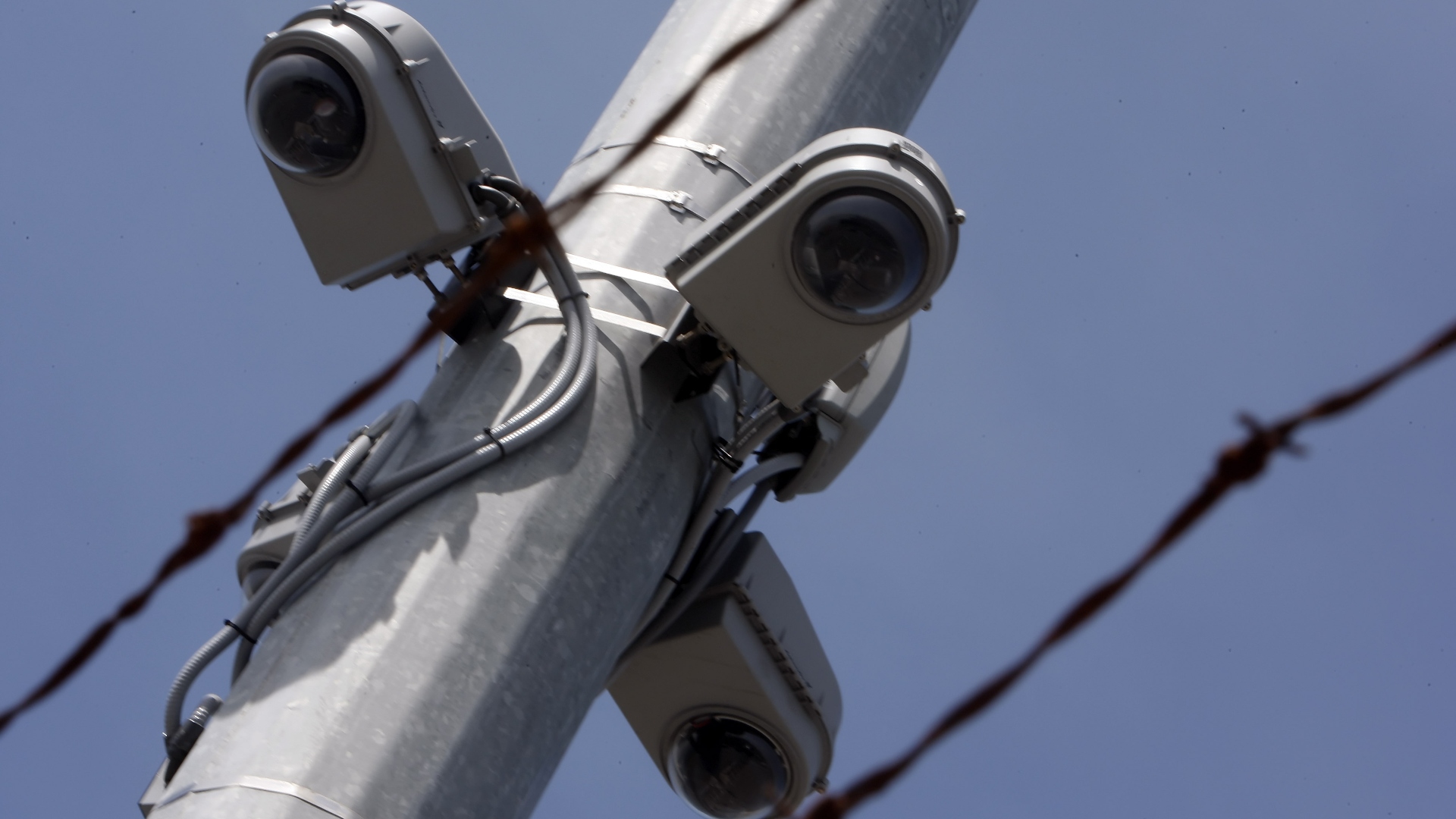
When San Francisco police drone video surveillance was accidentally livestreamed on the internet last month, it revealed how extensively, and at what great detail, the city is watched from above. The use of surveillance technology is rapidly growing in the Bay Area, with increasing drone and AI-powered surveillance networks partnering with local law enforcement and government agencies. In 2024, the SFPD launched the Real Time Investigation Center, which included major investments in license plate readers, safety cameras and a drone program and Alameda County just approved the renewal of a $2.25 million contract with Flock Safety. It’s all raising concerns about privacy, data leaks, civil liberty infringements and the use of the technology to aid immigration deportations. We’ll discuss the state of surveillance tech in the Bay Area, and what it means for public safety and privacy.
Guests:
- Sheera Frenkel, technology reporter, The New York Times
- Andy Greenberg, senior correspondent, WIRED
- Dhruv Mehrotra, senior correspondent, WIRED
Episode Transcript
This is a computer-generated transcript. While our team has reviewed it, there may be errors.
Alexis Madrigal: Welcome to Forum. I’m Alexis Madrigal.
Since Measure E passed in San Francisco in 2024, the San Francisco Police Department has been beefing up its drone program, as reflected in public data about the flights. Already, SFPD drones have flown more in 2026 than in all of 2025. And what are they doing exactly?
This past week, Wired had a new report out about a set of five drone feeds that were accidentally, it seems, made publicly available. It allowed reporters Andy Greenberg and Dhruv Mehrotra to peer through the cameras of these drones as they took part in police actions.
We launch into our discussion of new and local police surveillance with that footage and those drones. Welcome to Forum, Andy and Dhruv.
Andy Greenberg: Glad to be here.
Dhruv Mehrotra: Yeah, thanks for having us.
Alexis Madrigal: So tell us what happened here, Andy. How did these feeds become somehow publicly accessible such that you could actually see them?
Andy Greenberg: Right. Well, in the middle of last month — the middle of June — I got contacted by a couple of security researchers that I know who both tend to find weird stuff on the internet a lot.
Alexis Madrigal: I’ve met those guys. Yeah.
Andy Greenberg: Yeah, you know them probably. They told me that they had found a link — basically just a web address — where the San Francisco Police Department appeared to be live-streaming a bunch of drone footage on the open web.
They were just kind of fascinated to have found this. I think maybe my tone of voice as I was speaking to them conveyed how freaked out I was by this, so they actually reported it quite quickly to the platform, the drone company that the San Francisco police use, called Skydio. Skydio alerted the SFPD, and they took this down.
By the time the link was taken offline, these two security researchers had already recorded about 40 hours of the drones’ footage. That includes both color and thermal cameras, and also all the data from the drones that was being posted to this address in real time.
Alexis Madrigal: Their flight patterns and exactly their…
Andy Greenberg: Exactly. Their geolocation, their altitude, even the names and email addresses of the pilots in the police department — all of that was on the open internet.
They shared all of that with us at Wired, and it captured some extremely sensitive stuff. I mean, people’s arrests, police interacting with all sorts of people, lots of random bystanders as well just swept up in this footage. Drones peering into people’s windows in some cases. None of it should have ever been leaked online.
That itself is a privacy breach, but it also provides us this kind of glimpse into the way the cops are using drones — this kind of modern aerial police surveillance — in a way that we’ve never quite seen before.
Alexis Madrigal: Dhruv, tell me a little more about Skydio, this drone company.
Dhruv Mehrotra: Yeah. Skydio operates DFR programs. They’re called Drone as First Responder programs.
They basically provide the drones for police departments across the country that are using drones to respond to calls for service.
The basic idea behind a DFR program is pretty simple. When a 911 call comes in, dispatchers can send a drone ahead while officers are still driving to the scene. Police departments say that gives them a faster view of what’s happening and can help them decide what kind of response is actually needed.
But the concern is that these are powerful cameras, often equipped with zoom lenses and thermal imaging, and they’re flying routinely over a city. On the way to a call, they can capture hundreds of people and pass over places like schools, pools, doctors’ offices, and backyards. Privacy advocates say these kinds of systems that Skydio is enabling need strict guardrails.
Alexis Madrigal: I mean, Andy, when I was watching the footage that you included in the story, I was kind of stunned. This is quite high-resolution footage, and sometimes they zoom in and you’re really able to see individual people, individual faces, as they’re walking around on the street.
Andy Greenberg: Yeah. I mean, we posted a tiny, tiny fraction of the videos that we obtained and watched, partially because it’s very sensitive stuff, and also for copyright reasons. We don’t own them. Fair use restrictions mean we can only post a few minutes of the three hours of total flight time that we obtained.
When you watch the unredacted footage — we blurred people’s faces and tried to protect their privacy — it’s shocking to see the actual raw footage. It shows people’s cars being followed for 10 or 15 minutes at a time in some cases, when they then turn out to be apparently not involved in any crime at all.
You can see people being tackled and arrested from multiple angles, with multiple drones following single incidents and zooming in on them quite closely. It felt like a real violation.
But I should point out that some of that might sound like something you might see from police helicopter footage, which we may be more familiar with. In other cases, though, drones were peering into windows. As I said, you could see cops interacting with people inside their homes through the windows.
And on the way to these incidents, the drones are also, as Dhruv said, passing over so many homes. They’re looking, from quite a revealing angle, at patios and into the living room windows of so many San Francisco homes.
Alexis Madrigal: I mean, Dhruv, one of the things you note in the story that I thought was interesting is that in these flights, when the drones are looking at all these people, no one’s looking up. No one’s going, “Hey, what is that?”
Whereas if you had a police helicopter above you, you would be like, “Hey, there’s a police helicopter up there.”
My sense is they must be flying high enough and using zoom cameras, and they’re quiet enough, that people really don’t know.
Dhruv Mehrotra: Yeah, that’s exactly right. They are fairly quiet, and they’re flying at an altitude of around 300 to 400 feet, based on some of the footage and data that we saw.
Of course, when they arrive at an incident, they’ll drop down to a lower altitude to get a better view or a better angle. But en route, they’re generally around 300 to 400 feet up in the air.
Alexis Madrigal: And Andy, has the SFPD revealed whether this kind of drone surveillance has been included in arrests? Do we know if it’s actually doing what they say it’s doing?
Andy Greenberg: Well, the SFPD does provide, on a public website, and in response to our request, the call records — essentially the codes for the type of investigation for which each of these drones was dispatched.
I guess this is maybe expected in San Francisco, but a ton of them were for auto strip/boost cases, meaning the theft of something from a car.
But then we saw, in many cases, that somebody would be followed in their car for 10 minutes under suspicion of one of these auto strip/boost cases, and then two people would get out of the car being surveilled and just go play basketball, and the drone would leave.
I don’t know if there was any real reason for suspicion at all, but those people just got followed, unbeknownst to them, for a fraction of their morning and had no idea they were being watched from above.
Alexis Madrigal: We’re talking about how San Francisco police drone video surveillance footage was accidentally live-streamed on the internet last month, and what it says about the local state of surveillance technology in the Bay Area.
We’re joined by Wired senior correspondents Dhruv Mehrotra and Andy Greenberg.
We want to bring you into this conversation. What are your questions about how the SFPD and other local law enforcement agencies are using new surveillance technologies?
Give us a call at 866-733-6786. That’s 866-733-6786.
The email address is [email protected].
I want to add one other voice to the conversation: New York Times technology reporter and author Sheera Frenkel. Welcome.
Sheera Frenkel: Hi. Thanks for having me.
Alexis Madrigal: Sheera, can you bring us a little broader here? We know that the SFPD feeds this drone footage into a thing called the Real-Time Investigations Center. What’s going on there, and how does it track with what’s happening nationally with local police surveillance?
Sheera Frenkel: I think what this story does such a great job of is showing how, in this one instance, the San Francisco Police Department was operating on the basis of its needs — the data it needed to gather — and feeding it into a database that it thought would help it as a police force.
And once again, the data wasn’t secured properly. Somebody accessed it.
This is a pattern that repeats itself over and over again, not just here in California but across the country. Local law enforcement gathers faces for facial recognition programs. They gather license plate numbers. They gather footage from drones, and they use it toward their purposes.
But again and again, we’re seeing that data either get breached, hacked into, or simply accessed by federal government agencies.
Alexis Madrigal: And when we look at one police department in this entire region using all these drones and gathering all this footage, it’s not isolated, right? I mean, many cities are deploying not just drones but all these other technologies.
Sheera Frenkel: Yeah. Cities are very, very tempted by this advanced technology.
We all know that police departments constantly complain about not having the manpower to police the streets. Technology offers them cheap alternatives to traditional patrols.
It’s very tempting if you’re sitting at the head of a police force to say, “Oh, look. Instead of hiring another hundred police officers to roam the streets and gather the kind of intelligence we need, I can run a fleet of drones for a fraction of the price.”
So it’s easy to understand why these new types of technology are sold and why they’re attractive to local police departments. But there isn’t necessarily the same kind of thought and consideration put into what happens to all that data being gathered by these new technologies.
Alexis Madrigal: It’s also interesting because I think one of the things you’re noting — and we’ll get more into this later in the show — is that this data doesn’t stay where it’s supposed to stay within public agencies.
What about on the private side, though? When people have Ring cameras, or we’re going to get into surveillance in grocery stores, it seems like the same kind of slippage happens there too, right? It doesn’t just go into the database where it’s supposed to go. It goes into many databases.
Sheera Frenkel: Yeah. Something I’ve learned from the privacy advocates I’ve spoken to over the years is that data never stays where you think it’s going to stay.
Once you’ve collected data for any purpose, for any reason, you can almost be guaranteed that there’s going to be some kind of seepage — that it’s eventually going to travel elsewhere.
Data is so precious. Whether it’s your face or your travel information, whatever it is, it’s ultimately valuable. It’s a resource that the federal government wants to access, and especially under the current Trump administration, it wants that access to achieve its current goals.
Alexis Madrigal: We’re talking about local police surveillance and how it ties into privacy concerns, public safety, and more.
We’ve got New York Times technology reporter and author Sheera Frenkel. We’ve got Wired senior correspondents Andy Greenberg and Dhruv Mehrotra.
We’re bringing you into the conversation as well. Your questions about how surveillance technology is being used by local police departments and others here in the Bay Area.
The number, of course, is 866-733-6786. That’s 866-733-6786.
[email protected] is the email address.
And, of course, you can find us on social media too, where, of course, we’re not being surveilled at all — on Bluesky, Instagram, and in our Discord community. In all those places, we’re KQED Forum.
I’m Alexis Madrigal. Stay tuned for more right after the break.