This partial transcript was computer-generated. While our team has reviewed it, there may be errors.
Alexis Madrigal: Welcome to Forum. I’m Alexis Madrigal.
Sports are political. There’s no way around it. As much as sports teams are just corporations with various financial incentives, they live and die by getting the people of a place to buy into the idea that these teams represent the city where they’re located. And if that city is San Francisco — a famously, fabulously, historically queer city — many people expect the San Francisco teams to at least pay polite lip service to the values of the region. But what happens when an employee of one of these companies, say a baseball player, doesn’t agree with the politics, culture, or ethos of the place?
Here to talk about what happened with the San Francisco Giants and what it says about the strange place of sports and athletes in our current political landscape, we’re joined by Alex Simon, sports editor with SFGate. Welcome, Alex.
Alex Simon: Thank you for having me.
Alexis Madrigal: We’ve got Ann Killion, longtime sports columnist with the San Francisco Chronicle. Welcome back, Ann.
Ann Killion: Thank you very much.
Alexis Madrigal: And we’ve got Bradford William Davis, reporter and cultural critic who runs the sports newsletter EyeBlack. Welcome, Bradford.
Bradford William Davis: Good to be here.
Alexis Madrigal: Alex, for people who haven’t been paying attention — it’s been a big story in the Bay Area for the last couple of weeks — what happened?
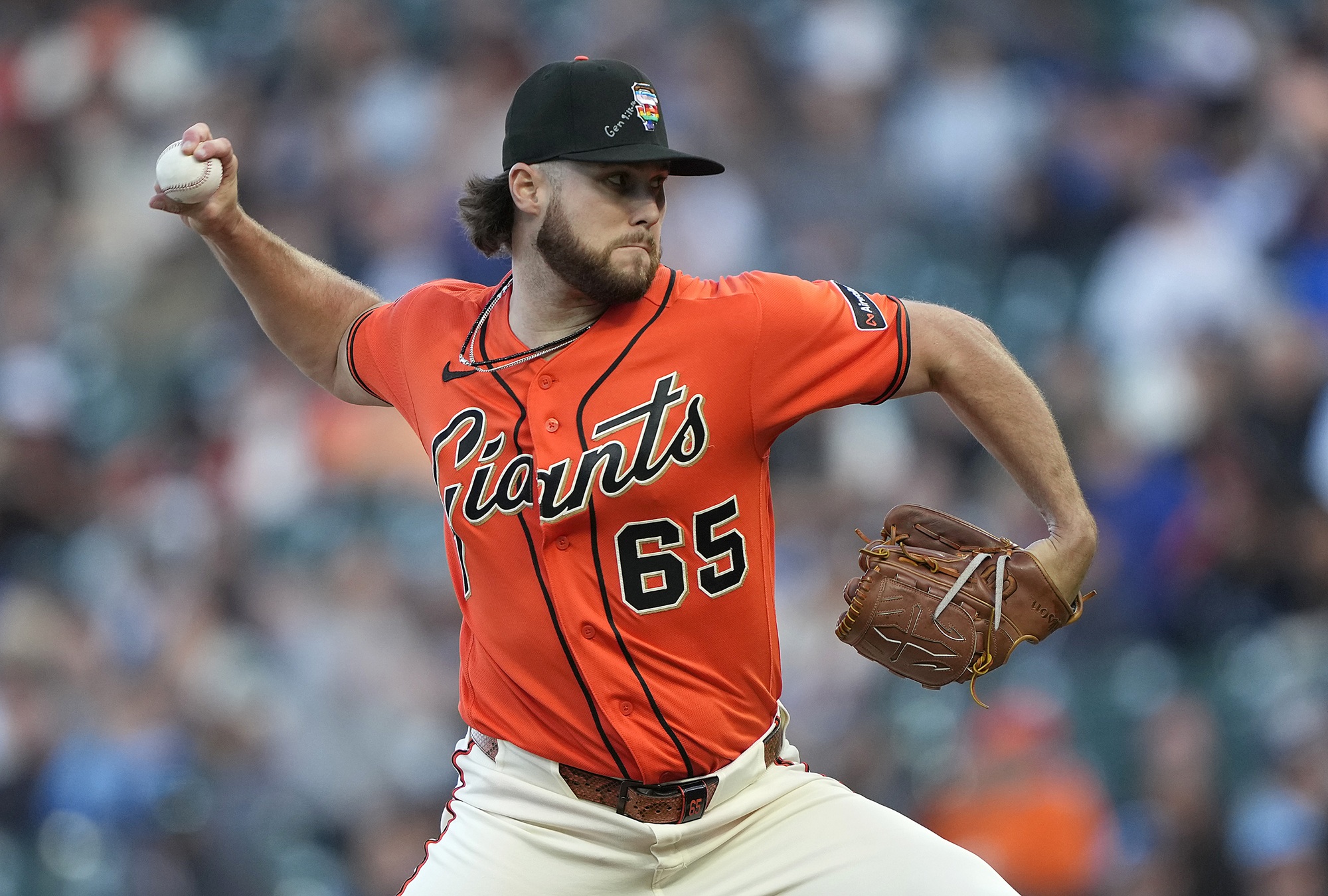
Alex Simon: On June 12th, the Giants held their annual Pride Night. They’ve been celebrating the LGBTQ community for years, going all the way back to the mid-nineties when they held their first “Until There’s a Cure” night. For the last five years, the Giants have been wearing Pride flag hats on the field — replacing the orange SF logo with a rainbow design. This year, four players objected to that, and three of them wrote a Bible verse on the rainbow hat to signal their protest of the Pride celebration.
Alexis Madrigal: Ann, what has the reaction been?
Ann Killion: The reaction in the San Francisco and Giants community has been pretty strong. People feel alienated, disappointed. They feel like on a night meant to celebrate inclusiveness, these players co-opted the whole event, hijacked it, and effectively flipped the metaphorical bird at them. And they felt let down by the team’s response — the Giants issued a both-sides-style statement full of platitudes, essentially “we’re sorry if you’re hurt,” and then went radio silent. They let this thing build and build, went out of town a couple of days later, and it’s grown into, as you said in the introduction, another chapter in the culture wars.
But the paying customers are very upset — and it’s not just gay customers. It’s the community broadly. The Giants have leaned very strongly for many decades into the idea that they represent San Francisco, and embracing the gay community has been a big part of that. A lot of people feel very let down.
Alexis Madrigal: Let’s hear from a listener. Sarah in San Francisco is a Giants fan and a member of the LGBTQ community, and she left us this voice memo.
[CLIP]
Sarah: I was incredibly disappointed when I found out the news. It felt like a huge miss from the players’ perspective to choose Pride Night of all nights to make this statement. I didn’t see them attempting to come out with this pro-Bible rhetoric any other night of the week. So it did feel like a very specific slap in the face for their queer fans. I also think this was terribly mishandled from a management perspective. The manager could have taken better steps to get ahead of this, could have avoided the whole PR disaster that happened after the fact, and could have come out with a stronger statement in support of inclusivity and to the wide fan base that actually supports the SF Giants. Across the board, it was just a giant L for the Giants, who don’t need any more help with L’s because their record is doing that for them. And it just makes it really hard to continue to support this organization given these huge missteps.
[END CLIP]
Alexis Madrigal: Thank you for that, Sarah in San Francisco. And we want to hear from you — what was your reaction to the way the Giants handled Pride Night? What would you want to ask or tell the Giants? Call us at 866-733-6786, email [email protected], or find us on Bluesky, Instagram, or Discord at KQED Forum.
Bradford, you cover sports and think about them within a broader political and historical context. What comes to mind when you hear about these Bible verses on the hats?
Bradford William Davis: It’s not a terribly surprising dynamic. Clayton Kershaw did something kind of similar recently. And unfortunately, Landen Roupp is not Clayton Kershaw, so there’s a bit more scrutiny on him. Winning helps and fixes a lot of things. But regardless — the kind of people who play Major League Baseball are frequently white guys from suburban backgrounds, and they come with views that are oftentimes hostile to queer fans and the broader community. I think many baseball fans implicitly know this, but it’s unfortunate when it bubbles to the surface so plainly. It’s a reminder that not every fan is thought of in the same way by the people they’re cheering for.
Alexis Madrigal: Ann, I’ve long thought baseball players come through a different filtration system than, say, NBA players — coming up through small towns, riding buses across the country. If fans sort of know that in the back of their minds, what was so particularly galling about what happened here?
Ann Killion: Baseball has always been a conservative sport — probably the most conservative of the major professional team sports in America. A lot of these players come from small towns, ride buses through the South in their formative years, and that’s long been part of the culture. And we live in a time when people feel much more emboldened to wear their beliefs, literally in this case, on their hat.
But what this really speaks to is organizational failure. The Giants aren’t naive about who is in their clubhouse. When you’ve been doing something for thirty years — celebrating Pride Night — you communicate with your players. You sit them down and talk about where they work, why this community matters, why this demographic matters. The Giants have made significant money selling Pride merchandise — you can go on their website right now and buy a Pride logo hat for $52.99. So the fact that this happened really points to a breakdown in communication: bringing these players into the fold, laying out their options, explaining the expectations, and making clear the potential consequences of a public protest.
They could have brought in community members to speak to the team. Mike Krukow, the Giants broadcaster, whose son is gay — Mike could speak very eloquently about this. There were options. Somehow, this wasn’t handled properly.
Alexis Madrigal: Former pro baseball player, yes. Alex, there’s at least one other episode in Giants history from the nineties that’s echoing for some fans. Can you talk about that?
Alex Simon: Back in 1996, Mark Dewey protested “Until There’s a Cure” night — an evening honoring San Franciscans affected by the HIV and AIDS epidemic. It was a night led by Rod Beck, one of their star pitchers at the time. Dewey turned the ribbon players were wearing sideways to make it look like the Jesus fish. And I’d also mention that Ann’s Chronicle colleague Susan Slusser wrote two years ago about Nick Ahmed — then the Giants’ shortstop — who also wrote a Bible verse on his Pride hat.
It’s also worth noting that the specific Bible verse these players chose adds an extra layer of controversy. It’s from Genesis, referencing the story of Noah’s flood — where God put a rainbow in the sky as a covenant that he would never flood the earth again. Conservative Christians have increasingly used this passage to argue that the rainbow is a symbol of their faith, not of the gay community — an effort to reclaim that symbolism. For these players to choose that specific verse, out of countless others in the Bible, is what has made this so stark. And as Ann pointed out, it reflects a real organizational breakdown — especially now that the players have said publicly they discussed this for days, even weeks, beforehand. Somehow the Giants organization never intervened or found a way to handle it properly. It’s probably not a great look when the MLB commissioner, responding to Republican senators, is pointing to the organization’s lack of communication as the problem.
Alexis Madrigal: We’re talking about the San Francisco Giants after a botched Pride Night celebration and the fallout that’s followed. We’re joined by Alex Simon, sports editor at SFGate; Ann Killion, sports columnist at the Chronicle; and Bradford William Davis, reporter and cultural critic who runs the newsletter EyeBlack. We’re taking your calls and reactions to what’s been going on with the Giants and what it says about this particular moment in our city’s history. One listener writes in: “These athletes are bigoted and everyone knows it. Boycott the Giants.” Do you feel the same way? Call us at 866-733-6786. I’m Alexis Madrigal. Stay tuned.