This partial transcript was computer-generated. While our team has reviewed it, there may be errors.
Alexis Madrigal: Welcome to Forum. I’m Alexis Madrigal.
You may not think you’re interested in a bulk commodities marine terminal in Oakland. Reasonable. But here’s why it matters. Much of the hope for averting the worst of climate change relies on keeping fossil fuels in the ground — most specifically coal. In the US, the coal industry has been in decline for two decades, so a lot of coal is stranded in the earth. But there are plenty of Asian countries that would take that coal and burn it. Right now, it can’t reach them because environmentalists have blocked major coal export terminals up and down the West Coast — including a major coalition in Oakland that has blocked a large facility in the bay for more than a decade.
If any port springs up on the West Coast, say through Oakland, suddenly Utah and Wyoming coal will be burned rather than sitting inside a closed mine. That’s precisely why the Trump administration is putting $75 million into the Oakland Bulk and Oversight Terminal — a facility that will sit on a piece of land right by the landing of the Bay Bridge. It could be the final piece in getting the project across the finish line, with major consequences for West Oakland residents and anyone with an interest in limiting CO2 emissions.
Joining us to talk about the latest news locally, the Trump coal push nationally, and the history of both, we have Darwin BondGraham, news editor at Oaklandside. Welcome.
Darwin BondGraham: Hey.
Alexis Madrigal: And we have Maxine Joselow, climate reporter at The New York Times. Welcome.
Maxine Joselow: Thank you.
Alexis Madrigal: Darwin, let’s recap the Trump administration’s maneuvers here locally. Where had the project been before the $75 million came in?
Darwin BondGraham: The project has been bogged down since around 2015, 2016 — political opposition, a lot of litigation, multiple lawsuits in federal court, state court, and a bankruptcy lawsuit. The developer has won most of those legal challenges, but it’s been delayed for over a decade. Financing is now seemingly the last remaining hurdle, because the legal challenges are largely out of the way. I think that’s the context for this announcement. Tens of millions of federal dollars are now appearing, and maybe that will signal to private investors. There are various private parties already invested in the project’s future, and they may now be able to go to the capital markets and raise the funds it’ll take to actually build it.
Alexis Madrigal: Maxine, where did this $75 million come from? What fund is it part of?
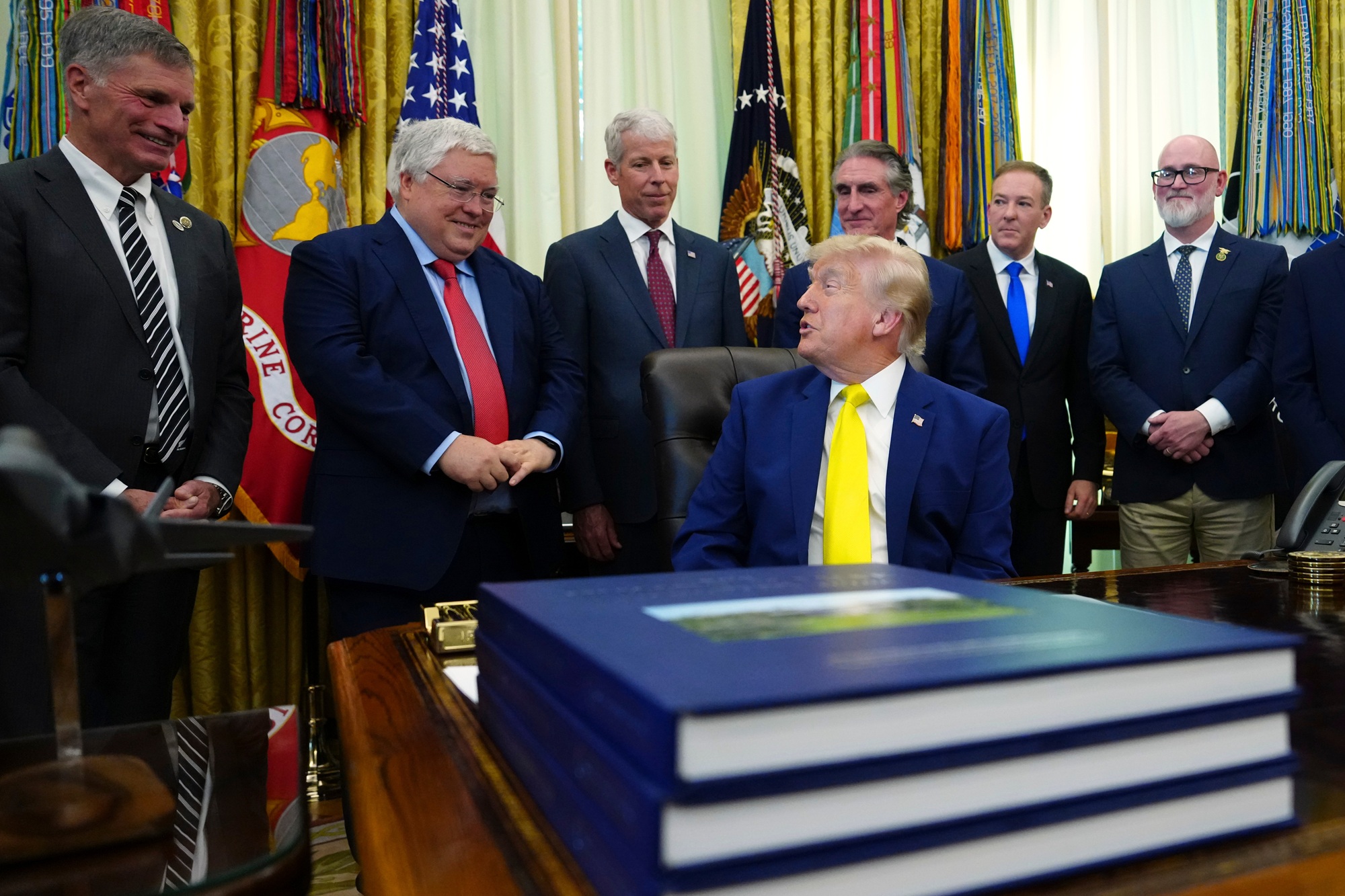
Maxine Joselow: Great question. This money didn’t appear out of thin air. It came from the Energy Department and was part of a broader announcement President Trump made at the White House last week — a total of $700 million in new federal funding for the country’s struggling coal industry. Some of that money would go toward helping build the first two new coal plants in the United States since 2013. Some would help aging coal plants stay open instead of shutting down on their scheduled retirement dates. And then $75 million of it would go toward this coal export terminal.
The money directed toward the coal plants — not the export terminal — was actually taken from a pot of money the Energy Department was supposed to be using for carbon capture technology, which is a climate solution that captures carbon dioxide and prevents it from warming the atmosphere.
Alexis Madrigal: Hypothesized climate solution.
Maxine Joselow: Yes — thank you for that. Most environmentalists would agree it’s largely hypothesized. It has yet to be tested and built at scale. But that’s where that money was coming from, and it drew a lot of criticism from Democrats and environmental groups who said the Trump administration was repurposing funds in violation of Congress’s intent.
Alexis Madrigal: Maxine, why has the coal industry been struggling in the United States? Production peaked around 2007 or 2008, roughly?
Maxine Joselow: Somewhere around there — don’t hold me to the exact year. But broadly, US coal production has been declining for decades, as has coal’s share of electricity generation. The reasons are largely economic. Coal simply hasn’t been able to compete with natural gas, especially after the fracking boom unlocked cheap natural gas that began flooding the market. And now with the rise of renewables like wind and solar, coal is struggling to compete economically on that front as well. It’s been on a downward decline largely due to market forces.
Despite the typical conservative argument that market forces should dictate energy technology and we shouldn’t intervene, what’s happening is that President Trump is using the full powers of the federal government to try to reverse that trend and allow coal to rebound. But it’s very unlikely to succeed given the underlying economic realities.
Alexis Madrigal: Let’s hear Wyoming Governor Mark Gordon speaking at the press conference announcing this funding on June 4th.
[CLIP]
Mark Gordon: When a kid grows up in Wyoming, their education is paid for in large part by coal severance taxes, by the royalties that come from mining coal that was shut down by the Democrats. When they have a chance to get a job, they can go look to the coal mine. And it’s not just digging coal the way we used to — it’s high-tech jobs. At this point, we don’t mine coal the way we used to at all. It is very, very technologically proficient. And what’s more important, it’s environmentally sound. I would invite you to come look at the reclamation that’s happened in the Powder River Basin. We can demonstrate that it’s environmentally sound — that wildlife populations actually thrive and do better.
Today, Mr. President, I really want to talk to you about our recent trip to Japan and Taiwan. Both countries were going to forswear coal, and now they realize they need that reliable, dispatchable, secure source of energy — but they can’t get it as clean as they can from the Powder River Basin. To be able to open that Oakland port is absolutely essential for the lifeblood of our state and for our coal mines.
[END CLIP]
Alexis Madrigal: Darwin, it’s striking to hear him say it so plainly at the end — opening that port in Oakland. It’s exactly what no-coal-in-Oakland activists have been saying all along: this is really what it’s about.
Darwin BondGraham: Yeah. This really is a story of mining companies and states — principally Utah, Wyoming, Montana — trying to secure a long-term market for a stranded product. California doesn’t use coal for electricity anymore, and most of the country has been trying to move away from it, notwithstanding the Trump administration’s new maneuvers here. But some countries in East Asia are still using coal. Japan pivoted toward it —
Alexis Madrigal: After Fukushima, after the nuclear disaster. Yeah.
Darwin BondGraham: Right. But China, for example — yes, China is the biggest burner of coal, but China is also rapidly trying to move away from it. If you look at their energy policy, they’re going solar, they’re going renewables. Whereas the United States seems to be tripling down on trying to be a fossil fuel superpower.
Alexis Madrigal: We’re talking about the Trump administration’s plan to invest $75 million in a coal export terminal in Oakland as part of a larger strategy to boost the coal industry. We’re joined by Darwin BondGraham, news editor at Oaklandside, and Maxine Joselow, climate reporter at The New York Times. We want to hear from you — what are your thoughts and questions about putting a coal export terminal in Oakland? Call us at 866-733-6786, or email [email protected]. I’m Alexis Madrigal. Stay tuned.