This partial transcript was computer-generated. While our team has reviewed it, there may be errors.
Alexis Madrigal: Welcome to Forum. I’m Alexis Madrigal. Zinzi Clemmons’ essay collection Freedom bridges a complex time in American race relations, as they’re called. We see the Philly suburbs from unusual angles, a kaleidoscopic South Africa, and our own Northern California problems and veins of possibility reflected in honest, searching prose.
With work beginning in 2014, at the start of what became known as Black Lives Matter, crossing through the so-called reckoning of 2020 and on into this strange, deflationary, survivalist time in American politics, this book reckons with the Afro-pessimist worldview, the intersection of American gender and racial privilege and oppression, and what it is to be a human swimming along as the great tidal movements of history move in and around us.
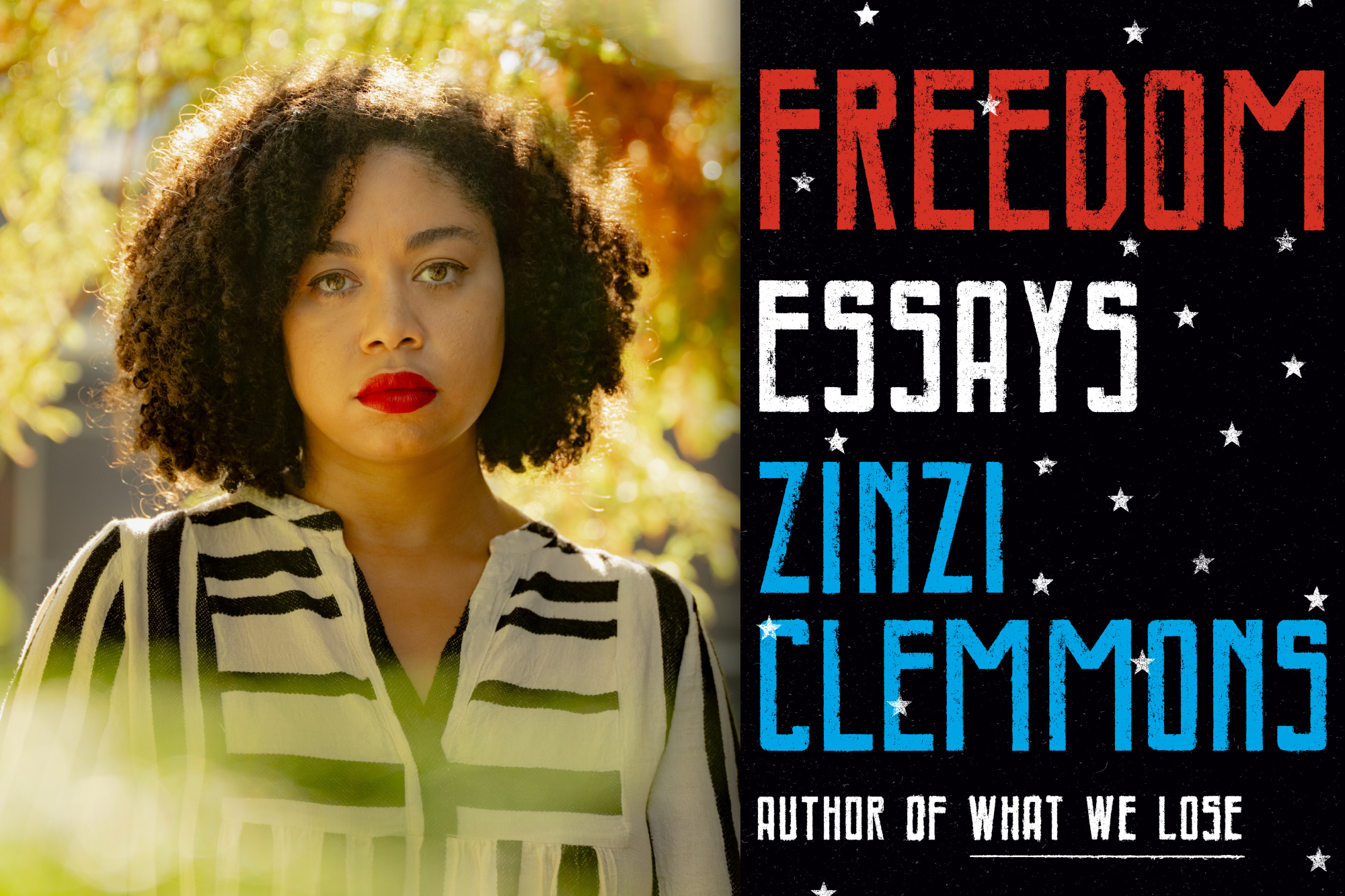
We’re delighted to welcome Zinzi Clemmons, director of the creative writing program at UC Davis, author of the novel What We Lose, and, of course, this new essay collection, Freedom. Welcome.
Zinzi Clemmons: Thank you. I’m so glad to be here.
Alexis Madrigal: There is a lot of atmospheric talk about freedom, in part because it’s this whole “250th birthday of America” kind of feeling. Why do you think it’s important to be exploring this sort of question of freedom at this time?
Zinzi Clemmons: Yeah, it’s interesting how that happened, isn’t it? I swear I didn’t time the book’s release that way.
Alexis Madrigal: Maybe your publisher did. You never know.
Zinzi Clemmons: Yeah. You know, they’re quite happy about it.
I mean, it’s always been important to talk about freedom, I think, for Black people. As I say in the book, in the communities that I grew up in, and in the South African community, freedom was always a theme, and it was never fully achieved.
When I began writing this book in earnest, I had to place that legacy alongside some of the conversations and some of the actions that were taking place in the contemporary political space, particularly those coming from conservative America. In noticing the differences between the two, I found where I wanted to go—to challenge that prevailing notion of freedom that we see distorted, largely in the mainstream.
Alexis Madrigal: How do you define that prevailing notion, or how do you see that prevailing sense of freedom, particularly on the American right?
Zinzi Clemmons: In the author’s note to the book, I discuss a really hulking study by the sociologist Orlando Patterson called Freedom in the Making of Western Culture. He defines three types of freedom.
There’s personal freedom, which is the freedom to move one’s body and to have personal physical agency. There is sovereign—
Alexis Madrigal: Sovereign? Is that how you say that?
Zinzi Clemmons: That’s how I say it, yeah. There is sovereign freedom, which is the ability to act within civil society in free ways—so gun ownership, for example. And the third type—
Alexis Madrigal: Civic freedom?
Zinzi Clemmons: Civic freedom. That’s a larger-scale freedom.
I would class a lot of the political moves that have been made in the past decade or so in that second camp: freedom to practice religion, freedom to own a gun. I see those as distortions and, as I say in the book, the fanatical ravings of people who don’t recognize that they are already free.
You see this no more clearly than in the work of Charlie Kirk. The T-shirt he was wearing when he was shot, which says “Freedom,” has now become a kind of icon and calling card of the Christian nationalist right, which is a totally ridiculous fallacy.
Alexis Madrigal: What’s your definition? How are you trying to revise, expand, or rethink the notion of freedom?
Zinzi Clemmons: In the book, I say that what’s really important is the freedom of all people to be able to love, to express themselves, to have freedom from poverty, freedom from poor working conditions, and freedom from lack of education.
When we express these ideas through the lens of freedom, I think they acquire more clarity because it turns what are often critiques of our current environment into a quest for something that we all desire.
Importantly, freedom of expression is inherent in current struggles around freedom of speech—the freedom to publish what we like and say what we like. Again, this is an idea that has been largely co-opted by the American right, but it’s one that, if we look back to the early 2000s, the left was highly engaged in as well, and one that we should remain engaged in. All of these struggles are united under this idea of freedom.
Alexis Madrigal: Yeah. I also think a lot about this era in American history when you had FDR talking about freedom from things, not just freedom to do things. A lot of that had to do with economic oppression and a realization that you could only do so much if your material conditions were brutal.
We don’t seem to talk about it that way very often anymore.
Zinzi Clemmons: Absolutely. Again, I think it’s the success of the post–Cold War neoliberal order that we’ve become very accustomed to not asking for these things—that sort of freedom remains off the table.
In my opinion, economic struggle is at the root of many of these fights. Something I speak about in the book is sexual harassment and workplace harassment, which stem from economic oppression and economic exploitation in the workplace.
Alexis Madrigal: One of the other threads of this book is that you have family in South Africa. You grew up visiting South Africa, which, on the one hand, represents this tremendous achievement of ending apartheid—at least in name and in many institutional settings.
But, of course, the actual economic conditions in South Africa have not been completely reversed. Do you think that influenced your ability to see, with a kind of binocular vision, both that this was a tremendous triumph—to overthrow that order—and, at the same time, that people are still living very difficult lives, particularly Black South Africans?
Zinzi Clemmons: It’s a struggle that is, in many ways, analogous to our own. Some of the causes I was able to see in real time post-independence.
In the book, I write about the transition to the post-apartheid government under Nelson Mandela. A lot of concessions were made to the white ruling classes. A lot of corruption took place as well. Basically, after independence, the country fell short of many of the economic goals that had been envisioned—goals that were, in many cases, directly Marxist and never fully implemented.
Now the country struggles with high rates of Black unemployment and youth unemployment. It’s heart-wrenching. It’s also a struggle that I see as worldwide in some ways.
Alexis Madrigal: Was it also interesting that, as you describe in the book, the racial typologies of South Africa are different? Your cousins might describe themselves as Colored, for example, or be described that way by others in South Africa.
What do you think it did to have two different racial typologies or hierarchies operating in your own life?
Zinzi Clemmons: That’s the root of what we would call an identity crisis, just to not sugarcoat it.
That was the personal impact it had on me. During the years when I traveled there most frequently, I was in adolescence, and that’s already a time of crisis on many levels. It really confused me about who I was, how I should express myself, and how I fit into the expectations of the communities around me in both places.
On the other hand, it gave me a unique perspective on the idea of race itself. I came to see race more as a construction than I think a lot of my peers and family members did.
When you grow up in a certain environment and within a certain racial paradigm and never really leave it, you tend to take it for granted more than someone who doesn’t. That was a great gift of my time there and of my still-ongoing, though lessened, identity crisis.
Alexis Madrigal: We’re talking about freedom. We’re talking about race, what they mean in this country, and what they mean to Black people in this country.
We’re in the studio with Zinzi Clemmons, director of the creative writing program at UC Davis. She has a new essay collection out called Freedom.
We’re taking your calls and comments this hour about how you define freedom and what it means to you. Maybe you’ve been hearing all the 250th-anniversary talk too and wondering about the relationship between our country and freedom. We’d love to hear from you.
If you’re an immigrant to this country, how has living in the United States shaped your understanding of freedom and race?
You can give us a call at 866-733-6786. That’s 866-733-6786. You can email [email protected]. You can also find us on social media—BlueSky, Instagram, and Discord. We’re @KQEDForum.
We’ll be back with more from Zinzi Clemmons right after the break.