This partial transcript was computer-generated. While our team has reviewed it, there may be errors.
Alexis Madrigal: Welcome to Forum. I’m Alexis Madrigal. The Gavin Newsom era is ending in California. The Nancy Pelosi era of politics is ending in California. Kamala Harris is on the sidelines. It’s a kind of strange time in our state’s politics. And at the local level, with the crime, overdose, and homelessness waves subsiding, there isn’t the kind of obvious local crisis that tends to drive news cycles. Instead, we’re left with our big structural problems and a rudderless Democratic Party that can’t decide if it’s with big tech or against it — a technocratic, back-to-basics party, or a more radical progressive party that’s against billionaires. Except the standard bearer in the governor’s race for progressive political organizations is a billionaire, and the other one, AOC’s former chief of staff, is also self-funding his campaign with his own tech money. And that’s not even getting to the confusing local ballot measures. It’s a tough time — but it also feels quite consequential for a June primary election. We’re here to help, though. We’ve got a bunch of KQED staffers with us. We’ve got Sydney Johnson. Welcome, Sydney.
Sydney Johnson: Good morning.
Alexis Madrigal: We’ve got Guy Marzorati. Welcome, Guy.
Guy Marzorati: Hey.
Alexis Madrigal: And we’ve got Marissa Lagos.
Marisa Lagos: Hey.
Alexis Madrigal: Alright, Guy — we’re going to start with the governor’s race. The big question is: has this become, among Democrats, just a two-person race between Tom Steyer and Becerra? Or is Katie Porter still in?
Guy Marzorati: For all intents and purposes, yes — a two-candidate race for what looks like one spot in the general election. We’ve seen Steve Hilton on the Republican side really consolidate the GOP vote ever since President Trump endorsed him. So you’re looking at a race between two Democrats for one spot, largely dividing along the typical lines we’ve seen within the Democratic Party. Steyer is obviously occupying a very progressive lane, though I think he has questions to answer for a lot of voters about whether the figurehead of the progressive movement in the state should be a billionaire. And then Xavier Becerra — who I would say is your traditional path for a Democrat, with a long public service career as attorney general and Health and Human Services secretary — has really consolidated what I’d call the “normie Democrat” vote as we head toward the June 2nd primary.
Alexis Madrigal: Marissa, what do you think — if you’re out there and you’ve been planning to vote for Katie Porter, how are people supposed to deal with this? In most polls, Hilton has gotten the most support. What do you do?
Marisa Lagos: I’m laughing because last week I was on the ten o’clock hour and I said, “If you like Porter, vote for Katie Porter.” And I was like, that could be clipped in a weird way. I still think people should vote their heart. I know Democrats are still worried about the potential for two Republicans getting into the runoff, but I think that’s so unlikely. Is it likely that Porter — or even Steyer — makes the top two? It’s looking increasingly less so, but nothing’s impossible. I would never tell people how to vote; that’s not my job. But I do think we’re going to see a couple more public polls come out in the next two days, and that will inform people more.
Alexis Madrigal: I guess you’re just arguing against strategic voting as a political concern.
Marisa Lagos: A hundred percent. As a reporter and as a fan of democracy, it would actually be exciting to have two Democrats in a runoff — just because it’s so unlikely that a Republican could win statewide, I think that would make for a much healthier race and dynamic. But most of the polls we’ve seen in the last few weeks do show a very likely scenario of a Becerra-Hilton runoff. It seems like they’re the two who have managed to break through twenty percent, while everyone else has been fighting in the teens. Tom Steyer is spending a lot of money to try to break out of that, and we’ll see. Democrats especially seem to be voting a little later in this race, I think because of the unsettled and messy nature of it.
Guy Marzorati: I’d say voters and even Democratic interest groups are looking at this race through the lens of: who can I vote for who’s going to win? You saw that a lot with Eric Swalwell when he was in the race — groups getting behind him because they felt voters would eventually land on him. And you’re seeing this desire among Democratic interest groups to find that one candidate. What you’re seeing in the voting data right now is a lot of Democrats holding on to their ballots. We get returns every day from Paul Mitchell at Political Data Inc., and the trend is pretty far below 2022, our last governor’s election — particularly among Democrats who have returned ballots. And if you look at where the trend is most below 2022, it’s among the oldest voters. To me, that doesn’t signal a lack of enthusiasm. It just feels like Democrats want to see these candidates get to the end, and maybe they want to wait until someone emerges as a clear front-runner in polls before deciding how to vote.
Alexis Madrigal: So interesting. Sydney, let’s talk about the other headline race — House of Representatives, District 11. First time no incumbent is running in this district since Nancy Pelosi was first elected in 1987. What’s going on there?
Sydney Johnson: Yeah, so we have several leading candidates in the race — all Democrats. Polling is showing state senator Scott Wiener as a pretty clear front-runner to advance to November. So this June primary really appears to be a contest between supervisor Connie Chan and Saikat Chakrabarti. Chan is a progressive who moved to San Francisco in her youth from Hong Kong and has worked in city hall as a civic servant for years. She has a lot of backing from labor. And then there’s Chakrabarti, who is pretty parallel with Chan in the polls. You mentioned at the top of the show this rudderless Democratic Party — and Saikat is really leaning into that. His message is that the Democratic Party is not delivering for people and that we need to change it from the inside out. He and Chan actually have a very similar progressive platform — affordable housing, acknowledgment of what’s happening in Gaza, climate change. But Saikat has leaned heavily into the narrative of changing the Democratic Party, and he talks a lot about his ties to AOC and Bernie Sanders. Chan, I think, is walking a more delicate line. She shares similar platforms, but she has the endorsement from Pelosi herself. Chakrabarti got in trouble while working for AOC for tweets critical of Pelosi and the Democratic establishment, whereas Chan is trying to pay her respects to Pelosi while still projecting a vision of the Democratic Party for the next generation.
Alexis Madrigal: So interesting. If either of them advances, do they have a decent shot against Scott Wiener?
Guy Marzorati: You’re probably looking at a traditional moderate-versus-progressive breakdown in San Francisco. In recent years, the moderate candidate has had an edge. I think back to Scott Wiener’s run for state senate against Jane Kim — that was a pretty evenly divided race. And if you layer on top of that the city having moved somewhat toward moderates in recent years, plus it being a midterm electorate, then maybe the Pelosi endorsement on Chan’s side helps close the gap a little bit.
Marisa Lagos: This is so interesting because she’s held that seat since 1987. It’s really hard to know what people want right now. This feels like a very different moment than a few years ago, when public safety was really on the ballot — when London Breed got ousted, for instance. Affordability and related issues are dominating congressional races in general now. And then you have this interesting dynamic around who, exactly, is the establishment candidate. Is it Connie Chan, endorsed by the person who’s held the seat for almost forty years? Or is it Scott Wiener, who — despite what Pelosi said on Political Breakdown last week — is a prolific legislator and very much within the Democratic establishment? He’s a policy guy with deep connections throughout the state from his time in Sacramento and San Francisco. What’s fascinating to me about that race is how much it holds true that local issues and candidates matter. So much of what’s being discussed has nothing to do with what they’ll actually be voting on in DC. It’s Scott Wiener’s housing legislation, it’s Connie Chan’s opposition to the Great Highway and upzoning. Chakrabarti has tried to make this a more national campaign, but we’ll have to see if that’s what voters want to hear, or if they’re more focused on their own backyard.
Sydney Johnson: Right. And Nancy Pelosi is incredibly popular here in San Francisco — she’s been reelected for almost four decades. So the question is: how far will a message of “Pelosi’s not working for us” actually go?
Marisa Lagos: Especially when her politics are perceived so differently depending on where you stand. The way she’s governed in DC has been much more as a leader — bringing people together — rather than about staking out her own positions. And yet she’s weighed in on local races and endorsed, say, Dean Preston, one of the most progressive supervisors we’ve ever seen. A lot of people outside of SF think of her as very progressive. But at the end of the day, she’s brought home the bacon for San Francisco and helped build Democratic power in DC. And everyone hopes whoever the next member of Congress is will continue to do that — still be a true San Francisco representative.
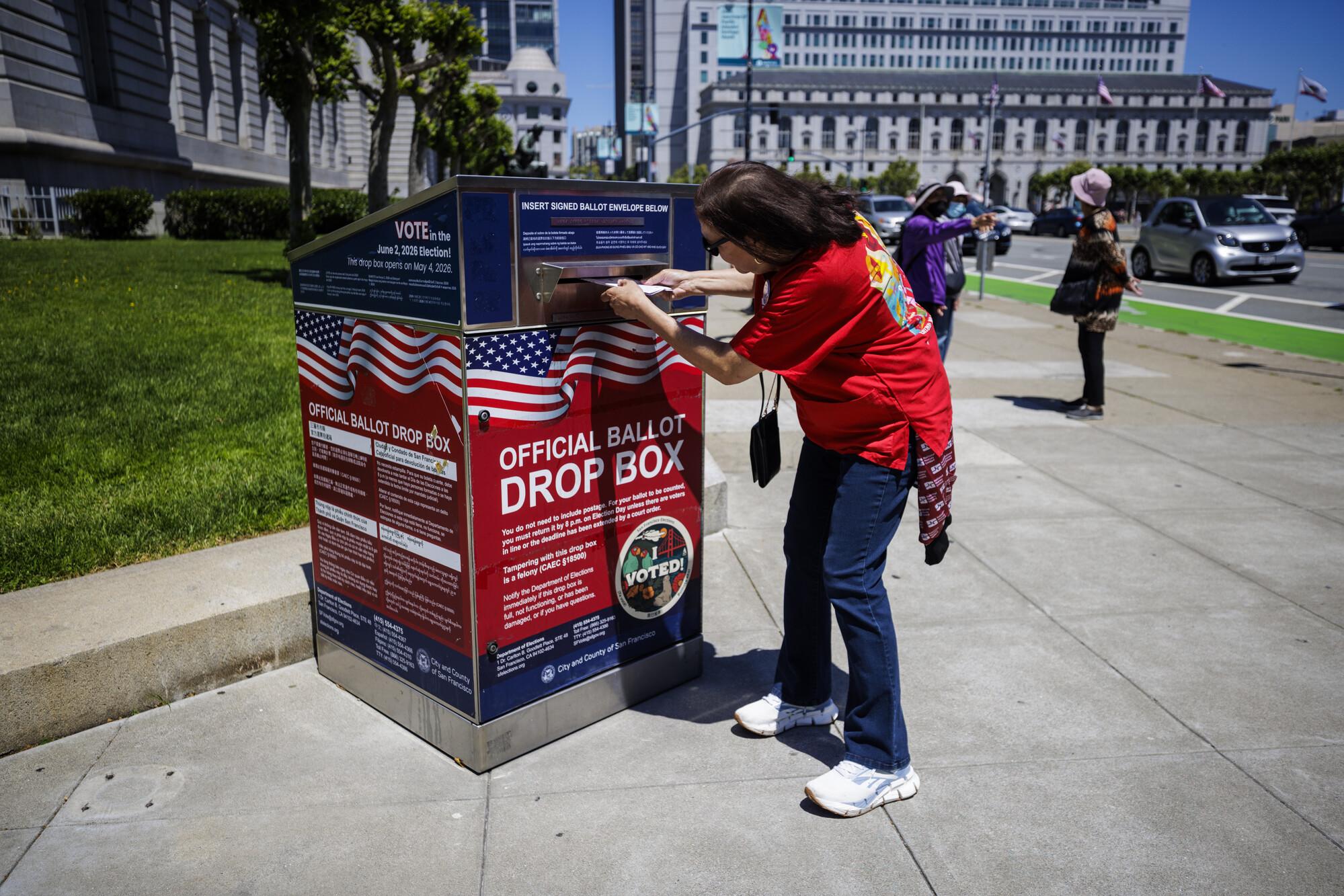
Alexis Madrigal: We’re talking about what’s on your ballot this morning, the eve of election day — this Tuesday, June 2nd, the California primary election. There’s a fascinating governor’s race, and a fascinating race for what will soon be Nancy Pelosi’s former seat — the first time since 1987 it won’t be held by her. We’re joined by Marissa Lagos, politics correspondent at KQED; Guy Marzorati, correspondent with KQED’s California politics and government desk; and Sydney Johnson, a KQED reporter covering local races. We want to hear from you. What are you still weighing before you vote? What races or propositions are you finding confusing or hard to decide on? You can call us at 866-733-6786, email us at [email protected], or find us on social media — Bluesky, Instagram, and Discord — at KQED Forum. I’m Alexis Madrigal. Stay tuned for more right after the break.