This partial transcript was computer-generated. While our team has reviewed it, there may be errors.
Mina Kim: Welcome to Forum. I’m Mina Kim. As the U.S. blockade on oil to Cuba nears its fourth month, the situation there grows more dire by the day, with rolling blackouts lasting up to twenty-two hours and hospitals and sanitation services unable to operate.
CIA Director John Ratcliffe visited Cuba last week, accusing top officials of allowing Russia and China to set up intelligence posts and demanding the government make fundamental changes in exchange for economic relief.
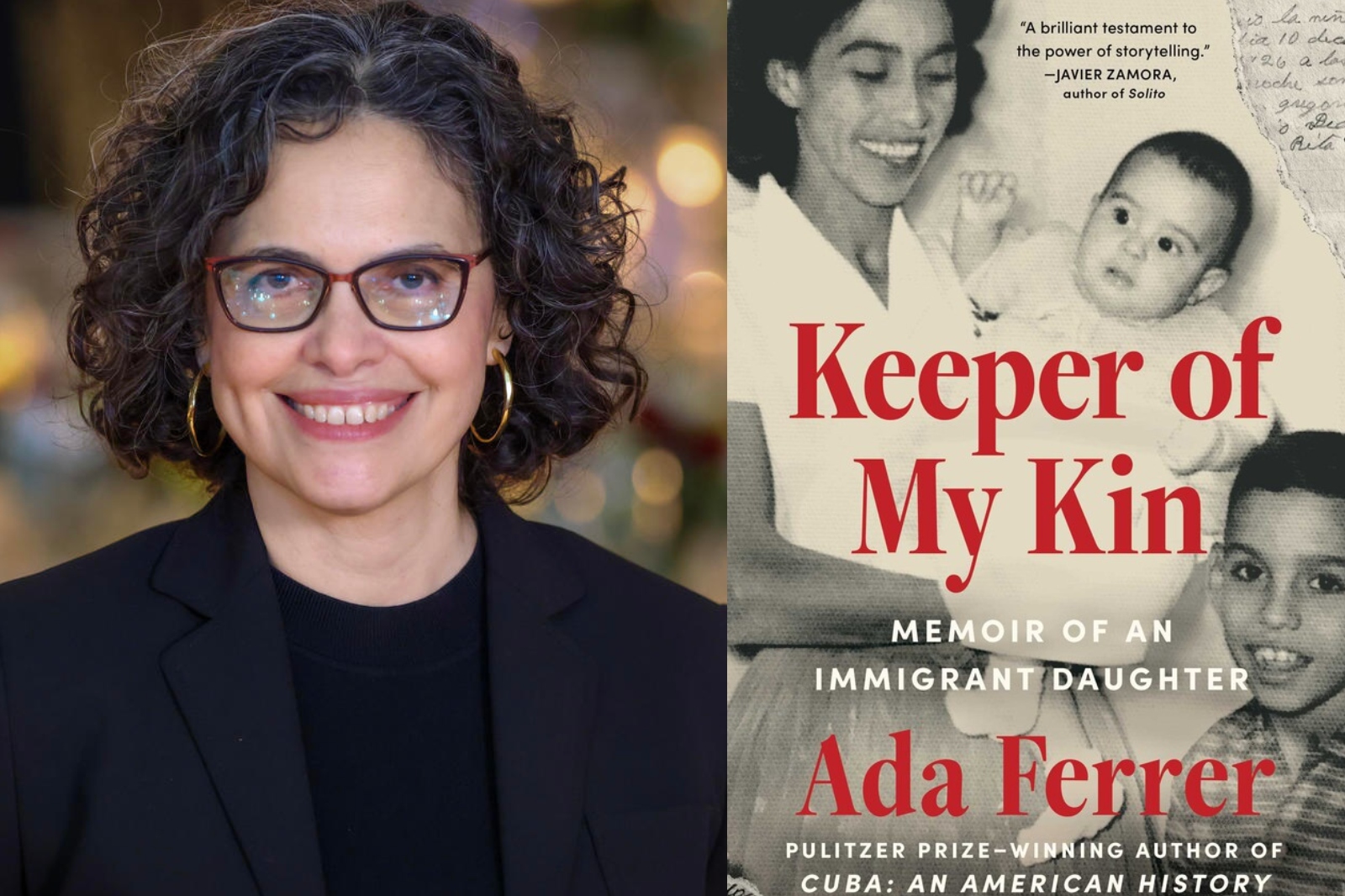
Ada Ferrer is a Pulitzer Prize-winning historian of U.S.-Cuba relations at Princeton, who has also written about her family in Cuba and the U.S. in a new memoir called Keeper of My Kin: Memoir of an Immigrant Daughter. Ada, welcome to Forum.
Ada Ferrer: Hi, Mina. Thanks for having me.
Mina Kim: Thank you for coming on. First, I’d like to ask you what daily life is like in Cuba right now. What are your relatives there telling you about the situation?
Ada Ferrer: Well, what they’re telling me is the situation is untenable. It’s just bleak, and there’s no relief in sight right now. You’ve mentioned the blackouts—twenty-two hours—but often, I have family in the interior, and there the blackouts go on for days. There are problems with water. You mentioned hospitals, transportation, everything. Food. Actually, banks are running out of money, so people, when they go to the bank, can only take out a little bit of money. Meanwhile, prices of everything are just soaring. So it just feels—it just feels unfathomable for a lot of people.
Mina Kim: And I’ve seen images of garbage piling up. I think you described it as “ramparts rising around a crumbling fort.” What is causing that as well?
Ada Ferrer: Yeah. Well, again, the gas shortages, right? There’s no fuel for the trucks. So that’s a major thing. I would like to say, though, that in some sense the oil embargo has just made everything so much worse. But some of the things we’re seeing now were there before, in less intense form.
When I was there a couple of years ago, garbage was already piling up. Already there were blackouts. So what the oil embargo has done is put all that on steroids. The level of hardship and want is that much worse, and it’s nearing a humanitarian crisis.
Mina Kim: Can you help our listeners understand how events, mainly since January, have led this already very fragile Cuban economy to reach the point you’re describing today?
Ada Ferrer: Yeah. Well, at the root of the problem is the fact that Cuba has been dependent on outside patrons and outside markets for essentially its whole life. Before the Revolution of ’59, it was dependent on the U.S. as a market and as a trade partner. When that relationship soured and broke, they turned to the Soviet Union.
Then, when the Soviet Union collapsed, they had to scramble, and they made reforms that focused more on things like tourism and so on. They were rescued by Venezuela, which began supplying oil, and Cuba became completely dependent on Venezuelan oil. Cuba doesn’t produce enough oil to be self-sufficient, so they need to import almost all of it.
Most of that came from Venezuela. Venezuela would supply oil, and Cuba, in exchange, would supply military and intelligence assistance, doctors, and medical support. That dried up when Trump did his operation in Venezuela on January 3 and basically decapitated the regime, saying there would be no more Venezuelan oil for Cuba.
Then Trump went further. Mexico was also supplying oil to Cuba, and he pressured President Sheinbaum to stop those shipments. There’s now an oil blockade and a naval blockade keeping tankers from other places from arriving in Cuba. So basically, since January 9, only one oil tanker has been able to reach the island, and that was a Russian one that arrived in April with permission from Trump. The Cuban government announced a few days ago, on Thursday I believe, that the contents of that shipment were now gone and they had reached, kind of, point zero.
Mina Kim: Point zero. The U.N. has condemned this blockade and these actions by the U.S. Can the U.S. do this—exacerbate a nation’s civilian population suffering in this way?
Ada Ferrer: Well, they’re doing it. So whether they can do it or should do it are different questions. I don’t agree with the policy, but they’re doing it. It is a kind of collective punishment. As I said, it’s nearing humanitarian-crisis levels, and there’s no relief in sight.
One thing that’s really important here is that things were already so bad even before this oil crisis. Over the last five or six years, there has been a massive exodus of Cubans, many of them to the U.S. through the U.S.-Mexico border. Cuba has lost about twenty percent of its population in less than a decade.
That’s meaningful for two reasons. First, it shows a level of desperation, especially among younger people who don’t see a future there anymore. There’s a novelist in Britain who wrote something like, “The past is another country.” I think for many Cubans, they began to see the future as another country.
The second reason this matters is because so many people have left that many of those remaining are that much more vulnerable. What I’m hearing from people on the streets in Havana is that there are just a lot of elderly people whose children have left, whose grandchildren have left. The people who left continue to send help however they can, but you still have eighty-three-year-old women trying to figure out day to day how to get something to cook, how to get milk, how to get coffee, how to get sugar.
And as Cubans like to say: It’s not easy.
Mina Kim: Yeah. Let me invite listeners into the conversation. What are your questions about the current situation in Cuba? What role do you think the U.S. should be playing? Do you have a connection to or family in Cuba? Tell us by emailing [email protected] or by finding us on our social channels—Discord, Bluesky, Facebook, or Instagram—at KQED Forum. The phone number is 866-733-6786.
Of course, Cuban leadership is not without blame in how things got here. In a recent New York Times op-ed, you wrote in the form of a letter to Cuba’s president, Miguel Díaz-Canel. I’m wondering what your message was.
Ada Ferrer: Yeah. As you opened the question, the Cuban government is not without blame. I think what generally happens with Cuba controversy is that it’s a little bit like trench warfare, where people say one thing or the other and forget the obvious—which is that there’s so much blame to go around.
The U.S. embargo hurts the Cuban people. There’s no question about that. But Cuban policy has done the same thing. There have been economic decisions made, economic reforms promised and not pursued. You have political repression of dissidents.
There’s a historian in a city in the interior who gets harassed all the time. She’s basically a historian, and as a historian, I empathize with her. She goes to a park in the center of the city and holds up a placard. That’s one of the things she does. She’s been picked up, beaten, and threatened. The embargo doesn’t cause that.
And I don’t know if you’ve seen the recent reporting from The New York Times on GAESA, the military conglomerate that controls much of the Cuban economy. They’re continuing to function. Regardless of the embargo, historically, they’ve managed to make a profit and not reinvest those profits in the Cuban people.
Mina Kim: Yeah. Right now, with the situation being so dire regarding oil, and with the regime being viewed as very weak, fears of imminent U.S. military action against Cuba are increasing. How likely do you think that is?
Ada Ferrer: Yeah, it’s so hard to say. And basically, I can’t read Donald Trump’s mind. I’m not sure anyone can. Maybe someone can—I don’t know. But he can be so unpredictable. He can say one thing one week and another thing the next week. So on some level, it’s impossible to predict.
That does seem to be increasingly the way they’re talking. What they seem to be saying is that they’re offering Cuba negotiation possibilities and that Cuba appears not to be taking them, which seems to be setting up a possible scenario for invasion.
At the same time, it’s hard to imagine they would do that given the situation in Iran and the possibility of an exodus, which is always, I think, on their minds—a seaborne exodus, which has happened several times in moments of crisis like this. So I think that’s another factor they must be considering.
Mina Kim: Yeah. And what do you think would happen if the U.S. does try some kind of attack? I guess I’m skeptical of it not potentially devolving into violence. There have been reports of Cuba saying it’s ready to fight and that it could resort to guerrilla combat if the U.S. tried anything.
Ada Ferrer: I don’t think that’s very realistic. People don’t have much food right now. It was one thing to engage in guerrilla combat against Batista in the 1950s. There was much more consensus then than there is now. There were many more resources then than there are now. People are weak and debilitated from years of crisis. It’s hard to imagine that guerrilla warfare would be plausible or sustainable.
The other thing is that it feels like both sides—the U.S. and Cuba—are stuck in these old scripts. For the U.S., it’s an old Cold War script: Cuba is a danger to the U.S., from an era when the Soviet Union was able to put missiles in Cuba. There’s much more I can say about that, but maybe we can come back to it later.
Mina Kim: Yeah. We’re talking about the situation in Cuba with Ada Ferrer, who’s written a new memoir called Keeper of My Kin: Memoir of an Immigrant Daughter. We’ll have more with her and you listeners after the break. I’m Mina Kim.