This partial transcript was computer-generated. While our team has reviewed it, there may be errors.
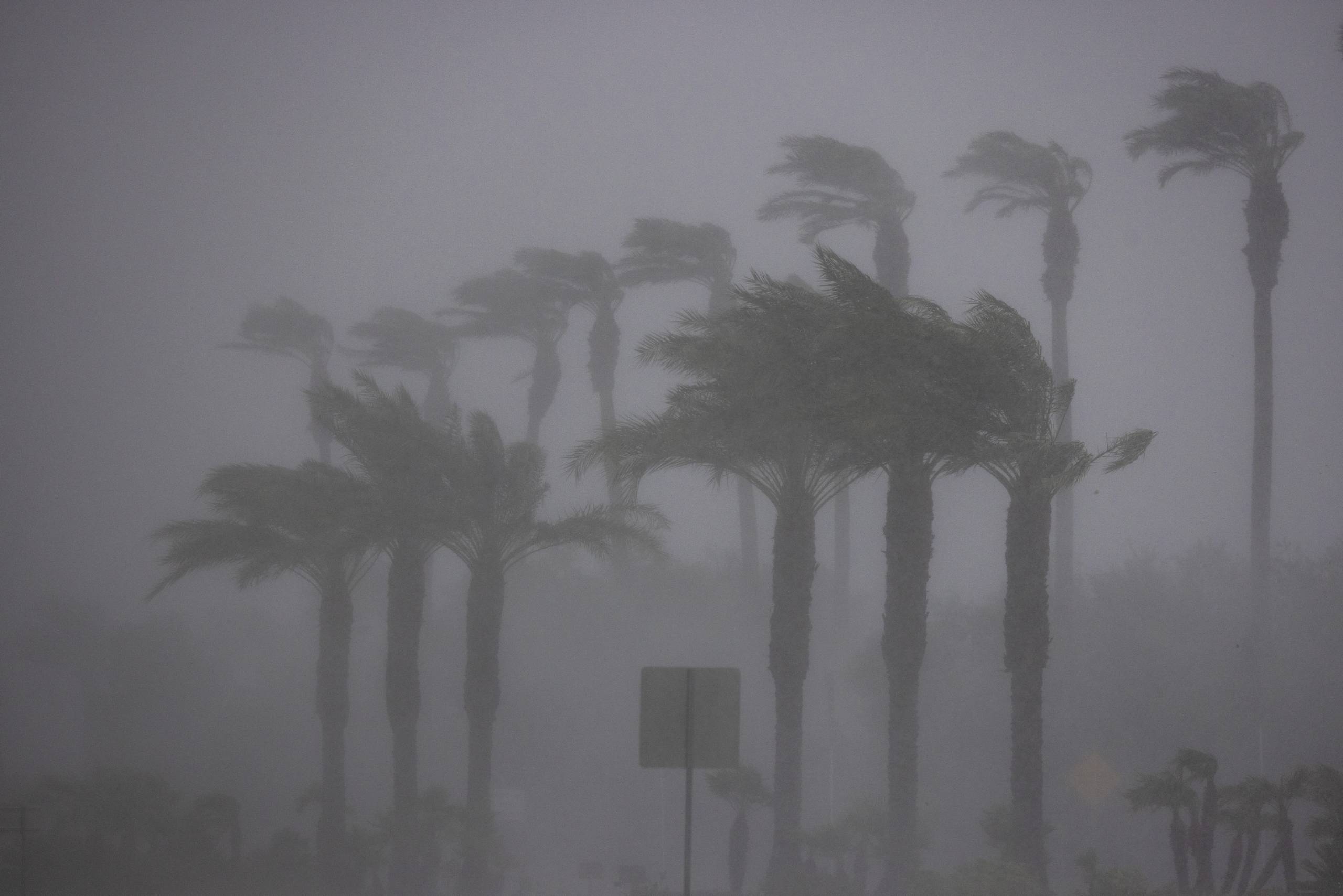
Mina Kim: From KQED. Welcome to Forum. I’m Mina Kim. Perhaps you’ve seen the headlines warning that an El Niño is forming in the Pacific — the climate pattern with the potential to cause disastrous weather events across the globe, including extreme heat and drought in some places and record rainfall and flooding in others. Forecasters are warning this emerging El Niño could be historically strong, a super El Niño, maybe even a super duper one. This hour, we look at what’s driving those concerns and why some science writers think this El Niño could bring climate change back to the forefront of politics and media.
Listeners, what do you think? Joining me is David Wallace-Wells, science writer and essayist for the New York Times opinion section. David, thanks so much for being with us.
David Wallace-Wells: Thanks for having me.
Mina Kim: Also, Bill McKibben is here, cofounder of the climate activism group Third Act and author of more than twenty books, including The End of Nature. Bill, glad to have you on Forum as well.
Bill McKibben: Well, a pleasure to be with you and with David.
Mina Kim: Thank you. And David, turning to you — most of us have heard of El Niño, but only have a sort of vague idea of what that means. Can you tell us what an El Niño is?
David Wallace-Wells: It’s a climatic event that happens every few years in which, as you mentioned at the top, there’s a swelling up of hot water in the Pacific, which changes global temperature patterns and affects a lot of what are called — somewhat mysteriously to normies like us — teleconnections around the world, changing weather patterns, disrupting familiar rhythms of planting seasons and temperature, and generally boosting global temperatures. In some cases, the effects may be to increase the likelihood of rainfall or flooding. In others, the opposite — drought. But in general, it’s a disruption from the sort of expected baseline of weather, and it comes with a big boost of global temperature rise.
Mina Kim: Yeah. Bill, what would you add with regard to what it has the potential to do? I’m hearing David mention rain, and I feel like at least for California, El Niños do seem to be associated with a lot more rainfall here.
Bill McKibben: Yes. California often gets remarkable rainfall. 1997-98 was one of the last really severe El Niños, and that’s what happened in California that year. The thing to understand, though — and as David exactly points out, this is a natural and recurring cycle — the reason that we’re so worried now is because it comes on top of the ever-mounting temperature due to climate change, which means that each time we get one of these El Niños, the planet sets a new temperature record. There’s very little doubt that maybe 2026, almost certainly 2027, will be the hottest year ever recorded in human history. That means humans will be dealing with temperatures that humans have literally not dealt with before. Expect more of the bedlam and chaos that now comes with each El Niño. Expect it to be bigger and more chaotic, and expect even more damage to really deep physical systems on this planet — the jet stream, the Gulf Stream, the stability of the great glaciers of the north and the south.
Mina Kim: Wow. So tell me what meteorologists and climate scientists are seeing and tracking right now. I understand what you’re saying with regard to El Niños generally getting worse in recent decades because they’re happening on top of warmer climate baselines. But what’s actually happening with this one specifically that they’re pointing to and saying this one could be really, really strong?
Bill McKibben: What people are measuring is how much warmth is showing up in the surface layers of the Pacific as this warm water upwells. And one of the things that they’ve been watching is the speed of the winds that are pushing it out of the Pacific into the rest of the planet. And those things are very high right now. There was a new set of predictions earlier today from NOAA, the National Oceanic and Atmospheric Administration, and they joined with pretty much every other forecaster to predict that not only would there be an El Niño beginning this summer, but it was likely to be a very strong one. You know, people are writing headlines about Godzilla El Niños and on and on. But suffice it to say, no one knows for sure exactly how it will break, but at the moment it’s looking like a very, very powerful event. And our planet is now so deep into the climate crisis that these events have to be taken with the utmost seriousness.
Mina Kim: Let me invite listeners into the conversation. What questions do you have about this potential monster El Niño that’s being described? And what do you remember about past El Niños? We’ve certainly felt them here in California, as many feel them across the globe. You can tell us by emailing [email protected], finding us on Discord, Blue Sky, Facebook, or Instagram at KQED Forum, or by calling 866-733-6786. Again, 866-733-6786.
So, David, people are comparing this — and you wrote about this — to an El Niño that happened a hundred and fifty years ago. What happened in 1877?
David Wallace-Wells: A really bad El Niño happened in 1877, which in many ways changed the shape of the entire planet and the human lives that were being conducted on it. There have been a couple of other roughly equivalent super El Niños over the last couple of decades — there was one in 2015-2016, which gave a huge boost to global temperatures. But that 1877-1878 one really stands out for the amount of human suffering that it caused.
And there are a lot of reasons for that. The story is not narrowly a climatic story. It’s not as though, out of the blue against a backdrop in which everything was fine and stable and everybody was prosperous and healthy, an El Niño arrived and killed many millions of people. But there were probably tens of millions of deaths as a result of the famines that came out of the droughts. Those happened all around the world. I mentioned the phrase teleconnections earlier, and while it’s easy — or maybe easier — to understand how the arrival of great warmth in the Pacific might affect the climate of Peru or California, it’s maybe a little trickier to understand how it’s affecting the crop season and the chance of crop failure across sub-Saharan Africa, South Asia, and China. But these systems do have the power to do that.
And in the late nineteenth century, they created an awful lot of problems. They were destabilizing to states and communities in Egypt, in South Asia, and in China, and the world map was really redrawn as a result. It was a time in which those kinds of impacts were made considerably worse by the presence of indifferent or even hostile colonial forces in many of those parts of the world. But those colonial forces also took the opportunity to somewhat double down on their claims and impose themselves more ruthlessly on local populations, which meant that both many more people died and many fell sick in the aftermath of these famines than would have in a more charitably governed alternate universe. And the result in the decades ahead was that the colonialism of the mid-nineteenth century became the more cutthroat colonialism of the late nineteenth century. The consequences for the global south continue to this day — you can trace back a lot of global suffering to those impacts a hundred and fifty years ago.
Now, in 2026 or 2027, we’re living in a very different world than in 1877 or 1878. And I don’t want to suggest that because this El Niño is as intense as that one, it means we could have fifty million deaths from famine. I think that’s quite unlikely. But the basic lesson is that these forces interact with one another, that climatic conditions push human civilization into some amount of disarray and disorder. And the degree to which we’re able to cope with that and protect the most vulnerable among us is a test for our political economies as much as it is for our weather forecasting. We will see in the next eighteen months whether we’re capable of passing such a test, at least to the standards that people like the three of us might hope to meet.
Bill McKibben: Yeah. I would just add that it turns out to be a bad year to have launched a war in the Middle East that, among other things, is screwing up the fertilizer supply around the planet. Probably the last thing we needed this year.
Mina Kim: So do you think, Bill, that the 1877 El Niño is a good and appropriate comparison to what we could get?
Bill McKibben: Well, it’s probably a reasonable comparison physically. But David’s right — we should be able to deal with this. Among other things, people in the 1870s had no idea what was happening to them, whereas in this case, scientists from across the planet have given us timely warning that we should be using to prepare for what’s ahead. Instead — and I don’t need to belabor the fact — our government’s been busy shutting down weather monitors, deprioritizing, letting people go at FEMA, and so on. So we’re not doing a great job of heeding the wonderful warning that science has been able to provide us.
Science, by the way — and I’ll just say this in passing — has some roots in California. It was the same year, in the late 1950s, the International Geophysical Year, that the San Diego scientist Charles Keeling put the monitor up on Mauna Loa to track CO2 in the atmosphere, that a UCLA scientist named Jacob Bjerknes was able to show that what had long been thought of as a kind of local phenomenon in Peru — understood by the anchovy fishermen off their coast — in fact extended many thousands of miles into the Pacific. So California has a noble part in the noble story of understanding these things.
David Wallace-Wells: And while the science certainly is part of what makes us more capable of responding to these impacts and threats, I would just emphasize that we’re already at a level of hunger that’s twice what it was in 2019. We’re seeing rising levels of violence all around the world. And so even though we have the capacity to do much better in response to these threats, we’re already backsliding in ways that are quite worrisome.
Mina Kim: It’s not guaranteed, for sure. David Wallace-Wells is with us, along with Bill McKibben — both environmental writers. David Wallace-Wells is also an essayist for the New York Times opinion section. Bill McKibben is cofounder of the climate activism group Third Act. We’ll have more with them and with you listeners after the break. I’m Mina Kim.