Alexis Madrigal: Welcome to Forum. I’m Alexis Madrigal. There’s a nice technocratic and persuasive case that democracy should have simple and fair districts for elections. There might be slightly different definitions of fair, but overall, it’s not difficult to imagine ways this could work. But in our current real world, extreme gerrymandering to draw districts that wildly favor Republicans or Democrats has become the norm. A state that, for example, might have sixty percent Republican and forty percent Democratic voters might end up with a house delegation that’s ninety percent Republican. How did it get to this place, and why aren’t the courts stopping it? And what does it mean for the upcoming midterms?
Here to discuss, we’ve got Erin Covey, who’s editor of the US House of Representatives coverage for the Cook Political Report. Welcome, Erin.
Erin Covey: Hey. Thanks for having me on.
Alexis Madrigal: We have Kareem Crayton, vice president of the DC office for the Brennan Center for Justice and expert on redistricting as well. Thank you so much, Kareem.
Kareem Crayton: Delighted to be here.
Alexis Madrigal: And we’ve got Nick Corasaniti, who is a reporter with the New York Times covering national politics. Welcome.
Nick Corasaniti: Thanks for having me.
Alexis Madrigal: So, Nick, a lot has happened in the last ten days when it comes to voting rights and redistricting, and I wanted to start off with just a bit of catch-up for listeners. Let’s start with Virginia. What happened there?
Nick Corasaniti: So Virginia was one of the main pillars in the Democratic battle plan to kind of fight back in this national redistricting war that you alluded to earlier. And it seemed like it was going to give Democrats four new Democratic-leaning seats in the state, which is kind of critical to them to try and fight this to a draw. But the Virginia Supreme Court struck down that map — not necessarily on the contours of it, but more on the process that Democrats in the state legislature took in order to put this before voters and get the map passed. So that struck down that map, and that was a pretty significant blow to Democrats hoping to, you know, pull even or at least fight this redistricting war to a bit of a draw.
Alexis Madrigal: Because what else is happening across the country right now? Like, how many states are redrawing their maps?
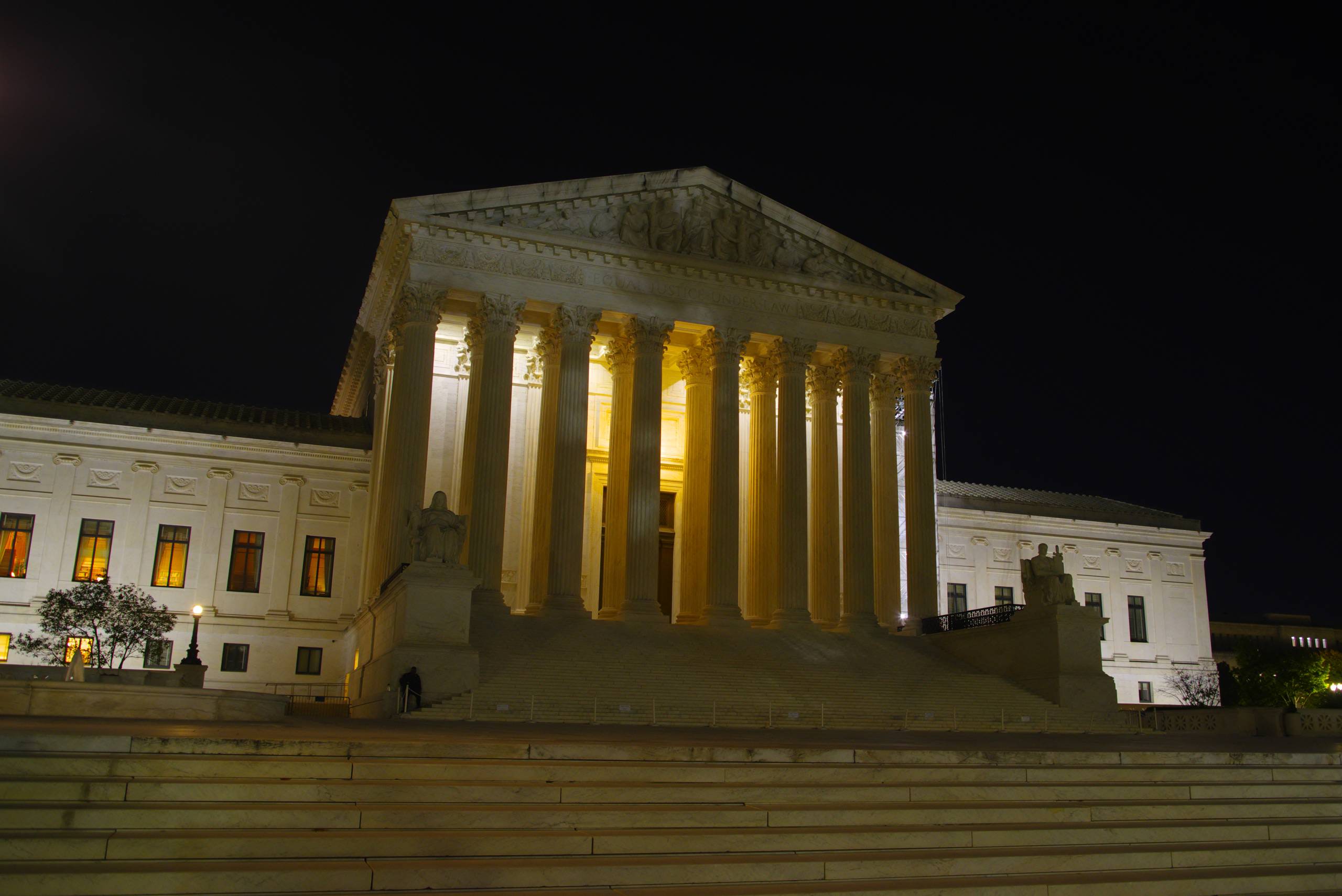
Nick Corasaniti: Oh, we’re probably in the double digits by now, and a big reason for that was a decision at the Supreme Court. They ruled in a case called Callais that Louisiana’s congressional map was unconstitutional. And in that ruling, they dealt a pretty significant blow to the Voting Rights Act and specifically section two, which effectively prohibited racial gerrymandering and preventing majority-minority communities from electing a candidate of their choice. And in that ruling, they raised the bar to bringing cases of racial gerrymandering to the courts — that you have to prove intent, which is really, really difficult to find, you know, concrete evidence of intent to discriminate based on race, especially when so much of partisanship just provides cover. You know, they’re allowed to redistrict based on partisan lines. They can just say, “We’re doing this to give more Republicans or more Democrats seats,” and that’s been blessed by the court years ago.
So with that blessing and now this other guardrail removed by the Supreme Court in the Callais case, a host of states across the south have set about redistricting. There’s Louisiana, Tennessee, Alabama — all appear on track, or in Tennessee’s case, have already passed new maps. South Carolina yesterday decided not to. There’s a debate in Mississippi, although it doesn’t seem like they will redraw ahead of the midterms. But that case set off yet another scramble in this pretty rare — at least for the past seventy years — battle to redraw congressional maps in the middle of a decade without new information from a census or anything like that.
Alexis Madrigal: Yeah. Kareem, do you want to talk a little bit more about that case? I mean, Justice Elena Kagan called it “the latest chapter in the majority’s now completed demolition of the Voting Rights Act.” Talk to us about why that would be what you would say.
Kareem Crayton: Sure, and happy to. It’s important, even though this is a rather complicated area with a lot of distinctions. The work of the Voting Rights Act really focuses on what’s called vote dilution — drawing districts to break up existing minority voting power — and race gerrymandering, which, technically, Nick is right, was the basis on which the Supreme Court found that Louisiana had failed to follow the constitution.
The vote dilution claim was actually one that Black plaintiffs had brought years ago and had fought for a while to get a local district court to say section two requires the state of Louisiana to draw two, not just one, districts where minority voters — here, Black voters — have the opportunity to elect a candidate. That led to the creation of the second district. The legislature, in response, drew a second district that it preferred to craft to help its own incumbents elsewhere. And that creation of a district led to the case Callais, where white voters go to court and say, “Wait a minute. We don’t think that this is consistent with what you, the court, have said about the Fourteenth Amendment — that race should not predominate in drawing districts.”
So this case, in some ways partly due to the court’s own making, creates a conflict between, as the court sees it, the Fourteenth Amendment and its directive not to make race too important, and section two of the Voting Rights Act, which says you have to think about race and its implications on minority voters so that you’re not discriminating. And so what the court tells us — as I think was rightly described — is we are going to remake section two so that we don’t see the conflict. But in remaking it, it essentially makes it near on impossible to bring a claim. And that’s what Justice Kagan is critiquing the court’s majority about.
That if the point of the Voting Rights Act and the point of the Fourteenth Amendment is to root out race discrimination, you have to take account of race. And it’s a bit of a subterfuge to suggest that we can’t do it because it’s connected to party. Well, it’s always been connected to party. And the fact that it is doesn’t prevent the process of proving a section two case from reaching its end. The point is to say there is evidence that plaintiffs under the old system could bring to show that notwithstanding party, there’s still a division in the choices that Black voters make and the choices that white voters make, such that it matters how districts are drawn. And Justice Kagan looks at this and says, well, on the altar of partisanship, you have essentially sacrificed the attention to dealing with race discrimination.
Alexis Madrigal: You know, Nick, I wanted to go back to how this wave of redistricting really even got going. We had Texas redraw its maps and then California respond. What was sort of the impetus for this, as you say, quite unusual redraw?
Nick Corasaniti: It all started in Texas. And the way that got going was President Trump and his political team saw an opportunity to try and get states to redraw their maps — especially red states that have more opportunities — in order to create newly safe Republican seats ahead of the midterms, knowing that historically, you know, the first midterm following a presidential election is often tough for the incumbent party in the White House. And so this was a bit of a very rawly, ruthlessly political plan coming from the White House, and Texas Republicans took that up.
And when they were successful, it looked like Republican states across the country were going to join this, and that there would be this, you know, more-than-a-dozen seat cushion that Republicans would be able to create by taking up redrawing maps ahead of the midterm elections. Now, just to pause really quickly — this is not normal, especially in modern politics. The redistricting process often just follows every ten years. When the census is completed, states have to readjust their districts for population shifts, known as reapportionment. And that’s when this redistricting normally happens. Otherwise, absent a court case or anything like that, for most of the past fifty or seventy years, states haven’t just decided to randomly redraw their maps ahead of an election to gain a partisan edge. So that was this kind of new, ruthless partisan politics entering the map-drawing process, and Texas was kind of the big bang of it all.
Alexis Madrigal: Erin Covey, talk to me a little bit about, on a high level, how much this has changed the map, as people say, in this world.
Erin Covey: Yeah. I mean, it’s been quite a bit of whiplash over the past year. We’ve now seen — I believe we’re up to eleven states that are seriously talking about the possibility of redrawing, twelve if you count Mississippi, though I think that is quite unlikely this cycle. And so it really has shifted the structure of the battleground of competitive house races that are going to determine which party controls the house and wins the majority this year.
However, it has not changed the national environment. And taking a step back, big picture, we still think — even though Republicans had some major victories over the past couple of weeks — Democrats are probably still favored to take control of the house. And that’s because, really, a best-case scenario for Republicans as a result of all of this redistricting — assuming that one, all of the pending legal cases go their way in these southern states that have redrawn or are in the process of redrawing their maps, but also assuming that Republicans are able to win some of the more favorable districts that they drew that aren’t slam dunks for them — maybe Republicans pad their three-seat majority by another twelve seats or so.
But if you think about that, in modern history, the party out of power on average has typically flipped around two dozen seats in the house. And so that very much leaves open a path for Democrats to win control of the house. And from every indication that we’ve seen when we’re looking at the national political environment — whether that is Trump’s approval rating and what we have seen in off-year and special elections — we do still believe the environment really favors Democrats. So, ultimately, maybe we think the median outcome, the most likely outcome, is Republicans maybe effectively are able to net another six or seven seats due to redistricting. But, again, they are clinging to a three-seat majority, and so that is very much not necessarily enough for them to keep control of the house.
Alexis Madrigal: We’re talking about how recent court rulings on redistricting and action by state legislatures are changing the electoral landscape for the midterms and also beyond. We’re joined by Erin Covey, who’s editor at the Cook Political Report covering the US House of Representatives. We’ve got Nick Corasaniti, who’s a reporter with the New York Times covering national politics. And we have Kareem Crayton, who’s vice president for the Brennan Center for Justice’s office there in Washington, DC. Crayton is an expert on redistricting.
Of course, we want you to join the conversation. There have been a lot of things going on. If you’ve got questions about how redistricting has been working, give us a call. The number is 866-733-6786. Maybe these court rulings have changed how you view the very nature of our elections — we take those questions as well. 866-733-6786. The email is [email protected], or of course you can find us on social media: Blue Sky, Instagram, Discord, or KQED Forum. I’m Alexis Madrigal. Stay tuned.