This partial transcript was computer-generated. While our team has reviewed it, there may be errors.
Lesley McClurg: Welcome to Forum. I’m Lesley McClurg. I’m in today for Alexis Madrigal. One of the most common ways people end an early pregnancy is through pills prescribed via telehealth. They’re sent through the mail and taken at home. Then on Friday, a federal court blocked mail access to that pill. And just this morning, the Supreme Court stepped in to temporarily pause that decision. But if this ultimately stands, it could reshape how abortion works in this country. It could cut off access in states with bans and make it a lot more complicated even where it’s still legal, like in California.
We’re joined by Mary Ziegler, a professor of law at UC Davis, and Shefali Luthra, a reproductive health reporter with The 19th. Welcome to both of you. Just to step back, Shefali, can you describe this drug—what it does and how it works in the body?
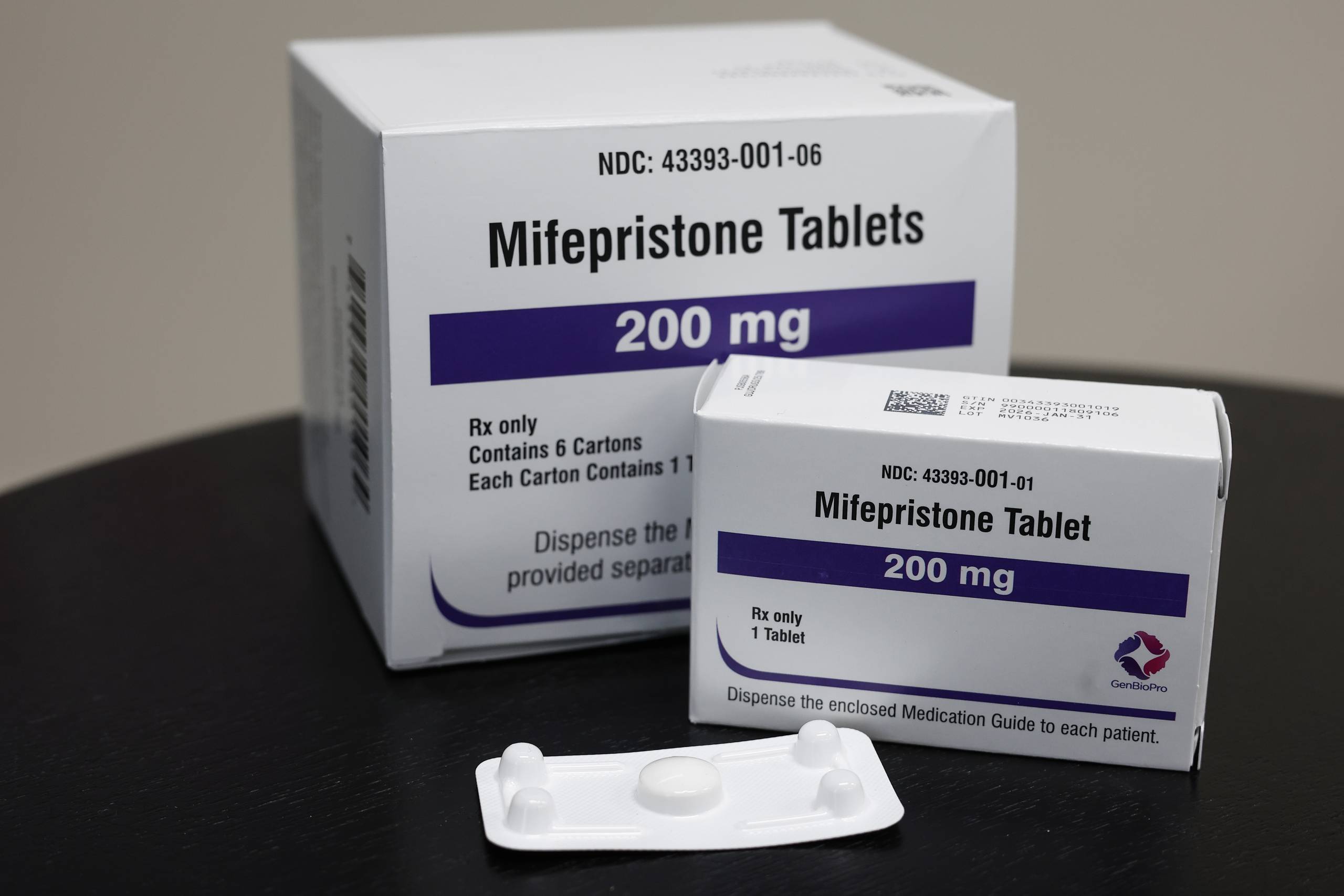
Shefali Luthra: Mifepristone is one of two medications used in most abortions. The drugs are mifepristone and misoprostol. They work together, effectively inducing a miscarriage. That’s why they work better earlier in pregnancy. First, one medication stops the pregnancy from growing—mifepristone is what you take first. Then you take the second drug to essentially expel the pregnancy from the body.
This regimen is very effective and very safe, and as a result, it has become the method used in about two-thirds of all abortions in this country. As you mentioned, it’s very popular as a telehealth option for people living in states where abortion is illegal and they cannot access care otherwise. But even if you live somewhere where abortion is legal and protected, it can be much easier to have medication safely mailed to your home and take it there, rather than finding childcare, taking time off work, going to a doctor, getting the medication, and returning home.
Lesley McClurg: And this is now being shaken up by a few rulings. Let’s walk through the legalities. What just happened this morning, Mary? What did the Supreme Court do?
Mary Ziegler: The Supreme Court granted what’s called an administrative stay. This is different from other kinds of stays where the court might preview how it will rule on the merits. This simply gives the justices more time to consider the matter. We’re expecting to hear more next Monday, when this stay expires.
There are several possible next steps. The court could issue a substantive ruling on its shadow docket, potentially without much explanation. It could schedule the case for argument before the end of June, which is something the drug manufacturers have requested. It could extend the administrative stay while the case continues in the lower courts and hear it in the fall on its regular calendar. Or it could agree with the Fifth Circuit, either on the shadow docket or otherwise. That outcome could make abortion a major election issue.
So essentially, all options are on the table. This ruling just gives us about a one-week pause.
Lesley McClurg: In other words, everything stays the same for now. Things got shaken up—and a bit scary—on Friday in terms of what might happen this week, but at the moment, we have another week of the status quo.
Mary Ziegler: Exactly. This just puts everything on pause for a week, with a big question mark about what happens next.
Lesley McClurg: Okay, so let’s go back to Friday. What happened then?
Mary Ziegler: Louisiana filed a lawsuit against the Food and Drug Administration, arguing that the FDA didn’t have the authority to approve telehealth access to mifepristone. A panel of the Fifth Circuit Court of Appeals agreed and issued a nationwide block on telehealth access to the drug, effective immediately.
The Fifth Circuit based its decision largely on the claim that the FDA hadn’t adequately considered safety data on mifepristone. Louisiana also raised other arguments, including one based on a 19th-century obscenity law called the Comstock Act, which they argue bans mailing any drug or paraphernalia related to abortion. The Fifth Circuit didn’t address that argument, but the Supreme Court could.
Another important legal issue is standing—whether Louisiana has the right to bring this lawsuit at all. In a previous case involving mifepristone, the Supreme Court unanimously ruled against a group of anti-abortion doctors because they lacked standing. So we’re likely to see significant debate about whether Louisiana can demonstrate a concrete injury tied to telehealth access.
Lesley McClurg: And Shefali, stepping back again—why is Louisiana so opposed to mifepristone and how it’s being used?
Shefali Luthra: Louisiana’s government is largely run by lawmakers who oppose abortion, and opponents are deeply frustrated by the availability of telehealth abortions. Since the fall of Roe v. Wade, even with more abortion bans, the total number of abortions has actually increased. A big reason is that people are still finding ways to access care—by traveling or by receiving medication through the mail.
For anti-abortion advocates, this feels like a direct contradiction of their state laws. They see it as undermining abortion bans and are seeking legal strategies to stop it. That’s why we’re seeing this case, along with others trying to restrict access to mifepristone. There have also been calls for federal action.
What’s notable is that those efforts haven’t yet succeeded at the federal level. Now that this case has reached the Supreme Court, it brings the issue back into the political spotlight at a time when abortion policy remains highly contested.
Lesley McClurg: It does seem like a significant loophole. If the medication can still be mailed across state lines, and abortion rates haven’t dropped, don’t they have a point?
Shefali Luthra: It’s a fair question. From a medical standpoint, the data shows this is a very safe drug to take without an in-person visit. But legally, things are more complicated. There are open questions about whether providers in states like California or Massachusetts can prescribe and mail abortion medication to patients in states like Texas or Louisiana.
That brings us to “shield laws”—policies in states like California, New York, and Massachusetts that protect providers who offer legal care within their own state, even if the patient lives elsewhere. These laws are being tested in courts right now. So while the science is clear, the legal landscape is still very unsettled.
Lesley McClurg: Mary, going back to the Supreme Court—has it ruled on this issue before?
Mary Ziegler: Yes, but only on the issue of standing. In that case, anti-abortion physicians argued that access to mifepristone could force them into situations where they’d have to treat patients experiencing complications, potentially violating their beliefs.
The Court found those claims too speculative. There was no clear evidence they would encounter such cases or be forced to provide care. So the Court dismissed the case without addressing the broader legal questions about mifepristone itself.
That means we still don’t know how the justices feel about the merits of these arguments. Louisiana’s case is part of a broader, coordinated effort to challenge mifepristone access. From Louisiana’s perspective, the goal is to establish a nationwide rule, rather than dealing with a patchwork of state laws.
Without federal action, states like Louisiana face ongoing conflicts with states like California, creating legal uncertainty about who has authority. A national policy would resolve that uniformly, which is essentially what the Fifth Circuit attempted to do.
Lesley McClurg: Shefali, who would be most affected if mifepristone were no longer available?
Shefali Luthra: The biggest impact would be on people who rely on telehealth abortions—especially those who cannot travel from states with abortion bans to states where it’s legal. It would also affect people in states where abortion is legal but difficult to access in person.
That said, providers are already considering alternatives. One option is a regimen using only misoprostol. It requires higher doses, is slightly less effective, and has more side effects, but it is still a viable and safe option.
Providers hope this could help fill gaps for people who can’t travel—like those with children, limited income, or inflexible work schedules—so they can still access care even if mifepristone becomes unavailable.
Lesley McClurg: We’ll pick up that thread right after the break. We’re talking about the legal battles surrounding abortion access. I’m Lesley McClurg—stay with us.