This partial transcript was computer-generated. While our team has reviewed it, there may be errors.
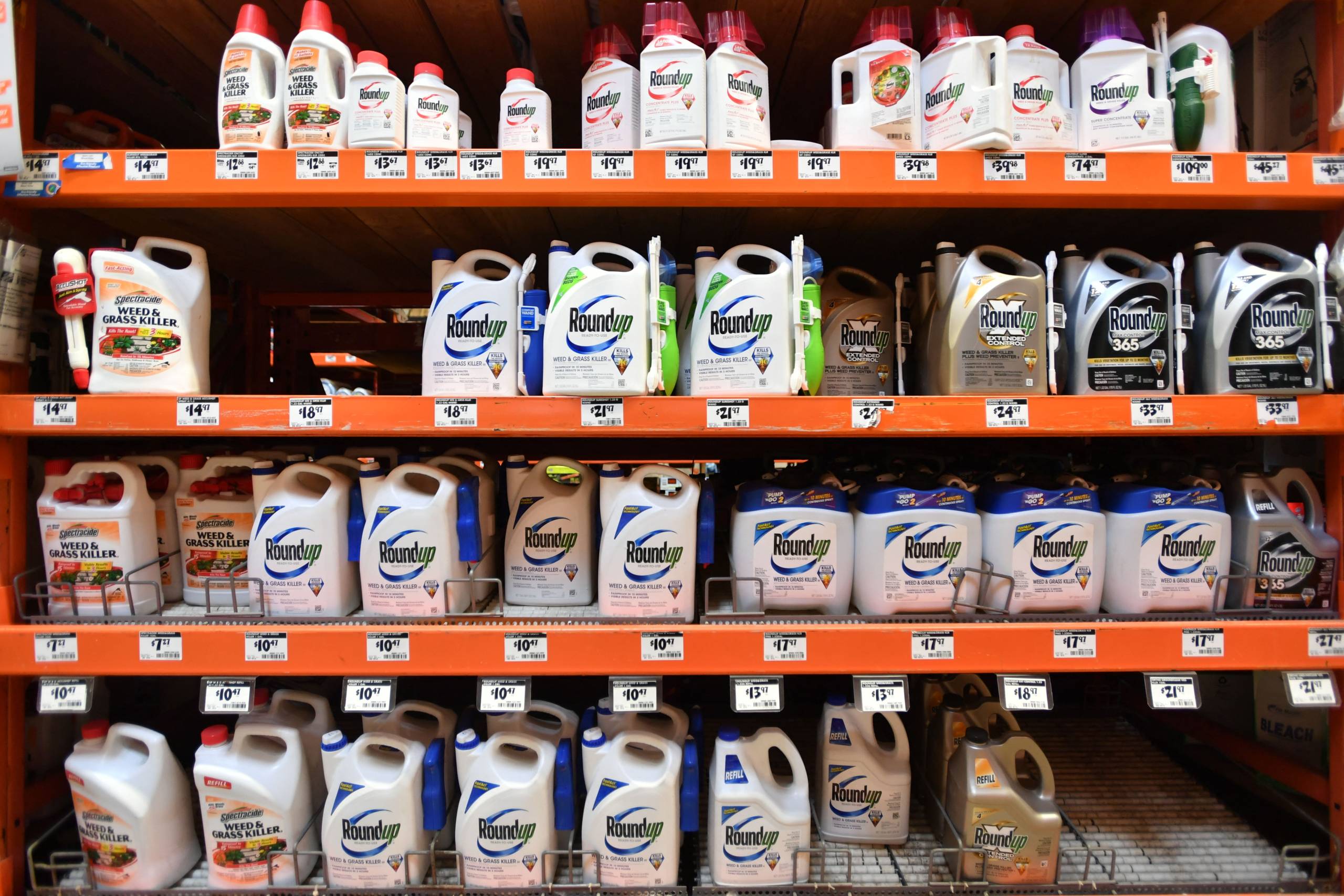
Mina Kim: Welcome to Forum. I’m Mina Kim. The safety of glyphosate—better known by its brand name, Roundup—has been debated for decades, even as multiple lawsuits have alleged the weed killer causes cancer, with several ending in settlements. Roundup’s parent company, Bayer, has since removed glyphosate from its residential consumer versions.
Now Bayer wants the Supreme Court’s help in a case heard Monday that could ultimately dismiss tens of thousands of lawsuits alleging the chemical caused non-Hodgkin lymphoma and other illnesses. Amid all of this, we learned this week that Roundup is being sprayed on California’s forest land, thanks to an investigation by Nate Halverson, reporter and producer at the Center for Investigative Reporting, who covered this for Reveal and Mother Jones. Nate joins me now. Welcome to Forum.
Nate Halverson: Mina, thank you so much for having me on.
Mina Kim: So, Nate, when did you first suspect something like this was being used on California’s forest land?
Nate Halverson: I first came across this as more of a nagging feeling in the back of my head—it could have been over a year ago. I’m an avid mushroom forager, both here in the Bay Area and up in the southern Cascades and the Sierra. Right now, it’s morel season.
As a mushroom forager, you’re always scanning the ground—even in areas where you can’t legally forage, like private land—because if something is popping up there, it means your usual spots might be productive too. In some of these areas, I began noticing year after year that nothing was growing on the forest floor. I wondered: how are they thinning or treating these areas in a way that prevents anything from growing? It never occurred to me that they might be spraying one of the most controversial herbicides in the world.
Mina Kim: Until you got a letter, right? Tell me about that.
Nate Halverson: Yes. Like my neighbors who live around Lassen National Forest, I got a letter saying the Forest Service would be doing recovery work following two of the state’s largest fires—the Dixie Fire in 2021, which burned about a million acres, and the Park Fire in 2024, which burned about half a million acres.
The letter described plans to thin vegetation, carry out prescribed burns, reforest, and create more patchiness to help prevent future fires and support hardwood growth. I thought, “Fantastic—this is government doing good work.” Then I saw the word “herbicides.” That’s when it clicked. I thought about those barren forest floors I’d seen and wondered: have they been spraying herbicides all over?
I pulled up the lengthy document behind the letter—over 100 pages—and saw that the primary herbicide listed was glyphosate, the key ingredient in Roundup. It even named Roundup as the likely brand. I later confirmed through additional documents that the Forest Service is indeed spraying Roundup in national forests—and they’re not the only ones.
Mina Kim: I think many people assume herbicides are used mainly in agriculture, especially large-scale farming—not necessarily in forests. Officials say this is part of fire recovery. How do herbicides factor into that?
Nate Halverson: The plan is to reforest areas where trees were killed by fire—removing dead stands, sometimes selling the timber, and then replanting. After a fire, there’s a natural surge of regrowth. Many plants, including some conifers, depend on fire to regenerate.
But the newly planted trees compete with faster-growing species—like hardwoods and shrubs—that often outcompete them. The Forest Service and timber industry say they use herbicides to suppress that competing vegetation so the desired trees—typically commercially valuable conifers—can grow more quickly and uniformly.
In effect, they’re clearing out competing plant life, sometimes for years, to maximize yields and speed up harvest cycles. At the core, this is about economics—revenue and profit.
Mina Kim: You mentioned it’s not just the U.S. Forest Service. Who else is doing this spraying?
Nate Halverson: The state government is also involved, as well as private industry. The largest private landowner in California, Sierra Pacific Industries—a timber company—is a major user. In fact, it’s the second-largest private user of glyphosate in the state, even compared to agricultural companies.
Mina Kim: Let’s bring in listeners. Did you know glyphosate—Roundup—is being sprayed on California’s forests? What questions do you have about its safety or use? You can email [email protected], find us on Discord, Bluesky, Facebook, or Instagram at KQED Forum, or call 866-733-6786.
When you shared your reporting, some people raised health concerns. What did you hear?
Nate Halverson: There’s a growing body of peer-reviewed research that goes beyond the cancer debate. Some studies suggest glyphosate may affect gut health by disrupting beneficial bacteria, potentially leading to broader systemic issues.
There’s also a long-running study at UC Berkeley tracking people in the Central Valley exposed to agricultural spraying. It follows pregnant mothers and their children over time and has found links to metabolic health issues.
Another study from Arizona State University in December 2024 exposed mice to levels of glyphosate considered safe by regulators and found persistent neuroinflammation even months after exposure ended. So there’s a range of concerns beyond cancer.
Mina Kim: Let’s go to a caller. Dave in Orinda, go ahead.
Dave (caller): Hi. I’m curious about the impact on animal life. Are there signs that wildlife—deer, birds, bears—are being affected?
Mina Kim: Thanks, Dave.
Nate Halverson: Great question. Yes—beyond human health, there’s clear evidence of environmental impact. The EPA has stated that glyphosate may harm 93% of endangered species and 96% of critical habitats.
For example, some of the spraying is planned near the headwaters of Mill Creek, which supports one of the largest salmon runs in California. Salmon travel from the Pacific Ocean, through the Golden Gate, up past Sacramento, and all the way to the base of Mount Lassen—including threatened spring-run Chinook salmon.
Spraying glyphosate in these sensitive watershed areas raises serious concerns. The EPA acknowledges that glyphosate can be harmful to fish, so applying it near such ecosystems is highly controversial.
Mina Kim: Here’s a comment from Maureen, who writes: “In 1990, I had a healthy West Highland terrier. One day she rolled in grass behind our home and had a severe epileptic seizure. After that, she had seizures every time we walked in a public park. The parks director told me Roundup had been used there. After they reduced its use, we avoided treated areas, and her seizures stopped. Since then, I’ve taken ‘weedy grass’ as a sign it’s safer for my dogs.”
We’re talking with Nate Halverson about Roundup being sprayed on California forest land, as the Supreme Court considers a major case involving the chemical. We’re also hearing from listeners about their experiences and questions.
Call us at 866-733-6786, email [email protected], or reach us on social media at KQED Forum. Nate’s reporting appears in Mother Jones and on Reveal. He’s a reporter and producer with the Center for Investigative Reporting.
More after the break. I’m Mina Kim.