This partial transcript was computer-generated. While our team has reviewed it, there may be errors.
Mina Kim: Welcome to Forum. I’m Mina Kim. President Trump and his vice president, JD Vance, made no small effort to boost Hungarian Prime Minister Viktor Orbán’s reelection bid. Trump recorded a video for CPAC Budapest, posted multiple endorsements on social media—including one promising to bring American economic might to Hungary—and, despite everything going on in Iran, dispatched Vance to stump alongside Orbán for two days.
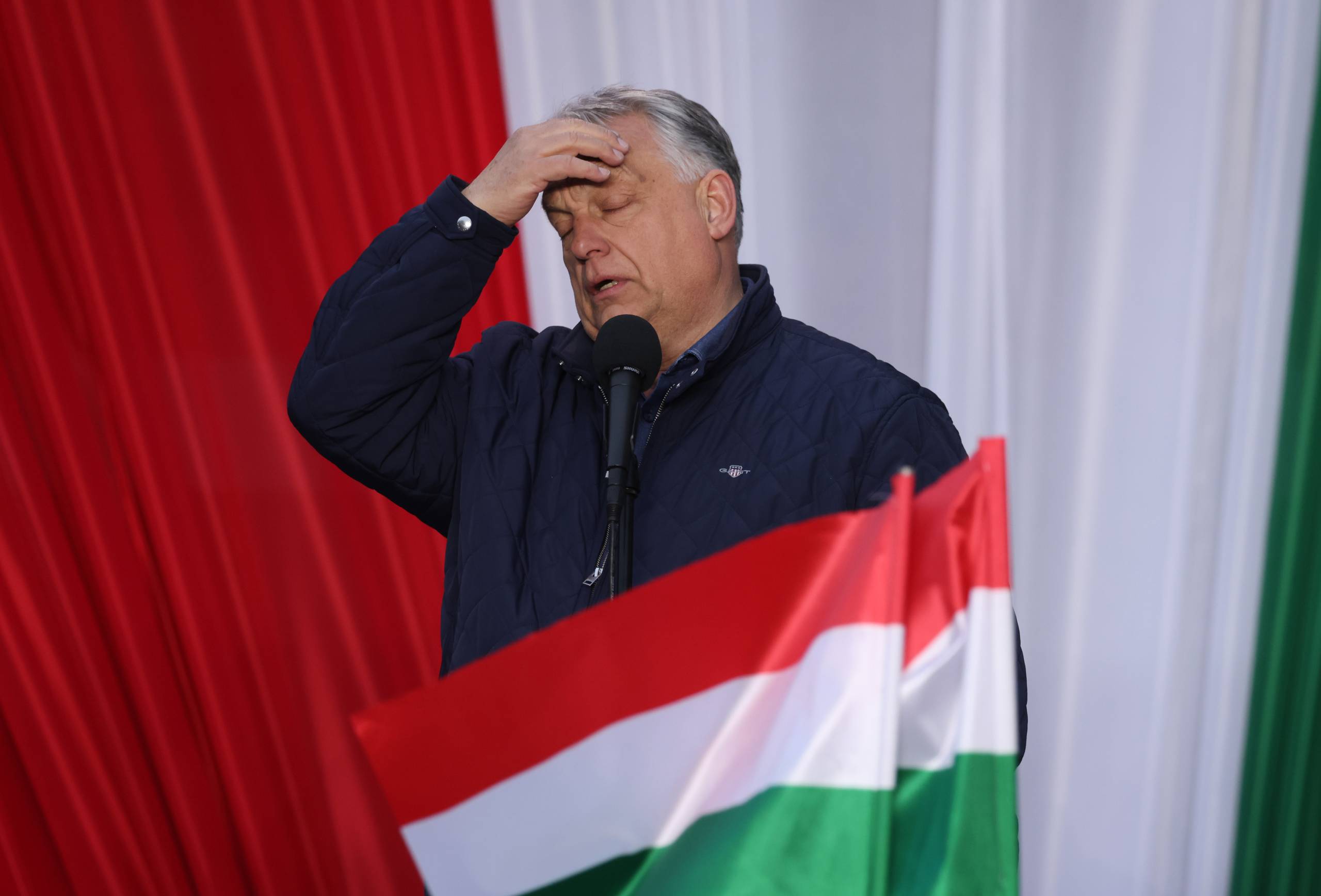
Yet Orbán lost in a landslide last weekend, even with all the ways the authoritarian leader had stacked the deck in his favor to hold on to power for the last 16 years. So what does Orbán’s defeat signal? That’s what we dig into this hour.
To start us off, Zack Beauchamp, who covers the crisis of global democracy, is a senior correspondent at Vox and author of The Reactionary Spirit, where he also writes about Orbán. Zack, glad to have you back on.
Zack Beauchamp: Hey, I’m always happy to be here.
Mina Kim: Help us understand just how closely linked President Trump and his MAGA allies have been to Viktor Orbán—both ideologically and in strategy.
Zack Beauchamp: That’s a layered question, right? Because there are a lot of different points of linkage. And I think the story really starts back in 2016, when Orbán was one of the very first European leaders—maybe even the first—to align himself with the Trump movement in the United States.
He saw an opportunity. They were ideologically aligned. As you said, Orbán had centered his appeal around hostility to mass migration, which dovetailed nicely with Trumpism. But he also saw an opportunity for something deeper: to turn Hungary into a kind of node for the global far right.
When Trump won, he was proven right about that. Trumpism so upended the American political model and created demand on the right to rethink what it stood for that thinkers and strategists began looking abroad for models. Orbán represented a promising one. He was the only hard-right leader of a European country at that point, and he had developed a way of attacking the left on cultural grounds—through clearly authoritarian means—that many on the American right found appealing.
Plus, Orbán invested significant resources, by Hungarian standards, to court American intellectuals—flying them over, hosting them personally. Some even took jobs with the Hungarian government. So these movements became deeply intertwined.
Somewhat ironically, because the U.S. is the global superpower, you might expect the influence to flow the other way. But in many ways, Hungary was leading—they pioneered the model, and Americans were borrowing from it.
Mina Kim: Yeah, wow. As you mentioned, the ties have many layers. And Trump even dispatched Vance to campaign for Orbán in the election’s final days, despite an ongoing war. What did you make of that?
Zack Beauchamp: I don’t see that as just about Trump. It’s not necessarily that Trump told Vance to go—it’s that Vance likely wanted to go. I can’t say for sure, but Vance has probably been the person in the White House most committed to this ideological movement aligned with Orbán—the so-called “post-liberal” intellectual circle.
Vance has called himself a post-liberal. He’s described Orbán as a model for the United States, especially in higher education, where Orbán imposed strict ideological controls and centralized authority. So he was the natural choice to go.
If you listen to Vance talk about this, it’s clearly his home turf. I’ve spoken with him about it directly—I ran into him at a CPAC conference in Israel—and it was clear this is something he deeply cares about. So this trip fits squarely within his ideological project.
I also think he probably knew it wouldn’t change the outcome. American endorsements don’t matter much in foreign elections, especially when a landslide is looming. But he likely saw it as the right thing to do—and believed that.
Mina Kim: So how did it get to the point where, despite American support and Orbán’s efforts to reshape democratic institutions and election infrastructure, he was facing a landslide loss to Péter Magyar?
Zack Beauchamp: This kind of system—often called electoral or competitive authoritarianism—has limited ability to handle a massive groundswell of public opinion.
The goal is to control things before it gets to that point: clamp down on media, civil society, and business so that a truly fair election never really happens. But when conditions on the ground deteriorate enough, it’s very hard to maintain that control.
There’s an old Soviet saying about the “politics of the refrigerator.” You can control what people see on TV, but you can’t control what’s in their fridge. And in Hungary, things have gotten relatively bad compared to other European countries. Economic performance has lagged, and young people have been leaving in large numbers.
That kind of public dissatisfaction is difficult for this type of regime to manage—especially when there’s a compelling opposition candidate who can navigate the system’s constraints.
One last irony: this is what happens when gerrymandering backfires. The government had drawn districts to maintain narrow advantages. But when public opinion shifts enough, those narrow margins collapse—and suddenly the opposition wins in a landslide.
So the system was strong and resilient—right up until the moment it wasn’t.
Mina Kim: Let me invite listeners into the conversation. What’s your reaction to Viktor Orbán losing in a landslide? And what do you think his defeat signals? Is this a bad sign for Trump and MAGA, or are we reading too much into it?
You can email [email protected], find us on Discord, Bluesky, Facebook, or Instagram @kqedforum, or call 866-733-6786. That’s 866-733-6786.
Listener Steven writes: “Magyar is not ideal—far from it. I don’t think he has good character, and there might even be some Orbán in him. But his dependence on Europe will help keep him on the straight and narrow. Friends in Hungary told me we have to hold our noses but vote for Magyar because he’s the only one who could have pulled it off, and it came at the right time.”
Tell us more about Magyar and why he was, if you agree, the right type of candidate at this moment.
Zack Beauchamp: He was a former member of Orbán’s party, Fidesz, and part of the regime infrastructure until about two years ago. His ex-wife, Judith Varga, was minister of justice under Orbán and considered a rising star—until she took the fall for a scandal involving a cover-up tied to abuse in a state-run institution.
She was blamed for issuing a pardon, but it’s widely understood that something like that wouldn’t happen without top-level approval. That scandal seems to have been a turning point for Magyar. He began speaking out publicly about corruption in the government—which is key, because Hungary is widely considered the most corrupt country in the European Union, and that corruption is central to how the system maintains power.
Magyar had credibility on this issue because he had been inside the system. He even released recordings of conversations with his ex-wife discussing these issues, which was controversial but damaging to the government.
It also helped that he’s a compelling speaker and holds right-wing views on social issues, which allowed him to appeal to Orbán’s base while also signaling openness to cooperation with the left.
That made him a unifying figure. Opposition parties, from center-right to left, rallied behind him. Many left-wing parties didn’t even run candidates, stepping aside to ensure one-on-one races against Fidesz in each district.
So he became a lightning rod—not just for criticism of the regime, but for building a unified opposition coalition.
Mina Kim: After the break, I want to ask whether Trump and MAGA should be worried about Orbán’s loss and how it happened. We’re talking with Zack Beauchamp, senior correspondent at Vox, about the landslide defeat of Viktor Orbán in Hungary.
More after the break. I’m Mina Kim.