This partial transcript was computer-generated. While our team has reviewed it, there may be errors.
Mina Kim: Welcome to Forum. I’m Mina Kim.
“The economy—everyone contributes to it, and everyone is shaped by it,” says Alex Mayyasi, a host at NPR’s Planet Money. So it’s probably not a bad idea to learn about the forces that drive it, as the Planet Money podcast has long helped people do, and now a new book is doing that too.
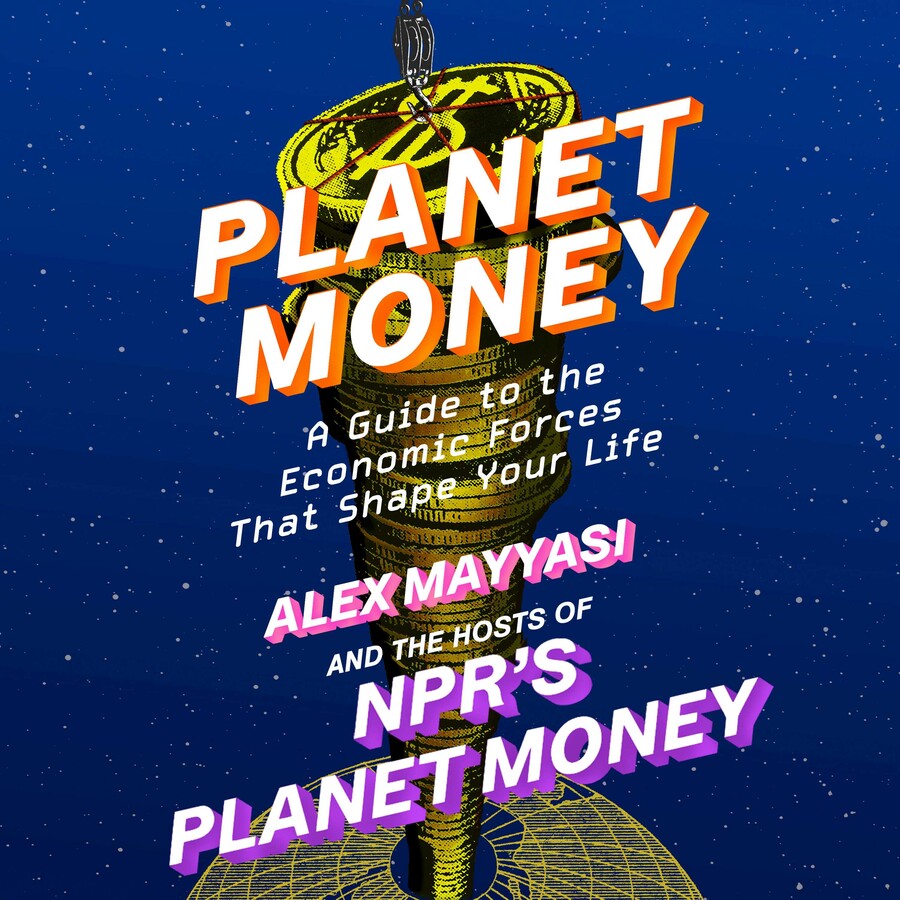
Called Planet Money: A Guide to the Economic Forces That Shape Your Life, it tells fun and relatable stories to harness the economic lessons that can help us make sense of the world and maybe even feel a little more confident about the decisions we make.
This hour, we dive into some of those stories with Alex Mayyasi, lead author of the new book and a longtime Planet Money contributor. Alex, welcome to Forum.
Alex Mayyasi: Thank you so much for having me.
Mina Kim: Also with us is Kenny Malone, co-host of Planet Money. Kenny, glad to have you on too.
Kenny Malone: Thank you so much. We’re so excited to be here.
Mina Kim: Yay. So I just said a tiny bit, Kenny, in my intro about why it’s worth learning about economic forces. But I’d just love to get a better sense from each of you about what it’s done for you personally—what this deeper understanding has done for you.
Alex Mayyasi: Yeah. Well, I can start there.
I think, for me, one thing is just that it’s been really fun and satisfying. There are some big economic ideas that we might get into in a bit, and once you see them in one place, they help explain lots of things across the economy, and I just find that really fascinating.
And then I think it can also be a really calming process to better understand the economy because there are recessions, boom periods, AI automation—you know, these big forces that can feel very scary if you’re kind of wondering, is this a tidal wave coming? Do I need to take shelter? Or is this a wave I can ride?
So I think understanding them better is a way to feel this kind of calming sense of empowerment when you have more knowledge of how the economy works and how it might impact your life and your career.
Mina Kim: Yeah. So, Kenny, is it similar for you? Do you look around and say, ah, that’s that economic principle at work?
Kenny Malone: Yeah, it’s a little—yeah. The way you describe it sounds like bird-watching.
And you know what? It’s a little bit like bird-watching. The more you learn about this world and, yes, the forces—I’m just going to keep saying the subtitle of the book—the forces that shape our lives, it is true. It’s a way to kind of get this taxonomy of different things that are, in fact, shaping the world around you, and you will see them and spot them everywhere.
And if you are the kind of person who finds that either comforting or satisfying, to just put the world into order—I personally do find that very comforting. So it helps me make sense of things that do feel like a tidal wave that’s just pushing me around. At least I can call them out and name them.
Yeah, I think about it pretty similarly to that.
Alex Mayyasi: And I will say, as a nerd, I love learning terms like Baumol’s cost disease.
But something else that we’ve really tried to do in this book, and that the Planet Money podcast has been doing for years, is pairing these ideas with really interesting, compelling, fun stories.
So I think sometimes when I think about certain aspects of my career or the economy, I’m not just thinking about these econ terms, but I might also be thinking about Bobby Bonilla, the former Mets slugger, or what I can learn about my own career from the example of Desi Arnaz, famous from I Love Lucy.
So I think that’s something we’ve really aimed to do as well.
Kenny Malone: Now, Mina, may I ask you a question?
Mina Kim: Sure.
Kenny Malone: Where are you at on this stuff? Do you enjoy looking to economic factors and forces and the names of effects, or do you find it all overwhelming?
Mina Kim: You know, honestly, I look into it when I have to. I think that’s probably the best way to describe it.
There was this line in the book where you talk about how the economy, at its best, is sort of in the background, right? And then at its worst, it can kind of feel like a cage.
And I was thinking about how people may be feeling a little bit more of the latter right now—like a bit helpless to the economic forces that are driving up our gas prices and fueling inflation because our president decided to initiate a war.
Kenny Malone: Yes. Yes.
I mean, the show Planet Money—if anybody listening is not familiar—was very much founded with you, Mina, as a listener in mind.
This predates me. This is the 2008 financial crisis. I wasn’t on the show yet. But there was news every day of some giant financial force that was suddenly very relevant, and people were like, I guess I have to learn what a collateralized debt obligation is. Suddenly this is the thing you need to know.
So the show was definitely founded around the idea that when people must pay attention to the economic forces, we are here to help you understand them.
I started as a listener of the show back in 2008, and so I very much came at it from a similar place to you.
And you’re right—I think we are in a similar moment where there are global political stories, and some of them are shifting into economic stories. Do I need to learn about the Strait of Hormuz? What’s going on there? I didn’t really realize how much of a bottleneck this was.
This stuff is happening again, and hopefully we are the kind of show that’s there for people and can help them understand these ideas when they matter.
Mina Kim: Yeah. Well, actually, let me invite listeners into the conversation.
I want to know, listeners, how you are feeling about the way the economy is impacting your life. Is there an indicator or metric you pay attention to, or are you paying attention now because you feel like you have to? What are your big questions about how the economy works?
You can email them to [email protected], find us on Discord, BlueSky, Facebook, or KQED Forum, or call us at 866-733-6786. That’s 866-733-6786.
Kenny Malone: We love the indicators. Bring us your indicators. We love to know what people are watching.
Mina Kim: So, one of the things that I liked about the start of your book was that it was sort of a step back from that tidal wave you’re talking about.
So, Alex, you start by telling us how economists approach problems—how to think like an economist. And you use this example called the pickle problem, which was about food banks getting donated large amounts of certain foods that just weren’t popular with their clients, like pickles.
So tell us about the problem and the solution that economists came up with.
Alex Mayyasi: Yeah, absolutely.
We start with this food banker, Susannah Morgan. She’s in Alaska, and she gets this huge shipment of donated pickles. And she’s appreciative, but also exasperated because it’s just not that helpful to her. Her families don’t really want pickles. She can’t repack them into small sizes that would work well for a family.
Shortly after that, she ends up on a task force with other food bankers who are part of this national organization that gets big donations from companies like General Mills and then distributes them to local food banks.
Some economists from the University of Chicago join the committee, and they’re trying to figure out how to do a better job deciding which donations should go where.
The economists start hearing about problems like the pickle problem, or the Idaho food bank that keeps getting large donations of potatoes—not exactly in short supply in Idaho.
And they get excited because they realize, oh, this is Econ 101. You’re trying to decide how to allocate resources.
What they pitch is that right now, the system is kind of operating like the Soviet Union. All these decisions are being made at headquarters by a centralized group, but those people don’t have all the information.
They don’t know that pickles aren’t that helpful in Alaska, and that what the Alaska food bank really wants is fresh fruits and vegetables, which it has figured out how to ship all the way to Alaska.
The information is distributed.
So what they want to do is switch to a more decentralized market economy, more like what we have in the United States.
The group actually ends up creating a system where they set up auctions, almost like eBay, for donated items.
It wasn’t that they were paying for donations. All the food banks got fake money—a kind of internal currency—but then they could express their own preferences.
Like: no, I don’t want pickles. I want to use my fake money on peanut butter, which I know families really want. It’s shelf-stable. It’s great.
And it worked really, really well.
So it’s this great example of why a market economy and prices can be really powerful in organizing our economy, but also a case study in what it looks like when we design our economy to achieve certain goals, like fairness and making sure people who don’t have enough to eat do get fed.
Kenny Malone: I will say, two observations.
One is a question for Alex: do we know what they called the dollars? Were they called pickle points? Were they called pickle points?
Alex Mayyasi: They were not called pickle points.
Kenny Malone: I have to say, I was devastated by that.
But Mina, the other thing is, somebody once asked us whether the pickle problem teaches us that a purely market-based system is superior to a centrally planned system.
And there are two answers to that.
A, it’s probably a little dangerous to draw massive conclusions from one anecdote.
But the lesson I take away is that yes, it is ultimately a market deciding where these food donations go. But if you step back further, this is actually a very carefully planned and orchestrated system.
This is not just laissez-faire, let everything happen as it might.
They actually ended up giving more of the fake currency to the food banks that had greater needs.
So in a way, the poorer food banks were richer within the system and could really benefit from it.
Mina Kim: Because they really had equity in mind.
The other thing it did for me, Kenny, was explain why a lot of Planet Money folks say that prices are like little newspapers.
Explain that, because they tell us a lot about people and their preferences, but also have a vast amount of information behind them.
Kenny Malone: This is one of my favorite things I’ve learned on the job.
Alex Mayyasi: Yeah. “Prices are tiny newspapers” is a phrase from one of our colleagues.
What it gets at is that a price really synthesizes all sorts of complex information.
Take the price of peanut butter. If something happens to the peanut crop in one part of the world, that impacts supply. Maybe someone opens a new factory. There are all sorts of things that could affect the price and availability of peanut butter.
But the price you see in the store synthesizes all that information into one number.
And that number also acts as an incentive.
We can decide whether we want to buy peanut butter, and if something happened that made it much more expensive, we might think, maybe I’ll explore the wide world of alternative nut butters.
That helps alleviate the shortage.
Kenny Malone: So in that sense, you can think of a price as both a newspaper and a little bit of a bat signal for other producers to maybe join the market and make more peanut butter.
The incentive is there. The price can encourage more production and more peanut butter-making.
Mina Kim: Yeah. A lot there.
We’re talking with Kenny Malone and Alex Mayyasi from Planet Money about the many ways that the economy shapes our lives and answering your questions.
What are your big questions about how the economy works? How are you feeling about the way the economy is working today? And what’s an indicator or metric that you pay attention to?
Tell us. This is Forum.