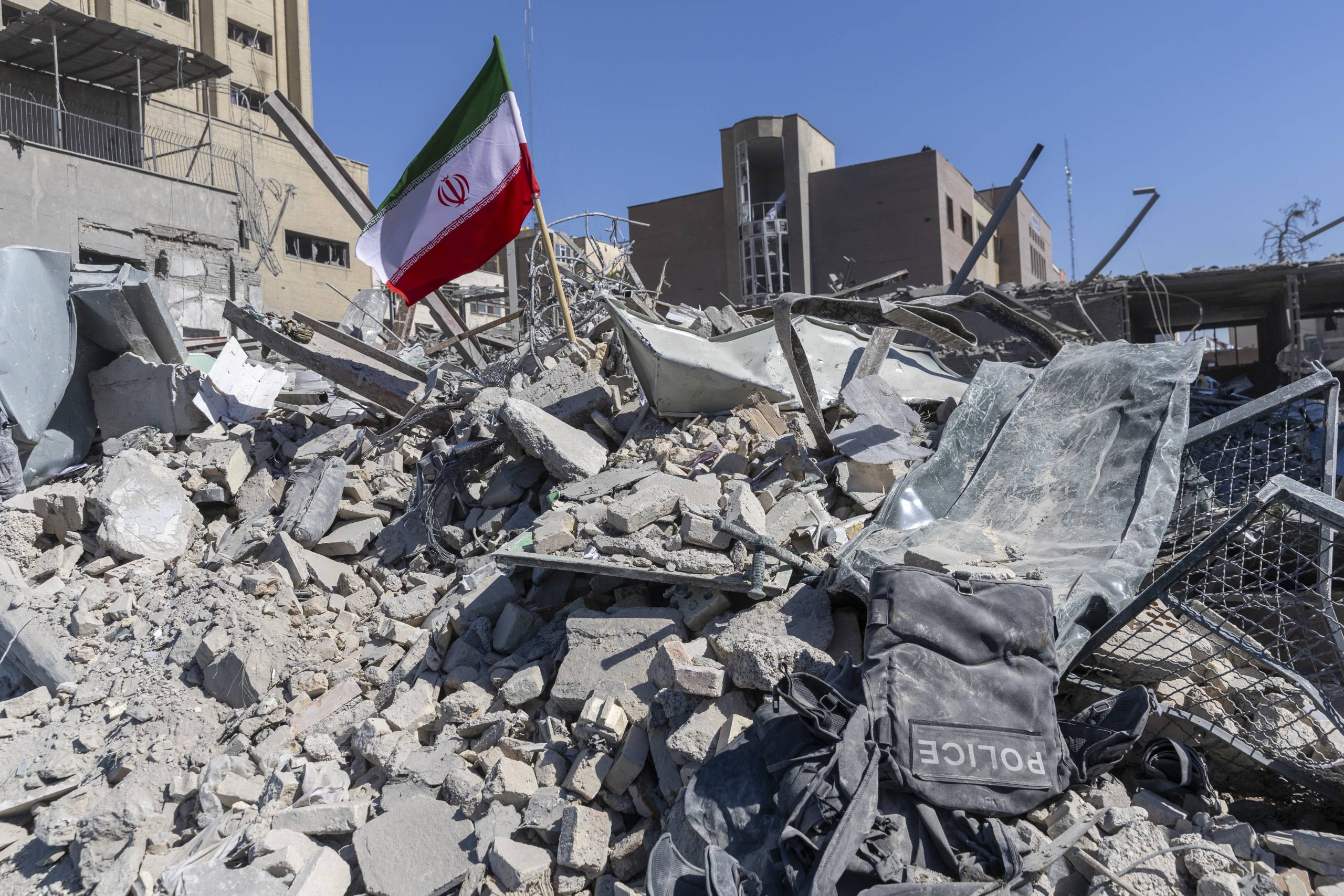
Mina Kim: Welcome to Forum. I’m Mina Kim. A ceasefire agreement between the U.S. and Iran, brokered by Pakistan, has been met with relief—and the hope that it will buy time for both sides to work out a permanent deal. But whether the two-week ceasefire will hold, and whether the war’s cascading global effects can be contained, remain deeply uncertain.
Iran says it will only allow safe passage through the Strait of Hormuz under coordination with its military. Israel is denying the ceasefire includes its military campaign in Lebanon. And both the legality and morality of the U.S.’s conduct and rhetoric are being questioned.
We take a closer look at the war’s recent developments and its broader consequences. Joining me for the latest, Idrees Kahloon, staff writer at The Atlantic. Welcome, Idrees.
Idrees Kahloon: Thanks for having me.
Mina Kim: Also with us, Edward Wong, diplomatic correspondent at The New York Times. Edward, glad to have you as well.
Edward Wong: Hi. It’s great to join you again, Mina.
Mina Kim: Edward, let me start with you. Yesterday, Trump, in announcing the deal and backing off his threats, said on social media that Iran had presented a 10-point peace plan that was, quote, “a workable basis for negotiation.” What can you tell us about the terms of the ceasefire deal?
Edward Wong: I think there’s still a lot of opacity around this, and we’re getting conflicting messages today. So I don’t think we can take what Trump said yesterday evening at face value, because he and the White House have already reversed on that today.
This 10-point plan he mentioned last night is one Iran had presented via Pakistan to the U.S. Much of it mirrors a proposal already given to the U.S. through mediators earlier. It includes demands such as Iran retaining control of the Strait of Hormuz, receiving reparations for war damage, and maintaining the right to enrich uranium. These are generally what American and Israeli officials would consider fairly maximalist demands.
Now today, Trump and the White House said they’re working off a different proposal—that the 10-point plan Iran has publicly referenced is not the one the U.S. will negotiate from. The U.S. hasn’t provided details about its own demands, so there’s still a lot we’re trying to learn.
Mina Kim: Wow. So there may be another 10-point plan, and what we heard was Iran putting forward the one it wants as the basis for negotiations?
Edward Wong: That’s correct. But that’s also the one Iran says it previously presented to the Americans via Pakistan. So there’s a lot of confusion right now.
Mina Kim: What has Israel said about this ceasefire deal? We know it says it will abide by it, but also that it doesn’t include its military campaign in Lebanon—while Pakistan says it does.
Edward Wong: Right, and that’s probably the shakiest part of the agreement—the area that could jeopardize the ceasefire. Israel is continuing its invasion of Lebanon and likely intends to occupy southern Lebanon. Pakistan has said that fighting in Lebanon is supposed to be included in the ceasefire, and Iran has said the same.
Mina Kim: Is there anything else the U.S. is doing that adds to the fragility of this ceasefire, beyond the conflicting statements about the plan?
Edward Wong: Right now, in terms of direct combat operations, the ceasefire is largely holding between Iran and the U.S. But Iran continues to attack some countries in the region—it’s launched missiles and drones at places like Kuwait. So its behavior is somewhat tenuous.
And much of how the U.S. approach is interpreted will depend on what Trump says. He’s made fairly incendiary statements in recent days on Truth Social, and we’ll see what he says going forward.
Mina Kim: One of the things Iran said after the deal is that it will cease what it called its defensive operations for two weeks, and that safe passage through the Strait of Hormuz will be possible with coordination from its armed forces. Is the strait open right now?
Edward Wong: There are definitely ships going through the strait, and the Iranian military never fully closed it. What it did was allow certain ships safe passage—for example, those bound for China carrying oil, since China is a partner. At one point, it also allowed Pakistani-flagged ships through once Pakistan became a key mediator.
So ships are crossing now. The question is whether the full backlog of vessels waiting to pass will be allowed through in the coming days. That’s something everyone is watching.
Mina Kim: Just to clarify: Iran didn’t have control of the strait before the war, right? So one of the things it has gained de facto through this ceasefire is continued control—almost formalizing it, at least temporarily?
Edward Wong: I think the U.S. will push back on that. There is de facto control right now, but there’s been de facto control throughout the war. Once Iran began attacking ships, operators avoided the strait unless they had assurances of safe passage.
Ultimately, it will be up to shipping companies, insurers, and others to decide whether they feel safe using the strait.
Mina Kim: Let me invite listeners into the conversation. How do you interpret the president’s decision to call off the attack and agree to a ceasefire? Do you think it will hold—or lead to a permanent peace deal? And what are your thoughts on Trump’s threats and rhetoric leading up to this moment?
You can email us at [email protected], find us on Discord, Bluesky, Facebook, or Instagram @KQEDForum, or call 866-733-6786.
Idrees, I’ll put that question to you as well—do you think this ceasefire will hold over the two-week period?
Idrees Kahloon: What we’re seeing right now are sustained Israeli attacks on Lebanon, and Gulf countries say they’re still receiving drone attacks from Iran. So I think it’s incredibly fragile. I don’t know that it will last beyond the two weeks—if even that long.
You also see both Iran and the U.S. making maximalist claims about what they’ve achieved. That often happens with ceasefires. But the key outcome here is that it avoided the self-imposed deadline Trump had set, where he threatened a massive attack and even “civilizational erasure” of Iran. Taking that off the table, at least for now, is a good thing.
Mina Kim: Both sides are claiming wins, but what do you think the U.S. has materially achieved?
Idrees Kahloon: It’s hard to say. Before the war, the Strait of Hormuz allowed free passage of oil and goods. Iran didn’t assert the level of control it does now. Saying Iran has given that up suggests a return to the status quo.
Militarily, the U.S. has inflicted significant damage—killing Iran’s supreme leader and much of its defense and intelligence leadership, alongside Israel. But in terms of broader goals, like regime change, there’s no indication that’s any closer. The new leadership is closely tied to the old.
So while there may be tactical or military gains, it’s harder to argue there have been major strategic gains.
Mina Kim: Some analysts say that while the U.S. may have hurt Iran militarily, it may have hurt itself in other ways—through loss of life, rising energy costs, and questions about control of the strait. There’s also the question of America’s standing in the world. Can you speak to that?
Idrees Kahloon: Historically, U.S. presidents have framed foreign policy actions in terms of international law or humanitarian goals. Trump has acted more on raw assertions of military power, in a way people often associate with how China might behave—arbitrarily or capriciously.
There’s also the process: the attack happened without consultation with key allies, many of whom are directly affected by rising energy costs. Trump has criticized NATO allies as a “paper tiger,” even as those relationships were already strained by tariffs and other pressures.
All of this has added another layer of tension to those alliances, and that’s significant.
Mina Kim: We’re talking with Idrees Kahloon, staff writer at The Atlantic, and Edward Wong, diplomatic correspondent at The New York Times and author of At the Edge of Empire: Families Reckoning with China.
Today we’re discussing the temporary ceasefire that took hold after President Trump threatened to “wipe out Iranian civilization” if the Strait of Hormuz wasn’t reopened. We’re also looking at the broader impacts of the war, including U.S. conduct and global consequences.
We’ll have more with our guests—and with you—after the break. Stay with us. I’m Mina Kim.