This partial transcript was computer-generated. While our team has reviewed it, there may be errors.
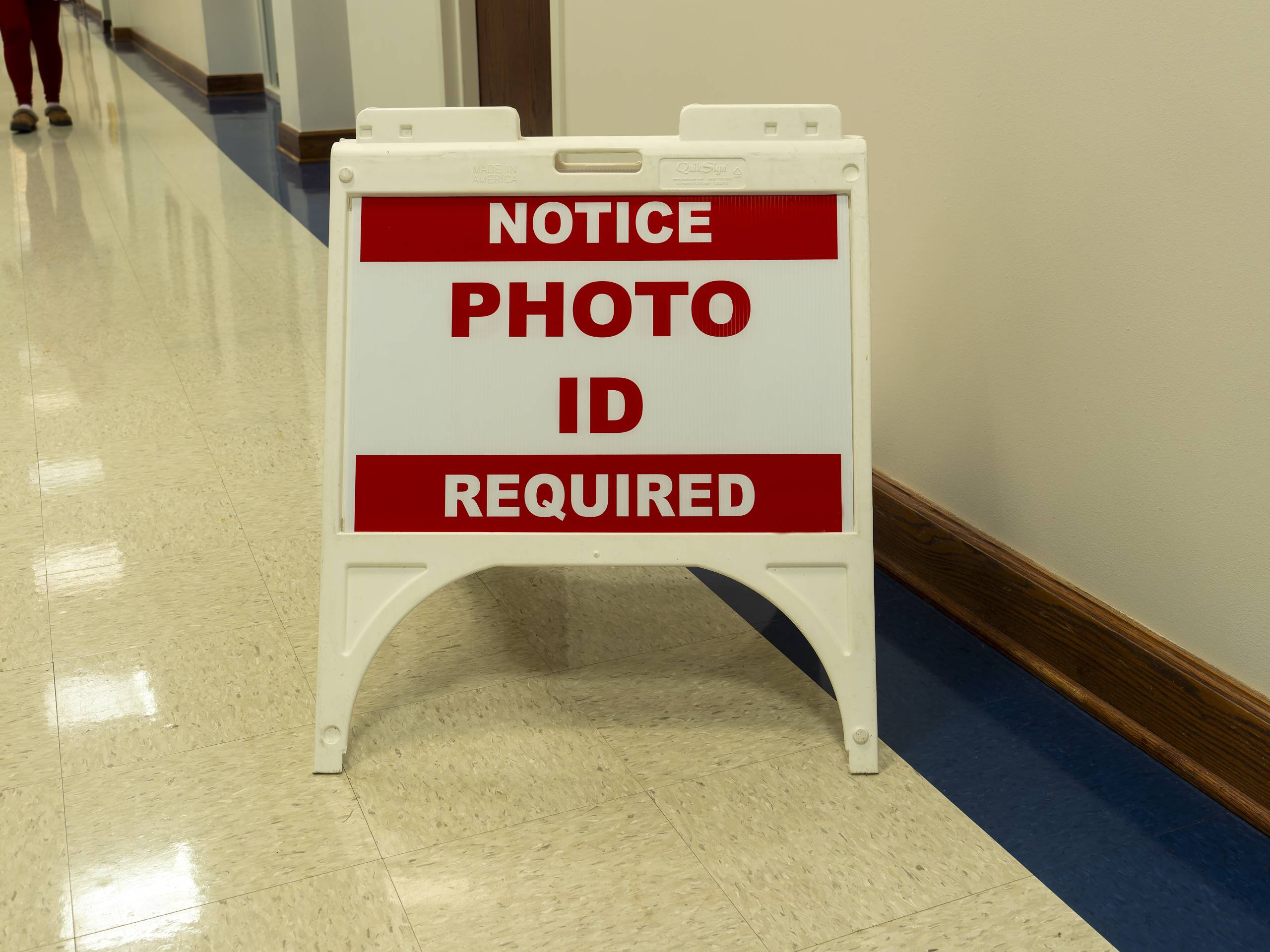
Mina Kim: Welcome to Forum. I’m Mina Kim. Many Democrats have long opposed requiring photo ID to cast ballots at polling places, saying it would put up unnecessary barriers for eligible voters—especially considering voter fraud is extremely rare. But it’s looking more likely that a voter ID measure could be on the November ballot in California.
Supporters of the proposal to require a government-issued ID at polling places say they’ve gathered well over the required number of signatures to qualify the measure. And a poll last year found broad support for voter ID in California. But the devil’s in the details, and that’s what we dig into this hour.
Listeners, do you think Californians should have to show ID to cast a ballot? Tell us by calling 866-733-6786, by emailing [email protected], or by finding us on our social channels at KQED Forum.
Joining me first is Lindsay Holden, California politics reporter at Politico. Lindsay, welcome to Forum.
Lindsay Holden: Thanks for having me.
Mina Kim: Lay out for us what the initiative would do.
Lindsay Holden: This is an initiative from Assemblymember Carl DeMaio. He’s a Republican from San Diego, and it would basically require people to show ID when they’re voting in person. If you vote by mail—as most Californians do—you would have to put the last four digits of some kind of ID on your mail-in ballot.
County registrars would also have to verify the citizenship of voters on their rolls. Those are probably the two main parts of the initiative.
Mina Kim: What kind of ID would you have to show if you’re voting in person at the polls?
Lindsay Holden: Right now, Californians don’t need to show any ID, so this would be a big change. Under the proposal, you would have to show something like a driver’s license in order to vote.
Mina Kim: With a photo attached to it as well?
Lindsay Holden: I believe so, yes.
Mina Kim: And in terms of vote-by-mail, you said you’d need to provide the last four digits of some kind of government document. Would the ballots or the envelopes be configured in some way to make space to list that number?
Lindsay Holden: Yes. There would be some space for you to put that number somewhere on the ballot or the envelope. I don’t think they’ve quite worked out all those details yet, but there would be a place for it.
Mina Kim: I see. And in terms of verification, who would be responsible? Elections officials or people at polling places?
Lindsay Holden: Elections officials. County clerks’ offices already run elections, and it’s challenging work with limited resources. Having to go through voter rolls and verify people’s citizenship would definitely be a logistical challenge for local officials.
Assemblymember DeMaio has said there are different government documents that could be used to verify citizenship, but it would still be a pretty significant task.
Mina Kim: How does California currently confirm the identity of a voter?
Lindsay Holden: Right now, when you register to vote you’re asked to provide either your driver’s license number or the last four digits of your Social Security number. If you don’t provide that when you register, then you’re supposed to bring some form of identification when you vote.
That could be a student ID, official mail from a government agency, a paycheck, or a utility bill. But you don’t have to prove citizenship with documents. When you register, you’re essentially attesting that you are a citizen—it’s a legal declaration.
Mina Kim: So they’re not asking for something like a passport or birth certificate?
Lindsay Holden: No.
Mina Kim: You mentioned that this effort is largely driven by San Diego Assemblymember Carl DeMaio. I want to play a clip of him explaining why he thinks it’s needed. This was when organizers submitted more than a million signatures to elections officials to qualify the measure for the ballot.
Carl DeMaio (clip): In a time when people have given up hope that their government is going to be responsive to them—and that even participating in voting matters—this initiative is the turning point. This initiative is where the people rise up and say that we want a better government. We want trust and confidence back in our elections.
Mina Kim: Lindsay, tell us a little more about him.
Lindsay Holden: Assemblymember DeMaio is from San Diego. He first rose to prominence as a local politician there and also worked as a talk radio host. He created a political action committee called Reform California, and now he hosts a show on YouTube while also serving in the state Assembly in Sacramento.
This has been a long-time cause for him. He’s pushed voter ID legislation in Sacramento before, but because the legislature is controlled by Democrats, those proposals haven’t gone anywhere.
He has had some success using ballot campaigns, though. For example, he was part of an effort in 2018 to recall an Orange County state senator who had voted in favor of a gas tax increase. So he has experience organizing ballot campaigns.
Mina Kim: When he says people want trust and confidence back in elections, what exactly is he referring to?
Lindsay Holden: Since at least 2016—and especially after the 2020 election—there’s been a lot of rhetoric about voter fraud and distrust in elections. That idea has moved from the fringe into more mainstream political conversations.
Former President Donald Trump cast doubt on the results of the 2020 election, and that has influenced public discussion about election integrity. There’s also the reality that election systems can be complicated, and many people don’t have time to learn all the details.
It can be easy to assume that if people don’t directly prove their citizenship with documents, there’s room for fraud. But experts say there’s no evidence of widespread voter fraud. It’s extremely rare, and when it does happen it’s prosecuted.
So there isn’t much evidence supporting those claims, but the sentiment of distrust has definitely grown over the past decade.
Mina Kim: Are DeMaio and Reform California arguing that this measure would prevent voter fraud, or that it would improve public confidence in elections?
Lindsay Holden: I think they would say both. They might argue that voter fraud is more widespread than experts say, and that voter ID could help address it.
There’s also polling that suggests voters are broadly supportive of voter ID in general, though not necessarily this specific proposal. A lot of that support may be tied to concerns people have about election security.
Mina Kim: You mentioned polling. There was a UC Berkeley Institute of Governmental Studies poll in 2025 showing that fifty-four percent of Californians supported requiring voter ID at the time a ballot is cast. But you pointed out something interesting—that support might be for the idea generally, not necessarily this particular measure.
Lindsay Holden: Right. There hasn’t been much polling on the specific DeMaio initiative yet. Some opposition polling suggests it’s currently very close.
That polling showed about forty-eight percent in favor and forty-seven percent opposed. But that’s before any major campaign messaging has begun. DeMaio has collected signatures, but opponents haven’t really started campaigning against the measure yet. So things could shift once campaigns ramp up.
Mina Kim: What kind of opposition effort are you hearing about?
Lindsay Holden: Democrats are definitely organizing something, though it’s still taking shape. Groups like the ACLU, the labor union SEIU, and the League of Women Voters oppose voter ID requirements and want to ensure voting remains accessible.
They could respond in a couple of ways. One option is simply running a campaign urging voters to reject the DeMaio initiative. Another option is for the legislature to put a competing ballot measure forward so voters would have to choose between them.
That tactic has been used before. Sometimes having two competing measures can confuse voters, which can lead people to vote “no” on both. But it’s still early, and the exact strategy hasn’t been finalized.
Mina Kim: It sounds like voter advocacy groups and labor organizations may be involved in opposing the measure.
Lindsay Holden: Yes. And it’s not unprecedented for labor groups to get involved in political campaigns like this.
For example, during the Proposition 50 campaign last year—which was a Democratic effort related to creating new congressional districts—some of the same groups, including SEIU, were heavily involved.
Mina Kim: It also sounds like DeMaio’s initiative has attracted money from Republicans outside California. Can you talk about the broader political stakes?
Lindsay Holden: It would be a significant victory if it passed. Many states already require some form of voter ID, but California is the largest state in the country and a strong Democratic state.
If a voter ID requirement passed here, it would be symbolically important in addition to changing the voting rules. That’s part of why the campaign has attracted national attention and funding.
For example, Republican megadonor Richard Uihlein and his wife have donated to the effort. They’re well known for funding conservative causes nationwide. The involvement of donors like that suggests this isn’t just a California effort—it’s something national political groups are watching closely.
Mina Kim: We’re talking with Lindsay Holden, California politics reporter at Politico. And listeners, I invite you to weigh in.
Do you think California should require ID to vote, or do you think the current system—which requires ID only when registering—is enough? What questions do you have about the proposed voter ID ballot measure?
And have you lived or voted in a state that requires voter ID? What was that experience like?
Later in the hour we’ll also talk about the federal SAVE Act, so if you have questions or comments about that, feel free to share those as well.
Email us at [email protected]. You can also find us on Discord, BlueSky, Facebook, Instagram, or Threads at KQED Forum, or call us at 866-733-6786.
And Dave writes: “A government-issued ID such as a driver’s license is not evidence of citizenship. If citizenship is required for voting, most IDs are irrelevant.”
We’ll have more after the break. I’m Mina Kim.