This partial transcript was computer-generated. While our team has reviewed it, there may be errors.
Mina Kim: Welcome to Forum. I’m Mina Kim. These days, when trying to understand the motivations or mission behind a Trump administration action — as many are trying to do now with the U.S. attack on Iran — experts and analysts remind us that with this president, it’s useful to look at how he personally benefits, not just politically but also financially. It’s an understanding that’s become so normalized as to undercut just how significant a shift this is from the transparency and accountability we expect from our leaders — and also just how dangerous this is for our democracy. But experts note the importance of keeping a record of how government is changing, of how our president is profiting from his office, which is what my guests this hour have been doing. Donald K. Sherman is president and CEO of Citizens for Responsibility and Ethics in Washington, or CREW. Donald, welcome to Forum.
Donald K. Sherman: Thank you for having me.
Mina Kim: Also with us is Andrea Bernstein, Peabody- and duPont-Columbia Award–winning investigative journalist and co-host of four podcasts, including Trump, Inc. Andrea, really glad to have you too.
Andrea Bernstein: It’s great to be back.
Mina Kim: So, Donald, there were conflict-of-interest and corruption issues in the president’s first term, but can you help us understand just how different things are in this second term?
Donald K. Sherman: Certainly. Well, you know, I think on many fronts this president is taking a maximalist approach in his second term. For example, as was reported in Forbes recently, last year was the most lucrative year of President Trump’s life. His income increased by $3 billion last year. As everyday Americans are struggling with the cost of groceries and housing and essentials, the president is making more money than he ever has. And time and time again, we see the president seeking to monetize his public office — access to him and to officials in his government — for personal financial gain. So the first term was bad, but the scope and scale of the corruption, the scope and scale of the profiteering, pales in comparison to the first term.
Mina Kim: Andrea, what have you seen? Because I remember, as Donald is reminding me, that in his first term the fact that he wouldn’t divest from his real estate holdings or that people were using his Trump hotel was enough to cause an uproar. But now?
Andrea Bernstein: I mean, now it really is on a whole new level. I think it’s worth remembering that when he joined government the first time around, Donald Trump became really the first president to run — or not run, but profit from — a pretty extensive business while also serving as president of the United States.
At the time, the president made a couple of promises. One was that he was going to place a wall between himself and his businesses. And also he said, “Well, I’m not going to do any new foreign deals while I’m president.” Mostly what we saw in the first term was people paying the president through things like golf club memberships, going to his hotels, his resorts, showing up.
You may remember there was one point where Mike Pence took a diplomatic trip to Scotland — made a controversial trip, excuse me, to Ireland — and made a controversial trip in order to stay at a Trump resort, which was nowhere near where he was going. So that is a lot of what happened.
There was also an outcry when his chief of staff at the time said, “Well, he’s going to have a G7 summit at the Doral.”
This time around, the volume is so magnified. All of those things are happening — people are staying, foreign leaders, people who want to do business with the president are staying at his properties, are showing up at his clubs. But also you have a situation where he has a crypto business, a business that he founded. It’s called World Liberty Financial, right before — six weeks or so before — he was reelected.
And this is a business where you cannot really trace all the flows of money in and out. He also set up a meme coin just days before he was inaugurated the second time around. Now, a meme coin is not even like a thing — it’s like a collectible, like a Cabbage Patch doll or a Beanie Baby, something like that. Its value is predicated just on people wanting to buy it.
And he had a dinner at one of his clubs last spring where people who were the biggest purchasers of his meme coin were invited to have dinner — the largest purchasers. So we are seeing just all of these flows of money. I mean, we haven’t even talked about things like media settlements and contributions to his library and contributions to build the new ballroom that he wants to build. All of these inputs are so magnified from the first time around, and we just can’t really trace or track all of them.
Mina Kim: And is part of it, Andrea, the fact that he didn’t really seem to pay a big price — that there weren’t a ton of consequences for the things that he did in his first term?
Andrea Bernstein: Right. Well, there was a court battle that spanned the entirety of his first term involving the Emoluments Clause of the Constitution. Now, the framers of the Constitution understood corruption as such a big threat that they thought it was as big a threat to the republic as war. So it was their belief that, well, you can’t really control human desire, but you can put structures in place to lessen temptation.
So, for example, they put in the Emoluments Clause, which said you couldn’t accept a gift from a foreign government unless Congress approved it. And there was litigation that went the entirety of his first term, and then he was no longer president, and it was dismissed as being moot. So that issue has never been settled.
So here we are again. He’s president a second time, taking a plane — for his library, he says, when he is no longer president — from the Qataris. All kinds of things like that are happening again, and there is sort of no governing legal authority.
It’s also worth remembering that the president was convicted in New York court — I was there — of falsifying business records, 34 counts of falsifying business records in the first degree. He was also found liable in a number of lawsuits in New York, but all of those he is appealing and remain, while he remains president, sort of playing out in the background. But it all remains unsettled.
And as of yet, he has not paid the fines, not paid the penalties. And he was sentenced to no jail time in his criminal case, really because the judge understood that the clock had run out and he was going to be president and could not be sent to jail in New York.
Mina Kim: I want to invite listeners into the conversation. Listeners, what’s an incident that’s made you ask yourself: Is this about the country or the president — about the president’s personal benefit or wealth? And what effect do you think rampant corruption has on our government? Are you becoming desensitized or overwhelmed by stories of possible corruption as well?
You can email [email protected], find us on Discord, Bluesky, Facebook, Instagram or Threads at KQED Forum, or call us at 866-733-6786. That’s 866-733-6786.
And Donald, can you just remind us how he set himself up to be able to create pathways for profiting in his four years if he were to win another term?
Donald K. Sherman: Well, almost immediately when the president left office — as Andrea said — the litigation that CREW brought to hold him accountable under the Emoluments Clauses of the Constitution became moot. And he started setting up new businesses.
The change that we’ve seen is that whereas in the first term the hotel and the properties were sort of the locus of the money-making scheme, he expanded his portfolio in pretty substantial ways to take advantage of the emerging crypto space. He also reinvested in building out foreign deals, all as he began to pursue the presidency again.
So that when he won in November of 2024, he was poised to cash in. And that’s exactly what we have seen. When influence seekers want to get policy outcomes from this president, they put money in his pet projects or they put money directly into his businesses.
So for example, when the Vietnamese prime minister was seeking to get relief from tariffs for his country, he reportedly encouraged the Trump Organization to expand investment in Vietnam. And that coincided with the government trying to avoid tariffs. Ultimately, the rate was lowered this fall from the initial spike.
We see this with respect to pardons, where the president pardoned CZ Zhao, the co-founder of the crypto exchange Binance, who had pleaded guilty to federal charges under the Bank Secrecy Act and agreed to step down as CEO. And the company took actions that increased the value of the president’s crypto company.
Then the SEC moved to dismiss a civil fraud lawsuit it had filed against crypto billionaire Justin Sun. Sun held $20 million in the Trump meme coin and attended that infamous dinner that Andrea mentioned as a top investor.
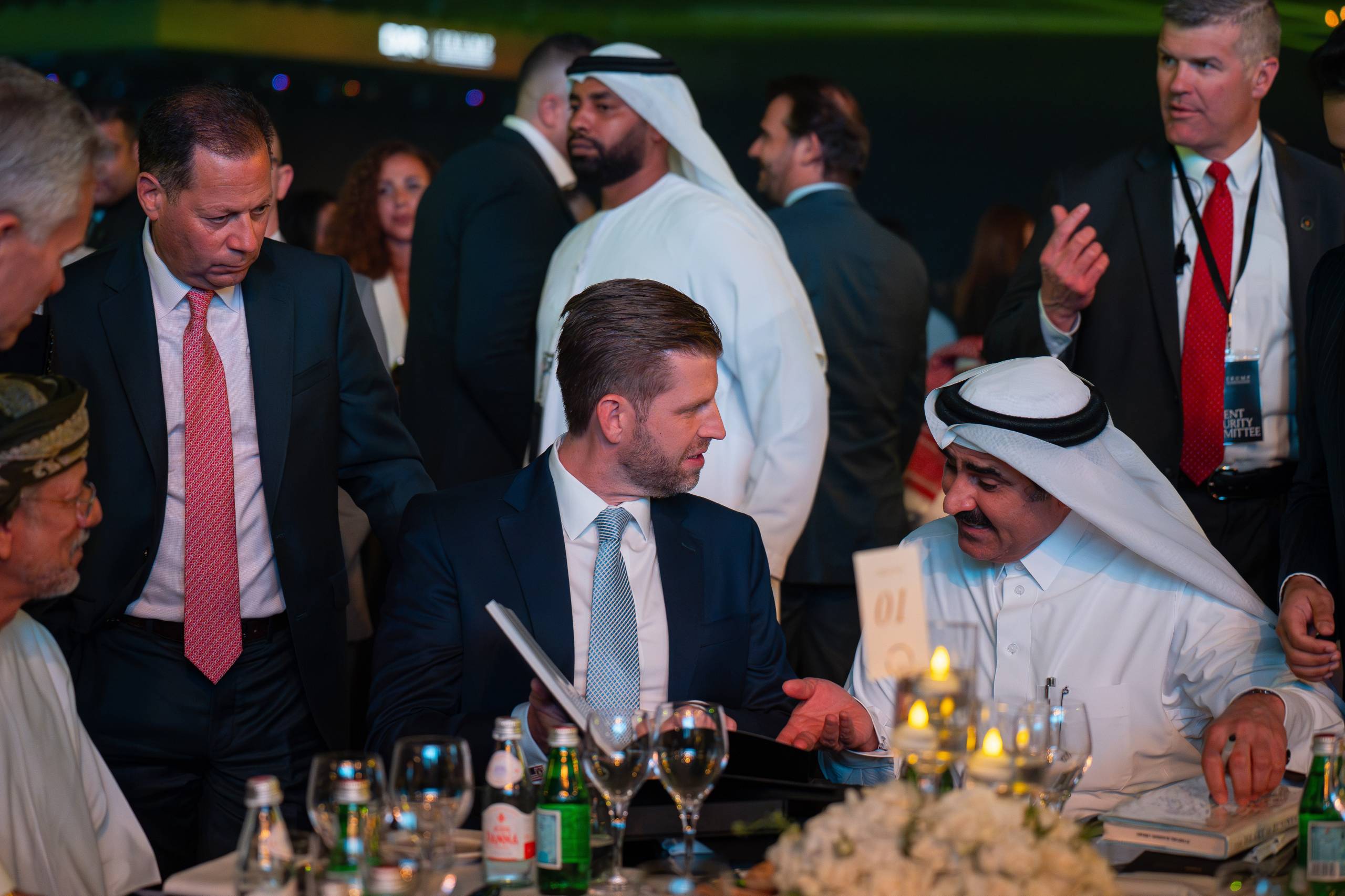
So what we saw over the intervening four years when the president was out of office was he doubled and tripled down on expanding the international footprint of his company — to the point where now it’s estimated that he’ll reap $400 million in foreign real estate developments over the course of the second term — and expanded into the crypto space, which creates a much bigger opportunity for influence seekers, for foreign governments — whether that’s the UAE investing in his personal business as they advocate for policy outcomes, as they did when they sought American chips and secured a deal.
So we’re seeing this on a regular basis, but with a significantly expanded reach and significantly more financial windfalls for the president.
Mina Kim: And listener Susan has a comment about your earlier note on pardons. Susan writes, “We are the frogs in the increasingly heated water. We have been desensitized to so many of Trump’s dishonest behaviors. One of his side businesses is ‘pardons are us,’ accepting payment for pardons. It’s disgusting, and his sleazy sons are masters of corruption.”
Listeners, tell us how you’re feeling about what feels like rampant and unchecked corruption in our government. That’s the topic of today’s hour. You’re listening to Forum. I’m Mina Kim.