Mina Kim: Welcome to Forum. I’m Mina Kim.
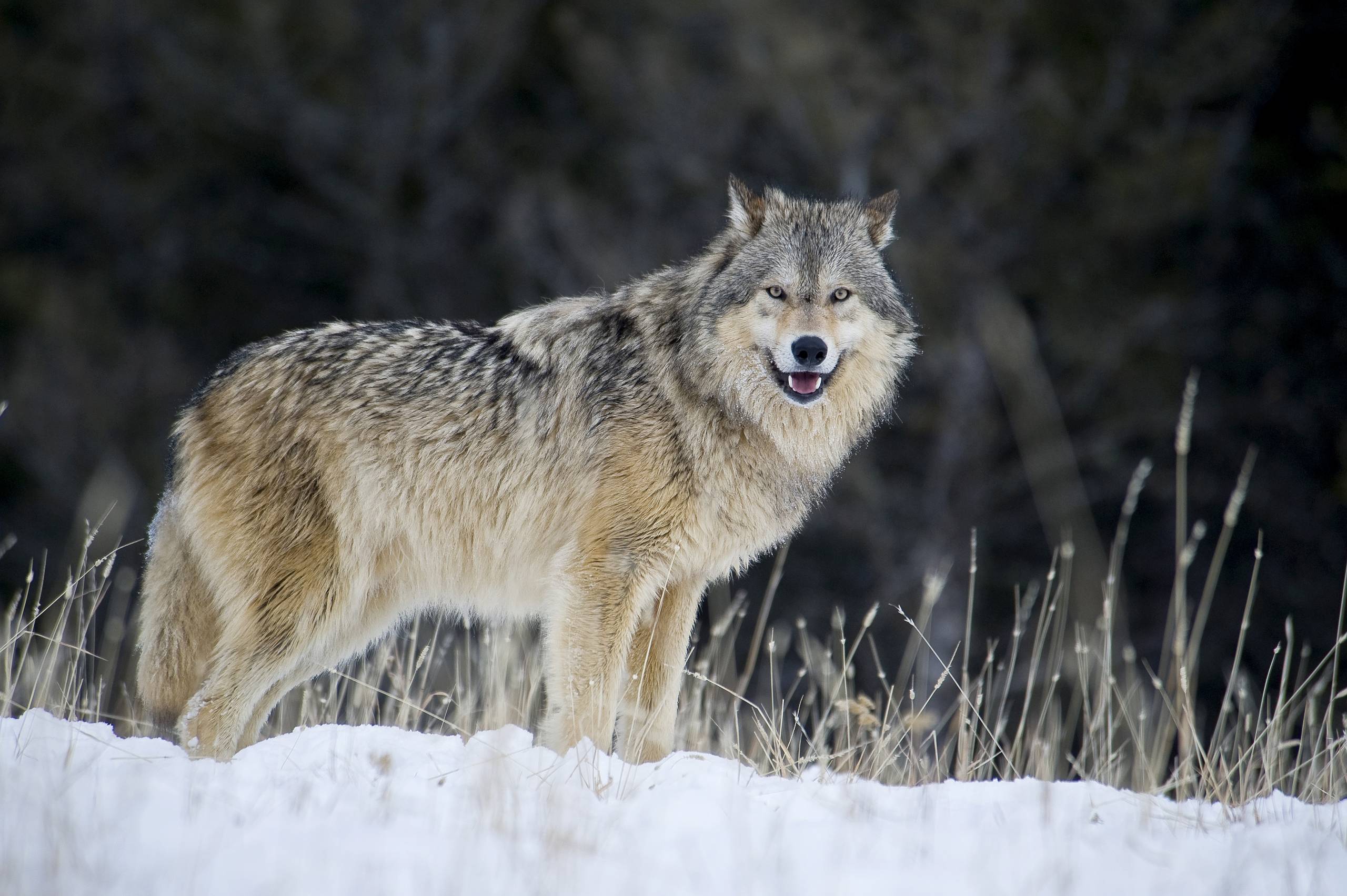
After a century-long absence, gray wolves are returning to California. Biologists estimate some 70 wolves are living in the northern part of the state, though recently a female wolf traveled into Los Angeles County — the first such sighting. But their comeback is not without controversy. Ranchers in rural counties say they’re losing livestock to predation, while conservationists say wolves bring ecological benefits as they reclaim part of their historic range.
This hour, we hear from a rancher and a conservationist. Starting us off is Kaggie Orrick, director of the California Wolf Project at UC Berkeley. Kaggie, welcome to Forum.
Kaggie Orrick: Thank you for having me.
Mina Kim: Well, glad to have you. Trace the gray wolf’s comeback for us — how we went from one wolf wandering into California some fifteen years ago to roughly ten gray wolf packs now.
Kaggie Orrick: Yes. The first known wolf entered California in 2011 from Oregon — a wolf called Journey. But we had our first established known wolf pack in 2015 up by Mount Shasta, aptly named the Shasta Pack.
From then, there has been a large amount of suitable habitat for wolves in California. They’ve been able to successfully grow across mostly Northern California, but they’ve also dispersed widely. As you already mentioned, a female wolf, OR-93, was able to disperse all the way from Northern California down to Sequoia National Forest, past Bakersfield, and then into Los Angeles County. So there is a lot of space available that wolves can inhabit across the state.
Mina Kim: Incredible. These wolves vanished about a century ago. What happened?
Kaggie Orrick: A lot of it was due to federal eradication programs that took place in the 1930s and 1940s. The last known wolf was shot in California in 1925.
Then through federal acts and efforts like the 1973 Endangered Species Act, there were attempts to repopulate wolves across the West. That reintroduction began in 1995 and 1996 in Yellowstone.
Mina Kim: So the wolves we’re seeing now probably started then in Yellowstone, traveled west, and eventually found their way into California?
Kaggie Orrick: Yes. Wolves are a generalist species, meaning they can thrive in a number of different environments. They were able to expand from three populations across the West, moving into Washington and Oregon and then down into California.
Mina Kim: And you said there’s a lot of great habitat for them. What is ideal for gray wolves?
Kaggie Orrick: Great question. Part of the reason California is so suitable is because there are many different ecosystems and habitats across the state. This includes higher elevations, open landscapes, forests, and areas with good cover.
California is also mosaicked with national forests, national parks, private lands, working lands, and cattle allotments. All of these are interspersed, and we’re finding that wolves have been able to find habitat and persist within that mosaic landscape.
Mina Kim: Which probably explains their remarkable comeback. But even so, have you been surprised by how quickly we’ve gone from one wolf to roughly seventy now?
Kaggie Orrick: It is remarkable. It’s pretty incredible to witness this. But it also comes with a lot of challenges. Part of the reason they’ve been able to increase so quickly is their ability to survive on working lands — and that means sometimes eating livestock and cattle.
Mina Kim: In broad strokes — because we’re going to dive into this more deeply in a moment — tell us what some of the challenges have been with their recolonization of California.
Kaggie Orrick: A lot of the areas where wolves are establishing right now are working landscapes where rural communities and private ranchers live. They’ve been subsisting off cattle in some cases.
One challenge is that wolves are highly intelligent and can adapt quickly to deterrents such as hazing or electric fencing. They can find ways to continue to persist and sustain themselves by eating cattle.
Mina Kim: I want to bring into the conversation Beth Pratt right now, executive director for the California region of the National Wildlife Federation. Beth, thanks so much for coming on Forum.
Beth Pratt: Yeah, thanks for having me.
Mina Kim: I understand that you find the howl of a gray wolf wondrous. Tell us more about these wolves — what they’re like and what they look like.
Beth Pratt: Yeah. There’s a saying that a mountain with a wolf stands a little taller on it. People respond deeply to nature — most of our vacation photos are of us in natural places.
I’ve been lucky enough to live and work in Yellowstone, where I lived daily with wolves and would wake up to wolves howling. As someone who hikes and mountaineers alone often, I’ve looked directly into the eyes of a wild wolf.
There’s something in us that responds to that wildness. I can talk about the ecosystem benefits of wolves and how they help maintain balance in a landscape and discuss that science. But there’s also something profound and magical about seeing this beautiful expression of wildness on our landscapes.
Mina Kim: I think we actually have a recording of a gray wolf howl. Let’s hear it.
I do want to hear about the ecological benefits that you say they bring, but I’m also curious — Kaggie was mentioning how highly intelligent these animals are. Can you tell us more about their nature?
Beth Pratt: Yes. I was lucky enough to live and work in Yellowstone where, although I didn’t work directly on the wolf project, I learned a lot from Doug Smith, who helped lead the reintroduction of wolves there.
What we know is that wolves are a lot like us. They’re highly social beings. Family is everything. They’re individuals — no two wolves are alike. All members of the pack help raise the pups.
It’s amazing to contemplate their complex social structures and how they come together, much like we do, to form societies that help ensure their survival. When you watch them in the wilderness over time, you see their personalities and how they respond to things differently. It can feel like watching a “wolf soap opera.”
Mina Kim: Let me invite listeners in. I’m curious if you’ve ever seen a gray wolf or been affected by the return of wolves yourself. How do you think about the coexistence of humans and wolves in nature? What questions do you have for Beth Pratt of the National Wildlife Federation or Kaggie Orrick of the California Wolf Project at UC Berkeley?
866-733-6786 is the number to call. Again, that’s 866-733-6786. You can email [email protected]. You can also find us on Discord, Bluesky, Facebook, Instagram, or Threads at @KQEDForum.
Beth, tell us more about the ecological benefits that you say wolves bring.
Beth Pratt: One thing I love about science is that we learn over time — including learning from mistakes we’ve made.
I do a lot of work on wildlife connectivity, restoring landscapes that became fragmented because we didn’t always understand the impacts of development. For example, when freeways were built, we didn’t realize the effects they would have on wildlife movement. Now we do, so we’re trying to fix those issues.
Similarly, humans once thought we could remove predators from ecosystems without consequences. But we’re now seeing the impacts of that thinking. Whether predators or other native wildlife, each species is like a spoke in a wheel. When we remove too many spokes, the system can break down.
With wolves, for example, coyotes expanded their range when wolves disappeared. In Yellowstone, when wolves returned, they helped bring coyotes back into balance. That benefited other species like pronghorn because coyotes had been heavily preying on their young.
Mina Kim: Kaggie, draw some comparisons to other examples of human-wildlife conflict that might help illuminate this situation with wolves and ranchers.
Kaggie Orrick: The conflict we’re seeing with wolves in California is very similar to human-wildlife conflicts around the world. It’s not only about ecological impacts — it’s also about social factors.
If we want to address human-wildlife conflict, we need to think about social tolerance and how people can live alongside these animals. That means providing support and tools for deterrence strategies, something we see in wildlife management efforts globally.
Mina Kim: At the same time, can you explain what’s unique about California’s gray wolf situation compared with other states?
Kaggie Orrick: Yes. One unique aspect is that gray wolves in California appear to be causing relatively high levels of conflict compared with their population size.
Mina Kim: Because there are vastly more wolves in other states.
Kaggie Orrick: Exactly. Minnesota, for example, has roughly 2,700 wolves and recorded about 185 wolf-related complaints last year, with 93 confirmed or probable livestock depredations.
Oregon has roughly 200 wolves. In California, however, with only about 50 to 70 wolves, there were 193 confirmed livestock depredations last year. So California has a relatively high number of livestock losses compared with other states, which makes coexistence work particularly important.
Mina Kim: And that’s partly because we’re more developed than some of those other states?
Kaggie Orrick: Possibly. It may also be because other states have had wolves longer and already have established management systems and funding mechanisms for deterrence and wolf management. California is still relatively new to wolf recovery, so we’re still building those systems.
Mina Kim: We’re talking about the return of the gray wolf to California and the tensions that have surfaced as ranchers report livestock losses while conservationists point to the ecological benefits of these native animals. We’ll hear from a rancher right after the break.
Right now we’re speaking with Kaggie Orrick, conservation scientist and director of the California Wolf Project at UC Berkeley, and Beth Pratt, executive director for the California region of the National Wildlife Federation.
Listeners, have you seen the conflict between wildlife and human development play out in your community? Have you ever seen a gray wolf and want to share your experience? How do you think humans and wolves can coexist?
Again, 866-733-6786 is the number to call. You can find us on our social channels at @KQEDForum or email [email protected].
More after the break. I’m Mina Kim.