This partial transcript was computer-generated. While our team has reviewed it, there may be errors.
Mina Kim: Welcome to Forum. I’m Mina Kim. California is home to seven ICE detention facilities run by private prison companies, and the Department of Homeland Security is eyeing the state — among many others — for a planned massive increase in detention capacity after getting a boost from federal courts. Already, DHS has bought several industrial warehouse sites across the country and proposed many more. But local pushback — over concerns about strain on resources, conditions at existing ICE detention centers, and anti-ICE protests — is complicating those efforts.
Joining me for a closer look is Wendy Fry, a CalMatters reporter based in San Diego and Mexico. Wendy, welcome to Forum.
Wendy Fry: Hi. Good morning, Mina.
Mina Kim: Good morning. Paint a picture for us of what’s been happening nationally with ICE’s efforts to buy these large industrial warehouses and turn them into detention centers.
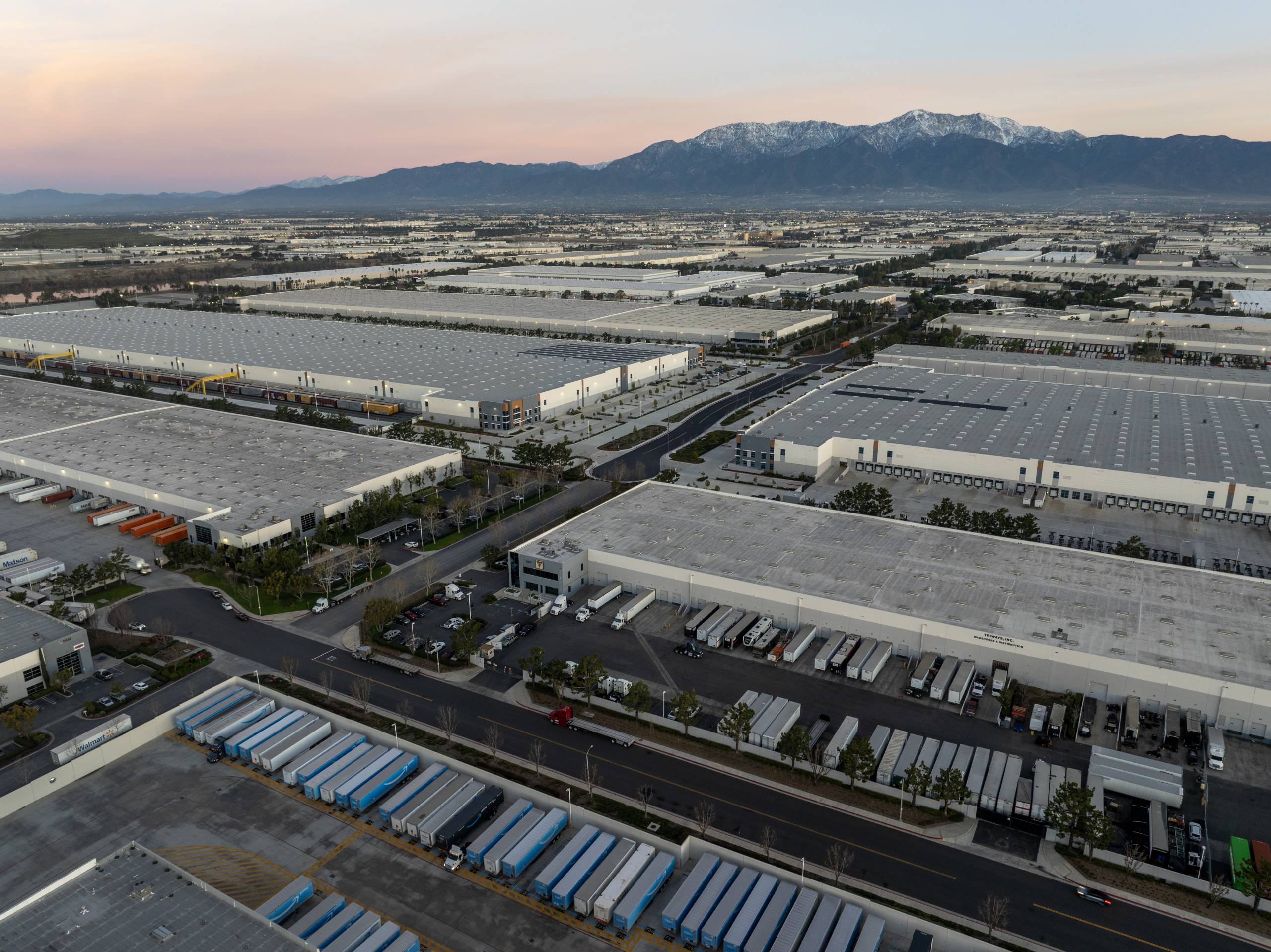
Wendy Fry: Sure. ICE received a huge $45 billion funding influx. That’s essentially the equivalent of one year of its budget — multiplied by four, five, or six. So it’s like getting five or six years of funding all at once.
What we’ve seen is ICE quietly buying warehouse space across the country. In California, it looks a little different. Here, they’re leasing properties adjacent to places where they already have hubs of detention activity. For example, B-18 — the basement of the Los Angeles Federal Courthouse — or office space next to the Schwartz Building, the federal courthouse in San Diego, where they already detain people who show up for court hearings.
They’re also eyeing spaces in Irvine, Sacramento, and Santa Ana. These aren’t meant to be long-term detention facilities like Adelanto, California City, or Otay Mesa. They’re intended to be fast-track deportation processing centers.
But advocates are concerned — first, about conditions inside larger detention facilities, and second, about using warehouses and office space that weren’t designed to house people, provide medical care, food, water, or sleeping areas. That’s not what those spaces were built for.
On the federal side, DHS says there’s an urgent need for space to fulfill former President Trump’s campaign promise to deport a million people a year.
Mina Kim: As you say, in California at least, they’re looking at these sites mainly as holding and processing centers. But they’ve faced complaints, just like the larger detention centers. And you mentioned they’re being quiet about it. Is that because when people learn about a proposed facility, it tends to draw pushback?
Wendy Fry: Yes, absolutely. There’s a huge amount of resistance in California. There are also state and local laws and regulations in play.
In California, public officials are required to give 30 days’ notice before an ICE facility opens. ICE bypassed that requirement in California City and went ahead and opened anyway. That’s part of a lawsuit detainees have brought against that facility.
There are more regulations in California that can slow the process down. But with this large amount of funding, ICE has been able to overcome some of that resistance.
They’ve also eyed the shuttered federal prison in Dublin. That’s a former correctional facility, which raises another tension. According to ICE, immigration detention is not supposed to be punitive. It’s meant only to hold people to ensure they show up for hearings or leave the country if ordered removed.
But when you use former prisons — like California City, which was a state prison built for overcrowding — and staff them with correctional officers, it feels like prison. To detainees, it feels punitive.
Mina Kim: DHS has said it has no plans to pursue the vacant Dublin women’s prison, but some people are skeptical — especially if a private company could buy it and contract with ICE.
Wendy Fry: Right. That’s how it worked in California City. CoreCivic obtained a contract with ICE to open and operate the facility.
Mina Kim: I want to bring in California State Assemblymember Matt Haney, who represents the eastern portion of San Francisco. Assemblymember Haney, thank you for being with us.
Matt Haney: Thank you for having me. Good morning.
Mina Kim: I understand you want to deter private corporations from running detention centers for ICE. How would you do that?
Matt Haney: There are seven of these facilities currently operating in California, and they’re growing rapidly. Nearly 7,000 people are detained in these facilities today. They’re run by private, for-profit corporations — mostly CoreCivic, based in Tennessee, and GEO Group, based in Florida.
It’s clear they plan to expand further in California. Private detention in our state operates much like prisons, but with less accountability and transparency. These facilities have been characterized by serious human rights abuses.
California previously tried to ban these types of facilities, but judges ruled we couldn’t do that in the case of immigration detention. However, these are private companies making billions in our state off human suffering and family separation.
What we can do is tax them. We’ve introduced AB 1633, which would impose a 50% gross receipts tax on private companies operating these detention facilities. They can either pay into the harm they’re causing, or they can choose to leave the state.
Even if we can’t prohibit them from operating here, we can impose a tax that reflects the social, human, and public health costs they’re creating.
Mina Kim: You’re saying they’re making billions. Revenue from this tax would go toward immigration-related services?
Matt Haney: Yes. The funds would go to the Due Process for All Fund, which supports immigration-related services connected to the harms these facilities cause.
We have the legal right and responsibility to tax companies operating in our state. If we could ban them, we should. But since federal law preempts that, we can at least tax them.
Mina Kim: You’re confident your bill wouldn’t face the same legal fate as the previous attempt to ban immigration detention centers?
Matt Haney: I am confident. We have the authority to tax private, for-profit companies operating here. This tax is narrowly tailored to address the harms they’re causing.
These facilities are characterized by substandard medical care, abuse, neglect, health and safety violations, and little transparency. We have a responsibility to respond.
Mina Kim: What about unintended consequences? Could a tax cause conditions inside detention centers to deteriorate further?
Matt Haney: These companies are generating billions of dollars in profits nationwide. ICE plans to dramatically expand detention, including targeting people who haven’t committed crimes.
They’re relying on these for-profit corporations rather than operating facilities themselves. They already have space to detain people short-term. What they want is large-scale expansion.
If we don’t intervene, they’ll continue expanding — doubling the number of detained individuals in the last year alone. That imposes huge costs on our communities. This bill would help prevent that expansion.
Mina Kim: San Francisco Assemblymember Matt Haney, thank you for speaking with us.
Matt Haney: Thank you.
Mina Kim: Wendy, by how much does ICE want to expand detention capacity? There are already around 73,000 people detained nationwide, correct?
Wendy Fry: That’s right. According to DHS documents, ICE wants the capacity to detain 100,000 people at a time.
At the beginning of the second Trump administration, about 40,000 people were detained nationwide. Now it’s roughly 73,000 — a 75% increase. The number fluctuates daily as deportation flights occur. ICE wants to increase capacity by another 30,000.
Mina Kim: We’re talking about the Trump administration’s expansion of immigration detention capacity — including the purchase of warehouses and potential new sites in California.
Listeners, we want to hear from you. Have you or someone you know been detained by ICE? How do you feel about California being considered for more detention centers? What questions do you have about this expansion effort?
Email [email protected]. Find us on Discord, Bluesky, Facebook, Instagram, or Threads at KQED Forum. Or call us at 866-733-6786. That’s 866-733-6786.
We’ll have more with Wendy Fry and your calls after the break. Stay with us.