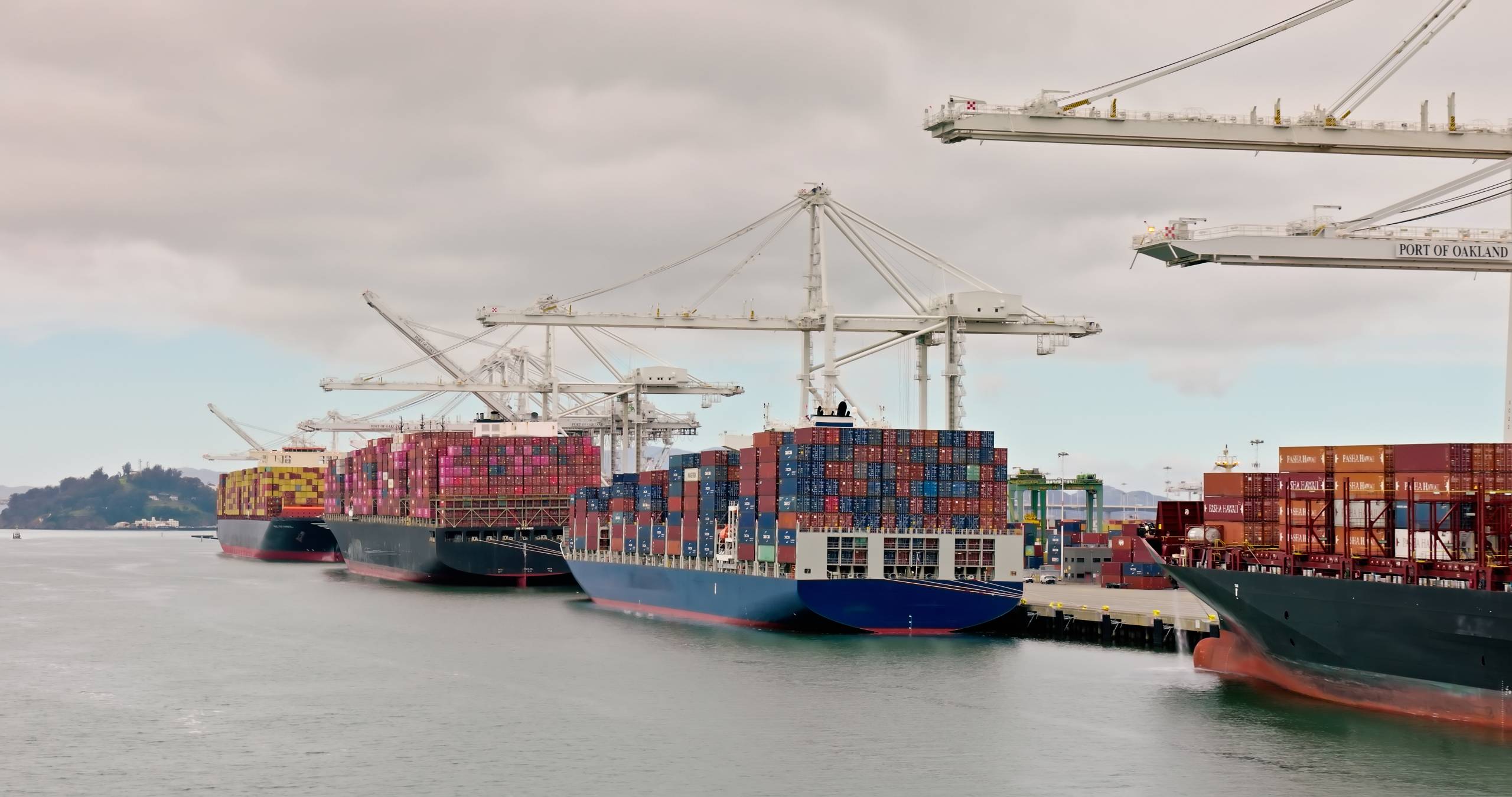
Mina Kim: Welcome to Forum. I’m Mina Kim. When the Supreme Court’s decision came down Friday declaring a large chunk of President Trump’s tariffs illegal, many California businesses and consumers hoped that would mean stability and relief from the import taxes — maybe even refunds. But instead, they’ve been thrown into uncertainty once again as President Trump promises to use other means at his disposal to impose tariffs, and the high court ruling makes no mention of how refunds should be handled.
We look at what lies ahead this hour, and we want to hear from you. How have you been affected by tariffs this past year? And how are you feeling now that you know many of the import taxes you paid were illegal?
Joining me first is Bianca Blomquist, California director of Small Business Majority. Bianca, thanks so much for joining us.
Bianca Blomquist: Thank you so much for having me.
Mina Kim: So how have your members been reacting to the Supreme Court decision? I imagine it’s felt like a bit of a roller coaster.
Bianca Blomquist: A roller coaster is absolutely right. First, I’ll share a little bit about who our folks are that we’re hearing from. Small Business Majority is a national nonprofit advocacy organization advocating for eliminating the most systemic barriers to diverse entrepreneurship. So we focus on very small businesses, small business owners of color, women entrepreneurs, entrepreneurs in rural areas — precisely because they lack the resources needed to navigate these complex regulatory environments.
The tumult with the tariffs has definitely been hitting these small business owners the hardest.
Mina Kim: So what are they wondering? What are the questions you’re hearing most in the wake of this ruling?
Bianca Blomquist: Well, recently: Am I going to get a refund? I think that’s on a lot of folks’ minds. The mess is definitely going to be in the details. As you could hear from even Justice Kavanaugh’s dissent, he was talking about how difficult it might be. But I’ve been hearing from other experts that certain trade contracts might make those refunds a little easier than you might otherwise think.
But absolutely, small business owners are wondering: What’s next? The uncertainty of this environment is really not helpful to them.
Mina Kim: And they’re wondering about refunds because they’ve really been hit hard by these tariffs this past year. Can you give us some examples?
Bianca Blomquist: Oh, goodness, yes. For example, I was speaking to a small business owner in the Santa Cruz area. She told me she had ordered one-third of her usual inventory and had to pay $6,000 more for that one-third of inventory.
A little bit about this small business owner: She operates out of her home, like many modern entrepreneurs do. She contributes to her local economy. She hires workers. She provides quality jobs. And that $6,000 — on top of everything else small businesses are dealing with — is not a great place to be for her.
Mina Kim: Did she pass on the cost of tariffs to consumers, or did she absorb them?
Bianca Blomquist: The small business owners we talk to are very hesitant to pass those costs on to consumers. They care about their clients. They cultivate those relationships. They’ve worked very hard to access those markets, and competition is fierce in the small business space. You have behemoth retail giants that small business owners compete with every day.
So they’re very hesitant to pass those costs on. But from my conversations, they’re saying they might not have a choice.
Mina Kim: You mentioned how hard it is to navigate everything that’s been happening with tariffs and the regulatory environment. It makes me wonder if they’d even have the resources needed to seek refunds if a plan materializes.
Bianca Blomquist: Absolutely. I’ll step back for just a moment and say that 99.9% of all businesses are small businesses, and 97% of those are microbusinesses. These are the businesses least likely to have a dedicated HR department or a dedicated team to navigate complex tariffs and import/export requirements. They’re less likely to be able to afford rising health care costs that are hitting many Americans and Californians this year.
So small business owners are really struggling to afford it, and that will have residual impacts in the community.
Mina Kim: Before I let you go, I imagine they’re watching all of this closely and hoping organizations like yours can support them or make their voices heard.
Bianca Blomquist: Absolutely. Folks can head to smallbusinessmajority.org. We have forms for people to fill out so we can share their stories with elected officials and talk with business owners. And I do want to flag for any small business owner grappling with this — many of you are — there are free and low-cost resources to help you navigate. The Small Business Development Centers across the state do an excellent job providing free business advising, so I encourage folks to take advantage of that.
Mina Kim: Bianca Blomquist, California director for Small Business Majority. Thanks so much for being with us.
Bianca Blomquist: Thank you for having me.
Mina Kim: I want to bring into the conversation now Nick Vyas, professor of economics and founding director of the Randall R. Kendrick Global Supply Chain Institute at the University of Southern California. Nick, thanks so much for being with us.
Nick Vyas: Glad to be here, Mina.
Mina Kim: Zooming out a bit, can you remind us how California — with its ports and agricultural land — has been affected? What sectors have been most affected by tariffs?
Nick Vyas: The tariffs cut across most sectors. This was a fairly indiscriminate exposure of tariff policy. In most cases, no one was spared, unfortunately.
And this ruling is not simply a tariff ruling — it’s a constitutional recalibration of who gets to control economic power in the United States. Surprisingly, the Supreme Court drew a very strong boundary with the 6–3 ruling on emergency authority and reminded Washington that broad trade policy ultimately belongs to Congress.
Mina Kim: How have consumers been affected by tariffs this past year? We’ve seen new numbers from the Public Policy Institute of California and likely your own research as well.
Nick Vyas: Yes. We typically break it into three buckets. First, the seller or owner of the goods and inventory bears some responsibility. Second, the supplier — providing services to move goods from factory to door — renegotiates and absorbs some margin squeeze. The third bucket is you and me as consumers — we absorb the cost.
At the onset of tariffs, the cost was roughly split a third, a third, and a third. But as tariffs continued, the vendor and supplier buckets relieved some pressure by passing more on to consumers. Our numbers estimate about $1,200 per household over the past 12 months as the average tariff cost.
Mina Kim: $1,200 per household — more than some federal estimates. Is that nationwide? Or are Californians bearing even more?
Nick Vyas: California is the fifth-largest economy, with large consumption and population. Households across California share a bigger burden.
Mina Kim: What are some of the biggest changes you’ve seen in California’s economy overall?
Nick Vyas: If you zoom into Southern California — the ports of Los Angeles and Long Beach, known as the San Pedro Bay complex — we process 40% of the goods consumed in the United States. One in every six jobs is associated with trade and supply chain.
So this is a huge part of our economy. The uncertainty has driven friction in our local economy and jobs, and inflation associated with these tariffs. When you think about $1,000-plus per household, that’s money households would have spent on discretionary items but instead paid in extra taxes.
Mina Kim: Earlier you said more of the cost is shifting to consumers. Do you expect that to continue? Because it doesn’t seem like tariffs are going away anytime soon.
Nick Vyas: You’re absolutely right. This is a chess game of policy. For two decades, we’ve talked about a “China-plus-one” strategy. Now we’re playing a “policy-plus” game.
The uncertainty will continue. Even if tariff situations settle down and Congress clarifies authority, businesses won’t immediately retract cost structures. I anticipate a four- to six-month lag where consumers will continue to bear the cost — even if tariff exposure is reduced.
Mina Kim: Listeners, we’re talking about what happens now that the Supreme Court has ruled that the bulk of President Trump’s tariffs are illegal. Have you been affected by tariffs this past year — changes to your business or spending habits? What’s your reaction to learning that many of the import taxes you paid were illegal? And what questions do you have about what happens next?
You can email [email protected], find us on Discord, BlueSky, Facebook, Instagram, or Threads at @KQEDForum, or call 866-733-6786.
More after the break.