This partial transcript was computer-generated. While our team has reviewed it, there may be errors.
Guy Marzorati: This is Forum. I’m Guy Marzorati, in for Mina Kim.
Next week, Vermont senator and progressive icon Bernie Sanders is coming to California to kick off the campaign for a wealth tax on the state’s billionaires. The tax is still thousands of signatures away from even making it onto the ballot, but few California proposals have ever generated such controversy at such an early stage. And other proposals to soak the rich and big corporations are being considered across California and the country.
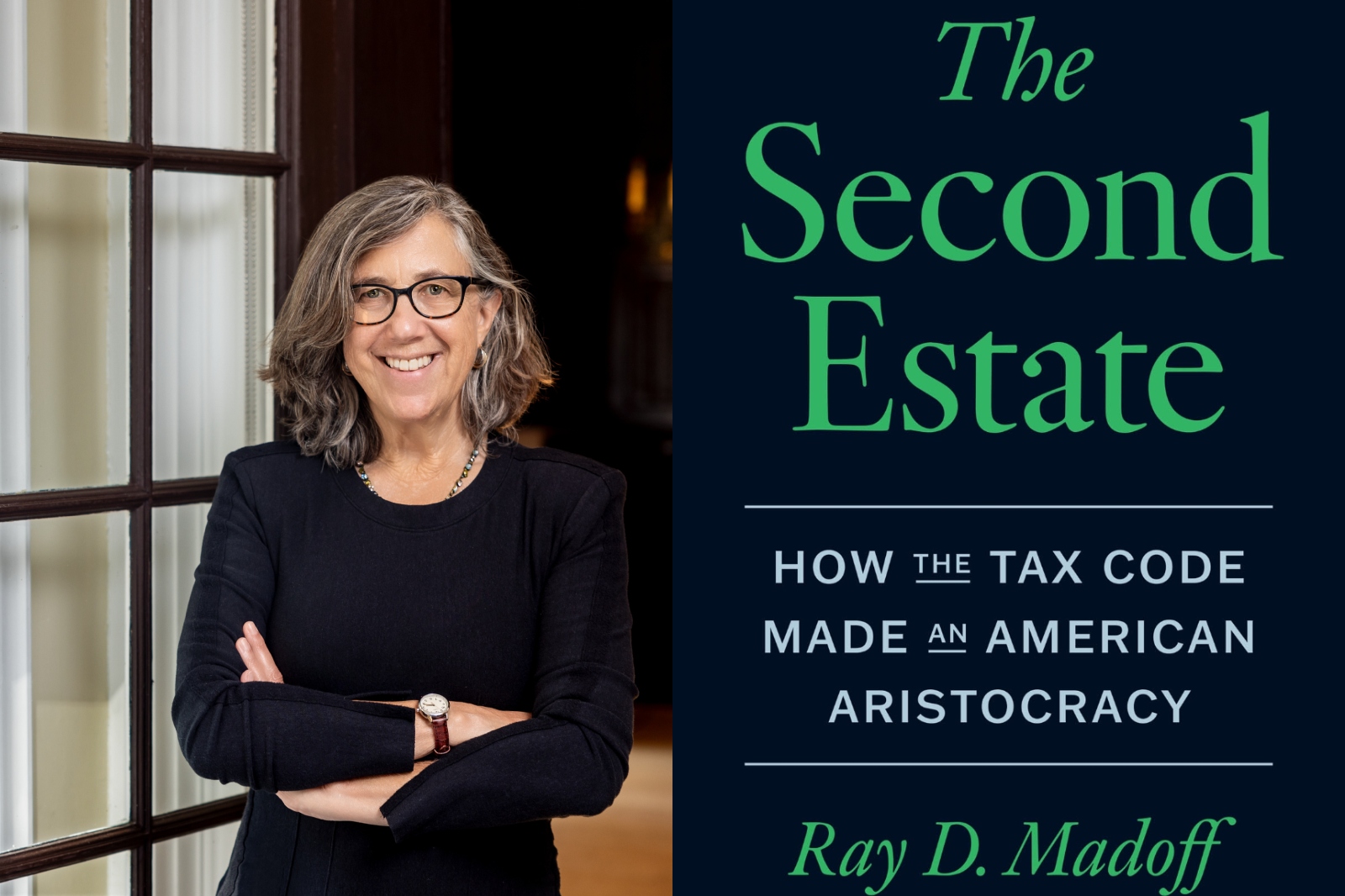
What’s behind it all? Well, perhaps a feeling that the ultra-rich have long avoided paying their fair share of taxes. It’s what Boston College Law School professor Ray Madoff describes in her new book, The Second Estate: How the Tax Code Made an American Aristocracy. And Ray Madoff is here with us on Forum for the hour. So great to have you.
Ray Madoff: Wonderful to be here, Guy. Thanks so much for having me.
Guy Marzorati: We’ll get into your thoughts on this specific idea of a wealth tax that’s really causing a firestorm here in California. But big picture, why do you think we are seeing proposals like this pop up around the country to start off 2026?
Ray Madoff: I think it’s for two reasons. One is because, as every American can see, the amount of wealth owned by our wealthiest Americans is astronomical. It is absolutely huge. Some numbers by comparison might be useful.
The country took in, in 2024, from all sources, $5 trillion in taxes, and we spent $7 trillion. We had a $2 trillion deficit. And yet at that same time, the amount of wealth owned by the wealthiest 1% of Americans was $50 trillion. We had a $2 trillion deficit at a time when the wealthiest 1% owned $50 trillion.
And the problem is that under our current rules, there is no assurance that any of their money will ever be subject to tax.
Guy Marzorati: So who are we talking about when we talk about the wealthiest? Because I think one of the foundational concepts you lay out in this book is the difference in scale between millionaires and billionaires. How should we think about that difference?
Ray Madoff: Right. The difference between millionaires and billionaires is quite extraordinary. They sound similar, right? And to most Americans, it’s almost hard to distinguish.
And yet many people who would never consider themselves rich have a million dollars in assets — particularly if they’re living in a place like California, which has very high real estate values. They might have bought their home for not very much, and it could easily be worth a million dollars today.
Another way of thinking about it is that a million dollars, if you wanted to live off the income, would only generate about $30,000 a year. However, if you had a billion dollars and you wanted to live off the income from that, it would produce $30 million a year — plenty to support even the most lavish lifestyle.
So the difference between millionaires and billionaires is really extraordinary, even though they sound very similar.
Now, you don’t need to be a billionaire to still be very, very rich. And the people that I think we need to be concerned about are the people who don’t need to get a salary. Because our system is such that anybody who has to work for their money pays significant taxes. And yet, if you can live off your investments and inheritances, like our wealthiest Americans do, taxes for you are essentially optional.
Guy Marzorati: There are so many points in this book where I thought, wow — should millionaires low-key be outraged by this? When it comes to the raw volume of who’s paying taxes in America, how does that break down between those two groups — the folks who are maybe making really high salaries and those who are getting their money through inheritance and other means?
Ray Madoff: You’re absolutely right. Our high-income earners often think that their interests align with the wealthiest Americans, and nothing could be further from the truth.
High-income earners — the top 1% of earners — are indeed paying the lion’s share of the taxes. The top 1% of earners pay 40% of all income taxes. And yet our wealthiest Americans are just as likely to be in the 40% of Americans who pay no taxes at all.
That’s because the divide is really between earners and high-wealth owners, and their worlds couldn’t be more different.
Guy Marzorati: Okay. So how do they do it? How do these ultra-rich Americans end up, in some cases that we’ve come to learn about, paying really no taxes at all?
Ray Madoff: They follow what I call in the book the tax avoidance playbook. There are three steps.
The very first step is that they avoid salaries. ProPublica ran a story about this when it had many leaked tax returns showing that rich people don’t pay taxes. They said W-2s are for suckers. If you’re getting a salary, you’re paying taxes.
Also, if you’re a gig worker — anyone being paid for their work — you’re paying significant taxes. So much so that somebody earning $60,000, which is a very modest amount of income, still pays $13,000 in taxes — an amount that could make the difference between whether they can afford rent or even food.
So earners are paying big taxes. But our richest Americans avoid taxes by avoiding earnings.
Let’s talk about some famous rich Americans. One of them is Warren Buffett. He famously talked about how he had a much lower tax rate than his secretary. But what he didn’t necessarily explain so clearly was that it was because he intentionally takes a very low salary. Indeed, Warren Buffett has never had a salary higher than $100,000 — and that includes his bonus.
Jeff Bezos takes even less. $82,000 was what he capped his salary at, and that was low enough to be eligible to claim the child tax credit, which he did.
But even lower than Buffett and Bezos are Mark Zuckerberg, Sergey Brin, and others — the “dollar-a-year” guys. That’s the only salary they get. And Elon Musk, for a period, took a salary of zero — an amount so low that California labor regulators had to go after Tesla and say, hey, you’ve got to pay this guy more.
So they don’t take salaries. And that way, they don’t have the same type of tax burden that earners at all levels have.
Guy Marzorati: Okay. So their wealth is sitting in stocks. Maybe it’s property. Maybe it’s art. It’s not liquid. So, Ray, how are they paying for the private jets?
Ray Madoff: Right. So let’s get a sense of how much wealth they acquire in a relatively short period of time.
If we look at those same people and examine how their wealth has grown since 2023: Buffett’s wealth has grown by $50 billion. Jeff Bezos by $100 billion. Mark Zuckerberg by $150 billion. And Elon Musk by a staggering $600 billion. This is growth based largely on the value of their stock.
You might say, sure — but they’re going to pay taxes on it, because in order to support their lifestyles, they’re going to have to sell their stock. And when they sell their stock, they’ll have to pay capital gains taxes.
But these people do not sell their stock, because if you sell your stock, you have to pay taxes. What they do instead is use their stock as collateral and borrow money. All of this borrowing is tax-free, and it enables them to do things like buy islands, buy yachts — pretty much anything they want. Even paying the interest on these loans can be done with borrowed funds.
Guy Marzorati: So they have their wealth in stocks or other assets that are growing in value. They’re living off money they’re borrowing against those assets. What happens when the loans come due?
Ray Madoff: If you’re a multibillionaire — a centibillionaire — there are many people in the business of lending money, and they are more than happy to lend to you. Either your original lender will extend the loan, or another lender will step in. You have a lot of lenders in line who are happy to lend money to someone who is so certain to be able to pay the carrying costs.
Guy Marzorati: So this all seems very crafty, perhaps very unfair. Why does this matter for everyone else?
Ray Madoff: The problem is that the rest of us are left paying the cost of government. If the wealthiest Americans aren’t paying the cost of government, then it falls on regular Americans — either in the form of the taxes they’re currently paying or in the form of the enormous debt that we are carrying.
The cost of that debt has gotten so large that we paid $1 trillion just in interest alone this past year. We have a staggering debt, and it can only be paid through tax revenue — and we are not getting enough tax revenue to do it.
In addition, some people might want the government to do more — help poor people, help us all with health insurance, provide free college education. But without sufficient resources, we can’t do it. And the rest of the taxpayers are forced to carry the bill.
Guy Marzorati: Remind us — what does make up the tax revenue for the government right now? If the ultra-wealthy are not paying the lion’s share, who is?
Ray Madoff: High-income earners are paying 40% of income taxes. And workers overall are paying almost all of the taxes.
We have two main types of federal taxes. The largest source of revenue is income taxes. Shortly behind that are Social Security taxes — those somewhat hidden taxes that show up as FICA and FUTA on your paycheck.
Those are primarily collected from people who earn less than $170,000, because we have a cap on the amount of income subject to Social Security taxes. These taxes are confusing because they look like savings for your own retirement. They’re called contributions. You get statements from Social Security about what you’ll receive.
But in fact, current payments are used to pay current retirees. So this is very much a tax like any other — but for historic reasons, it’s dressed up to look like something different.
Guy Marzorati: We’re talking with Boston College Law School professor Ray Madoff about her new book, The Second Estate. And we are hearing from our listeners.
One writes: “Billionaires cannot spend all their wealth. They can only spend a small amount. The rest goes into charity and investment in new businesses, and that furthers science and benefits all of American society.”
We’ll dive a little bit more into that idea. If you’d like to join the conversation, we’ll open up the phones. You can give us a call at 866-733-6786. That’s 866-733-6786.
What are your questions about the tax code? What are your thoughts on the tax system Ray Madoff describes in her book, The Second Estate?
Get in touch on social — we’re @KQEDForum.