This partial transcript was computer-generated. While our team has reviewed it, there may be errors.
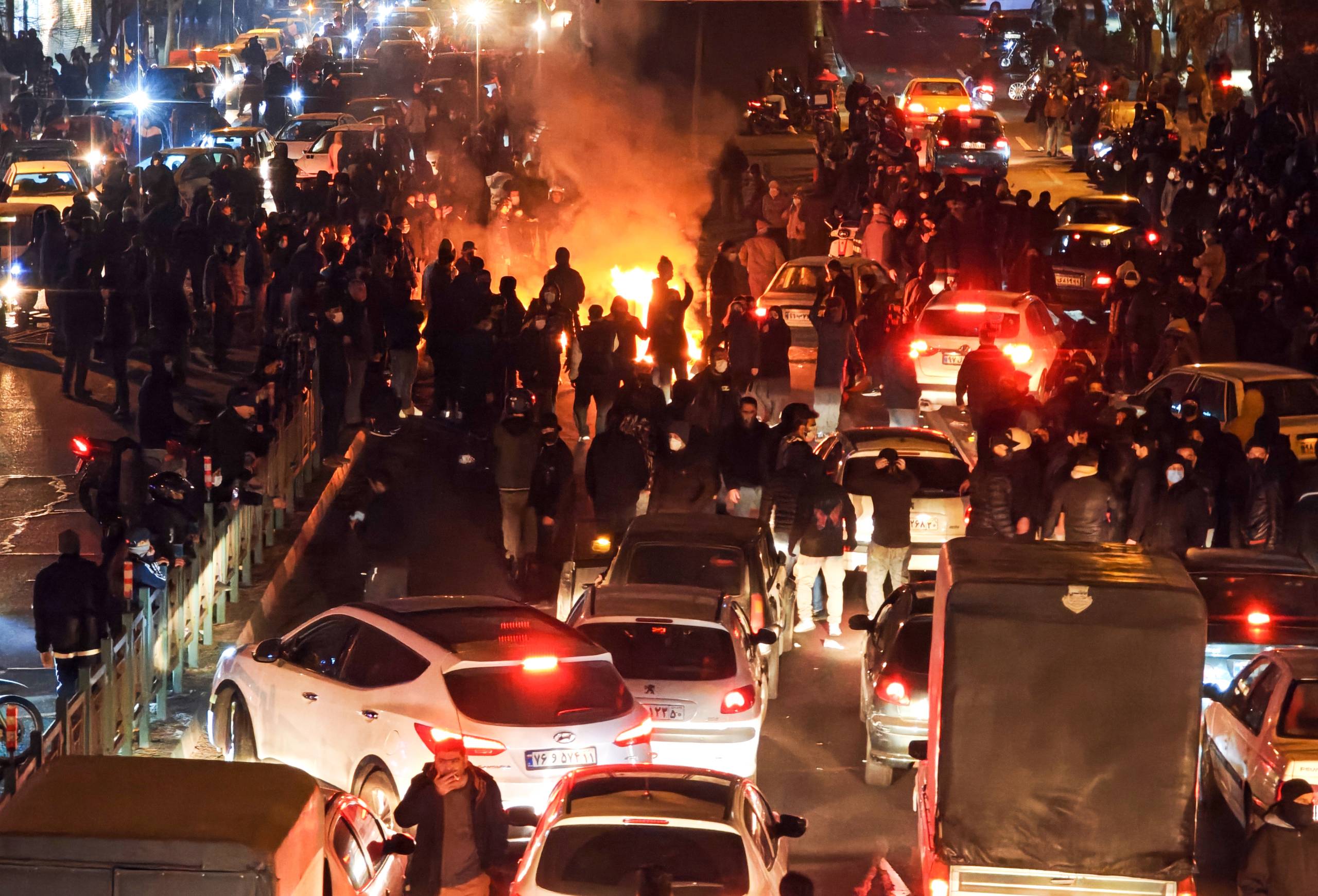
Mina Kim: Welcome to Forum. I’m Mina Kim. Thousands gathered in Los Angeles yesterday in support of protesters in Iran, whom the nation’s supreme leader over the weekend acknowledged have been killed by the thousands — though he blamed the U.S. for both the protests and the deaths.
Activists report more than 3,900 people have been killed, with fears those numbers will rise once the communications blackout lifts. Some Iranians told The Washington Post and other U.S. outlets they’re feeling betrayed by President Trump, who had spurred on protesters and suggested help was on the way, only to pull back.
We get the latest as California’s Iranian Americans closely watch events unfolding overseas. The protests were sparked initially by an economic crisis and currency collapse, before broadening into wider calls for the end of the regime.
Joining me is Sahar Razavi, associate professor in the Department of Political Science and director of the Iranian and Middle Eastern Studies Center at California State University, Sacramento. Sahar, really glad to have you with us.
Sahar Razavi: Thank you. Glad to be here.
Mina Kim: Also with us is Robin Wright, contributing writer to The New Yorker. Her most recent piece for the magazine is “Iran’s Regime Is Unsustainable.” Robin, glad to have you back on Forum.
Robin Wright: Glad to be with you.
Mina Kim: Sahar, let me start with you. Have you been able to reach relatives or friends in Iran?
Sahar Razavi: I’ve gotten a couple of extremely brief calls from distant relatives. My closer relatives — I have not been able to communicate with them at all, even at the level of a 30-second phone call. We did get news that they were okay. I finally received a text message from a cousin who said they are safe, but that they’re still having a very hard time getting a hold of anyone.
Mina Kim: We’re hearing media reports that protests have quieted, and even state media is saying there are plans for a limited, gradual return of internet services. Is that happening? And what do you interpret “protests have quieted” to mean? Has violence against protesters abated as well?
Sahar Razavi: The reports I’m seeing indicate that the violence itself has not stopped, but has remained commensurate with the level of protests.
My interpretation of the protests dying down is that, just as in past waves of protest and uprisings, the force of repression — the brutality of the violence against protesters — has effectively raised the cost of taking to the streets. That has quieted street demonstrations in this acute phase.
But as with past waves, that doesn’t necessarily mean the protest movement itself — the uprising, the grievances of Iranians — has quieted. It means they’re channeling that dissent into other avenues.
As for the easing of the communications blackout, I’ve also seen reports that it’s lifting slightly. I think that’s partially because the regime itself wants to get information out. It’s allowing certain outlets, channels, and reporters access to the internet, but it hasn’t allowed it to be widespread just yet.
Mina Kim: Why would the regime want more information to get out? What kind of information do you think?
Sahar Razavi: I think they want to tightly control the information that gets out. That’s why so few people essentially have passes or permits to access the internet.
They want to bolster the narrative that the primary responsibility for the killing of protesters lies with the United States and Israel, which they want to emphasize as much as possible. I don’t think they want — or will ever want — a full accounting of the casualties and destruction. As much as they can, they want to lay responsibility at the feet of what they call outside or foreign agitators.
Mina Kim: Robin, you’ve been reporting on Iran since 1973 and have seen many anti-government protests erupt and then die down. What do you see as different this time, if anything? And do you think those differences will lead to a different outcome for the regime?
Robin Wright: The regime clearly is unsustainable. The revolution in 1979 was carried out on behalf of the oppressed, and today the oppressed live far worse than they did under the Shah.
The pattern that began in 2009 and picked up again in 2017 reflects the diverse interests of Iranian society. Protests have erupted over fraudulent presidential elections, over economic pressures — in one fell swoop, the regime increased gas prices by 300 percent — and more recently, in 2022, young women led the way in protesting personal freedoms through the Women, Life, Freedom movement.
What’s striking this time is the scale, the depth of commitment, and the level of repression carried out by the government, which is clearly very nervous about its fragile future. The government is led by a supreme leader who is 86 years old and has previously suffered from prostate cancer.
There’s a sense that this third generation since the revolution is not invested in — or bought out by — the social contract and guarantees that sustained the first and second generations. The regime still has the personnel and tools to put down protests, but society is increasingly angry and infuriated by the failures of the revolution. I think we’ve reached a tipping point. It’s not going to be tomorrow or next week — maybe not even next year — but we all know it’s coming.
Mina Kim: Over the weekend, we heard Ayatollah Khamenei acknowledge that thousands of people have been killed — some, in his words, in an “inhuman, savage manner” — while blaming the U.S. for the deaths. It’s been called a rare admission. Why do you think he made it, and is it significant?
Robin Wright: It’s a way of signaling that the regime has the ability to put down protests — and that people will pay a price.
What’s interesting is that the government has reportedly said protesters who turn themselves in over the next three days will be granted some vague form of leniency. That’s ridiculous. The government has used drones to track people down. It’s gone into apartments to identify individuals captured by street cameras and arrest them.
Information and access to technology work both ways, and unfortunately the regime has used them very effectively.
Mina Kim: President Trump issued repeated warnings to Tehran, publicly urging Iranians to continue protesting while threatening severe consequences against the regime. Sahar, what effect do you think those statements had on protesters? We’re seeing reports from U.S. outlets, including The Washington Post, that some Iranians felt Trump’s threats of military action increased their determination to protest.
Sahar Razavi: There is a contingent of Iranians inside Iran who want Trump — or someone — to intervene, and they did believe those promises were genuine. That’s driven by a sense of desperation.
Iranians are, at a population level, very politically aware and sophisticated. They’d seen the Trump administration’s track record, most recently with Maduro in Venezuela. They believed that if they heeded the call, help would be on the way, as Trump promised. Clearly, it has not been.
We’ve also seen statements from Trump and from Reza Pahlavi in recent interviews that, in my opinion, very dangerously cosign the regime’s response. Pahlavi said, in an interview with Norah O’Donnell, that this is a war — and that in war, there are casualties — effectively legitimizing the regime’s narrative that it’s engaged in an armed conflict.
Trump, when asked about intervention, said the regime claims it’s no longer executing people, so there’s no need to intervene. When pressed, he made similar statements framing this as a war on both sides.
I fully understand the sense of betrayal among Iranians — not only because of the lack of follow-through on promises, but because these statements, from two closely aligned figures, have undercut the uprising. In my view, that’s extremely dangerous.
Mina Kim: Robin, what has struck you most about the president’s response, and do you think the U.S. will take action?
Robin Wright: The U.S. has moved the USS Abraham Lincoln into the Gulf, increasing its military presence if it chose to strike. I think it’s probably too late for that.
There are also longstanding questions about what kinetic action would actually change on the ground. What would the United States hit that would make a real difference — the supreme leader’s compound, Revolutionary Guard headquarters, the Basij paramilitary forces?
There are other options, particularly cyber options — disrupting the regime’s ability to communicate internally or disabling certain military programs. But those are more subtle.
Kinetic action was opposed, interestingly enough, by many in the Arab world and by Israel, partly because no one knew what the aftermath would look like or whether it would actually change anything.
I think there’s widespread agreement that the president has been extremely hypocritical — calling for action, promising it, and then deciding against it. Meanwhile, he’s used military force domestically, including in Minnesota, while not acting where thousands have died in Iran. From a policy standpoint, it’s difficult to reconcile that hypocrisy.
Mina Kim: We’ll have more on Iran after the break. This is Forum. I’m Mina Kim.