This partial transcript was computer-generated. While our team has reviewed it, there may be errors.
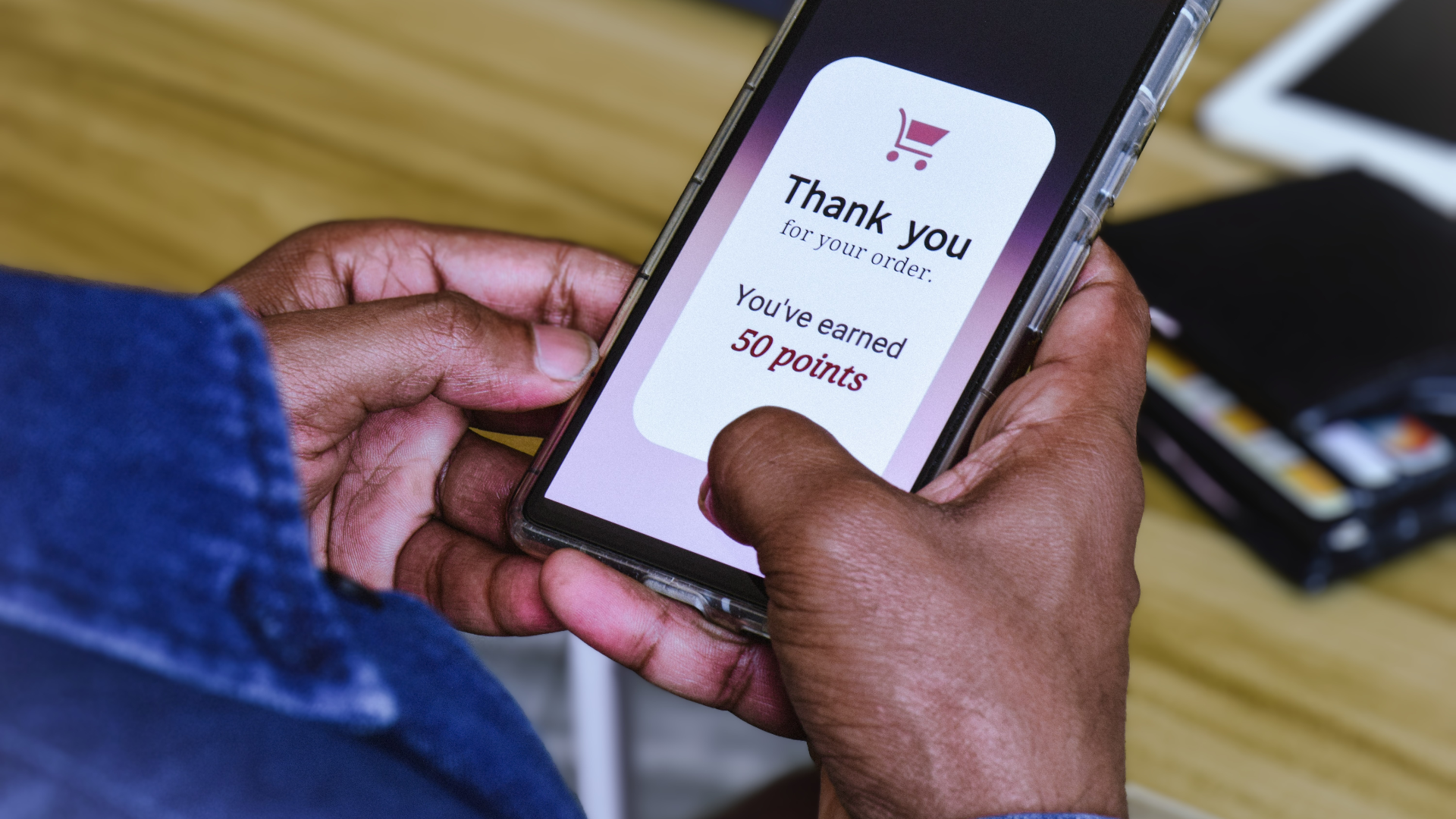
Mina Kim: From KQED, welcome to Forum. I’m Mina Kim. Chances are, as you’ve been holiday shopping, you’ve given away your personal information or joined a rewards program in exchange for a discount. Loyalty programs are everywhere, providing benefits for repeat customers or continued engagement, and they can feel like welcome relief in tight economic times.
But according to my guests, they’ve also become data-harvesting machines, where companies watch us, sort us, and ultimately charge us not the same as everyone else, but the maximum price they think we’ll pay.
Sam Levine is senior fellow at the Center for Consumer Law and Economic Justice at UC Berkeley Law School, and Stephanie Nguyen is senior fellow at Vanderbilt Policy Accelerator. They’re both former officials at the Federal Trade Commission under the Biden administration and authors of the paper The Loyalty Trap: How Loyalty Programs Hook Us With Deals, Hack Our Brains, and Hike Our Prices.
Sam Levine, welcome to Forum.
Samuel A. A. Levine: It’s great to be here.
Mina Kim: Glad to have you. Stephanie Nguyen, also glad to have you.
Stephanie Nguyen: Great to be here. Thank you.
Mina Kim: Sam, I want to start with you. Can you remind us of the universe of loyalty programs that are out there?
Samuel A. A. Levine: Loyalty programs really are everywhere. They started in the airline industry — that’s where they’re probably most famous. Frequent flyer miles, maybe a few free trips. But now, every store I go into, I feel like I’m being asked to join a loyalty program.
I’m trying to check out, I’m in a rush, and they say, “Give me your phone number. Join our loyalty program.” This can be retail, hardware stores, department stores — you name it. Companies want us enrolled in these programs. And I think anyone who’s been shopping this holiday season has experienced the same thing.
Mina Kim: Yeah. And they really try to make it frictionless, right? They say, “Do it right now. The savings apply instantly. It’s free to start.” I imagine that’s why they’re so popular.
Samuel A. A. Levine: It’s so tempting. They’ll say all you need to do is enter a phone number and you get ten percent off right away. But one of the things we point out in the paper is that it’s not just your phone number you’re handing over. You’re often consenting to vast data collection that begins as soon as you give them permission.
So it looks really easy, but it sets you up for a lot of tracking down the line.
Mina Kim: Right. Stephanie, in your paper you talk about the evolution — or really the devolution — of these programs, meaning they’ve become more aggressive and manipulative over time.
Stephanie Nguyen: That’s right. And I think it’s important to start with the definition of a loyalty program. At a high level, it’s a system businesses use to keep customers coming back. They’ll do that through any means necessary — points, discounts, perks.
What we saw, after looking at dozens and dozens of loyalty programs, is what we describe as a three-part structure. The hook is where companies entice consumers with upfront benefits and discounts to attract them and keep them purchasing.
The hack is where they get your data. That data becomes the currency of their strategy and allows them to understand who you are — not just as someone in a broad demographic, but as a specific individual who just had a baby or who lives in a suburban neighborhood in Virginia.
And the hike is the third piece. Companies can raise fees, cut benefits, or deploy coercive upselling tactics that essentially turn loyalty programs into a net cost for consumers instead of a benefit.
Mina Kim: Can you give us an example of how this plays out? I was particularly struck by your McDonald’s example.
Stephanie Nguyen: McDonald’s, for the past ninety years, has offered a game called Monopoly — a paper-based peel-and-win game where you can win free Big Macs, fries, or even a million dollars or a Jeep Cherokee. They took a nine-year hiatus, and this year they brought it back with what they called a “modern digital spin.”
To play now, you have to download the app. You enter your peel codes into the app. McDonald’s has publicly said it currently has around 185 million active loyalty program users across markets, and it wants to increase that to 250 million active users.
Mina Kim: Wow.
Stephanie Nguyen: If this strategy succeeds, the Monopoly game entices people to download the app and play for a chance at prizes. And if McDonald’s reaches that goal, it will have data on a quarter of a billion consumers.
They’ve said they can infer things like intelligence, abilities, and aptitudes — all collected because you downloaded the app, lured by the chance to win prizes or free food.
Mina Kim: So, Sam, talk about that. What are they doing with those 250 million users? What exactly are they collecting about us to make those kinds of inferences?
Samuel A. A. Levine: That’s part of the problem — we don’t really know. McDonald’s says on its website that when you join the loyalty program, they track psychological trends, predispositions, intelligence, and abilities.
Companies are using sophisticated data analysis systems, often powered by machine learning, to examine patterns — where we go, when we go, what we buy. Do I get a McMuffin every morning? Do I go late at night after drinking?
When companies can track tens of millions of people, they can combine all those data points and draw sophisticated inferences about income, preferences, weaknesses, and how much someone is willing to pay. The sky’s really the limit.
Mina Kim: Talk more about how McDonald’s and other companies segment customers by willingness to pay — charging us right up to that limit. Are you saying that, for example, when ordering through DoorDash, people might see different prices for the same item?
Samuel A. A. Levine: Let me zoom out beyond McDonald’s and talk about the industry more broadly. What you’re describing is exactly right. Companies use loyalty programs to figure out when and how to nudge someone into buying.
McDonald’s found that before joining the loyalty program, people went about ten and a half times a year. After joining, that number jumped to twenty-six times a year. They’re cracking the code — figuring out what push notifications, games, or rewards get people into the store.
We’ve seen this across industries. Delta Airlines, for example, talked on an investor call about wanting to engage in more personalized pricing. They described figuring out the maximum someone is willing to pay as the “holy grail.”
Mina Kim: So this isn’t some distant future. This is already happening?
Samuel A. A. Levine: Absolutely. For listeners in California, one thing we found useful is that state law allows you to request reports showing what data companies collect about you. Those reports often obscure more than they reveal, but they make clear just how vast the data collection is — including location data, device data, and more.
They also show how many third parties your data is shared or sold to. It can be eye-opening to see what’s really happening behind the promise of free discounts.
Mina Kim: Is surveillance pricing legal?
Samuel A. A. Levine: As we say in law school — it depends. California attempted to pass an outright ban on surveillance pricing this year, but it didn’t pass. Other states are considering similar bans.
That said, many pricing abuses are already illegal. False discounts, hard-to-cancel programs, or collecting more data than necessary can violate state and federal law. Our core point is that people shouldn’t have to choose between protecting their privacy and affording groceries — but that’s exactly the position many consumers are in right now.
Mina Kim: I want to invite listeners into the conversation. What’s your reaction to companies using loyalty programs for surveillance pricing? What programs are you enrolled in, and have you ever felt manipulated by one? Or is there a loyalty program you actually like?
Email [email protected]. Find us on Discord, Bluesky, Facebook, Instagram, or Threads at KQED Forum, or call us at 866-733-6786. That’s 866-733-6786.
We’re talking with Sam Levine and Stephanie Nguyen. We’ll have more with them — and with you — after the break. I’m Mina Kim.