This partial transcript is computer-generated. While our team has reviewed it, there may be errors.
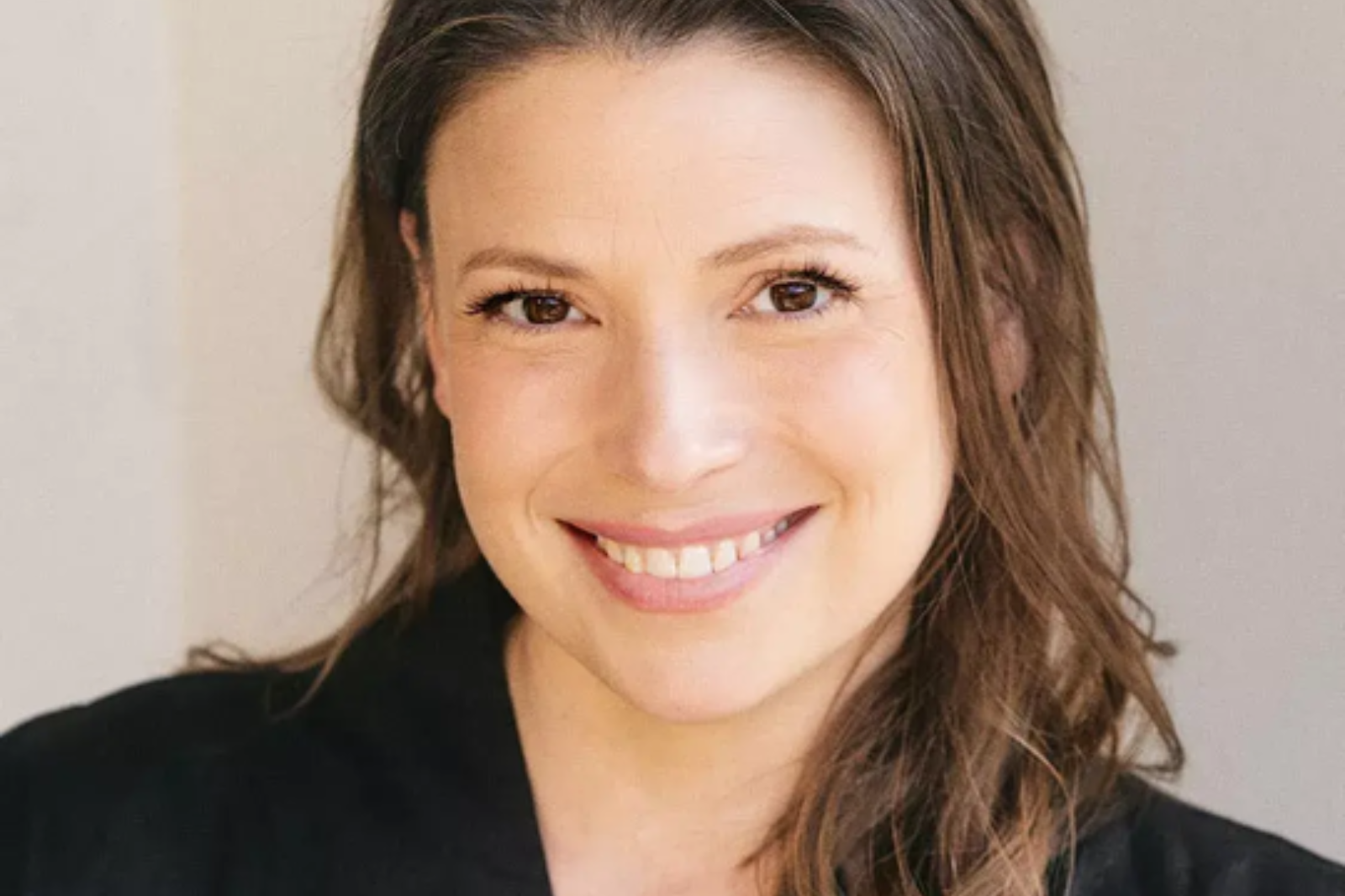
Mina Kim: Welcome to Forum. I’m Mina Kim. Are you planning to make an audiobook part of your Thanksgiving travels? Julia Whelan has been called “the Adele of audiobooks” by The New Yorker, having narrated more than 700 titles, including her own works My Oxford Year and Thank You for Listening.
Julia Whelan (clip): William Morrow and Harper Audio present Thank You for Listening, a novel by Julia Whelan. This is the author.
Mina Kim: Whelan is with us to talk about what really goes into reading books out loud, bringing scenes and characters to life, and how she’s handling the growth of AI-generated voices entering an industry where humans don’t get paid much as it is. What’s an audiobook you’d recommend, listeners? You can tell us by calling 866-733-6786, emailing [email protected], or posting on our social channels: Discord, Bluesky, Facebook, Instagram, or Threads. Welcome to Forum, Julia.
Julia Whelan: Hi. Thank you so much for having me.
Mina Kim: You were quoted in the AP as saying, “I feel like I was born to do it.” What is it about audiobook narrating that makes you feel this way?
Julia Whelan: You know, it was an industry that I didn’t even know existed, to be fair, but I was a child actor. I’ve always loved acting — I’ve acted since I was nine or ten. And then in college, I got an English and creative writing degree. That’s the other thing I love: books. And when this opportunity presented itself to do both of the things I love at the same time, it was a real “fish to water” situation. I couldn’t believe this had been sitting here the whole time and that it gets to be my career.
Mina Kim: In preparing for this conversation, I realized it requires so much more preparation than I thought. Can you talk about your process and how you start preparing for a recording?
Julia Whelan: Sure. People often assume I just get in the booth and read the book. I wrote about this process in Thank You for Listening because people always ask how the sausage gets made. When I get a book, I’m usually looking at a near-final draft of the manuscript. In my prep read, I’m paying attention to the voice of the piece — is it humorous, melodramatic? What’s the tone? I keep a list of words I need to learn to pronounce — sometimes invented, sometimes real — and a character list with any speaking characters and the vocal traits the author gives them, like accents or timbre, plus biographical details.
Part of the prep is building out that cast of characters and especially focusing on those who speak to each other most, so I can differentiate them for the listener. Then I build out the fuller cast. By the time I get in the booth and hit record, I should have a strong strategy and game plan.
Mina Kim: Wow. I’m sure it varies by book, but how long does that take?
Julia Whelan: My ratio is about four hours of prep and recording to one finished hour of audio.
Mina Kim: I really enjoyed hearing the sound of your voice in those clips. Would you say you have a narrator voice? And if so, how would you describe it?
Julia Whelan: When people meet me for the first time, they’re very surprised that my natural speaking voice isn’t my narrator voice. And for me, it’s like — do you take your work home with you? But at this point, the narrator voice I’ve cultivated feels so natural. It doesn’t feel like something I’m putting on; it feels like a role I slip into that signals to the reader: “Okay, we’re getting down to business now. You’re entering the story.”
Mina Kim: And there’s a certain pacing. Is that something you thought about or did it just emerge naturally?
Julia Whelan: Good question, because the industry has changed in the 16 or 17 years I’ve been doing this. We were taught early on to have a slow reading cadence so people could follow. But now listeners — especially those who are TikTok-ified and podcast-ified — are used to a more conversational, extemporaneous pace. So I’ve nudged my rhythm a little tighter for the listener. And still, people listen at multiple-X speed.
Mina Kim: We have a question along those lines. Mark writes: “Do you get offended if people listen to your audiobook sped up? I listen at 1.5x.”
Julia Whelan: Okay, 1.5 is fine. I used to be very offended because I thought, “I’m choosing to tell the story at the pace I think it needs. It’s my art.” But people explained that if you have a neurodivergency — like ADHD — and the audiobook isn’t going at the speed of your brain, you’ll get distracted and won’t follow it. So I’ve stepped off that soapbox. People should listen at whatever speed works for them. But if you speed it up too much, you’ll miss performance, and the voice distorts so much that it sounds like Minnie Mouse. If you’re just trying to get through it for book club, fine. But if you have time, I recommend a comfortable speed.
Mina Kim: We’re talking with Julia Whelan, who’s been called “the Adele of audiobooks” — narrator, actor. And you, our listeners, are joining the conversation with your questions and comments at 866-733-6786 and on our social channels @KQEDForum. This is Na’Rite: “How does your guest prepare her voice for recording? I’ve heard voice actors keep grapes in the studio to avoid dry-mouth sounds. Does she have to avoid or eat certain foods?”
Julia Whelan: Yes. On recording days, I don’t do dairy, and I hydrate constantly. For radio listeners you won’t see this, but video viewers can: I always have a mason jar of water nearby. I don’t drink alcohol the night before recording. The grape technique is one thing, but green apples especially clean up mouth noise. I don’t know if you experience this on your side of the industry, but in every audiobook studio, there are green apples.
Mina Kim: That’s funny — that’s one of the tips I was given. They didn’t say green specifically, but they did say apples.
Julia Whelan: Apples in general are good for throat health — the pulpy lubrication helps. But something about the acidity of green apples especially cleans up cracks and mouth noise.
Mina Kim: Good to know. Now we’re in the studio — can you talk about the physical demands of recording for hours?
Julia Whelan: Thank you — it is hard. I feel ridiculous saying that because I’m hardly in the coal mines here, but it does take a toll. Sitting for so long without moving is part of the job. All of the performance comes through my face; I can’t move or my wrist might crack, or my clothing might make noise. I’ve done physical therapy for my neck twice and my lower back multiple times — anyone with a desk job knows this.
There’s also the strain on the voice. The way I’ve structured my career in recent years is to schedule only a certain number of finished hours per day. I used to do 70 books a year — I can’t anymore. You can hear it in my performance; if you go back and listen to Gone Girl, my voice has changed. There are just so many miles on it now.
Mina Kim: “Miles” is a good way to put it. And I understand that at one point, a doctor told you that you needed to stop — not use your voice for almost a month. What was happening?
Julia Whelan: Yes. This was also the year I was writing My Oxford Year. On top of 70 books, I was writing a book, and I got sick — typical holiday illness. I pushed myself back into the booth too soon because people were waiting on files. I got about two days in, got laryngitis, waited a week, got back in too soon — and that’s when a doctor said, “You need a month of vocal rest, or you probably won’t be able to do this anymore.” It was a wake-up call.
Mina Kim: You mentioned you were a child actor and why audiobooks appealed to you. But why wasn’t acting an industry you pursued further?
Julia Whelan: I actually did. When I graduated, I returned to on-camera work, but the industry had changed. I was a very particular kind of actress — in what I wanted to play and what I didn’t — and the industry, especially for women in their twenties, wants a specific thing. I wasn’t what people had in mind. I was constantly told: “Lose 15 pounds and be a leading lady, or gain 30 and be the best friend. You can’t be in this liminal space.” And I thought: why not? I just want to act. I want to be Gary Oldman — let me be Gary Oldman.
That wasn’t possible at the time. It’s changed a bit now, but it wasn’t something I wanted to organize my life around when I had other creative outlets that didn’t require that fight.
Mina Kim: So you were able to do something you love without the toxic side of the industry, especially for women.
Julia Whelan: Yes — especially on camera. You only get to play certain things. The great thing about audiobooks is I get to play everybody. It’s incredibly satisfying creatively in a way on-camera work can’t compete with. I do miss being responsible for one character and acting with other people, and I’ll do on-camera work occasionally when someone writes something for me. But organizing my whole life around it didn’t make sense when I wasn’t even sure it was what I wanted anymore.
Mina Kim: Stage actors often say they feed off an audience’s energy, but you’re in a booth by yourself. Do you have to generate that energy?
Julia Whelan: I don’t, actually. I’m used to it being isolated. I have such a developed ear for what works from my on-camera years that I almost imagine myself in an ensemble when I’m narrating — like I have a full cast and a director, all in my head. This is probably something I should talk to a therapist about, but it works.
Mina Kim: Thanks, Julia. We’re talking about what it really takes to narrate an audiobook with one of the most sought-after audiobook narrators, Julia Whelan. More with her — and with you — after the break. This is Forum. I’m Mina Kim.