This partial transcript was computer-generated. While our team has reviewed it, there may be errors.
Mina Kim: Welcome to Forum. I’m Mina Kim.
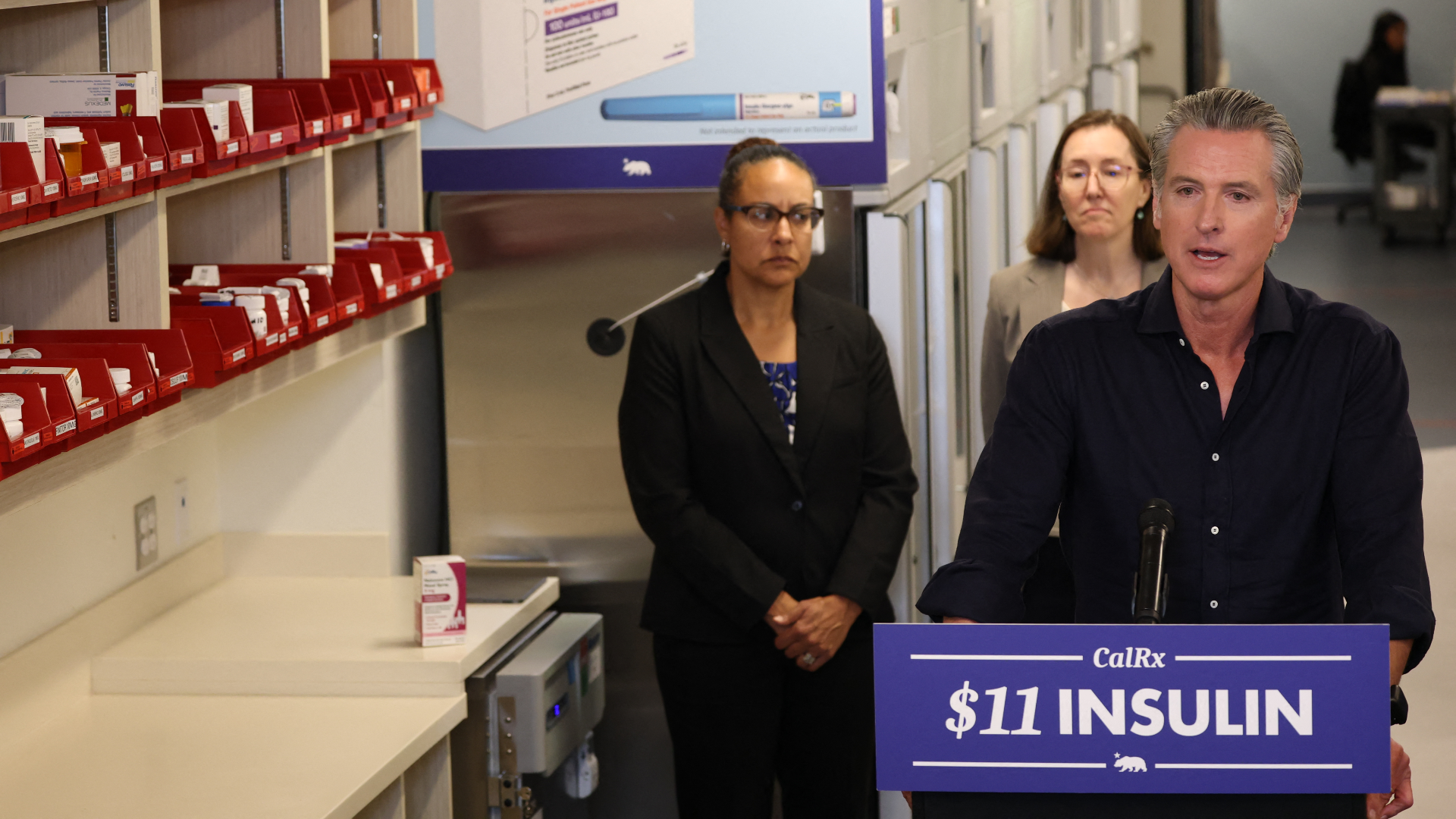
California will offer insulin for just $11 a pen starting next year — the fulfillment of a promise Governor Gavin Newsom made three years ago. The state will contract directly with drug manufacturers to dramatically reduce the cost of the diabetes medication. In a statement announcing the release, Newsom said no Californian should ever have to ration insulin or go into debt to stay alive.
For more on this and other medications that could become available under the state-run program known as CalRx, we’re joined by KQED health correspondent April Dembosky. Hi, April.
April Dembosky: Hello. Good morning.
Mina Kim: Help us understand how dramatic a reduction in cost $11 per insulin pen is.
April Dembosky: That’s right. The pens will be sold in a pack of five — $45 to pharmacies, with a suggested retail price of $55 — which works out to $11 per pen. To compare, current market prices for insulin pens range from $88 to $411. The brand most comparable to the state’s product lists for about $92. So you’re looking at nearly half the price.
Mina Kim: And about three and a half million Californians have diabetes. Broadly, what could this mean for them?
April Dembosky: It’s a really big deal — especially given the broader health care landscape right now. Premiums are going up, Medicaid coverage is being cut back. So to have a medication that people rely on daily, for life, become more affordable and transparent is huge. You’ll see savings in people’s wallets, but potentially better health outcomes, too.
Mina Kim: And listeners, we’d like to hear from you. Have you had trouble paying for insulin? How could cheaper insulin affect your life? What are your questions about CalRx insulin and how to get it?
April, you mentioned $92 for this type of insulin typically, but it can go up to $411. How is California able to offer it at $55 — or $11 a pen?
April Dembosky: This is Governor Newsom’s brainchild. He announced it in 2020. CalRx is essentially a state-run drug label — an end-run around the pharmaceutical companies and the middlemen who negotiate and control prices. Instead of buying through those intermediaries, the state is contracting directly with a generic drug manufacturer to produce and sell insulin at a set price. Basically, California is getting into the drug business itself.
Mina Kim: I remember when CalRx first contracted with Civica Rx, the nonprofit drug manufacturer, to start figuring out insulin production. There were some delays — they’d predicted it would launch sooner.
April Dembosky: Right. Governor Newsom may have overpromised. Getting into the drug business is a bold, tricky move, so the delays aren’t a huge surprise.
Mina Kim: What’s been Big Pharma’s reaction, given this has been described as a challenge to the industry?
April Dembosky: They’ve been fairly neutral, redirecting attention to their own patient assistance programs. But what distinguishes CalRx is that there are no hoops to jump through — no red tape. It’s a direct-to-consumer product without the games around list prices and rebates.
Mina Kim: When we reached out to Big Pharma, a spokesperson, Reed Porter, said: “For years, insulin manufacturers have offered patient assistance programs to help patients access and afford their insulin. These efforts, combined with California’s new nation-leading PBM reform law, will help patients save at the pharmacy counter.”
Quickly, April — PBM is what again?
Dembosky: PBM stands for pharmacy benefit manager — the middlemen in the pharmaceutical supply chain. They pool buyers like insurers and pharmacies to negotiate discounts from drug manufacturers. But those deals are often secret. Once PBMs get a discount, they decide how much to pass to insurers, and insurers decide how much to pass to consumers. With so many steps, nobody knows what the original discount was or how much each layer keeps. Drugmakers aren’t fond of PBMs either — and PBMs have been sued by the federal government for contributing to rising insulin costs.
Mina Kim: And as you said, CalRx is trying to cut that part out. Let’s go to caller Noelle in Berkeley. Hi, Noelle.
Noelle: Hello. I’m a 35-year survivor of Type 1 diabetes who still carries medical debt from paying $400 a month for one model of insulin. I just want to shout out the wonderful doctor in Canada who discovered insulin — he never intended anyone to profit from it. It’s life-saving.
Mina Kim: Noelle, thanks for that. And that really is the point, right, April — affordability for something you need to live.
April Dembosky: Exactly. Insulin has been produced cheaply for a long time. As the caller said, it was discovered over a century ago and was generic for decades. Companies were making it for around $25 a month — and then suddenly, around 2016 or 2017, prices skyrocketed. There was no clear explanation.
Mina Kim: Partly why Governor Newsom made it a focus. But insulin isn’t the only drug CalRx is addressing. The program has also released naloxone for reversing opioid overdoses. How does that price compare?
April Dembosky: CalRx offers naloxone at about half the typical price. The state isn’t manufacturing it directly but is using its scale to negotiate cheaper bulk prices — then offering that supply back to consumers at a much lower rate.
Mina Kim: And what’s next for CalRx?
Dembosky: Newsom has mentioned several targets: albuterol inhalers for asthma, GLP-1s for weight loss, vaccines. The state has also stockpiled misoprostol, an abortion medication, using a similar strategy. It’s an ambitious program.
Mina Kim: And they plan to expand their insulin offerings too, right?
April Dembosky: That’s right. They’re starting with one insulin type, glargine, and plan to produce other biosimilars as well.
Mina Kim: How much did it cost to launch this program? I remember the initial investment being around $50 million, with some uncertainty about continued support.
April Dembosky: I’m not sure of the current figure — it’s likely increased — but I haven’t seen updated numbers.
Mina Kim: Still, it sounds like a potential game changer. What would need to be in place for it to have the kind of impact Newsom envisions — on drug prices generally or the pharmaceutical industry as a whole?
April Dembosky: It’s very disruptive — a state making its own drugs is a big deal. If you look at insulin’s history, public outrage over price spikes led to policy changes that pressured manufacturers to cut prices by 65 to 80 percent. With CalRx offering its own insulin, even nationally, drug companies are definitely taking note.
Mina Kim: April Dembosky, KQED health correspondent. We’ll talk more about the impacts of CalRx offering affordable insulin after the break. I’m Mina Kim. This is Forum.