This partial transcript was computer-generated. While our team has reviewed it, there may be errors.
Mina Kim: So, 7-OH—what does it do? How is it supposed to make you feel, or what do people say it makes you feel?
Lester Black: 7-OH is a powerful opioid. Like morphine, fentanyl, or OxyContin, it has very strong painkilling properties and produces feelings of euphoria. While people report the high as incredibly pleasurable, there are, of course, serious downsides to taking it.
Mina Kim: Yeah. It was discovered in kratom, I understand. Remind us what kratom is.
Lester Black: Kratom is a plant-based drug that’s been used for centuries in Southeast Asia and has become popular in the U.S. over the last decade. It’s usually taken as a pill or tea. Kratom contains opioids, but it’s much less potent than 7-OH.
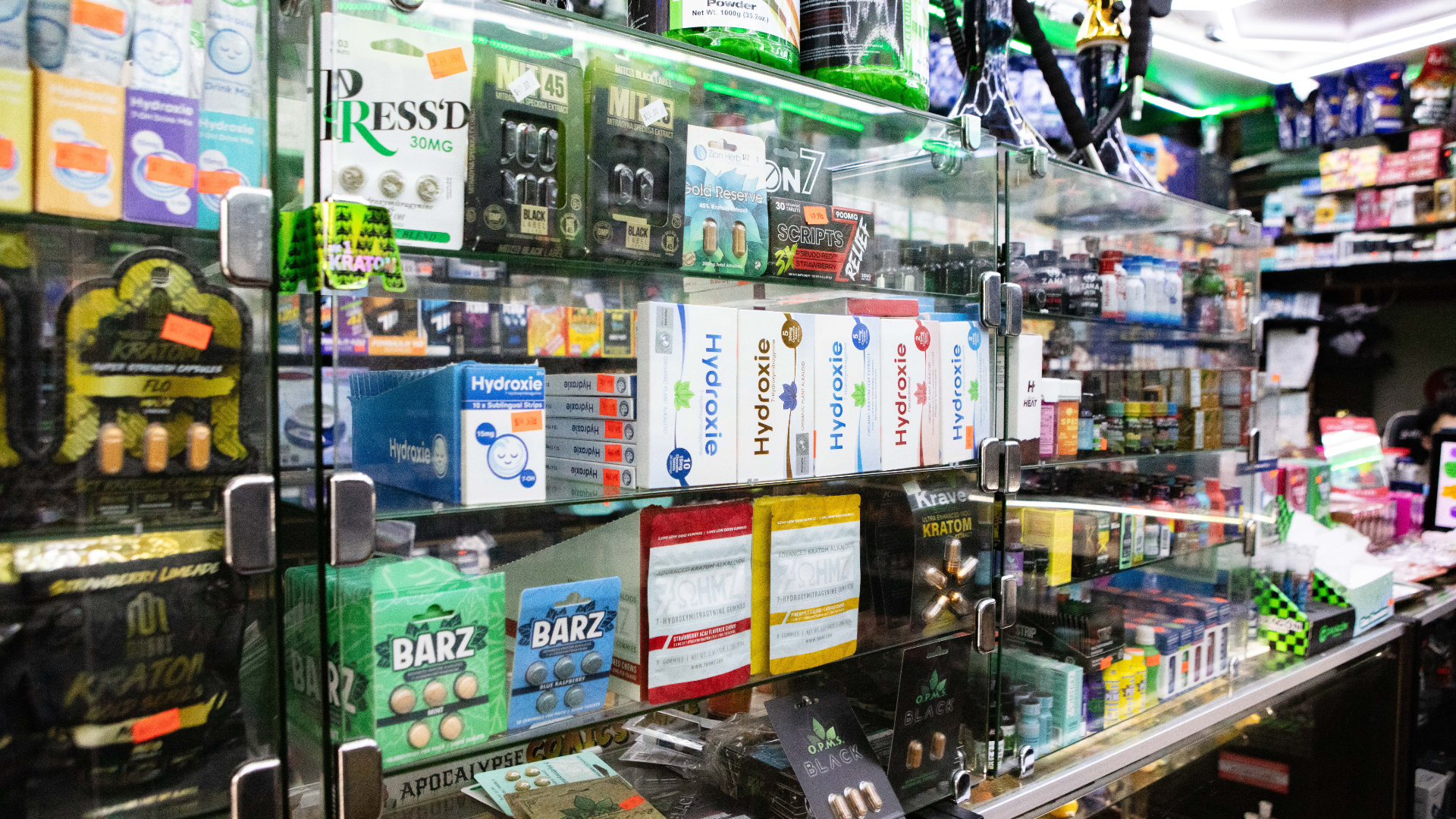
7-OH is one compound found in kratom, and a couple of years ago, companies began extracting and synthesizing it into a much more powerful, separate opioid. While related to kratom, 7-OH is far stronger—both in its pain-relieving effects and in its risks for addiction and fatal overdose.
Mina Kim: Yes—ten times stronger than morphine, according to the few researchers who’ve studied it.
Lester Black: Yeah. It’s a remarkable time right now, because 7-OH is so new that we really don’t know much about it. But the limited research shows it’s at least ten times stronger than morphine and can cause fatal overdoses, especially when combined with other drugs like alcohol. Despite how little science there is behind it, millions of people are already using it—which is a pretty troubling situation.
Mina Kim: Well, let me invite listeners into the conversation. Have you seen or tried 7-OH or kratom? What questions do you have about them? You can email [email protected], find us on Discord, Bluesky, Facebook, Instagram, or Threads at @KQEDForum, or call us at 866-733-6786.
You spoke with someone named Tom Miller—a pseudonym—a 35-year-old who’d been using kratom for years before trying 7-OH. Tell us how he got it.
Lester Black: Tom’s story is really common. He was using kratom for years to manage pain and found it helpful—an herbal remedy that didn’t take over his life. Then, at a gas station in Southern California, when he went to buy kratom, the attendant said, “Hey, you should try this other drug called 7-OH. It’s just like kratom.”
So he started taking it and quickly realized it was much more powerful. At first, he thought, “Wow, this really relieves my pain.” But within days, he needed more to feel anything. Very quickly, he became addicted—something he hadn’t experienced with kratom.
He ended up spending $10,000 within six months and struggled to stop using it. Like many 7-OH users, he felt tricked—thinking he was taking something familiar when it was actually far stronger and much harder to quit.
Mina Kim: Much harder to stop using. What was it like when he tried to quit?
Lester Black: It was like any other opioid addiction. Within hours of stopping—especially after 24 hours—he’d become extremely restless and deeply depressed. He’d sweat, get fevers, have trouble regulating temperature. It was incredibly hard to get off.
He tried multiple times on his own but eventually went to a medical clinic, where he got Suboxone—a pharmaceutical opioid often used to treat fentanyl and other opioid addictions. That helped him get off 7-OH, but he’s relapsed multiple times and still struggles with addiction.
Mina Kim: Wow. And Tom, as I said, is a 35-year-old who got it at a smoke shop. But from your reporting, it sounds like kids can access it too—pretty easily?
Lester Black: Yes. Because it’s so widely sold and largely unregulated, people of all ages can buy it. There’s some legal gray area around its status and whether there are age restrictions, but the reality is that minors can purchase it easily across California.
I’ve interviewed Bay Area teenagers who bought it just down the street from their high schools. It’s that accessible.
Mina Kim: And it’s packaged in ways that make it look appealing to them—like candy, even.
Lester Black: Exactly. It’s a powerful opioid—stronger than morphine—but it’s sold as cherry or mango-flavored pills, packaged in bright, colorful designs that mimic consumer products. It’s very attractive and easy to get, which is part of the danger.
Mina Kim: Casey on Discord writes: “Someone I know went from intense alcoholism to a kratom addiction while in recovery. It was sold as just another supplement, which obscured its potency and potential harm. These things get sold as new-age health remedies when they should be more heavily regulated. The supplement world is such a problematic space—so much harm without full disclosure or knowledge of contraindications.”
Casey’s right, isn’t he? It’s marketed as a kind of dietary supplement.
Lester Black: Yeah, he’s exactly right. Both kratom and 7-OH are marketed toward people struggling with addiction—especially to opioids or alcohol.
Now, some people say kratom has helped them with addiction or PTSD, and they have a positive relationship with it. Others say it led them into a new addiction. But 7-OH is really a different beast—it’s far stronger and much more dangerous.
It’s also complicated, because people drawn to these substances often have underlying medical or mental health issues that make it harder to regulate their use.
Mina Kim: Los Angeles has now issued an alert to retailers urging them to stop selling 7-OH products. I want to bring in Dr. Brian Hurley, medical director at the Bureau of Substance Abuse Prevention and Control for the Los Angeles County Department of Public Health. Dr. Hurley, thanks so much for being with us.
Dr. Brian Hurley: Glad to be here.
Mina Kim: Tell us more about what LADPH is urging retailers to do.
Dr. Brian Hurley: As Lester mentioned, 7-OH isn’t regulated. The FDA has said it’s not an approved medication, not an approved dietary supplement, and not approved for human consumption. So our department is notifying retailers that it should not be sold in L.A. County.
When we identify 7-OH products, we “red-tag” them—telling retailers they shouldn’t be on shelves or sold to community members.
Mina Kim: And this alert was prompted, in part, by six deaths in Los Angeles linked to the drug. What can you tell us about those cases?
Dr. Brian Hurley: The L.A. County medical examiner notified us of six overdoses so far this year. They flagged these deaths as involving 7-OH, which was one of the reasons we issued our health alert—to make sure the community knows this product poses serious risks, including overdose and death.
Mina Kim: My understanding is that those who died had mixed the drug with other substances?
Dr. Brian Hurley: Yes. Other substances were identified in their systems—alcohol, as well as prescribed medications like antidepressants. None of the cases involved 7-OH alone. However, the alcohol levels were not toxic, meaning these weren’t alcohol overdoses.
Our medical examiner found that 7-OH, in combination with these substances, appeared to cause the overdoses. So we’re warning the public that 7-OH carries significant risks—especially when mixed with other drugs—but potentially even on its own.
Mina Kim: Are you concerned that 7-OH alone could cause death?
Dr. Brian Hurley: We haven’t seen a case like that in Los Angeles County yet, but the medical literature does include reports of deaths where 7-OH was the only substance detected. So yes, we are concerned—it’s risky even by itself, and combining it with other substances only increases the danger.
Mina Kim: Can naloxone—or Narcan—reverse a 7-OH overdose?
Dr. Brian Hurley: Yes. Naloxone can reverse an overdose caused by 7-OH, just like it can for heroin, fentanyl, oxycodone, and other opioids. One of our main messages to the community is: if someone is overdosing, administer naloxone. Even if you’re not sure why—they might be overdosing on an opioid, and naloxone could save their life.
Mina Kim: We’re talking with Dr. Brian Hurley of the Los Angeles County Department of Public Health, and with Lester Black, cannabis editor at SFGate, about the potent synthetic drug 7-OH—dubbed “gas station heroin.” It’s been linked to an increasing number of overdoses and deaths in California, especially in Los Angeles, though Lester found it for sale here in the Bay Area as well. More with our guests and with you, our listeners, after the break. Stay with us. I’m Mina Kim.