This partial transcript was computer-generated. While our team has reviewed it, there may be errors.
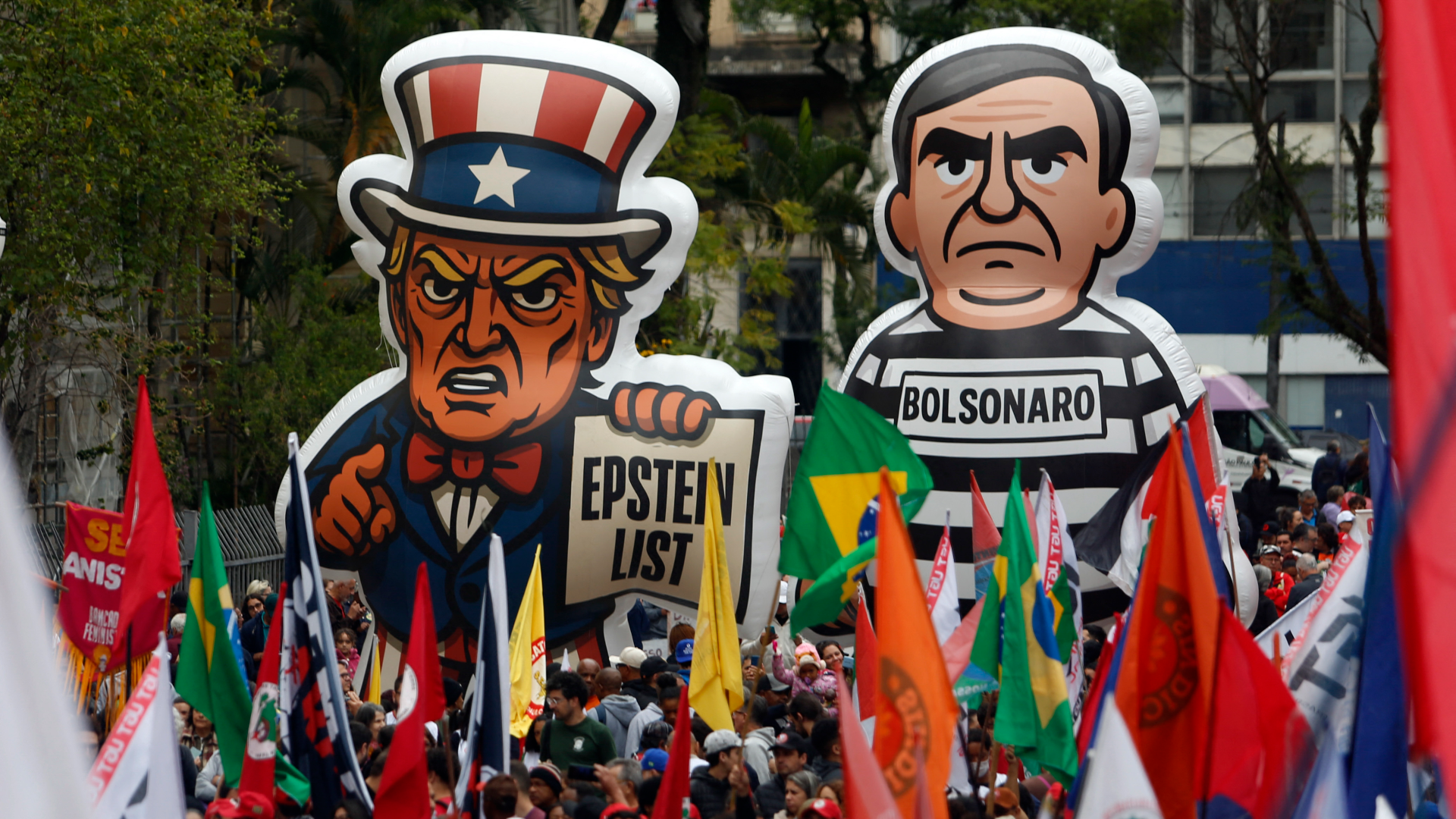
Mina Kim: Welcome to Forum. I’m Mina Kim. Tens of thousands of Brazilians Sunday took to the streets and cities across the country to protest an amnesty bill for Jair Bolsonaro. The former president faces twenty-seven years in prison for plotting a coup to overturn the 2022 election.
President Trump, who has compared himself to Bolsonaro, called the trial a witch hunt and punished the country with fifty percent tariffs and sanctions on government officials and Supreme Court justices overseeing the trial. But the court held firm.
We look at how a nation with a history of absolving coup plotters reached conviction — and the challenges still ahead. Joining me, Jack Nicas is Brazil bureau chief for The New York Times. Hi, Jack. Welcome to Forum.
Jack Nicas: Thanks for having me.
Mina Kim: Also with us is Juliana Dal Piva, investigative reporter for ICL Noticias and Centro Latinoamericano de Investigación Periodística. Welcome, Juliana.
Juliana Dal Piva: Hi there. Really nice to be here with you guys.
Mina Kim: Well, I really appreciate you being here with us. So you were both in the courtroom when four members of a five-judge Supreme Court panel handed down the conviction and sentence. I know it was widely expected, Jack, but what was your reaction?
Jack Nicas: Well, this was a historic moment that was a long time coming and something that Brazil really had not done before. Brazil unfortunately has a very dark history of coups and attempted coups. And this conviction was the first time since Brazil overthrew its monarchy in 1889 that it actually convicted one of the leaders of more than fifteen plots to overthrow the government.
This was a symbol for Brazilian democracy — that it had matured and was starting a new phase.
Mina Kim: Jack, Juliana was mentioning that people are still digesting what this all means and the details. Can you remind us what the charges were against Bolsonaro?
Jack Nicas: Essentially, Bolsonaro was charged with overseeing a vast conspiracy to hold on to power after he lost the 2022 Brazilian election. That included plans to disband the courts, give special powers to the military, and, most strikingly, an apparent plot to assassinate the president-elect, Luiz Inácio Lula da Silva — who is now the president — his running mate, Geraldo Alckmin, and a Supreme Court justice who had been leading investigations into Bolsonaro.
Mina Kim: Wow. And it wasn’t just him, but also seven other co-conspirators who were charged and sentenced, right?
Jack Nicas: That’s correct — including Bolsonaro’s running mate, his defense minister, navy commander, and national security adviser. This really was the Bolsonaro administration and much of his cabinet.
The accusation and the conviction were that these men worked together in a concerted manner before the election to undermine trust in Brazil’s election systems, and then, after losing the election, sought ways to hold on to power and prevent Lula from taking office.
Bolsonaro even confessed that he believed the 2022 election was fraudulent and that he sought to hold on to power “within the frame of the constitution.” He said these were just private conversations among government officials about constitutional matters. That’s what his lawyers argued, but four of the five Supreme Court justices obviously disagreed.
Mina Kim: And would you say the evidence was viewed as credible, Jack?
Jack Nicas: The evidence was overwhelming. It included testimony from Bolsonaro’s personal secretary about many of these closed-door meetings. There was also a draft of executive orders that would have disbanded the courts and empowered the military, and even a version of the assassination plot printed out in the presidential offices.
Whether Bolsonaro himself knew about the assassination plot — which prosecutors claim — is not totally clear. He denies it, but he was convicted of it.
Mina Kim: Wow. And despite all that, there is talk of granting him amnesty. Juliana, are you with us?
Juliana Dal Piva: Yes.
Mina Kim: Great. Can you talk about what Congress means when they say they want to give Bolsonaro amnesty?
Juliana Dal Piva: They are trying to discuss a bill around this, but especially after the important protests we had on Sunday, I think this is going to be really hard. Even today, there were two important deals in Congress around this subject: one for amnesty and another to make it harder to investigate politicians.
The second one just dropped in the Senate about thirty minutes ago. They are still trying to discuss amnesty, but the real issue is the election next year. Who wins the presidency will decide this. If someone from Bolsonaro’s group wins, they will try again in some other way. So I don’t think the amnesty project will really happen now or before the presidential election.
But there is something else. I was hearing Jack talk about the intent of the assassination, and there’s another investigation going on. They found inside Bolsonaro’s phone copies of the defense documents of the general who wrote this plan. Bolsonaro himself was aware of the general’s final allegations to present in court.
So I look at that and think: why does Bolsonaro want to know the final allegations of this general about the assassination attempt if he has nothing to worry about?
Mina Kim: Yeah. It sounds like, though, there is a strong contingent of people who still do not support this conviction and could potentially support a right-wing candidate in the next election. So he remains popular, Juliana?
Juliana Dal Piva: He remains popular. It’s just hard to understand how this is going to evolve. For example, the last poll from Folha de São Paulo, one of the largest newspapers in the country, on September 14, found 54 percent against amnesty for Bolsonaro. Only 39 percent were in favor.
Even 43 percent were against Bolsonaro going to jail. So most of the country is not worried about whether Bolsonaro goes to jail. And when I look at the numbers of the last election: Brazil has 220 million people. Bolsonaro had 58 million votes. That doesn’t mean he had 58 million supporters. Many people just didn’t want Lula to win, so they voted for Bolsonaro.
Mina Kim: And Lula?
Juliana Dal Piva: Lula had 60 million votes — the biggest number of his career. He never had so many before. But I don’t think all 60 million were pro-Lula. Many were simply anti-Bolsonaro.
So when you discuss economics or other subjects, it’s more complicated. I don’t think polls show that the majority of the country is against Bolsonaro being tried or jailed for the coup attempt.
Mina Kim: So you think there are more people supporting this conviction and opposing amnesty than polls suggest?
Juliana Dal Piva: Yes. And it’s our job as journalists to help people understand how violent this coup attempt was and how much our institutions were damaged by Bolsonaro’s government. The federal police suffered. Our intelligence agencies suffered political interference — they were working for Bolsonaro, not for Brazil.
Mina Kim: We’ll have more with Juliana Dal Piva and Jack Nicas right after the break. We’re talking about the conviction of Brazil’s former president Jair Bolsonaro for trying to overturn the 2022 election. Stay with us.