This partial transcript was computer-generated. While our team has reviewed it, there may be errors.
Mina Kim: Welcome to Forum. I’m Mina Kim. A couple of weeks ago, historian and journalist Garrett Graff described our democracy shattering: the president using armed military units to seize cities, using federal law enforcement to target opponents, arresting and charging civilians “who try lawfully to exercise their right to document the abuses of the regime.”
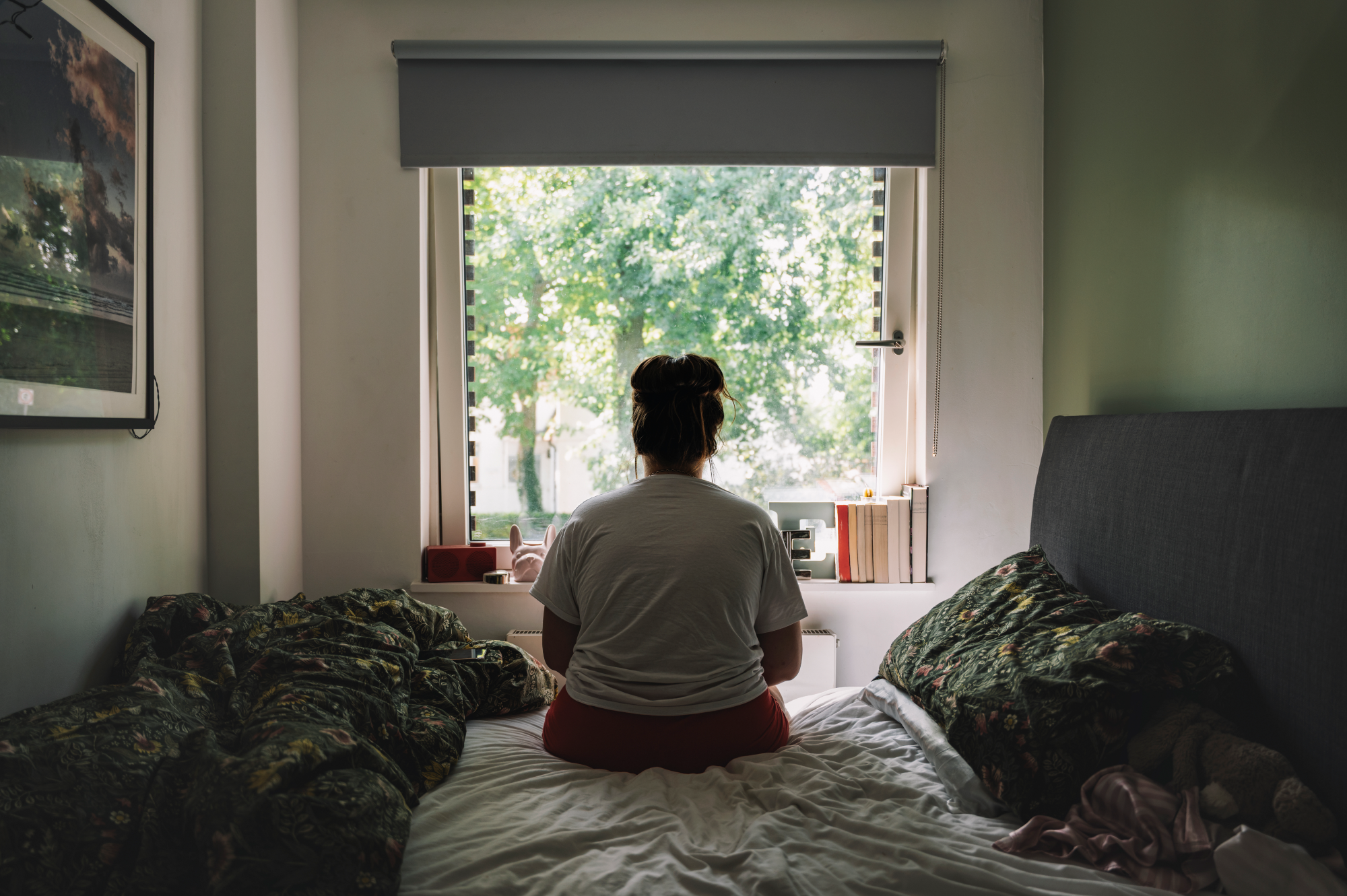
And those are just a few examples of the many crises unfolding around us. For many directly affected, they’re having a devastating effect on their daily lives. For others, for whom the routines of life continue, writes The Guardian’s Adrienne Matei, the juxtaposition of the dysfunctional and the mundane is creating a dissonance that is also important to name and pay attention to.
This hour, we look at why. And listeners, are you feeling this dissonance too? Joining me is Guardian reporter Adrienne Matei, whose piece inspired today’s show called “Systems Are Crumbling, But Daily Life Continues — The Dissonance Is Real.” Welcome to Forum, Adrienne.
Adrienne Matei: Hi, Mina. Thank you so much.
Mina Kim: Also with us is Kate Woodsome, a Pulitzer Prize–winning journalist who, after twenty years reporting and leading global newsrooms, shifted her focus to trauma and systemic repair and is now a Georgetown University scholar and resilience strategist. Kate, really glad to have you with us too.
Kate Woodsome: Glad to be with you.
Mina Kim: So Adrienne, let me start with you. Could you paint us a picture of some of the scenes of daily life that capture this tension you write about? I know it hit me as I was driving past these beautiful vineyards on my way to a friend’s birthday party while hearing about a horrific ICE raid on NPR.
Adrienne Matei: Dissonance today is neither an entirely online nor offline experience. It’s always had to do with the interplay of what we see through technology and information sources, and what we do or don’t see in the offline world. Its intuitive characteristic is this juxtaposition of the dysfunctional and the mundane.
So, as comedian Bo Burnham sang: “A gift shop at the gun range, a mass shooting at the mall.” As for a picture, imagine scrolling through photos of genocide, and then your kid gets in the car and you’re heading to soccer practice. You’re thinking: How can people be watching others starving like this? Did Putin just say something about organ harvesting? I’ve got to get more of those ice creams from Trader Joe’s. Will my family be able to travel to that wedding next year, or is crossing the border too risky now?
It’s all happening in the same brain at the same time, and people are just like: How can I be going about my life? What are my options? Am I dissociating? Is everyone seeing this the way I am? Can I even trust my own interpretation of events right now?
Mina Kim: Yeah. And that example — I appreciate you writing about a person who was planning their wedding, thinking about saving money for it, and then wondering, “Will this country exist as we know it next year?”
So Adrienne, you’ve not only written about but also experienced this juxtaposition. Can you describe what the dissonance actually feels like to you?
Adrienne Matei: Yeah. I think this is a feeling most people these days recognize intuitively. It’s like an ambient anxiety, or disconcertedness, that comes from witnessing these jarring, often terrifying events while simultaneously going about life.
Part of the dissonance is social. You can feel things are off, but it’s often hard to talk about in everyday conversation. You don’t want to bring dread into the room all the time. You don’t know where other people stand on issues. So the feeling you end up holding is heavy, even before you try to put it into words.
One tweet I often think of, because it really captures the absurdity, goes: “Every day we have to wake up, confront the most upsetting stuff we’ve ever seen, and then walk around obeying laws and saying, ‘It’s tomato season.’”
Mina Kim: Kate, I’m wondering what this tension Adrienne is describing is really an expression of.
Kate Woodsome: It can be helpful to remember that our nervous system and brain are designed to keep us alive. They’re constantly taking in information and processing it. Cognitive dissonance is the discomfort that happens when our beliefs conflict with our actions, or when we’re holding two seemingly conflicting beliefs at once. Different parts of the brain light up — those dealing with emotions, those that detect conflict, and those thinking about how to avoid negative outcomes.
So essentially, when we have cognitive dissonance, it’s sending this error message where there’s tension between two ideas.
Mina Kim: Could you give a couple of examples of what you mean by beliefs and actions not lining up?
Kate Woodsome: Sure. If you’re concerned that there’s an infringement of the Constitution but you continue to act like everything is fine, that can create tension.
Mina Kim: I see. So what have you seen people do to make peace with that tension — the bargains they make with themselves?
Kate Woodsome: There are many ways people deal with cognitive dissonance. One is to notice it, to take stock of your values, and to test whether your actions align with them — then adjust if they don’t.
Another way is avoidance. If you’re uncomfortable because something around you conflicts with your values, but you’re not doing anything about it, you might avoid people or news that remind you of it.
People may also shift their understanding of what’s acceptable. They start rationalizing what they previously would not have accepted.
Mina Kim: For example?
Kate Woodsome: For example, I live in D.C., where many people work for the government or organizations that had to comply with bullying from the Trump administration. People needed their jobs to feed their families or keep health care. They weren’t going to quit. So they told themselves: It’s okay that I’m complicit in abuse of power because I have to feed my family. Or: It’s okay because I’m balancing it out by taking extra pro bono work.
People aren’t simply good or bad. They’re constantly making decisions and adjustments. Where it gets troubling is when the abuse of power we normalize numbs us. It’s like disasters: if a hurricane is coming, you think, “That won’t happen to me.” If it does, “It won’t be that bad.” And if it’s bad, “Someone will save me.” We layer denial and normalization, and that weakens us against real threats.
Mina Kim: I want to invite listeners to join the conversation. Do you feel this dissonance? What issues or events have driven it for you, and how are you navigating it? Is normalization a coping mechanism?
You can share by emailing [email protected], finding us on Discord, Bluesky, Facebook, Instagram, or Threads @KQEDForum, or by calling 866-733-6786.
We’re talking with Kate Woodsome, Pulitzer Prize–winning journalist and founder of Invisible Threads, a media and leadership lab exploring the link between mental health and democracy; and Adrienne Matei, writer for The Guardian US.
Adrienne, let me ask you: this juxtaposition you describe — terrible things happening while daily life goes on — is familiar. It’s something we all experience. But is there something about now that makes it different?
Adrienne Matei: Yes. I think it’s the sustained, high level of intensity on so many fronts — political, environmental, global — that is weighing on people.
The environment has been one of the longest-running sources of dissonance, especially for the climate-aware. Environmentalists and climate scientists have lived with this existential terror for years, sounding the alarm and feeling unheard. That already created a fracture between what we know to be true and how we see the world functioning.
And now politically, things are deteriorating. America is becoming more authoritarian. You look at your phone and see a flood of horrors. Globally, variations on the theme of upheaval — many drivers, all accelerating.
Mina Kim: Yeah. Kate, same question to you. I know you write about how much we’ve normalized — racism, classism, and more.
Kate Woodsome: Exactly. Human existence itself is an exercise in cognitive dissonance. Holding conflicting beliefs isn’t inherently bad. It’s actually required for a healthy democracy — to sit with discomfort and differing opinions.
The harm comes from binary thinking — assuming only one way is right. What I see in this era is extraordinary uncertainty, change, and threats. Our screens amplify that, dysregulating our nervous systems. Many people feel like they’re in danger, and when there’s danger, you try to resolve it.
People don’t want to feel bad, so they numb out. But that leads to learned helplessness. Instead of developing healthy responses, we check out. And that’s not healthy for individuals or for democracy.
Mina Kim: We’re talking about the dissonance we feel as catastrophic wars, violence, and constant reminders of our eroding democracy surround us. We’re looking at what this does to us, and why it’s important to name and pay attention to this feeling — with Kate Woodsome, Adrienne Matei, and you, our listeners.
We’ll have more after the break. Stay with us. I’m Mina Kim.