Remember the flexed arm hang? The mile run? The Presidential Fitness Test – a battery of physical challenges that has prompted both dread and pride in students since the Eisenhower administration – is getting a reboot under the current administration. We’ll look at what California is currently doing to encourage youth fitness and what we’ve learned from more than 50 years of health data collected by school fitness tests, including the updated version that took hold under the Obama administration in 2012. And we want to hear from you: what are your memories of the Presidential Fitness Test? What do you think about its return?
Love It or Hate It, the Presidential Fitness Test Is Making a Comeback
We look at what California is currently doing to encourage youth fitness and what we've learned from more than 50 years of health data collected by school fitness tests.
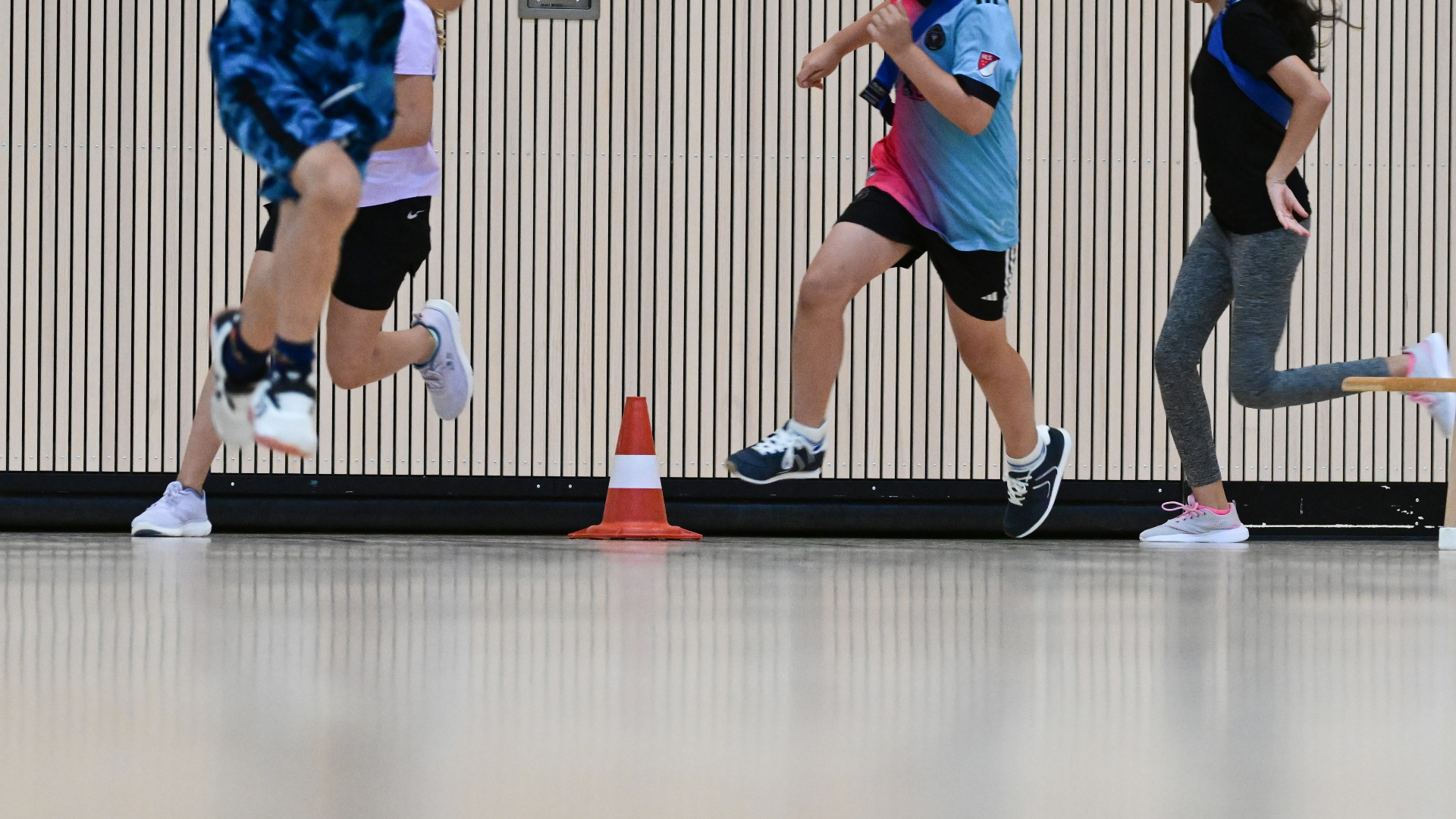
(Picture Alliance via Getty Images)
What We Heard
When freelance journalist Taylor Tobin agreed to retake the Presidential Fitness Test as an adult, she was hesitant. “I hated the test as a kid,” she said. “I wasn’t an athletic kid. I was a drama kid. So this was never something that I really wanted to do when I was going to school.” But with a stopwatch and yoga mat at hand, she gave it another shot. To her surprise, she did better than in high school.
Her experience speaks to the test’s strange hold on American memory. For some, it was humiliating. It “totally crushed me,” one caller said; it “took until my adult life to recover.” For others, the test was motivating. Listener Susan remembered being “overweight, unfit and unable to do well.” The shame motivated her, she said, and she went on to challenge herself with marathon running and triathlons. “Now as a senior, I continue to value physical exercise and workout daily with walking, weight training and yoga,” she said.
Since the Eisenhower administration, Mina Kim noted, the test “has prompted both dread and pride in students.”
UC Berkeley researcher Hannah Thompson explained that the test was born out of Cold War anxieties about American kids lagging behind their European peers. President Kennedy amplified the program, famously warning about “soft Americans” while promoting fitness as a national duty.
Now, the test is back in the spotlight after an executive order revived the program. But Thompson stressed that the problem isn’t fitness testing itself — it’s the lack of investment in physical education. “We haven’t put the resources behind it, and we haven’t created an environment for students where they can really thrive under these tests,” she said.
Equity is another fault line. Renata Simril, president and CEO of the LA84 Foundation, pointed out that “Latinas and Black and African American girls, and Latino youth in general, youth with disabilities and youth in households with annual income of less than $50,000 are least likely to be active in play.” Without accessible sports, recess, or after-school programs, a one-off test risks widening disparities rather than closing them.
Still, Thompson believes a well-designed program could instill lifelong habits, especially if it emphasizes personal growth over competition. “Before investing in fitness testing, I think we need to invest in the system underlying that testing, which is physical education,” she said.
This content was edited by the Forum production team but was generated with the help of AI.