What’s happened since former Vice President Kamala Harris said she’s not running to replace Gavin Newsom as California’s next governor? Lieutenant Governor Eleni Kounalakis, who received early funding and an unofficial endorsement from Nancy Pelosi, said on Friday that she’s not running either. The announcement has again scrambled the political calculations of California’s gubernatorial hopefuls. We’ll talk with KQED’s politics team about early campaign rumblings, funding and top issues likely to define the California governor’s race. And we’ll hear from you: what kind of governor do you think California needs right now?
California Governor’s Race Shifts as Harris, Kounalakis Say They’re Not Running
We talk with KQED's Guy Marzorati and Scott Shafer about early campaign rumblings, funding and top issues likely to define the California Governor's race.
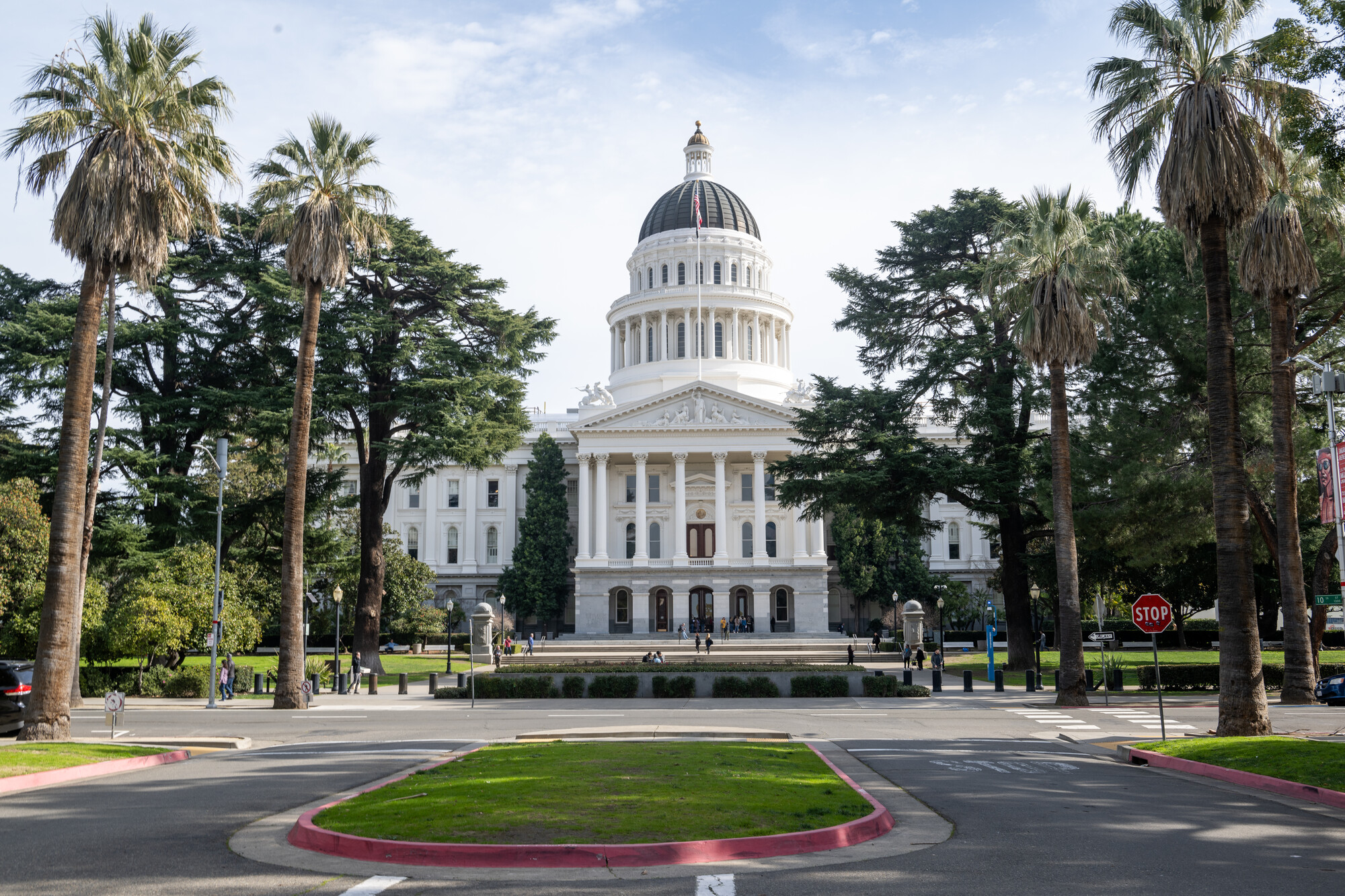
The California State Capitol in Sacramento on Feb. 7, 2023. (Beth LaBerge)
The Shakeup
The California governor’s race was jolted last week by a one-two punch: first, former Vice President Kamala Harris announced she would not run, and then Lieutenant Governor Eleni Kounalakis said she would drop her bid and pivot to the state treasurer’s race.
Harris’s decision, Scott Shafer noted, had “frozen the race” as donors, labor groups and potential endorsers waited to see what she would do. “No one was waiting, we thought, more so than the lieutenant governor,” he said.
Guy Marzorati recalled that the day Harris made her decision “was a really good day for Kounalakis,” with Harris calling her beforehand and Nancy Pelosi offering an endorsement on CNN. “So it seemed like things were pointing up,” he said — until “within a matter of days, she was out of the race.”
Part of the problem, Marzorati said, was that Kounalakis “was never fully in.” A weak fundraising report and a quick shift of major donors toward Katie Porter left her without a clear path in an already crowded Democratic field.
Who’s Left Standing
Katie Porter — Porter, Marzorati said, has shown the ability to win “really competitive races in Orange County” while holding progressive positions on the economy. Her “secret sauce” is blending pragmatism with a willingness to take on powerful interests. She also has a “national network to bring into this race” and a large base of small-dollar donors. But she carries baggage from her “real disappointment” of a Senate run in 2024.
Xavier Becerra — For Becerra, Marzorati pointed to his tenure as attorney general — “there’s no better job to catapult to governor” — and his record of filing “well over a hundred lawsuits against the Trump administration the first time around.” Shafer said that could be “a real calling card” if the race becomes a referendum on Trump. Listener Ingrid called Becerra’s résumé “the most qualified” in the field.
Toni Atkins — Shafer said that Atkins is “the only person I can think of who was both assembly speaker and president of the state senate.” Her background — growing up in Appalachia, moving to San Diego, and being open about her working-class roots — could make her “very authentic.” But, Marzorati noted, legislative leadership doesn’t always translate into statewide appeal, and “money and name ID” remain big hurdles.
Antonio Villaraigosa — The former Los Angeles mayor, Shafer said, was “really feared by the Newsom people” in his 2018 run but didn’t make the top two. He’s “a little more pro-business, more moderate” and has a history of challenging organized labor. But in a year when “people are looking for fresh faces,” his age and time out of office could be liabilities.
Rick Caruso — Caruso could try to claim an outsider lane. Marzorati noted he “had a really competitive run for mayor” in Los Angeles but would now have to run as a Democrat. Shafer added that voters may question where he stands on abortion rights and other core Democratic issues given his past as a Republican.
Matt Mahan — The San Jose mayor drew praise from caller Maria as “young, smart,” and “not a usual suspect.” Shafer agreed he’s “got a lot of potential” but warned it’s really tough for a local official to break through statewide. Marzorati noted Mahan’s willingness to buck the party line, as in last year’s Prop. 36 campaign, but also that “if you’re the mayor of San Jose, no one in Southern California knows who you are.”
Betty Yee — The former state controller, Shafer said, is “very qualified” with strong executive experience, but “it’s just so tough to get known in a state with forty million people.”
Chad Bianco and Steve Hilton — On the Republican side, Shafer said neither has “a very likely” path to winning, but a Trump endorsement could help one make the top two. Bianco, sheriff of Riverside County, “is singing from the Trump hymnal” on immigration and could have “a leg up on a Trump endorsement.” Marzorati called that endorsement “the biggest factor” for the GOP in the June primary.
The Unknowns
This year’s race is unusually open. “We really don’t have a blueprint to go on in modern California political history for a governor’s race this wide open,” Marzorati said.
Trump’s potential endorsement could consolidate Republican votes. Late-breaking Democratic endorsements from figures like Newsom, Pelosi and Harris could shift momentum. California’s redistricting fight could reshape the political landscape and energize party bases. And with the filing deadline not until March 6, surprise entrants — or pivots like Kounalakis’s — remain very much in play.
This content was edited by the Forum production team but was generated with the help of AI.